



 Highest Point


Ever wondered how people live in the mountains? Well, this trip will give you the answer to that and more.
Taking you around two countries where the world’s tallest mountains are housed, Altitude Himalaya’s Best Nepal Tibet Tour package will take you to the most beautiful, natural, and man-made wonders of the world.
The cultures of Nepal and the autonomous region of Tibet are often undermined, as many tourists are drawn towards trekking destinations in these places. But our countries offer more.
Nepal, the last Hindu nation, is one of the most beautiful countries, where people from different ethnicities and religions coexist and embrace unity in their daily lives. You will find that there are temples built even on the tiniest streets.
If you do not find a temple, then you will probably find a stupa. Yes, Buddhism is one of the major religions practiced in Nepal, and you will find a hint of pride in every Nepalese individual for the fact that Buddha, Siddhartha Gautama, was born in Kapilvastu, Nepal.
After visiting the major sites in Kathmandu that reflect the country’s faith, we cannot let you leave without showing you our country’s gem; Pokhara.
The largest metropolitan city of Nepal, Pokhara, offers an unmatched pair of nature and peace. From watching the most beautiful sunset to boating at the serene Phewa Lake, this city will most likely bring you back again.
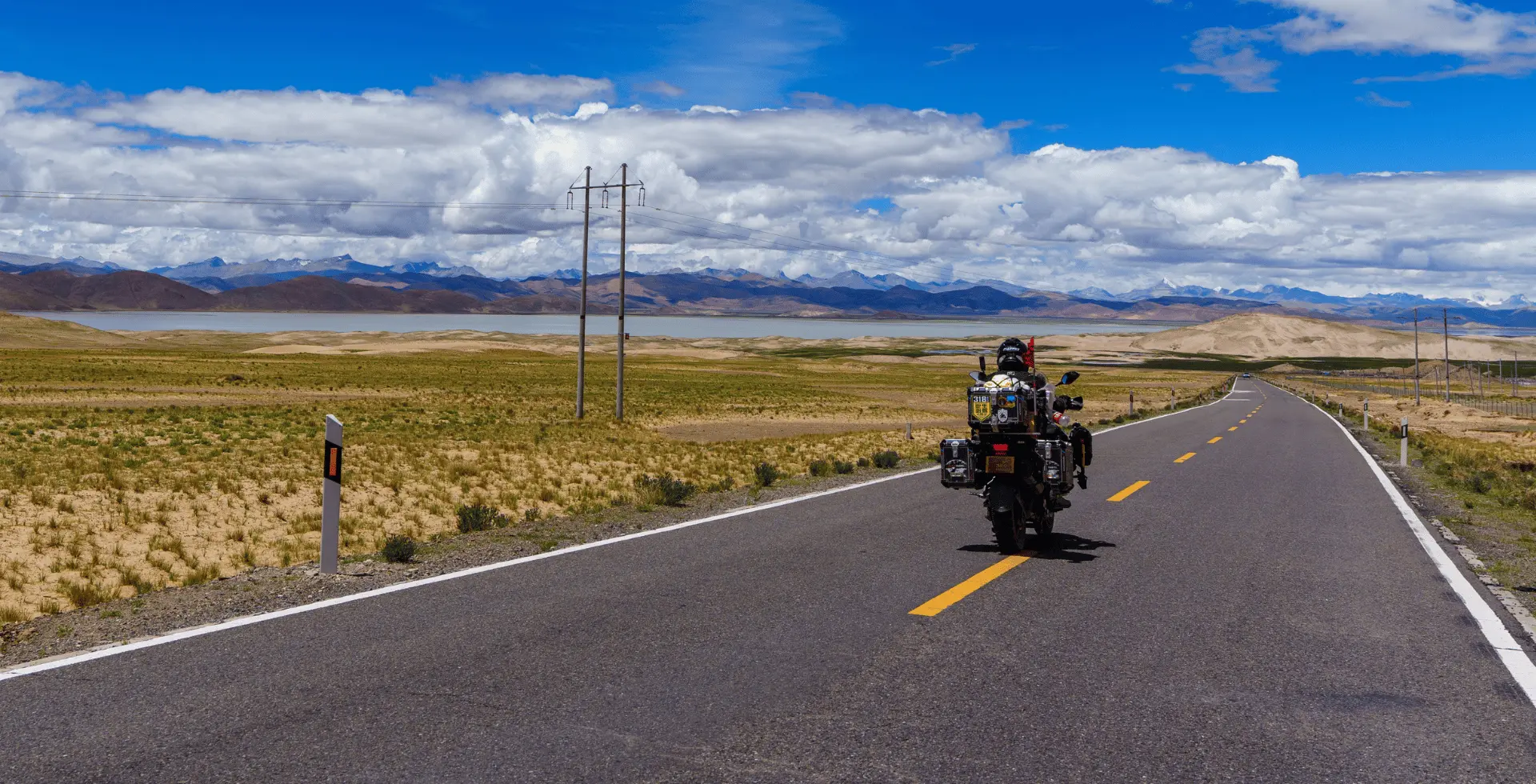
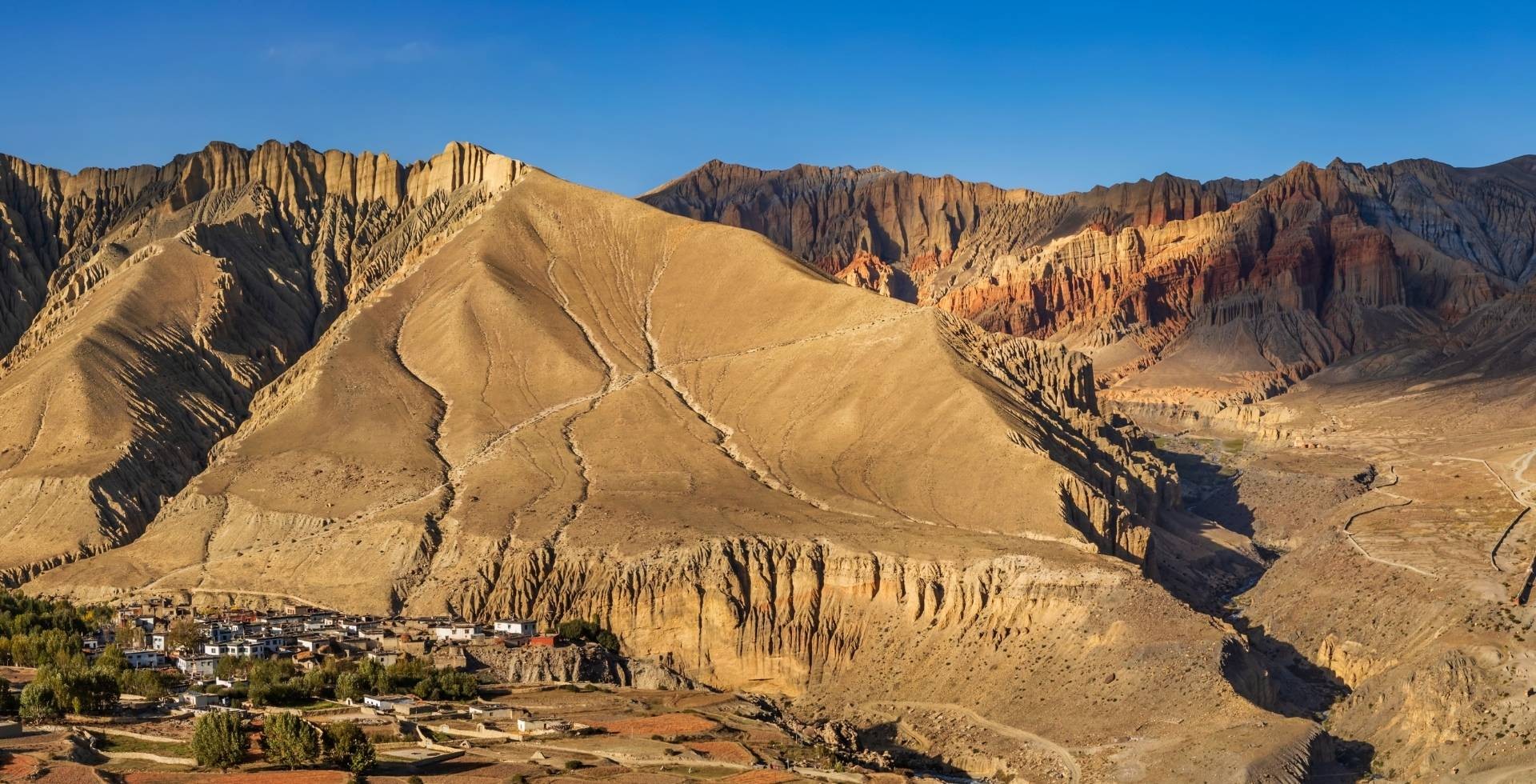
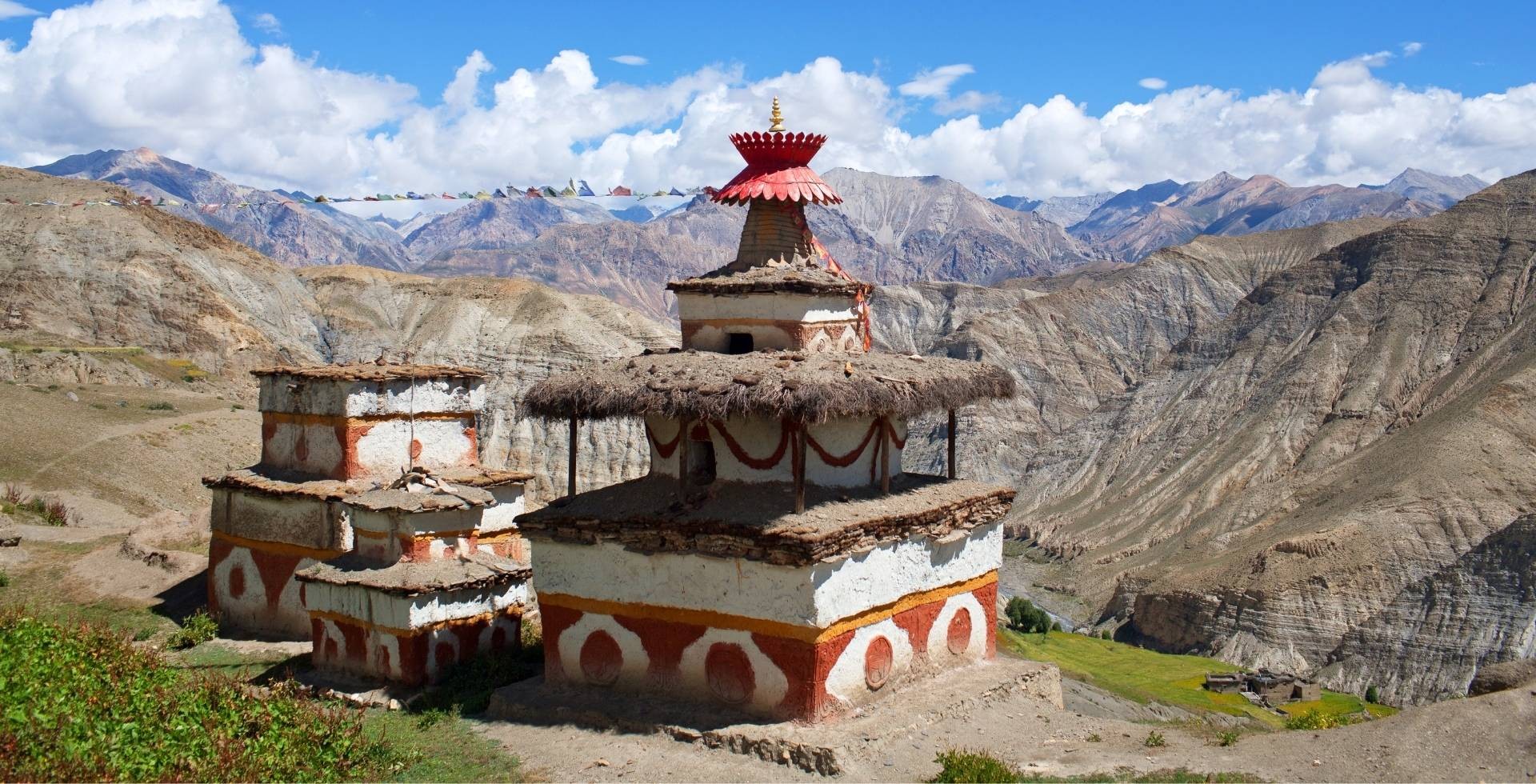
Then, we have the transition to Tibet. Although it feels like a complete change in scenery, the Tibetan plateaus are equally beautiful. The architecture set against the dry plateaus is as old as time, and so is the Tibetan culture.
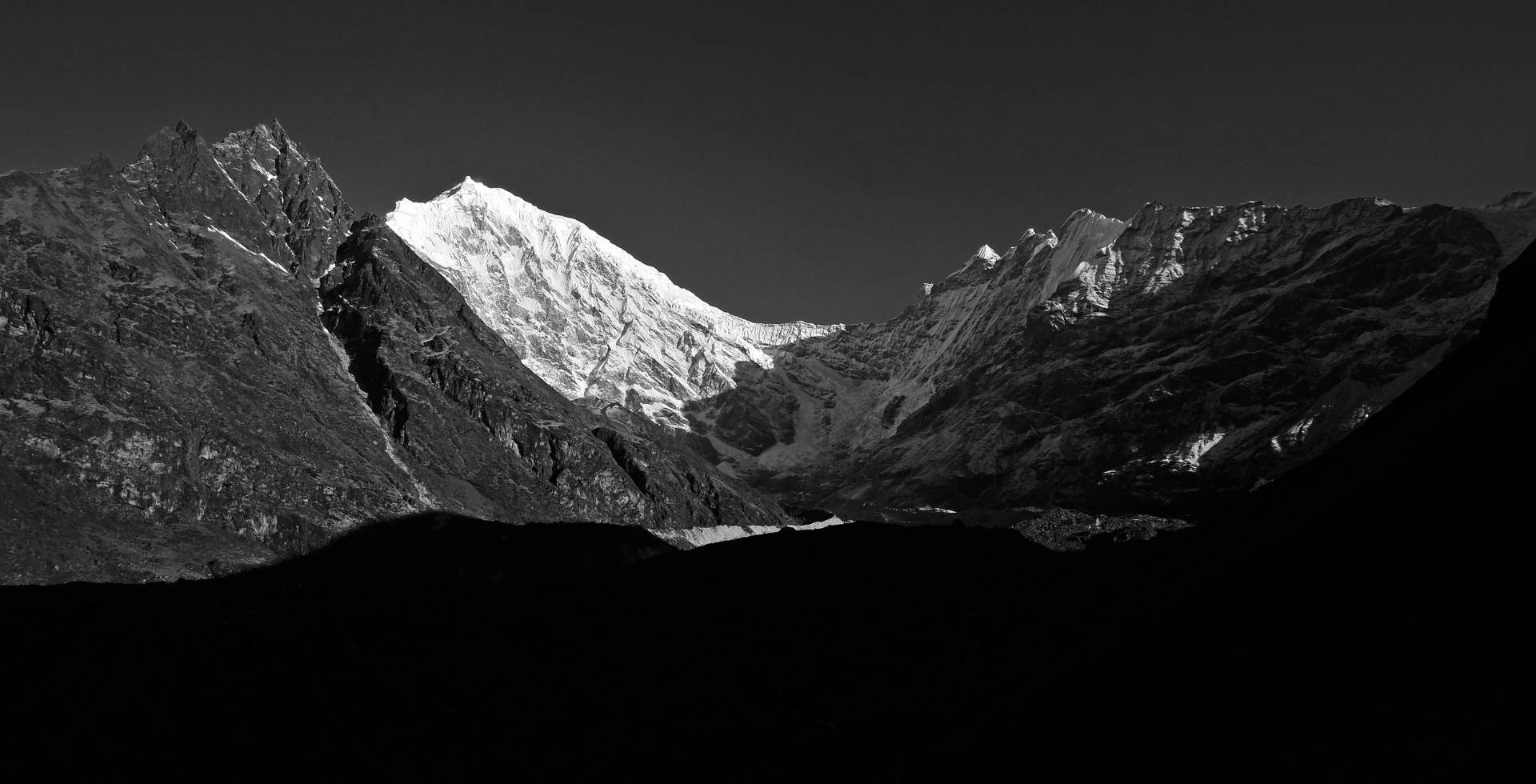
Apart from reverence to Buddhism, Tibet and Nepal have one thing in common, the timelessly majestic Mt. Everest.
If Everest is on your bucket list, but you do not have enough time to trek to EBC from Nepal, then the North EBC in Tibet is the perfect choice for you to make your dreams come true.
If you haven’t made up your mind yet, we’re sure that the descriptions provided below will urge you to sign up for this tour. You will never be younger than you are today, and there is no better time to follow your dreams than now!
Kathmandu Durbar Square
Kathmandu Durbar Square, the beloved spot for almost every Kathmandu resident, once housed the rulers of Nepal from different dynasties. It is commonly known as Basantapur Durbar and Hanumandhoka.
It was built between the 4th and 8th centuries when Kathmandu was ruled by the Lichhavi Dynasty. Later in the 17th century, when Kathmandu came under the rule of the Malla Dynasty, the palace grounds were expanded and more structures were added.
Not to mention, during the Rana Regime, Chandra Shumsher Jung Bahadur Rana, the then-Prime Minister of Nepal, initiated the construction of Gaddi Baithak. To make it more clear, it is the only white palace in the vicinity that clearly looks like it was inspired by European architecture.
With more than 50 temples in the entire square, which has been divided into two sections, Kathmandu Durbar Square is highly significant in terms of both spirituality and architecture.
The temples here house some of the most revered Gods and Goddesses of Hinduism. Would you be impressed if I told you that one of the temples here actually has a living goddess inside?
Yes, you read it right. There is a living goddess in Nepal, and she is known as Kumari. She resides in the Kumari Ghar, and our Kathmandu sightseeing is planned in such a way that you will get a glance of her when you visit the Kathmandu Durbar Square.
That’s not all; the square also has other temples, the holiest ones in Nepal. Some of the notable ones are Taleju Temple (Mahendra Malla, 1549), Jagannath Temple, Narsingha Statue (Pratap Malla, 1673), Kal Bhairav (17th century), and Swet Bhairav.
And if you want to learn more about the history of Nepal and witness the grandeur of the former kingdom, you must visit the Tribhuvan Museum, a museum that commemorates the three adored kings of Nepal; King Tribhuvan, King Mahendra, and King Birendra.
Swayambhunath Stupa
Swayambhunath Stupa is a rare Buddhist stupa where you can find the incorporation of Hindu deities. While its exact date of construction is not known, it is one of the oldest stupas in the valley, said to have been formed from a lotus.
Later, multiple additions were made, giving it the grand form it has today. Located on top of a hill, this stupa is one of the best spots to get a 360° view of the Kathmandu valley.
With its growing population of monkeys, the permanent residents of the stupa, the stupa is popularly known as the Monkey Temple. It is said that the monkeys were reincarnated from lice in Manjushri’s hair.
While the existence of the living Goddess Kumari is true, we’re not sure if we can say the same about Shantikar Acharya, a tantric master who is believed to have been meditating in Shantipur (an important structure within Swayambhunath) since the 5th century.
The important structures in the vicinity are Vajra Dhatu Mandala (15th century), Pratappur and Anantapur, and Harati Devi Temple.
There are two different ways to reach the top. Your first option is quite challenging; it requires you to climb 365 steep stairs. Another way is through the roadway that allows vehicles; however, you will have to walk for a short distance.
Boudhanath Stupa
Boudhanath Stupa is one of the best places in the heart of Kathmandu where you can learn more about Buddhism in depth.
Additionally, you can also learn more about Tibetan Buddhism, since the population of Tibetan monks has increased in number after the Tibet Uprising.
The origin of Boudhanath Stupa goes back to 600 AD. During the rule of the Lichhavi Dynasty at the time, Kathmandu and Tibet had a great diplomatic relationship.
The cultural exchange and trade between those independent kingdoms explain the blend of Tibetan artistry in the structure.
With its mandala foundation, the structure of the stupa reflects Buddha’s teachings, as well as his path to enlightenment. Following a sacred geometrical shape, each corner in this stupa demonstrates Buddhist beliefs.
The dome of the stupa is white in color, which symbolizes peace and purity. And if you observe well, you will also see a yellow petal print on the white dome. Those prints are painted using saffron water, and it signifies blessings and spiritual renewal.
Many monks volunteer in cleaning the vicinity of the Boudhanath Stupa for good luck. Every full moon, they gather around the stupa to pray and sing hymns.
There is also a temple nearby that is of great importance for both Buddhists and Hindus; it is the temple of Ma Ajima. You will also find 4 monasteries that belong to 4 different sects of Tibetan Buddhism:
|
Monastery |
Sect |
|
Nyingma Sect |
|
Gelug Sect |
|
Sakya Sect |
|
Kagyu Sect |
Some of the most important festivals that are celebrated there are Lhosar, Buddha Jayanti, and Temal Jatra.
It is not just one of the largest stupas in the world. The significance of Boudhanath Stupa runs deep in the history. It is believed that the remains of Kashyapa Buddha are placed inside along with the treasures of Padmasambhava.
Pashupatinath Temple
Below the Slesh Mantak Forest runs the holy Bagmati River, on whose banks the temple of Pashupatinath is located. It is one of the most revered temples of Hinduism, as they say that the Char Dham of Nepal cannot be completed without its visit.
It is said that the foundation of Pashupatinath Temple was laid back in the 5th century BCE. The oldest temple in the vicinity was built during 400 CE.
Dedicated to Lord Shiva, who is known as the Lord of all creatures, the origin of the temple is believed to be pre-vedic. There are more than 500 temples within its area.
Every year on Maha Shivaratri, Pashupati Temple is flooded with a crowd made up of Shiva’s devotees, pilgrims, ascetics, and saadhus. Hundreds and thousands of visitors from India come to receive the blessings of Pashupatinath.
If there is anything that challenges the population of humans there, it is the population of monkeys. Don’t get alarmed if you find a monkey sitting next to you during the Aarti.
Now this brings us to the topic of Aarti. The evening Aarti is one of the most spiritual events that takes place every evening after sunset on the banks of Bagmati on the eastern side of Pashupatinath Temple.
Hundreds of locals visit the temple and attend it, especially on Mondays. During this time, the priests perform sacred fire rituals and sing bhajans. The crowd is made up of people of different ages. The youths enjoy it as much as the elders do.
Around this time, you will also be able to witness open air cremations at Arya Ghats placed by the riverbanks. The rites of the deceased are performed here, and their remains are thrown into the river. In doing so, as per the Hindu beliefs, the cycle of rebirth is broken by Lord Shiva himself.
While non-Hindus are not allowed to enter the main complex, the entire sightseeing can be done by walking around the riverbanks.
Given that the entire area has more than 500 temples, you will have plenty of opportunities to see the ancient shrines and admire their architecture.
Sarangkot
While the mountains can be seen from almost every corner of Pokhara, there is something extraordinary about watching them from Sarangkot.
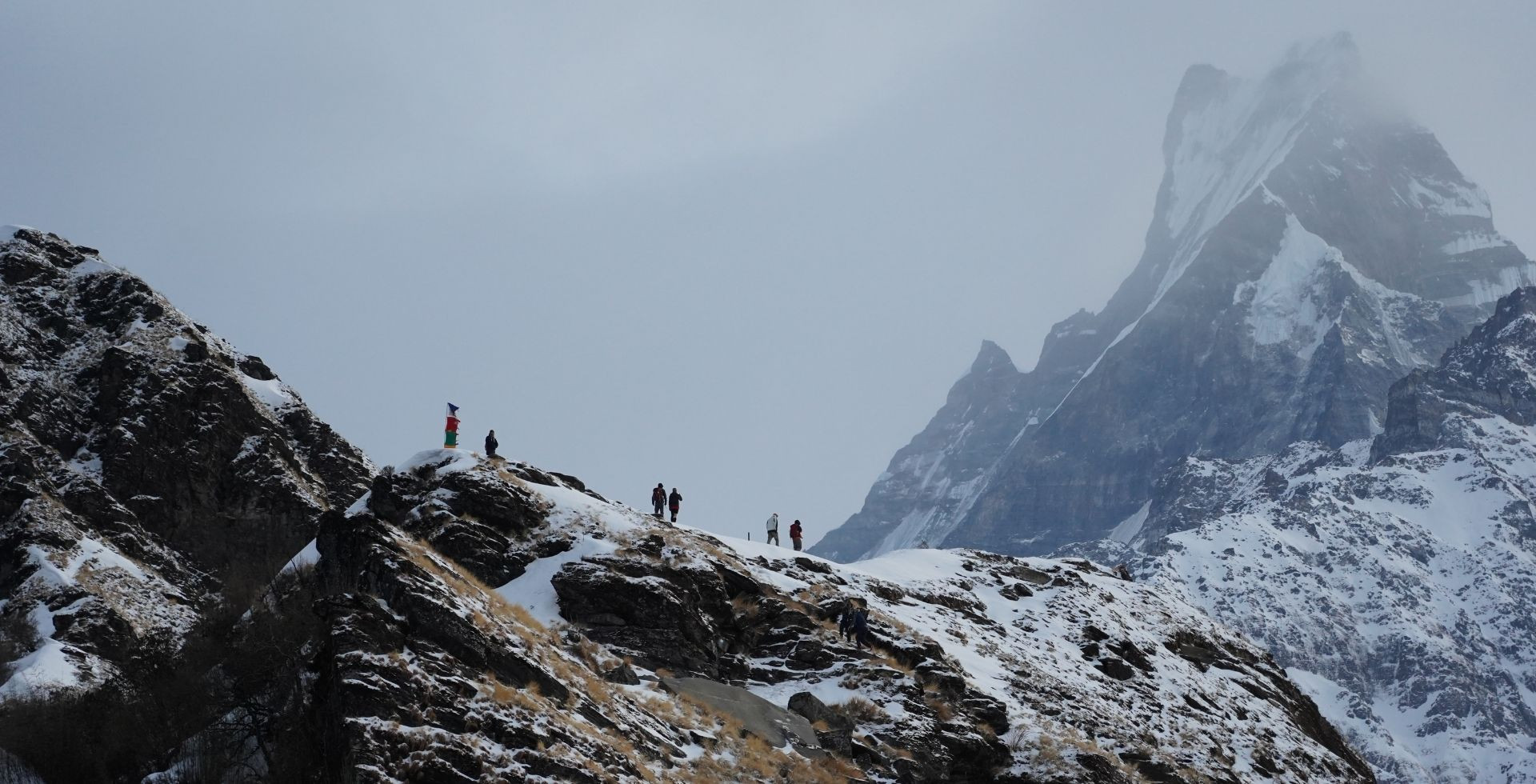
At Sarangkot, when the golden light hits the peak of Machhapuchhare mountain, you will come to realise that this is all life is about: watching beautiful sunlight in a city where slow living is embraced.
But Macchapuchhare is not the only view that Sarangkot offers. You can also spot other mountain peaks, namely, Dhaulagiri (8,167 m), Annapurna South (7,219 m), Annapurna I (8,091 m), Annapurna II (7,937 m) and Annapurna IV (7,525 m), and the beautiful village of Lamjung perched on top of a hill (6,983 m).
Note: If you want, we can also arrange some adventure activities from Pokhara like paragliding, ultra-light flight, hot air balloon, etc.
Davis Falls and Gupteshwor Mahadev Cave
Named after the Swiss lovers who fell to their death, Davis Falls is a fierce waterfall in Pokhara. Its water is so fierce that it cuts through the rocks and has formed a cave beneath, but that is a story for later.
The same fierceness was the reason why it was locally known as Patale Chhango. This was because the people did not know where the water was flowing towards, so they assumed that it flowed to hell.
The water of Davis Falls originates from Phewa Lake and joins with Phusre Khola, where the bodies of the lovers were later found. During peak monsoon, the site is closed as the water comes beyond the railings put in for visitors’ safety.
Coming back to the topic of the cave, it is known as Gupteshwor Mahadev Cave. About 2950 m long, it was only discovered in the 16th century by a local shepherd. Today it holds the record of being the longest cave in Nepal.
It is a holy site in Pokhara because they say that when the cave was first found, it already had statues of Hindu gods and goddesses. I guess the water was not really going to hell after all.
Similar to Davis Falls, the inner section of the cave is closed during peak monsoon.
Pumdikot - Where Shiva Looks Towards Kailash
On the southern side of Pokhara, on top of the Pumdikot hill, you will come across the second-largest statue of Lord Shiva of Nepal. At the altitude of 1500 m, the statue of Shiva is 51 ft tall, and he sits on a dome that is 57 ft tall, making the entire structure 108 ft tall.
The Pumdikot Shiva Statue is faced in the southwest direction, as it is believed that Lord Shiva is always looking towards the direction where his home, Mt. Kailash is located.
In total, there are 216 Shiva Lingams in the vicinity, and you will have to climb 108 steps to reach the top where the statue is placed.
This place has always been considered holy. Before the statue was built, in ancient times, there used to be the Bhumeshwor Temple.
Then the Shah kings deemed the spot a Shaktipeeth. They used to pray here before they went to war during the time of Nepal’s unification. Even the farmers used to visit the site to have their wishes granted.
If you look below from the top, you will see Phewa Lake and Pokhara city. And if you look around, you will be met with a breathtaking view of Annapurna South, Annapurna IV, Annapurna II, Macchapuchhare, and Hiuchuli.
Beacon of Hope - World Peace Pagoda
The Japanese monk Nichidatsu Fujii was a great advocate of non-violence and peace. Especially after the bombing of Hiroshima and Nagasaki, he started being more involved in the global promotion of peace and harmony.
Although he proposed the construction way earlier, the project was only approved later, and its construction was started in 1973. Today, it stands tall on Ananda Hill of Pokhara, where the statues of Buddha face towards all four directions.
The World Peace Pagoda symbolizes hope, peace, and harmony. It is an iconic landmark located at an elevation of 2,100 m above sea level.
Surrounded by the beautiful city of Pokhara and lush green hills, the clean and crisp breeze makes the World Peace Pagoda a perfect place to meditate.
Tal Barahi Floating in the center of Phewa Lake
Phewa Lake is at the heart of Pokhara and is one of the biggest and most famous lakes in Nepal. Its local name used to be Baidam Tal, and on its island, yes there is one, is the temple of Tal Barahi.
Covering an area of 5.62 sq. km, Phewa Tal is an ideal place for you to go boating. With Macchapuchhare’s reflection on the lake water, the eastern part of the lake is populated with bars and restaurants, while the southern part of the lake is the shore that takes you to numerous hills surrounding the lake.
Apart from boating, paddleboarding has gained immense popularity in recent years. A few locals also take a dip in the lake during summers.
In the center of the lake, you will come across a view: a temple floating in the lake. The temple is known as Tal Barahi Temple and is built with respect to Goddess Durga Ajima.
It is said that the goddess grants the wishes of those who pray/ask for it with a pure heart.
Next to the temple, there is a small shrine with a statue of a wild boar. The wild boar is known as the third incarnation of Lord Vishnu.
Nagarkot, a Paradise Outside the Chaos
The city of Bhaktapur has its own hidden paradise, and that place is known as Nagarkot. About 32 km away from Tribhuvan International Airport, once you get out of the busy city, the drive will turn more scenic and take you to the paradise at the height of 2,175 m.
If Sarangkot is the best place to watch the sunrise and sunset in Pokhara, then Nagarkot is an equally beautiful contender chosen by the residents of the Kathmandu Valley. So after yesterday’s sunrise, you can watch the sunset at Nagarkot next.
While many visitors choose this for acclimatizing before their treks, Nagarkot’s ability to let you relax cannot be underestimated. After being on the road for three continuous days, Nagarkot can be a perfect spot for you to reflect on your journey.
The view of Kathmandu Valley is constant, but on clear days, the view is decorated with mountain ranges.
If you’re lucky enough, you will find the view similar to a painting of 8 mountain ranges: Annapurna range, Manaslu range, Ganesh Himal range, Langtang range, Jugal range, Rolwaling range, Everest range, and Numbur range.
Note: We can also arrange a short hike to Nagarkot View Point in the morning if you want.
Time Travelling at Bhaktapur Durbar Square
Bhaktapur Durbar Square is the largest durbar square (6.4 sq km) in the valley, and it stands as the living legacy of the Malla Dynasty. You will be visiting one of Kathmandu’s 7 UNESCO World Heritage sites on your way back to your hotel in Kathmandu from Nagarkot.
The structures in this compound date back to the time between the 13th-15th century. After you reach Bhaktapur Durbar Square, you will feel as though time has been frozen there since the medieval ages.
The streets are paved with red bricks, preserving time and heritage. These streets will take you around the four squares within the entire vicinity. The four squares are Bhaktapur Durbar Square, Pottery Square, Taumadi Square, and Dattatreya Square.
The most famous site of the Bhaktapur Durbar Square is the Pachpanna Jhyaale Durbar (55-window palace). This beautiful structure is right behind the grand Golden Gate, and was originally built by King Yaksa Malla. Later, King Bhupatindra Malla reconstructed it in the 17th century.
You can also find the age-old carvings of Bhairava and Ugrachandi at the gate of Padma School. Other main structures in the square are Taleju’s shrine and bell, Siddhi Laxmi Temple, and Vastala Durga Temple.
The second square is the pottery square, and I’m sure that you will love shopping around its compound for Nepali clay handicrafts. Don’t forget to buy the Nepalese version of a piggybank, khutruke.
The three main temples in this square are Ganesh Shrine, Vishnu Temple, and Jeth Ganesh Temple. There is also a thangka school, and if you are lucky, you will find professional Thangka painters painting a thangka with gold.
In the Taumadi Square on the eastern side, the ancient Nyatapola Temple rests among other smaller temples, overlooking the city of Bhaktapur.
This 5-storey temple is the tallest pagoda-styled temple in Nepal. Nyatapola Temple is the home of Goddess Siddhi Laxmi, who is believed to be one of the strongest tantric deities.
With respect to her power, only the priests are allowed to enter the temple. This means that no one apart from the priests has seen her idol, as normal civilians are not allowed inside.
Finally, you will reach the Dattatreya Square, close to the exit point of the durbar square. It is dedicated to the three strongest Gods of Hinduism: Brahma, Vishnu, and Shiva.
There are two ponds within this square: Salan Ganesha Pokhari and Bhimsen Pokhari, located behind Salyan Ganesh Temple and Bhimsen Temple, respectively.
Apart from the architecture, Bhaktapur is a wonderful place to try Newari cuisine. However, keep in mind that it can be very spicy.
Note: Please let your tour guide know if you want to visit the National Art Gallery or the Wooden Art Museum.
Potala Palace - The Heart of Tibetan Buddhism
The first thing that you will see as soon as you enter Old Lhasa is the grand and enormous Potala Palace towering over the city. With over a thousand rooms, this massive structure is located at the height of 3,700 m above sea level.
Once the infamous Winter Palace of the Dalai Lamas, Potala Palace has now been turned into a museum, welcoming millions of visitors every year. But this structure has an older history attached to it.
The existence of this palace first came about in the 7th century. Before the Dalai Lamas, it was a palace built by the Tubo emperor, King Songtsen Gampo.
Therefore, its connection to Tibetan Buddhism is much older, as Tibetan Buddhism was introduced in the time around which the palace was built.
Later, the 5th Dalai Lama, Ngawang Lobsang Gyatso, led its renovations and remodelling in the 17th century. After that, Potala Palace was considered the main seat of the Dalai Lamas.
The Dalai Lamas lived in the palace until the Tibet Uprising, after which the Fourteenth Dalai Lama, Tenzin Gyatso, fled to India. Under the Chinese government’s authority, the palace was closed for a while and reopened as a museum in 1980 after the end of the Cultural Revolution.
Despite its turbulent history, Potala Palace is still one of the most important centers of Tibetan Buddhism.
Except for the tomb of the Sixth Dalai Lama, Tsangyang Gyatso, this palace has preserved the tombs of all the Dalai Lamas between the Fifth Dalai Lama and the Thirteenth Dalai Lama, Thupten Gyatso.
Apart from being the residence of the Dalai Lamas and the head administration of the Tibetan government, Potala Palace was also the headquarters of the Gelug School of Tibetan Buddhism.
The structure is also an important part of Tibetan heritage, mainly in terms of its architecture. To assess every detail within the palace would certainly take years, yet its beauty is unbeatable.
Today, you can visit some parts of the Red Palace and White Palace within the Potala Palace. You can visit the chapels where some of the oldest relics made of jade, porcelain, and gold have been kept on display.
House of Buddhas - Jokhang Temple and Ramoche Temple
The biggest influencers of the advent of Buddhism in Tibet were the two wives of King Songtsen Gampo, Princess Bhrikuti of Nepal and Princess Wencheng of the Tang Dynasty in China.
When they married the king, each of them brought a statue of Buddha. Currently, those Buddhas reside in Jokhang Temple and Ramoche Temple.
Although the 8-year-old Akshobhya Buddha, brought by Princess Bhrikuti, was meant for Ramoche Temple, and Princess Wencheng’s 12-year-old Jowo Shakyamuni was meant for Jokhang Temple, their positions were switched after the king’s death.
This swapping of the statues later altered their positions permanently, and today these statues are the most revered idols of Tibetan Buddhism.
The chapels of both the temples reflect the blend of Tibetan and Nepalese architecture. This is because of the diplomatic and trade relations between Tibet and Nepal at that time.
Some of the holiest scriptures of Tibetan Buddhism have been safeguarded in these temples.
Both the temples went through destruction during the Mongol Invasion and the attack by the Red Guards; however, the damages have been restored along with the daily functionings of the temples.
The temples are placed at a walking distance. Although Barkhor Street was built as a circumambulation route of Jokhang Temple, it will also connect you to Ramoche Temple. If you visit the temples in the morning, you will be able to see the morning activities of the monks who live there.
The chanting and the smell of incense make your morning strolls around the temples more mystical, and you can join the pilgrims and devotees in their daily koras.
Circling the Barkhor Street
Barkhor Street, about 1000 m in length, is one of the most symbolic streets in Lhasa. It goes around the Jokhang Temple, as its main purpose was for monks and devotees to do kora and circumambulation around the Jokhang Temple.
That purpose has been kept alive to this day, as you will find monks and devotees engaging in kora, and even full-body prostrations, in the street throughout the day. This explains why it is often called the ‘Saint Road of Tibet’.
The best time to walk around the street, as many claim, is during the morning time when the air is crisp and fragrant with all the incense and butter lamps offered for Jokhang Temple.
Being the oldest street of Lhasa, today you will find that the street serves other purposes apart from circumambulation. There are countless restaurants lined on the street where you can try traditional Tibetan food.
Don’t worry if you’re not a big fan of Tibetan food. Barkhor Street also offers Indian, Chinese, Western, and Nepalese cuisine.
Lastly, don’t forget to shop around Barkhor Street if you want to buy some souvenirs from Tibet. There are some stores where you can wear traditional Tibetan clothes and take pictures.
The Palaces of Norbulingka Garden
This UNESCO World Heritage Site of Lhasa is at the height of 3650 m above sea level, about 3 km away from Potala Palace. Also known as the summer palace of the Dalai Lamas, Norbulingka is now a public park for the locals and tourists.
A lush garden amongst the Tibetan Plateaus, the entire vicinity has numerous palaces built within the area of 36 hectares.
The three main palaces in Norbulingka are Kelsang Potrang (Seventh Dalai Lama), Tsokyil Potrang (Eighth Dalai Lama), and Takten Mingyur Potrang (Fourteenth Dalai Lama).
Other notable palaces are the Chensel Potrang (Thirteenth Dalai Lama) and Druzing Palace. Norbulingka is an important place for you to visit if you want to learn more about the lives of the Dalai Lamas.
The original furniture from the time of the Seventh Dalai Lama, Kelsang Gyatso, has still been preserved. It is as though the palaces are waiting for their respective owners every summer.
Don’t forget to visit the chapels and the assembly halls of the palaces. If there is enough time, you can also go to the small zoo inside and see animals like Tibetan wolves, snow leopards, and bears.
Tsongkhapa’s Legacy in the 3 Great Gelug Monasteries
Born to a nomad family, Je Tsongkhapa went on to redefine Tibetan Buddhism and is one of the most respected figures of Buddhism to this day.
After witnessing the lack of discipline and ethical values in the lives of monks from other sects of Tibetan Buddhism, Je Tsongkhapa founded the Gelug School of Tibetan Buddhism in 1409, also known as the Yellow Hat School.
The establishment of the Gelug/Gelugpa School was based on the foundation of Five Great Treatises: Parjnaparamita, Madhyamaka, Pramana, Abhidharma, and Vinaya.
The school placed great emphasis on monastic discipline, tantric meditation, and systematic study of the Buddhist doctrines.
His key students later contributed to the establishment of other Gelug Monasteries like Sera Monastery and Drepung Monastery.
Ganden Monastery
Ganden Monastery was established in 1409 by Je Tsongkhapa himself. It is at an elevation of 4,300 m above sea level and lies on the slopes of Mount Wangbori.
One of the main sites of this monastery is the Serdung Lhakhang. It is a red colored building that looks like a fortress in the middle of the monastery. It is the place where the tomb of Je Tsongkhapa is kept.
Other important sites are the Tsokchen Assembly Hall, where the throne of Tsongkhapa is displayed, and Ngam Cho Khang Chapel, the hall where Tsongkhapa used to teach his disciples.
Every afternoon, the monks gather in the courtyard to engage in their daily debates, a part of their learning curriculum. The monks’ debate is an important part of learning in the Gelug schools.
It helps the monks develop their critical thinking skills by participating in rigorous intellectual exchange. They perform various gestures while debating, and each gesture holds different meanings. We’re sure our guide wouldn't mind explaining them to you.
Drepung Monastery
Built by Tsongkhapa’s key disciple Jamyang Choje in 1416, Drepung Monastery was the second biggest Gelug school after Ganden Monastery.
The monastery is built on the lower part of Gambo Utse Mountain and is at the altitude of 3,800 m above sea level.
About 8 km away from Old Lhasa, it is the school where the Dalai Lamas used to study before taking their seat officially at Potala Palace.
It was also the headquarters of the Lhasa government before the construction of Potala Palace. This grand monastery used to house about 7,700 monks in its prime days during the 1930s.
There are 4 colleges in the vicinity of Drepung Monastery: Loseling, Nagapa, Gomang, and Deyang. For its high standards of teaching, it is also known as the Nalanda of Tibet. Today, there are about 300 monks studying there.
One of the main sites that you must visit is the Ganden Palace, which was built by the Second Dalai Lama, Gendun Gyatso. This was the official seat and the residence of the Dalai Lamas before the Fifth Dalai Lama initiated the reconstruction of Potala Palace.
Sera Monastery
Sera Monastery is at an elevation of 3,700 m above sea level, and it lies to the north of Lhasa at the base of Pubuchok Mountain.
It was built in 1419 by Janchen Chojey, another key disciple of Je Tsongkhapa. Surrounded by wild roses that bloom around the monastery, that is how the name of the monastery, ‘Sera’, was inspired.
One of the biggest attractions of the monastery is the Great Assembly Hall. The hall is supported by 125 pillars and was built during the 18th century.
There are numerous hermitages and nunneries above the main monastery. The courtyards of Sera Monastery are famous for the monks’ debates that take place every afternoon.
Although the debates take place in every Gelug monastery, the one that takes place on Sera is quite popular. We have you covered in this, as we will be visiting the monastery around the time the debates start.
Don’t forget to admire the beautiful statues inside the chapels of the colleges. There are three colleges in this monastery: Sera Me Tratsang, Sera Je Tratsang, and Ngakpa Tratsang.
The Two Holy Lakes of Tibet
Out of the Three Holiest Lakes of Tibet, you will be visiting 2 of them through this package. In Tibetan Buddhism, Lake Mansarovar, Yamdrok Lake, and Namtso Lake are considered to be holy and sacred.
They believe that the lakes are where the powerful deities reside, and by doing kora around these lakes, they will be blessed with divine knowledge. In this package, we have Namtso Lake and Yamdrok Lake on our itinerary.
Namtso Lake
At an altitude of 4,350 m above sea level, Namtso Lake is the highest altitude saline lake in the world. Covering an area of 1,929 sq. km, it is surrounded by the ranges of Mount Nyenchen Thangla.
With the natural grassland next to the lake where colorful flowers bloom, Namtso Lake, adorned with prayer flags, truly lives up to its name as the Heavenly Lake.
Visiting Namtso Lake after staying in central Lhasa can feel like a complete change of scenery. From here, you can watch the view of the beautiful Nyenchen Mountain, where the nomads still live the traditional way.
Formed millions of years ago through tectonic and glacial movements, Namtso Lake gets its water from the melted snow of the mountain.
With a high degree of mineralization, the lake has an enchanting deep blue color. Protected from contamination, this lake welcomes thousands of pilgrims every year.
There are 5 islands in the lake that are believed to be the incarnation of 5 Dhyana Buddhas. These lakes are highly revered and used as meditation and spiritual retreats.
The year of the Tibetan Sheep comes once in 12 years, and it is believed that moving around the lake in that year can welcome wealth, good health, and knowledge.
Yamdrok Lake
On the southern range of the same mountain range (Mt. Nyenchen Thangla), is the other holy lake, Yamdrok Lake. At an altitude of 4,441 m above sea level, Yamdrok Lake looks like a huge turquoise gem placed in the Tibetan plateaus.
Being one of the largest lakes in Tibet, it takes months to complete a single kora around the lake. Yet, the lake attracts thousands of pilgrims; among them, some even do full-body prostrations, taking about 6 months.
This is another lake from where you can watch the Tibetan nomads. They live close by and often bring down their yaks and Tibetan Mastiffs by the lake so that the tourists can take pictures with them. Keep in mind that they will charge you a small fee for that.
There are 21 islands in this beautiful lake, and they are used as pastures by the local herders. One of the biggest attractions is the Samding Monastery, the only monastery with a female abbott.
The senior monks of Tibetan Buddhism hold utmost respect for this lake. They travel all the way here to get guidance on finding the reincarnation of the Dalai Lama after his passing.
Shigatse, the Second Hub of Trade and Culture
On your trip to the second-largest city of Tibet, Shigatse, you will be driving through the Sino-Nepal (China-Nepal) Friendship Highway.
Shigatse is 3,850 m above sea level and is a hub for everyone visiting North EBC via Lhasa. By taking the Friendship Highway, you will be visiting two other important sites on the way:
Gyantse County
Before entering the main city of Shigatse after crossing Yamdrok Lake, we will make a quick stop at Gyantse County to visit the unique Pelkor Chode Monastery.
There are two things that distinguish this monastery from other monasteries in Tibet.
The first thing is the Kumbum Stupa in this monastery, which is the only one of its kind in Tibet. With 9 tiers in its structure, this stupa has 16 chapels that overlap with each other. Visitors are advised to walk in a clockwise direction to visit each chapel while moving up.
Each chapel has its dominant statue, and there is a mural of 10,000 Buddhas painted on the walls of the stupa.
The second thing that makes this stupa unique is the coexistence of 3 sects of Tibetan Buddhism in a single monastery, a very rare scene in Tibet. It’s true, there are schools of the Sakya, Gelug, and Kadam schools of Tibetan Buddhism.
The monastery was built in the 15th century and ran under the Sakya sect initially. Around that time, Gyantse used to be the third-largest city of Tibet and an important intersection of the trade route with South Lhasa and North Lhasa.
Tashilhunpo Monastery
Tashilhunpo Monastery was built in 1447 by the First Dalai Lama, Gedun Drupa. At an altitude of 3,800 m above sea level, it is known as one of the largest monasteries of Tibet.
Located on the slopes of Mt. Nyiseri, it is one of the best places for you to witness the traditional lifestyle of the monks who live there.
But there is a whole different reason why the monastery is respected all over Tibet. It is because the Tashilhunpo Monastery is the seat of the Panchen Lamas. In Tibet, Panchen Lamas are known as the second-highest incarnation following the Dalai Lamas.
The Panchen Lamas share unique friendships with the Dalai Lamas, and they work together on religious and political tasks.
The monastery houses the tombs of the Panchen Lamas. Built in an area of about 300,000 sq. m, the monastery could house about 5000 monks at once.
Some of the main sites within the monastery are Kelsang Temple, Chapel of Jampa, and the 4 Great Dratsangs. If you missed the monks’ debate in Lhasa, you have another opportunity to watch it here.
From the kora route, you can enjoy the view of the city, the monastery, and Shigatse Dzong, a fortress on top of a hill that resembles the Potala Palace.
North EBC
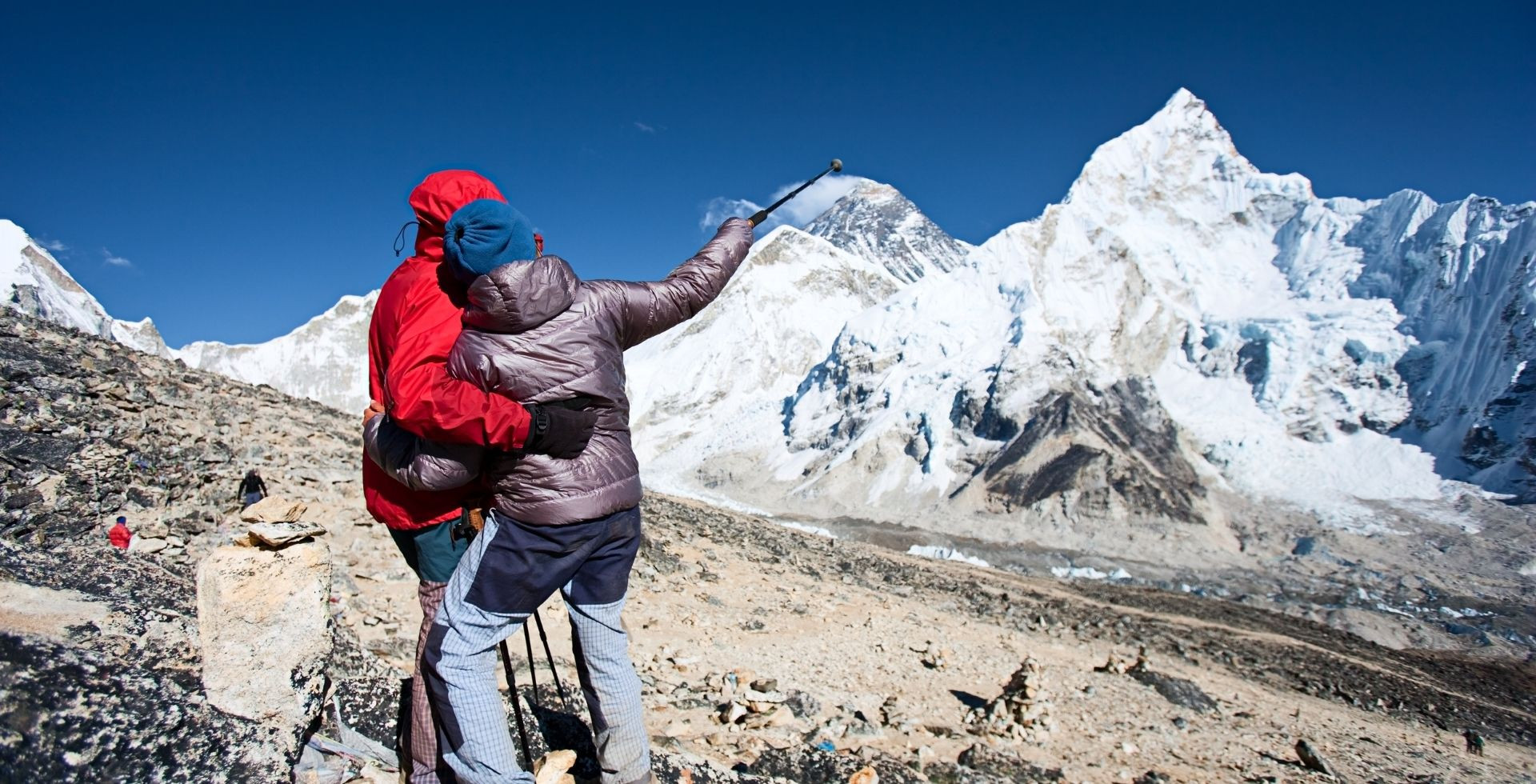
Every year, the North Everest Base Camp welcomes thousands of visitors from all over the world. And the majority of them go there for one main reason: a clear view of Mount Everest.
Although the South Everest Base Camp in Nepal is one of the top choices for those who love chasing adrenaline, the view of the mountain is blocked by Mt. Lhotse. The only way to get the clearest view of Mt. Everest in Nepal is all the way from Kalapatthar.
Another advantage of North EBC is the roadway that leads all the way to the base camp itself. That means you can drive all the way to about 5000 m above sea level. This means minimal risks and lower chances of accidents.
The standard of accommodation in the North EBC is also another plus point that we cannot ignore. When the weather is nice, there are tents set up at the basecamp, and they come with a heating system.
But the best choice for everyone is Rongbuk Monastery. After its reconstruction and remodelling of the New Rongbuk Monastery, their services now include underfloor heating, a humidifier, and an oxygen supply.
It is also a great place to interact with the monks while enjoying the taste of authentic butter tea. Rongbuk Monastery offers you a whole new perspective on appreciating Tibetan Buddhism.
Enjoy the sunset and the sunrise at North EBC with the faint sound of chanting in the background while you are surrounded by the view of mountains and prayer flags.
Kyirong, The Road to Everest and Kailash
More than 300 km away from North EBC, the drive to Kyirong Town will last between 6 to 8 hours. But after you reach there, you will realize that it has all been worth it.
Being the stop for everyone travelling to Mt. Kailash, Mt. Everest, or Lhasa from Nepal, Kyirong is a beautiful town that has earned its rightful name as the Backyard Garden of Mt. Everest.
At the altitude of 2,700 m above sea level, Kyirong hosts everyone with its temperate climate and fresh green forests.
Being on the other side of the Nepal-China border, visiting Kyirong will show you the vibrant culture that has been developed over centuries of trade and cultural exchange.
Not to mention, the town of Kyirong itself is rich in attractions. If you have time, make sure to visit Pakba Lhakhang. It is a Nepalese-styled structure that was built in the 7th century by King Songtsen Gampo for his Nepalese bride, Princess Bhrikuti.
Other notable attractions are Guru Rinpoche Cave, Pelkutso Lake, Kyipu/Jifu Canyon, and hot springs in Kyirong.
As you can see, this package is one of the most exciting ones that we have, taking you to the most unexpected places within 17 days. We have picked the best places from Nepal and Tibet, making sure you don’t miss anything.
Seriously, don’t miss out on this! Altitude Himalaya looks forward to hosting you!