



 Highest Point


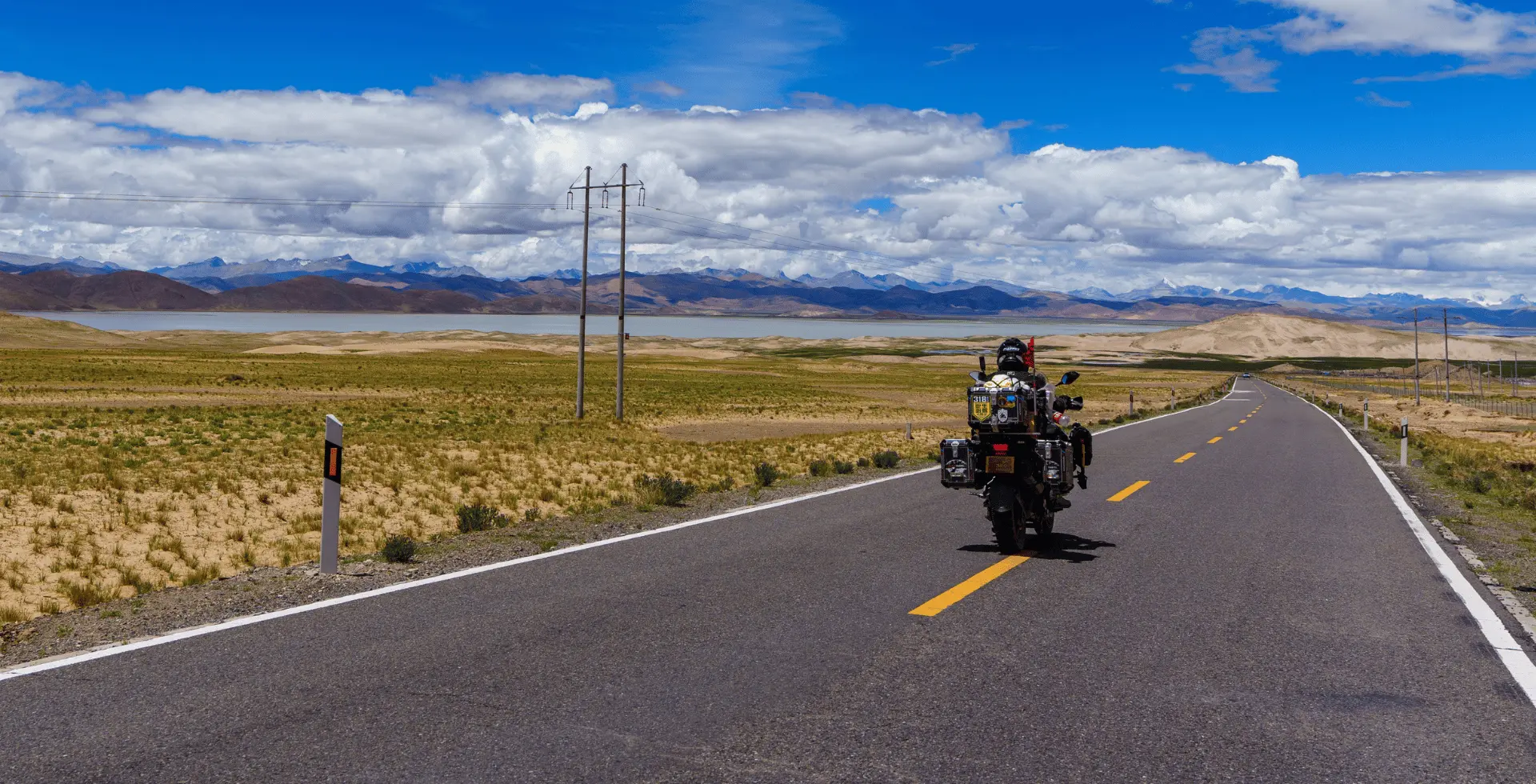
For centuries, Tibet has held the reputation of being unreachable and mysterious. Known as the “Roof of the World”, the Tibetan plateaus house some of the most awe-inspiring structures, which are now open for the world to witness.
With an average altitude of over 4000m above sea level, Tibet has a dry climate with low humidity.
Previously an independent country, Tibet was annexed by the People’s Republic of China in 1951. Today, it is known as the Tibet Autonomous Region , with Lhasa as its capital.
The region is known for its unique cultural and religious communities. Being the origin of Tibetan Buddhism, Tibet holds spiritual and emotional value for the Tibetans and those who practice it.
While visiting Tibet, you will come across palaces and monasteries that date back to the 7th century. This Lhasa Monasteries Tour, which lasts for 5 days, will give you an unforgettable memory and even a spiritual awakening, which many people specifically visit Tibet for.
Potala Palace – The Heart of Tibetan Buddhism
Potala Palace is the embodiment and the institutional heart of Tibetan Buddhism. The palace sits at the height of 3,700 m above sea level and was declared a UNESCO World Heritage Site in 1994.
The palace was built by King Songtsen Gampo in the 7th century (637 CE). It is said that the king built the palace for his marriage to the Chinese Princess Wencheng of the Tang Dynasty.
In 1645, the Fifth Dalai Lama rebuilt the palace and expanded it to 130,000 square meters. With over 1000 rooms, the Potala Palace served as the winter palace for the Dalai Lamas (5th–14th).
The Potala Palace is primarily divided into two parts: The White Palace (Potrang Karpo) and The Red Palace (Potrang Marpo). The color white represents peace and enlightenment, and the color red represents the spiritual power of Tibetan Buddhism.
The White Palace served as the living residence of the Dalai Lamas. It was also used for other secular uses; offices, seminary, and the printing house. As you walk around the White Palace, you will imagine the daily lives of the former residents.
The Red Palace was dedicated to religious studies and prayers. t is made up of numerous chapels and shrines and libraries for important Buddhist scriptures (Kangyur and Tengyur).
The most important part of the Red Palace is the sacred gold stupas containing the Tomb of the past eight Dalai Lamas.
Keep in mind that Potala Palace is more than a photographic backdrop. It stands tall in the heart of Lhasa to remind the international audience of the existence of Tibet and its unique culture.
Barkhor Street – The Pilgrimage Circuit
Located at the heart of Lhasa, Barkhor Street is around 1 km in circumference, constructed for pilgrims to perform Kora around the Jokhang Temple.
As you walk around, you will notice pilgrims with handheld prayer wheels or beads while chanting prayers. You might also see devotees perform full-body prostrations.
Pilgrims from all around the world come there to pay their respects to Sakyamuni Buddha, whose gilt-bronze statue sits in the Jokhang Temple. They move in a clockwise direction to honor Buddha’s path.
Once the 'Saint Road of Tibet', the street is now a bustling area where tourists can find restaurants and shops. You will find snack bars and tea houses throughout the street. The stores there sell unique Tibetan, Chinese, Indian, and Nepalese art and handicrafts .
Before you buy anything, we suggest that you use your bargaining skills, as other stores nearby could sell the same object for cheaper. If you’re eyeing a Tibetan knife, check their delivery options, as the knife cannot be consigned by flights.
There’s also a plus point if you are their first or last customer. This will result in you getting favourable discounts, as Tibetans believe that those customers bring good luck to them.
The best time to visit Barkhor Street is before breakfast. At that hour, the walk is pleasant, as the juniper incense adds to the location’s tranquillity. The street becomes even more lively during festivals!
If you are craving for some Western food, you will find fast food chains along the streets. The restaurants there also provide local Tibetan, Indian, and Nepalese cuisine .
Barkhor Street has alleyways which will connect you to other temples, markets, and homes of the locals. You won’t have to pay any entrance fees to enter the street. The fees are only required to enter Jokhang Temple.
Jokhang Temple and Ramoche Temple
Jokhang Temple (3,650 m above sea level) was built in 647 AD during the reign of King Songtsen Gampo. It is said that both his Queens, Princess Bhrikuti from Nepal and Princess Wencheng of the Tang Dynasty, contributed to the construction of this temple.
The temple, in the centre of Lhasa, houses the 12-year-old Jowo Shakyamuni, brought to Tibet by Princess Wencheng as her marriage dowry.
It is said that the temple was originally built to house the 8-year-old Akshobhya Buddha’s statue brought as a dowry by Princess Bhrikuti.
The statue was said to be swapped in 652 AD after the death of King Songtsen Gampo due to threats of the Tang dynasty’s invasion. Today, Jokhang Temple is an important destination for Buddhism and Lamaism.
This four-story structure has golden roofs built in Han style, while the watch towers are carved beams made in Tibetan style. The 103 wooden carvings of mythical beasts and human-faced lions display the blend of Nepalese and Indian artistic cultures.
Apart from the statue of Jowo Shakyamuni, this grand structure is filled with artefacts that are of immense religious value. The chapels in this temple have murals painted on the walls, which tell viewers about the history of Tibet.
There are about 800 metal sculptures and thousands of thangkas (hand-painted scrolls), along with extremely rare statues of valuable brass and copper, said to have been brought from Nepal, China and India (even Kashmir).
Now this brings us to another question: Where is the 8-year-old Akshobhya Buddha’s statue that Princess Bhrikuti brought from Nepal? The statue now rests in Ramoche Temple, the sister of Jokhang Temple.
Located to the north of Jokhang Temple, Ramoche Temple is an equally important structure. However, compared to Jokhang Temple, fewer tourists visit this holy site.
In 1474, Kunga Dondrup established the Upper Tantric College in Ramoche Temple, and it is still used by the monks from the same institution.
The monks were taught chanting, drawing mandalas, and other tantric rituals. To this day, Ramoche Temple stands as a living institution of tantric education.
The Great Gelug Monasteries
Tibetan Buddhism is made up of 4 different schools: Nyingma, Kagyu, Sakya, and Gelug.
The Gelug school (School of Yellow Hats), founded by Je Tsongkhapa in 1409, is the youngest and the largest school of Tibetan Buddhism, whose methods place great emphasis on philosophical studies.
In the Lhasa area, there are three monasteries that are called ‘The Great Three Gelug Monasteries’. They are:
Sera Monastery
Sera Monastery is located north of Lhasa, around 5 km away from Jokhang Temple, at the height of 3,700 m. It was built in 1419 by Jamchen Choje Shakya Yeshe, a senior student of Je Tsongkhapa.
It houses 3 colleges: Sera Je Tratsang, Sera Me Tratsang, and Ngakpa Tratsang. The colleges cater to monks who are between the ages of 8 and 70. It is said that the monastery housed around 6000 monks in its prime years.
In the Je and Me colleges, the monks take training for over 20 years. During this time period, they learn philosophical knowledge. On the other hand, the Ngakpa College is dedicated to the practice of tantric ritual.
Tourists enjoy watching the monks’ debates, which take place at the courtyard of the monastery at 3:00 PM every day, except on Sundays. It is known as one of the most interesting performances in Tibet and the most important part of learning for the monks.
The Sera Utsé Hermitage at Pubuchok mountain has several nunneries and temples, which tourists can see in their view above Sera.
At the right season, you will see beautiful wild roses (Rosa webbiana), and that flower is where the name of the monastery ‘Sera’ comes from.
Drepung Monastery
At the height of 3,800 m above sea level, Drepung Monastery is located approximately 8 km west of Lhasa’s old town. It is situated on the slopes of the sacred Gambo Utse Mountain, also known as Mt. Gephel.
In Tibetan, the name translates to ‘Rice Heap Monastery’ because it looks like a large heap of rice from a distance. It was built in 1416 by Jamyang Choje Tashi Palden, a disciple of Je Tsongkhapa.
It is a highly revered place, as it houses the tombs of the Second, Third, and Fourth Dalai Lamas. Before the Fifth Dalai shifted the power to Potala Palace, the former Dalai Lamas studied and executed their powers from Drepung Monastery.
There are 4 important colleges of the Gelug school here: Ngakpa (study of Tantric Buddhism), Loseling (study of Dialectics), Gomang, and Deyang. It is believed that the monastery once housed 7,700 monks in the 1930s.
You can watch the monks’ debates in this monastery as well. It starts around 2:30 PM at the courtyard every day, except on Sundays.
Ganden Monastery
Unlike Sera Monastery and Drepung Monastery, which are quite close to Jokhang Temple, Ganden Monastery is situated at Wangbori Mountain.
It is about 45 km east of Lhasa and was established in 1409 by Je Tsongkhapa himself, based on the spot he used for his meditation.
While the monastery is at the altitude of 3,800 m above sea level, the top of the mountain is at an altitude of 4,300 m. Therefore, tourists are advised to visit this monastery on the 3rd or 4th day of their trip to Lhasa, as they will have more time to acclimatize.
Unlike the other two monasteries mentioned before, when you visit Drepung Monastery, you are going to see a difference in lifestyle.
In this region, you can witness a nomadic lifestyle, and many still live in tents made of yak wool. If you’re lucky enough, they might even invite you in for tea.
Je Tsongkhapa’s mummified body was housed here until it was burnt during the Cultural Revolution. Fortunately, they were able to save his skull and some ashes.
The three main sites in this monastery are Serdung (tomb of Je Tsongkhapa), Tsokchen Assembly Hall, and Ngam Cho Khang (the chapel where Je Tsongkhapa taught his disciples).
When the weather is clear, visitors can also see the panoramic view of the Kyi-Chi valley. If you visit during the Ganden Ngachen Chenmo Festival, you will find the Drepung Monastery lit up with butter lamps in honour of Je Tsongkhapa.
Travel Tip: If you are visiting Lhasa at the time of the Shoton Festival, which takes place around late summer, make sure to attend the celebrations at Sera Monastery and Drepung Monastery.
The Monks’ Debate - A Must-Watch Performance
The monastic debate, renowned as the monks’ debate, is an important part of learning at the Gelug School. This practice was established by Je Tsongkhapa, the founder of the Gelugpa School, himself.
The debates are based on Buddhist doctrines to ensure that the monks are well learned. During the debate, there is an intellectual exchange where monks challenge each other’s understanding of the philosophies.
One of the main purposes of this debate is to enhance the monks’ critical thinking. It trains them to articulate complex ideas while maintaining composure. It is a lively and dynamic exchange that sharpens their knowledge.
The debate takes place between two parties: the challenger and the defender. The challenger stands while the defender stays seated. During the debate, you will see monks using different gestures for various reasons.
The gestures include actions such as clapping, jumping, yelling, stomping, and moving the prayer beads to the left arm.
Monks may clap their hands to pressure the defender to answer or to catch their attention. It may also signal the end of their statement. Stomping is done to demand an answer or to make an argument.
Challengers may also yell to dismiss ignorance or to shake the defender’s confidence. When they pull their prayer beads to their left arm, it is an effort to stay centred on the argument and remain calm.
Norbulingka Palace - The Summer Residence
At the height of 3,650 m above sea level, Norbulingka Palace is situated about 3 km away from Potala Palace. It was the summer palace of the Dalai Lamas, where they studied before they were formally enthroned.
The construction of the palace started around 1755 AD for the Seventh Dalai Lama, Kelzang Gyatso. Records state that the location of the palace had a spring with healing properties and the Seventh Dalai Lama used to take a bath in that spring whenever he would get ill.
The beautiful garden of Norbulingka actually has three palaces:
- The Kelsang Potrang is the oldest palace and is named after the Seventh Dalai Lama. The three-storey building still has the original furnishings from His Holiness’ time. The main attractions are the reception hall and the council chamber.
- The Tsokyil Potrang, when translated, means the Lake Palace, as it is built on a lake within the premises of the Norbulingka gardens. It was built by the Eighth Dalai Lama, Jamphel Gyatso. He also played a major role in the expansion of the palace. It is believed that this palace was used for meditation and reading. The Lake Palace was also used by the Dalai Lamas to meet the monks and officials and to host feasts.
- The Takten Mingyur Potrang was the summer palace of the Fourteenth Dalai Lama. When translated, the name means ‘Eternally Unchanging Palace’.
The best time to visit Norbulingka Palace is during the summer. The palace will be filled with vibrant blooming flowers and lush green trees, which stand in contrast to Tibet’s harsh weather.
There is also a small zoo inside the palace. The entrance fees to the zoo are not included in the entrance fee to the Norbulingka Palace, but upon request we can include it within this 5-day Lhasa Monasteries Tour. You will see animals such as snow leopards, Tibetan wolves, alpacas, and monkeys.
The entire Norbulingka Palace covers an area of 36 hectares. It takes around 2-3 hours to roam around the entire palace. In cases of time constraints, you can book the sightseeing cars available, which should be paid for separately.
Drak Yerpa - Ancient Meditation Caves
Drak Yerpa is about 30 km away from Lhasa, about a 40-minute drive. It is a large complex of meditation caves, temples, and monasteries at an altitude between 4,400 m and 4,800 m, making it one of the best options to acclimatize for those planning to trek in Tibet.
Tibetan historical stories say that King Songtsen Gyampo used to meditate here with his two queens. Drak Yerpa has also been used to meditate by respected figures of Buddhism like Padmasambhava (Guru Rinpooche) and Atisha.
The first building you will find when you enter Drak Yerpa will be Lhalung-Puk, where Monk Lhalung meditated after assassinating King Langdharma.
After that comes Dawa-Puk, also known as the Moon Cave. Here, you will find the main statue of Padmasambhava.
Next, you will find the statue of a thousand-armed Compassion Buddha in the next cave, Chogyal-Puk (Cave of King Songtsen). There is also the statue of King Songtsen Gyampo in this cave.
Then comes Jampa Lhakhang, the main building of Drak Yerpa. The statue of Maitreya Buddha (Future Buddha), the main statue, is placed here. On the right, the statues of Vairocana and Hayagriva can be seen, and on the left, there is the statue of Vajrapani (the wrathful Bodhisattva).
On the top, there is Drubthuk-Puk, leading to the cave where Atisha (the great Bodhisattva) meditated. There are several caves around this place which have been dedicated to Vajrapani.
Towards the east of Drak Yerpa, you will find Yerpa Lhari, another sacred mountain of Tibet. There is a sky burial site there, which is no longer used.
You can find a path which will take you around the mountain and give you the best view of Drak Yerpa and the surrounding valley.
Now that you have all the major information regarding the places you will be visiting through this package, check out the itinerary curated by our team at Altitude Himalaya. This 5-day Lhasa Monasteries itinerary ensures that your time in Lhasa will be magical and unforgettable!