Manaslu Circuit Trek can be completed in anywhere from 12 to 15 days, and that too on a reasonable budget between USD 1,200 and 1,800 per person.
Yup! That’s the most ideal Manaslu Trek cost for foreign tourists, considering the region’s remoteness, limited amenities, and an experience that lasts a lifetime.
One important thing to note is that your Manaslu Trek cost is affected by many factors, such as the season, road conditions, accommodation availability, unexpected emergencies, and more.
Honestly, you’ll also find packages being sold for as low as USD 800 per person. However, you should think twice before booking such trips.
I’ll tell you why, if you promise to read this article till the very end.
Summary: How Much Does Manaslu Trek Cost?
Here is a general breakdown of the cost for the Manaslu Trek:
|
Cost Element
|
Approx. Cost
|
Impact on budget
|
Included in package?
|
|
Permits
|
USD 180 - 220
|
12 - 15%
|
Yes
|
|
Guide salary
|
USD 25 - 35 per day
|
18 - 20%
|
Yes
|
|
Porter salary
|
USD 20 - 25 per day
|
12 - 15%
|
Depends on agencies
|
|
Transportation
|
USD 300 - 600 per vehicle
|
10 - 15%
|
Yes
|
|
Accommodation and Meals
|
USD 25 - 35 per day
|
20 - 25%
|
Often
|
|
Equipment and gear
|
USD 100 - 500 (depends on the quality and quantity of items you’re buying)
|
5 - 10%
|
No
|
|
Personal Expenses
|
USD 100 - 150
|
5 - 10%
|
No
|
|
Tips for Guide & Porter
|
USD 120 - 160 (your choice!)
|
5 - 10%
|
No
|
|
Travel Insurance
|
USD 100 - 300
|
5 - 10%
|
No
|
|
Emergency cash
|
USD 150 - 200
|
5 - 10%
|
No
|
Manaslu Trek Packages by Altitude Himalaya
Before even moving forward, I’d like to tell you that Manaslu Trek packages at Altitude Himalaya begin at USD 1,450 per person and go up to USD 1,550 per person.
We are not selling just a luxury trip. We are inviting you for a lifelong experience with our wanderlust family!
If you’re unsatisfied with the pricing, you can call or text us directly, and I’m sure our answers won’t disappoint you.
It’s not that we can’t do it at USD 800 or 900. It’s rather about combining your experience with a top-notch cultural journey and the opportunity to travel with some of the best guides in the country.
Our 15-Day Itinerary at USD 1,550 Per Person
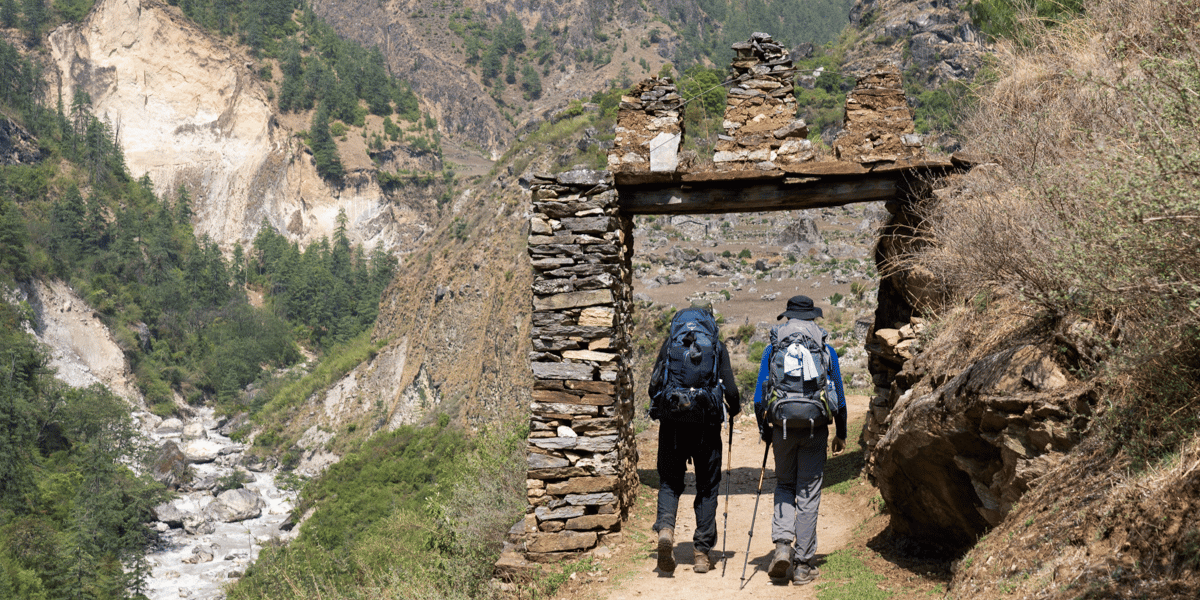
Here’s our standard Manaslu Circuit Trek itinerary:
- DAY 01: Kathmandu Arrival.
- DAY 02: Kathmandu Sightseeing, Trek Preparation.
- DAY 03: Drive to Macchakhola.
- DAY 04: Macchakhola to Philim Drive, Reach Deng.
- DAY 05: Deng to Ghap.
- DAY 06: Gap to Lhi.
- DAY 07: Lhi to Shyala.
- DAY 08: Visit Pungen Gumba, Reach Samagaun.
- DAY 09: Samagaun Rest Day, Optional Hikes.
- DAY 10: Samagaun to Samdo.
- DAY 11: Samdo to Dharmashala.
- DAY 12: Dharmashala to Bhimthang via Larke Pass.
- DAY 13: Bhimthang to Tilche.
- DAY 14: Tilche to Kathmandu Drive, Farewell Dinner.
- DAY 15: Farewell, Departure.
Of course, you’ll find plenty of other ideas about the itineraries. It’s not compulsory that you follow this. It is one that we curated after properly analyzing what would be best for even beginner trekkers doing a high-altitude and strenuous Manaslu trek.
Not to forget, this 15-day itinerary price includes:
- Arrival and departure services on a private basis.
- Sightseeing of UNESCO World Heritage Sites in Kathmandu in a private vehicle with a professional government-licensed tour guide (entrance fees also included!).
- Reaching the starting point as well as coming back to the capital in a private vehicle.
- 3-star REPUTED hotel stays in Kathmandu and best mountain lodge stays during the Manaslu Circuit Trek (with BLD included).
- All permit costs are on us, including government and local taxes!
- One of the best trekking guides in the country (with the possibility of our own team coming to assist you for the best experience).
- Porters, depending on your group size.
- If required, a sleeping bag (for Dharmashala), a duffle bag (for the porter), and a local SIM card are also included.
- Also, a farewell cultural dinner with a trek completion certificate in the end.
Sounds good? Then, don’t hesitate to book our 15-day Manaslu Circuit Trek package! And if you’re from Australia, check out this 15-day package at AUD 2200 per person.
Alternative: Our Group Join Trek at USD 1,450/Person
Sounds a bit expensive? No worries. USD 100 discount if you book our Manaslu group join trek!
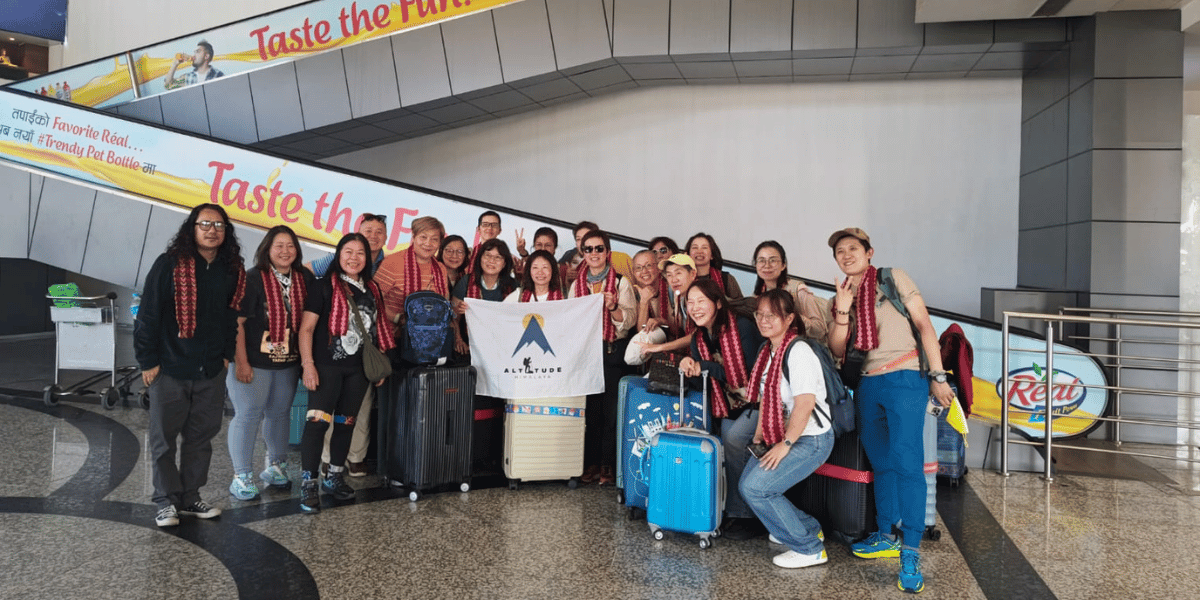
For USD 1,450 per person, you’ll enjoy all the mentioned perks. The only thing that changes is the comfort of private touring in exchange for meeting strangers along the trek. That’s actually an added advantage for extroverts, right?
Well, this tour idea is best for those who are in small groups and are comfortable adjusting to larger groups. Leave the logistics to us while you enjoy a wonderful time, taking in the views of Mt. Manaslu and immersing yourself in the Nubri culture.
Customization Option Available
If it were up to me, I would spend months with the Manaslu people here. I know many of you are seeking a similar experience, whether it is for culture or for natural beauty.
So, if you feel 15 days isn’t enough, no problem! We can curate a package just for you at a budget you’re comfortable discussing with us. We are absolutely flexible with everything.
We already offer a combined Manaslu Circuit with Tsum Valley Trek comprising 21 days at USD 2,000 per person. And those interested only in the Tsum Valley trek can complete it in 13 days with us at just USD 1,600 per person.
Manaslu Trek Cost Breakdown
Look, we want to be transparent about our costs. Of course, we charge certain trekking agency fees, which are part of the policy. Besides that, there are no hidden costs. I promise!
Customer satisfaction remains our top priority, and we do not want you to feel misled at any stage of our booking process.
Even if you’re planning to book the Manaslu Circuit Trek package with another trekking agency, this cost breakdown will still help you a lot!
Note: The costs shared below are rough estimates. Exact pricing can vary unexpectedly, so you should be mentally prepared for slight differences.
Cost of Permits
First and foremost, the Manaslu Conservation Area falls within the Chumnubri Rural Municipality. Every ward within this gaupalika, whether in the Kutang, Tsum, or Nubri region, is considered a restricted area.
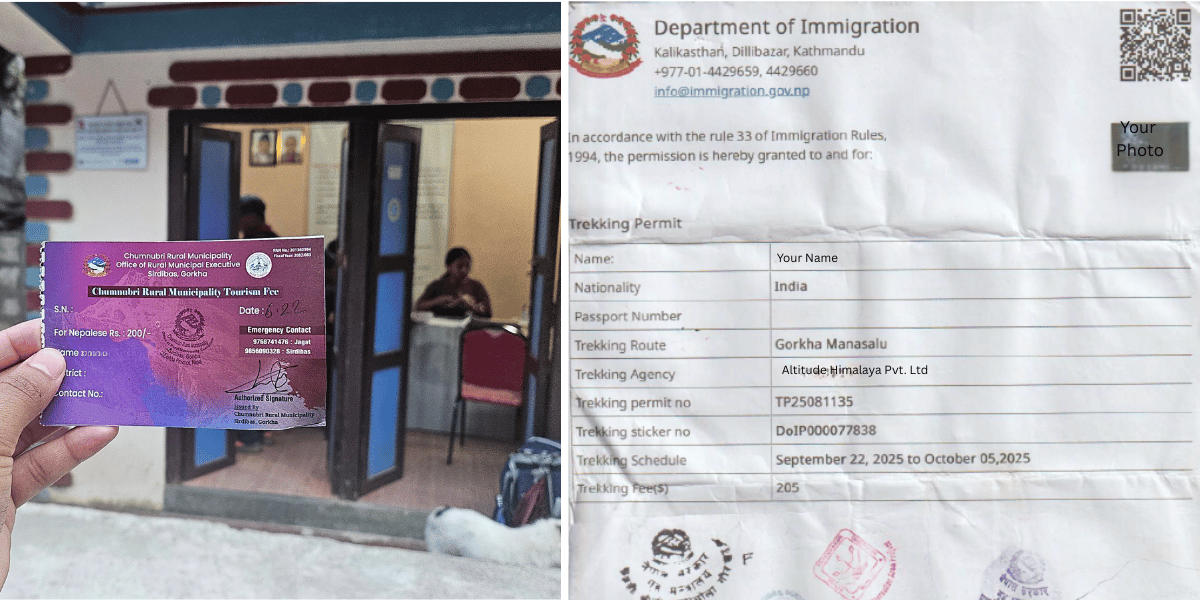
Understanding this is important because a general conservation area entrance fee is not enough to visit the Manaslu region. Considering the cultural sensitivity, you also require a special permit issued by the Chumnubri Rural Municipality in Jagat.
Not to forget the TIMS Card, which is not compulsory but highly recommended for safety reasons.
You also need the Annapurna Conservation Area Project permit separately, as the region you enter after crossing Larke Pass in Manang district falls under the Annapurna Conservation Area.
If you’re counting, that makes a total of four permits. They have separate costs depending on nationality, age, and season of travel. Here are the complete details:
|
Permits
|
Season
|
Nepali Citizens
|
SAARC National
|
International Trekkers
|
Child Discount
|
|
Manaslu Conservation Area Project (MCAP) Permit
|
All
|
-
|
NPR 1000
|
NPR 3000
|
Free for children below 10 years
|
|
Manaslu Restricted Area Permit
(covers Chumnubri Rural Municipality 1, 2, 3, and 4)
|
September to November
|
-
|
For a week: USD 100
|
|
Beyond 1 week: USD 15/day
|
|
December to August
|
-
|
For a week: USD 75
|
|
Beyond 1 week: USD 10/day
|
|
Chumnubri Rural Municipality Permit
|
All
|
NPR 200
|
NPR 1000
|
|
Tsum Valley Restricted Area Permit
(covers Chumnubri Rural Municipality 3, 6, 7)
|
September to November
|
-
|
For a week: USD 40
|
|
Beyond 1 week: USD 7/day
|
|
December to August
|
-
|
For a week: USD 30
|
|
Beyond 1 week: USD 7/day
|
|
Annapurna Conservation Area Project (ACAP) Permit
|
All
|
-
|
NPR 1000
|
NPR 3000
|
|
TIMS Card (not compulsory, but recommended)
|
All
|
-
|
NPR 1000
|
NPR 1000
|
Guide vs Porter vs Porter-Guide Salary Difference
As you’re in the restricted region of Manaslu, going on an individual trek is completely prohibited. You can’t enter here without a licensed guide or through a registered trekking agency.
Not kidding. You need to apply for the restricted area permits way before your trek begins. Your application is only accepted if you’re going through a trekking agency.
Once you reach Jagat, the starting point of the trek, there has to be a guide besides you in order to get other permits.
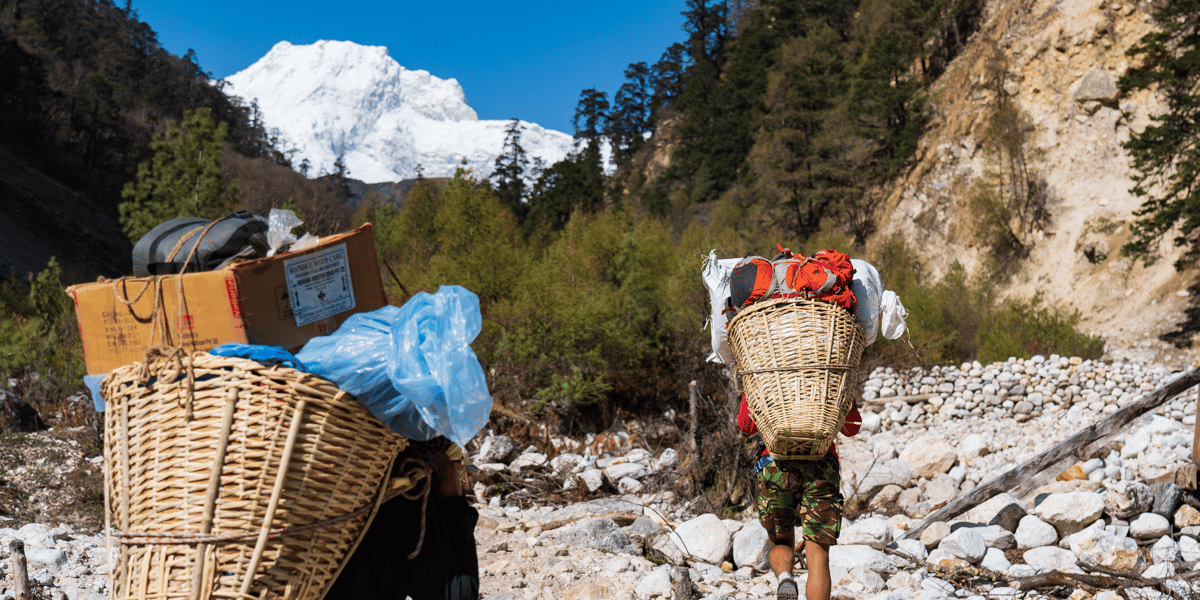
Then come the porters. Hiring luggage helpers is actually optional. But if you’re getting help from even one who carries up to 20 kg of your load, you’re not just decreasing the bag’s weight but helping them financially too.
Now, coming back to why many packages are sold at low cost. If you check the inclusions, you might be given a porter-guide. Meaning, professionals that help you carry the load as well as guide you on the Manaslu journey.
Honestly, even Altitude Himalaya can arrange such a service for you. But think about it. That’s one person doing the job requiring two at a reduced fee. Something that we do not do as a part of our responsible tourism policy.
Still, here’s an idea of how much these porters charge per day:
- Professional government-licensed guides (Guide): USD 25 to 35
- Government-licensed porters (Porter): USD 20 to 25
- Professionals with both guide and porter license (Porter-Guide): USD 30 to 40
Transportation Cost
To reach the starting point of the Manaslu Circuit Trek, the only option is by road. This means you can travel here by bus or jeep. Both private and shared vehicles are available.
When I travelled with my content team and some foreigners, travelling with local guides, it cost around USD 20 to 25 per person to reach Machhakhola.
Even though October was the best time to visit Manaslu, the road conditions were not up to par. So, we had to reach Soti Khola by bus, followed by a jeep ride to Machhakhola.
That was the case when vehicles couldn’t reach Jagat or Philim (up to which the road is paved). But if they do, the cost rises to USD 30 to 35 or even more.
During the return, it cost us almost the same price to reach Besisahar from Tilche. Then, about USD 10-15 to reach Kathmandu on a van (similar to the bus ticket price). The latter service on a private vehicle can cost you USD 20 to 25 per person, like earlier.
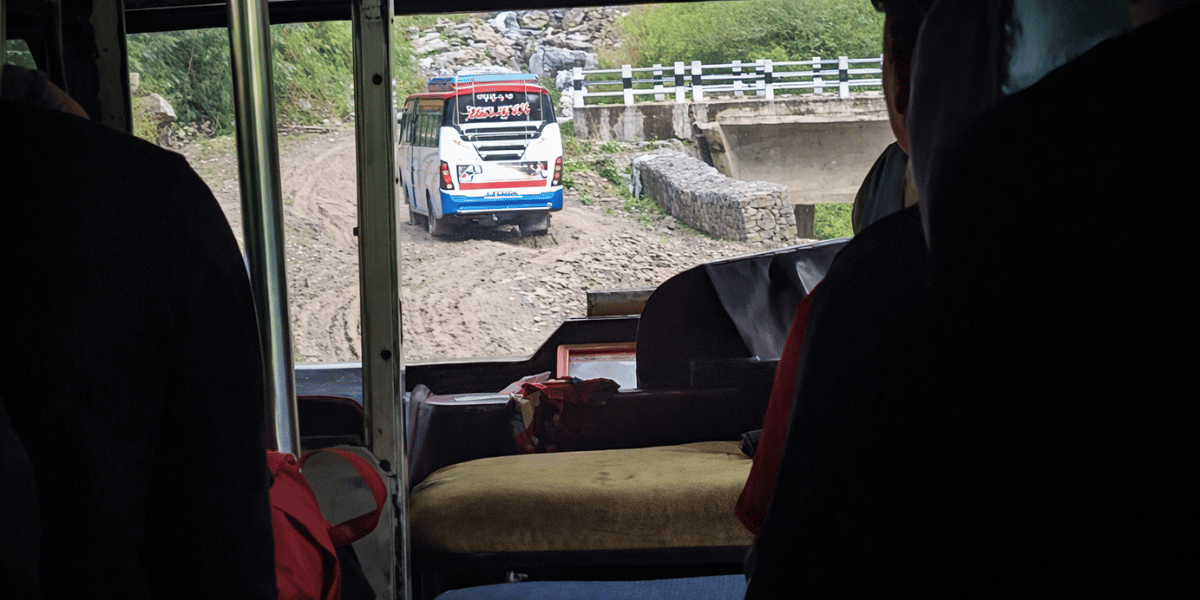
USD 50 to 60 sounds inexpensive but that’s because we travelled independently, on a low budget, and in public vehicles. This won’t be the same when it comes to foreign trekkers.
While some packages (those USD 800-900 ones) include public transportation within their package, most reliable trekking agencies think about your comfort more.
For instance, when travelling with Altitude Himalaya, we make sure a private vehicle is arranged for you, whether it be a bus or a jeep (depending on the group size). And that costs a little extra!
Near about USD 300 for one round trip for the entire vehicle. That’s around USD 600 overall from Kathmandu to Kathmandu. If you want a per-person calculation, just divide the cost by your group size. Max. 4 to 6 trekkers.
Daily Accommodation and Food Cost
Your daily routine when doing the Manaslu Circuit Trek looks something like this:
- Wake up, have your breakfast, and start your hike.
- After about 4 hours of hiking, take a lunch break.
- Reach the destination by the late afternoon, check in, and immerse yourself in the local teahouse vibes.
- Dinner is usually early. 7 to 8 PM. Before heading for sleep.
- Wake up and repeat.
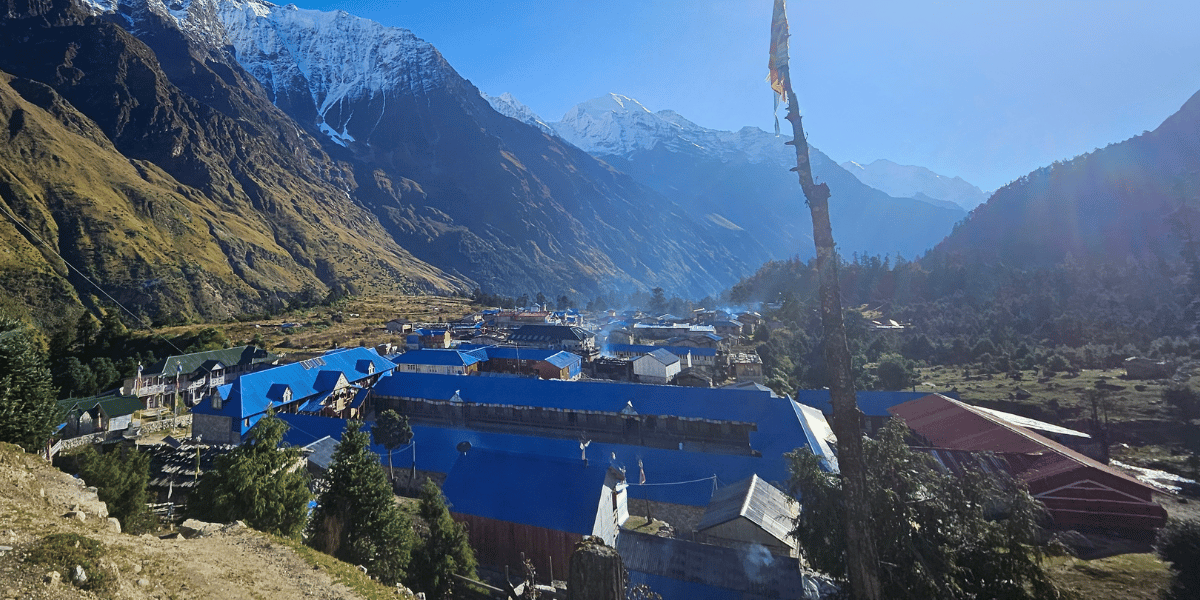
Clearly, you see that the major cost goes into your breakfast, lunch, dinner, and accommodation.
I can’t exactly tell how much you’re going to spend per day because it completely depends on your spending habits. Some of us may order extra snacks, try local foods, and opt for extra amenities.
But travel packages won’t cover every service. Even at Altitude Himalaya, we generally allocate USD 25 to 30 per day, depending on the location and accommodation.
Note that some packages won’t include meals at all. So, in such cases, you’ll have to collaborate with your guides for payment. So, carrying cash becomes of the utmost importance!
Equipment and Gear Cost Idea
We discussed your expenditure on the Manaslu trail. But what about your gear?
If you’re an experienced regular trekker, you might not need to buy every single piece of trekking equipment. But for first-timers, you need to allocate a separate budget for shopping.
You have to buy sturdy hiking boots, good-quality trekking poles, suitable moisture-wicking clothes for hikes, mountain sunglasses, crampons, gadgets, and all other stuff. Check our complete Manaslu packing list here for reference.
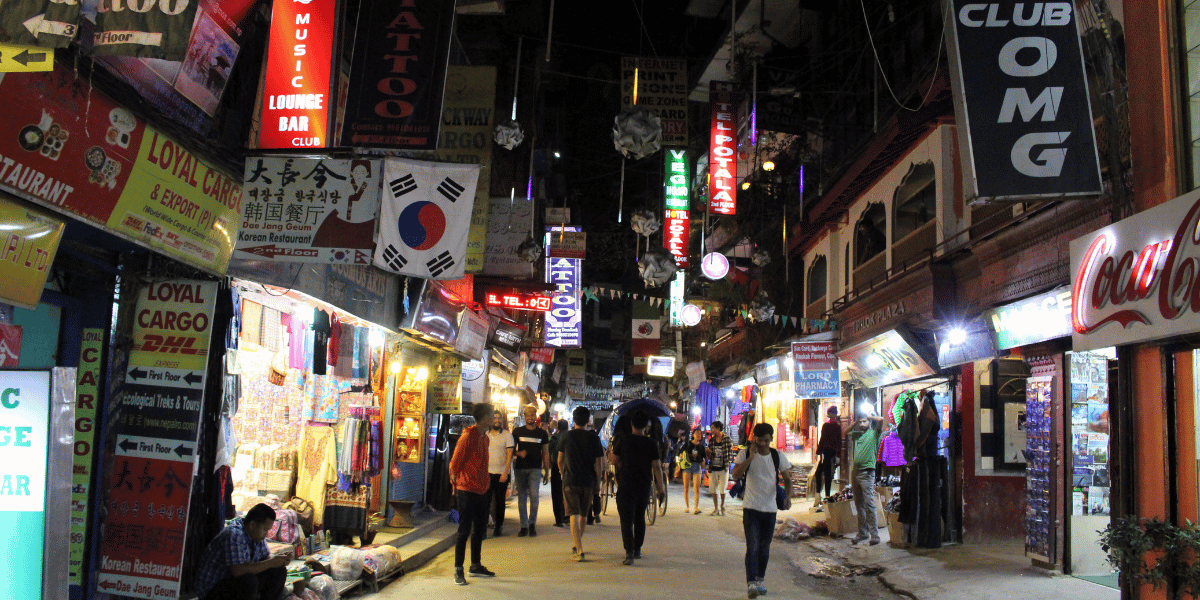
I would suggest shopping in Nepal, as Thamel is a hub for trekkers. You’ll find all the equipment here at a low budget, too. Even renting is possible. But if you prefer better quality, it’s better to buy goods from your home country. All up to you, really!
Note: You shouldn’t worry about buying or renting sleeping bags (useful in Dharmashala), as we often include them within the package fee itself!
Besides the main package cost, you should definitely carry Nepali cash with you for extra services. Let me give you a basic idea of the additional budget allocation.
Snacks and Medications
Firstly, food in the Manaslu Circuit Trek isn’t limited to just Dal Bhat. You’ll find both local and western varieties. So, if you’re craving those French Fries or the local taste of mo:mo:, you have those options here.
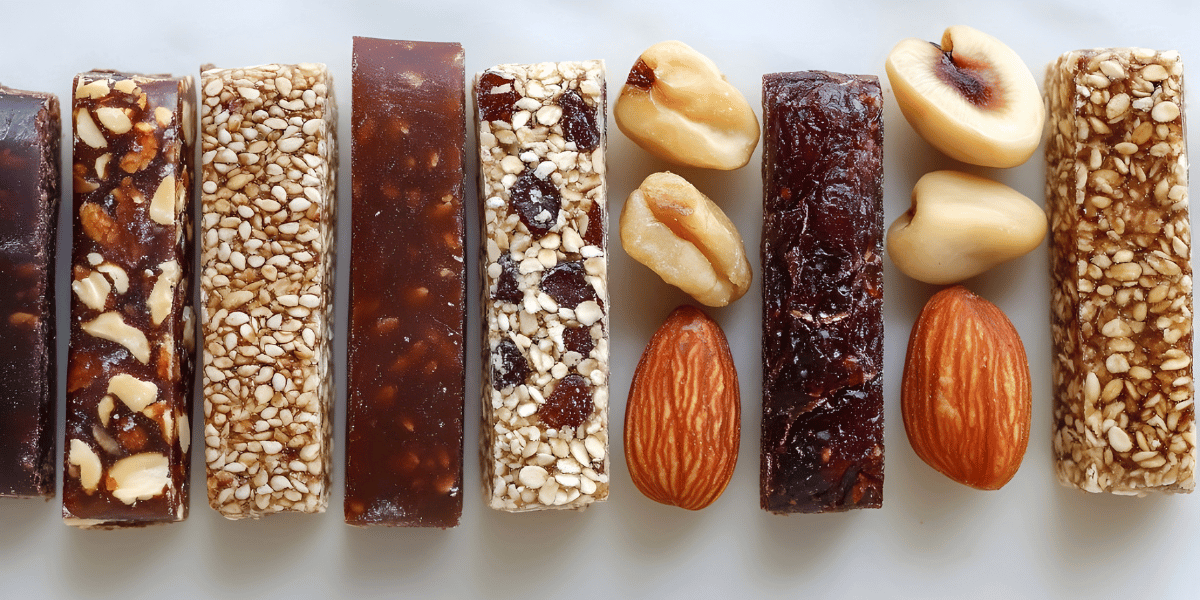
But do note that not all snacks are available. Those protein gels, nut butters, or even branded chocolates can’t be found. For that, you’ll have to carry them from your home or buy them in Kathmandu city.
Likewise, Manaslu Circuit trails aren’t equipped with proper health posts at all. Thus, finding medicines is going to be another headache. Better to carry them with you from the beginning of your Nepal trip.
You might like reading: Best Nepalese food to try
Personal Expenses on the Trail
Accommodation in Manaslu is basic, but that doesn’t mean you’re limited when it comes to additional services. Hot showers, Wi-Fi, power bank charging, and other facilities are present, but lodges charge you extra for them.
Even refilling bottles with warm water calls for pulling out some of those rhino notes. Also, you might want to taste local apple pies and danish pies on the route to Namrung that can cost you up to an elephant note.
Remember: these personal expenses aren’t covered by any travel agency. So, you must carry some extra Nepali cash.
Tipping Guides and Porters
Now, let’s talk about tipping culture. It’s not a compulsion but a long tradition in the Himalayas.
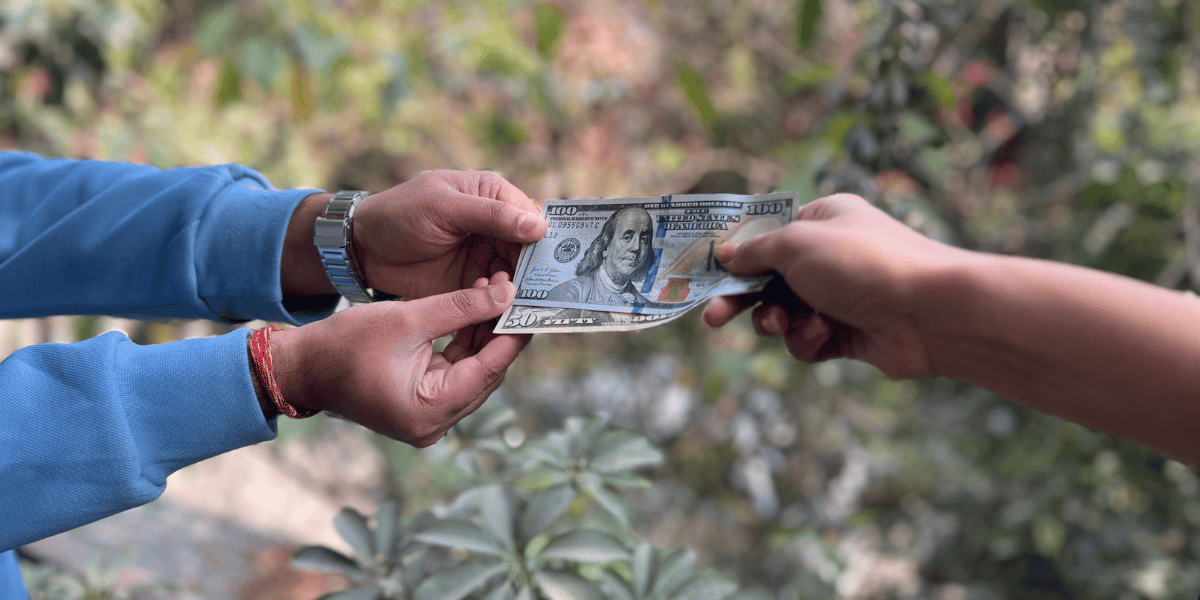
You’ve already read the standard per-day salaries of our hard-working guides and porters. USD 25 to 35 per day salary is something only reliable agencies, like Altitude Himalaya, offer. Not all do.
These professionals are the ones who help you along the trail and come to your rescue during emergencies. I’m sure that at the end of the Manaslu Circuit Trek, you’d look back and feel for them.
So, I won’t tell you this much or that much to tip your mountain leaders and luggage helpers. It’s completely up to you!
Just as a general reference, most travel experts, including everyone at our Altitude Himalaya team, say 10% of your overall Manaslu budget should suffice.
Emergency Evacuation and Travel Insurance
Altitude sickness and accidents are something that we can’t predict on the mountain trails. Looking back at history, there have been multiple reports of injuries due to falling rocks, slipping, and similar incidents.
During my own Manaslu Circuit Trek, two people ahead of us lost their lives due to altitude sickness. I’m not trying to scare you; I just want everyone planning this trek to be mentally aware of the worst-case scenarios.
The region’s bad weather, remoteness, and high-altitude passes are definitely major concerns. In case any emergencies occur, your travel insurance is what covers you, which also adds to the overall cost.
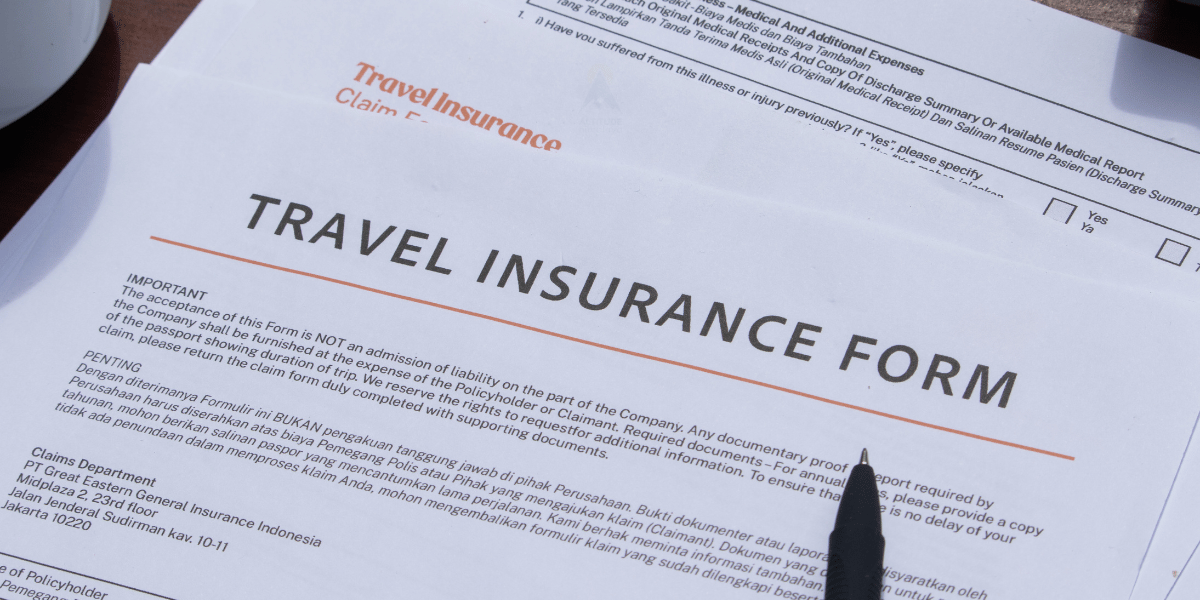
When insuring yourself, be sure to choose one that covers high altitude, above 5,000 m, with emergency helicopter evacuation and altitude sickness medications. The cost should come in the range of USD 100 to USD 300.
Why this is important is that even helicopter rescues in the Manaslu region are challenging. And they can cost nearly USD 5,000 to 10,000, depending on the severity of weather conditions.
Payment Methods in Manaslu Circuit Trek
Now that you have a proper idea of the expenses in the Manaslu Circuit Trek, you might be wondering how to pay at the local lodges.
Option For Online Payments [Not Very Reliable]
For Nepali trekkers reading this, online payments are available only in some standard lodges in the lower Manaslu region (up to Namrung). However, they aren’t the most reliable, and carrying cash is still the best option.
Foreign trekkers do not need to stress about major payments either. Your main expenses, like transportation, guide/porter salaries, accommodation (with BLD, if included), and permit fees, are usually covered. But if you’re thinking of paying online, that won’t be possible!
Coupon System Followed by Guides
Remember that some low-cost packages exclude multiple services. In such cases, you’ll have to coordinate with the guide for payments.
These days, guides carry special coupons, not available to individual trekkers. It’s simply a system used by guides and lodges to manage payments more smoothly (something I learned during my own trek).
ATM: Unavailable on Manaslu Route!
Don’t rely on ATMs along the Manaslu trail because there are none available.
While new booths are being installed in Soti Khola and Machhakhola, these are likely the last locations where you can withdraw cash. So, again, it’s much better to carry those rhino and elephant notes from Kathmandu itself.
Nepalese (NPR) Cash: The Only Reliable Option
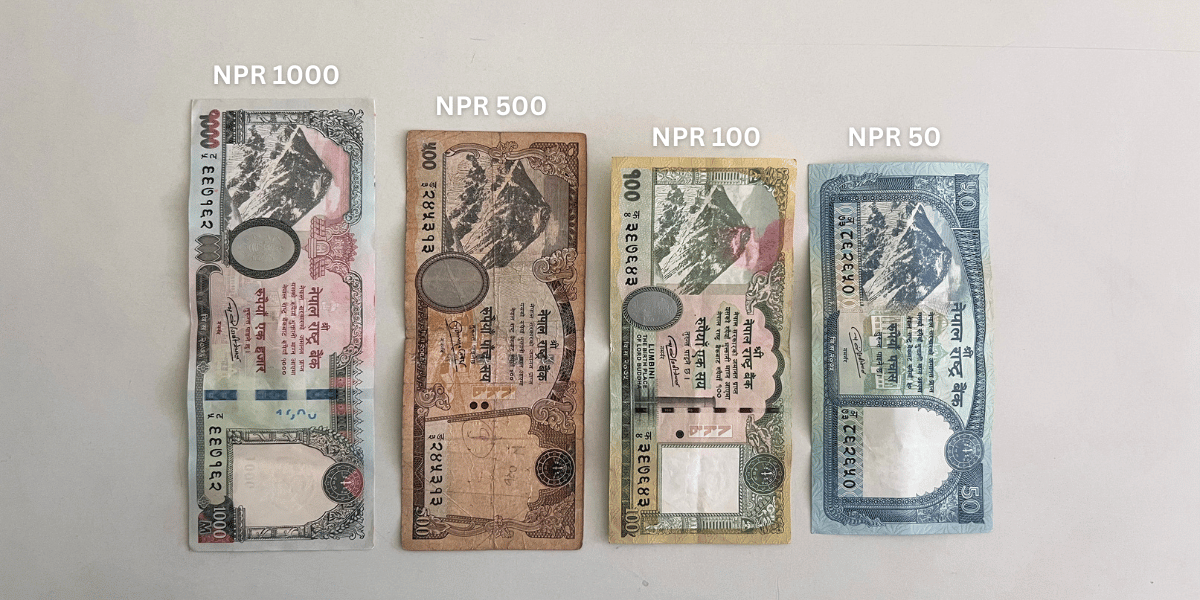
You see, the best approach is not to think about online or card payments at all during the Manaslu Circuit Trek. Exchange your currency in Kathmandu, carry it safely, and pay directly to the lodge owners when needed.
You can also tip locals if you appreciate their service. Just avoid bargaining aggressively, as the region is extremely remote and isolated. Think about the effort it takes for supplies and services to reach here.
Respect and pay. That’s all you need to do.
Money Saving and Management Tips For Manaslu Trek
When it comes to the mountains, money becomes secondary. So, don’t think you’re overspending, because just visiting this remote part of the Chumnubri Rural Municipality to witness the eighth-highest mountain in the world is a once-in-a-lifetime experience.
But you should still be mindful of your finances, like how to arrange cash in your pockets and how to spend wisely. Let me guide you through it.
Where to Exchange Your Currency
There aren’t licensed money changers along the Manaslu Circuit route. You must exchange your currency while you are in the capital city.
Pre-planning your trip is essential. You’ll find currency exchange centres at:
- Tribhuvan International Airport (TIA) arrivals lounge
- Thamel, Kathmandu (a tourist hub where you’ll likely stay before heading to Gorkha)
- Or, get direct help from your tour operators. That’s another perk when travelling with Altitude Himalaya.

Guidelines for Proper Cash Management
Once you’re ready with the Mt. Everest-imprinted notes, don’t put them all in a single pocket or wallet. Why? Imagine losing your wallet or having a hole in your pocket. You could lose all your cash at once!
So, follow my “cash split” strategy. This means dividing your money into different compartments of your bags and pockets (in different clothing). Here’s what to do:
- Divide your money into 7 to 8 groups. The more, the better. For instance, NPR 40,000 can be divided into 8 groups of NPR 5,000.
- Now, find the best pouches or compartments. These could be your trouser pockets, your bag’s inner compartments, your wallet, or even your phone cover.
- Make sure these places have proper seals or zippers so they have no chance of accidental drops. Even a first aid kit or a sunglasses cover would be great!
- Another tip is to allocate one pocket as your go-to place for spending. If you spend the first NPR 5,000 from this pocket, refill it from another compartment. Dividing further is even better, but while trekking, you won’t always have time.
What this does is ensure that even if you lose cash from one place, you are still on the safe side. Choosing multiple random places is the best option!
Money-Saving Tips For Budget Trekkers
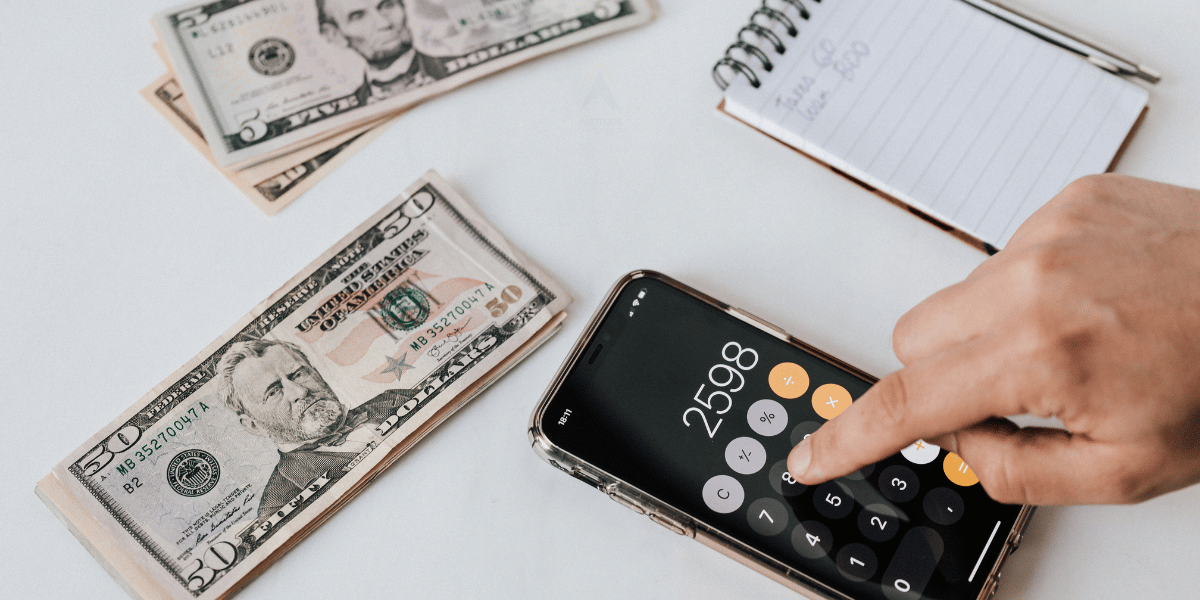
The techniques I’m going to share won’t save you hundreds of dollars but small amounts that you can utilize elsewhere. These are not exactly money-saving tips but smart spending techniques:
- Be part of group-join Manaslu treks, like the one we organize. You already learned earlier that you could save up to USD 100 this way.
- Try avoiding the peak seasons (Autumn and Spring). During these times, both accommodation and transportation costs rise.
- Opt for a local bus service instead of a private vehicle. You’ll also experience the daily life and culture of Nepalese people this way.
- Choose Dal Bhat over Western food. It’s cost-friendly and good for your gut health.
- Processed drinking water can be a little pricey, even in the lower Manaslu region. Carry a water bottle and purification tablets instead.
- Avoid hot showers at high altitudes (beyond Namrung). It’s not only about saving money. Wet hair in cold temperatures can later lead to sickness that you’d want to avoid.
- Try keeping yourself away from meat as much as possible and choose eggs instead. There are three reasons for this:
- The upper Nubri Valley follows a non-violent cultural practice, so you’re respecting local traditions.
- There is no proper refrigeration system, so the meat is mostly stale.
- And the most obvious: it saves money (as veg options are the most cost-friendly in Nepal).
- Renting gear is a great way to save money. However, I still suggest investing in good-quality gear rather than focusing only on budget.
- Avoid random snacks and bakery items that you don’t really need. French fries, pizza, and other Western items sound tempting but are neither worth the price nor taste.
- You also don’t need Wi-Fi. The Manaslu Circuit Trek is the perfect way to cure your phone addiction.
Money Etiquette
When I interacted with the Nubripa and Bhotia people during my own Manaslu trek, I realized how privileged I am. Peeking into their daily lives, you’ll understand how challenging life is here.
Whether you’re a local (Nepali) or a foreign trekker, you need to show respect to the people living here. Here are some do’s and don’ts for your Manaslu Circuit Trek:
- Don’t bargain aggressively. It is difficult for porters and pack animals to carry goods to such remote areas.
- If you check out late, don’t hesitate to pay the extra charge. Lodge owners need to prepare for the next guests.
- Respect the tipping culture I explained earlier, and reward your porters/guides with some cash, even if it’s in a group.
- Donate cash only to monasteries or places that have dedicated donation boxes.
- Do not give money to beggars or children. Instead, buy them food or clothes. This applies not only to the Manaslu trail but also to city areas.
Final Thoughts: Is Manaslu Worth the Cost?
Before you judge the cost, you also need to understand the nature of the trek itself. The Manaslu Circuit is not an easy or luxury-friendly route.
This is a remote, high-altitude, and physically demanding trip where every service, from food to accommodation, is carried for 11-14 days through rugged terrain. This level of difficulty is exactly what influences the overall pricing.
No doubt, the Manaslu Circuit Trek is worth every penny!
You might feel that USD 1,550 per person from Altitude Himalaya is a bit expensive. But honestly, we are not selling a package. We are offering an experience!
For this price, you’re not just covering logistics but also experiencing major highlights like the remote Nubri villages, close views of Mt. Manaslu, and the iconic Larke Pass at 5,106 meters.
Of course, USD 800 to 1,000 is also possible. But now that you understand where your money goes, I hope you now have the answer.
In fact, I always mention this to anyone who drops a message in my inbox. When you travel with Altitude Himalaya, we serve you the way Nepalese homes welcome guests as gods. Moreover, we let you represent our brand, which is personally more important to us!
So, don’t stress about the price. Begin your Manaslu Circuit Trek preparation as you read these final lines. Leave the logistics to us and come join us for one of the best treks in Nepal!


 Bhishu Acharya