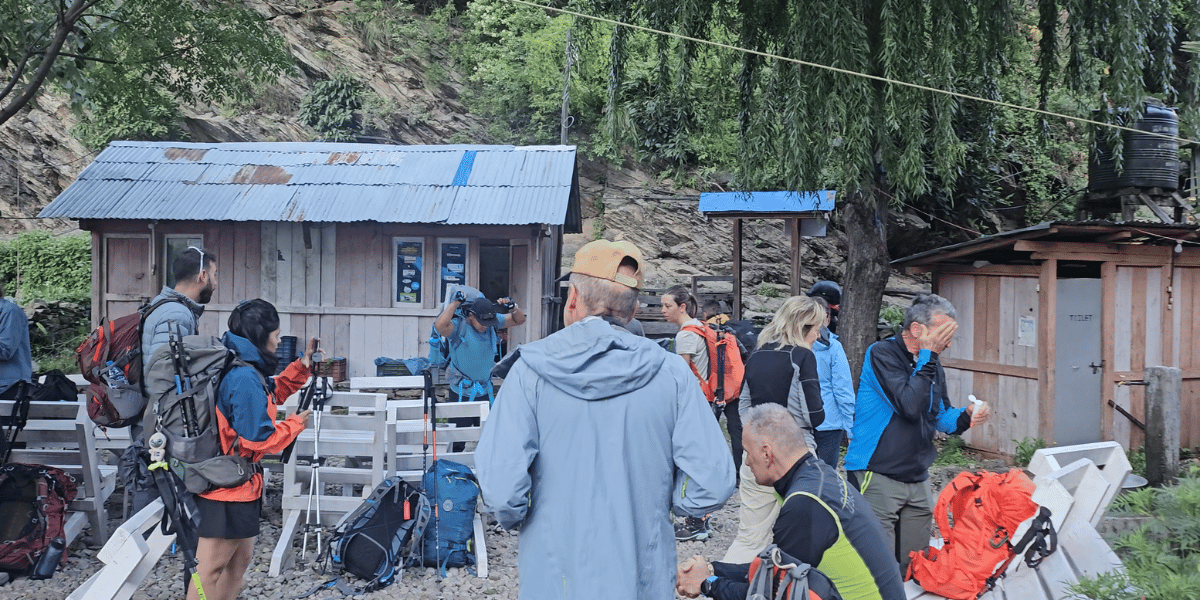
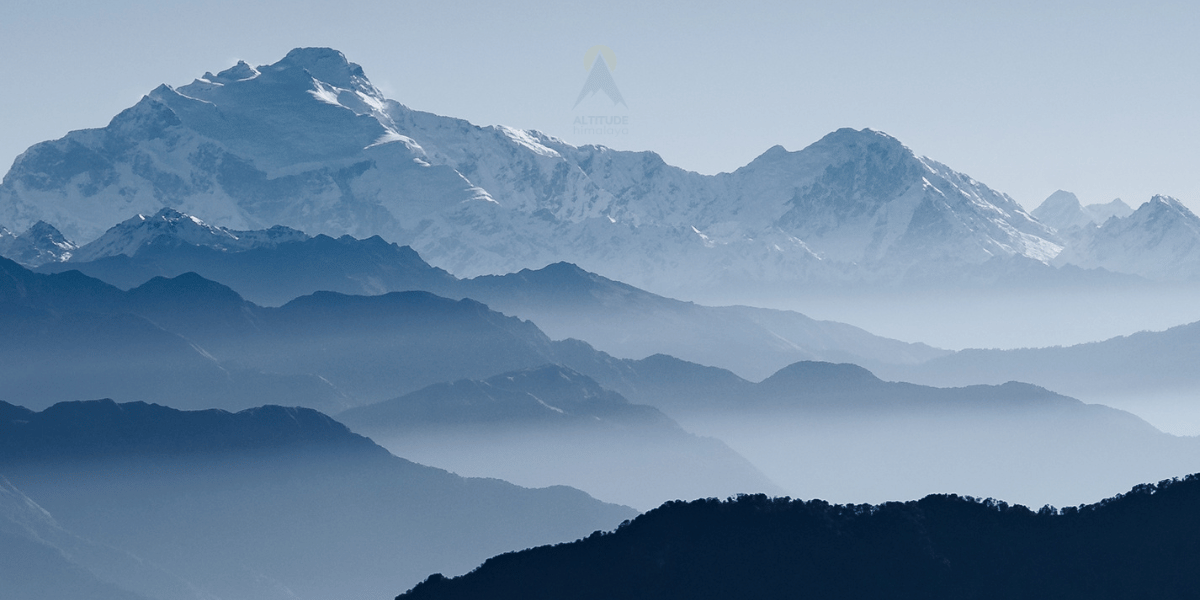
It’s been years since we have been serving our guests privately. But from multiple guests who have approached us, we are often asked if we offer group-joining activities.
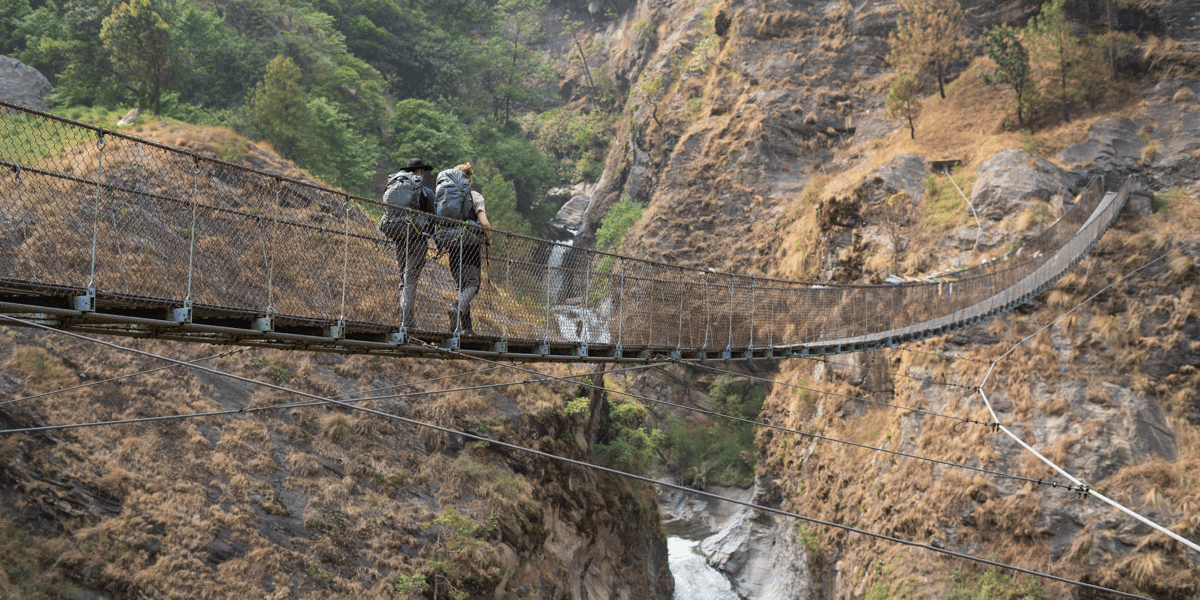
And now, we are glad to say that we have started group-joining treks in multiple trekking destinations. The Manaslu Circuit is one of them.
Allow me to explain the benefits of joining our Manaslu Circuit Group Trek:
Flexible for Solo Trekkers
IMPORTANT: Even a single trekker is now eligible to obtain a restricted area permit (meaning, you no longer need a minimum group of two). However, applications must still be processed through a registered trekking agency, and each guide can now accompany a maximum of seven trekkers.
The Manaslu Circuit trekking route from Jagat to Dharapani is marked as “restricted.” This includes all the wards of Chumnubri Rural Municipality and the exit section of the Annapurna region’s Nason Rural Municipality.
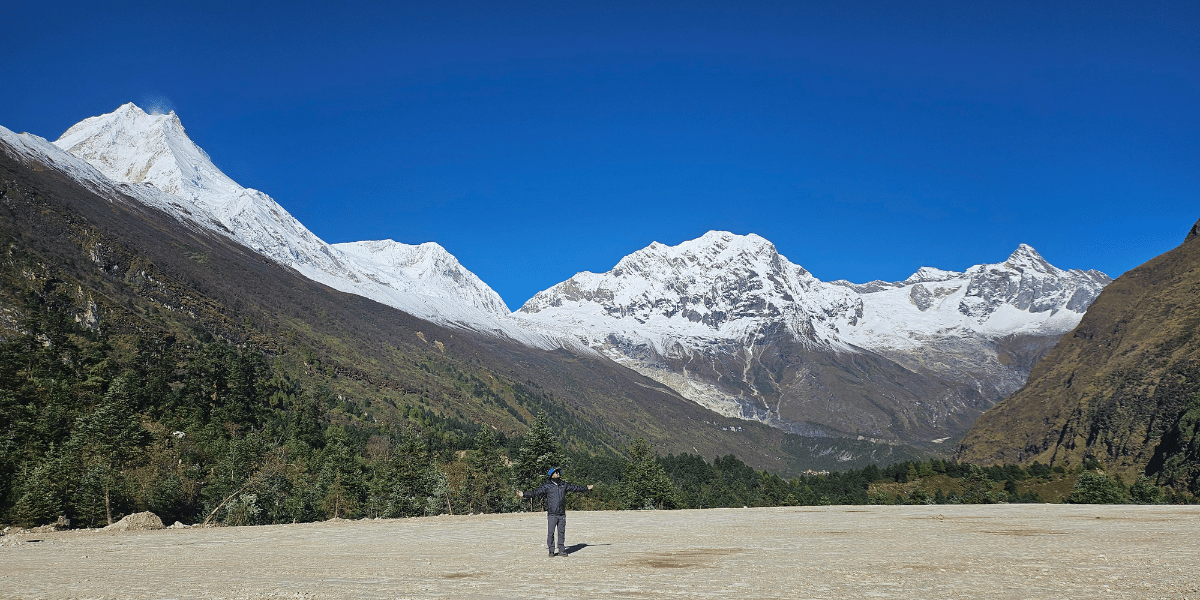
What this means for solo and individual trekkers is that you can’t do the trek without a guide. Yes, even if you’re in a group and want to trek independently in the region, that won’t be possible.
This is because you need a restricted area permit from the Department of Immigration. And only registered trekking agencies are authorized to apply for it.
So, instead of paying a hefty fee for a private experience, joining Altitude Himalaya’s Manaslu Circuit group trek is the best bet. We’ll be welcoming you with our arms wide open and will even try to include you in a specific “solo-only” group. How about that?
We understand that certain rules and regulations can restrict the exact experience you’re here for. Even though the Manaslu permits deny solo trekking, our Altitude Himalaya experts shall create an environment where you can still enjoy a similar-level experience.
Budget-Friendly and Special Group Discounts
Our group packages come with a promise of a top-notch experience on a sharing basis. It’s like joining a guided city tour. You’ll have a shared experience at a budgeted cost while leaving us to handle all the logistics.
And since the demand for the Manaslu Circuit Trek is quite high, we’ll have a significant number of trekkers, which makes you eligible for special discounts. Compare the prices yourself and you’ll know the difference!
Allow Trekking Agencies Manage Operations Better
Honestly, it’s not just about you. Even trekking agencies like us have a fair advantage when conducting group tours. No, not in terms of financial benefits, but in terms of operations, actually.
This is what I mean:
- We can apply for permits in bulk. This way, there won’t be delays caused by applying for these documents individually.
- Even when showing the MCAP and RAP at the respective checkposts, your guides will be able to present them as a group.
- We get to arrange multiple guides based on the group size. Also, this way, each guide gets a dedicated portion of the package, and some services can be shared too.
- Moreover, we get to book rooms in bulk. That way, our coordination with the respective lodges along the Manaslu trail is also well maintained. You won’t have to worry about last-minute bookings. Everything will be ready just for you!
- Transportation costs will also be shared among you. So, no matter the number of people joining the Manaslu Circuit Trek, we arrange private vehicles accordingly, whether it’s a bus, van, or jeep, based on our guests’ comfort.
- Even lodges will be able to prepare your meals accordingly. Since our guides can place orders in bulk, it becomes easier for them to manage operations, even when there’s overcrowding. No hassle with logistics.
- As you’ll be in a big group, you won’t just be relying on guides, as each trekker will be helping and supporting one another.
Great For Trekkers Who Love Socialization
If you’re the type of traveller who loves making friends, socializing with everyone, and has an extroverted nature, this Manaslu Circuit Group Join Trek organized by Altitude Himalaya is the perfect choice.
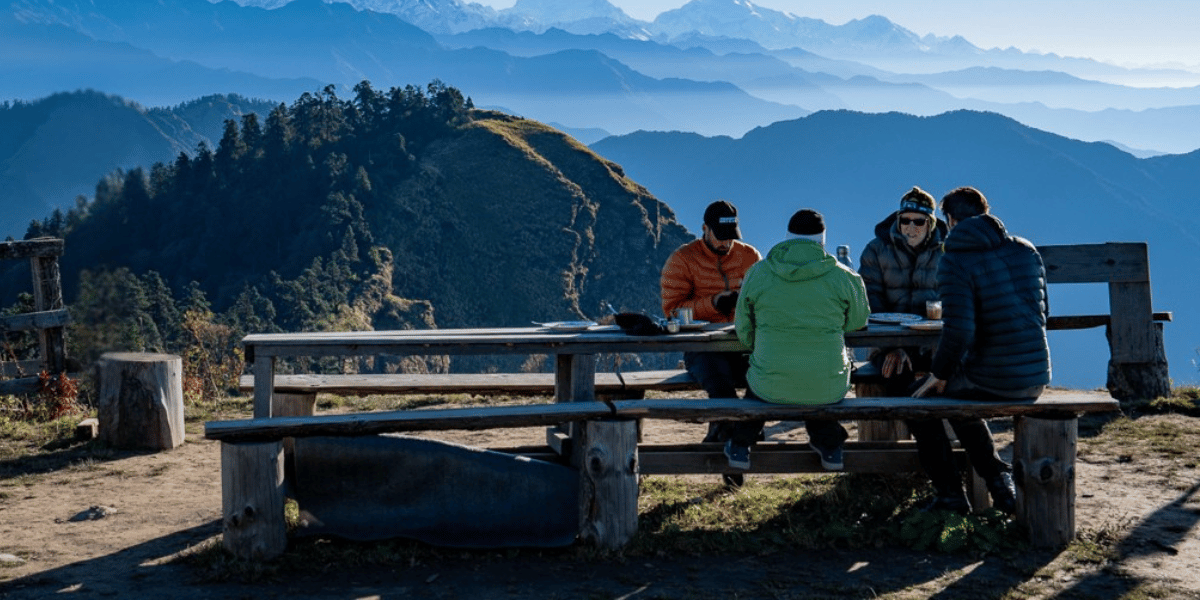
And guess what? We usually have our team members on board. That means you and one of us could take on this adventure together. It will be fun for sure. We get to know you better, and you get to know our team better, too.
Since we’ll have tons of members in a single team, you get the chance to meet people from different nationalities, cultures, and ethnicities.
Imagine a squad from seven different continents taking on this circuit trek. The world would surely appreciate our social media posts. But more than that, even Mt. Manaslu would smile!
Whether it be watching the sunrise from Shyala and Samagaun or crossing the Larke Pass with trekkers from all around the globe, organizing such a trip is one of our dreams, and we are bound to make that happen!
I’m not the only one daydreaming. Even you are. So stop that and book this group trek now. Contact us here.
Note: For all Aussies, you can check our dedicated package on the 15-day Manaslu Circuit Trek here and consult with our dedicated Australian team for group join treks. Likewise, if you’re from the US or UK, do check out these domains (we’re bringing new packages here soon)—Tours from USA and Tours from UK.
Motivation and Morale Boost
I’ve personally met travellers who push themselves but, in the end, demotivate themselves and quit. The major factor here is motivation, and when it comes to the Manaslu Circuit Trek, trust me, you need it the most.
This trek can be mentally challenging, as it is long and exhausting. Covering around 15 km every day for 9 to 10 days isn’t something everyone does. Not to forget, the path comes with elevation gain each day, and the trail is mostly rugged.
In a group, you won’t just have our professional guides to motivate you. You’ll also have others who boost your morale as you ascend.
Feel like quitting? Our team training and coordination ensure that you don’t feel left behind or get demotivated. This is what our guides focus on before your Manaslu Circuit Trek kicks off.
You won’t believe me when I say this. We don’t just have random licensed guides on our team. They are motivation-boosting experts who have trekked in the Manaslu region multiple times and know the trail very well.
So, even if you are having self-doubt, don’t. Altitude Himalaya has got your back. We try our best so you tackle the Manaslu Circuit Trek difficulty well.
Now, let’s move on to the Manaslu Circuit Trek route. For this group-joining trek, we’ve adapted a 15-day itinerary. However, this is subject to change depending on the group’s style and preferences.
Take a quick glimpse below at what to expect on your 15-day Manaslu Circuit Trek journey:
Day 01: Kathmandu Arrival, Group Meeting.
Based on the timing you provide us, one of our representatives will be at the airport to welcome you to Nepal in traditional way.
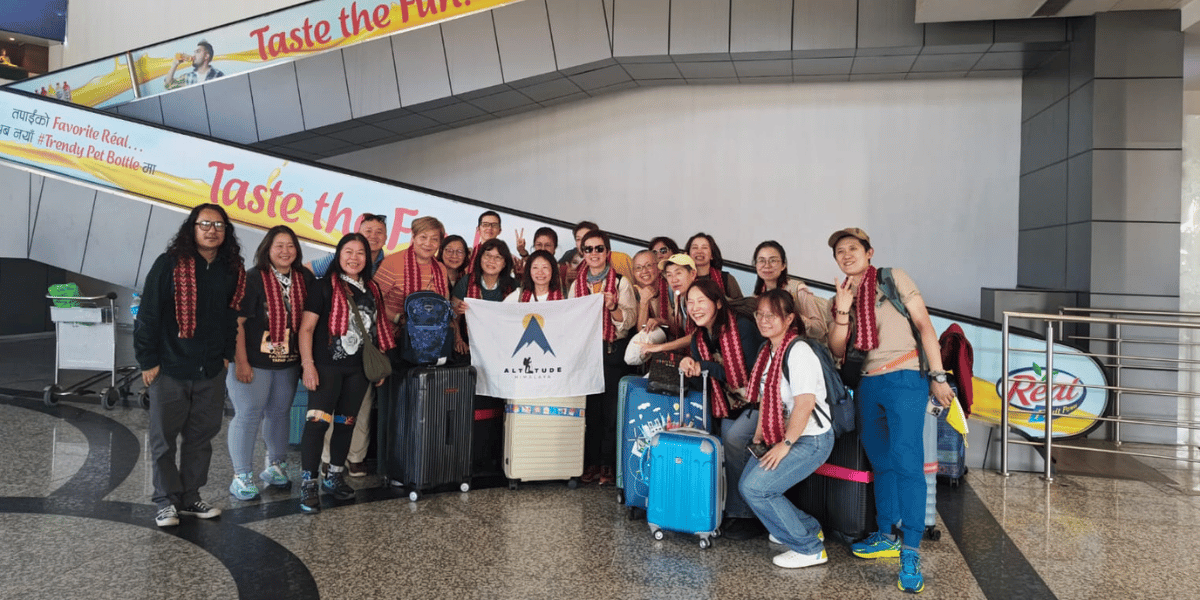
There’s a saying in Sanskrit, “Atithi Devo Bhava,” and Altitude Himalaya strongly believes in this principle, which translates to “Guests are Gods.”
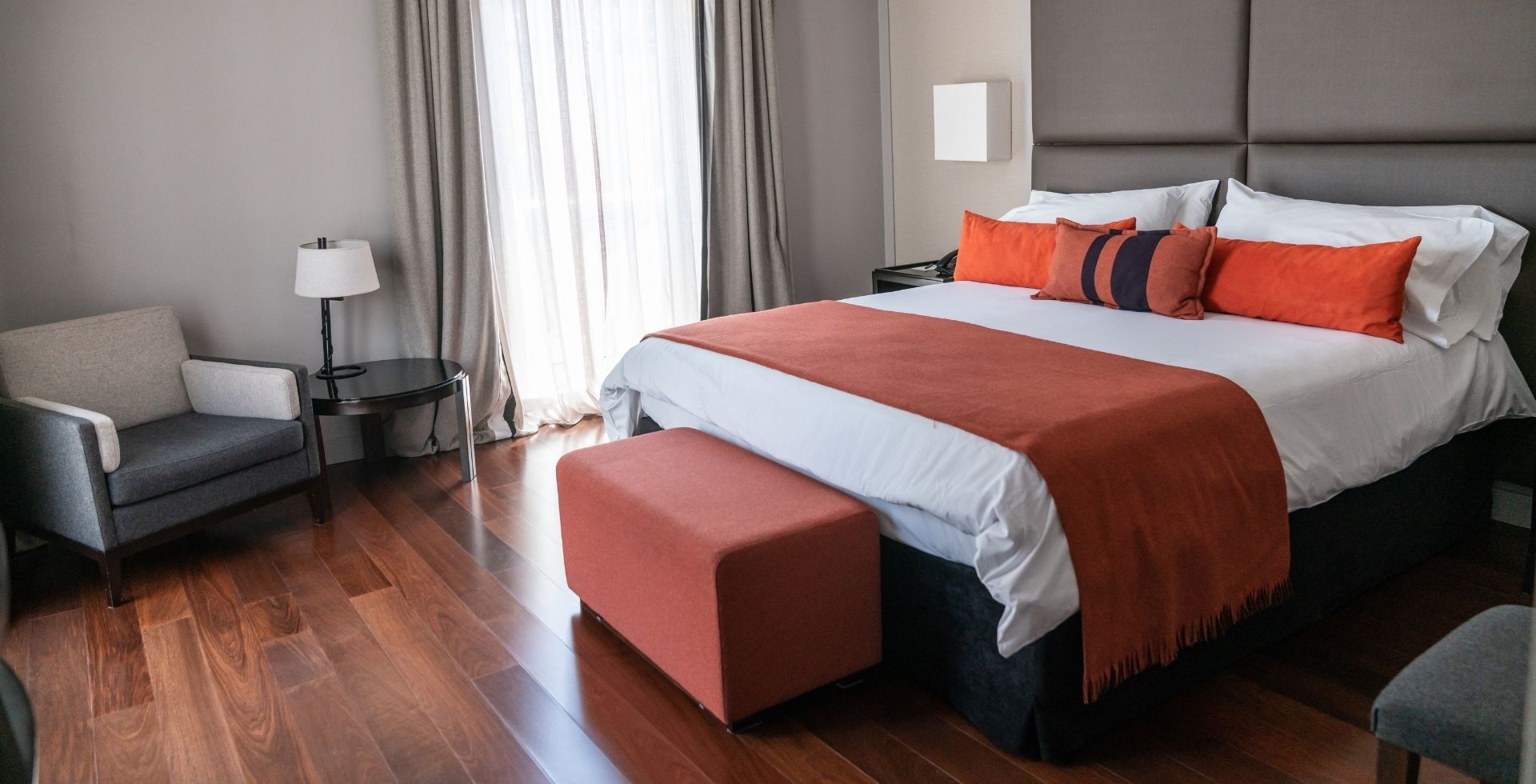
We have a 3-star hotel booked for you on a sharing basis (twin/double bed). In the evening, there will be a group meeting. This is where we introduce you to our guides (if possible), allow you to meet your team members, and even interact with the Altitude Himalaya team directly.
Note: In case your flight is delayed or you reach Nepal after 5 PM, we’ll drop you at your accommodation, and the briefing will be conducted the next morning.
Day 02: Cultural Sightseeing in Kathmandu.
Before your Manaslu Circuit Trek, a professional tour guide will accompany you on a short cultural sightseeing tour around the top destinations in the capital city. These are four UNESCO World Heritage sites that you’ll visit with your new friends:
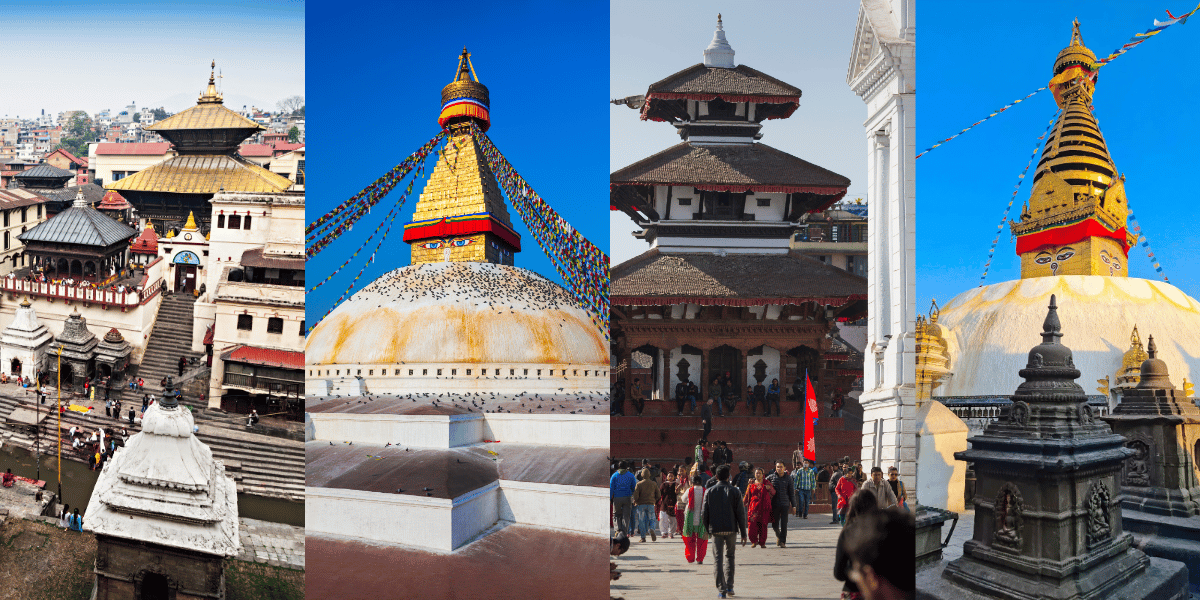
- Pashupatinath Temple: We’ll start with one of the most sacred Hindu destinations in the world. You can watch devotees performing prayers early in the morning and witness cremation rituals along the Bagmati River corridor. You can also opt for an evening visit if you’re interested in witnessing the Sandhya Aarti.
- Boudhanath Stupa: As soon as you enter the gate, you’ll find yourself joining the kora walk with Tibetan pilgrims. This is a picturesque spot in the heart of Kathmandu, and you’ll be blessed by Buddha’s eyes. Spin the prayer wheels and get mesmerized by the burning incense sticks. But hey, watch out for pigeon guano (these birds are plenty here!).
- Swayambhunath Stupa: Another Buddhist pilgrimage site you’ll visit in Kathmandu, which sits right on top of a hill. So, instead of just rituals and sacred practices, you actually get the best view of the valley. Not to forget, this is the spot from where you get the first proper glimpses of the Himalayas.
- Kathmandu Durbar Square: Enough of the religious sites. We now head straight to the historical side of the capital. You’ll be taken to one of the most happening places in Nepal, Basantapur, where you’ll get to see the unique architecture of the Malla palace.
There are more places to visit in the Kathmandu Valley, but a single day isn’t enough. Taking a good tour of these four prime locations should give you enough time to learn about Nepal and, more importantly, your group, with whom you’ll be going out for sightseeing.
Day 03: Kathmandu to Machhakhola Drive.
Only on the third day of your Nepal trip does your real adventure begin. Still, the trek is yet to start, and for that, you need to reach the starting point.
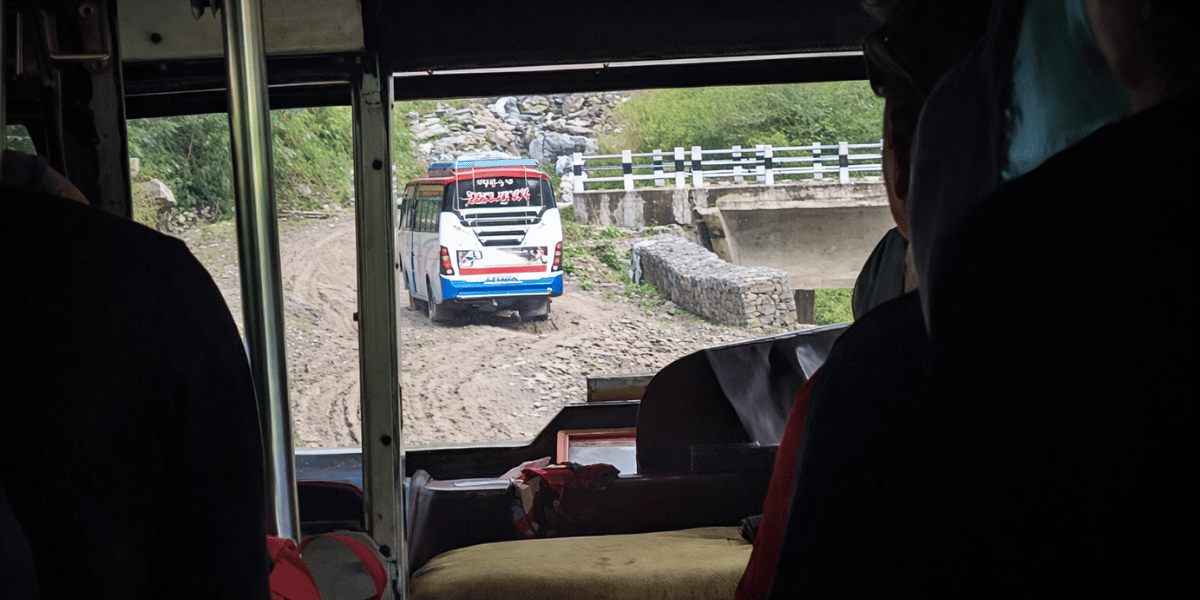
The drive to Machhakhola, Gorkha (870 m) via Dhading (or sometimes through the Tanahun district) takes about 8 to 10 hours, covering approximately 160 km. We’ll be taking a jeep or a bus, depending on the number of people doing this trek.
If you choose the monsoon or post-monsoon period, there’s a high chance that landslides may block certain road sections. When this happens, vehicles only reach up to Soti Khola (730 m), and we’ll need to rely on local jeeps to reach Machhakhola.
When the road conditions are good (usually in dry seasons), vehicles can reach up to Pangsing/Philim. On this day, however, we won’t continue the drive further and will rest in Machhakhola itself.
Day 04: Machhakhola to Philim Drive, Reach Deng.
After your assigned guide checks the road situation, he or she decides whether to continue the drive or start the Manaslu Circuit Trek from Machhakhola itself.
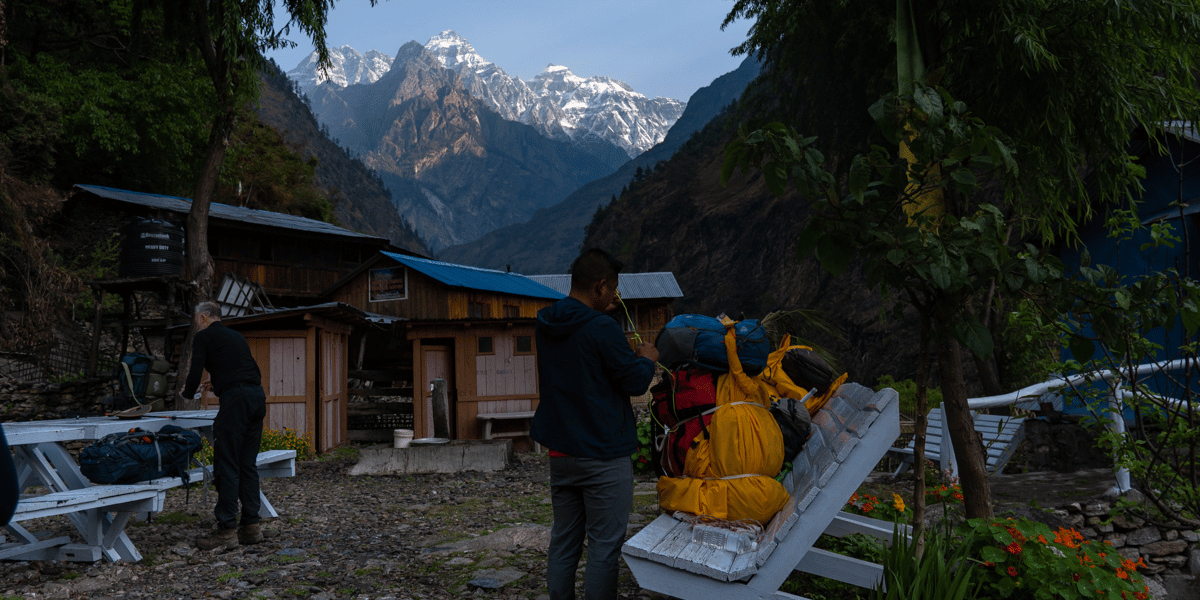
In case you have to hike from Machhakhola, this itinerary expands to 16 days, as Jagat is 18 km from Machhakhola. It’s a tiring trek, but the major highlight is passing the waterfall near Tatopani and crossing the cantilever bridge as you approach Jagat Bagar.
If everything goes well, we’ll drive to Philim or Jagat directly (wherever the jeep can reach). There are checkposts at both locations.
The first stop is Jagat, where you need to register yourself, show the MCAP and RAP permits, and also get the Chumnubri Rural Municipality permit too. Everything will be handled by our guides, so simply submit the required papers to them.
Again, you’ll stop at Philim (1,560 m), cross the suspension bridge, and continue to the main settlement. There’s a police checkpost where you’ll stop before continuing the trek forward to Ekle Bhatti (1,580 m), Nyak Phedi (1,625 m), Pewa (1,750 m), and finally Dyang, also known as Deng (1,860 m).
Watching Shringi Himal and relaxing in the evening, your first day of the trek comes to an end after an 11 km hike, which includes flat paths, uphills, and downhills.
Day 05: Deng to Gap.
Morning breakfast in Deng is magical, and before you know it, you continue with Day 2 of the Manaslu Circuit Trek.
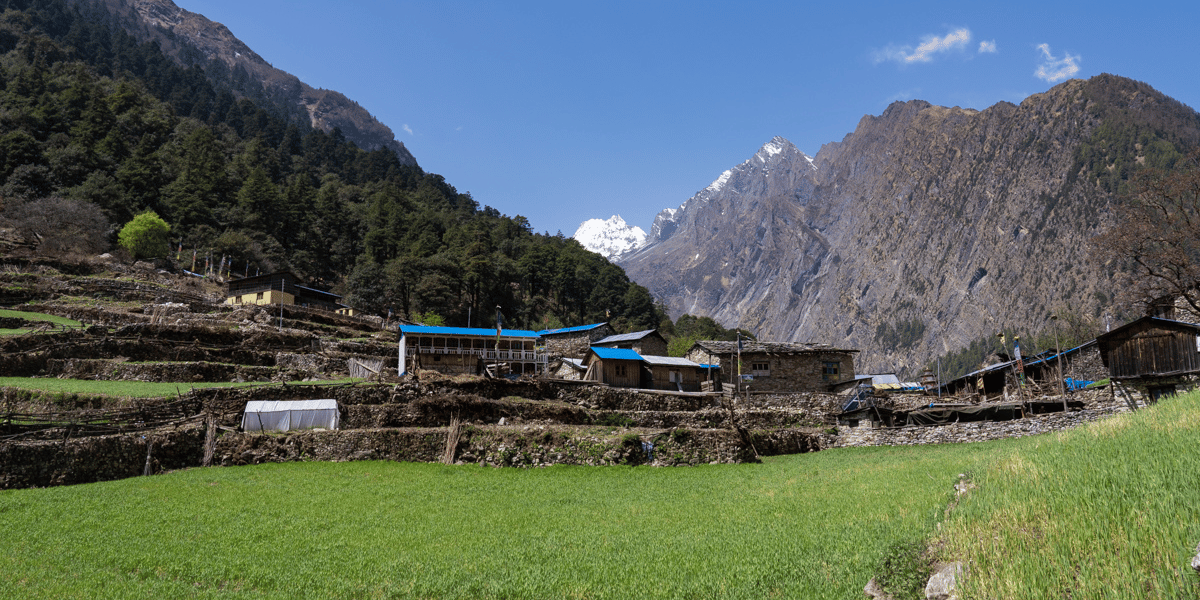
Passing the villages and settlements of Rana (1,970 m), Bihi Phedi (2,010 m), Bhijam (2,005 m), and Bur (2,080 m), you’ll reach Gap, also known as Ghap (2,105 m).
Your stay here, surrounded by waterfalls, is a sight worth capturing. Covering a total of 12 km today is surely a tiring stretch, but it’s perfect as you pass through some really scenic sections, including a few landslide-prone areas.
Moreover, Gap is a culturally rich spot where you get to meet the Nubri community, with a mix of Gurung and Bhotia ethnicities. Be sure to visit the nearby monasteries and go up to the Budhi Gandaki River for pictures.
Day 06: Gap to Lhi.
Yet another day of hiking awaits, covering almost 6 to 7 hours and a total of 12 km. The morning includes an uphill stretch to Namrung (2,630 m) via Gapshya (2,150 m) and Prok Syaubari (approx. 2,500 m). Be sure to try fresh apples as you pass through these villages.
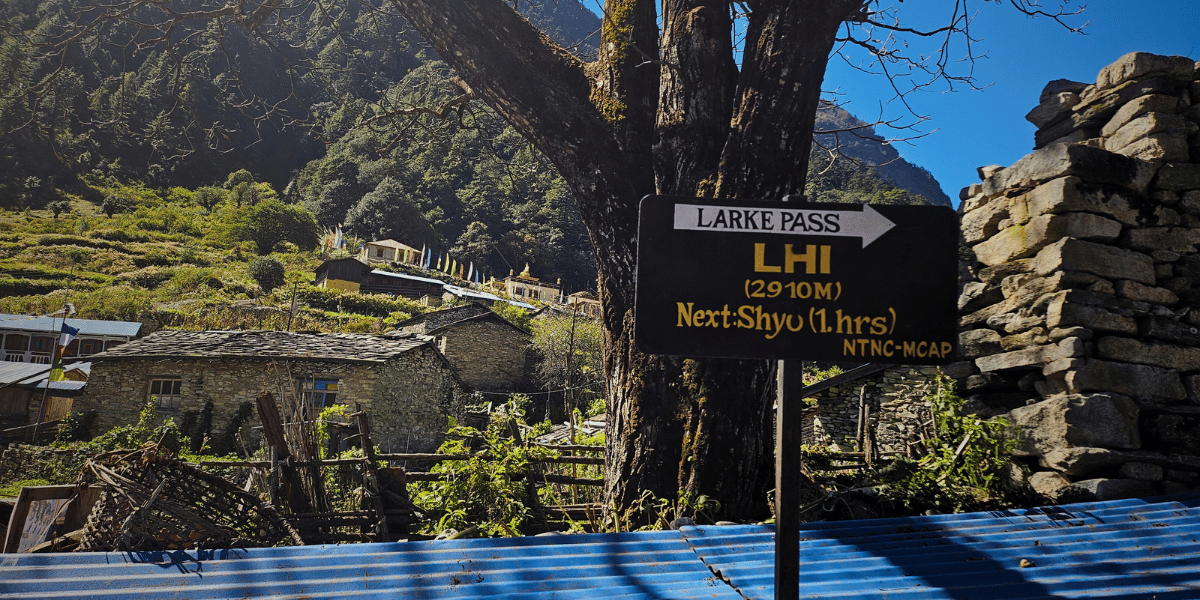
There’s a police checkpost in Namrung, where your group stops for permit checks. The fresh vegetation, combined with mountain views opening up even closer, makes your day worth it. After a hearty lunch in Namrung, your journey continues towards Bhanjam (2,650 m) and finally Lhi (2,920 m).
You could indeed push ahead easily to Lho this day, but remember: we are in a group and need to consider the pace of other trekkers too. So, no more than 12 to 13 km per ascent day. That’s the plan.
Moreover, there are plenty of go-to spots in the area. For example, those who wish can trek up to Sharang Gumba from Gapshya and return early in the morning. These are things you can discuss with your guide to see how flexible it becomes.
Likewise, Lhi village itself is famous for the Buddha Temple containing eight stupas. It’s one of the major Manaslu attractions that I highly suggest not missing. If you reach here early, you get to explore this part of the Nubri Valley more.
Day 07: Lhi to Shyala.
Wake up, have your breakfast, and start today’s hike without delay. Passing Namsang Khola (2,850 m) and Shyo (2,960 m), you’ll reach the magical village of Lho (3,135 m). It’s also the first stop where you get a magnificent view of Mt. Manaslu, if the weather is clear.
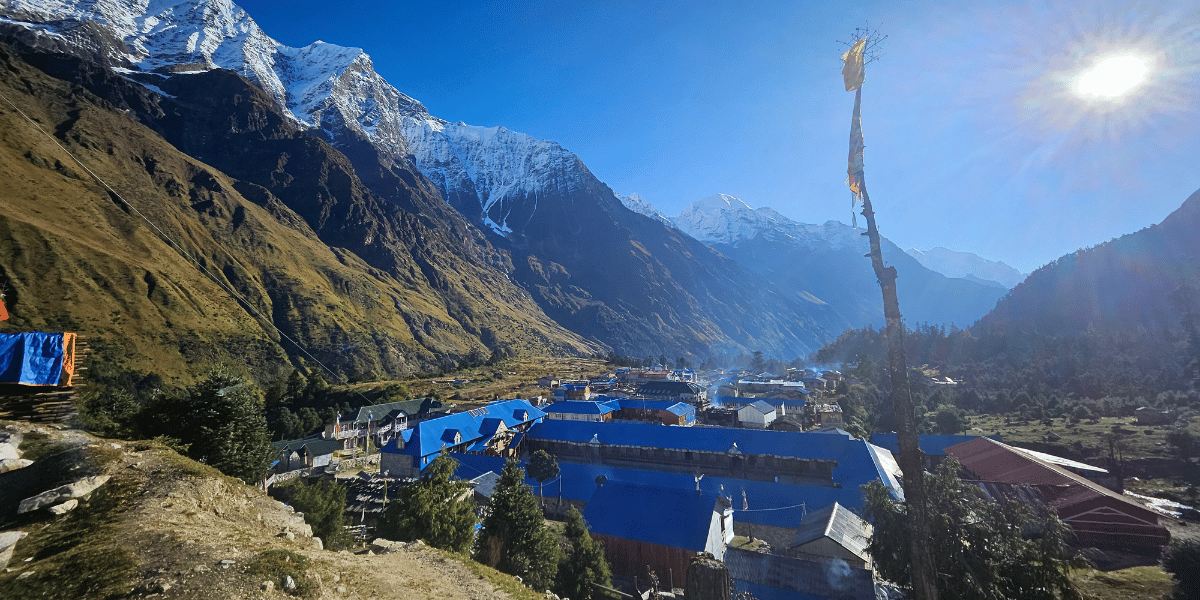
Here, you even have the option to visit Ribung Monastery, which is known as a vibrant spiritual center for Tibetan Buddhists. You can enter the monastery to learn how rituals are performed. And during Manaslu festival times, you might get the opportunity to witness the Cham Dance rituals.
Since Lho is another culturally rich spot on the Manaslu Circuit Trek, we know you’re going to take your time here. So, even if you arrive early, you get to explore the village until lunchtime and only continue beyond it after your meal.
Now, the uphill stretch begins. In a total of 4 to 5 hours from Lhi, you’ll reach Shyala (3,500 m). You’ll be covering just 9 km today, and it will be more about exploration. After reaching Shyala, the view of Mt. Manaslu will leave you absolutely awestruck!
Even from my own trekking experience, I can say that this is one of the most magical places I’ve ever been. There are plenty of monasteries that you can visit around, or you can simply immerse yourself in the lifestyle of the locals living here.
Honestly, you’ll want to be outside, soaking in the 270-degree mountain views instead of staying inside the local lodge.
Day 08: Pungen Gumba Visit, Reach Samagaun.
Shyala is so magical that we are not done yet. There’s Shyala Monastery (3,520 m), just a 15-minute hike from the main settlement. Getting up here means you’ll be even closer to the snowy mountains (particularly the killer mountain, Manaslu), and the view of the village from the top is even more breathtaking!
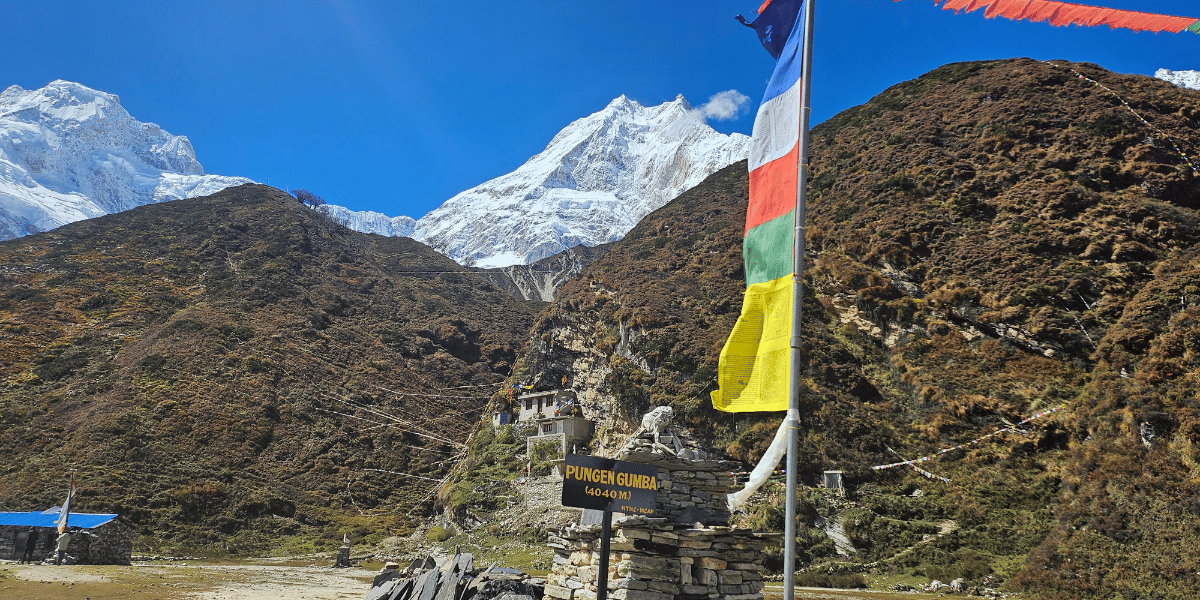
Then, you’ll continue the hike past this monastery and head towards one of the highlights of the Manaslu region. This is another monastery called Pungen Gumba, situated at 4,040 m. It serves perfectly as an acclimatization hike before your trek towards higher-altitude regions.
The place is even more breathtaking. With that close-up view of Mt. Manaslu and 360-degree views of all the other peaks, you’ll remember this day for a lifetime. You get glimpses of Thulagi Chuli, Ngadi Chuli, Himal Chuli, Bhauda Himal, Rani Peak, Manaslu North, Naike Peak, Pangboche I, Samdo Himal, Khayang Peak, and Saula Himal, along with other smaller peaks and distant mountains.
Then, you’ll return the same route up to a junction that separates the route to Samdo and Samagaun (since there’s no official name, I’ve called it Pungyen Chowk). From here, if you left your backpack in Shyala, you’ll return the same route. But those who hired a porter or carried it on their own to Pungyen can continue directly towards Samagaun (3,530 m).
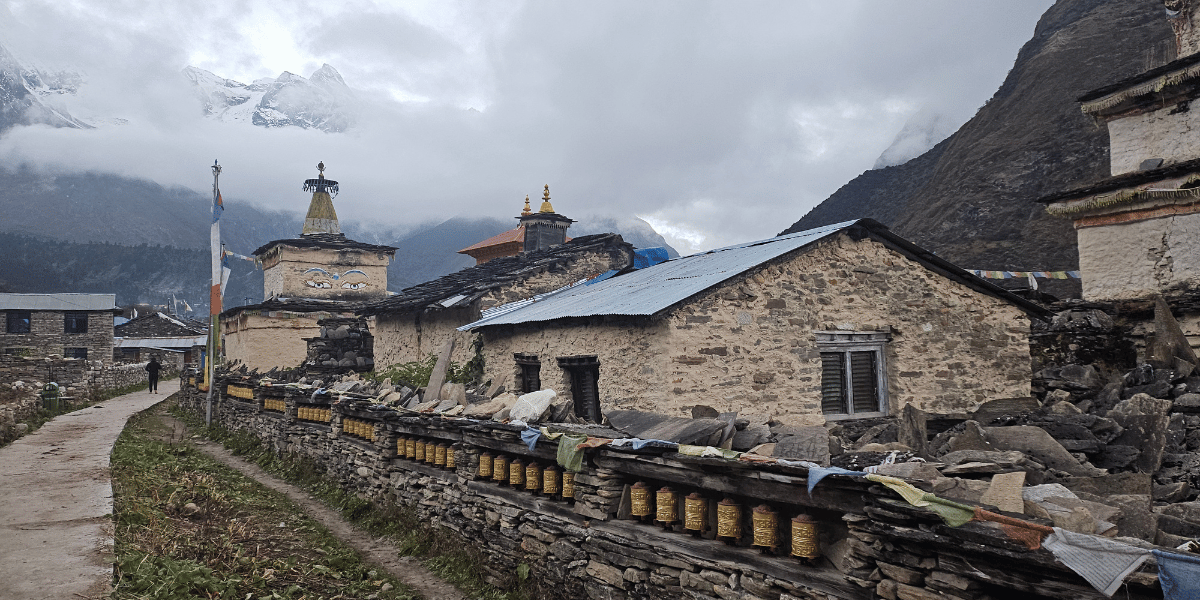
Passing more small stupas and mani walls, you’ll reach the biggest village of Chumnubri Rural Municipality, Samagaun. This is where you get to meet more of the Nubri community. Get out there and check the school, observe people’s daily lifestyle, and explore cultural practices.
Day 09: Samagaun Acclimatization Day, Optional Hikes.
Exploring Samagaun in just one or two days is seriously not enough. You can either choose to rest after all these tiring days and visit the monasteries while interacting with the people or go for hikes to more serene locations.
Yes, I’m referring to Manaslu Base Camp (4,800 m), where you sit face-to-face with the East Pinnacle. You still get views of the main summit from different angles as you proceed uphill. On the way, you’ll even stop by Birendra Lake (3,700 m), and we’ll make sure a group photo is taken here.

Those not willing to go for the Manaslu Base Camp expedition can visit Birendra Lake and the monasteries (one in particular is Pema Decholing Gompa). You’ll start by reaching the viewpoint and then come down to the lake for photos. After that, you’ll cross the lake and return to Samagaun for further exploration.
Note that reaching the base camp is a challenge, as you encounter the most difficult part of the trek with strenuous uphill sections. When weather conditions are bad, the challenge becomes even more extreme. I personally recommend checking the weather and trail conditions before accepting this challenge.
And listen to me, because this is important: the hike to Manaslu Base Camp is definitely worth the views and prepares you for the upcoming Larke Pass, but you’ll be extremely tired. That means if you’re taking the challenge, I suggest taking one more day for rest in Samagaun.
But what does our itinerary say? This part will differ based on the group. We’ll try to separate teams according to those heading to Manaslu Base Camp and those preferring to stay in Samagaun.
Day 10: Samagaun to Samdo.
You’ll wake up to the beautiful sunrise in Samagaun, have your breakfast, and then continue your hike to Samdo. This is going to be a short one and can be completed within just 3 to 4 hours, covering only 8 km.
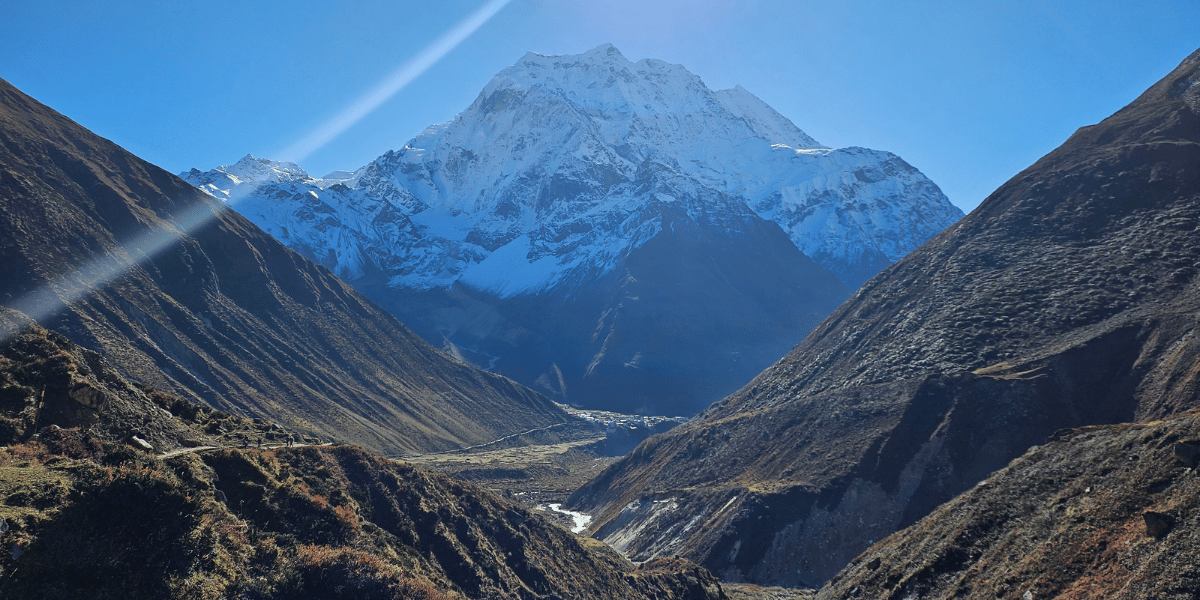
Many push to Dharmashala on the same day, but we’ll only visit Samdo (3,875 m). From there, you can go for acclimatization hikes to Samdo Gompa and Samdo Peak.
Also, from this point onward, the vegetation starts becoming sparse. The Nubri community (in the higher Manaslu Circuit region) welcome you for a warm stay.
Day 11: Samdo to Dharmashala.
Today is going to be yet another short 6 km hike, but one that takes you to a high altitude of 4,470 m. This is where you’ll be spending the night, and depending on the crowd, you might have to adjust to shared camps.
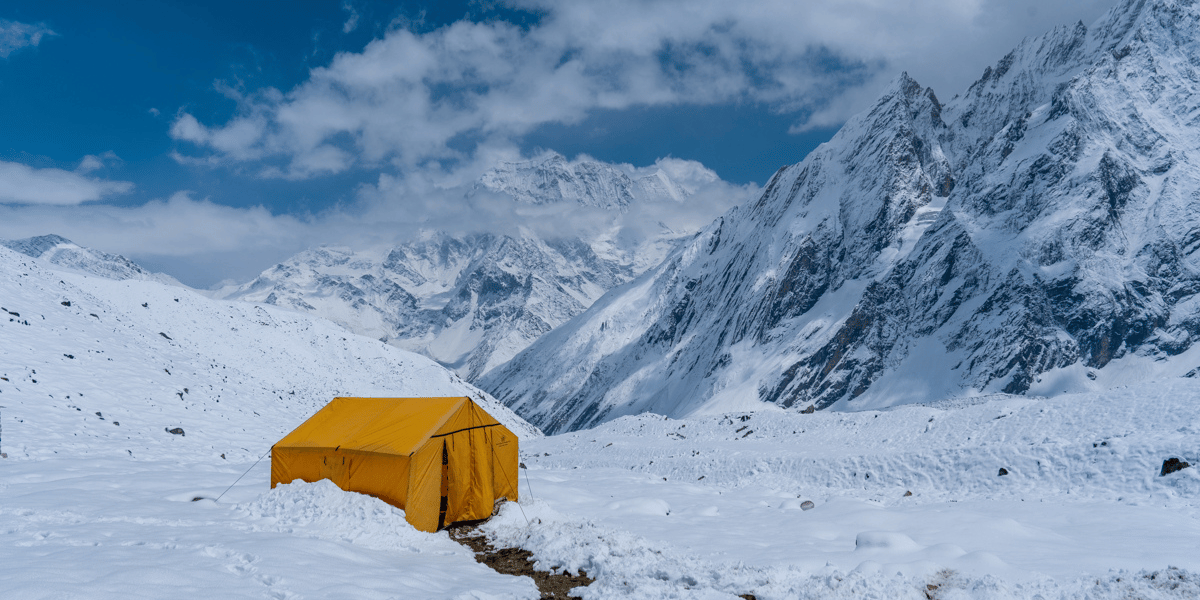
No, we’re not saying that we won’t accommodate you in the best spots. It’s just that there are only 3 to 4 lodges as of now, and even those choosing private accommodation may have to share the bed or camp if it’s overcrowded.
When in Dharmashala, you’ll be surrounded by mountains on all four sides. It feels like you’re in heaven, literally.
But you can’t underestimate the fact that altitude sickness is more common here. You need to keep yourself warm and drink plenty of fluids throughout the day.
Don’t forget to go out on acclimatization hikes to nearby hills. I won’t be surprised if you get glimpses of snow leopards and other Himalayan fauna, because it’s that isolated!
Be sure to sleep early tonight, as you have to rise early for the morning hike to cross the Larke Pass.
Day 12: Reach Bhimthang via Larke Pass.
Depending on the season, you have to wake up around 3 AM or 4 AM to start the hike today. No, it’s not for the views or sunrise. It’s actually to cross Larke Pass (5,106 m) on time so strong winds don’t cause issues during the afternoon.
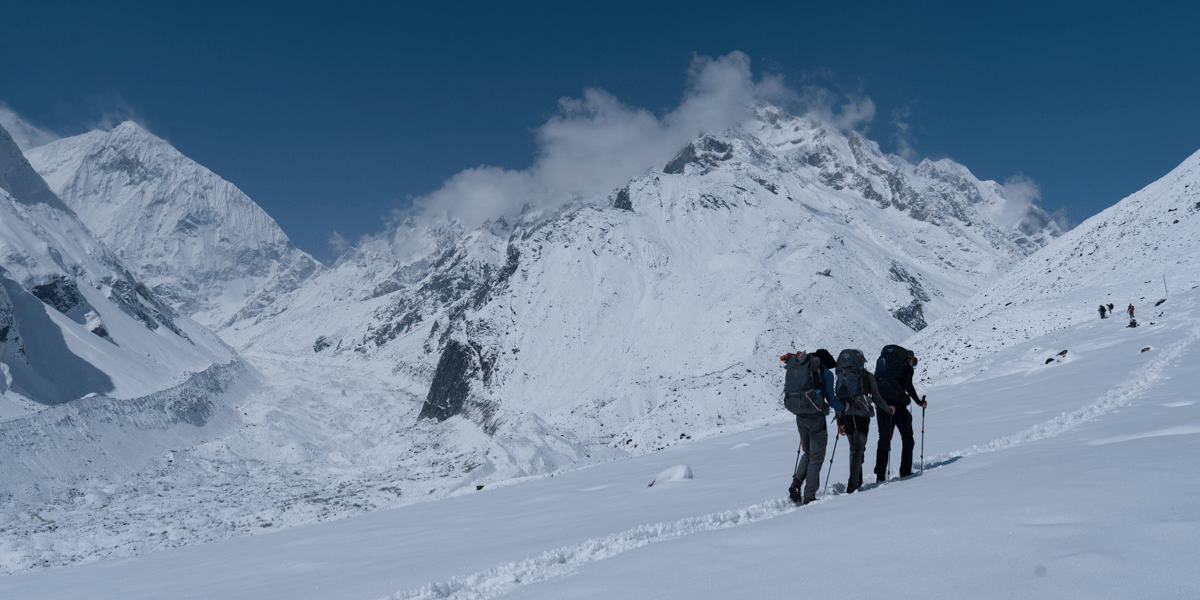
To reach the vantage point of the pass (where the Larke Pass boards are located), you need to hike 7 km, which can take about 5 hours. The feeling of accomplishment once you reach here is surely something words can’t describe.
You’ll forget how high you are; everything that matters is that you have done it! Don’t forget to congratulate all your group members, too. Of course, we’ll have a group photo to ensure this memory is cherished forever.
But the hike isn’t over. In fact, the challenge continues as you cross the pass and hike downhill via the rocky glacier pathway to High Camp (4,400 m) and then to Bhimthang (3,700 m).
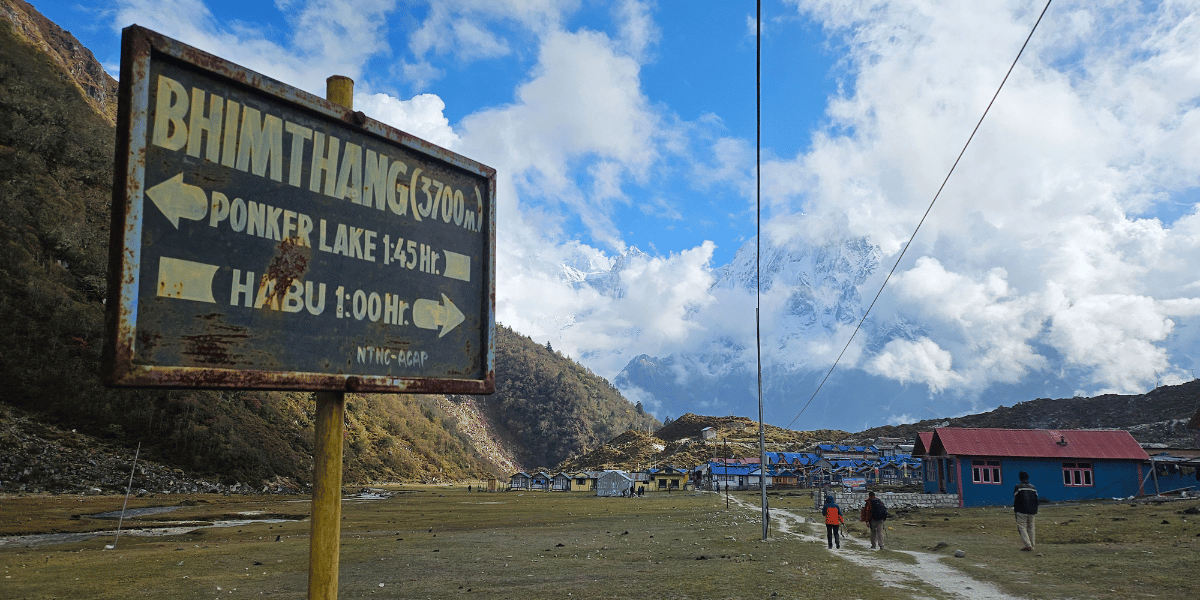
Honestly, the downhill hike is the most strenuous. It becomes even more difficult if you’re crossing it during the snow or after the snow has melted. On top of that, the wind is so strong that you might feel like you could be blown off the cliffs.
This is where your group comes in to motivate you. Upon reaching High Camp, we’ll have a relaxed lunch before continuing on the downhill path.
If there’s enough time, we can take a diversion to visit the serene Ponker Lake, which teases you throughout your downhill hike. The untouched beauty of this glacier lake is surely another photogenic spot on the Manaslu Circuit Trek.
Upon arriving in Bhimthang, you’ll love how the tiny village sits right underneath the mountains. The north face of Mt. Manaslu is clearly visible from here, along with the Annapurna range. It’s pure paradise, and note that you’ve now moved from the Manaslu Conservation Area to the Annapurna Conservation Area.
Day 13: Bhimthang to Tilche.
This is the final day of the Manaslu Circuit Trek, where you’ll hike the longest stretch of 18 km. Since you won’t be gaining altitude today but rather descending, it’s actually easy.
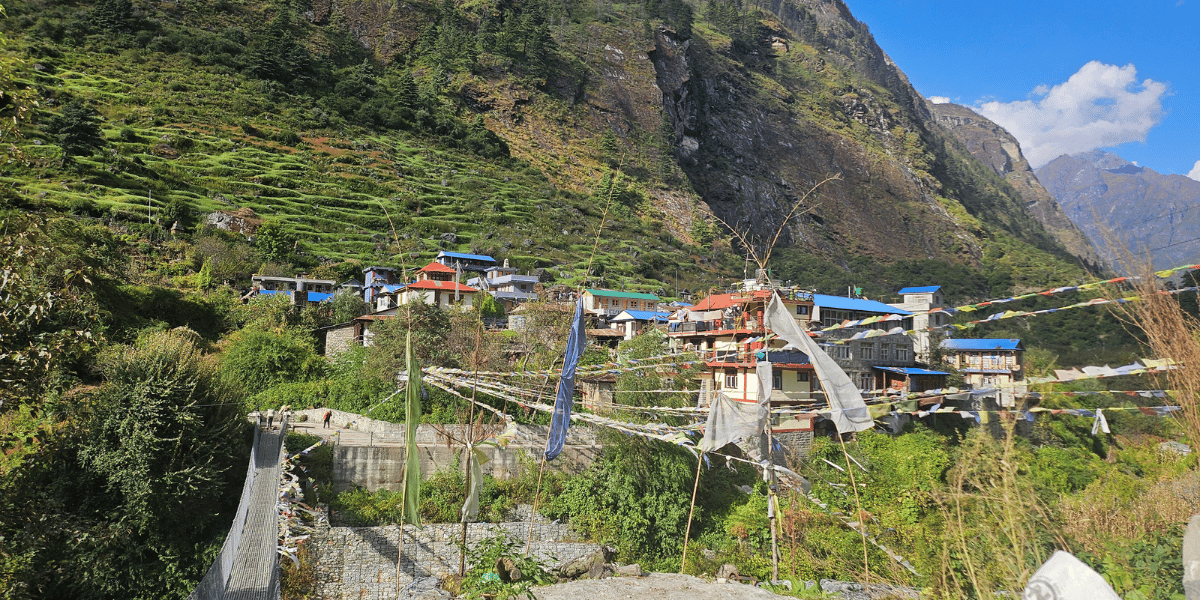
We also offer the option to visit Milarepa Cave in between once you reach Habu (3,400 m). Then, you’ll continue onward to Chauli Kharka (3,030 m), Surki Khola (2,700 m), Gowa (2,470 m), and finally reach Tilche (2,260 m).
It’s yet another prime village in the Annapurna region, where you’ll meet more of the Gurung community and some Tibetan-influenced locals.
Sometimes, Tilche might face accommodation problems. If that happens, your guide ensures that the hike starts early and takes you up to Dharapani (1,900 m), which is just about 1.5 to 2 hours of extra trekking. There’s a checkpost here where you need to show the Annapurna permits.
Day 14: Tilche to Kathmandu Drive, Special Group Dinner.
Wake up early and get ready for a bumpy jeep ride along the Manang and Lamjung districts. You’ll pass the beautiful Octopus Waterfall along the way, so if you wish, we can stop here for photos.
After reaching Besisahar in about 4 hours, we’ll stop for lunch. It’s the headquarters of Lamjung district and marks the start of the hill region. Although mountains are visible from here, it truly hits you when you realize that your Group Manaslu Circuit Trek is now coming to an end.
Then, we continue onward to Kathmandu, which is about a 175 km drive from Besisahar (760 m). You might have to exchange the vehicle from a jeep to a van or bus, depending on the number of participants.
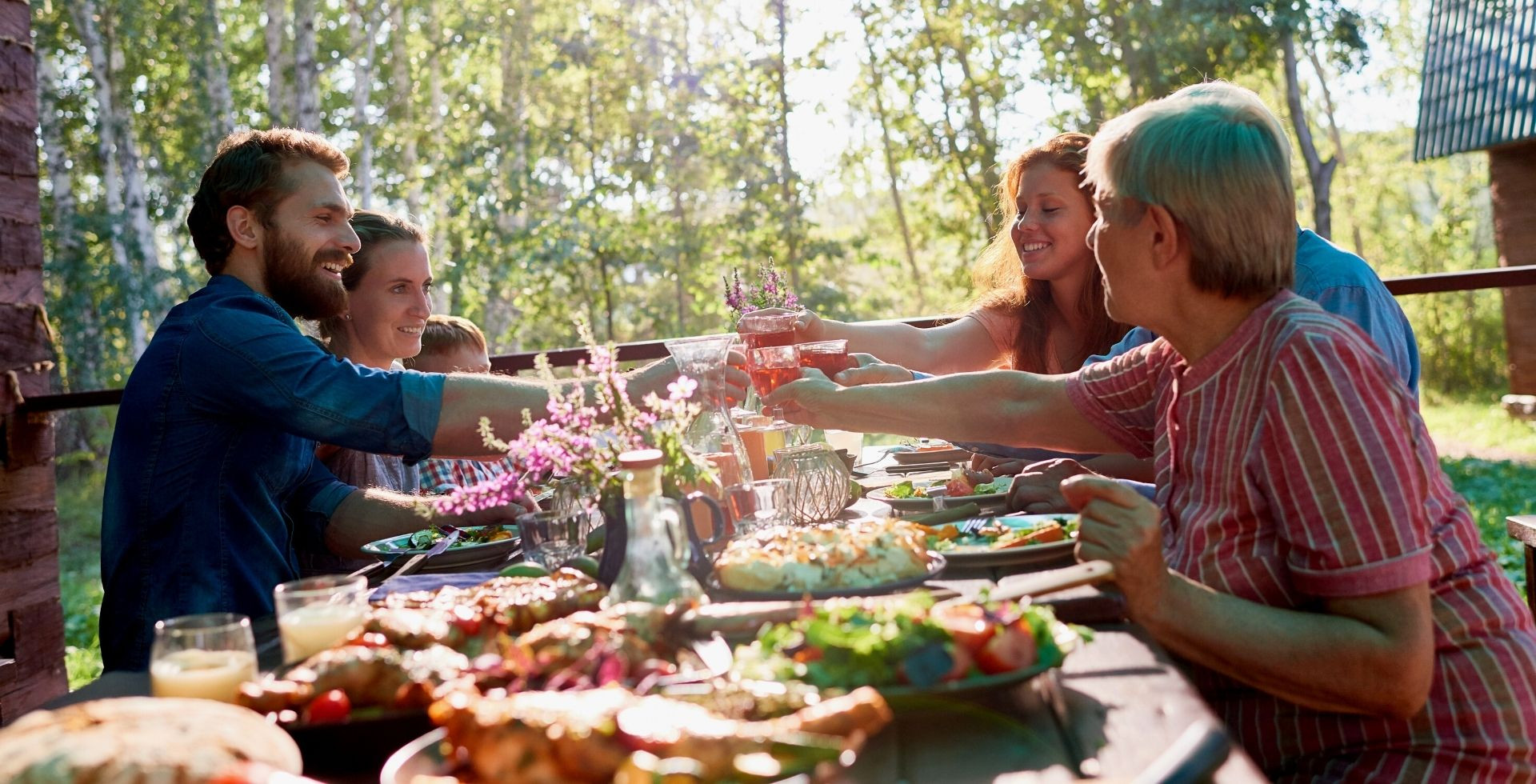
You should reach the capital by evening. Get into your hotel, freshen up, and then meet us once again for the final group dinner together. We’re pretty sure you’ve made friends by now, and that Nepali dinner, while learning about the culture, ends your trip just as it should.
And yes, we’ll also be handing you your trek completion certificate on this very final day.
Day 15: Farewell, Departure.
The 15-day Manaslu adventure has come to an end. Breakfast is included at the hotel where you’ll be staying. You can even join your new friends for this final meal together.
Then, depending on your departure, we’ll drop you at Tribhuvan International Airport three hours prior to your flight. We’ll also have a short Nepali-style farewell before waving you goodbye.


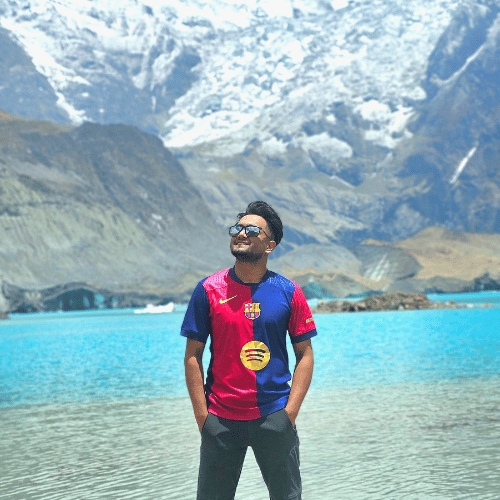 Bhishu Acharya