One of the most surprising elements during my Manaslu Circuit Trek was the food menu. I was expecting only local Dal Bhat with a few modern options. Well, I was wrong!
The teahouses were equipped with their own menus, with options that you’ll find almost identical to Kathmandu restaurants or other city areas. Prices might feel a bit steep for first-time trekkers, but looking back at the route, you’ll feel grateful for the locals rather than complain.
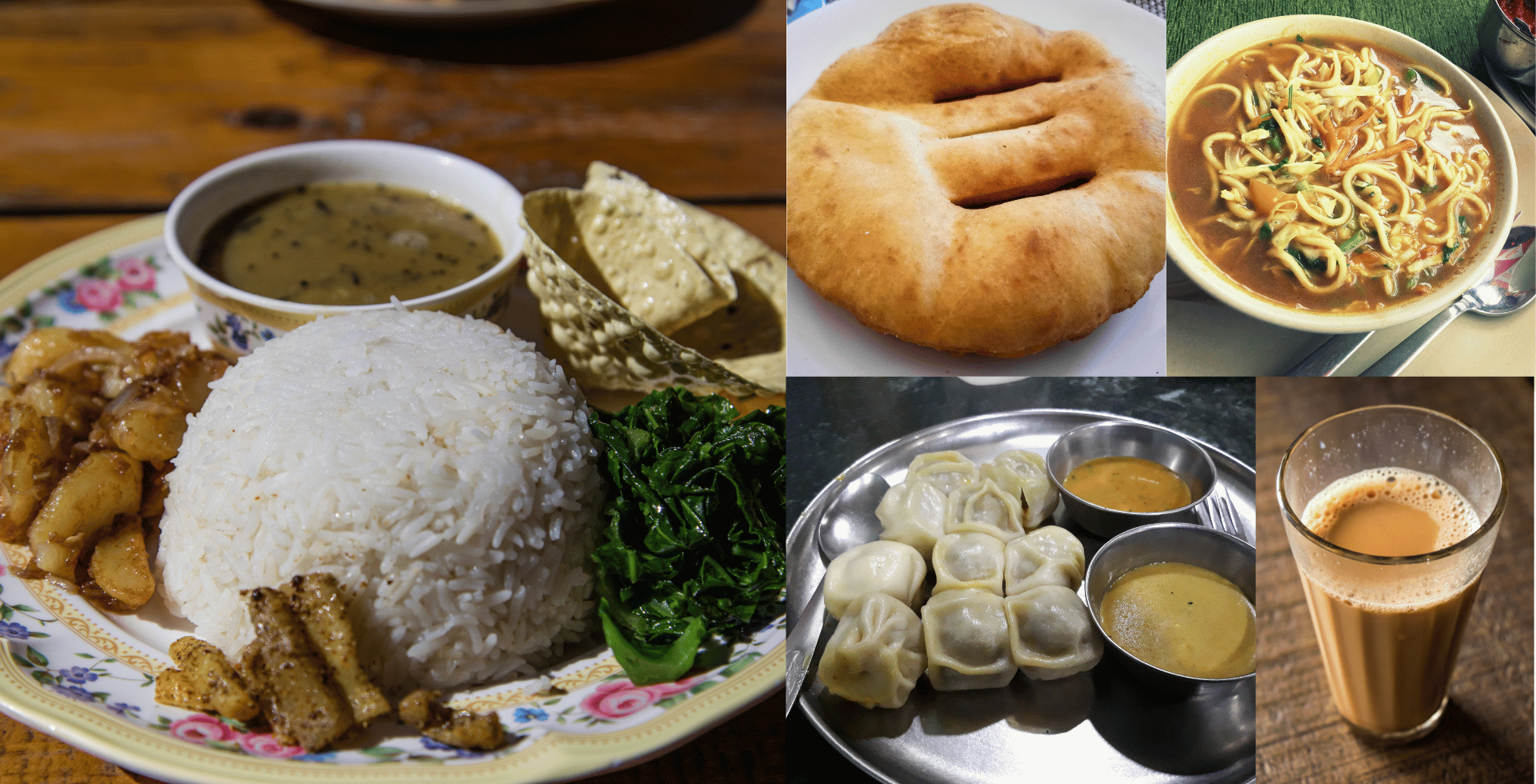
Dal Bhat might be the most common dish, but you get options to try other Nepalese and western food items too. Thukpa, Thenthuk, and Tibetan Bread are some local Tibetan-influenced cuisines that you should try at least once in your 12 to 14-day journey.
And of course, concerns related to hygiene and nutrition exist. Honestly, I say there is no need to be.
I’m going to cover every single piece of information related to Manaslu Trek food here to help you clear all your doubts. Also, I have posted my own review of every location I stopped by to give you a much clearer idea!
Why Food Matters So Much on Manaslu Circuit Trek?
Energy matters when it comes to trekking. Especially during long and exhausting hikes over a long period of time, consuming the right food becomes crucial.
What Happens to Your Body in Treks
Let me introduce you to a phenomenon called “altitude anorexia”. This is a condition where your appetite decreases at high altitudes, especially after 3,500 m, in treks like Manaslu. Result? Unintended weight loss.
This same altitude-related stress on the body is also linked to early symptoms of altitude sickness, where reduced oxygen levels affect digestion, energy, and overall appetite. That’s why eating properly becomes even more critical as you ascend higher.
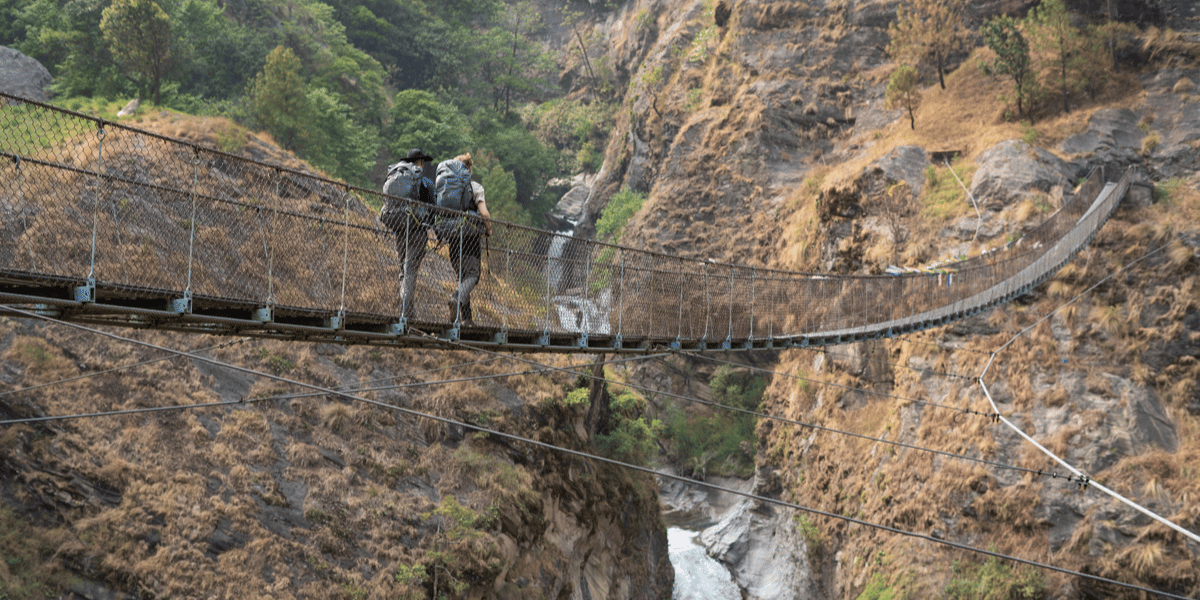
It mainly happens due to lower oxygen levels and changes in digestion. Don’t worry. It’s just a physiological response to the environment, not because the accommodations in Manaslu have limited food.
Here’s what usually happens with trekkers:
- You feel less hungry.
- But your body is seeking more calories.
- So, you might want to skip meals.
Skipping meals means your body is less energized for the hikes ahead, as it is burning more calories. It also means faster fatigue and possible weakness.
You see, this is why food matters so much on the Manaslu Circuit Trek. The meals provided by the local lodges and advised by trekking guides are meant to keep you moving. Less for taste, more for fuel, basically.
That’s also the reason treks organized by reliable trekking agencies, like Altitude Himalaya, ourselves, have breakfast, lunch, and dinner included in the package. Check our 15-day Manaslu package here (and this one if you’re from Australia).
What Should Your Diet Plan Be
Maintaining your diet becomes an obvious challenge. Seriously speaking, you might have to scrap the one you’re currently following. Because high altitude demands something else.
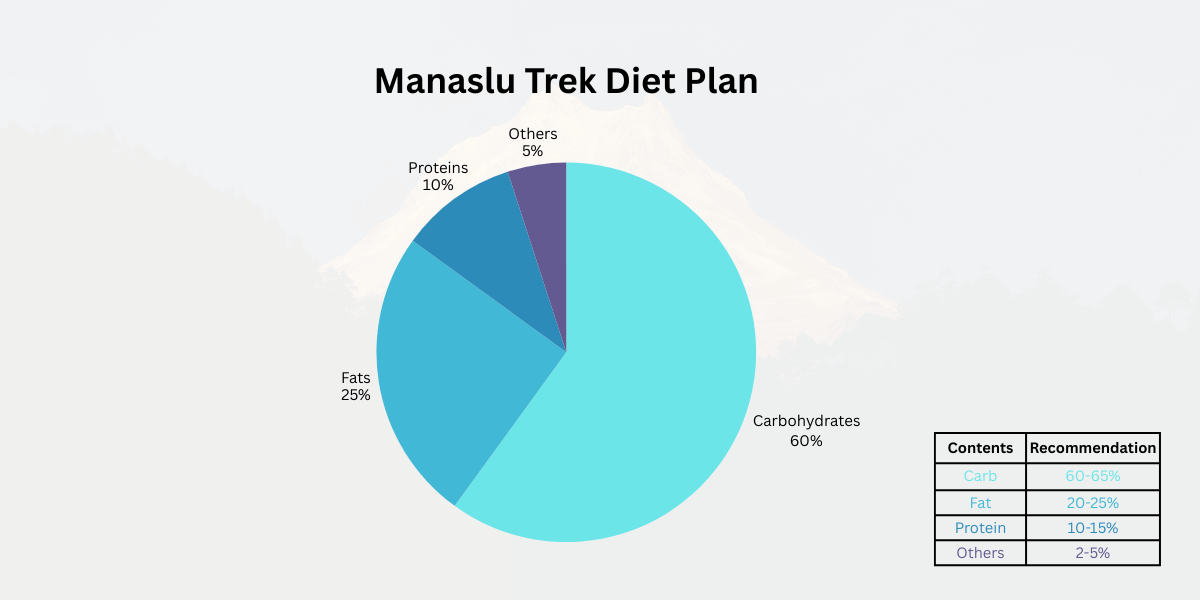
Before your trek begins, start increasing carbs in your diet, as they are easier for the digestive system to process. This new routine shall help you adapt later during your Manaslu trek.
Once your trek begins, here’s a general idea of how you should manage your energy intake:
- Carbohydrates: 60 to 65%
- Fats: 20 to 25%
- Proteins: 10 to 15%
Instead of stressing about calculating your macros, focus more on simple and reliable food. Carbs will come from dal bhat, rice, potatoes, chapati, Tibetan bread, porridge, noodles, and soups.
You should consume less protein because it is slow to digest. Plus, they do not provide immediate energy, which is more important.
The most reliable protein-rich foods include lentils (dal), eggs, and beans. You can also carry extra protein bars if you feel you’re cutting down too much of this nutrient.
Fats should come naturally from cooking oil and other foods, like Tibetan bread and potatoes.
You see, food on Manaslu becomes more repetitive than satisfying. Because consuming simple food is much better to ensure your health remains at an optimal level.
Now that you know the importance of food on the Manaslu trail, what should you really expect? Well, you certainly can’t expect luxury, but only basic and healthy food, like mentioned above.
Good news is that most agencies let you pick your own breakfast, lunch, and dinner. Just be sure to confirm with your guide on the price range you’re allowed to order, as per the inclusion policies set by the agencies.
For any extra dessert or snacks, you may need to pay as per the menu prices!
You also have to be wary about your timing. In trekking destinations, even beyond Manaslu, meal times are usually much earlier. And that’s good because, honestly, you get hungry and crave that delicious plate of Dal Bhat immediately.
Let me give you a glimpse of what breakfast, lunch, dinner, and beverages you should expect on your Manaslu Circuit Trek.
Breakfast Menu on Manaslu Trek
The usual time for breakfast during your trekking is early morning, from around 6:00 AM to 7:00 AM. It depends on the itinerary, actually.
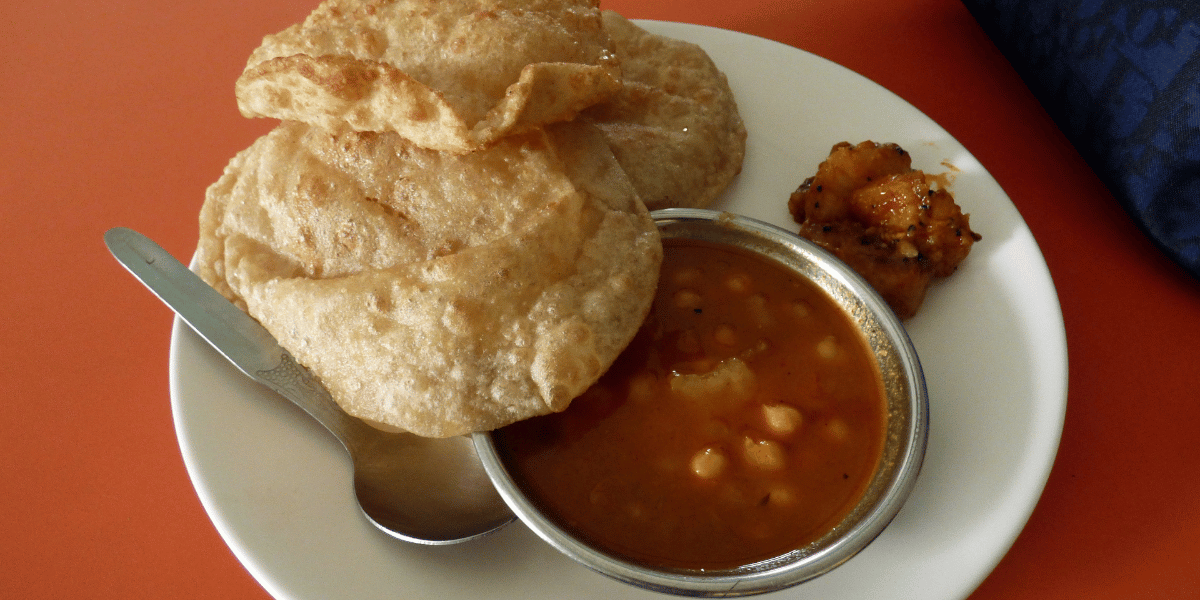
The idea is to eat a hefty breakfast that gives you energy for the next 4 to 5 hours of hiking. You can expect the following breakfast menu on the Manaslu Trek:
- Porridge (oat / milk / apple / tsampa or champa)
- Muesli or cornflakes (in some places only)
- Fried or Boiled Potatoes
- Puri Tarkari
- Toast, Tibetan Bread, Buckwheat Bread, or Chapati (plain or with jam / honey / egg / cheese / yak butter / peanut butter)
- Pancake (plain / jam or honey / peanut or yak butter / egg / cheese / apple / chocolate)
- Soup (garlic / tomato / onion / chicken / mushroom / potato / vegetable / champa / lentil / pumpkin / noodle / nettle)
- Eggs (boiled / fried / scrambled / omelette)
- Apple pie or Apple Denish (in places like Gap and Namrung)
- Swiss Rosti
Note: During your final hike to Larke Pass, you need to pre-order meals in the evening in Dharmashala.
Lunch and Dinner Menu on Manaslu Trek
For lunch and dinner, the go-to option is Dal Bhat with veggies. But if you’d like something else, that’s definitely possible!
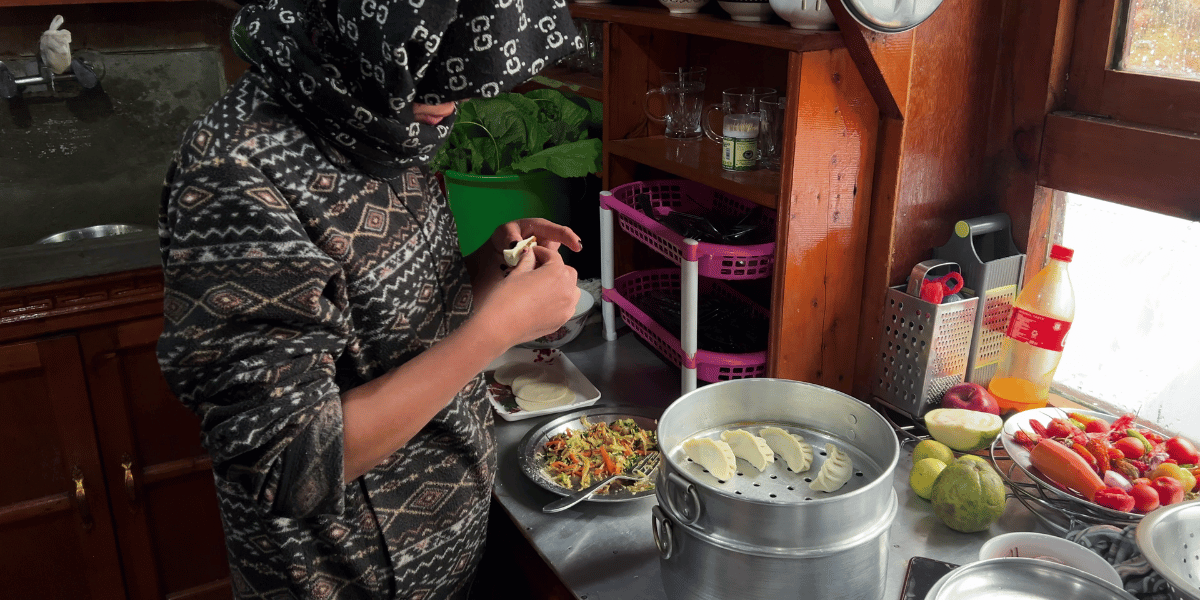
The usual time for lunch is around 12:00 to 1:00 PM, and dinner is between 7:00 and 8:00 PM. Kitchens remain open until 9 or 10 PM, depending on where you’re staying. For example, in Dharmashala, dining closes by 8 PM to ensure you get proper sleep.
You can expect the following Nepalese food on the menu for dinner on your Manaslu Circuit Trek:
- Dal Bhat Set (rice with lentils, veggies, pickles, and possibly meat)
- Fried rice (veg / tuna / egg / mixed)
- Curry (veg / potato / egg / mixed / yak dry meat)
- Noodles or Spaghetti (fried / egg / veg / cheese / tuna / mushroom / mixed)
- Spring Roll (potato / tuna)
- Macaroni/Pasta or Pizza (egg / veg / tuna / cheese)
- Steamed or Fried Mo:Mo (mixed veg / potato / cheese / tuna)
- Salad (radish / carrot / potato / mixed veg / apple)
Dal Bhat Power 24 Hour: Why I Recommend It!
Before moving on with other food or drinks menus, let’s talk about the most common phrase when you’re doing the Manaslu Trek. Dal Bhat Power 24 Hour it is!
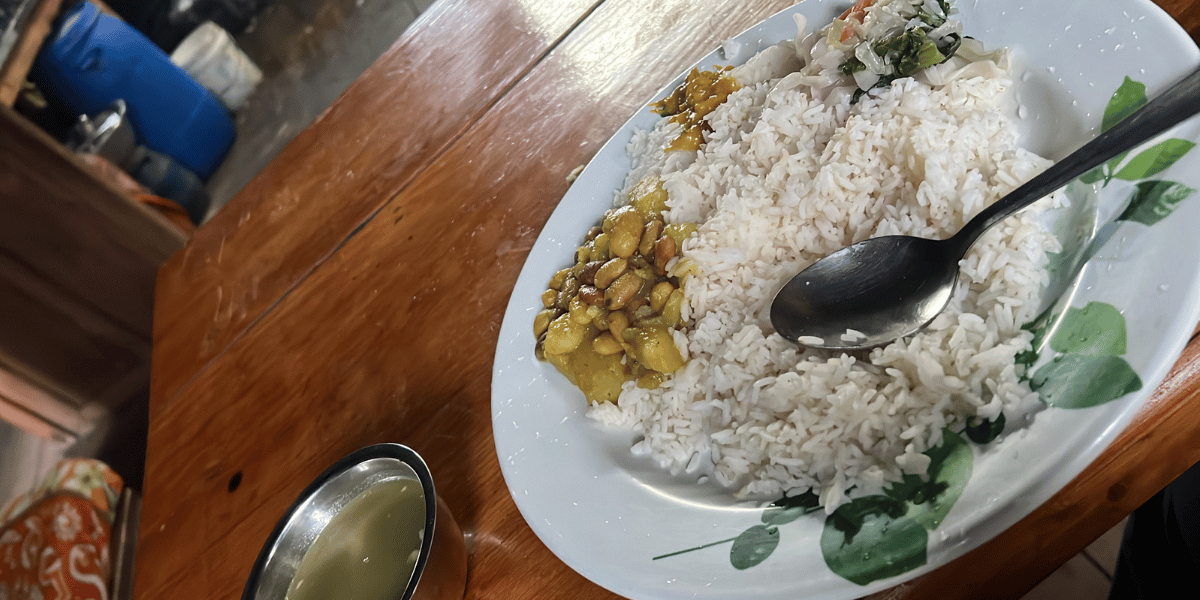
I don’t recommend it just because I like it or the phrase is catchy. But it indeed is the best food to eat on the trail.
Personally speaking, Dal Bhat is my favorite, and I cannot imagine my day without one full plate of it. Even multiple studies show that Dal Bhat matches the ideal micronutrient balance required for high-altitude treks like the Manaslu Circuit Trek.
Let me provide it to you in the simplest language:
- Rice + potatoes (most common): very high complex carbs
- Dal (lentil): high plant protein, also rich in iron, magnesium, and potassium
- Cooking oil from veggies/eggs: right amount of fat
- Lentils and veggies: sufficient amount of fiber
Moreover, Dal Bhat is a high-volume food that is still easy to digest. So, you’ll find yourself devouring Dal Bhat even when your appetite is low, despite altitude anorexia that we discussed earlier.
I’m not done yet.
Dal Bhat even helps prevent muscle breakdown and fatigue at high altitude. Further, dal here helps with electrolyte balance, rice stores glycogen and retains water, and soupy veggies are great for hydration balance.
Also, if you take a close peek at the porters who carry nearly 20 to 25 kg of weight. They don’t consume fancy foods at all. Relying mostly on Dal Bhat, they are among the most energetic people on the trail, right?
So, you already know why I’m suggesting it to you too. I won’t say twice a day. That is up to you. But at least once a day, like I do, would be great for your gut health.
Recommended reading: 10 unique foods in Nepal besides Dal Bhat
Local Foods You Should Try
Some of us are here to experience the best culture of Nepal. So, limiting yourself to Dal Bhat wouldn’t do justice. Instead, you can opt for some local foods that most Manaslu people rely on.
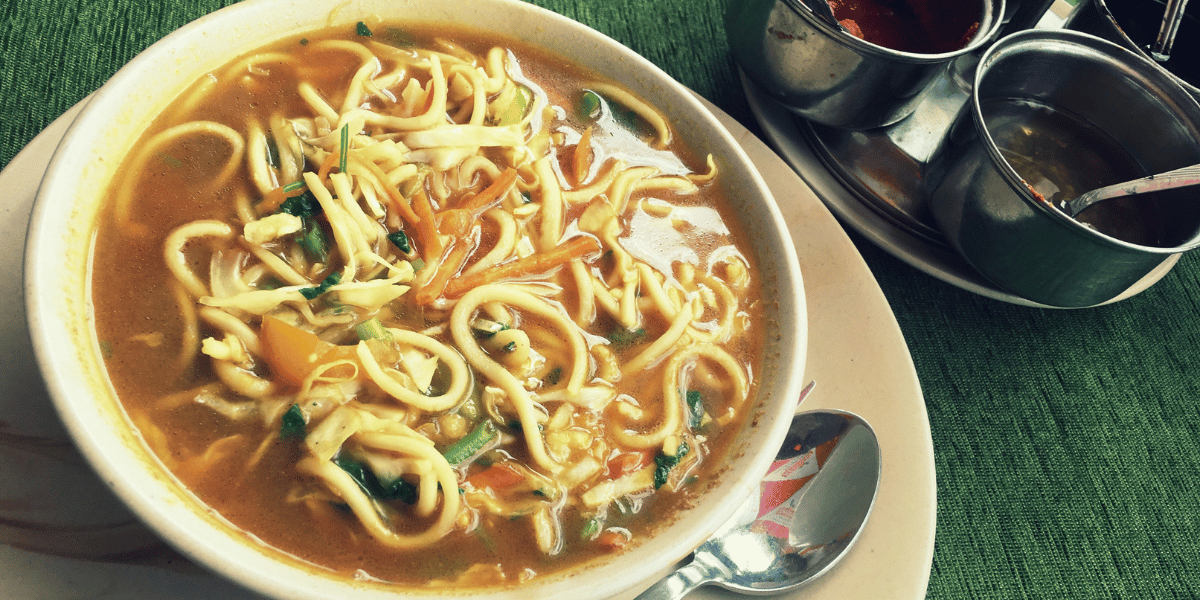
Yes, these food items are available on the menu as well. Here are the most popular local food options to try, which are mostly Tibetan-influenced:
- Thenthuk
- Tibetan Mo:Mo:
- Shen/Dhindo with curry or nettle/gundruk soup (best alternative to Dal Bhat)
- Buckwheat/corn/potato bread
- Tsampa (champa)
- Thukpa (alternative to noodle soup)
Desserts and Drinks Available on Manaslu Trek
It’s best that you carry your own bottle with purification tablets or drops, as there isn’t anything better than water for hydration. You can fill your bottle or thermos at the taps provided along the Manaslu route or at different lodges with a minimal fee.
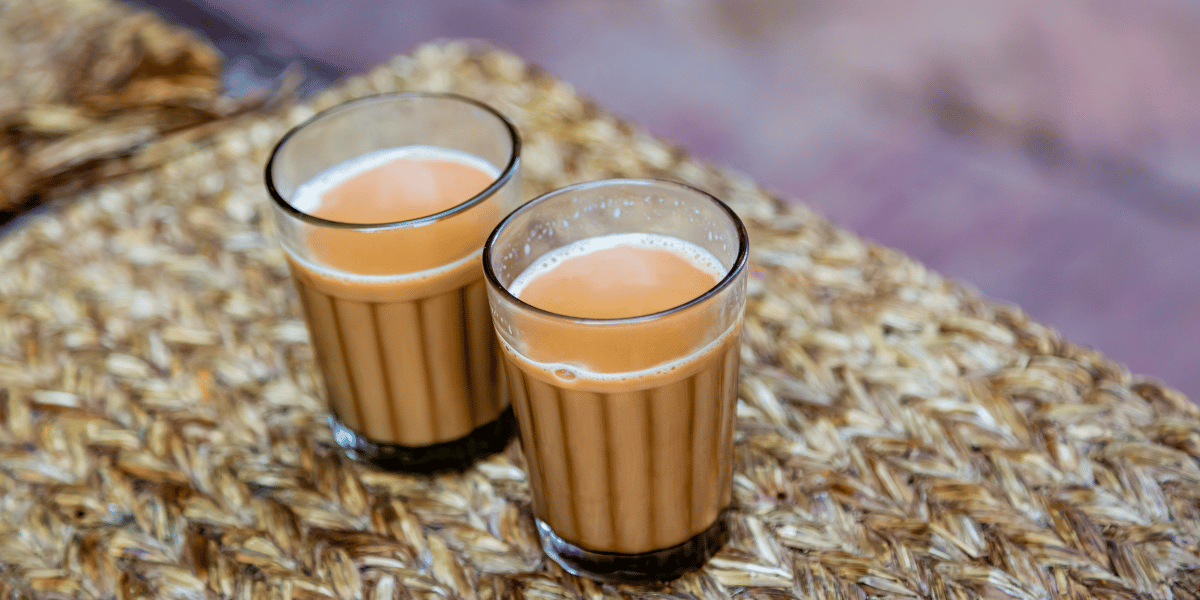
Teas are available all along as well. And if you’re craving sodas and desserts, they are also available, but a little pricey considering how remote the region is.
Here’s what to expect on the menu regarding desserts and drinks:
- Tea: Black (extra masala option available too), Milk (powdered), Lemon, Mint, Ginger, Herbal, Green, Tibetan, Butter, etc.
- Coffee: Black, Milk (through instant coffee packs or powdered), Hot chocolate (in lower regions)
- Soft drinks: Apple juice (Gap to Namrung), sodas/colas
- Dessert: Pudding (rice/custard/chocolate), Apple pie/fritters, chocolate/cinnamon roll, churpi, etc.
- Hard drinks (available on menu, but you should avoid!): Chyang, Local Raksi, Nepalese spirits (beer, rum, vodka, etc.)
You might like reading: Most popular beverages in Nepal
Importance of Snacks: What to Carry?
Certainly, foods along the trail aren’t sufficient for 100% energy. While you can definitely stop at different lodges as you pass by in the lower part of the Manaslu Conservation Area, the higher sections come with fewer pit-stop locations. In fact, beyond Dharmashala, there are none!
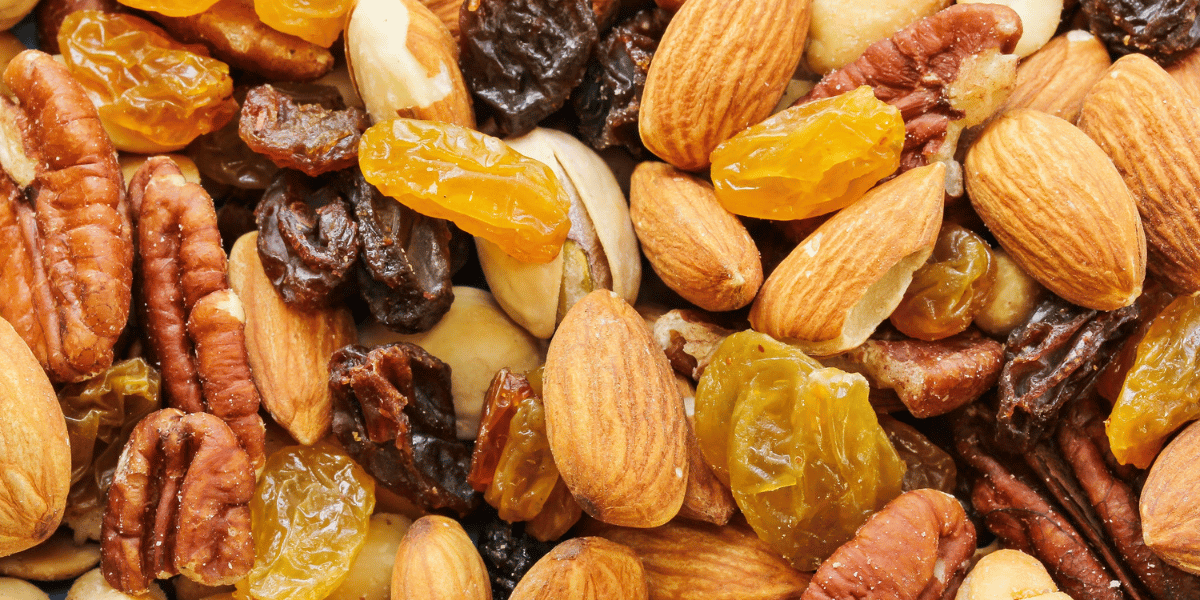
So, carrying light snacks should always be your priority. You don’t really need to pack them (with other stuff) from Kathmandu itself. You’ll find snacks up to Samdo. Just be wary that the higher you go, the price increases due to remoteness.
But do note that not all your favorite snacks will be available along the trail. So, purchasing them from Kathmandu would be the best option while keeping their weight in mind.
Here are a few snacks that I carried during my own Manaslu Circuit Trek, along with a few more that I believe can be handy:
- Dry fruits, including but not limited to raisins, dates, figs, apricots, etc. (rich in potassium and iron)
- Nuts and seeds, like almonds, peanuts, cashews, pumpkin seeds, walnuts, etc. (rich in healthy fats, magnesium, and protein)
- Dark chocolates (quick sugar and fat)
- Energy or granola bars (rich in complex carbs due to presence of oats)
- Electrolyte powders or ORS (prevents dehydration; absolute lifesaver!)
- Biscuits and instant noodles (carbs and fat, but not overly)
- Roasted soyabeans and chickpeas (high protein, iron, and fiber)
- Chewing gum or toffees (helps with dry mouth)
Food Quality and Safety Concerns
Concerns related to food hygiene are certain, as you’re travelling to such a remote place in the Himalayas. Let me answer all your doubts right here.
First, Understand How Food Reaches Here and Stored
In the lower Nubri Valley, up to Samagaun, different crops like maize, millet, barley, buckwheat, mustard, and seasonal vegetables are grown. Except in Samdo and Dharmashala. It starts from Bhimthang again once you enter the Manang district.
But food items that aren’t available in the region need to be transported all the way from the nearest market in Gorkha or from the capital. Yes, including the salads that aren’t grown here!
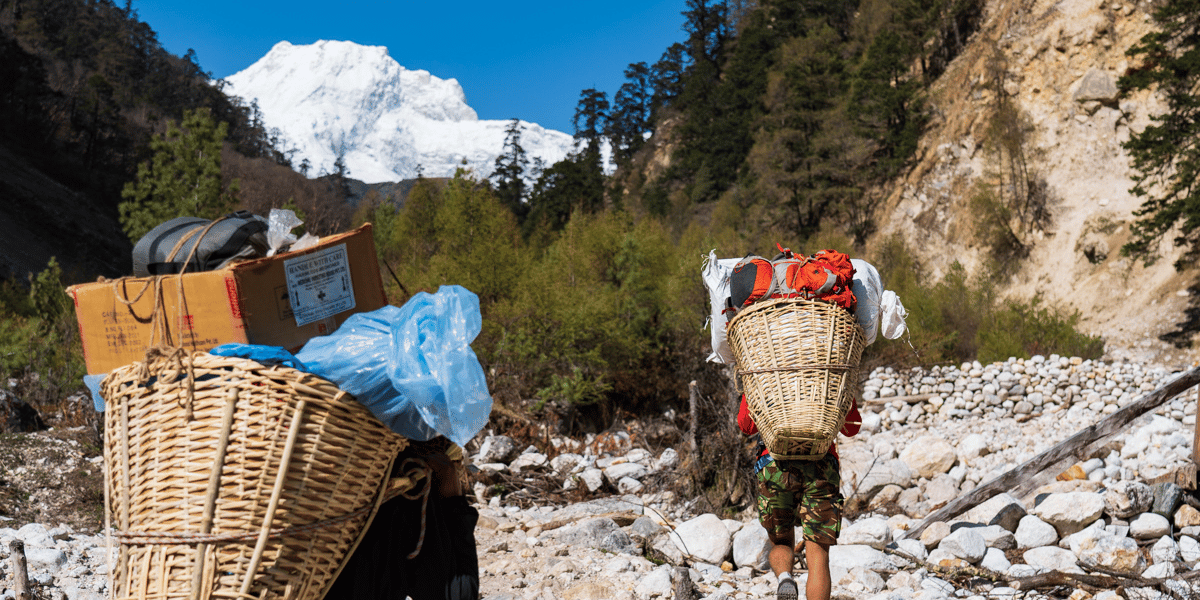
And for transportation, it’s either porters, helicopters, or pack animals (like mules, horses, and donkeys) that bring in these items. Not just food, but also medicine supplies, construction materials, fuel, and more.
All of the food items are stored for future use. While lower areas are equipped with refrigerators these days, the upper Manaslu region does not have such facilities.
Hence, it’s best that you stick with cooked vegetables during your 12 to 14-day journey in the Manaslu region. While salads are available, it’s best to avoid them. Similar is the case with meat. But I have to say more about this (so continue reading).
Meat Availability: Think Twice Before You Consume
Meat, whether it be chicken, goat, chevon, buff, yak, pork, or anything else, is a major source of protein and fat that requires more digestive effort.
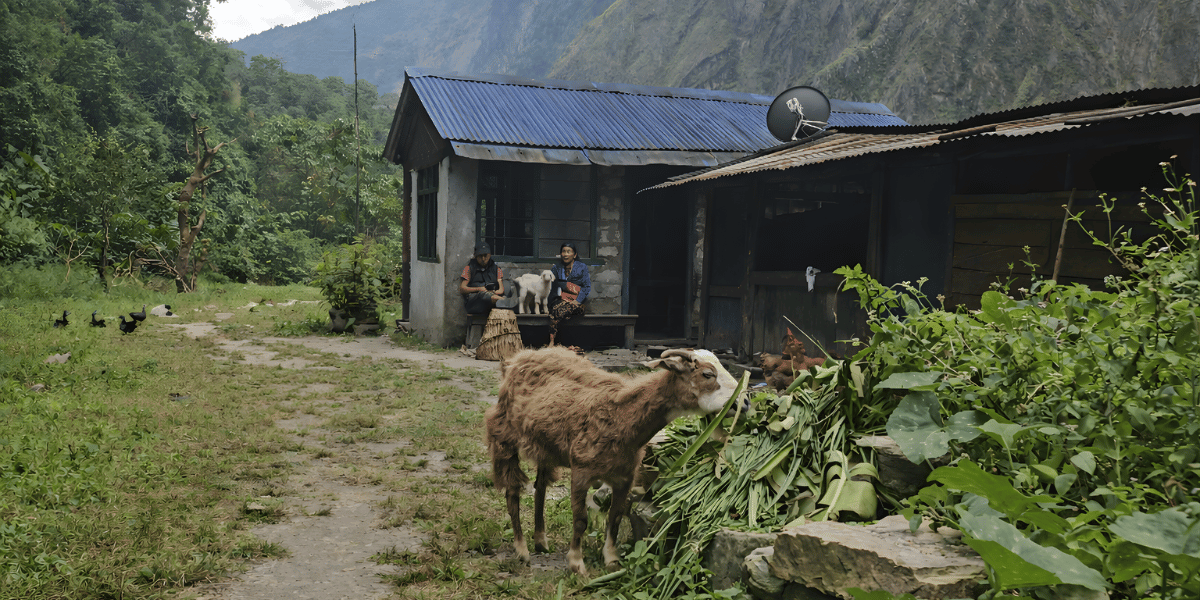
And like I mentioned earlier, during high-altitude treks like the Manaslu Circuit, your gut health matters more. Consuming excessive meat means your stomach may feel heavy and bloated, which is exactly the thing to avoid.
Also, I already mentioned how food is stored without proper refrigeration. Not to forget that the upper Nubri Valley, along with Tsum Valley, follows non-violent cultural practices, meaning animals are not allowed to be slaughtered here. I even saw that this culture is followed up to Bhimthang in the Annapurna region.
Moreover, you shouldn’t even think of beef, not just during your Manaslu trek, but all over Nepal. This is because Cow is Nepal’s national animal and is considered sacred by Hindus, Buddhists, and Jains.
Basically, you don’t get fresh meat here. It is rather transported from lower regions. That’s the reason many lodges just keep eggs and canned tuna.
If you ask me, I usually go with a big ‘no’ when it comes to meat during treks. I enjoy it after the trek ends, but not while I’m hiking. Because I’ve felt the discomfort once…
Cold weather, possible stale meat, and high protein that digests slowly can lead to loose motion easily for those who have food intolerances and strong gastrocolic reflexes.
So, my mantra is: Meat later, mountains today.
You seriously wouldn’t want to make a U-turn to Machhakhola, missing the mesmerizing view of Mt. Manaslu and the Mansiri range. That’s what you’re here for, isn’t it? So, I urge you to hold your cravings just for those 12 to 13 days.
Food Options for Different Dietary Needs
Honestly, trekkers with dietary restrictions should not worry during the Manaslu adventure. Most items available here are simple, vegetarian, and recommended for everyone.
Still, here are a few things to keep in mind:
- Vegetarians need not worry. Relying on Dal Bhat and avoiding meat is all you need to do, which is exactly what I’ve been emphasizing throughout this article.
- For vegans and lactose intolerant trekkers, make sure you inform your guide or the hotel staff not to provide you with ghee or butter. While fresh milk isn’t available, powdered milk might be used. So, still avoid milk tea, Tibetan butter tea, and similar drinks.
- Gluten-free options are readily available. Best option? Dal Bhat yet again. Avoid noodles, roti, pasta, and bread. But cross-contamination in the kitchen is possible, so be sure to ask your guide to examine it once.
- For non-vegetarians, eggs might be the best option. Canned tuna isn’t bad but be sure to inspect the expiry date. Otherwise, carry canned meat for yourself (at your own risk).
- Other than these, if you’re allergic to certain food, don’t hesitate to inform the guide or hotel staff.
Food and Drinks to Avoid on Your Manaslu Circuit Trek
I’m pretty sure you’ve already got the idea of what things are best during treks and what to avoid. Still, here’s a kind of revision just to make you aware:
- Raw vegetables (including salads)
- Unrefrigerated dairy, like cheese, churpi, or other milk products.
- Expired packaged/canned items, like junk foods, tuna, etc.
- Meat of any kind (not just for diet, but also to respect the culture of the Nubripa community).
- Fried and oily foods (can increase risk of illness).
- Bakery items (most probably stale, but you can try apple pastries in Gapsya and Namrung, as they are generally fresh).
- Alcohol (you may taste a bit but consuming too much accelerates dehydration and increases AMS chances).
- Excess caffeine and sugary drinks (can affect your sleep at high altitudes and disrupt blood sugar level).
- Avoid smoking too, as it makes it difficult for you to adapt to low-oxygen environments.
My Honest Manaslu Trek Food Review
Overall, I am going to rate the food available on the Manaslu Trek 7.5 out of 10. This rating is not just based on taste but on a comprehensive reflection of hospitality, safety, cleanliness, pricing, and the effort locals put into transporting goods to the upper regions.
- Machhakhola (6/10): Dal Bhat on a hungry stomach tasted good for dinner, but it was not the most delicious one. I had a light breakfast, which was more local and just decent.
- Yaruphat (7/10): My order was a bit late, but the spaghetti they served was really good!
- Jagat (7/10): Our stay here felt was really great, thanks to some new friends I made along the way. While the Dal Bhat was good, breakfast was a little late and not as expected.
- Ekle Bhatti (5/10): While I was welcomed with an open heart, I felt the place I stopped at overcharged me for egg fried noodles. They insisted I try Dal Bhat, but I wanted something light, so I ordered from the menu. Surprisingly, it was the most expensive meal I had on the trail.
- Deng (9.5/10): The only 0.5 drop was because of the breakfast taste. Otherwise, the resort-like place we stayed in was the best in terms of hospitality. I still remember every staff member even after months.
- Gap (7.5/10): My team stopped here for lunch and again chose spaghetti. It was much better, not just in terms of price but also in taste.
- Namrung (6/10): Home to an actual resort with local vibes, I had high expectations. Sadly, our team felt we were not treated properly, and the Dal Bhat was not the best in taste. Even the fries and other items ordered were average, based on my team’s experience. The 6 rating is because we got to try local apples and different products like Danish pastries and pie.
- Lho (8.5/10): Honestly, this was the place where we got some of the best food. Dal Bhat or spaghetti, we tried it all as suggested by guides who frequently visit here. It would have been 10/10 if the orders were handled faster. I still understood the delay considering how crowded the lodge was.
- Shyala (8/10): This was where I tried all three meals. Dinner (mo:mo), breakfast (Tibetan-style), and lunch (spaghetti). It was also the only place where I skipped Dal Bhat, which made me a bit grumpy after the Pungen Gumba visit. The recently opened lodge we stayed in offered excellent service, and the food was decent too.
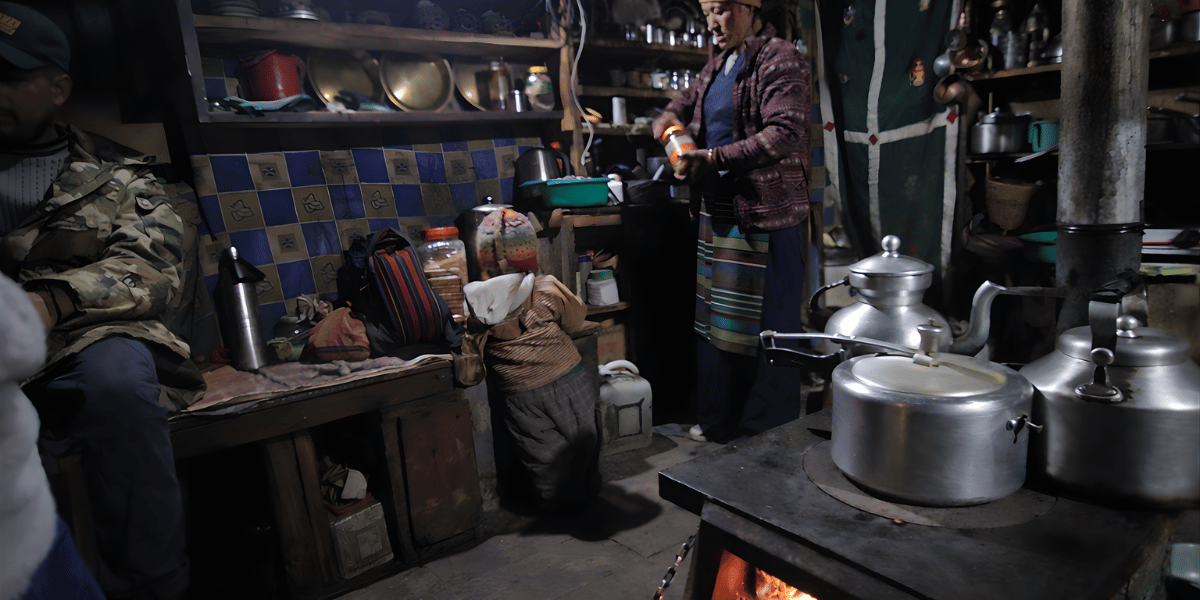
- Samagaun (8/10): We had a local stay for just one night, even though the place deserved at least two. While the taste was local, the hospitality from aama was almost comparable to Deng's. Free tea and lots of warmth made the food taste even better.
- Samdo (10/10): This rating goes to the Bhotia family that hosted my team for the night. As the trail was overcrowded, we could not even find a lodge. The way we were welcomed and cared for made the whole trip feel worth the challenge. Butter tea, local Dal Bhat, and heartfelt stories are the reasons I am writing multiple articles for Altitude Himalaya.
- Dharmashala (5/10): I understand how challenging overcrowding can be. However, I felt this place needs more lodges with support from the government or locals. The logistics felt poorly managed, and the plates served did not seem very hygienic.
- High Camp (8/10): Crossing Larke Pass early in the morning and descending steeply had already exhausted me. But once I reached the settlement, my tired knee felt some relief, thanks to their decent fried rice. If it was my hunger that made it taste better, do not blame me for this positive review.
- Bhimthang (7.5/10): This was the perfect place to recall the moments of Larke Pass with warm local Dal Bhat. Interestingly, some lodges here have private bathrooms, perhaps because you are now in the Annapurna region.
- Gowa (6.5/10): This was the final location where we stopped for a meal during our 11-day journey. A quick plate of chowmein from the menu reminded us that we were no longer in the remote Manaslu CA.
Understanding Food Culture of Manaslu Region
Let’s go beyond eating. Everyone has their own culture that we must respect.
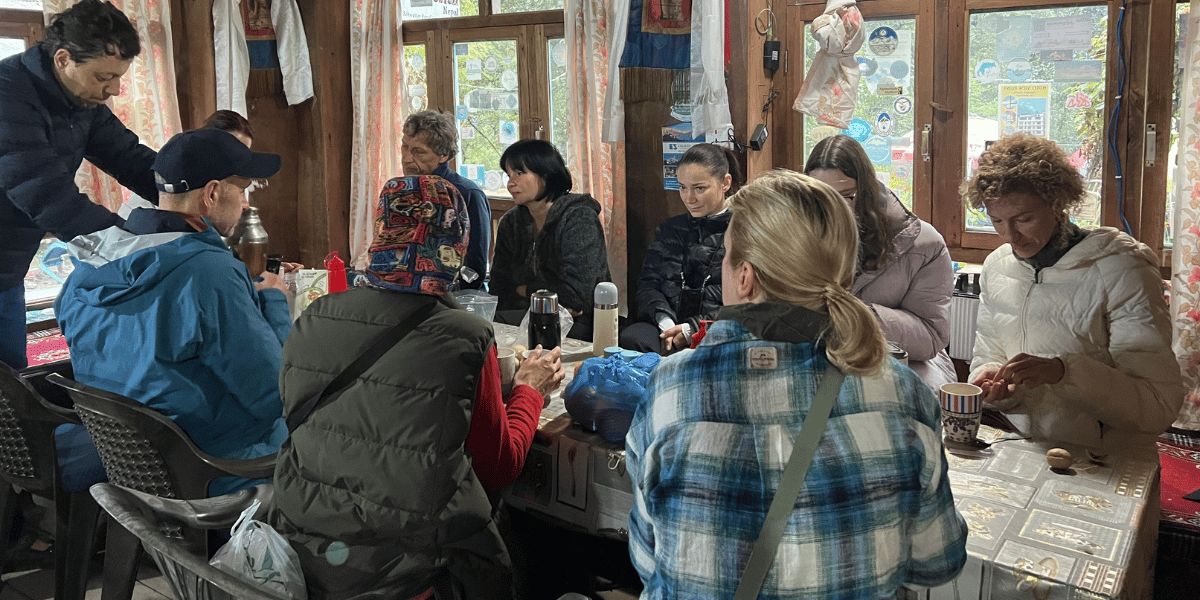
During your trek in the Manaslu region too, there are a few things that you must consider. The Nubripa, Bhotia, and other Tibetan communities regard even food as sacred.
You should know by now that the remoteness of the region, along with scarce vegetation, is already a major challenge. So, be sure to follow these general cultural etiquette guidelines during your 12 to 14-day journey:
- First and foremost, don’t waste food. Instead, if you think that the bhat served on your plate is going to be heavy, simply ask the staff or your guide to take some out.
- During peak seasons of the Manaslu trek, overcrowding can create issues in lodges equipped with a handful of staff. So, instead of calling out to them, seek help from your own guide. They’ll be your go-to person for everything.
- With that said, don’t enter the kitchen area without permission. You may ask politely from outside and hand over anything you want.
- While smoking is one thing I highly discourage during treks, if you still do, be sure not to smoke inside the rooms. That smell you leave behind might affect other guests the next day.
- Do not feed street animals with random snacks. I know you love dogs, but the food you give might not be the best for them. Only do it if you’re 100% sure.
- It’s best that you order food early. Much better as soon as you check in. Tell your guide your preferred time, and you won’t have to be disappointed, unless it’s overcrowded and hotels have limited staff to handle the logistics.
- Coming back to Dal Bhat, you’re free to refill as much as you want. Don’t overeat, though.
- Wash your hands. Not just because they are dirty after long hours of trekking, but also because it’s culturally essential to do so here in Nepal.
- Dining in Manaslu’s local lodges can already feel overwhelming. So, don’t disturb the people here with loud music or by behaving irrationally.
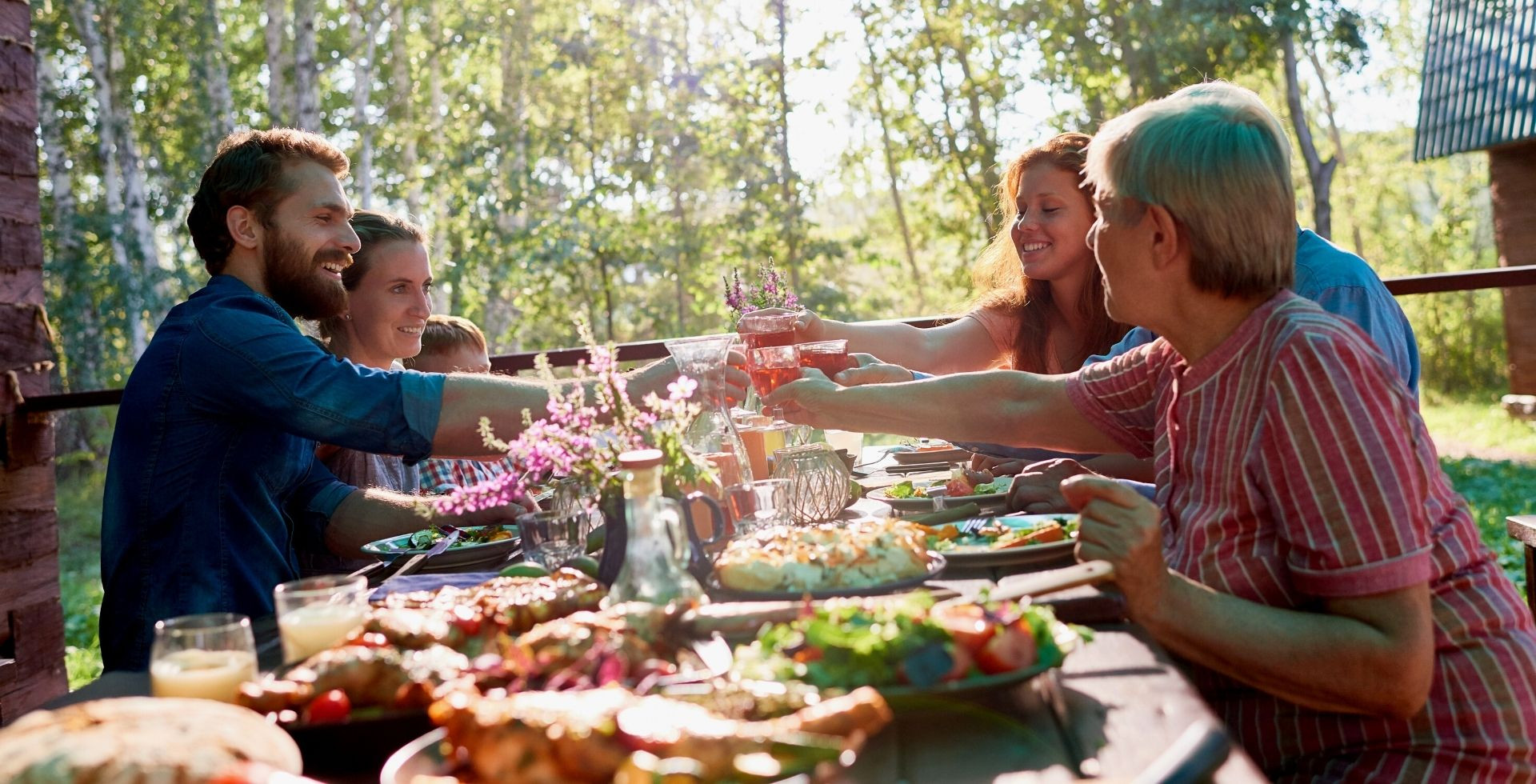
- Kindly share tables when overcrowded. You don’t have to hesitate to sit next to a stranger either. Mountains are all about socializing. Even the most introverted people come out of their comfort zone here.
- Bargaining is something to avoid here on the Manaslu Trek. You might feel this trek strenuous, but what’s even more difficult is taking food all the way to the top. People rely on local and simple food, and those western options are for guests only. So, I hope you’ll respect that!
- In case you’re staying in a local lodge, don’t place your feet near the bukhaari (stove). They are meant to keep you warm, but they also cook food there. So, they may consider it disrespectful. This is what I learned from the Bhotia family during my stay in their home in Samdo.
Final Thoughts
As long as you’re not wasting food, respecting the people in Manaslu, and cooperating well despite the overcrowding, you’re already doing great.
Beyond food, the trek also rewards you with highlights like the remote Nubri Valley, traditional mountain villages, and close-up views of Mt. Manaslu, which make the entire journey feel even more meaningful.
Remember that Manaslu is a restricted region, and special permits are required just to enter here!
But this has more to do with the sensitive border with Tibet, the unique culture, and fragile ecosystem than with its physical landscape. In fact, residents of Chumnubri Rural Municipality (which includes all Manaslu villages) are very hospitable, offering you a variety of applicable foods.
While there are surprising options even in such a remote region, I’m suggesting you stick with Dal Bhat at least once a day. And be sure to prepare for your Manaslu trek way before even finalizing the package with a trek operator.
Hopefully, you will give Altitude Himalaya a chance, as we do both private and group join treks based on your overall budget.
Happy travelling to the Gorkha District, and be sure to read more food-related blogs that we cover in Altitude Chronicles!


 Bhishu Acharya