All set for your Manaslu Circuit Trek, but still hesitant about the accommodations? Well, you have landed on the right page!
Each major destination along the Manaslu trail offers good teahouses and mountain lodges that you can call your home for the night. You will be provided with basic amenities, which should be enough for the 12 to 13 days you will spend in the mountains.
However, there are certain things to keep in mind before planning your trek. For instance, the stays here are not luxurious and you need to carry your own toiletries.
And what about hot showers, food, charging facilities, and other services? Don’t worry. This blog dives deep into everything you should expect from Manaslu Trek accommodation.
Manaslu Accommodation Facilities: What to Expect?
Surely, the remote region of Manaslu WILL NOT HAVE the best accommodation facilities. Every good has to be carried all the way to different locations by porters and pack animals.
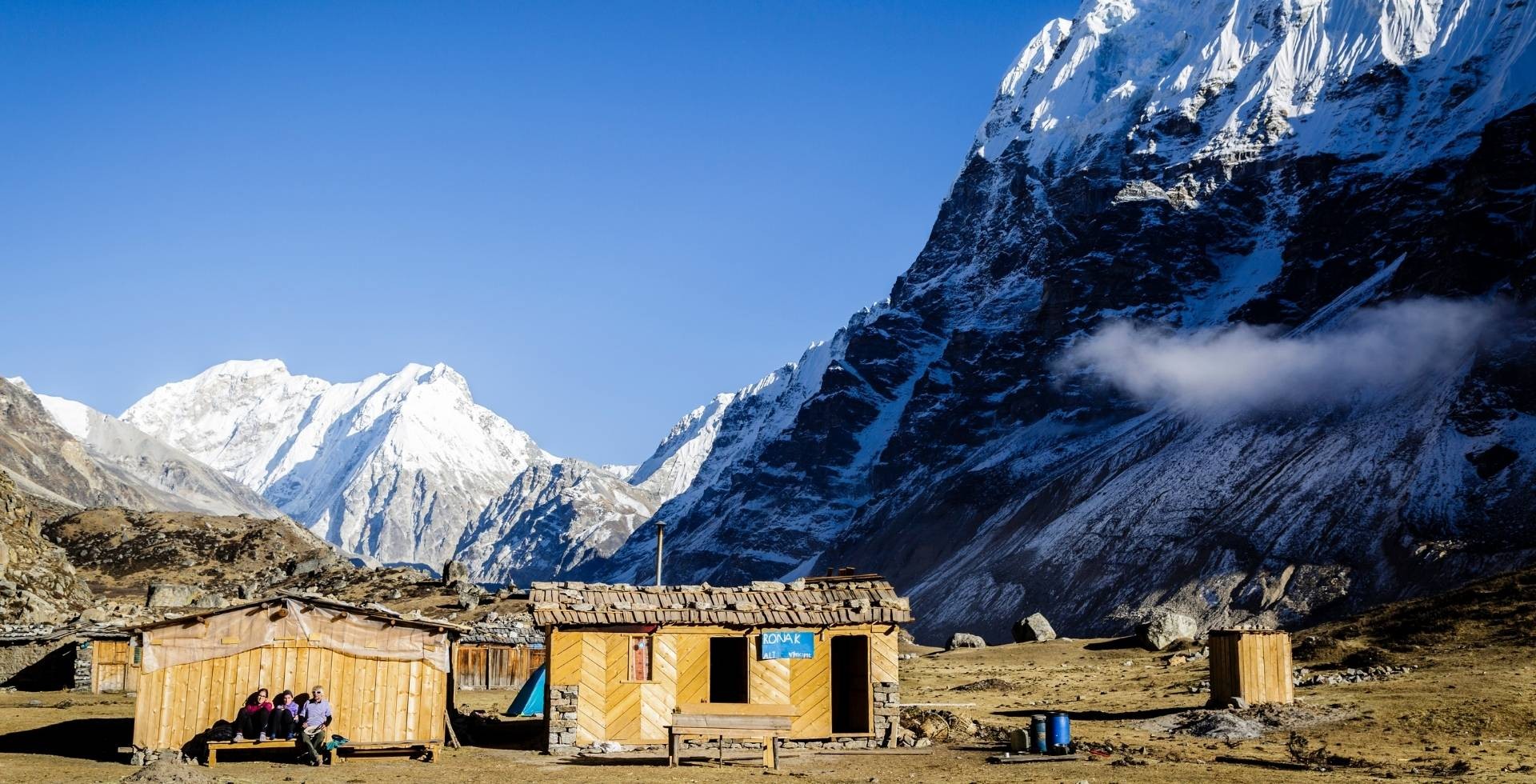
That said, if you are expecting luxurious stays, JUST DON’T! Yes, there are plenty of top-notch mountain lodges available, but they can’t exactly be called hotels. So, the amenities are just basic.
The higher you go, the more basic the facilities become. The lodge owners have tried their very best to include as many amenities as possible. But we, as travellers, should also acknowledge that Manaslu is a secluded region.
As you move higher, it’s not just the facilities that become basic, but the overall stay experience also becomes more physically demanding. Cold temperatures, limited space, shared rooms, and fewer services in places like Dharmashala can make overnight stays feel challenging, adding to the overall difficulty of this trek.
To give you a basic idea, here are the facilities you can expect from the Manaslu accommodations:
Sleep in Clean and Serviced Mountain Lodges
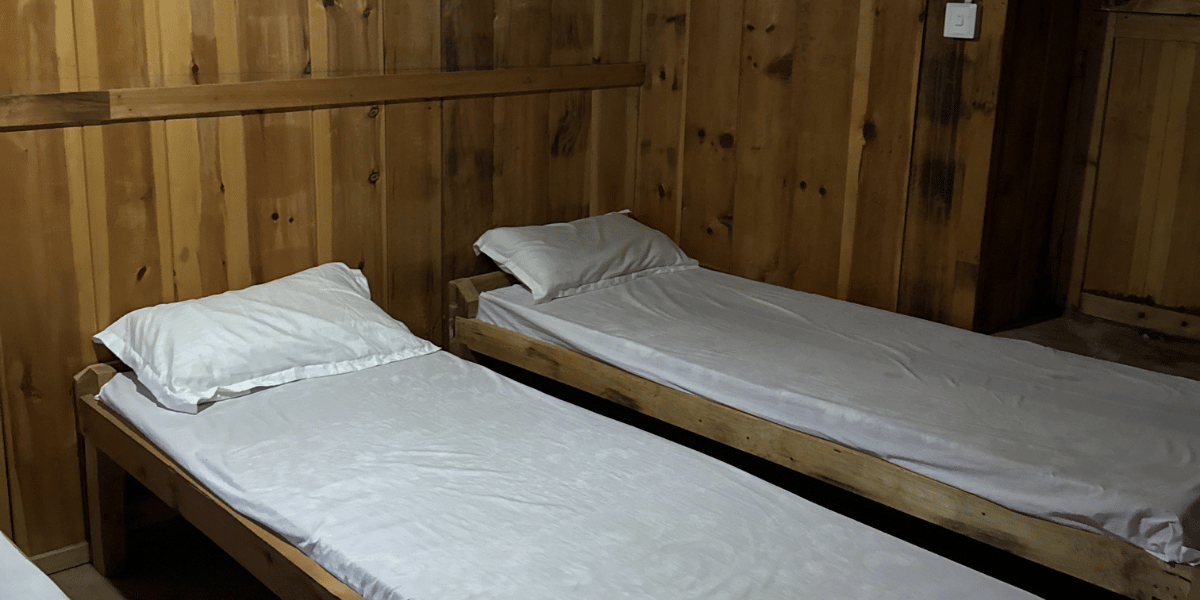
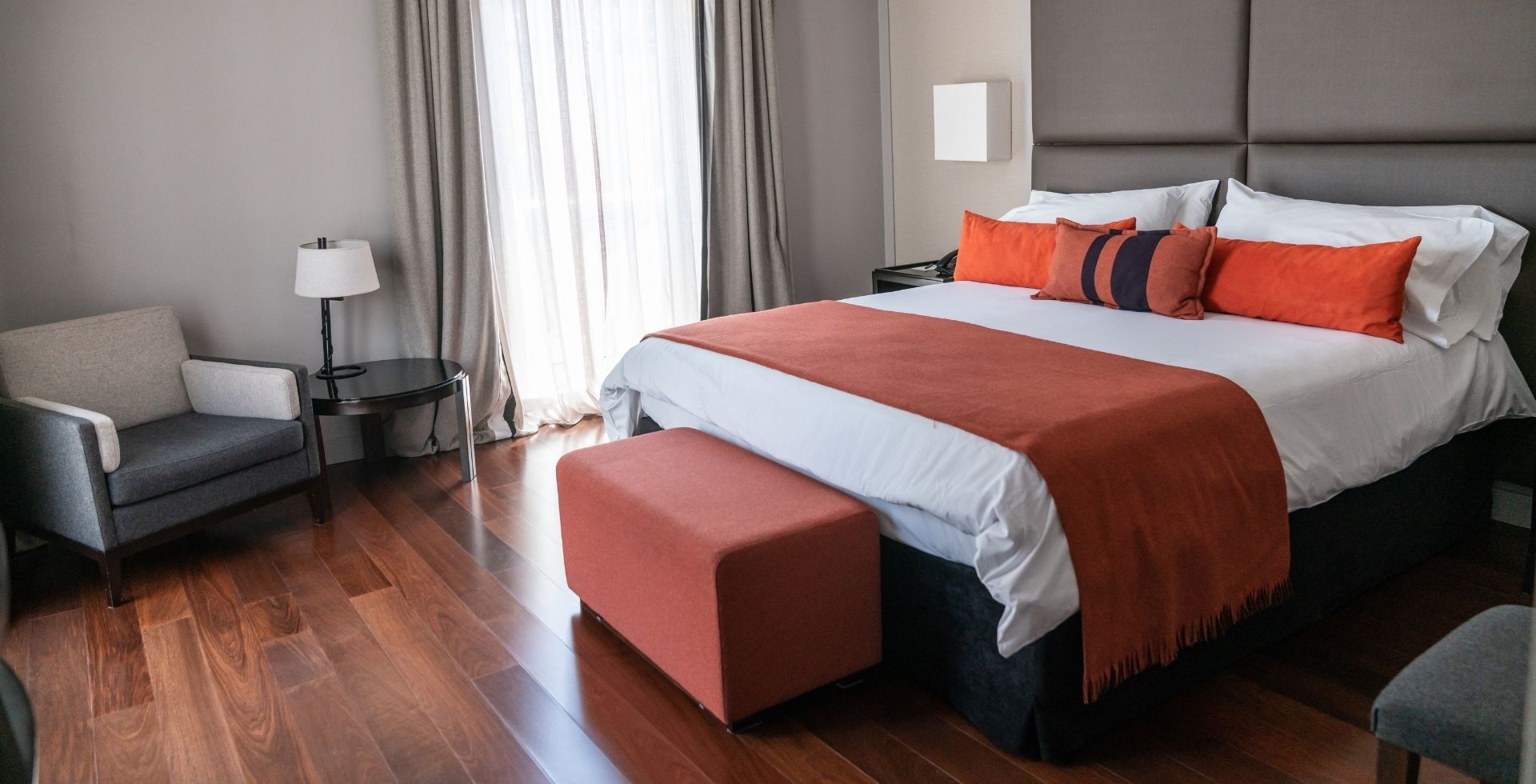
The major concern for every trekker is whether a comfortable bed with a clean bedsheet is available during treks, right? Well, the mountain lodges in the Manaslu region will not disappoint you!
The hospitality here is mind-blowing. They treat guests like gods and ensure you are satisfied with every service, even if it is limited.
They clean the rooms and change the bedsheets after every guest leaves. Just like how hotels have dedicated staff for cleaning, they have them too.
During treks, you will find twin rooms in almost every location. But if you are in a big group, some teahouses offer triple or quad rooms too.
However, problems can happen in Dharmashala, the final place for accommodation before the Larke Pass and the most remote of all the landmarks. Just a few years back, there were no mountain lodges here at all, and trekkers had to rely on camps.
But things have changed. Camping is not required in any part of the Manaslu Circuit Trek anymore. However, Dharmashala particularly has limited accommodations, and you may have to share rooms with other trekkers.
Travel Tip: If you are a cleaning freak like me, I suggest carrying a sleeping liner. You can place it over the bedsheet just for your own sanity.
Extra Blankets to Fight the Cold
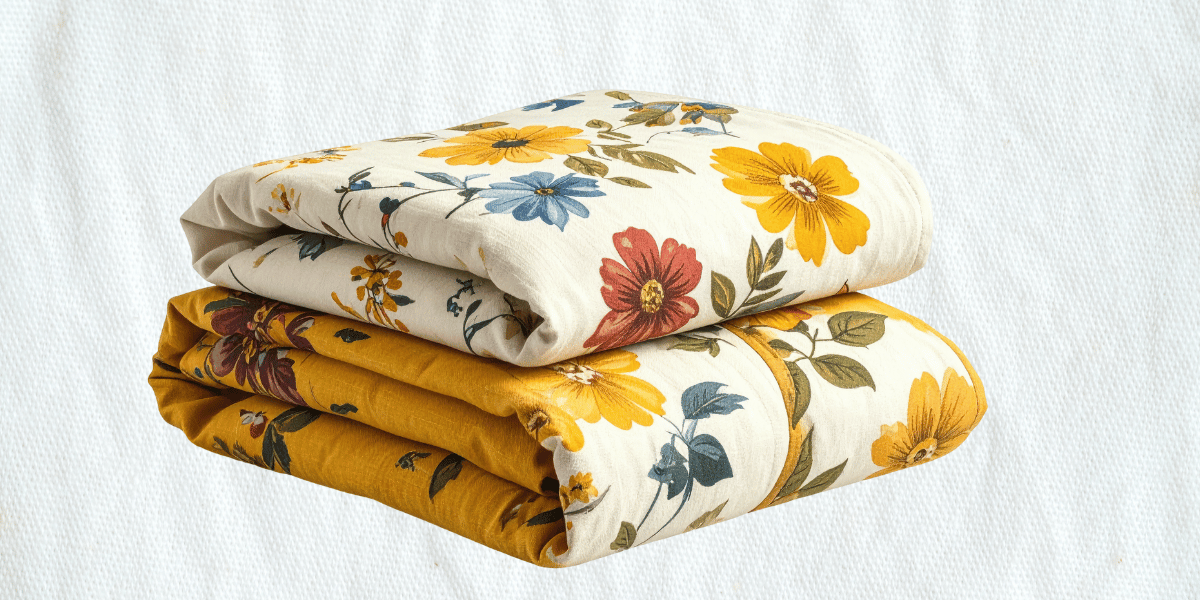
Speaking more about the rooms, they are usually equipped with multiple blankets. Usually, two for each trekker. If it is the off-season, you can even ask for a third, and lodge owners will not say no.
However, if you are planning your Manaslu trek in the peak season, extra blankets might cost you extra, considering their limited availability.
And in high-altitude locations, particularly Dharmashala, even getting one blanket feels blissful.
This is something I can relate to from my own trek, when I had to rely on just one blanket while the temperature was below freezing. I had to wear every piece of clothing I had. Funny to reflect to this now…
To ensure such situations do not happen to you, carrying a sleeping bag comes in handy. This way, even if there is an issue in other locations besides Dharmashala, you will be prepared beforehand.
Good news for you if you’re already planning to book the Manaslu trek with us! Our packages include a sleeping bag for you without additional charge. On top of that, there’s the inclusion of a luggage helper (porter), so you won’t have to carry the load yourself.
Squat-Style Toilets on a Sharing Basis…It’s an Advantage
If you are trekking in the Himalayas for the first time, let me tell you that restrooms are the biggest nightmare.
Just like other major trekking destinations in Nepal, squat-style toilets are the most abundant in the Manaslu Circuit. That too, on a sharing basis!
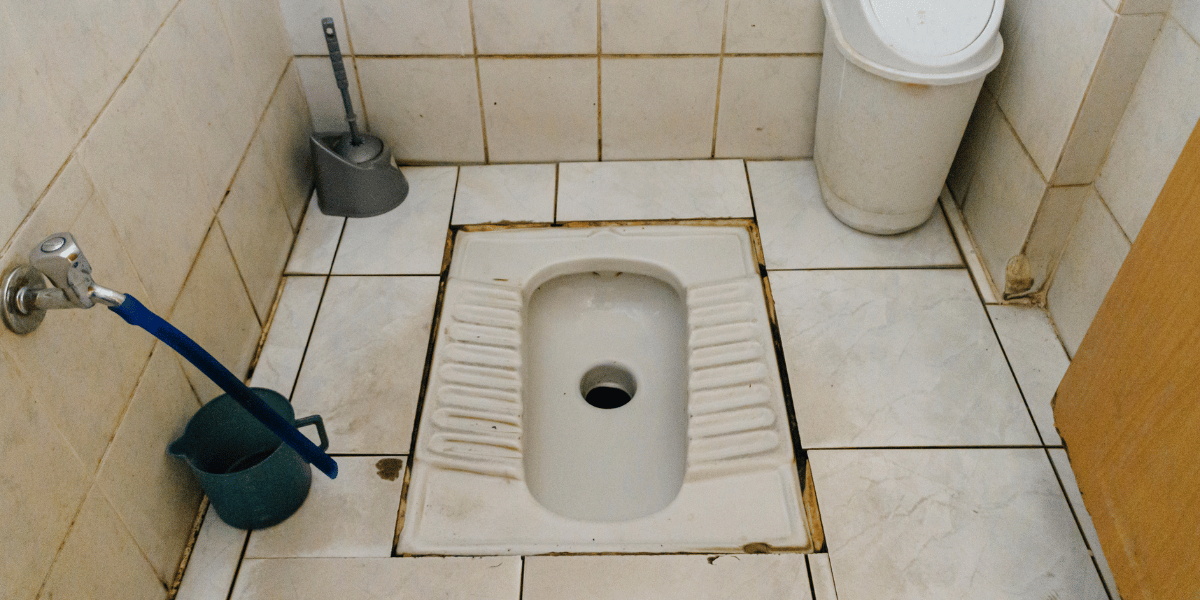
Some good mountain lodges in the Kutang and Nubri Valley do offer western sitting-style toilets on a private basis. But again, only some. Not all.
That said, you have to be mentally prepared for doing your morning business in squat-style toilets for 12 to 13 days. So, definitely carry all the toiletries you need. This includes tissues (wet ones are recommended), personal soap or hand sanitizer, etc.
But honestly speaking, there is no need to grimace about squat-style toilets. These are actually an advantage, especially when it comes to sharing restrooms used by multiple trekkers.
Think about it. You would not want to place your bottom on seats that many others have used. And not all trekkers maintain the best hygiene, right?
Personally speaking, when there is an option with both squat and sitting toilets, I would rather choose the former (on treks). Comfort for me is secondary in public settings, as hygiene matters more.
Hot Shower Available, But at a Cost
As we are referring to cleanliness and hygiene, choosing to shower is actually optional. Wetting yourself (even if it’s a hot shower) still means you need to dry yourself.
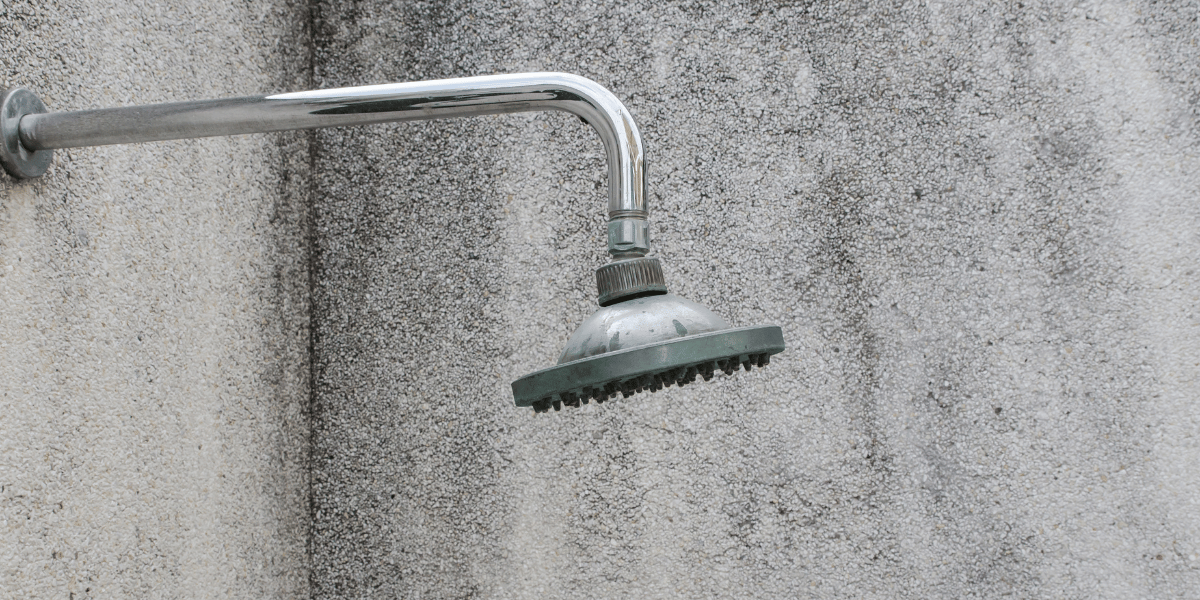
I have seen this with a lot of trekkers. Many opt for evening showers and end up catching a cold. And such sickness in high-altitude regions just makes your trek worse.
For that reason, I usually skip showers unless absolutely required. A better option is to carry shower sponges, dip them in warm water, and clean yourself rather than getting completely wet.
But if you are someone who believes in taking a bath every day (or at least once every couple of days), you need not worry. Hot showers are available along the trail up to Samagaun, in some luxurious mountain lodges in Samdo, and after Bhimthang.
However, you need to pay extra for it, which mainly covers the lodge’s electric geyser charges. Expect to spend around NPR 300 to 500, depending on the location.
Warm Dinings With Fireplace
One of the most enjoyable aspects of accommodations during treks in Nepal is the warm dining area where everyone gathers and socialises. You even get to meet local trekkers as well as people from different nationalities.
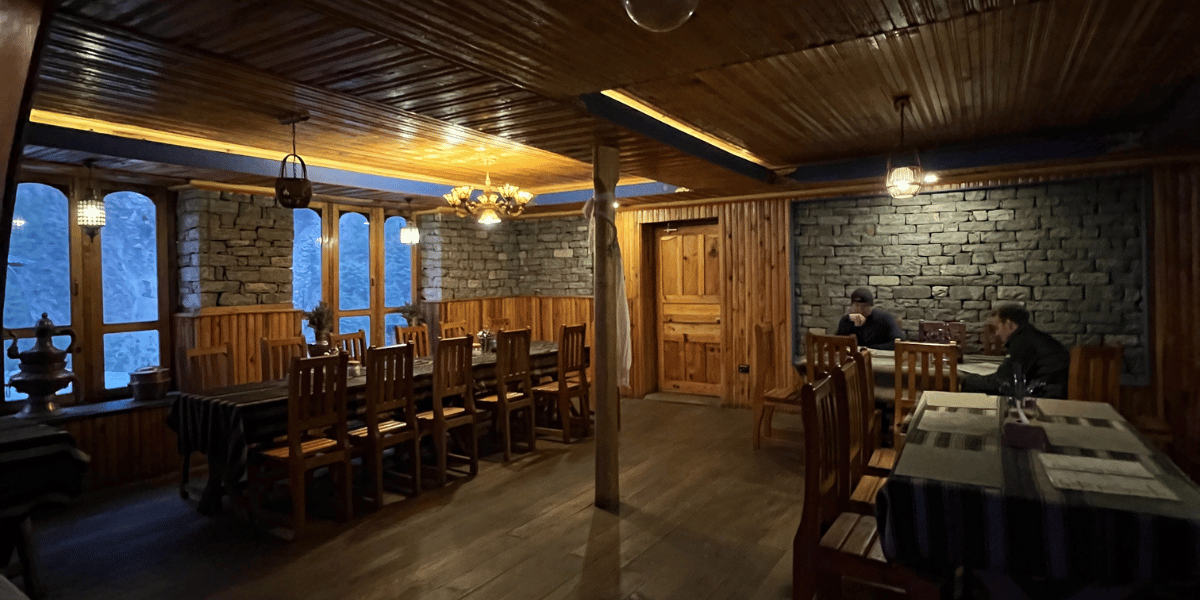
The dining areas usually have a warm fireplace in the middle, fueled by wood. So, after dusk, you will find yourself sitting right in front of it for warmth. Just be sure to drink plenty of fluids at this time to avoid dehydration.
Also, note that dinner is served a little early. So, you need to inform your guide or the lodge beforehand so they can prepare dinner on time.
There will not be a private dining setting in most places. This means you will be sharing tables with other trekkers.
Local and Western Food Available
You might have heard of “Dal Bhat Power 24 Hour.” While rice (Bhat) and lentils (Dal) with vegetables are the most common meals on your Manaslu trek, other local and western foods are also available.
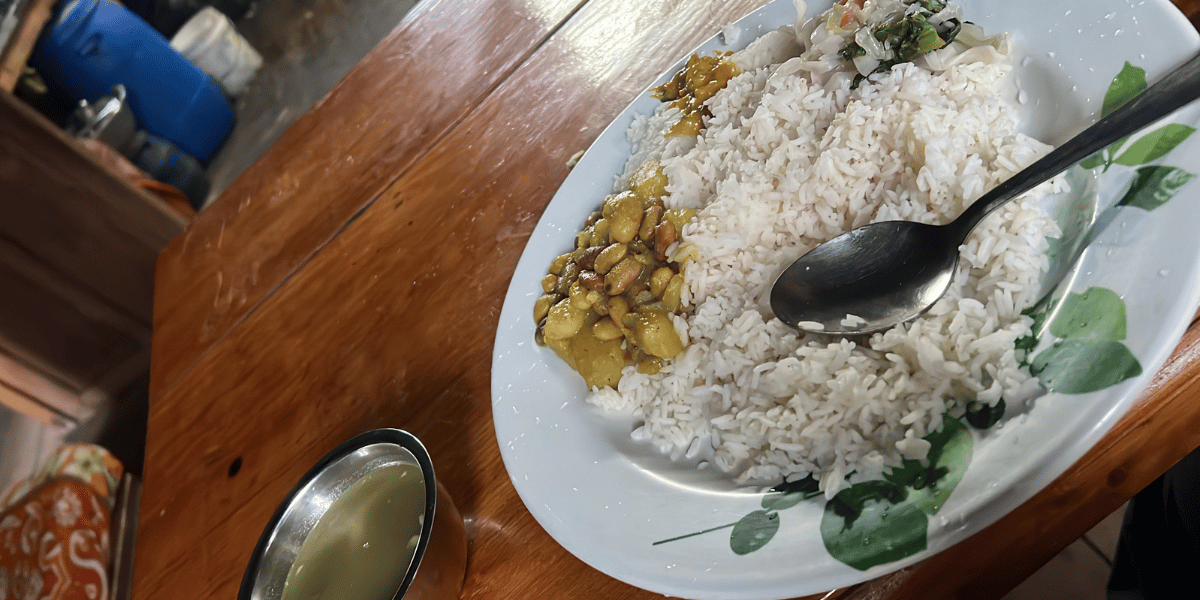
When you book your trek with trekking agencies like Altitude Himalaya ourselves, we include breakfast, lunch, and dinner from our side. And there will be the option to pick your own food as per the budget allocated.
This is what you can expect in terms of food in the Manaslu Circuit Trek:
- For breakfast: porridge, omelettes or fried eggs, champa (local food, must try), pancakes with honey or jam, tea (black or powdered milk), noodle soup, etc.
- For lunch and dinner: Dal Bhat, fried rice, spaghetti, fried noodles, momo, pizza, pasta, spring rolls, and other varied options.
While meat varieties are also available up to Samagaun and from Bhimthang onwards, it is better that you respect the culture of Nubri Valley, as it’s a non-violent zone.
Even I personally skipped meat and animal products, not just out of respect but also for health reasons.
Meat taken to high-altitude regions is usually stale, as it is carried all the way from outside the non-violent zone. And with no proper storage facilities, consuming such meat can add to sickness. Moreover, excessive protein slows digestion and can worsen AMS symptoms.
What you need in high-altitude regions is high fiber and carbohydrates. That is why it is encouraged to have Dal Bhat at least once a day.
Recommended reading: List of popular Nepalese foods
Experience the Unique Culture of Manaslu
Every lodge you encounter along the Manaslu trails is run by local communities. So, even if you do not get enough time to learn about the people of Manaslu during your trek, interacting with the staff members will help you learn a lot about their culture.
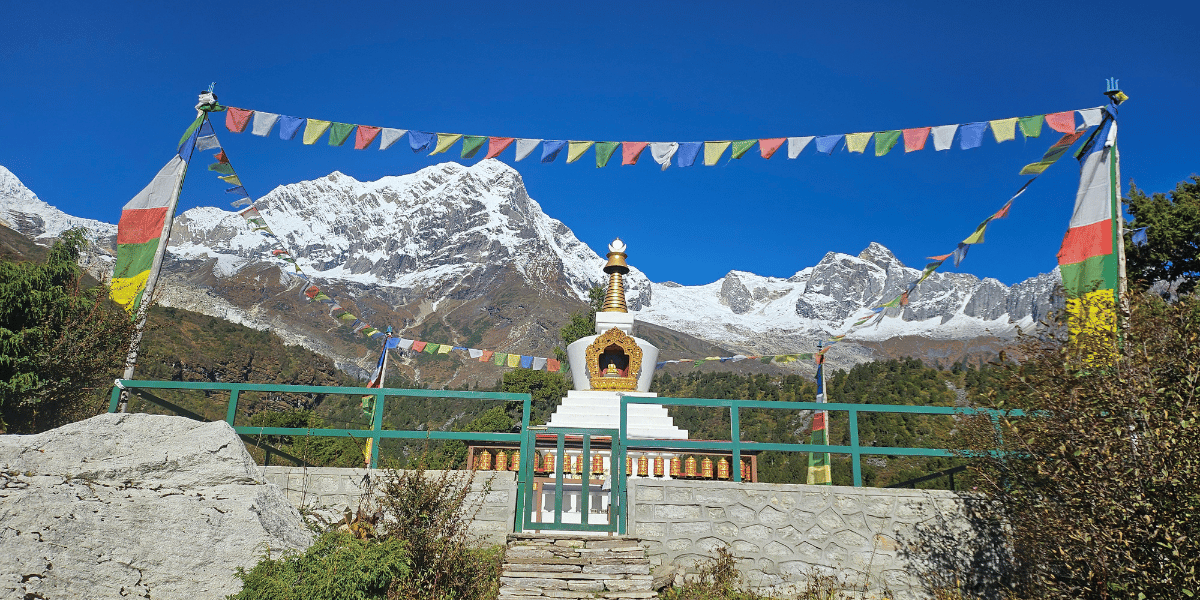
Upon your request, we can even arrange local stays for you, and surely, you would be thankful. Seriously, I am speaking from my experience.
I had the chance to stay at a local homestay in Samagaun, and the hospitality I experienced was beyond words. The aama I met there went beyond her comfort zone, and I even got to try local products.
Also, when I was unable to find a good lodge in Samdo, I was welcomed by locals. The Bhotia family took really good care of me, showing me their local dresses, in-house culture, and even offering me butter tea (a unique drink in the Himalayas).
You see, the Manaslu Circuit Trek is beyond just mountain views. Through accommodations themselves (without requiring you to visit villages), you get to learn so much about their simple lifestyle.
Electricity and Charging Availability
Despite the extreme remoteness, the local authorities of Chumnubri, as well as parts of Nason Rural Municipality, have constructed micro-hydropower projects in every major location. These include Jagat, Namrung, Shyala, Samagaun, Samdo, and Bhimthang.
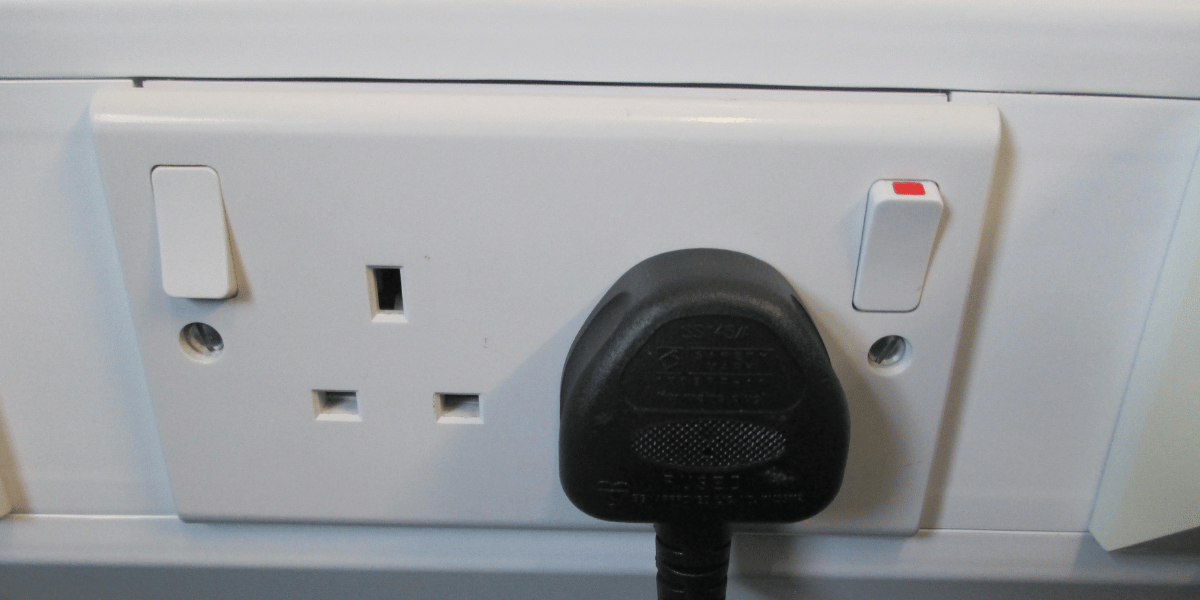
In fact, more are being constructed. This means electricity is no longer a major problem, except in Dharmashala.
Each room is equipped with charging ports up to Samdo and, after High Camp, up to Tilche. But specifically in Dharmashala, only the main dining area has electricity.
Even though there is no major electricity issue, I still suggest carrying a power bank for higher altitudes. Also, note that unstable weather can interrupt electricity, and backups are almost non-existent.
Paid Wi-Fi Available, But Network Limited
Surprisingly, even Wi-Fi services are available up to Samdo and Bhimthang. While some lodges offer free Wi-Fi, most charge a certain fee, especially in high-altitude regions.
That said, mobile data can also be used. But there is a catch…
Just to let you know, Nepal has two major telecommunication network providers: NTC and Ncell. Among the two, only the NTC towers are available along the Manaslu trails.
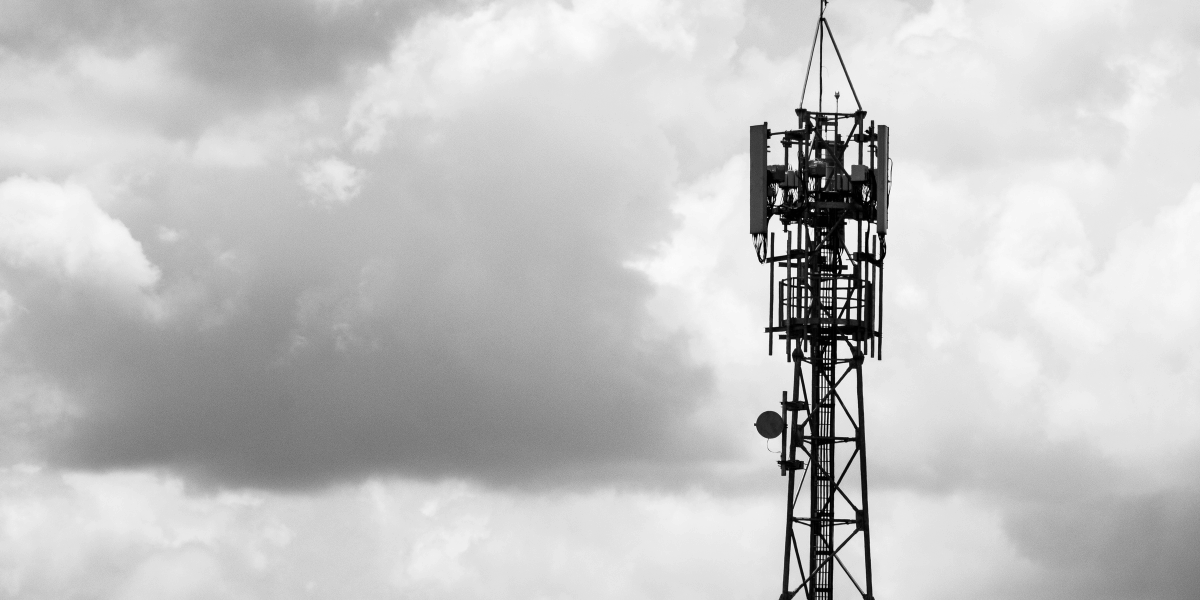
So, if you are getting an eSIM or a physical SIM card, be sure it is NTC from Kathmandu. Again, good news for those planning your trek with us. You won’t have to get the SIM cards yourself, as this is included within all our packages.
Just like with electricity, the mobile network is available up to Samdo and from Bhimthang onwards. But due to cold temperatures (especially in the mornings and evenings), as well as during extreme weather conditions (heavy rain and snowfall), the network can be spotty.
In such scenarios, you can still rely on satellite phones available in some mountain lodges. For example, there is no mobile network coverage in Dharmashala. So, if you need to make an emergency call, the lodge’s satellite phone is the only option.
Sadly, No Laundry Service
Cleaning clothes goes off-topic when you’re doing any treks, including this Manaslu Circuit. The best idea is to carry enough and get used to your dirty clothes. We have a detailed packing list guide meant just for you.
But even if you really, really need to wash your clothes, note that laundry services aren’t available in any lodges along the trail. You’ll have to wash your clothes manually!
Seasonal Differences and Availability Risks
I am pretty sure that by now, you have a basic idea of the amenities available along the Manaslu trails. Now comes the major question… are stays guaranteed, or is pre-booking required?
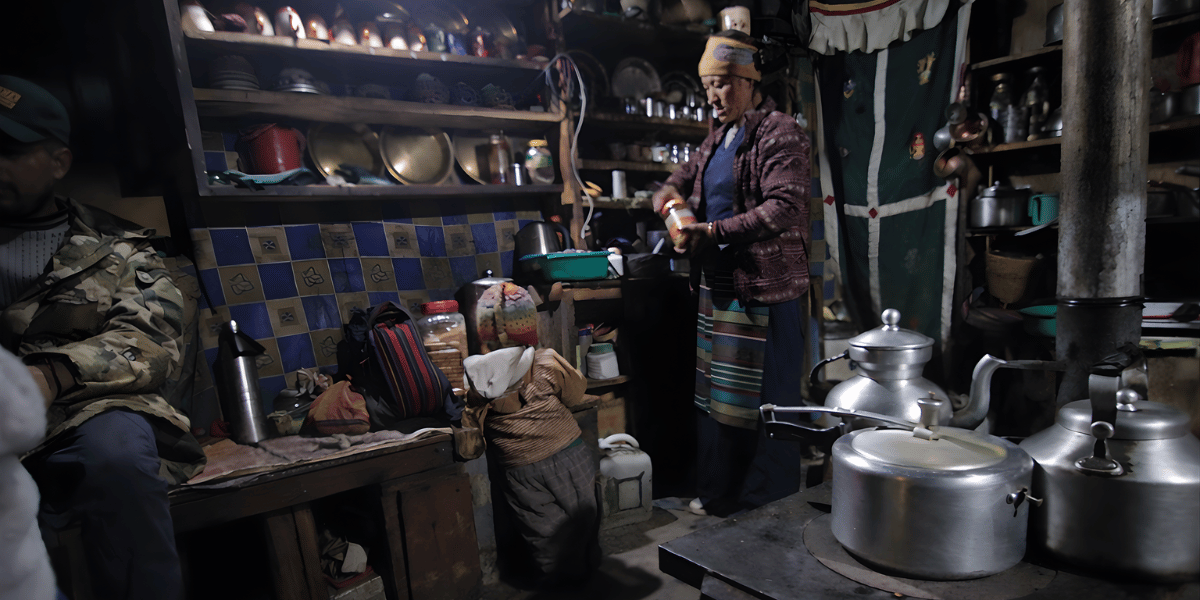
Let me be brutally honest with you. Pre-booking exists, and this is mainly done through guides. During peak seasons, trekking without booking means you are relying more on luck.
Keeping this in mind, our packages at Altitude Himalaya include professional guides who have maintained a good relationship with these lodges over the years. They pre-book your stays way before your trek begins, so such issues never occur in the first place.
And even if there is an issue, we have connections with multiple other lodges. Just so you know: we also run group-joining Manaslu Circuit Treks that are best suited for solo travellers and small groups who have a higher chance of not finding accommodations.
One more thing. Many Nepalese go beyond their comfort zone to offer foreign trekkers rooms even when it seems unfeasible. That is the level of hospitality not just Manaslu, but Nepal as a country offers to its guests.
I am serious. Even during my own adventure in the peak season, I adjusted myself in the dining hall so that foreign groups could get comfortable stays.
Every Nepali like me simply wants your experiences to be good. And that is the principle we follow here at Altitude Himalaya, too!
Manaslu Trek Accommodation Type and Cost Details
Tourism is one of the major sources of income for people residing in the Manaslu region. In fact, this hospitality business is on an upward trend and is expected to keep growing in the future.
Considering the remoteness of the locations and the level of facilities the lodges can provide, accommodation costs are actually low and reasonable. As I mentioned earlier, you cannot expect luxury services, as even the best hotels offer only basic bedding.
What is more expensive is the food, which is still reasonable once you check the menu prices.
In fact, you will not have a single word of complaint once you start trekking and notice the rugged paths that porters and pack animals have to pass to deliver everyday goods.
Among all factors, the quality of services becomes more basic as you ascend higher. It is not that you will not be taken good care of. You definitely will. But since materials are limited, the overall experience feels simpler.
Need more help regarding budgeting? Read our full Manaslu Circuit Cost Breakdown guide here!
Lower Region [Machhakhola to Namrung]
The parts of Dharche Rural Municipality, from Machhakhola to Yaru Bagar, Sirdibas, lower Bihi, and lower Prok, are where facilities are most abundant. In fact, you can even find mountain resorts here.
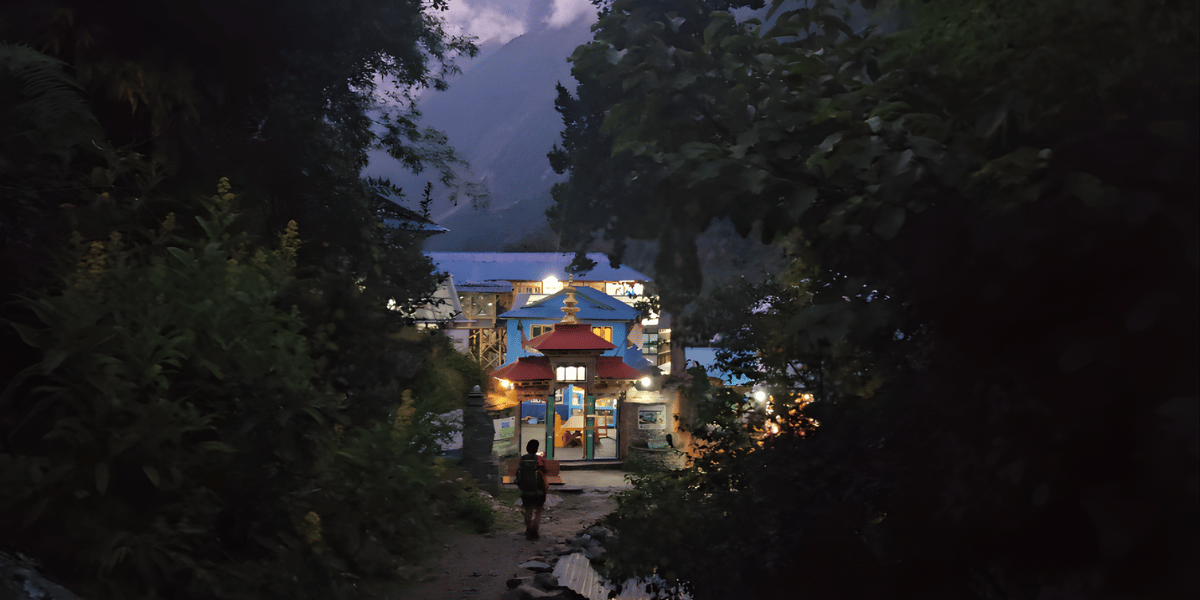
I am referring to these places: Jagat, Salleri, Philim, Eklebhatti, Nyak, Pewa, Dyang (Deng), Rana, Bihi Phedi, Bihi, Gap, Gapshya, Lungachyyuda, and Namrung.
Here is what to expect from accommodations in the lower Manaslu region:
- More numbers of lodges available.
- Mostly serviced and clean rooms. Also, more spacious, even if it's a twin room.
- Extra blankets available abundantly.
- Both squat-style and sitting-style toilets available (depends on the lodge). Expensive hotels even have attached bathrooms.
- Hot showers available.
- Fireplace available with private dining possibility.
- Food menu is diverse.
- Proper interactions with village locals (some even understand English).
- Electricity and charging available in rooms.
- Wi-Fi service is usually free in lodges where you stay (but paid in those where you only stop for lunch/snacks).
- No network issue.
- Laundry service unavailable.
- No risk of accommodation availability in peak seasons.
Mid Region [Lhi to Samdo and Bhimthang to Tilche]
Once you transition from the lower region to slightly higher altitudes, certain facilities become less available, and the quality of rooms reduces. Stays feel more local but are still manageable and worthy, considering the remoteness.
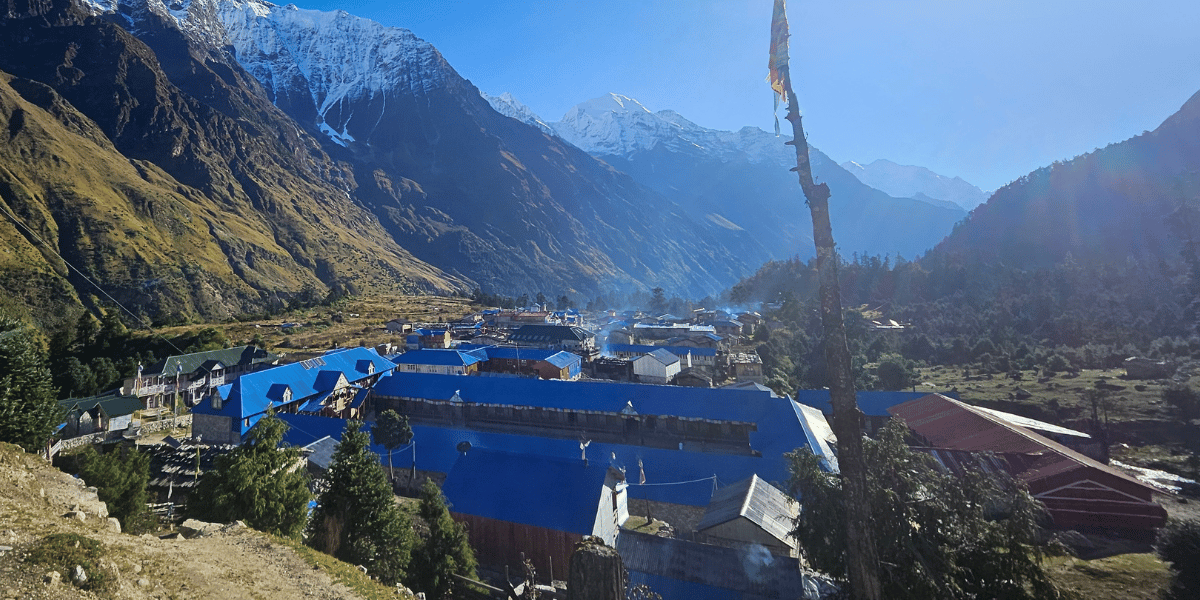
These areas mainly include Lho and Samagaun wards of the Chumnubri Rural Municipality. I am referring to Lhi (popularly known as Lihi), Shyo, Lho, Shyala, Samagaun, and Samdo.
Also, parts of Nason Rural Municipality after crossing Larke Pass, which includes Bhimthang, Habu, Chauli Kharka, Surki Khola, Gowa, and Tilche.
Here is what to expect from accommodations in the middle Manaslu region:
- Enough lodges available (but problems can arise in peak season)
- Mostly serviced, clean, and spacious rooms.
- Extra blankets are mostly available (but not in peak season).
- Mostly sitting-style toilets available on a sharing basis (some expensive lodges can provide).
- Hot showers available up to Samagaun.
- Fireplace available, but dining tables are limited so mostly sharing.
- Mostly Nepalese food, but some Western foods are available.
- Proper interactions with village locals. But not all understand English but still they are welcoming, and your guide will help you out.
- Electricity and charging available in rooms.
- Wi-Fi service is available but mostly on a paid basis.
- No network issue.
- Laundry service unavailable.
- Slight risk of accommodation availability in peak seasons.
High Region [Larke Bazaar, Dharmashala, and High Camp]
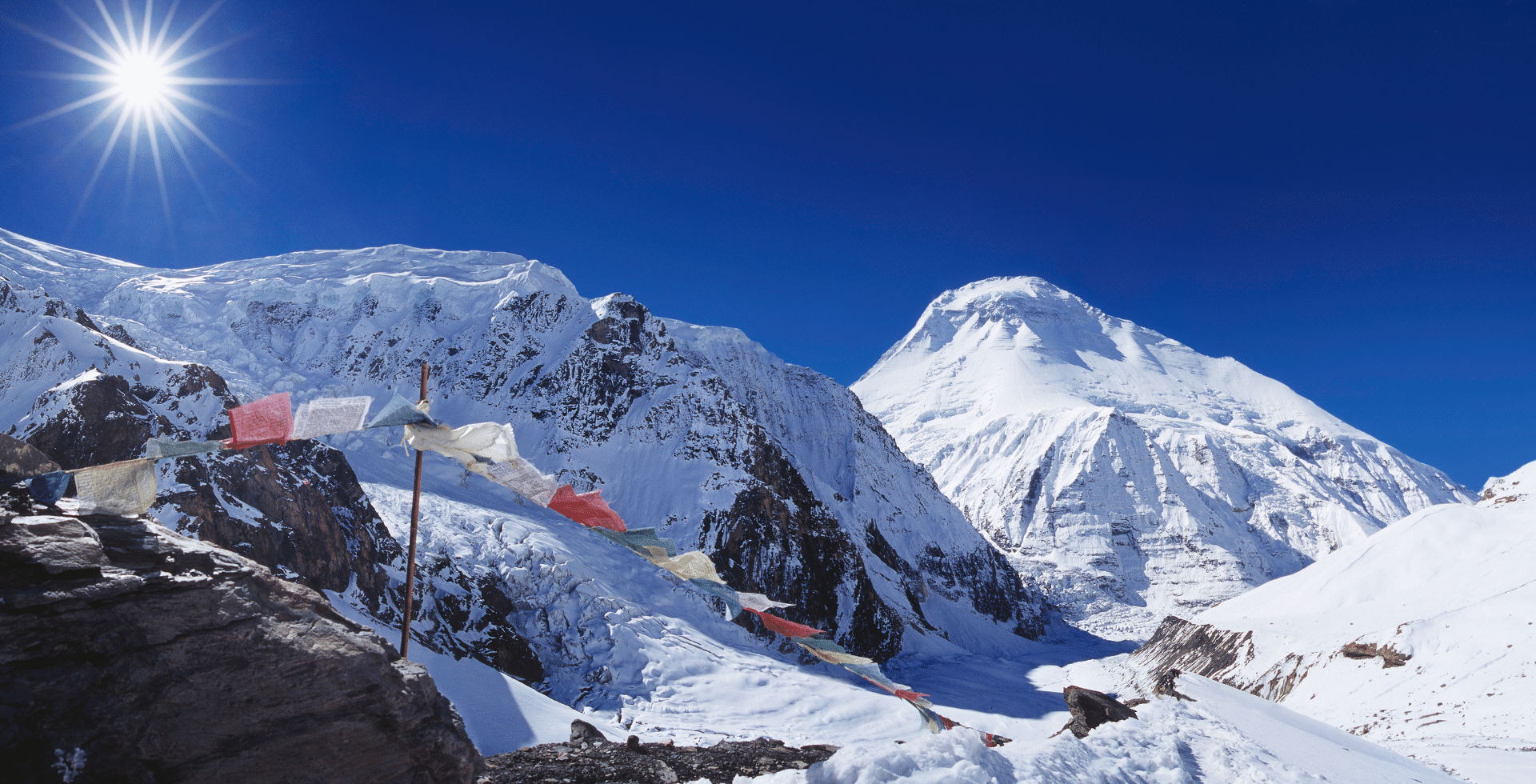
The highest point where you will sleep on the Manaslu Circuit Trek is Dharmashala at 4,470 meters. This region has the most limited facilities, and I personally suggest keeping expectations very low.
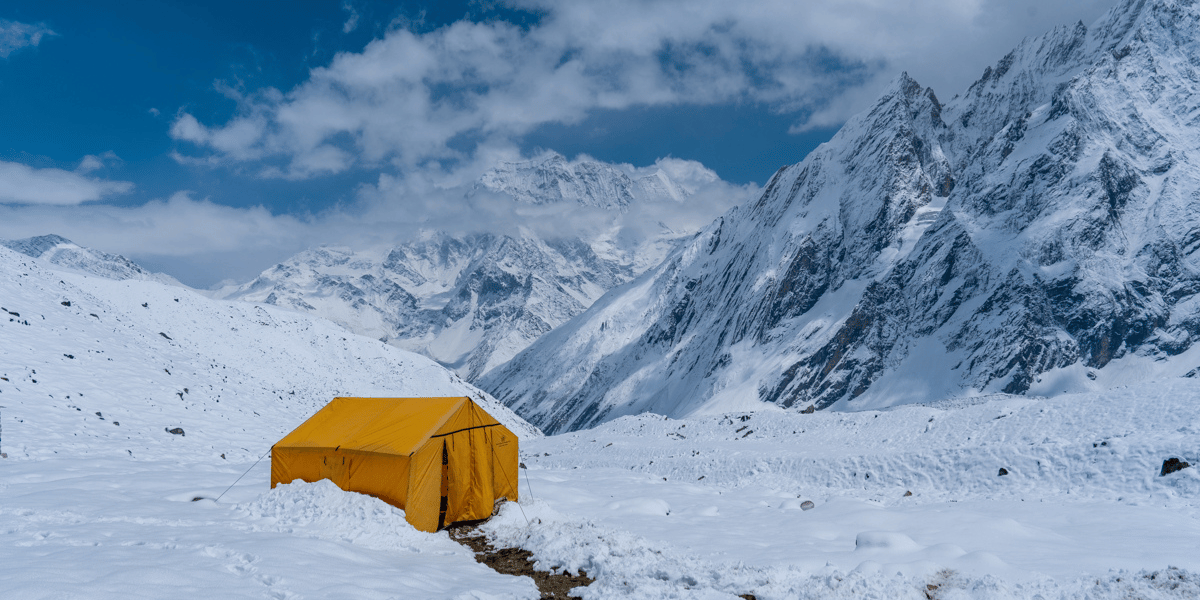
But do not feel discouraged. This is the only location where you need to adjust a little.
Once you cross Samdo, you will notice locals selling chocolates and handmade crafts along the way. This is because markets are no longer available beyond Samdo.
Although the name Larke Bazaar suggests it’s a marketplace, it is actually the opposite. There is only one accommodation here and the facilities are very limited. No market at all!
Similarly, after crossing Larkya La, you will reach High Camp following a strenuous downhill walk. While there are a couple of local lodges, amenities remain basic until you reach Bhimthang.
The locals are not to blame. These places are actually more like final stopping points for trekkers and climbers rather than actual villages.
Previously, these locations were camping areas. With gradual improvements, a few local lodges have now been built (and more so in the future).
Here is what to expect from accommodations in the upper Manaslu region.
- Only four lodges are available (as of writing this article).
- Not very spacious and only group rooms (on a sharing basis) are available.
- Tents are available and if overcrowding, you’ll have to share them with strangers too.
- While extra blankets are available in off seasons, peak season might leave you with no blanket at all. So, a sleeping bag is a must!
- Limited local squat-style toilets used by all the travellers mean you’ll have to stand in a queue to do your morning business. Highly recommended to use your own toiletries for maintaining hygiene.
- Hot showers unavailable.
- No fireplace and shared dining.
- Mostly Nepalese food and very limited western cuisine available.
- No major human settlement around, so local interaction isn’t possible.
- No electricity for trekkers; charging is only available when there is no crowd (in dining).
- No Wi-Fi and network coverage.
- Laundry service unavailable.
- High risk of accommodation availability in peak seasons.
Caution: Altitude sickness risk is high in the upper Manaslu region. Be sure to listen to your body. The only available rescue services here are local porters, who carry patients down to Samdo, or helicopter evacuation. This is a serious risk and should not be taken lightly.
Teahouses in Manaslu by Location
Let us now talk about the teahouse businesses on the Manaslu route. The ones mentioned below are usually the ones where we take you, considering their good reputation and positive reviews from our previous guests.
Beyond that, newer lodges with modern amenities, especially in lower Manaslu, are being built. We will definitely review them and update the best ones later.
Guesthouses in Macchakhola
Macchakhola (870 m) is the starting point of the classic Manaslu Circuit Trek. While vehicles today reach up to Jagat/Philim, many trekkers still make this the first camp. That is exactly the case with our 15-day Manaslu Circuit package, too.
Whether you start your hike from Machhakhola or hop on a local jeep to reach Jagat/Philim can be decided with your guide later. Expect your accommodation in one of the following guesthouses:
- Hotel Chumvally Restaurant and Lodge
- Manaslu Hotel and Lodge
- Hotel Hiltop
- Mt. Everest Hotel
Lodges in Jagat
If you start hiking from Machhakhola, Jagat at 1,370 meters naturally serves as your second camp. It is also the entry point to the Manaslu Conservation Area, where permits are checked.
You can expect to stay in the following local lodges:
- Himalayan Tourist Guest House
- Jagat Guest House
- Rubinala Inn
- Rubina La Guest House
- Mongolian Cottage
Teahouses in Deng
Dyang, also known as Deng, at 1,860 meters, is another major stop for both Manaslu Circuit and Tsum Valley trekkers. Located between pine and rhododendron forests, it offers comfortable stays.
Here are a few of the most popular teahouses:
- Hotel Windy Valley & Garden
- Buddha Hotel
In case of uncertainty, it is also possible to stay in Pewa, about one hour before Deng. One of the known lodges there is New Pewa Guest House.
Homestays in Gap
Gap, also known as Ghap, at 2,160 meters, is your first major stop above 2,000 meters. It is a popular lunch stop for trekkers heading to Namrung and a resting point for those exploring the area.
You can stay in the main Gap settlement or move ahead to Gapshya. Let me list the reliable homestays here:
- Ghap Cottage Guest House
- Nubri Gap Lama Guest House
- Nurbi Pema Guest House
- Buchung’s Nubri Heritage Home
Lodges in Namrung
After the uphill stretch from Gap, you will reach Namrung at 2,630 meters, yet another local favourite preferred by many trekking agencies for night stays. Note that you need to show your MCAP and restricted area permits in the designated check post here as well.
Although our 15-day package does not include a stay here, itinerary changes can happen if needed. So, our guides might escort you to any one of the lodges below:
- River view cottage
- Namrung Thakali Hotel
- 009 Hotel
Travel Tip: Do not forget to try local apples and apple products available at lodges or along the trail.
Teahouses in Lhi and Lho
Lihi, popularly known as Lhi, at 2,920 meters, is home to Buddha Temple. Although many itineraries push trekkers directly to Lho, we at Altitude Himalaya believe this is a place worth stopping at.
Recommended lodges include:
- Tashi Delek Lodge
- Himalchuli Getway Hotel
- Lhi Guest House
While Lhi only has a few good hotels, Lho (3,135 m) is more popular among trekkers. And if you’d like to make a stop there, here are the best accommodations available:
- Hotel Blue Sky
- Om Guest House
- Lama Guest House
- Lho Norbu Hotel
- Majestic Manaslu Cottages and Garden
Teahouses in Shyala
Personally speaking, Shyala (3,500 m) was the best spot during my Manaslu Circuit Trek. The settlement is beautiful in itself, and it also serves as a gateway to the majestic Pungen Gumba.
The highlight here is the awe-strucking views of Mt. Manaslu and the Mansiri Himal range. In the morning, I won’t be surprised if you spend hours capturing the beautiful sunrise seen directly from one of these teahouses:
- Buddha Lodge & Restaurant
- Namaste Guest House
- Shanti Guesthouse
- The Happiness Guesthouse
- Royal Gorkha Hotel and Sharing Idea Cafe
- Nubri Shyala Guest House
Homestays in Samagaun (Sama Village)
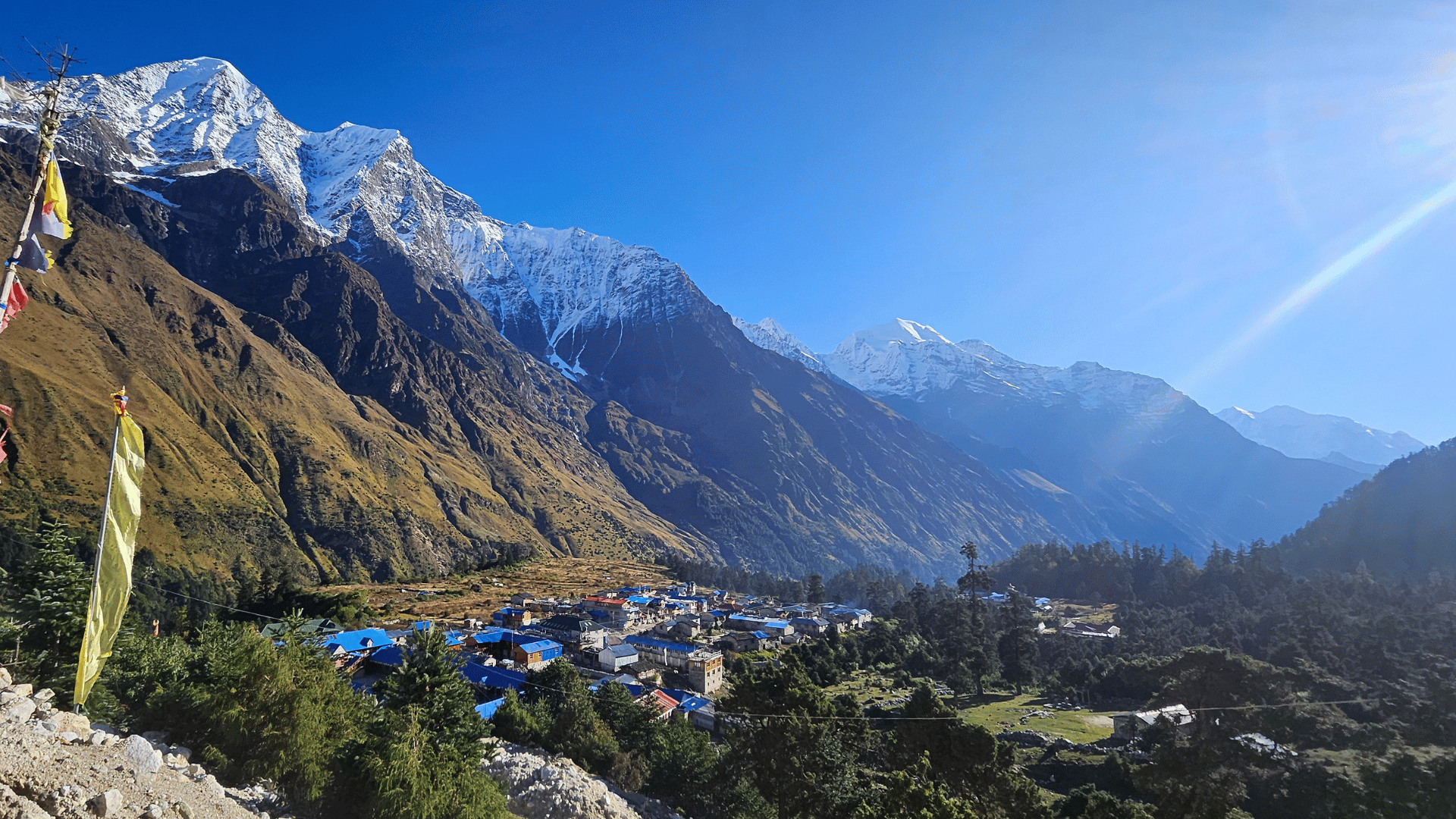
Samgaun (3,530 m) is the village where you’ll spend two to three nights on your circuit trek. This is mainly for acclimatization and further hikes around the village (like Birendra Lake and Buddhist monasteries).
One thing not to forget about Samagaun is that it’s the biggest village in the Chimnubri Rural Municipality. Here are the main lodges you can opt to stay in:
- Tashi Delek Hotel
- Mount Manaslu Lodge
- Mandala Hotel
- Gateway Samagaun Hotel
- Norling Hotel
Mountain Lodges in Samdo
After a short hike from Samagaun, your next destination is Samdo at 3,875 m. This heavenly location is the final stop within the Chumnubri Rural Municipality that has proper facilities. And it’s home to the following mountain lodges:
- Cheese Karsay Lodge
- Zambala Hotel
- Yak Hotel
- New Tashi Deng
- Hotel Snow Lion
- Samdo Tibetan Twin Hotel
- Chez Karsang Tibetan Hotel
- Little Tibet Samdo Hotel
- Gurung Cottage Guest House
While there are plenty of lodges, in case you don’t get to stay in one in the peak season, our guides will escort you to the Larke Bazaar Hotel, just about 10 minutes away from Samdo.
Local Lodges in Dharmashala
Dharmashala (4,470 m) is the highest overnight point on this trek. You’ll reach here before lunch and check into one of the four available hotels currently available:
- Larke La Hotel & Lodge
- Zambala Hotel
- Larkya Rest House
- Peace Lodge
Teahouses in Bhimthang
After a long hike to Larke Pass and knee-hurting downhill passing via High Camp, you’ll reach Bhimthang Village of Manang District at 3,700 m. Remember that you’re in the Annapurna Conservation Area now.
Honestly, this is yet another heavenly spot, and the surrounding 360-degree views keep you mesmerised even after 10 to 11 days of continuous trek.
In Bhimthang, you have the option to stay in the following lodges:
- Himalayan View Hotel
- Cheers Lilita
- New Tibetan Hotel & Lodge
- Sushma Hotel & Restaurant
- Apple Garden Hotel
In case you don’t make it up to Bhimthang, there’s also an option to stay in High Camp (4,400 m). Here, you’ll find a couple of hotels: Kusang Hotel and Restaurant and Gurungseni Hotel and Restaurant.
Stays in Tilche and Dharapani
Your final night on the Manaslu trip is going to be either in Tilche (2,260 m) or Dharapani (1,900 m). While the option to reach Besishar also exists the same day, it’s better to walk slowly and enjoy the final moments.
If you reach Tilche, these are the lodges that you can stay in:
- The North Face Hotel
- Tibetan Hotel
- Napa Valley Hotel
- Tilche Village Hotel
- Hotel Tilche
- River View Hotel
But if you have to stretch your journey up to Dharapani due to road difficulties (for jeeps to reach there), your final night will be in one of the following homestays:
- Manaslu Guest House
- Sister Guest House
- Peaceful Hotel
- Hayat Guesthouse
- Phulbari Hostel & Restaurant
Other Locations With Top Teahouses in Manaslu
On your Manaslu journey, you’ll find accommodations all along the trail. So, even if you don’t make it to the designated landmark, there’s always a backup.
And if you plan on additional hikes to Serang Gumba, Prok village, or Ponker Lake, you may require stays in different locations. Let me highlight some other major teahouses:
- Philim: Royal Guesthouse, Philim Village and Lodge, Hulchuki Hotel and Restaurant, Gorkha View Hotel, etc.
- Prok: Dorjee Thakuri Guest House, Kaltal Lodge, Lotus Guest House, etc.
- Chauli Kharka and Surki Khola: Himlung Hotel & Restaurant, 7 Sisters Guesthouse, etc.
Teahouse Culture in Manaslu: Tips For Trekkers
If this is your first time trekking in Nepal, I want you to lend me your ears on this one.
Whether it be the Manaslu Circuit or any other trek, you won’t find luxury hotels but simple teahouses or mountain lodges. These are mostly run by locals, and they set up fireplaces for trekkers to keep themselves warm.
While the services are basic, it is one of the most memorable aspects of trekking in Nepal. But there are certain cultural etiquettes that you need to be aware of:
- Do not enter the teahouses if you are wet due to rain. Remove your raincoats, place your trekking poles outside, and check your shoes too. Wear sandals instead.
- Some places require you to open your shoes when entering your rooms too.
- Do not enter the kitchen without permission, especially when there is a big crowd. Let your guides handle these duties. They are there to help you out.
- In places where there is a shared charging facility, do not unplug others’ devices without asking.
- Keep drinking warm water while you are around the fireplace (locally known as “Bukhari”). This helps keep you hydrated after long, sweaty hikes and from the warmth of the fire.
- Among the food menu, stick to a diet that is high in carbs so you stay energized every single day. I personally suggest opting for garlic soup, as it helps your body use oxygen more efficiently, thus decreasing the chances of altitude sickness.
- As mentioned earlier, try avoiding meat, as the Nubri region is a non-violent zone. You are not giving up protein but rather respecting the local culture.
- If you are staying in a more localized homestay, be mindful of not placing your feet near the Bukhari. Many use the same firewood for cooking purposes, so it is considered disrespectful.
- Not all rooms may have dustbins. So, do not throw waste under the bed. Instead, ask the staff or your guide for proper instructions.
Final Thoughts
Now that everything is clear on Manaslu Circuit Trek accommodation, I truly hope you’re ready to take on this adventure. And since you’ll be accompanied by one of Altitude Himalaya’s guides, you need not worry about this at all!
Our main Manaslu Circuit Trek package includes stays in Machhakhola, Deng, Gap, Lhi, Shyala, Samagaun (2 nights), Samdo, Dharmashala, Bhimthang, and Tilche. Everything will be prearranged once you book this trip with us!
Even when uncertainties happen, we make sure that you find accommodations in nearby landmarks. So, the Manaslu Circuit Trek will not disappoint you in terms of lodges, even during the peak season.
There’s no need to worry. Just pack your bags, come visit Nepal, and join us as we’ll take you to the best places in Manaslu CA.


 Bhishu Acharya