If there's one thing that makes me want to visit the Manaslu region time and again, it would be the people here! They are not just friendly and hospitable, but their deep cultural roots are what make you understand life from a completely different perspective.
During my own Manaslu Circuit Trek (in the peak season), I had to adjust myself in homestays in Shyala and Samagaun. In fact, I even stayed in one of the locals’ homes in Samdo.
I was particularly saddened to find out that the lack of infrastructure means people need to trek for 3 to 4 days and rely on an extra day of vehicle travel just to reach the nearest big market or the capital city, Kathmandu.
But despite so many difficulties, Manaslu people always carry a smile on their faces. They are deeply religious and have a strong Tibetan Buddhist influence.
Upon meeting the Nubri and Tsum communities, you come closer to their daily rituals, offerings, protector deities, and many other spiritual practices.
Surely, the Manaslu Circuit Trek, the Tsum Valley Trek, or their combined adventure are must-dos for trekking lovers. But before preparing for your Manaslu Circuit Trek, it would be great if you understood everything related to the Manaslu people and culture.
And that’s exactly what I’ll be doing via this detailed blog. So, stick with me until the end, as I’ll take you from demographics to the daily life practises of the Manaslu region.
Geography and Demographics of the Manaslu Region
Before deep diving into the people of Manaslu, let’s look into the Manaslu region’s geography first.
Manaslu Region: Where Is It Exactly?
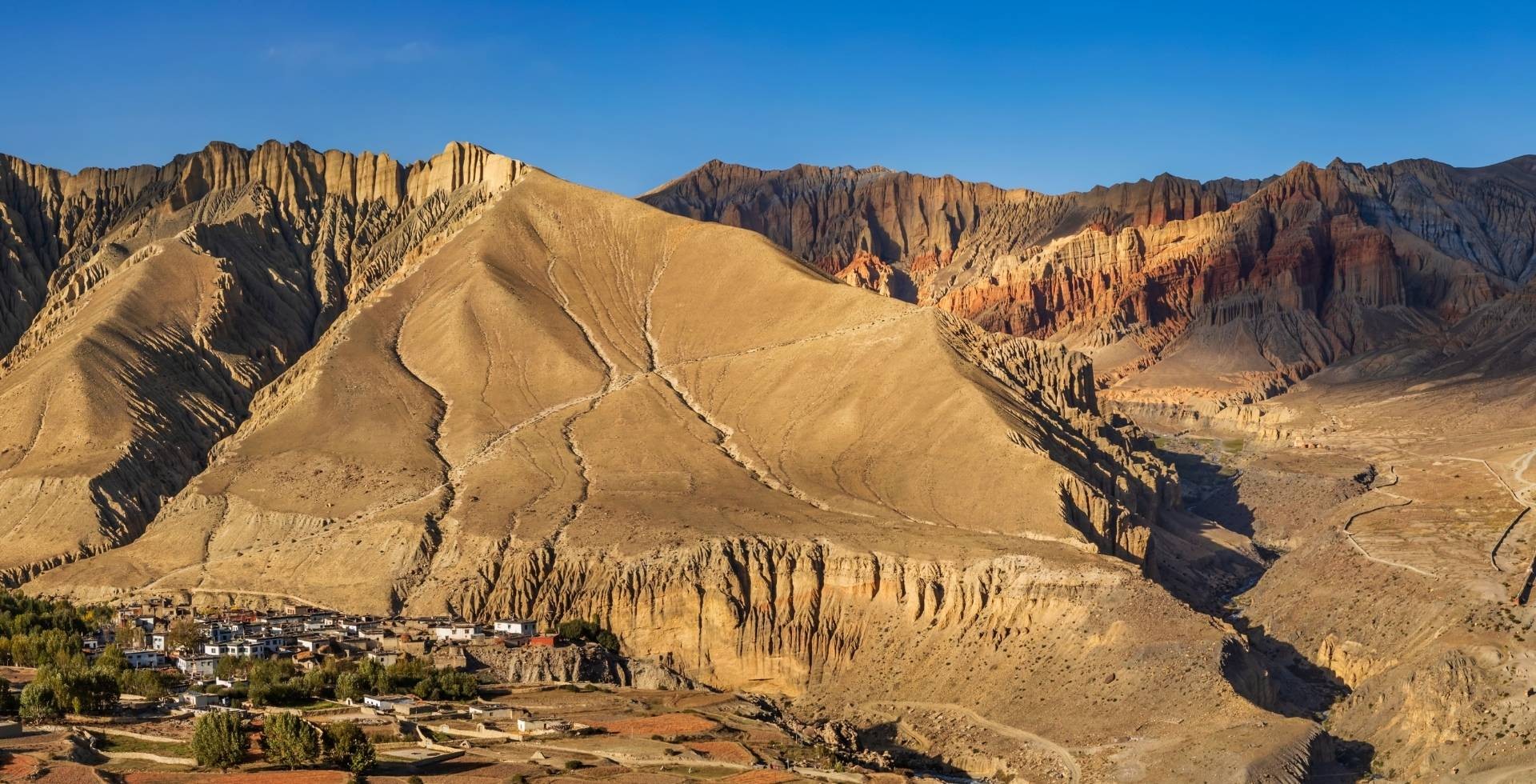
Geographically speaking, the Manaslu Conservation Area covers an area of 1,663 sq. km and lies in the Gorkha District. It particularly comprises all seven wards of Tsum Nubri (Chumnubri) Rural Municipality, all of which are designated as ‘restricted’ regions and require special permits:
- Samagaon (Ward 1)
- Lho (Ward 2)
- Sirdibas (Ward 3)
- Prok (Ward 4)
- Bihi (Ward 5)
- Chumchet (Ward 6)
- Chhekampar (Ward 7)
Among them, the popular Manaslu Circuit Trek that most travellers opt for passes through Sirdibas, Bihi, Prok, Lho, and Samagaun. And if you are going for the Tsum Valley Trek, you will be covering Sirdibas, Chumchet, and Chhekampar.
The Chumnubri Rural Municipality is a part of the larger Budhigandaki Valley. And the region is further divided into three areas based on natural setting and ethnicity.
- Nubri Valley: The northwestern part, covering Samagaun, Lho, and Prok.
- Kutang: The middle part, covering Bihi.
- Tsum Valley: The northeastern part, covering Chumchet and Chhekampar.
But you have to note that while doing the Manaslu Circuit Trek, you will also be crossing a minority region of Annapurna at the end.
As you reach the vantage point of Larke Pass, you will have already entered the Nason Rural Municipality of Manang District, and this continues up to your hike to Tilche.
Not to forget the starting section from Macchakhola to Yarubagar, which is a part of the Dharche Rural Municipality. Both these areas are also integral parts of the Manaslu trekking experience, although they are not technically within the Manaslu Conservation Area.
Population Characteristics [Census, 2021]
As per the latest census data, Chumnubri or Chumanuwri Rural Municipality, which forms the core area of Manaslu, is home to 5,932 people, among whom 3,087 are female and 2,845 are male.
Let us get into the specifics now.
|
By Age
|
0-14 years
|
1,439
|
|
15-64 years
|
3,924
|
|
65+ years
|
569
|
|
By Literacy (Age 5+, 5,249 total)
|
Literate
|
2,067
|
|
Only Reading
|
85
|
|
Non-literate
|
3,097
|
|
By Citizenship
|
Nepalese
|
100%
|
|
Other
|
0%
|
|
By Birthplace
|
In Chumnubri
|
5,835
|
|
Outside Chumnubri (but in Gorkha)
|
31
|
|
Other district
|
54
|
|
Other country
|
1
|
|
Unknown
|
11
|
Major Ethnic Groups of the Manaslu Region
The Manaslu region is home to a mix of different ethnic groups, among which the main ones are the Chumba or Nubri people.
According to the National Population and Housing Census 2021, they are one of the 17 newly identified castes or ethnicities in Nepal. Their population all over Nepal is about 4,414.
However, they are not the only inhabitants of the Manaslu region. In the lower Manaslu, you can find Hindu-Aryan communities. Likewise, in the middle region. You’ll come across Tibeto-Burman groups (such as Gurung, Magar, and Tamang).
And the upper region is hugely dominated by Bhota (or Bhotia) ethnic groups that follow Tibetan Buddhism. I even got to stay with one of the Bhota family during my own Manaslu Circuit Trek in October 2025.
To understand these communities in more detail, let us look at how ethnic groups are distributed across the distinct geographical regions:
Sirdibas and Lower Manaslu: Cultural Gateway
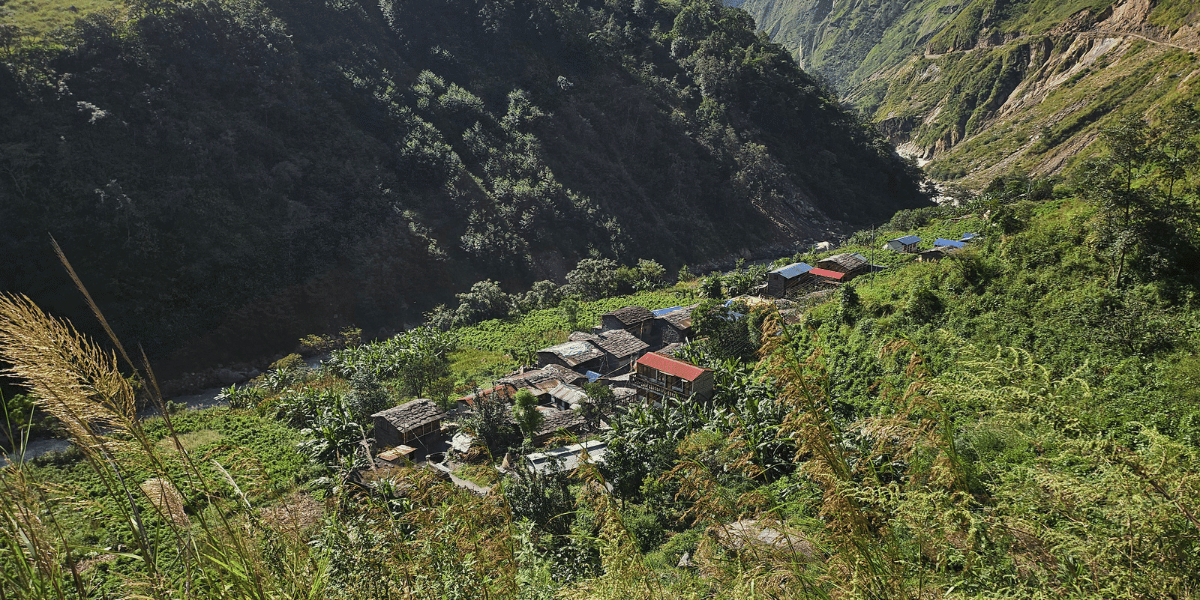
Sirdibas, which covers the stretch from Jagat to Philim, along with other lower parts of Dharche Rural Municipality (from Macchakhola to Yaru Bagar), lies in the lower part of Chumnubri Rural Municipality.
They serve as the gateway to the upper Manaslu region and also play a significant role as a cultural and logistical transition zone.
- Ethnic groups: Gurung, Magar, Tamang, and Hindu-Aryan communities, such as Brahmin, Chhetri, Sarki, Kami, and Damai.
- Language: Nepali, which is widely spoken, along with Gurung and Tamang.
- Main religions: Hinduism and Buddhism.
Kutang Region: Transitional Cultural Zone
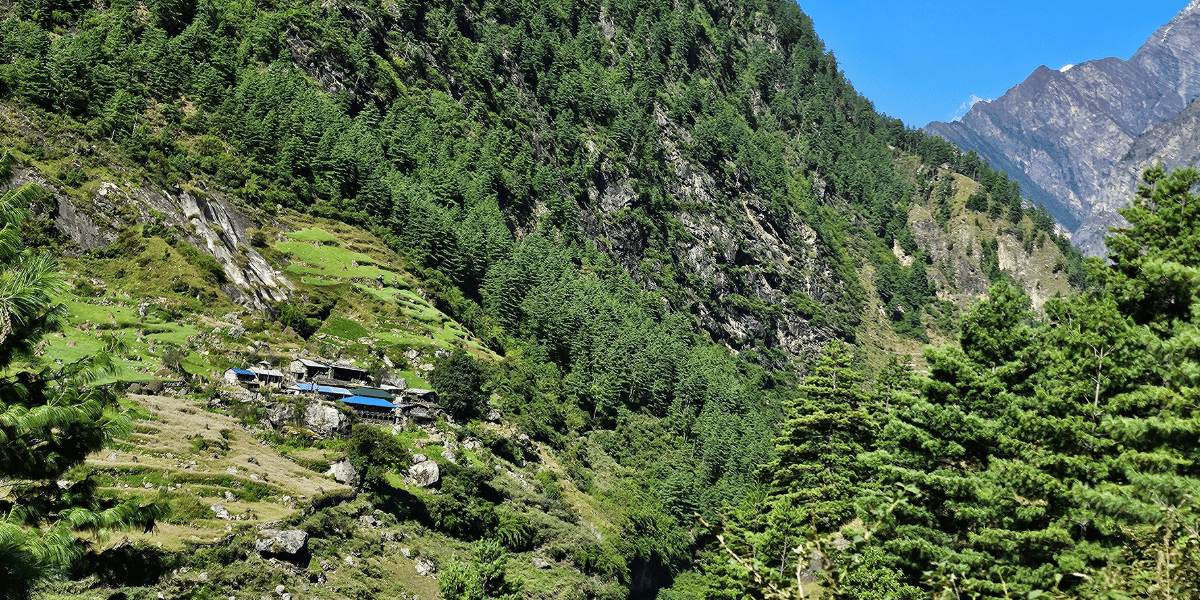
The Kutang region is centred around Bihi and also includes lower Prok. Note that Bihi marks the beginning of high-altitude Bhotia settlements, and the culture here reflects both Nubri and lower Manaslu influences.
- Primary ethnicity: Kutangpa.
- Languages spoken: Nubri-influenced dialects (Kukay) and Nepali.
- Religion: Buddhism, with some syncretic practices.
Nubri Valley: Home of the Nubri (Nubripa) People
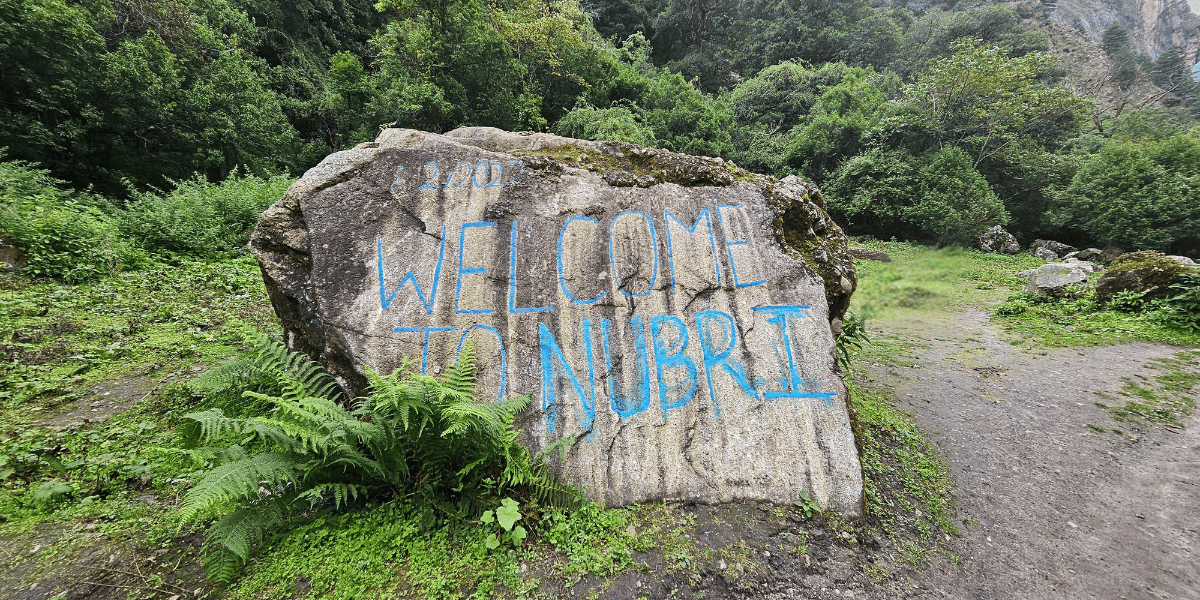
The Nubri Valley, often regarded as the “sacred Beyul Kyimalung” (meaning, hidden valley), includes the settlements of Samagaon, Lho, and Prok.
It is inhabited mainly by the Nubri people, also known as Nubripa, who are a Tibetan-origin ethnic group and have strong cultural, religious, and historical trade links with Tibet.
- Primary ethnicity: Chumba or Nubri.
- Language spoken: Chum or Nubri.
- Religion: Tibetan Buddhism, primarily the Nyingma tradition.
So, on your Manaslu trip, know that you’re going to encounter mostly Tibetan-influenced architecture, monastic life, and language.
Tsum Valley: Land of the Tsumpa People
The Tsum (pronounced Chum) Valley is inhabited mainly by the Tsumpa people, who are yet another Tibetan-origin ethnic group of Nepal.
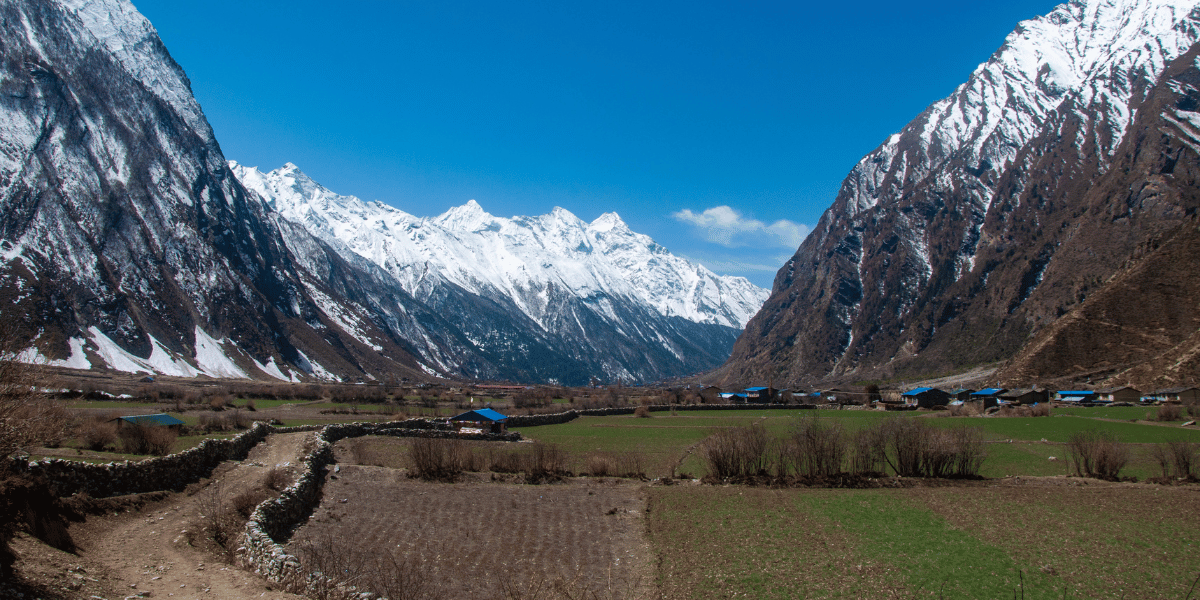
Although not a part of the main Manaslu Circuit Trek, the valley has a long-standing tradition of non-violence, monastic education, and sacred landscapes that you should know about.
In fact, we even offer a combined Manaslu Circuit and Tsum Valley package that you should definitely check out. Upon visiting, you get to learn about its traditions and key anthropological and cultural heritage areas.
- Primary ethnicity: Tsumpa.
- Language spoken: Tsumba, which is of Tibetan origin.
- Religion: Tibetan Buddhism, following the Nyingmapa and Kagyupa lineages.
Ethnic Groups Beyond Larke Pass
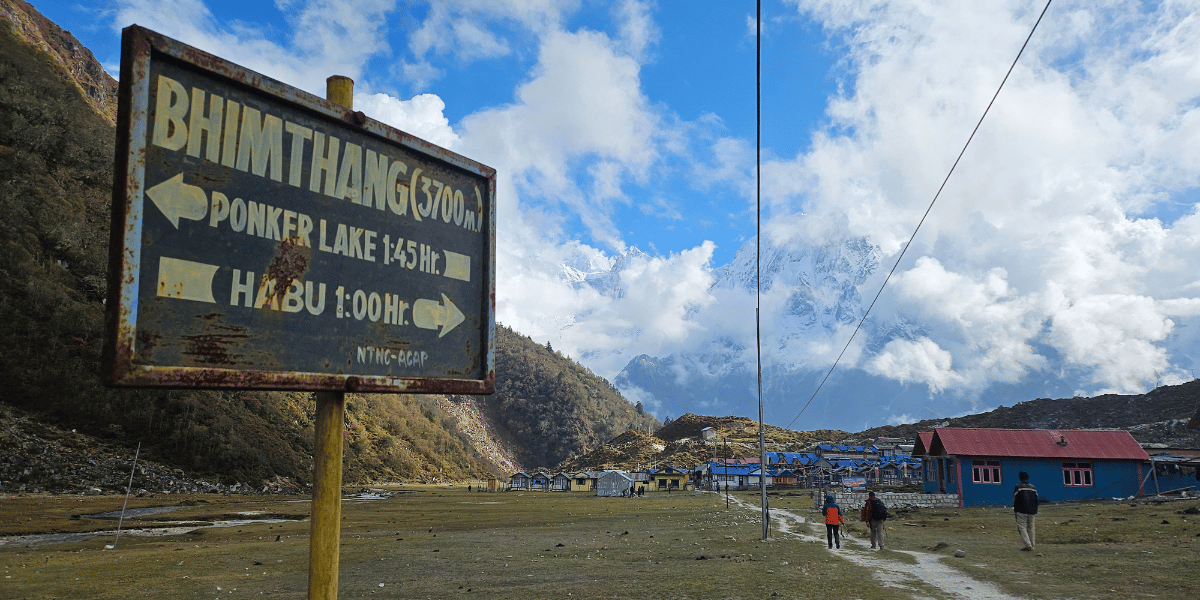
Bhimthang and the surrounding settlements cannot be overlooked, as they form major stopovers during the descent. And in most Manaslu itineraries, you will be staying here for one or two nights after crossing Larke La.
These parts of the Annapurna Conservation Area reflect a blend of cultural influences from the lower, middle, and upper Manaslu regions. While a few Nubripa people do reside here, the area is mainly inhabited by Gurungs and Magars.
- Ethnic groups: Gurung, Magar, other Tibeto-Burman groups, and Hindu-Aryan communities in smaller numbers.
- Languages spoken: Nepali, which is widely spoken, along with Gurung and Magar.
- Religion: Hinduism and Buddhism.
Culture, Customs, and Traditions in Manaslu
The Manaslu region is culturally diverse and has long-standing connections with Tibet. As you move from the lower-altitude areas to the high Himalayan valleys, you will notice cultural practices gradually shifting from Hindu-Aryan traditions to Tibetan Buddhist ones.
Every community living in the Manaslu region maintains a close relationship with nature, spirituality, and communal life. Upon visiting here, you can observe the unique rituals, daily practices, ethical values, and festival celebrations all by yourself!
And here, I’m going to highlight the key cultural customs and traditional practices across the lower, middle, and upper regions of Manaslu. This should help you learn about the people in detail before even meeting the different communities in person.
Sacred Landscape and the Beyul Kyimalung Belief
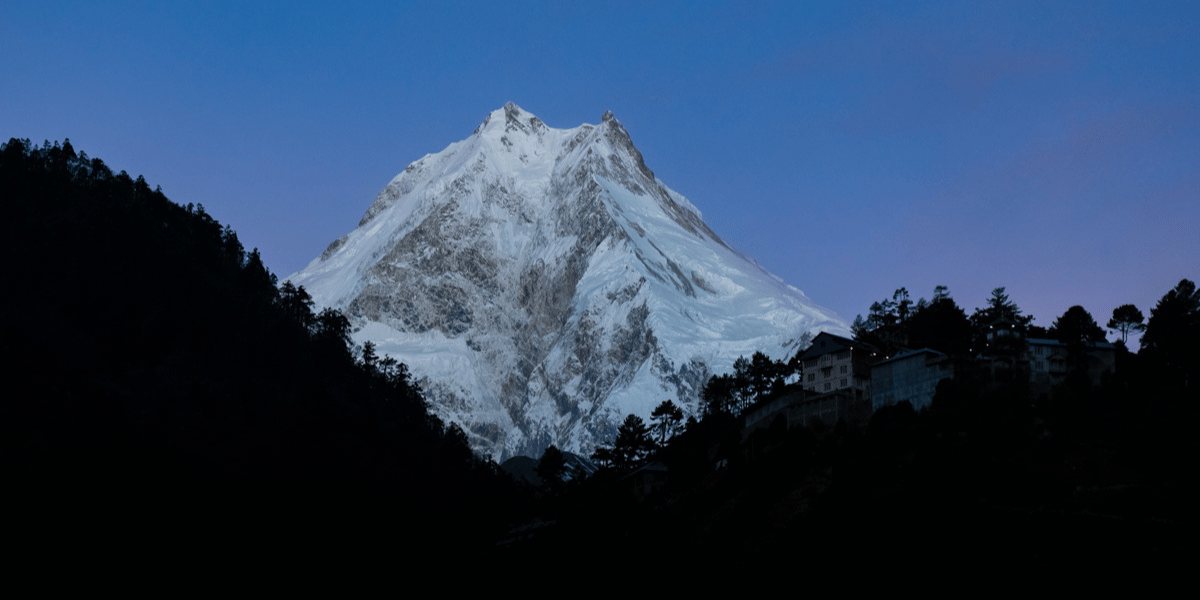
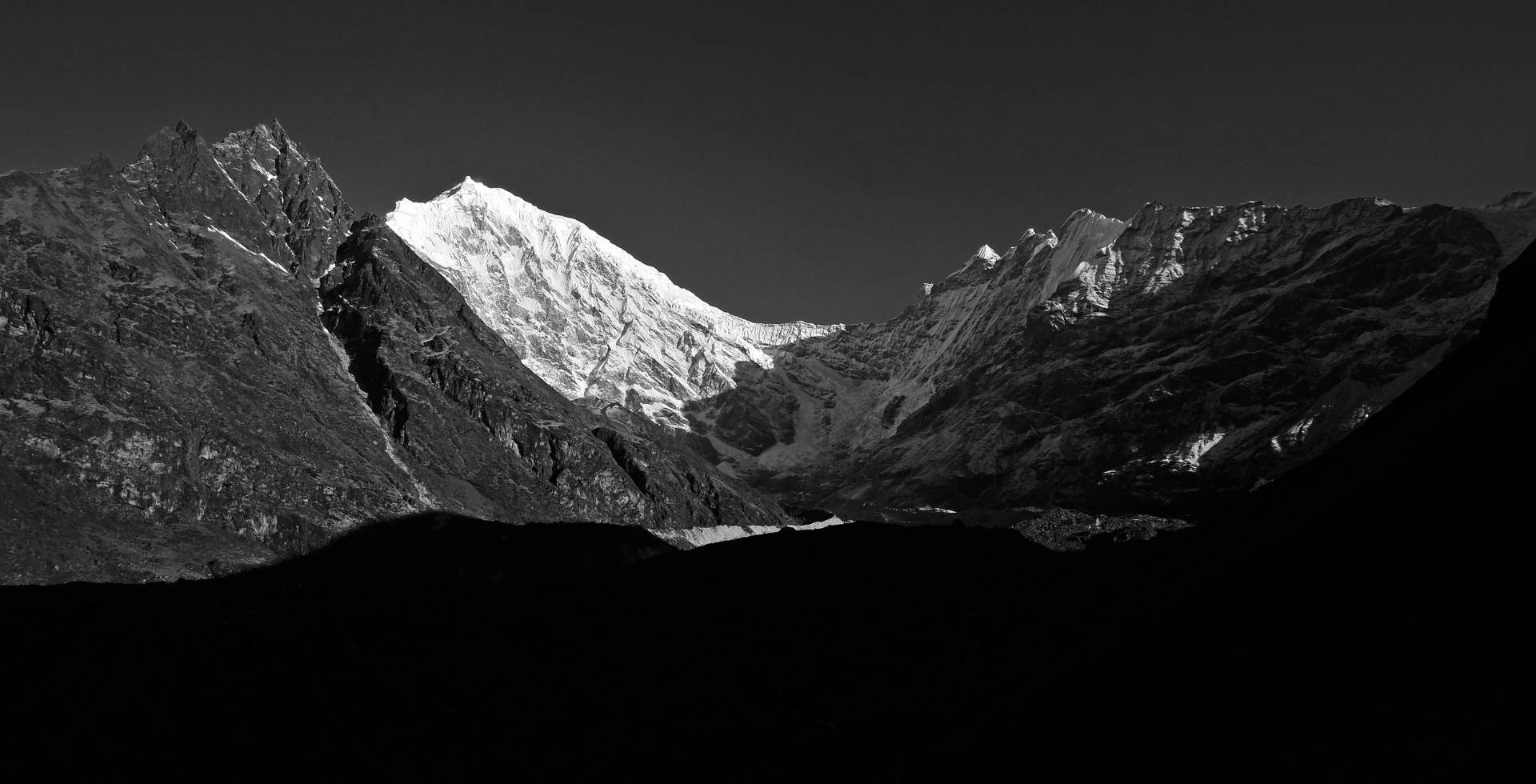
Mount Manaslu is locally known as Gang Pungen, whose name is derived from two Tibetan words: Gang, meaning “mountain”, and Pungen, meaning “heap of treasures”.
What most of you might not know is that the Manaslu region itself (both the Tsum and Nubri valleys) is believed to be a hidden land (locally known as Beyul Kyimalung). This means it’s a hidden place that protects spiritual treasures.
And to preserve the purity of this sacred landscape, local communities, backed by conservation regulations, have restricted climbing on certain peaks within the Kyimalung region.
These include Chhepchhe, Khungghyu, Taaya, Kipu, and Fuchyong Himal. These mountains are believed to be the dwelling places of village-protecting deities.
Yaru: Gateway to the Sacred Region
Speaking more about the Beyul Kyimalung region, local beliefs describe a spiritual gate called Yaru that welcomes visitors.
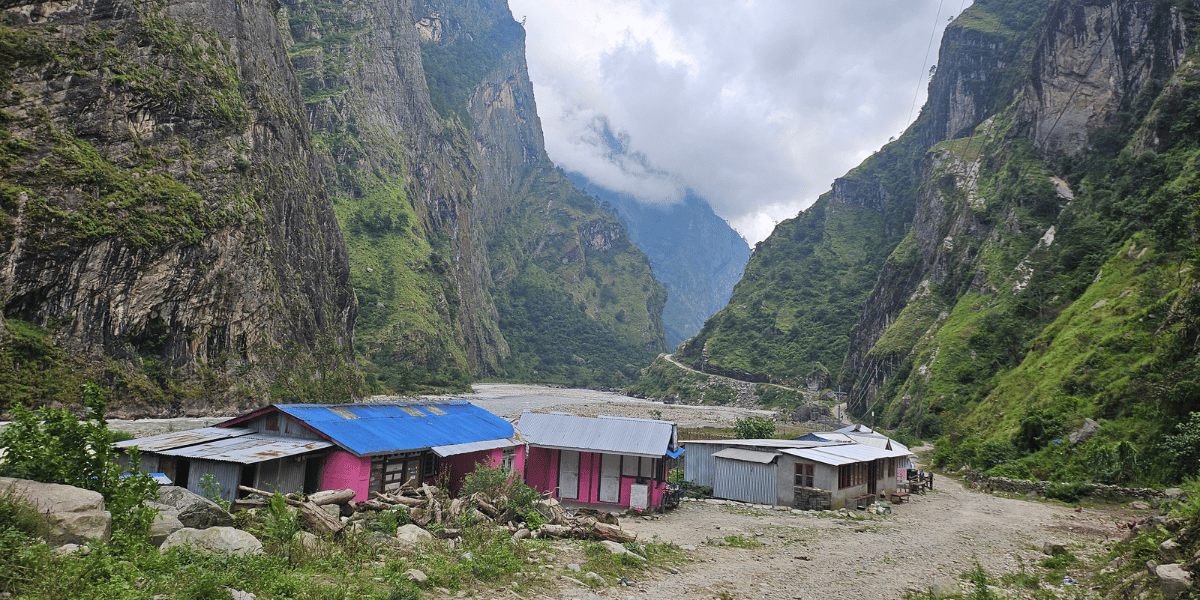
To be precise, there’s Yaru village (including Yaru Bagar and Yaru Phat along the Manaslu-Tsum Valley trail). It lies near Jagat, the starting point of the Manaslu Conservation Area and is known to separate the outer settlements of the Nubri and Tsum regions from the inner sacred territory.
The people here, along with the surrounding villages, possess a deep understanding of the Beyul tradition. If you are on your own expedition in the Manaslu region, you will notice this through their daily spiritual conduct from the start itself.
Buddhist Lineages and Local Practice
As mentioned earlier, religion in Manaslu varies by altitude and settlement patterns. The upper Manaslu region is predominantly Buddhist, while the middle and lower regions have a combination of Hindu and Buddhist communities.
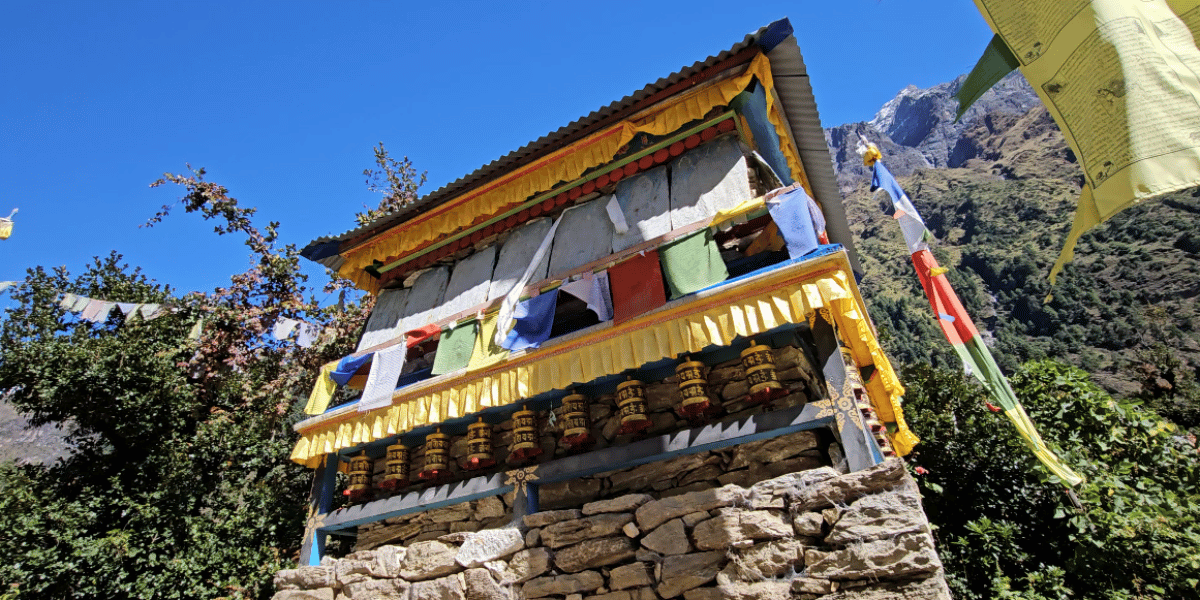
Since Tibetan Buddhism is the dominant religion, we will focus on that here. Well, Buddhism in Manaslu follows four major Tibetan lineages:
- Nyingma (most common)
- Kagyupa
- Sakya
- Gelugpa
Even among these four, Nyingmapa and Kagyupa are the most widely practised in the Nubri and Tsum valleys. Moreover, the Chumba and Nubripa communities also practise older Bon and shamanistic traditions.
Daily Rituals and Incense Practices
The communities in the Tsum and Nubri valleys do not just follow Tibetan Buddhist traditions. One practice that particularly impressed me is their strong ethical commitment to non-violence.
Respecting all forms of life, the Manaslu people perform Shyagya rituals, mainly in the Tsum Valley, and strictly follow Sekya ethical practices.
They also offer incense, locally known as “Sang,” as a gift to spirits and deities. This is slightly different from the incense offerings in other customs of Nepalese culture.
Basically, Sang is believed to invite both material and immaterial blessings and welcome the sun’s life-giving energy into their home.
Along with Sang, eleven plant species are commonly used in daily offerings. And these rituals are performed up to three times a day!
Nature Worship and Protective Rituals
Religious beliefs in the Manaslu region are so deeply ingrained that almost every task involves a ritual.
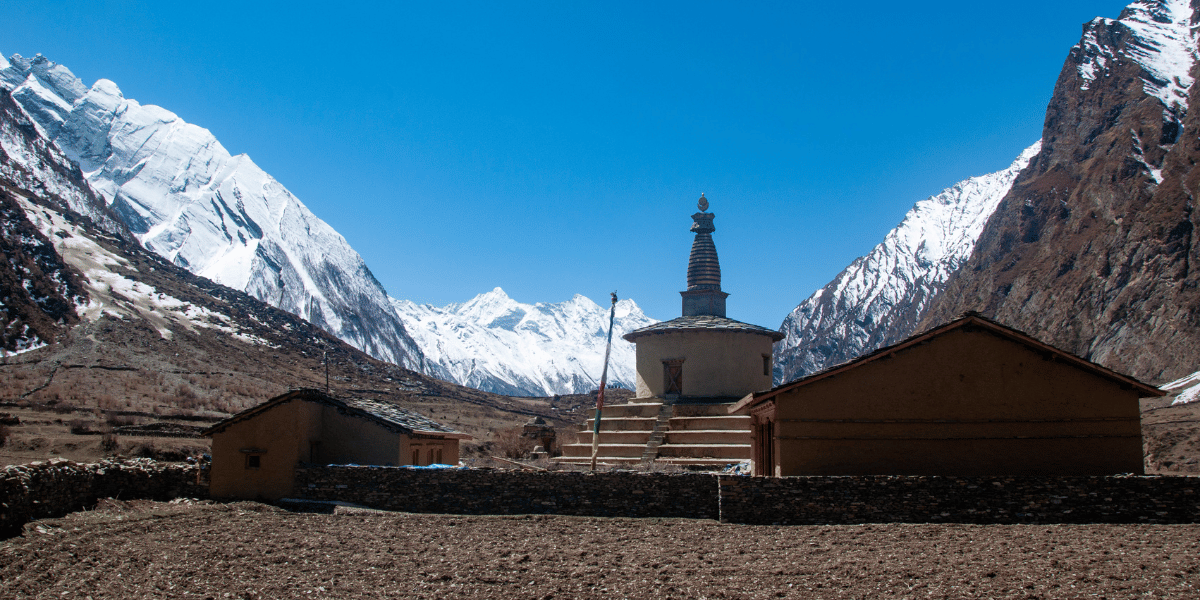
For example, before constructing new homes, the Tsumpa people perform Sa Lang Pooja. This is done to seek permission from local spirits to avoid causing disturbances. Ritual offerings such as Sang (incense), Serkem (tea or alcohol), and Torma (ritual cakes) are used.
Likewise, there is an annual ritual called Lhapsang Pooja, during which prayer flags, or Lungda, are hung at high points.
The ritual is primarily performed by the Shakya community over ten days near Rachen Gumba in the Tsum Valley, and it symbolizes the spreading of blessings, protection, and goodwill through wind and prayer.
Sacred Sites, Monasteries, and Spiritual Heritage
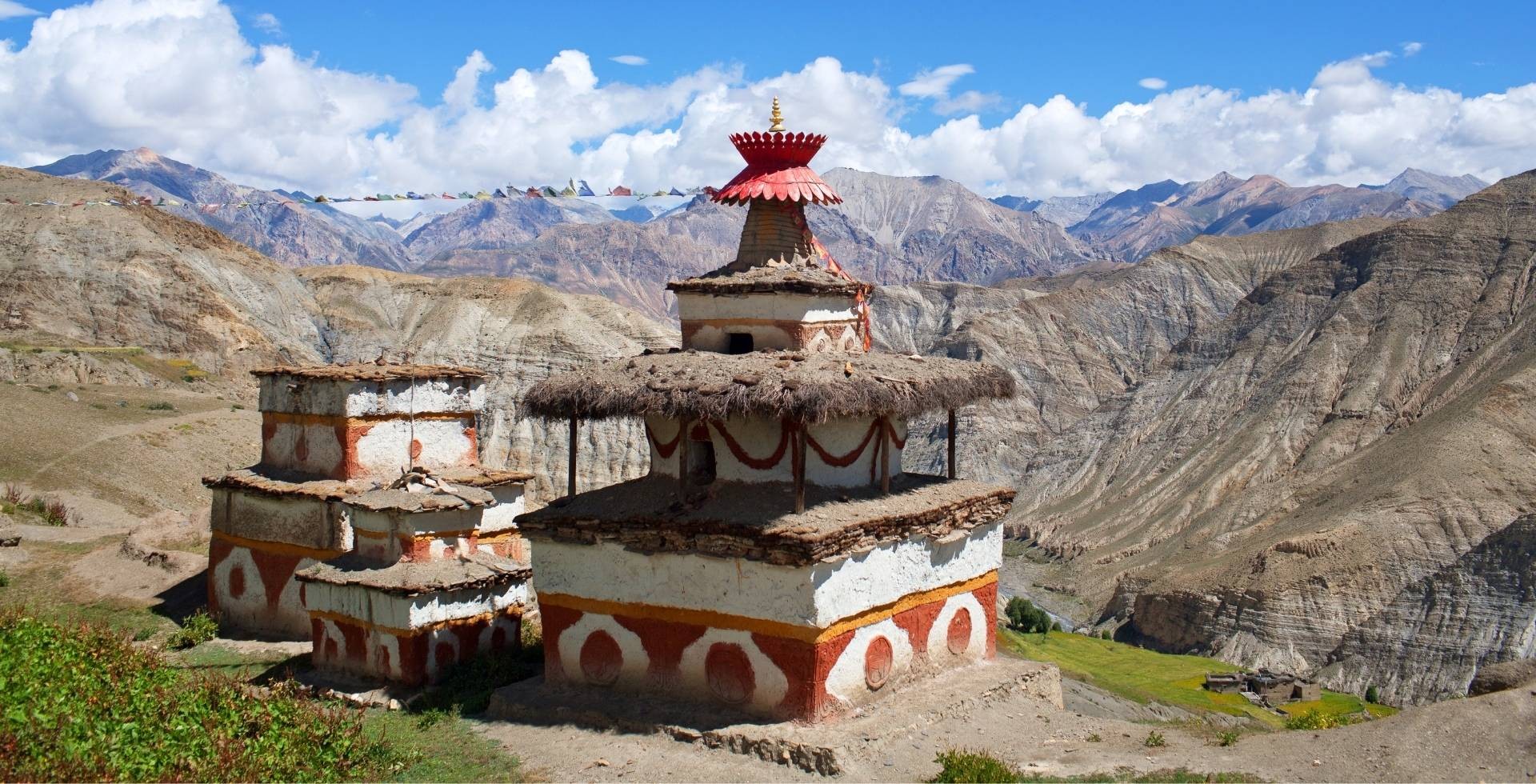
During my own adventure, I encountered mani walls with prayer flags, cultural gates, monasteries, and other religious spots at almost every landmark.
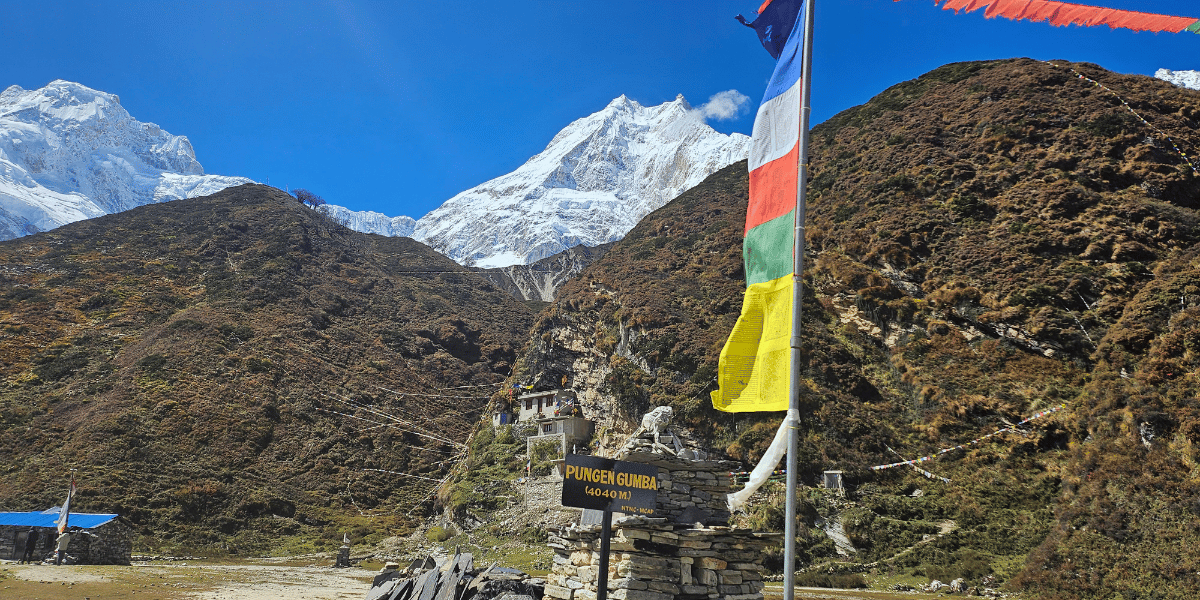
Not just the Nubri Valley, even the Tsum region is equally rich in culture, with each spot housing at least one prominent gumba for local worship and prayers.
Among the most sacred sites, here are the most important ones that you’ll come across in the Manaslu Circuit Trek route:
- Ribung Monastery, Lho
- Lhi Buddha Temple, Lho
- Pungen Gumba, Samagaun
- Birendra Lake, Samagaun
- Shyala Monastery (Buddhist Gompa), Samagaun
- Pema Choling Gompa, Samagaun
- Naxa Gumba, Samagaun
- Faith Healer's Temple (Jhankri ko Mandir), Rimum Danda, Prok
- Sherang Gumba, Bihi
- Rachen Gumba, Chhekampar, Tsum Valley
- Mu Gumba, Chhekampar, Tsum Valley
- Kalchhuman (Kal) Tal and Kalchhuman Temple, Prok
- Piren Phu, Necheng Phung, Tsum Valley
- Guru Chowang preserved footprint, Ngak Village, Tsum Valley
- Ponkar Lake, Nason, Annapurna region (during the return)
- Milerapa Cave, Nason, Annapurna region (during the return)
These were some of the major attractions within Manaslu. But there are even more cultural sites, including lakes, caves, and temples, throughout lower to upper Manaslu.
If you have limited time for the Manaslu Circuit, you will mainly visit Ribung Monastery, Lhi Buddha Temple, Pungen Gumba, Birendra Lake, Shyala Monastery, Pema Choling Gompa, and optionally Sherang Gumba. And if you’re going for the Tsum Valley trek, you will get to visit Rachen Gumba and Mu Gumba.
So, if you want to explore other sacred sites, note that you will need to extend your trip beyond the typical 15-day itinerary.
Protector Deities and Sacred Wildlife
One thing that truly fascinates me is how deeply the spiritual life in the Manaslu region is connected to the landscape itself. Mountains, forests, rivers, wild animals, and villages are not just physical features here. Every single one of them is believed to be guarded by protective deities and spirits.
These beliefs do not come from a single source. They originate from Tibetan Buddhism, pre-Buddhist Bon traditions, and local indigenous practices that have coexisted harmoniously for centuries, layering on top of each other in a way that makes the spiritual identity of this region genuinely unique.
Protector deities in Manaslu are considered guardians of the place. Their responsibility covers everything: the safety of people, animals, crops, and even travellers passing through. Yes, that includes you on your trek.
Yul-Lha (Village Guardian Deities)
The most important among these are the Yul-Lha, or village guardian deities. Each major village in Chumnubri Rural Municipality has its own Yul-Lha, linked to a nearby hill or natural feature, and worshipped through Lha Sol Pooja.
In both the Tsum and Nubri valleys, the belief that Yul-Lha deities actively protect the people, their livestock, their crops, and their settlements is not a historical footnote. It is a living part of daily life.
A prime example is Prok village, which has four rocky hilltops described locally as the "four sisters." All four are considered symbolic representatives of the village protectors.
Walking past them, knowing what they mean to the people who live here, changes how you look at the landscape entirely!
Lha, Lu, and Shipda (Nature Guardian Spirits)
Besides the Buddhas, main Bodhisattvas, and Dharmapalas, there are other important spiritual beings in the Manaslu region. These are called nature guardian spirits:
- Lha: Sky and mountain deities believed to reside in mountains along with other high places and meant to protect villagers and travellers.
- Lu: Water and earth spirits believed to reside in water bodies, forests, and underground places. Disturbing their natural habitat may lead to illness or misfortune. If this occurs, one must undergo Mu divination performed by lamas.
- Sa-Dha: Deities associated with land and soil. Praying and worshipping them is a must before construction, farming, or settlement expansion.
Jibta, the Snow Leopard as a Protector Deity
It is a dream for many to catch a glimpse of a snow leopard at least once in their life. In fact, we get tons of queries about our snow leopard tracking packages across various destinations in Nepal. We will soon be introducing a dedicated package in the Manaslu region as well.
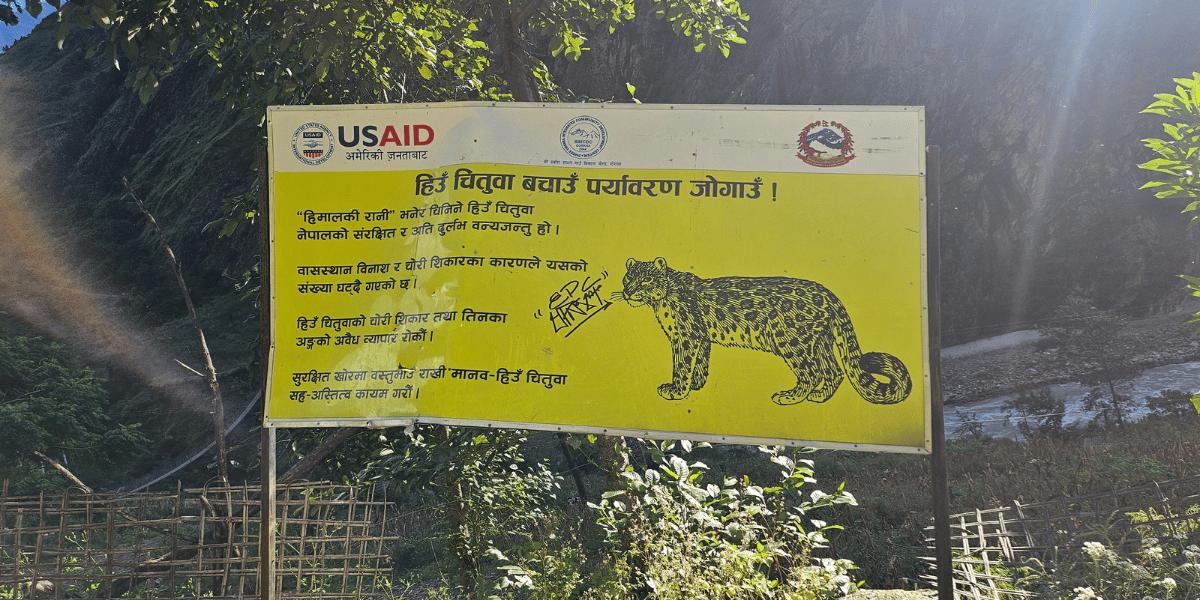
What surprised me most during my own visit was that I learned how even snow leopards are worshipped here. In the Tibetan dialect, they are called ‘Jibta’ and are believed to be the guardians of high pastures, forests, and remote landscapes.
Local people also have a practice of worshipping them before entering forests and alpine grazing areas. These elusive creatures are found in both the Upper Nubri and Tsum valleys.
Sacred Mountains as Protectors
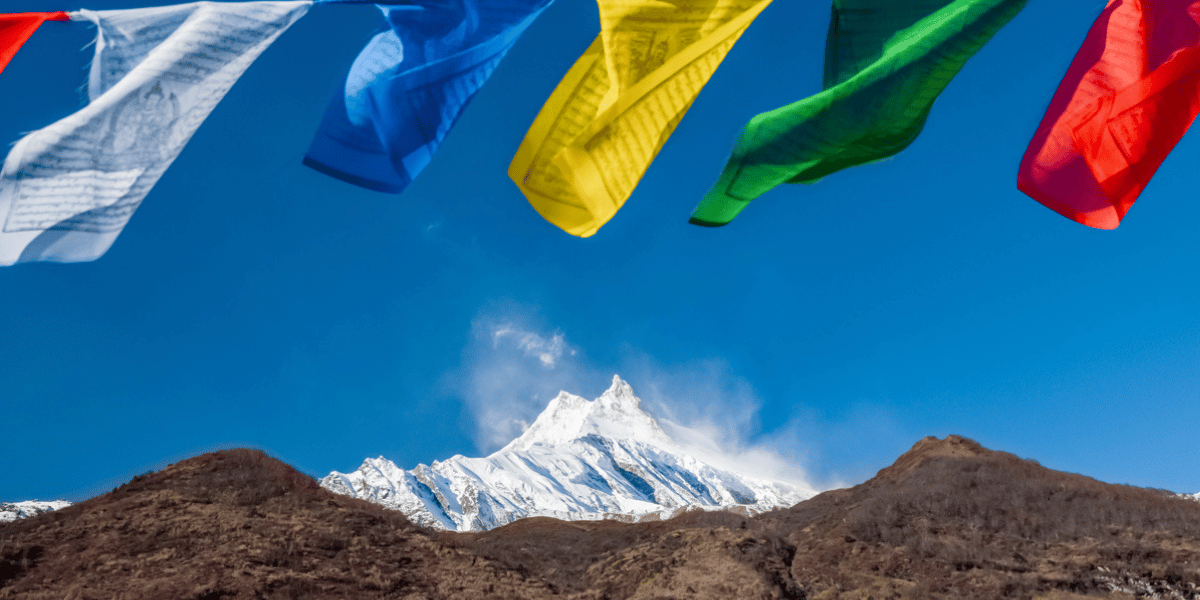
Mt. Manaslu is a sacred mountain in itself, considered the “Mountain of the Spirit”. People believe that its moods dictate the fortunes of the valleys below.
You’d be surprised to know that the people of Samagaun prevented a group of Japanese expeditioners from climbing Manaslu back in 1954. This was after the first group had allegedly caused an avalanche that destroyed a sacred monastery.
But it is not just about the eighth-highest mountain in the world. Other mountains and peaks in the region are also considered the abodes of protector deities. These include Chhepchhe Himal, Khungghyu Himal, Taaya Himal, Kipu Himal, Fuchyong Himal, and others.
Tersung (Treasure Protectors) of Beyul Kyimalung
As per the Beyul theology, Beyul Kyimalung (also known as Nubri Valley) contains hidden treasures called 'Ter'. These treasures are guarded by special deities called Tersung.
The protectors are said to reside in Shringi Himal and other regions of Prok. Only worthy Buddhist practitioners are believed to benefit from prayers directed at these spiritual gatekeepers.
Guru Figures as Living Protectors
These are figures who are not exactly deities but are believed to possess protective presences. I am referring to Jetsun Milarepa and Guru Chowang.
Jetsun Milarepa is believed to have meditated in the caves of the Manaslu region. One popular example is Piren Phu in Burju Village of Tsum Valley.
Guru Chowang is particularly associated with Ngak village, and his footprint is revered as a living blessing!
Traditional Healing and Medicinal Practices
Due to the remoteness and isolation of the Manaslu region for quite a long time, access to modern healthcare arrived really very late. And this is particularly in the upper Nubri and Tsum valleys.
But guess what? Local communities have developed and preserved their own healing systems that are rooted in Tibetan Buddhist philosophy. In fact, various types of traditional healing continue to coexist even today, combined with modern medicines.
Looking at their holistic approach, I often wonder how practises like these exist in such remote regions of Nepal.
Well, in Chumnubnri, health is not just seen as an individual condition but, in fact, a balance between a person, their environment, and the spiritual world!
Many locals who seek traditional healing alongside modern medicine are following centuries-old wisdom. And here are a few of them:
Lama-Based Healing and Spiritual Diagnosis
You might have known Lamas as revered spiritual teachers. But in Upper Manaslu, they are more than that! Lamas here don’t just offer religious guidance, but people seek them for health-related concerns too.
Take it this way… When someone falls sick, it’s believed that there’s something wrong spiritually rather than just physically. And when lamas perform spiritual diagnosis (known as Mu divination), the root cause of illness is figured out!
Remember the water/earth spirits (Lu) I explained earlier? Well, even Lu could have caused disturbances leading to bad health.
To cure that, a lama prescribes specific prayers, rituals, or offerings that help restore the person’s balance.
Medicine Buddha and Ritual Healing Practices
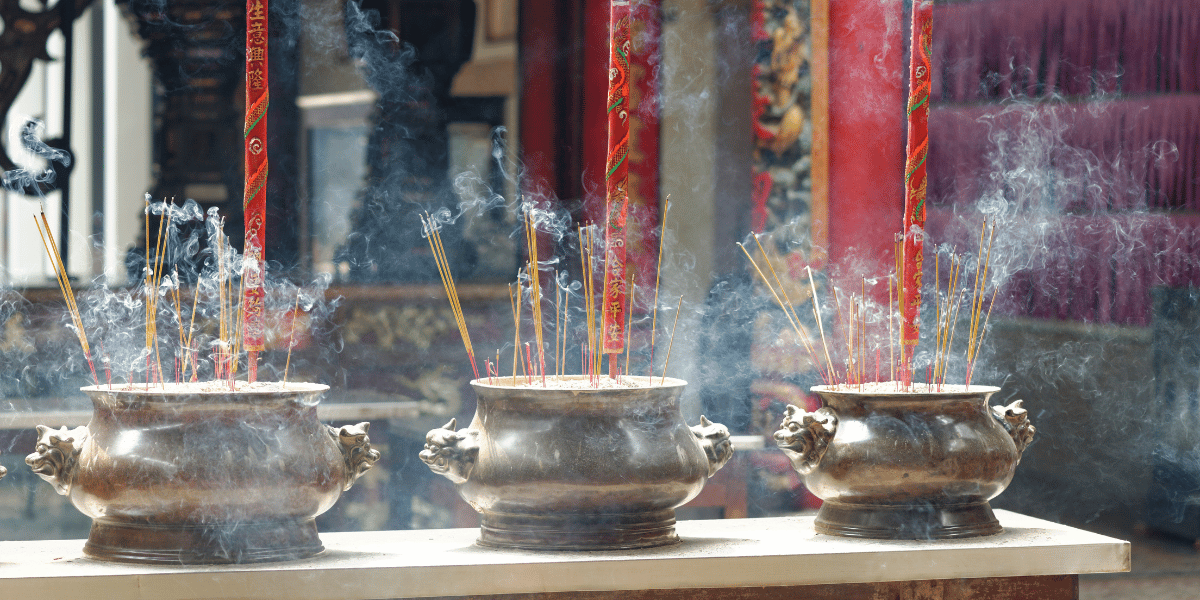
Sangye Menlha (Sang-rgyäs-smän-lha), aka Medicine Buddha in Tibetan Buddhism, is closely followed by the people of Manaslu. There are special traditional rituals performed to promote healing and protection from illness.
The idea of these rituals is to present tormas (ritual cakes) and incense as offerings. When done, there’s a belief that the guardian deities help remove negative energy from the body and also their household.
Besides such ritual healing processes, a person’s diet has a significant role too, as per the principles of Sowa-Rigpa. It’s yet another Tibetan system of medicine, where food is considered a foundation of health and balance.
Amchi System: Traditional Herbal Medicine
One important healing tradition I can’t miss out on when speaking about Manaslu (mainly Tsum Valley) is its traditional Amchi system.
For context, Amchis are traditional healers who have been trained in Tibetan medicine. Not just in the Manaslu region, but they are kind of primary healthcare providers in many high Himalayan communities.
What’s fascinating is their deep knowledge of local ecology and medicinal plants (mainly found in alpine and subalpine regions). Amchis are responsible for preparing herbal remedies using locally available plants. For example:
- Kutki: fever, headaches, gastritis, and colds
- Thickda: sore throats and respiratory issues
- Yarsagumba: for stamina and overall vitality
Marriage Traditions and Family Customs
For a long time, family systems have traditionally followed a practical division of roles based on survival needs and spiritual beliefs in Nubri and Tsum regions:
- Eldest son: Manages household responsibilities, land, livestock, family affairs, etc.
- Second son: Becomes a monk and joins a monastery, contributing to the family’s spiritual merit.
- Younger sons: More flexibility, like managing trade, herding, or choosing their own livelihood.
Now, the questions arise. What about daughters?
In the past, one daughter would dedicate their life to being a nun (Ani or Jhumma). This was believed to be a spiritual offering made by the family.
However, things have changed, and daughters are allowed to make their own decisions. They have the freedom for education, marriage, or a religious life.
Talking deep into marriage, Polyandry traditions still exist in remote regions of Manaslu. This means that a woman can marry brothers from the same family. While the law of Nepal has restricted polygamy or any other form of multi-marriage, this is practised here mainly for economic stability.
Moreover, marriages aren’t just specific to the household. The rituals held are community-centred and usually go through lamas.
A Glimpse into Daily Life in the Manaslu Region
Life in the Himalayas is very different from what we have seen in the cities. Seeing the locals and their lifestyle has always been a lesson for me, whether it be Manaslu or any other remote destination in Nepal.
So, let’s now look deeper into the daily life in the Tsum and Nubri valleys of Manaslu:
Main Sources of Income
For generations, the main source of income for Manaslu people has been land and livestock.
Even today, traditional practices are what hold the household together. Not to forget the emerging opportunities brought by trekking tourism.
Agriculture
The backbone of daily life and the major source of income for the lower and middle regions of Manaslu is none other than agriculture.
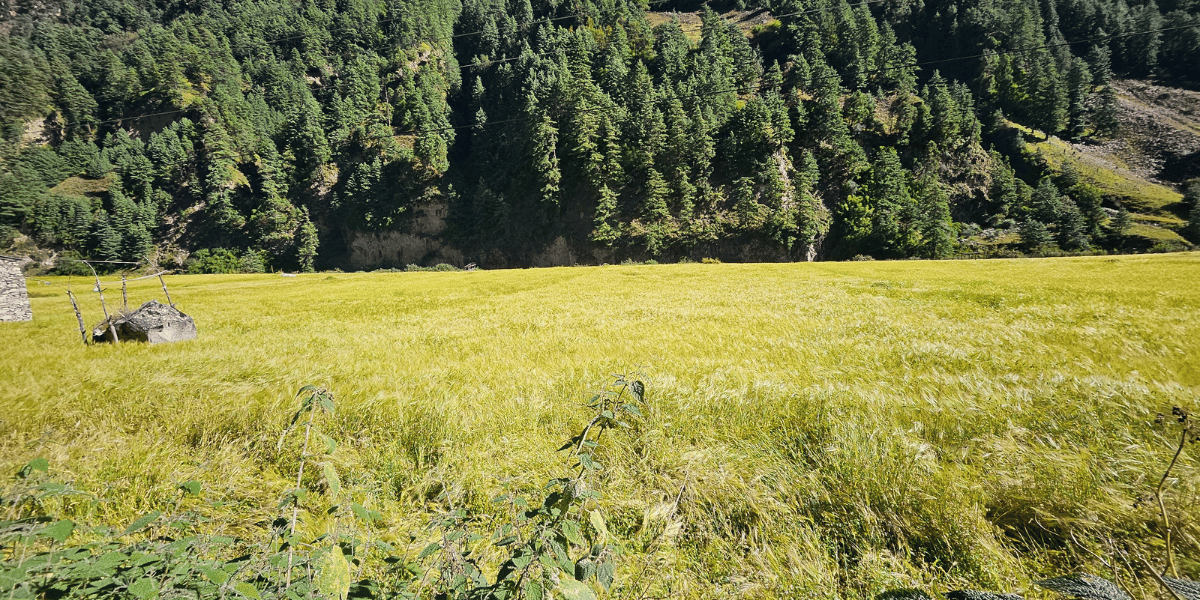
You’ll come across terraced fields producing crops like maize, millet, barley, buckwheat, mustard, and seasonal vegetables from the lower to middle regions of the Nubri and Tsum valleys.
Farming in upper villages (Samdo and beyond) is limited, and there’s only a short growing season.
Livestock Rearing
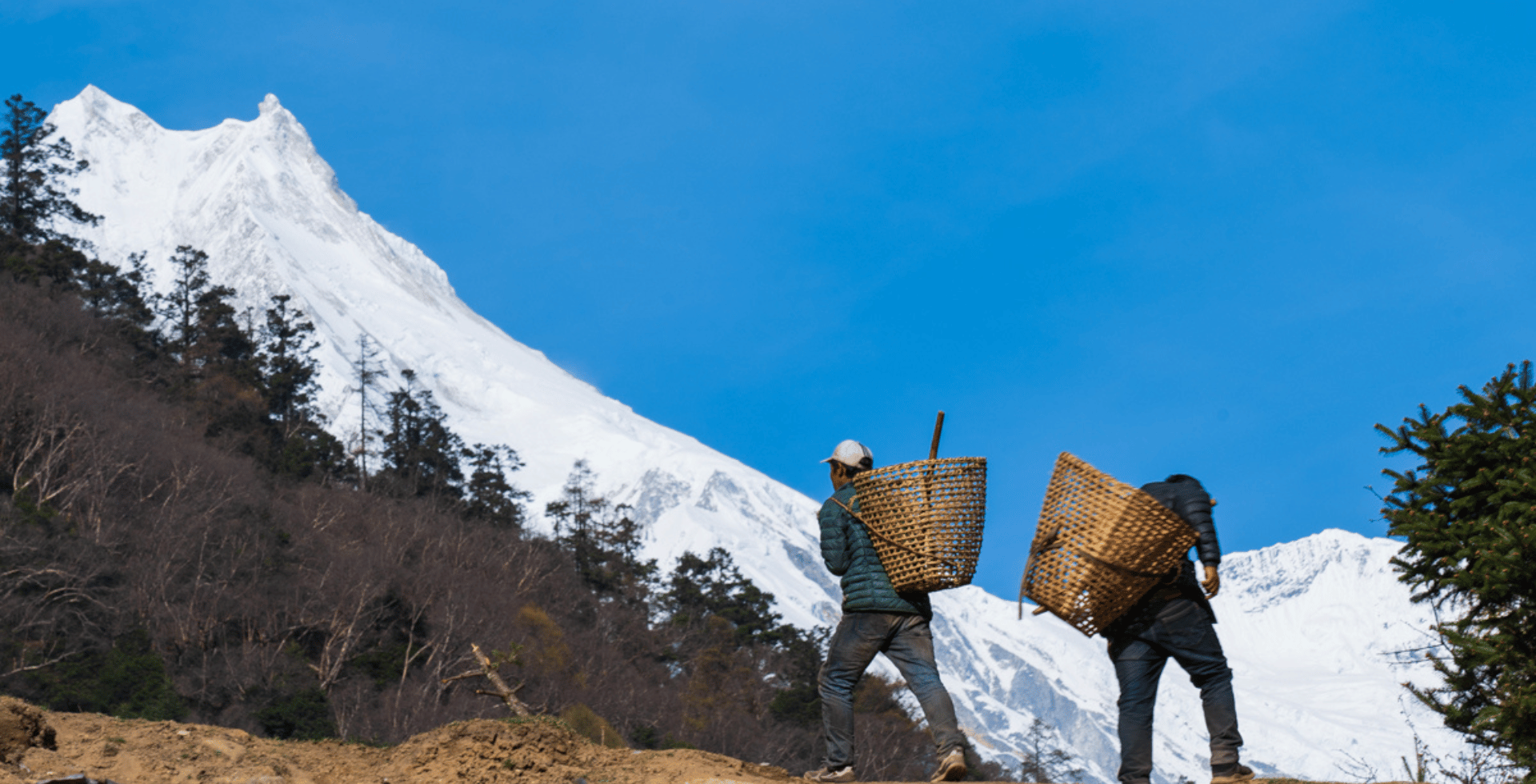
Throughout your trekking journey, you’ll come across yaks, buffaloes, donkeys, mules, horses, and all other sorts of cattle. This already gives a clear glimpse of rural village life in both the Nubri and Tsum valleys.
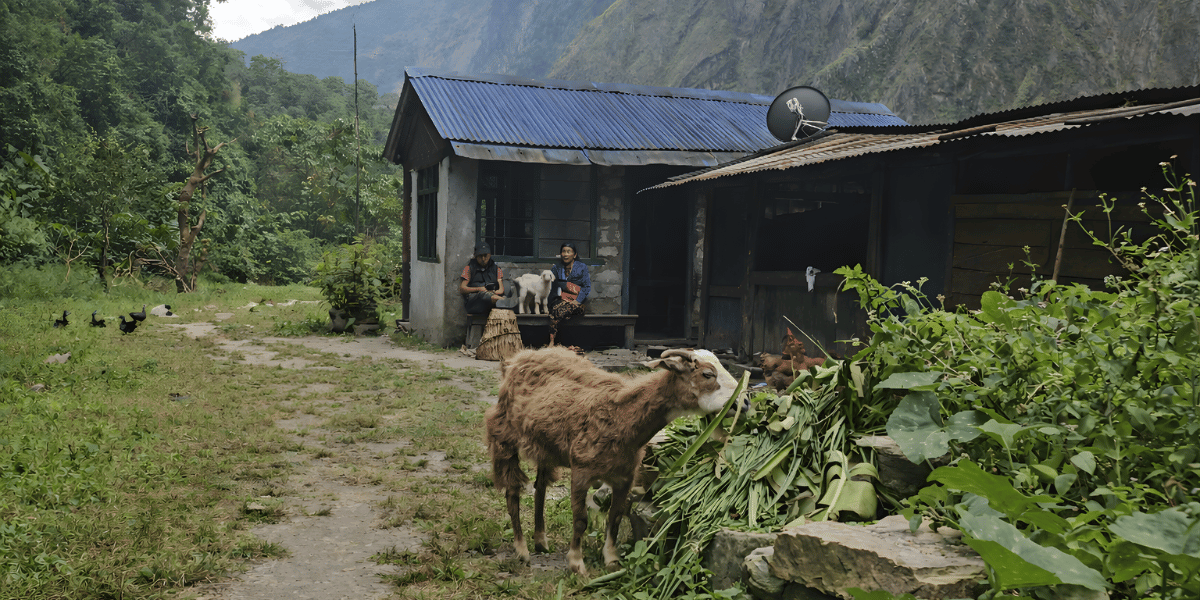
As expected, animal husbandry plays a very important role. Every family rears yaks in the higher regions, while cows, buffaloes, and sheep are in lower regions. And note that they do not rear animals for meat but mainly for milk, butter, cheese, and wool.
While chickens and goats are used for meat in the lower region, the Upper Manaslu is a non-violent zone.
Seasonal Survival
Off-seasons bring economic changes in the Manaslu region. Especially during harsh winters, when snow blocks most parts, many families are forced to move to lower settlements.
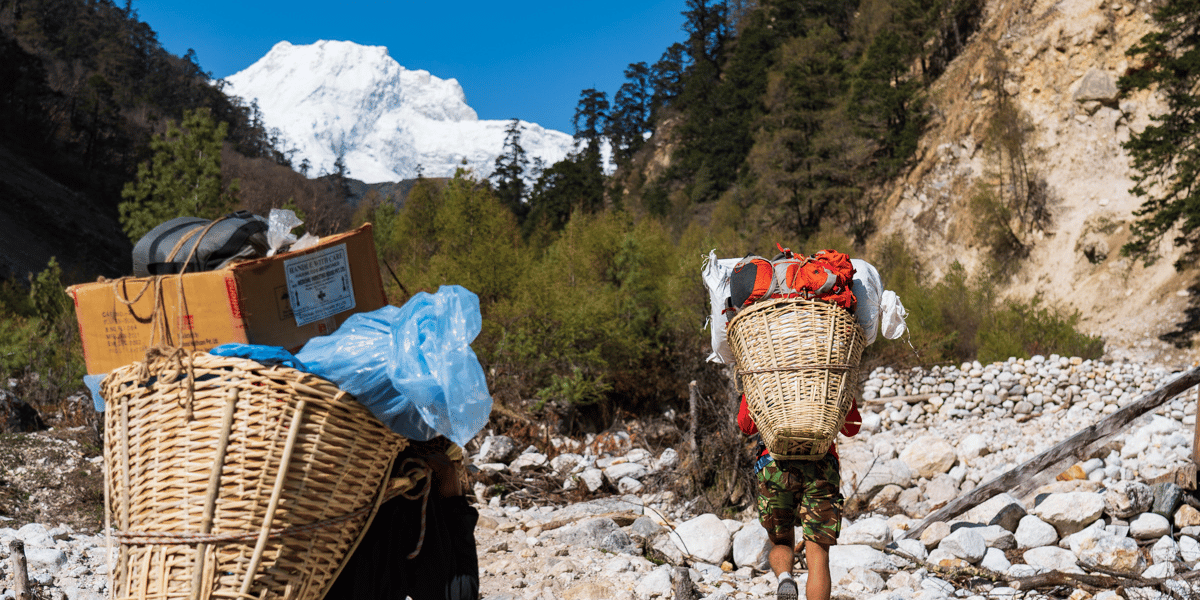
In fact, they have to depend on stored food and livestock products. The general practice is to work hard during the summer (like, intense agricultural work), monastery activities, and trekking-related employment.
Along with harsh winters and isolation, high altitude is another big challenge in the Manaslu region. While locals are well adapted to these conditions, we, as trekkers, may experience altitude sickness as we ascend, making proper acclimatization essential during the journey.
And these locals are the ones who will help you out (whether it's by carrying you all the way, even if it’s midnight or providing you the right food and drinks).
A Look Into Local Homes
Since people in Manaslu region are heavily influenced by the Tibetan lifestyle, their houses also reflect the architectural traditions of Tibet.
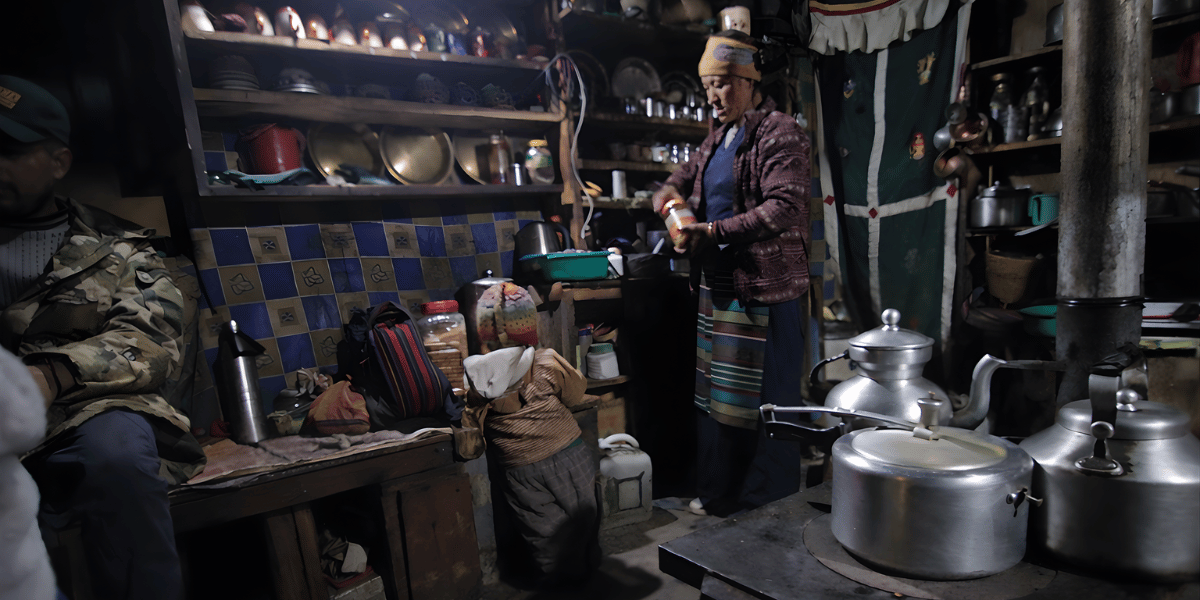
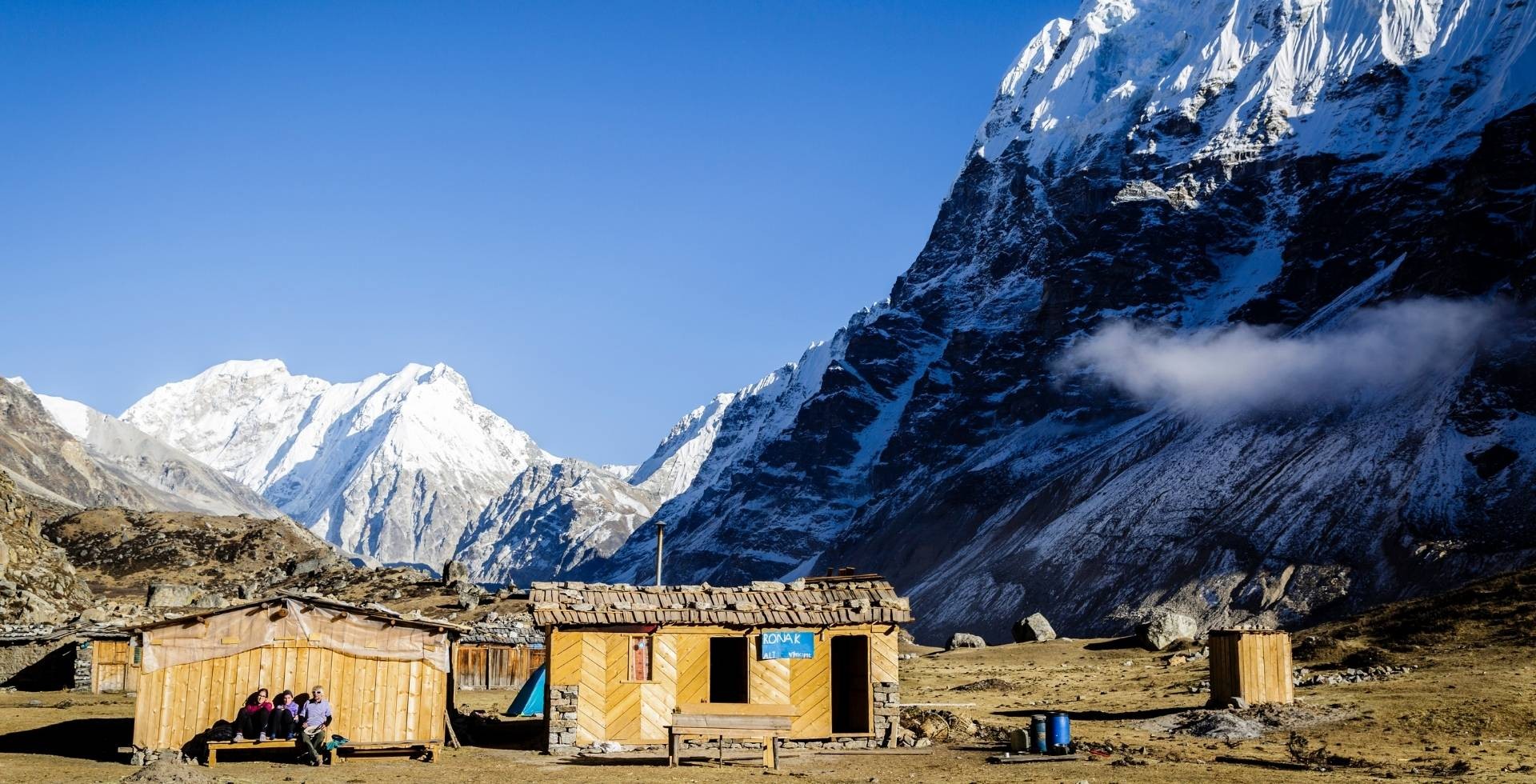
The homes are typically of two stories and are mostly built using stone, wood, and mud. Especially in the high-altitude regions, they are designed to withstand cold winters!
Generally, the ground floor is used for livestock or storage, and the upper floor serves as living space. This is something I noticed during my own stay in a local home in Samdo.
I even got to dive deep into their way of living, and honestly, the stay here was much better compared to commercialised stays in other locations.
What I also noticed is that every house has a kitchen, warmed by a hearth. You’ll also find prayer corners, butter lamps, family altars, and idols of the guardians we discussed above.
For many households, tourism has now become a supplementary income source. They run their own teahouses, small lodges, shops, or provide guiding and porter services, whatever is possible based on their skills!
Without a doubt, the hospitality of the Manasu people is fantastic. I can confidently claim this after my own stay with a family in Samdo, where I was welcomed with warmth, butter tea, and genuine care.
Clothing in Lower and Upper Manaslu
Clothing in the Manaslu region changes as noticeably as the landscape does.
In the lower regions, modern casual clothing is what you will mostly see, not very different from any other Nepali hill town you may have passed through on the drive up.
But as the trail gains elevation and the air turns noticeably colder, woollen garments start appearing more frequently, and the character of what people wear shifts with every valley you enter.
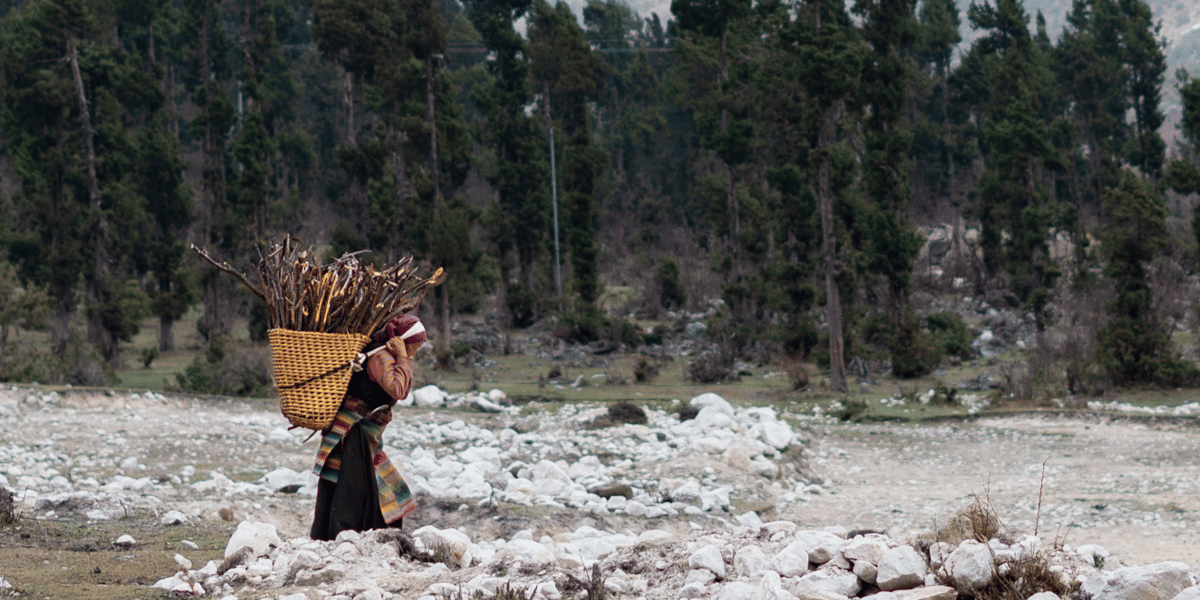
In the upper Manaslu region, traditional attire is still very much part of daily life. The Chuba (Chu Pa) is worn regularly, particularly by women and elders.
Black aprons, belts, and fur-trimmed hats complete the look, and these are not just cultural expressions. They are genuinely practical choices against the biting cold at high altitude!
Seeing someone in full traditional dress going about their morning routine above 3,500 m is one of those moments that stays with you long after the trek is over.
What’s on the Plate: Food Details
Food in the Manaslu region is simple and nourishing and is mostly tied to whatever the land provides. Many foods are transported using pack animals to the high-altitude regions to ensure trekkers get meals as desired.
Throughout the Nubri and Tsum valleys, you’ll find Dal Bhat (rice and lentils with vegetables), along with maize, millet, and seasonal greens. No worries about that. I promise!
As you move higher, barley, buckwheat, potatoes, and traditional dishes are more common. But as mentioned earlier, hospitality is great, and good lodges with professional cooks mean you can also enjoy Western items.
And how can I not mention the local alcohol, rakshi? These are traditionally home-distilled, made from fermented millet, rice, or barley.
One fascinating drink I was offered was butter tea. Beyond its unique taste, it showed me the symbol of the Nubri people’s hospitality.
Main Festivals Celebrated in Manaslu
Earlier, we had learned about how people in Manaslu are culturally divided as per the geography: Lower, Middle, and Upper.
Just like every other place in Nepal, the restricted region of Chumnubri Rural Municipality reflects a blend of Hindu and Buddhist traditions.
In the lower areas, communities mainly observe the main Nepalese (Hindu) festivals; the middle and upper regions celebrate more of the Tibetan Buddhist festivals.
Now, let’s explore the different festivals, cultural dances, songs, and more!
Cham Dances and Ritual Performances
Masked dances are popular all over Nepal and Tibet, especially in the mountainous region. In Manaslu, particularly, the Cham Dance is the one that’s majorly performed on almost every religious occasion.
It’s a sacred dance performed by monks in monasteries to dispel negative forces and purify the environment. Many even believe that the dance blesses the land and people living here.
These dances are often performed alongside ritual ceremonies, like Shitro (Shito) Puja. The synchronized movements of the Cham dance is something not to miss when you’re in Tsum Valley.
With ritual music and traditional steps combined, they together represent the triumph of wisdom over ignorance, too.
Songs and Other Folk Dances in Manaslu
Culture in the Manaslu region isn’t just limited to monastic rituals. The unique music and folk performances here are what draw everyone’s attention, both locals and tourists.
Among many, the notable are the beer songs called Changlu. It’s mostly sung during harvest celebrations and social gatherings.
Besides just entertainment, it’s also a way of passing down cultural values, historical narratives, and ethical teachings.
You see, singing and communal dancing are quite prominent during agricultural festivals and seasonal transitions. These songs and folk dances reflect gratitude for harvests and also harmony between humans, nature, and deities.
Manaslu Festival Calendar
Festivals of the Manaslu region are mainly Tibetan ones. In the Upper Tsum Valley (particularly in Nile), the Lha Sol ritual is performed twice a year. This is in spring and autumn, also considered the peak season to visit the Manaslu region.
Likewise, another major festival in the region is Dumje, celebrated mainly by the Nubri and Bhotia communities, mainly in monasteries, in honour of Guru Rinpoche (Padmasambhava).
There’s more, really! Below is a general calendar of local festivals observed across the Manaslu Conservation Area (MCA). Do note that the exact dates vary based on lunar calculations.
|
Festivals
|
Description
|
Month (approx.)
|
|
Losar
|
Tibetan New Year, celebrated mainly by Bhotias and Gurungs
|
December to February (varies based on Sonam, Gyalpo, and Tamu)
|
|
Mani Chang
|
Festivals associated with rituals involving prayer wheels, spinning the “Mani” to accumulate merit
|
April / May
|
|
Dumje
|
A festival honouring Guru Rinpoche's birth with masked dances, pujas, and communal celebrations
|
June / July
|
|
Dhachyang (of Tsum Valley)
|
Celebrates the connection between life and death, with songs, dances, archery, and other activities
|
November to December
|
|
Yartung (of Nubri Valley)
|
Annual horse racing festival, includes music, dance, and social gatherings
|
August to September
|
|
Fanning
|
Harvest festival with beer songs (Changlu)
|
September to October
|
|
Nara
|
Village festival with music, dance, and local rituals, linked to agricultural and protective practices
|
January, June, October, or December
|
|
Saga Dawa (aka Buddha Jayanti)
|
Village festival with music, dance, and local rituals; often linked to agricultural or protective practices
|
April / May
|
|
Mani Rimdu
|
Monastic festival, which includes masked dances
|
October / November
|
You might like reading: Nepali festival calendar
Cultural Etiquette: Tips for Trekkers
Now that you’ve learned about the culture, traditions, and lifestyle of the Manaslu region, let’s move forward with the cultural etiquette of this area.
To be very honest with you, the people in the Tsum and Nubri valleys live simple and conservative lives. So, it’s very important that we as travellers respect their rituals, cultural practices, and sacred landscapes.
To enjoy a fulfilling and responsible experience, I’ve accumulated these key tips for you:
- Greet locals with “Namaste” or “Tasi Delek”.
- Avoid showing affection in public places (like kissing or hugging) if you’re travelling with your partner.
- When getting inside the monasteries and religious sites, be sure to fully cover your body. Do not wear revealing clothes, as this may be considered disrespectful. Read this packing list guide to know what to carry.
- Don’t take items without local permission, even if it’s unintentional, especially from sacred sites and farms.
- Absolutely refrain from hunting or collecting mad honey. It’s illegal and may lead to serious legal consequences.
- Be sure to remove your shoes before entering monasteries.
- Ask the people of Manaslu before taking their photographs (the same is the case inside monasteries).
- Since the region (especially Tsum Valley) follows a strict non-violent (no killing) zone, try avoiding meat as far as possible. Many teahouses in Manaslu do offer non-veg products during the Manaslu Circuit Trek, but just to respect the land and its culture, I advise not to (in Upper Nubri too).
- If you happen to be trekking during the festive time, try keeping a distance and watching the rituals from afar just to ensure you don’t accidentally create disturbances.
- Dustbins are available in every location, so use them instead of throwing garbage here and there (especially the non-biodegradable waste).
- The Budhi Gandakri River that flows along the trail, its rivulets, and lakes (like Birendra Taal) are all sacred, so be sure not to wash your clothes there.
- Avoid making loud noises in the village as well as the forest area.
- Hire local porters to support the community even if you think you can carry stuff on your own. Although you may feel a little pity for them, you’re actually helping them economically.
- Don’t forget to tip the guides and porters with at least 10% of your overall trek expenses.
Final Thoughts
Upon my own Manaslu Circuit Trek, I got to learn so much about the people living here. Their daily life, unique culture, strong Tibetan Buddhism beliefs, and great hospitality totally amazed me despite the fact that they live in such a remote region.
Trekking in the Manaslu region will be beyond mountain views and adventure in the difficult terrain. You’ll meet the wonderful Nubri/Tsum people who are going to make your trip totally worth it!
In fact, if you choose to do the trek in the festive period, that would be even better! But one thing is for sure: when you’re here, just be sure to respect their culture and traditions.
To explore more of Manaslu, be sure to read all our related blogs. And if you think you’re truly ready, our 15-Day Manaslu Circuit, 13-Day Tsum Valley, 15-day Manaslu Circuit from Australia, and 21-Day Manaslu Circuit with Tsum Valley trekking packages are awaiting you (with options to customized based on your budget).
Happy exploring!


 Bhishu Acharya