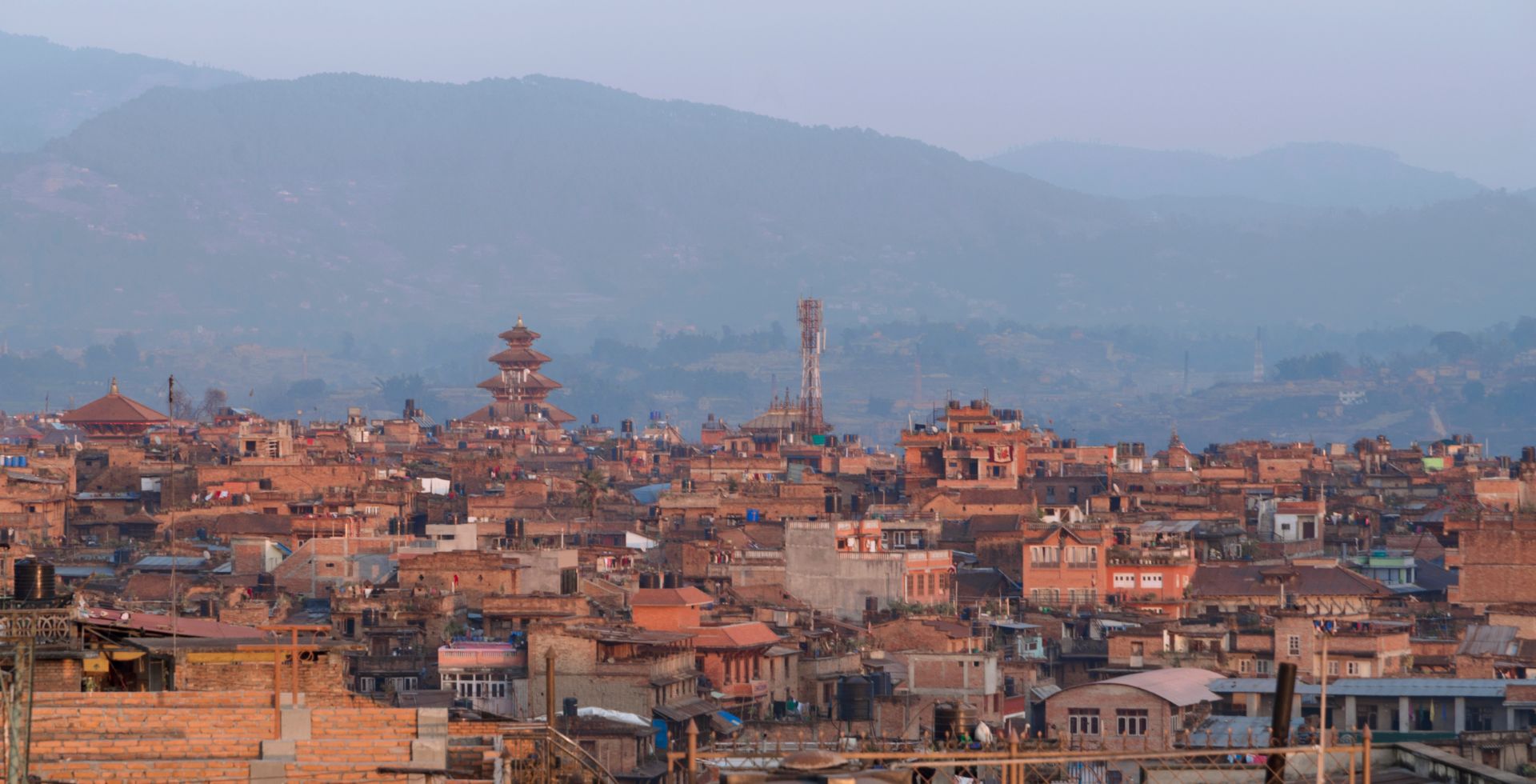
Bhaktapur, though the smallest district of Nepal, is one of the largest when it comes to history and cultural identity. One of the major cities since ancient times, Bhaktapur has always been overflowing with heritage and attractions.
The bustling streets of old towns here have been preserved for centuries, still carrying the essence of Nepal’s ancient history.
Stepping into any of the squares, temples, courtyards, old towns, ponds, or other heritages instantly takes you back in time. It feels like you are in a 3D movie titled “The History of Bhaktapur.”
With preserved medieval architecture, intricate woodcarvings, indigenous Newari culture, and iconic Juju dhau (King Curd), the tales of Bhaktapur never come to an end.
It is quite impossible to cover the entire Bhaktapur in a single day. This small district of just 119 sq. km (46 sq. mi.) is worth multiple days of travelling for anyone interested in delving deep into the roots of history and culture.
In this guide, you’ll explore the squares filled with temples and museums, the vibrant streets and festivals walking them, the transcendent local flavors, itineraries, and tips to shape your tour at your convenience!
Quick Facts: Bhaktapur at a Glance
Here’s a quick overview of essential facts and details you need to know before diving into Bhaktapur’s historically significant culture and major attractions.
|
Province
|
Bagmati
|
|
Headquarter
|
Bhaktapur (Bhadgaon or Khwopa)
|
|
Total Area
|
119 sq. km (46 sq. mi)
|
|
Coordinates
|
27.672° N, 85.428° E
|
|
Municipalities
|
4 (Bhaktapur, Suryabinayak, Madhyapur Thimi, Changunarayan)
|
|
Population
|
432,132
|
|
Main Ethnic Groups
|
- Newar (35.6%)
- Chhetri (21.9%)
- Brahman (17.2%)
- Tamang (10.4%)
|
|
UNESCO World Heritage Site Listing
|
1979 AD
|
|
Main Squares
|
- Dattatreya Square
- Durbar Square
- Taumadhi Square
- Pottery Square
|
|
Main Temples
|
- Madhyapur Thimi (Balkumari Temple, Siddhikali Temple)
- Dattatreya Square (Dattatreya Temple, Bhimsen Temple)
- Durbar Square (Nrtya Vatsala Temple, Siddhi Vatsala Temple, Char Dham Replicas, Yakseshwor Mahadev Temple)
- Taumadhi Square (Nyatapola Temple, Bhairavnath Temple, Betal Temple, Til Madhav Narayan Temple)
- Pottery Square (Jetha Ganesh Temple)
- Changunarayan (Changu Narayan Temple, Chinnamasta Temple, Kileshwor Temple)
- Suryabinayak (Suryabinayak Ganesh Temple, Doleshwor Temple, Ashapuri Mahadev Temple)
|
|
Main Monasteries
|
Shree Adipadma Mahavihar, Chatubrahma Mahavihar, Indravarna Mahavihar, Mangal Dharmadweep Mahavihar, Jaykriti Mahavihar, etc.
|
|
Main Museums
|
National Art Museum, Wood Carving Museum, Brass and Bronze Museum, Changu Museum, Living Traditions Museum, Akha Chhen
|
|
Main Ponds
|
Rani Pokhari, Siddha Pokhari, Bhajya Pokhari, Guhya Pokhari, Bhandar Pokhari, Kamal Pokhari
|
|
Main Foods and Drinks
|
Samay Baji, Chatamari, Bara, Chhoila, Yomari, Lakhamari, Juju Dhau, Aila, Thon, etc.
|
|
Main Festivals
|
Bisket Jatra, Gai Jatra, Yomari Punhi, Dashain, Tihar, Maha Shivaratri, etc.
|
A Brief Introduction to Bhaktapur
The Open-Air Living Museum, Bhaktapur, has been enchanting every traveller with its history and culture that date back centuries.
The first Royal Palace of Bhaktapur (Yuthuniman Rajkula) was built by King Jayasthiti Malla in the late 14th century. This became the foundation for the 55-Window Palace laid by King Yaksha Malla in the 15th century, which later was completed by King Bhupatendra Malla in 1707 AD.
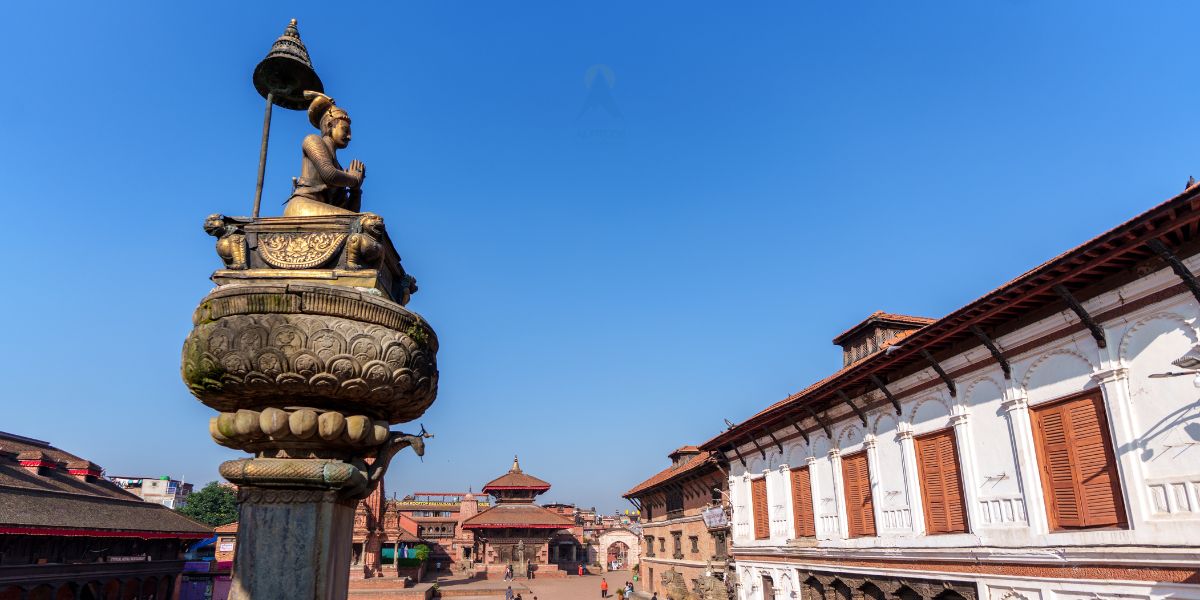
Bhaktapur was also the capital of the great united Nepal Mandala, which later on became one of the three independent states, Bhadgaon (others were: Kantipur and Patan), following King Yaksha Malla’s death in 1482 AD.
Throughout the Malla era, Bhaktapur was an important center of politics, art, heritage, and culture. Malla kings reigned over Bhaktapur for more than five centuries before the Shah dynasty took over the entire Kathmandu Valley in the 18th century.
With the Shahs on the throne, Kathmandu became the capital of modern Nepal, acquiring heavy political and administrative power, which caused Bhaktapur to lose direct ties with Tibet.
This helped Bhaktapur in preserving the agriculture, craftsmanship, medieval essence, and culture as it faced less modernization and influence in comparison to the new capital.
Understanding Bhaktapur District and Its Municipalities
Bhaktapur District is divided into four municipalities: Bhaktapur Municipality, Suryabinayak Municipality, Madhyapur Thimi Municipality, and Changunarayan Municipality. Each of these carries a number of attractions unique to one another.
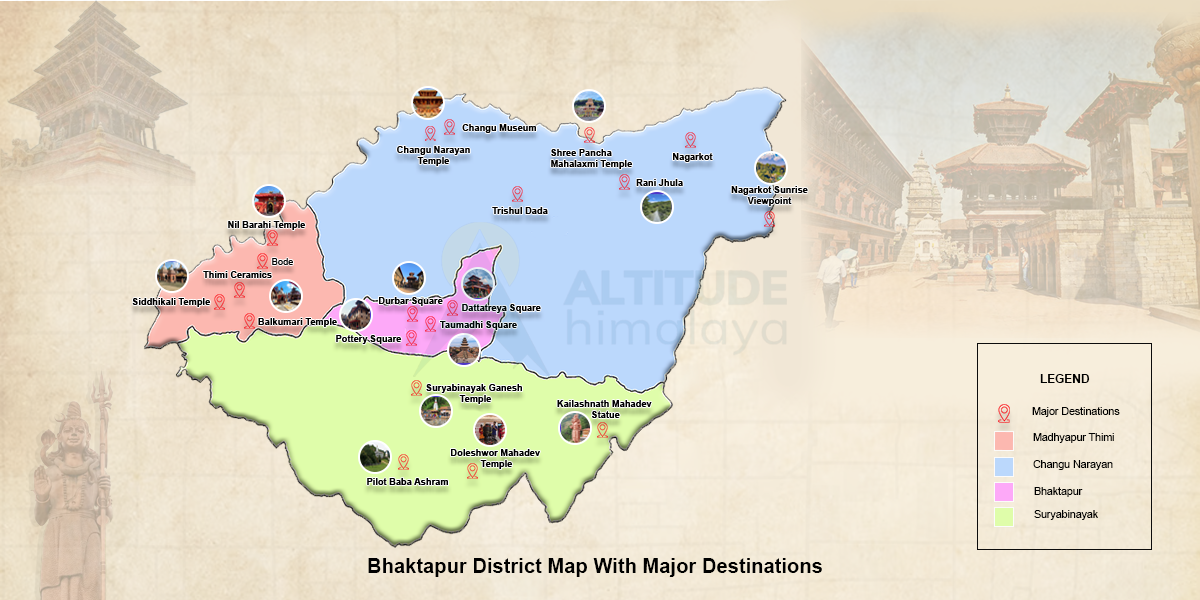
Bhaktapur Municipality
When most of the visitors say “we are going to Bhaktapur,”, this is the municipality they reach. Bhaktapur Municipality is home to the four historic squares with temples, museums, ponds, and many other attractions.
With only 6.88 sq. km of total area, the population here is 79,136 (according to the 2021 Census), with the most spoken languages being Newari and Nepali, 72.3% and 15.9%, respectively. Newars (74%) make up the majority of this municipality's population, followed by Tamangs (7.6%), Kshetris (5.5%), and Brahmins (4.1%).
The people here celebrate many festivals, among which Bisket Jatra stands out the most. It spans nine days, with each day carrying its own special importance.
Madhyapur Thimi
The pottery village of Nepal, Madhyapur Thimi (commonly known as Thimi), spans 11.47 sq. km with a population of 119,756, where Nepali and Newari are the most spoken languages, 47.5% and 30.9%, respectively. Four major ethnic groups make up the vast majority of the Madhyapur Thimi’s population: Newar (31.6%), Brahmin (22.3%), Kshetri (20.7%), and Tamang (7.7%).
Madhyapur Thimi is home to Nepal’s first commercial stoneware ceramics factory (Thimi Ceramics), founded by Santa and Laxmi Kumar Prajapati in 1985. Beyond that one factory, many areas of Thimi have local pottery centres, community kilns, etc.
Along with their unique Sindoor Jatra and Tongue Piercing Festival, Thimi offers landmarks like the twin ponds (Nigu Pukhu), Balkumari Temple, Prachanda Bhairab, and a pottery square of their own where traditional craftsmanship meets vibrant culture.
Changunarayan Municipality
Changunarayan Municipality got its name from Changu Narayan Temple, believed to be Nepal's oldest surviving temple. This is the second UNESCO World Heritage Site within Bhaktapur District.
Covering 62.98 sq. km, the population of this municipality is 88,083. The primary inhabitants here are Newar (25.8%), Kshetri (26.3%), Brahman (18.8%), and Tamang (13%), with Nepali and Newari spoken majorly (61.3% and 21.6% respectively).
The temple complex here sits on a hilltop with a stone pillar inscription that dates back to 464 AD. So, you see, anyone who is interested in tracing the Licchavi era of Nepal surely has to enlist Changunarayan on their bucket list!
Moreover, the five-day Khata Jatra festival of this municipality celebrates the transition of the season (winter to spring) with a vibrant chariot.
Suryabinayak Municipality
After the merging of four VDCs in December of 2014 and four more in March of 2017, Suryabinayak Municipality became the largest of Bhaktapur District, spanning 42.45 sq. km with a population of 140,085.
The major population of this municipality consists of Kshetri (29.1%), Newar (24.5%), Brahman (19.2%), and Tamang (12.6%), while the most spoken languages are Nepali (59.7%), Newari (21.6%), and the Tamang language (12%).
Suryabinayak Municipality features rich cultural and spiritual landmarks, where renowned sites like the Doleshwor Mahadev Temple and the 143 ft tall Kailashnath Mahadev Statue constantly attract pilgrims.
The municipality also has Suryabinayak Ganesh Temple, Pilot Baba Ashram, Ashapuri Mahadev Temple, and natural viewpoints like Ghyampe Dada and Gundu Hills that are popular among Hindu devotees and tourists.
The Four Historic Squares of Bhaktapur
Bhaktapur’s heritage core revolves around the four historic squares: Durbar Square (the former royal palace), Tuamadhi Square (heart of the city with major temples), Pottery Square (reflection of Bhaktapur’s oldest profession), and Dattatreya Square (oldest of all with rich woodcarving and museums).
Bhaktapur Durbar Square
Located at a distance of approx. 15 km from Old Bus Park of Kathmandu, Bhaktapur Durbar Square is one of Kathmandu’s 7 UNESCO World Heritage Sites.
Its centerpiece is the 55-Window Palace, a 15th-to-17th-century masterpiece of traditional Newari architecture. You’ll be transported to a different era as you gaze upon its astonishing wood carvings.
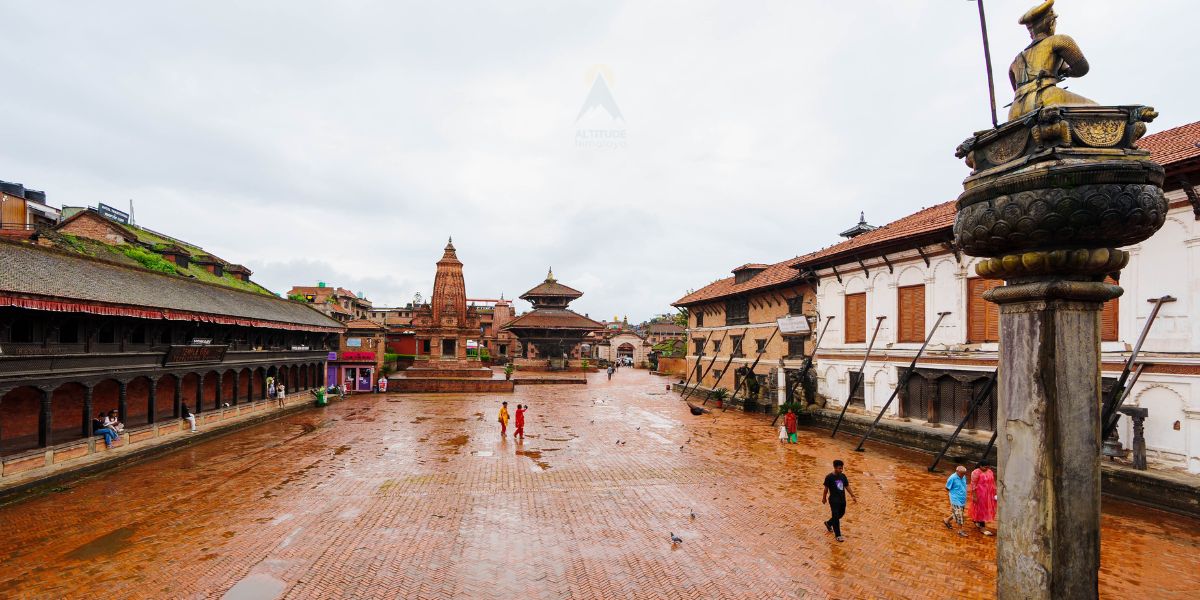
As you walk, glancing at this masterpiece, you will find yourself at the Golden Gate (made of gold-gilded copper), the entrance to the Taleju Temple Complex, built by King Ranjit Malla (the last Malla king of Bhaktapur) in 1754 AD.
Guarded by stone lions and statues of Hanumanta-Bhairava and Nar-Simha is the National Art Museum (previously, the Simhadhwaka Durbar), erected in 1697–1698 AD by King Bhupatindra Malla, later converted into a museum in 1960 AD housing thangka paintings, manuscripts, statues, murals, and sculptures.
The museum ticket here covers the Wood Carving Museum and the Brass and Bronze Museum in Dattatreya Square as well, so you don’t have to buy tickets for each museum.
Entry Fees for Bhaktapur Durbar Square
Before entering, please do not forget to buy a ticket from the counter. This ticket covers all of Bhaktapur - its four historic squares along with other accessible areas. As of 2026, the ticket prices are:
|
Visitor Category
|
Fee
|
|
SAARC & Chinese Nationals
|
NPR 500
|
|
Other Foreign Nationals
|
USD 18 (or adjacent NPR based on the day’s exchange rate)
|
|
Nepali Citizens
|
Free
|
|
Children (below 10 years)
|
Note: The ticket fee here does not include entry to museums or the professional photography/videography permit.
Taumadhi Square
Taumadhi, also known as Ta: Maari, is a significant site acting as the central place for several religious ceremonies and cultural performances such as Bhairav Naach and Navadurga Naach.
While other squares of Bhaktapur serve more like tourist destinations, this historic square is a vibrant public space where religious rituals and local festivals have continued from the historic period.
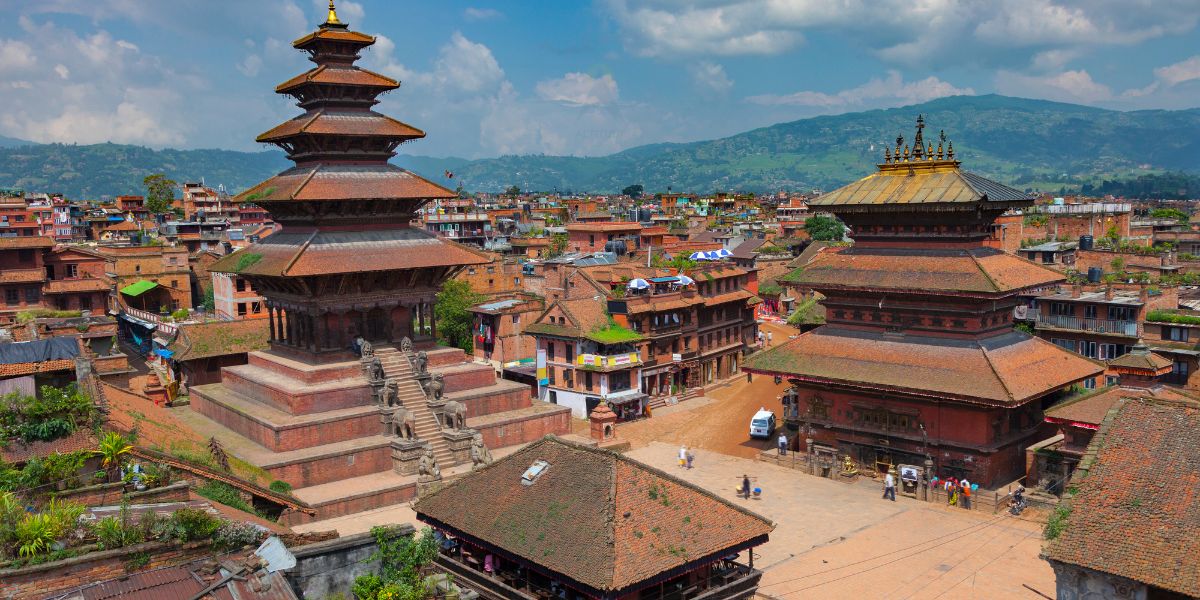
The 300+ year old Nyatapola Temple, built by King Bhupatindra Malla in 1702 AD, is the most famous landmark of this square. It is said that the king built this massive temple to calm the powerful energy of the Bhairavnath Temple next to it.
"Nyata" meaning five-storeyed and "Pola" meaning tiers, give the temple its name. Tourists are allowed to climb the temple's platform using the grand staircase with guardian statues, but the inner shrine remains closed to the public.
Neighbouring the Nyatapola Temple is the Bhairavnath Temple dedicated to Akash Bhairav, first built in the early 17th century as a single-story shrine by King Jagajyoti Malla and later expanded into its present three-story form by King Bhupatindra Malla.
The Betal Temple beside it is dedicated to Bir Betal, considered Bhairavnath's divine vehicle; this deity is tied to the front of the chariot during Bisket Jatra.
Taumadhi Square is also equally popular for the rooftop restaurants and cafes, which serve as the best points in Bhaktapur for festival viewing.
The Til Madhav Narayan Temple here dates to around 1118 AD. The name "Taumadhi" is believed to have evolved from "Tilamadhav," through "Tilam-de" and "Talamande," over the centuries.
Pottery Square
Pottery Square lies five minutes southwest of Taumadhi Square. Pottery making is believed to date back approximately around the Licchavi period and has been kept alive largely by the Newar potters of Bhaktapur.
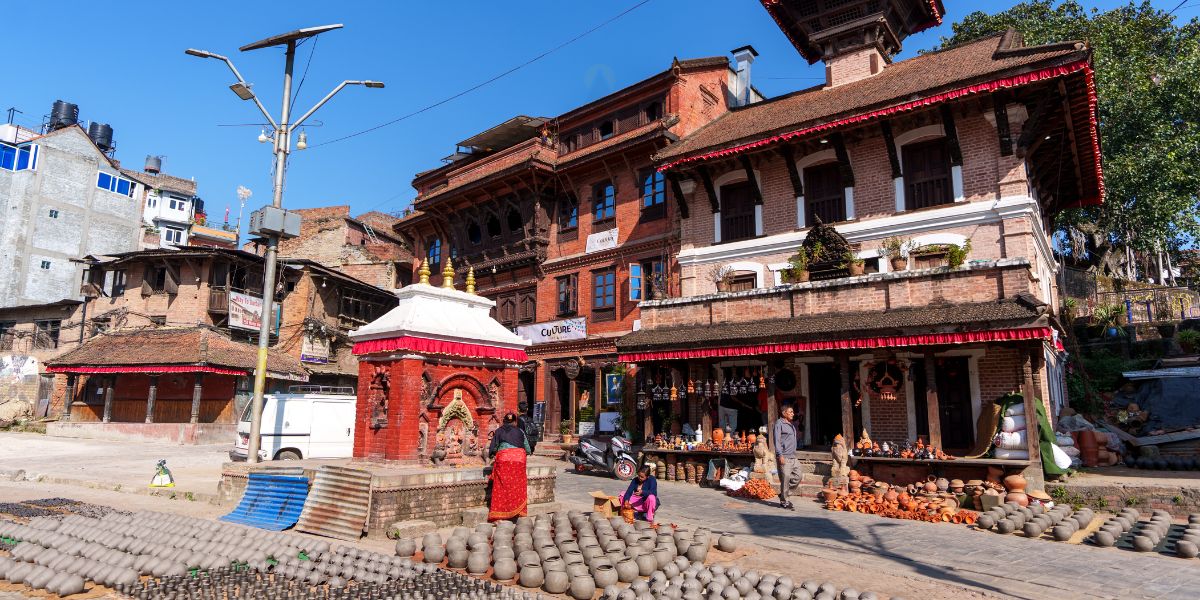
There are actually two pottery squares here; one is near Taumadhi Square, called Talako, and another is Suryamadhi, called Mathiko, lying east of Dattatreya Square. Talako is the most visited one because of its accessible location, whereas Suryamadhi is the oldest and more trade-centric.
Clay is collected, kneaded, and shaped either by hand on a potter's wheel or pressed into plaster molds, left to dry in the sun, and then fired either in kilns or using the open-air method, all right in front of your eyes!
The finished products become everyday household pots, water jars, Juju Dhau cups or diyas (clay lamps) for rituals, decorative vases, sculptures, and khutruke (money-saving containers).
Any interested individual can try pottery-making in this square. Several training centers offer courses ranging from 30 minutes to full-day or week-long courses. The cost may differ from one vendor to another and can be slightly expensive to tourists compared to Nepalese.
Here is an estimated cost list based on inquiries from several businesses:
|
Session
|
Price (depending on size, shape & difficulty)
|
|
30 minutes
|
NPR 600 to NPR 800
|
|
60 minutes
|
NPR 1,200 to NPR 1,500
|
|
Longer Sessions
|
Price Negotiable
|
|
Additional charge to bake your piece
|
NPR 500 to NPR 1,000 (depending on the size)
|
Besides pottery, the square has Thangka schools and ancient temples, including the two-story Jetha Ganesh Temple (1646 AD) and Gorakhnath Temple.
Dattatreya Square
Dattatreya Square is the oldest square of the four and was once a commercial hub. Dedicated to Lord Dattatreya, a combined embodiment of Brahma, Vishnu, and Shiva, King Yaksha Malla built a sattal (public rest house) in this square, which, over time, was transformed into the Dattatreya Temple.
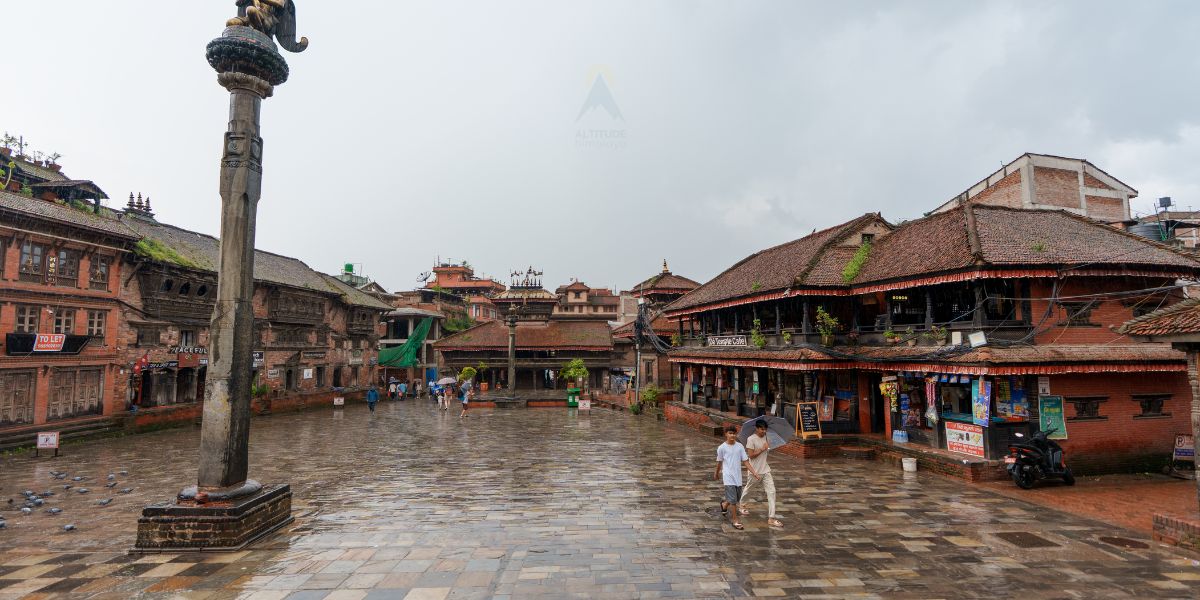
This pagoda-style temple with three stories is said to have been carved from the timber of a single tree. The struts here have dense woodcarvings and erotic carvings that represent the cycle of life and the necessity of reproduction.
The same figures found guarding Nyatapola Temple, Jaimal Rathore and Patta Sisodia, believed to have strength equal to 10 ordinary men, stand at this temple's entrance as well.
Other major attractions from this square are the Bhimsen Temple, Woodcarving Museum, and Brass and Bronze Museum. The Woodcarving Museum here displays masterworks like Mara Vijaya and Viswarup, whereas the Brass and Bronze Museum has preserved metalware and religious objects from the early 20th century.
The Peacock Window, often called the Mona Lisa of Nepal from the 15th century, and a private paper factory making traditional papers are other inseparable attractions of this square.
Major Temples in Bhaktapur
Bhaktapur's religious life isn’t limited to the four squares. The four municipalities of Bhaktapur are full of temples and shrines, each presenting a significant tie to our roots and drawing devotees from across Nepal and foreign lands.
Changu Narayan Temple
Changu Narayan is one of the four major Narayans of Kathmandu Valley, others being Ichhangu Narayan, Bisankhu Narayan, and Shesh Narayan. Though the temple's founding is traced to the 4th century, the current temple structure dates to 1702 AD after its reconstruction following the major fire that destroyed the original.
Reaching the temple involves a short uphill walk from the parking area, lined with stores selling ceremonial items, handicrafts, and thangkas.
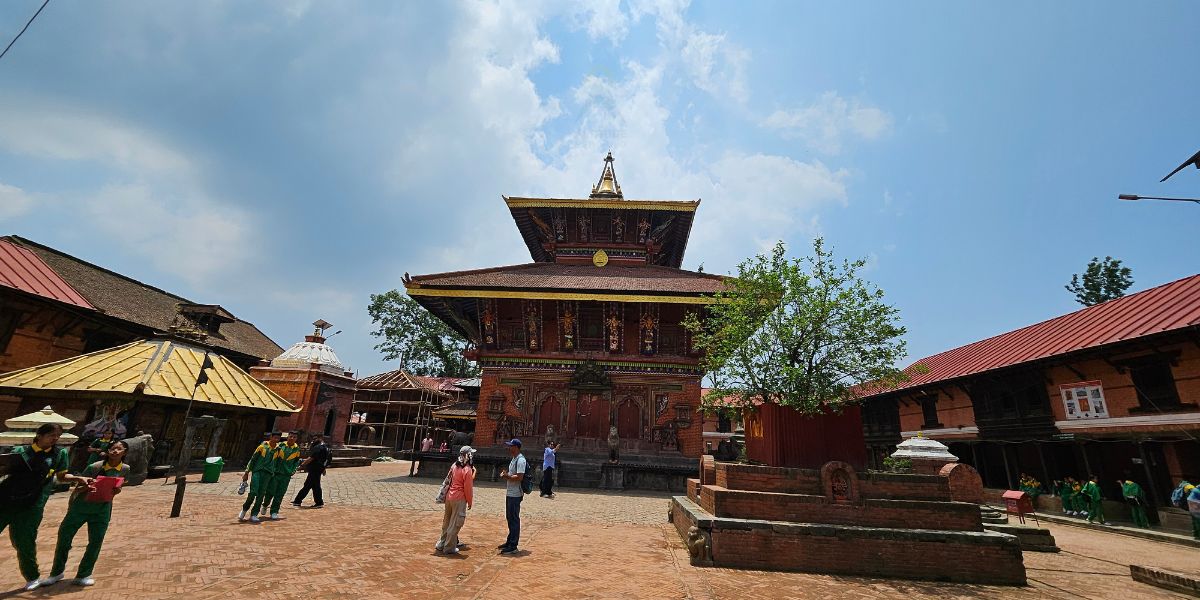
Changu Narayan Temple is filled with legends and intriguing stories, such as the unfinished Elephant Statue, painting of Mata Chinnamasta in the act of beheading herself, and many more!
Also, there’s a stone pillar inscription erected by Licchavi King Mandeva I in 464 AD, recording his military victories and devotion to Vishnu.
The complex also includes the Kileshwor Temple, Chinnamasta Temple, Vishnu Vishwarupa Sculpture, Changu Museum, Living Tradition Museum, and a rare human-faced Garuda statue said to bear the likeness of King Mandeva I.
Other attractions of the temple complex are the statue of King Bhupalendra Malla and his queen facing the main temple and several other Vishnu idols from the 7th to 16th centuries.
Entry Fee for Changu Narayan Temple
In order to support local community management, fund essential site preservation, and cover daily operational maintenance, Changu Narayan Temple requests that international visitors purchase an entry ticket. Here are the details:
|
Nationality
|
Entry Fee
|
|
Foreign Nationals
|
NPR 400
|
|
SAARC Nationals
|
NPR 300
|
|
Nepali Citizens
|
Free
|
The temple premises are open from 7:00 AM to 7:00 PM in summer and 7:00 AM to 5:30 PM in winter.
Note: For Nepalese, the temple opens from 4:00 in the morning.
Nyatapola Temple
Nyatapola is Bhaktapur's tallest and most photographed temple, raised by King Bhupatindra Malla in 1702 AD to honor Siddhi Lakshmi (a tantric form of the goddess Durga).
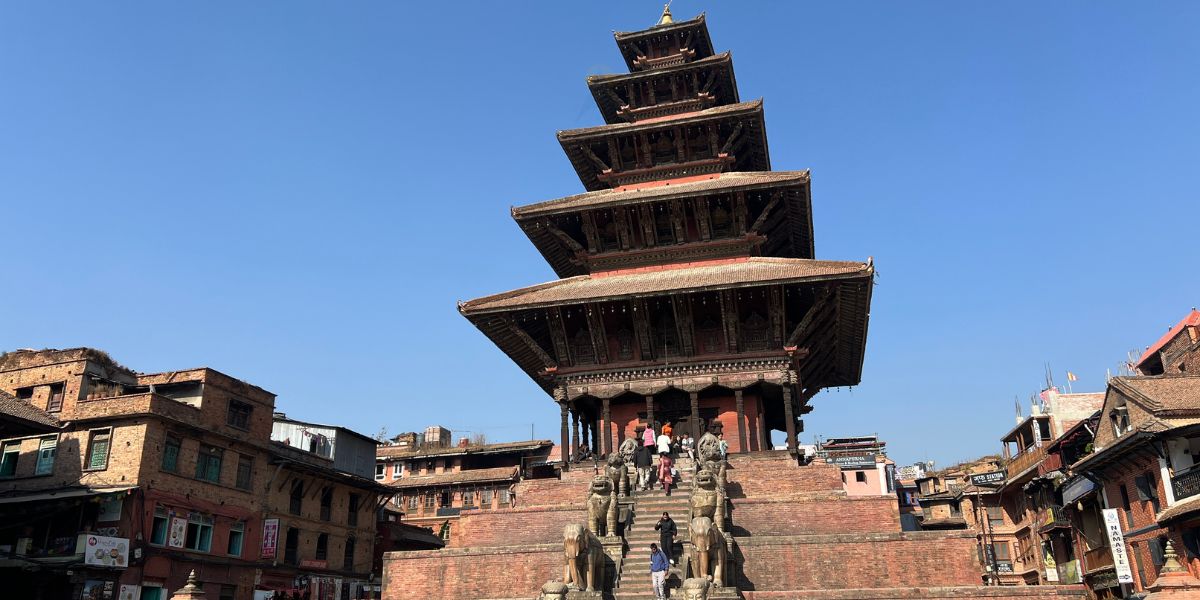
Some legends claim this five-story tall temple was built to calm the power and energy of Akash Bhairav from Bhairavnath Temple standing beside it. The staircase lines five pairs of statues to guard the deity and this temple from harmful powers!
Bhairavnath Temple
Bhairavnath Temple stands beside Nyatapola in Taumadhi Square, honoring Akash Bhairav (the fierce form of Shiva), the guardian deity of the city. When erected in the early 17th century by King Jagajyoti Malla, the temple was just a single-storied shrine.
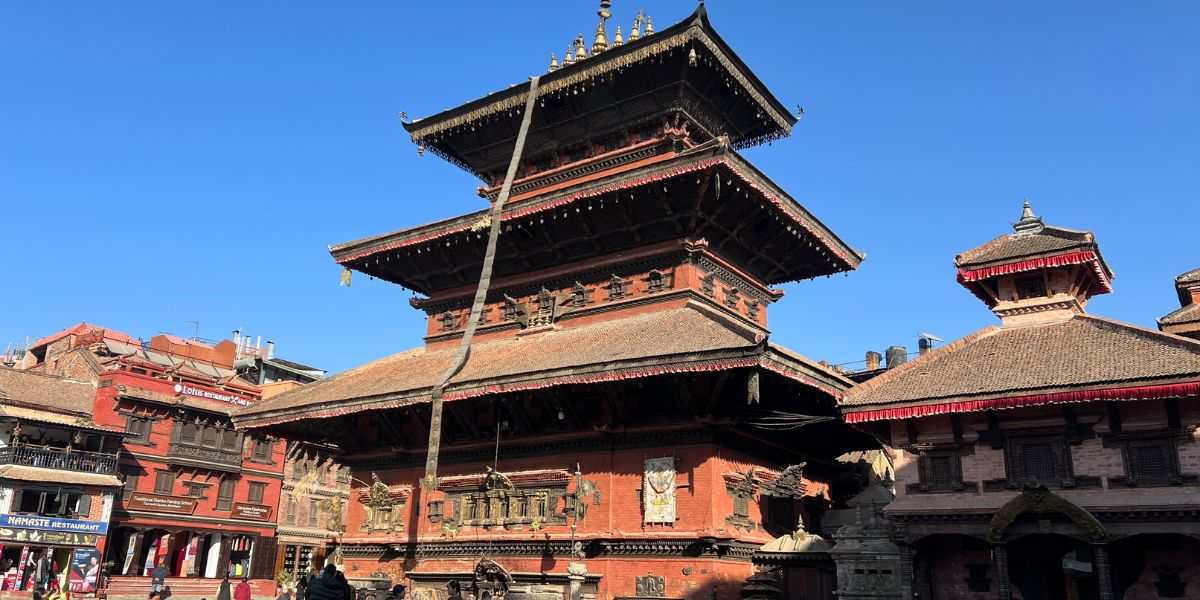
It grew into today's three-tiered pagoda temple under King Bhupatindra Malla’s rule, featuring gold-plated roofs and carved struts overlooking the Taumadhi Square.
Every year, Bisket Jatra begins with Dya Kwaha Bijyagu puja in the morning from Bhairavnath Temple itself!
The chariot of Bhairav for this festival is built from scratch, following centuries-old instructions. It is three-story tall just like Bhairavnath Temple, and its wheels are even dedicated to distinct manifestations of Bhairav (Harisiddhi Bhairav, Tika Bhairav, Lubhu Bhairav, and Kundi Bhairav).
The festival witnesses a tug-of-war of the chariot between the upper (Thane) and lower (Kwone) neighbourhoods on the first day, which is indeed one of the best times to visit Bhaktapur.
Betal Temple
Tucked directly behind Bhairavnath Temple, the small Betal Temple honors Bir Betal. He is worshipped as Bhairavnath's vahana (divine escort).
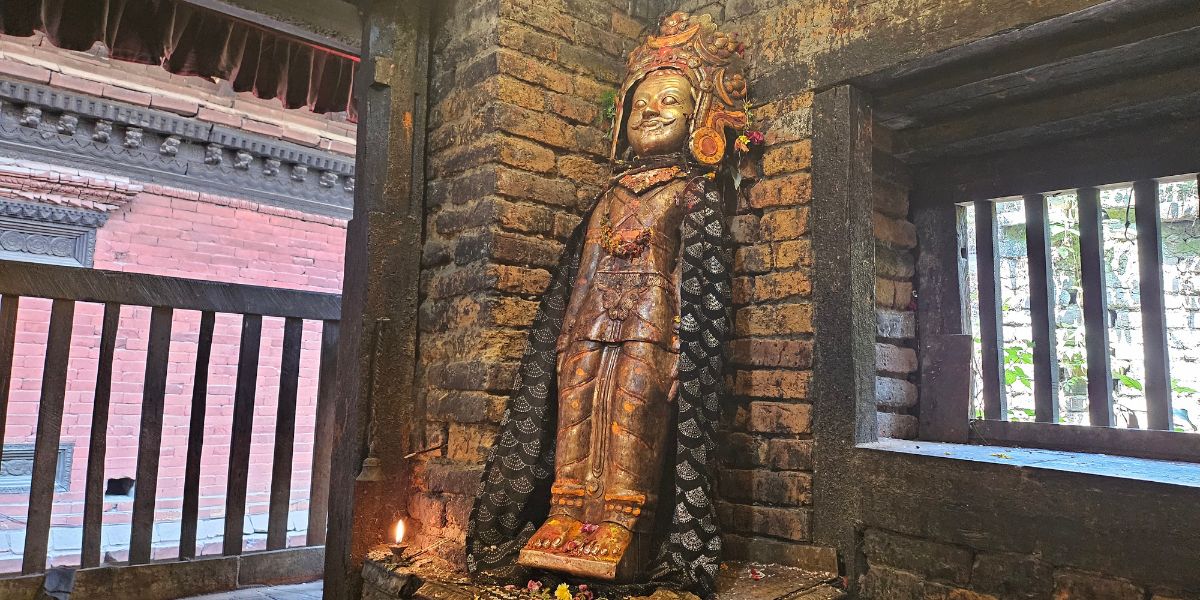
While this shrine might look modest next to the grand temples around it, it actually holds a massive place in the city’s heart and ritual celebrations.
Betal is always placed on the front of Bhairav's chariot at the start of Bisket Jatra, leading the massive chariot through Bhaktapur’s narrow lanes.
Til Madhav Narayan Temple
One of the oldest structures in Taumadhi Square, Til Madhav Narayan Temple, dates back to around 1118 AD. Locals believe the square's name evolved from this temple's original name, Tilamadhav to later Tilam-de, Talamande, and finally Taumadhi.
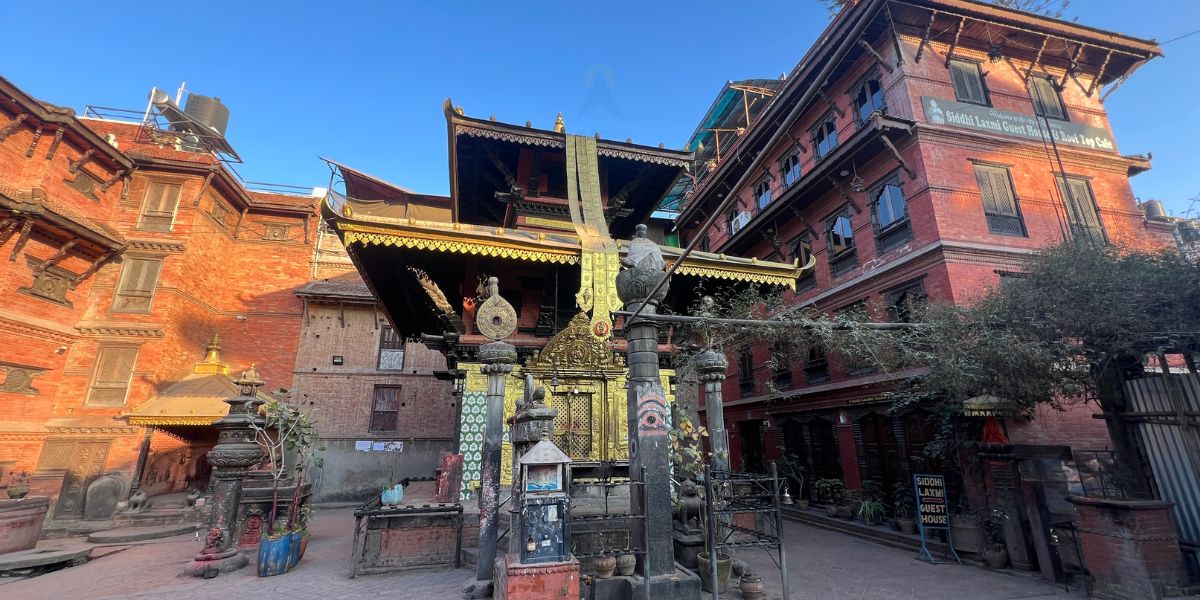
The temple is dedicated to Lord Vishnu with a kneeling Garuda statue on a pillar in front of it. This temple draws a huge number of devotees during Madhav Narayan Festival, which is celebrated from Poush Shukla Purnima to Magh Shukla Purnima.
Til Madhav Narayan’s statue is presented to worshippers only on Magh 4, three days after the Maghe Sankranti festival. The rest of the year, no one is permitted to visit his shrine or see him!
Dattatreya Temple
This mandala-style temple is one of the very few shrines devoted to Dattatreya in Nepal, a combined form of Lord Shiva, Lord Vishnu, and Lord Brahma. The deity here represents the three main jobs of the universe: creation, preservation, and destruction, teaching the continuous, natural cosmic cycle.
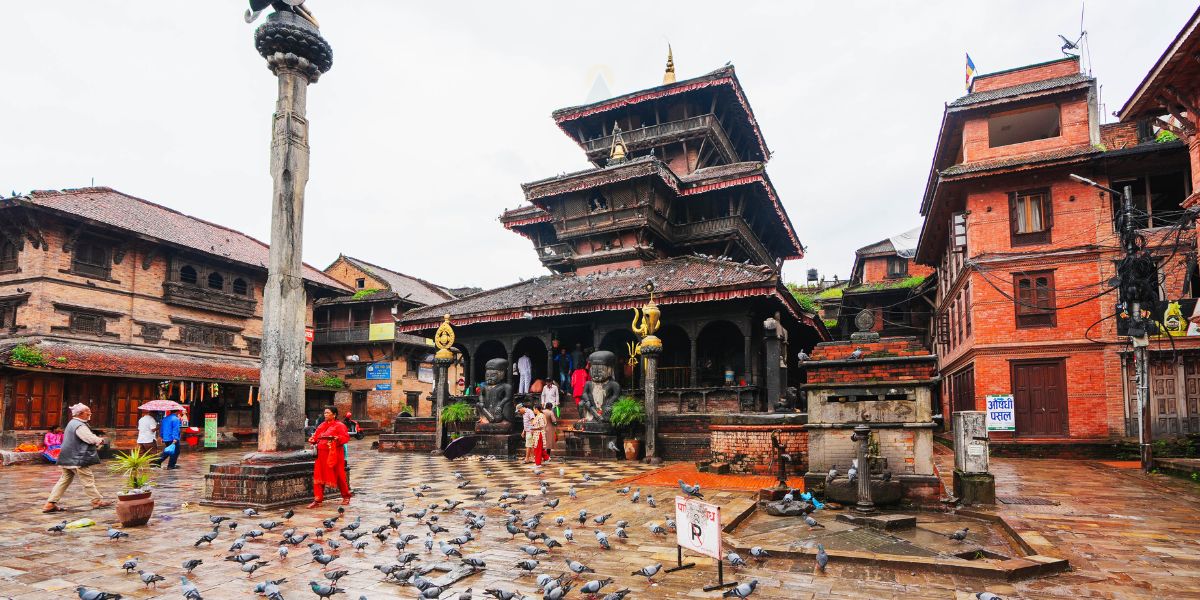
The King of Great Nepal Mandala, King Yakhsa Malla, is considered to be the erector of this temple as a single-storied shrine. It was later remodeled by his son King Raya Malla, who made the temple more attractive by adding stories.
If you look closely, there’s an intriguing carving of a man holding a guitar-like instrument, which makes you wonder, how’s that even possible?
While the symbols surrounding the temple, like garuda, chakra, and conch, suggest a primary focus on Lord Vishnu, festivals and rituals dedicated to Lord Shiva seem to attract more devotees.
Bal Kumari Temple
Bal Kumari Temple of Kwalakhu Tole in Madhyapur Thimi was built in the 17th century and is home to one of the four Kumaris of Kathmandu Valley.
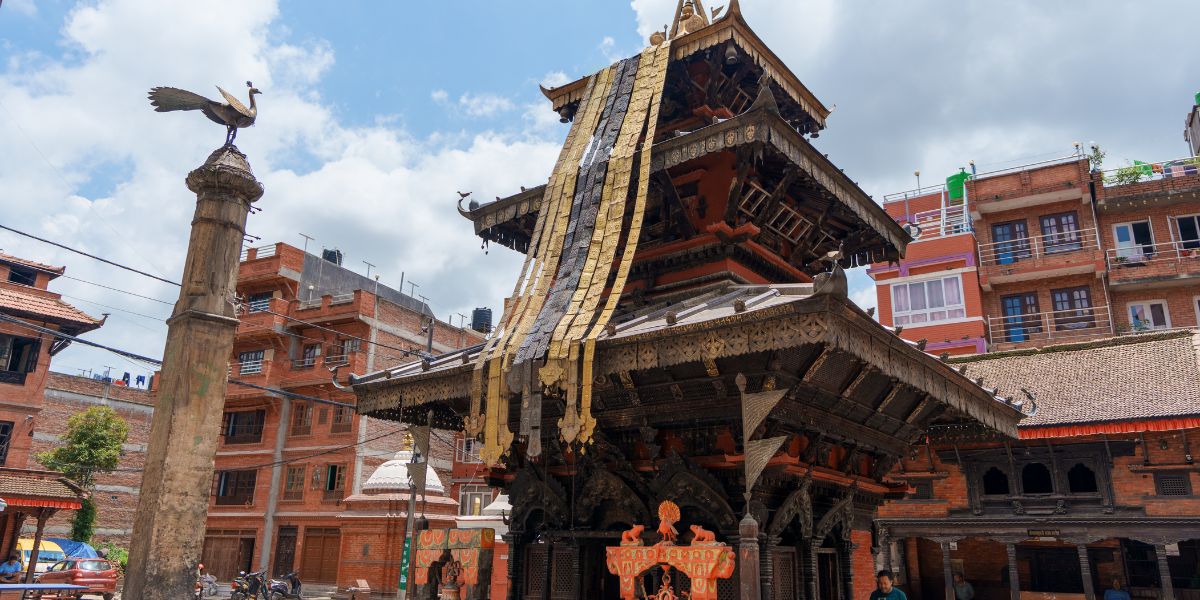
The three-storey temple has gold-coated copper plate roofs, and there’s also a peacock (Bal Kumari's divine vehicle) mounted on a pillar in front. All of these make this temple one of Thimi's most recognisable landmarks!
The temple hosts Sindoor Jatra, the vermilion-throwing festival of Madhyapur Thimi, where the goddess's chariot is pulled towards Prachanda Bhairab, with traditionally 32 (but these days, only 27-28) palanquins converging on the town.
Suryabinayak Ganesh Temple
Approximately 3 km from Bhaktapur Durbar Square, Suryabinayak Ganesh Temple is considered the elder deity amongst the four Binayak (Ganesh) Temples of Kathmandu Valley. The temple is in the jungles of Suryabinayak with a staircase to ascend.
As you ascend the stairs, you’ll notice temples of different deities till you reach the entrance of the main temple. It has a pataka coming down and statues of Suryabinayak, Shivalinga, Malla Kings, and Musak (mount of Lord Ganesh) on its premises.
Another temple near Suryabinayak is the Temple of Mother Goddess, Parvati (dedicated to Lord Ganesh’s mother). A myth follows this one saying: a voiceless child will start speaking when closed alone inside the temple, but the catch is that it must cry!
One of the temple’s major attractions is the Suryabinayak Ganesh Jatra, a historic procession of Lord Ganesh on the day of Ganesh Chaturthi (late August/mid September).
The chariot for this procession holds a silver idol of Lord Ganesh and progresses through the neighbourhoods with Dhime-Baja, Bhusya, and Dha: Baja (traditional musical instruments).
After 5 decades of hiatus, this iconic festival was revived in 2025 and is now expected to continue as a regular annual tradition.
Doleshwor Mahadev Temple
About 5 to 6 km from Bhaktapur Durbar Square in Sipadol of Suryabinayak Municipality is the Doleshwor Mahadev Temple, believed to be the head of Lord Kedarnath.
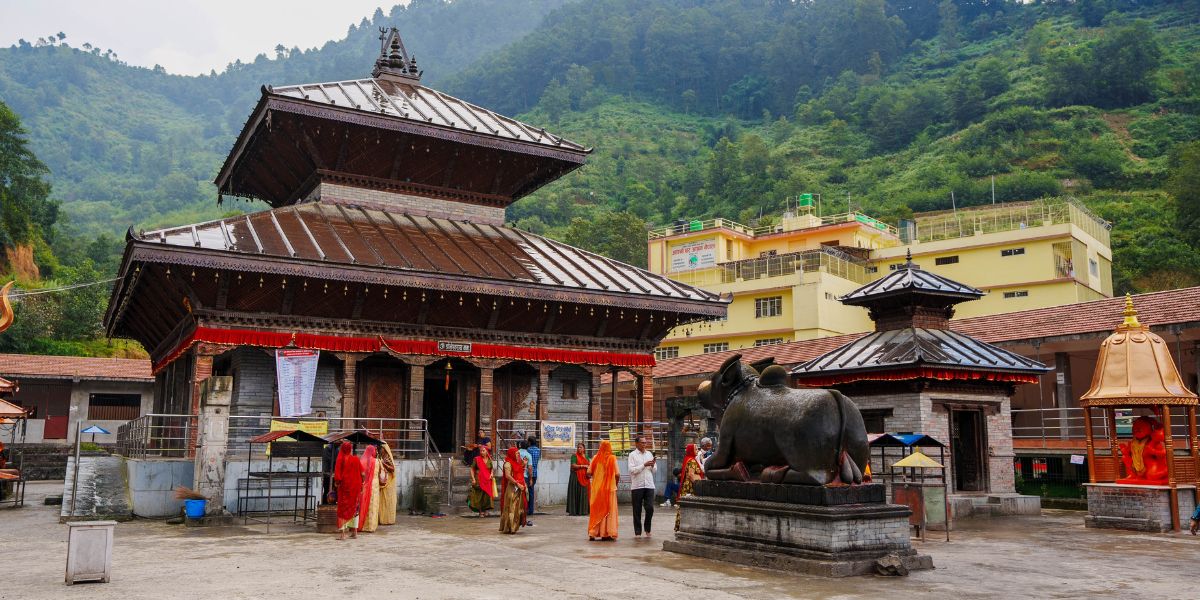
A legend follows Pandavas, seeking forgiveness from Lord Shiva for the deaths after the Mahabharata war. Lord Shiva didn’t want to see them, so he disguised himself as a bull, but the Pandavas found him and caught him by his tail, which led the bull’s body to break apart.
While the body emerged at Kedarnath in Uttarakhand, the head reappeared here in Sipadol.
On August 22, 2009, the head priest of Kedarnath confirmed this link when performing a Rudra Abhishek at the temple.
Showing this strong tie, many Hindu pilgrims believe the Char Dham Yatra is incomplete without visiting Pashupatinath and Doleshwor Mahadev Temple.
Kailashnath Mahadev Statue
World's second-tallest Shiva statue at 143 feet (43.5 m), built from copper, zinc, concrete, and steel, the Kailashnath Mahadev Statue depicts Lord Shiva in a blessing mudra, with a trident and damaru in his left hand, garland of serpent Vasuki, accompanied by Nandi’s statue, and encircled by 12 Shiva lingams.
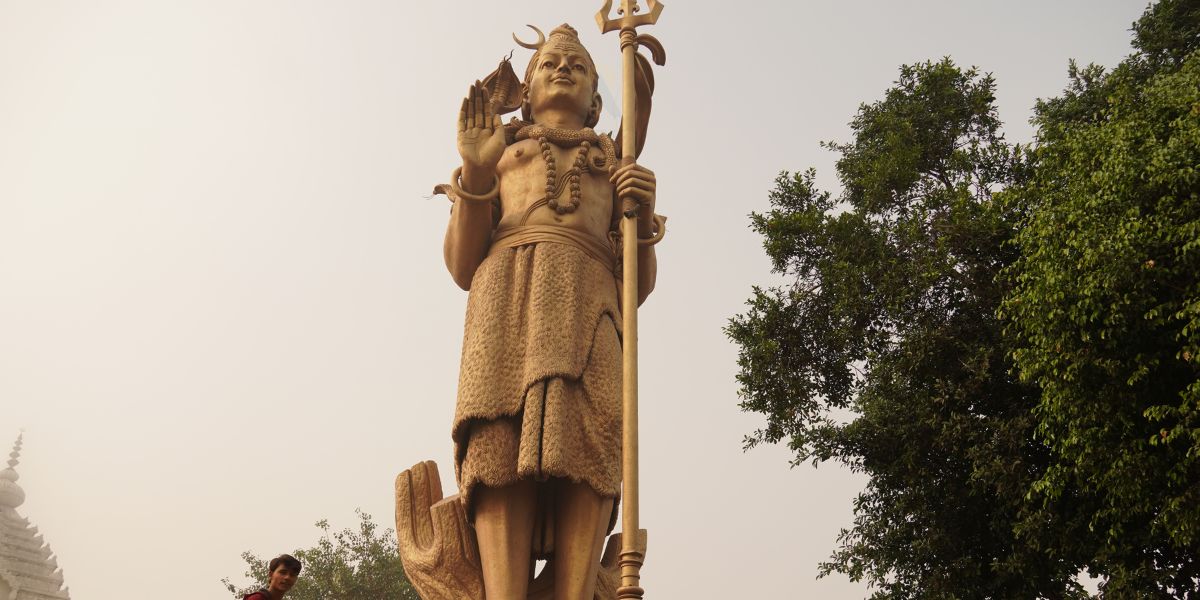
The site stands at the edge of Suryabinayak Municipality, approximately 8 to 10 km from the Bhaktapur Heritage Site, and draws huge crowds of devotees during Maha Shivaratri and Teej festivals.
Ashapuri Mahadev Temple
At a distance of about 6 to 7 km from Doleshwor Mahadev Temple in the southeast direction lies Ashapuri Mahadev Temple. This temple of Lord Shiva (Mahadev) has two small springs nearby whose sounds can be heard from the temple premises!
Before entering the temple, there are sources of water streams where devotees purify themselves prior to offering prayers to Lord Shiva.
Other Important Temples
Bhaktapur holds lots of crucial temples in its vibrant alleys and old towns, all holding significant values that cannot be ignored; some of the most important ones are:
- Nrtya Vatsala Devi Temple, Durbar Square
- Siddhi Vatsala Temple, Durbar Square
- The Char Dham replica temples (Jagannath, Badrinath, Rameshwor, and Kedarnath), Durbar Square
- Sweta Bhairav, Bolachhen Tole
- Kumari Temple, Kwachhe Tole
- Jetha Ganesha Temple, Pottery Square
- Bhadrakali Temple, Yoshin Khel
Museums in Bhaktapur
Bhaktapur district’s museums aren’t limited to the ones concentrated mainly in Durbar Square and Dattatreya Square. Throughout its 4 municipalities, there are a number of lesser-known museums that are equally worth your visit.
While Bhaktapur Durbar Square itself feels like an open-air museum, the museums here are dedicated to offering a deeper insight into Nepal’s rich history and heritage, showcasing collections of ancient artifacts and historic craftsmanship.
National Art Museum
Exhibiting art and artifacts from the Licchavi period (regarded as the golden age of Nepal) and the medieval Malla era, National Art Museum was converted to a museum in 1960 as the National Art Gallery from the Simha Dhwoka Durbar.
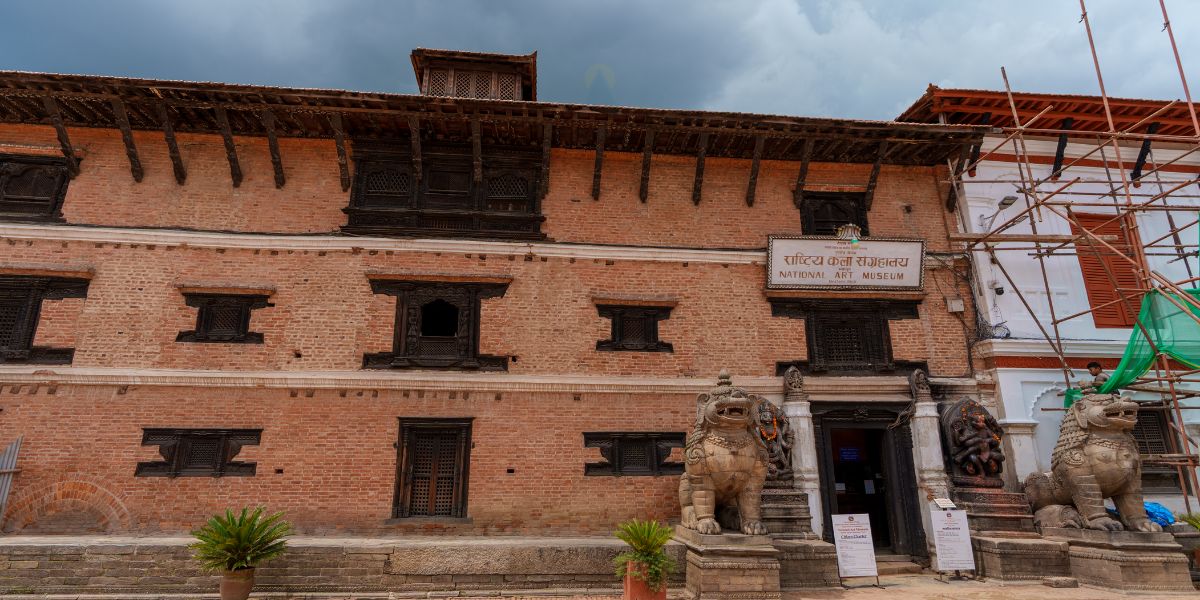
Right at the museum’s entrance, you’ll find two stone lions guarding the doorway, followed by 17th-century stone sculptures of Hanumanta-Bhairav and Narasimha.
The museum is divided into four different sections: Stone Art, Paubha Painting, Manuscript, and Metal Sculpture.
Some of the major pieces from those sections are:
|
Section
|
Major Pieces
|
|
Stone Art Section
|
- A four-faced Shivalinga
- Sculptures of Hindu and Buddhist deities
- A stone idol of Harishankhar (the hybrid form of Shiva and Vishnu)
|
|
Paubha Painting Section
|
- Paintings of Hindu and Buddhist deities
- Erotic paintings of gods and goddesses
- Paintings from the medieval period
- Tantric paintings
- Classical paintings from Krishna Leela and Madhukaitav Badha.
|
|
Manuscript Section
|
- Palm-leaf and handmade paper manuscripts
- Hindu and Buddhist scriptures
- 11th-century Vishnu Dasavatara manuscripts
- 13th-century manuscripts of Shiva Dharma Purana
- Historical chronicles
|
|
Metal Sculpture Section
|
- Thajya models
- Brass, bronze, and copper sculptures
- Jewelry, crowns, and symbolic regalia
|
The entry fee for this museum is something like this:
|
Visitors
|
Fee
|
|
Foreign Nationals
|
NPR 150
|
|
SAARC Nationals
|
NPR 50
|
|
Nepali Citizens
|
NPR 25
|
|
NPR 10 (for students)
|
Note: A National Art Museum ticket covers all three of the main heritage zone museums.
Likewise, the photography and videography fees are as follows:
|
Visitor Category
|
Photography Fee
|
Videography Fee
|
|
Nepali Citizens
|
NPR 50
|
NPR 100
|
|
SAARC Nationals
|
NPR 75
|
NPR 150
|
|
Foreign Nationals
|
NPR 100
|
NPR 200
|
Notes:
- The museum stays closed twice a week (Tuesday & Wednesday).
- Ticket counters operate from 9:15 AM to 4:30 PM during the summer and from 9:30 AM to 3:30 PM during the winter.
Wood Carving Museum
Located south of Dattatreya Temple is a four-floored museum displaying some of the valley's best wood sculptures.
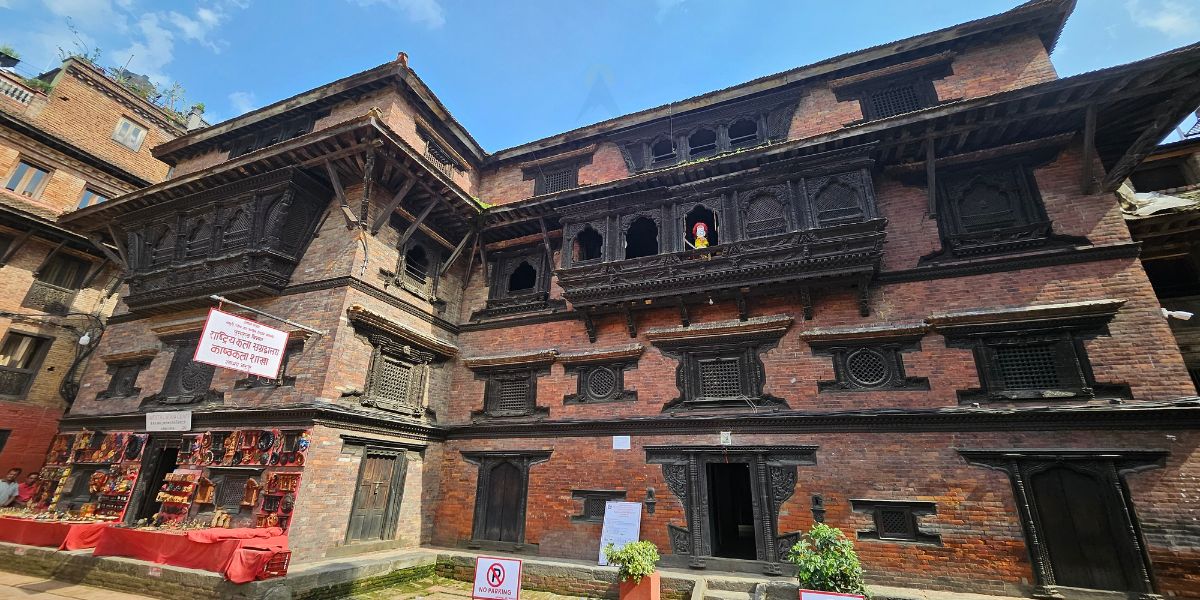
The Wood Carving Museum here was a priest’s residence (Pujari Math), believed to be from the 15th century, which was rebuilt in 1763 AD with royal support and then renovated by German experts as a wedding gift for King Birendra in 1970 AD.
This museum focuses on showcasing wooden sculptures, struts, pillars, and carved structures created by Newa artisans, which also include masterworks like The Puppet of the Pujari, Mara Vijaya, Pooja Devi, Viswarup, Aaryadevi, statues of Bhairav and Shakti, and the 15th century Peacock Window.
Brass and Bronze Museum
You will find the Brass and Bronze Museum just opposite the Wood Carving Museum in the same Dattatreya Square. This museum holds centuries-old pots, utensils, lamps, ritual objects, sculptures, and antique copper coins made using brass and bronze.
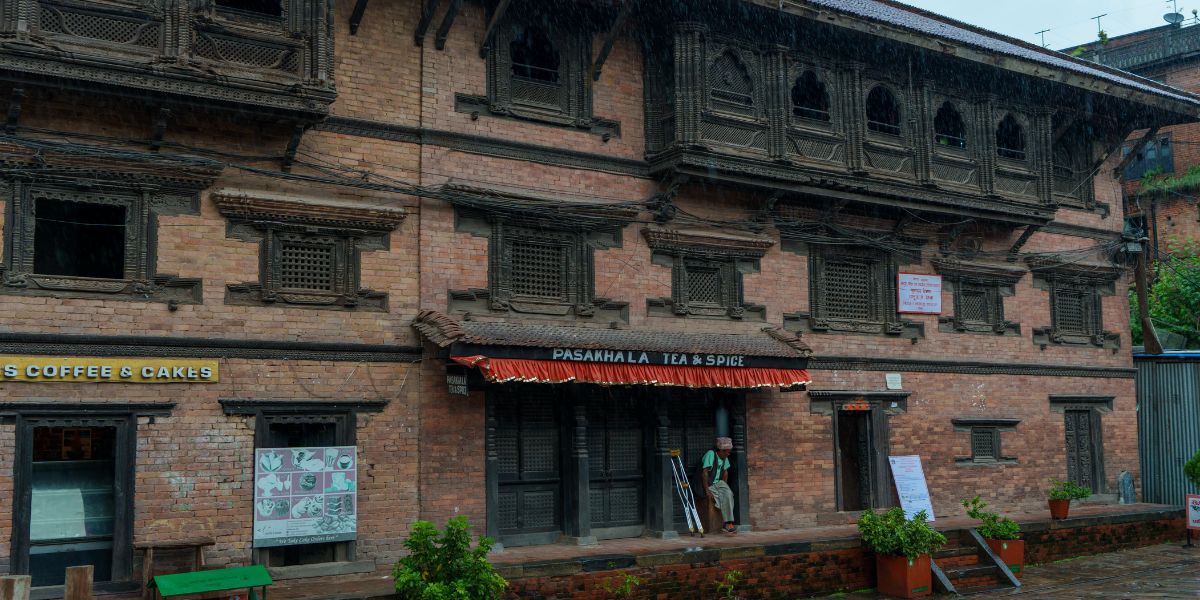
Metalware once used by Bhaktapur's kings and nobility is also displayed in this museum.
The museum itself is in the historic Chikanappa Matha, an ancient priest's residence constructed from dachi appa bricks and stones. The conversion of the Chikanappa Matha into the Brass and Bronze Museum occurred with its reconstruction in 1985 AD, led by the Bhaktapur Development Project.
Changu Museum
Changu Museum is a three-floored private museum founded by Mr. Baishnav Raj Shrestha in 2000 AD when he noticed Changu Narayan Temple visitors searching for other things to check out.
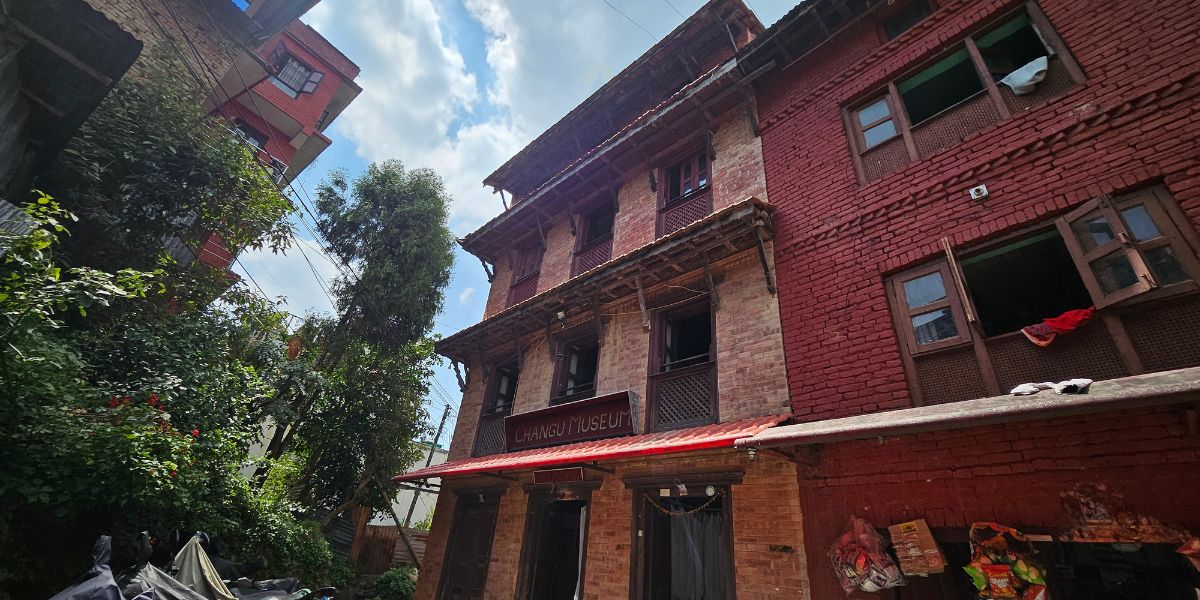
It is about 60 meters away from the Changu Narayan Temple courtyard, showcasing traditional Newar household objects, weapons and military objects, coin and note collections, etc.
The museum also holds paintings, measuring devices, traditional musical instruments, and stories of King Mandeva along with other rulers connected to the temple.
Changu Museum is open every day from 7 AM to 6 PM, with its own entry fee:
- Foreign nationals: NPR 300 (both SAARC and non-SAARC nationals)
- Nepali nationals: NPR 100
Living Traditions Museum
South of the main Changu Narayan Temple complex is the Living Traditions Museum, founded by Judith Conant Chase.
Unlike most foreigners visiting Nepal, Judith focused on ordinary households and the objects inside them rather than just treks and expeditions of Nepal.
She envisioned creating a public collection on Nepal’s living traditions before they disappeared or became unrecognizable. Her journey of collection began from a large woven bamboo umbrella, which she picked up from her trek in Ghandruk village.
The museum is divided into two sections:
- Gallery 1: Contains a collection of cultural objects and everyday things from all over Nepal.
- Gallery 2: Holds the mythology, history, and world heritage sites related to the Changunarayan Temple Complex.
Note: The museum encourages visitors to contribute objects of their own. So, if you have a significant item worth adding, the museum is open to that kind of contribution!
The Peacock Shop (and Paper Factory)
Mr. Ram Narayan Prajapati founded this shop in 1987 AD to create a place where people could learn about old Nepali culture and traditions.
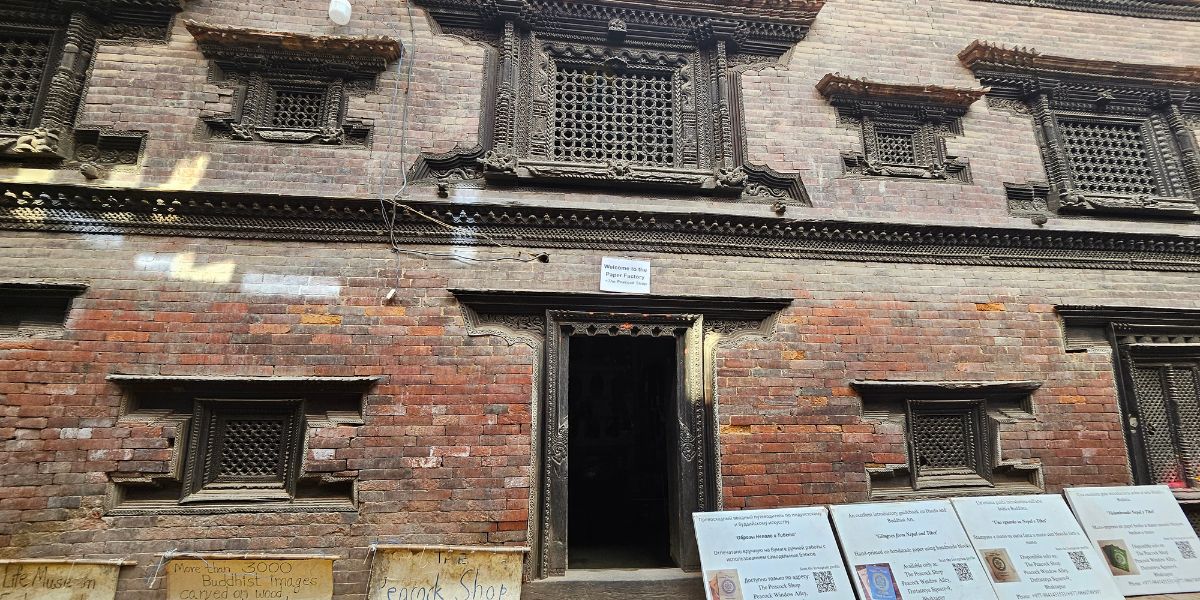
He started this shop with only 21 wooden figures, but the collection has grown significantly at present, so much that he opened a small private museum.
The museum showcases wooden sculptures, crafts, figurines, brass and bronze utensils, and many other ancient masterpieces, some dating back to the 14th-16th centuries too.
When in this shop, you’ll have the opportunity to watch the production process of Lokta paper (a traditional, eco-friendly handmade paper from Nepal) as well.
Note: There is no entry fee or any sort of permit requirement to enter this museum.
Akha Chhen
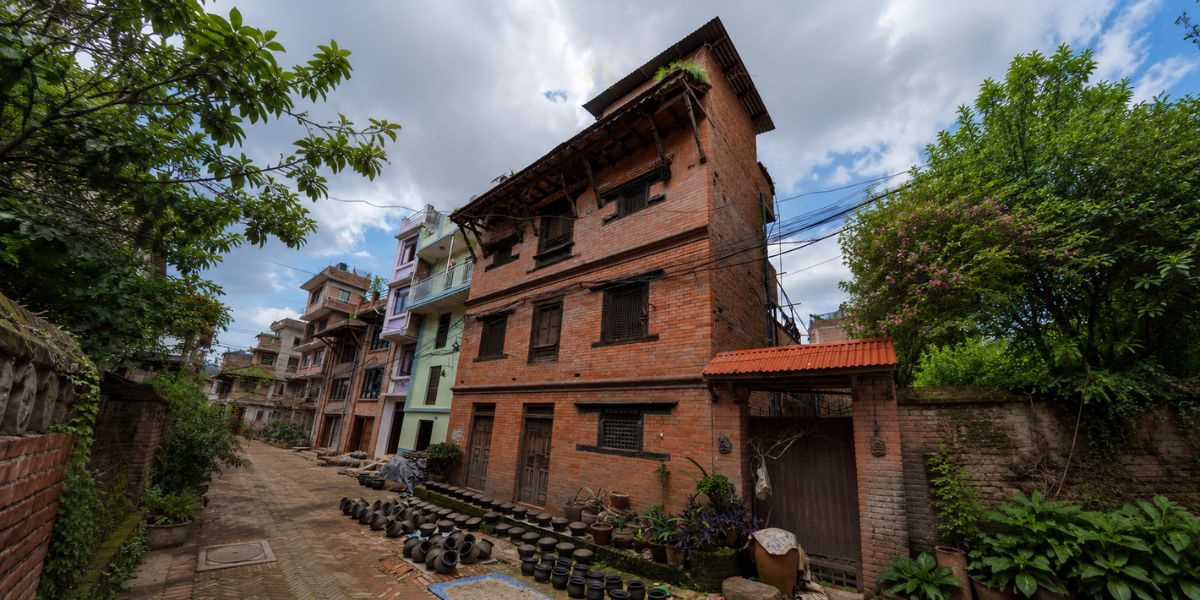
Located in Madhyapur Thimi, Akha Chen is a non-profit cultural museum with a collection of more than 100 types of traditional musical instruments, photos, traditional masks, costumes, traditional household utensils, terracotta sculptures, wood carvings, hand woven clothes, and many more.
Annapurna Art Gallery
Radhe Radhe (next stop after Thimi) of Madhapur Thimi, holds an art gallery with modern, traditional, and contemporary arts that reflect our heritage. This is a collective exhibition where creativity, emotion, and artistic expression come together.
This Art Gallery bridges artistic talent with collectors and enthusiasts worldwide, ensuring art is seen, valued, and celebrated.
Interactive 3D Art Museum
This is Nepal’s first Interactive 3D Trick-Art Museum. It’s a fun, modern attraction perfect for families, kids, and photo enthusiasts. The location is 3rd Floor, Prajapati Complex, Radhe Radhe, Madhyapur Thimi, Bhaktapur.
Traditional Newari Towns and Villages
Beyond the heritage core, Bhaktapur District is made up of smaller Newari towns and villages with their own crafts, temples, and festival traditions, untouched by the visitors of the main heritage spots.
These are the places worth visiting if you have more than a single day to spend in Bhaktapur:
Bode
Bode is a traditional town within Madhyapur Thimi Municipality that has deep-rooted Newari traditions. This town is the home to one of the four Mahalaxmis of the valley as well as Bode Kumari Temple, with unique erotic wood struts.
Kamalpokhari (Lotus Pond) of Bode is completely covered with lotus flowers in their peak season, attracting locals for morning and evening walks around it.
Another notable attraction here, the tongue-piercing festival, is a part of the Bisket Jatra. On the second day of Baisakh, a volunteer from the Shrestha lineage pierces their tongue with an iron spike.
They then spend the day walking through the village in complete silence while carrying a bamboo rack of flaming torches, believing the act will protect calamities.
Nagadesh
If you are looking for a quiet spot to sit down while enjoying ancient temples, agricultural fields, and Buddhist Vihar, then Nagadesh is your go-to town in Bhaktapur.
This quiet place becomes active with crowds during Bisket Jatra when the palanquin bearing Ganesh has crowds trying to catch it before it departs.
Nagadesh is known for its ancient temples, traditional agricultural fields, and the Nagadesh Buddhist Bihar.
Balkot
Balkot is a culturally rich neighbourhood, blending traditional Newari heritage with green spaces, open roads, and local temples for devotees. It is a perfect example of “a sanctuary in the city.”
The residents here actively participate in major Bhaktapur festivals, most notably Biska Jatra (Bisket Jatra).
Sipadol
Close to Suryabinayak Chowk, Sipadol is a rapidly developing area in this municipality. Doleshwor Mahadev Temple of Bhaktapur (also known as the Head of Lord Kedarnath) is the main attraction here.
The festivals and celebrations here combine regional Newar traditions with Hindu pilgrimages.
Other Traditional Settlements
Besides these touristic spots, you’ll stumble upon a handful of settlements that rarely make it into guidebooks, places where daily life sets the pace.
- Duwakot is part farmland, part fast-expanding settlement on the valley’s edge. It makes for a quiet, unhurried stop in Changunarayan Municipality. You might not see historical monuments here, but you’ll experience the way of ordinary valley life.
- Jhaukhel is one of the older settlements in Bhaktapur district, right next to Duwakot. The brick lanes and sunken courtyards here move at a slow, seasonal rhythm, which is a good reminder that Bhaktapur is not limited to its temples.
- Located in Suryabinayak Municipality, Dadhikot is the best location if you want to see Bhaktapur the way locals actually experience it. Dadhikot is known for its Charkhandi and Bindhabasini temples, but the weekly haat bazaar (open-air market) here is what draws the biggest crowd!
- Just beyond Thimi Chowk on the road into Bhaktapur is a busy residential pocket of Radhe Radhe, which is home to the Annapurna Art Gallery and Nepal's first Interactive 3D Trick-Art Museum. It’s definitely a small and fun detour if you're wandering around Thimi!
Main Ponds of Bhaktapur
Bhaktapur has many historic artificial pukhus (ponds) built during the Licchavi and Malla dynasties. Some were used for water management, some for religious ceremonies, and some to add another piece of beauty in this historical town.
Nhu Pukhu (Rani Pokhari)
Most people are unaware that Rani Pokhari exists in Bhaktapur as well; in fact, it predates Kathmandu's version by 40 years. It was built by King Jagajjyoti Malla in 1630 AD and later renovated in 1677-1678 AD by King Jitamitra Malla.
The pond is believed to have several artistic statues of gods and goddesses, plundered and stolen during invasions from Kathmandu and Lalitpur.
Ta Pukhu (Siddha Pokhari)
The biggest and one of the busiest man-made ponds in Bhaktapur is full of teenagers, students, and many visitors. Siddha Pokhari is also called Indradaha, and there are many stories behind it.
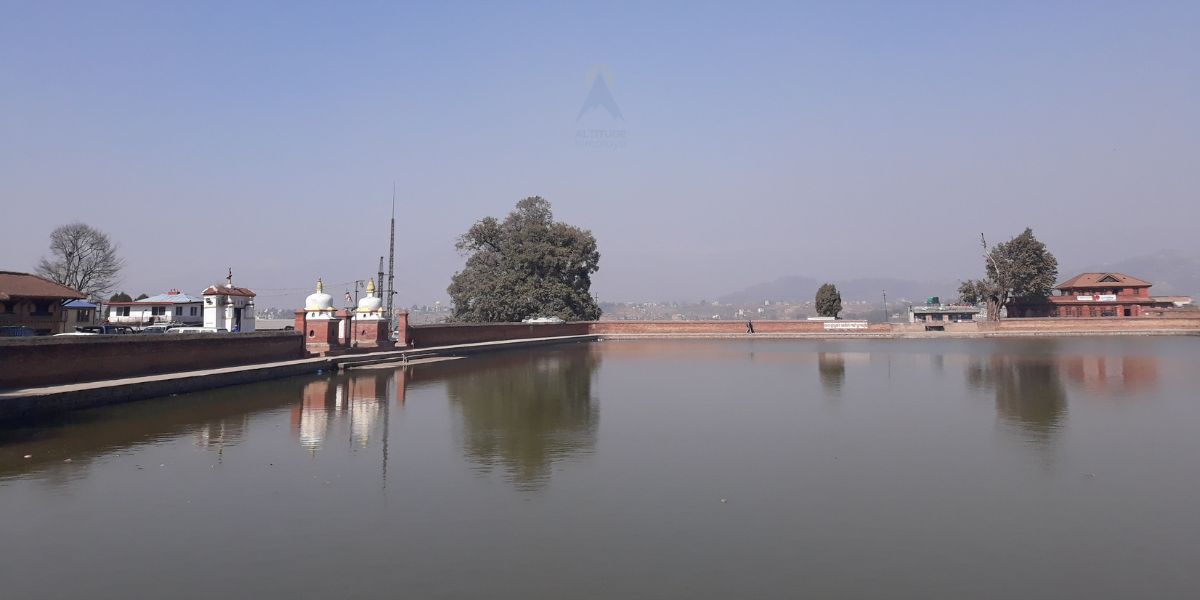
Popular lore follows King Indrajit, implying he fabricated this glorious pond, giving it the name Indradaha.
In the Yenya Punhi (Indra Jatra) festival, devotees bring the idol of Indrayani here, keeping it exposed throughout the night, and the entire pond is surrounded with oil lamps.
According to some local legends, it is believed this pond held the body of Basuki Naag.
Bhajya Pukhu
Bhajya Pukhu (Bhajya Pokhari) feels like a hidden pond of Bhaktapur, as it is beside various restaurants and local residences. The pond was originally constructed in the 12th century and later was expanded and reconstructed by Bhagiram Pradhananga (a powerful commander of King Jitamitra Malla’s army).
Bhajya Pukhu featured a sikhara style temple worshipping Lord Shiva, specifically housing an idol of Jaleshwor. The temple fell in ruins after the earthquake in 1681 AD and was neglected for centuries.
The efforts to restore the pond were made in 2001-2002 AD, but they were abandoned till 2018 AD.
Under the supervision of consumer committees and Bhaktapur Municipality, Bhajya Pukhu’s restoration began with the help of different community groups. On April 10, 2023 AD, the restoration project was marked a success, and the pond became a vibrant tourist destination.
Na Pukhu
431 ft long and 250 ft wide, Na Pukhu is the second biggest pond of Bhaktapur. It was constructed in 1167-1168 AD during the Thakuri dynasty’s reign in the valley.
The southern side of the pond holds a number of Buddhist heritages, and it’s said that during Malla period, an entrance gate to Bhaktapur was located side by side with Na Pukhu.
Local legends link Na Pukhu with Nhu Pukhu and Ta Pukhu for having the tail of Basuki Naag, thus calling them the ‘sister ponds of Bhaktapur’.
Kamal Pokhari
Kamal Pokhari of Bhaktapur is one of the oldest ponds in Nepal, and it is right next to Lord Ganesha’s Temple in Kamalbinayak. It is located about 1 km north-east of Dattatreya Square.
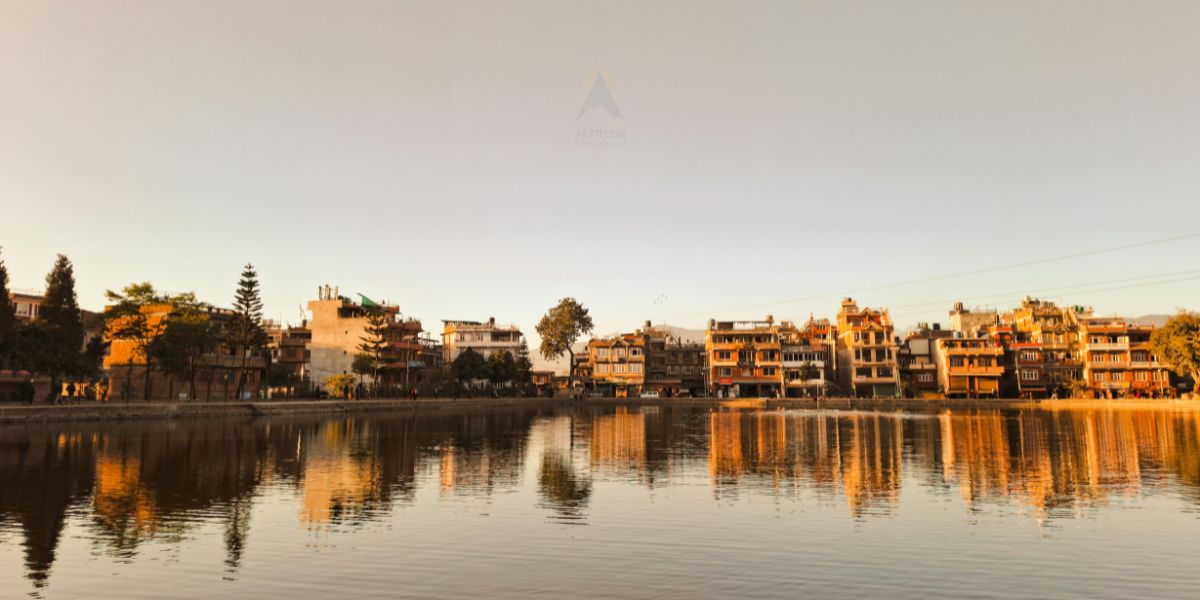
Even with modernization and urbanization, Kamal Pokhari still looks like a resting jewel of tranquility. It is a serene, shimmering sanctuary with the water perfectly mirroring clouds, offering a peaceful sensation amidst the city chaos.
Nigu Pukhu
Nigu Pukhu translates to two ponds and is often called Dui Pokhari. It’s one of the famous landmarks in Madhyapur Thimi. The pond itself is believed to be over 300 years old, constructed by Queen Ganga in an attempt to facilitate the locals with water resources.
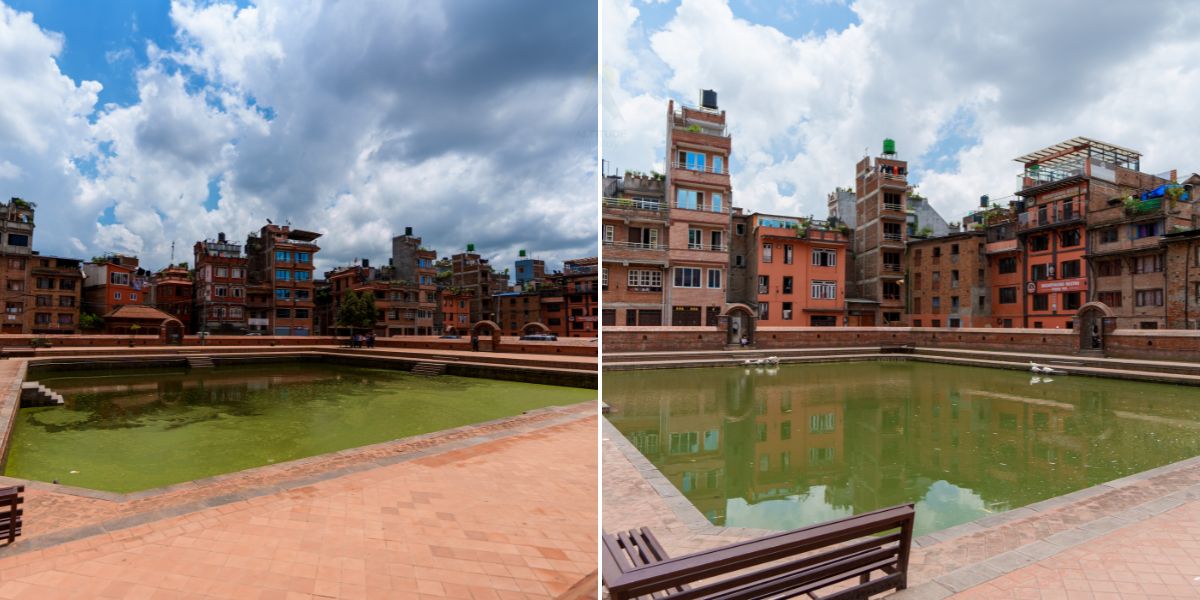
In 1958 AD, when King Mahendra visited Bhaktapur, the locals dried the pond completely, stating the need for a bigger ground for his grand welcome, and it remained that way till 2020!
Paleswa Pukhu
Spanning 82,140 square feet, this 300-year-old pond is commonly known as the Lotus Pond of Bode (Kamal Pokhari). The pond is filled with lotus plants in its peak season, with people constantly strolling around it.
The lotus flowers blooming in this pond are offered to Goddess Taleju in Dashain, preserving an ancient custom of this area.
Hill Stations, Hiking Trails and Viewpoints
Bhaktapur is filled with hill viewpoints and short hiking trails, which are easily reachable from the main heritage area. If you love sunrise and sunset, mountain ranges, and landscapes, then these are the best ones within Bhaktapur.
Nagarkot
For travellers wanting to end the day trip of Bhaktapur with a Himalayan sunset, Nagarkot is the natural extension of the trip!
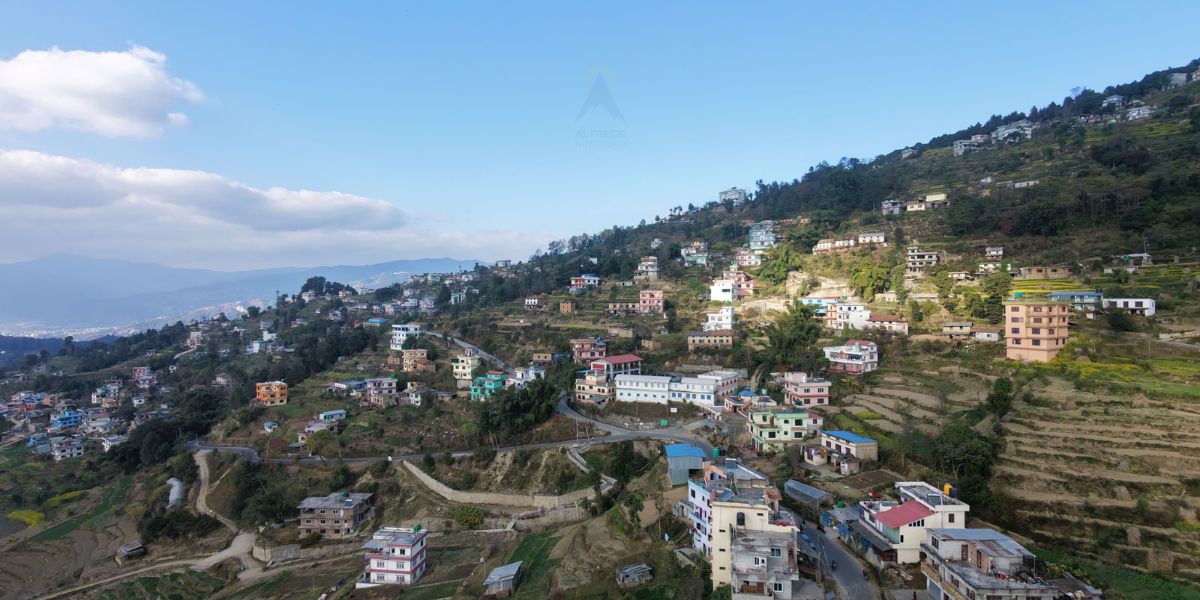
About 10 km from Changu Narayan Temple and 12 km from Bhaktapur Durbar Square, the view from Nagarkot shows mountain ranges that stretch from Dhaulagiri in the west to Kanchenjungha in the east.
Multiple hiking trails connect Nagarkot to the valley, starting from Chisapani, Telkot, or Changunarayan. All of these trials involve walking through pine trees alongside the fabulous valley views on both sides.
Other nearby spots include Buddha Peace Park, Rani Jhula, Bojinee Dam, and Muhan Pokhari.
Gundu Hill (Gundu Chaur)
Behind the wind-whistling Suryabinayak forest in the southern part of Bhaktapur is a quiet area of verdant green fields.
The fields here spread into the infinite land under the still sky, surprising visitors with an exquisite view of the valley and the Himalayas behind.
This trail has become quite popular in recent days for short hikes, dry picnics, and cycling activities.
Ghyampe Danda and Pilot Baba Ashram
Ghyampe Dada, near Gundu, has become one of the most favorite tourist destinations, located on a hilltop. This site takes about 15 minutes to reach from Suryabinayak Chowk, passing through Suryabinayak Ganesh Temple.
Before Ghyampe Dada comes Pilot Baba Ashram with Somnath Temple and a spacious area that brings peace to the mind and soul. Outside the temple complex is an open grass field, popular for valley views with low-flying airplanes over your head and evening hues.
A couple of minutes' walk or a short ride from Pilot Baba Ashram takes you to the top of Ghyampe Dada with exquisite landscape views in every direction. This spot is perfect for nature photographers who love to capture valleys and hills.
For adventure lovers, Ghyampe Dada offers horse riding and ziplining activities as well.
Note: You need to pay a small entry ticket fee to enter the Pilot Baba Ashram premises.
Ranikot
Ranikot is another popular short hike destination known for the views of Kathmandu Valley and the Himalayas. The best time to visit here is during winter or the post-monsoon season, when the skies are clear.
During the monsoon, mist and clouds create a peaceful ambiance but often obscure the views.
Every year, during the full moon day of Mangsir and Baisakh, Ranikot draws a lot of visitors and devotees to Baghbhairava Temple by holding fairs and festivals. The atmosphere becomes quite livelier at these events!
The viewpoint of Ranikot is associated with the remnants of a fort, built by King Prithvi Narayan Shah. However, only little physical evidence of it survives today, making it just a story of the past.
Intriguing fact: There is no statue or sculpture of Bhairava in this temple; rather, a stone that is naturally shaped as a tiger is worshipped.
Major Festivals in Bhaktapur
Chariots and processions alongside neighborhood rituals moving through different squares and lanes, only few cities in Nepal live their festivals like Bhaktapur! Visitors hoping for a rich and more immersive experience should time their visit around the following festivals:
Bisket Jatra
Bisket Jatra, also known as Biska Jatra, Bhaktapur’s largest festival, is a nine-day celebration. Coinciding with Nepali New Year, the festival begins from Chiatra 27 or 28 to Baisakh 5 (mid-April).
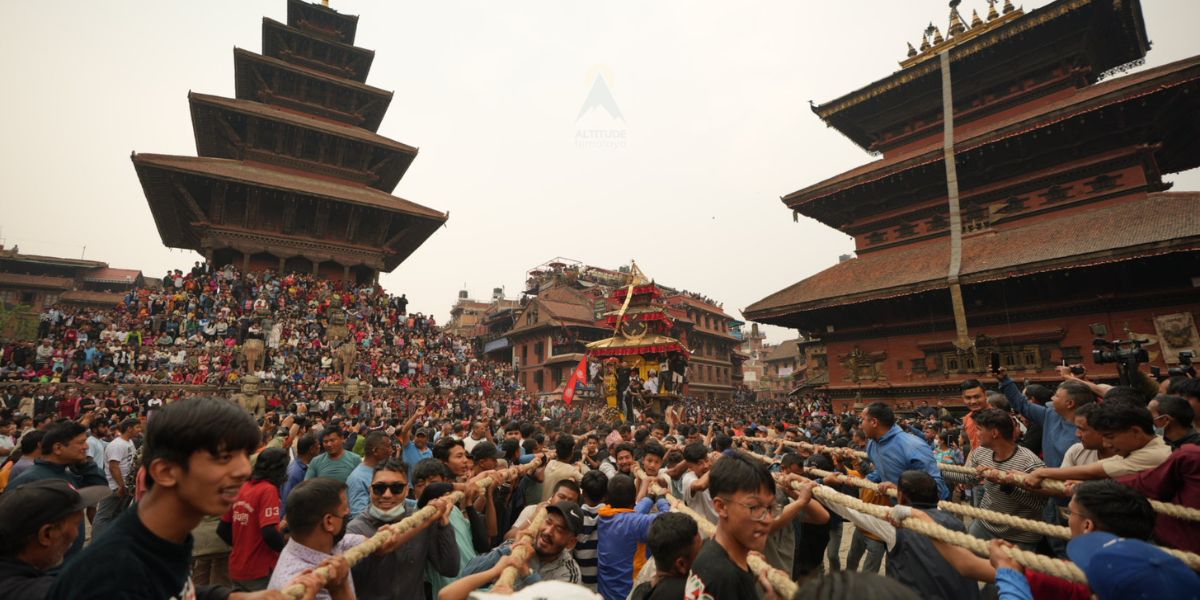
The current form with chariot processions was developed during the Malla era, but the actual tradition dates back to the Licchavi period. Bhairav and Bhadrakali are honored during this festival, featuring a massive wooden chariot and the dramatic raising and lowering of a tall pole called ‘lingo’.
The festival begins with a fierce tug-of-war at Taumadhi Square between the upper and lower towns to pull Bhairav’s chariot. The following days include events like the raising of the 25-meter lingo at Lyosingkhel, the ceremonial fall of the pole, and many neighbourhood processions.
The festival comes to an end with a final chariot tug and Bhairav’s return.
Certain things to keep in mind if you’re planning to experience this festival from the ground:
- The heavy chariot and crowd make Bisket Jatra a little chaotic and dangerous, so visitors should stay clear of the chariot paths during tug-of-war and lingo ceremonies.
- We highly recommend booking rooftop spots in Taumadhi Square for safe and better viewing (our Kathmandu Photography Tour is focused on just that!).
Sindoor Jatra
Sindoor Jatra is held on Baisakh 2 (the next day of Nepali New Year) in Madhyapur Thimi and is an inseparable part of Bisket Jatra.
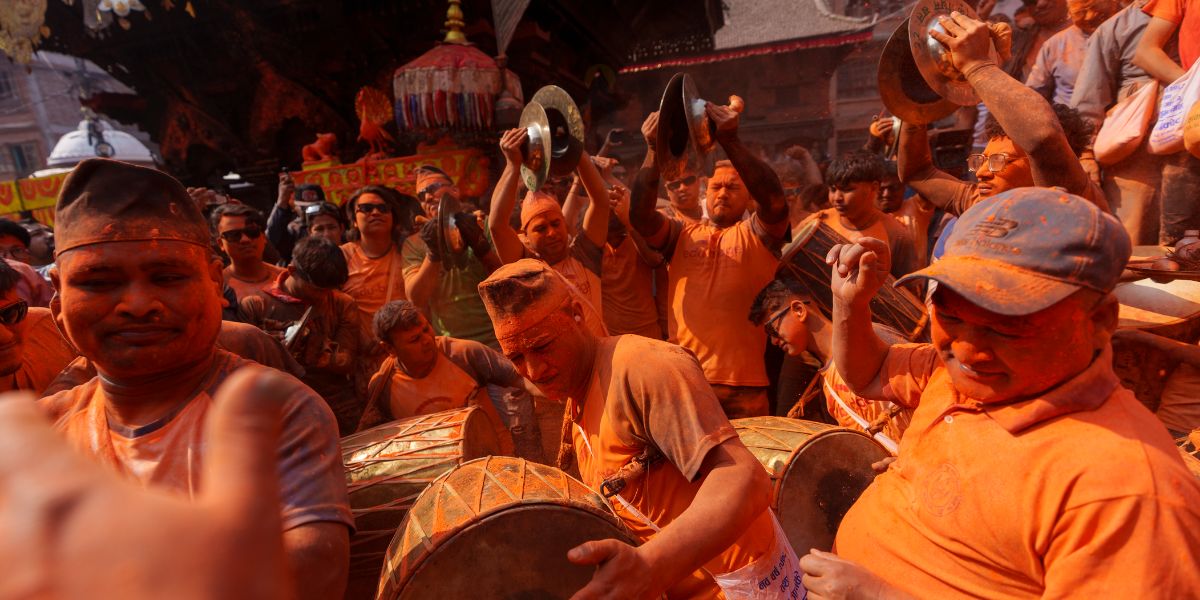
This is by far the biggest festival of Madhyapur Thimi, as the whole town turns orange with vermillion powder and palanquins of various deities converge at Balkumari Temple.
Tongue Piercing Festival
Locally called Yenya Punhi Mye Pwa Khanegu Jatra or Jibro Chhedne Jatra, it is held twice in Madhyapur Thimi, on Baisakh 2 as a part of Bisket Jatra in Bode and the day after Indra Jatra in Thimi. Both towns carry their own distinct significance for this festival.
In Bode, only one individual gets their tongue pierced, whereas, in Digu Tole, multiple participants are allowed to get their tongue pierced before choosing their path for circumambulation.
Gai Jatra
Gai Jatra, the "Festival of Cows," is celebrated on the first day of the waning moon, typically late August or early September, by the Newar community. They commemorate deceased family members in the belief that a cow can guide the souls of the dead to the afterlife.
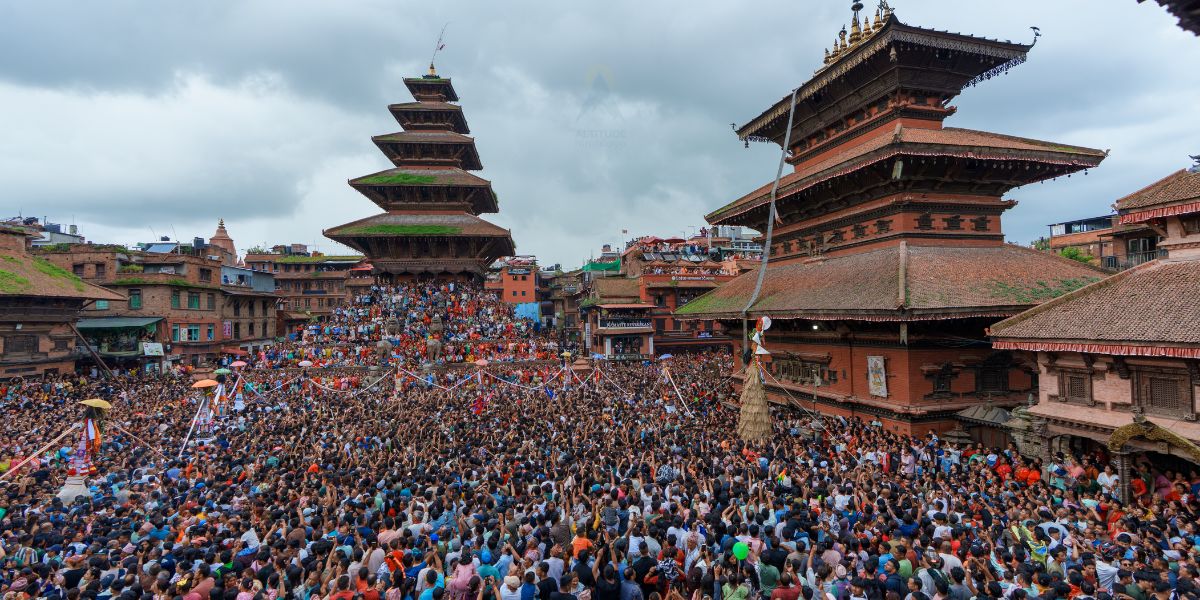
It was King Pratap Malla who popularized Gai Jatra by adding humor and satire to console his queen grieving their son’s death, but its origin dates to the Licchavi era.
In Bhaktapur, Gai Jatra begins at Taleju Temple Complex as a week-long festival with a bamboo chariot called Taha Macha being paraded through the settlements. The chariot is accompanied by dancers in Haku Patasi and the Ghintang Ghisi dance (stick-hitting dance).
This festival comes to an end with a final procession in the evening from Taumadhi Square when the idols Bhairav and Nakinju Ajima are taken out. Since their appearance symbolically marks the completion of the ritual hierarchy, no other idol is permitted to be paraded after them.
Gathemangal
Gathemangal (Ghanta Karna) takes place in the month of Shrawan (July/August). It’s a Newari festival to celebrate the defeat of the mythical demon called Ghanta Karna (bell-ears).
This demon was accused of wearing bell earrings to not let devotees hear Lord Shiva’s voice, and involving in sinful acts like robbery, murder, and kidnapping of children.
Revelers build straw effigies of the demon Ghantakarna, parade them through the streets, and finally burn them at crossroads.
Yomari Punhi
On the full moon of December, Newari families celebrate the rice harvest by enjoying Yomari. It is a steamed dumpling made from rice flour, filled with either chaku and til (molasses and sesame) or khuwa (dried milk solids).
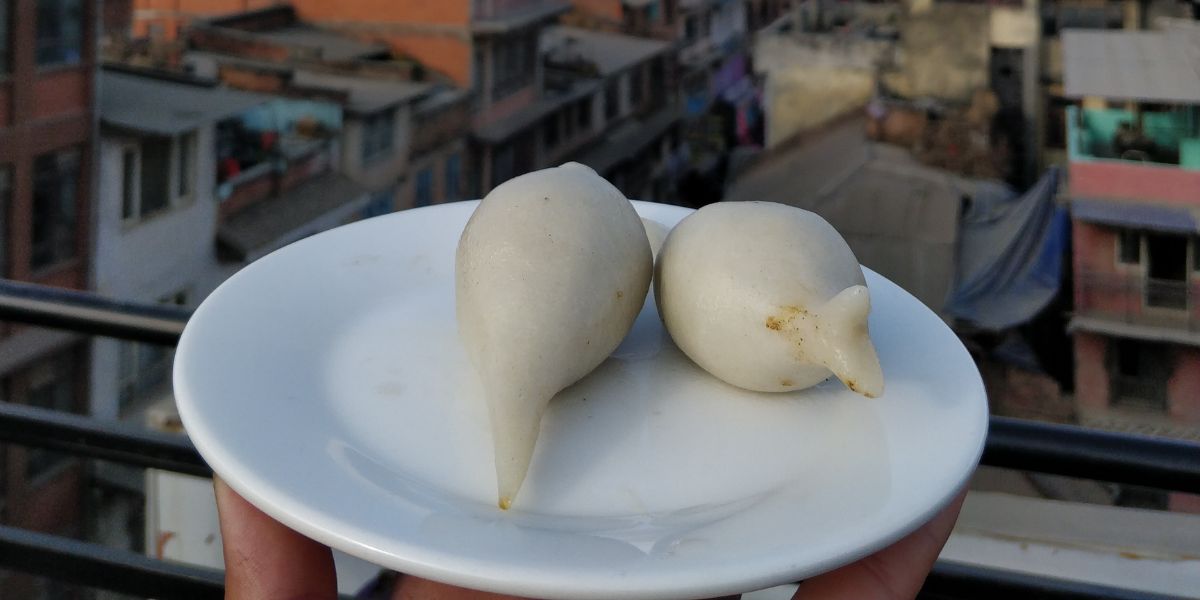
Newars thank Goddess Annapurna for bountiful harvests along with deities like Kuber, Ganesh, and Laxmi by shaping the sweets in their symbolic forms!
In the alleys of Bhaktapur, children and groups can be seen singing specific folk songs too. Read more about Yomari Punhi here.
Dashain and Tihar
Two of Nepal’s biggest festivals come right after monsoon and before winter, bringing Bhaktapur to life with decorations, celebrations, and family gatherings. The weather during this season is also great for mountain scenery to open up!
The ancient traditions of Newar people set these festivals quite apart from the rest of Nepal.
Dashain festival is called Mohani Nakha in Newar community and in Bhaktapur the festival comprises Nawadurga Masked Dances, The Khe Ma Jatra, Kucchi Bhoy Feast, and Mohani Sinha Tika.
In Tihar or Swanti Nakha, Newar people celebrate Mha Puja (a ritual to cleanse one's soul and body) and Nepal Sambat New Year.
Other Local Festivals
Bhaktapur’s calendar extends beyond the aforementioned festivals:
- First one to look out for is Indra Jatra (Pulukisi Jatra), where the Lakulache community parades a bamboo and fabric elephant representing Airavata (Lord Indra’s Vehicle) through Taumadhi Square.
- The Gunla Festival (Pancha Dan) in the holy month of Newar Buddhists carries five Buddha idols through the city accompanied by the sacred Gunla Baja music.
- Til Madhav Narayan Temple draws devotees during Madhav Narayan Festival for a month of fasting and ritual blessing from Poush Shukla Purnima to Magh Shukla Purnima.
What to Eat in Bhaktapur? Major Food and Drinks
Bhaktapur is one of the best places in Nepal to try authentic Newari cuisine, from street-side stalls to proper rooftop restaurants. The best food options in Bhaktapur are:
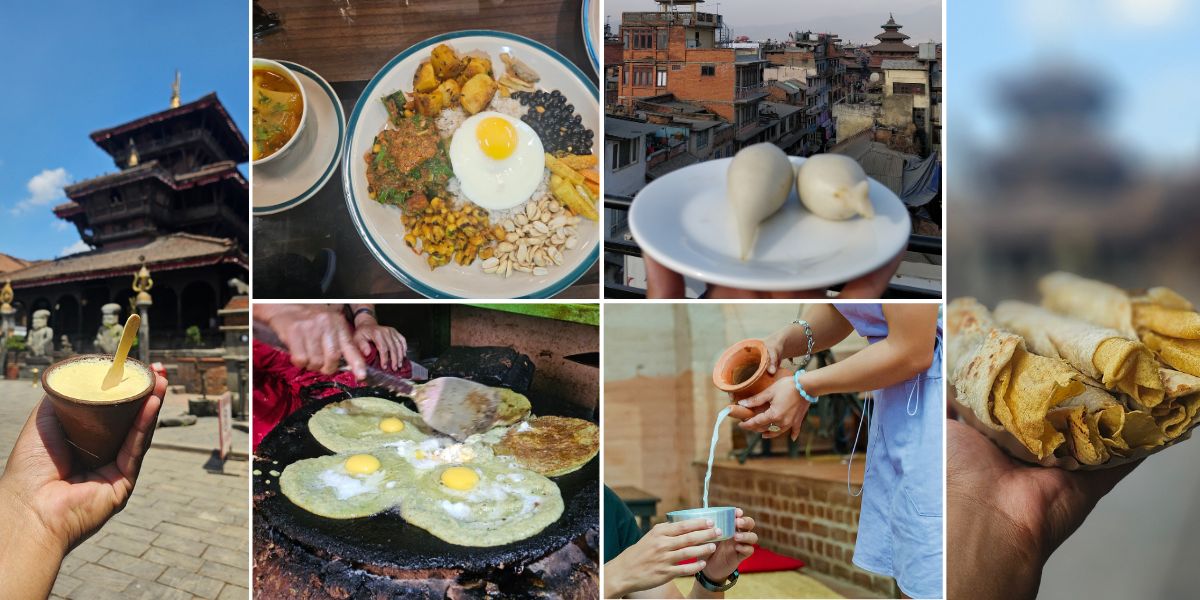
JuJu Dhau
JuJu Dhau (popularly known as the ‘king of curds’), is the signature sweet of Bhaktapur, a thick yoghurt, traditionally served in a small terracotta bowl. It is widely available around the squares and a must try dessert dish of Bhaktapur.
Bara
Bara (locally called Wo) is a savory pancake prepared from ground black lentils, either served plain or with an egg topping.
Ama ko Bara Pasal near the Taumadhi Square is our most recommended spot to try it!
Chatamari
Often called Newari pizza, Chatamari is a thin pancake made of rice flour, topped with minced meat, egg, and vegetables.
This dish is traditionally prepared, offered, and eaten mainly in Newari festivals and celebrations (Sithi Nakha and Pahan Chare). But these days, Chatamari is even consumed as an everyday snack too!
Samay Baji
Samay Baji is a Newari platter, combining beaten rice (chiura), grilled buffalo meat (chhoila), black soybeans (haku musya), ginger (palu), and rice liquor (aila). Together, this dish is said to represent the Pancha Tattva, the five elements of creation.
The rooftop restaurants around the squares serve the finest flavors in Bhaktapur.
Yomari
As mentioned earlier, Yomari is a steamed dumpling made from flour, filled with either chaku and til (molasses and sesame) or khuwa (dried milk solids).
Even though this sweet is associated with the Yomari Punhi festival, you can still try it whenever you want to, from available stalls around the square or Newari restaurants (that usually have Yomari on their menu).
Chhoila
Chhoila is spiced, grilled buffalo, duck, or chicken meat and one of Bhaktapur's standout dishes, commonly served as part of a Samay Baji set or on its own.
For those looking to try this dish in its most authentic form, the Sukuldhoka neighborhood is highly recommended. The area is famous throughout the historic city for its traditional and smoky street-style haku choila (blackened, wood-fired spiced meat).
Alcoholic Drinks
Aila is the most popular traditional distilled rice liquor, commonly served alongside Newari meals.
Other alcoholic drinks of Bhaktapur include Thon (mildly fermented rice beer), Hyaunthon (specialized red variety of Thon), and Karthon (thick, dark brown variant of Thon).
Other Local Delicacies
Beyond the essentials, Kachila (seasoned raw buffalo meat), Kwati (mixed lentil soup), Aalu Tama (potato and bamboo shoot curry), and Sapu Mhicha (buffalo tripe stuffed with bone marrow) are other famous dishes from this cuisine.
Breakfast items such as Gwaramari, Selroti, Malpuwa, Lakhamari, Jerri and Swari, and the Haluwa Papad Roll are some of the great options if your morning starts in Bhaktapur.
Best Bhaktapur Itineraries to Experience These Attractions
Bhaktapur might be the smallest district of Nepal, but how much you can see comes down almost entirely to how much time you set aside.
Here's how the attractions covered in this guide fit together across a half-day visit, a full day, and a longer or slower trip:
Half-Day Bhaktapur Visit
If your time is limited, a half-day is enough to cover the four historic squares, Dattatreya, Durbar, Taumadhi, and Pottery, on foot, without visiting the museums that cost additional charges.
This is a great option if you are planning to visit another destination on the same day or if you don't have much time to explore in the valley.
Full-Day Bhaktapur Tour
A full day is enough to comfortably cover all four squares with time for the museums, Changu Narayan Temple, and even a brief sunset stop in Nagarkot.
There are multiple approaches for this tour, but one of the most popular ones begins with a quiet morning in Madhyapur Thimi (starting at Thimi Ceramics and the pottery lanes) and then to Bhaktapur's heritage core.
Afterward, embark on a journey of 6 to 7 km to Changu Narayan Temple to spend the afternoon. If time still persists, ride another 10 to 12 km to watch the colorful sunset over the horizon from Nagarkot.
Want to skip the planning and let someone else handle the logistics? Altitude Himalaya's One Day Bhaktapur Sightseeing with Nagarkot Sunset tour follows almost this exact route!
Multi-Day Bhaktapur Exploration
Two days give you a slower pace, generally considered the better version for travelers who want to explore beyond the main squares.
You will be able to visit all four squares properly on the first day, covering all the museums. Then, you can spend the second day exploring beyond the heritage core, like Madhyapur Thimi's pottery lanes, Bode and Nagadesh streets, Doleshwor Mahadev Temple, the Kailashnath Mahadev Statue, and finally an overnight stay in Nagarkot for sunrise.
If you want to do more than just sightseeing or enjoy a proper vacation, then our team is here to guide you throughout all experiences that include Bhaktapur as a core stop!
Check out our tour packages or request us for a custom itinerary and we’ll help you out!
Do check out our Kathmandu Cultural Tour package, which is focused on Bhaktapur's squares, festivals, food, and other attractions within the valley.
Essential Bhaktapur Travel Tips
From picking the right season to learning basic temple etiquette and common words of gratitude, a little planning goes a long way in Bhaktapur. Here's what to keep in mind before and during your visit.
Don’t Miss the Cultural Experiences
Sightseeing alone is far from enough if you want to properly understand Bhaktapur. These are some experiences we recommend to make your Bhaktapur trip memorable, rather than just a checklist of temples:
- Experience traditional pottery making: Hands-on experience on the potter's wheel of Pottery Square, centering the clay, opening it with your thumbs, and pulling the walls upward as the wheel spins, is the best way to connect with one of Bhaktapur's oldest professions.
- Explore ancient courtyards and monasteries: Bhaktapur's Bahi and Baha monasteries reveal the city's long Buddhist history that is often ignored by many. Also, learn about the smaller, semi-private courtyards known as Nanee from your guide. Don’t forget to learn what the Pikha Lakhu stones at doorway entrances symoblizes! Just so you know: these are symbols of Kshetrapal, the guardian of the home.
- Time your visit to Bhaktapur to watch local festivals: Bhaktapur is not just a heritage site; it becomes a living, working city if you time your visit around Bisket Jatra, Gai Jatra, or Thimi's Sindoor Jatra. As mentioned earlier, booking a rooftop viewing spot in advance is strongly recommended for such festival days.
- Shop for handicrafts and souvenirs: Pottery Square, Thimi Ceramics, Thangka painting schools, and The Peacock Shop (Paper Factory) are all worth your time and budget if you want to bring home something handmade for you rather than mass-produced. It is worth comparing a couple of stalls before committing to one for any souvenir.
Best Time to Visit
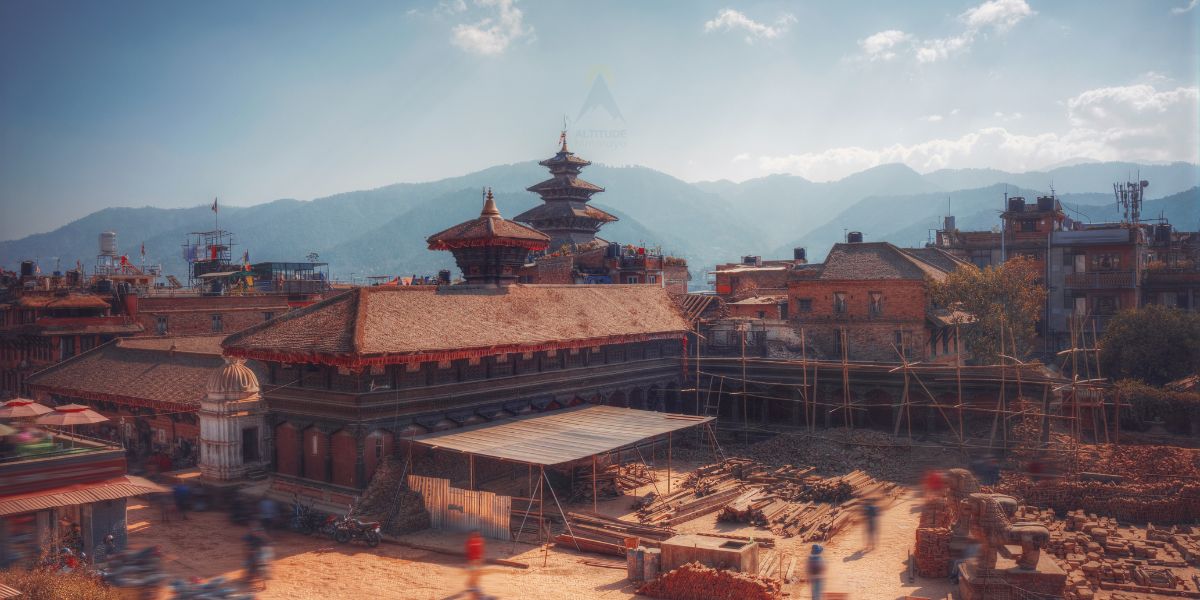
Since each season in Bhaktapur offers something different, here are a few suggestions that will help you pick the right time based on your interest:
- After multiple visits to Bhaktapur in each season, I personally found January and February a little quiet with cold and clear mornings, good for photography and videography.
- March and April get a little chaotic with Bisket Jatra preparations and celebrations.
- The early summer and seasonal fruit with livelier markets form in the months of May and June.
- July and August bring green paddy fields on the outskirts along with Gai Jatra in late August or early September.
- The harvest season, September and October, brings Dashain, Tihar, and Indra Jatra, one of the best times to visit.
- November and December get dry, pleasant, and uncrowded, and there’s also Yomari Punhi Festival that you can celebrate with locals.
Photography Tips
If you’re a photo enthusiast, then you are bound to have a couple of questions regarding the perfect time for natural lights, freedom spaces, permissions, and permits. So, here are some useful photography tips for you:
- Early morning and late afternoon offer the best light and the fewest crowds.
- The brick alleys are particularly photogenic, away from the main squares.
- Always ask permission before photographing potters, artisans, or people up close to show respect.
- Professional filming and drone use requires prior permits from the Department of Archaeology (for the Bhaktapur heritage site) and the Civil Aviation Authority of Nepal (for drones).
Cultural Etiquette
Nepalese are renowned worldwide for their warm welcome and gestures towards guests. We believe in “athiti devo bhava”, meaning “guest is equivalent to god”, so you won’t be discriminated against here for being different.
But learning the etiquettes beforehand will help you instantly connect with locals and get you a much warmer and welcoming attitude:
- Dressing modestly, with shoulders and knees covered, helps you be more comfortable with the locals here.
- Be ready to remove your shoes or any leather accessories before entering temples.
- Touching or climbing on religious artifacts or monuments is not appreciated at all.
- Step aside rather than walking through an active ritual or puja you come across.
- Taleju Temple is open only to Hindu devotees; entering or taking photographs is strictly prohibited there. So, keep this in mind!
Money and Payments
Many traditional shops, food stalls, artisans, and other businesses in the old lanes may still prefer cash. Even though online payment is becoming more common, carrying Nepali cash in small denominations is extremely helpful.
Safety Tips
Experiencing festivals in Bhaktapur is an unforgettable experience, but the crowd and heavy chariots can be dangerous for you. Here are some suggestions for your personal safety.
- Never stand directly in the chariot's projected path if you’re visiting during Bisket Jatra.
- Keep at least 15 meters of clearance when the lingo is raised or lowered and keep children within arm's reach.
- Chariot-related injuries and fatalities (rarely) have been documented in past years. So, be very mindful of the crowd during jatras or peak time of the day and keep an eye on your belongings in busy squares. After all, prevention is better than cure.
Guided vs Independent Travel
Whether you explore with a guide or on your own, you’ll have an unforgettable experience visiting Bhaktapur. A knowledgeable guide will offer deep stories and histories, whereas independent travelling will let you follow your own map.
|
Guided Experience
|
Independent Experience
|
|
A government-licensed Tour Guide provides in-depth explanation of temple carvings, Pika Likhu stones, and monument folklores.
|
You need to rely more on your own personal research.
|
|
With the guide, you’ll be at the right place at the right time for key rituals.
|
You get more freedom, but you’ll have a higher risk of missing timed events.
|
|
Presence of guide means more structured, informative and immersive experience.
|
You’ll have a much more flexible and independent journey.
|
|
The guide fully manages your activities with logistics.
|
Everything is self-managed and you’ll have to decide your own pace.
|
|
The guide shall help you handle the Special Visitor Pass if you’re seeking multi-day exploration in Bhaktapur.
|
You’ll have to handle the Special Visitor Pass along with all the permits yourself.
|
Final Thoughts
This guide has tried to lay out the exact attention Bhaktapur has been rewarding its visitors: the four historic squares, temples and museums, pottery quarters with barely changed craft in centuries, and a general festival calendar including the nine days of Bisket Jatra that turns the entire district into a living stage!
Surely, Bhaktapur rewards you for every place you visit, whether it be a half-day, a full-day, or a multi-day trip!
Our team at Altitude Himalaya is more than happy to assist with your Bhaktapur trip, so feel free to contact us for more information!


 Sanjog Khatri