What if you get to visit a square that could tell you the stories of a hundred years? Taumadhi Square, Bhaktapur, does exactly that.
Taumadhi, also known as Ta: Mari, is a significant site that is also a central place for several religious ceremonies and cultural performances such as Bhairav Naach and Navadurga Naach.
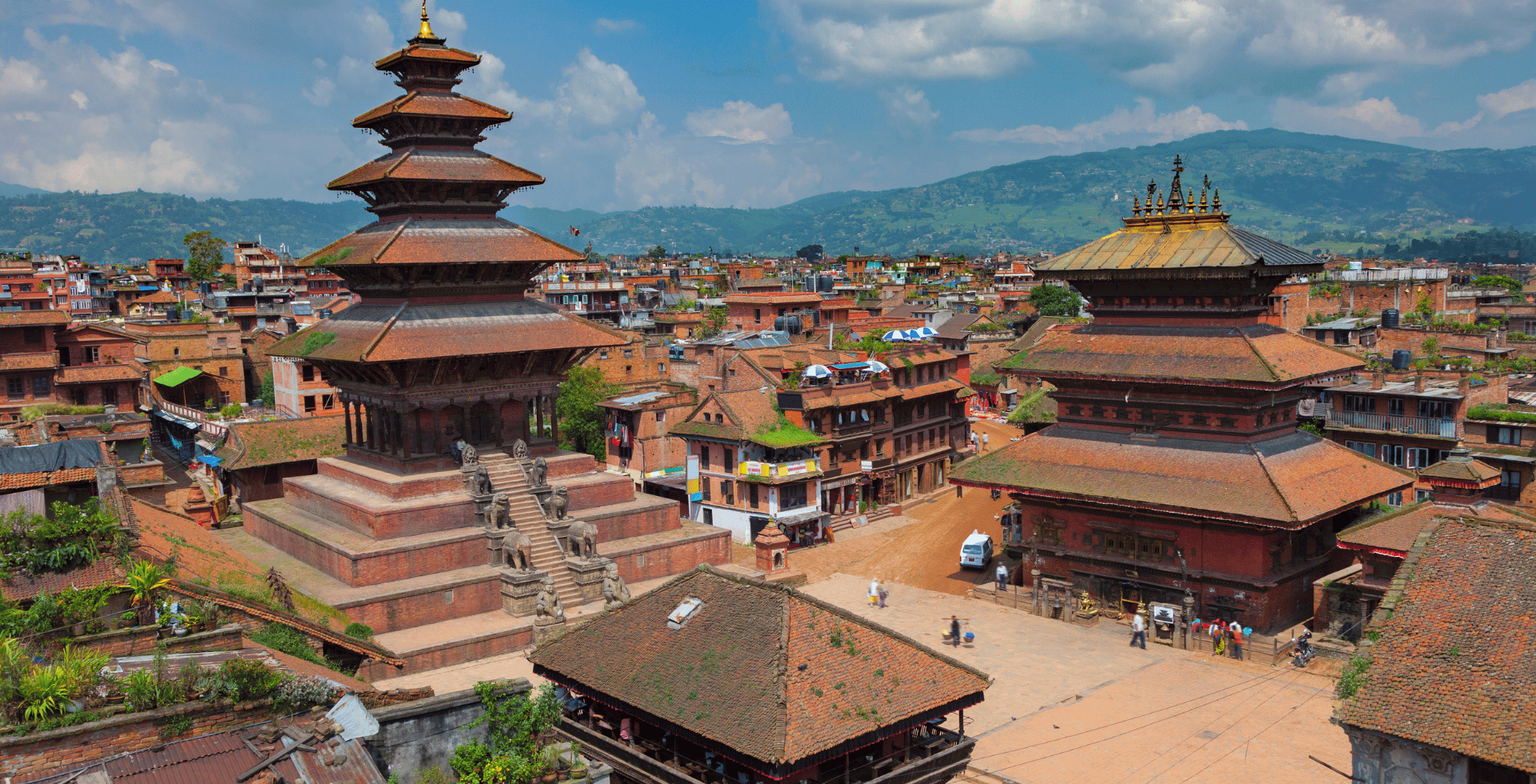
As soon as you step into the square, you will be impressed by the open courtyard, temples, and daily rhythm. The tallest temple of Nepal (Nyatapola Temple), the Bhairavnath temple, a statue of the Betaal deity, stone images (of warriors, elephants, lions, griffins, and the deities Simhini and Byaghrini), Tilmadhav Narayan Temple, and a golden spout with images of Navagraha (Nine Planets) are the major attractions of the square.
While other squares of Bhaktapur serve more like tourist destinations, this historic square is a vibrant public space where religious rituals and local festivals have continued from the historic period.
Located towards the southeast and a 3-5 min walk from Bhaktapur Durbar Square, Taumadhi is one of the most prominent sites of Bhaktapur. Monuments like Nyatapola, Bhairavnath, and other stone sculptures depict outstanding works and traditions coming from the Malla period. So, it is a must-visit site for anyone exploring the city!
Quick Facts on Taumadhi Square
|
Location
|
Bhaktapur, Near Bhaktapur Durbar Square
|
|
Local Name
|
Taumadhi Tole or Tamari Tole
|
|
Cultural Identity
|
A living place where centuries-old rituals are actively practiced.
|
|
Historical Period
|
Late Malla Period (15th - 18th century)
|
|
Main Attractions
|
- Nyatapola Temple
- Bhairavnath Temple
- Betal Temple
- Til Madhav Narayan
|
|
Architectural Meaning
|
Temples are positioned according to ritual hierarchy and cosmic symbolism
|
|
Intriguing Detail
|
Each level of the temple’s stairs has guardian statues. It is believed that each of them is 10 times stronger than the level below.
|
|
Festivals Celebrated
|
- Bisket Jatra (Biska Jatra)
- Gai Jatra
|
|
Entry Fee
(Covered by the Bhaktapur Durbar Square Permit)
|
NON-SAARC Foreigners
|
USD 18
|
|
SAARC Nationals
|
NPR 500
|
|
Chinese Nationals
|
|
Nepalese
|
Free
|
History of Taumadhi Square
Located southeast of the Bhaktapur Durbar Square, Taumadhi Square is one of the major cultural and historical squares in Bhaktapur, Nepal. This timeline will guide you through the major milestones that have shaped Taumadhi:
12th Century: The Initial Religious Base
The origin of Taumadhi doesn’t actually start from Nyatapola or Bhairavnath. It starts with a temple that’s located right behind the restaurants that line the opposite side of Nyatapola.
I’m referring to the Til Madhav Narayan Temple, which is believed to have been built in the early medieval period. It is one of the oldest buildings in the Taumadhi Square, dating back to 1118 A.D.
There is a myth that an apparition of Vishnu emerged out of a heap of sesame, holding a conch, discus, and mace in a yellow dress. This was when a sesame merchant, Dharmadatta, set up a shop in front of the shrine of Marigalesvara.
All the inhabitants were amazed, and they established a temple dedicated to Narayan, another name of Vishnu. Also, there are beliefs that sesame seeds originated from the beads of Vishnu's sweat.
Additionally, the temple may have indirectly inspired the name “Taumadhi”. The name evolved through the years, beginning with the word ”Tilamadhav”. Later, it was altered to Tilam-de, then to Talamande, and finally to Taumadhi in recent days.
17th and 18th Centuries: Malla Dynasty Development
The iconic structures we see at Taumadhi Square were primarily developed during the reign of the Malla Kings of Bhaktapur.
Bhairavnath Temple Establishment and Expansion
Standing on the east side of Taumadhi Square, the Bhairavnath Temple is dedicated to Lord Bhairav.
The temple was first built during the reign of King Jagajjyoti Malla in the early 17th century as a one-story structure.
Later, it was Bhupatindra Malla in 1717-1718 AD who expanded it into a three-story (triple-roofed) temple.
Nyatapola Temple Construction
The famous five-storied temple, Nyatapola of Taumadhi Square, was built by a Malla King, Bhupatindra Malla, in 1702 to calm the power and energy of Bhairav, and the temple was dedicated to Siddhi Laxmi.
20th Century: Earthquake Damage and UNESCO Recognition
In 1934, the Nepal-Bihar Earthquake caused major destruction. Bhaktapur, including its cultural heritage, was devastated.
The Nyatapola suffered minor damage while Bhairavnath was completely damaged. Later, they were reconstructed.
In 1979, there was a historic moment in Bhaktapur. The entire square (a part of the larger Bhaktapur Durbar Square), along with six other monument zones, was listed as a part of the Kathmandu Valley UNESCO World Heritage Site.
21st Century (2015 - Present)
The square experienced another big earthquake in 2015, causing damage to several parts of Bhaktapur’s heritage zone.
According to Myrepublica's 2025 news, 120 heritage sites in Bhaktapur were damaged by the earthquake. The municipality has now reconstructed 118, and others are in progress; planning to be completed soon.
Reportedly, there is active participation of the local community in the reconstruction and restoration work.
Today, Taumadhi is standing high, carrying the preservation from the medieval period, welcoming visitors, and being the focal point of the annual Bisket (Biska) Jatra along with other ceremonial rituals.
How to Reach Taumadhi Square?
Conveniently located in the centre of Bhaktapur, stepping into the square will feel like entering a living museum. You get to explore historic temples, paved lanes, and the vibrant Newar culture with easy access from Kathmandu and other squares of Bhaktapur.
Here’s how to get there:
From Kathmandu
If you are staying in Thamel or any areas of Kathmandu, then you can reach Taumadhi using 2 alternatives:
By Public Bus
Your journey starts from Ratnapark or Bagbazar, where you can find public buses that head to Bhaktapur.
For more convenience, get on the bus that goes via the Kamalbinayak route and get off at Dudhpati (near Siddha Pokhari). Ask the bus conductor for help. From here, you can reach Taumadhi Square within a 10-15 minute walk (approx. 1 km).
And, in case you are traveling via the Suryabinayak route, get off at Suryabinayak Chowk and start walking; you will get there in approx. 1 km within 15-20 minutes, passing via the Hanumante Bridge.
By Taxi/Ride Sharing
For a hassle-free journey, you can book a taxi or bike from a ride-sharing app and reach Taumadhi Square directly within 30 to 60 minutes depending on your location in Kathmandu Valley.
From Other Squares of Bhaktapur
If you are already on the premises of Bhaktapur and exploring other squares, then you can easily head to Taumadhi Square:
- From Bhaktapur Durbar Square: If you are already standing on the grounds of the UNESCO World Heritage Site, you can reach the large square by simply walking for 2 minutes southeast (approx. 200 meters).
- From Dattatreya Square: If you are in Dattatreya Square, head 12-15 minutes (approx 750-900 meters) southwest through the city lanes, and you should reach Taumadhi Square.
- From Pottery Square: When you are in Pottery Square, walk toward Ghatkha. From Ghatkha, take a right turn and continue walking 3-5 minutes (300-350 meters) straight; you will reach Taumadhi Square.
Entry Fee and Opening Hours
You needn’t pay any separate entry fee for Taumadhi Square because it is covered by the permit for Bhaktapur Durbar Square. Here are the price details:
- NON-SAARC Foreigners: USD 18
- SAARC and Chinese Nationals: NPR 500
- Nepalese: Free
Notes:
- Children under 10 years from all nationalities can enjoy free entry.
- General photography is allowed, but if you want professional filming, you require special permission and must submit an application appointing a local coordinator.
For Nepalese, this is a public square, so it can be accessed at any time. But for other nationals, tickets are compulsory, and the ticket counter is open from 6:00 AM to 7:00 PM every day (Sunday-Saturday).
Nyatapola Temple: Nepal’s Tallest Pagoda
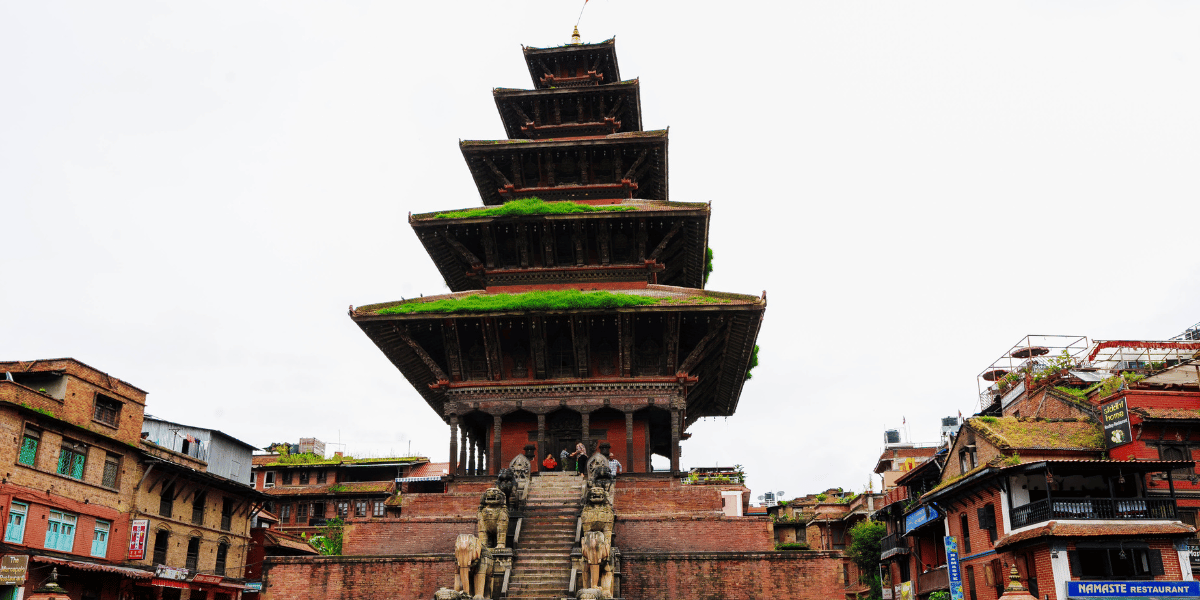
What if I told you that a 300+ year-old temple has survived massive earthquakes? This is an incredible story of the Nyatapola Temple, the tallest pagoda temple of Nepal, and a masterpiece of Bhaktapur.
Standing at the north end of Bhaktapur’s Taumadhi Square with elegant Newari architecture, the temple is dedicated to the Tantric goddess Siddhi Lakshmi.
It is believed that the temple existed long before; however, the current structure was built by King Bhupatindra Malla in 1702 AD, during the golden age of the Malla period.
If we look at the name of Nyatapola, it itself describes the temple’s physical structure. In the local Newari language, “Nyata” means five-storeyed, and “Pola” means tiers. Hence, Nyatapola means “a five-storied temple with tiered roofs”.
The Origin Story
Let’s travel back to learn about the story of Nyatapola Temple. More than 300 years ago, there was already a Bhairav temple in Taumadhi Square, and it was dedicated to Akash Bhairav, a powerful god worshipped as the god of the sky (more about this later).
And, according to ancient local stories, people believed that Akash Bhairav was angry and his anger was bringing many troubles to the area. They reported the matter to the king, and he (and his advisors) believed that Bhairav’s powerful energy could only be calmed after the construction of a temple dedicated to a female deity nearby.
Therefore, the king ordered the construction of a temple dedicated to a Tantric goddess, Siddhi Lakshmi, the most powerful female force.
Foundation and Myths
The base of such a big temple needed to be very strong, so the five-layered pyramid shape was built as a solid foundation of the monumental tower. Engineering solutions were a part of the strategy to protect the temple for a long time.
Another fascinating detail is that the king also believed in supernatural powers and relied on their assistance. So, his artisans built a grand staircase facing towards the south, with five pairs of monumental guardians on each side.
Interestingly, the power of each pair of guardian statues here is said to increase by 10 times with each level. Starting from the lowest pair, Jaimal and Patta, two legendary commanders, were believed to be 10 times stronger than an ordinary person.
Above them, you can see the statues of elephants, lions, griffins, and Singhini and Baghini, respectively. According to this myth, the top-most deities (Simhini and Baghini) are supposed to be 10,000 times stronger than the lowermost pair.
People believe that they are the guardians of the stairway, and they do not allow any evil powers into the temple. This solid base, with engineering and the powerful guardians of the stairway, is even believed to have protected the temple from massive earthquakes and is the reason why it suffered only minor damage.
Deity of Nayatapola
Siddhi Laxmi Bhavani, one of the superior and most powerful goddesses, is enshrined as the main deity inside the Nyatapola Temple. She is believed to be powerful and symbolizes the female element and creativity.
The nine-foot sculpture of Siddhi Laxmi in black stone stands inside the temple. Similarly, the sculpture has 9 heads arranged in 3 rows. Here, the lower row of five heads is of Chandi Bhadra Kali, the second row of 3 heads is called Pratyangira, and the top-most is of Siddhi Laxmi. The idol has nine pairs of hands.
On either side, there stand two statues of Mahakal Bhairav and Masan Bhairav, who are considered to be the helpers of the goddess and provide tantric power to her.
As previously mentioned, five pairs of statues in the stairway are actually the guardians protecting the deity and the temple from harmful powers. Besides other powers, Siddhi Laxmi is also believed to get her power from a mandala in which the Astamatrika are placed in eight directions.
Moreover, only the temple’s priests of the temple get access to the sacred shrine inside the temple. However, you can view her carvings on the Torana above the door.
You can also take a closer look at the 108 roof struts, where you can see the depictions of Siddhi Laxmi, along with other Hindu and Buddhist carvings in line with Newari traditions.
Bhairavnath Temple
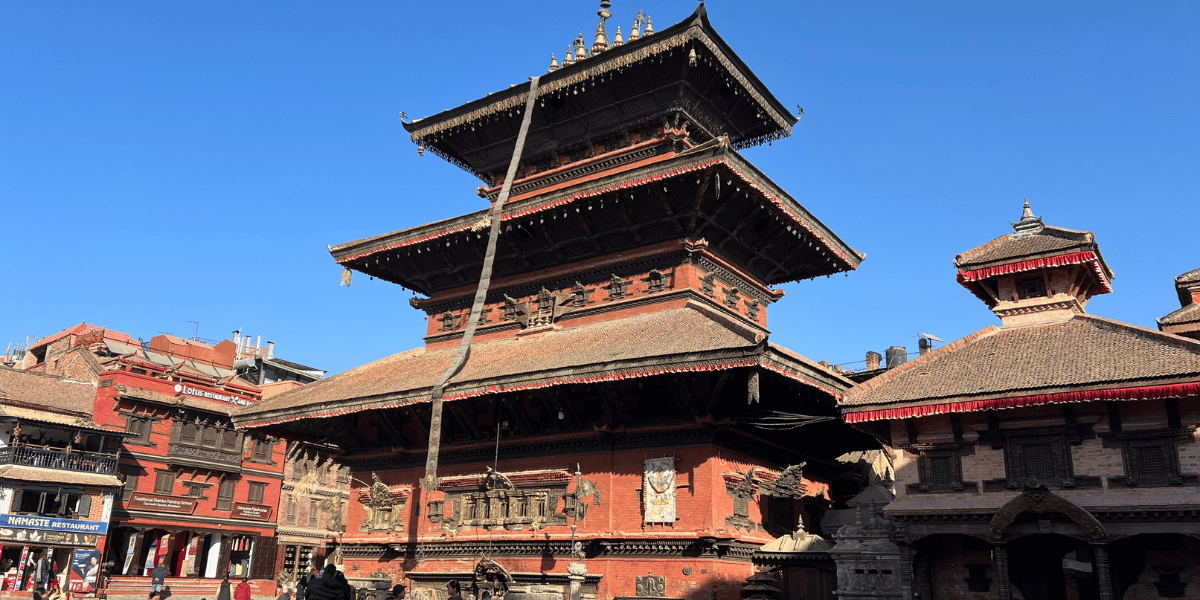
Right next to Nyatapola Temple, you can see Bhairavnath Temple standing within the Taumadhi Square. This temple is one of the most important sacred Hindu temples around Bhaktapur, and the main deity worshipped here is Bhairava, the fierce form of Lord Shiva.
It is a three-story, rectangular temple dedicated to Akash Bhairav (the sky Bhairav). The Bhairabnath here is also known as Kashi Vishwanath or Aakash Bhairav.
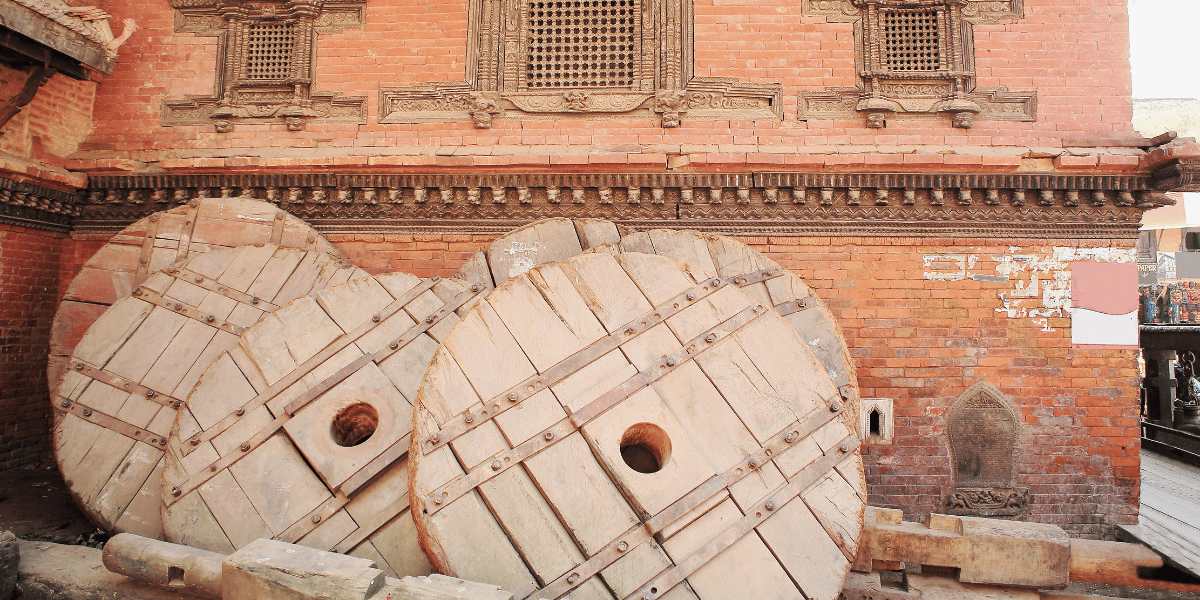
Bhairav is associated with wheels and chariots, and various forms of him are thought to reside in different wheels of the same chariot. Most of the year, the huge wooden chariot used in the annual Bisket Jatra remains disassembled and kept next to the north wall of the Bhairavnath Temple.
Legends of Bhairavnath
Local legend states that the head of Kasi Vishwanath (hidden in a sacred box), which is worshipped in the temple, has a unique origin.
As per the legend, Vishwanath came from Kashi (Varanasi) to witness the Bisket Jatra or the Biska Jatra. At the festival, a tantric recognized him. After noticing that he had been recognized, Vishwanath began vanishing into the ground.
But the priest didn’t let him go, and with his full energy, he caught the head of Vishwanath and beheaded him. The head was then ritually established in the Bhairavnath Temple at Taumadhi, and people started worshipping it. Whereas the headless body is said to have returned to Kashi (Varanasi).
Betal Temple: Next to Bhairavnath
Among the deities associated with Bisket Jatra and inside the premises of Taumadhi Square, one of the main deities is Betal. In the Newar community, he has different names like Betah, Beta Ajaju, etc. Commonly, he is also referred to as Bir Betal (Brave Betal).
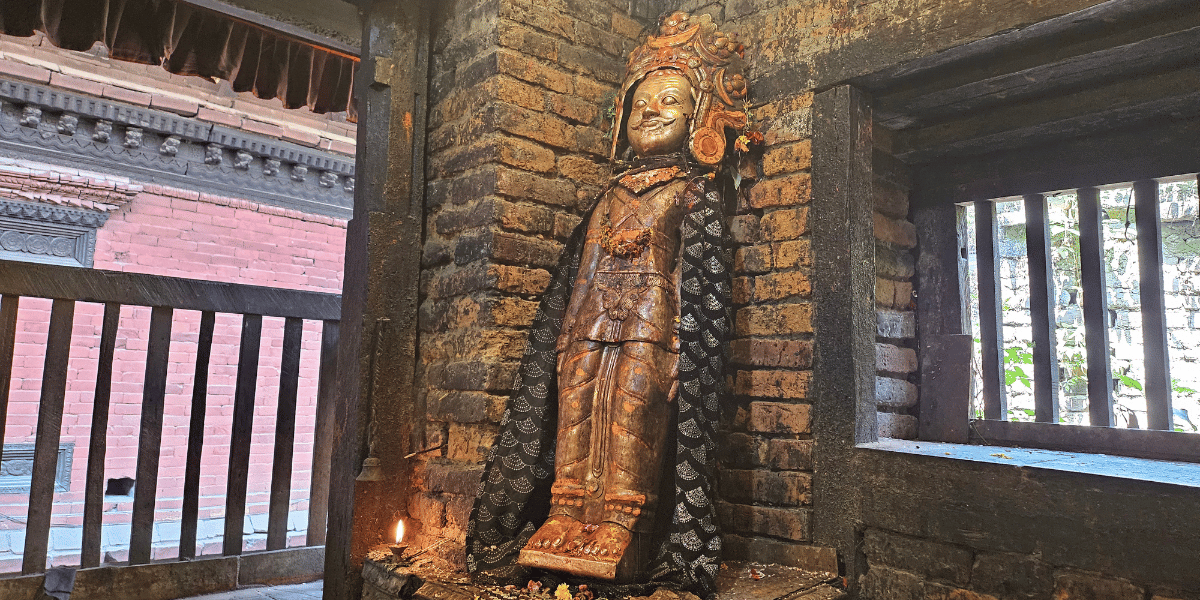
Betal is also considered the primary divine vehicle (Vahana) of Bhairavnath. For this reason, he always leads Bhairav ahead and accompanies him during the whole procession!
On the day of Bisket Jatra, Betal’s idol is tied in front of Bhairavnath’s chariot. It is called Betansi (the seat or platform for holding Betal).
It is only during this celebration time that Betal is erected; otherwise, he is tied with bells and placed on the eastern side of the temple. It is because people consider Betal to be a very active and restless deity.
Bisket Jatra: When Taumadhi Square Comes Alive
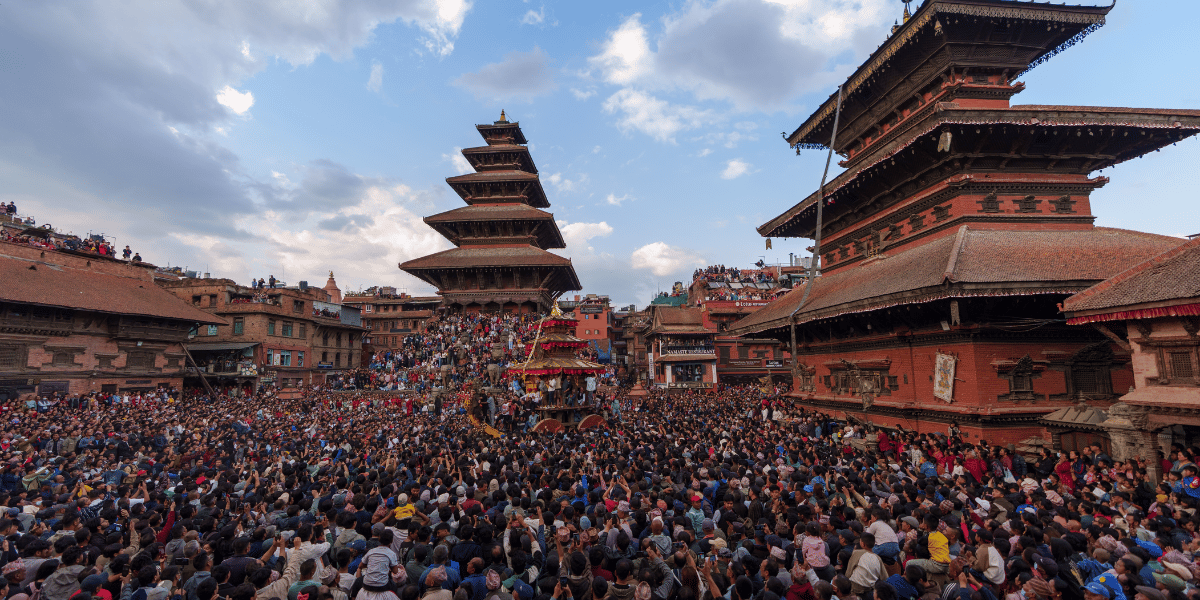
Taumadhi Square becomes something extraordinary during the Bisket Jatra every year, which is one of Bhaktapur’s most significant, colorful, and deeply rooted festivals.
The 9 days of celebration align with the Nepali New Year (based on the Hindu Bikram Sambat calendar) and highlight the culture and traditions from centuries past, bringing an amazing feeling of unity!
Reason Behind the Bisket Jatra Celebration
Bisket Jatra has its origins in mythology, history, and religious symbolism. Local legends connect its origin to heroic tales; however, historical accounts have a different perspective on the name and significance of the festival.
The first story is about a cursed princess of a powerful kingdom whose husbands died mysteriously on the wedding night.
One day, a brave prince married her. That night, the prince stayed awake, and while the princess was sleeping, he found out that two deadly snakes came out of her nostrils, and he killed both.
Finally, the princess was freed from the curse. The (king) father of the princess was very happy about this, and he hung the killed snakes on a tall pole and erected them in Yoshin Khel. The entire kingdom celebrated this, and it became Bisket Jatra.
Moving to another myth, the story of a Tantric couple. During the reign of King Shivadeva, the Kirants attacked Bhadgaon and tortured the people, so the king went to Tantric Shekhar Acharya, who had the special skill to transform himself using some magical rice grains.
Upon the king’s request, he turned himself into a tiger and chased the Kirants. Thankfully, the Kirants ran away, and Bhadgaon was saved.
After this, the tantric Shekhar Acharya’s wife desired to see his Azinger (python) form, so she requested her husband to transform himself. He agreed and gave his wife some rice grains and asked her to sprinkle them over him to return to his original form.
He then turned into a python. But as soon as the wife saw it, she became frightened and ran away. Due to fear and panic, she herself ate the rice grains. And that turned her into a python, too!
Now, both of them were unable to turn back to their original form, so they committed suicide.
After hearing about what happened, the king ordered that every year on the last day of Chaitra, they would be remembered by raising a tall wooden pole, Lingo, at Yoshin Khel. Also, two long banners would be attached to signify the couple at the top.
This pole-raising ceremony still exists today, and you get to see it on the fourth day of Bisket Jatra.
Historical Records
Besides the legend, myths, and folk tales, if we check the historical records, it shows something different about the origin of the festival. For the celebration, different names have been given from the ancient Malla period; they are: Viskyat Jatra, Vishwayatra, Bishwadhvajyotanam, and Vishwasankranti.
Likewise, the records also mention that the word Bisket may have derived from the Sanskrit word Vishwa Ketu rather than from the legend of the Serpent.
Additionally, the festival also involves the ceremonial raising of the Lingo with two banners. They are said to be symbolic representations of Bhairab and Shakti. During the fiesta celebration, people are praying for protection, prosperity, and abundant agriculture.
Bisket Jatra is still famous today as one of the unique festivals of Nepal and is celebrated with great devotion, combining centuries-old traditions and community spirit.
How Bisket Jatra is Celebrated
This huge celebration begins around Chaitra 27/28 and continues until Baisakh 5, around mid-April every year. Each day, something new is celebrated, featuring unique ceremonies and processions that are so fascinating to watch.
Although it is mainly celebrated by the Newar community, you can see people of other communities also participating in it as a communal event. This festival brings joy and togetherness among the people and is celebrated in different parts of Bhaktapur.
Taumadhi Square becomes the centre of attention on the very first day of the festival. Celebrations begin with Dyo Kwa Bijyayegu, which is the sacred ceremony in which the Lord Bhairav idol (and the sacred box containing the roughly 30 cm head) is brought out of his temple and placed onto a magnificent three-storey wooden chariot.
People from the upper town (Thane) and the lower town (Kwone) of Bhaktapur come to Taumadhi Square to play a traditional game of tug-of-war. The most exciting moment is when every group pulls the chariot to their own side of the town.
No matter who wins, the chariot is always taken before New Year’s Eve to Yashikhyah Square on the south side of Bhaktapur.
Before this, a ceremony of performing daily rituals by the tantric priests at several places takes place for several hours, and animals are also sacrificed.
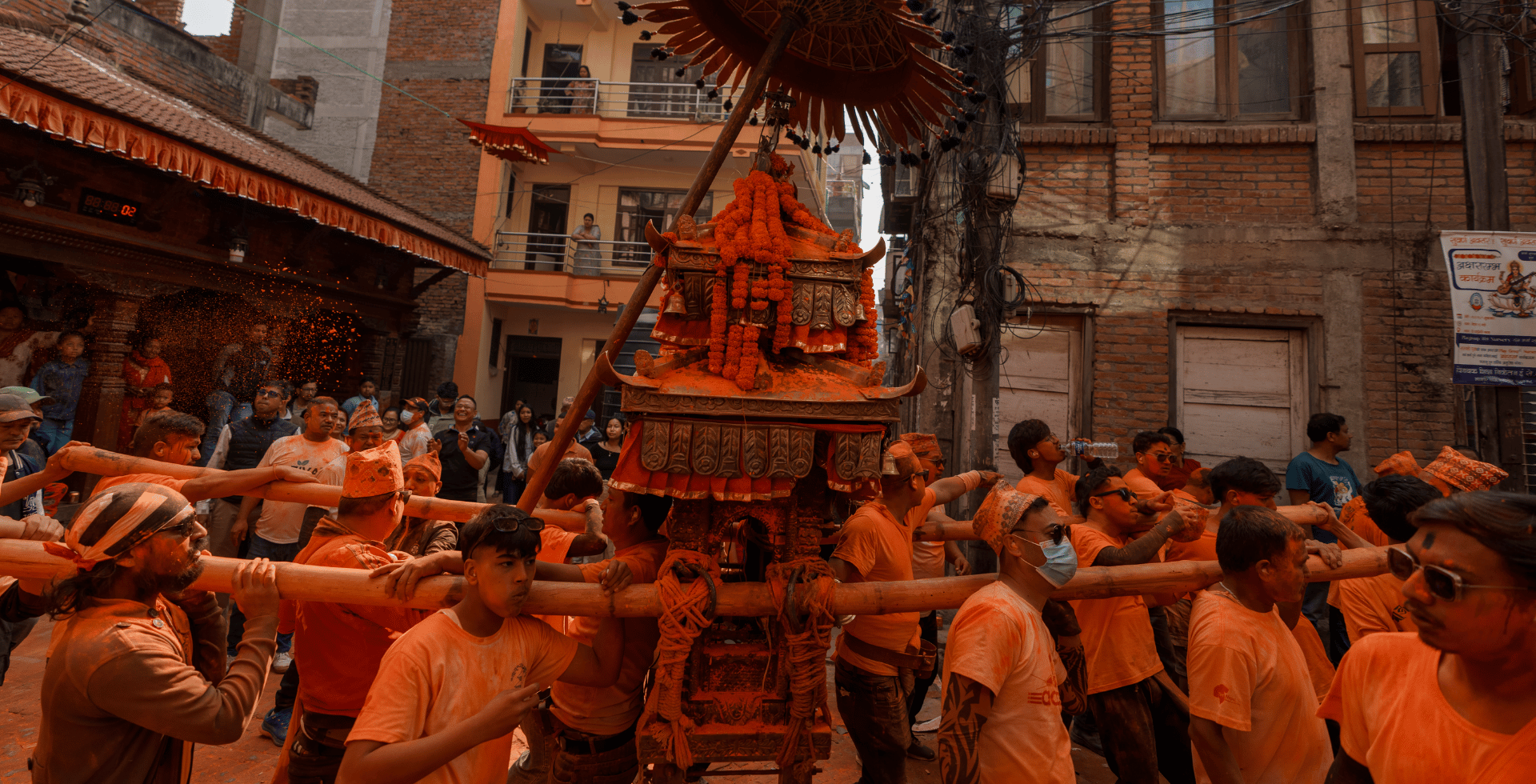
All days of the jatra are equally important. Other famous celebrations that take place during Bisket Jatra are the Sindoor Jatra at Madhyapur Thimi and the tongue-piercing jatra of Bode.
Gai Jatra in Taumadhi
Gai Jatra festival is another big festival of the Newar community celebrated on the first day of the waning (darkening) moon during the month of Bhadra. It usually falls in late August or the first week of September in the Gregorian calendar.
According to an ancient manuscript, during the time of Jayasthiti Malla, the festival was called ‘saa yaa(t)’ or ‘gai yatra ’, which means ‘journey of the cow’. And many cultural historians argue that the Sa Paru (Gai Jatra) was already an ancient Newar festival celebrated throughout the Kathmandu Valley long before the reign of King Pratap Malla.
Later, the festival became associated with King Pratap Malla (the eighth king of Kantipur). But he was the only one to add humour to the festival. He initiated the fiesta to console his grieving queen after the death of their son, Prince Chakravartendra Malla.
When he was unable to make his wife realize that they were not the only ones to lose their loved ones, many families had also lost their beloved members, King Pratap Malla added humorous and comedic acts to put a smile on her face and minimize her pain.
Today, in Bhaktapur, the traditional cow festival, or Gaijatra, is celebrated for a week, starting from Talejusthan after making Tahamacha and parading through the entire historic settlement.
Likewise, on the day of Gaijatra, the traditional ‘Ghintang Ghisi’ dance is performed by the Hindu Newa community. The dance is organized by the Guthi Sansthan office, which starts from the Taumadhi Square and is paraded through Bhaktapur, including other squares.
It starts with the worship of Taleju and the ceremonial procession of the cow from the temple. Similarly, it is a tradition that is held in memory of deceased family members, where the participants put on nine pairs of clothes, eat nine different types of food, and circle the neighbourhood nine times.
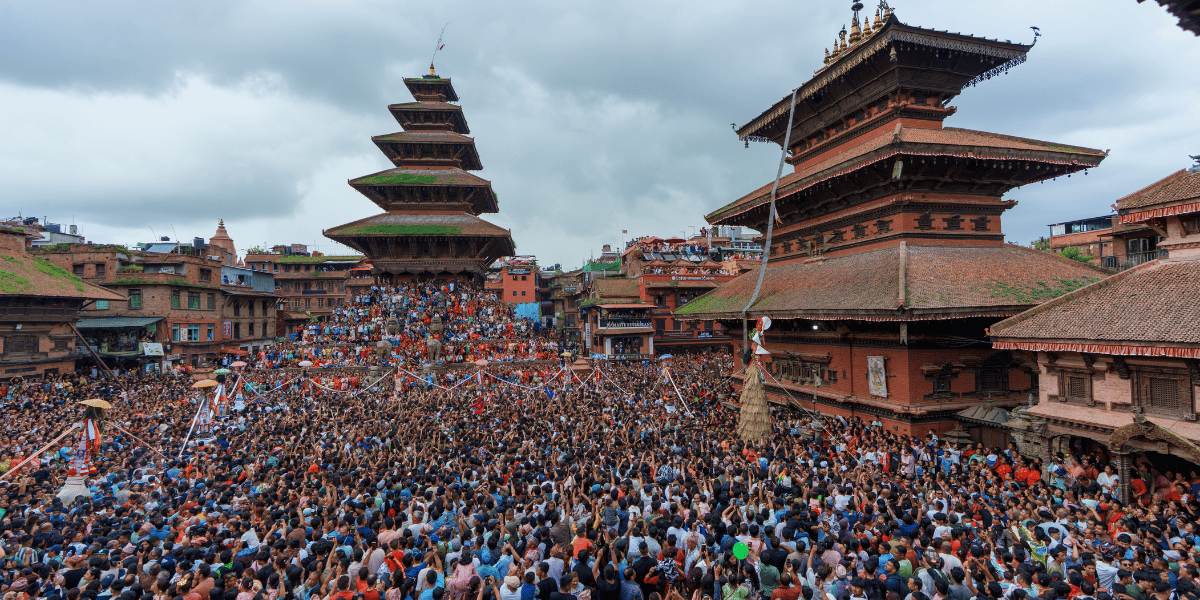
The festival ends with a final evening procession from Taumadhi Square, which includes straw statues and the Bhairav Dance. The statues of Bhairav and Nakinju Ajima are taken out from the Bhairav Temple, and among them, the main idol is of Nakinju Ajima.
Both are regarded as the main guardian deities of Bhaktapur. After those of Bhairav and Ajima, other idols cannot be paraded. This is because they hold the highest position in the city’s sacred hierarchy, and it is believed their appearance in procession is symbolic of the ultimate and ritual completion of the festival.
In this week-long Gai Jatra celebration, the ‘Ghintang Ghisi’ dance, Hanuman Dance, Maka Pyakhan, Jhyalicha (Junglee Nach or Jungle Dance), and other cultural performances are performed.
Food, Cafes and Rooftop Restaurants
Around Taumadhi Square, you can explore many things, from small local places and Bara stalls to cafes/restaurants with an authentic Newari menu. You can get the taste of typical Nepali foods like Juju Dhau, Bara, Thakali Khana, Yomari, etc.
During different jatras of Bhaktapur, the rooftop restaurants around Taumadhi Square are known as the best spots to watch the festivals from above and are often packed ahead of the festival.
Around Nyatapole Temple in Taumadhi Square, you can enjoy your food with a view of the temple and courtyard. Here are some recommended spots for you:
- Himalayan Java
- Ama ko Bara Pasal
- Cafe Harati
- The Garuda Bar
- Temple Terrace Restaurant, etc.
If you’re interested in being a part of Bisket Jatra, our team at Altitude Himalaya organizes a Kathmandu Photography Tour, which is focused on just that! But keep in mind that booking in advance is a must!
Moreover, you can request us for similar cultural tours (Bhaktapur-focused festivals) as well. Check out our Kathmandu Cultural Tour package for more info!
Other Attractions in and Around Taumadhi Square
Besides Taumadhi, other stunning places are equally intriguing to visit. Each place carries an ancient and significant history and offers you something memorable.
Here is a list of a few places you can add during your Bhaktapur visit (around Taumadhi Square):
Til Madhav Narayan and Tileshwor Mahadev Temples
We already discussed the history of the Til Madhav; now let's talk about its architecture and other details. Til Madhav is two-tiered, with a beautiful statue of Garuda kneeling on a pillar in front of it.
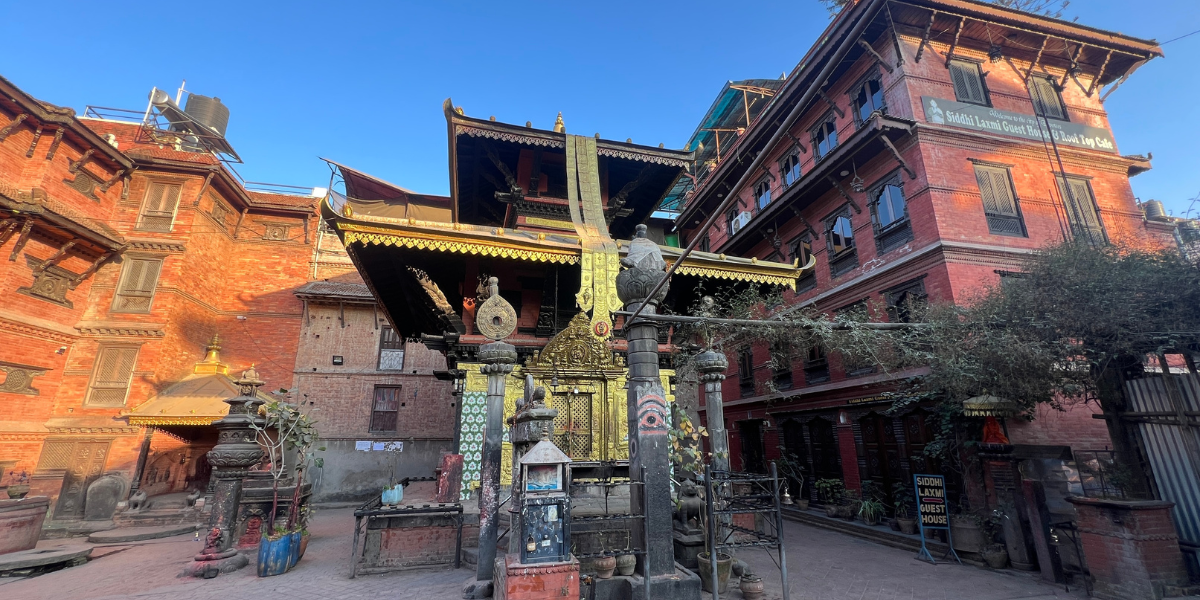
There are two columns decorated with sacred symbols of Vishnu: Shankha (conch shell) and Chakra (discus) on the two sides of the entrance.
Likewise, you can see a lingam on a yoni base, an important symbol of Shiva. It represents the union of male and female energy.
Speaking about the Tileshwor Mahadev Temple, it is a small shrine of Mahadev (Shiva) located near Til Madhav Narayan. Although it is smaller than Til Madhav, it reflects the close coexistence of Vishnu and Shiva, and their presence in the same courtyard depicts the Hindu religious traditions.
Durbar, Dattatreya, and Pottery Squares
There are three other squares in Bhaktapur besides the Taumadhi Square. Each of those squares showcases a medieval site along with unique arts and architecture.
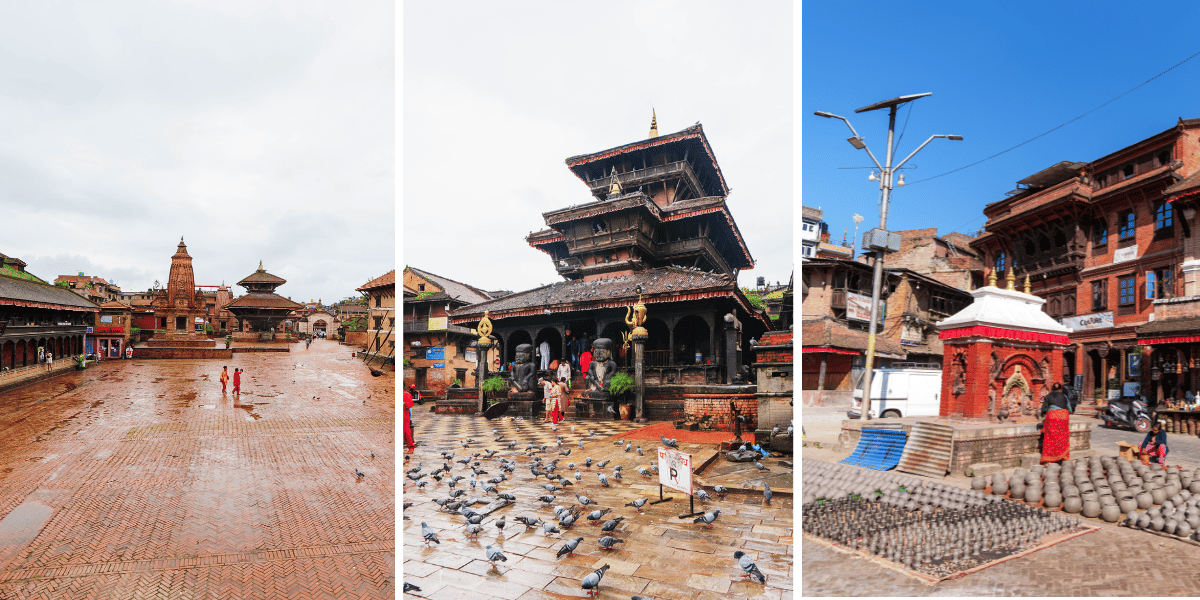
- Durbar Square: Temples like Silu Mahadev, Pashupatinath of Bhaktapur, Fasi Dega, Siddhi Laxmi Temple, Vatsala Devi, Char Dham, Taleju complex, statue of Bhupatindra Malla, Golden Gate, Taleju Bell, etc are the main attractions here.
- Dattatreya Square: Dattatreya Temple, National Art Museum, Brass and Bronze Museum, Wood Carving, The Peacock Shop, etc are the must-visit when you are here.
- Pottery Square: Jetha Ganesh, Vishnu Shrine, Akhandaseel Mahavihar, and Gorakhnath Temple are the major attractions here. Most importantly, you can experience pottery on your own. So, don’t miss this!
Travel Tip: If you have more time, definitely add Changu Narayan Temple to your travel list!
More Temples Near The Square
You can also visit several temples that are located around Taumadhi Square:
- Sweta Bhairav, Bolachhen Tole
- Kumari Mandir, Kwachhe Tole
- Jor Ganesh Mandir, Taumadhi Square
- Bhadrakali, Yosin Khel Tole
- Dattatreya Temple, Tachapal Tole/Dattatreya Square
- Char Dham Temples (Jagannath, Badrinath, Rameshwor, and Kedarnath), Bhaktapur Durbar Square
Museums in Bhaktapur
Bhaktapur itself feels like an open living museum, and there are many museums here where time-honoured art, religion, traditions, and cultures are preserved.
While there are no museums in Taumadhi Square, you can visit museums on the Dattatreya and Durbar Square premises to see the preserved items from long ago:
- National Art Museum: This is the art gallery located at Durbar Square, and you can find stone art, Paubha paintings, Manuscripts, and metal sculptures here.
- Woodcarving Museum: Located just beside the Dattatreya Temple, the puppet of Pujari, an open courtyard, paintings and carvings in wood, a wooden sculpture, a peacock window, statues of Bhairav and Shakti, and a brick-made tiny statue are the major attractions of this museum.
- Brass and Bronze Museum: Here, you can get a chance to witness centuries-old pots made from brass and bronze, utensils, lamps, ritual objects, sculptures, and antique copper coins, etc.
All three museums are a part of the National Art Museum, so the same entry ticket covers access to all museums.
Vihars and Mahavihars
Several peaceful Buddhist Vihars and Mahavihars like Chatubrahma Mahavihar, Muni Vihar, and Mangal Dharmadweep Mahavihar are also attractions near the square.
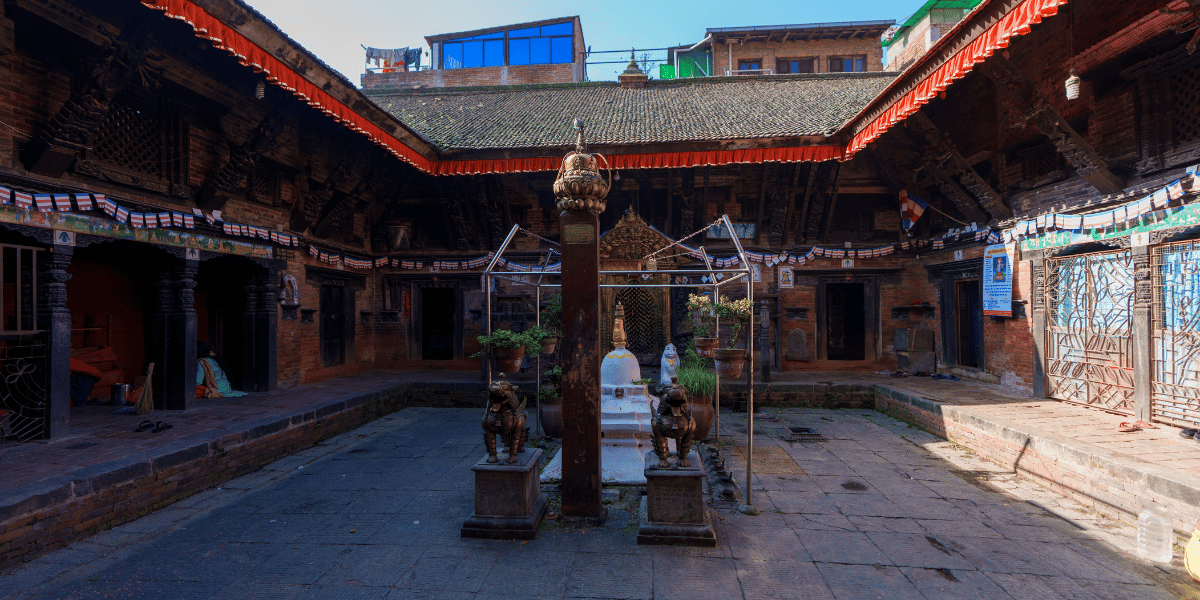
These reflect the harmonious coexistence of Hinduism and Buddhism. They are beautifully carved with wood and stone sculptures inside quiet courtyards.
Daily Life in Taumadhi Square
Taumadhi Square continues to be a public space depicting its heritage, ancient temples, and community life. The square is an interaction place for all the residents, devotees, artisans, shopkeepers, and tourists (local/international) during the day.
In the morning, you will find people visiting the temple to pray, light lamps with oil, and make offerings of flowers and incense. Similarly, the sound of temple bells and devotional chants from the temples creates an atmosphere of peace and calm.
Around the square, you can see the local farmers selling fresh vegetables and flowers. As the sun rises, the shutters around begin opening. You can also see people preparing local foods like Gwaramari, Bara, Haluwa Papad roll, Tea, etc and also try some.
During the daytime, the square is lively as shopkeepers become busy greeting visitors and welcoming them, and cafes and restaurants are filled with visitors, while old people gather together for a chat with teacups or Juju Dhau in their hands.
There is a farmers’ market in the evening, where you can see them selling vegetables. People also gather together for devotional songs (Bhajans) and hymns in the evening.
It’s very clear that the people of Taumadhi Square continue to preserve the traditions and lifestyle from centuries past.
Especially during the festivals, the spirit of the community becomes stronger, and they gather together to organize different rituals, decorate temples, and perform traditional music and dances.
Festivals Beyond Biska and Gai Jatra
Tumadhi celebrates several festivals throughout the year. While Bisket Jatra and Gai Jatra are some of the main festivals observed in Taumadhi, some of the other festivals celebrated here are:
- Indra Jatra: Although Indra Jatra is celebrated grandly in Kathmandu, Bhaktapur also celebrates it in different ways. Pulukisi Jatra, the last day, marks the conclusion of Indra Jatra in Bhaktapur, and the procession passes through Taumadhi Square. The Lakulache community built the Pulukisi, a symbolic representation of Airavata (an elephant and divine vehicle of Lord Indra). It is built using bamboo mats and blue fabric to give the appearance of a real elephant, painting even a trunk. The community begins the procession with four people carrying the Pulukisi. One of the people rings the bell at the Bhairavnath Temple (Akash Bhairav) in Taumadhi Square and signifies the start of the procession.
- Yomari Punhi: Taumadhi Square is not the main spot for Yomari Punhi, but during this festival, the Newari people living around Taumadhi prepare Yomari. It is a traditional steamed dumpling made from rice flour that is filled with either Chaku and Til (molasses and sesame) or Khuwa (dried milk solids). First, it is served to the deity, and all the families gather together and enjoy this festival. The local sweet shops around Taumadhi prepare Yomari throughout the day.
- Gunla Festival (aka Pancha Dan): Gunla, the name of the tenth month of the Nepal Era calendar (August). It is a holy month for Lord Buddha and is celebrated in Kathmandu, Patan, and Bhaktapur. Taumadhi Square is, in fact, one of the main venues for the celebration of the last day of this festival, Gunla Panchadan. Five Buddha idols are brought to the square in a ceremony accompanied by the traditional Gunla Baja, which is a sacred musical performance played only during the Gunla festival. This procession travels from Taumadhi Square through the historic streets of Bhaktapur. During this procession, devotees gather together and receive blessings.
- Madhav Narayan Festival: This festival is celebrated from Poush Sukla Purnima to Magh Sukla Purnima, and devotees fast for a month. They consume one meal a day without salt. The Til Madhav Narayan Temple is filled with devotees lining up according to their age to receive blessings from the temple priest. The priest pours holy water from a sacred conch over the head of each devotee, then they bow to Lord Narayan, prostrate on a white cloth, and lie on the ground. After this ritual, they start their sacred journey with faith and devotion.
Tips for Visitors
Taumadhi Square is a fascinating destination where you can get an opportunity to witness the tallest pagoda temple, enjoy your time to explore other nearby temples, and roam around domestic markets.
But remember: proper planning is a must before visiting the square. Below are some tips to make your visit memorable and meaningful:
- Best time to visit: If you like to have a peaceful walk with breakfast, the early morning is a good time to visit the square, as it is less crowded during this time. Late afternoon is also a great time to take pictures, to enjoy food, drinks, Juju Dhau, and to relax at a rooftop cafe, taking in the beauty of the temples and the square. If you wish to experience the domestic markets, shop around, and witness the temple lights in a calm atmosphere, then the evening would be the best time. Golden hours at Taumadhi Square with a terracotta cup of Juju Dhau and shopping for souvenirs will be mesmerising.
- Wear comfortable shoes: The place has traditional brick-paved roads, so please wear comfortable shoes that are easy to walk in.
- Respect local culture and heritage: Taumadhi is a historical and cultural heritage site, so be a discreet visitor and dress in a plain manner. You are advised to respect temples and to act properly when participating in religious activities and ceremonies. Also, do not touch any monuments that are historically important.
- Try local Newari food over general Nepali/western dishes: Don't miss the wonderful food like Juju Dhau (a local Newari dish of thick sweet milk), also known as the king of curd, and other dishes like Samay Baji (Newari Khaja set), Chatamari, Gwaramari, Bara, Yomari, etc. They are easily available at the restaurants or cafes nearby.
- Carry NPR cash: While many of the shops accept online payment, some small traders and vendors prefer cash payment. So, carry cash with you!
- Ask before taking photographs: You can take photographs, but you need to get a person’s consent before taking their picture or before photographing a scene if you see a religious act being performed.
- Carry all essentials: Taumadhi, including other squares, is all about exploring on foot. So, carry a bottle of water, sunscreen, an umbrella, along with a sun hat and sunglasses (depending on the weather).
- Obey the regulations of the heritage site: It is very important to listen to and obey the rules and regulations given by the site administrators. Ask your guide whenever you’re confused!
Final Thoughts
In conclusion, Taumadhi Square is the heart of Bhaktapur. Walking through the square, you’ll realize that it has been a preserver of centuries-old temples and monuments.
It is a beautiful place where different festivals and religious ceremonies are celebrated with great devotion, enthusiasm, and faith. People reside in unity, sharing hardships and beautiful moments, welcoming both internal visitors and external tourists.
Nytapola (the tallest temple), wood carvings, lively alley, shrines, courtyards - each of them tells you a story that has been passed down from generations.
Whether you want to admire the temple, experience Bisket Jatra, taste Newari dishes, or watch day-to-day activities of people around the square, our team at Altitude Himalaya can help you with this and also provide you with insights and an unforgettable experience. We’re just one call/text away!




 Garima Bhandari