Madhyapur Thimi is a small and beautiful municipality that serves as a key identity of Bhaktapur. It was formed from the merger of the former five Village Development Committees (VDCs): Bode, Nagadesh, Chapacho, Balkumari, and Lokanthali.
Currently, the municipality has nine wards (after Nepal’s administrative restructuring): Ward No. 1 (Lohakilthali), Ward No. 2 (Jatigaal), Ward No. 3 (Kaushaltar), Ward No. 4 (Balkumari), Ward No. 5 (Bhulankhel), Ward No. 6 (Chapacho), Ward No. 7 (Nagadesh), Ward No. 8 (Bode), and Ward No. 9 (Sintitaar).
This town of Bhaktapur is often overshadowed by other famous neighboring cities, but still is a must-visit destination, thanks to the several cultural highlights that are spread over an area of 11.47 square kilometers.
As you roam through its narrow brick-paved lanes, you will see several beautifully carved temples, traditional Newari houses, busy pottery workshops, small ponds, rest houses (falcha), and friendly local communities.
The major highlights here are: Siddhikali and Balkumari temples along with the energetic celebrations of Sindoor Jatra, Bode Jibro Chedne Jatra aka Tongue-Piercing Festival (part of the greater Bisket Jatra), and the sacred Nilbarahi dance.
Whether you are a history enthusiast, a culture lover, or looking for a unique place rather than the usual routes and trails, do visit Madhyapur Thimi. It will definitely provide a memorable experience in the heart of the Newar civilization.
Madhyapur Thimi Quick Facts
|
Location
|
Bhaktapur District, Bagmati Province
|
|
Meaning
|
Evolved from the word “Chhemi,” which means “capable people”
|
|
Area
|
11.47 sq. km
|
|
Altitude (approx.)
|
1,326 m
|
|
Population (Census 2021)
|
119,756
|
|
Main Ethnic Communities
|
Newar (31.6%), Hill Brahmin (22.3%), Kshetri (20.7%), Tamang (7.7%)
|
|
Main Religion
|
Hindu (87.6%) and Buddhist (8.1%)
|
|
Main Languages/Mother Tongue
|
Nepali (53.9%) and Newari (29%)
|
|
Main Cultural Occupations
|
Pottery, Agriculture, Mask Making, Making of Tigani Baji (or Tigi Baji)
|
|
Major Festivals
|
Sindoor Jatra and Bode’s Tongue Piercing Jatra (part of Bisket Jatra), Indra Jatra, Yenya Punhi Mye Pwa Khanegu (Tongue Piercing Jatra that happens after Indra Jatra in Digu Tole), Gai Jatra, Nilbarahi Dance, etc.
|
|
Main Places to Visit
|
Siddhikali Temple, Balkumari Temple, Nil Barahi Temple, Thimi Pottery Square, Nagadesh, Bode, Akha-Chen Museum, Thimi Ceramics, Nigu Pukhu, Digu Tole, etc.
|
|
Famous Food
|
Tigi Baji or Tigani Baji (Beaten Rice), Juju Dhau, Samay Baji, Bara, etc.
|
|
Rivers
|
Manohara and Hanumante
|
|
Ponds
|
Nigu Pukhu (Dui Pokhari), Swanga Pukhu, Bode Kamal Pokhari, Lachhi Pukhu, Bode Nachhu Tole Pokhari, Bode Khansi Pokhari
|
History of Madhyapur Thimi
Madhyapur Thimi (Madhyapur, meaning “middle place/city”) has remained a center of civilization for centuries! According to historical records, the settlements of Thimi and Bode came into existence in the Kirant era.
During the late Malla period, Madhyapur Thimi was situated between the powerful kingdoms of Kathmandu, Patan, and Bhaktapur. There used to be frequent conflicts between these kingdoms. Because of the continual warfare among them, Thimi served as a defensive stronghold for the Bhaktapur/Bhadgaon kingdom.
There is a local legend that is very well known. It is said that the people of Thimi were genuinely loyal and brave in protecting Bhaktapur and that the kings, being impressed with them, praised and started referring to them as “Chhemi”.
Chhemi basically means a capable or skilled person. Over time, this name gradually evolved and came to be “Thimi”.
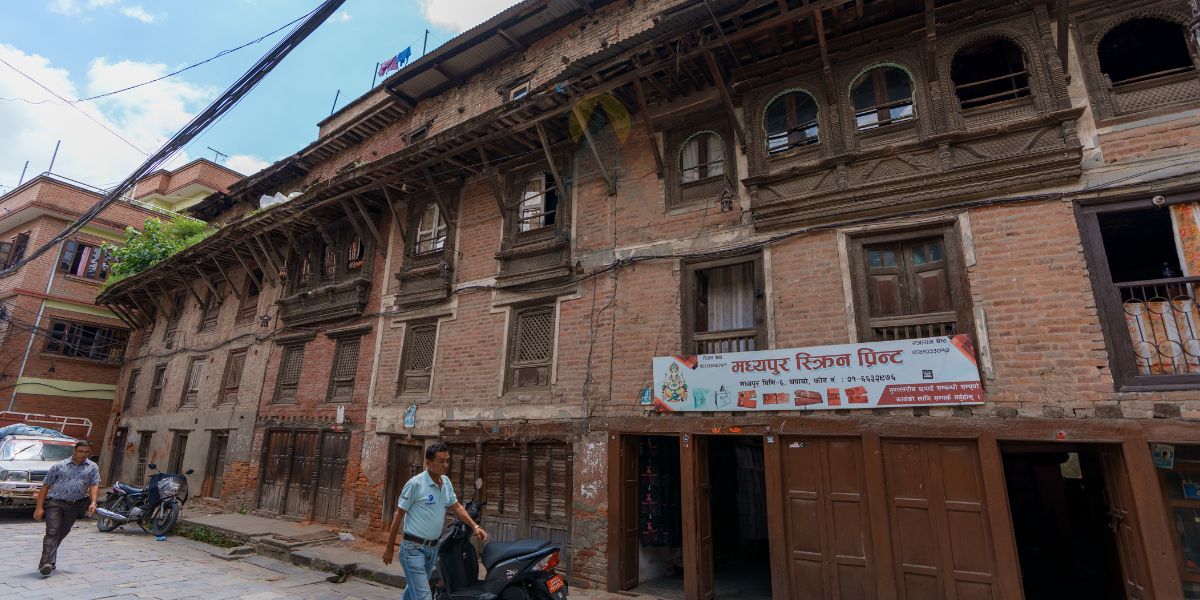
As the town continued to develop, Madhyapur Thimi started being well-known for its flourishing Newar art, architecture, and handicraft. Artisans with exceptional skill carried traditions in pottery, wood carving, mask making, fabric weaving, and even beaten rice (Chiura) production. These support local livelihoods even today!
Earthquake and Restorations
The earthquake of 2015 (particularly the 7.4 magnitude aftershock on May 12) caused massive damage in Bhaktapur and Madhyapur Thimi. More than 100 houses in Bhaktapur suffered damage, and 198 people were injured!
Two houses collapsed at Bahakha Bazaar, and the road section of Kathmandu-Bhaktapur was also disrupted. Additionally, two families lost their houses, and two families were left homeless.
And some of these historic temples and monuments were also damaged:
- Ponds like Bishnu Kunda and Nigu Pukhu were destroyed.
- Vishnu Bir Temple was fully damaged.
- Balkumari Temple, Siddhikali Temple, Siddhi Goddesses Temple, and Nil Barahi Temple of Bode, Mahalaxmi Temple of Bode, Dakchinvarahi Temple, and Wamune Pati were partially damaged.
Restoration and reconstruction of the heritage of Thimi started soon after the earthquake with the support of the municipality and local communities. The fully damaged Vishnu Bir Temple was reconstructed within a year with the help of local people.
Similarly, the municipality allocated about Rs. 70 million for the renovation of other partially damaged monuments.
Present Day: Modern Municipality
In the present day, these historic settlements still maintain their traditional spatial layout with their ancient temples, large courtyards, markets, and festivals. They are helping to create a vivid image of the history and life of Nepal.
Madhyapur Thimi municipality continues to preserve its centuries-old cultural heritage to promote and introduce the town to national and international visitors.
Similarly, it also regularly invests its energies and resources into upgrading the public facilities, education, health, tourism, environmental management, and cultural preservation.
The municipality is moving with a guiding motto: “Our Art, Our Culture: Madhyapur Thimi, Our Property”. And despite the urban growth of the town, it remains one of the most distinctive cultural destinations in Kathmandu Valley.
Why is Madhyapur Thimi Famous?
Madhyapur Thimi Municipality is well-known for its development works, traditions and culture, historic sites, rivers, temples, and Newari settlement. Two major rivers (Manohara and Hanumante) flow through this municipality.
Manohara River originates from Manichud and flows through Salinadi, where it forms a part of the boundary between Kathmandu and Bhaktapur districts. On the other hand, the Hanumante River originates from Mahadev Pokhari and flows westward through the valley between Nagarkot and Bageshwori.
Several other factors that make Madhyapur Thimi famous are:
- Historic Newar settlements: The brick-paved lanes, traditional courtyard houses, ancient temples, local community, festivals, and architectural buildings all reflect the authentic Newari life existing since the Kirant period.
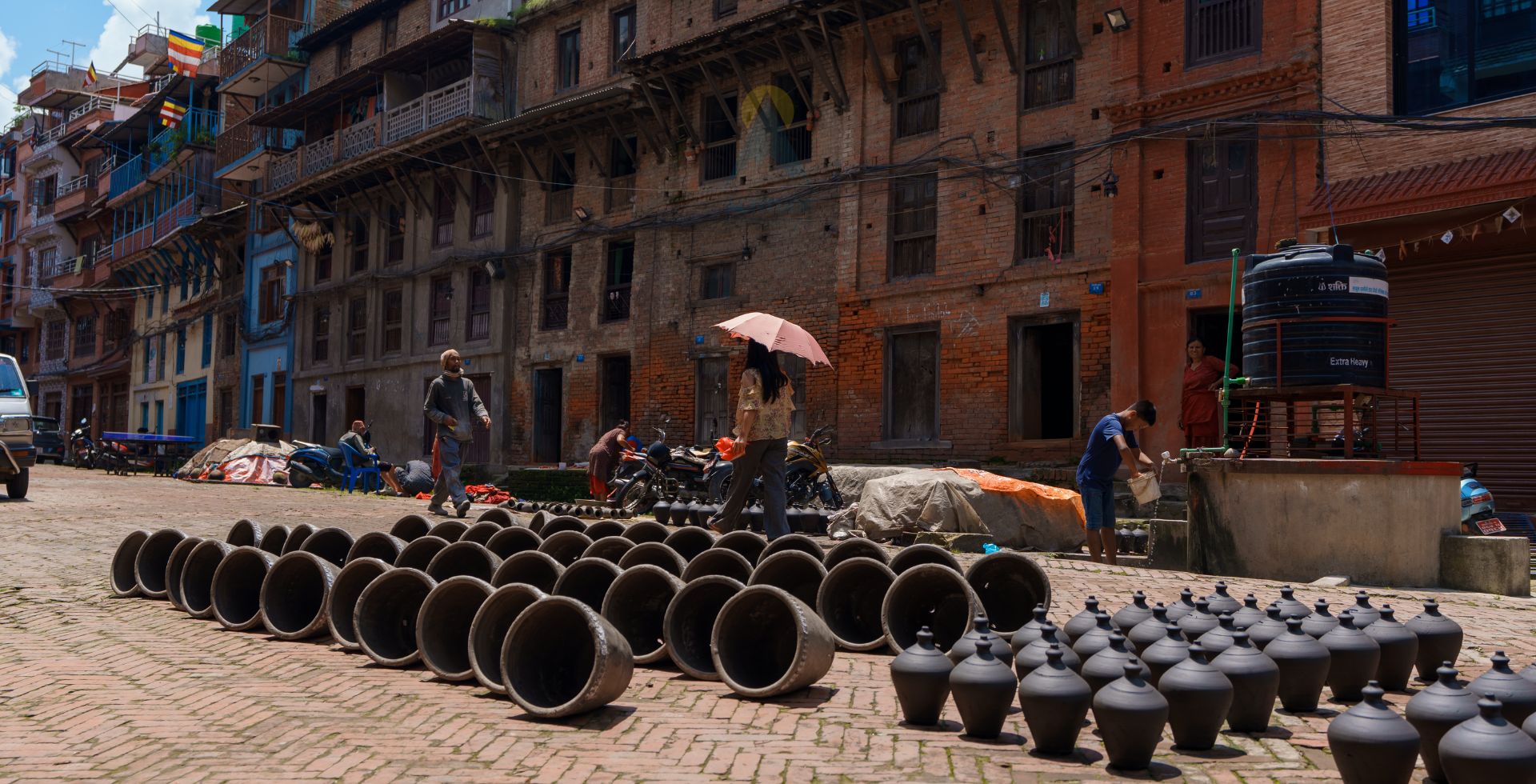
- Traditional pottery: The courtyard of Madhyapur Thimi is filled with pottery items like Handi, Khutruke (piggy bank), clay lamps, vases, trays, and many more. In fact, the place is one of the important pottery-making centres in Nepal (often called “the pottery village”), and local artisans here have continued pottery making for generations. When strolling around, you get to see that men are preparing the clay and shaping the vessels while women are smoothing the surfaces and decorating, drying, and placing the items in courtyards. Also, most of the houses here are filled with pottery items, and the majority of people are engaged in pottery making. Additionally, Madhyapur Thimi is home to Nepal’s first ceramic factory: Thimi Ceramics.
- Vibrant festivals: Madhyapur Thimi celebrates several vibrant festivals showcasing the town’s religious traditions and strong community spirit. It is the time when the town comes alive, plus the spaces are populated with processions, dances, sacred rituals, and gatherings.
- Traditional Architecture: Walking around, you can see beautifully built temples, historic courtyards, traditional brick houses, and centuries-old rest houses (paties). Additionally, the windows in several houses are carved with wood that depict the artistic legacy of the Newar civilization. These beautiful architectural monuments and places also add value to the town, making it special.
- Agriculture: Madhyapur Thimi stands out from other urban areas as agriculture and farming are among the main occupations of people living here. As soon as you step into the area, you can feel the fresh air with the scene of greenery around. In fact, Madhyapur Thimi consists of fertile fields, where rice, wheat, mustard, and a wide variety of seasonal vegetables are produced. The fresh vegetables grown here are even supplied to other places in Kathmandu, which is why it’s called the “kitchen garden of Kathmandu Valley”.
- Tigani Baji: This is a special beaten rice (chiura/baji) produced in Madhyapur Thimi. It is light, crispy, and has a unique taste. During your visit, you can try this baji that goes perfectly with Juju Dhau (king of curd). The rich, creamy sweetness of the curd perfectly goes with the crunch of beaten rice!
How to Reach Madhyapur Thimi?
Are you planning to visit Madhyapur Thimi? I will make it easy for you. You can easily reach Madhyapur Thimi from major places in Kathmandu:
From Thamel
If you are staying in Thamel or nearby areas, then there are two options to reach the ancient town:
- By Public Bus: Going via public bus is also reliable, as you will find the buses in Ratnapark or Bagbazar (Bhaktapur Bus Park) that head toward Bhaktapur. There are two routes: the bus goes from New Way (Naya Bato) and Old Way (Purano Bato). To reach Madhyapur Thimi, get on the bus that goes from Old Way (Purano Bato) and get off at Siddhikali Chowk. You will reach there within 1-1.5 hrs (depending on the traffic) and start your trip from Thimi Ceramics.
- By Taxi/Ride Sharing: If you prefer a hassle-free journey, simply book a taxi or a motorcycle from a ride-sharing app and reach Madhyapur Thimi directly within 30-40 minutes.
From Bhaktapur Durbar Square
If you are already on the grounds of the UNESCO World Heritage Site, then you can reach Madhyapur Thimi either through a ride-sharing app or by public bus from Dudhpati or Syano Byasi.
And if you choose to walk, you can even visit more attractions of Bhaktapur this way. This will take about 1-1.5 hrs from Bhaktapur Durbar Square (depending on your pace).
Best Way to Explore Madhyapur Thimi: Different Walking Tours
Whether you have just a couple of hours, half a day, or an entire day, these are the three walking routes that will help you explore the town at your own time and pace:
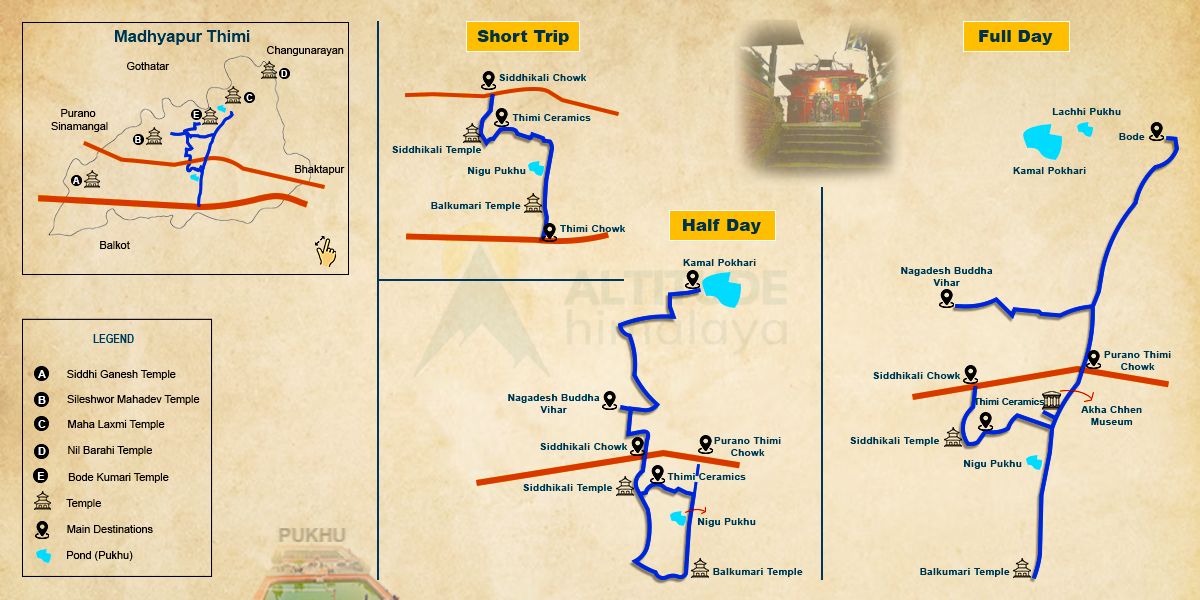
Best Route for a Short Trip
Busy schedule and have only limited time (about 1-2 hours)? Don’t worry, I have prepared this route that you can take to visit the main locations of Madhyapur Thimi (possible even in limited time):
- Get off at Siddhikali Chok.
- Head to Thimi Ceramics and explore the factory.
- Don’t forget to visit Siddhikali Temple on the way.
- And if you have extra time, you may add Balkumari Temple too (approx. 1 km from Thimi Ceramics)!
- Now, as you are already at Balkumari Temple, it will be easy for you to move towards Naya Thimi Sankhadhar Sawakha Chowk (Araniko Highway) to return. You can reach here within just 4-5 minutes of walking.
Best Route for Half-Day Visit
Likewise, if you are planning for a half-day visit to Madhyapur Thimi, then I suggest this route:
- Start by exploring the ancient temple of Siddhikali and also Thimi Ceramics (as mentioned above).
- Now, head to Thimi Pottery Square to watch artisans turning a lump of clay into something unique and useful.
- Then, continue towards Balkumari Temple (a 5-10 minute walk from Thimi Pottery Square) to offer your prayers.
- Next, move towards Nagadesh to visit Nagadesh Buddha Vihar, where you can enjoy the calm, spiritual, and peaceful environment. You need to walk for approximately 20 minutes from Balkumari Temple to head towards Nagadesh Buddha Vihar.
- Now, march forward to the famous pond, Bode Kamal Pokhari, where you will find lotus flowers blooming all over the pond (particularly from summer to early autumn). This is approximately another 20 minutes walk!
- Again, you can walk for about 5 minutes and reach Bode Lachhi Pokhari and Bode Bhimsen Temple.
- While returning, you can get on a local bus or get a ride from Bode to your desired location.
A Full-Day Trip to Madhyapur Thimi
Those who want to immerse themselves in Madhyapur Thimi’s beauty, culture, traditions, and temples for a whole day, here is the perfect way:
- After getting off at Siddhikali Chok, move towards Thimi Ceramics along the traditional Newari houses, clay storage, farming patches, green bushes, and trees. Also, visit their store upstairs and shop for the best and unique souvenirs for your loved ones.
- Now, from there, walk around the narrow brick lanes and explore the traditional Newari settlements; visit small shrines of Ganesh, peaceful courtyards, rest houses (Pati), and many pottery workshops.
- There is a cultural museum, Akha Chhen, within a five-minute walk from Thimi Ceramics; you can visit it if it is open because it remains closed sometimes.
- After a 6-minute walk from Akha Chhen, you can also reach the famous Nigu Pukhu, aka the Twin Pond.
- Don’t forget to visit Siddhikali Temple (3-minute walk from Thimi Ceramics) and Balkumari Temple (approximately 15-minute walk from Thimi Ceramics).
- Now, either take a short drive or a ride to Bode, or walk approximately 30 minutes from Balkumari Temple to Bode and visit Bode Kamalpokhari, Lachhi Pukhu, Nachutol Pokhari, and Bhimsen Temple.
- Finally, head towards Nagadesh Buddha Vihar (approximately 20 minutes from Bode), followed by other Hindu shrines, green rice fields, vegetable farms, and quiet streets.
- After visiting Nagadesh Vihar, come back to Siddhikali Chok (10-minute walk), where you can find public buses and private taxis to return to your destination.
Temples in Madhyapur Thimi
You can also visit many religious places during your visit to Madhyapur Thimi. Here are the most important:
Nil Barahi Temple
The Nil Barahi Temple is a major religious and cultural site situated at Tigani, Ward-9 of Madhyapur Thimi Municipality (Sintitaar). Located on a hilltop inside a jungle, the temple is dedicated to Goddess Barahi, a powerful deity of protection and strength.
This temple is believed to have been established during the Licchavi era (by Vishnu Gupta from the Abhira-Gupta dynasty, who were the de facto rulers of Kathmandu).
It is a hub for various rituals, festivals, and cultural events and is of special significance among the Newar community. People worship Nil Barahi as the goddess of wealth or Dhana Barahi, and it is believed that by worshipping her, one can avoid the lack of wealth and prosperity.
Nil Barahi Jatra is one of the most significant festivals related to this temple, which is celebrated with traditional music, dances, and colourful processions. It’s celebrated for three days and four nights after the Gai Jatra festival.
Additionally, a fair is held in Nil Barahi Temple during Dashain, along with a special pooja conducted in Biska Jatra.
Balkumari Temple
Another significant site to visit while in Madhyapur Thimi is the Balkumari Temple, which is approx. 700 years old. Goddess Balkumari is considered the main deity here and is worshipped as one of the four Kumaris of Kathmandu Valley.
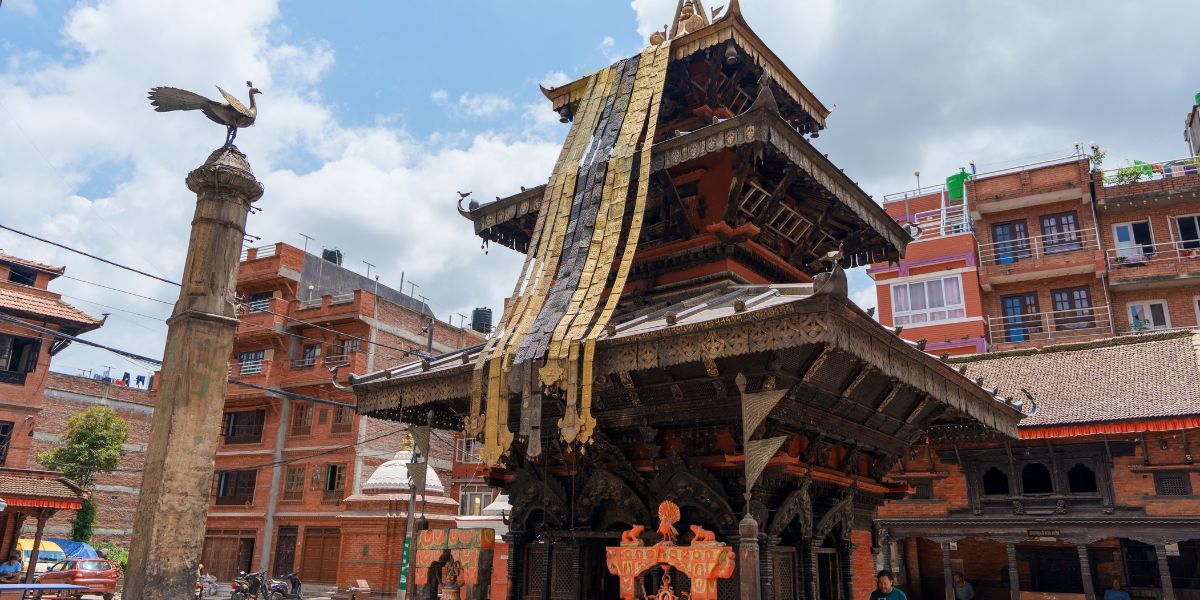
Local people worship her with great devotion and faith, also considering her their guardian deity. Different ceremonies, like marriage and Bratabandha, are also held here to rely on the living goddess’ blessings.
Additionally, it is an important part of Bisket Jatra, particularly associated with the Sindur Jatra. Although palanquins (khats) roam around the city this day, Goddess Balkumari’s chariot is only pulled to Prachanda Bhairava Temple.
There is also an interesting story of the temple. According to a legend, a merchant of Thimi fell in love with the princess of Lubhu, and she became pregnant. Later, the merchant asked her to marry him on the condition of bringing Balkumari with her to Thimi.
She agreed and brought Goddess Balkumari from Lubhu, and the temple was established here.
It is believed that a womb-like design over the idol in its structure is to honor the princess’ pregnancy and also signify the goddess’ role as the “deity of fertility”.
Siddhi Ganesh Temple
The Siddhi Ganesh Temple of Nagdesh, Madhyapur Thimi, is dedicated to Lord Ganesha. It is believed that he is the remover of obstacles and the deity of wisdom and success. Likewise, Siddhi Ganesh is worshipped as the guardian deity(Aju Dyo) of Nagadesh, and the temple is of great historical importance. Additionally, the temple also has a role during the Bisket Jatra when the chariot procession traditionally starts only after the chariot of Siddhi Ganesh is taken to the Balkumari Temple.
Being one of the significant religious and historical landmarks of Madhyapur Thimi, the temple welcomes several devotees to the shrine. People worship and seek blessings from Lord Ganesha here.
Kumari Temple
The Kumari Temple is also known as the Bode Kumari Temple or Kalika Kumari Temple, and is one of the major sites of Madhyapur Thimi.
You can make a visit to the temple for peaceful relaxation and greenery, as it is far from the city area. Besides daily worship, people gather here to celebrate jatras; the famous one is the tongue-piercing festival (Jibro Chedne Jatra).
There is a pati or dabali (rest house) with a stone-paved courtyard on the temple premises. Traditionally, such rest houses are used as community gathering places to rest, meet, and participate in religious rituals, festivals, and cultural performances.
Sileshwor Mahadev
Situated on the northern side of Nagadesh (Ward No. 7 of Madhyapur Thimi), Sileshwor Mahadev is also one of the important religious sites and a Hindu shrine in this area.
Every year, on the occasion of Janai Purnima, a grand fair is organized at the temple. Devotees from the surrounding and nearby areas visit the fair. You can also plan your visit during this time if you want to experience such a unique festival of Nepal.
Mahalaxmi Temple
Located at Bhaangu Tole of Bode, this temple is another important religious monument in Thimi. The temple is dedicated to the Goddess Mahalaxmi, and it is the religious center of Bode’s Jibro Chedne Jatra (tongue-piercing festival).
The jatra begins after raising the ceremonial pole (lingo) in front of the Mahalaxmi Temple on the first day of Biska Jatra. And on the second day, for the Tongue Piercing Jatra, a candidate’s tongue (from the Shrestha lineage) is pierced with an iron needle in the courtyard of the Mahalaxmi Temple.
Later, the soil of the Mahalaxmi Temple is applied on the tongue, which is believed to heal the wound. (More about Jibro Chedne Jatra later in this blog!)
Siddhikali Temple
Siddhikali Temple, also known as Inayekwo Dyo, is a Hindu temple located in Thimi. The temple is dedicated to Lord Kali, Shiva, and Ganesh.
As per legends, when Mahadev was carrying the dead body of Sati, her right eye fell here, which makes Siddhikali Temple a Shaktipeeth.
On Fulpati (seventh day of Dashain), the sacred Fulpati procession starts at Siddhikali Temple. Then, the procession is carried to Layeku Taleju Temple.
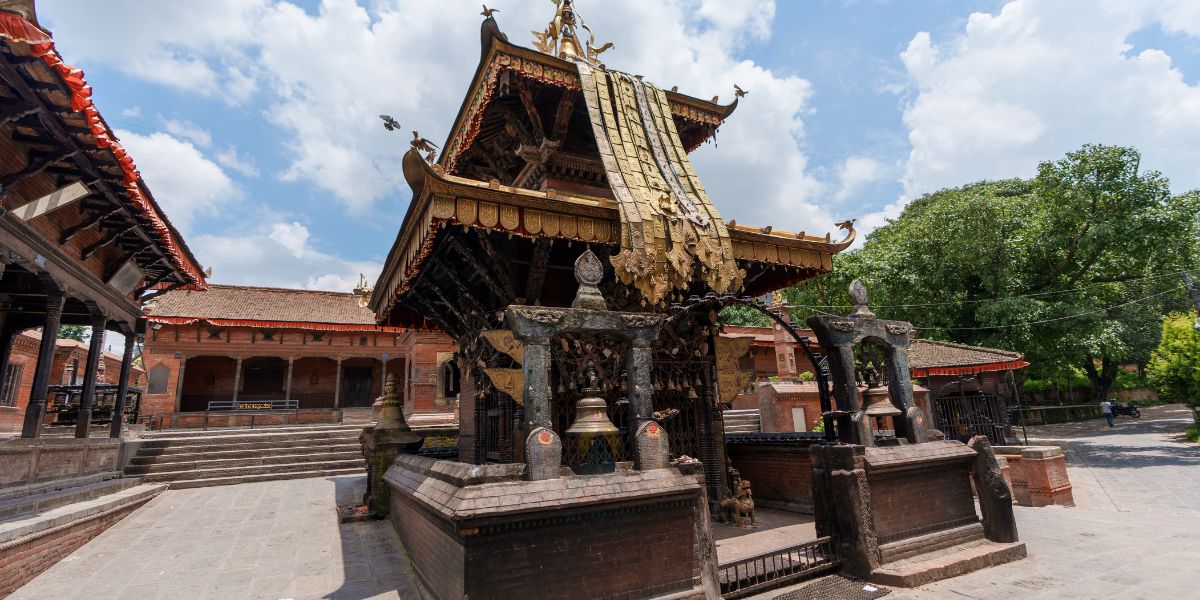
Likewise, on Bisket Jatra and Indra Jatra, the idol of Goddess Siddhikali is safely kept in Siddhikali Dyo Chhen (God house).
Siddhikali Jatra is also celebrated here with a palanquin procession, Naykhin music, Chilakh oil lamps, Dhime drums, and Bhusya cymbals.
Moreover, people worship Siddhikali in different festivals like Shree Panchami, Bhim Dwadashi, Holi Purnima, Digu Puja, etc.
Additionally, there is special worship at the temple in Maha Shivaratri in honour of Lord Shiva too!
Other Temples in Madhyapur Thimi
Besides the above-mentioned temples, Madhyapur Thimi is home to several other religious sites. They are:
- Bishwabinayak Temple, Chapacho
- Digu Bhairav Temple, Digu Tole
- Raj Ganesh Temple, Purano Thimi
- Kumari Temple, Bode
- Gorakhnath Temple, Bode (nearby Kamalpokhari, Bode)
- Harisiddhi Temple, Chapacho
- Kushal Bhairav Temple, Kaushaltar
- Navadurga Bhawani Temple, Gatthaghar
- Shyam Shyam Dham (Radhe Radhe Temple), Radhe Radhe
Monasteries and Vihars of Madhyapur Thimi
Not only temples, but Madhyapur Thimi is also home to several Buddhist monasteries and vihars, where people come for worship, meditation, and Buddhist learning.
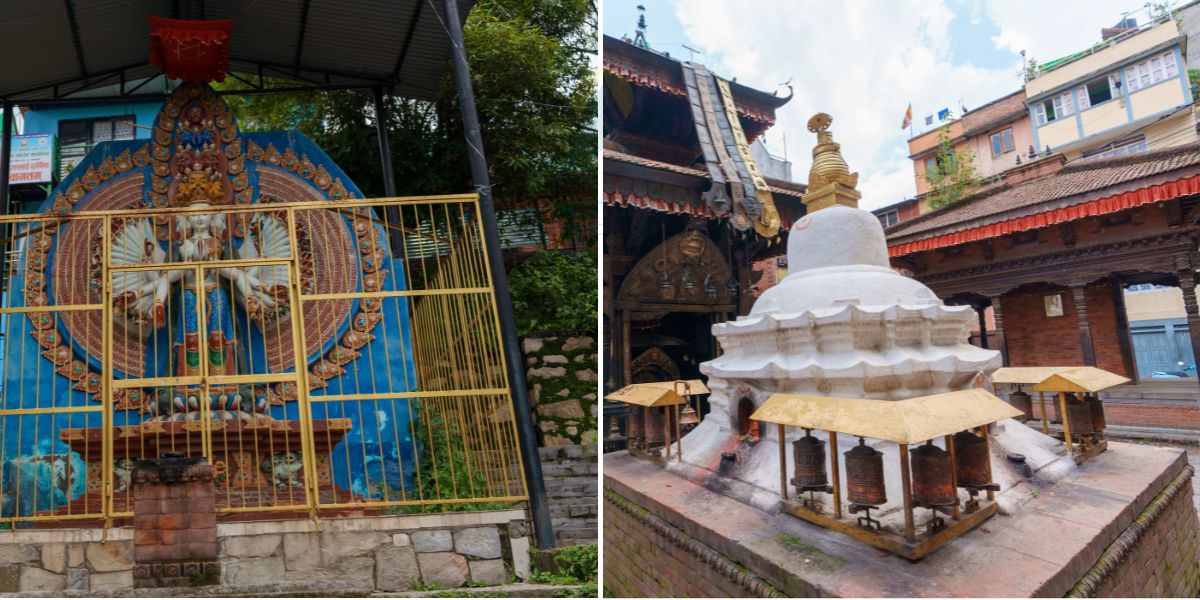
Nagadesh Buddha Vihar
Nagadesh Buddha Vihar is a traditional vihar and a prominent religious center of the local Buddhist community in Nagadesh.
It is a center for prayers, religious ceremonies, and community activities. Additionally, the vihar contributes to preserving the centuries-old Buddhist traditions.
Pati Vihar
Located in Chapacho, Pati Vihar is a historic Buddhist monastery with a large prayer hall inside, where people visit for prayers, exploration, and meditation.
Over the years, the vihar was in a state of dilapidation, and, in 1966 AD, it was reconstructed by the efforts of the local people. Now, it serves as a Theravada Buddhist Monastery.
Dharma Chakra Monastery (Gumba)
Located in Bode, the Dharmachakra Monastery is an active center of Buddhist worship, prayer, and religious study.
Different activities like chanting of sacred Buddhist texts (like Ārya Nāmasaṅgīti, Bhadracaryā Praṇidhāna Rāja Sūtra, Dhāraṇī hymns, and Jñānamālā), prayers in Nepal Bhasa (Newar), Tara puja, Karunamaya Puja, recitation of Mani Monlam prayers, and many more are performed in the monastery!
Festivals of Madhyapur Thimi
Madhyapur Thimi celebrates different festivals with huge celebrations and great devotion. Some of the major ones celebrated here are:
Bisket Jatra
The whole of Bhaktapur celebrates Bisket Jatra grandly for nine days during mid-April. In Madhyapur Thimi, these are the main jatras celebrated:
Sindoor Jatra
Sindoor Jatra (Dyo Jatra) is celebrated with colourful processions, traditional music, chariots of deities, and vermilion (sindoor) powder.
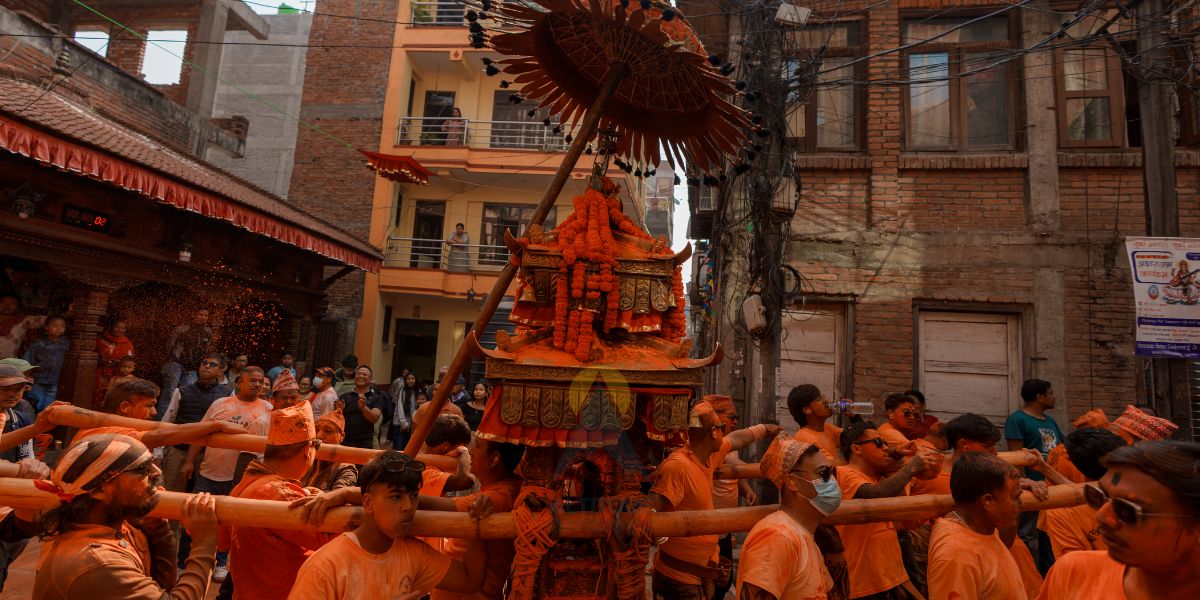
The palanquins are pulled through the streets, and people spray vermilion on each other with the rhythmic beats of the traditional Dhimey drums. People visit each other’s areas and worship all the chariots’ gods.
The celebrations start on the evening of Baisakh 1, the Nepali New Year’s Day, at the Siddhikali Temple with a procession called the Bya-li-siya Jatra.
On the second day, the next morning, the last celebration called Suthasiya Jatra takes place at Balkumari Temple. In this event, 32 palanquins (khats) carrying different deities are assembled around the temple and sacredly paraded by the participants. In the current days, only 26 to 28 palanquins are seen.
Devotees play with vermilion powder, sing, dance, and perform throughout the procession. This festival makes Madhyapur Thimi unique and colorful, and has been celebrated for generations!
Tongue Piercing Jatra (Jibro Chhedne Jatra)
This Jatra is believed to be a centuries-old tradition performed in order to appease the Nil Barahi.
The Tongue Piercing Jatra, or the Jibro Chhedne Jatra, is celebrated in Bode of Madhyapur Thimi, and it is one of Nepal’s most unique, daring, and historic festivals. It is celebrated on the 2nd Baisakh of each year.
It begins after a ceremonial pole (lingo) is raised in front of the Mahalaxmi Temple. Then, on the next day (Baisakh 2nd), a native man (from Shrestha lineage) has his tongue pierced with a one-foot-long iron needle.
For the tongue piercing, a candidate is chosen from among the local volunteers in Bode. If there are no interested volunteers, then traditionally, the person who did the ritual last year is chosen.
After the candidate is chosen, he observes a ritual period of purification. During this, he is isolated and under dietary restrictions, observes a fast for two days by consuming only water, and pierces his tongue on the third day.
Then, the man walks around the temple with an iron needle that is soaked in mustard oil for a month. You can see a man holding a semi-circular bamboo frame on his shoulder, called a Bhway, and with that, a procession around the town takes place.
Once the festival is completed, the needle is removed from the tongue, and the wound is treated with the soil from the Mahalaxmi Temple.
If you are wondering what festival this is, let me now explain the legends behind this celebration.
The Tale of the Khyak, the Tantric, and Nil Barahi:
According to a local legend, evil spirits and khyaks (a kind of supernatural being) living around the Nil Barahi Temple started troubling the villagers residing in that area.
One of the khyaks was caught by a tantric called Bhimdutta Karmacharya using his superpowers. Then, the villagers beat him and pierced his tongue with an iron spike. After this, the khyak promised never to harm anyone again, and for the next seven years, the festival was celebrated by piercing his tongue.
But Nil Barahi was angry after seeing her follower being mistreated, and her other followers started creating trouble, so she came in a dream of a tantric and mentioned that humans should participate in the tongue-piercing as a part of devotion instead.
From then onwards, a local human followed the tradition, and it is done even until today!
Chanhesiya Jatra
The Chanhesiya Jatra is also known as the festival of the night. It is so because devotees carry traditional cotton-oiled torches and take part in a procession around Madhyapur Thimi.
This festival is also a part of Bisket Jatra, and its ritual begins at midnight on the Nepali New Year of the Bikram Sambat Calendar. It is celebrated till 3:00 AM in the morning.
The main highlight of this Jatra is that people carry traditional fire torches (chilaak) and light up the narrow alleys. The festival is centered around the Balkumari Temple, where devotees carry palanquins (khat) of Goddess Balkumari along with other deities to Dakshin Barahi Temple and come back.
Bishnu Vir Jatra
Bishnu Vir Jatra is celebrated at Sunga Tole, Tachu Tole, and the Balkumari Temple area of Madhyapur Thimi.
During this jatra, the idol of Bishnu Vir is taken through these areas of Thimi and is accompanied by various other deities too. Then, at the end, this procession goes around the Balkumari Temple.
Here, a special tradition is the playing of the Si instrument (normally used at funerals) when the Bishnu Vir deity moves from Sunga Tole to Pangu Tole.
Sunga Dyo Jatra
This jatra is celebrated on the fourth day of Bisket Jatra in Thimi. During this Jatra, the Vishnubir deity is taken out in an evening procession along its specified neighbourhood route.
This is the first part of Thimi’s Bisket festival, which is held at the same time as Bhaktapur’s chariot festival and ends the next morning.
Gai Jatra
Saparu (Gai Jatra) festival is celebrated in memory of a deceased member in the month of Bhadra (Bhadra Shukla Pratipada) around August-September.
In this festival, families take part in processions by leading a cow or a child dressed as a cow through the streets. It is because people believe the cow will help guide the soul of the deceased on their journey.
In Madhyapur Thimi, Gai Jatra is celebrated with traditional music, dances, humorous performances, and community gatherings, especially in the historic Layaku, Balkumari, and Digu Tole area.
Additionally, the Indra Apsara or Bhatimali dance (traditional masked dance) is performed on the evening of Gai Jatra, which is unique in the area compared to Kathmandu or Patan’s celebrations.
Indra Jatra
This jatra is celebrated in honor of Lord Indra, the god of rain and harvest. So, people believe that worshipping him will bring enough rain and abundant agriculture!
In Madhyapur Thimi, locals celebrate Indra Jatra with religious processions, traditional dances, and the procession of sacred deities through the historic streets.
In this celebration, you can see masked dances and traditional music as an important part of the celebration. Traditional settlements of Thimi, Bode, and Nagadesh celebrate this festival more grandly, with local communities gathering at temples to perform rituals.
Tongue Piercing Jatra of Digu Tole
A day after the Indra Jatra festival, the people of Digu Tole celebrate Tongue Piercing Jatra. Don’t be confused here: this is not the Tongue Piercing Jatra of Bode. It is a similar festival, Yenya Punhi Mye Pwa Khnegu Jatra, celebrated in Digu Tole on the evening of Bhadra Sukla Purnima annually.
The celebration starts at the dabali, in front of Prachanda Bhairav Temple. Here, the participants’ tongue is pierced with an iron needle. And unlike Bode, multiple participants are allowed in this festival!
The participants who pierce their tongue shouldn’t eat or drink anything for 36 hours and should observe a fast by eating a single meal for eight days before the festival.
Then, once the tongue is pierced, they are required to walk barefoot to different localities of Madhyapur Thimi by carrying a half-moon-shaped Aakashdeep (made with 19 sticks of Himalayan bamboo), visit important temples (depending on their wish), and finally return to Balkumari Temple (where the needle is removed and soil is applied just like that in Bode).
After returning home, the Karmi Naike performs a tantric puja and a silver necklace is offered to the participant/s. On this day, every temple of Madhyapur Thimi is lit with oil-fed lamps!
Madhyapur Festival
Madhyapur Festival is organized and sponsored by Madhyapur Thimi Municipality with an objective to make Madhyapur a new tourist destination and contribute to the long-term economic prosperity of the city.
There’s no fixed date for this festival. The last time it was organized, its main motive was to attract tourists through the promotion of local art, culture, indigenous occupations, dishes, and products.
Until now, it has only been celebrated four times: 1998 (first time), 2001, 2004, and 2024 (latest).
Our team at Altitude Himalaya wishes that the local government, along with the residents, organize this every year so both internal and external tourists get to learn more about Thimi’s unique traditions.
Traditional Dances
Besides the festivals, various traditional dances also take place in Madhyapur Thimi:
- Mahakali Dance: The dance starts on the day of Gai Jatra and is celebrated for 4 days in different places. 15 artists participate in this dance!
- Bhairab Dance: The dance is also performed after the day of Gai Jatra in the evening for four days. It is also known as the Lyaku Bhairab Dance. In this performance, you can see 2 Bhairabs, 2 Dangis, and 1 Jyapugacha.
- Nilbarahi Gan Dance: This is another dance that is performed after the day of Gai Jatra and for four days as well: 1 Bhairav, 4 Kumari, 4 Barahi, 4 Singh, 2 Dwarpal, 4 Ganesh; a total of 19 deities are mimicked in this dance.
- Indra Apsara Dance: The Indra Apsara dance is performed on the day of Gai Jatra. In this dance, there are Basuwa (Gopradi) and three fairies.
- Mayur (Peacock) Dance: Previously, this dance used to be performed in Nagadesh only at the end of the Mahakali Dance. But lately, there is a tradition of performing this dance everywhere in Thimi, as per necessity.
- Navadurga Dance: Navadurga Dance is a famous dance celebrated in Bhaktapur and Madhyapur Thimi. The dance starts on the day of Yomari Punhi, in the afternoon at the Digu Bhairav Temple. The dance is then held at different places for 1 week.
- Pulukisi Dance: The Pulukisi Dance is performed in Madhyapur Thimi on the day of Si Punhi (the full moon at the end of Swasthani Brata Katha).
Besides the above-mentioned dance, Hanuman Dance and Ashta Matrika Dance are also observed in different places of Madhyapur Thimi.
Ceramics and Pottery Square of Madhyapur Thimi
People of Madhyapur Thimi are engaged in farming, pottery making, and other occupations.
During our 1-Day Bhaktapur Tour, we saw many houses filled with pottery items. The locals here were busy spinning the pottery wheel, shaping and molding the clay, and some were busy sun-drying the pottery items.
After seeing this, we got the clear answer on why Madhyapur Thimi is called the “pottery village of Nepal.”
Around Madhyapur Thimi, there are many pottery workshops, and the place is also a major centre of pottery production. We also got an opportunity to visit one of the ceramic factories, Thimi Ceramics, which is Nepal’s first ceramic factory.
Thimi Ceramics: Nepal’s First Ceramic Factory
Established in 1985 AD, this is seriously a must-stop place during your visit to Madhyapur Thimi! Founded by two brothers, Santa and Laxmi Kumar Prajapati, Thimi Ceramics was launched with the intention of carrying on their father’s pottery business. They have been making pottery and ceramics for decades!
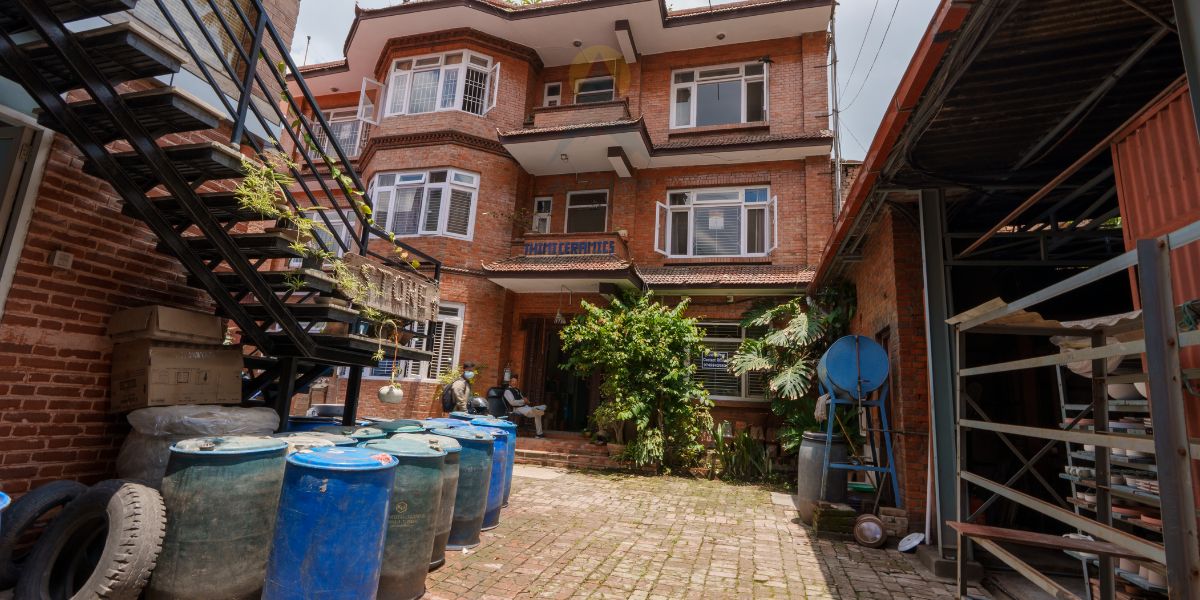
You can visit their workshops as well as the store upstairs. In the workshops, you will find people kneading the clay, pug milling, weighing, shaping, glazing, and working on their pieces. Basically, the full process from start to finish.
Different ceramic products like cups, plates, vases, along with souvenir items (like statues of elephants, Buddha, roses, dolphins, etc.), planters, foot scrubbers, vessels, incense holders, and many more products are produced here.
We were surprised after hearing that the clay items produced here are even exported to European countries (Germany, Spain, Italy, Sweden, Denmark, the Netherlands, the UK) and even the USA.
Production Process:
While visiting Thimi Ceramics, we got an opportunity to learn about the production process, and here are the major steps that we learned after visiting the factory:
- Clay Collection: A basic material that is essential to make pottery is clay, and the one used here is collected from nearby rice fields. Sometimes, the clay is not available nearby. In such cases, the factory sources the clay from other places in the country and sometimes even imported from India. The freshly collected clay is known as raw excavated clay.
- Clay Preparation: Once the clay is collected, the initial clay preparation starts with mixing the clay with water. The clay should be soft and workable, so some minerals are added. Later, the mixture is transformed into a thick liquid and is strained through a mesh sieve where all the sand, stones, and other particles are filtered. Now, the clay is clean and smooth.
- Filter Pressing and Pug Milling: The third step is all about filter pressing and pug milling, in which clay is separated from its water through a filter press, and then a pug mill is used to mix the clay to make it usable.
- Clay Kneading: After the initial mixing in a pug mill, the clay is extruded, then is worked manually by hand to knead it thoroughly.
- Weighing: In this step, the clay is weighed following the specification of the product and is further kneaded until it turns into a ball shape.
- Shaping: Now, to give it a shape, the clay is either kept on the potter’s wheel or pressed into plaster molds. For some products, the traditional potter’s wheel approach is used, and some are designed by pressing them into molds.
- Sun Drying: Once the shaping is completed, the items will have to be sun-dried until it reaches the leather-hard state. At this point, they should be pliable but should also be strong enough to handle. Then, the craftsperson adds extra details like handles or other decoration. After this, the pieces are again put back in the sun so they are completely dry and are ready for biscuit/bisque firing.
- Biscuit Firing: The sun-dried items aren’t ready to use; they need to be fired in the kiln to make them strong enough to use. So, all the sun-dried items are biscuit fired by placing them in a kiln firing at 800 °C.
- Glazing: Once the items are biscuit fired, they are dipped into a liquid glaze. The glazed clay items are left to dry for a second firing.
- Second Firing: The products need to be in a stoneware state. So, once the glazed items are dry, they are fired for the second time at 1250°C.
Museums in Madhyapur Thimi
Madhyapur Thimi is a living museum where age-old traditions, crafts, and culture are still part of everyday life.
Apart from the historic streets and temples, there is also a cultural museum, where you can learn about the town’s extensive heritage, craftsmanship, and artistic legacy. Moreover, there are other interactive galleries too!
Akha Chhen Museum
The first cultural and community museum in Madhyapur Thimi is the Akha Chhen Museum in Chapaho, established by Ganesh Ram Lachhi.
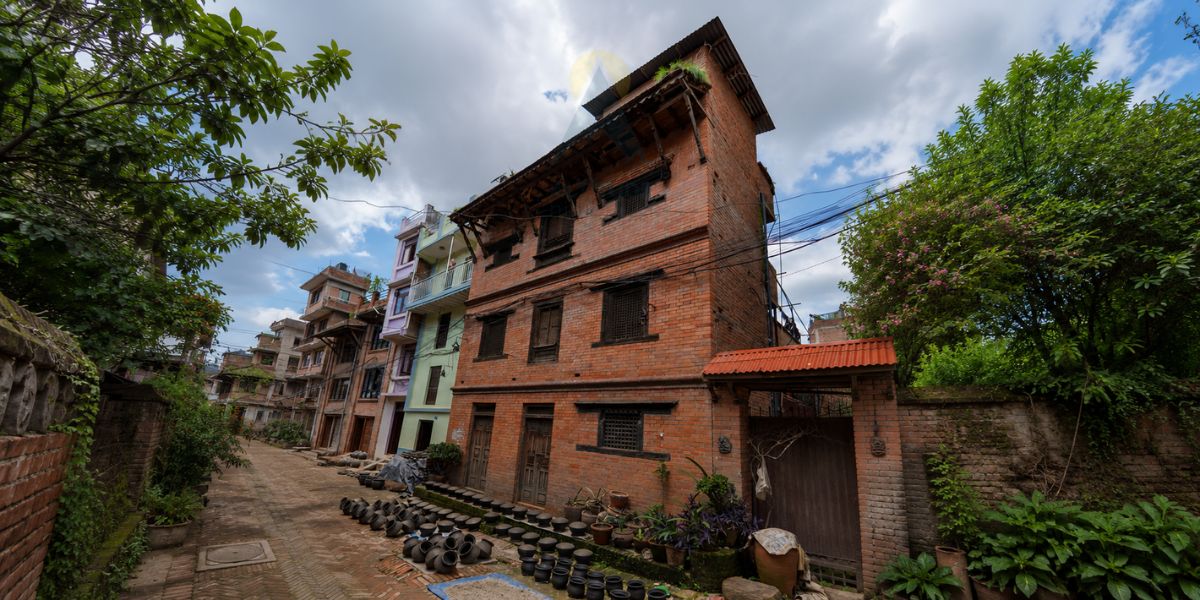
The main objective of the museum is to preserve the art, culture, and traditions, especially of the Newar community. Ganesh himself collected several historical items and preserved them, and opened this museum as a private museum!
Today, Akha Chhen has a collection of over 100 varieties of musical instruments, historical pictures, traditional masks, costumes, household utensils, terracotta sculptures, artefacts, wood carvings, hand-woven clothes, religious and ceremonial objects, and storage boxes.
If you plan to visit Akhan Chen, plan your visit accordingly in advance. The opening time depends on the owner’s availability, as it is a private museum.
One Day Interactive 3D Museum
Unlike other museums in Bhaktapur, the One Day Interactive 3D Museum has a different and unique collection. You won’t see any historical artefacts and objects here because the museum is focused on displaying 3D paintings on various themes like wildlife of Nepal, underwater scenes, Nepal’s culture and customs, etc.
You will find the museum a perfect mix of art and entertainment that is more interesting for young visitors and families.
Located on the 3rd floor of Prajapati Complex in Madhyapur Thimi, the museum is open all 7 days a week from 11:30 AM to 07: 30 PM. Remember, you need to get your tickets to enter the museum.
Here are the cost details:
- Adults: NPR 300
- Students (up to Grade 10): NPR 270
If you’re planning to visit the Thimi area with your kids, then this place should surely be on your bucket list!
Annapurna Art Gallery
Located in Radhe Radhe, Madhyapur Thimi, Annapurna Art Gallery is a contemporary art gallery and digital marketplace. The gallery connects artists with buyers and promotes traditional Nepali art practices and contemporary creative work.
There are paintings, sculptures, and mixed media displayed in the gallery, and it is open seven days a week from 10:00 AM to 07:00 PM.
Ponds of Madhyapur Thimi
Not only the temples, Newari festivals, and museums, Madhyapur Thimi also consists of several ponds (pokhari in Nepali or pukhu in Newari) that have served as important water sources, sites for religious rituals, and gathering places.
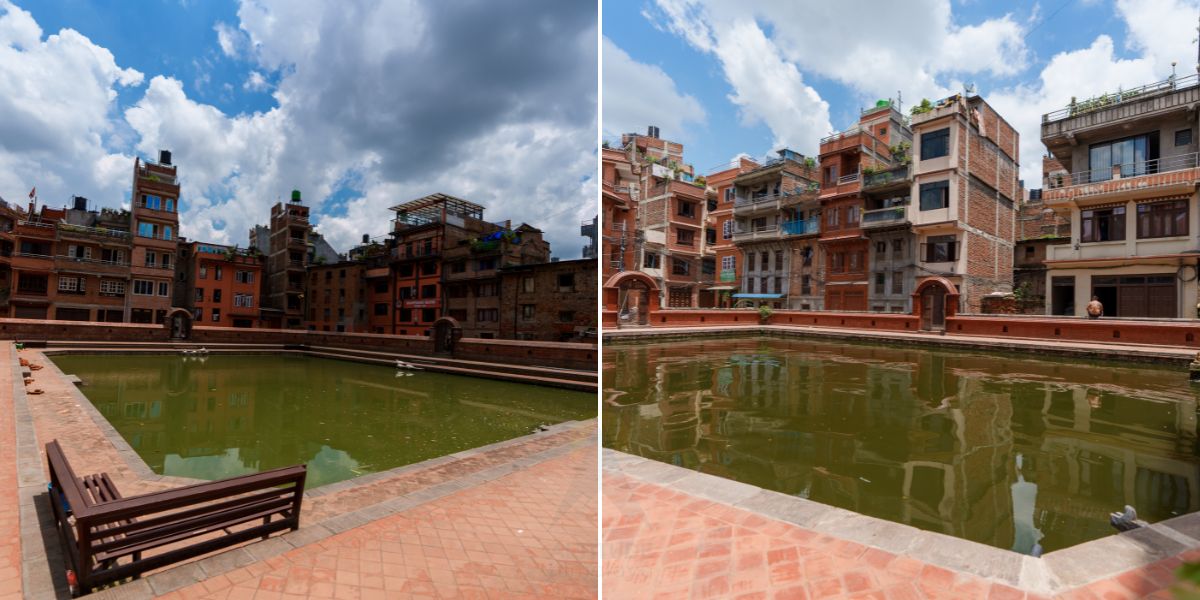
Here are a few of them:
- Bode Kamal Pokhari: This is the largest and best-known pond in Madhyapur Thimi. The pond is filled with lotus, and hundreds of visitors visit here when the flowers are blooming in the monsoon season.
- Bode Lachhi Pokhari: This is a traditional pond, located within the historic settlement of Bode, near the Bhimsen Temple. Lachhi Pokhari is usually quite, so you can make a visit and enjoy the surroundings peacefully.
- Nigu Pukhu: This is also known as Dui Pokhari or the twin ponds, and was built over 300 years ago. This pond used to serve as a water resource for the local communities previously. Also, it is also connected with transitional rituals and festivals. Sometimes you can spot fish swimming and swans gliding around the pond.
- Golmadhi Pond: This pond is located in the historic Golmadhi area of Madhyapur Thimi, Yata of Golmadhi. It is surrounded by Thimi’s old settlements and pottery workshops. You can find rest houses as well as a stone sprout to the south of the pond.
- Swanga Pukhu: This is another historic pond that is located near Thimi Ceramics. When you are on your walking tour of Madhyapur Thimi, it is a must-stop destination. It stands as a treasured cultural landmark and a peaceful place to rest during your walk.
- Bode Nachutol Pokhari: The Nachutol Pokhari of Bode is a traditional pond surrounded by beautiful brick walls and Newar houses. Additionally, it is a cultural landmark for the local community that adds extra value to Bode’s heritage.
Other Attractions Near Madhyapur Thimi
During your visit to Madhyapur Thimi, you can also explore some other nearby attractions. These are more obvious and popular destinations; still, let me brief you in short:
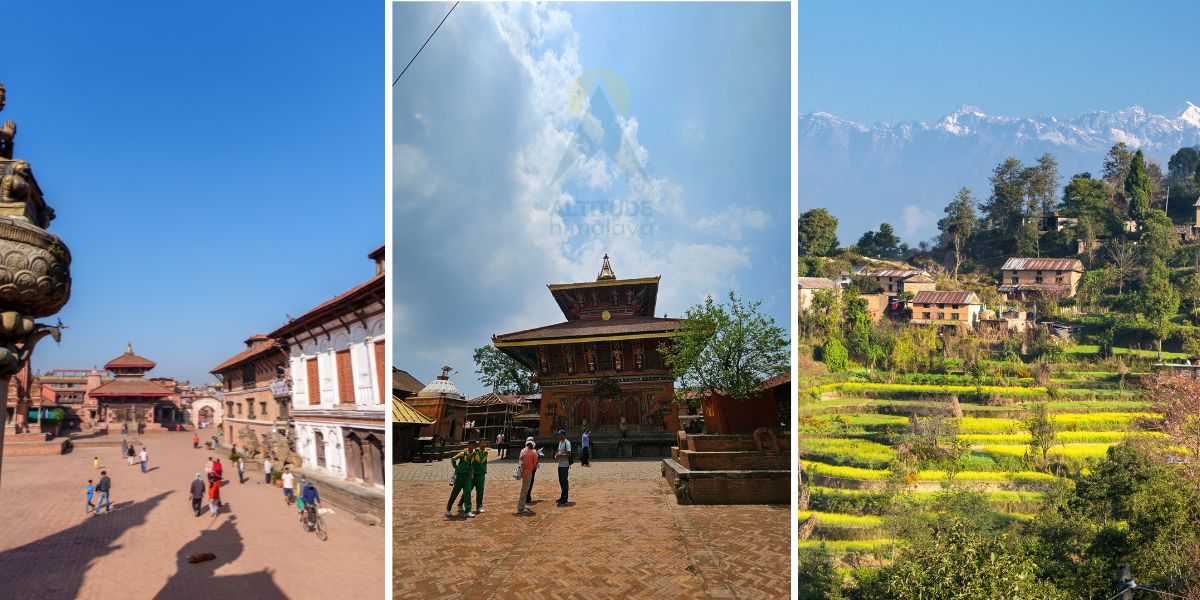
- Bhaktapur Heritage Site: Bhaktapur Municipality is approximately 4.5 km away from Madhyapur Thimi. You can either reach here on foot, which takes about 1 - 1.5 hrs (approx. 5 km), or get a public bus or a private taxi/bike. Visit Bhaktapur Durbar Square, Taumadhi Square, Dattatreya Square, and Pottery Square. Also, many temples will definitely draw your attention, such as Nayatapola, Bhairabnath, Til Madhav Narayan, Dattatreya, Silu Mahadev, Vatsala Devi, etc.
- Nagarkot: Approximately just 18 km from Madhyapur Thimi, you can reach here within 45 minutes to an hour. In short, Nagarkot is one of the most popular hill stations in Nepal and is known for the views of sunrise/sunset, panoramic landscapes, and hiking (eg: Chisapani-Nagarkot short trek).
- Changu Narayan Temple: The Changu Narayan Temple is one of the oldest Hindu temples in Nepal, housing centuries-old sculptures, idols, traditions, a stone pillar, inscriptions, and much more. It is approx 10 km, and you can reach here within 25-30 minutes in a vehicle and within 1.5- 2 hours on foot.
- More places nearby: Doleshwor Mahadev, Pilot Baba Ashram, Kamal Binayak, and Suryabinayak are the most popular ones.
Travel Tips
If you want to make your visit to Madhyapur Thimi special and unforgettable, then here are a few things to keep in mind.
- Plan your visit wisely: For a relaxed and peaceful visit, plan your trip on weekdays or early mornings, as the place is less crowded during this time. Likewise, if you want to participate in or enjoy any festivals, traditional music, and cultural performances, then visit during Bisket Jatra, Sindoor Jatra, or Tongue Piercing Jatra (mid-April).
- Explore on foot: The town is filled with hidden courtyards, ancient temples, and ponds, so take your time to explore every monument on foot rather than in a vehicle.
- Visit Local Pottery Workshops: If you wonder how the pottery items are prepared from a lump of clay, then there are numerous local pottery workshops here. You can visit any of them and watch how the potters work with clay. Don’t miss Thimi Ceramics if you are planning to purchase unique souvenir items.
- Photography and Filming: General photographs and videos are permitted, but remember to ask permission during your visit to museums, temples, and pottery workshops.
- Carry NPR cash: It is important to carry some cash with you because some of the local shops and craft stores prefer cash to digital payments.
- Try Newari food: Opt for some authentic Newari cuisine (like Bara, Chatamari, Juju Dhau, Samay Baji aka Newari Khaja Set), and other local Newari items.
Final Thoughts
In conclusion, Madhyapur Thimi is a historical town. Here, art, culture, and tradition live and breathe in everyday life. There are many ancient temples, colorful festivals, pottery workshops, Newar communities, architecture, local markets, and farming patches to explore.
I can guarantee you that you’ll get an authentic and unforgettable experience after visiting Madhyapur Thimi. So, if you are planning to go on a cultural trip around Kathmandu Valley, then don’t miss adding this place to your travel plan!
Explore ancient alleys, take part in the colorful Sindoor Jatra, or watch local dance performances and enjoy the warm hospitality of the locals!
And in case you’re still confused about how to plan, know that our team at Altitude Himalaya already offers special Bhaktapur-focused touring packages with a government-licensed Tour Guide included.
Check these out: One Day Bhaktapur Trip with Nagarkot Sunset, Kathmandu Photography Tour (Bisket Jatra-focused), and Kathmandu Cultural Tour.
We are ready to include Madhyapur Thimi in any of our other tour packages too. All you need to do is contact us, and we’re ready to explore this part of Bhaktapur with you!





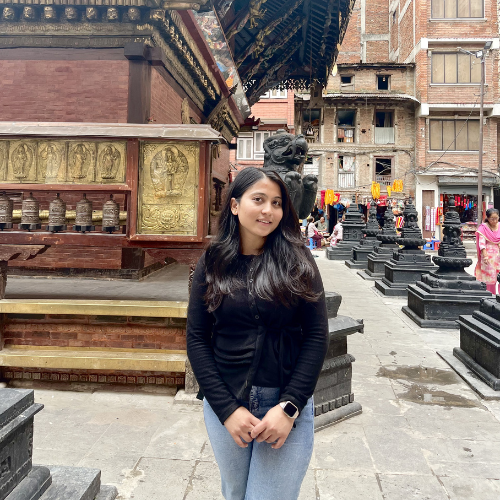 Garima Bhandari