Bhaktapur is often described as a "Living Museum," and that description holds up in the alleys. But the actual museums here go further: they preserve what the alleys cannot, the objects, paintings, manuscripts, and metalwork that filled the private rooms of palaces, priests' residences, and ordinary Newa households for centuries!
The National Art Museum, Wood Carving Museum, and Brass and Bronze Museum focus on the arts of the Malla period and traditional craftsmanship. On the other hand, Akha Chen, the One Day Interactive 3D Museum, and Annapurna Art Museum take a different approach, combining modern perspectives with traditional art, giving the same cultural material a different kind of depth.
Each museum in Bhaktapur tells its own story. And this guide introduces you to each one, what it holds, what it costs to enter, and what is worth your attention once you are inside.
National Art Museum of Bhaktapur
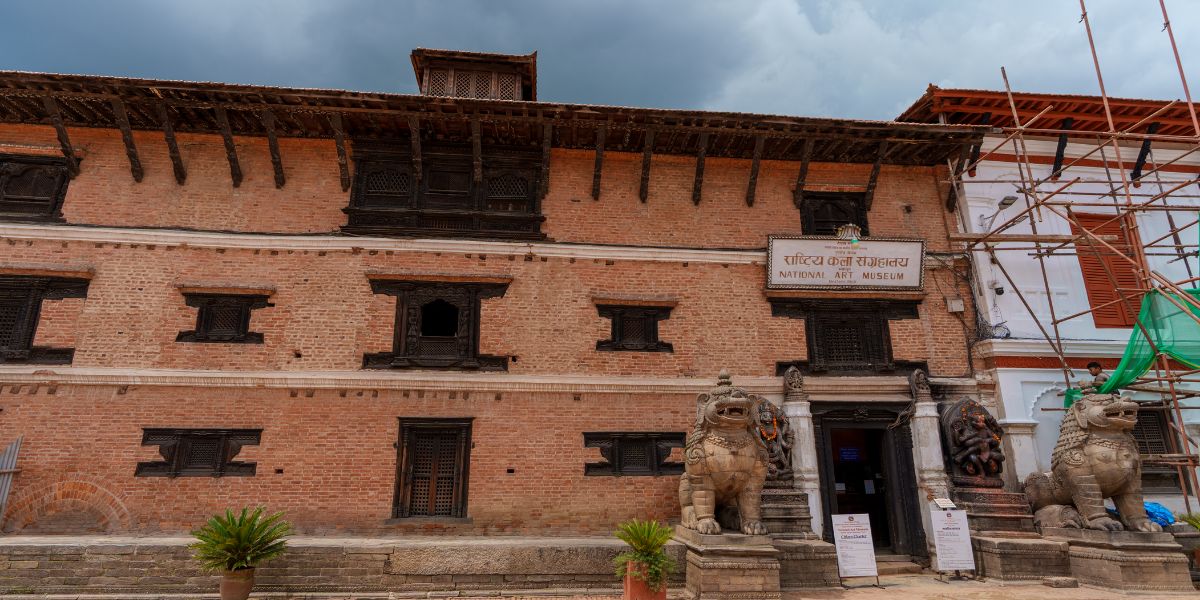
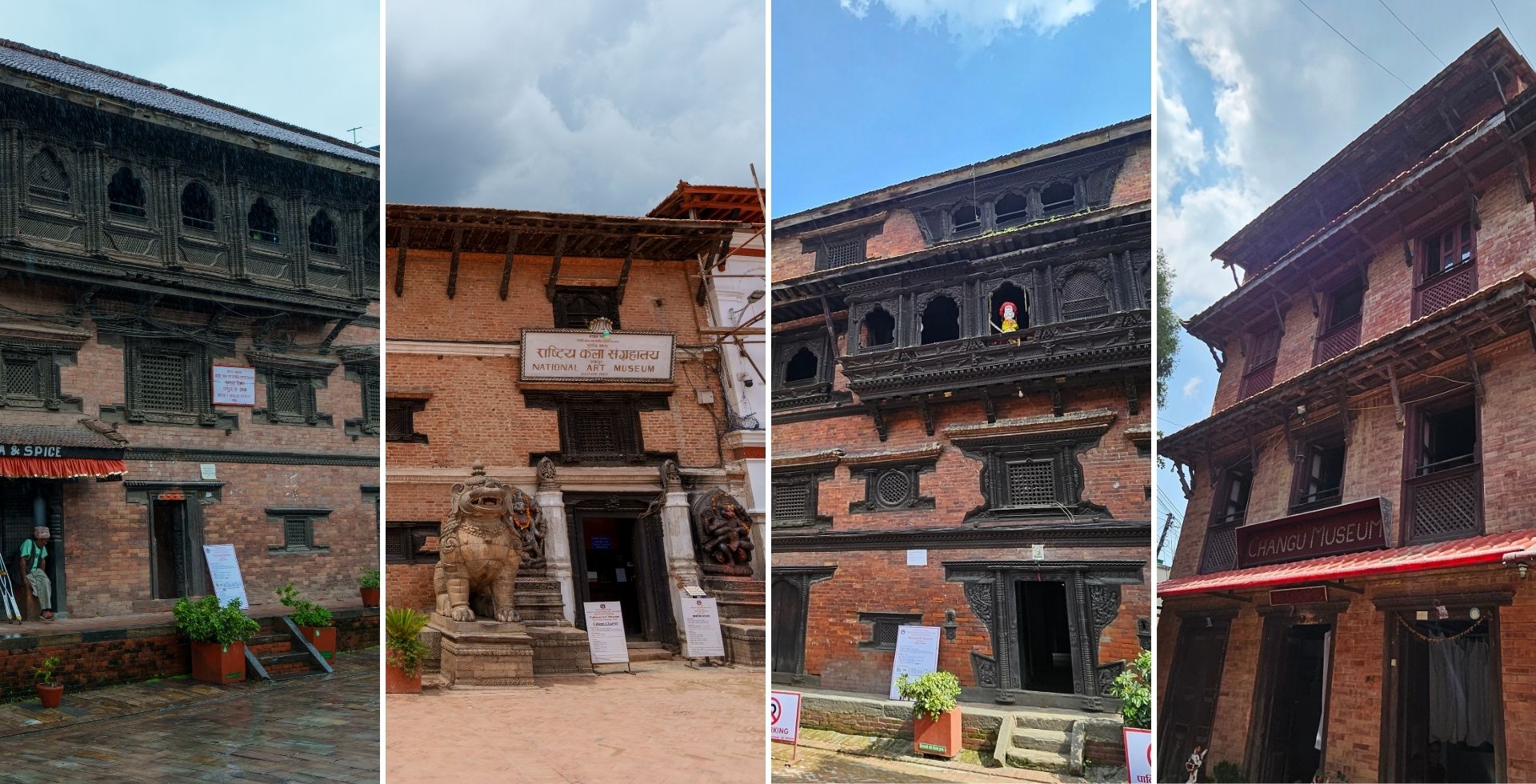
The National Art Museum (formerly known as National Art Gallery) is located in the main Durbar Square of Bhaktapur, which is a UNESCO World Heritage Site.
The museum consists of two buildings where it showcases paubha paintings, metal and stone sculptures, woodcarvings, religious artifacts, manuscripts, and others. Most of these items come from the Lichhavi period (regarded as the golden age of Nepal) and the Malla period.
History of National Art Museum
The museum is housed in a former royal palace called Simha Dhwaka Durbar (or Singha Dhwaka Durbar aka The Lion Gate), built in 1697–1698 AD by King Bhupatindra Malla, the cultural architect of much of what Bhaktapur looks like today.
The name Simha Dhwaka comes from the two large stone lions guarding the entrance (Simha meaning lion, Dhwaka meaning door/gate), and locals still refer to the area as Simha Chowk, Simhadhwaka Layaku, or Malati Chowk.
It was formally established as the National Art Gallery in 1960 by the Department of Archaeology under the Government of Nepal.
The Frontal Door: Simha Dhwaka or Singha Dhwaka
As you approach the entrance, you’ll find two stone lions guarding the doorway: one female and the other male. Well, these are the guardians that gave the building its name!
Behind the lions, you also get to see the 17th-century stone sculptures of Hanumanta-Bhairav and Narasimha.
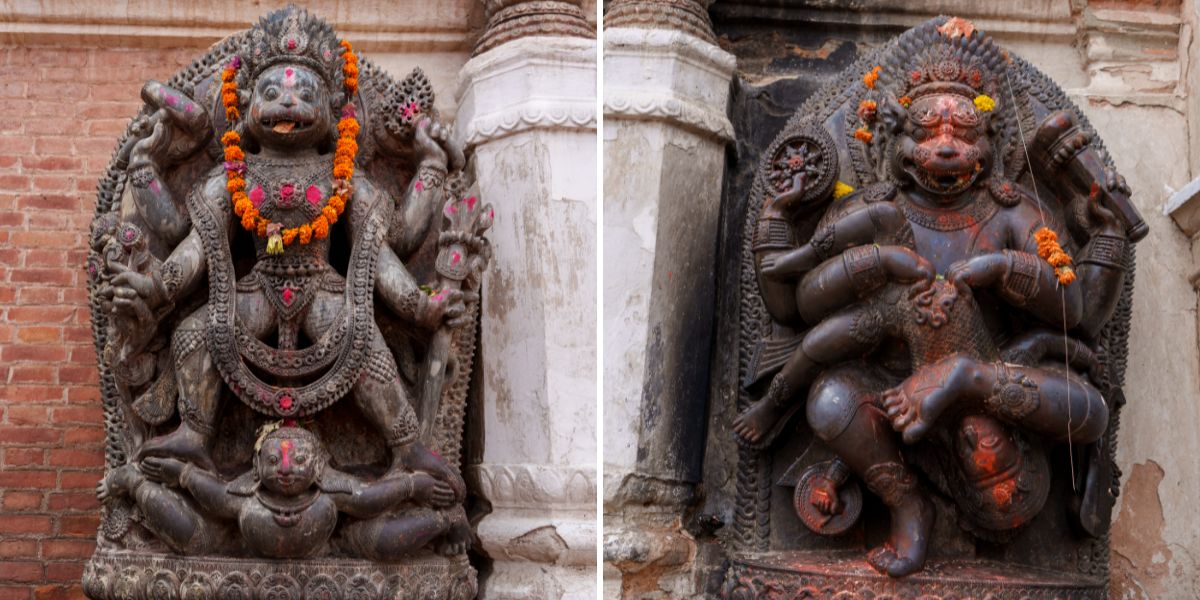
Hanumanta-Bhairav is a tantric fusion deity of Hanuman and Bhairava, four-armed, standing in a commanding form over a flattened demonic figure (Betal).
On the other hand, Narasimha is the fierce fourth avatar of Vishnu, the man-lion hybrid, caught mid-motion in the act of tearing apart the demon king, Hiranyakasyapu, on his lap.
First Building of The Museum
The first building of the National Art Museum, which is the entrance to the museum, consists of three different art sections, each featuring a unique aspect of Nepal’s culture and art:
Ground Floor: Stone Art Section
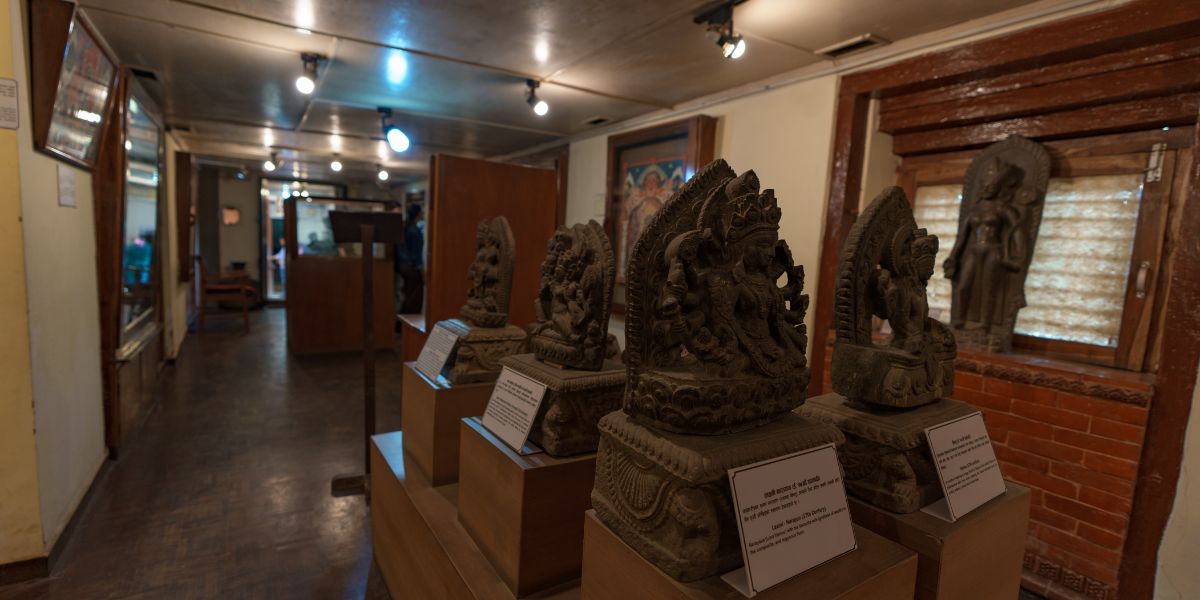
This floor majorly displays stone sculptures and inscriptions from the Lichhavi to Malla periods, tracing how stone carving evolved across the medieval period. It is also called the arcade section or Chhindi Gallery.
Major pieces here include:
- A four-faced Shivalinga
- Sculptures of Hindu and Buddhist deities. Like Vishnu, Harihara, Surya, Tara, Ardhanareshwor, Kuber, Laxmi Narayana, and others
- A stone idol of Harishankhar (the hybrid form of Shiva and Vishnu)
- Stone inscriptions from the medieval period
- Architectural fragments from historic temples
Besides the stone art, this floor also has paintings and Navadurga masks hung on the walls.
First Floor: Paubha Painting and Manuscript Section
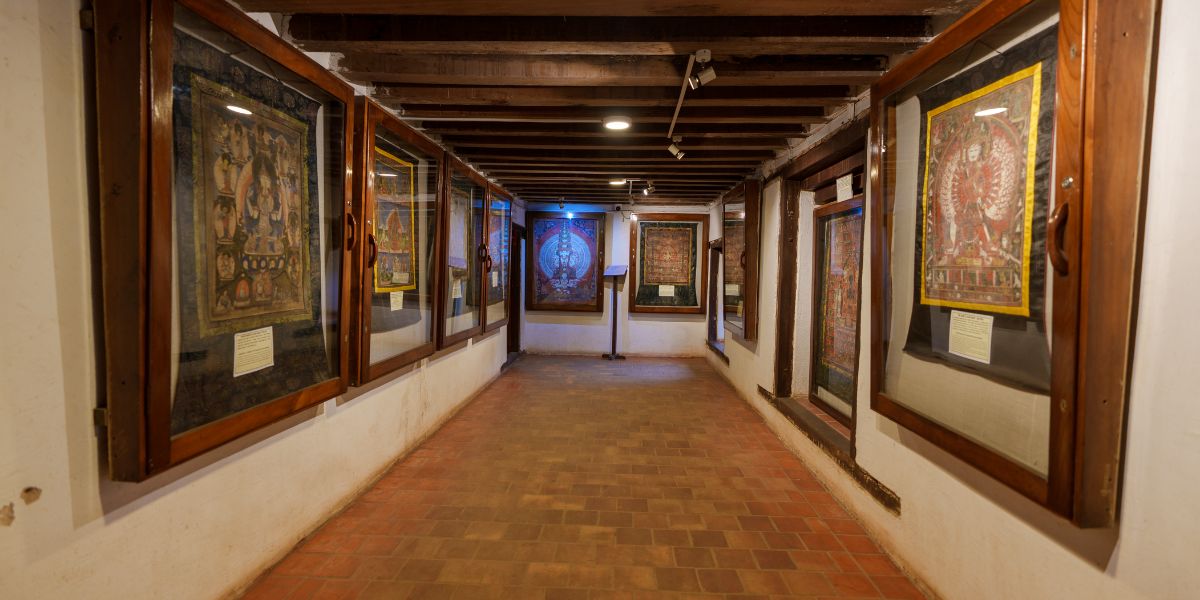
On the first floor of the building, the majority of the paubha paintings and the manuscripts are showcased.
Paubha is the traditional Newa form of painting, used to depict Hindu and Buddhist deities, mandalas, and sacred monuments. These paintings look very familiar with Tibetan Thangka paintings (in fact, even older than them), and this museum holds one of Nepal's most significant collections of them.
This Paubha painting section of the museum includes:
- Paintings of Hindu and Buddhist deities such as Vasundhara Mandala, Ganesh with Shakti, Mahisa Sambhara, Vajra Yogini, and Shiva Viswarupa
- Erotic paintings of gods and goddesses
- Paintings from the medieval period that include the water-colored aquatic world, mythical creatures, different birds, bulls, and other wildlife
- Tantric painting illustrating Shiva Vishwarupa (multi-armed and multi-headed)
- Classical paintings from Krishna Leela and Madhukaitav Badha
- Portraits of all the Shah Monarchs
The level of detail and the quality of the linework and color across these pieces reflect the peak of Newa artistic achievement during the Lichhavi and Malla periods.
Moving on to the next attraction on this floor, manuscripts are handwritten books, scrolls, or documents, often adorned with illustrations and decorative artwork that bring the historical and spiritual stories inside them to life on the page.
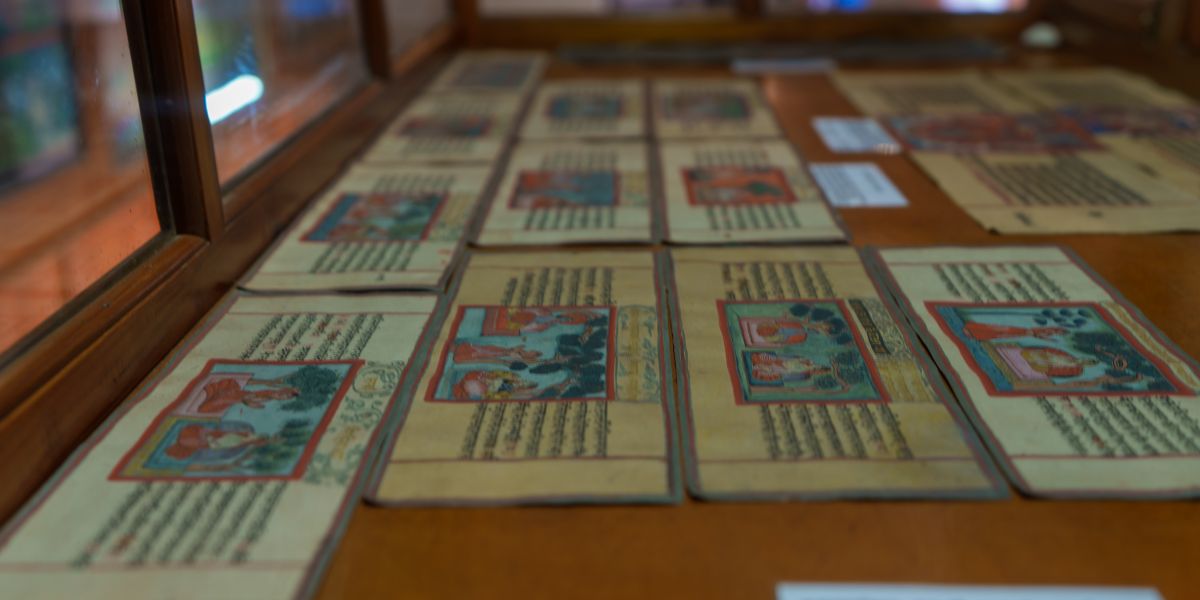
This section preserves religious scripts and descriptive texts in handwritten form. The major ones are:
- Palm-leaf and handmade paper manuscripts
- Hindu and Buddhist scriptures
- 11th-century Vishnu Dasavatara treatise painting (Granthachitra)
13th-century manuscripts of Shiva Dharma Purana
- Historical chronicles (Pilgrimage tour of King Pratap Malla)
Beyond the visual quality of the manuscripts themselves, the section provides genuinely useful context on the religious traditions and ancient cultures of Nepal.
Second Floor: Wood Art Section
The second floor of the building showcases the wooden sculptures that show the evolution of Nepal's wooden work since ancient time.
Much of the woodwork here features the carvings of several deities, religious figures, and mythical creatures.
This section showcases the beautifully carved wooden sculptures, statues, and decorative pieces.
One of the significant pieces is the huge head of Bhairav that dates back to the 16th or 17th century. This masterpiece is placed in the middle of the floor along with the Bhairav with Tympanum, which dates back to the 18th or 19th century.
Second Building of the Museum
There is also another building that is part of the National Art Museum. Damaged by the 2015 earthquake, this building remained closed to the public until recently. Now it has been restored and reopened to visitors.
To reach the second building, you will have to pass through a door in Malati Chowk (inside the first building). Then you will reach an open space with an artificial pond, Bhandar Pokhari, which is in the Bhandarkhal Chowk, a part of the Taleju Temple Complex.
In this building of the museum, there is a variety of centuries-old Nepalese art and paintings.
With the ground floor being inaccessible (used for administrative purposes), you will only be able to visit the first and second floors.
First Floor: Paubha Painting Section
Similar to the paintings showcased in the first building, these unique traditional art forms are also exhibited here.
The major paubha painting artworks are:
- Paintings of Hindu and Buddhist Deities
- Mythical creatures
- Paintings depicting religious stories
All these paintings showcased have meanings. Every one of the details gives meaning and has religious values.
Second Floor: Mithila Painting Section
One of the unique traditional art styles from the Mithila region, also known as Madhubani art, is filled with beautiful designs of vibrant colors with no empty spaces. Every space is covered with designs and patterns.
These paintings are connected with religious beliefs, festivals, and rituals, which are said to bring good luck and devotion to the gods.
The major beautiful artworks shown in this section include:
- Mithila paintings of the Hindu deities
- Mythological stories
- Paintings of nature and animals
- Daily life scenes
- Different incidents of Lord Krishna’s life (Krishna Leela), including early years in Gokul and Vrindavan, demon encounters, connection with Radha, communicating with Gopis, and many others.
Entry Fee and Opening Hours
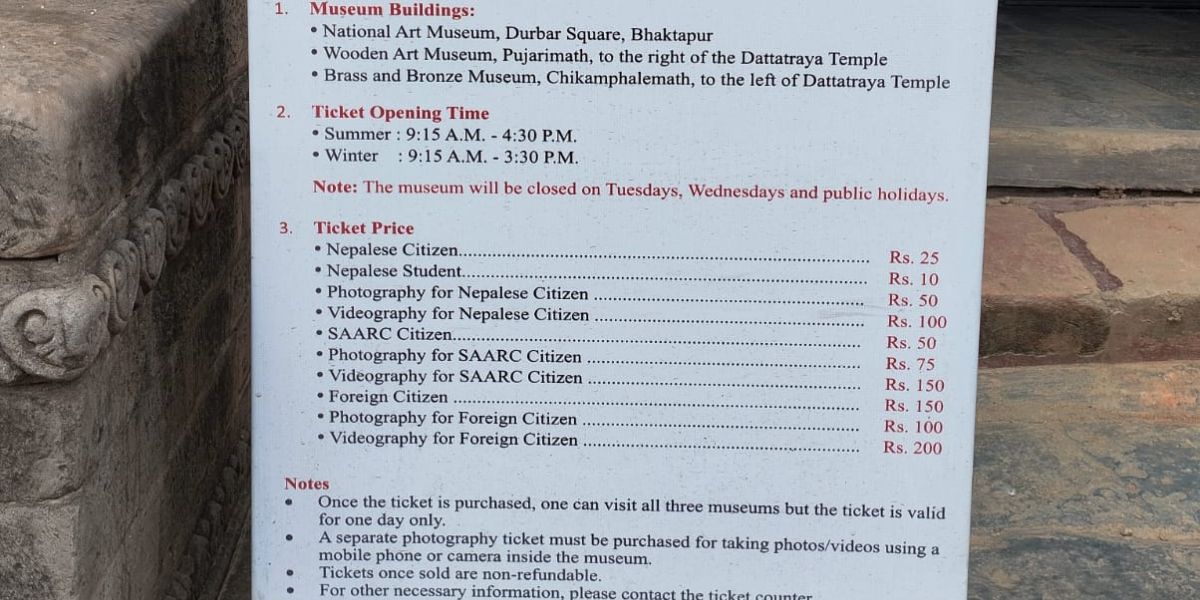
A separate entry fee applies for this museum even if you have already purchased the Bhaktapur Durbar Square heritage ticket. Here are the details:
|
Nationality
|
Entry Fee
|
|
Non-SAARC Nationals
|
NPR 150
|
|
SAARC Nationals
|
NPR 50
|
|
Nepalese
|
NPR 25
|
Note: For Nepalese students, the entry fee is only NPR 10.
Regarding opening hours, the National Art Museum is open from Thursday to Monday as follows:
- Mid January to Mid October (Summer) - 09:00 AM to 05:00 PM (ticketing from 09:15 AM to 04:30 PM)
- Mid October to Mid January (Winter) - 09:00 AM to 04:00 PM (ticketing from 09:30 AM to 03:30 PM)
The museum remains closed on Tuesdays, Wednesdays, and public/government holidays.
Besides entry fee, if you wish to do photography or videography, that requires a separate fee. Here’s the detailed fee structure for different purposes:
|
Nationality
|
Photography
|
Videography
|
|
Non-SAARC Nationals
|
NPR 100
|
NPR 200
|
|
SAARC Nationals
|
NPR 75
|
NPR 150
|
|
Nepalese
|
NPR 50
|
NPR 100
|
Note: The same ticket will work for both the Wood Carving Museum and the Brass and Bronze Museum. So, keep it safely with you if you’re planning a visit to all three.
Wood Carving Museum
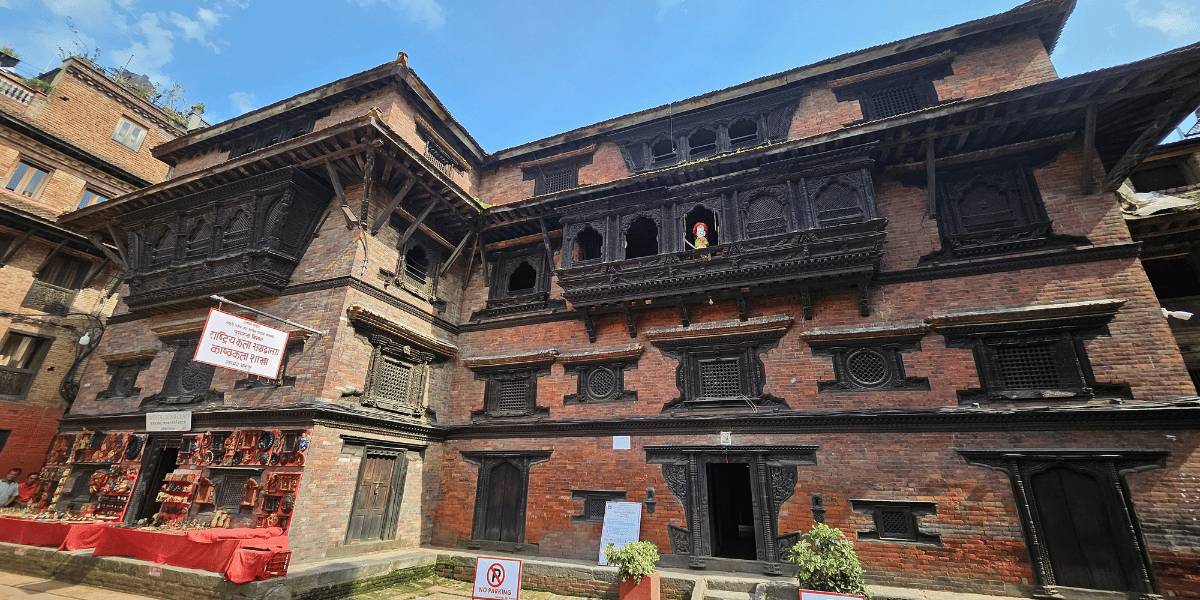
After exploring the National Art Museum, head east through Durbar Square toward Dattatraya Square (Tachhapal Tole), and you’ll find the Wood Carving Museum here. This museum sits on the south side of Dattatraya Temple and was formerly Pujari Math (priest's residence).
Travel Tip: You can first explore Taumadhi Square (home to Nyatapola and Bhairavnath temples) and try some local Bhaktapur food items before heading to Dattatreya Square to explore other museums.
From Priest's Residence to Museum
The Pujari Math building is believed to date to the 15th century, originally built as a residence for the temple priest during the reign of King Yaksha Malla.
It was rebuilt in 1763 AD with royal support and then renovated by German experts as a wedding gift for King Birendra in 1970.
Today, it functions as a cultural and educational center for Bhaktapur's woodcarving tradition, drawing visitors who want to understand how that tradition developed and what it produced at its highest point.
Major Attractions
The four-floored museum focuses on showcasing wooden sculptures, struts, pillars, and carved structures created by Newa artisans, and the building itself is part of the exhibit.
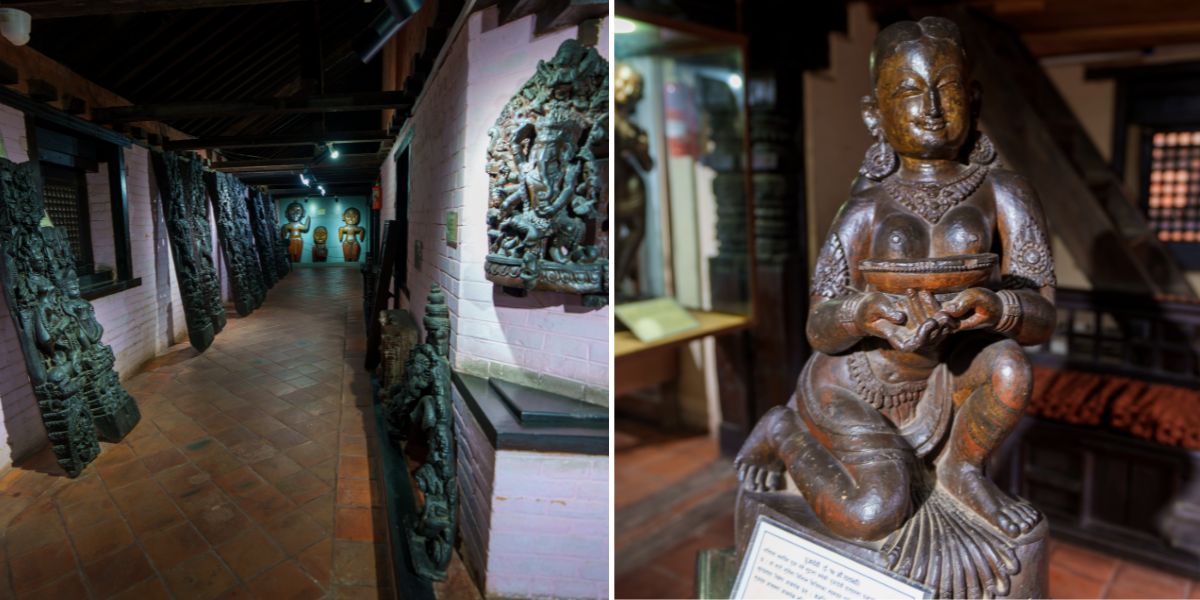
A few things worth looking out for specifically:
- The Puppet of the Pujari: Dressed in yellow with a red cloth around his head, the priest puppet positioned inside the museum has a way of seeming to look directly at you!
- The Open Courtyard: Right after entry, the courtyard is lined with elegantly carved windows, struts, and pillars that demonstrate the density of detail in traditional Newa woodcraft.
- First Floor Paintings: Painted wooden panels on the wall depict religious and social events from the Malla period, including scenes from the Mahabharata and the Ramayana.
- Third Floor: Houses wooden sculptures of Maravijaya, Puja Devi, Bishworupa, Aryatar, Kuber, and others.
- The Peacock Window (Mayur Jhyal): This is a 15th-century woodcarving masterpiece on the eastern side of the museum, facing south. It is visible from the main alley (Jelan Galli) outside and is often described as the Mona Lisa of Nepal. It is part of the museum collection but accessible as a view from the street too!
- The Brick Window: There’s also a tiny window made of brick rather than wood that holds an untold story.
- Bhairav and Shakti Statue (Third Floor): Positioned on the third floor, it might look slightly startling at first, but later you’ll realize that they are the most alluring pieces in the museum.
The Peacock Shop (and Paper Factory)
The Peacock Shop is a retail store or trading center that offers a variety of handicrafts and stationery products, perfect for taking souvenirs from Nepal. The same place also houses a small private museum that showcases beautifully crafted items.
It’s more commonly known in the area as “The Paper Factory” as it’s a mill producing papers, books, and notebooks through a modern process with a traditional touch.
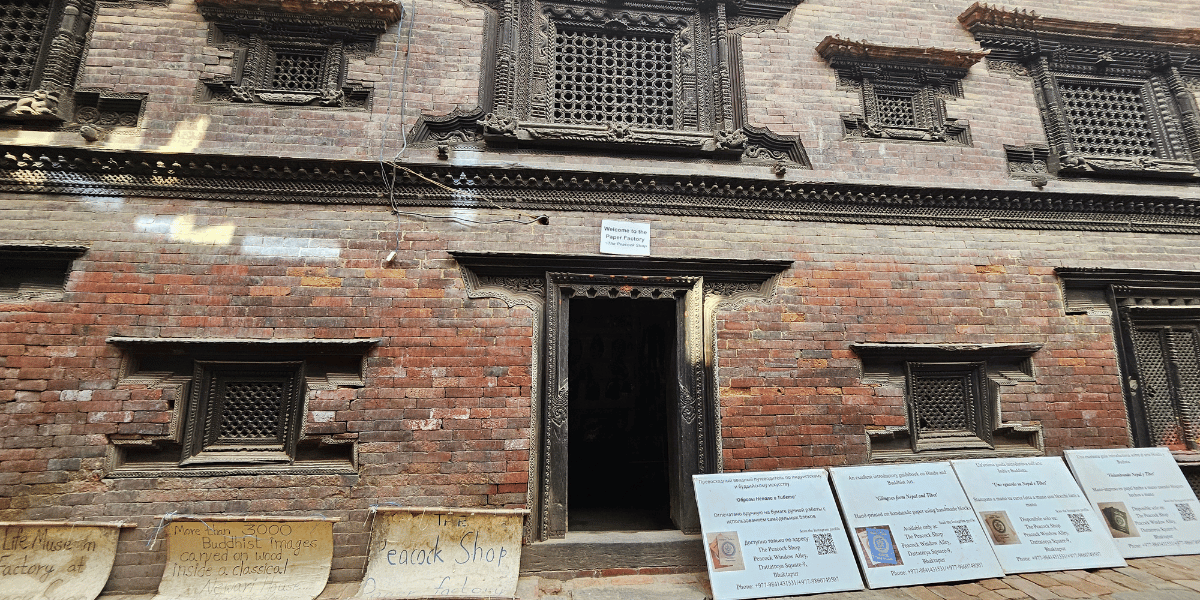
Without a doubt, this place is one of the most creative craft destinations in the Bhaktapur heritage area that allows people to see traditional papermaking and craftsmanship firsthand. It is located east of the Dattatreya Temple, opposite the Peacock Window in Dattatraya Square.
History of the Shop
The Peacock Shop was founded in 1987 by Mr. Ram Narayan Prajapati, who is fond of collecting master artworks, antiques, and ancient objects. There were only 21 wooden figures (each about five inches tall) in the beginning, but today, his collection has grown considerably!
Entering the Peacock Shop, you get to see wooden sculptures, crafts, figurines, brass and bronze utensils, and many other ancient masterpieces, many even dating back to the 14th-16th centuries.
Despite being the private collection of Mr. Prajapati, it remains open to the public and tourists for exploration of the traditional artworks.
The motivation behind it is also worth knowing. Mr. Prajapati wanted to create a place where people could learn about old Nepali culture and traditions.
What to See Here?
The first thing you’ll likely notice on walking in is the smell: the particular dense, musty scent of old books and aged paper (called biblichor) that settles into rooms like this one.
After that, the surrounding space takes over: pictures of deities, masks, stacked papers, piles of books, stamps, bookmarks, and artifacts arranged across four floors.
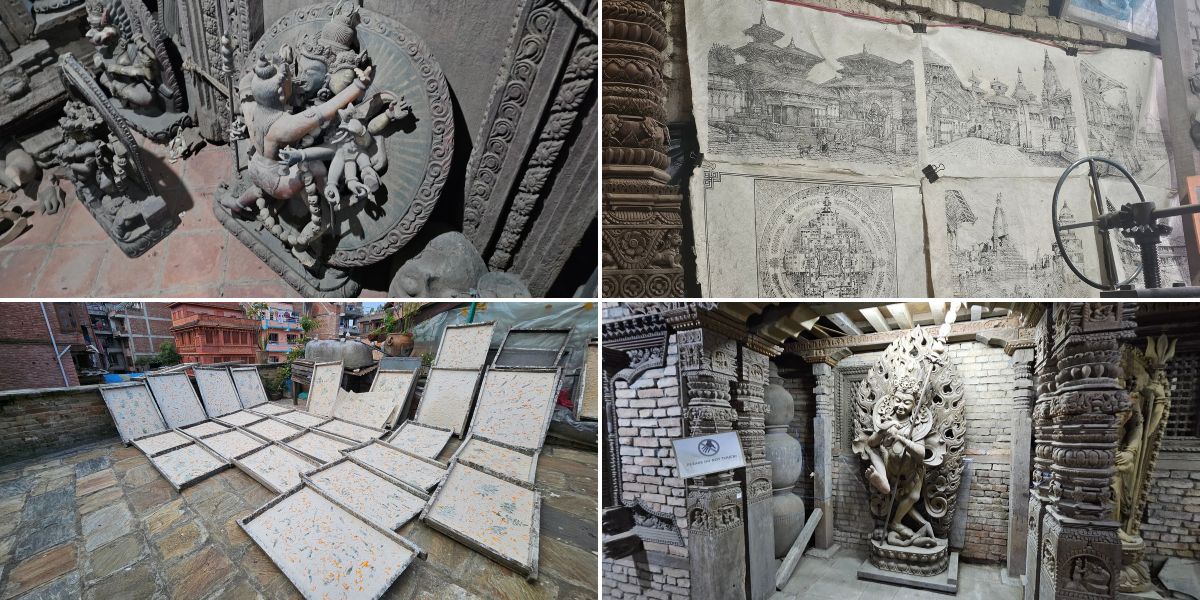
Major highlights of the Peacock Shop include:
- Art collection: Scroll paintings depicting the Buddha's journey to enlightenment, and paintings of Hindu gods and goddesses from across periods.
- Lokta paper production: The shop operates as a working paper mill. You can watch the production process directly: employees follow the routine on-site, and the five-step process is detailed below.
- Handcrafted products: Journals, notebooks, greeting cards, postcards, calendars, bookmarks, art prints, and other paper products, all made in the same space.
- Woodcarving collection: Strut designs, historical pillars, deity and figure sculptures showcased on four different floors.
- Tour guided by the owner: Often the owner himself, Prajapati, gives tours of the collection, and his depth of knowledge about the pieces is a large part of what makes the visit worthwhile.
Process of Lokta Paper Production
The process of making Lokta paper includes the following steps:
- Boiling: The bark of the Lokta plant (Daphne Bholua) is boiled for 4 hours using caustic soda, which helps break down the bark faster than the wood ash method.
- Washing: After the bark is boiled, it gets a soft and pulpy texture, which is then washed in running cold water to remove excess dirt and caustic soda.
- Beating: Now, the cleaned fiber is beaten in a machine. The beating continues until it turns into a smooth, homogeneous fibrous mash, i.e., pulp.
- Screening and Sundrying: Later, the pulp is mixed with water and poured in the wooden frame on a screen. The pulp is then evenly spread over the screen and carefully lifted from the water to be left to dry out in the sun.
- Cutting: When the paper is completely dry, it is cut to the desired shapes and sizes on a guillotine cutting machine. From here, books, notebooks, and other paper products are manufactured.
Brass and Bronze Museum
Brass and Bronze Museum is one of the most captivating museums that preserves the fabulous metal craftsmanship of Nepal. It is located opposite the Wood Carving Museum in Dattatraya Square, behind Dattatraya Temple.
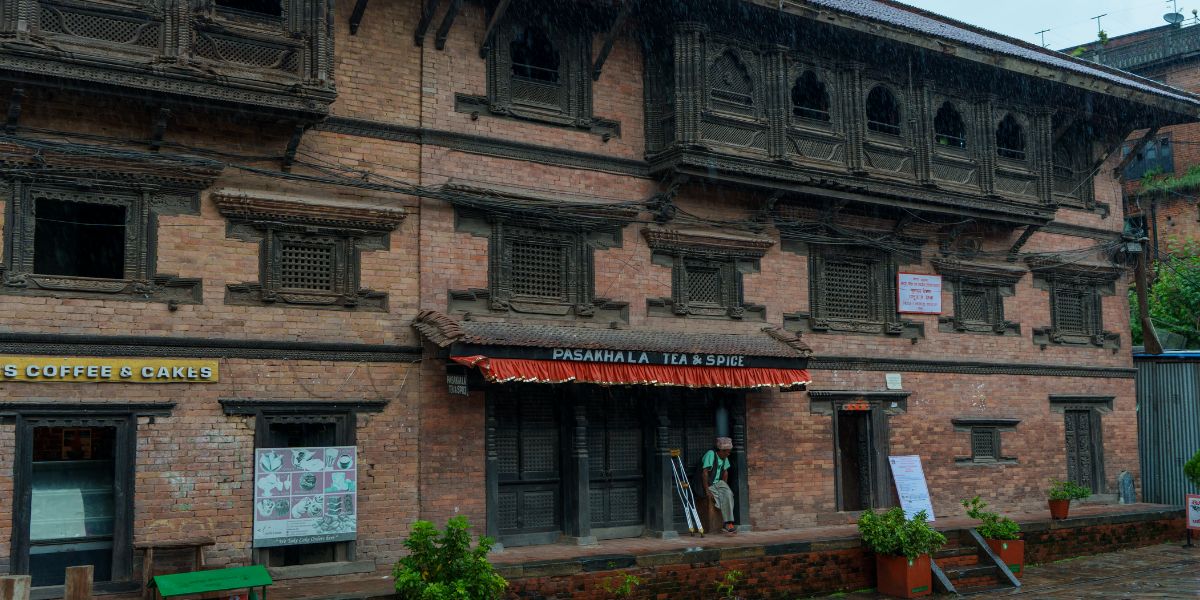
It showcases the metal artworks made from brass and bronze, which are used by the Newari people in their daily lives.
As I mentioned earlier, to enter this museum, you don’t need to buy extra tickets. You can get an entry from the same ticket that led you to the National Art Museum and Wood Carving Museum.
History of the Museum
The Brass and Bronze Museum is housed in the historic Chikanappa Math in Tachupal Tole. ‘Maths’ of this kind served as priests' residences and also as rest houses for traders traveling between India and Tibet.
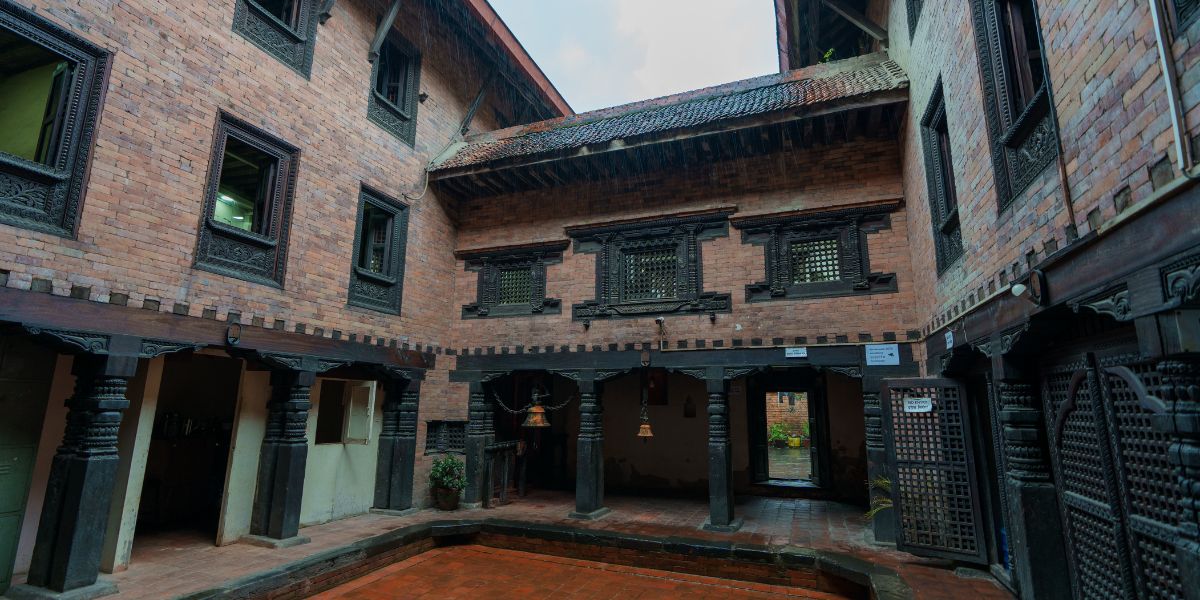
The building's name comes from its construction material: Chikan (oil) and Appa (brick in Newari), meaning it was built with oil-soaked bricks (Teliya bricks), which were very durable and water-resistant.
The building dates to the late medieval period (18th century) and was later converted into a museum to preserve the community's metalwork collection.
Collection of Artefacts
The Brass and Bronze Museum consists of three floors (Ground, First, and Second). Among the three, only the first and second floors exhibit and preserve the collection of traditional metal works, mostly utensils, ritual objects, lamps, bells, and other sculptures.
In total, only five rooms are accessible in the first and second. Each room consists of distinct items. Most of the works belong to the 17th-20th centuries.
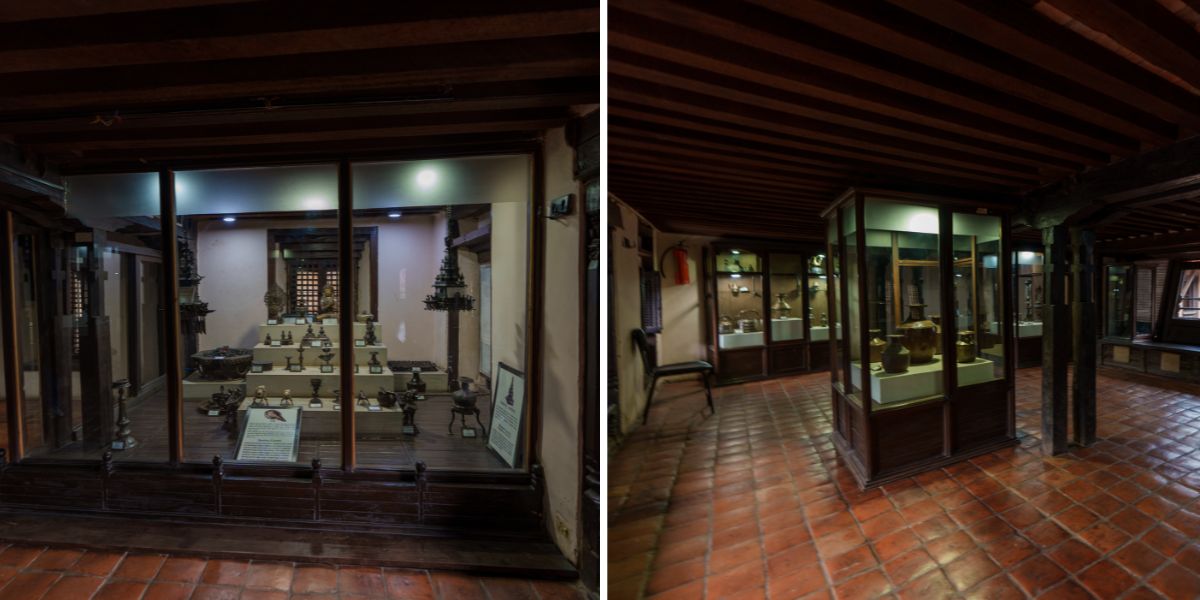
Here are the collections of brass and bronze artifacts inside the museum:
- Utensils:
- Kasaundi (20th century) made up of white metal
- Gha/Ghada or Gagri (Water pot)
- Khana Batta (from the 20th century), a box for storing foods
- Mana (Measuring pot)
- Karuwa (Kettles), a kettle used for drinking water
- Ritual objects:
- Bajraghanta used by Buddhists in their ceremonial activities
- Pujabatta (Ritual Box)
- Kalash (Ritual water vessel) of the 19th century
- Dhupauro (Incense Pot) of the 19th century
- Arghapatra (Ritual water offering bowl) of the 19th century
- Sankha (Conch Shell), which was used in various religious ceremonies
- Kala (a brass basket used to carry worshiping items) belonging to the 19th century
- Lamps:
- Twadewa/Panas (Ceremonial oil lamp) of the 19th century
- Musya (Torch) from the 19th century
- Tuki Batti (Kerosene Lamp) belonging to the 20th century
- Yakhadalu (Hanging oil lamp) from the 17-18th century
- Salikdewa (a ritual oil lamp with a statue) of the 17-18th century
- Aarati (offering oil lamp) belonging to the 18th-19th century
- Sculptures:
- Bishnu (20th century)
- Buddhist Monk (19th century)
- Vajrasattva (a Buddhist god)
- Statues of devotees from the 17th century
- Many other Hindu and Buddhist deities
- Others:
- Bronze Thapin, a ritual beer pot used in the 18th century
- Cast Chandankhori used in the 18th century to mix chandan (sandalwood paste)
- Khaipa (Spitting pot) from the 19th century
- Masi Bhado (Ink Pot) of the 19th century
- Metal-flag Lion belonging to the 19th-20th century
- Jwalanhyakan, a ritual disk used as a mirror of the 18th-19th century
- Antique copper coins
Living Traditions Museum
The Living Traditions Museum is located within the Changu Narayan Temple complex, in Amatya Sattal, a traditional rest house for pilgrims on the left side of the main temple. The project was initiated by Judith Conant Chase in 2010 before the museum was physically built in 2011 and first opened to the public in March 2012.
After being destroyed in the 2015 earthquake, it remained closed for a while before reopening eight years later.
The museum preserves the traditions, cultural heritage, and daily activities of the Nepalese people. It aims to continuously improve and transform into an interactive, participatory museum!
History of the Museum
The museum was founded by Judith Conant Chase, an American photographer, writer, and cultural preservationist who devoted her life to documenting traditional Nepali life.
While most foreigners who come to Nepal focus on trekking, exploring temples, mountain expeditions, or learning about ancient artefacts, Judith focused on ordinary households and the objects inside them.
Her first collected object was a large woven bamboo umbrella from the Gurung community, picked up during a trek in Ghandruk. From that starting point, she spent decades traveling across Nepal, collecting everyday objects, crafts, and customs from communities across all three ecological regions of the country.
Her vision was to create a museum that represented Nepal's living traditions before they disappeared or became unrecognizable and to make her collection public rather than private.
She received support from the US Ambassadors Fund for Cultural Preservation, Guthisanstha, and the Department of Archaeology, along with informal advisors including retired professor Mukunda Raj Aryal; renowned archaeologist Sukra Sagar Shrestha; art conservator Naoko Takagi; art consultant James Giambrone; traditional Paubha painter Mukti Singh Thapa; and museum restoration supervisor Suresh Shrestha.
Two Fascinating Galleries
The galleries in the Living Traditions Museum are divided into two sections:
- Gallery 1: Also called the Ethnographic Gallery, this one contains a collection of cultural objects and everyday things from all over Nepal (High Himalayas, Mid Hills, Lowland Terai, and the Kathmandu Valley).
- Gallery 2: The second gallery holds the mythology, history, and world heritage sites related to the Changunarayan Temple Complex.
Four Sections of the Museum
The Living Traditions Museum is a two-storeyed museum that holds about 400 ethnographic objects, which Judith collected over 35 years of her exploration in Nepal.
The ground floor of the museum is the reception, where visitors can purchase their tickets to enter the museum.
The collections in this museum are divided into four sections, and they are as follows:
- Terai: This section of the museum showcases the traditional lifestyle of the communities of the Terai region, including Tharu, Maithali, etc. You can see many agricultural tools, woven baskets, silver jewelry, and traditional clothes (a Tharu dress worn by unmarried women was among the items given directly to Judith by the community).
- Kathmandu Valley: This section focuses on the objects used by the people of the valley, especially the Newari people. It shows carved wooden utensils, copper water vessels, ritual objects, religious scriptures, and traditional crafts. The locals also help the museum and donate ancient objects from their houses. It mostly showcases those objects that were used frequently in the past, but now they are almost obsolete.
- Mid Hills: It showcases the culture from hill communities of Gurung, Magar, Tamang, Rai, Limbu, and others. Many farming tools, clothes they wear, musical instruments they play, and religious artifacts are exhibited, explaining the daily life of these hill communities. In fact, Judith's first collected item (the Gurung bamboo umbrella from Ghandruk) represents this section.
- High Himalayas: It showcases the traditions of the Nepalese mountain communities that include Sherpa and Tibetan Buddhist cultures. You can view thick woolen clothing, yak-hair products, saddles, mountaineering equipment, butter churns, and prayer wheels, along with ceremonial and religious artefacts.
Note: The museum encourages visitors to contribute objects of their own. So, if you have a significant item worth adding, the museum is open to that kind of contribution!
Changu Museum: A Treasure House of Timeless Heritage
This is a private museum founded by Mr. Baishnav Raj Shrestha in 10th Jestha 2057 BS (2000 AD). Changu Museum sits in Mandir Walkway near Inabaha Pati, a few meters from the bus park area, and takes less than five minutes on foot from the main Changu Narayan Temple.
The practical approach is to visit the temple first and then walk down to the museum on your way out.
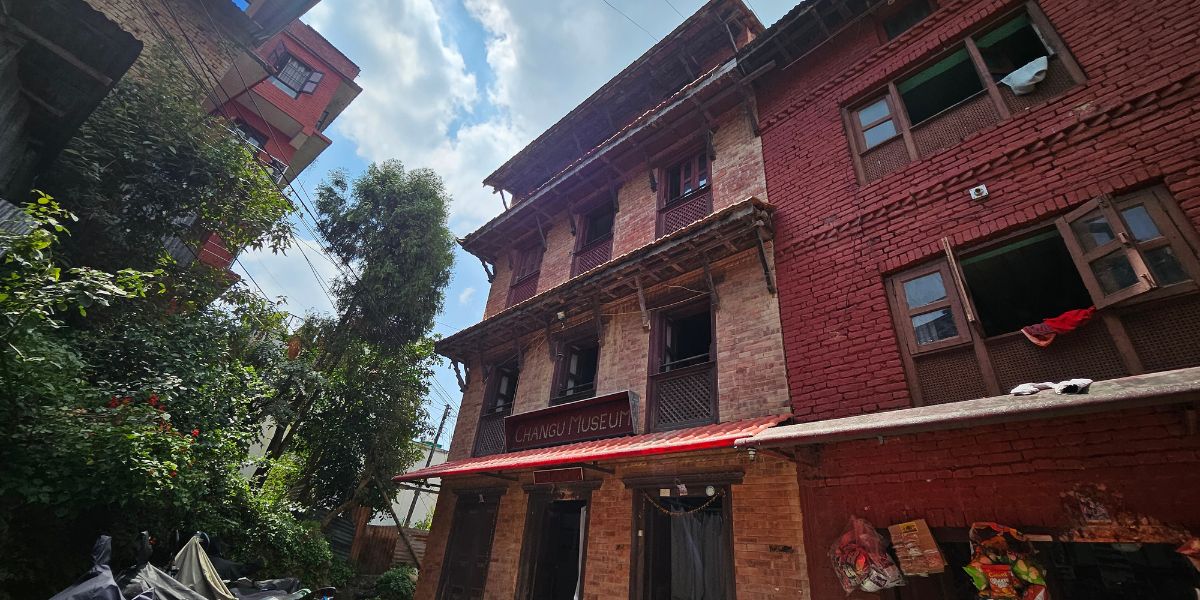
Brief History
Baishnav Raj Shrestha, who served as mayor of Changunarayan Municipality for five years, started the museum after noticing that visitors to Changu Narayan consistently asked about other things to see in the area.
As the number of curious visitors grew, he wanted to give them something more to explore, something that would send them home with a richer understanding of Nepal's history, culture, and religion than a single temple visit could provide.
Collections of the Museum
This three-floored museum made of clay, wood, and brick displays the artifacts clearly, with descriptions written in both English and Nepali. Some of the major collections of the museum are:
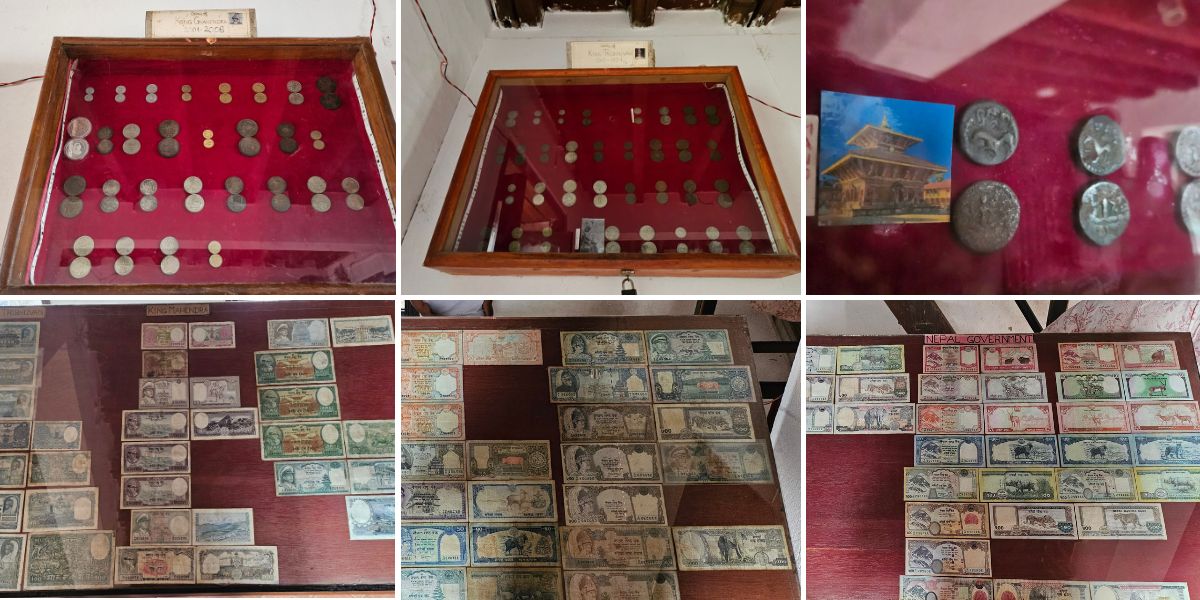
- Ancient Coins and Paper Money:
- Coins displayed from the earliest period to the 12th century
- Malla Kings Coin Collection (1201 - 1768 AD)
- Early Shah Kings Coin Collection from the time of Prithvi Narayan Shah (1768 - 1911 AD)
- From King Tribhuvan's rule (1911 - 1954 AD)
- From King Mahendra's rule (1954 - 1972 AD)
- From King Birendra's rule (1972 - 2001 AD)
- From King Gyanendra's rule (2001 - 2008 AD)
- Evolution of currency notes (displayed in glass boxes)
- Paintings:
- Myth describing the origin of the Changu Narayan Temple
- The talk between Jaya Parakash Malla and Goddess Taleju Bhawani that led to the origin of the Living Goddess Kumari
- Portraits of famous kings like Amshuverma and Mandeva.
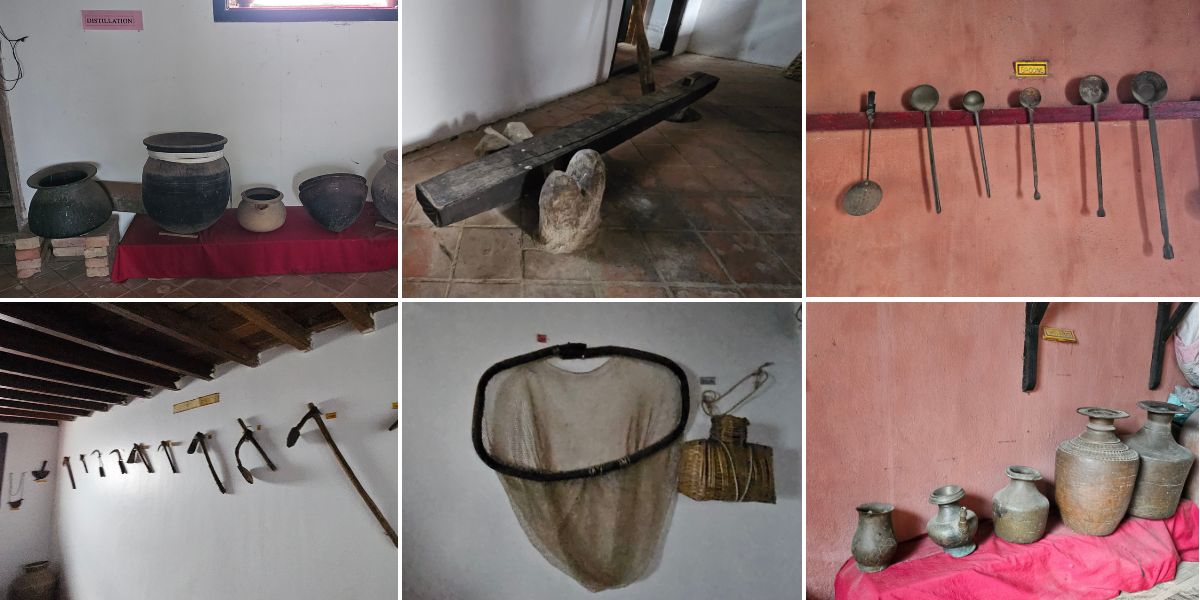
- Traditional household utensils and tools: Wooden pots, vessels, Phosi, Phosicha, spoons, Kasari, Kasaricha, Kuto, Kodalo, Khurpi Thak, Khurpeto, Dhiki (rice husker), Jaato (stone grinder), and Silauta (grinding stone) that were once used in the daily life of Nepali people. Most of these are displayed on the top floor.
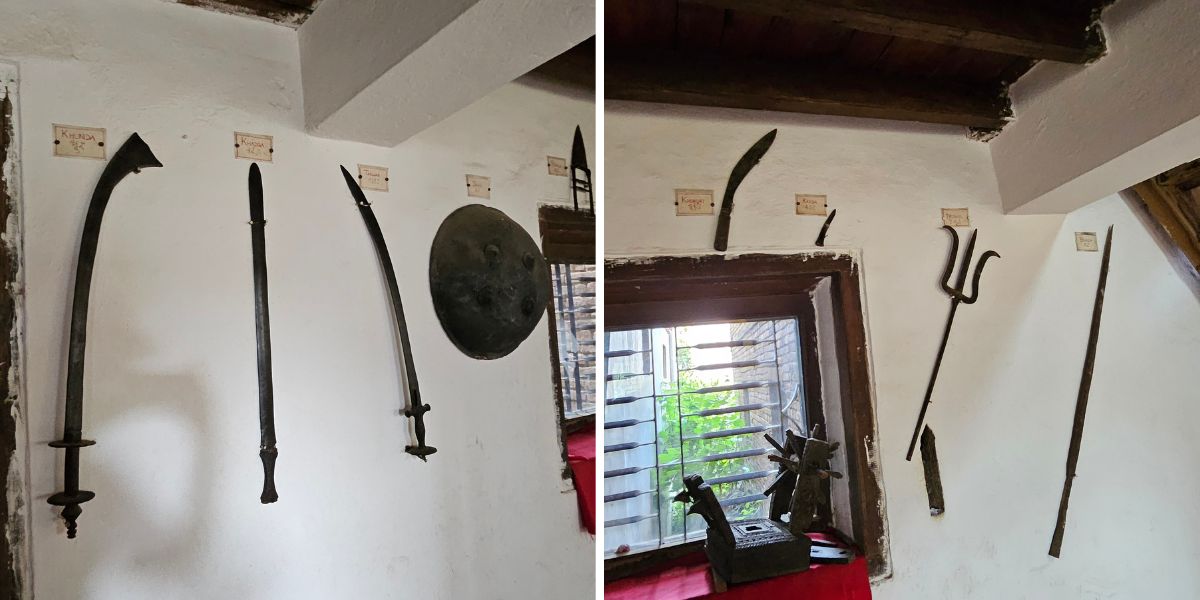
- War artifacts: Tarbar (Sword), Khunda, Khadga, Bhala, Dhal, Khukuri, Trishul, Karda, etc which were used in the war zone.
- Musical instruments: Dholak, Jhyalincha, Harbin, Tamal, Baam, Bansuri, etc., which are still used today in many Nepali festivals and Newari jatras (like Bisket Jatra and Gai Jatra), are also showcased here.
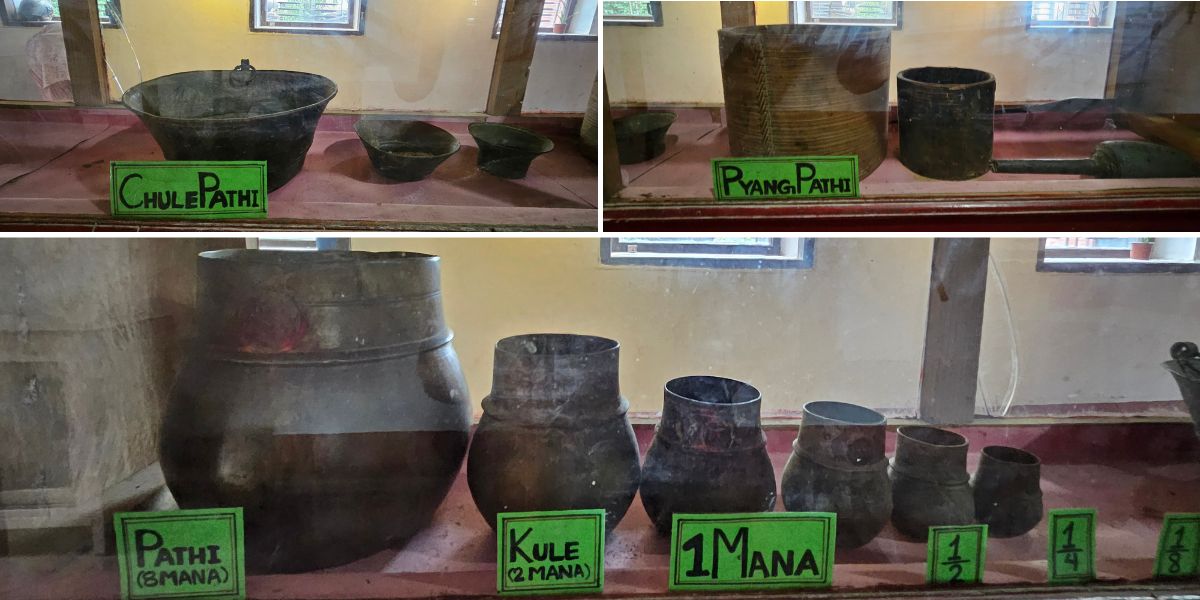
- Measuring devices: Traditional volume measurement tools, including Pyang Pathi, Chule Pathi, 1 Mana, 8 Mana (Pathi), 2 Mana, and other fractional measures.
- Others: A preserved brown leaf with what appear to be random markings (folklore says it was written by a crow), Jwalankekan (a metal fire mirror, believed to be one of the earliest mirror-like objects made from metal in Nepal), three preserved rice grains of different ages (140, 175, and 225 years old), a Lakhe dress and Khyacha mask, along with more miscellaneous artefacts.
Entry fee and Opening Hours
This is a private museum and charges its own entry fee:
- Foreign nationals: NPR 300 (both SAARC and non-SAARC nationals)
- Nepali nationals: NPR 100
Regarding opening hours, Changu Museum is open every day from 7 AM to 6 PM.
The museum draws steady visits from school groups from the Changunarayan area, and it holds up well for that kind of educational purpose. For students, researchers, history enthusiasts, and general visitors, it offers a level of historical specificity that the larger national museums in Bhaktapur do not!
Other Museums in Bhaktapur District
Besides the above-mentioned museums located in Bhaktapur and Changunarayan municipalities, there are other options too!
Some of the museums within Bhaktapur district that offer new experiences compared to others are: One Day Interactive 3D Museum, Akha Chen-The Cultural Museum, and Annapurna Art Museum/Gallery. Allow me to explain them in brief.
Akha Chhen - The Cultural Museum
Akha Chhen is the first and only community-based museum in Madhyapur Thimi, dedicated to preserving the traditional and cultural practices of the Newa people of Bhaktapur.
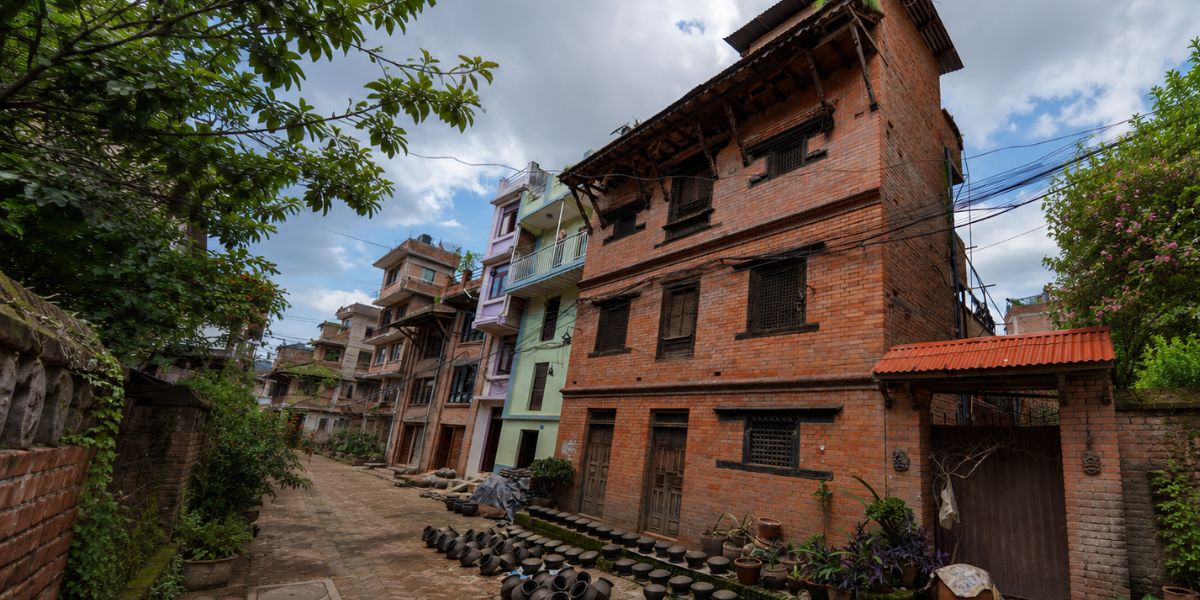
You can see clay pots, vases, and Juju Dhau cups lining the alleyway leading to the entrance, giving off vibes similar to Pottery Square of Bhaktapur. Another thing you’ll notice is that there’s a Ganesha statue sculpted into the wall next to the main entrance.
Akha Chhen is open three days a week:
- Friday and Sunday: 12:00 PM to 3:00 PM
- Saturday: 11:00 AM to 4:00 PM
One Day Interactive 3D Museum
Located on the 3rd floor of Prajapati Complex in Madhyapur Thimi, this museum takes a different approach from the others on this list.
Instead of historical artefacts and objects, it showcases 3D paintings across themes including wildlife, underwater scenes, and Nepal's heritage, combining art with entertainment in a way that works particularly well for younger visitors and families.
It opens all seven days a week from 11:30 AM to 7:30 PM, and to enter the museum, you need to get your tickets. It costs:
- NPR 300 for adults
- NPR 270 for students (up to Grade 10)
So, if you have kids and are in the Thimi area, then this place is surely a must-visit!
Annapurna Art Gallery
Annapurna Art is a modern art gallery and digital marketplace in Radhe Radhe Road, Madhyapur Thimi, connecting artists with buyers while promoting both traditional Nepali art practices and contemporary creative work.
The gallery features paintings, sculptures, and mixed media. It’s open seven days a week, from 10:00 AM to 7:00 PM.
All three of the aforementioned museums are within Madhyapur Thimi Municipality and can be covered comfortably during your visit to Thimi.
Final Thoughts
Whether you come to Bhaktapur as an art lover, a student, a history researcher, or simply someone who enjoys understanding a place more deeply than a single square visit allows, the museums here offer something the streets and temples do not. That is CONTEXT!
You get a sense of how what you are looking at in the alleys connects to a longer, more layered story. From the historic metalwork of the Brass and Bronze Museum to Judith Chase's quietly assembled ethnographic collection at Living Traditions, from the Paubha paintings of the National Art Museum to the paper-scented rooms of Ram Narayan Prajapati's Peacock Shop, each museum covers different ground!
None of them repeat each other. And with a guide alongside you, the connections between what you see in the museum and what you have already walked through in the city become considerably clearer!
So, if you loved this article and want to explore Bhaktapur’s major attractions, including one of these museums, do check out our 1-day Bhaktapur Tour package. Before booking, make sure to mention to us which one or more of the museums you’d like to visit, and we’ll customize an itinerary accordingly!


 Shubhana Lama