Want to try something unique or prepare a handmade souvenir for your loved one? If yes, the Pottery Square in Bhaktapur offers you a hands-on experience of pottery making.
Our Altitude Himalaya Team also recently planned a visit to Bhaktapur, the "City of Devotees". During this one-day guided trip to Bhaktapur, we got the opportunity to learn about different squares of Bhaktapur, their history, culture, and also the daily lives of the people here.
And among them, Pottery Square was my favorite stop! It was extra special for me because I got an opportunity to experience pottery for the very first time.
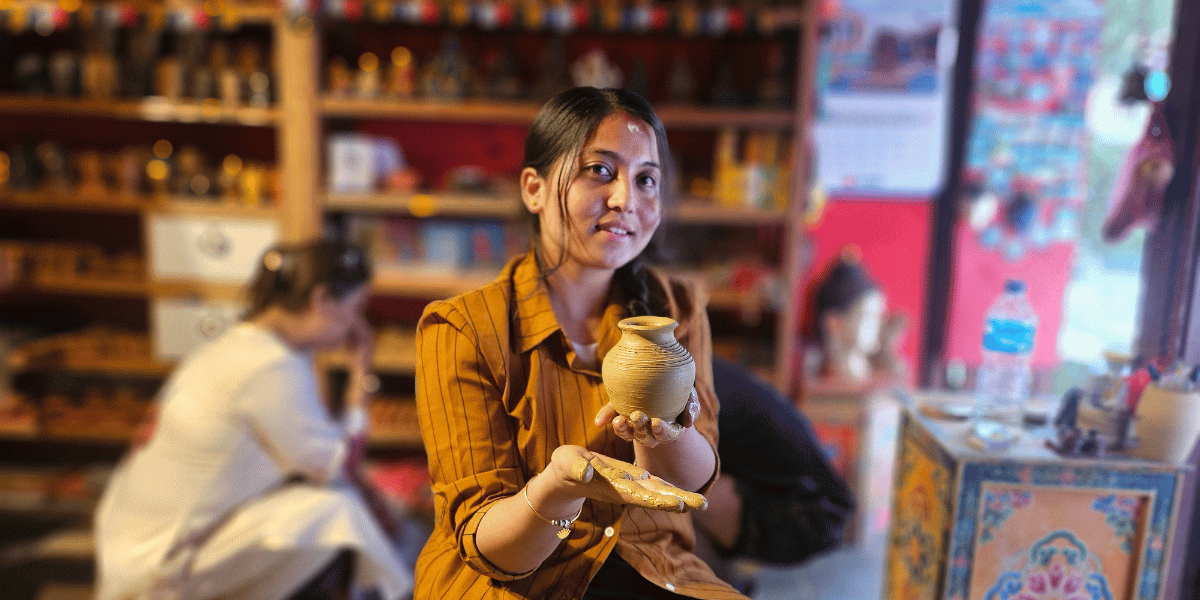
In the shop, there was an instructor who helped me, and because of him, I was able to make a beautiful flower vase (as depicted in the picture above).
It was a truly one-of-a-kind experience that I can't put into words how much I enjoyed it. There was this "sense of pride" in making something with my own hands, just from a lump of clay.
In this blog, I will share not only my pottery-making experience but also present a detailed guide about the place's history, location, and cultural significance that the Pottery Square carries!
Bhaktapur Pottery Square Quick Facts
|
Location
|
Talako Tole, Bhaktapur
|
|
Local Name
|
Kumal Tole or Talako Tole
|
|
Entry Fee
[Covered by the Bhaktapur Durbar Square Permit]
|
NON-SAARC Foreigners
|
USD 18
|
|
SAARC Nationals
|
NPR 500
|
|
Chinese Nationals
|
NPR 500
|
|
Nepalese
|
Free
|
|
Key Attractions
|
- Jetha Ganesh Temple
- Gorakhnath Temple
- Pottery Training Centers
- Thangka Painting Schools
- Authentic 16th-century potter's market with working kilns and sun-drying areas
|
|
Main Items Crafted
|
- Earthen pots
- Water Jars
- Clay Lamps (Diya)
- Flower Pots
- Decorative Ceramics
- Money Container (Khutrukke), etc.
|
|
Accessibility
|
Nearby Bhaktapur Square (5-10 Minutes walk)
|
|
Photography
|
Generally allowed, but ask permission before photographing artisans
|
|
Filming
|
Special permission and permits are required from the Ministry of Communication and Information Technology and the Department of Archaeology
|
|
Price of Pottery Making
|
NPR 150 - 1000 (depends on vendor, shape, size, and difficulty)
|
Pottery Square's History: Part of Bhaktapur's Identity
Pottery means shaping objects from clay and firing them at a very high temperature to harden the objects (durable ceramic) and preserve them for a long time.
Pottery making is considered one of the oldest professions in the world. And in Bhaktapur, it is believed that pottery making has been going on for more than a thousand years, dating back to the Lichhavi period, approximately 400-750 AD.
Research and findings from historical documents and records depict that pottery was an essential element for urban existence in the valley.
Later, in the Malla period (13th-18th centuries), Kathmandu Valley was split into three kingdoms: Kantipur (Kathmandu), Patan (Lalitpur), and Bhadgaon (Bhaktapur). Bhadgaon, after this, turned into an important centre of trade, artistry, and cultural activities in the region.
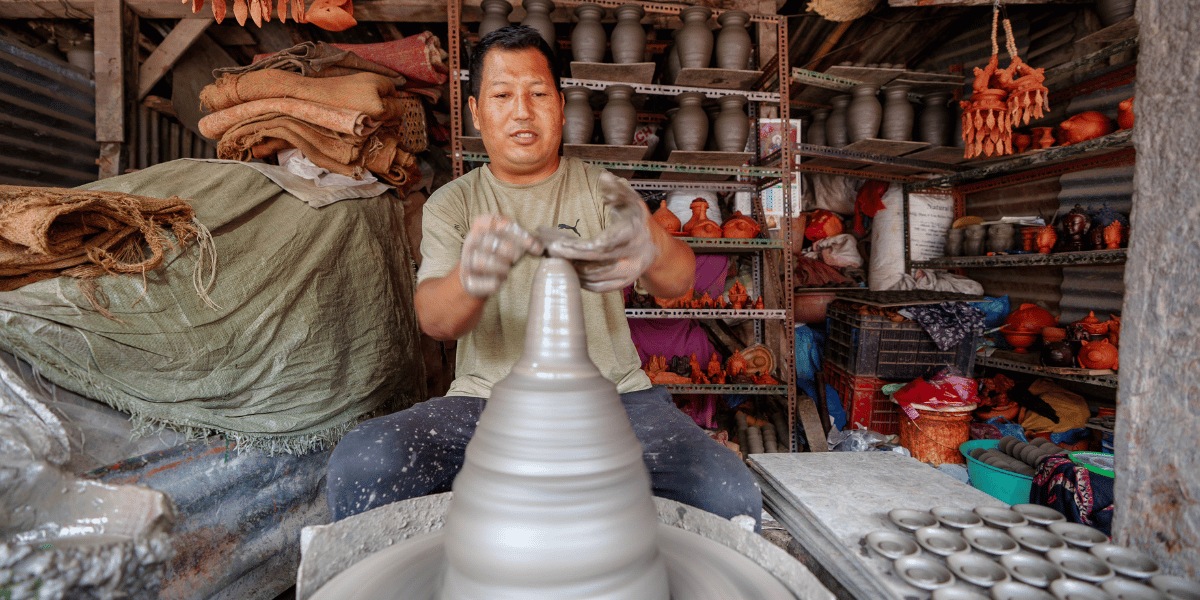
The expansion of household objects, ritual vessels, and storage containers contributed to the development of pottery as a craft skill in Bhaktapur.
It became popular, especially among the Prajapati, a caste of the Newar community. They are considered the Newar potters who kept this alive for many years. As a result, Bhaktapur's Pottery Square remains one of the city's most popular cultural landmarks in the present day.
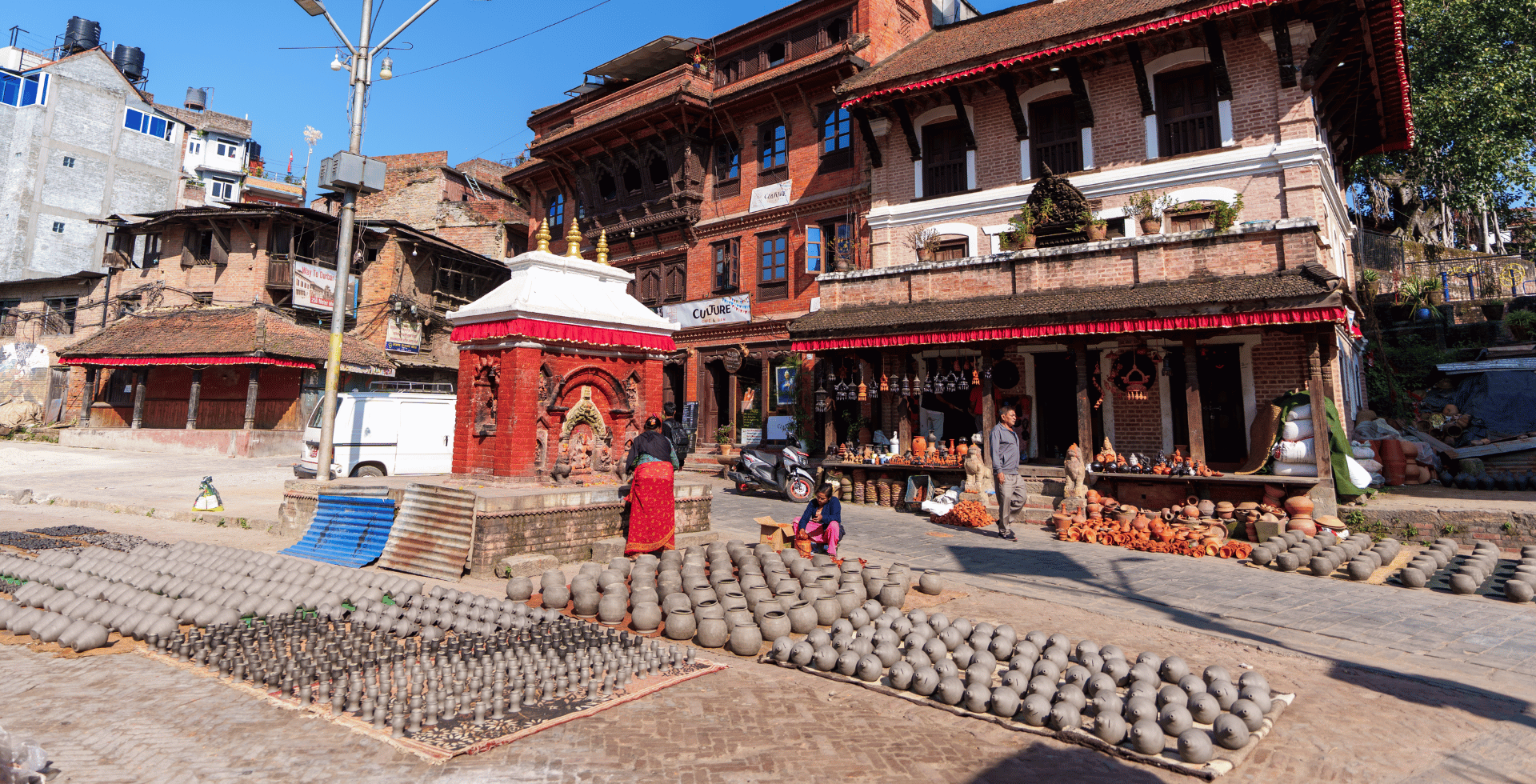
You can see the artisans in this area making items of clay in a traditional way. The clay items include cookware, storage containers, lamps, money containers (Khutruke), flower vases, vessels, plant wares, and other souvenirs and decorative items. These items are used in everyday life as well as in festivals and other religious ceremonies.
Likewise, you can witness all the stages of pottery-making in the pottery square. You can observe each and every stage from molding clay on the wheel to drying in the sun and firing the products in a kiln.
The Two Pottery Squares in Bhaktapur Municipality
There are two particular localities of Bhaktapur where earthen pots are made:
- Talako (middle-south of the city) lies five minutes southwest of Taumadhi Square
- Suryamadhi (east of the city) lies east of Dattatreya Square
They are both known as pottery squares!
Pottery Square is locally named Kumal Tole or Talako Tole, and it is the heart of pottery production in Bhaktapur.
As a visitor, you will enjoy the surroundings, as they are in an open space, and you can see potters working, shaping clay on traditional wheels, and drying products in the sun.
You can see the area is full of large clay pots, prepared by craftsmen using simple and time-honored tools and techniques to mold and fire the pots.
Here, the potters work all year round. And the items they prepare are loved by both Nepalese and international tourists. Likewise, the sales here increase significantly during festivals like Dashain, Tihar, and other newari festivals (like Bisket/Biska Jatra and Gai Jatra).
As pointed out previously, Bhaktapur has two Pottery Squares, one at the southwest of Taumadhi (at Talako Tole) and the other on Suryamadhi Tole (aka Mathiko Pottery Square). Suryamadhi is slightly east of Dattatreya Square.
It is the oldest and the most trade-centric in comparison to the first one. However, Talako Pottery Square is the most visited among the two due to its easily accessible location, as it sits near Bhaktapur Durbar Square, one of the 7 UNESCO World Heritage sites in the valley.
Similar to the Talako Pottery Square, you can find several clay items, including household goods and souvenir items, here too. Also, the overall setting of Suryamadhi is more oriented toward trade and bulk production.
Note: Thimi also has a pottery square, which is located in Madhyapur Thimi Municipality. More on this later.
How to Reach Pottery Square of Bhaktapur?
Wondering how to reach Pottery Square in Bhaktapur? Don't worry; I will make it easy for you by explaining exactly how you can get there from major tourist places inside Kathmandu:
From Thamel
If you are staying in Thamel or the nearby areas of Thamel, then there are 2 options to reach there:
- By Public Bus: First, go to Ratna Park or Bagbazar, where you will find public buses that head to Bhaktapur. It will be best if you get on the bus that goes via the Kamalbinayak route. Ask the bus conductor to get you off at Dudhpati (near Siddha Pokhari). From here, it is just a 10-15 minute walk to Pottery Square. In case you get on a bus that goes via the Suryabinayak route, get off at Suryabinayak Chowk; it is also a 10-15 minute walk from there.
- By Taxi/Ride-share: For a hassle-free journey, you can directly book a taxi or a bike through a ride-sharing app according to your convenience and reach Pottery Square directly within 30-60 minutes (depending on your location).
From Other Squares of Bhaktapur
If you are exploring other squares, then you can continue your exploration and easily reach the Pottery Square. I have explained below:
- Bhaktapur Durbar Square: If you are already on the premises of the UNESCO World Heritage Site, then you can easily reach Pottery Square. Simply walk south down the street near the Kedarnath Temple (opposite the Golden Gate) (300-350 meters). You will find the courtyard filled with clay items within 5 minutes. [Map Link]
- Taumadhi Square: Now, if you're in Taumadhi Square, walk southwest and then take a left turn from Ghatkha. Take the first right, which will lead you directly to the Pottery Square. [Map Link]
- Dattatreya Square: If you're in Dattatreya Square, you need to head west through the city lanes, pass through Taumadhi Square (and even Durbar Square if you take the longer route), and continue your walk moving southwest. As you pass, you will reach the Pottery Square within 15-20 minutes approx. In this way, you can explore all four squares of Bhaktapur, which is the most popular route. But if you don't have enough time, you can visit Suryamadhi Pottery Square instead. [Map Link]
Pottery Square: Daily Life, Culture, and People
Now, let me explain the culture and daily life of the people around the Pottery Square (particularly the Talako Tole). This square is one of the most unique residences in Bhaktapur city. It is an open courtyard where you can find hundreds of clay items drying under the sun.
This scene creates a unique landscape and reflects Bhaktapur's pottery tradition. As soon as you arrive at the square, you see everyone doing their jobs, following the traditions of making clay and pottery for centuries.
This rich heritage draws an immense number of tourists every single day! And during the festive season, the number grows even bigger. For instance, more than 30,000 visited here during the 2-day 2025 Pottery Square Street Festival alone!
Daily Life in Pottery Square
The daily life in Pottery Square is different from that in other squares of Bhaktapur. Potters start their day early in the morning with clay preparation, vessel shaping, wheel spinning, and arranging the clay items.
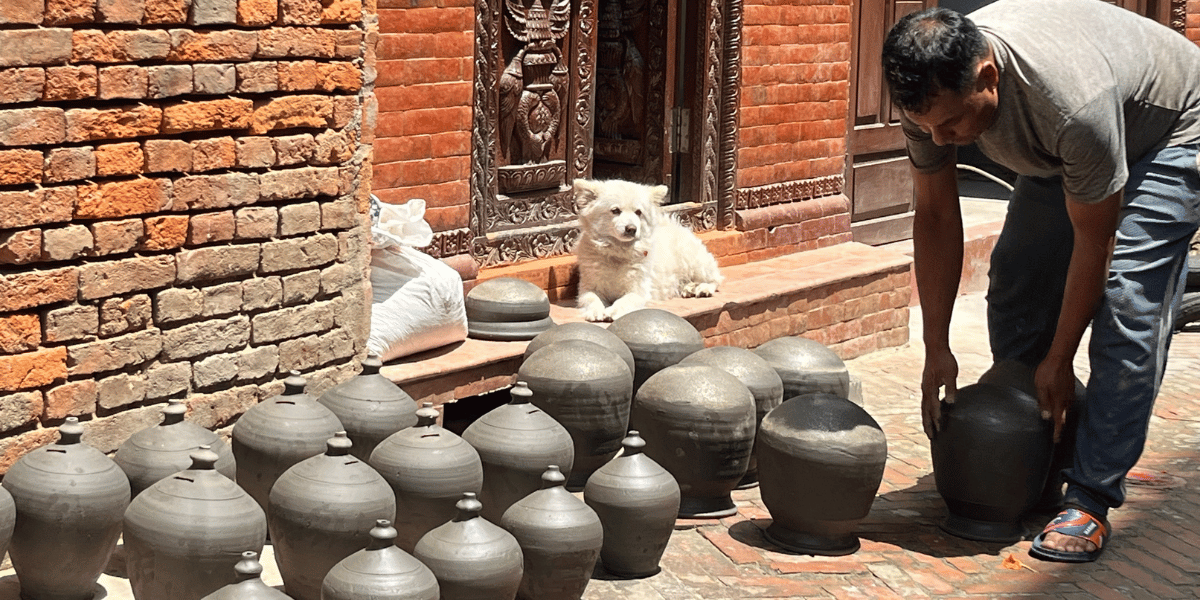
At this time, you can find the square a bit quiet, as all artisans are busy preparing the raw material or clay items.
During midday, all the artisans prioritize their time/work on sun-drying the items prepared. You can see hundreds of carefully arranged pots all over the square at this time. This view is very different, and you will definitely enjoy it.
Afterwards, the fully dried clay items are smoothed by the artisans and given final touches, then they are arranged according to their shape, size, and purpose. Later, they are loaded into traditional kilns for firing.
The pottery square is often filled with visitors, mainly in the afternoon. Many visit here to buy handmade souvenirs to gift their loved ones, whereas some also visit to prepare a pot on their own. Yes, you can participate in pottery-making and gain hands-on experience (just like I did!).
During the evening, work slows down as people stop working on the wheels. It's time to display the well-finished items for sale.
The Pottery Square is also the best place for all international tourists for souvenir shopping, and you can get handmade items at a reasonable price.
Culture and People
In addition, Pottery making is deeply connected to the traditions of the Newar Community. The vessels prepared are used for different purposes, including religious ceremonies and daily life.
For example, Clay Lamps (Diyas) are used during the Tihar festival. Also, you'll find cups, flower vases, kettles, bowls, and pots used in daily life.
Likewise, items like Handi are used during Jatras as well as during funeral time, and statues of gods are used as decorative elements in their houses, as well as for worship.
Pottery as a Local Economy
Economically, pottery-making has been a source of livelihood for the majority of the community. People are preserving their generational traditions through pottery-making, which has also become their daily source of income.
Similarly, the pottery makers and pottery shops have also provided employment opportunities to several people residing in the area.
The demand for these clay items is also high from different parts of Nepal, as well as foreign countries. Also, these days, many artisans are providing several workshops, classes, and training for those who are interested.
So, the combination of domestic sales, international exports, and educational workshops has helped boost the local economy of Pottery Square.
Major Attractions of Pottery Square
Besides pottery-making and other pottery-related activities, you can also explore some of the ancient local temples and Thangka schools located inside the Pottery Square. Here are the key highlights of this square:
Jetha Ganesh Temple
Jetha Ganesh Temple (Jyatha Ganesh) is a two-storied temple located on the premises of Pottery Square and dates back to the year 1646 AD. People around the premises, especially Prajapatis of Talako Tole, worship Jetha Ganesh as Visvakarma (or Bishwakarma), the deity of skills.
The temple is distinct because of the struts carved with Asta-Bhairavas (a group of eight Bhairavas) on the first floor. Whereas you can see the struts carved with the figures of Astamatrika (Eight Mother Goddesses) on the ground floor.
As Ganesh is the main deity of this temple, there is a brass statue inside. This is actually a new statue brought using the donations from the local community, as the original one was stolen.
Moving forward, there is an interesting feature in the temple: a pit, called Yahsigah. This is the exact place where the yashi is erected during the Bisket Jatra festival.
Also, there is a brick-paved area in the west, and it is used by potters for making Alimdyah (a religious ritual clay item) for the Ihi ceremony, also known as Ehee or Bel Bibaha, which is a pre-adolescent marriage ritual where young Newari girls are married to a Bel fruit (wood apple).
Gorakh Nath Temple
Located in the northern part of the Pottery Square, called Taladamfo, this temple is dedicated to sage Gorakhnath, who is locally well known for being a disciple of Rato Machhindranath.
This temple is situated on a slightly elevated area from Pottery Square. Previously, a sacred Puja used to be held here on the fourth day of Biska Jatra. Basically, the Kapalik people (Nath community) worshipped the statue of Gorakhnath as their guru.
There is also a children's park near the temple, where children play, and some local people use it for exercise.
Pottery Training Centers
As I mentioned multiple times before, you will find several pottery training centers within Pottery Square. They provide various pottery training and workshops.
Even as a visitor, you can experience pottery making under the guidance of local artisans here. So, if you are interested in trying hands-on experience, you can easily join their sessions on the spot!
You can find different options like a 1-hour session, a 1-week session, and even longer sessions. These training centers have helped to preserve the important cultural heritage and the century-old pottery-making occupation. Also, they encourage visitors to engage directly with local craftsmanship!
Thangka Painting Schools and Galleries
Besides pottery, you can also visit Thangka Painting schools and galleries to observe Buddhist Paubha (Thangka) paintings in the Pottery Square.
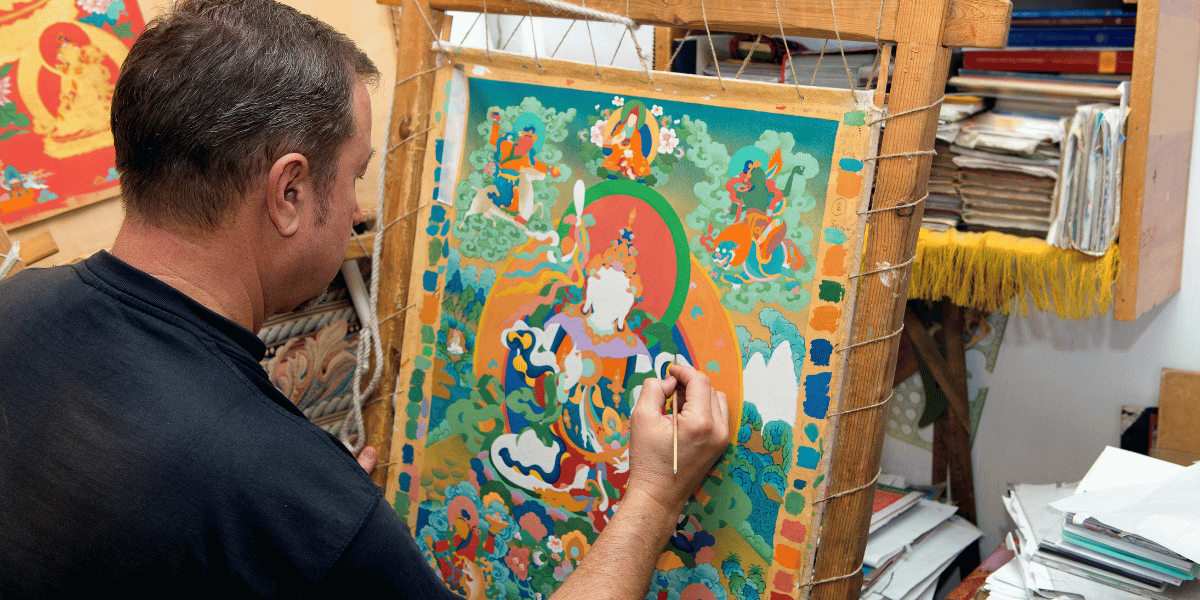
You can watch students and artists practicing the traditional and unique arts of Nepal. Here, you can witness the calmness and patience of artists with their hard work and quality art.
If you are interested in taking part, several painting schools offer introductory sessions. Even longer sessions are available at a certain cost. If you're interested, our Altitude Himalaya team can help arrange such activities too. So, do contact us and we'll provide you with detailed information.
How Pottery is Made in Bhaktapur
The well-finished, attractive clay items have left everyone in wonder about how pottery is made in Bhaktapur. So, we decided to make it easy for you.
There are two different ways of pottery making: one is the traditional wheel method, and the other is using a mold. No matter how it is made, it is made with love!
The fascinating pieces leave everyone wondering how the artisans bring clay to life. Here is the actual process of traditional pottery-making in Bhaktapur:
Step 1: Clay Collection
Pottery making begins with collecting clay. Traditionally, locals from the Pottery Square collected clay from the nearby riverbanks or by digging in the rice fields around the area. This is what is called "raw excavated clay".
These days, due to urbanization, there is a lack of clay nearby. So, the artisans now have to source clay from different places in the country (wherever fine clay is available).
Step 2: Initial Clay Preparation
In this process, they knead the clay, remove air bubbles, and clear out impurities.
The clay is then wedged, which involves kneading and squeezing the clay over and over again to get rid of air bubbles.
Step 3: Shaping the Clay
Traditionally, people used to shape the clay with their hands, while nowadays, different modern shaping tools are used for efficiency. In the past, artisans used kick wheels, but now they rarely use them and have replaced them with motorized wheels.
Very skillfully, with care, artisans shape items with their hands. Because sometimes when spinning the wheel, the clay might wobble off center.
After the product shaping is done, the artisans carefully separate the pot from the wheel using a string/wire.
Another more modern way to shape the clay is by using plaster molds. Only for some particular products (like small trays, idols, foot scrubbers, tiny decorative items, etc.) do artisans use this method.
Step 4: Drying
Once the items are shaped, they need to be dried in the sun. This will remove moisture from the clay and help in setting the shape properly. Also, it will help to prevent cracks in the next step.
Step 5: Firing
Some clay products may not require firing, whereas others do. There are two different firing modes:
- Wood-fired kilns: The dried products are roasted with wood as fuel in a closed kiln. The temperature is increased slowly and the products are carefully controlled.
- Open-air method: The open-air method is an ancient method of firing. In this method, dried items are stacked on the ground. Then, these items are surrounded by burnable materials like wood, straw, or dried leaves. While many potters use the wood-fired kilns, you can still observe open-air method in some parts of Bhaktapur by some artisans.
Step 6: Final Decoration
This is the final step where the pottery items are decorated. They are decorated with paintings, ornaments, or polishing. Once the decoration work is completed, they will be ready to be sold in the market.
What Pottery Products Can You Find in Bhaktapur?
Bhaktapur has been a hub of pottery for centuries, and pottery has been a trending activity in recent days. In Bhaktapur, you can explore several pottery products, experience pottery on your own, and also buy these items as souvenirs for gifting or decorative purposes.
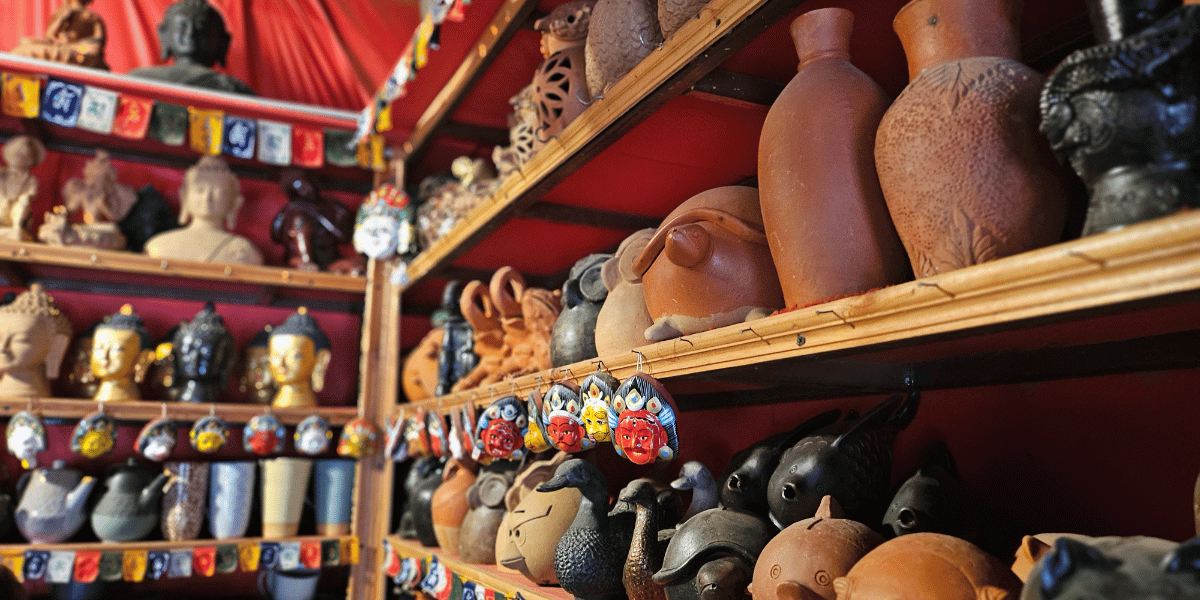
Here is a list of pottery products you can find in Bhaktapur:
- Household Pots: Utensils like waterpots, storage jars, cooking vessels, jugs, mugs, kettles, plates, bowls, serving platters, Juju Dhau cups, etc, used in daily life.
- Religious and Ritual Items: Clay lamps (Diyas), a haandi, an oil lamp, an incense burner, a Kalash, ceremonial vessels, and other religious items.
- Decorative Pots: Flower pots, planters, vases, decorative bowls, vessels, trays, figurines, and sculptures.
- Souvenirs: Diyos, planters, cups, mugs, statues of gods, money banks, a foot scrubber, a teapot bowl, trays, etc. You can take these souvenirs as a gift or as a remembrance of Bhaktapur.
These pottery items are sold to local households, several restaurants and cafes in different parts of the country, and even exported to several foreign countries.
Sharing My Experience of Pottery Making
During our 1-day Bhaktapur Trip, I got the opportunity to try pottery making for the first time in my life. I sat at a Potter's Wheel with a local instructor beside me and made a small flower vase by hand, from scratch.
The process is more technical than it looks from the outside. Here is how it went, step by step:
- First, my instructor walked me through the basic steps before letting me touch anything.
- The very first thing he had me do was keep a lump of prepared clay in the middle of the Potter's Wheel. He was very direct and told me that centering the clay is the most important step in the entire pottery-making process! So, I placed it carefully and let him adjust the position, and continued only after his instruction.
- Then, he set the wheel spinning and told me to keep my hands steady while applying gentle pressure to the clay. Sounds simple? It is not. My hands kept losing balance against each other, and every time they did, the clay would shift off-center.
- My instructor stayed calm through it and guided me until I got it under some control. "Managed it somehow" is probably the honest way to describe that. And here is something he kept repeating that I nearly ignored: keep your hands wet at all times. Dip them in the bucket of water constantly.
- Once the clay was centered, he showed me how to press my thumbs into the middle to open it up. I pressed slowly and widened the hole a little at a time. [Tip: Remember to keep the base thick enough to actually support the vase. Thinning it out too early will be a mistake.]
- Then came the part I was most nervous about: pulling the walls upward. You squeeze the clay between your hands while the wheel keeps turning and the walls gradually rise. I was scared through this whole step. Too much pressure in the wrong place, and the whole thing would collapse! I kept my hands as light as I could and moved slowly.
- Somewhere in the middle of all this, I noticed the shape was starting to look like an actual pot. My instructor showed me how to smooth the surface with wet hands, explaining how small pressure adjustments and hand placement control the final shape and size. You have to be deliberate with every movement here.
- The shape finally came together properly. My instructor picked up a wire tool and used it to cut the pot clean off the wheel, then put it directly into my hands. Holding it was quite the feeling! Twenty minutes earlier, that had been a shapeless lump of clay. Watching it become an actual object in your own hands is genuinely satisfying!
- I left it near the store entrance to dry in the open air. But the day was ending, and I needed to get home, so it only sat there for 10 to 15 minutes before I had to carefully take it home (placing it on top of another dried pot), set it in the sun the next morning, and color it myself once it was fully dry.
Well, that was my very first experience of pottery making, and I was very happy with the results. I recommend everyone try this at least once!
Cost of Pottery Making in Pottery Square
If you plan to experience pottery making in Bhaktapur, then the price is reasonable.
However, the cost depends on the shape, size, and difficulty of what you are planning to make. Small pots, clay lamps (Diyas), and cups may cost less, while some sculptures of gods or large-sized pots and vessels might cost a bit more.
Please note that you need to have prior experience before making larger pots; without that, you will not be able to prepare one.
Likewise, the price varies from vendor to vendor; some vendors charge a lower amount, while others may charge slightly higher.
Also, the price of pottery making will vary for tourists and Nepalese people. Tourists are often charged a higher price, while Nepali visitors will get to do the pottery at local rates.
The price for small pots ranges from NPR 200-500, and the cost increases accordingly.
In conclusion, the experience is worth the money. You will definitely be happy and feel satisfied by the experience!
Pottery Classes and Workshops: Is It Possible For Tourists?
It's a big yes for those who are questioning whether it's possible for tourists to enroll in pottery classes and workshops.
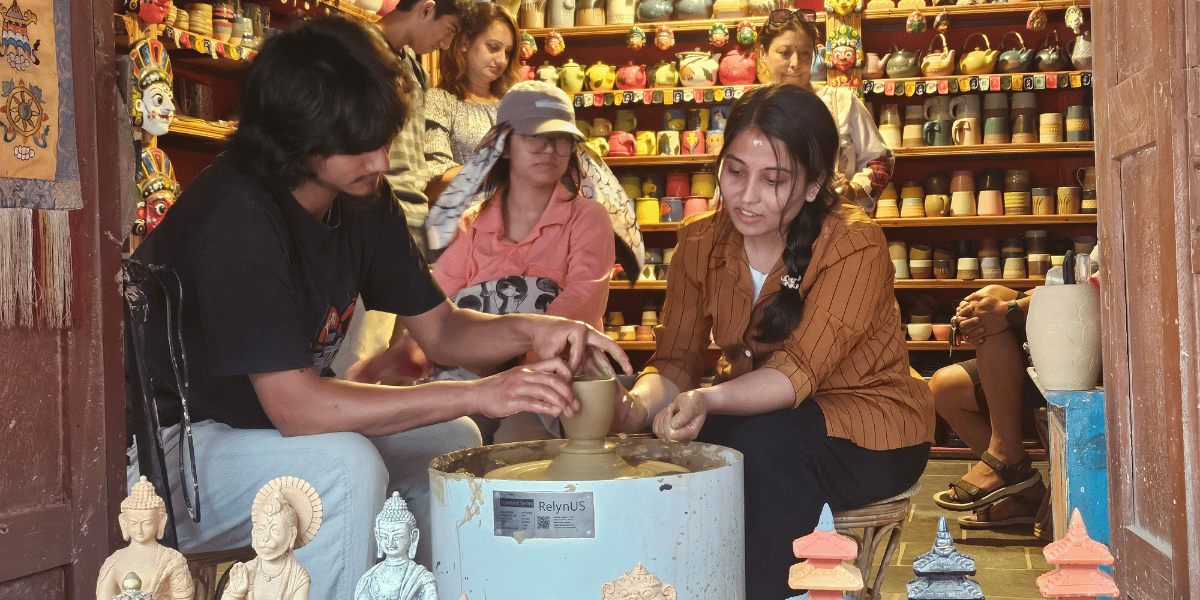
As I mentioned earlier, you can find several stores providing pottery training classes in Bhaktapur's Pottery Square. Hourly training classes, half-day courses, or week-long and even longer sessions are provided. You can participate in the one that suits you best!
Again, the price for the classes may vary from vendor to vendor and by nationality. Here's an average list of the price range after consulting multiple businesses:
|
Session
|
Price
|
|
30 Minutes Session
|
NPR 600-800 per person
|
|
60-Minute Session
|
NPR 1200-1500 per person
|
|
Longer Session
|
Price Negotiable (Upon Discussion)
|
A few notes:
- There will not be any extra charge for sun-drying the items you made. The dried items can be used for decorative and ornamental purposes only.
- However, you need to pay an additional charge of NPR 500-1000, depending on the size, for baking the product. After baking, the products will be waterproof and can be used for wet purposes.
Tips For Visitors
Bhaktapur Pottery Square is a unique destination to experience one of Nepal's oldest traditional occupations: Pottery Making.
But keep in mind that proper planning is essential before visiting the Pottery Square and trying pottery making. These tips can help make your trip more worthwhile and meaningful:
Best Time to Visit
If you prefer a peaceful walk, then early morning is the best time of the day to go to the Pottery Square. At this time, you can watch potters working on their wheels.
Even afternoons can be one of the options if you want to witness hundreds of clay items being dried in the sun. They remain all over the ground when the sun is bright. You can also participate in pottery making, as the pot you prepare can dry early.
If you want to explore the shops, the evening would be the best time to collect souvenirs. Enjoy the beautiful pottery items all readily displayed in different shops during this time!
Experience Hands-On Pottery
I'm repeating this yet again: local potters offer hands-on sessions for those who are interested. So, this is going to make your visit extra special because you will be creating a masterpiece from a lump of clay on your own!
Do make sure to check the price of pottery making in advance, as the cost may vary for Nepali visitors and foreign tourists.
Photography and Filming Tips
Bhaktapur Pottery Square is a fantastic place to take photographs. You can take pictures of spinning potter's wheels, rows of sun-drying pots, traditional workshops, and well-finished, attractive clay products. But do not forget to ask permission before taking photos.
But when it comes to professional filming, you require special permission and must submit the required documents in advance. For application submission, you'll need:
- An application form with Rs. 50 Nepali postal stamps
- Authorization letter from the production company appointing the local coordinator
- Film script or storyboard, theme/concept
- Crew member details: Name list, passport numbers, positions, and arrival date of foreign film crew.
- Filming Itinerary (dates and locations in Nepal)
- Equipment list with declared value for customs clearance.
After the document is completed, the case will be registered, and permission will be processed through a local coordinator and submitted to the Ministry of Communication and Information Technology (MoCIT). The final grant is given by the Department of Archaeology.
Planning a photography-focused tour in Kathmandu? Check our Kathmandu Photography and Kathmandu Cultural Tour packages!
Guided Tour vs Independent Tour
Both guided and independent visits have their advantages:
- When you are with a professional government-licensed guide, he/she can provide useful information about the history of Bhaktapur, pottery traditions, and the local culture. This was true on our own 1-day trip to Bhaktapur!
- However, if you're going on your own, you can explore the area at your own pace and on your own schedule. You can talk to artisans and spend more time watching the pottery-making process.
Honestly, to improve your overall experience and get more information, it is always recommended to book a guide!
Respect the Local Culture
Besides being a tourist attraction, Pottery Square is a working space for the local artisans, so you have to stay disciplined and respect them.
You should not touch the unfinished pottery, and even for the products that are ready, be sure to seek permission.
Moreover, you can support the locals by purchasing authentic handmade products. There are many options to choose from, and I'm sure you'll love one.
What to Bring?
Bhaktapur and Pottery Square are all about exploring by walking. So, you must put on comfortable walking shoes.
Also, bring a bottle of water, sunscreen, an umbrella, along with a sunhat and sunglasses (depending on the weather).
Alternative Destination: Thimi Pottery Square
There is another major centre of pottery production in Bhaktapur, located in Madhyapur Thimi Municipality. This place is less crowded than Bhaktapur Pottery Square. Similarly, it has a more local and relaxed atmosphere for watching traditional pottery.
Thimi Pottery Square is also known for skilled artisans, and the open courtyards are filled with drying pots. Like the one in Talako Tole, many families here are also involved in pottery making, and this place has traditionally been called "Pottery Village" too.
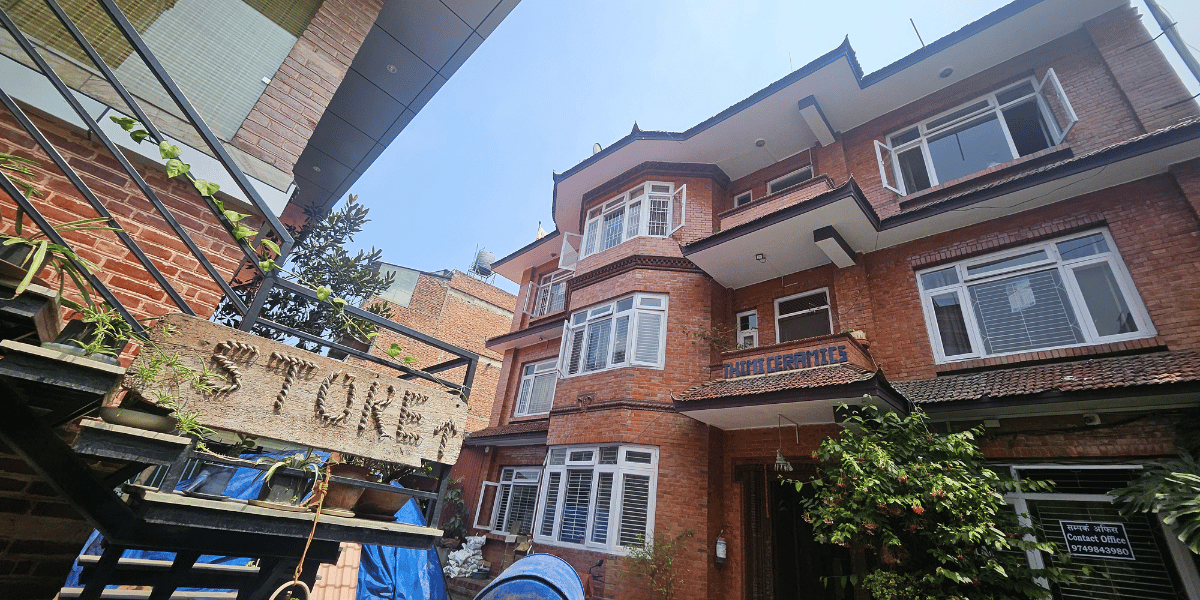
Among many local pottery manufacturers, one particular place our content team recently visited was Thimi Ceramics, which even happens to be the first ceramics factory of Nepal!
It was started in 1985 and manufactures different ceramic products, like cups, plates, vases, souvenirs (like statues of elephants, Buddhas, roses, dolphins, etc.), planters, foot scrubbers, incense holders, vessels, and many more!
You can also visit their store upstairs, which is full of clay items ready for sale. Interestingly, they even export to European countries (Germany, Spain, Italy, Sweden, Denmark, the Netherlands), along with the USA and the UK.
Production Process at Thimi Ceramics
At Thimi Ceramics, a planned step-by-step process is used to transform a lump of clay to ceramic products. These are the major steps that I learned after personally visiting the factory:
- Clay Collection: As mentioned above, clay is a basic material needed to make pottery. The clay used at Thimi Ceramics is collected from nearby areas by digging in the rice fields. It is called raw excavated clay. If the clay is available in the nearby areas, then it is collected from there. Otherwise, they source the clay from different places in the country or sometimes import from India.
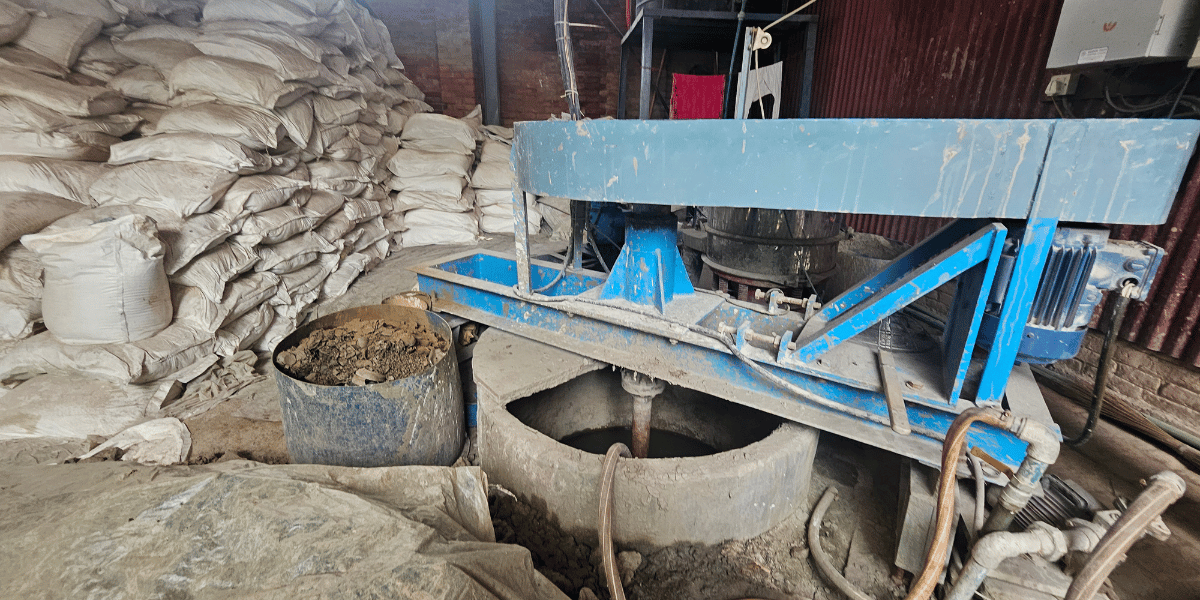
- Initial Clay Preparation: In this process, the clay is mixed with water. Other required minerals are also added to make the clay soft and workable. Later, the mixture is turned into a thick liquid, and now it is passed through a mesh sieve. This is where the sand and stones and other large particles are filtered out making the clay clean and smooth.
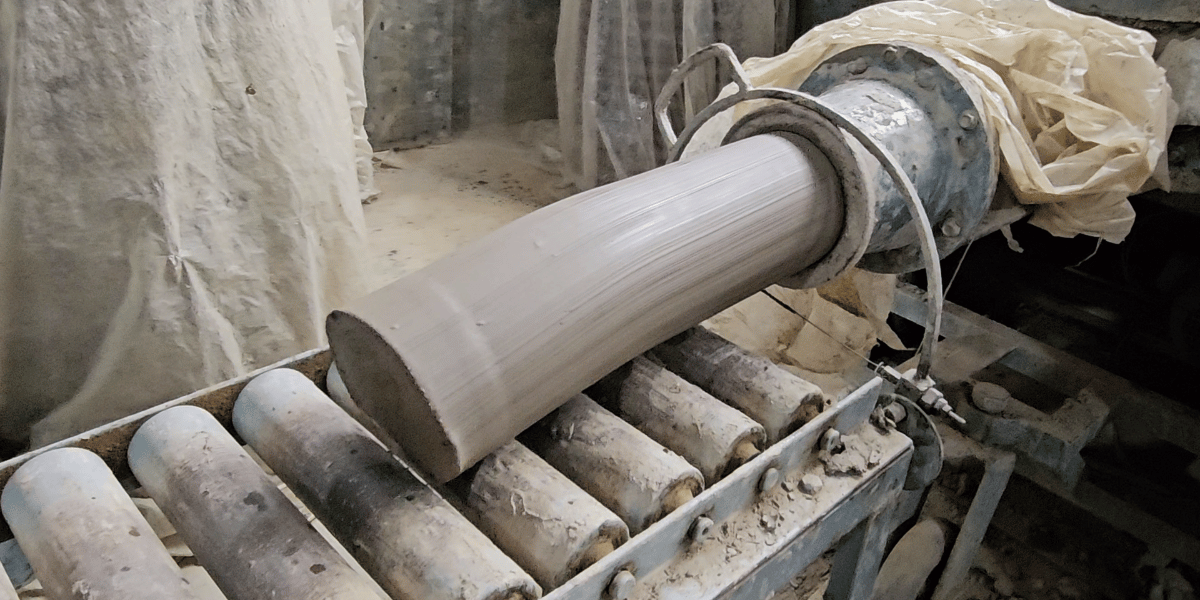
- Filter Pressing and Pug Milling: The third step is filter pressing and pug milling. The water is removed in a filter press and the clay is then mixed in a pug mill.
- Clay Kneading: Once the clay is mixed in a pug mill, it is extruded, and then the clay is kneaded by hand.
- Weighing: Now, the clay is weighed according to the product and kneaded again into a ball shape.
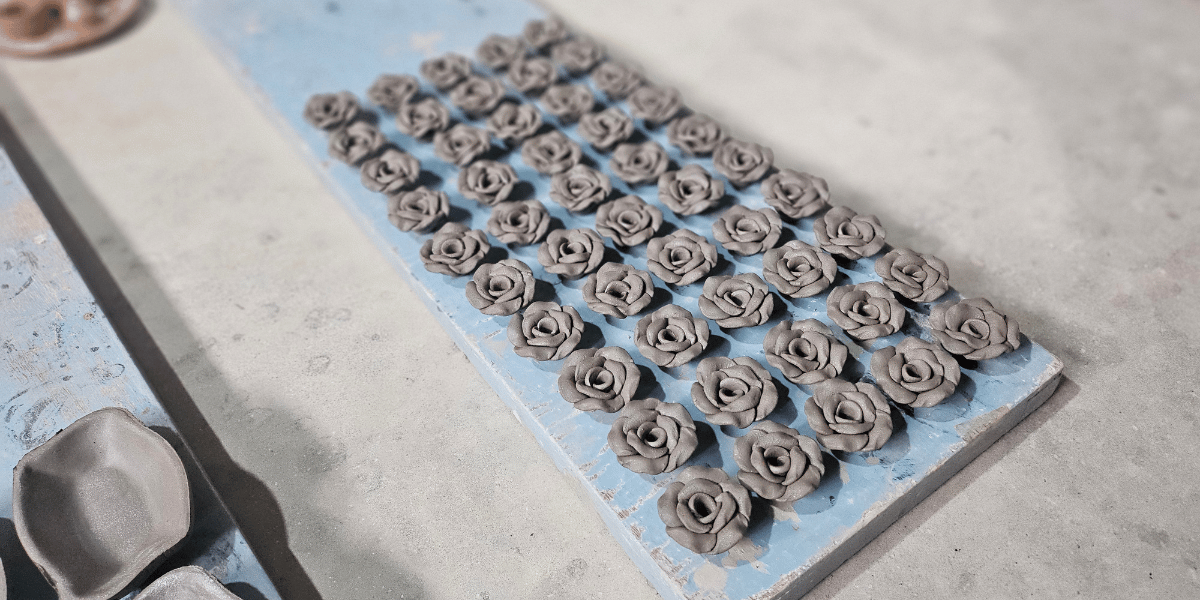
- Shaping: Again, the clay is sent either into pots on the potters' wheel or pressed into plaster molds. Some designs are made by using the traditional approach (i.e., potter's wheels), and some are designed by pressing into the molds.
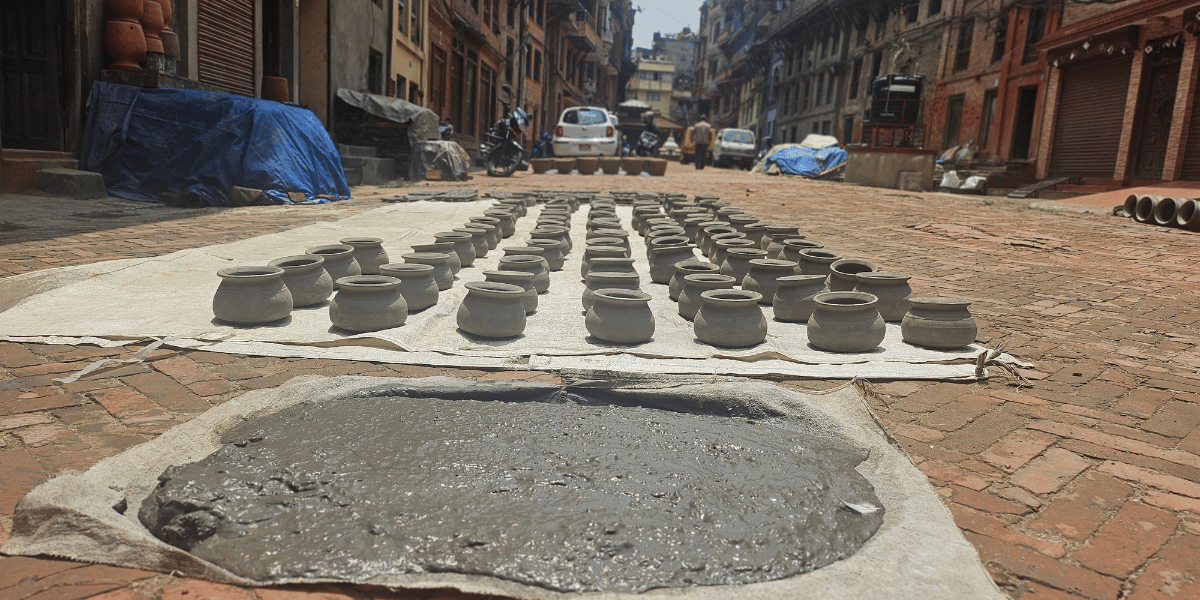
- Sun Drying: After shaping is completed, the items are left to dry until they are in the leather-hard stage. They should be pliable by now, but strong enough to handle. The craftspersons then add other features, such as handles or other decorative elements. After this, they are again put in the sun so that they dry bone dry and are ready for biscuit/bisque firing.
- Biscuit firing: After the clay items are dried in the Sun, they need firing so that the items become durable enough for handling. Hence, the pots are fired in a kiln at 800 °C, and this process is known as Biscuit firing.
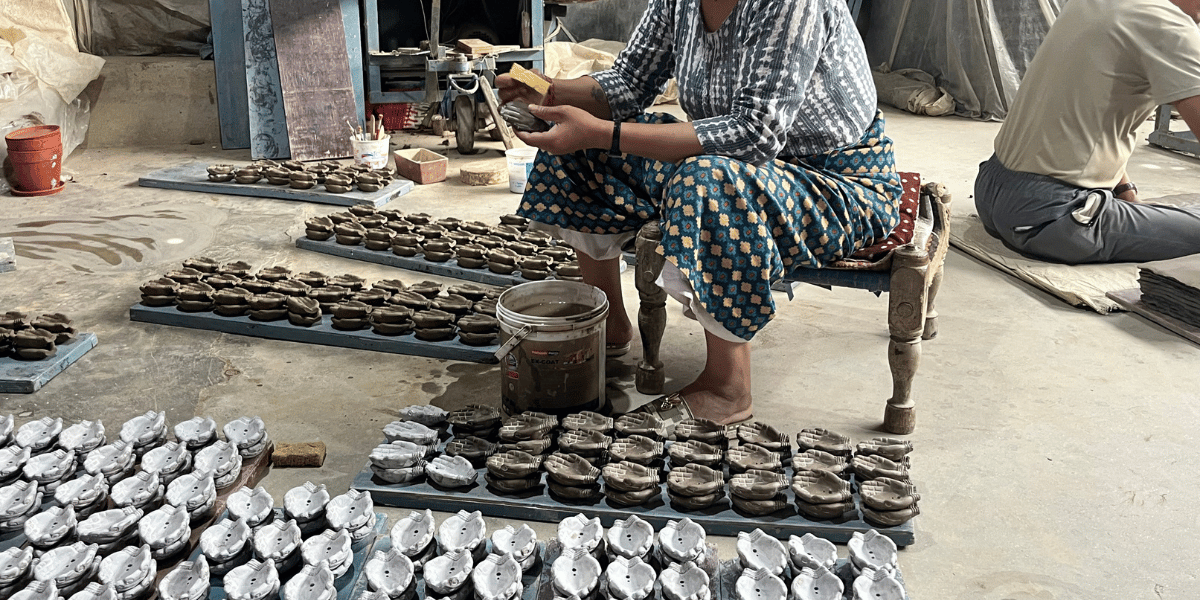
- Glazing: The pieces are dipped in a liquid glaze after the biscuit-firing and allowed to dry.
- Second firing: Now the glazed items are fired again. This time, the pieces are fired at 1250°C to become stoneware.
Nearby Places to Explore
While making a visit to Bhaktapur Pottery Square, there are several other nearby attractions to explore. Some of them are:
Three Other Squares: Taumadhi, Dattatreya, Bhaktapur Durbar
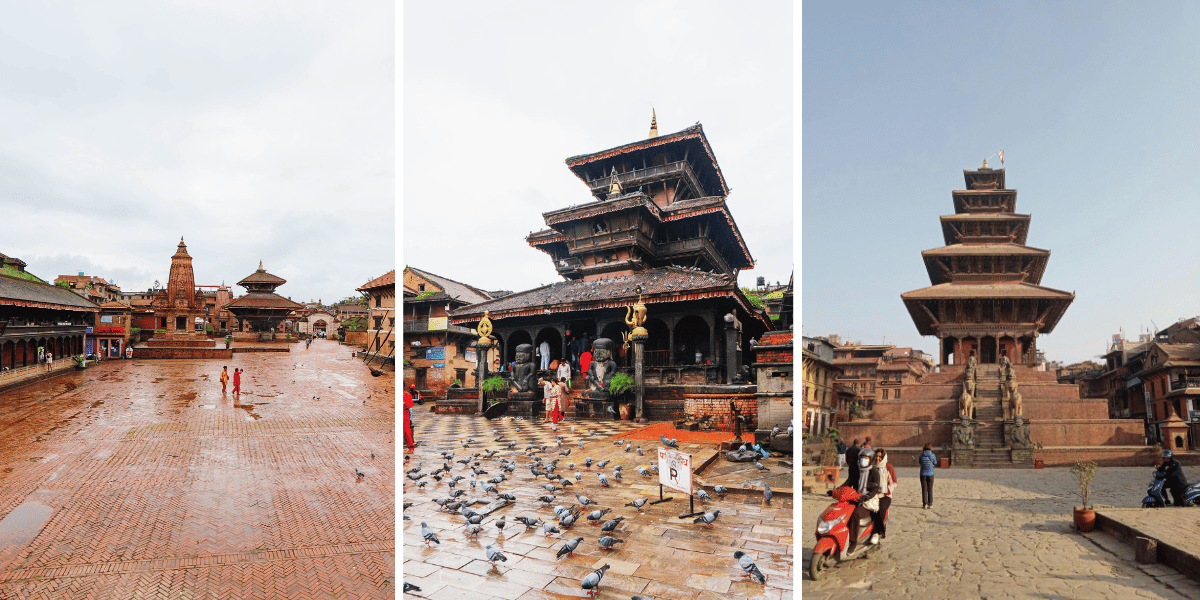
You can visit the other three main squares near the Pottery Square, which are:
- Durbar Square: Within a 4-5 minute walk from Pottery Square, you can reach Bhaktapur's very own Durbar Square. This is a historic royal palace complex to explore the ancient temples, courtyards, and Newari architecture.
- Dattatreya Square: Dattatreya is approx. 15-min walk from Pottery Square. This square is less crowded than the others. In Dattatreya Square, you can visit these Bhaktapur museums: the Brass and Bronze Museum and the Wood Carving Museum. Also, you can visit the Peacock Shop (The Paper Factory) to explore not just the factory but also sculptures, idols, and statues from the 16th century!
- Taumadhi Square: This one is a more lively square and is crowded in comparison to the others. The square is only a 3-5 minute walk from Pottery Square, and you can see the most iconic temple, Nayatapola Temple, too! It even houses some of the best rooftop restaurants to try local Bhaktapur foods.
Temples
There are a number of temples close to Pottery Square, and the distance to them depends on the route you choose. The most important of them are:
- Nayatapola, Bhairabnath, and Til Madhav Narayan temples, Taumadhi Square: 250-350 meters
- Dattatreya Temple and Bhimsen Temple, Dattatreya Square: 1 km approx. via Mako Galli
- Char Dham (Jaganath, Badrinath, Rameshwor, and Kedarnath temples), Durbar Square: 300-400 meters
- Many more!
Ponds
Bhaktapur has several ponds, all of which are easily reached from Pottery Square. Some of these are:
- Siddha Pokhari: Situated at Dudhpati, near Bhaktapur Hospital, it is a 10-15 minute walk from the Pottery Square.
- Rani Pukhu (Rani Pokhari): This is a small historic pond along the Nagarkot-Bhaktapur road. Although less popular, it is more scenic and cleaner than the other ones I've mentioned in this list. It's worth it for a refreshing stroll and lies just 20-25 minutes from the Pottery Square.
- Kamal Pokhari: Located in eastern Bhaktapur (around Kamal-Vinayak area), this pond is just about 25-30 minutes on foot from the Pottery Square.
- Guhya Pokhar: Also known as Nah Pukhu, is located near the Siddha Pokhari area and is a 10-15 minute walk from the Pottery Square.
- Bhajya Pokhari/Pukhu: Located in Dudhpati, south of Siddha Pokhari, Vajya Pukhu is a historic gem. The pond is known for the Jaleshwor Mahadev Temple in the centre. The location is also about 10-15 minutes from the Pottery Square.
Other Places in Bhaktapur District from Pottery Square
There are several other important cultural, religious, and historical sites that you can visit from Pottery Square. The most popular ones include: Changu Narayan, Suryabinayak, Kamal Binayak, Doleshwor Mahadev, Silu Mahadev, Nagarkot (from Changu Narayan or via Chisapani), Shree Panchamahalaxmi Temple, etc.
Final Thoughts
After visiting Bhaktapur Pottery Square in person, I was left in awe at the incredible skill and endless patience of the artisans who have been active in pottery making for several years.
After my personal experience of Pottery making, I also developed a deep respect and appreciation for their craftsmanship.
This place is truly a living example of Nepal's traditions of ceramics, where clay and creativity meet every day. Overall, the enduring quality of work and the hard work of artisans are worth praising because turning a simple piece of clay into something beautiful and functional is not an easy job!
Today, many traditional crafts around the world are on the way to being diminished because people of this generation are choosing other modern careers. Consequently, valuable knowledge and skills handed down through centuries are in danger of being lost.
Hence, one of the factors that supports this century-old profession's continuity is Tourism. By planning your visit to Pottery Square, participating in pottery-making activities, and purchasing their local products can directly support the livelihoods of people and keep their traditional skills alive!




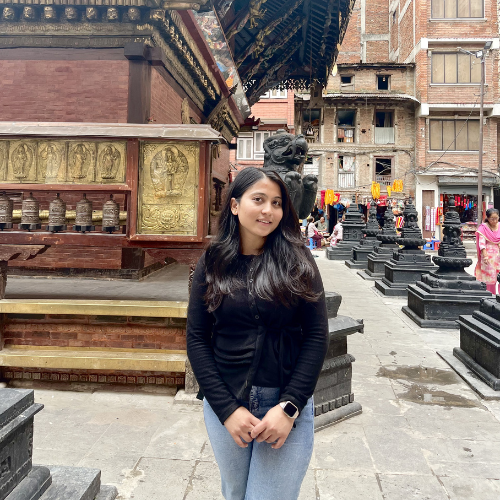 Garima Bhandari