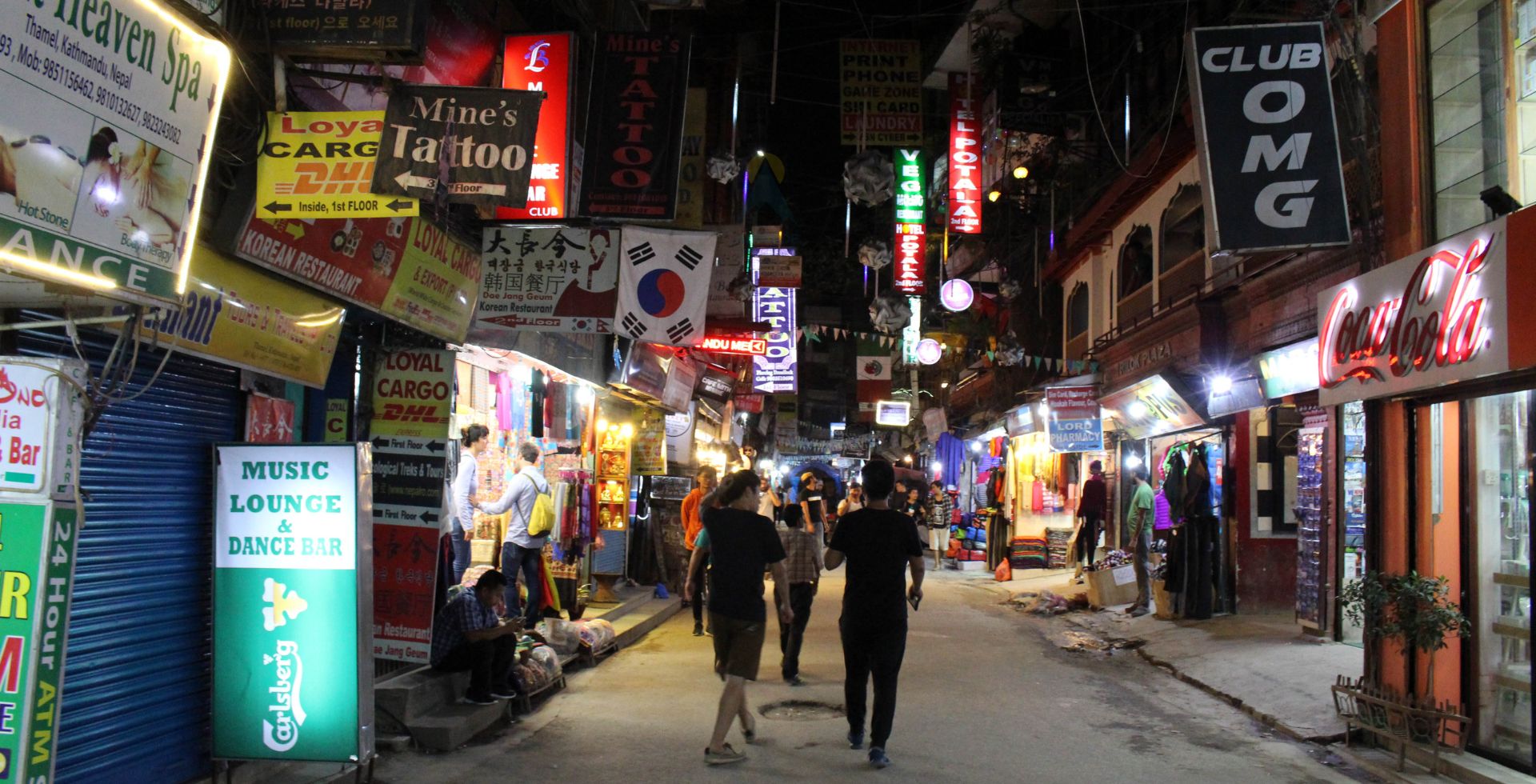
Thamel is a compact area in Kathmandu with hotels, restaurants, bars, souvenir shops, pashmina & cashmere stores, trekking and expedition agencies, massage centers, and almost everything!
Coexisting with these busy and noisy areas are quieter courtyards, temples, gardens, and similar sanctuaries. And many major attractions, such as Kathmandu Durbar Square, Swayambhunath Stupa, Narayanhiti Palace Museum, etc. which are just a couple of stops away!
Also, with the availability of a wide range of domestic and international food items, it’s almost clear why Thamel functions as a base for any trip in Nepal.
If we look back, we’ll find that hippies who couldn’t accommodate themselves in Jhocchen or Freak Street would stay in Thamel during the hippie era. When this era met its end in the early 70s, the international visitors' intention transitioned to tours, treks, and expeditions in Nepal.
This led Thamel to grow rapidly as a tourist hub from the 80s and 90s through its connection to hippies and its convenience. With growing numbers of explorers, the number of travel agencies, gear shops, pubs, clubs, eateries, casinos, and other activities also grew exponentially.
At present, Thamel has successfully established itself as the default stop for almost every visitor to Nepal. It might not be the quietest and naturally rich sanctuary, but it is definitely the most convenient one!
Quick Facts on Thamel
|
Fact
|
Details
|
|
Location
|
Kathmandu Metropolitan City Ward No. 26, Kathmandu District, Bagmati Province
|
|
Coordinates
|
27° 42' 52.53" N, 85° 18' 43.10" E
|
|
Distance (approx.)
|
Tribhuvan International Airport to Thamel
|
6 to 6.5 km
|
|
Kathmandu Durbar Square to Thamel
|
1.5 to 2 km
|
|
Known For
|
- Nightlife
- Shopping souvenirs
- Temples and Courtyards
- Trekking Gears
- Travel and Trekking Agencies
- Hotels and Lodges
- Restaurants, Cafes, Bars, Pubs
|
|
Nearest Landmarks
|
- Narayanhiti Museum Palace
- Rani Pokhari
- Kathmandu Durbar Square
- National Museum of Nepal
- Swayambhunath Stupa
|
|
Ideal For
|
- Pre/post trip rest
- Backpackers
- Trekkers
- Nightlife-seekers
- Diverse dining
|
Location of Thamel in Kathmandu
Thamel is located roughly 1.5 km north of historic Kathmandu Durbar Square and about 6 km northwest of Tribhuvan International Airport.
It takes about 20 to 30 minutes in a taxi to reach Thamel from the airport, but heavy traffic may double the time. Hotel pickups, taxis, and ride-sharing apps are the most common ways for this road trip.
Thamel is bordered by Kanti Path in the east, Paknajol Marg in the west, Lekhnath Marg in the north, and Nityanath plus Jyatha Marg in the south. So, if you’re travelling from the airport, then most likely you’ll enter from either the east or the north, but you can leave this to your driver.
Thamel Bazaar and Jyatha are the busiest streets in Thamel, packed with trekking shops and hotels. Mandala Street has many options for restaurants, cafes, and bars. Paknajol (northern edge) and Chhetrapati (southern edge) offer comparatively cheaper guesthouses.
It’s optional, but if you’re entering from the east, then why not take a tour of our Narayanhiti Palace Museum, Kaiser Mahal, and Garden of Dreams (the latter two are part of Thamel)!
A Brief History of Thamel: How It Became a Tourist Hub
Thamel was not the same as it is today in its earlier days. When I was tracing its history, I was shocked to know that Thamel was a peaceful agrarian Newari settlement.
In ancient times, Thamel was known as Tha Bahi, which meant “small monastery above,” and the name was perfect since there were Buddhist monasteries here rather than all the restaurants and hotels you see. For centuries, Thamel was only a religious and agricultural area near Kathmandu Durbar Square.
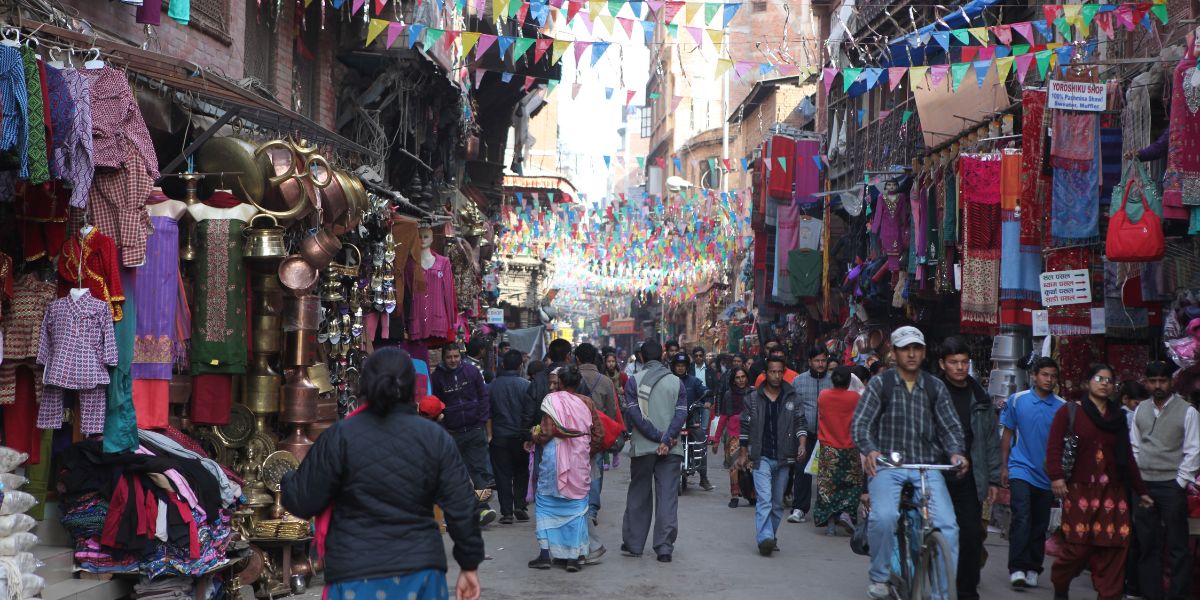
Unknown to many, to date, this neighbourhood has many ancient temples, courtyards, hitis, and monuments such as Bhagawan Bahaal that date back to the Licchavi period.
Are you curious about how this ancient, peaceful neighbourhood transitioned into today’s 24-hour busy tourist hub? If yes, then kindly keep reading further!
Timeline: How Thamel Became Nepal's Tourist Hub
|
Period
|
What happened?
|
|
Pre-1960s
|
A traditional Newari settlement.
|
|
Late 1960s - Mid 1970s
|
Some hippies traveled to Thamel.
|
|
Mid - Late 1970s
|
Cannabis banned; the hippie era faded.
|
|
1980s - 1990s
|
Nepal's trekking and expedition boom in Thamel.
|
|
2000s - Present
|
Thamel established as a tourist hub.
|
Before Tourism
Long before Nepal started receiving international visitors, Thamel was more of a typical Newari agricultural settlement with ties to ancient Newar Vajrayana Buddhism and Hinduism.
Many historic figures are connected with Thamel from a religious perspective, such as:
- Singha Sathabahu: He is considered to be the central ancestral figure of Thamel’s Bhagawan Bahaal.
- Nagarjuna: He is credited with having retrieved the Prajnaparamita (also known as Pragyaparamita) from the Naga King, which was written by Manjushree.
- Gunyajyoti Vajracharya: He founded Chhusya Bahal in the 17th century on the southern border of Thamel.
In the late 1960s and early 70s, Thamel was frequented for its thriving vegetable market at the northern end, medicine shops, and bicycle and vehicle rentals.
The Hippie Era and the Freak Street Connection
To anyone who does not know about the hippie era, it was a youth-led counterculture movement that lasted from the 1950s to the early 1970s. It started to reach Nepal in the mid-to-late 1960s (accelerating after 1965).
This trail went through countries like Türkiye, Iran, Afghanistan, Pakistan, India, Sri Lanka, Bangladesh, and Thailand, and often ended in Nepal’s Jhocchen Tole.
This movement was done to seek spiritual growth, adventure, and low-cost alternative tourism!
Freak Street (Jhocchen Tole), near the Kathmandu Durbar Square at that time, sold cannabis legally in government-run shops and offered cheap lodging and a relaxed counter-culture lifestyle.
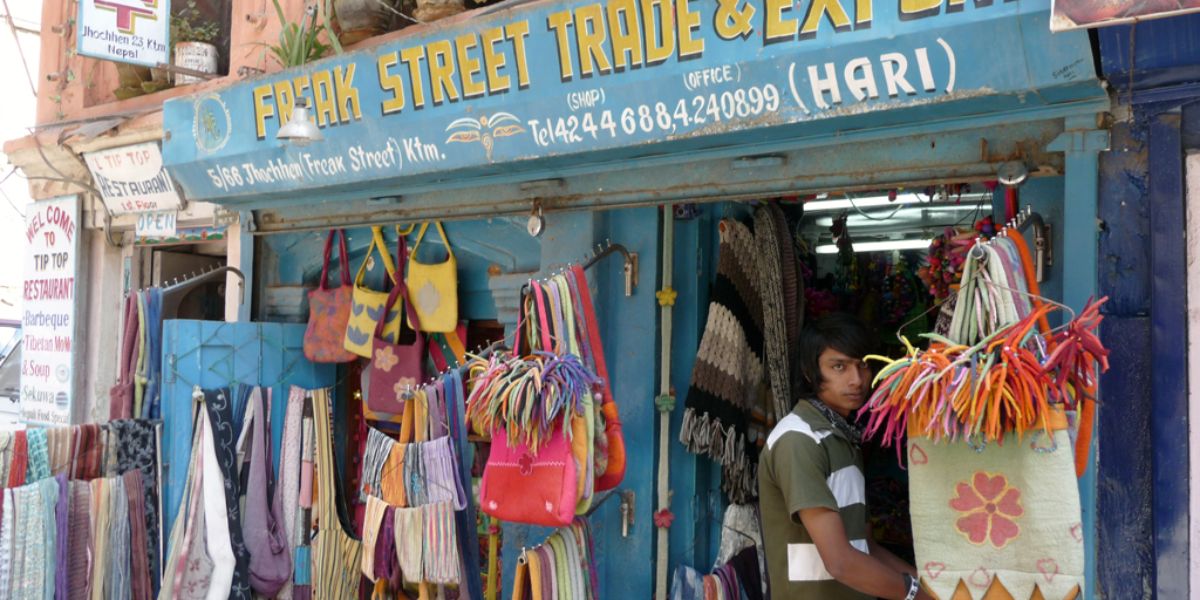
This made it a popular destination for the hippies, but some visitors travelled to Thamel for much cheaper lodging and cultural tours.
According to Kathmandu Post, Karna Shakya was the first to have opened a guest house (named Kathmandu Guest House) in 1968 with just 13 rooms at $5 per room in Thamel, which marked one of the beginning factors for Thamel’s transition. He encouraged others also to start businesses in Thamel!
With the end of this legendary era in the 70s and the closing of government-run cannabis shops, the intent for travelling to Nepal transitioned towards tours, treks, and other kinds of explorations. In fact, this was the turning point for Thamel!
Thamel Today
Thamel, a neighbourhood with just a couple of guesthouses, has become one of the largest commercial and tourist hubs of Kathmandu. The trekking boom in the 80s and 90s had new hotels, restaurants, bars, and gear shops open up along with travel agencies.
By the 2000s, Freak Street had been overtaken by Thamel as Nepal’s tourism center. There is no exact official business count, but Thamel now houses thousands of trekking and travelling agencies. The number of restaurants and cafes is even higher!
The business leaders in Thamel have established both national and international restaurants, so you can try cuisines of different countries in Thamel.
Thamel as Nepal's Trekking and Expedition Hub
I think you got the picture of how and why Thamel became the epicenter for tourists. So, let’s now discuss what Thamel is for trekking and expedition enthusiasts in a little more detail.
Smooth and hassle-free travel needs essential travel documents, smart packing choices, comfortable gear, practical suggestions, and necessary tools, right? Well, Thamel is one of the best suppliers for them!
Home to Trekking Agencies
Almost every corner of Thamel is filled with trekking and expedition companies or agencies, making it a perfect place to get help and support regarding any trekking problems and activities!
If you want a comfortable journey, then it's better to sort out these things before heading to a mountain or a remote, culturally unique, and border-sensitive region like the restricted areas.
Trekking agencies in Thamel give you detailed information on countless trekking destinations in Nepal. These companies exist to help you with complex trekking permits, choosing the right season, itinerary, and concerns around safety!
Other services include end-to-end travel packages, licensed guides, porters, TIMS cards, national park permits, domestic flights, lodge bookings, and gear rental coordination.
But choosing the right agency is also difficult!
Which is why we (Altitude Himalaya) have established ourselves as one of the best agencies for trekkers and expeditioners! Our prices, along with itineraries and services, have been curated after years of experimentation with thousands of guests.
A quick note: We are not located in Thamel. Instead, our office is a short walk away from the crowded Thamel core in the neighbouring Lainchaur area. From Thamel Bazar, it’s only about 15 minutes of walking north.
A Center for Buying and Renting Trekking Gear
What are you searching for on your trek? Jackets? Sleeping bags? Trekking poles? Or maybe duffel bags?
When you’re in Thamel, you don’t have to travel from one corner to another to buy or rent these items. Almost every street here is filled with gear shops selling them!
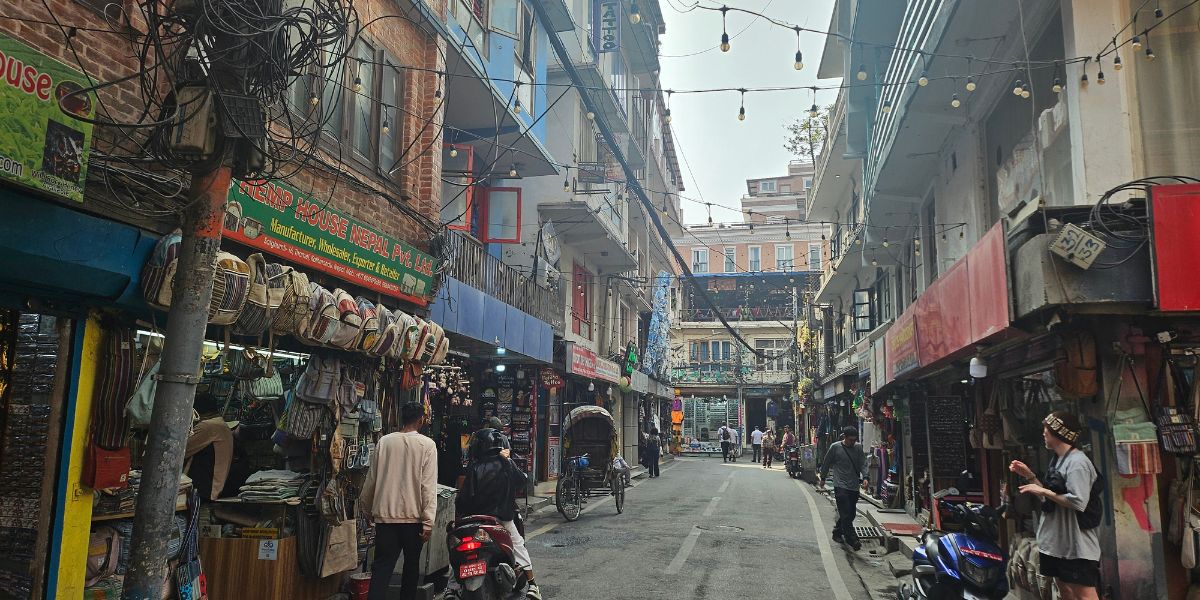
It’s also worth knowing that every budget is welcome here. You’ll find genuine branded gear as well as budget-friendly copies in Thamel stores.
My suggestion: Decide what you want to go with depending on your trek. If you’re just on the trail for a couple of weeks, then budget copies are often good enough. But if brand authenticity matters to you, then check stitching, zippers, and labels closely.
Recommended reading: Our complete guide to packing for treks!
A Base for Before and After Tours and Treks
Besides shopping, Thamel is also where trekkers and expeditioners spend their nights in Nepal before and after their journey.
When in Thamel, you can get your supplies, permits, and a comfortable rest before your trek. Or, you can take a cultural tour around the World Heritage Sites in Kathmandu Valley and end your day with a hot shower and a spa/massage, or finish your trip with a warm Nepali meal. I say, "Thamel is as versatile as a potato is in the veggies!"
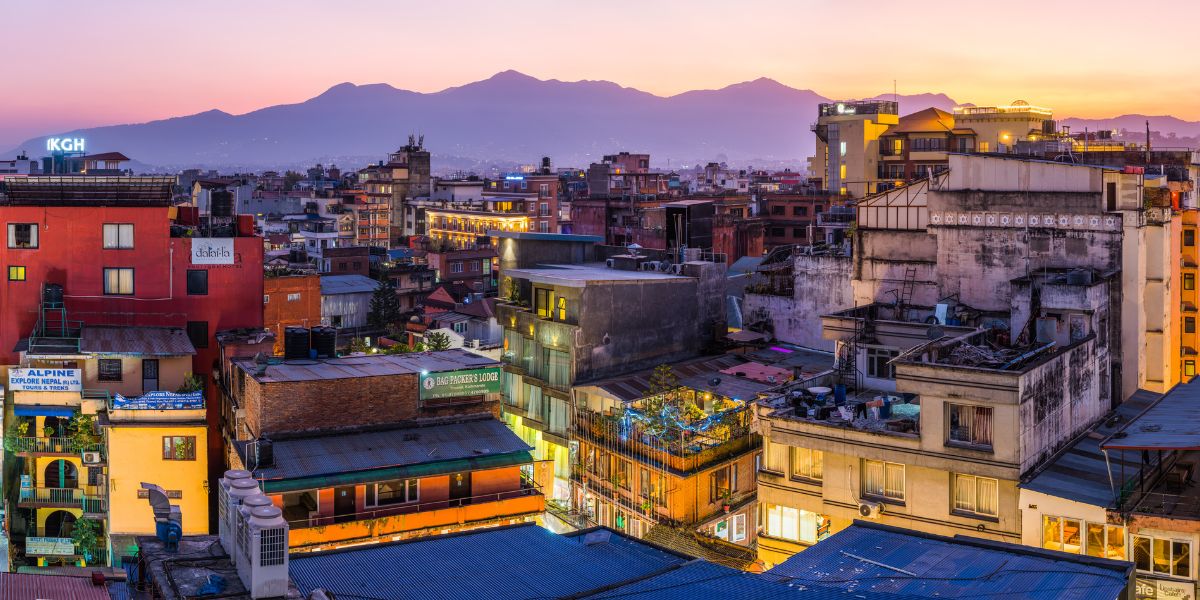
Thamel is loved and much appreciated by visitors for its convenience, and that is part of the reason why Altitude Himalaya also keeps most of its guests here!
But you don't have to choose Thamel if you don't want to; we are always open to customizations, including your stays.
Maybe you are here for a more cultural and religious tour to Pashupatinath, Swayambhunath Stupa, or maybe other heritage sites. Give us a text or a call, and we will arrange everything for you, from airport pickup to any tourist destination you’d like!
Travel Services You Can Find in Thamel
So far, I explained the details on the main things you need for a trek and expedition in Nepal and why Thamel is the best place to get them. Now, let’s check some of the important services you’ll find in Thamel:
|
Service
|
Short Info
|
|
Laundry Services
|
Usually charged by kilogram
|
|
SIM card and eSIM
|
NTC and Ncell are the major providers
|
|
Mobile phone and camera shops
|
Quick device and repairs
|
|
ATMs
|
Convenient access to cash withdrawal
|
|
Printing and photocopy shops
|
Document printing, passport or visa photo copying, flight ticket or boarding pass printing, and emergency phone charging
|
|
Flight booking agents
|
Searching and securing airline tickets and personal support for both domestic and international flights, cancellations, and emergencies
|
|
Transportation booking
|
For vehicles and even motorcycle rentals
|
|
Currency exchange counters
|
Fast and regulated way to convert foreign cash into local money
|
With the bigger aspects and all these smaller ones, Thamel has been standing leagues above other tourist zones in Nepal for decades now! It’s not an exaggeration; Thamel genuinely covers most logistical needs a traveler could have.
Nightlife of Thamel
To allow nighttime businesses across the country, including in Thamel, the authorities of Nepal adopted a liberal policy in December 2022. This allowed liquor shops to stay open till 10 PM, restaurants until midnight, and bars and clubs till 4 in the morning.
But to further benefit the tourism industry, the government has now adopted an open policy on April 13, 2024 (Baisakh 1, 2081), and Thamel has since been open 24/7!
Nightlife in Thamel is generally safe and vibrant, with nightlights, carousers, clubbers, and denizens around you. But keep in mind that during weekends, Nepali festivals, and special events (like the Champions League Final or the FIFA World Cup), Thamel draws a much larger crowd!
Moreover, the main arteries such as Chaksibari Marg and Amrit Marg are completely closed to vehicles during festive times, like the Thamel Street Festival in Nepali New Year. So, be prepared to walk if your plan coincides with such festivals!
Note: If you want multiple venues within a couple of minutes, then Chaksibari Marg and Paryatan Marg are the best options. For a more local crowd, lower prices, and traditional pubs, walk the lanes towards Paknajol and Chhetrapati!
Bars and Pubs
From rooftop views over Thamel to locals’ favourite spots for budget-friendly drinks, Thamel has a variety of bars and pubs.
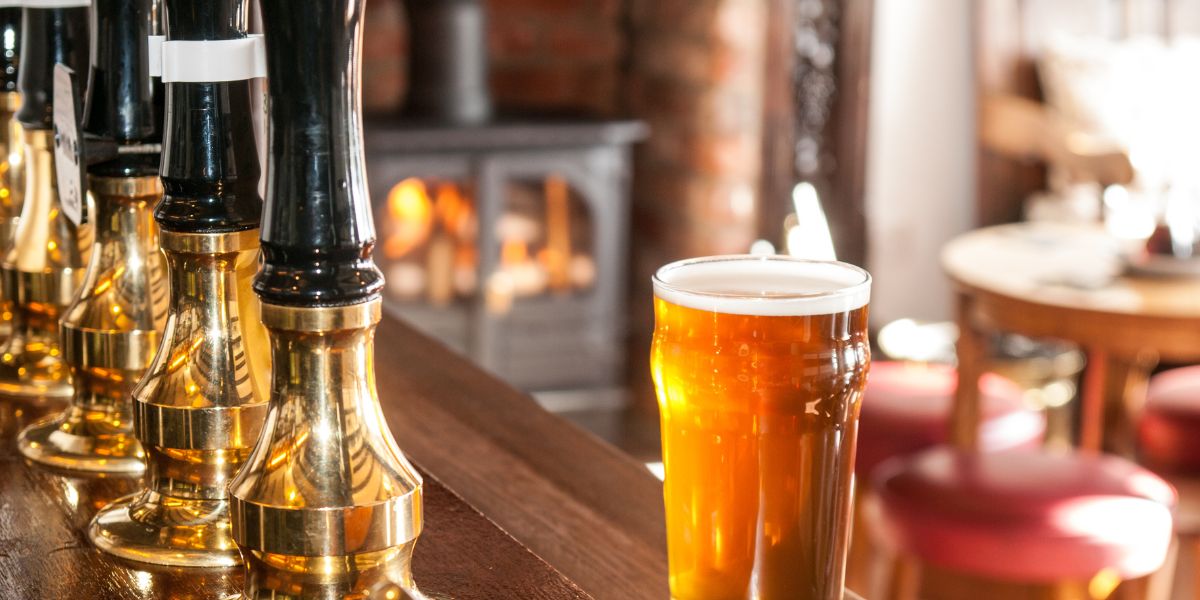
Sit down for an informal or secret meeting, or share your stories and memories while having something on your side; these spots are set up for your comfort! It’s also a great spot to gather insider knowledge regarding treks and trails.
Locals prefer these spots for the cocktail programs, dates, and slower evenings while enjoying a TV show or live music!
Clubs
Clubs in Thamel draw mixed crowds of locals and travellers. You’ll get to dance and vibe to songs in multiple languages like Nepali, Hindi, English, Spanish, and many popular Asian country songs.
If you’re into hip-hop, rock, heavy metal, or EDM, then a night in Thamel clubs is definitely worth your time!
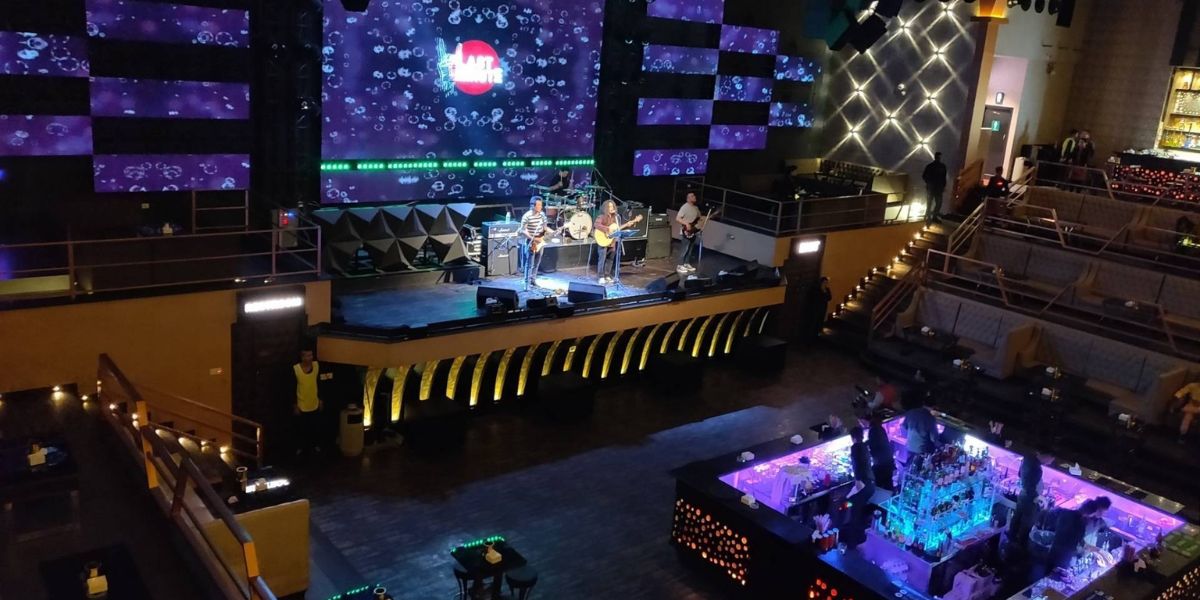
Most of the clubs here stay open till 2 AM, but during peak days they could go up to 4 or even 5 AM, so plan accordingly.
Before moving further into the nightlife, I would like to give you a suggestion. Go to bed early if you’ve planned a couple of morning activities like a walking tour from Thamel to Kathmandu Durbar Square.
Did You Know? A club in Thamel, LOD (Lord of Drinks), ranks at #40 in the world as per the DJ Mag Top 100 Clubs 2026 list.
Late-Night Live Music Restaurants
Just like me, if you’re also someone who enjoys relaxing music while having dinner over a late-night energetic dance club, then approach restaurants that serve live music.

Whenever I am in Thamel for a late evening, I enter one of these restaurants with local bands playing classic covers and traditional instrumentals. You’ll be able to enjoy modern/melodic, present, and early Filmi music in these kinds of venues.
If you love playing instruments, then you’ll find some establishments offering open-mic sessions. This might be a great opportunity to socialize with locals or gain fame, because Nepalese love supporting artists, especially foreigners!
Nightlife Rhythm of Thamel
Undoubtedly, Thamel has one of the best nightlife scenes in Kathmandu, if not the best in Nepal (because Lakeside in Pokhara might rank #1 for many). Here is a rhythm of Thamel’s nightlife in a week:
- Sunday: Calmer and best to chill on rooftops
- Monday & Tuesday: Many establishments close earlier
- Wednesday: Women’s gathering in many venues
- Thursday: Jazz, acoustic music in the air, and locals’ night out
- Friday: Best for live music scene and clubbing experience (peak crowd too)
- Saturday: Peak day for clubs (expect crowds like Friday)
If we are to compare the nightlife of Thamel with a major global capital, then it might feel less lit! If I had to say, then the nightlife here is closer to a mid-sized international regional city.
Places to Visit
The aforementioned things aren’t the only identity of Thamel!
Thamel was a religious sanctuary before its transition to a bustling tourist hub, and that’s a fact! So, even at present, if you know where to explore, then you’ll discover the religious and historic essence of Thamel.
Here are some monuments worth discovering during your time in Thamel:
Kaiser Mahal
If you’re entering Thamel from the east via Kanti Path, then on your right is Kaiser Mahal, the former palace complex of Field Marshal Kaiser Shumsher Rana. Kaiser was a talented man with a love for gardening, architecture, art, and books.
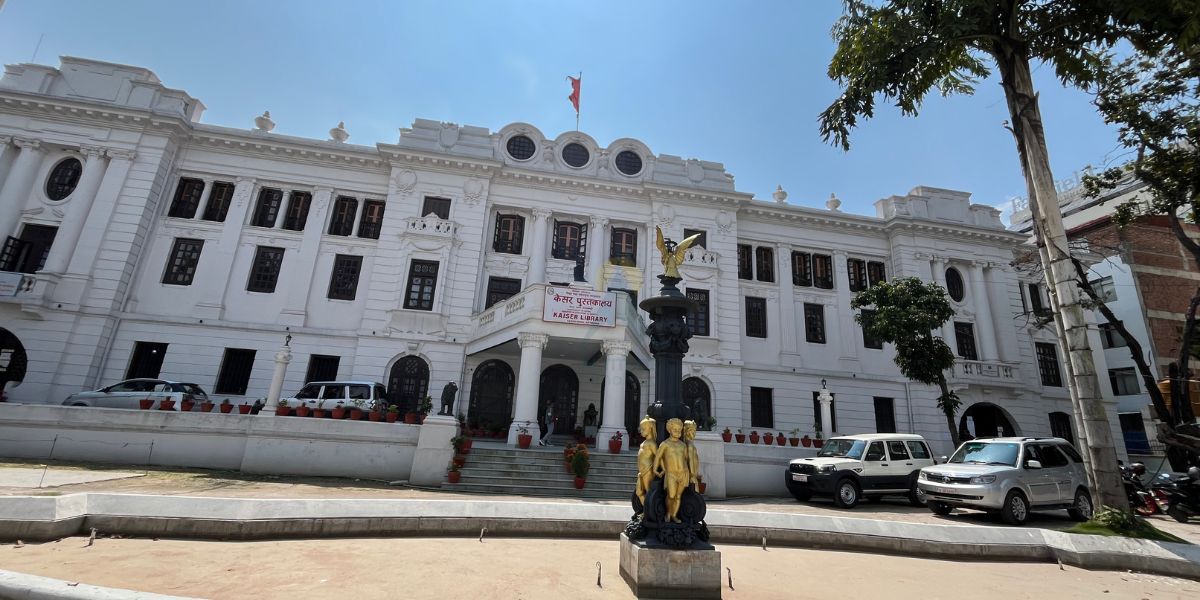
The palace showcases the remnants of Rana dynasty palace architecture and houses a library (Kaiser Library) along with a neo-classical garden (Garden of Dreams).
An entry fee is to be paid before entering the garden, but the library is free of cost. Borrowing books is not allowed for anyone, so you’ll have to take a break and read them inside the library.
Garden of Dreams
In front of Kaiser Mahal is the garden with neo-classical pavilions representing Nepal’s six seasons.
Six seasons? Yes, Nepal follows a six-season system called Ritu. The three main geographic variations of our country (plains, hills, and mountains) are responsible for this system!
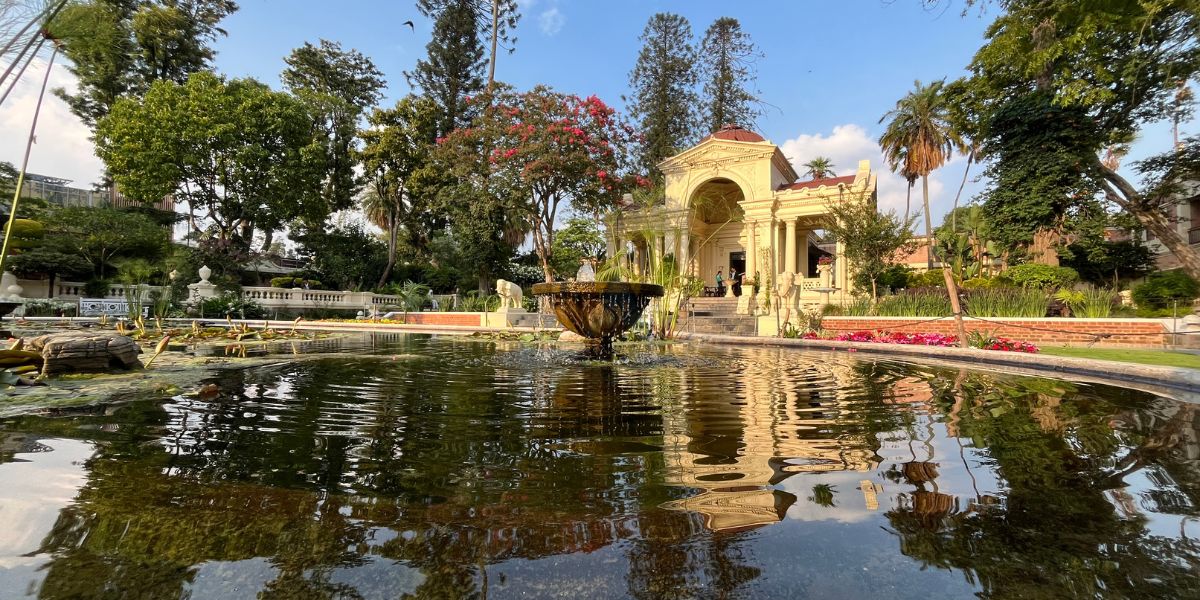
The garden itself, on a glance, looks astonishing, but if I have to label the main attractions, then they would be the European-inspired design, three surviving pavilions, beautiful fountains, tranquil ponds, Kaiser Cafe, open-air theatre, and water cascade.
The garden is open everyday from 9 AM till 10 PM, but the ticket counter closes at 9 PM. Check out Altitude Himalaya’s article dedicated to Garden of Dreams for answers to why there are only three surviving pavilions and more information on this historic garden.
Museum of Nepali Art (MONA)
Nepal’s first private art museum holds hundreds of traditional and contemporary works. The museum exhibits masterpieces, mostly created after the mid-19th century, and is open everyday from 10 AM to 6 PM.
Their aim is to become a living museum, and throughout the year, they do many temporary exhibitions of traditional and contemporary arts.
MONA is known for its thematic presentations of unique Nepali arts, so if you like appreciating art, then it’s near Mandala Street.
The ticket price is NPR 500, and there’s a 50% discount for a valid student card.
Mandala Street
Truly an oasis in the desert, Mandala Street is quiet and calm for shopping and walking around. Since it is a vehicle-free zone, many tourists prefer to meet up here!
If you’re searching for souvenirs or gifts from Nepal, then you can spend the entire day here and still not see everything. I myself bring bags to buy gifts for Dashain and Tihar (Deepawali) for my family and friends. You can do the same!
Filled with rows of restaurants, cafes, pubs, and bars, many locals and tourists frequent this street for its ambience!
Temple & Courtyards
Many traditional Newari courtyards (bahals and bahis) and many temples and shrines are scattered in Thamel. Some of them date to the Licchavi period, while some hold high significance in Newari, Hindu, and Buddhist culture.
Here are some of the major temples and courtyards you can seek blessings from in Thamel:
Bhagawan Bahal
Also known as Bikramsheel Mahabihar, it is the oldest monastery complex in Thamel and among the oldest in the Kathmandu Valley. There is a small open square with beautiful Newari aesthetics and a 7-foot-high gold statue of Singha Sarthabahu.
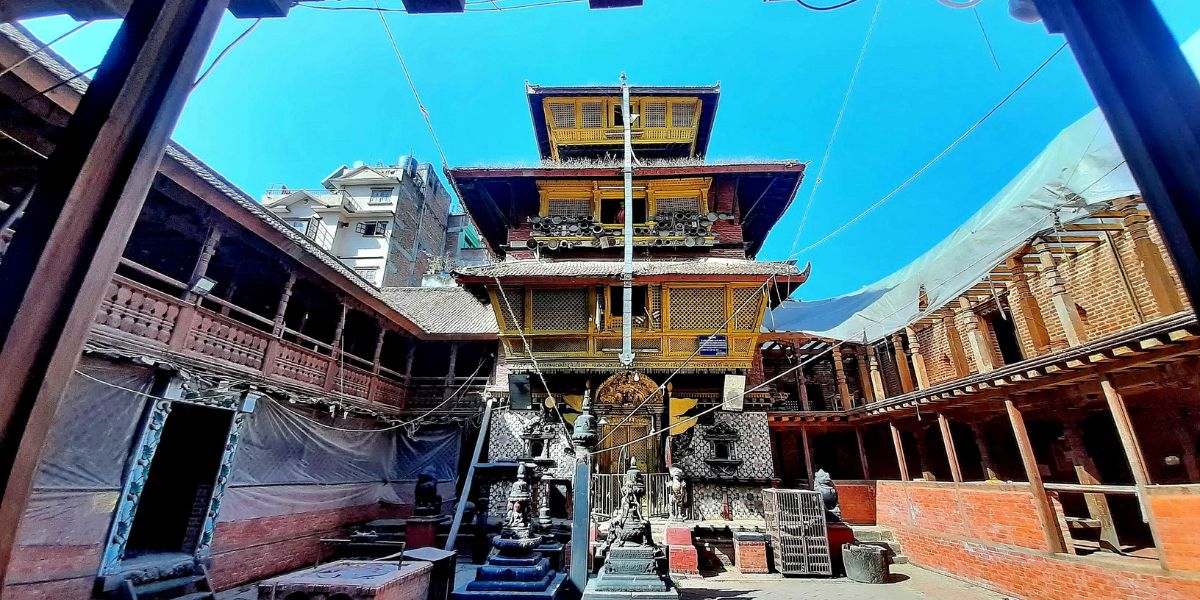
One of the many historical objects of this courtyard is a 2000-page hand-written manuscript called Prajnaparamita.
Some of the artifacts and statues in and out of this bihar are: Mahakal, Mahamanjusri Bodhisattva and Saraswati, Aryatara, Halahal Lokeshwor, Kwapa: Dyo, Chaitya idol, and Kuber.
Maitripur Mahabihar
It sits in a courtyard called Kwa Bahal and has no exact origin. Reportedly, the earliest dated reference comes from an inscription dating back to Nepal Sambat 672 (around 1552 AD).
Outside the main shrine is Ashok Chaitya from the Licchavi period and inside the main shrine is a stone statue of Buddha.
I will give you an intriguing story of this courtyard. Do you know about the Living Goddess, Kumari? Well, Maitripur Mahabihar used to have its own Kumari. She was worshipped in the form of Vajradevi.
However, the practice stopped in 1991, but historically, most of her rituals were intertwined with Bhagawan Bahaal!
Tridevi Temple
Tridevi translates to three goddesses, and there are indeed three different temples in the same complex. Starting from the entrance, the temples are dedicated to Kamakshe Mai, Jwala Mai, and Kalikaa Mai.
Ranadhoj Thapa (first son of Mukhtiyar Amar Singh Thapa) erected the temple on his own property between the late 18th and early 19th centuries.
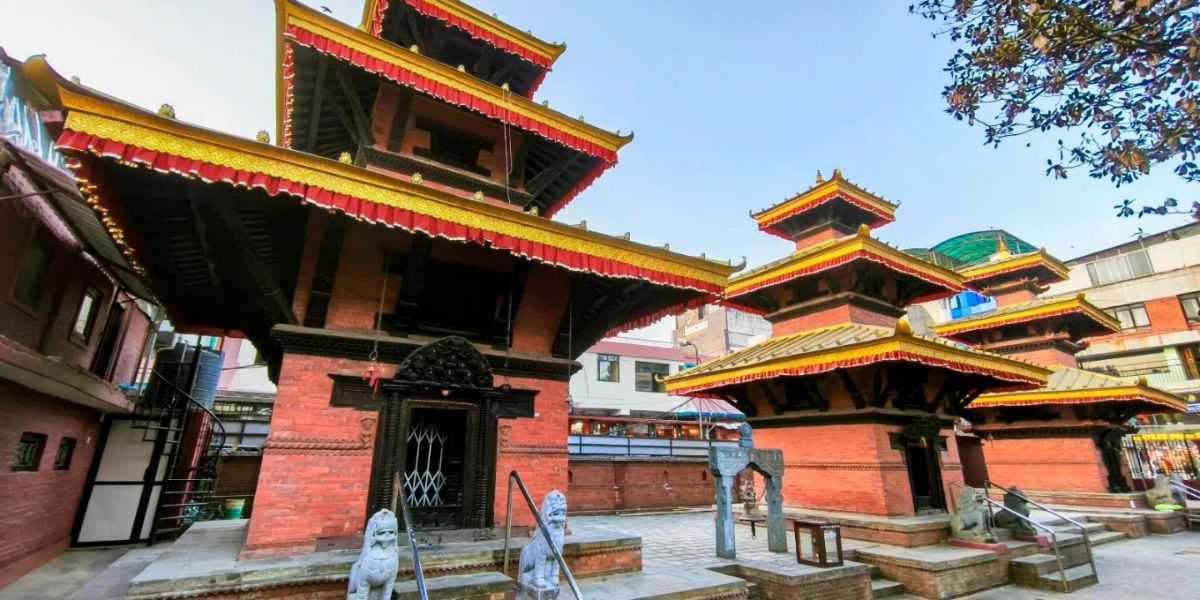
Don’t forget to check out Masto (a formless ancestral deity) brought from Bajhang, in front of Jwala Mai.
I almost forgot to mention: sacrifices of animals are given in this temple during occasions like Dashain.
Other Monuments
Besides these major temples and courtyards, there are monuments like Bhagwati Mandir, Kumari Shrine, Thameleshwor Mahadev Temple, Gahiti Stone Spout, etc., in Thamel.
Food Options: What to Eat and Where?
What are you craving? Italian, Japanese, Nepali, or maybe Chinese!
Don’t worry at all; within a few blocks, you’ll find a restaurant, hotel, or cafe serving national and international food items. You’d seriously be shocked to see the diversity of food culture in Thamel!
You can eat Samay Baji or other famous Nepali food items if you are craving a traditional dish, or try Ramen or Kebab if you want an international taste in Thamel!
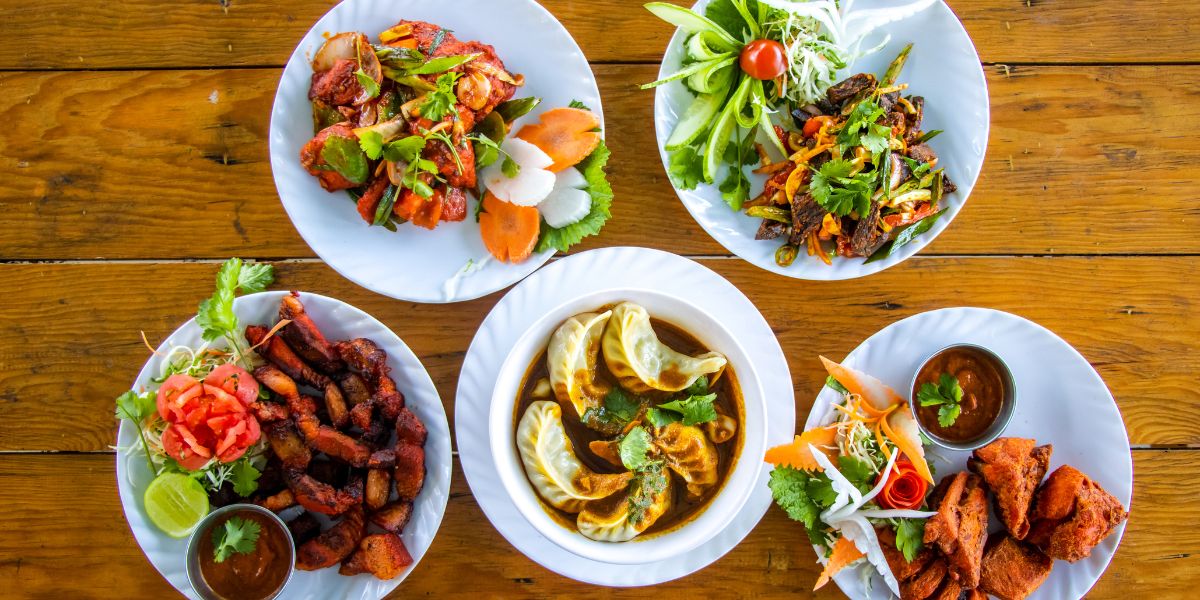
The table below is a guide to these huge and diverse food options in Thamel. Think of it like a summarized menu of a restaurant in Thamel:
|
Category
|
Item
|
Type
|
|
Nepali, local & street food
|
Puri Tarkari
|
Breakfast
|
|
Sel Roti & Jerry Swari
|
|
Malpuwa & Gwaramari
|
|
Nepali Thali Set (Dal Bhat)
|
Lunch or dinner
|
|
Dhido Set
|
|
Thakali Thali
|
|
Newari Khaja Set (Samay Baji)
|
Lunch or snack
|
|
Mo:Mo, Keema Noodles, Sekuwa, Chatpate, Laphing, Thukpa
|
Snack
|
|
Local Delicacies (Bara, Chatamari, Chhoila, Yomari)
|
|
International food
|
Gourmet French Croissants & Danishes
|
Breakfast
|
|
Vietnamese Banh Mi
|
|
Middle Eastern Hummus & Falafel
|
|
Trekking-Grade Trail Snacks & Dark Chocolates
|
|
Artisanal Cheesecakes & Brownies
|
|
Wood-Fired Neapolitan Pizza
|
Lunch
|
|
Middle Eastern Shakshuka & Falafel
|
|
Tonkotsu & Shoyu Ramen
|
|
Mexican Burritos & Quesadillas
|
|
Gourmet Steaks & Western Burgers
|
|
Gourmet French Pastries
|
Snacks
|
|
Vietnamese Summer Rolls
|
|
Middle Eastern Mezze & Falafel
|
|
Artisanal Desserts
|
|
Trekking-Grade Packaged Snacks
|
|
Wood-Fired Pizzas & Gnocchi
|
Dinner
|
|
Premium Steaks & Sizzlers
|
|
Middle Eastern Kebabs & Mezze
|
|
Authentic Japanese Ramen & Katsu
|
|
Spanish Tapas & Paella
|
I prefer the Chaksibari Road if I had to opt for a traditional Thali Set, Amrit Marg for roadside fast eats, and alleys around Mandala Street for late-night snacks!
But if I have to go international, then Mandala Street, J.P. Road, and the main corridor of Thamel Marg would be my preferred locations.
The list is just to show Thamel’s food scene; the menu is by far limited to the aforementioned items.
Note: Most of our packages at Altitude Himalaya (whether it be a trek or a tour) end with a traditional Nepali dinner and a cultural program.
Beyond trekking and expedition gear, Thamel has been a huge market for decades to shop for souvenirs and decoratives. Every store has something to enchant you and compel you to buy it.
A feather-light, buttery-soft Pashmina for your mom or a crescent of steel and pride of Gurkhas, a Khukuri for your dad, or maybe a thangka painting for your friend—the options never end.
You’ll be in a dilemma whenever you’re shopping in Thamel! But with the list below, you’ll thank me for sure!
Pashmina
Are you fond of authentic textiles? Well, I am, and Thamel is known for shops selling high quality Pashmina (also called cashmere) shawls and scarves. These are traditional hand-woven products made from ultra-fine, luxurious types of cashmere wool.
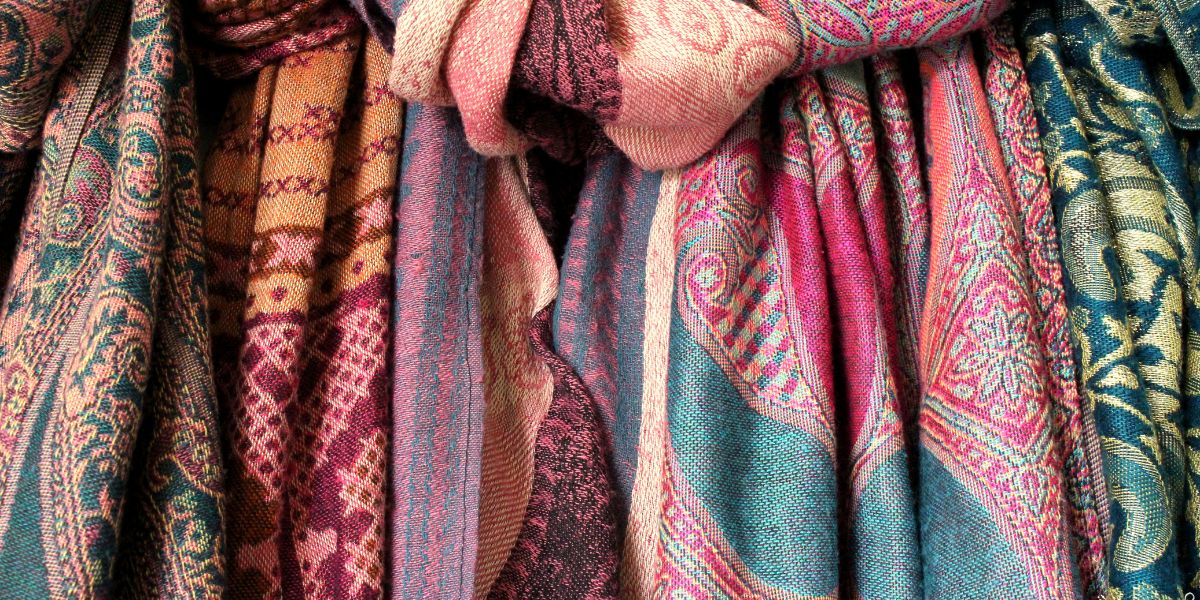
The making of Pashmina is a slow and delicate process. The underbelly hair of high-altitude Himalayan goats, Chyangra (Capra hircus), is cleaned, hand-spun, handloom-woven, and optionally embroidered, giving it this luxurious feel.
Last time I gifted this to my mom, and she made me my favourite dinner to show her appreciation. What could be a happier moment than that, right?
Tip: For maximum natural insulation, get 100% pure Pashmina; for durability & strength, 70% Pashmina / 30% silk is recommended, and go for 50-50 if you want highly resistant ones.
Handicrafts and Souvenirs
To me, it definitely looks like the shops in Thamel are calling my name to purchase almost every handicraft and souvenir-worthy item! I take a lot of time just deciding what to buy, and this might happen for you when in Thamel as well.
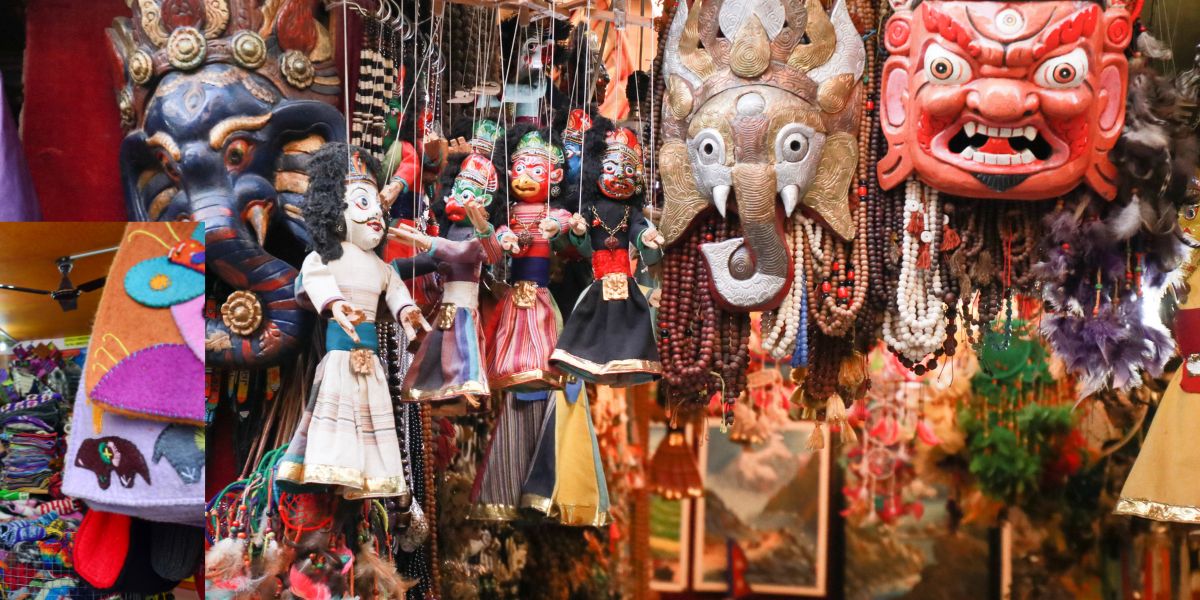
As a resident of Kathmandu, I have been shopping in Thamel every year to buy gifts for myself and my loved ones. Based on my knowledge, here are a few recommended handicrafts and souvenirs:
- Singing Bowls: These echoing instruments are handcrafted using bronze or a multi-metal alloy and are best for stress relief, mindfulness, or spiritual grounding.
- Thangka and Paubha Paintings: Traditional, hand-painted art on cotton or silk canvas depicting detailed images of Buddhist or Hindu deities, mandalas, and philosophical symbols. Spiritual practitioners and art collectors love to have these, and I have also seen people give these at weddings. Thangka and Paubha, though similar, have different meanings!
- Traditional Masks: Such intimidating artifacts are rooted in Hindu, Buddhist, and indigenous shamanic traditions. Artisans highlight every detail while making these masks, giving them a very polished look. People who are culture enthusiasts and appreciate ethnic or spiritual history go head-over-heels for these artifacts!
- Khukuri: Yes, you can buy the national weapon of Nepal. This characteristic weapon of the Nepali army is sold in special stores in Thamel. The size of this weapon varies depending on your purpose, but for a souvenir, a short hand-held one suffices. You’ll get to select a design that touches your heart from a wide collection in these shops. It’s like an honor and something to brag about. I would highly recommend you get one if you have someone from military history among your close contacts.
Jewelry and Accessories
From beads with spiritual and religious significance to silver pieces with gemstones from different geographies, Thamel is a shopping heaven for jewelry and accessory collectors.
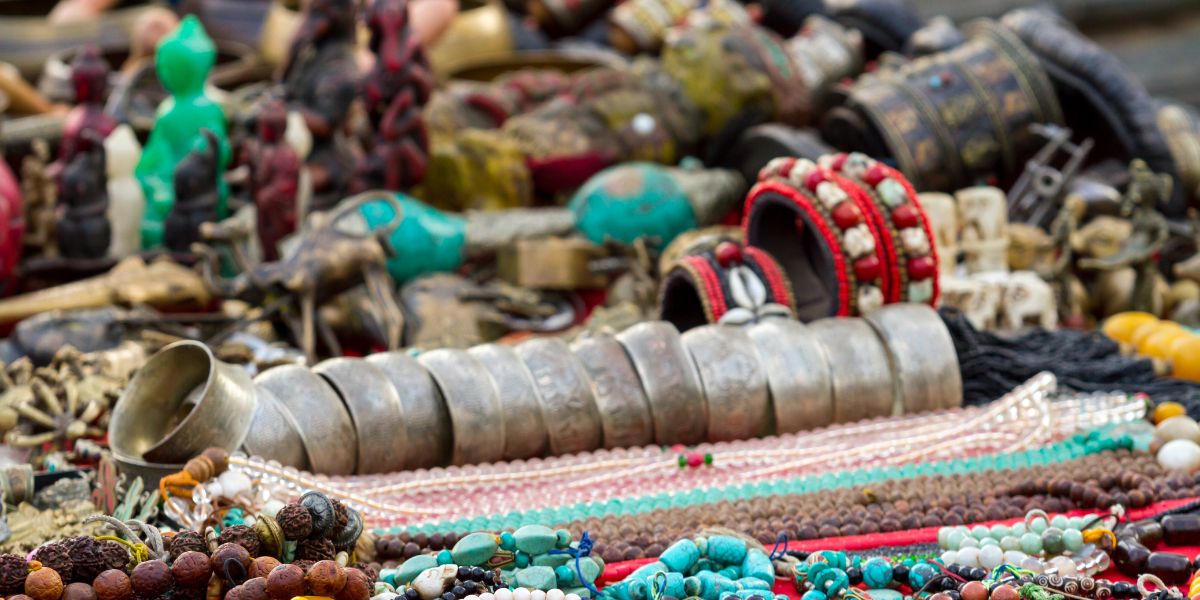
Wondering what kind of items you can buy? Some of the options I recommend would be:
- Traditional & Spiritual Jewelry like mala prayer beads, Tibetan-style pendants, and Jantar (amulets).
- Precious metals & gemstones such as sterling silver jewelry and Himalayan gemstones.
- Tribal & organic material accessories like bone jewelry and beaded strands, or fashion accessories like Bohemian bags & backpacks.
- Other popular takeaways from Thamel would be edibles like chhurpi and titaura, rice papers or statues, or maybe packets and cans of Nepali tea.
Options are not limited to the ones I have mentioned, and once you are in Thamel, you will discover even more items to shop!
Where to Stay? Different Accommodation Types
Thamel is a small neighbourhood, but it covers almost the full range of accommodation styles. Your budget is the deciding factor for your stay in Thamel.
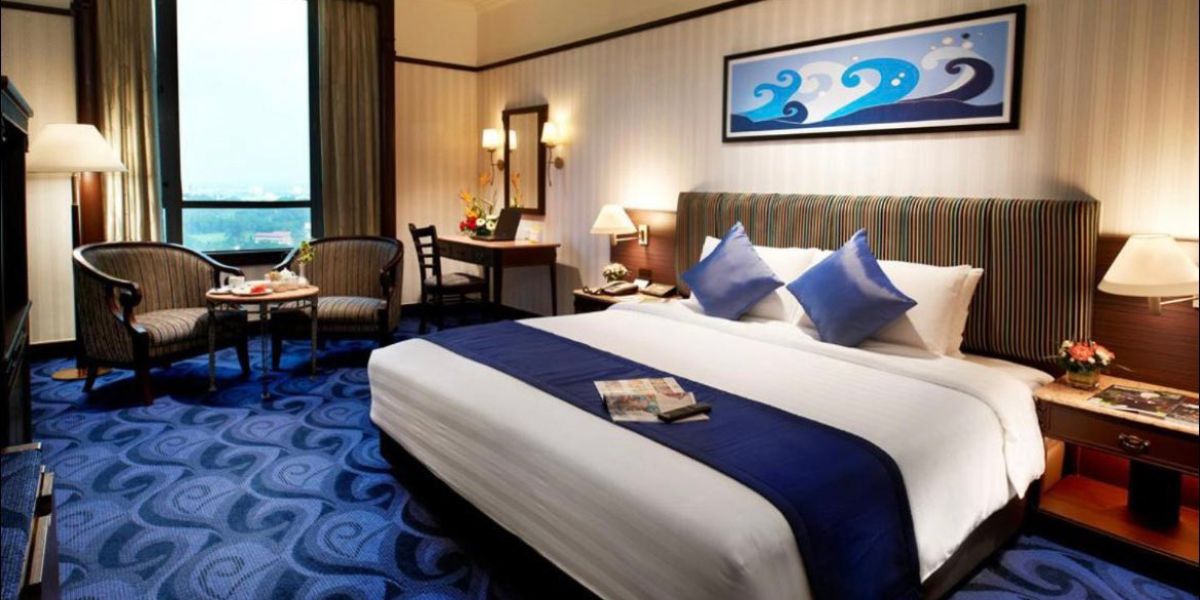
From a cheap stay with shared bathrooms and basic amenities to full-service amenities with pools, spas, and fine dining, what do you want? I’ve listed down accommodation styles in different categories.
Hostels
The cheapest option and popular among solo backpackers, hostels have dorm beds and offer basic amenities.
I would not expect much from these establishments! Travellers who are low on budget book hostel rooms. If you’re one of them, Thamel has this option too!
Note that if you’re thinking of using a hostel room, then expect shared bathrooms!
Guesthouses
If you want privacy while still keeping the costs low, then guesthouses are your best options! You’ll get simple private rooms, often with an attached bathroom, and some even have WiFi.
Many guesthouses offer rooms only, but there are a few ones with food options. But at the end of the day, these are suited for low-budget travelers. So, I wouldn’t want you to expect much!
Lodges
Comfort begins with lodges, especially if you’re here for trekking; you’ll find multiple trekking-oriented lodges in Thamel. These are adjusted to help trekkers and expeditioners who are heading into or coming from the rough trails or similar zones.
You can expect gear storage and early-departure trekking-friendly breakfast services when staying in one of these accommodations.
Budget Hotels
Prices significantly rise from the hostels and guesthouses, but you’ll get private rooms with better amenities such as hot water, Wi-Fi, and a small breakfast included.
Bedding and room ambience are much more comfortable here, and if you’re here as a couple, then budget hotels might be your choice!
Mid Range Hotels
Budget-friendly lavish amenities start from these establishments. Groups or families on a memorable journey prefer these for comfort without luxury pricing.
Almost every corner of the hotel is well-furnished including your rooms, and customer service is way better than previous options. You’ll get on-site restaurants, small spas, and rooftop terraces to enjoy your time in these hotels.
Note: We often include 3-star to 4-star hotels in most of our packages (except for the luxury ones).
Luxury Hotels
You’re not in Nepal just for a rough trek but want to enjoy a lavish time, then go for the luxury hotels. A handful of such properties are scattered in and around Thamel.
These establishments are known for their full-service amenities, from pickup to pools, spas, luxury, and customizable dining!
There are many options to choose from depending on your preference, and most of them have casinos also.
The maximum rating in Thamel Hotel (as well as across the country) is 5-star, and that’s the level of luxury I’m referring to. Some 4-star hotels also offer similar-level services and can be considered a part of your luxury stay.
Other Attractions in Thamel
Some of the attractions in Thamel don’t fit the sections above but are worth knowing about, as some are for entertainment and some to gain deeper insight during your travel.
Here are the activities or nearby places to combine with your tour in this 24-hour tourist hub.
Casino
Did the word excite you? Even if it didn't, it's still worth knowing that there are casinos in Thamel.
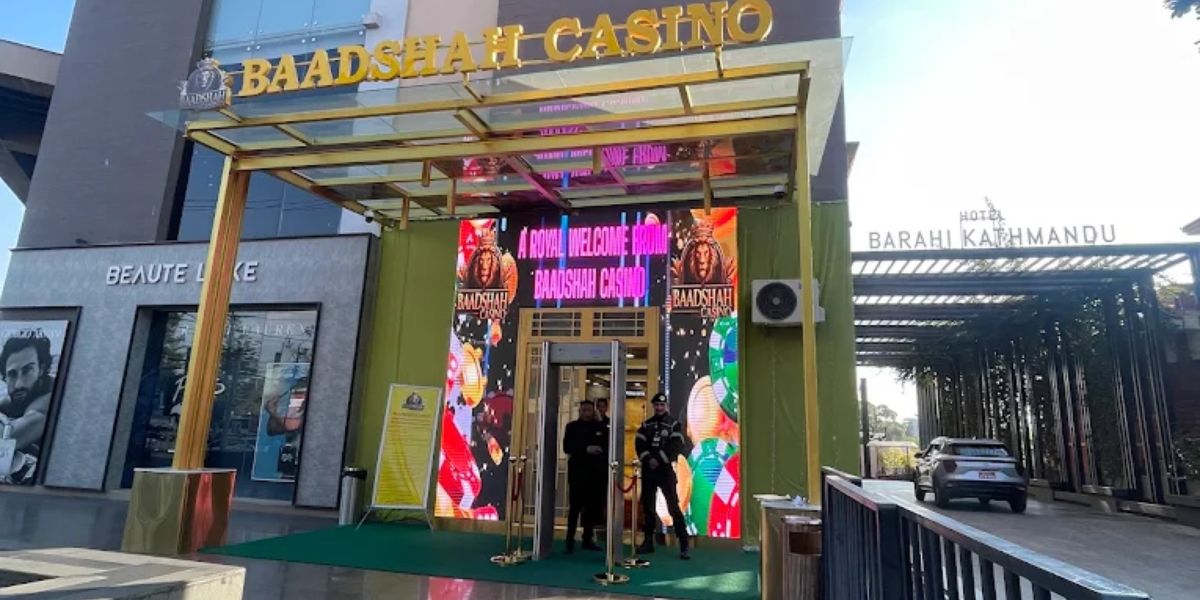
Casinos aren’t part of normal nightlife in Nepal and are restricted to local people here. That means these are strictly limited to people with foreign passports and are mostly located inside luxury hotels.
These are popular for games, entertainment, and live performances. Most of them have games like roulette, blackjack, baccarat, poker, slot machines, and many card games.
Wall Climbing & Skating
In recent years, a couple of indoor activities like skating and wall climbing have flourished in Nepal. Thamel is no exception, and you’ll find a few indoor skating halls, climbing gyms, and bouldering walls within or just outside its borders.
If your departure for a trek is delayed or you simply want to test an attraction here, then these would be worth a try!
Tips For Every Traveller Deciding to Visit Thamel
A single conversation with a wise man is worth a month's study of books. Similarly, an experienced person’s tips are worth hundreds of generic suggestions.
So, read my tips at least once before deciding to visit Thamel, as they might be more useful than you think.
|
Category
|
Notes
|
|
Backpackers
|
- Prepare for budget hostels and local eateries.
- Compare a few accommodations before booking.
- Pick clear meeting points to not get lost.
|
|
Trekkers
|
- Expect to get replicas if you get cheaper gear, and inspect thoroughly.
- Rent heavy gear to save money and reduce luggage weight.
- Double-check and finalize your permits.
|
|
Families
|
- Hold your children by the hand and watch out for sudden vehicles.
- Accommodate in family-friendly establishments.
- Give safe food items to small children.
|
|
Couples
|
- Use a well-known spot for meetup points if you ever get separated. You may utilize Google Maps or any other app with a live location-sharing feature.
- Book a quiet place for privacy and romance.
|
|
Solo Travellers
|
- Download offline maps and avoid quiet alleys at night.
- Dress modestly and ignore offers from strangers.
- Be wary of your surroundings and suspicious people.
|
|
Digital Nomads
|
- Inquire at hotels beforehand about WiFi and expected outages.
- Get local data packages as a backup.
|
|
For Everyone
|
- Small local shops and vendors prefer cash in small notes.
- Many restaurant bills include a standard service charge and tax additions.
- Wear masks and carry medications you would need on your journey.
- Bargaining is normal in any store, so haggle politely to get a better discount.
- Avoid foods which might give you a hard time (like spicy and raw foods).
- Ignore soft scams and use licensed money exchangers.
|
Nearby Destinations to Visit
Thamel is not just busy streets to walk around; there are other monuments and areas nearby that are worth exploring. And you can decide to visit them after sorting out your mood. Here are some of the nearby destinations:
Narayanhiti Museum Palace
East of Thamel, near the Garden of Dreams, is a former royal palace that now serves as a public museum. It’s a walking distance of about 8 minutes from the Garden of Dreams.
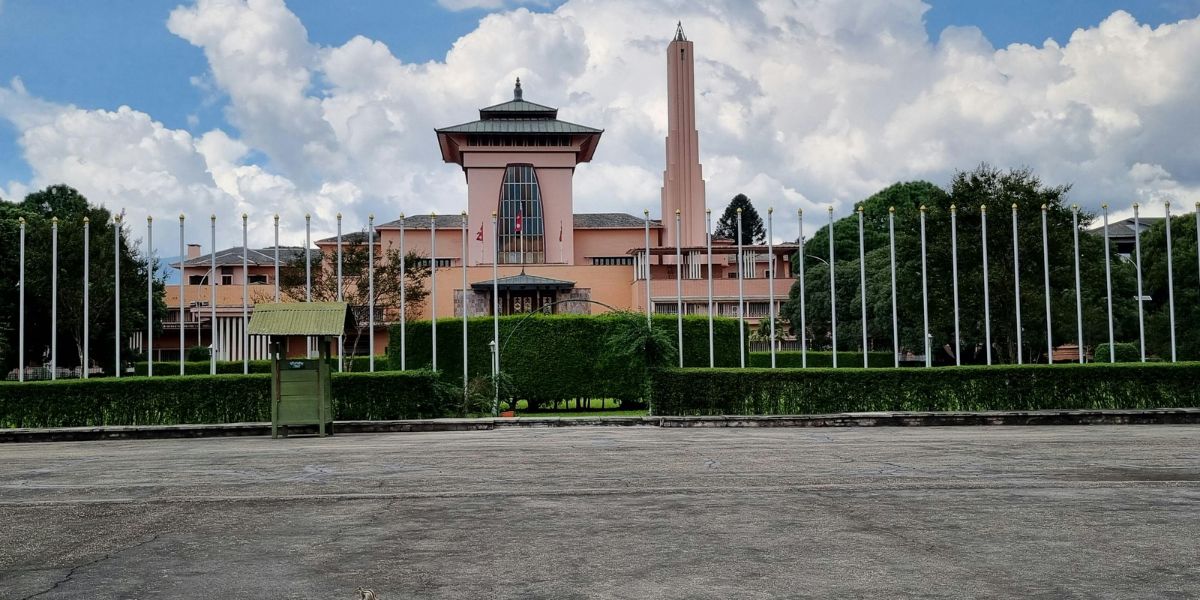
The museum was inaugurated by the then Prime Minister Girija Prasad Koirala on 15th June, 2008. But the general public was allowed to enter after its inauguration on 26th February, 2009, by Prime Minister Puspa Kamal Dahal (Prachanda).
Want more information before visiting this museum? Check out this Narayanhiti Palace Museum article.
Rani Pokhari
About 1 km southeast of Thamel is a rectangular pond from the 17th century built by King Pratap Malla. The name translates to "Queen's Pond," and it was built to console Queen Ananta Priya, who was in grief after her son Chakravartendra Malla was trampled by an elephant.
The four corners of this pond have stone spouts and temples: Bhairava Temples in the north-east and north-west, Mahalaxmi Temple in the south-east, and Ganesh Temples in the south-west.
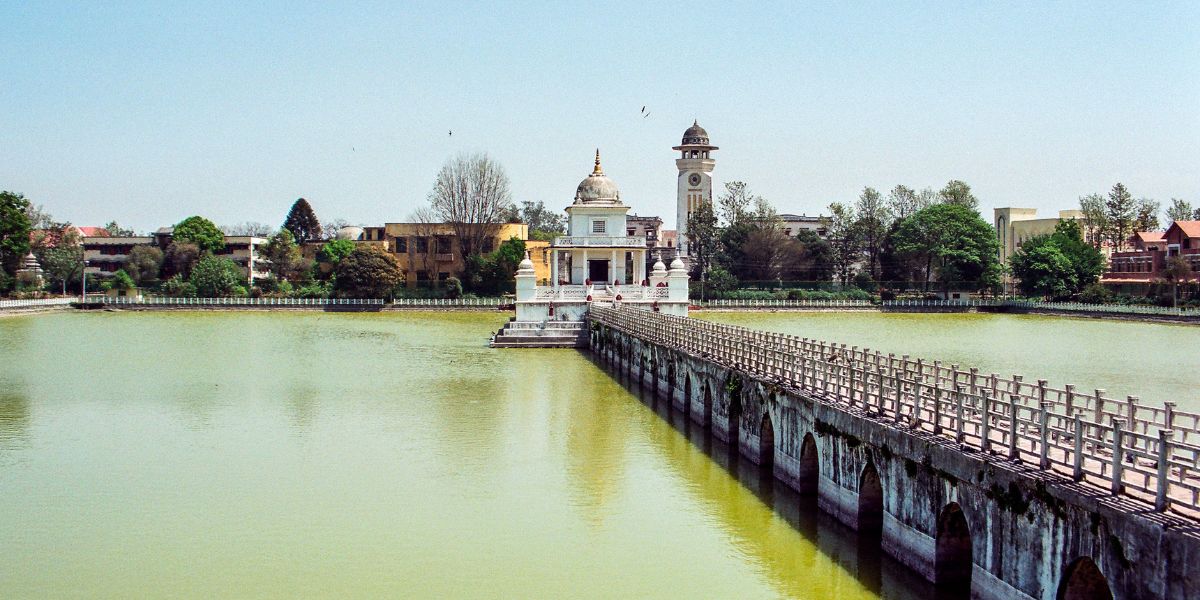
There’s also a white stone statue of King Pratap Malla and his two sons, Chakravartendra Malla and Mahipatendra Malla, riding elephants. You’ll see a temple in the middle of the pond dedicated to Matrikeshwor Mahadev.
The temple is open once a year on Bhai Tika (last day of the Tihar festival), and it gets very crowded. Another festival would be Chhath, where the whole pond is decorated and covered by people celebrating Chhath.
Kathmandu Durbar Square
One of the closest destinations from Thamel is the historic royal square of Kathmandu. It’s about a 20-minute walk from Thamel, and you can use our walking guide from Thamel to the square if you don't want to miss any major attractions.
Kathmandu Durbar Square is one of the 7 monument zones of Kathmandu Valley and home to our living goddess, Kumari. The entire square is filled with temples and many historic monuments, along with a museum called Hanuman Dhoka Palace Museum.
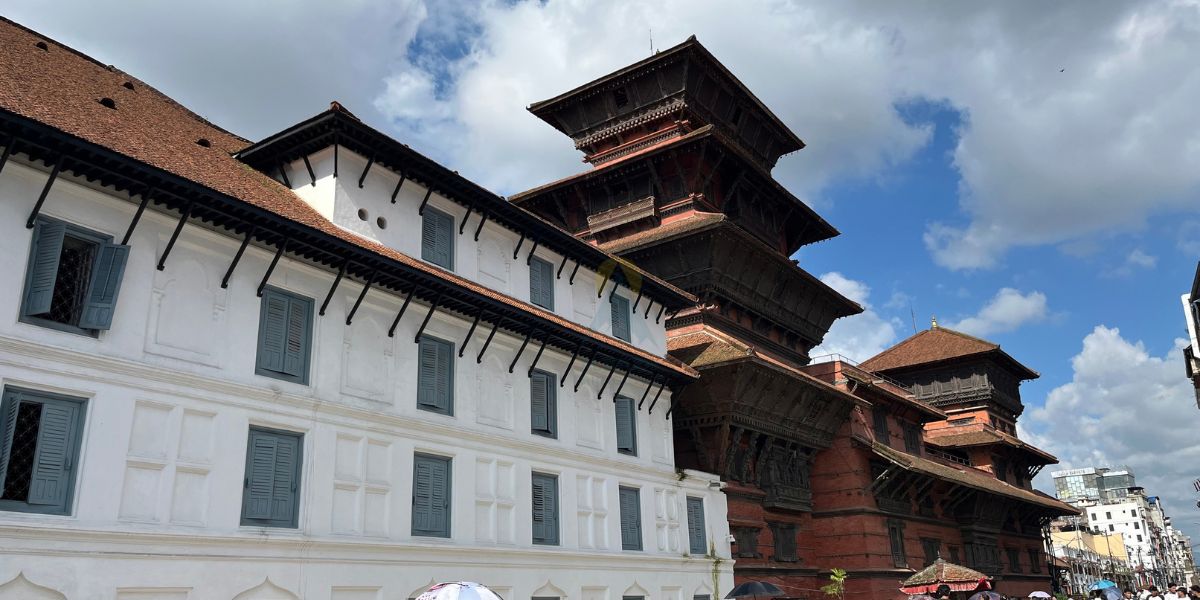
Before Narayanhiti Palace, Hanuman Dhoka Palace served as the royal palace for multiple generations!
Since you are so close, you can explore other areas within walking distance from the square, such as Jhocchen Tole (Freak Street), New Road, and Dharahara.
If you don't have much time but still want to explore the square, then a short ride from Thamel on a bike, taxi, or rickshaw is the most practical option.
Reaching Other Heritage Sites From Thamel
Kathmandu Valley was declared a UNESCO World Heritage Site in 1979 AD and is home to 7 monument zones. Two of these zones are in Bhaktapur, one in Lalitpur, and 4 in Kathmandu district, so it's possible to do the Kathmandu 4 UNESCO World Heritage Sites tour in a day.
Here are the other monument zones inside Kathmandu Valley:
- Swayambhunath Stupa: The stupa sits atop a hill with approximately 1,336 to 1,406 meters elevation from sea level and is one of the closest monument zones to Thamel. It is approximately 4 km to the northwest and is about a 15 to 20 minute drive from Thamel. Since it’s an entire hill to cover, you can check out our walking tour built around Swayambhunath Stupa for ease.
- Boudhanath Stupa: Approximately 6 km from Thamel in the northeast direction, even if you’re not a Buddhist, see if you can schedule a visit. A sightseeing tour of Kathmandu covers Boudhanath along with 3 other monument zones inside the Kathmandu district. As a local here, I suggest visiting Boudhanath in the evening for an unforgettable and braggable experience.
- Pashupatinath Temple: Only Hindus are allowed inside the main temple, but don't worry; Pashupatinath has a lot to offer besides praying in the main temple. If you can schedule a visit in the evening at Pashupatinath, you’ll have an opportunity to participate in Aarati with religious Vajan. It's a remarkable experience and observation on Hinduism! You need to cover a distance of approximately 5 km in the east to Gaushala from Thamel.
- Patan Durbar Square: Counterpart of Kathmandu Durbar Square, it once served as the palace for the kings of Patan. It is located in the Lalitpur district, and the distance from Thamel is approximately 7 km.
- Bhaktapur Durbar Square: By far the furthest monument zone from Thamel, it's about 16 km in the east and is one of the three historic squares. The former royal complex of Bhaktapur (also known as Bhadgaon) is divided into four different squares: Dattatreya, Taumadhi, Pottery, and Durbar. Visit the museums in Bhaktapur, and you’ll gain more insight on this historic site!
- Changu Narayan Temple: A temple built around the 4th century is standing proudly to date in a remote area of Bhaktapur. If you’re travelling to Changu Narayan Temple straight from Thamel, then it’s approximately 16 km on a hilltop known as Changu Hill.
Note: If you are more interested in Bhaktapur, I suggest combining one-day Bhaktapur sightseeing with Nagarkot sunset, where you get to visit Changu Narayan Temple too.
What to Do If You Only Have 1 Day in Thamel?
Most of the tourists in Kathmandu prefer staying in Thamel, but it’s completely fine if you’ve already allocated your stays elsewhere!
You can either visit Thamel for a late-evening visit after exploring other sites or an early morning walk before visiting other sites.
A 1-day trip to Thamel can be planned in many ways:
- Morning: Have a relaxed breakfast at cafes or restaurants before walking to the Garden of Dreams. From there, take a short walk to Kathesimbhu Stupa and other Newari courtyards or if you want to go beyond Thamel, then Narayanhiti Palace Museum or Kathmandu Durbar Square are the best options.
- Afternoon: Spend a couple of hours browsing gear shops, souvenir stores, and bookshops. After shopping around Thamel, it's the perfect time for lunch! You don't necessarily have to eat Nepali food items since Thamel is full of international cafes and restaurants, but since you’re in Nepal, give it a try if possible. Or, if you are energetic, think about the wall climbing I mentioned earlier.
- Evening: An evening walk on Mandala Street is different from a morning or an afternoon stroll. The restaurants and bars here start getting busier. An evening here is filled with live music scenes and fine dining!
- Nightlife: Honestly, most travellers recognize Thamel for its insane nightlife. Take a rooftop bar or restaurant, and you’ll witness its energy. Or if you want to participate, take a stroll around lit areas while having street food or enjoy dance and performances inside a club.
Final Thoughts
From a quiet traditional settlement to a 24-hour tourist hub, wow!
Every time I arrive in Thamel, this mix of many feelings overwhelms me. I can spend a whole day visiting temples, courtyards, and gardens when I want to isolate myself. Whenever I have more energy, I can climb up the walls or go to game lounges.
I don't have to worry about my cravings at all; I want to order Italian, and a block next to me is the farthest I have to go. Just a walk around Thamel lets anyone observe the unique lifestyle here.
Locals and foreigners are both part of a coin in Thamel, and I wish it stays the same. It’s a compact zone but a convenient one for anyone visiting Nepal.


 Sanjog Khatri