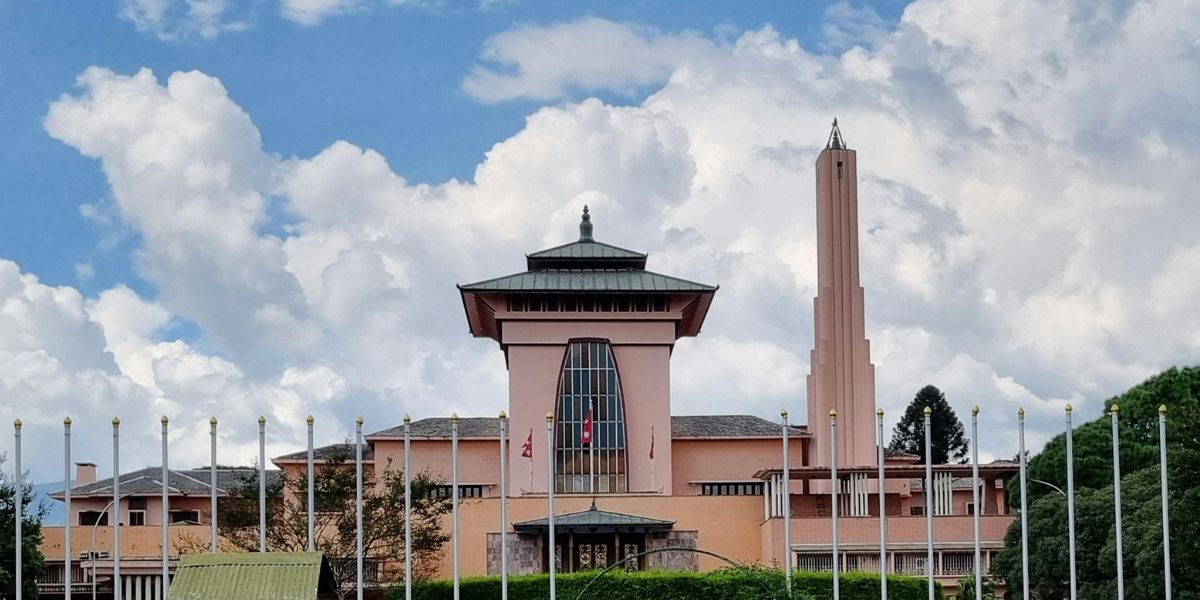
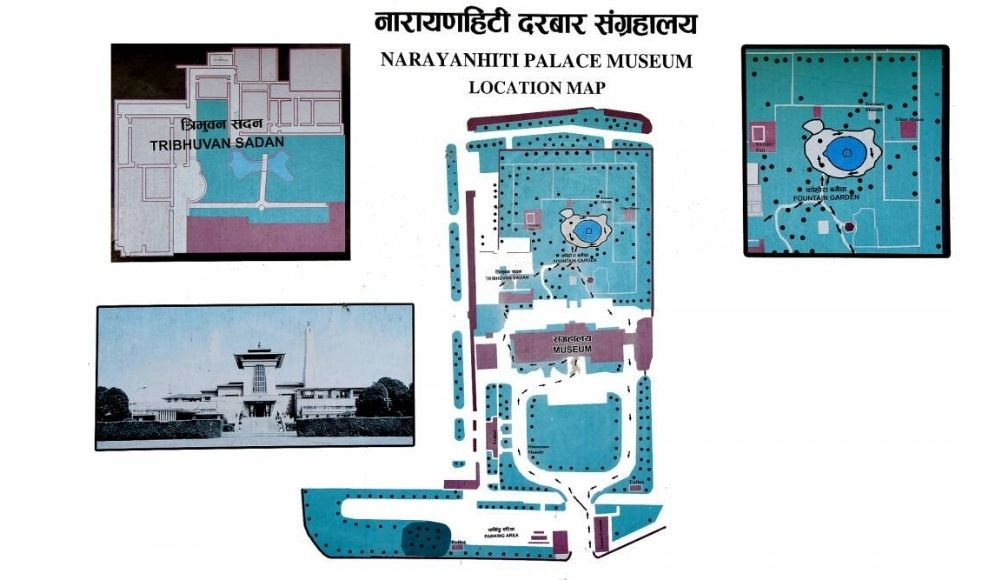
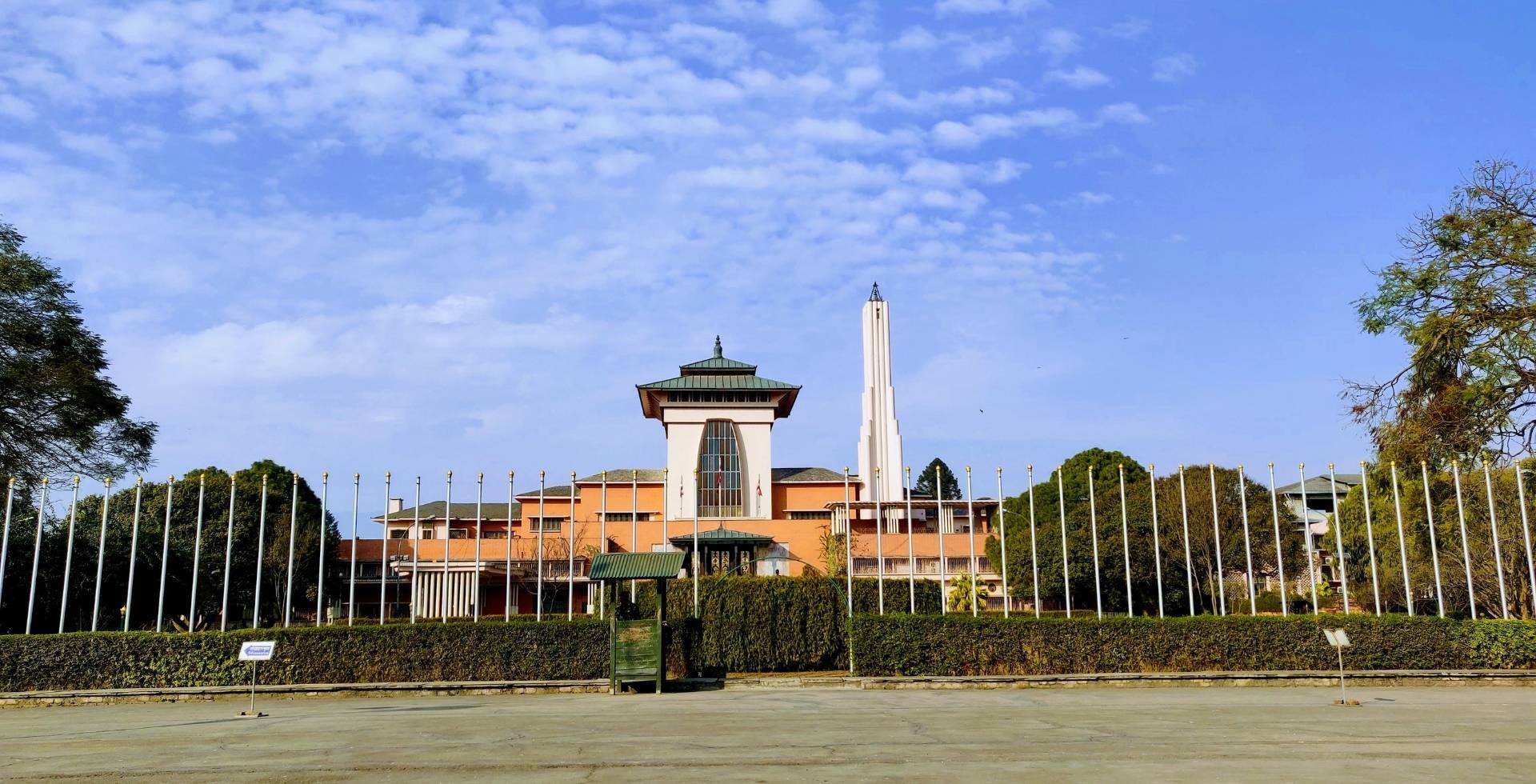
From the day of Kaji Dhokal Singh Basnet's private residence to the present-day museum, Narayanhiti Palace has been witness to major political movements in the history of Nepal.
Before we move on with the history details, check this timeline for quick reference:
|
1793 A.D.
|
Land gifted by King Rana Bahadur Shah to Kaji Dhokal Singh Basnet, where he built his own palace named “Kirti Mandir”.
|
|
1846 A.D. (After Junga Bahadur Rana became prime minister)
|
The Ranas confiscated Kirti Mandir.
|
|
Mid-1800s
|
Colonel Ranodip used the property as his private residence.
|
|
1885 A.D.
|
Assassination of Colonel Ranodip. Bir Shumsher seized the property and built a new palace, which was designed by Jogbir Sthapit.
|
|
1890s
|
Shah Monarch shifted to Narayanhiti Palace after Prithvi Bir Bikram Shah married Bir Shumsher’s two daughters.
|
|
1934 A.D.
|
Narayanhiti Palace was partially damaged after the Nepal-Bihar Earthquake, during which King Tribhuvan lost his two daughters.
|
|
1936 A.D.
|
King Tribhuvan built Tribhuvan Sadan, designed by Surya Jung Thapa.
|
|
1963–1969 A.D.
|
King Mahendra commissioned the new Narayanhiti Palace (current), designed by Benjamin Polk.
|
|
June 1, 2001 A.D.
|
A tragic royal massacre took place in Tribhuvan Sadhan. After which Gyanendra Bir Bikram Shah became the king of Nepal.
|
|
May 28, 2008 A.D.
|
King Gyanendra left the throne, and Nepal was declared a Federal Democratic Republic.
|
|
June 11, 2008 A.D.
|
Gyanendra and his family left the Royal Palace as per the order of the government.
|
|
June 15, 2008 A.D.
|
Prime Minister Girija Prasad Koirala inaugurated the Narayanhiti Palace Museum.
|
|
February 26, 2009 A.D.
|
Prime Minister Pushpakamal Dahal officially opened the museum to the public.
|
|
April 25, 2015 A.D.
|
The palace building suffered minor cracks.
|
Early Days
Dating back to 1793 A.D, the land where the present-day Narayanhiti Palace Museum is built was gifted to Kaji Dhokal Singh Basnet by King Rana Bahadur Shah. Right here, Kaji built his own palace known as Kriti Mandir.
Then, following the Kot Parva (Kot Massacre), the power and influence of noble families like the Basnets were destroyed. And the Rana elites' political takeover resulted in the confiscation of this property.
As a result, Colonel Ranodip Singh used the property for his private residence after a few renovations. After his assassination in 1885 A.D., Bir Shumsher became prime minister and rebuilt the palace acoording to the design of Jogbir Sthapit.
Bir Shumsher established a close alliance with the royal family by arranging the marriage of his two daughters to King Prithivi Bir Bikram Shah. After that, the Shah monarch shifted from the palace in Hanuman Dhoka Durbar Square to Narayanhiti Palace.
Design and Construction of the Modern Palace
The previously built palace was partially damaged in the Nepal-Bihar earthquake of 1934 A.D. Moreover, King Tribhuvan lost his two baby princesses in this tragic event.
Under the order of King Tribhuvan (designed by Nepali Architect Surya Jung Thapa), Tribhuvan Sadan was built in 1936 A.D. with a new Portico and Grand Staircase. This is where the royal family started to reside!
After King Mahendra ascended the throne on March 13, 1955, he ordered the modernization of the previous palace and some other Rana palaces, making way for a grand boulevard now popularly known as Durbarmarg (King's Way).
With the design of American Architect Benjamin Polk, King Mahendra started the construction of the new Narayanhiti Palace in 1963 A.D, which was completed in 1969 A.D. This palace served as the official royal residence until the abolishment of the 240-year-old monarchy in 2008 A.D.
The Royal Massacre
On the night of June 1, 2001 A.D., the tragic royal massacre occured during the family dinner time. King Birendra, Queen Aishwarya, Prince Nirajan, Prince Dhirendra, Princess Shruti, Princess Sharada, Kumar Kahadga, and other members of the royal family lost their lives.
Prince Dipendra had a gunshot wound to his head and had fallen into a coma. Shortly after being declared king of Nepal, Dipendra died on June 4, 2001 A.D.
While many conspiracy theories revolve around the royal massacre, none of these theories has been legally proved. These theories are based on political motives, inside-palace conspiracies, and external assassination theories.
Recently, Home Minister Sudan Gurung officially declared the reopening of the investigation into the 2001 Royal Massacre. But the recent update in August states that the investigation has been halted due to uncertainty about who, either Nepal Police or a separate commission, will conduct it.
Hopefully, the officials will start as soon as possible and bring final closure to what really happened on that tragic night.
Present Day Narayanhiti Palace Museum
After the success of the People's Movement II of 2006 A.D., Nepal officially became a Federal Democratic Republic in 2008 A.D., abolishing Nepal’s monarchy. King Gyanendra was the last king of Nepal and had to vacate Narayanhiti Palace on June 11, 2008 A.D.
After being declared as the Federal Democratic Republic of Nepal, Narayanhiti Palace was converted into the Narayanhiti Palace Museum. The then Prime Minister Girija Prasad Koirala inaugurated the transition of the palace into a museum on June 15, 2008 A.D.
Later, former Prime Minister Pushpa Kamal Dahal officially opened the museum for public display on February 26, 2009 A.D.
During my visit, I continued admiring the architecture of Narayanhiti Palace and it felt as if the palace had frozen in time. Observing each corner of the palace, I kept getting impressed by its striking details.
Well, the main attractions of this place are its various rooms, artifacts, and buildings. Each holds its own designated meaning and significance. Allow me to explain about them, and I’ll also share my own personal story of my recent visit here.
Rooms and Their Significance
Within the Narayanhiti Palace, there are 52 rooms. Each room has its own purpose.
These rooms are uniquely named after districts of Nepal. While the palace contains 52 rooms, only 32 rooms are available for public viewing as of now. Among 32, Tribhuvan Sadan is also considered one, and the others are meeting rooms and designated rooms.
Sadan refers to a house or palace wing, while Baithak refers to a meeting room or reception room.
|
Gaurishankar Gate (When we enter the gate, we reach the corridor where a ticket admission desk is placed, which is also considered a room.)
|
The main entrance is named after the mountain in Dolakha, Gaurishankar, which leads to a corridor where visitors' tickets are checked, after which one enters Kaski Baithak.
|
|
Kaski Baithak
|
The reception hall served for receiving the visiting Heads of State, oath-taking ceremonies for the Prime Minister and Chief of Justice, and the conduct of other important functions.
|
|
Myagdi
|
Served as a tea room for the Prime Minister, Chief of Justice, and Ambassadors.
|
|
Parbat
|
This room was used for signing the visitor’s book after the oath-taking ceremony and credential-receiving ceremony took place.
|
|
Rukum
|
Dignitaries who came to visit the Head of State used this hall as a waiting room.
|
|
Rolpa
|
Used as a meeting room between the Head of State and the dignitaries on various important matters.
|
|
Dailekh
|
Bedroom for the visiting Head of State.
|
|
Baitadi
|
A bedroom for the first lady of the visiting Head of State.
|
|
Achham
|
This room served as a bedroom for the rest of the family members of the visiting Head of State.
|
|
Bajura
|
Dining hall for the visiting Head of State.
|
|
Jumla
|
The Head of State used this as a leisure room before and after meals.
|
|
Dolpa
|
Viewing chamber for members of the royal family to spectate at different events organized at the Gorkha Baithak.
|
|
Tanahu
|
The council of ministers, high-ranking royal officials, and the Secretaries of Ministers used this room to spectate the event organized at the Gorkha Baithak.
|
|
Gorkha Baithak
|
The hall was used for the coronation ceremony of the king, and is currently where the great throne is placed.
|
|
Mugu
|
Personal material of the late King Tribhuvan is stored in this room.
|
|
Lamjung
|
This hall is used for special state banquets and other dinner parties on special occasions associated with the King and Queen.
|
|
Gulmi
|
A chamber used for the private workplace of the king.
|
|
Dhading
|
A resting room for the king.
|
|
Dhankuta
|
This room was used as the king's bedroom.
|
|
Sindhuli
|
A chamber that served as the queen's makeup room.
|
|
Jhapa
|
Important personnel used this room as a waiting room before visiting the King.
|
|
Ilam
|
This room served as a meeting room for the King with the Prime Minister and other important officials.
|
|
Sunsari
|
The royal family used this room to celebrate Janai Purnima and Rakshabandhan.
|
|
Saptari
|
This room was used to host the birthday party of the queen mother and the prince.
|
|
Siraha
|
The queen used this chamber for meetings with special guests. The king and queen also offered tika to family and relatives on the occasion of Vijaya Dashami.
|
|
Dhanusha
|
This room was used for offering tika during Vijaya Dashami to royal and high-ranking officials and also used for honoring medals to government employees and officials on different occasions too.
|
|
Parsa
|
This room was used by the personal secretary of the visiting Head of State as a bedroom.
|
|
Kapilvastu
|
The personal security officials of the visiting Head of State used this room as a bedroom.
|
|
Chitwan
|
Bedroom for the private doctors of the visiting Head of State.
|
|
Surkhet
|
Previously, the private doctor, personal officer, and security of the visiting Head of State used this room before and after the meal. But today, it is used to display various royal objects.
|
|
Rupandehi
|
This hall is where the Royal Crown, along with the Queen's tiara and ceremonial mace, is kept.
|
|
Tribhuvan Sadan
|
A historic mansion where a tragic Royal Massacre took place on 2058 B.S. Jestha 19 (1st June 2001).
|
As I continued to explore the museum, I realized each room in this palace had its own story to tell.
Among many rooms and displayed items, the ones that stand out more as the major attractions of the palace and have a deep connection with the royal family are below:
Kaski Baithak
As you walk through the Gaurishankar Gate, Kaski Sadan comes into view, the hall that once served as the palace’s primary reception.
During my own visit, the two full-sized stuffed Bengal tigers (hunted by Kings Mahendra and Birendra) and life-sized portraits of the Shah Monarchs (King Pratap Singh Shah, Prithvi Narayan Shah, Mahendra Bir Bikram Shah, and Gyanendra Bir Bikram Shah), painted by artist Amar Chitrakar, left me with lasting impressions.
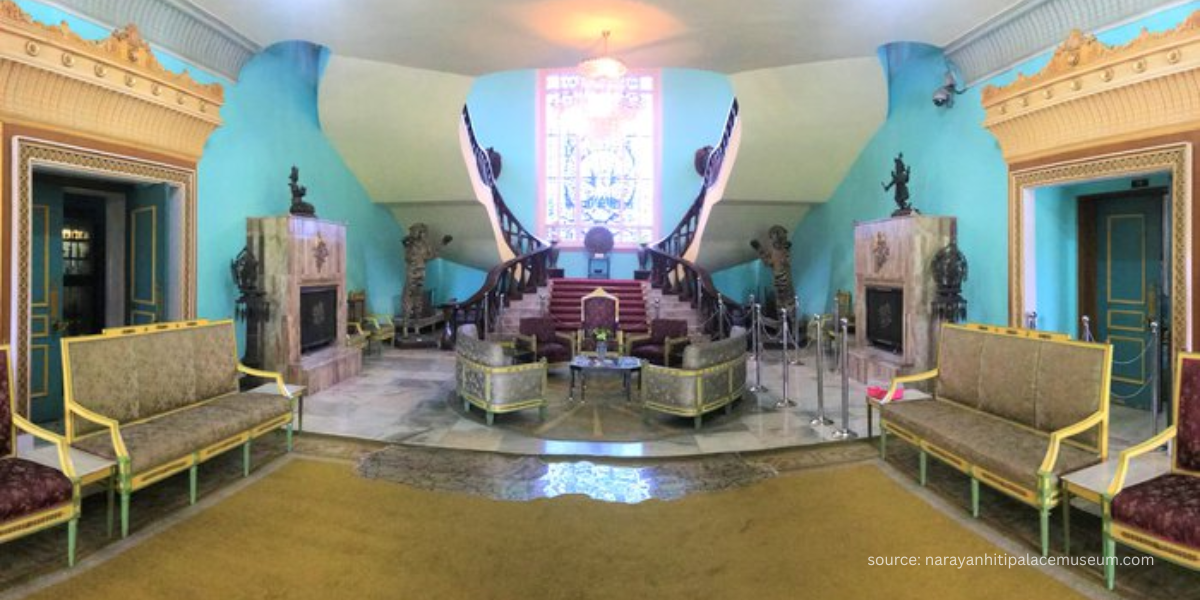
Kaski Baithak served as the receiving place for the visiting Heads of State, for the oath-taking ceremonies of the Prime Minister and the Chief Justice, and for other significant functions. The Shah Monarchs also used this hall as a formal meeting room with the politicians.
Gorkha Baithak
Another masterpiece of the palace, Gorkha Baithak, stands out for its unique architecture. The remarkable aesthetic and decorative chandelier elevates the beauty of this Baithak.
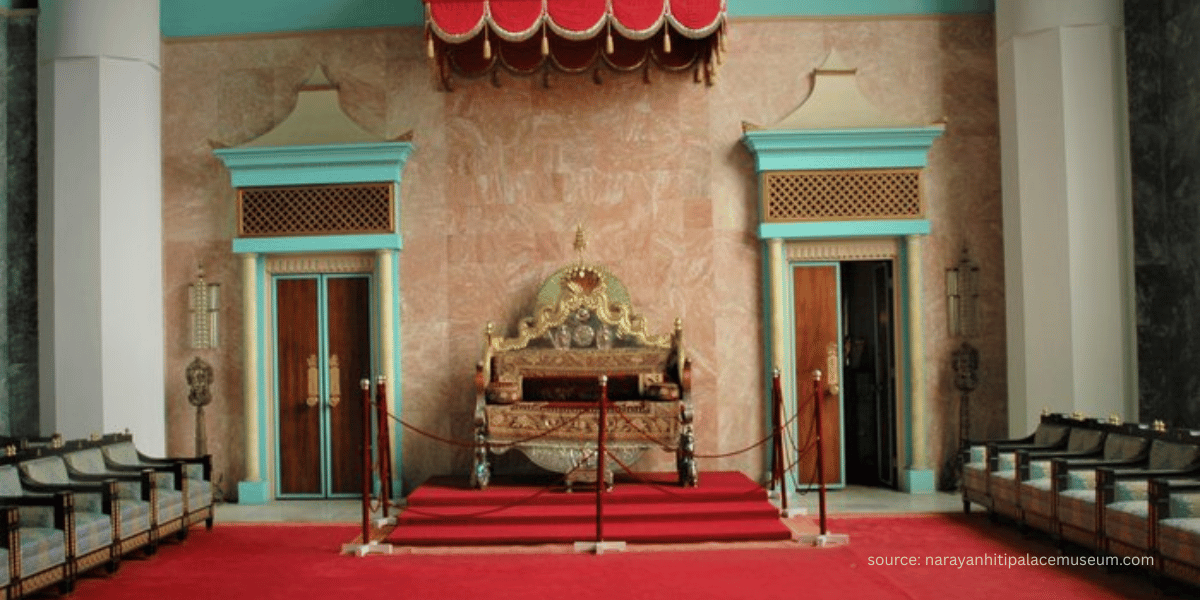
The 60-foot-high pagoda ceiling, supported by four concrete columns, represents Nagas. The columns are decorated with paintings of Hindu guardian demigods, the Asta Matrikas and Asta Bhairavas.
One of the major artifacts of the palace, the Royal Throne, which is 8 feet tall, 4 feet wide, and 6 feet in length, is also located in this hall.
Furthermore, Gorkha Baithak was used for the coronation ceremony, announcement of the prince's coming of age, presentation of credentials, national celebrations, and royal ceremonies.
This meeting room is where King Birendra announced the Constitution of the Kingdom of Nepal 2047 B.S. (1990 A.D.).
Dhanusha Baithak
After exploring various sadans, you can enter Dhanusha Baithak, which is located on the ground floor, and it’s another mesmerizing room of the palace.
You’ll even see a collection of medals displayed inside the Dhanusa Baithak that represent royal honor. Alongside these medals, you get to see portraits of Shah Queens in their official attire, elevating the elegance of the Baithak.
As far as I’ve learned, the different attire worn by different queens in the portraits shows evolution in Nepal’s culture and royal traditions over time.
During Vijaya Dashami, Dhanusha Baithak used to serve as a venue for offering tika to high-ranking government and military officials. The king used to present medals in this room, honoring their services and dedication.
Right after the entrance, you will also see the door named Pyuthan, which served as the film hall for the royal family. Previously open to the public, this room was closed due to security reasons.
Moreover, the hallway from Rolpa Sadan to Baitiadi Sadan features various photographs of historical personalities. These photographs include King Mahendra and King Birendra with visiting heads of state and their families.
The Royal Crown
The moment I walked into Rupandehi Sadan, it was the Royal Crown, aka 'Shreepech', that caught my attention immediately!
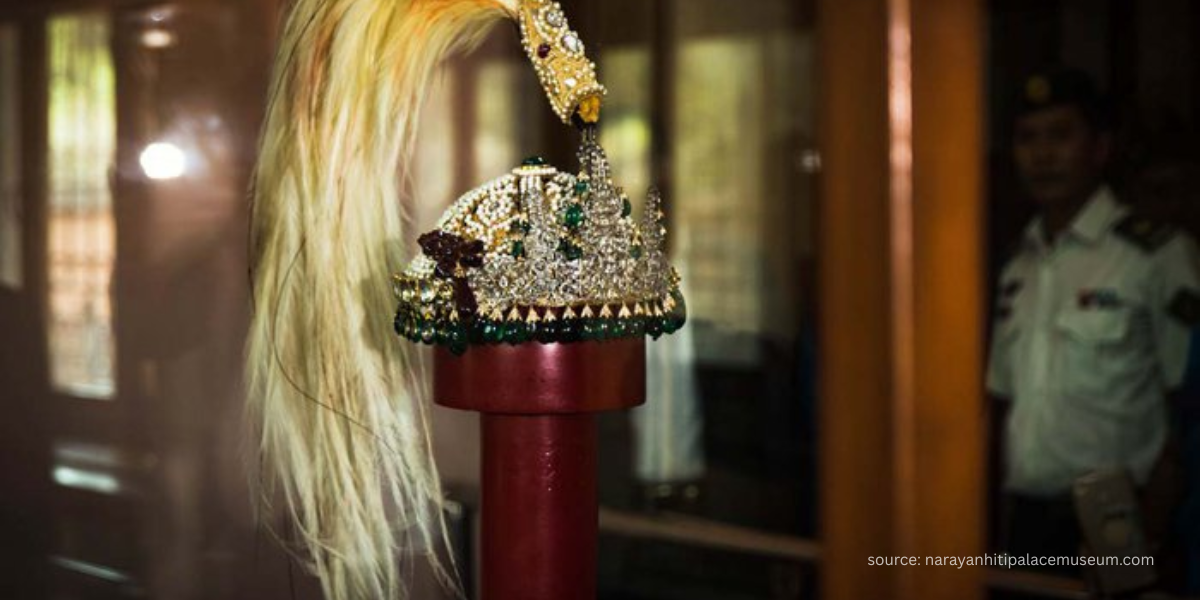
The Royal Crown, along with the Queen's Tiara embedded with 943 lotus diamonds, Ceremonial Gold & Silver Mace, Shield made of rhino skins, and Royal Sword, is displayed inside bulletproof glass. These artifacts stun and impress every visitor when they enter the room.
In the detailed description in front of the crown, you will find that the royal crown is covered with precious gemstones: 730 diamonds, 2372 pearls, 47 emeralds, and 16 rubies. The base of the crown is made up of pure gold and silver, showing the perfect result of craftsmanship.
The crown is decorated with beautiful feathers of the “bird of paradise”. Lore has it that those attractive feathers are of a legendary, mythical creature, the Humayun Bird, a.k.a. Huma bird. It was more than a ceremonial ornament that symbolizes monarchy and royal authority.
Following the abolition of the monarchy in 2008, the royal crown is now state property and preserved under the care of the government of Nepal.
Tribhuvan Sadan
Passing through the palace exit and following the passage, I arrived at the ruins of Tribhuvan Sadan, which was once known as Happy Cottage.
To give you more context: Queen Mother Ratna Rajya Lakshmi ordered the demolition of Tribhuvan Sadan, as it reminded her of the tragic night of June 1, 2001 A.D. However, this sparked a massive backlash as it fueled another conspiracy that the monarch had deliberately destroyed the key evidence.
For years, the site was just an open ground with brick foundations and outline markers. But today, major foundations have been partially rebuilt using old blueprints, and it’s open to visitors who wish to witness the memories of that tragic night.
I peeked through the window of the Billiard Hall and felt a cold breeze running down my spine. The room, filled with silence, felt horrifying as it marked the place where King Birendra and his family had lost their lives.
The room is dark, and you can see a pool table inside the place where the infamous Royal Massacre (or Durbar Hatyakanda) occurred. You can also see the bullet marks on the walls (outside) of the buildings where Prince Nirajan was killed.
Royal Garden (Fohara Garden)
After the Tribhuvan Sadan, you enter the Royal Garden, also called Fohara Garden. There are many different species of trees, plants, and flowers inside the garden.
The main feature of this garden is the water fountain in the middle, which led to the name of this garden being Fohara (fountain in the Nepali language). Near it, there is also a shrine of the Living Goddess Kumari (Kumari Mandir).
There is also a circular steps pond under the bridge that leads to the garden. At the side of that pond, I saw a very beautiful flower species not widely seen in Nepal: the Red Spider Lily. As a plant lover myself, I was utterly shocked to see that flower in the garden!
Inside the garden, on the northwest side, there is also a SAARC Pati with 12 pillars, which works as a rest house.
During the 3rd SAARC Summit held in Nepal (November 02-04, 1987 A.D.) under the leadership of King Birendra, a retreat program was organized here for the heads of the SAARC countries on the 3rd day.
There is also a greenhouse inside the garden on the northeast side. The greenhouse is dominated by Aloe vera species along with a few other plants such as Stonecrop, Coral Senecio, etc.
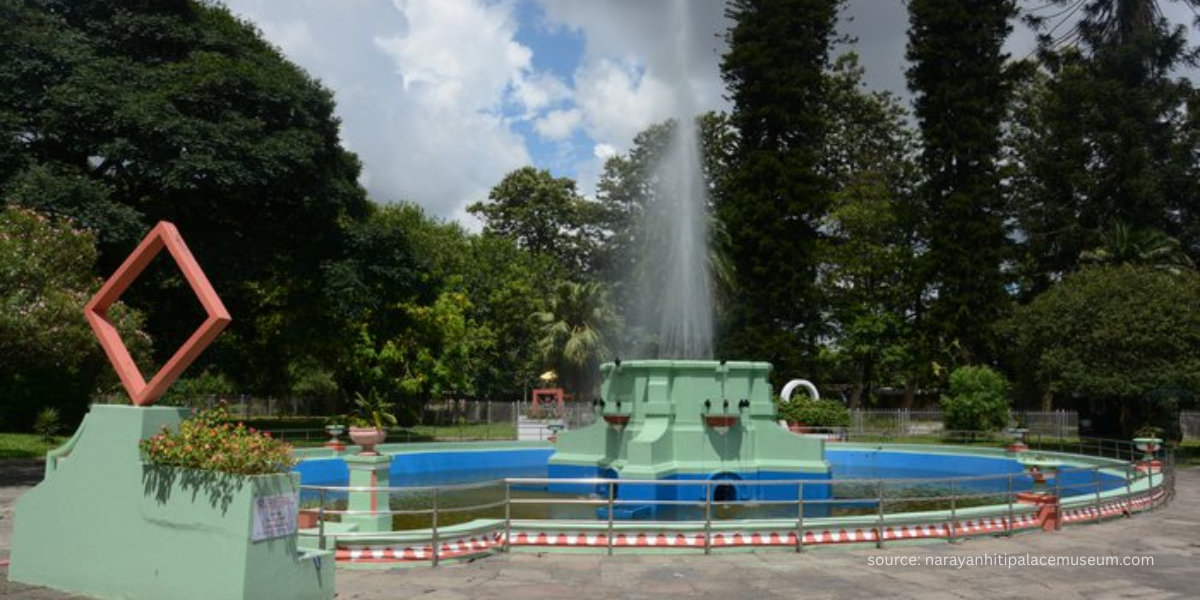
While exploring the garden, you will also see the Revolving House (Ghumne Ghar) and a round ghar (Gol Ghar).
And when you are about to finish exploring, there is also another small pond, not that deep, but with the statue of a Naag (snake) in it.
After exiting Fohora Garden, you can get to the Badame Chaur through Putali Gate, where the planes and helicopters are placed, and then go to the Shree Sadan.
Airplane HS-748
The airplane HS-748 was built on 7th December 1971 A.D. (21st Poush, 2028 B.S.) by the Government of England. This airplane was bought for 11,11,159.64 Sterling Pounds (NPR 2,67,05,545).
After being bought, the plane was used for VVIP flights under the registration 9N-RAC. Later, on 13th April, 1980, it was handed over to the Royal Nepal Military Air Force with new registration RAN-20.
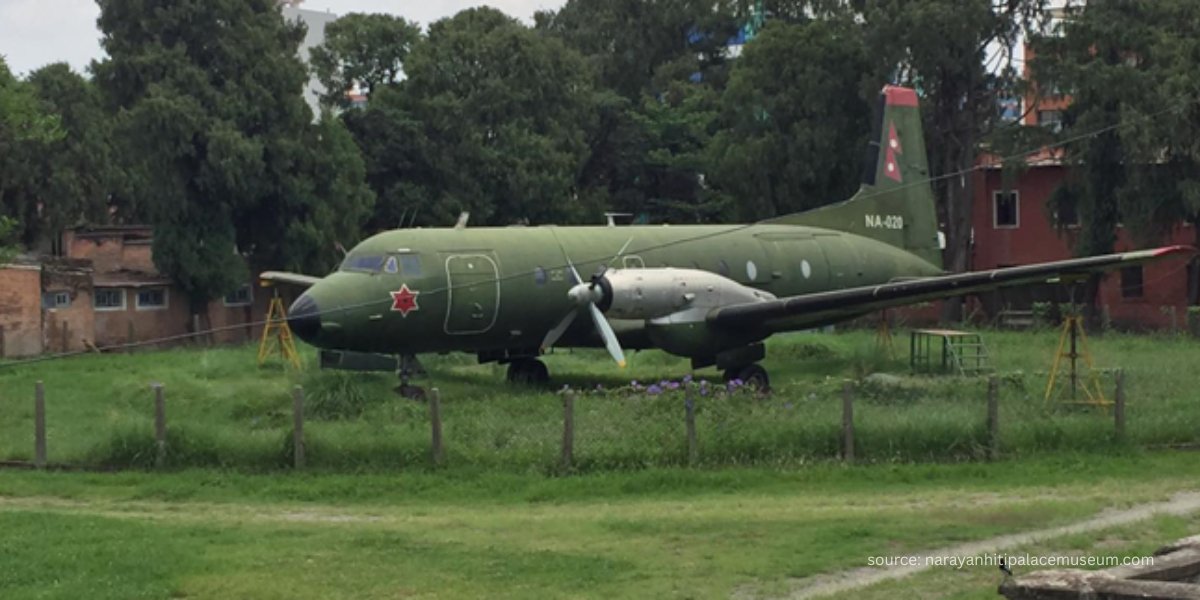
After the transfer, this airplane fulfilled multiple roles, including carriage, rescues, army training, etc., during its operational years.
This aircraft was also used for emergency medical services. It was used for delivering emergency relief supplies to India during the 2001 Gujarat earthquake and also to Pakistan during the Hindu Kush Earthquake in 2015 A.D.
This airplane served the royal family, along with other Heads of State, by providing domestic and international VVIP flights. Its last flight was during the Nepal Gorkha Earthquake in 2015, completing a total of 12,705 landings.
Following its phase-out, it was brought to the museum on 12th September 2022 and placed on display in Badame Chaur.
NA-031 ALOUETTE Helicopter
A helicopter of the Nepal Military, built on 30th November, 1981 A.D., was commissioned as a VVIP Flight in 1982 with the registration number 9N-RAF. This aircraft was handed over to the current Shree No. 11 Air Base in 1991 after getting the RAN-31 registration number.
This helicopter has made major contributions as a gunship and improvised bombing helicopter with other air missions during internal conflicts.
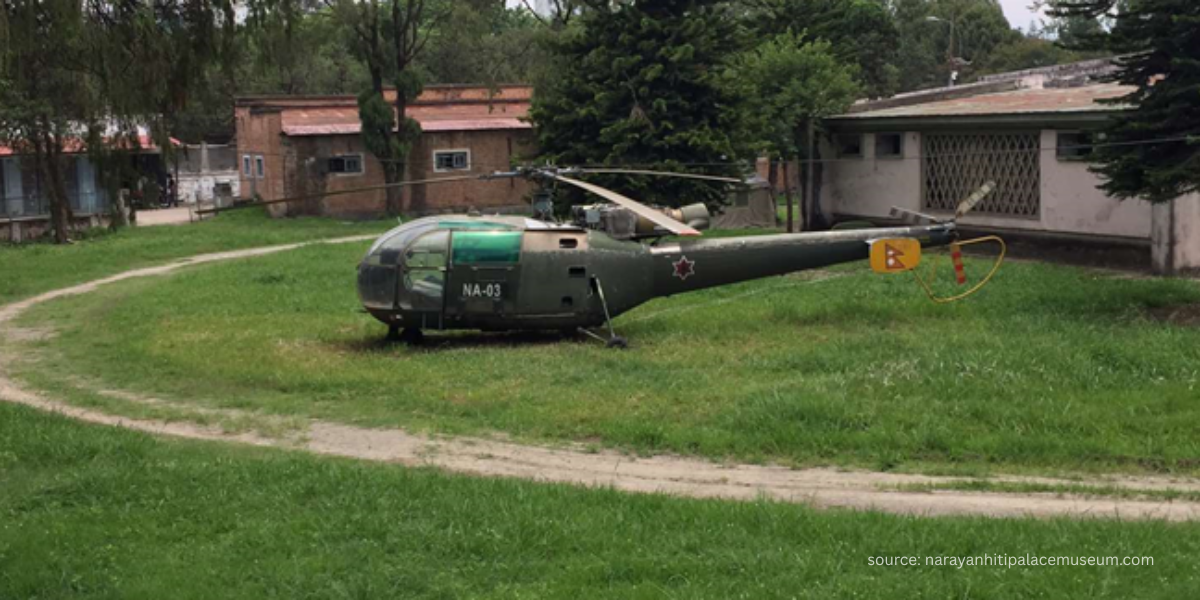
During different festivals and celebrations, this aircraft was used for Banner Display Flight.
One interesting link between this helicopter and the royal family is that the Shah family used it for pilot training.
After completing a total of 17709 landings, this aircraft covered its last flight in 2015 A.D.
Later in 2020 A.D., after its decommissioning, it was brought into the museum. And it is currently located in Badame Chaur alongside the Airplane HS-748.
The Royal Garage
After you finish admiring the aircraft displayed in Badame Chaur, you will reach the Royal Garage, where the vehicles used by the royal family are kept.
I was amazed to see a fleet of cars, including the baby cars of Dipendra and Nirajan, along with two Mercedes-Benz 600 Pullman, a Ford Model T Pickup (1925), 1920s International Model S Passenger Series, and an Austin Princess Limousine (1963 Model).
It also has the famous Daimler-Benz, gifted by Adolf Hitler to Tribhuvan Shah. This is the same car shown in a renowned old photograph where people are seen carrying it all the way to Kathmandu.
The garage holds another major attraction within the palace compound: the Golden State Coach, which is a remarkable royal carriage.
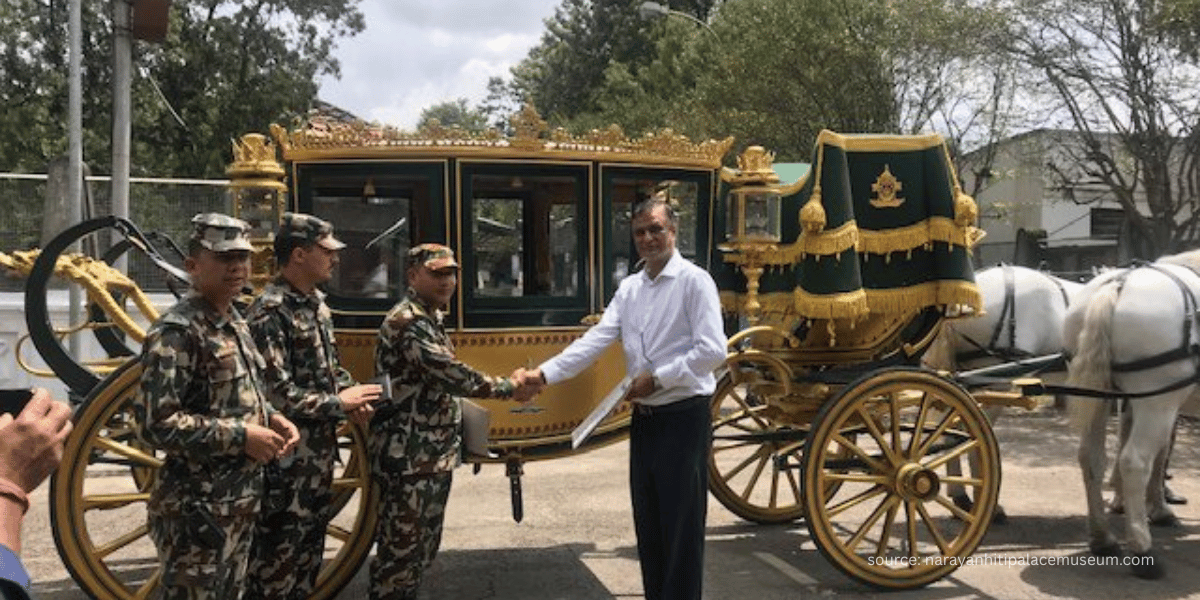
Queen Elizabeth II had gifted the Golden State Coach (Golden Baggi) to King Mahendra during her first visit to Nepal. The coach was first used during King Birendra’s coronation ceremony on February 24, 1975 A.D. Also, this coach was used during Queen Elizabeth II's second visit to Nepal.
The coach suffered severe damage during the 2015 Earthquake, after which it got repaired and kept in the cavalry of the Nepal Army until it was transferred to Narayanhiti Palace in 2021 A.D.
This rare masterpiece, which is one of the two carriages, is now open for exhibition. The second remains at Buckingham Palace, where it continues to be used on state occasions.
Shree Sadan
Shree Sadan, the residence of King Birendra, was opened to the general public nearly 20 years following a tragic royal massacre, in 2020 A.D.
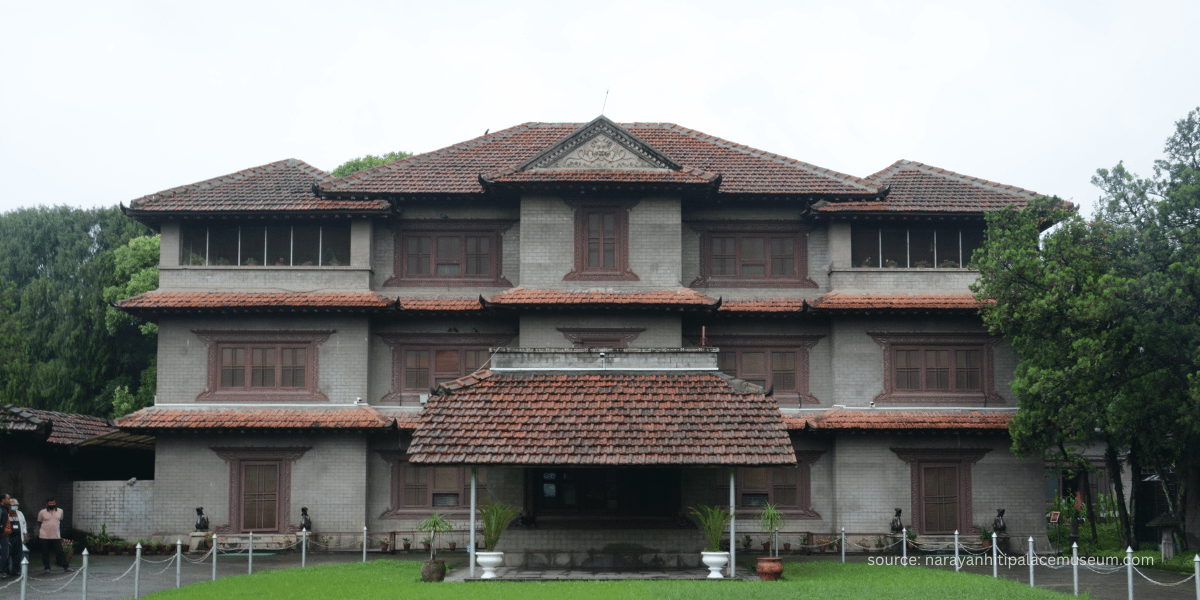
As the final monument to explore at the museum, Shree Sadan appears different from the main palace. Blending Chinese and Nepali multi-roof temple style, its architecture immediately caught my attention as I walked the paved path.
When you enter the Shree Sadan Premises, you will see a big bell in front of the house that makes the house look like a temple.
The two lion-headed statues placed on the two sides of the door of the house represent the house as a royal palace. On the other door, you will see the two pairs of dragons, one on each side, as the dwarpal (guards).
Despite being built for royalty, the simple appearance of Shree Sadan represents the simple lifestyle of King Birendra and his family.
The ground floor contains the private office of King Birendra and Queen Aishwarya, as well as the meeting room, dining room, and bar.
The second floor is the living room and the bedroom of the king and queen. There are also their portraits and the things that are left of them, lying untouched in the cabinets.
The third floor shows the area where Young Prince Nirajan and Princess Shruti spent their childhood. The pictures of three siblings with Shruti in the middle are also hung on the wall.
Drawings by Princess Shruti on the walls of the hallway and exercise room of Prince Nirajan reflect that this family was no different from ordinary families.
Following the royal tradition, the king and crown prince could not reside under the same roof. Thus, Birendra, after being declared crown prince, had built Shree Sadan as his private residence.
Queen Aishwarya’s Private Garden
The private garden of Queen Aishwarya lies on the north-west side of the Shree Sadan. Before reaching the garden, you will also notice three spiral staircases glued to the back of the house. And in front, there are also three big trees shading the background of the house.
When you see the private garden of the queen, you will be impressed by the different species of flowers and plants in the garden.
In the middle of the garden, five different trees (Panchbrikshya) share the surrounding area. They are: Banyan, Peepal, Indian Gooseberry, Mango, and Champaca (Magnolia Champaca).
This garden was constructed in 1990 A.D. and completed after four years in 1994 A.D. It was used by King Birendra for holding lunch with his family.
Queen Aishwarya used to perform the Vat Savitri Brata on the night of the full moon and worship the god.
On the northeast side of the garden, there is an artificial waterfall that is said to be made according to the design choice of Queen Aishwarya herself.
Along with it, at the north side of the garden, there is a small cascading waterfall (man-made) covered with different flowers and plants in the surroundings.
Chaturbeuha Narayan Temple
This Narayan Temple is located inside the premises of Narayanhiti Palace area, which has a significant role due to its historical and artistic aspects. The Lord Narayana worshipped in this place is also considered the world’s only historical Chaturvyuh Narayan.
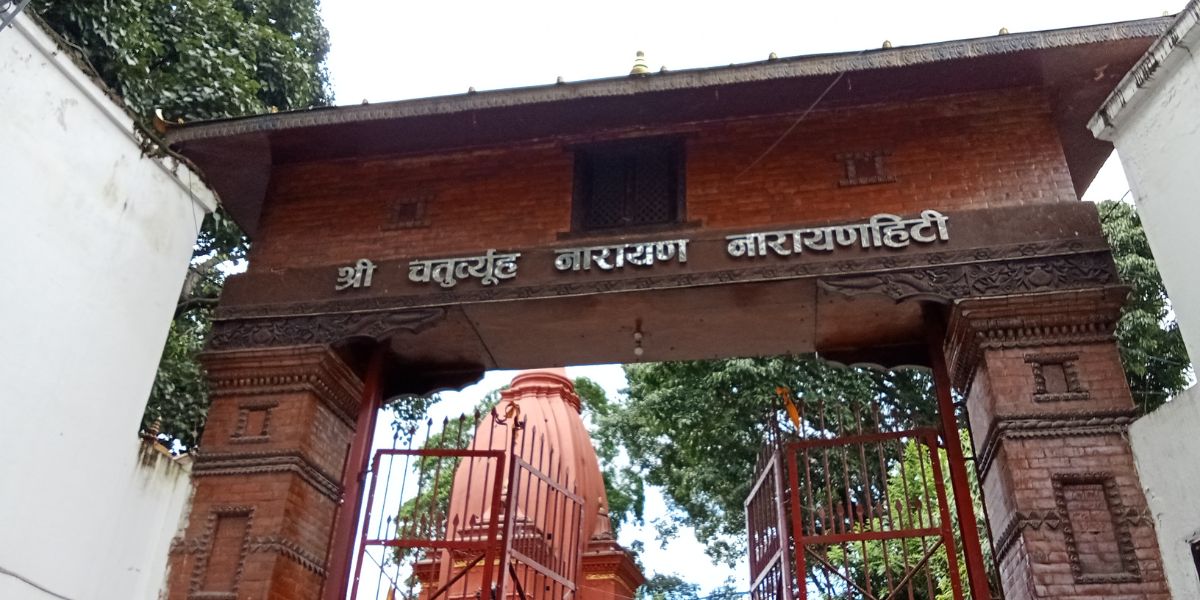
On the premises of Narayanhiti Palace, the holy shrine is located in the Vyuha form (sworoop) of Lord Vishnu.
There are four different forms of Narayana engraved in a single stone in this area. Legend has it that if special worship is offered to Shri Chaturvyuh Narayana, 21 generations of ancestors can attain spiritual liberation (Moksha)!
There are varieties of trees present on the premises of this Narayan temple, such as banyan tree, bar, peepal, shami, night jasmine, Indian gooseberry, mango, and dropping fig.
Several deities are worshipped inside the temple, such as Balaji Hanuman, Garuda, Ram, Lakshman, Siddhi Vinayak (Lord Ganesh), Pancha Kumari, Tripurasundari Devi, 18-handed Mahishasur Mardini Devi, and Shri Ajima Mata.
There is also a Bhajan Griha, or hymn-singing place, inside the temple complex, which is also considered the birthplace of Nepali classical music. It is also believed that the musical instruments were offered by the then King Mahendra to the classical music seekers of the temple in 2016 B.S. (1959/1960 A.D.).
Devotees who show respect to the four Narayans of Kathmandu (Changu Narayan, Bishanku Narayan, Shesh Narayan, and Icchangu Narayan) believe that they will be blessed with power, prosperity, security, and salvation in their lives if they also visit the Narayanhiti Narayansthan Temple.
Ganatantra Smarak (Republican Monument)
This significant attraction of the palace museum was built in memory of martyrs who lost their lives in Nepal’s democratic movements.
This monument is situated on the eastern part of the palace and stands as a symbolic representation of the beginning of the Federal Democratic Republic of Nepal.
Note that this place is not open to the public currently. However, you can go around following the Narayanhiti Path and take a peek at the monument park from the outside.
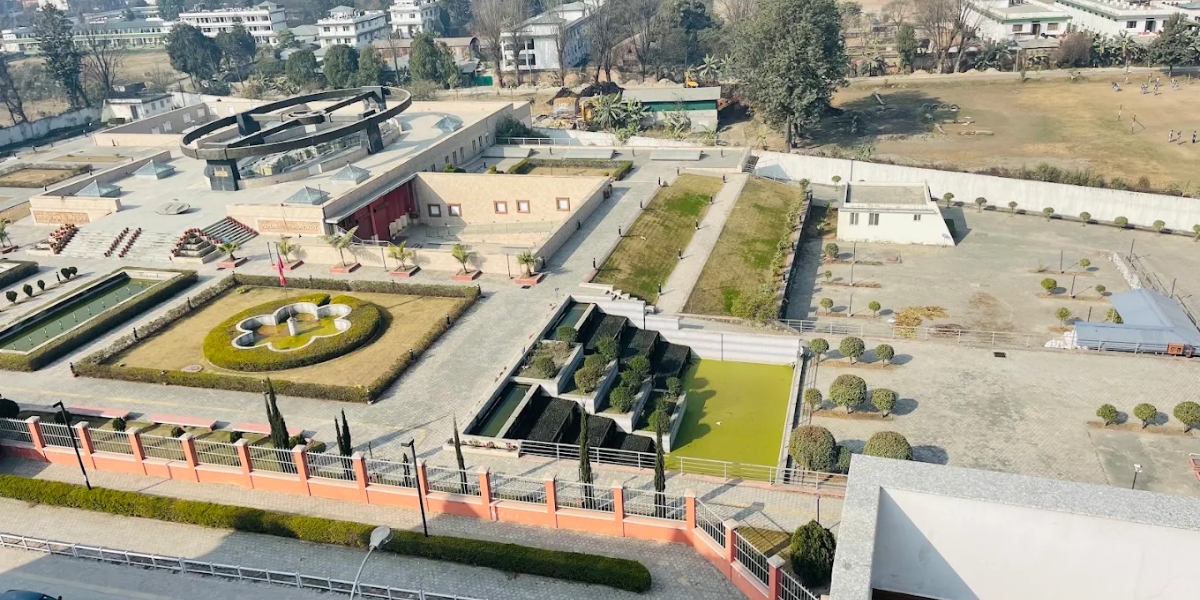
There are many things placed at the top of the monument for the spectators to observe. A relief map of the country is also placed in the middle of the monument with four special pillars dedicated to those who sacrificed their lives during the 2006 People’s Movement.
A book-like stone structure is also present inside the monument, representing the Federal Republic Constitution of Nepal.
The insides of the monument exhibit photographs from different timelines, which represent Nepal’s democratic movements.
On 27th March, 2012, the former Prime Minister Dr. Ram Babu Bhattarai laid the foundational stone for the monument. Following the completion of the constitution, the inauguration was done on 29th May, 2019 (Republic Day), by the then President Mrs. Bidya Devi Bhandari.
Right after you finish exploring the Narayanhiti Palace Museum, don’t think about going home. You can visit many other nearby attractions and enjoy a wonderful time.
Narayanhiti Pond
Narayanhiti Pond, which is also known as Hiti Pokhari, is an ancient pond that is said to have existed for ages. This pond is less than 500 meters away from the palace and takes only about 5 minutes to reach on foot.
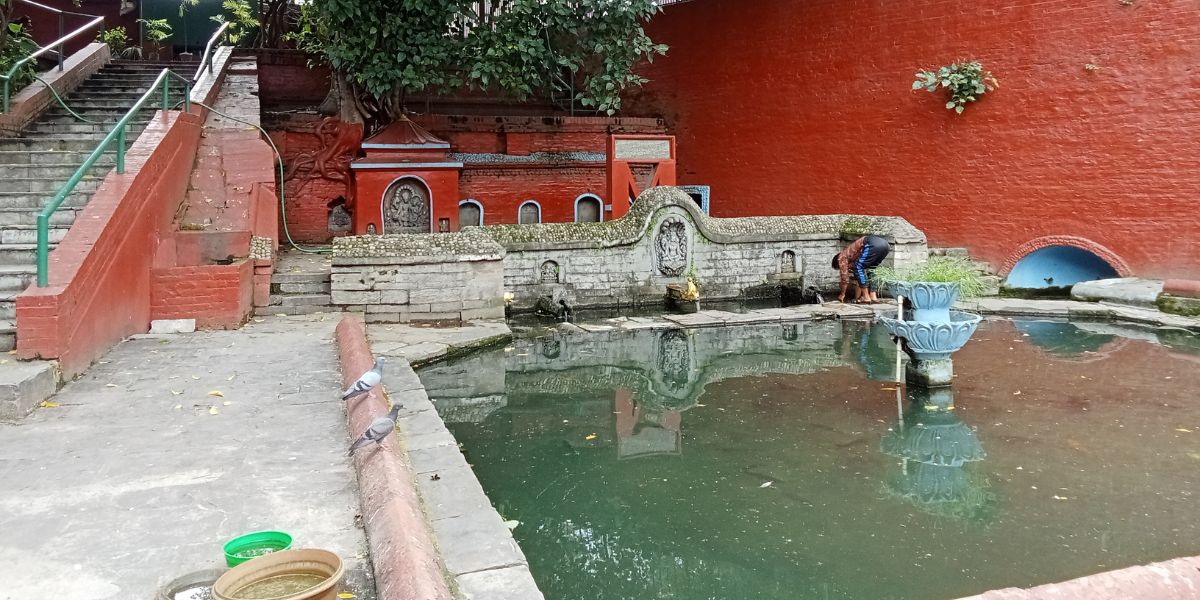
The pond is divided into two sections, and on the western side, there are three stone taps (hitis) from which water flows to the double-dividing pond area.
Although the pond looks a little murky, it is home to many fish of different colors. Both sides of the pond are filled with different species of fish. While the place looks peaceful, the myth related to it is gruesome.
A long time ago, when Kathmandu was suffering from drought, all the water sources were drying. So, to solve the problem, the then king asked a Vedic astrologer about the reason, and he said that the water would come only if a person with 32 auspicious characteristics (Battis Lakshan) is sacrificed and his/her blood is sprinkled on the Narayan Hiti (tap).
At that time, only the king and his eldest son were the ones with all the auspicious characteristics. So, the king thought of sacrificing himself.
He ordered his son (who was unaware of the plot) to kill a guy lying near the hiti without looking at his face at night.
Later that night, the king laid on the ground of the Narayan Hiti, covering his face with a cloth. The son arrived and killed the person but later realized that the one he killed was his own father!
According to one of the oldest chronicles, Gopal Raja Vansavali, the king who died is the Lichhavi King Dharmadeva, father of Manadeva I.
Beyond this myth, I also learned from the nearby people that the water from this hiti is hot during winter and cold during summer.
Moreover, there are different deities carved in front of the hiti.
Garden of Dreams
A beautiful, elegant, and timeless neoclassical garden, Garden of Dreams, also known as Dream Garden, is located near the entrance to Thamel.
This garden is only 600 meters away from the palace and takes only about 5-7 minutes to reach on foot.
This historic garden, which was a private garden of the historic figure Keshar Shumsher, is known for its beautiful pavilions that are based on the seasons of Nepal.
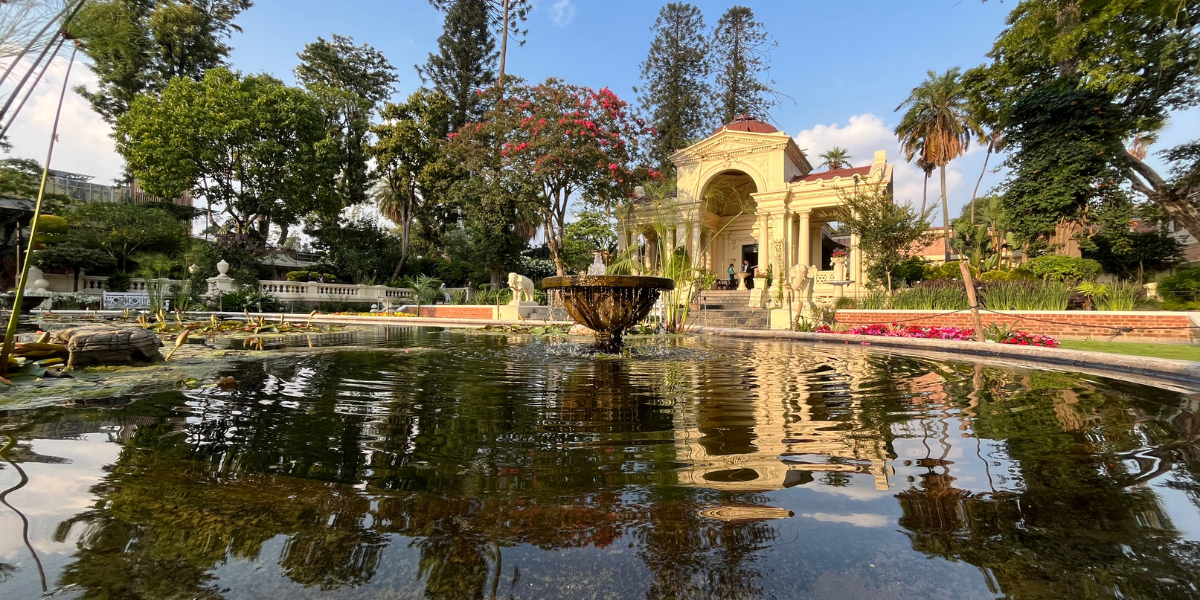
It also includes fountains, ponds, galleries, a cafe (Kaiser Cafe), and green spaces in the surroundings.
As its name suggests, coming to this garden makes you feel like you are entering a dream where the surroundings are not just pretty but also calming. It is an ideal place to relax and be away from the busy life just for once and enjoy a quieter atmosphere.
Thamel
One of the popular tourist destinations of Nepal, Thamel, is a tourist hub and is just 1 km away from the Narayanhiti Palace Museum and takes about 15 minutes to reach on foot.
The vibrant narrow alleys, lively streets, restaurants, cafes, hotels, handicraft shops, souvenir stores, handmade product shops, and trekking outlets are what this area is famous for!
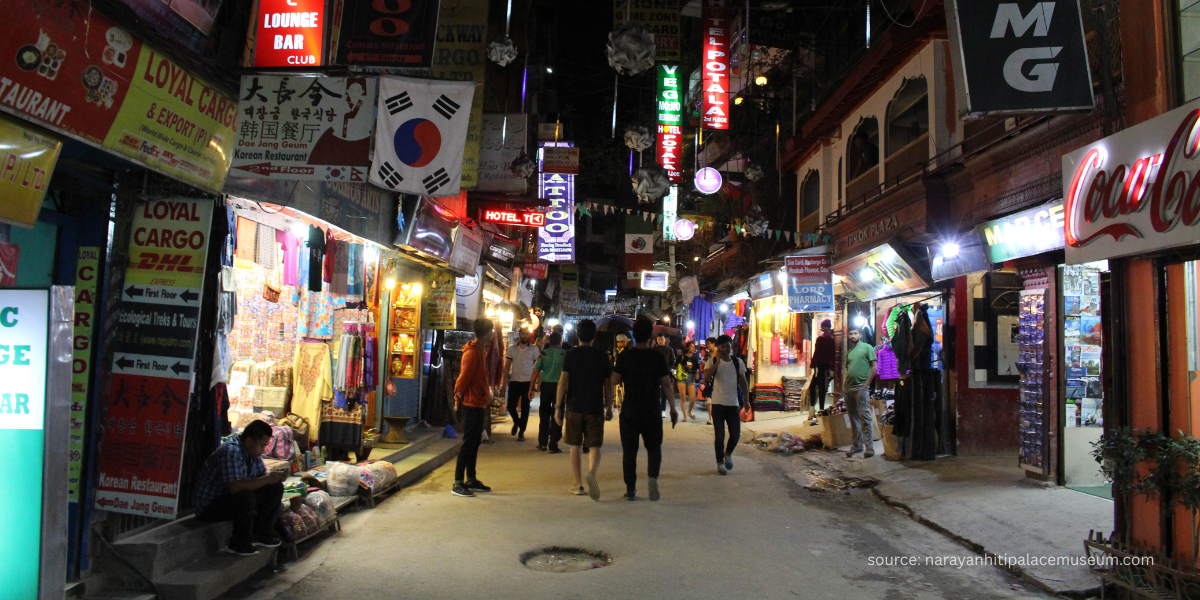
This area is popular among both international and domestic visitors and gives off completely different vibes from the museum.
When the rest of Kathmandu is sleeping at night, this area remains as lively as during the day.
After completing the museum exploration and understanding the lifestyle of the royal family, one can visit Thamel to experience the modern, multicultural, and energetic side of Kathmandu.
Rani Pokhari
Rani Pokhari, originally known as Nhu Pukhu (New Pond), was built by King Pratap Malla in 1670 A.D. to console his queen, who was drowning in grief after her son’s death.
The rectangular pond near the palace museum is only about 1.5 km away and is open to the public in the morning from 5:00 A.M. to 10:00 A.M. This place can be reached within 10 minutes on foot.
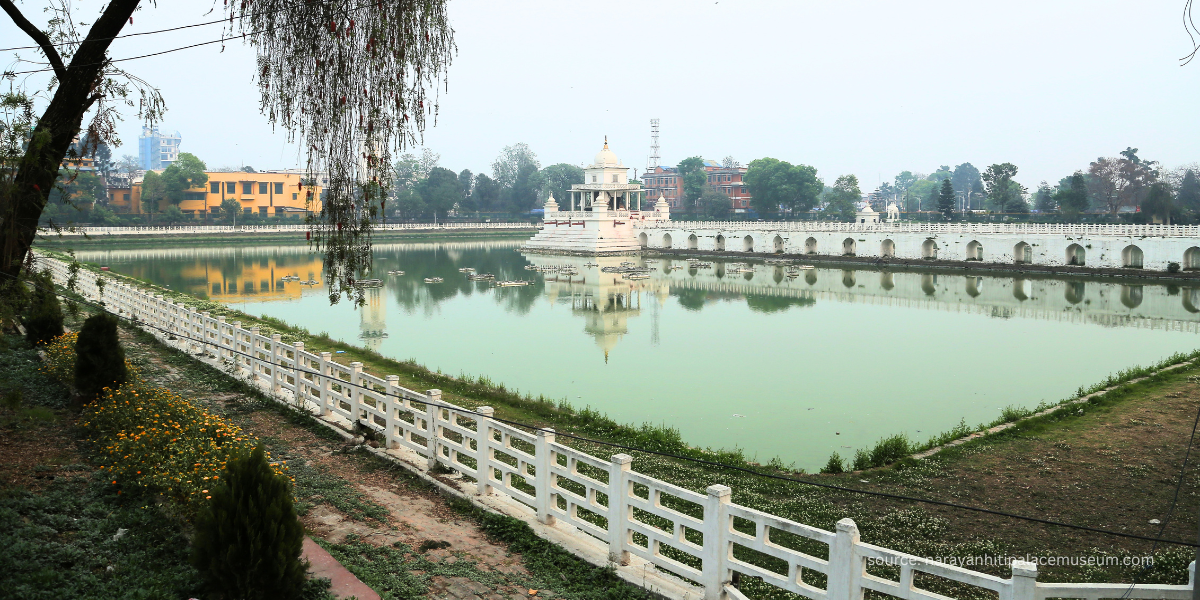
In the middle of the pond, there is a Bal Gopaleshwor Temple, which is open only on Bhai Tika (The Fifth day of the Tihar Festival) for those who don’t have a sister.
There are many other statues of the deities erected in this temple, such as Harishankar, Ganesh, Suryanarayan with five heads, Bhagwati, and Vishnu.
There is also the sculpture of King Pratap Malla with his two sons, Mahipatendra Malla and Chakravartendra Malla, praying to the deities on the south bank of the pond.
After the destruction from the 2015 earthquake, Rani Pokhari was closed to the public and later opened after proper renovation in 2023 A.D.
This is one of the best places to take a walk and enjoy your own company. It is most beautiful during the spring season as the Jacaranda trees surrounding it will come into full bloom.
Ason Bazaar
This is one of the busiest markets, famous for its narrow streets, traditional Newari architecture, temples, and colorful shops. It can be reached within 20-25 minutes on foot, as it is only 1.5 km from the palace.
In the shops here, you can find every little thing, from spices to household products. You can shop many items such as grains, vegetables, clothes, clay pots, utensils, religious items, handicrafts, etc.
Right at the junction, historic temples such as the Annapurna Temple (Annapurna Ajima Mandir), Ganesh Temple (Ashok Vinayak), and Narayani Temple are located.
Ason Bazaar is usually crowded from the morning, and during the festival period, it becomes more lively than ever!
This market is not just a busy shopping area; it has historical, cultural, and religious significance. It is the commercial center of Kathmandu that offers a glimpse of both the traditional and modern life of the people living here.


 Shubhana Lama