As you enter the Hanuman Dhoka Palace, your jaw will hit the floor before you step onto the courtyard!
The huge Nasal Chowk invites you with its alluring beauty and open arms. Once you enter the courtyard, you will start taking pictures, but that’s not enough. You will wish to keep everything inside your heart to its full capacity.
More than just an ancient palace, the Hanuman Dhoka Palace, a UNESCO World Heritage Site located within Kathmandu Durbar Square, is one of the most significant historical landmarks.
The vast complex, with its beautiful carvings, which once served as the residence of the royal family belonging to the Malla and Shah dynasties, is now evidence of the historical moments.
It reflects the unique artistry of Newari craftsmanship and also tells the story of Nepal’s monarchy and its culture.
In this guide, you will learn the history of Hanuman Dhoka Palace Museum, along with practical information and tips to help you make the most of your visit!
Quick Facts About Hanuman Dhoka Palace Museum
|
Location
|
Kathmandu Durbar Square, Basantapur, Kathmandu District, Bagmati Province
|
|
Coordinates
|
Latitude: 27.7042° N (27° 42′ 15″ N),
Longitude: 85.3075° E (85° 18′ 27″ E)
|
|
UNESCO Status
|
A significant part of the Kathmandu Valley UNESCO World Heritage Site since 1979 A.D.
|
|
Period of Construction
|
Developed gradually from the 15th to the 20th century.
|
|
Major contributions
|
By King Mahendra Malla, Pratap Malla, and Prithvi Narayan Shah.
|
|
Named After
|
The sacred stone statue of Lord Hanuman, set by King Pratap Malla in 1672 AD at the main entrance.
|
|
Managed By
|
Hanuman Dhoka Durbar Museum Development Committee under the Ministry of Culture, Tourism, and Civil Aviation, Government of Nepal
|
|
Architectural style
|
Traditional Newar and Neoclassical architecture
|
|
Courtyards (Chowks)
|
- Nasal Chowk
- Mohankali Chowk (Mohan Chowk)
- Sundari Chowk (Sundar Chowk)
- Mul Chowk*
- Masan Chowk (Kanhel Chowk)*
- Vayu Chowk (Lamo Chowk)*
- Lohan Chowk (Vasantapur Chowk)
- Daakh Chowk*
- Nhulachen Chowk (Nhucchen Chowk)
- Trishul Chowk*
[* - Restricted Section]
|
|
Main Museum Attractions
|
- Tribhuvan Museum
- Mahendra Museum
- Birendra Memorial Museum
- Gol Ghar
- Dhukuti Exhibition
- Gaddi Baithak
|
|
Notable Towers
|
- Basantapur (Nine-Storey) Tower
- Kirtipur Tower
- Bhaktapur (Lakshmi Bilas) Tower
- Patan (Vilas Mandir) Tower
|
|
Major Temples (within the complex)
|
- Taleju Temple
- Panchamukhi Hanuman Temple
- Durga Temple
- Bhagwati Temple
- Degu Taleju Temple
- Narsingh Temple
|
|
Museum Opening Hours
|
09:00 AM to 07:00 PM
|
|
Ticket Counter Opening Hours (for Nepalese only; for foreign nationals, the same Durbar Square ticket can be used)
|
09:00 AM to 06:00 PM
|
|
Nearby Attractions
|
- Kumari Ghar
- Kal Bhairav Temple
- Kasthamandap Temple
- Freak Street
- Ason Bazar
- Indra Chowk
- Itumbaha Museum, etc.
|
History of Hanuman Dhoka Palace
Hanuman Dhoka Palace Museum is a historical building that holds the fragments of the unknown tales. The history of Hanuman Dhoka Palace Museum spans from the Licchavi period (4th - 8th century) to the Malla era (since 1201 A.D.).
Lichhavi Era
The site where Hanuman Dhoka Palace is located now was previously called “Koligrama” or ”Dakshin Rajkula”, formed during the Licchavi dynasty.
Koligrama (Yambu), the northern settlement, centered around present-day Makhan Tole and Asan, while Dakshin Koligram (Yangal), the southern settlement, encompassed the area extending from the Hanuman Dhoka region south toward Jaisideval.
Within or near Dakshin Koligram lay the Lichhavi royal palace compound known as Dakshin Rajkula.
Malla Era
Hanuman Dhoka Palace got its name from the giant stone statue of Lord Hanuman guarding the principal entrance of the palace complex. Hanuman is the Monkey God, Dhoka means "door," and Durbar means "palace."
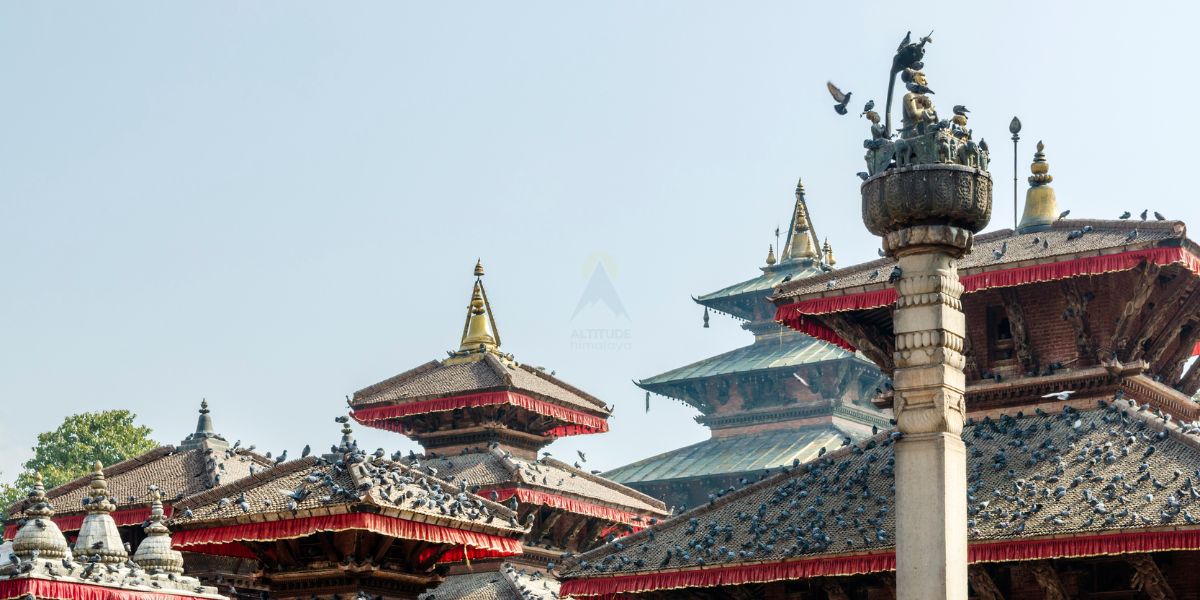
This statue of Lord Hanuman was established during the rule of King Pratap Malla in 1672 A.D. The statue is wrapped in a bright red cloth, shielded under the ceremonial umbrella that symbolizes the divine protection over the royal palace. Devotees apply orange vermilion (sindoor) on the statue and worship it.
Above the gate, you can see different figures:
- Blue colored Krishna with two gopis (Left)
- The fierce Tantric version of Lord Krishna (Middle)
- King Pratap Malla and his Queen (Right)
During the Malla Era, many developments in urban architecture and art expanded, leading to most of the existing structures of the palace complex.
While the site's royal roots date back to the Licchavi era, the existing layout and standing monuments were structurally expanded from the 15th to the 20th century."
Each of the Malla Kings (from Ratna Malla to Jaya Prakash Malla) contributed to the construction of Kathmandu Durbar Square as it stands today.
Here are the major contributions of the Malla Kings:
- Ratna Malla (1484 - 1520 A.D.): He established Kathmandu (Kantipur) as an independent kingdom in the late 15th century.
- Mahendra Malla (1560 - 1574 A.D.): The Taleju Temple, Kotilingeshwara, Jagannath, Taleju, and Mahendreshvar temples that stand today were built during his reign.
- Shivasimha Malla (1580 - 1619 A.D.): He constructed a temple known as Degutale Temple, which was later restored by his descendants.
- Pratap Malla (1641 - 1674 A.D.): He expanded the beauty of the palace constructing many temples, courtyards, and wooden structures. He also introduced many chowks like Mohankali Chowk, Sundar Chowk, Nasal Chowk, installed the Hanuman statue at the front of the palace, and rebuilt temples such as the Degutale Temple within the palace complex.
- Jagajjaya Malla (1722 - 1736 A.D.): In memory of his grandfather Mahipatindra Malla, he constructed the Mahipatindreshwar/Mahipatindranarayan shrine. He is associated with the construction of the religious structures in the Hanuman Dhoka area.
- Jaya Prakash Malla (1736 - 1768 A.D.): In 1757, he built Kumari Ghar/Kumari Bahal as the last Malla King of Kantipur.
Shah Era
The Shah era started in 1768 A.D., with the unification of Nepal by the King of Gorkha, Prithvi Narayan Shah, who conquered Kathmandu on the night of Indra Jatra. He overthrew the then Malla king, Jaya Prakash Malla!
Hanuman Dhoka Palace served as the royal palace of the Shah Kings even after the unification of Nepal in 1768 A.D. The royal family lived there until the late 19th century, i.e., 1886 A.D.
Then, after the marriage of King Prithvi Bir Bikram Shah with the two daughters of Bir Shumsher, the royal family moved to Narayanhiti Palace.
Many Shah kings, from Prithvi Narayan Shah to Prithvi Bir Bikram Shah, contributed little to each part of the palace and the Hanuman Dhoka area.
Here are the major contributions of the Shah kings:
- Prithvi Narayan Shah (1768 - 1775 A.D.): After the victory over Kathmandu in 1768 A.D., King Prithvi Narayan Shah dedicated Hanuman Dhoka Palace as the Royal Palace of the unified Nepal. He also established the Basantapur Palace (Nine-Storeyed Palace).
- Pratap Singh Shah (1775 - 1777 A.D.): He added two more towers (Bhaktapur and Kirtipur Tower) surrounding the Lohan Chowk.
- Rana Bahadur Shah (1777 - 1799 A.D.): He contributed the Great Bell of Hanuman Dhoka, erected together with Queen Raj Rajeshwari in 1797. This bell is rung only when worship is offered at Degutaleju.
- Rajendra Bikram Shah (1816 - 1847 A.D.): The Mohan Chowk and Sundari Chowk were remodeled in 1822 during his reign, and the Chandi Murals in the Mohan Chowk are said to have been commissioned by him.
- Prithvi Bir Bikram Shah (1881 - 1911 A.D.): The Gaddi Baithak, one of the important landmarks, was also built during the reign of King Prithvi Bir Bikram Shah by Prime Minister Chandra Shumsher Jung Bahadur Rana.
The contributions of King Tribhuvan, Mahendra, and Birendra were mostly ceremonial and historical rather than the construction of the palace.
Main Courtyards (Chowks) of Hanuman Dhoka Palace
There are 10 total courtyards (chowks) inside the Hanuman Dhoka Palace complex. Among them, a total of 4 courtyards are open: Nasal Chowk, Nhulachen Chowk, Lohan Chowk, and Mul Chowk (which is opened once a year).
Starting from the New Year of 2012, two major courtyards, Mohankali Chowk and Sundari Chowk, were opened to the public. But today, they are closed due to construction and renovation. It is said that after the completion of the renovation, it will be reopened to the public.
Now, let’s get into the details of the 10 courtyards of the Hanuman Dhoka Palace complex:
Nasal Chowk
It is one of the largest and most famous courtyards, which is located at the main entrance of the Hanuman Dhoka Palace.
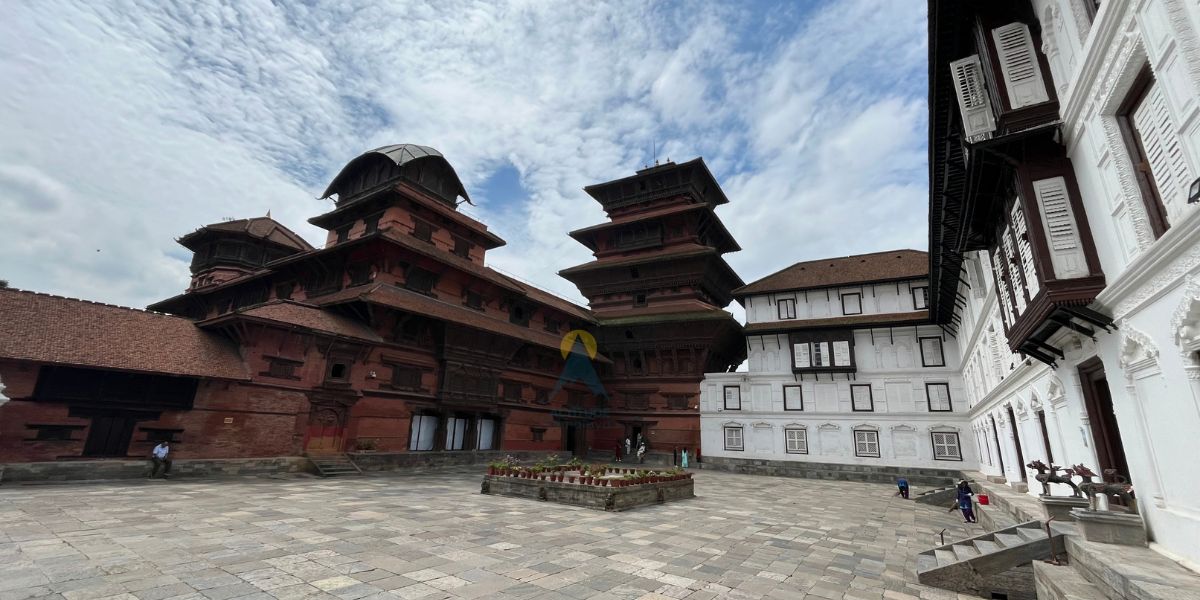
After my own visit here, I can confirm that you can enter Nasal Chowk from two different doors:
- The main entrance near the giant Hanuman statue.
- A secondary door near the small ticket counter.
If you enter from the golden gate, you will see the black stone icon of Lord Narasimha (the fourth, lion-headed incarnation of Lord Vishnu) and beyond it, an audience chamber of the Malla kings called Sisa Baithak.
Natyeshwor Temple
Nasal Chowk is named after Naasa Dya or Natyeshwor (dancing form of Shiva), which is placed in the eastern part of the chowk. As per local lore, masked dance performances were held in the courtyard during the Malla period.
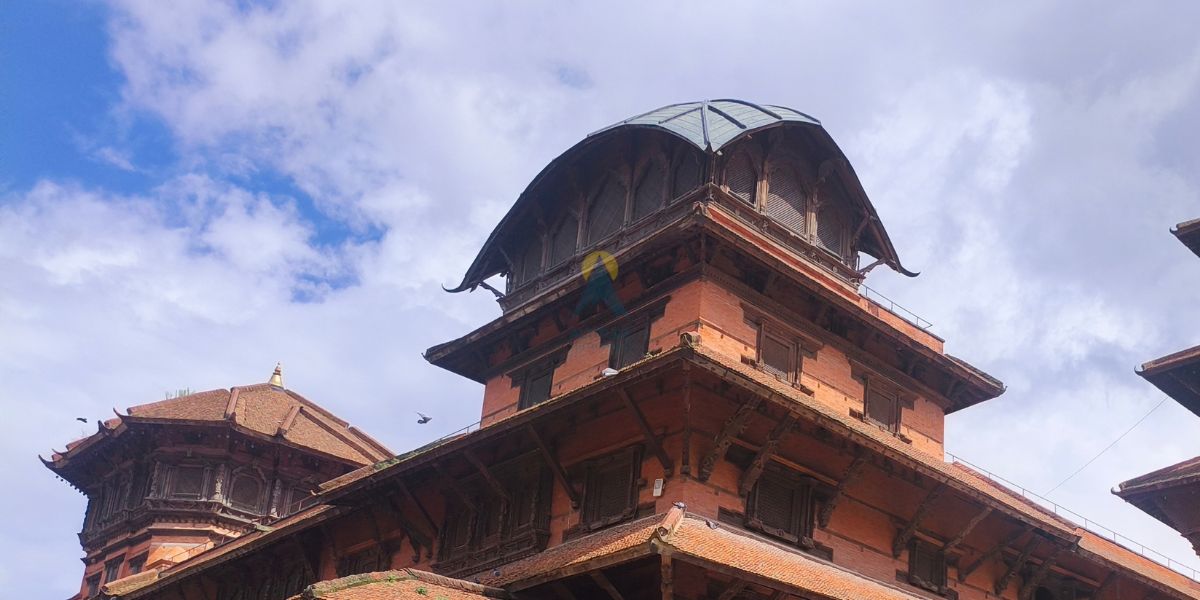
The Natyeshwor Temple is also established within this chowk. Moreover, Nishan Ghar, joined with the Natyeshwor shrine, is also here!
The Sardul Jung Gulma, a devoted Nepali army group authorized directly by King Prithvi Narayan Shah for the protection of the palace premises, performs rituals for the nishan and plants Jamara (wheat grass) during the Dashain festival.
Sisa Baithak
The Sisa Baithak is said to be one of the oldest structures that used glass for its construction.
Its windows were all covered in glass. After some changes in the 19th century during the reign of Rajendra Bikram Shah, he named it Sisa Baithak.
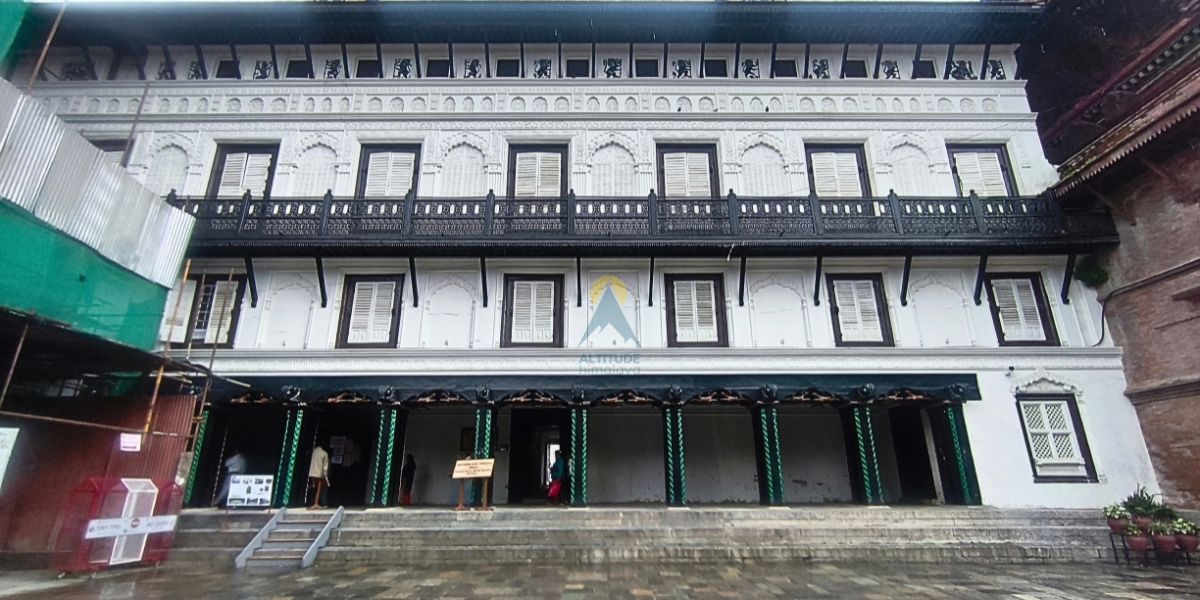
Long before the Shahs, Nasal Chowk was built by the Mallas for public meetings, where the kings used to sit behind the glass on the deck (Sisa Baithak) and their attendants used to stand in the open yard and submit their appeals.
Today, many Buddhist-Newar priests come and offer Paan Supari to the throne of the king during Basanta Panchami, which marks the start of spring.
The Coronation Platform (Dabali)
Although the courtyard was built for public meetings, it was used by the Shah kings as the coronation place. It is said that it has relations with the conquest of Kathmandu by King Prithvi Narayan Shah.
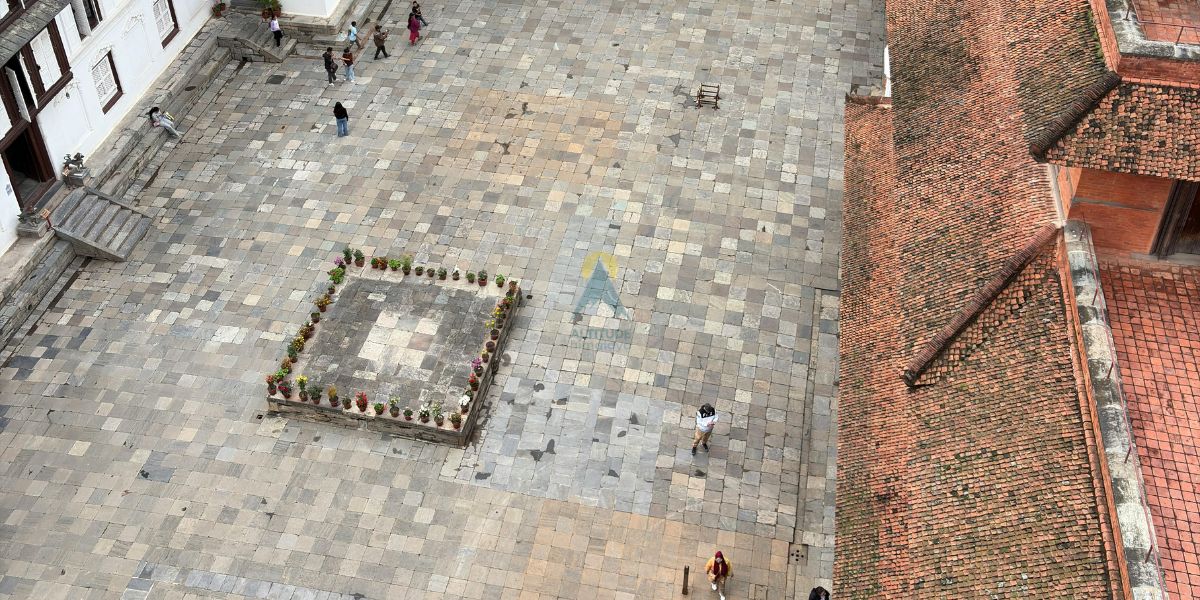
During the festival of Indra Jatra in 1768 A.D., Prithvi Narayan Shah entered the palace and took his seat on the elevated podium (dabali) in Nasal Chowk to claim sovereignty over the city. Following his enthronement on this platform and receiving the blessing of the Living Goddess Kumari, Nasal Chowk became the official venue for the coronations of all future Shah monarchs.
Fast forward to today, there are only flower vases surrounding the crowning area.
Surrounding Architecture and Displayed Items
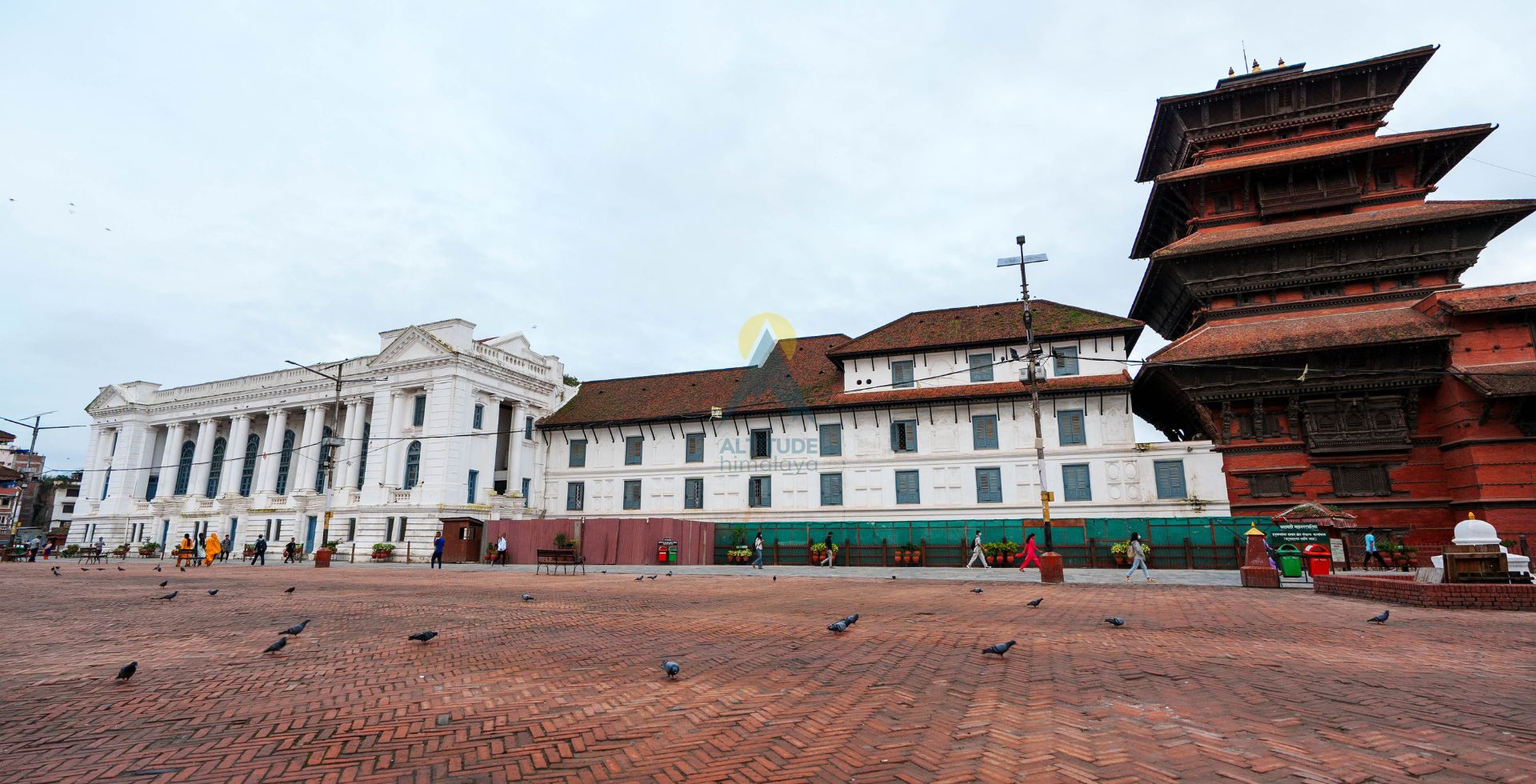
This chowk has many beautifully carved wooden balconies and traditional Newari windows (Ga Jhyal, San Jhyal, and Biman Jhyal). There are red-bricked buildings with detailed brown windows and also white colored buildings with brown and green colored windows that depict European style.
The walls on the north side of the chowk display the pictures of the Shah Kings of Nepal along with the unascended heir, Crown Prince Trailokya.
On the east side of this chowk, you will get to see the displayed items inside the glass. There is a Royal Palanquin, which was used to carry Princess Aishworya Shah as a bride in the marriage with Prince Birendra Bir Bikram Shah on February 27, 1970 A.D., and Princess Shruti Shah.
The Myana displayed is crafted in Mughal style and was used to carry the dead body of the king, queen, prince, and princess.
The dead bodies of King Tribhuvan in 2011 B.S. (1955 A.D.) and Queen Aishwarya in 2058 B.S. (2001 A.D.) were carried in this Myana.
You can also see the icon of Mahavishnu inside the glass pane, which is said to have been moved from an outside temple to Hanuman Dhoka Palace after the 1934 earthquake to keep it safe.
There is also a restricted place on the Northwest corner of the Nasal Chowk, a small temple called Agam Chen, a family shrine of the Malla kings.
Right across Agam Chen in the Northeast lies a five-tier, round-shaped, unique temple dating back to 1655, called Panch Mukhi Hanuman (Five-faced Hanuman) Temple. This temple is worshipped daily with secret rites and rituals and is not open to the public.
Daakh Chowk
From the western side of the coronation platform, you’ll reach Daakh Chowk, where the buildings are white-colored with green windows showcasing European style with a mix of Nepali architecture.
Daakh Chowk got its name from “Dakh”, meaning raisins, which were made from grapes planted in the courtyard. This chowk was built for Prince Trailokya by Jung Bahadur Rana.
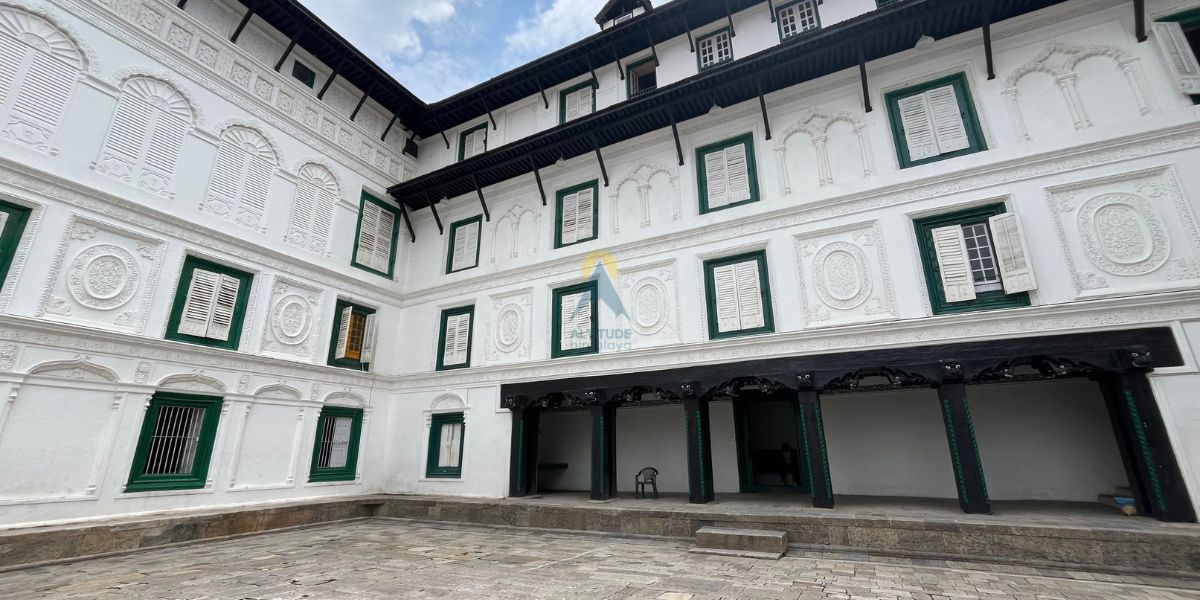
The six wooden black columns supporting the veranda are intricately decorated with woodcarvings on each of them.
Right after entering Daakh Chowk, you will see a cannon (tope) in front of the courtyard, which was confiscated from the Tibetan soldiers by Nepali soldiers during the Nepal-Tibet War (1855-1856 A.D.).
There also exist flower vases on two different sides of the canon, which add a beautiful, unique touch to the Neoclassical architecture.
Lohan Chowk
The southeast part of the Nasal Chowk leads to another quiet residential courtyard surrounded by palace buildings, and that is Lohan Chowk. This chowk functioned as a service and living area for the members of the royal family and the palace attendants.
Lohan Chowk was named after a large stone slab at the center of the courtyard. As you can guess, Lohan means "stone" in the Newari language.
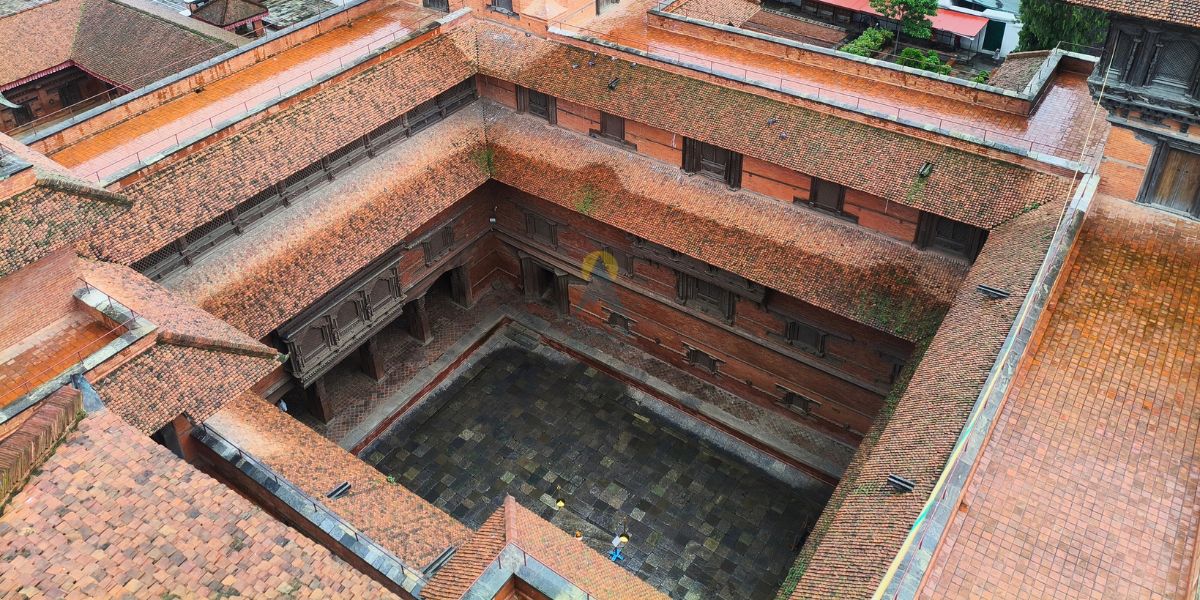
You can see the beauty of the traditional craftsmanship by looking above the courtyards. It’s possible to see the Patan or Lalitpur Tower, Kritipur Tower, Bhaktapur Tower, and Basantapur or Kathmandu Tower.
The center ground of the Lohan Chowk is elevated with a raised podium, which was made for the proper drainage of rainwater.
In the porch (Pidhi) area of the Lohan Chowk, there remain the remnants of the Terracotta arch of a Shiva Temple. It is still not identified where the remains of the temple came from.
The hallway from the Lohan Chowk leads to the Putali Bagaicha, which translates to “The Butterfly Garden”. This garden has varieties of plants and beautiful flowers. If you look to the northern side from the garden, you will see a pond with the column of Naag (snake) in between.
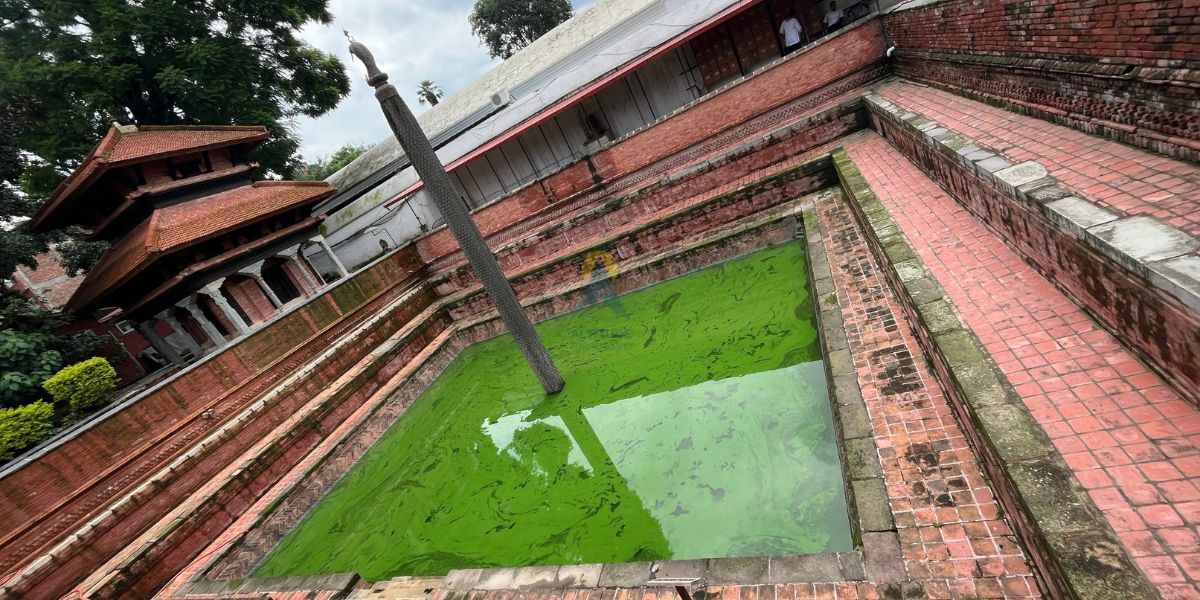
The lake looks green because of algae. The Putali Bagaicha area also showcases the Land Rover Jeep of the Late King Mahendra Bir Bikram Shah, which had some damage done during a bomb attack on 22 January 1962 A.D.
Mohankali Chowk (Mohan Chowk)
It was built by King Pratap Malla in 1649 A.D. as his private residential courtyard where important meetings took place.
The walls and the buildings of this chowk consist of more than three dozen deities. On the western side of the chowk remains a massive life-size statue of Astamatrika.
At the center of the courtyard, there is a sacred water spout (Sundhara), which is believed to provide pure water for ritual purposes, and there is also a golden shade above it.
The monarchs who ruled at the time were all brought here at the final moments of their lives so they could die under the sight of the gods and goddesses they lived with.
Near the northern wall, there is an inscription set up by Pratap Malla that details the process of how to worship the gods and goddesses.
Above the inscription, there is also the image depicting 10 avatars of Vishnu, the life of Krishna, and the daily life of the people of Kathmandu.
The chowk is said to be powerful in a tantric way too. So, as per the tradition, every king who would rule was to be born there only. Every Malla prince after Pratap had to be born in the chowk to be eligible for the throne.
And there is a famous tale among locals, which says that Jaya Prakash Malla was not born in that chowk, which led him to be conquered by the Gorkhali conqueror Prithvi Narayan Shah.
This courtyard was open to the public before, but now it is being restored. The major earthquake of 2015 had led the courtyard to be closed for the public!
Sundari Chowk (Sundar Chowk)
To the north of the Mohankali Chowk lies Sundari Chowk, which is one of the smallest yet beautiful courtyards in the Hanuman Dhoka Palace.
This chowk is also another fine example of Newari architecture. The intricately carved wooden lattice windows and doors, which are said to have been inaugurated in 1650 A.D., offer one of the greatest glimpses of the architectural masterpiece.
King Pratap Malla made this chowk as an extension of the Durbar and also as a replica of the Mohankali Chowk. He made this chowk to honour one of his favourite wives, Rupmati, with extraordinary detailing, sparing no expense in the construction.
Similar to Mohankali Chowk, this chowk also consists of a golden spout. The magnificent sculpture of the Kaliyadman, the finest stone art, is located opposite the hiti. It is one of the most highly detailed statues with intricate detailing of Krishna's nails and even the scales of the serpent demon, Kaliya Naag.
Moreover, Kaliyadman is said to be a beautiful creation of the Lichhavi period, found by King Pratap Malla and brought to the palace by breaking the royal policy that kings should dedicate sacred objects where they were found, rather than moving them elsewhere.
The structures and the artifacts of this courtyard reflect the artistry of the Malla period. The beauty of this courtyard is so captivating that it leads every visitor into a moment of wonder. So, when you’re visiting here, be sure to pause and admire the beauty of this courtyard!
This courtyard will also be open to the public after the completion of the renovation.
Mul Chowk
It is the principal ceremonial courtyard of the Hanumandhoka Palace, which was reserved for the royal family. The coronations of Malla kings took place here!
Mahendra Malla built this courtyard in 1564 A.D., and it was used for many religious ceremonies such as weddings, inaugurations of the crown princess, and worship of the Goddess Taleju Bhawani. Later, Bhaska Malla rebuilt this courtyard.
On the occasion of the two major Dashains, Bada Dashain and Chhaite Dashain, 108 animals are sacrificed, including 54 he-buffaloes and 54 he-goats. This sacrifice is done on the night of Mahaashtami (eighth day of Dashain).
Then, the next morning, the meat is distributed as prasad (blessed food) among priests, local administrators, and members of the Guthi.
The Taleju (Tulja) Bhawani Temple is opened for the public only on the 9th day (Nawami) of Dashain!
The eastern side of this chowk leads to Dashain Chowk, which includes the Dashain House of the Royal family. The seeds of barleygrass/wheatgrass (jamara) are still planted by the state on the occasion of Ghatasthapana (the first day of Vijaya Dashami) following Vedic rituals.
Trishul Chowk
This chowk, which is said to be built by Mahendra Malla in 1563 A.D., is not open to the public. But it is said to be named after the big Trishul (Trident), which is set up at the base of the Taleju Bhawani Temple.
There is also a stable on the east side of the chowk where Taleju’s White Horse is still kept.
Masan Chowk or Kanhel Chowk
This courtyard is also not accessible to the public. It is said that this chowk was used as a crematorium. It was done so that the royal family of Malla could be able to perform the funeral rites without being in constant fear of enemy invasion.
The door at the western side of the Daakha Chowk leads to the Masan Chowk.
Vayu Chowk or Lamo Chowk
Vayu Chowk, aka Lamo Chowk, is a long rectangular chowk that lies on the west side of Nasal Chowk. This chowk is attached to Gaddi Baithak.
It is said that this place is dedicated entirely to the God of Winds and Breath. That is why the courtyard is named Vayu, meaning “Air”.
Moreover, it houses a separate room built by King Pratap Malla containing a toilet pan used as a lavatory, which is recognized as the first of its kind in Nepali history!
Nhulachen Chowk
This courtyard lies beside the neoclassical Gaddi Baithak building today.
Here’s an interesting fact: on the day of Indra Jatra in 1768 A.D., King Prithvi Narayan Shah had entered Hanuman Dhoka Palace through this very chowk!
Museums and Galleries
Along with chowks, many museums and galleries preserve Nepal’s monarchy, royal lifestyle, and the architectural evolution of the palace. Each piece showcased in the museum depicts an ancient story and holds a deep meaning.
The Hanuman Dhoka Palace Museum not only shows the royal and unique artefacts, but also shows the journey of Nepal's political history.
Tribhuvan Museum
As the name suggests, this museum is dedicated to King Tribhuvan Bir Bikram Shah (1906 - 1955 A.D.), who is also known as the Father of the Nation. He was the monarch who played a key role in ending the 104-year Rana Regime and restoring monarch’s authority in 1951 A.D.
Tribhuvan Museum exhibits photographs that record the life of King Tribhuvan. His belongings, official documents, medals, and royal uniforms are on display here!
His bicycle, jeep, photography equipment, boxes of Kodak chemicals, and ceremonial objects are also showcased in the museum. The pictures of King Tribhuvan’s funeral, along with many of his hunting photographs and coin collections, are also on display.
These collections provide visitors with information on Nepal’s transition from Rana Rule to constitutional monarchy. It also depicts Nepalese being free from the Dark Age, i.e., Rana Rule.
Mahendra Museum
This museum explores the life of King Mahendra Bir Bikram Shah (1920 - 1972 A.D.), who introduced the Panchayat political system and helped in promoting national development.
It exhibits his royal attire, traditional jewelry, military uniforms, medals, and ceremonial weapons that reflect his power and his everyday aspects of palace life.
The manuscripts, statues, personal furniture, gifts from foreign officials, and his personal possessions reflect his personal tastes, hobbies, and character as a ruler!
His literary side can also be visible here, as his handwritten notes and literary works are also on the display. In case you didn’t know, King Mahendra is also known as the “Poet King” of Nepal.
As mentioned earlier, there is also a Land Rover Jeep of King Mahendra, showcased in the Putali Bagaicha area.
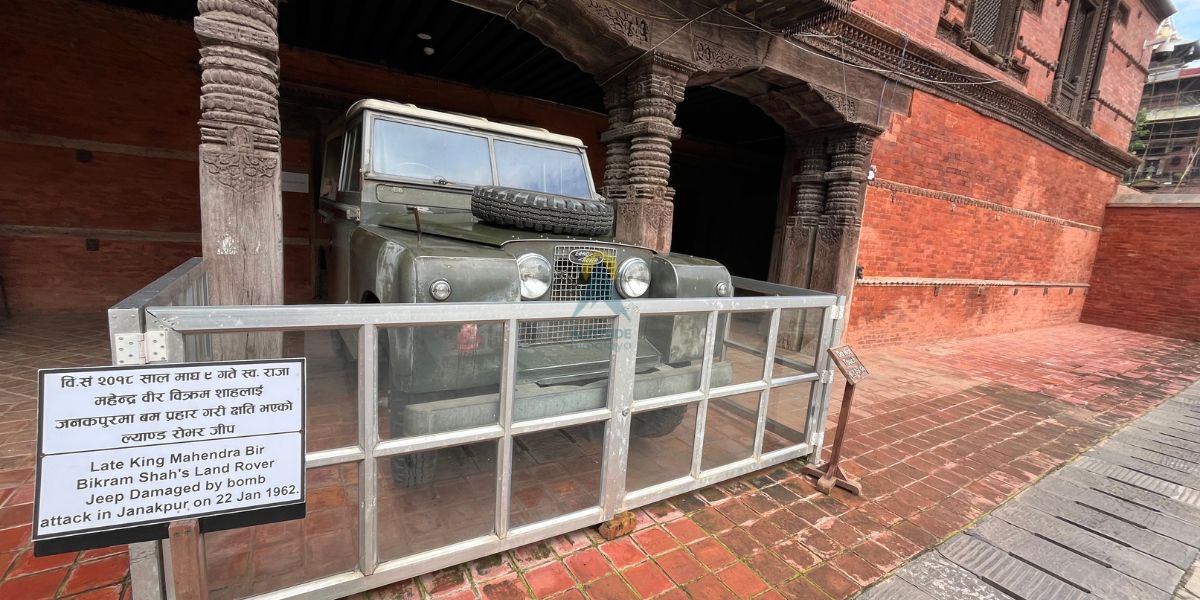
All these showcased items illustrate the political and cultural developments that occurred during his reign. It demonstrates how he conducted state affairs and made decisions that shaped Nepal during his reign (1955 - 1972 A.D.).
Birendra Museum
Just like with the museums dedicated to King Tribhuvan and King Mahendra, this museum honors another former king of Nepal, the modern monarch, King Birendra Bir Bikram Shah (1945 - 2001 A.D.).
Beyond that, it displays photographs, personal possessions, ceremonial costumes, state gifts, official documents, and objects associated with the Shah monarchy during the late 20th century. It serves as an important record of Nepal's modern royal history.
Since the Royal Family shifted from Hanuman Dhoka Palace to Narayanhiti Palace in 1886 A.D, most of the items related to the Royal Family are displayed in the Narayanhiti Palace Museum (Former Royal Palace) rather than here!
Gol Ghar Exhibition (Gallery)
If you move towards the southeastern area from the Putali Bagaicha, you will be introduced to the U-shaped Gallery, where many different paintings are showcased around the gallery walls.
All the paintings serve as an educational resource that helps visitors understand the historical significance and history of the Hanuman Dhoka Palace.
Some of the major events and occasions displayed are:
- The Kot Massacre: The painting unfolds the merciless massacre of 1846 in the Kot army courtyard that led to the rise of the 104 years of Rana Rule. The characters that are shown in the painting include Queen Rajyalaxmi, Jung Bahadur Rana, the dead body of Fatte Jung, and other military officers.
- Jaya Prakash Malla and Taleju Bhawani: Depicting the popular folklore from the Malla period, this legendary painting coincides with the origin of Kumari, the Living Goddess. The painting shows the Goddess Taleju Bhawani and the last Malla King of Kantipur, Jaya Prakash Malla (1736 - 1768 A.D.), playing dice at night.
- Bahadur Shah celebrating completion of Mahadev-Pravati Temple: The youngest son of Prithvi Narayan Shah, Bahadur Shah, who is known not only for expanding the territories but also enhancing the cultural heritage of Nepal. The image shows Bahadur Shah celebrating with the people after completion of the Mahadev-Parvati Temple.
- New Kumari entering her abode: This painting shows the tradition of the Living Goddess, Kumari of the Kathmandu Valley. The new Kumari is seen entering her abode, and the kings, queens, and other members of the royal family are paying their respects to her.
- Prithvi Narayan Shah’s victory over Kantipur: After conquering Kathmandu without any bloodshed on the occasion of Indra Jatra in 1768 A.D., you can see in the painting the new King of Kathmandu receiving tika and blessings from the Living Goddess, Kumari. There are also the armies of the Gorkha deployed around for security.
- Pratap Malla’s Romantic Evening: This painting portrays King Pratap Malla playing the sitar, enjoying the wine in the courtyard of Mohan (Mohankali) Chowk. It also shows his wife, Rupmati, refilling his glasses with a captivating smile.
- A Diplomatic Friendship: In this painting, we can see King Prithvi Narayan Shah and Jaya Prakash Malla exchanging each other’s crowns and forming a diplomatic friendship between Kathmandu and Gorkha before the war.
There are many other paintings depicting many other historical occasions, ceremonies, and events. Each of them has their own description labeled beneath or to the side.
Dhukuti Exhibition (Gallery)
The Dhukuti Exhibition is a jewellery and souvenirs exhibition that is housed within the Hanuman Dhoka Durbar Museum.
It demonstrates traditional Nepali jewellery and valuable ornaments that reflect the artistic excellence of Nepalese metal craftsmanship!
The exhibition highlights the cultural importance of jewellery in Nepal and also illustrates how ornaments represent social status, religious beliefs, ceremonial traditions, and royal heritage.
Interesting Fact: During the renovation of the building between Nhuchhen Chowk and Faras Khana on 13th Asadh 2068 B.S. (June 27, 2011 A.D.), all the materials of historical, cultural, and archaeological importance were found buried in an iron safe!
As you enter the museum, my recommendation is to start from the left side, starting with the jewellery section and ending with the souvenirs section.
The featured objects inside this museum are listed below:
- Ritual objects: Many ceremonial objects such as Karuwa, Silver ankhora (a water pot), Mangal Kalash, Achmani (spoons from which holy water is offered), Silver Panchpatra, Trikhutte (a three-legged ritual vessel), Silver Belpatra, Umbrella decorated with Basil leaves of 1023 B.S., and many more.
- Ornaments: A lotus patterned ornament, many gold and silver necklaces along with earrings, silver pendant (Jantar), Kara (bracelet), gold locket, garlands, and many others. The major highlight is the Bichkani Jhumka offered by Queen Raj Rajeswori Devi (eldest queen of Shree Paanch Rana Bahadur Shah) to Vayu and Akash Devata (Gods of Wind and Sky) before going to Sati.
- Coins: Chundam or Fukadam from Jaya Prakash Malla period, Sukadam of Malla period, Silver coins of the Shah period, Mughal Era coins of Mughal Empire, along with Gold and Silver coins from Malla period and Copper coins from Licchavi period.
- Utensils: Silver basket used for curd holding, Perunga used to keep garlic, Surahi (a long-necked water vessel), Hexagonal silver bowl, spice case to keep all the spices, food offering silver dish donated by Shree Rajkumari in 1936 B.S., silver plates, and many more.
- Sculptures: Icons and sculptures of Sitaladevi, Pashupatinath Temple, Bhairav (16th century), Manjushree, Krishna Temple of Patan Durbar Square built in 1694 B.S. by Siddhi Narsingh Malla, Nyatapola Temple in Taumadhi, Dattatreya Temple, Hatho Dhya: Decorated Terracotta Bhairab with 4 snakes, two fish, and four skeletons around the earthenware jar, Dantakali Temple of Bijaypur located in Dharan, Kasthamandap Temple, and many others.
- Paintings: The White Elephant of Lord Indra (Pulu Kisii), Dyochhen (The House of God), Kaaliyadaman, Ganesha, and many other paintings related to religions and cultures.
- Souvenirs: Astabujha Bhagwati by the Gurju Paltan, Panas donated to the God Laxmaneshwor Mahadev, traditional ornaments donated to the God Shree Bhim Bhairava by the inhabitants of Patan (Shree Dharma Narayan and Shree Amit Narayan) in 927 N.S., and many others.
- Others: Gold and silver gaze eyeball, Copper Khutruke (a piggy bank) of 1806 A.D., Gajamoti (Pearl believed to form inside the head of the Elephant), The Royal Hawda used on the occasion of King Birendra's auspicious ascension are also showcased.
Gaddi Baithak
This is one of the most recognizable landmarks within Kathmandu Durbar Square that stands on the southwestern side of the Hanuman Dhoka Palace (Old Royal Palace).
Different from other traditional pagoda-style buildings in the square, it is inspired by European architecture.
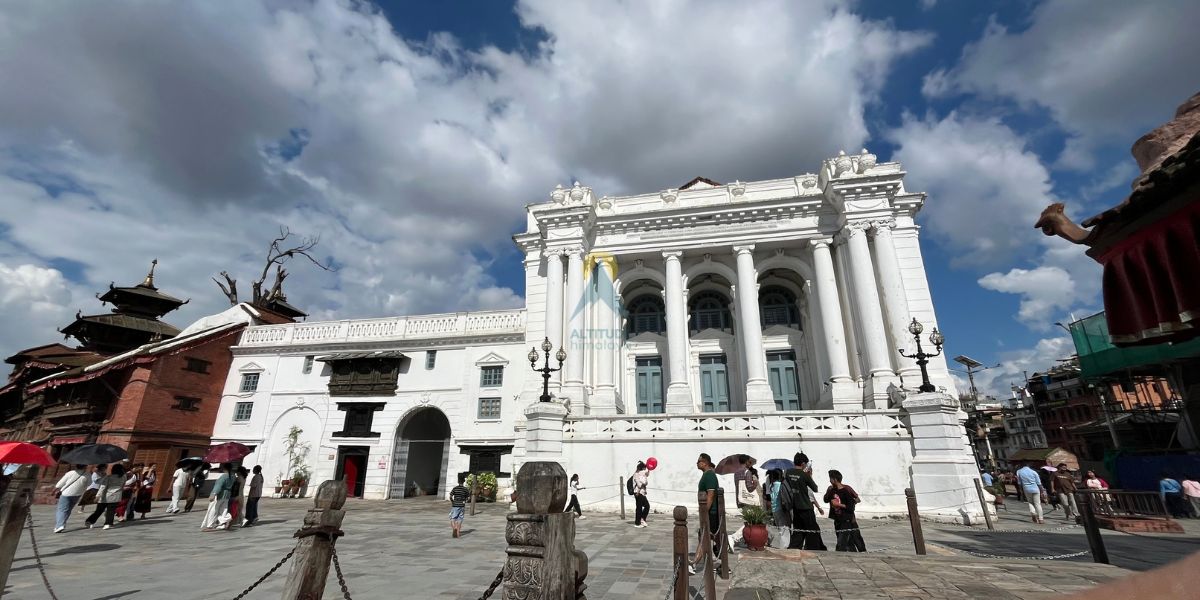
Previously named Lal Baithak, constructed by then Prime Minister Jung Bahadur Rana, was renamed Gaddi Baithak, or the throne room, during the regime of Prime Minister Chandra Shumsher Jung Bahadur Rana in 1965 B.S. (1908 A.D.).
This building is termed Gaddi Baithak from its functioning. Gaddi refers to the Royal Throne, and Baithak refers to the meeting hall or audience chamber.
It served as the State Hall (Gaddi Baithak), where many foreign envoys, ambassadors, and distinguished guests were formally received.
The majestic white exterior with tall Corinthian columns and its symmetrical design integrating the unique, classical Greek and Roman elements make it unique and stand out in the surrounding area, adorned with traditional architecture of Newari tradition.
The luxurious interior illustrates the European aesthetics blended with Nepali craftsmanship, showcasing one of the magnificent ceremonial palaces symbolizing Nepal's transition into the Rana Era.
This historic building played a vital role during state occasions like official meetings with foreign delegates, coronation-related ceremonies, diplomatic ceremonies, etc.
The first US ambassador to Nepal, Dr. Henry F. Grady, presented his letter of credence to King Tribhuvan on May 3, 1948, inside this very building!
During festivals of Kathmandu like Indra Jatra/Kumari Jatra or Kumari Rath Yatra, the Head of State honors the tradition and witnesses the chariot processions from the balcony that overlooks the Basantapur Durbar Square.
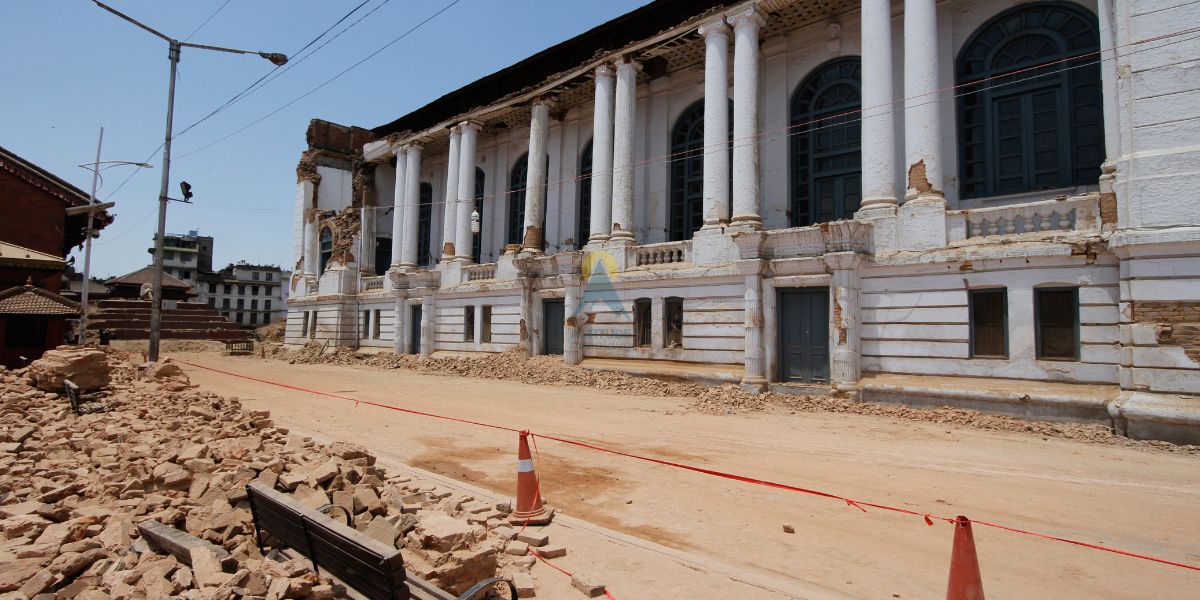
Although the 2015 Gorkha Earthquake caused damage to the building, it went through an extensive conservation and restoration project, which was funded by the US Ambassador Fund for Cultural Preservation to restore the building to its original structural details.
Today, Gaddi Baithak operates as a part of the Hanuman Dhoka Palace Museum, allowing visitors to explore the remarkable example of Nepal’s architectural heritage from the Rana period.
The Gaddi Baithak building consists of two floors, where the upper floor contains the Grand Audience Hall and the ground floor consists of galleries of events and activities depicting the royal history along with the objects used before.
Galleries
There are three gallery sections on the ground floor divided into Gallery 1, Gallery 2, and Gallery 3. Each depicts the royal history and all the major events that occurred, along with the historical photographs and the documentary gallery:
- Gallery 1: This section showcases historical exhibition panels that illustrate the Unification of Nepal between 1744 A.D. and 1816 A.D., from the founding of the Gorkha Dynasty to the conquest of the Kathmandu Valley and expansion by Prithvi Narayan Shah. The extension toward the East up to the Tista River (1744 - 1775 A.D.) and the west up to Kumaon and Garhwal (1775 - 1798 A.D.) are also shown with the historical paintings along with the Anglo-Nepalese War Treaty of Sugauli (1816 A.D.).
- Gallery 2: The galleries include the description and the images of Kot Massacre and commencement of the Rana Rule (1846 A.D.), National Development work During the Rana regime, Movement against the Rana Regime (1940 - 1950 A.D.), Dawn of Democracy (1950 - 1960 A.D.), Introduction of the Panchayat system (1960 A.D.), National Development and International relations (1955 - 1972 A.D.), Struggle for Multiparty Democracy (1972 - 1990 A.D.), People’s Movement against the Panchayat System (1990 A.D.), and Republic of Nepal (1990 - 2015 A.D.).
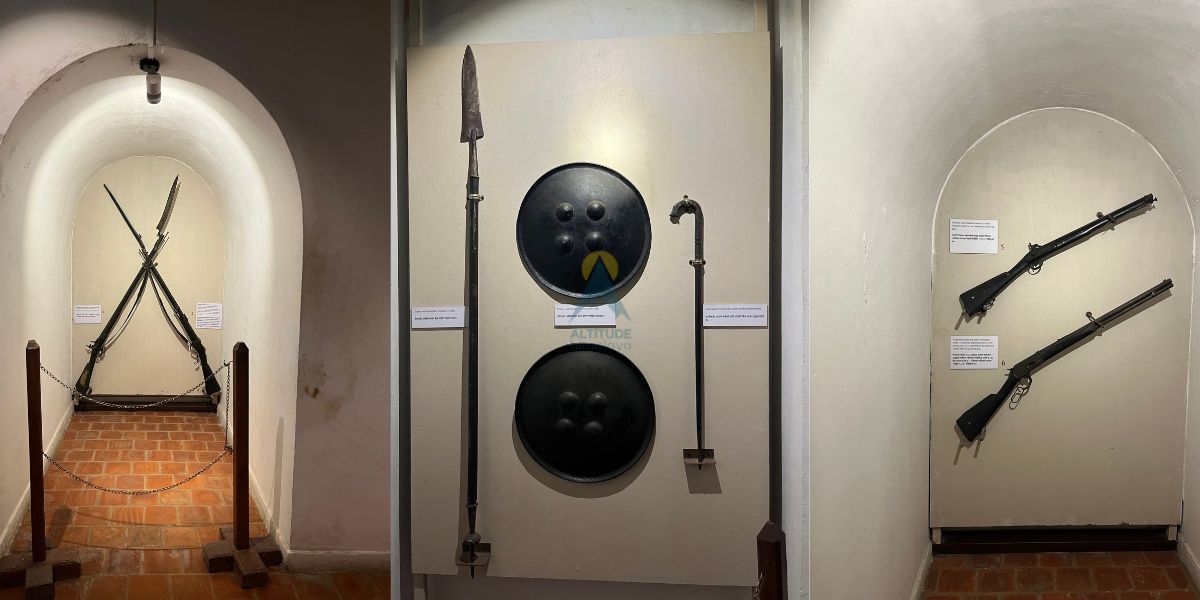
- Gallery 3: It showcases the political events from the First People’s Movement (1990 A.D.) as well as the establishment of Constitutional Monarchy. The second People’s Movement in 2006 A.D., the monarchy's downfall, and the republic proclamation are also showcased in this gallery. The devastating 2015 Gorkha Earthquake is also highlighted along with the declaration of the Constitution of Nepal 2015. This section ends with the display of firearms, Nepalese-made Rishalla Cavalry guns, Snider rifles, spears, shields, and canes, which were used back then!
The Grand Audience Hall
The magnificent Grand Audience Hall, the centerpiece of the building, was used for the official royal ceremonies during the Rana period.
They can admire the huge crystal chandeliers dangling from detailed pressed tin ceilings, elegant Venetian mirrors, ornate wall moldings, detailed wooden furniture, and polished floors.
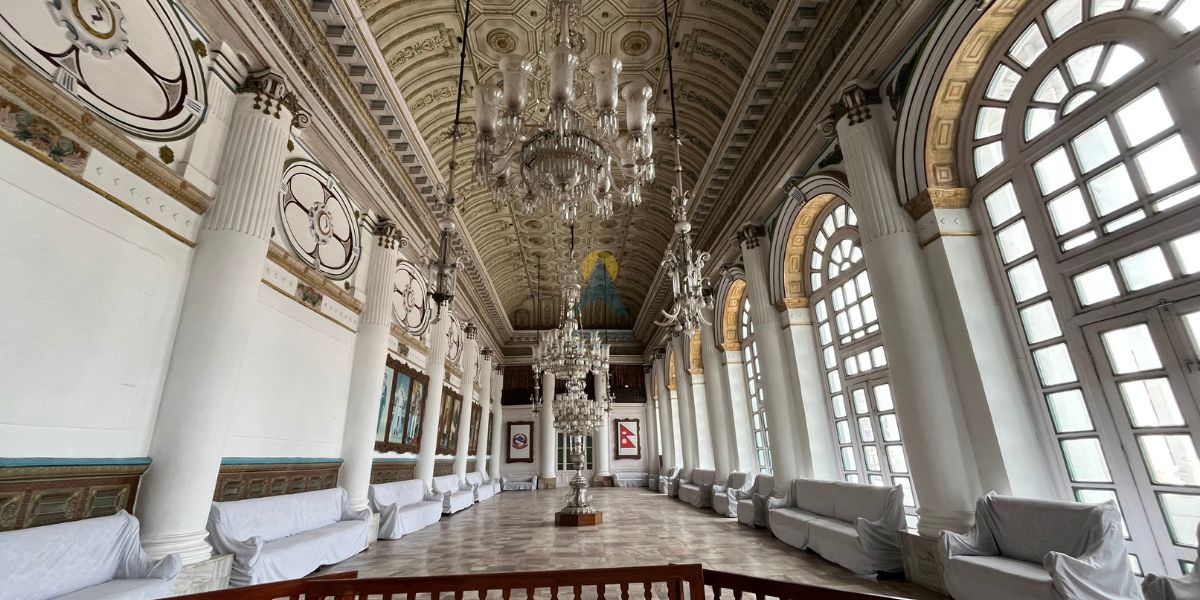
This restored audience chamber demonstrates how state receptions were conducted while welcoming foreign guests. It also provides an insight into the ceremonial traditions of the Shah monarch and the administrative influence exercised by the Rana prime ministers.
As one of the finest surviving examples of European-inspired palace interiors, Gaddi Baithak remains open to the public to witness the magnificence of the Rana period!
The Four Royal Towers
The four royal towers of the Hanuman Dhoka Palace have the most distinctive architectural features within Kathmandu Durbar Square. The construction began during the reign of King Prithvi Narayan Shah, and the other towers were later added by his successors.
All these four towers symbolize the four major historic cities of the Kathmandu Valley: Kathmandu, Bhaktapur, Lalitpur, and Kirtipur, expressing the political unity of these kingdoms while preserving the artistic traditions of Newar architecture.
Basantapur Tower (Kathmandu)
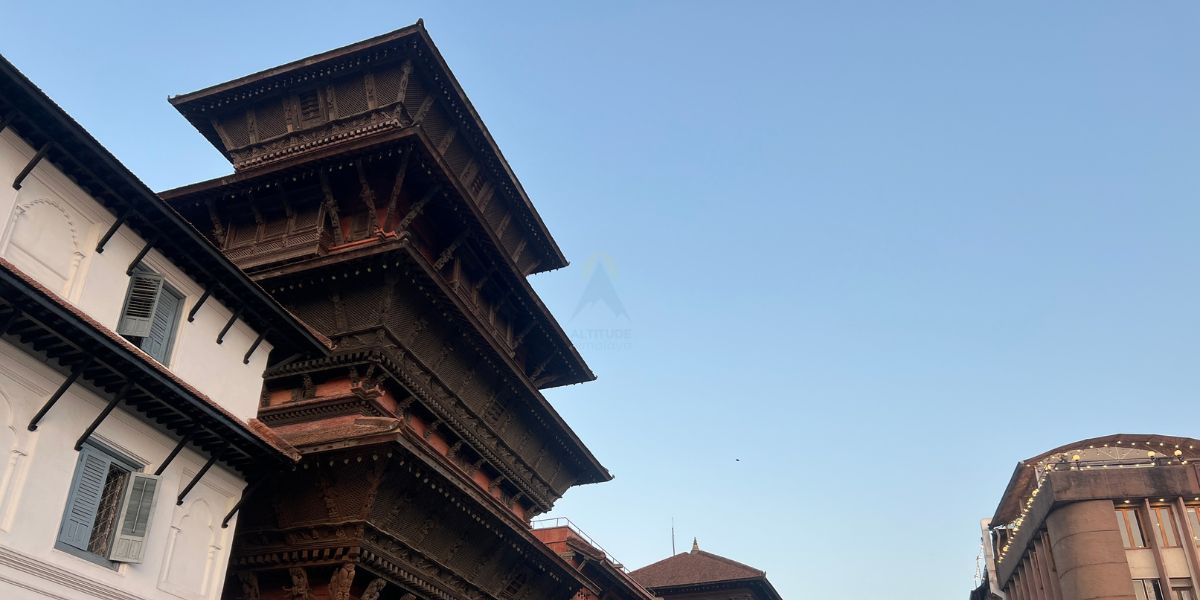
It is called Nautale Durbar (Nine-storey Palace), which is the tallest tower within the Hanuman Dhoka Palace complex.
It is located at the southern side of Nasal Chowk. The tower was built by King Prithvi Narayan Shah around 1768 - 1770 A.D., after the unification of Nepal.
It became the principal royal residence of the Shahs and served as the lookout tower so that the kings could observe the valley and monitor the events inside the Durbar Square.
Lore has it that kings used to watch in the houses of their citizens, whether they were cooking food or not. As wood was used to cook the food, the smoke would rise from the houses if the citizens were cooking.
But if, by any chance, the smoke was not seen, then the king would send his people to check on the house and provide them with food and other essentials.
The tower combines the Newar architecture with intricately carved wooden windows, decorative struts, and distinctive balconies and offers panoramic views over Kathmandu Durbar Square.
The wood carvings feature mythological figures and symbolic patterns reflecting the remarkable artistry of master woodcarvers.
To sum up, this tower symbolizes the beginning of the Shah dynasty rule in Kathmandu!
Lalitpur Tower (Patan Tower)
Commonly known as the Lalitpur (Patan) Tower or Vilas/Bilas Mandir (House of Pleasure), it is situated adjacent to the Basantapur Palace.
This tower occupies the southeast corner of Lohan Chowk and was constructed during the Shah period as the extension of the palace complex.
Its multi-tiered roofs and carved wooden windows are characteristics of the traditional Nepalese architecture. It follows the traditional Newar palace style with sloping tiled roofs and projecting wooden struts.
The alternative name, Vilas Mandir, meaning "House of Pleasure," suggests that the tower was made with the intention of royal retreat rather than a military watchtower.
It provided additional royal accommodation and enhanced the defensive ceremonial appearance of the palace.
This tower demonstrates the continuity of Newar craftsmanship even after the political transition from the Malla to the Shah Dynasty!
Bhaktapur Tower (Lakshmi Bilas)
It is one of the four towers added to the Basantapur Palace during the Shah period. This tower represents the ancient city of Bhaktapur.
It commemorates the conquest of Bhaktapur, which was the last of the three Malla kingdoms to be unified under King Prithvi Narayan Shah in 1769 A.D. It is said that Pratap Singh Shah had built this tower!
This tower features the traditional Newari architectural style, featuring brick walls, carved timber windows, and tiered roofs that blend with the surrounding palace buildings.
The Bhaktapur Tower also rises two storeys above the roof of the northeast corner of the Lohan Chowk that overlooks the garden and has a great view of the Taleju Temple and other attractions towards the north!
Together with the other three towers, Bhaktapur Tower strengthens the symmetrical composition of the palace while serving as a visual reminder of Nepal's political unification.
Kirtipur Tower (Bangla Tower)
It is one of the most unique pavilions on the fifth floor of the Hanuman Dhoka Palace. It lies on the northwest corner of the Lohan Chowk within the Hanuman Dhoka Palace Complex.
This pavilion, similar in height to Bhaktapur and Lalitpur towers, is known for its graceful curvilinear Bangla-style roof, which is said to be an architectural form introduced after King Prithvi Narayan Shah’s conquest of the Kathmandu Valley. This tower is also said to be built by Pratap Singh Shah just like the Bhaktapur Tower.
The tower represents an outstanding combination of Indo-Islamic and traditional Newar architecture. The curved roof is supported by a timber framework with carved rafters and purlins that form the roof’s sweeping profile.
While the intricate wood carving demonstrates the Newar craftsmanship, the struts adorned with peacock and serpent designs represent the artistic influences from Persian and Islamic traditions.
This is the symbolism of the exchange of architectural ideas that enriched the Nepalese palace architecture during the late 18th century.
How to Reach Hanuman Dhoka Palace?
A window to Nepal's glorious past, located in the heart of Kathmandu Durbar Square, the Hanuman Dhoka Palace Museum is easily accessible from the main areas of Kathmandu.
From Thamel
Kathmandu's major tourist hub, Thamel, is approx. 2 km from Hanuman Dhoka Palace Museum. To reach here from Thamel, you’ll need a 20-30-minute walk, and in that period, you get to experience the area’s bustling markets and traditional streets.
You can take multiple routes to reach Hanuman Dhoka Palace:
- Go from Thamel to Ason Bazar, entering the Janabaha Dyo (Seto Machhindranath Temple) and reaching Indra Chowk and then towards Hanuman Dhoka Palace. This route is about 2.5 km and can be reached within 30 minutes.
- From Thamel Bazaar, you can enter Shree Gha Vihar. Then reach Bangemudha, leading to Bhedasingh and ultimately Indra Chowk, which takes you to Hanuman Dhoka Palace easily. This route is also approximately 2.5 km, and the palace can be reached within 30 minutes.
- From Thamel Bazar, head towards Ikhapokhari. Afterwards, you can go through the roads leading you to many temples and museums (one of which is Itumbaha Museum) and reach Hanuman Dhoka Palace. This route is about 2 km and takes about 25 minutes to reach.
Alternatively, a taxi or ride-sharing service can be used that takes around 5–10 minutes, depending on traffic. You can learn more about Thamel to Kathmandu Durbar Square in our dedicated article here.
From Different Places in Kathmandu
The Hanuman Dhoka Palace can be reached from many other popular destinations:
- From Swayambhunath Stupa (Monkey Temple), it takes about 20-25 minutes in a private vehicle passing via Dallu and Kimdol Dhara.
- From Pashupatinath Temple and Boudhanath Stupa, it is best to take a vehicle because on food, it may take hours! The quickest route is Boudha > Chabahil > Pashupatinath Road > Maitidevi > Dilli Bazaar > Bhrikuti Mandap > NAC > New Road > Kathmandu Durbar Square.
- From Tribhuvan International Airport (TIA), the palace is 6 - 7 km away. In a private vehicle, it’s just 30 minutes away. You’ll join Madan Bhandari Road from Ring Road before continuing onwards to NAC and then towards the palace museum.
You can board vehicles bound to Ratnapark or RNAC Bus Stop if you’re coming from other places in Kathmandu.
Entry Fees and Ticketing
The Kathmandu Durbar Square tickets for tourists cover the pass to the Hanuman Dhoka Palace Museum. You can get your pass from any of the official ticket counters at the entrances to the Durbar Square. Here are the cost details:
|
Visitors’ Category
|
Entry Fees
|
|
Foreign Nationals
|
NPR 1000
|
|
SAARC and BIMSTEC Nationals
|
NPR 500
|
|
Children below 10 years
|
Free
|
On the other hand, Nepalese citizens are required to get tickets from the dedicated museum ticket counter to enter the Hanuman Dhoka Palace Museum. That’s because you don’t need a ticket to explore the Durbar Square premises. Here are the cost details:
|
Visitors
|
Museum Fees
|
|
Nepali Adults
|
NPR 100
|
|
Nepali Students
|
NPR 50 (need to show relevant student ID)
|
Note: The ticket counter opens from 9 AM to 6 PM. Museum access is allowed from 9 AM to 7 PM, and it opens every day.
Other Nearby Attractions
Besides Hanuman Dhoka Palace Museum, there are a few other attractions around the area. These attractions are some of my personal favorites and located just a few minutes' walk away from the palace.
Kumari Ghar
This is the house of the living goddess Kumari, a young Newari girl from the Shakya family who is esteemed to be the human incarnation of the Hindu Goddess Taleju.
Kumari Ghar was built in 1757 A.D. by Jaya Prakash Malla. It is believed that Goddess Taleju Bhawani visited Jaya Prakash Malla and said that she would incarnate as Kumari, a female child from the Newar community.
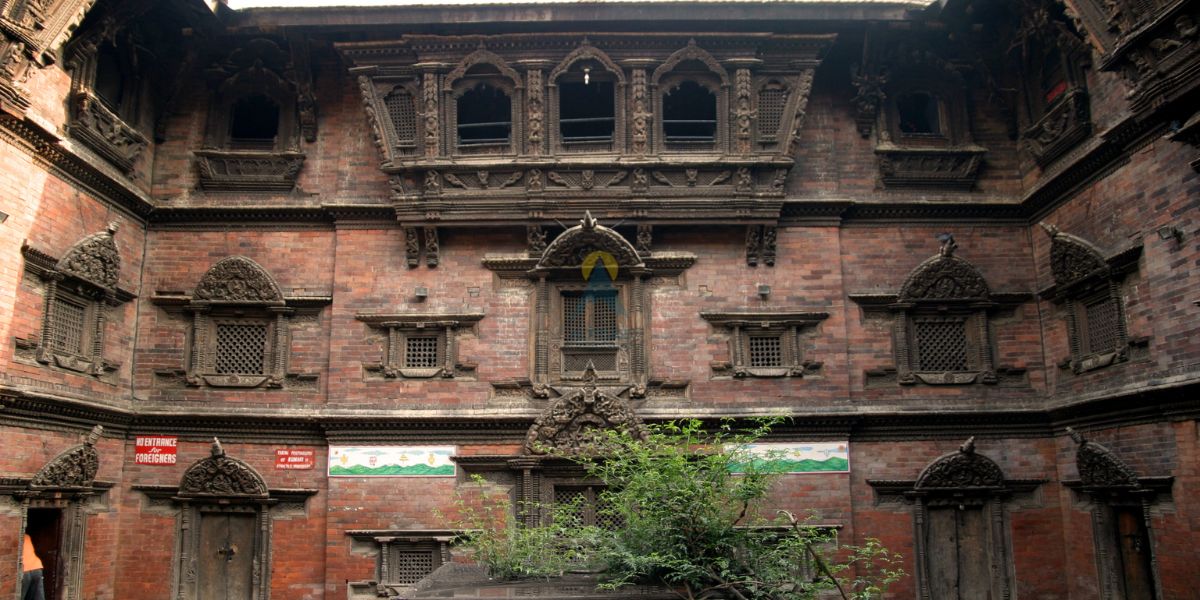
There are approximately 12 revered Kumaris in Nepal, but the Kumari of Kathmandu Durbar Square is the most famous and recognizable, as she was historically the Royal Kumari, blessing the rulers of the country.
This three-storey Kumari Ghar is intricately constructed with decorated brickwork, carved wooden windows, and a beautiful central courtyard.
You can catch a glimpse of Kumari here usually around 11:00 - 12:00 in the late morning and 4:00 - 5:00 in the late afternoon.
Kindly note that photographing Kumari is strictly prohibited due to religious reasons.
Moreover, this Kumari Ghar is central to the annual Indra Jatra festival in which Goddess Kumari is carried in an ornate chariot through the alleys of Basantapur.
Taleju Bhawani Temple
This temple is located inside the Hanuman Dhoka Palace in Trishul Chowk. It was built by King Mahendra Malla in 1564 A.D.
The temple interior is closed to non-Hindus year-round, and it opens exclusively for Hindus once a year on the 9th day of the Dashain festival (Maha Navami).
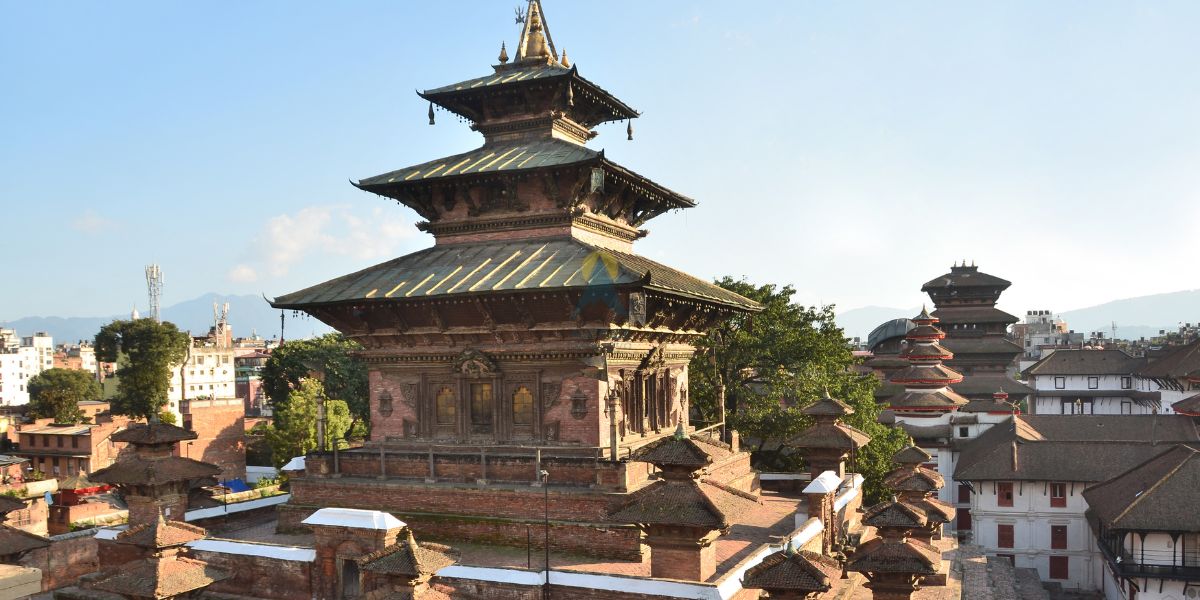
This temple stands over 120 feet high on a 12-stage plinth. This temple is three-tiered and built in the pagoda style with the main door on the south side.
The goddess honored in this temple is Goddess Taleju Bhawani, who is the royal deity of the Malla Kings.
Moreover, this temple is one of the tallest and the most sacred temples in Kathmandu Durbar Square.
Jagannath Temple
This temple is said to be among the oldest temples in Kathmandu Durbar Square, which was built in the 16th century (1562 A.D.) during the reign of Mahendra Malla (1560 - 1574 A.D.).
Located just outside the Hanuman Dhoka Palace Museum, it is dedicated to Jagannath, who is worshipped across South Asia as the “Lord of the Universe”.
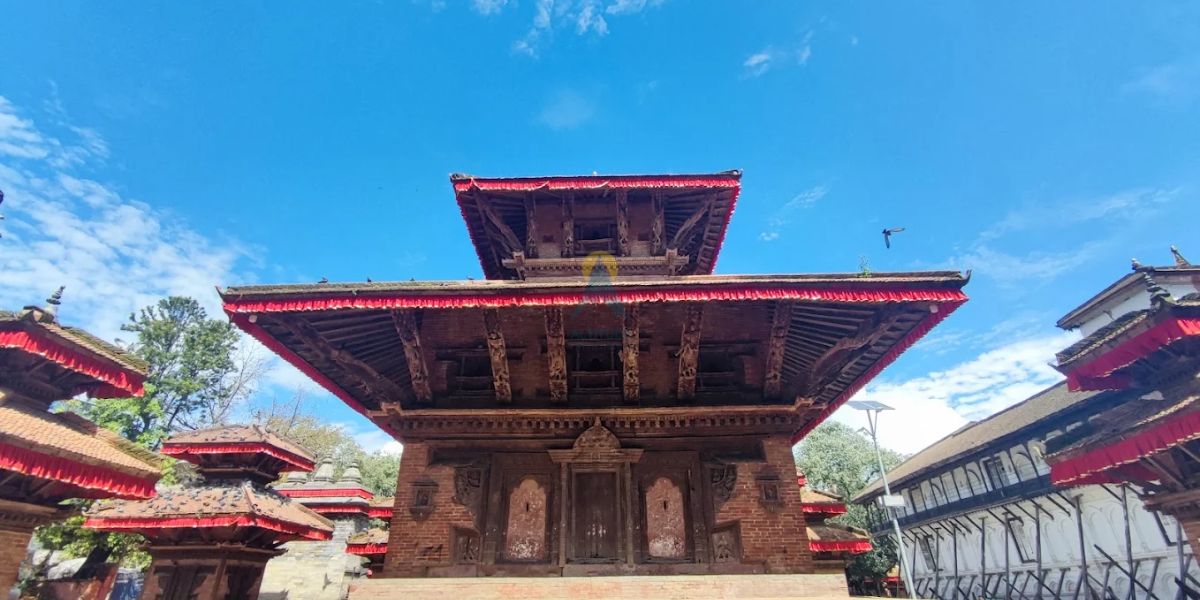
This temple is one of the best examples of architecture from the Malla Dynasty. The temple follows the multi-tiered pagoda style with a two-tiered pagoda roof.
Exquisite wood carvings that include celestial beings, mythological creatures, Gods and Goddesses are carved in the wooden struts (tudal).
During the 1934 Nepal-Bihar earthquake, the temple’s upper roof was lost, along with severe damage to the walls and floors.
In 1936 A.D., the temple was rebuilt. But again in 1999 A.D., the monsoon took the blow on the lower north roof, leading it to collapse.
Then, the Department of Archaeology did emergency construction, where the KVPT (Kathmandu Valley Preservation Trust) raised the funds for its complete restoration.
Trailokya Mohan Mandir
Also known as Das Avatar Dekhaune Mandir (the temple where the dances of the ten incarnations are shown), this was built in 1680 A.D. by Parthibendra Malla (1680 - 1687 A.D.).
This three-roofed temple, built on five-stage plinths, is dedicated to Lord Vishnu. There are Vaishnavite images carved in the roof struts and Ga Jhyals on each of the walls under the roofs.
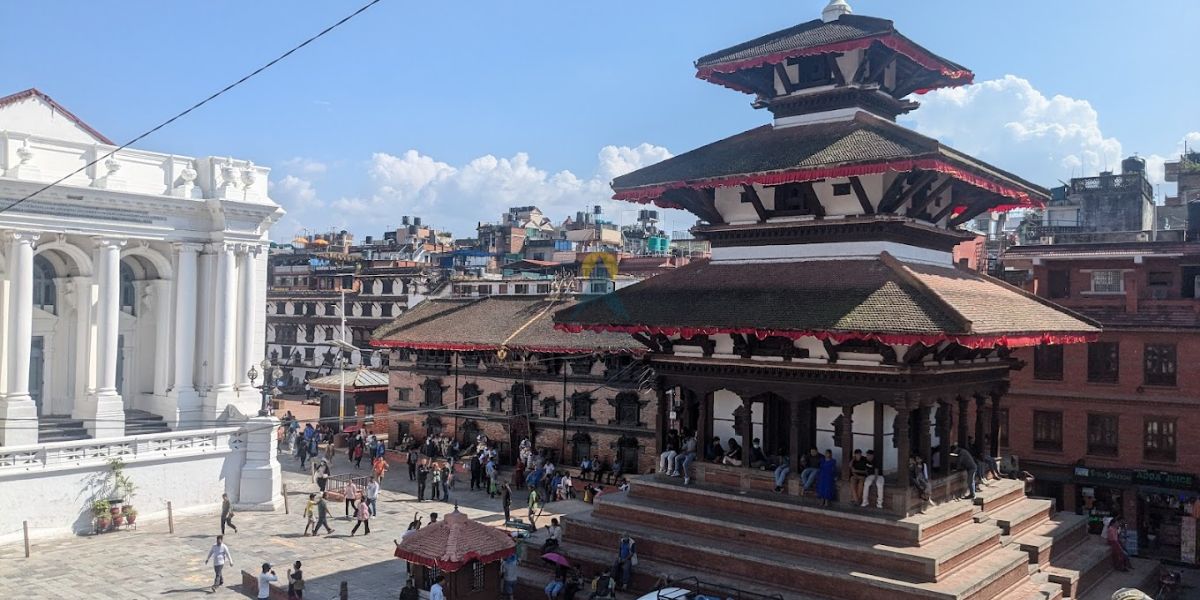
The stone Garuda was erected by the widow of Parthibendra Malla, Queen Riddhi Laxmi (the mother of then-king Bhupalendra Malla), in front of the temple.
King Parthibendra Malla had built Trailokya Mohan Temple in the loving memory of his elder brother, Nripendra Malla, who reigned for only six years (1674 - 1680 A.D.).
Kal Bhairav Shrine
This famous shrine is located outside the palace and takes only about two minutes to reach.
It is one of the most recognizable landmarks in Kathmandu Durbar Square. The fierce manifestation of Lord Shiva, Kal Bhairav, is carved as a huge stone image on the northern side of the palace.
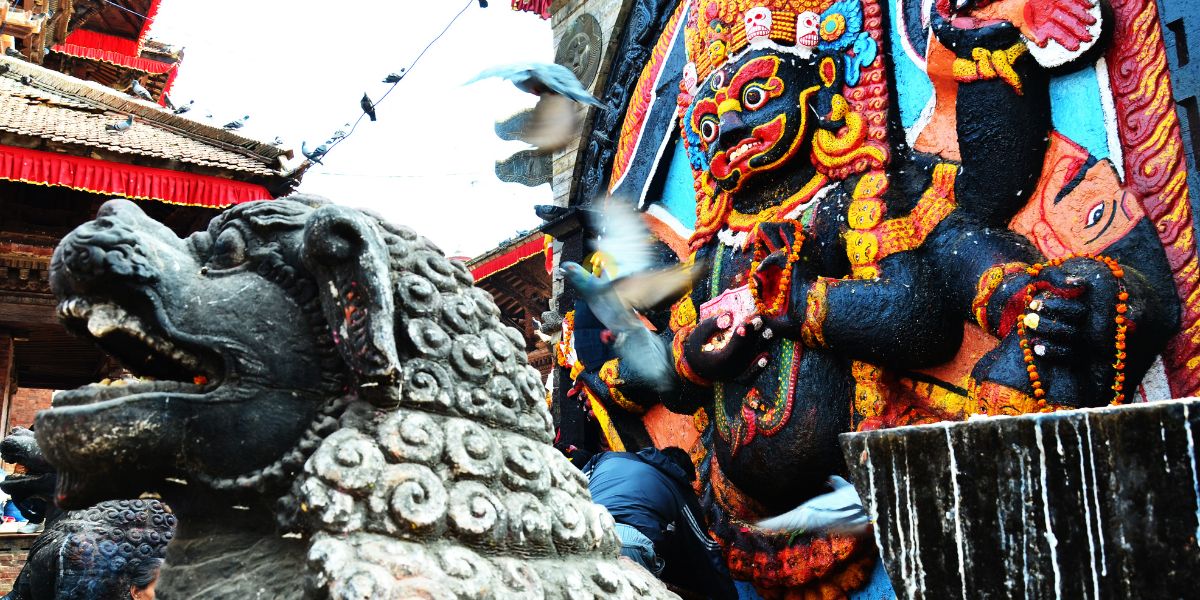
This sculpture is believed to date back to the Licchavi period, but King Pratap Malla prominently displayed it in the 17th century.
The large stone figure of Bhairav was found when the waterway was made to bring water from the north of the city (Budhanilkantha) to the palace.
The upper right-hand side of the statue was damaged and later repaired using another stone. The new additions include the sun and the moon at the top right and top left, along with the lion head at the top.
In ancient times, this statue served as a place where oath-taking ceremonies were conducted, as everyone believed that lying before Kal Bhairav led to divine punishment.
Today, many devotees come and worship Kal Bhairav and seek protection and blessings from him!
Kasthamandap Temple
Known to have been constructed in the 17th century, Kasthamandap served as a public rest house for devotees and traders. Locals know it as Maru Sattal.
However, the Namasangiti manuscript of Tibet’s Saskya Monastery reveals the records of the origin of Kasthamandap back to 1143 C.E.
Interestingly, the results from the recent carbon dating and the findings of the Department of Archaeology and Durham University suggest that the temple belongs to the 5th or 7th century.
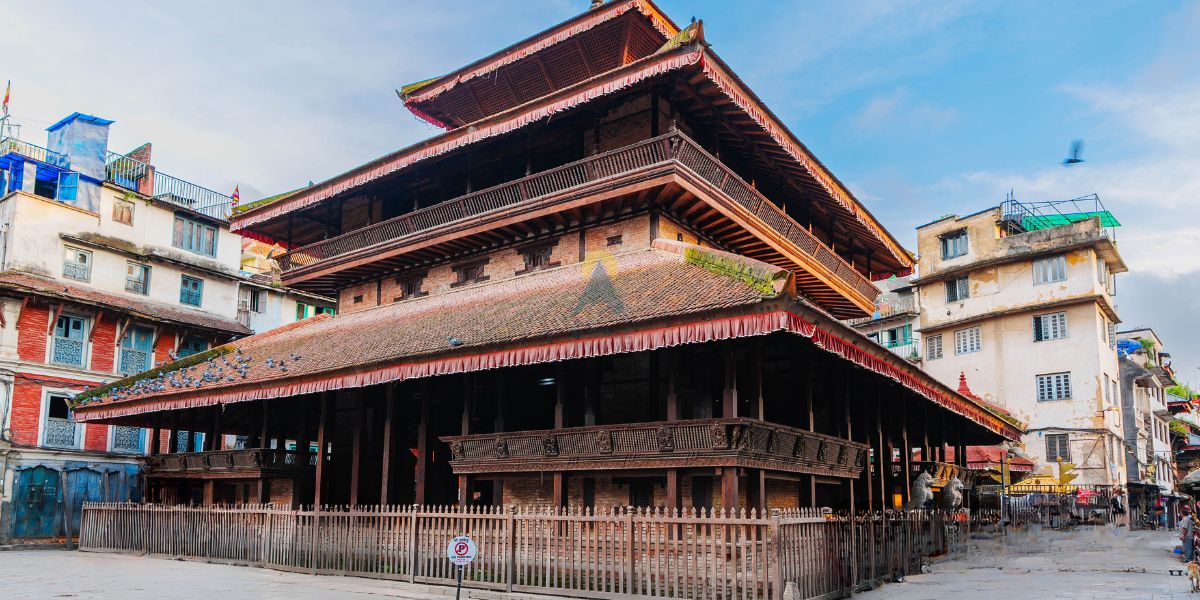
Moreover, the Kasthamandap Temple has one of the most famous folklore stories about its establishment. It is said that the temple was built from the wood of a single tree, which was given by Kalpa Briksha.
Lore has it that Kalpa Briksha came to see the chariot festival of Machindranath during the King Laxmi Narsingh regime (1620 - 1641 A.D.) and was captured once recognized by the priests of Machindranath.
Then, Kalpa Briksha was released only when he promised to give a tree whose wood would be used to build a rest house.
And after four days, a huge sal tree was delivered, and with the king’s permission, Kasthamandap was built. Today, Lord Gorakhnath is worshipped at the center, and four sculptures of Lord Ganesha are placed at each corner of the temple.
And in case you didn’t know: the name of the city, Kathmandu, is said to have evolved from the name Kasthamandap.
Ason Bazar
One of the oldest and busiest traditional markets of Kathmandu, Ason Bazar serves as an important trading hub where many merchants come and sell goods.
For centuries, this place has been a market center for many sellers from Tibet and India to exchange goods. It takes about 10 minutes to reach this market hub from Hanuman Dhoka Palace Museum.
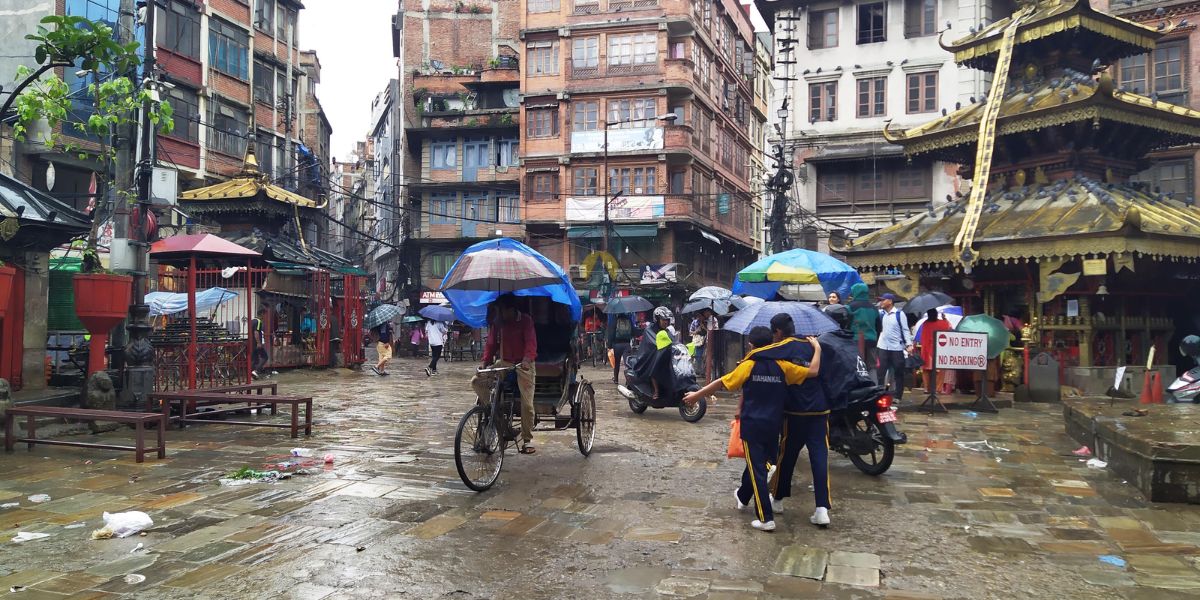
To this day, Ason Bazar is one of the most crowded markets, where you can window-shop from colorful stalls that sell many different items such as spices, tea, handicrafts, utensils, prayer flags, textiles, local sweets, and other fresh products.
Walking through the alleyways of the Ason gives you a glimpse into the everyday life of Kathmandu. This is indeed one of the best places to buy souvenirs!
Freak Street (Jhochhen)
Located south, and just a five-minute walk from the Hanuman Dhoka Palace lies Freak Street!
Also named Jhochhen Tole, Freak Street was one of the famous destinations on the Hippie Trail during the 1960s and the 70s. It welcomed the backpacking culture that attracted many travelers from around the world.
This historic place can also be seen from the Nautale Durbar (Basantapur Tower). One of the greatest lanes with a bohemian vibe, it has many traditional Newari houses, cafes, souvenir shops, and guesthouses. It is a supreme place to take a break after exploring the palace museum.
Itumbaha Museum
This is a private museum that is located within the historic Itumbaha (Itum Bahal or Keshchandra Mahavihar) near Indra Chowk.
Nepal's first Vihar Museum, which was officially established on 29 July 2023 A.D. is housed inside one of the oldest mahavihars whose history dates back over 1000 years!
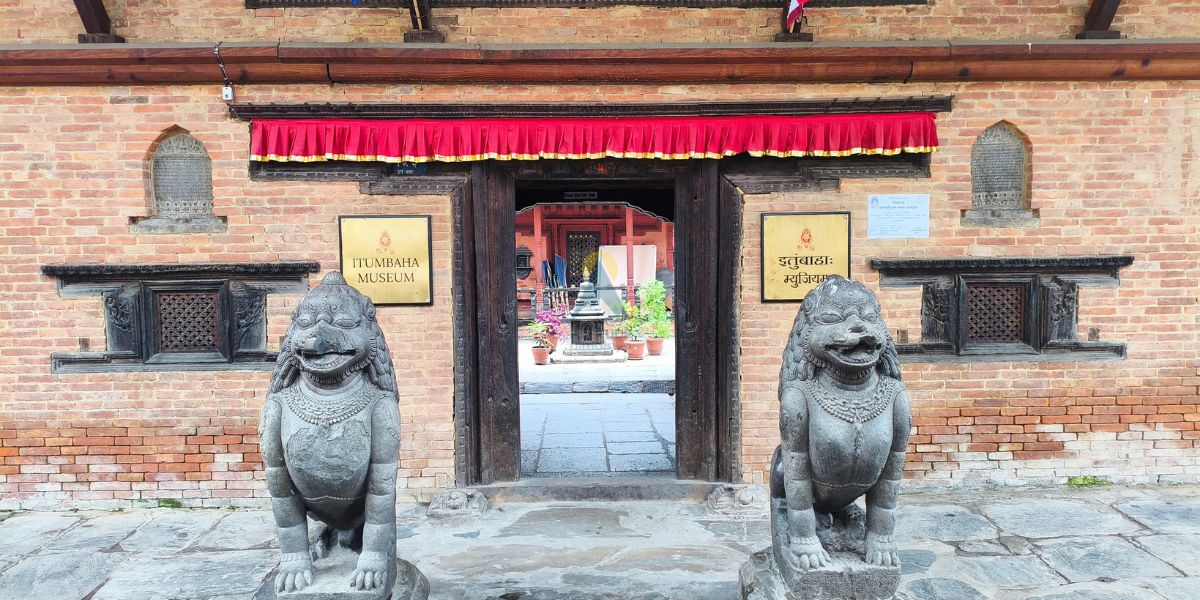
Many remarkable collections of the monastery's religious, artistic, and architectural treasures that were hidden are preserved and showcased in this museum. There are approx. 150 carefully curated objects, dating from the 14th to the 19th centuries, selected from a larger collection of more than 500 historical objects.
The major collections here include Buddhist sculptures, ritual objects, architectural carvings, manuscripts, and historical artifacts.
A stolen 14th-century wooden carving depicting a flying Gandharva (a celestial garland-bearing apsara) from Itumbahal (which was featured in the collection of the Rubin Museum of Art in New York) was repatriated and returned to the museum on January 10, 2022.
The Salabhanjika Yakshi strut (around 700 years old) owned by Itumbahal was also returned earlier by the Metropolitan Museum of Art, USA, in September 2021.
Moreover, there is Kichandra Bahal (Keshchandra Paravarta Mahavihara) on the west side of the courtyard of the museum, which is said to be one of the oldest bahals in Kathmandu, traditionally dating back to 1381 A.D.
If you are interested in history, architecture, and Buddhist art, then you should definitely visit this museum.
You will be met with a ticket counter right after you enter the museum. The entry fees for the Itumbaha Museum are as follows:
|
Visitors
|
Entry Fees
|
|
Nepali Visitors
|
NPR 100
|
|
Foreign Visitors
|
NPR 500
|
Few Practical Tips Before Visiting the Museum
It is always a better choice to plan ahead of the visit day so that you can have a great time at your destination.
Once you visit the place, you may want to stay longer, but staying only in one place could leave you with less time to enjoy other destinations within Kathmandu Durbar Square.
That is why these practical tips could come in handy for you to have a better and more rewarding experience:
- Set aside at least two to three extra hours for the museum and galleries.
- You are allowed to take photographs inside the Hanuman Dhoka Palace, but some of the areas restrict photography. So, keep that in mind (or if you’re with a guide, you can seek help from him/her).
- Although it will be a worthwhile experience walking independently on the historic lanes, it is a better option to hire a local guide. Many fascinating stories about the Malla and the Shah Dynasties could be missed if not for the local guides.
- You should carry some cash for tickets and small purchases. Although digital payments are becoming more and more common, still NPR is recommended to be brought upon.
- Keep your tickets safe throughout the visit, as museum staff may request to take a look while entering different galleries and exhibitions for ticket verification.
Final Thoughts
As you wander through the historic lanes of Kathmandu, you will discover large courtyards, statues, and numerous temples! When doing so, I’m sure you’ll realize that Hanuman Dhoka Palace Museum is not just a former royal residence; it is more than that!
It is one of the remarkable symbols of Nepal’s history and cultural identity. Every corner of the palace, even the items displayed in the museum, expresses the centuries-old traditions, masterly arts, and religious devotion of the kings.
From the magnificent Nasal Chowk to the elegant Gaddi Baithak, every architectural element of the palace speaks of centuries-old history and the story that no one knows about!
Although many different sections of the Hanuman Dhoka Palace were destroyed in the 2015 earthquake, there still remain many spots that make it iconic.
As you enter Hanuman Dhoka Palace Museum, you will be walking through the places that once saw history unfold, watched the rise and fall of the kingdoms, saw cities changing, and even captured the sorrows of death and the happiness of birth.
So, if you are planning to visit Kathmandu Durbar Square, then be sure to set aside enough time to visit the Hanuman Dhoka Palace Museum.


 Shubhana Lama