Thamel to Durbar Square Walking Tour begins from the overwhelming streets of Thamel. Rickshaws ring bells to get your attention, taxis offer rides, and vendors try to sell you some souvenirs.
Every store your eyes fall upon in this 24-hour tourist zone will try to lure you with unique items and attractions.
This route, when looked at on Google Maps, might seem like a forgettable everyday street. But when walked properly, it is one of those unforgettable journeys to brag about!
So, are you ready to start this journey?
Whom This Route is Dedicated
Let’s begin by deciding whether this route is suitable for you or not!
This route is dedicated to anyone who loves to chase temples, local cuisines, souvenirs, and is looking for a story to remember from Nepal.
Here are a couple of activities you’ll be participating in throughout this route:
- Experience the vibrant market of Thamel along with the best handpicked attractions tying back to history and culture.
- Window shop for souvenirs, culinary delights, trekking/travelling equipment, etc.
- Check out hidden spots without missing any major attractions.
- Learn actual facts and stories as you experience them firsthand.
- Explore Kathmandu Durbar Square and nearby major attractions with comfort.
This route leads you to courtyards, temples, monasteries, attractions, and stores that most agencies and content creators don't care to cover. So, get ready to be surprised by how much a short tour in Kathmandu offers!
Quick Facts: Thamel to Durbar Square
This section will give you some numbers and information that you might be curious about before the storytelling begins for this walk.
First of all, check out the streets associated with this tour. When starting the tour from Thamel, I suggest you choose one from these three points: Paknajol Marg, Thamel Pipalbot, or Tridevi Sadak:
- Paknajol Marg connects with Gangalal Marga, taking you straight to Kasthamandap Temple, and from there you have to take Layaku Marg to explore the square.
- Thamel Marga starts from Thamel Pipalbot (near Thameleshwor Mahadev) and connects with Narsingh Chok, followed by Thahity Jyatha Marg, Yogbir Singh Marg, and Layaku Marg to enter the square.
- Tridevi Sadak (close to Garden of Dreams) will connect you to Amrit Marg, followed by Jyatha Marg, Yogbir Singh Marg (in Ason Bazaar), and Layaku Marg.
Note: If you want to check out Juddha Salik before entering the square, then from Indra Chowk, take the Sukra Path road.
Finally, here are the actual distances and timing of chaotic and calm markets, along with specific festivals you will be able to attend depending on the season you land here:
|
Total distance from Thamel (approx.)
|
Via Paknajol Marg
|
2 km
|
|
Via Thamel Marga/Thamel Pipalbot
|
2 km
|
|
Via Tridevi Sadak
|
1.5 km
|
|
Walking time
|
With Exploration (suggested)
|
1.5 - 2 hours approx.
|
|
Without Exploration
|
25 - 30 mins approx.
|
|
Note: Optionally, you can take a ride using a bike, taxi, or rickshaw.
|
|
Opening & closing hours
|
Retail shops (Thamel)
|
8 AM - 10 PM
|
|
Restaurants & Cafes (Thamel)
|
Early morning - 10 PM (varies based on business type)
|
|
Clubs and Pubs
|
8 PM - 4 or 5 AM
|
|
Kathmandu Durbar Square
|
- Square itself: 24/7
- Ticket counter: 6 AM - 8 PM
- Hanuman Dhoka Palace Museum: 9 AM - 6 PM (every day)
|
|
Best time of the day
|
For an unhurried walk
|
Early morning (6 - 7 AM)
|
|
To observe the busy streets
|
9 AM - 8 PM
|
|
Difficulty of this walk
|
Morning
|
Easy
|
|
Day - Night
|
Moderate
|
|
Nearest landmarks (optional)
|
From Thamel
|
Garden of Dreams, Narayanhiti Palace Museum, Museum of Nepali Arts (MONA), Bhagawan Bahaal, Tridevi Temple,
|
|
From Kathmandu Durbar Square
|
Old Freak Street, Dharahara
|
|
Specific festivals
|
Monsoon
|
Gai Jatra
|
|
Autumn
|
Indra Jatra
|
Things You Need to Do Before Starting This Tour
There’s a famous quote by Eleanor Roosevelt: “Learn from the mistakes of others. You can't live long enough to make them all yourself”.
Inspired by this, I decided to analyze the mistakes I made when completing this walking tour myself. To ensure you don’t repeat the same mistakes, here are a couple of things to do before starting this tour:
- Since a comfortable journey is worth a thousand rushed ones, we encourage you to give this tour about two hours of your morning.
- With the valley being surrounded by high hills, it can cause rapid and unpredictable atmospheric changes. Your first priority should be to check the weather and wear clothes accordingly.
- Make sure to carry basic items such as your water bottle, umbrella, sunscreen, etc., and wear comfortable shoes.
- Check your health and confirm whether you're fit for this walking tour or not.
These are the small things that make a huge difference in situations, so make sure you’re following them.
Quick Overview of Attractions on the Way
This is a list of attractions you will get to visit and observe during this walk.
I have shortlisted the best ones to not miss out. So, if you’re thinking of taking this tour, then definitely visit them:
|
Location
|
Attraction
|
|
Thamel
|
- Mandala Street
- Maitripur Mahavihar (Kwa Bahal)
- Garden of Dreams
- Kaiser Mahal
- Museum of Nepali Art (MONA)
- Chhaya Center
- Bhagawan Bahaal
- Tridevi Temple
|
|
Thahity
|
- Nateshwar Temple
- Dharmadhaatu Stupa
|
|
Naghal
|
- Shree Gha Vihar (Kathesambhu or Kashi Swayambhu)
- Glass Window
|
|
Bangemudha
|
- Nasa Dya
- Ikha Narayan Temple
- Wasya Dyaa (Wood with Coins)
- Nhu Baha (near Bangemudha Danta Mandir)
- Shree Narsimha Aju Temple (a little ahead of Ugratara Temple)
|
|
Ason / Asan
|
- Ason Bazar
- Ugratara Temple
- Annapurna Ajima Temple
- Balkumari Temple
- Krishna Temple
|
|
Indra Chowk
|
- Shree Luchumaru Ajima Temple
- Seto Macchendranath Temple (Janabaha Dyo)
- Shree Vansheshwar Mahadev Mandir
- Shri Santaneshwor Mahadev Temple
- Akash Bhairab Temple
|
|
Itum Bahal
|
- Kichandra Bahal (Keshchandra Parawatta Mahabihar)
- Itumbaha Museum
- White Tara’s Temple (Tara Dolma Temple)
- Saraswati Nani Temple
|
|
Naradevi
|
- Deshe Maru Jhya (Wooden Window)
- Shree Swetakaali Temple
- Kankeshwari Temple
- Kayeta Hiti
|
|
Yetkha
|
- Bhulukha Dega Temple
- Shree Kanga Ajima Dya: Chhe
- Yetkha Baha
- Vaskarkriti Mahavihar
|
Why Walk This Route?
If your goal is to only roam around Durbar Square while looking at the most popular attractions, then taking a taxi will get you there from Thamel in 10 minutes or so.
However, if you want to go beyond what ordinary Kathmandu sightseeing offers, then this journey on foot will be more fruitful!
To set this trail apart from any normal route, I had to spend a couple of days walking and searching every possible path. The best part of this walking tour is the discovery and exploration of hidden attractions that you would normally miss when taking a vehicle.
Reach the square’s Kumari house on time, and you’ll also get the opportunity to witness the presence of Nepal’s living goddess, Kumari!
IMPORTANT: You must purchase an entrance ticket upon reaching the Durbar Square area, as it’s part of the Kathmandu Valley UNESCO heritage site.
Reaching Kathmandu Durbar Square: Three Options
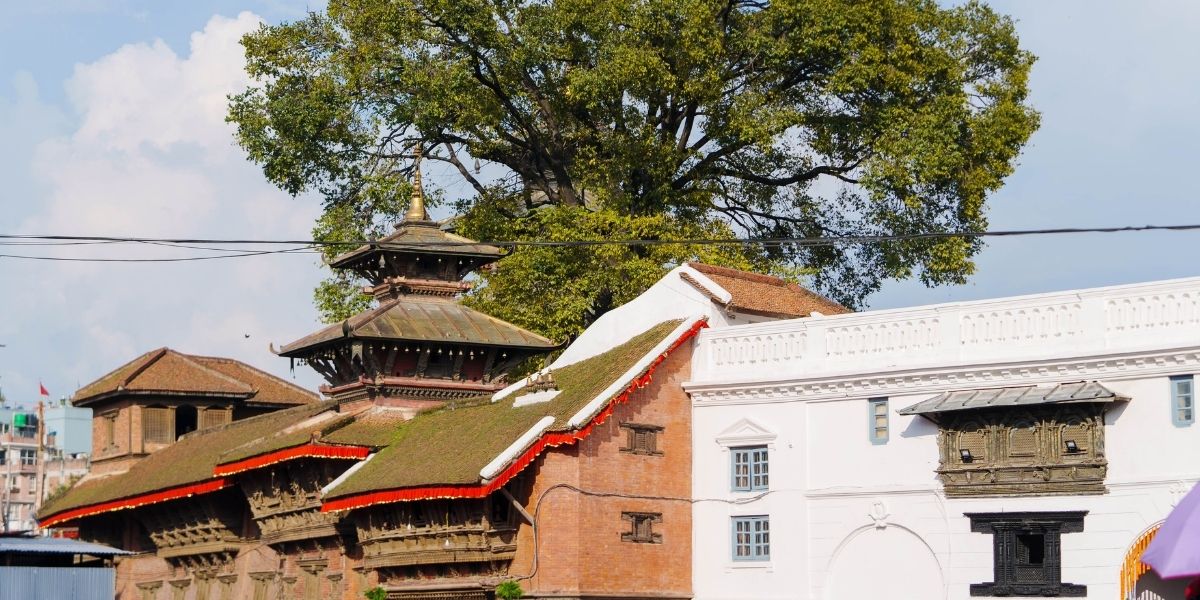
There are three real choices you can make for this tour, each with something to offer and something to take away:
- On Foot: Walking to here lets you dive deep into the roots of Kathmandu’s history and culture, where you will reach attractions that are not connected to the main streets. This option is for those of you who want to feel every bit of this journey rather than just take a glimpse. It can be tiresome and a little bit difficult to walk since the streets are a bit rough and people ride motorbikes and scooters in narrow streets as well.
- Using Ride Sharing Service: Taking a taxi or bike is a great option when time is your constraint, but you still want to get something out of this tour. You’ll very likely miss out on the hidden spots not connected to the main street (as stopping the vehicle at each destination would be impractical). However, the attractions along the way will still live up to your expectations!
- On a Rickshaw: The last choice is a rickshaw, famous among tourists for slower travel than a taxi or bike but with a more relaxed view. You’ll find rickshaws near road intersections, for example, in Thamel Chowk, Thahity Chowk, and other similar spots.
Note: The transport fares are not consistent and can change depending on many factors such as traffic, weather, and time.
Why Choose Thamel as Your Starting Point?
We picked Thamel as our starting point after observing what happens when a traveller lands here and how that follows up.
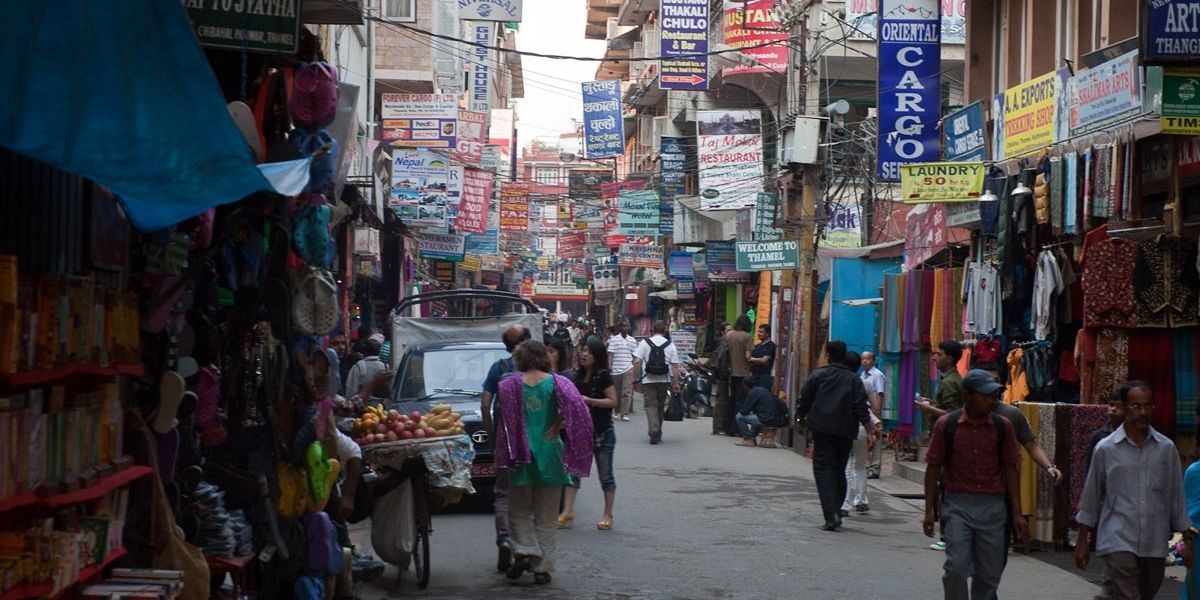
Almost every trip or trek in Nepal gets connected with Thamel at a certain point, whether as part of your accommodation or just a short trip. In fact, I won’t be surprised if you are in Thamel reading this blog right now!
Well, Thamel is where you can easily pick up items, be it trekking gears or some souvenirs, or maybe have a coffee break before taking the first step for this walk.
The contrast of chaos to calmness happens smoothly right before your eyes when starting the walk from Thamel to Thahity. This experience alone gives the reason why Thamel is the starting point!
Alternative Routes to Thamel
Many tourists stay in the Thamel area for its huge resource availability. You can easily acquire the items and itineraries for your tour or trek in Thamel. But what if you’re not staying in Thamel, yet you want to visit Kathmandu Durbar Square?
Many tourists stay in Thamel for its huge resource availability. Here, you can handle permits and find inspirations for itineraries for your tour or trek before or after visiting the square. But what if you’re not staying in Thamel, yet you want to visit Kathmandu Durbar Square?
Well, here are some great alternatives for you to choose from:
Narayanhiti Palace Museum to Kathmandu Durbar Square
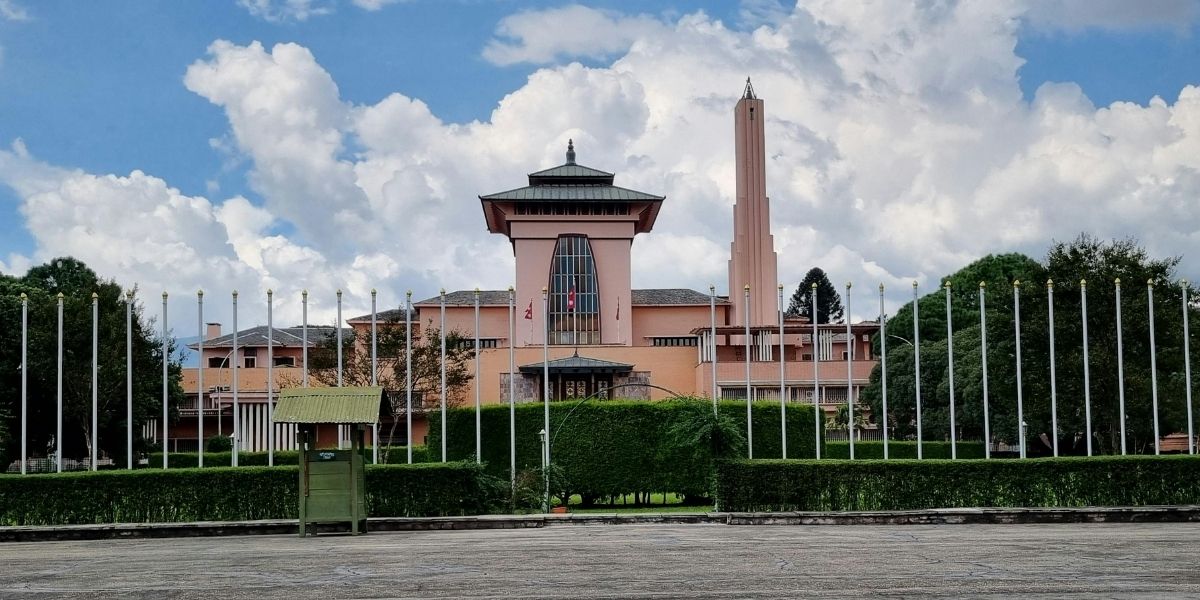
Assuming you’re nearing the square from Narayanhiti Path, you can first visit the public museum inside Narayanhiti Palace Museum After a short tour of the former royal palace, take one of the following routes:
- Narayanhiti > Narayanhiti Path > Garden of Dreams > Tridevi Sadak > Thamel Chowk (Map Link)
- But you want to explore the shopping centers of Durbar Marg? If so, use this route:
Narayanhiti > Durbar Marg > Rani Pokhari > Ratna Park > Tundikhel > Bhadrakali Temple > Shahid Gate > Kanti Path > New Road > Juddha Salik (vehicle preferred)
Ason Bazar to Kathmandu Durbar Square
If you don’t have any plans for Dharahara or want to reach there after visiting Kathmandu Durbar Square, then from Rani Pokhari, enter Ason Bazar via Chittadhar Marg. This route takes you straight to one of the busiest markets near the square (Ason Chowk).
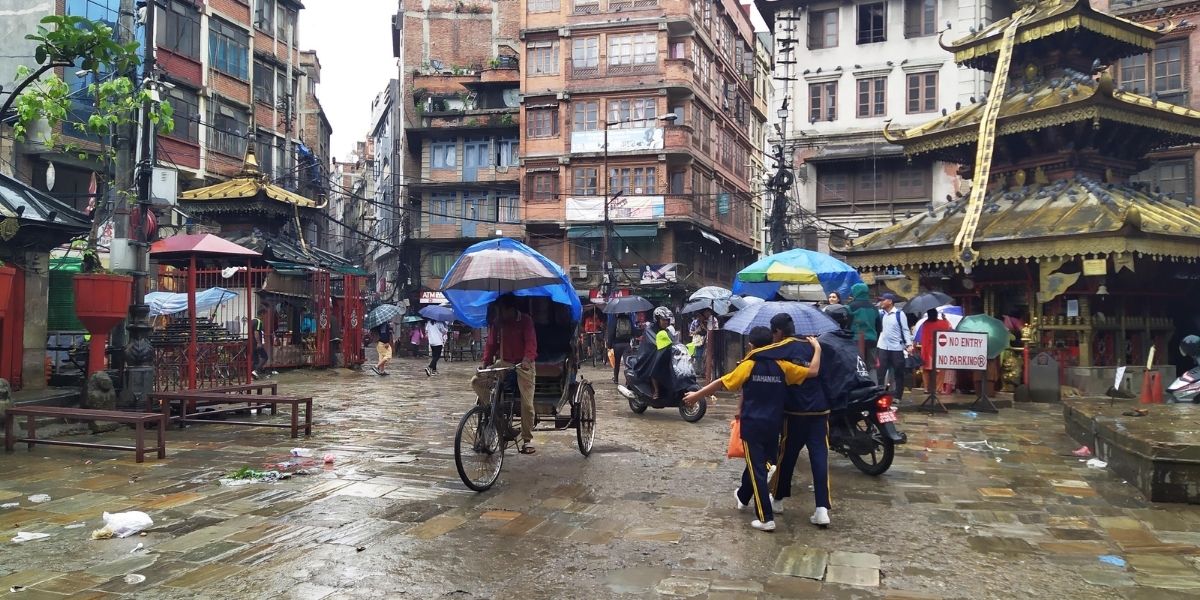
You may take blessings from Annapurna Temple and Ganesh Temple here before heading towards Indra Chowk.
One of the most famous festivals, Indra Jatra (known locally as Yenya Punhi), is celebrated in Indra Chowk, and it lasts for 8 days. The festival begins from Bhadra Sukla Dwadashi and ends on Ashwin Krishna Chaturthi, so this route is widely recommended if you’re planning a visit for Indra Jatra.
From Indra Chowk, either take Sukra Path (if you want to check out the Juddha Salik) or Yogbir Singh Marg (leads straight to the square).
Step-by-Step Route: What You Will Pass Along the Way
This section covers the actual walk, starting from Thamel Bazaar and finishing at Kumari Ghar of Kathmandu Durbar Square.
Spare twenty minutes if you’re just sightseeing the attractions of the main street and about two hours if you are likely to check out every temple, vihar, and other monument as I did!
First, Enter Thamel
If you're already in Thamel, aim to reach the closest of the following starting points. But if you’re elsewhere, here are the locations you can reach to start the walking tour:
- Leknath-Amrit Marg Junction: If you’re in Lekhnath Marg near Amrit Campus, then connect with Amrit Marga, and you’ll reach Thamel Chowk.
- Thamel Pipalbot: From Thamel Pipalbot, it’s a straight walk to Thamel Bazaar; just make sure you continue on Thamel Marg.
- Lekhnath-Chaksibari Marg Junction: Just when Lekhnath Marg transitions to Naya Bazaar Marg, there’s a junction which, when walked south, takes you to Thamel Bazaar. But you have to turn left in either Mandala Street or Prayatan Marg.
- Lekhnath-Paknajol Marg Junction: A junction west from Lekhnath-Chaksibari Marg is another junction to enter Thamel. Take Saat Ghumti Marg to your left and connect with Prayatan Marg. From there, it’s a short walk to Thamel Bazaar.
- Narayanhiti-Tridevi Junction: If you’re nearing Thamel from eastern part of Kathmandu, there's a high chance you’ll pass Narayanhiti Palace Museum and enter Thamel.
- Jyatha Chowk: Jyatha Marg from Jyatha Chowk leads you to Thahity’s Dharmadhatu Stupa, our first stop after Thamel Bazaar.
- Bhotahity Chowk: When you enter from Bhotahity or the intersection a little north of Bhotahity, the best option would be to start from Ason Bazar.
Well, the aforementioned were some of the options; now, let’s continue with our main route, shall we?
Thamel Bazar to Thahity
Start your tour early in the morning from Narsingh Chok of Thamel Bazar towards Thahity.
Every store you pass while walking towards Thahity from our starting point offers unique and authentic pieces of art and crafts.
These include thangka paintings, cashmere and pashmina fabric wearables, ornaments, sculptures, artifacts, home & wall decor items, etc. They are widely regarded and recognized by locals as well as foreigners.
Five minutes into the walk, a small stupa (Maitripur stupa) appears to the east; opposite it is the way to Kwa Bahal (Maitripur Mahavihar). This vihar dates back to the 5th century and was founded by Wak Vajra Bajracharya, who laid the cornerstone for spiritual enlightenment in Kathmandu.
Now, following the Thahity-Jyatha Marg, you will reach Nityanath Marg, which connects to the Chandraman Singh Marg.
Thahity to Naghal
Thahity is home to a 15th-century stupa known as Dharmadhaatu Stupa. Entering the premises of this stupa is restricted, so you can appreciate only its architecture.
Another attraction you cannot miss here is the Nateshwar Temple. This is an 18th-century two-storied temple dedicated to Lord Shiva, and it is associated with Nasa Dyo (Newari deity of dance and music).
After checking out the brass doorway of Nateshwar Temple depicting creatures playing a variety of music, take the Chandraman Singh Marg to reach Naghal.
By the way, if you’re starting your tour from Rani Pokhari or Jamal, then you can reach Thahity via Kanti Path-Jyatha Marg and connect with this route. This way, you’ll be able to visit Chhusya Bahal and Musya Baha as well.
Naghal to Bangemudha
Just 150 meters south of Dharmadhaatu Stupa is the entrance to a miniature replica of Swayambhunath Stupa, Shree Gha Vihar. It’s also known as Shree Gha-Shanti Ghat Bhajradhatu Mahachaitya, Kathesimbhu, or Kashi Swayambhu.
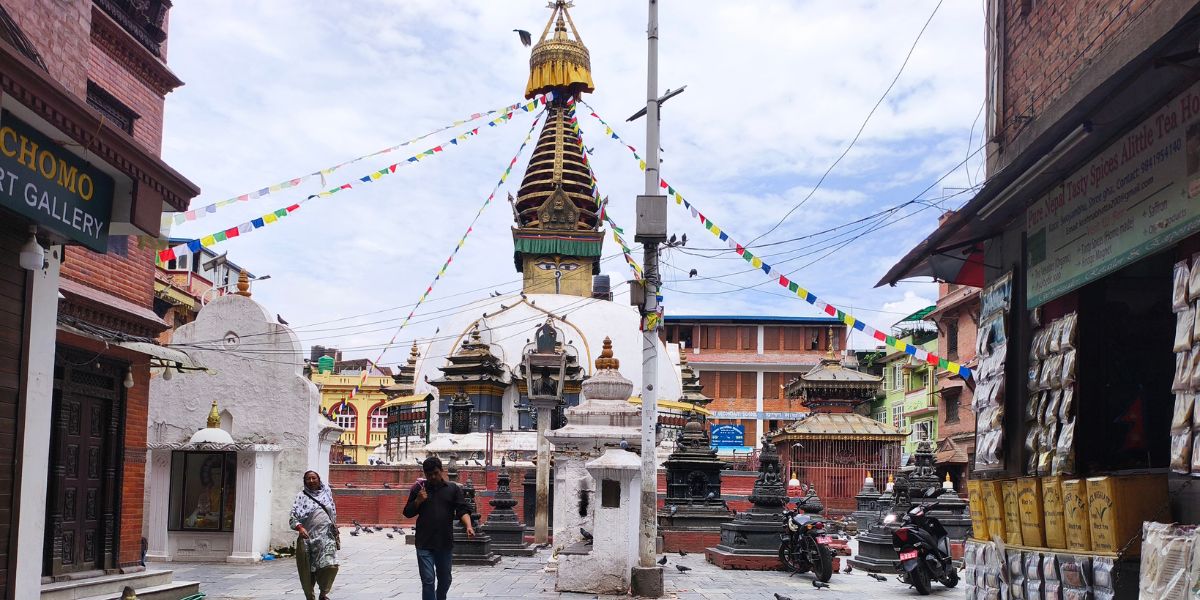
The stupa is surrounded by 21 deities whose information can be found on the sitemap displayed on the southern part of this courtyard.
A devotional hymn house, the statue of Avalokiteshvara, Shree Gha Vihar, and Shree Harati Maa Temple also belong to this same courtyard.
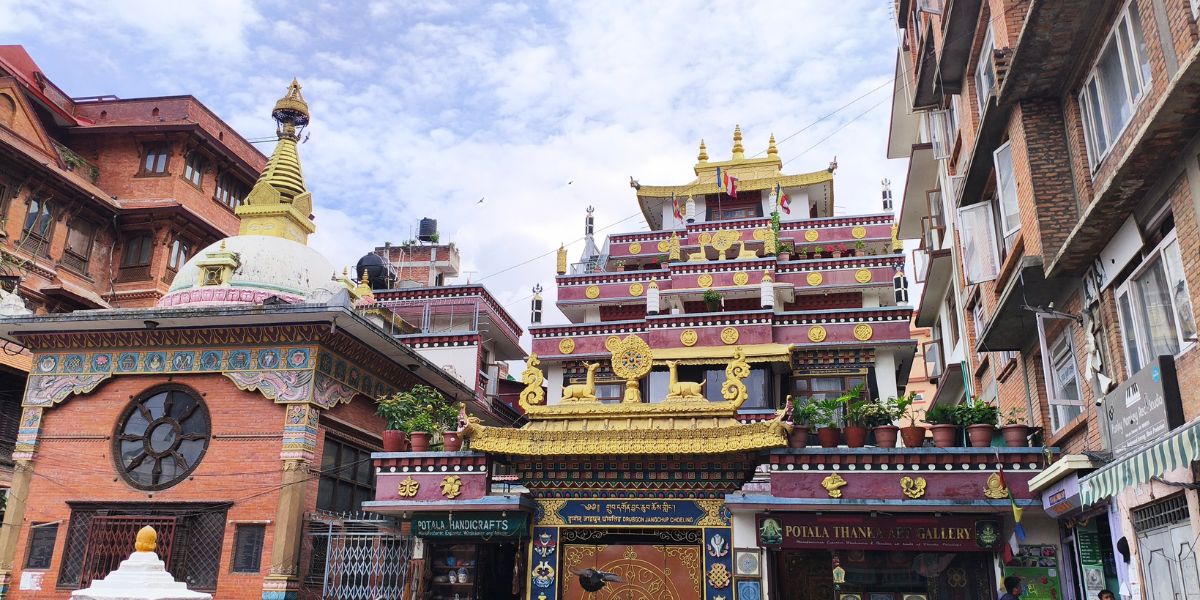
When you are done exploring here, briefly stop at the Drugbon Jangchup Choeling Monastery before using the same entrance gate as your exit.
A couple of steps ahead and you’ll reach a house with beautifully carved vary old Newari wooden pillars and bricks on the ground floor and glass windows on the top floor (very uncommon around here during that time).
Now, about a 100-meter walk ahead from this house, you’ll reach Ikha Narayan Temple of Bangemudha.
Bangemudha to Ason
Bangemudha has five main attractions very close to each other. On the very edge of Naghal lies a small temple dedicated to Nasa: Dya (God of Dance, Music, and Performing Arts), and close to it is the Ikha Narayan Temple dedicated to Lord Vishnu.
The infamous temple of Wasya: Dya (the toothache god) is another must-see attraction at the southern end of this street, where locals to this day hammer coins on a lump of wood, believing it will relieve them of a toothache.
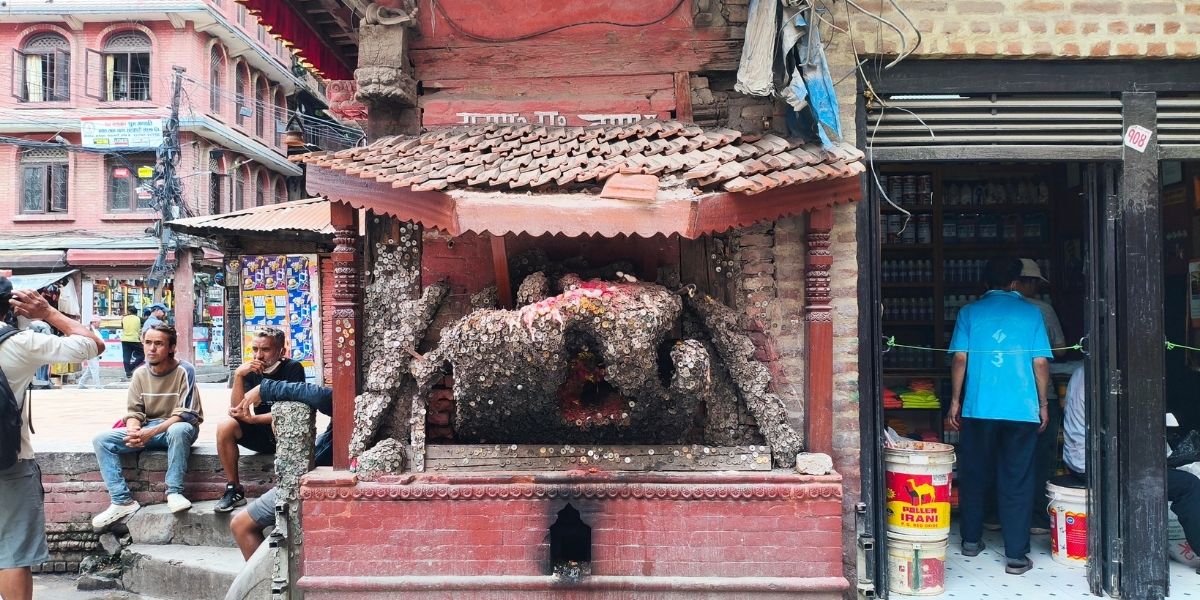
A hidden gem of this area would be the 60 cm high statue of a standing Buddha, said to be from the 5th or 6th century. You will find it before Ikha Narayan Temple.
Before moving to Ason, you can check out a small courtyard called Nhu Baha behind a traditional Newari house.
Ason to Kel Tole
Ason welcomes you with Ugratara Temple, a goddess who is believed to bless every pilgrim with wonders for the eyes.
The intersection of Ason is heavily crowded during daytime, where businesses thrive at every step, rickshaws ride around, and an occasional blood donation campaign happens.
Annapurna Temple with three roofs at the eastern end of Ason gathers devotees to worship goddess Annapurna Ajima, the provider of bountiful grain.
Opposite Annapurna Temple is a two-roof temple dedicated to Lord Ganesh. Both of these temples have intricate and fabulous statues of their respective deities.
Taking the Yogbir Singh Marg from here onwards, in the southwest direction, will take you to Indra Chowk. The stores in this alleyway sell incense, utensils (made of plastic, brass, metal, and other elements), traditional attire (from head to feet), snacks like titaura, etc.
Look out for the Balkumari Temple, decorated with flowers, followed by the Krishna Temple with its exquisite carvings and a unique building with castle-like windows before arriving at Kel Tole of Indra Chowk.
Kel Tole to Indra Chowk
Shree Luchumaru Ajima Temple, enshrining Kalika Chaumanda statues, is the first attraction you see in Kel Tole. The temple has intricate artworks and carvings that depict Kamasutra scenes.
The main highlight of Kel Tole is Janabaha Dyo (Seto Machhindranath Temple). The temple is from the 10th century and has sculptures that grab and hold your attention.
With an exquisite entrance, along with a Buddha statue on top of a pole and two guardian lions, the main temple here is gilded and has multiple chaityas and poles surrounding it.
From this temple, walking on Yogbir Singh Marg for 2 minutes will take you to Indra Chowk.
Indra Chowk to Kilagal
The temple of Akash Bhairab (God of the Sky), who is a fierce manifestation of Lord Shiva, is located in Indra Chowk. The main shrine sits on the top floor, while shops occupy the bottom floor. It is also believed the temple building used to be the palace of Kirati King Yalambar.
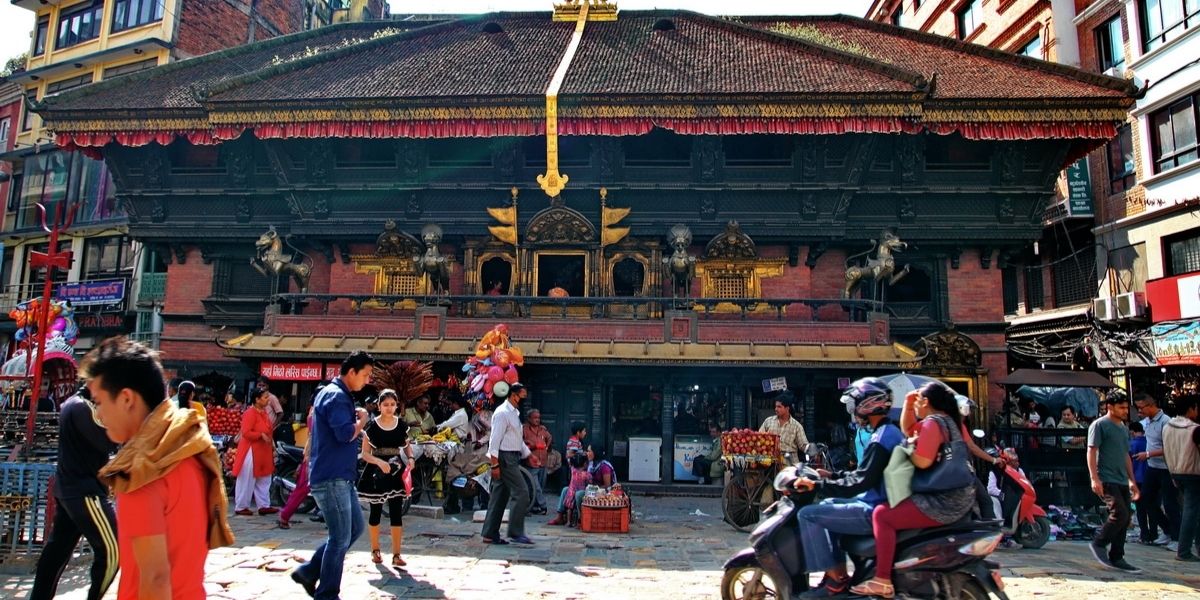
The four dragon-like sculptures on the balcony of the temple appear as if they are protecting the deity.
The massive, iconic blue mask with silver eyes and a serpent crown here is taken out once a year for the 8-day-long Indra Jatra, along with an idol of Indra Dev tied on a wooden platform depicting his capture.
The area's name also comes from the belief that Lord Indra was tied here by the locals in ancient time for a mistake he made during his visit.
Besides Akash Bhairab Temple, Indra Chowk houses two more deities: Shree Santaneshwar Mahadev and Shree Vansheswar Mahadev.
Shree Santaneshwar Mahadev is believed to bless childless couples with children, whereas Shree Vansheshwar Mahadev is credited for granting protection to family heritage and generational continuity.
A famous activity to do around here is to drink Lassi. Cool, delightfully sweet, and velvety smooth, topped with a generous mix of dry fruits, the taste of the lassi here will make you want to visit Indra Chowk multiple times.
The Chokacche Galli, west of the Akash Bhairab Temple, is the way to Itum Bahal. This particular street is very narrow and has stores selling Nepali garlands, ceremonial items, local attire, and local foods.
Note: If you wish to explore the square from here, then take the Yogbir Singh Marg that connects with Layaku Marg. You can take the Sukra Path as well, which takes you to Juddha Salik of Basantapur and then to the square.
Itum Bahal to Nardevi
The earlier mentioned narrow street (Chokacche Galli) from Indra Chowk leads you to a shrine with a couple of deities. The entrance gate next to it leads to Itum Bahal.
Go through the gate, and you’ll step into a courtyard with small chaityas. The main deity here is Akshovya Buddha.
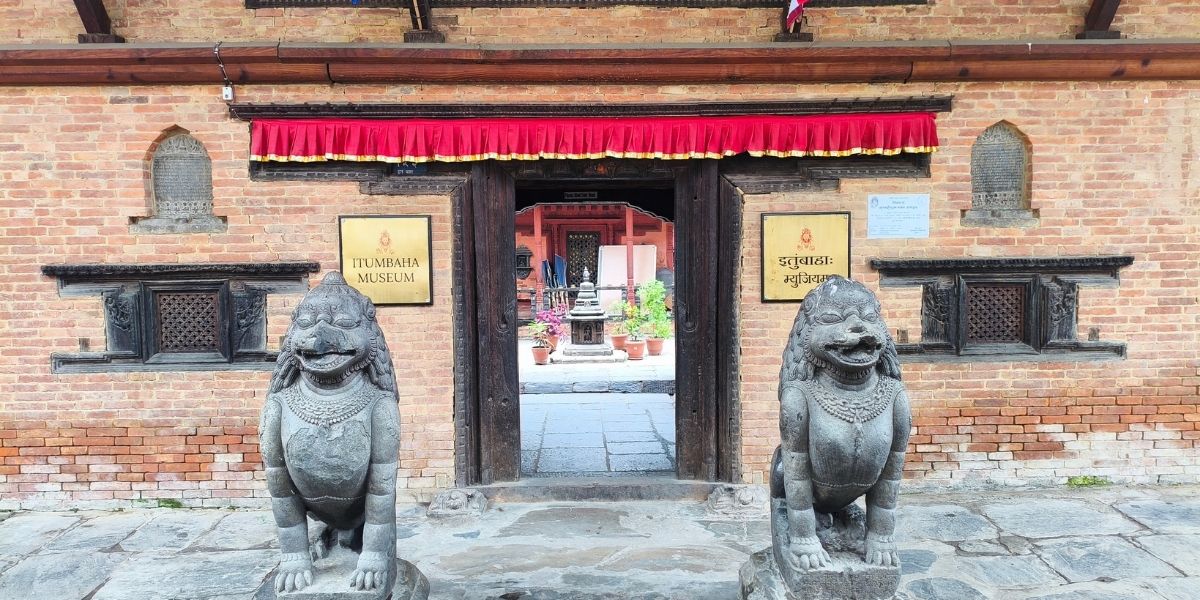
Here, look for a big Bodhi tree, as the entrance next to it leads you to Itumbaha Museum, the first Nepali vihar museum with a thousand years of Nepali Buddhist Heritage.
The museum is open for visitors from Sunday to Friday (11 am to 5 pm), and the entrance fee is NPR 100 for Nepali citizens, 200 for SAARC visitors, and 500 for foreigners.
Note: Having a Nepalese student card gives you a 50% discount!
The western wall of the courtyard of this museum has bronze plaques of a child-eating monster - Gurumapa. At the center there’s a Buddha temple with a small garden surrounding it.
In front of the buddha temple is another temple, but it is forbidden to enter, and only the priests are allowed inside.
The ancient artifacts, significant to Newari history and culture, are preserved and presented with every detail of knowledge that they possess in this museum. Before walking out, try drawing water from the stone water tank on the left of the entrance. It's a fun experience that I try every time I visit.
East of this courtyard leads you to two smaller courtyards, one being Tara Nanee (dedicated to two female saints, Green Tara and White Tara) and the other being Saraswati Nanee (dedicated to the goddess of wisdom, eloquence, and learning).
Both of these courtyards are accessed through a narrow opening on the western walls with erotic picture frames.
Exit this courtyard from the north, then take the Yogbir Singh Marg towards Nardevi.
Nardevi to Yetkha
The main attraction of Nardevi would be the Shree Swetakaali Temple, which is also known as Naradevi Temple. It is situated at the intersection of Gangalal Marg and Yogbir Singh Marg.
Some stories mention people giving human sacrifices in the temple during ancient times. At present, Panchabali (sacrificing 5 kinds of animals: buffalo, goat, sheep, duck, and rooster) is offered on the ninth day of the Dashain festival in this temple.
Newari dances are performed on the dance platform opposite the temple with audiences and an overwhelming spirit during many festivals to show respect towards the goddess.
The southern end of this area has an infamous attraction on the second floor of a house on the east. The attraction is a latticed window with multiple frames and is called Deshe Maru Jhya. This century-old window was declared a national treasure in 1978 AD for its unique design and peak Newari craftsmanship!
Fact: The Postal Service Department of the Nepal Government also issued a postage stamp depicting Deshe Maru Jhya in 1978.
Yetkha to Kathmandu Durbar Square
Just beside Deshe Maru Jhya is a Bhulukha Dega temple; in Newari Language Bhulukha means "owl," and Dega means "temple."
Approximately 100 meters from Bhulukha Dega resides Shree Kanga Ajima Dya: Chhe, and opposite to it is Yetakha Baha. This courtyard has a huge white stupa and Vaskarkriti Mahavihar.
Back on the Gangalal Marg, as you walk towards Kathmandu Durbar Square, a small Shree Kumari Temple with beautiful visual aesthetics also appears before the Kathmandu Metropolitan City Ward No. 24 Office.
If you keep walking straight from there, you’ll reach Kasthamandap Temple, but I would suggest taking the Kampukot Path on the east towards Makha Mahadev Galli. This suggestion is also for travellers who took the Paknajol Marg as their starting point in Thamel.
Now, you have reached Mahendreshwor Temple and one of the ticket counters of the world heritage site.
Layaku Marg connects with Yogbir Singh Marg and Makhan Galli, so travellers who travel to the square directly from Indra Chowk also arrive at the counter here.
Explore Kathmandu Durbar Square and Nearby Attractions
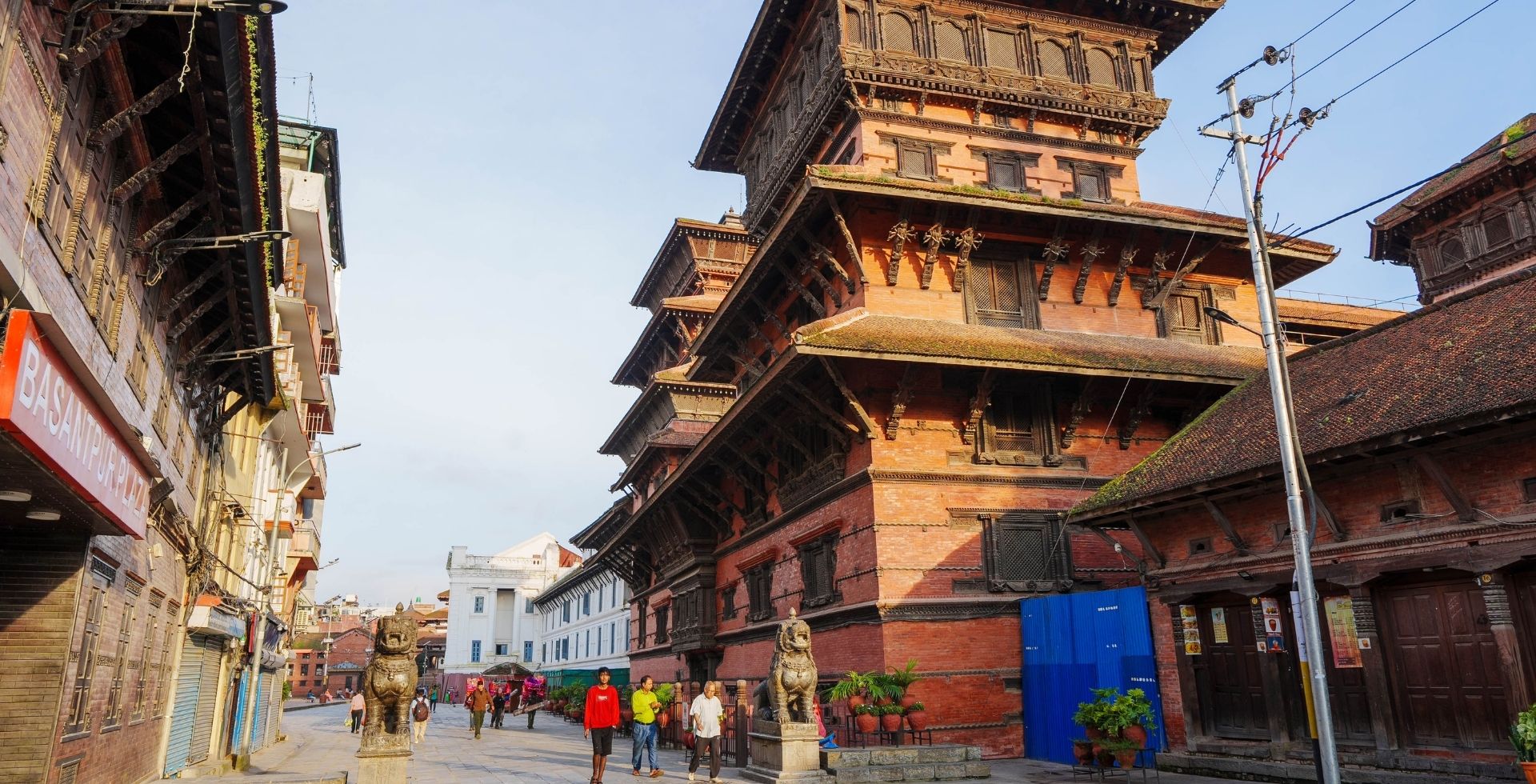
After you get your tickets from the counter, you may start exploring the monuments in the square, such as Taleju Bhawani Temple, Shree Kal Bhairab, Tago Gan Bell, Tago Bajwon, etc.
If you’re interested in history, then visiting the Hanuman Dhoka Palace Museum should definitely be on your bucket list. Explore the museum and exit through Gaddhi Baithak, a historic building that served as the royal seating and ceremonial hall for coronations and receiving foreign guests.
Once you are out of the Gaddhi Baithak, there are other famous monuments to check out before entering Kumari Ghar.
If you arrive at Kumari Ghar at the right time, you could get the opportunity to catch a glance of the living goddess, Kumari.
From Kumari Ghar I visit either Kasthamandap Temple which is about 40 meters west in the Layaku Marg, or Juddha Salik (about 5 minutes on the Ganga Path in the east).
With this, the tour of the square is almost over but we can still visit nearby attractions such as the Sankata Temple and Dharahara.
Seems I forgot to mention Freak Street near the square!
If you have knowledge about the legendary Hippie era, then you must have heard about this street. It is in the Jhocchen Tole and offers a quieter, retro-style atmosphere.
For Hippie admirers, Freak Street is a great spot to hang out before or after exploring the square.
Major Attractions of this Walking Tour
Now that you understand which paths to take and what places to visit, it's about time we learn more about the major attractions. Having this information prior to your visit will be more helpful than you think!
Kathmandu Durbar Square
Kathmandu Durbar Square is one of the seven monument zones of the Kathmandu Valley UNESCO World Heritage Site.
It’s home to royal palaces, ancient temples, courtyards, and many other monuments. The number of attractions here is overwhelmingly high!
The square is also the epicenter of many Nepali festivals, like Gai Jatra (Cow Festival, a festival that honors family members who have passed away) and Indra Jatra (8-day long festival).
Before going into detail about the main attractions of the square, let's check out the entry fees for this historic site:
|
Nationality
|
Entry Fee
|
|
Nepalese
|
Free
|
|
SAARC and BIMSTEC Citizens
|
NRs. 500
|
|
Others
|
NRs. 1000
|
Note: The ticket is valid for the issue date only and cannot be returned once bought. For multiple entry, we request you to contact the KMC Site Office, Basantapur, with your passport and a pp-size photo.
Kasthamandap Temple
Starting with Kasthamandap, a temple and public shelter built in the 7th century CE with multiple other historical structures around.
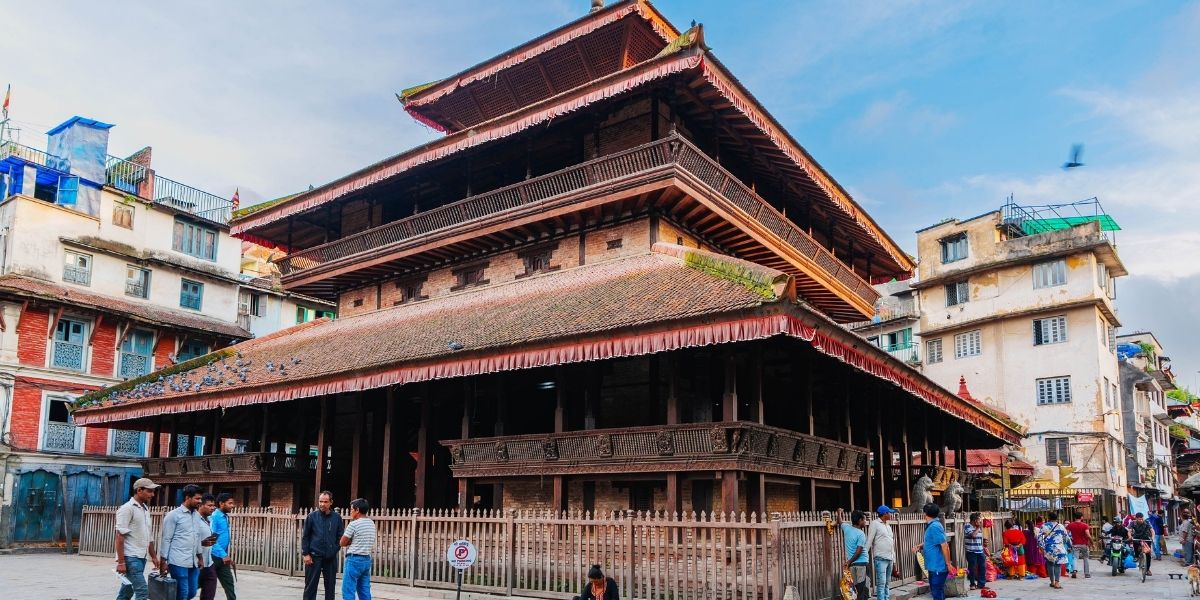
Kasthamandap is surrounded by a two-story Laxmi Narayan Sattal (closed), Ashok Binayak Temple, Bhagwati Mata Temple, and Shree Suryamukhi Mahadev Temple.
Occasionally, people are seen rubbing their backs against a wooden pillar as a back remedy inside Kasthamandap.
Kumari Ghar
Kumari Ghar, which is located on the southern part of the square, is the residence of our living goddess (Kumari). This sacred structure was built in 1757 AD by King Jaya Prakash Malla and has intricately carved wooden latticed windows, peacock motifs, and terracotta art.
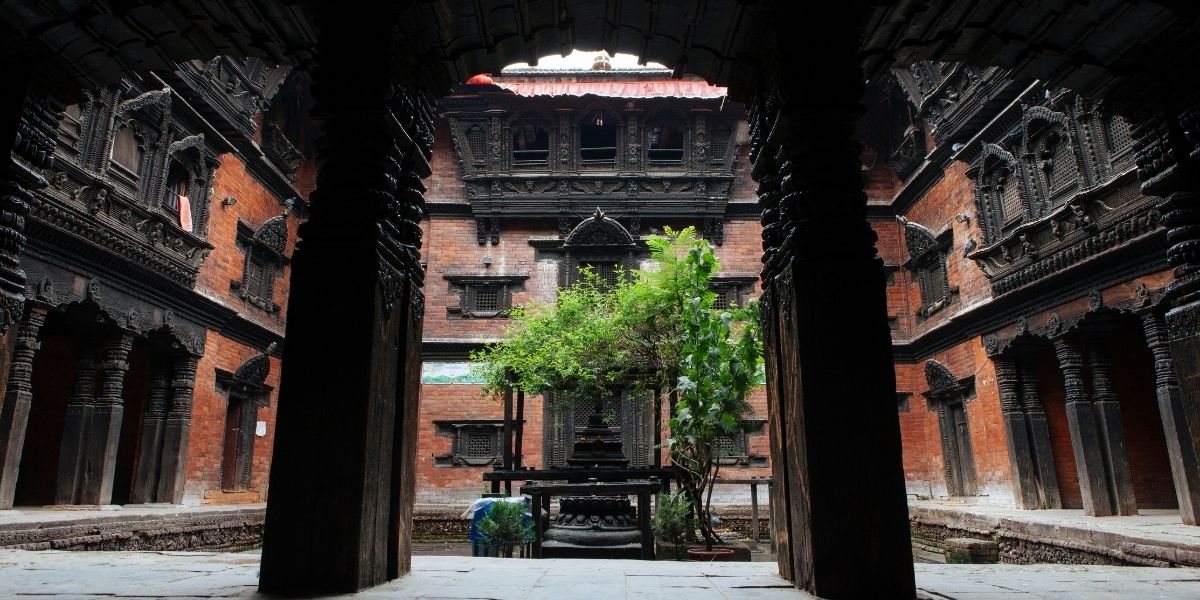
The main attraction of this monument is Kumari viewing. She appears at her window twice: at around 11 AM and 4 PM for just a few seconds. No one is permitted to take photographs or video of her.
The inner courtyard of Kumari Ghar shows the craftsmanship and artistry of ancient architecture and also houses a temple of Panchabuddha.
Note: If Kumari is not well or if there are some other rituals, then Kumari viewing will be cancelled for the day.
Trailokya Mohan Narayan Temple
Just beside Kumari Ghar is a three-tier pagoda temple dedicated to Trailokya Mohan (Vishnu of the Three Worlds). The temple is filled with locals and tourists taking rest, viewing festival celebrations, and enjoying scenic views of Basantapur from the height.
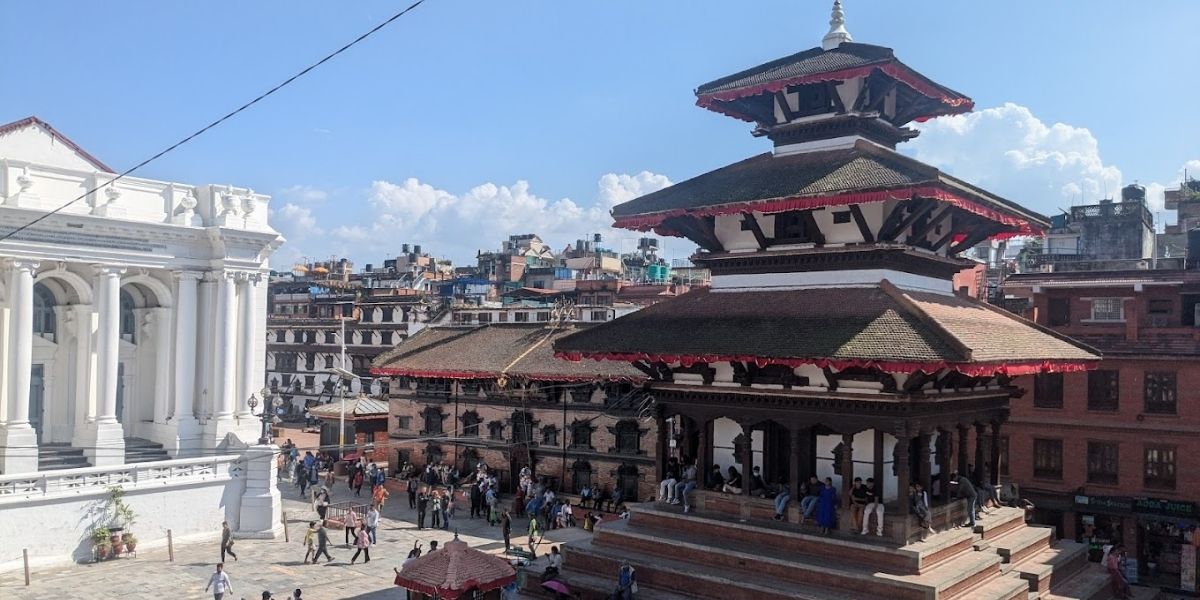
It also serves as the venue for dance performances depicting Vishnu’s ten incarnations during Indra Jatra.
To the west of this temple, there is a small courtyard called Shreekhanda Tarumul Mahavihar; it can be accessed from the entrance in the wall near the shops.
Note: One of the ticket counters of Durbar Square is near this temple.
Maju Dega
Maju Dega (Shree Kalicharan Gauri Shankar Temple) is a Newari-style temple dedicated to Lord Shiva. The temple was built by Queen Riddhi Laxmi to honor her son, King Bhupalendra Malla, who unfortunately died at the age of 21 after taking the throne when he was just eight.
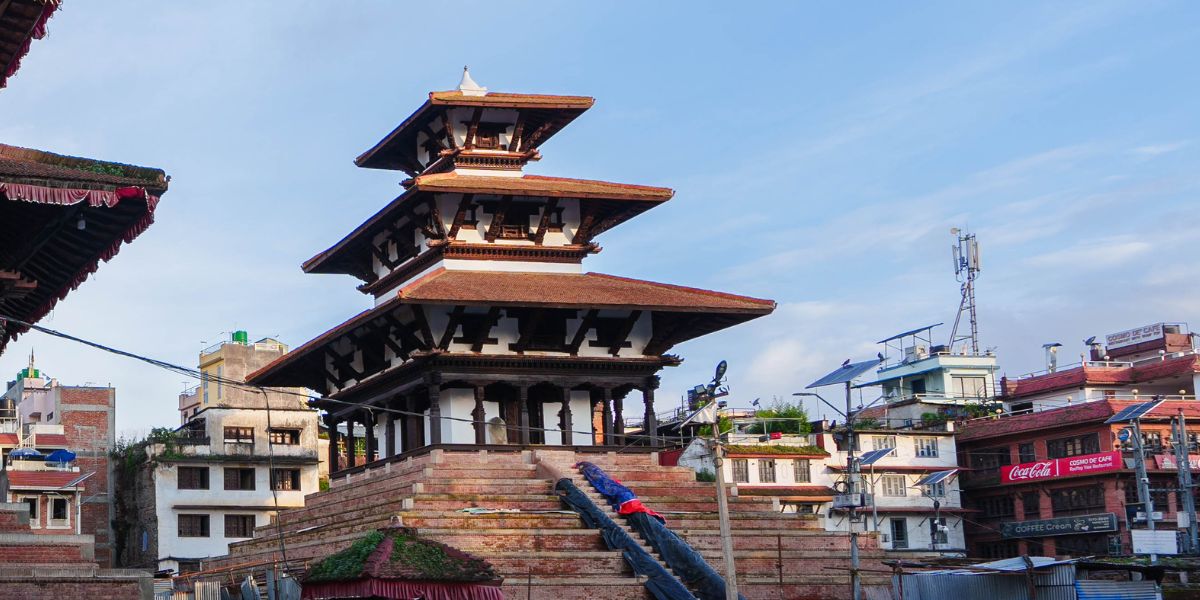
Maju Dega looks like it’s on top of a pyramid, and the view you get from above is worth climbing its ladders. The temple has been a popular gathering spot for visitors since the 1970s and was also called the Hippie Temple.
Shree Mahadev Parvati Temple
Near the center of Kathmandu Durbar Square is a rectangular two-story building with a pair of stone lions guarding it. A statue of Shiva and Parvati facing south is displayed on the roof of this temple.
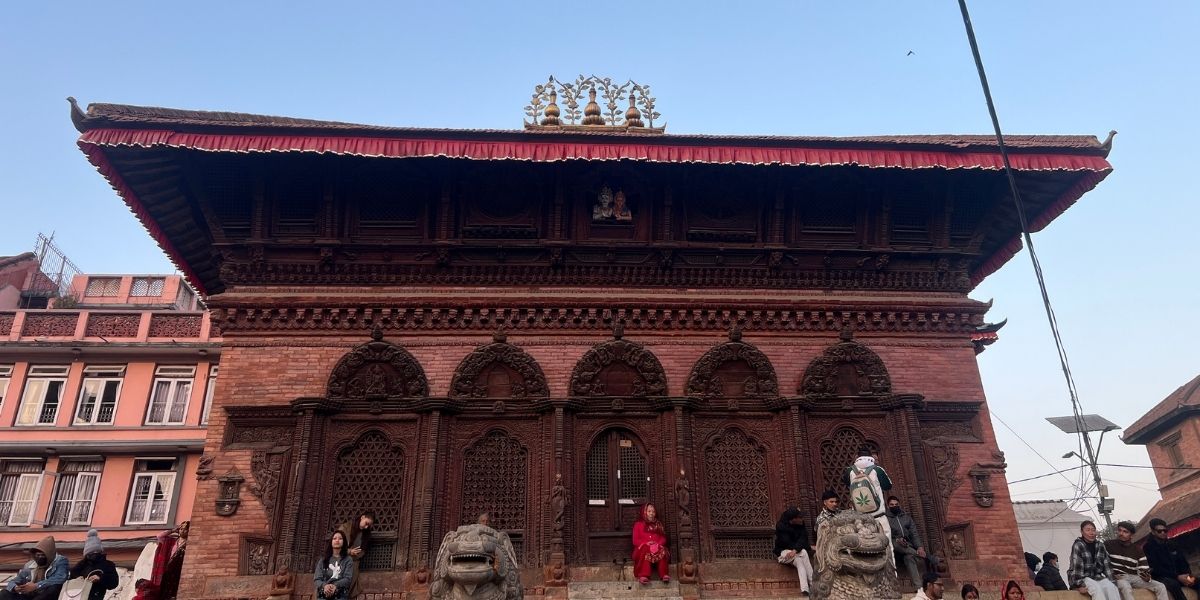
Also known as Navadurga Temple, this temple sits on a platform (Dabali) which is used for mask dances and performances.
By the way, only the central door (there are five doors) is open for worship and the interior of this temple is accessible to priests and temple custodians only. So, you’ll have to offer your prayers and take blessings from outside the door.
Tago Gan Bell
Taleju Thulo Ghanta, or Tago Gan Bell, is a large bronze bell hanging between two stone pillars on a platform. The bell was rung during worship at the nearby Degutaleju Temple during important rituals.
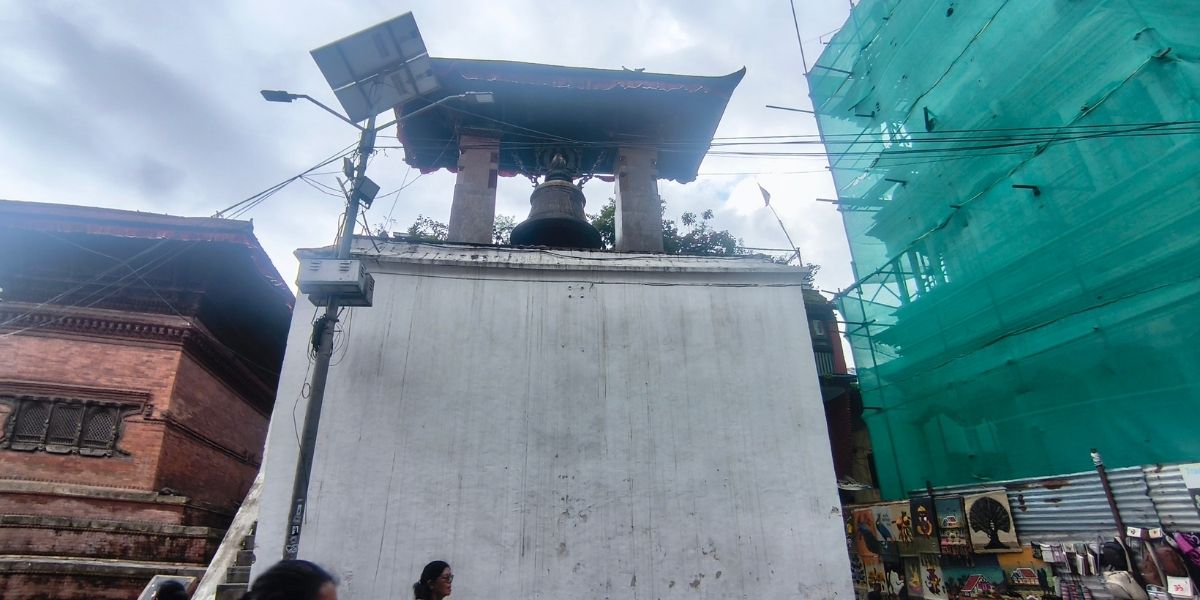
You’ll spot this monument easily as you walk towards Haathwon Dyo (Swet Bhairab). If you want to discover a hidden attraction, then there’s a miniature stupa beside the bell. Enter the alleyway with embroidery paintings on the wall and you’ll find Chiba Dya.
Degu Taleju Temple (Degu Talle Temple)
Opposite Tago Gan Bell is one of the most important temples of the square, dedicated to Goddess Taleju Bhawani. Unlike the main Taleju Temple, Degu Taleju was built later by King Shiva Singh Malla to extend the sacred site.
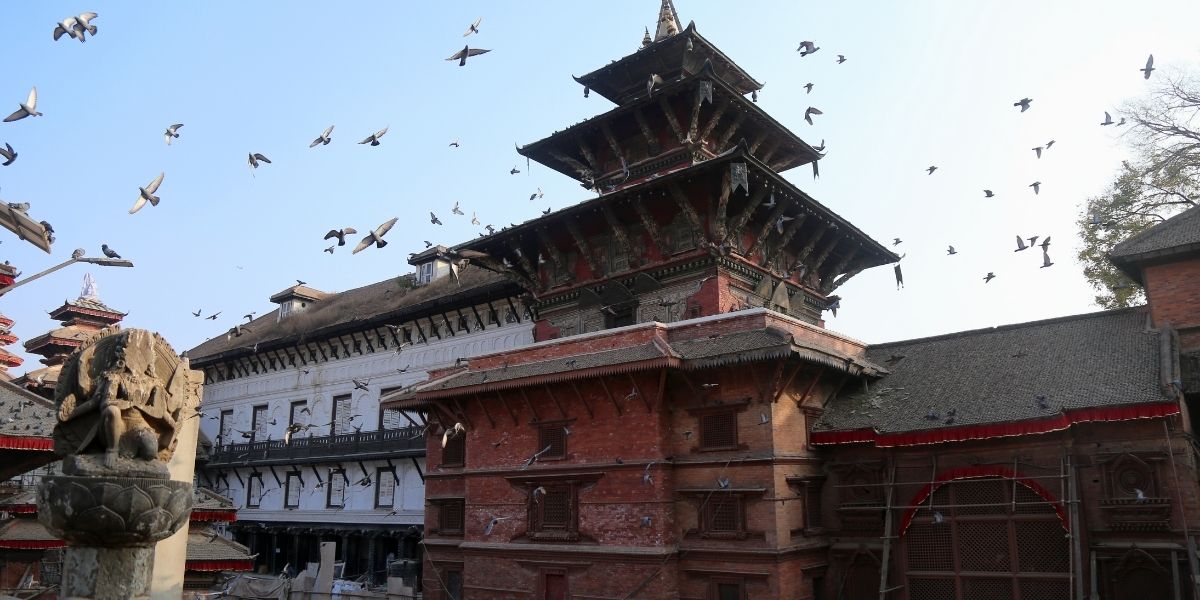
Below the temple is a wooden lattice screen covering a giant mask of Swet Bhairab (Haathwon Dyo), which is unveiled only during the Indra Jatra.
Note: The Degu Taleju Temple is open only on the ninth day of Dashain (Nawami) for the normal public, but they have to be Hindu.
Pratap Dhvaja (King Pratap Malla Column)
This is the stone pillar in front of Degu Taleju Temple, or Swet Bhairab, on a stone platform.
The stone pillar is topped by a statue of Pratap Malla praying to Taleju Bhawani, surrounded by his two wives and his five sons (including an infant).
The earthquake of 2015 had crushed it, but both have been successfully reconstructed!
Tago Bajwon (Big Twin Drums)
The Big Twin Drums sit in a small restored pavilion beside the Krishna Temple and were used to alert the people of Kathmandu during emergencies and important royal news.
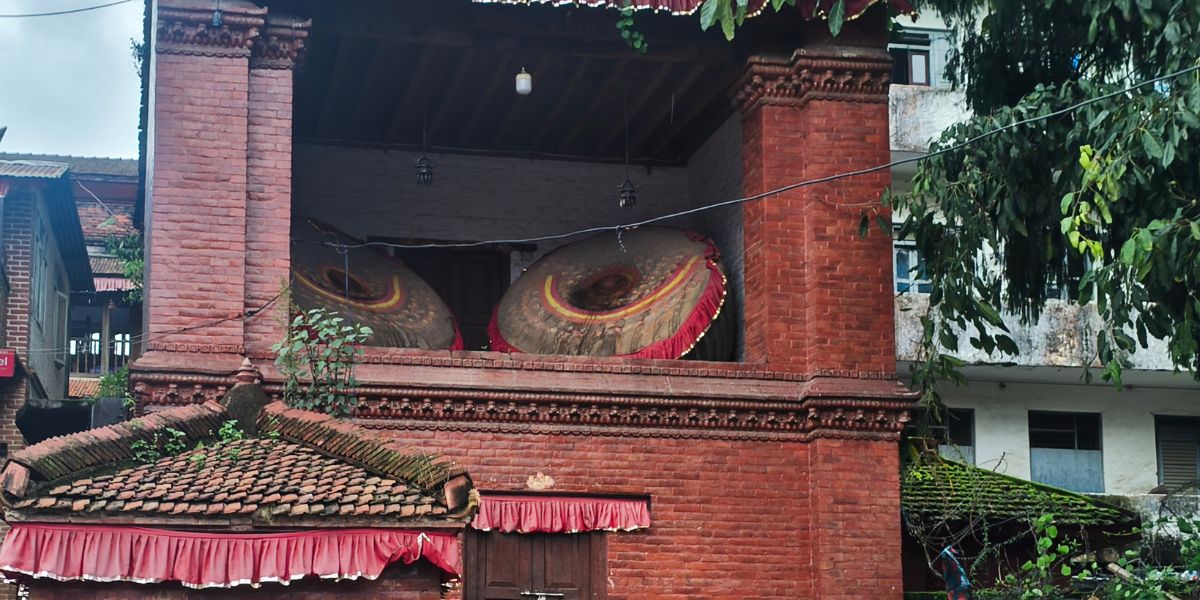
Traditionally, a goat and a buffalo were sacrificed to the drums twice a year, but this ritual has not been practiced for decades now.
Krishna Temple
Near the Twin Drums is the Krishna Temple, also known as Chyasin Dega Temple. The temple is famous for its intricate erotic wood carvings on the roof struts.
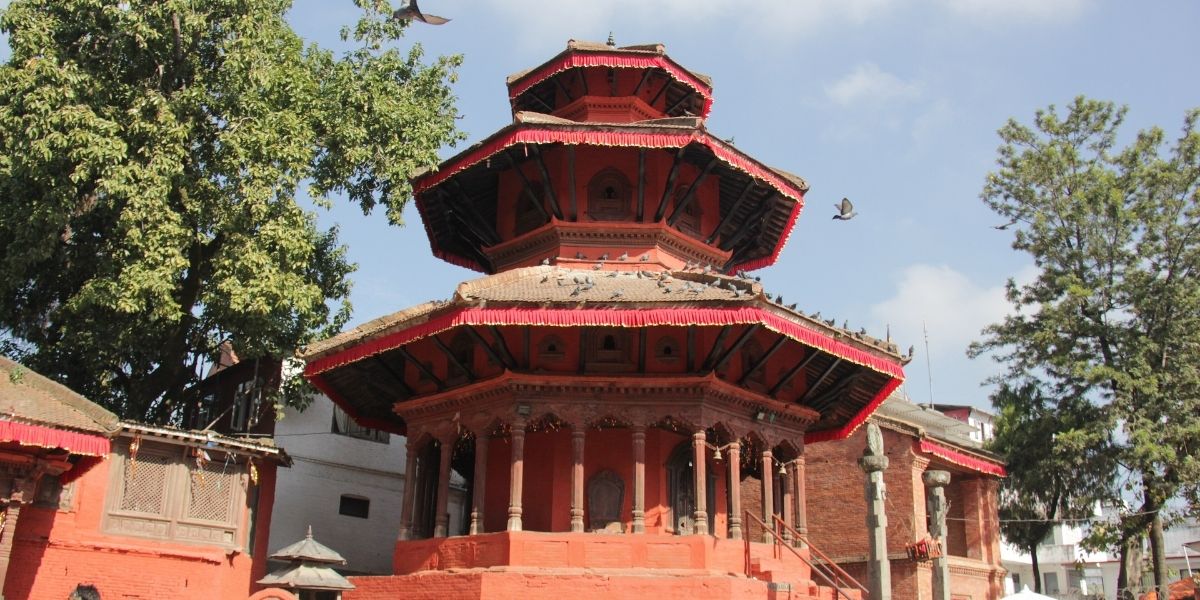
Some believe King Pratap Malla built this temple to rival the that was erected by Siddhi Narsimha Malla, whereas some say he built it in memory of his two wives.
Dedicated to Lord Krishna, it is a three-tiered pagoda-style temple standing on a raised brick platform, with a statue of Krishna accompanied by his two wives (Satyabhama and Rukmini).
Jagannath Temple
One of the four significant temples built by King Mahendra Malla, Jagannath Temple (Char Narayan), displays the architectural beauty and intricate carvings done by Newari craftsmen.
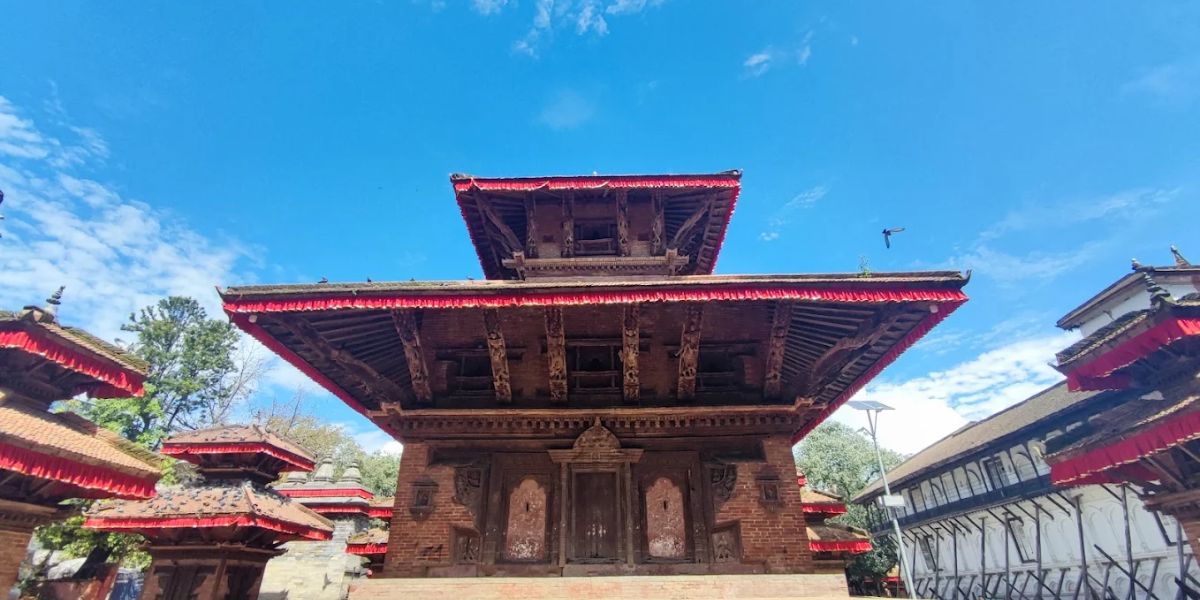
The roof struts here feature intricate carvings of couples and erotic art scenes rather than gods and goddesses. But why is that?
So, in the early days it was believed lightning wouldn’t attack if they had erotic carvings, and following this superstition, the struts had such carvings!
The temple is built using brick and wood and is one of the oldest monuments in the square!
Shree Kaal Bhairav Temple
The fierce and destructive form of Lord Shiva - Kaal Bhairav, believed to be from the Licchavi period, is believed to have been found in the field of paddy. It was installed in its present location by King Pratap Malla.
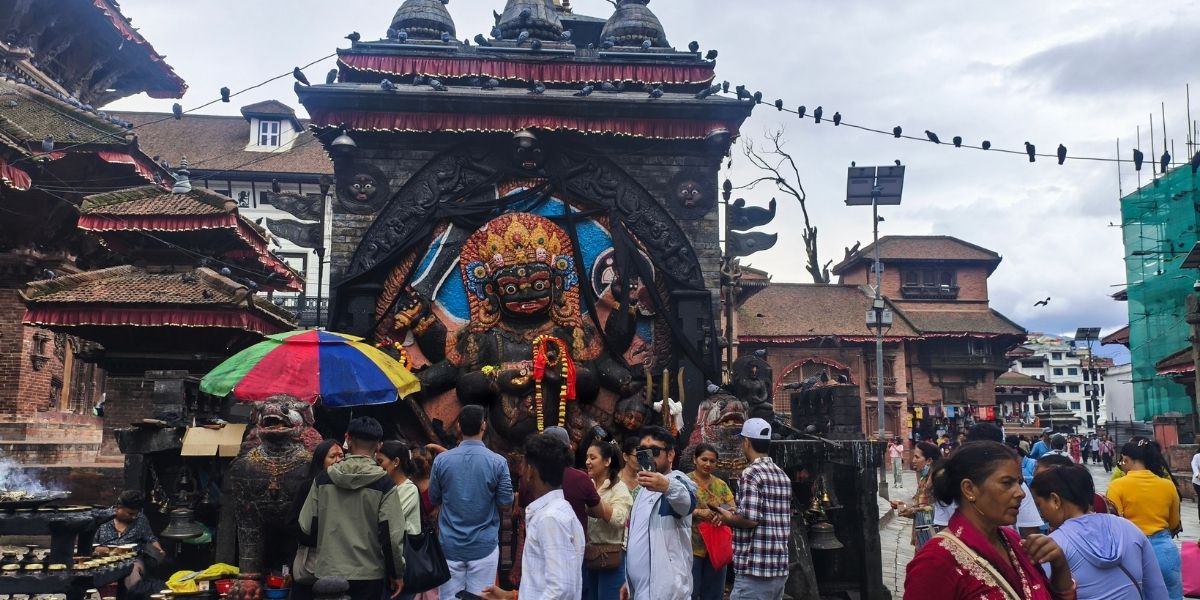
This is a massive stone statue of Kal Bhairav made from a single black stone. Kal Bhairav has six arms holding weapons, wears a garland of skulls, and stands on a corpse of evil.
The statue is heavily crowded with devotees and visitors!
Kotilingeshwar Mahadev Temple
If you look to your west after admiring Kaal Bhairav, there’s an old temple made of bricks. Unlike other temples in this area, Kotilingeshwar Mahadev Temple has domed roofs, an interesting architectural deviation from the traditional pagoda or shikhara style.
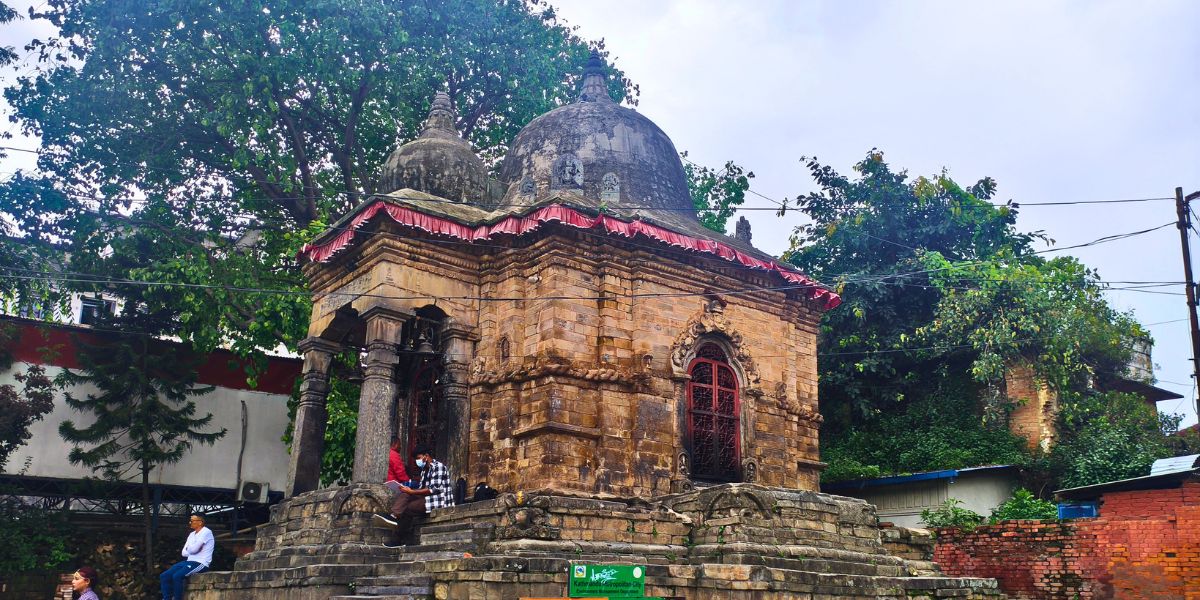
The temple has four doors in each direction, but all are locked with metal bars. When I was exploring the square, I also observed people meditating in the temple premises.
Shree Bhuvaneshwar Mahadev Temple
The name Bhuvaneshwar translates to “Lord of the universe”, a powerful title of Mahadev (Lord Shiva), and receives a huge crowd of devotees during Mahashivaratri and Haritalika Teej.
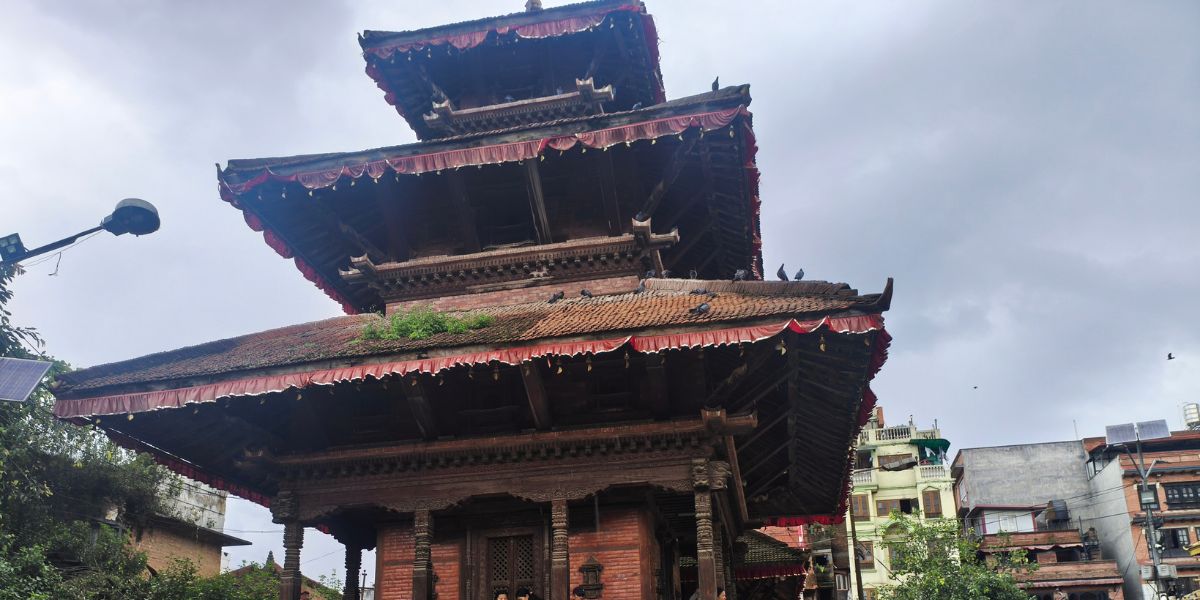
Beside the temple is a ticket counter for Kathmandu Durbar Square for international visitors who enter the square from the north direction through Layaku Marg.
Nil Barahi Temple
In the north-west corner of the main square is a small temple which goes unnoticed by many travellers.
The temple is dedicated to a fierce form of Durga (the Ashtamatrika mother goddesses) and is said to be visited by witches during the Gathemangal (Ghantakarna Chaturdasi) festival, who perform tantric rituals to ward off evil spirits.
Mahendreshwar Mahadev Temple
On the boundary of the square, across the street, is another temple dedicated to Lord Shiva. The front gate has two stone lions guarding the temple and a Lord Shiva statue on its top.
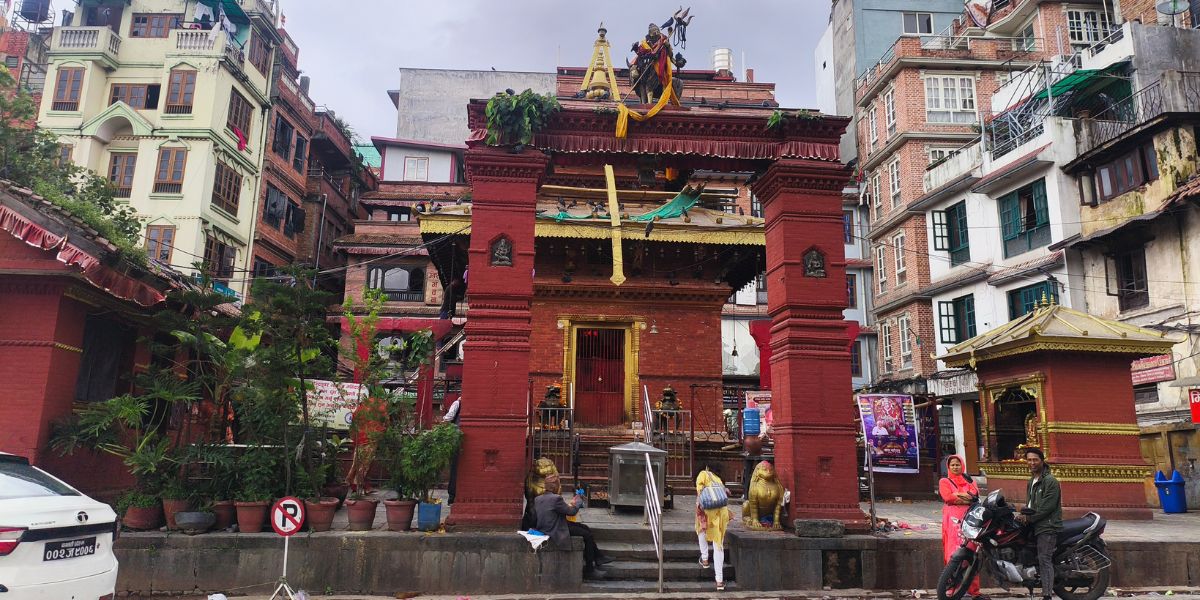
The inside floor of this temple is enshrined with a beautiful shivalinga. This is the first temple you come across if entering the square from the north through Layaku Marg.
Shree Shree Shree Mahayogi Gorakhnath Temple
In front of Mahendreshwar Mahadev Temple is a small shrine dedicated to Yogi-Saint Gorakhnath.
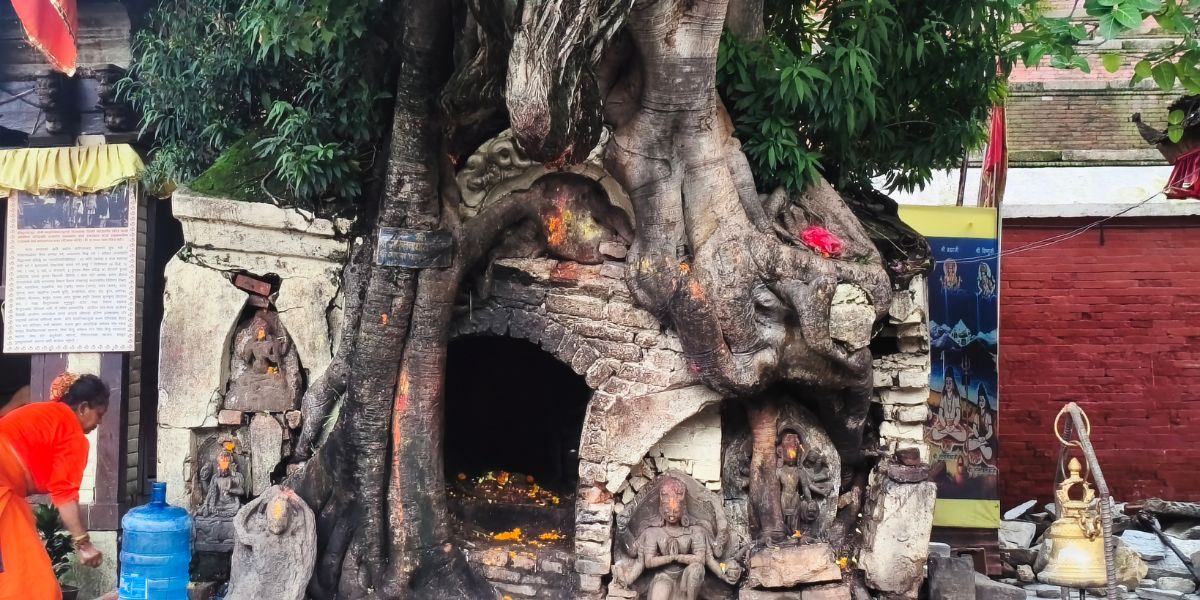
Saint Gorakhnath is a disciple of Rato Machhindranath, an important deity of rain, harvest, and crops. His shrine has a massive Peepal tree (sacred fig) growing over the shrine, making it look like the roots are protecting the shrine.
The shrine was built by Prithvi Narayan Shah after his victory over Kathmandu and honors a brass footprint of Yogi-Saint Gorakhnath.
Kageshwor Temple
In 1711 AD, Queen Bhuwan Laxmi erected this temple to honor Lord Shiva. The lower level of this temple is built in traditional Newari style, whereas the top adopts a shikhara style.
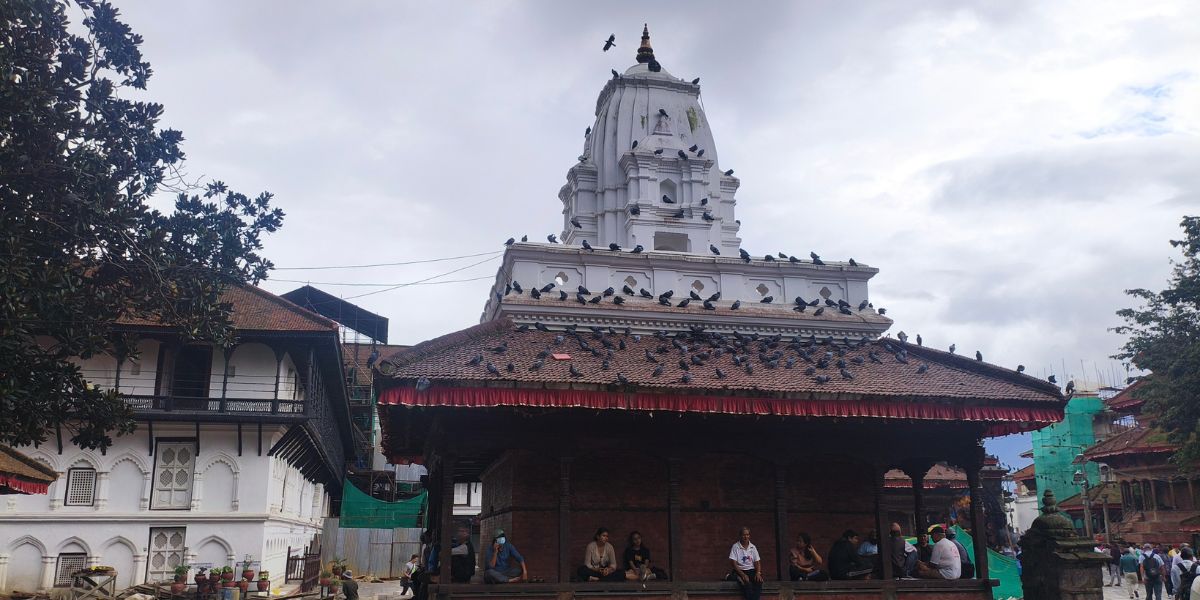
According to the art historian Mary Slusser, the temple was a Newar-style monument with two or three tiers of roofs. However, the earthquake of 1934 AD destroyed the upper levels, and was rebuilt in the sikhara style.
Amidst the Newar-style temples of this square, it really stands out because of its unique architecture.
Taleju Bhawani Temple
Taleju Bhawani Temple of Kathmandu Durbar Square was built by King Mahendra Malla in the 16th century.
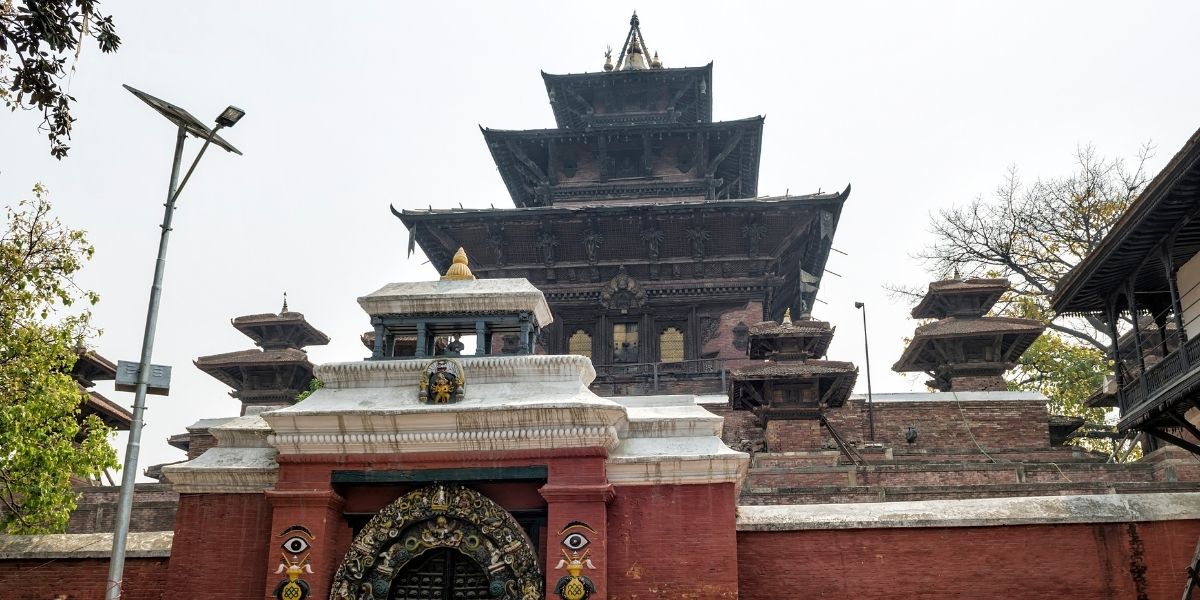
The temple is guarded by a magnificent gate, richly decorated with carvings of several gods and other legendary characters in bronze and gold. The door is guarded by a pair of stone lions.
Even before one enters the place, there is a sense of history in that entrance itself. The temple is off-limits for the entire year except for the ninth day of Dashain (Nawami), and only Hindus are permitted inside.
The temple is considered one of the most mysterious places ever seen!
Shree Mahabishnu Temple
Shree Mahabishnu Temple, is a stunning three-tiered monument atop a four-level plinth between the Jagannath Temple and Kageshwor Temple. This temple was built in the same style as most Narayana temples are built; four symmetrical portals upon a square base.
An unusual feature of this temple is that all the struts here are completely plain with no carvings of gods or goddesses. You want to know why?
Well, the reason is the 1934 AD earthquake, which heavily damaged the temple. It was later rebuilt, but the project was low-cost and hasty.
Hanumandhoka Palace Museum
Hanumandhoka Palace Museum is famous for its historical heritage and monuments, which were the residence and administrative center during the Malla and Shah eras.
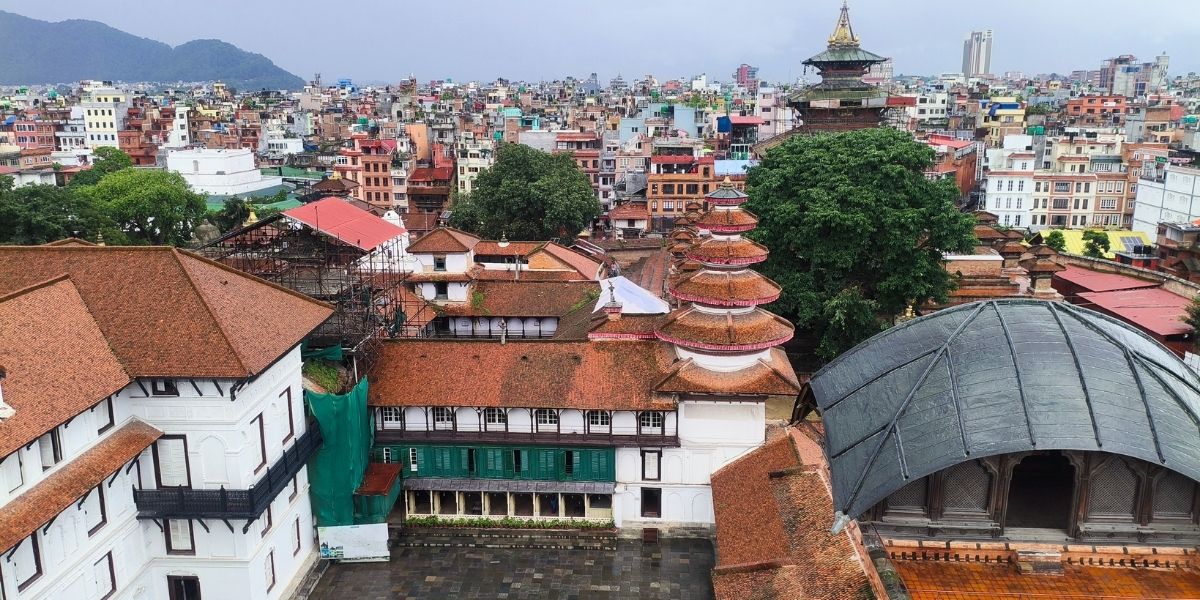
The museum is built in traditional Newari style with some Rana-period influence. The entrance of this museum has a guide board and a ticket counter, which is open every day from 9 AM to 6 PM.
Entrance fee for the museum is only applicable to Nepali visitors (at NPR 100), and students can get a 50% discount. As for children below 5 and older citizens above 70, entry is free of cost.
For tourists, the same entrance ticket to Kathmandu Durbar Square works if you wish to visit the museum.
Here are the major attractions of this museum to give you a gist of what to expect:
- Hanuman Statue: Standing by the royal door of this palace is a big statue of Lord Hanuman, erected by King Pratap Malla in 1672 AD.
- Gaddhi Baithak: Constructed by Prime Minister Chandra Shumser Jung Bahadur Rana in 1908 AD, it is a neoclassical European-style palace used to host and crown the Head of the State.
- Chowks/Courtyards: These are the traditional open-air quadrangles of historical royal palaces in Nepal, which are surrounded by multi-tiered wings. The chowks inside this palace are: Lamo, Daakh, Masan, Nhulachen, Lohan, Mul, Nasal, Mohan, Sundari, etc.
- Other Attractions: Audience Chamber, Narasimha Statue, Coronation Platform, The four towers (Basantapur, Patan, Kirtipur and Bhaktapur), Bhandarkhal Garden, Panch Mukhi Hanuman Statue, Art Gallery, etc.
Nearby Attractions
What can a traveller do if they have some time left after exploring Kathmandu Durbar Square? Well, you can allocate your extra time to explore some of the famous nearby attractions:
Old Freak Street (Jhhonchen Tole)
Old Freak Street was popular among the Hippies from the 60s till the late 70s. Hippies from different parts of the world travelled to Freak Street (Basantapur) in search of legal cannabis.
Once labelled as the place to find enlightenment, Freak Street is still popular among the locals and Hippie admirers. Though it's not the same street as it was, you can still find some essence left behind from that era!
New Road or Naya Sadak
Formerly known as Juddha Sadak, New Road is the financial hub and a busy high street near the Durbar Square area.
There’s a statue of Juddha Shumsher (who served as the hereditary Prime Minister of Nepal from 1932 AD to 1945 AD) at the intersection of the following roads in New Road:
- Sukra Path (heading north)
- New Road (heading east)
- Dharma Path (heading south)
- Ganga Path (heading west)
Commercially, New Road is flocked by thousands of locals and tourists on a daily basis. The market here offers everything: clothes, fashion, textiles, electronics, kitchenware, jewelry, and much more!
Recently, the local amendment has done massive changes in this area to elevate the beauty of this street by painting all the houses white with green windows and installing vintage-style street lamps.
This was done to revive the Rana aesthetics and clear away decades of messy overhead electric cables and modern visual clutter.
Sankata Temple
Located in Te Bahal, Sankata Temple was erected during the reign of King Gunakama Dev, but the idols of the deities were established in the seventh century during the reign of King Narendra Dev.
A legend of this temple credits Bandhu Dutta Bajracharya, a Vajrayana Guru who was skilled in Tantric practices, to have brought Sankata and Yogini into two different holy pitchers.
Every 12 years, the priest of this temple worships Sankata in a holy pitcher and Yogini in another pitcher at the Katuwal Daha in Chobhar, following secret tantric rituals.
Dharahara
At present, a 22-storey-tall tower stands proud in Sundhara, known as Dharahara (which looks like an 11-storey structure from the outside). If you’re wondering what this is, let’s turn back time to 1824 AD.
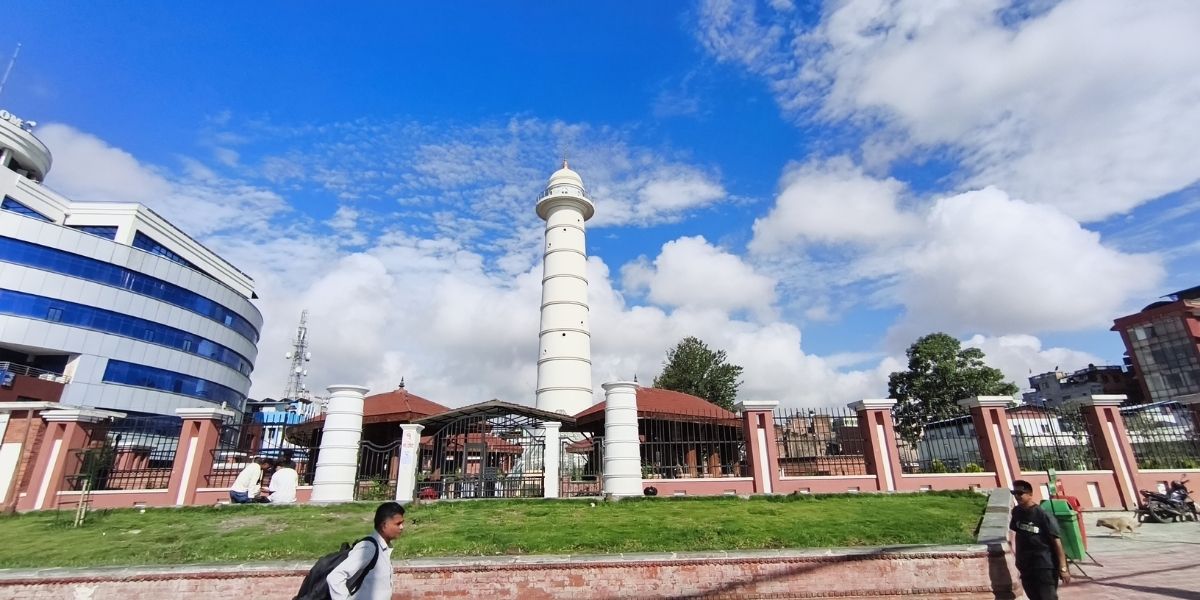
This was the year Bhimsen Thapa erected an 11-storey tower near Bagh Durbar (his private residence) and, two years later, in 1826, built a similar 11-storey tower in Sundhara.
The first tower was reduced to half by an earthquake in 1834 AD, and the earthquake in 1934 AD dealt the final blow, completely damaging it!
As for the second tower (Dharahara), it did not suffer massive damage from the earthquake in 1834 AD but was damaged after being hit by lightning in 1856 AD.
Dharahara was later restored in 1866 AD, but unfortunately couldn’t survive the Nepal-Bihar Earthquake in 1934 AD.
Two years later, in 1936 AD, Dharahara, with 9 stories, was rebuilt by Prime Minister Juddha Shumser, and he even included a veranda (balcony), restoring the pride and beauty of Kathmandu.
Alas! It could not withstand the devastating earthquake of 2015, and only the short base stump (of approx. 10 meters) remained, which remains protected. The Nepal Government then took responsibility and built a new Dharahara with 22 floors, designed to resemble the old appearance, and successfully inaugurated it on April 24, 2021.
Ascending this monument requires you to buy a ticket worth NPR 200 for Nepali citizens, where students, senior citizens, children, and people with disabilities receive a 50% discount.
Tourists from SAARC countries are charged NPR 500 per person, while those from non-SAARC nations need to pay NPR 1,000.
Lesser-Known Attractions Near Kathmandu Durbar Square
Now, let’s move on to a couple of attractions that are underrated and rarely appear in most of the articles.
These hold huge significance for the locals, but often get overlooked. If you are into exploring lesser-known attractions, then you can explore the following attractions:
|
Location
|
Attractions
|
|
Tengal & Naradevi
|
- Tyanga Ganedhyo
- Ratnakaar Vihar
- Tebu Baha Buddha Stupa
|
|
Kilagal & Bhedasing
|
- Kilagha Twa Aakha Chen
- Red Pulu Kisi Temple
|
|
Basantapur
|
- Maru Hiti
- Shakya Ketu Mahavihar
- Atko Narayan Temple
- Layaku Bahi
- Shree Tanadevi Tarani Bhawani Temple
- Kot Square
|
What to Eat in Kathmandu Durbar Square and Where?
With restaurants and cafes at every corner promising the best taste and comfort, any stranger is bound to get confused.
Three to four hours of walking will make anyone go hungry, which is why we have mentioned the best foods and drinks to have on this tour:
|
Category
|
Item
|
Detail
|
|
Traditional Newari Items
|
Samay Baji
|
A set of beaten rice, spiced meat, black-eyed peas, egg, pickle, etc. (is customizable)
|
|
Chatamari
|
A crepe with minced meat, egg, or vegetable topping, also called Newari Pizza.
|
|
Bara
|
A lentil pancake with a crispy outer crust and fluffy center.
|
|
Yomari
|
A sweet rice dumpling with a filling of either molasses (Chaku) or dried milk solids (Khuwa).
|
|
Juju Dhau
|
A traditional yogurt in a clay-pot which doesn’t fall even when placed upside down.
|
|
Street Foods & Nepali Staples
|
Mo:Mo
|
Steamed, boiled, or fried dumplings, filled with minced meat or vegetables and served with a sauce or a soup.
|
|
Sel Roti
|
Sweet, ring-shaped, and deep-fried rice-flour
|
|
Chatpate & Panipuri
|
Street snacks: a mix of puffed rice, spices, raw noodles, peas, etc., and a hollow, crispy shell with a mix of potato, peas, onions, and spices, along with special juice
|
|
Dal Bhat
|
Daily Nepali staple with rice and lentil soup at the center, surrounded by many side dishes: meat, vegetables, pickles, etc.
|
|
Local Drinks
|
Aila
|
A strong and clear traditional Newari liquor
|
|
Chhyang
|
A traditional fermented beer made from rice, millet, wheat, etc.
|
|
Chiya
|
Tea made from Nepali tea leaves and spices like cardamom and clove.
|
But where to enjoy them? Well, here are some of the best Newari restaurants and other establishments that even I visit whenever I am in Kathmandu Durbar Square and Thamel:
| Place |
Restaurants
|
Location
|
|
Thamel
|
Thirsty Newari Restaurant
|
Amrit Marg, Thamel
|
|
Pasa Newari Kitchen
|
Mandala Street, Thamel
|
|
Falo Thakali Ghar
|
Chaksibari Marg, Thamel
|
|
Yala Cafe & Coffee Shop
|
Kwabahal, Thamel Marg
|
|
Green Villy Restaurant
|
Paknajol Marg, Thamel
|
|
Graveaty Restaurant and Bar
|
Chhusya Galli, Thamel
|
|
Kathmandu Durbar Square
|
Narayan Dai ko Masangalli ko MoMo
|
Yatkha Road, near Basantapur
|
|
Breeze Rooftop Cafe & Bar
|
Near Makhan Tole
|
|
Momo King Rooftop, Makhan
|
Khadga Chuk, Basantapur
|
|
Dak-Galbi Korean House
|
Lyakusa Galli, Basantapur
|
|
Yatri Cafe
|
Near Freak Street
|
Tips for Tourists Doing this Walking Tour
Over the years, after tending to different guests and receiving their feedback, our team at Altitude Himalaya has picked up habits and gestures that differentiate a smooth tour and a frustrating one.
Any first-time visitor will have an edge over others if they know these before setting off on the tour:
- Walking before the streets get crowded will give you fewer vehicles to dodge and cleaner photographs without people in every frame. This is very useful if you’re planning a photography-focused tour.
- Unlike foreign cities, the streets here have cobblestones and brick, which catch people off guard more often than you’d expect. So it’s recommended to wear comfortable walking shoes.
- Asking locals or priests before using a camera will save you from possible disputes, as many sites like Kumari Ghar (while viewing Kumari), Shree Harati Maa Temple, Museum’s Gallery have banned photography. Many visitors try to secretly capture the moment Kumari appears, which is strictly off-limits and considered genuinely disrespectful.
- Recent efforts from the government and modernization has almost every stall and store using online payments and issuing PAN/VAT bills. Still, for travellers, cash is the easiest payment method. Or maybe if you are with a guide, you can request them to pay using online payment methods.
- There’s no dress code requiring covered shoulders like in many South Asian countries, but dressing modestly will get you a warmer response. You will also be asked to remove your shoes before stepping into temple courtyards and inner sanctums.
- Check before entering because not all sanctums you find are open to visitors. Since the exterior architecture is usually the real draw, admire the closed ones from the platform outside.
- Kathmandu Durbar Square tickets are valid only for the date of issue and won’t be reissued if you lose them, so hold onto yours carefully. Additionally, keep an image of your passport and the ticket on your phone.
- Learn some common Nepali words: Namaste (hello), dhanyabad (thank you), and kati ho? (how much?) to get a warmer response at any shop or shrine.
Safety, Scams & What to Avoid
Even though this walking tour is safe, it won't hurt to stay cautious. Think of these as advice from someone who has experienced this journey multiple times rather than warnings:
- Politely decline any stranger offering to guide you to a temple or museum, dragging you away from your original destination. Unlicensed guides might approach you in the square with inflated rates and false claims about the entry ticket being included in their fee.
- It’s rare, but you might have to deal with scammers asking for a fee for taking pictures of something. Deny them and look for guards nearby or contact the ticket counter if the person gets aggressive.
- Thamel has money exchangers on nearly every corner, some with unbelievable rates, which might give you counterfeit money. So it’s better to stick with licensed dealers only.
- Genuine antiques legally require an export certificate, and a legitimate seller will provide you with one. I suggest inquiring with the shopkeeper about such certificates before buying.
- Pickpocketing is rare, but still keep your bag zipped and close; better safe than sorry.
- Streets like Chokachhe Galli are very narrow, yet motorbikes and scooters use them constantly. It's uncomfortable, but try to stick closer to the walls in tight spaces.
- Some wandering priests might try putting tika on your forehead without your consent. Only accept if you’re prepared to leave a small donation afterward because they expect a small remuneration. You might also encounter hermits and small children asking for money, so stay aware.
- Always confirm the fare before climbing into a rickshaw, taxi, or bike; some drivers or riders tend to ask for more upon reaching the destination.
Final Thoughts
The short tour from Thamel to Kathmandu Durbar Square widens your experience and expectations for the upcoming trips in Nepal. This route had me realize how deep our cultural roots go and how ignorant we are of our own history and ancient cultures.
This route is perfect for solo travellers and group travellers alike. Taking a guide will help you dive deeper into our history and tradition, but if you are just here for sightseeing, then you may surely continue without a guide.
If you’re ready to choose this route, don’t hesitate to contact us. We shall include a government-licensed knowledgeable guide who will make this trip even more worthwhile!


 Altitude Himalaya