If anyone asks me about a trek in Nepal that’s best suited for beginners, one from my suggestions list would be the Langtang Valley Trek.
It is a short adventure with easy-to-moderate difficulty that takes you into a high-altitude region while offering breathtaking views of the Langtang and Jugal Himal ranges.
That said, you are still heading to the mountains. So, there are variables that can affect your trekking experience, which is why pre-planning is absolutely essential.
Unpredictable mountain weather, accommodation limitations, and cultural nuances can all directly and indirectly shape your time in the Langtang region.
Now that you are here, let me walk you through everything you need to know on how to prepare for Langtang Valley Trek properly. No more surfing around, I promise!
Langtang Valley Trek Pre-Trip Planning
Even before planning your trip to Nepal, there are certain things to keep in check. These are things you should decide beforehand so you won’t have to take the hassle in the final moments:
Pick the Right Season and Weather Window
The best time to do the Langtang Valley Trek is in spring and autumn. That is a basic fact that applies to every trekking region in Nepal.
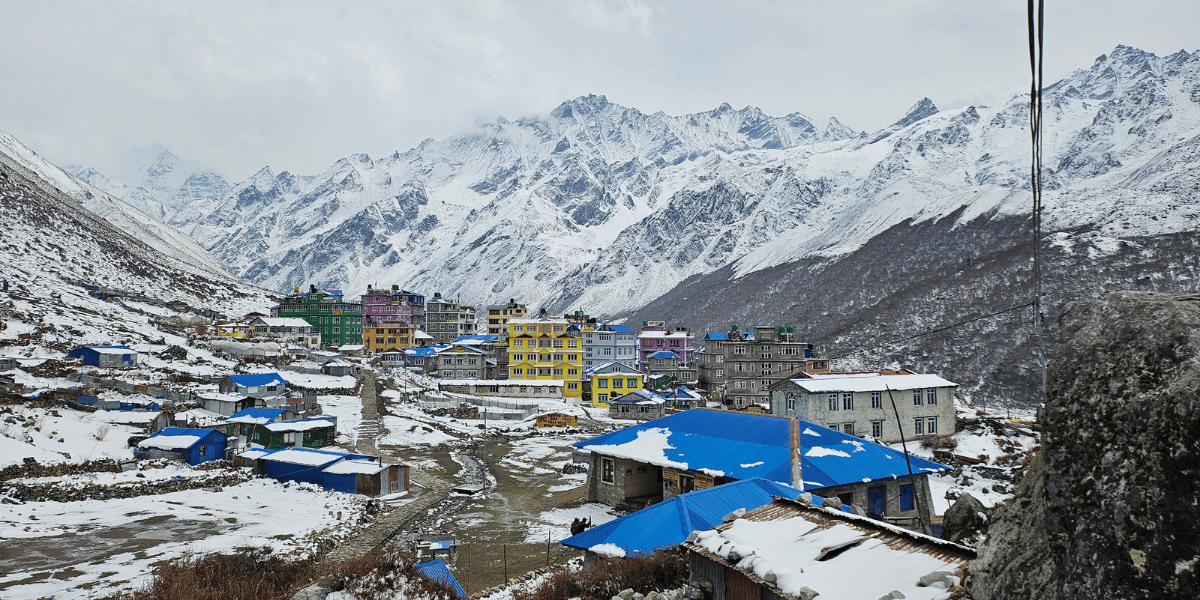
But what nobody tells you is that ‘climate change’ has affected the mountains enough that relying too heavily on the season alone is no longer a smart move.
What you also need to pay attention to is the appropriate weather window within your chosen season. Of course, spring and autumn are known for clear skies, stable weather, and pleasant temperatures. That is all true, but it does not apply to every single day.
Our Altitude Himalaya Content Team experienced this firsthand. During our trek in March 2026 (the start of spring), we could not reach the summit of Tsergo Ri (4,985 m). Four feet of snow in the final section was a serious safety threat that forced us to turn back.
Also, a snow squall in the evening made our stretch to Langtang Village more difficult than expected. And our planned sunset hike to Kyanjin Ri was called off, prompting us to change our plans to visit here the next day.
This surely gave our team a big lesson: do not plan too tight. Always include buffer days!
And for all international visitors: a 15-day visa might look sufficient for the Langtang Valley Trek. But opting for 30 days gives you better flexibility to adjust to a better weather window and explore more of Kathmandu or other parts of Nepal.
Here is a general seasonal breakdown to help you decide:
|
Season
|
Months
|
Pros
|
Cons
|
|
Spring
|
March - April
|
Blooming rhododendrons, clear mountain views especially in mornings, ideal temperatures
|
Higher crowds, unpredictable weather especially in early spring
|
|
Summer
|
May - June
|
Chance of good mountain views, fewer crowds, ideal temperature
|
Moderate chances of rainfall
|
|
Monsoon
|
July - September
|
Very few crowds, great for cultural exploration
|
Heavy rainfall, poor road and trail conditions
|
|
Autumn
|
October - Mid November
|
Best mountain views, clearest skies, ideal temperatures
|
Road conditions can remain poor, some rainfall and snowfall chances, busier trails
|
|
Winter
|
Late November - December
|
Excellent mountain views, clear skies
|
Cold temperatures, chances of snowfall
|
|
Late Winter
|
January - February
|
Best for adventure seekers, good mountain views when skies are clear
|
Extreme temperatures, high snowfall chances
|
Choosing Agency vs Trekking Independently
Honestly, traveling in the Langtang region does not require booking through a trekking agency or going with a guide. Independent trekking is allowed here!
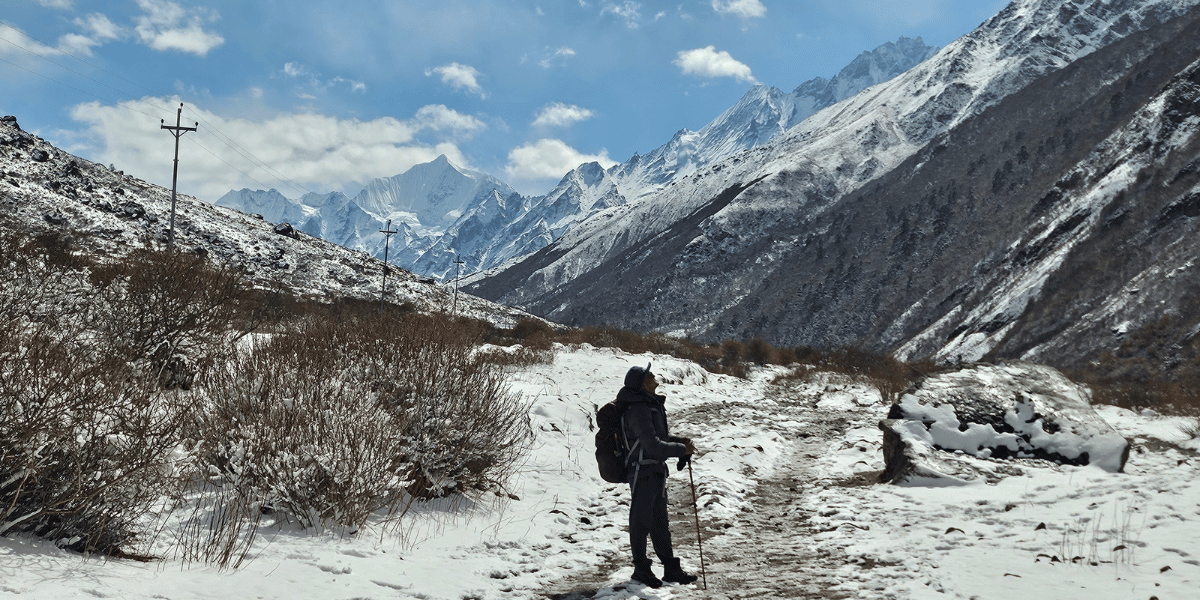
But what that really means is you handle everything yourself: permits, safety planning, gear management, health monitoring, and accommodation. During peak season, finding a teahouse on short notice can be twice as difficult without pre-arrangements.
That is when picking a reliable agency like Altitude Himalaya makes a real difference. We organize both private and group join treks. So, even if you are coming solo, we handle your logistics and safety from day one.
For foreign trekkers, especially, I personally strongly recommend going with a government-registered trekking agency. This is because Langtang is a mountainous region with real risk factors. And having professional support is not just a convenience; it is a safety decision!
Destinations and Itinerary Finalization
The most preferred Langtang Valley Trek itinerary looks like this:
- Day 1: Kathmandu to Syaphru Bensi Drive.
- Day 2: Syaphru Bensi to Lama Hotel.
- Day 3: Lama Hotel to Langtang Village.
- Day 4: Langtang Village to Kyanjin Gompa, Evening hike to Kyanjin Ri.
- Day 5: Tsergo Ri hike, Kyanjin Gompa Exploration.
- Day 6: Return to Lama Hotel.
- Day 7: Lama Hotel to Syaphru Bensi, Drive Back to Kathmandu.
That is a well-curated 7-day itinerary from not just Altitude Himalaya but multiple reliable trekking agencies that covers the main Tamang villages and these key destinations:
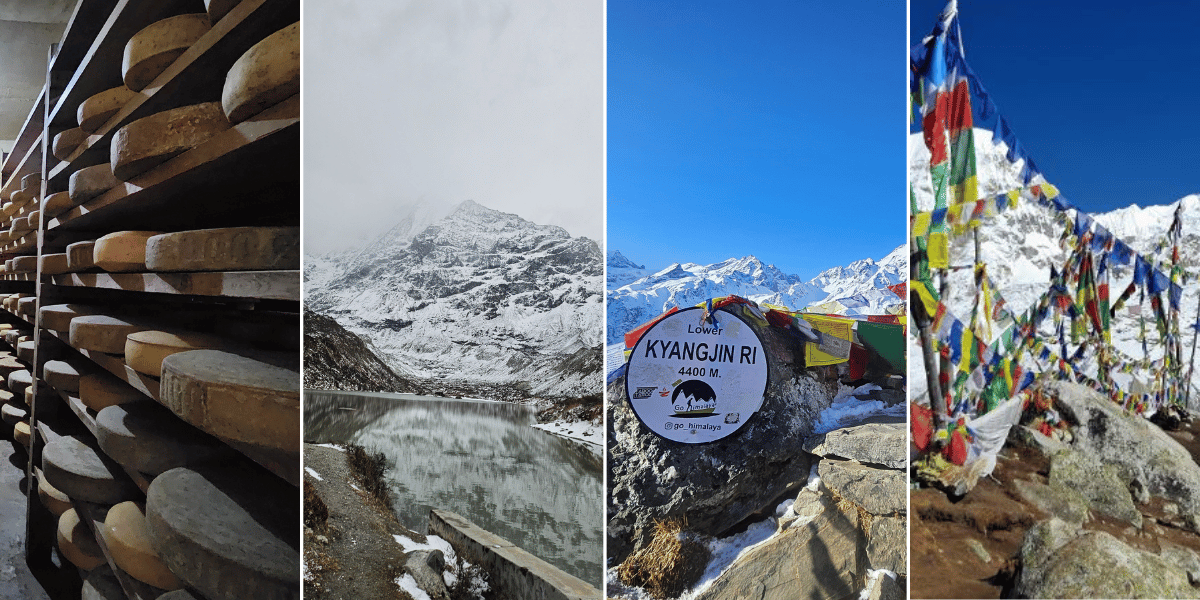
- Organic Yak Cheese Production Centre: Located in Kyanjin Gompa (3,890 m), you can enjoy locally produced yak cheese, yak curd, and churpi here. The staff here will even walk you through the production process if you ask.
- Lirung Glacial Lake (3,960 m approx.): Fed by glaciers from Langtang Lirung (7,234 m) and Kimshung (Tsangbu Ri, 6,781 m), it is the source of Nepal's first glacial lake hydropower project, generating 100kW of electricity. Many trekkers miss it, but since you are spending two nights in Kyanjin, you should definitely take time to visit here. It’s also popular among locals as ‘Langtang Glacial Lake’ or ‘Kimshung Glacial Lake’.
- Kyanjin Ri (Lower at 4,400 m and Upper at 4,700 m): Two viewpoints that are ideal for sunrise and sunset hikes. They bring you close to Langtang Lirung and are perfect for beginners who are not ready for the longer Tsergo Ri hike. I have been to both, and I’ll suggest both.
- Tsergo Ri or Tserko Ri (4,985 m): The highest point of the Classic Langtang Valley Trek. Start early (3 to 4 AM) to get a full 360-degree view of the surrounding Langtang and Jugal mountain ranges.
Combining arrival and departure days with possible Kathmandu exploration, your total trip can reach 10 to 12 days!
And if your agency allows itinerary customization, you can also add:
- Langshisa Kharka (4,050 m): Known for wide open grounds and towering views of Langshisa Ri. An extra day within the same itinerary makes this possible.
- Yala Peak South (5,520 m): A non-technical trekking peak within the Langtang region, perfect for those considering peak climbing for the first time.
- Gosaikunda Trek addition (4,380 m): The trail diverges somewhere between Pairo and Dhomen. From there, you can reach Thulo Syaphru and connect to the Gosaikunda trail via Cholangpati. It takes at least 8 to 10 days for this.
- Tamang Heritage Trail: A 3-to-4-day cultural route from Gatlang to Briddhim passing through more Tibetan-influenced Tamang villages, ancient monasteries, and unique local experiences before connecting to the main Langtang Valley.
The Langtang region is much more than just the valley itself, with several attractions. Deciding your destinations in advance helps you figure out exactly how long a vacation you need and which visa duration to apply for.
Travel Insurance
Travel insurance is not a legal requirement for the Langtang Valley Trek unless you want to include the Tamang Heritage section.
That is because certain parts of Tamang Heritage are within Gosaikunda Rural Municipality wards 1 and 2, which are restricted areas.
But even if you’re planning only the Langtang Valley Trek, I say you shouldn’t skip travel insurance at all. That is because a good policy covers your unexpected financial losses during emergencies.
So, before coming to Nepal, make sure to get insured from a reputable insurance provider. All you have to do is fill out their form accurately, declaring your health status. Moreover, you need to make sure that your policy covers the following:
- High-altitude trekking up to 5,000 meters (essential if you are planning to hike Tsergo Ri)
- Altitude sickness treatment and medications
- Emergency helicopter evacuation fee
- A sufficient number of coverage days (at least 10, as per most itineraries)
- Repatriation in case of serious emergencies
- A multi-trip policy (if you are planning to explore beyond just the Langtang Valley), etc.
Booking Your Flight
Now that you have picked your dates, chosen a trekking agency, finalized your itinerary (after communicating with the tour operator), and sorted your insurance, it is time to book your flight. And like I said earlier: not too early, not too tight.
Just a few things to keep in mind, and you should be good to go:
- Flight rates fluctuate during peak trekking and festive seasons, so monitor prices regularly before committing.
- Include buffer days before and after your trek. Even if your package has fixed arrival and departure dates, arriving 3 to 5 days early and leaving 2 to 3 days after the trek ensures you are well rested and can adjust to any delays.
- Your return flight is especially important. Bad weather can delay your trek, and having flexibility at the end prevents a stressful situation.
- A reliable trekking operator (like ourselves) can help you start the trek during the most favorable conditions, but only if your schedule has extra days built in. So, consult with them (even though the flight prices aren’t included, we help recommend the best flights).
Honestly, the most ideal booking window is 4 to 8 weeks in advance. This balances price, availability, and flexibility without locking you into rigid dates too early.
Budgeting For Langtang Valley Trek
There is no single standard rate for the Langtang Valley Trek. The cost varies depending on the operator and what is included. At Altitude Himalaya, our classic trek package starts at USD 1,280 per person on a private basis and covers the following:
- Airport pickup and drop-off
- Kathmandu sightseeing with entrance fees and a government-licensed guide
- Private Jeep for Kathmandu to Syaphru Bensi Drive and return
- 3 nights of Kathmandu hotel accommodations and 6 nights of teahouse stays during the trek
- Breakfast in Kathmandu and all three meals on the Langtang trail (including packed lunch on the Tsergo Ri hike)
- Langtang National Park Entry Permit and TIMS card (if required)
- A government-licensed trek guide (with the option to add a porter at an additional daily cost)
One thing that confuses many trekkers: agencies only cover what is explicitly listed in the package’s ‘PRICE INCLUDES’ section.
For anything extra, like hot showers, cold drinks, snacks, or personal items, you pay on your own. This means you need to carry additional Nepali cash.
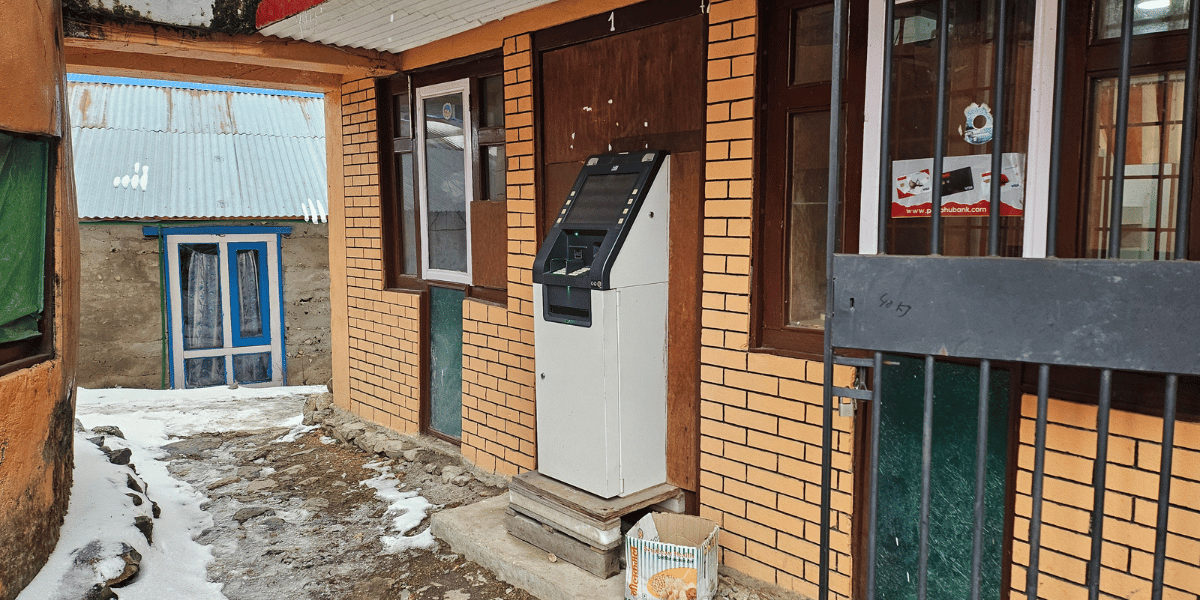
While there is one ATM in Kyanjin Gompa, it may not always be operational. So, get your cash ready in Syaphru Bensi (or from Kathmandu itself) before heading up. Allocating at least USD 50 to 100 for emergencies is a smart idea.
And note that there’s a tipping culture in Langtang (like every other trekking region in Nepal). So, budget a little to provide tips too (even for donations in monasteries)!
I suggest tipping your guide, porters, and drivers around 10% of your overall Langtang Trek cost. However, this is just a rough estimate, but you can go a little higher or lower too (all up to you!).
Beyond the Langtang package, I haven’t mentioned your flight booking, trekking gear, souvenirs, and other random expenses that shall definitely come up during your Nepal trip. All these can add up to your overall trip budget, so keep these factors in mind as well.
Of course, trekking independently does cost less since you skip agency and guide fees. But there is no professional support in emergencies. That trade-off is what I leave for you to decide.
Physical and Mental Preparation for Langtang Trek
Let’s now come to the difficulty level of the Langtang Valley trek. Honestly, this is one of the most achievable trekking destinations in Nepal, even for complete beginners!
But that does not mean you should take it lightly. Even small oversights in your preparation can make the trek harder than it needs to be. This is even more true when the weather throws surprises along your way.
Preparing your body prior to the 6 to 7 day long days ahead, not just physically but also mentally, is absolutely essential. Allow me to explain properly how to prepare properly for trekking in Nepal.
Maintain Your Fitness Level

Strong cardiovascular endurance and leg strength are the basics for any Himalayan trek like this one. And here is a general practical approach to get there:
- Start physical training at least a month before your trip.
- Running, cycling, or even 30 to 45 minutes of staircase climbing daily is a great foundation for building cardiovascular endurance.
- For muscle strength, squats and lunges work well even without a gym.
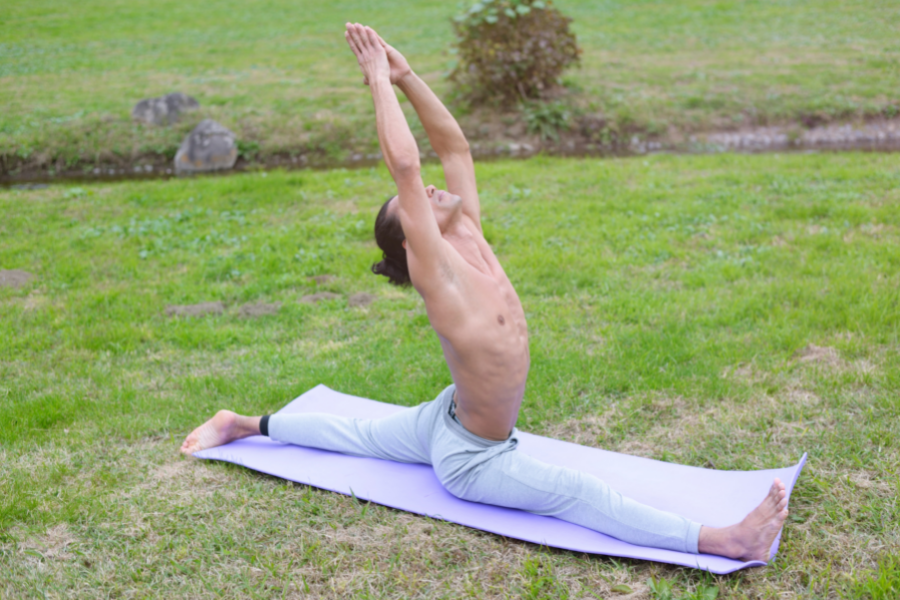
- Yoga is also excellent for improving hamstring, calf, and quad mobility (if you focus on these relevant asanas).
The goal is to be comfortable walking 6 to 7 hours per day while carrying an 8 to 10 kg trekking bag.
Even if you plan to hire a porter for your main bag, you will still carry a daypack throughout the trek. So, training/hiking with a loaded backpack a few weeks before the trip is one of the most practical things you can do.
Plan Your Diet
Secondly, your diet matters more than you think. While the Langtang region does offer plenty of food options, you’re still going to rely heavily on the popular Nepalese food, Dal Bhat.
Even before your trek begins, you should start preparing your body with the right nutrition. Don’t worry! I’m not telling you to follow a strict diet plan. What I’m suggesting is to start eating balanced meals that support your training.
You should strictly avoid starting your Langtang trek with a deficit. That’s because your body needs fuel reserves to perform at altitude. Here’s a general idea on what you should focus more on:
- Carbohydrates for energy (sources: rice, oats, potatoes, whole grains)
- Proteins for muscle recovery (sources: eggs, lentils, nuts, chicken, etc.)
- Healthy fats (sources: vegetable oil, seeds, nuts)
Now, during your trek, things can slightly take a turn. Your body demands more energy, so carbohydrates are your best friend!
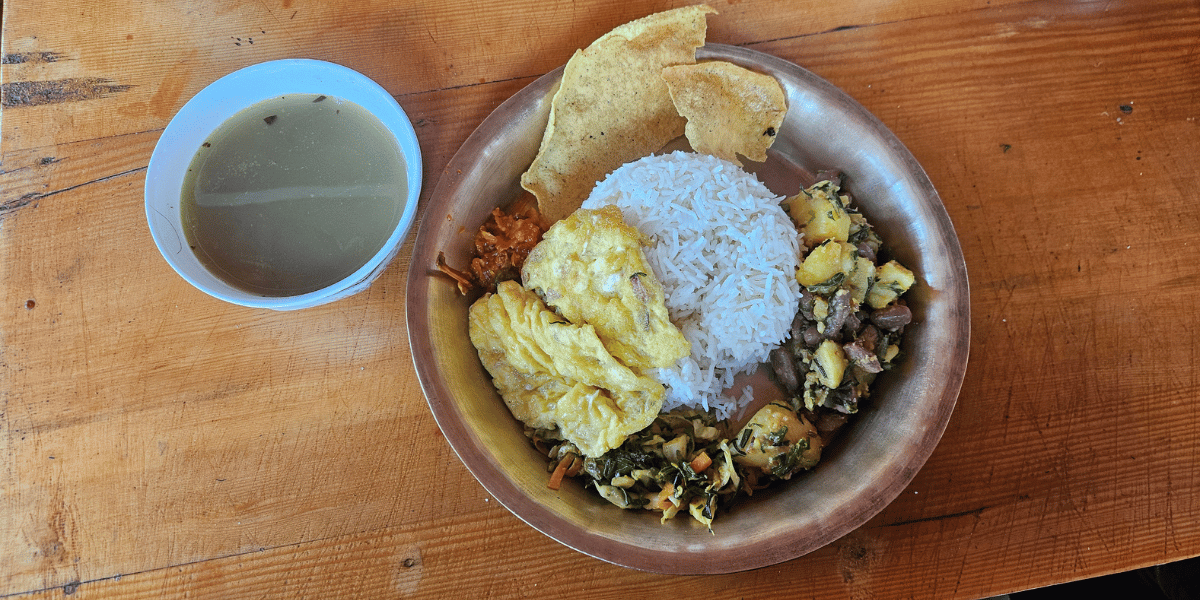
Dal Bhat becomes the go-to option. In fact, you’ll hear teahouse owners and even your guide tell you the importance of 'Dal Bhat Power 24 Hour’. What it means is that this high-carb diet isn’t just filling, but it’s easily digestible and keeps you going throughout the day!
Moreover, teahouses offer unlimited Dal Bhat refills, which also makes it the most practical and economical choice on the trail.
Here are other options you’ll find:
- Tibetan bread, chapati, porridge (for breakfast)
- Noodles, fried rice, pasta, soups for meals (for lunch and dinner)
And do not forget this: hydration is equally important. Try to drink at least 3 to 4 litres of water daily (can add electrolytes too).
One thing I strongly do not recommend doing at high altitudes is overeating meat. And it’s for solid reasons: storage conditions are limited, and digestion becomes slower.
Instead, rely more on:
- Soups (garlic soup is very popular)
- Hot drinks like ginger tea
- Light and energy-rich snacks
Examine Health Conditions
Before departing from your country, consult a doctor and get a general health check. This is especially the case if you have any pre-existing cardiovascular, respiratory, or blood pressure condition.
Be sure to inform your doctor of the persisting conditions so it helps him/her decide whether your body is ready to plan the trek up to nearly 5,000 meters.
Most of you should be able to reach 3,890 meters at Kyanjin Gompa or even Lower Kyanjin Ri at 4,400 m. But still, getting yourself checked before making the decision is always a SAFE APPROACH.
And don’t forget to carry a basic personal medical kit including pain relief, anti-diarrheal medication, blister treatment, and any prescription medications you take regularly.
Good news, booking treks with Altitude Himalaya. Our professional guides learn about health difficulties and plan the trek accordingly.
Be Wary of Altitude Sickness
Altitude sickness is not a major concern on the standard Langtang Valley route since most of the acclimatization happens gradually as you follow the trail.
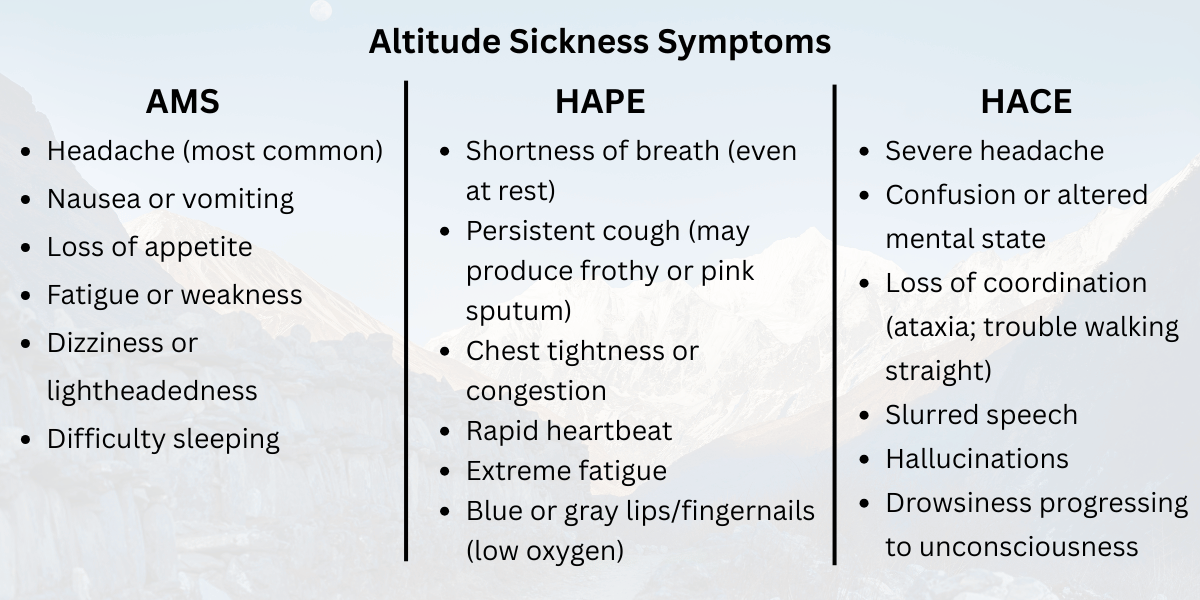
However, since you are sleeping at 3,890 meters at Kyanjin Gompa and pushing close to 5,000 meters on the Tsergo Ri and Kyanjin Ri hikes, the risk is still real and worth taking seriously.
You cross the 3,000-meter mark after reaching Ghoda Tabela (3,008 m). From here, pay special attention to how your body is responding.
Most standard itineraries (including the one I shared earlier) include a night in Langtang Village followed by Kyanjin Gompa, which gives your body a reasonable acclimatization curve.
Still, watch for early signs of AMS, including persistent headache, nausea, dizziness, loss of appetite, and disturbed sleep.
On the Tsergo Ri hike, especially, listen to your body rather than pushing unnaturally. The altitude gain is significant, and the hike is long.
If something feels off, communicate with your guide immediately and turn back if necessary. Remember: no viewpoint is worth a health crisis!
In case symptoms appear, the right response is to stop ascending, rest, hydrate, and descend to a lower altitude if they do not improve within a few hours.
I’ve personally seen trekkers consuming Diamox (acetazolamide) with little knowledge. Yes, it indeed is meant to help with prevention and mild symptoms, but such medications can lead to side effects.
So, only consider consuming it 24 to 48 hours prior to ascending to high altitude, and most importantly, after consulting a doctor beforehand.
Prepare Mentally Too!
Mental preparation is just as important as physical fitness, and it is the part that many beginners overlook. This is what you need to keep in mind before even your Nepal journey begins: ‘I will have to walk with a backpack for 6 to 8 hours every day’.
Going slow and at a comfortable pace should be your goal. Don’t try keeping up with other trekkers or worry about being left behind.
When you’re with a guide, he/she shall walk with you, not ahead of you. But in case you and your group are trekking independently, follow that above principle at all cost.
Before the trek, mentally prepare for the possibility of poor weather too. What to do if it rains heavily? What if there is unexpected snowfall?
Talk to your guide in advance and make a solid plan. These conversations before the trek shapes better decisions during it.
Also, do not just aim to complete the trek. Set an intention to learn something about the culture, the people, and the landscape along the way. Trekking in the Langtang region is as much a cultural experience as it is a physical one.
And one more thing: trekking does not always mean company. There will be stretches where you may have to walk alone (especially when done independently).
So, know the route well (the Langtang trail is straightforward with no confusing forks), stay on the marked path, and enjoy the solitude when it comes. More on this later!
Packing Preparation for Langtang Valley Trek
A 6 to 7 day trek calls for light to moderate packing. Not too much, not too little.
That said, it also depends on the season, trail conditions, your weather window, and how much weight your body can comfortably carry.
The ideal trekking bag for Langtang is 8 to 10 kg. If you are hiring a porter for your main bag, a daypack of 3 to 5 kg is what you carry on the trail.
But remember: your total packed weight shouldn’t cross 20% of your body weight. If it does, a porter is worth considering!
But since Langtang is a short, beginner-friendly trek, most trekkers manage without one.
Overpacking is a common mistake among trekkers. So, pack only what is essential, and do it in a way that keeps you balanced and physically comfortable over long walking days.
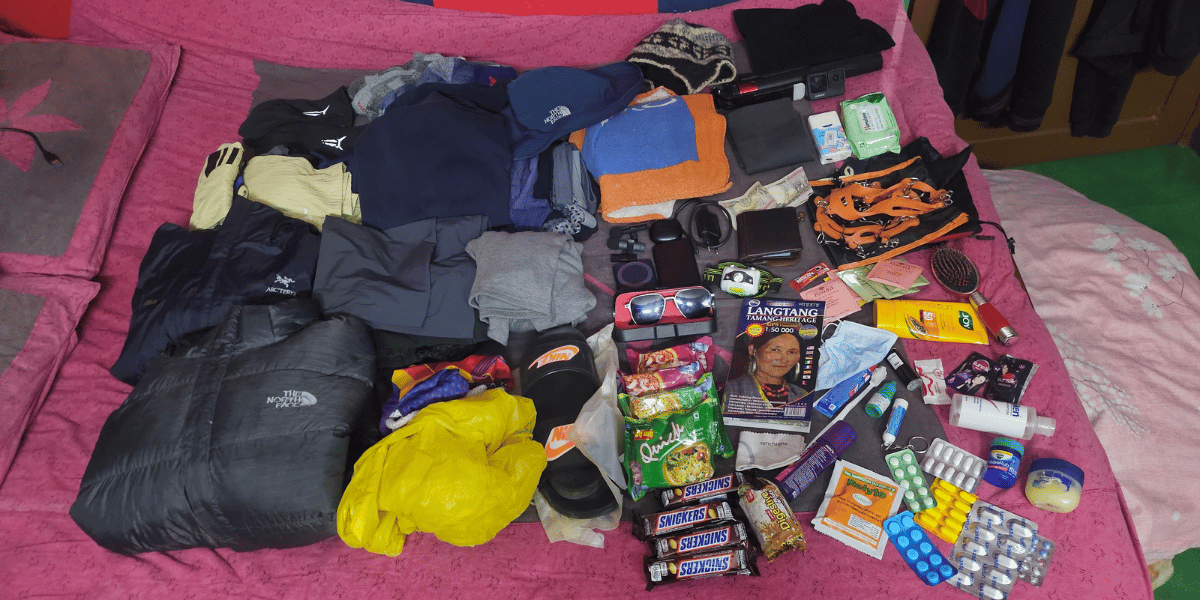
For a full, detailed packing list for Langtang Valley Trek, here’s your reference guide:
- Head and Eyewear:
- Beanie / ear-flap hat
- Buff / neck gaiter / balaclava
- Sun hat or cap
- Mountain sunglasses / polarized clips
- Clothing:
- Inner layer: Quick-dry undergarments, sports bra (equivalent to no. of trekking days)
- Base layer: Trekking shirts (x2), thermals (x1 pair)
- Mid layer: Fleece / merino wool / insulated down or synthetic jacket (x1)
- Outer layer: Hard shell jacket or windbreaker (x1)
- Bottom layer: Trekking pants (x1), shorts (x1, optional), optional leggings
- Sleepwear: Comfortable lightweight night clothes (x1 pair)
- Hand and Foot Wear:
- Waterproof gloves (all seasons) + warm spare pair (for winter)
- Trekking socks (equivalent to no. of trekking days)
- Waterproof hiking boots
- Sandals / flip-flops
- Trekking Gear:
- Trekking poles
- Crampons / microspikes
- Main backpack (50 to 60L)
- Daypack (10 to 20L)
- Rain poncho / rain shell
- First Aid and Medicines:
- Altitude medicine (Diamox / acetazolamide)
- Painkillers and paracetamol
- Cough / cold medicines
- Bandages / blister care
- Other personal medications
- Toiletries and Personal Care:
- Quick-dry towel
- Sunscreen SPF 50+
- Lip balm or petroleum jelly
- Wet wipes / tissues
- Hand sanitizer
- Soap / shampoo (dry shampoo recommended)
- Toothbrush & toothpaste
- Electronics:
- Chargers of all your devices
- Power bank (10,000 mAh should be enough)
- Headlamp (early morning hike to Tsergo Ri and possible evening return from Kyanjin Ri)
- Travel adapter (compatible with Nepal’s voltage: 230 V, 50 Hz frequency)
- Snacks and Hydration:
- Water bottle / thermos
- Water purification tablets (optional; fill bottle with boiled water at different stops or even possible to purchase processed drinking water)
- Electrolytes
- Energy bars / chocolates / nuts (of your choice)
- Documents and Permits:
- Passport & visa (15-day enough but 30-day recommended)
- Travel insurance and copy
- Nepali cash
- Passport-sized photos
- Langtang National Park Permit and optional TIMS card (your guide carries it)
What to Do After Arriving in Nepal?
Landing in Kathmandu for the first time can feel a little overwhelming. The airport is busy, the city is loud, and the energy is completely different from what most international travelers are used to.
But once you settle in, you will realize that Kathmandu has a way of growing on you quickly. Before the trek begins, there are a few practical things to sort out and some genuinely worthwhile experiences to have in the city.
Here is exactly what to do from the moment you land:
Getting Nepal Tourist Visa: How Long to Apply For?
Nepal offers an on-arrival visa for citizens of most countries. Only some others require prior approval. You can complete details in our dedicated guide to Tourist Visa Information.
This process at Tribhuvan International Airport is straightforward. All you have to do is fill out the visa form either online via the Nepal Immigration online portal before arrival or at the on-arrival kiosks at the airport.
The entry fee is USD 30 for 15 days, USD 50 for 30 days, and USD 125 for 90 days (USD 3 per day). Like I mentioned earlier, for the Langtang Valley Trek, a 30-day visa is recommended to give you enough buffer before and after the trek.
Furthermore, you need to make sure your passport has at least 6 months of validity from your date of arrival. Carry two passport-sized photos and payment can be made in major foreign currencies (like USD) and by card at most counters!
Go For Sightseeing in Kathmandu
Going straight from the airport for the Langtang trek without spending any time in Kathmandu would be a missed opportunity, honestly.
Nepal's culture, history, and heritage are deeply rooted in this city, and understanding even a little of it makes your Langtang Valley experience much richer! At a minimum, visit the UNESCO World Heritage Sites within the Kathmandu Valley.
The four ones within the Kathmandu district are:
At Altitude Himalaya, we include a guided Kathmandu sightseeing day covering four of these sites within the Kathmandu district as part of our standard package. That’s our unique idea to give you a clear cultural context before you begin the trek.
Last-Minute Shopping: What and Where to Buy?
If you are spending your night in Thamel (which is the trekker's hub of Kathmandu), you are already in the right place!
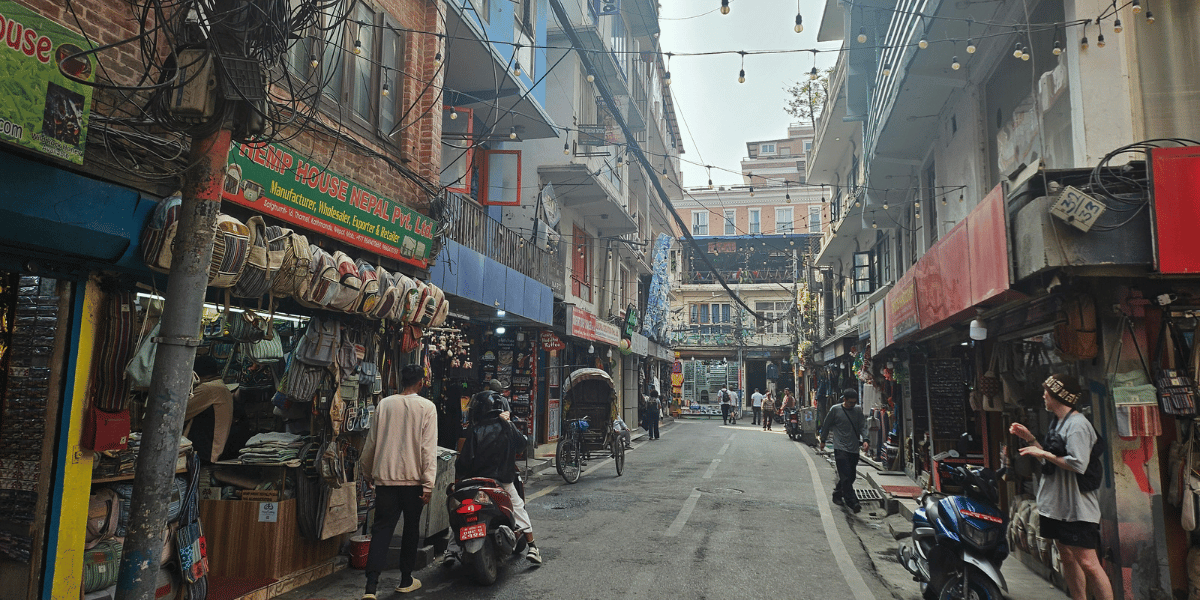
The moment you step outside, you will find dozens of trekking gear shops offering everything from base layers and trekking poles to headlamps and hiking boots (all those that I mentioned above).
The options range from budget-friendly local brands to higher-end imported gear. Many shops also offer rentals for items like crampons, trekking poles, and sleeping bags, which makes sense for one-time use items.
However, I still believe that buying makes more sense. That’s because even the budget ones are good enough for your Langtang Valley Trek. Renting is more popular among those heading for peak climbing and mountaineers, where high-quality products matter more.
Prices are negotiable in most shops. So, do not be afraid to compare a few stores before committing, especially for bigger purchases.
Understanding the Route of the Trek
Now, let's come to the trail conditions of Langtang Valley. I say this is one of the most forgiving routes in Nepal, and that is exactly why it works so well for beginners.
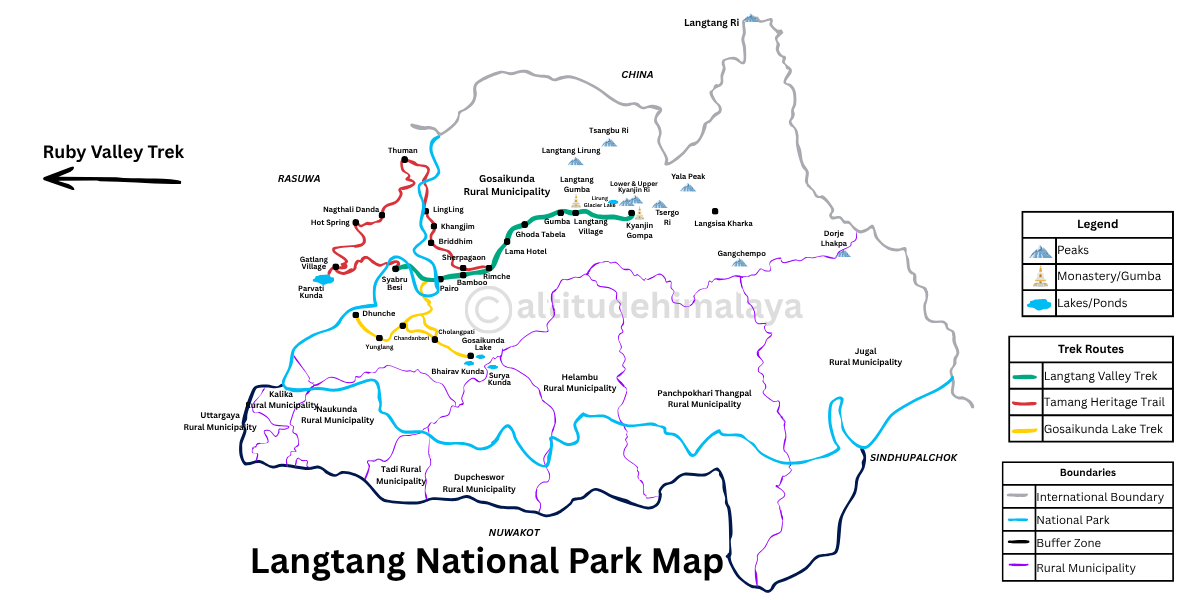
You don’t have to deal with confusing trail forks, extreme technical sections, or back-to-back altitude jumps. Meaning, your body doesn’t have to struggle to keep up (not at all).
The route of Langtang Valley Trek follows along the Langtang Khola upstream for most of the journey. And you’ll be gradually gaining altitude day by day in a way that feels natural (not forced).
What changes most dramatically is not the difficulty of the trail but the landscape around you! Let’s understand what this trek feels like from Syaphru Bensi to the time you reach Kyanjin Gompa (along with those side hikes).
Transportation to Syaphru Bensi: Starting Point of the Trek
The drive from Kathmandu to Syaphru Bensi (Syabrubesi) covers roughly 130 km and takes about 5 to 6 hours (depending on road and traffic conditions).
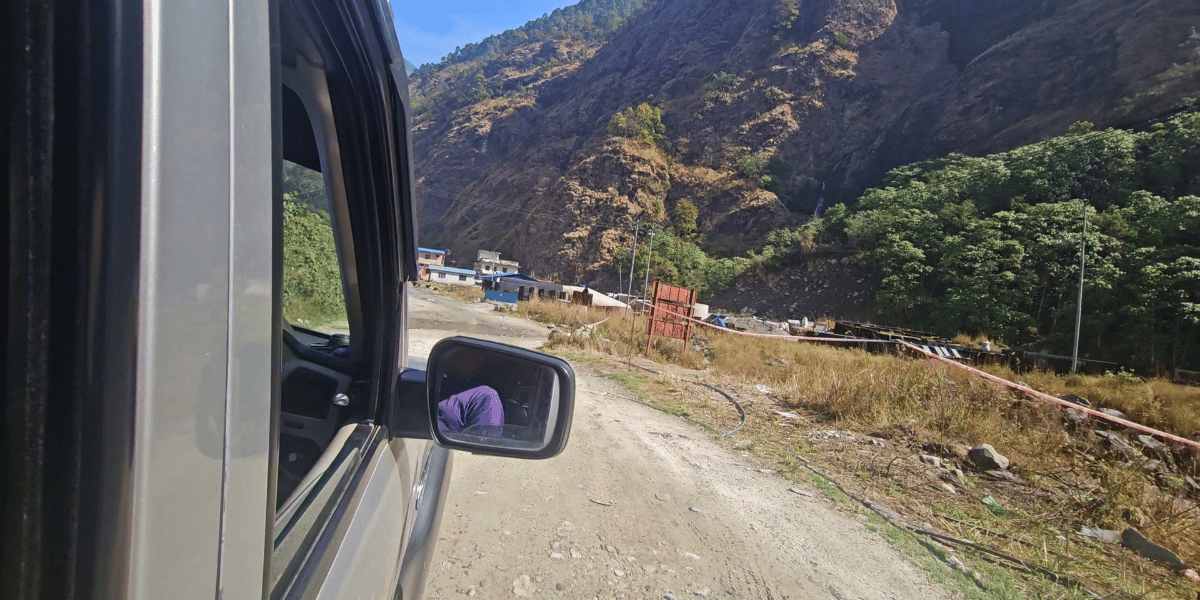
The route passes through the villages of Nuwakot district before entering Rasuwa district, crossing through Trishuli and Betrawati.
Most vehicles take the upper route via Dhunche along the Pasang Lhamu Highway, the same one that continues towards the Timure border crossing with Tibet. We just stop at Syaphru Bensi, which is 15 km from the border.
In some cases, jeeps may take a lower route via Mailung, which connects to Syaphru Bensi through a more off-road path.
Here’s another perk of trekking with Altitude Himalaya: a private vehicle service from Kathmandu to Syaphru Bensi is arranged for you!
For independent trekkers, here are the options for transportation:
- Public bus from Machhapokhari, Kathmandu (budget-friendly but slower)
- Hire a private jeep (costs more but offers comfort and flexibility)
- Join a shared jeep (if available in Machhapokhari).
- Even electric vans run on the route. They are also available from Machhapokhari, Kathmandu.
Getting Langtang National Park Permits
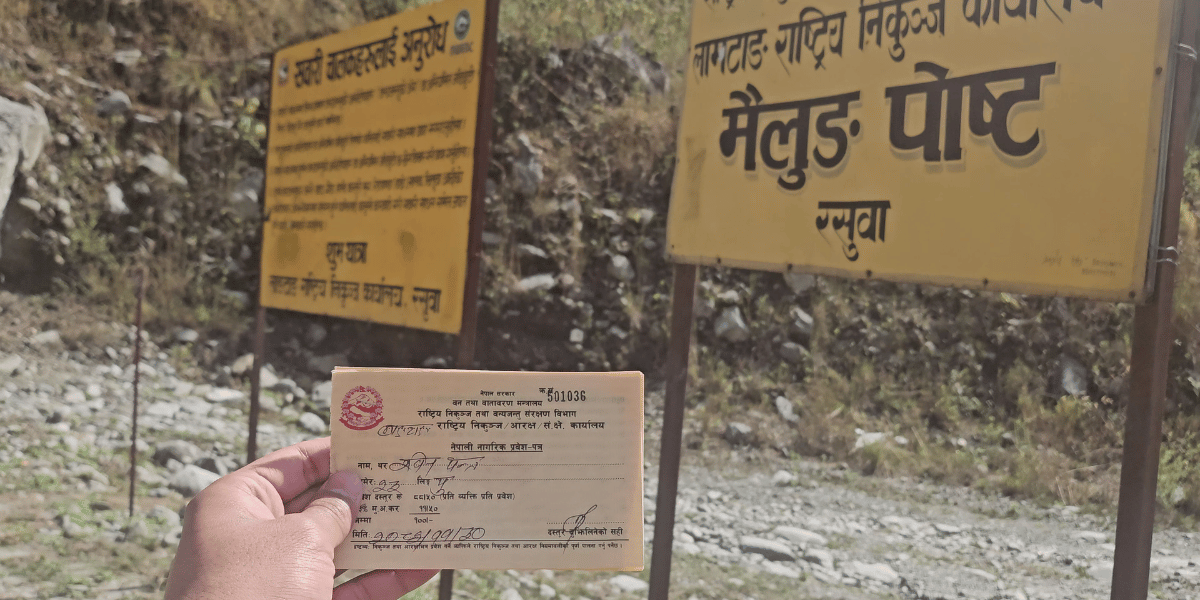
Note that both Dhunche and Mailung routes have army checkpoints at the entry points of Langtang National Park. Here, you will get the necessary permit and also have to register your name and details.
There will be proper security checking by the armies, ensuring you’re not taking illegal items into one of the prominent national parks of the country. It even includes your professional cameras and drones that require separate permits and must be arranged in advance.
Your guide or agency should be informed about this before departure, so be sure to tell them (don’t make the mistake of hiding your items, which could be confiscated).
When booking treks with any trekking agency, they generally cover the costs of permits. This means you don’t have to stress about these documents at all.
While a TIMS Card was a compulsion in the past, you no longer need one (as of now, but it may be required later). So, in case it becomes a compulsion in the future, the agency shall include yours within the package.
Independent trekkers can arrange their permits beforehand from the Nepal Tourism Board (NTB) office in Bhrikutimandap too. But since it's possible to get the national park entry permit from the Dhunche or Mailung checkpost, you need not hassle about this part.
It costs:
- Nepali Citizens: NPR 100
- SAARC Nationals: NPR 1500
- International Trekkers: NPR 3000
Total Distance of Langtang Valley Trek
The Langtang Valley trail is quite straightforward, starting from Syaphru Bensi and reaching Kyanjin Gompa. You’ll even return the same route, making the overall trekking distance:
- Syaphru Bensi to Kyanjin Gompa and back to Syaphru Bensi (no viewpoint included): 58 km approx.
- With both Tsergo Ri and Kyanjin Ri included: 70 km approx.
- Only Kyanjin Ri included: 62 km approx.
- Only Tsergo Ri included: 67 km approx.
- Only Lower Kyanjin Ri included: 60 km approx.
The daily walking time is 6 to 8 hours (depends on one’s pace), and there are no major technical sections.
Elevation Gain Per Day
A few steeper stretches do exist and appear on the way to Pairo, Rimche, Ghoda Tabela, and Thangshyap. And the hikes to Tsergo Ri and Kyanjin Ri are the most demanding sections of the entire route.
Here is the general altitude gain across each day:
- Day 1 (Syaphru Bensi to Lama Hotel): Starting at 1,467 m, ending at 2,515 m. Elevation gain of approximately 1,050 m.
- Day 2 (Lama Hotel to Langtang Village): Starting at 2,515 m, ending at 3,455 m. Elevation gain of approximately 940 m.
- Day 3 (Langtang Village to Kyanjin Gompa): Starting at 3,455 m, ending at 3,890 m. Elevation gain of approximately 415 m, but with the Kyanjin Ri hike, you push up to 4,400 m or 4,700 m (that’s approximately 950 m or 1,250 m, respectively)
- Day 4 (Tsergo Ri Hike): Starting and ending at Kyanjin Gompa (3,890 m), with a high point of 4,985 m at the summit. That’s an elevation gain of approx. 1,100 m, but you’ll return the same day, so risk is not that high if you prepare properly.
Route Details
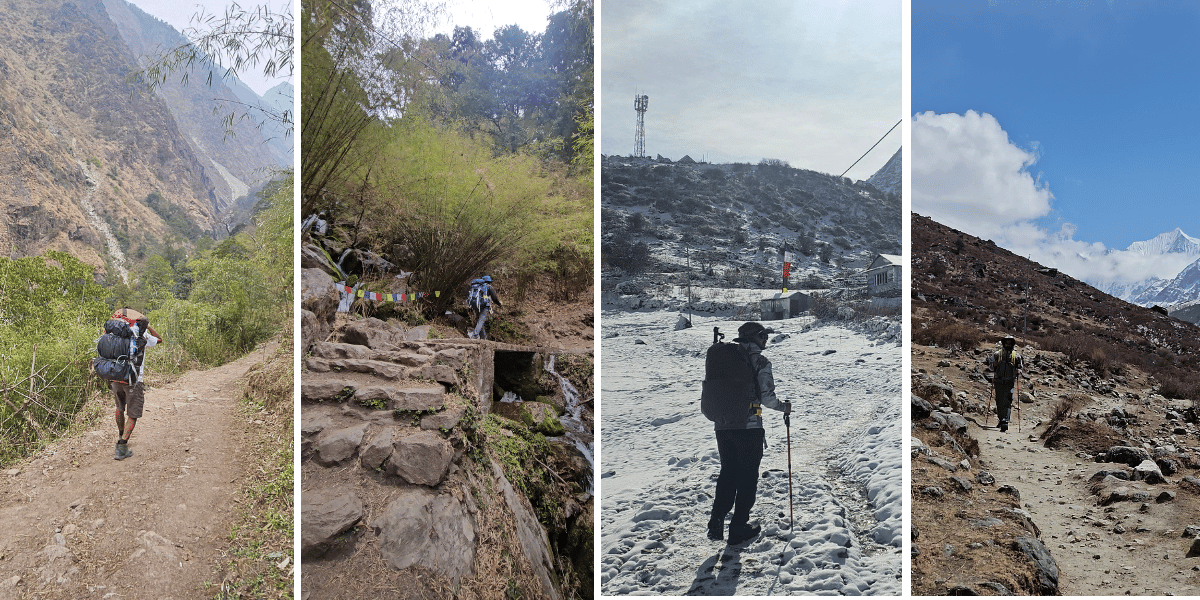
Overall, the route is beginner-friendly. It is perfect not just because of the altitude, but also because of the ideal walking trail. Let me break this down in even more detail:
- Syaphru Bensi to Lama Hotel: General steep sections and a landslide-prone zone that you have to be wary of when there’s rainfall, particularly in the place called 'Pahiro'. Forest trails up to Rimche, while following the Langtang Khola, make it a soothing trekking experience.
- Lama Hotel to Ghoda Tabela: Mostly an uphill stretch, especially the final section after crossing Gumnachok (Riverside) and Pering Kharka. But the views start to open up, giving you the strength to continue.
- Ghoda Tabela to Langtang Valley: This is the transition section from the temperate to the sub-alpine zone. This means you’d be passing through forests of hemlock, silver fir, and rhododendron. And the sub-alpine section, starting from Thangshyap, introduces you to slightly rugged and rocky terrain. In case of snowfall, the snowline reaches up to here.
- Langtang Valley to Kyanjin Gompa: You’re still in the sub-alpine ecological zone, but the landscape changes dramatically. During clear skies and good weather, the surrounding mountains will mesmerize you.
- Kyanjin Ri route condition: Steep uphill up to the first vantage point, often called Lower Kyanjin Ri, and then a gradual 1 to 1.5 hour ascent to the upper viewpoint makes it all worth it. Light to moderate snowfall still lets you reach here, which is often the most difficult time.
- Tsergo Ri route condition: This is, without a doubt, the best viewpoint hike in Langtang Valley, but it comes with a steep uphill climb. Snowy and icy conditions can make it impossible to reach. Even I was very, very close to reaching the summit during the Spring 2026 attempt (check the picture below).
Possible Wildlife Encounters
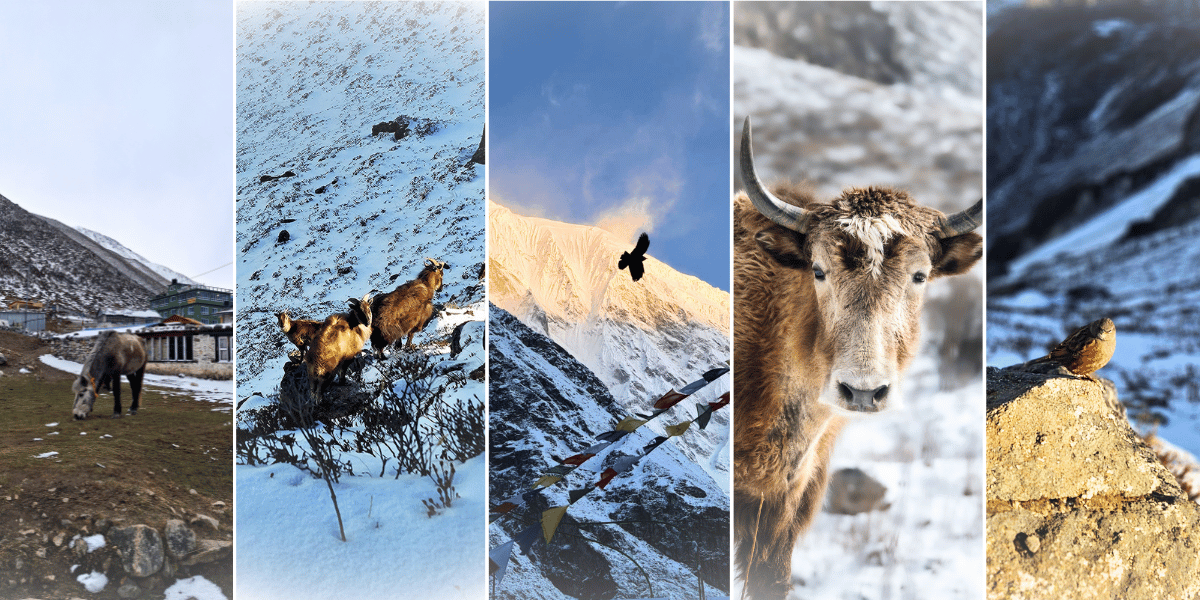
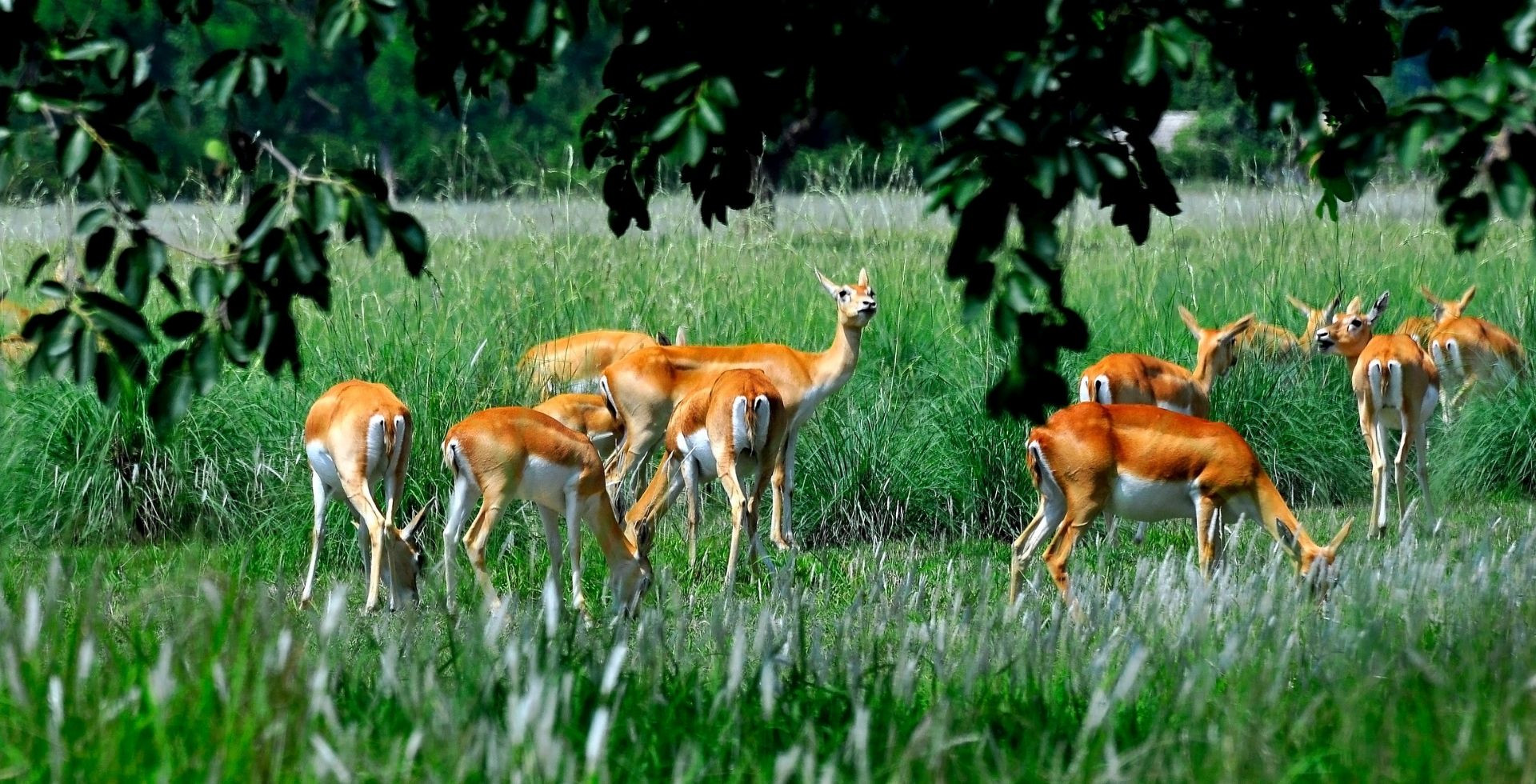
Besides, the Langtang Valley route is also equally perfect for birdwatching as well as other wildlife spotting. I personally spotted musk deer, a herd of Himalayan tahr, and multiple bird species (like Streaked Laughingthrush, Yellow/Red-billed Chough, Oriental Magpie-Robin, etc.).
And according to Altitude Himalaya guides and previous guests, sightings of red pandas (near Ghoda Tabela) and even snow leopards (during hikes to Kyanjin Ri and Tsergo Ri) might be possible but are rare.
Not to forget, the abundance of rhododendrons, particularly from Gumnachok to Thangshyap, makes this a trail worth walking during the spring season.
So, prepare yourself with good camera lenses, as it’s a haven for all wildlife photography lovers!
How Weather Affects the Trail
This is something I cannot stress enough. Climate change has introduced a phenomenon often called ‘season creep’, where weather patterns no longer behave exactly as expected for their season.
Our own trek in early spring 2026 brought heavy and unexpected snowfall that shut down the Tsergo Ri route. So, we had to return halfway.
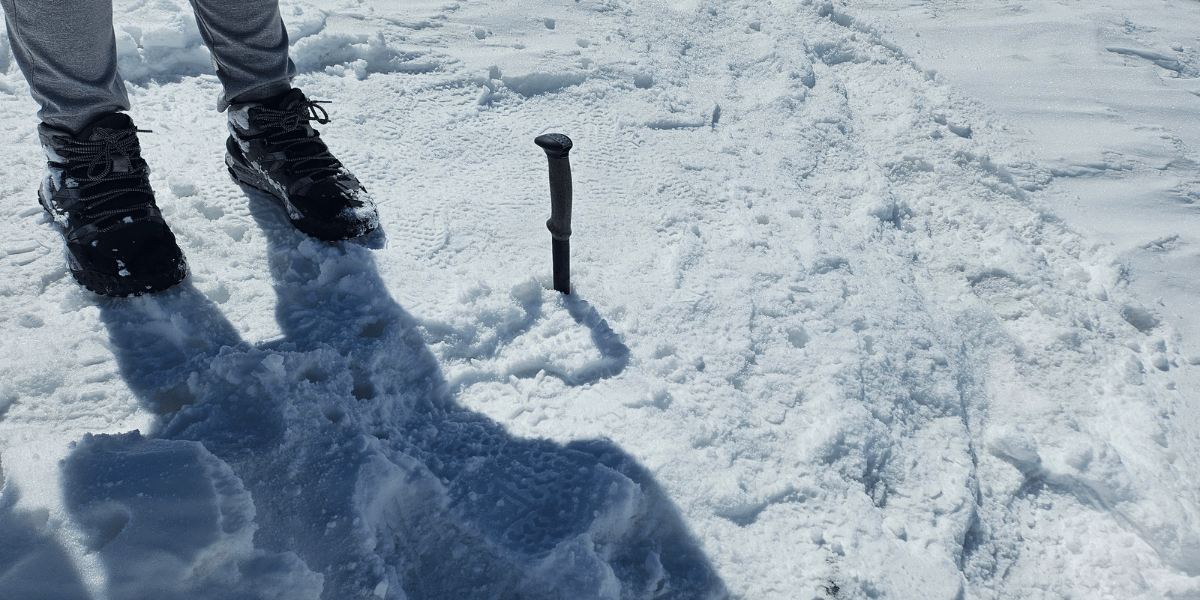
Sometimes, early autumn brings similar conditions. And at other times, mid-winter days become clearer than peak spring. This unpredictability makes checking the weather window an absolute must (as I explained before).
If you are trekking independently, make use of weather apps and mountain forecast services before heading for the Langtang Valley Trek. And those going with trekking agencies, be sure to ask your tour operator about the trail conditions.
Look, bad weather does not just reduce views. It can even mean turning back halfway (which would be disappointing, really) and not being able to push to the viewpoints of Kyanjin Ri or Tsergo Ri.
More importantly, the trail itself becomes dangerous. So, seeking information from your guide or the locals would be the best idea in such situations.
This is why I always suggest having a contingency plan. Weather-related decisions are very crucial, as you wouldn’t want to get stuck in landslides or snow blizzards.
Food and Accommodation Expectation
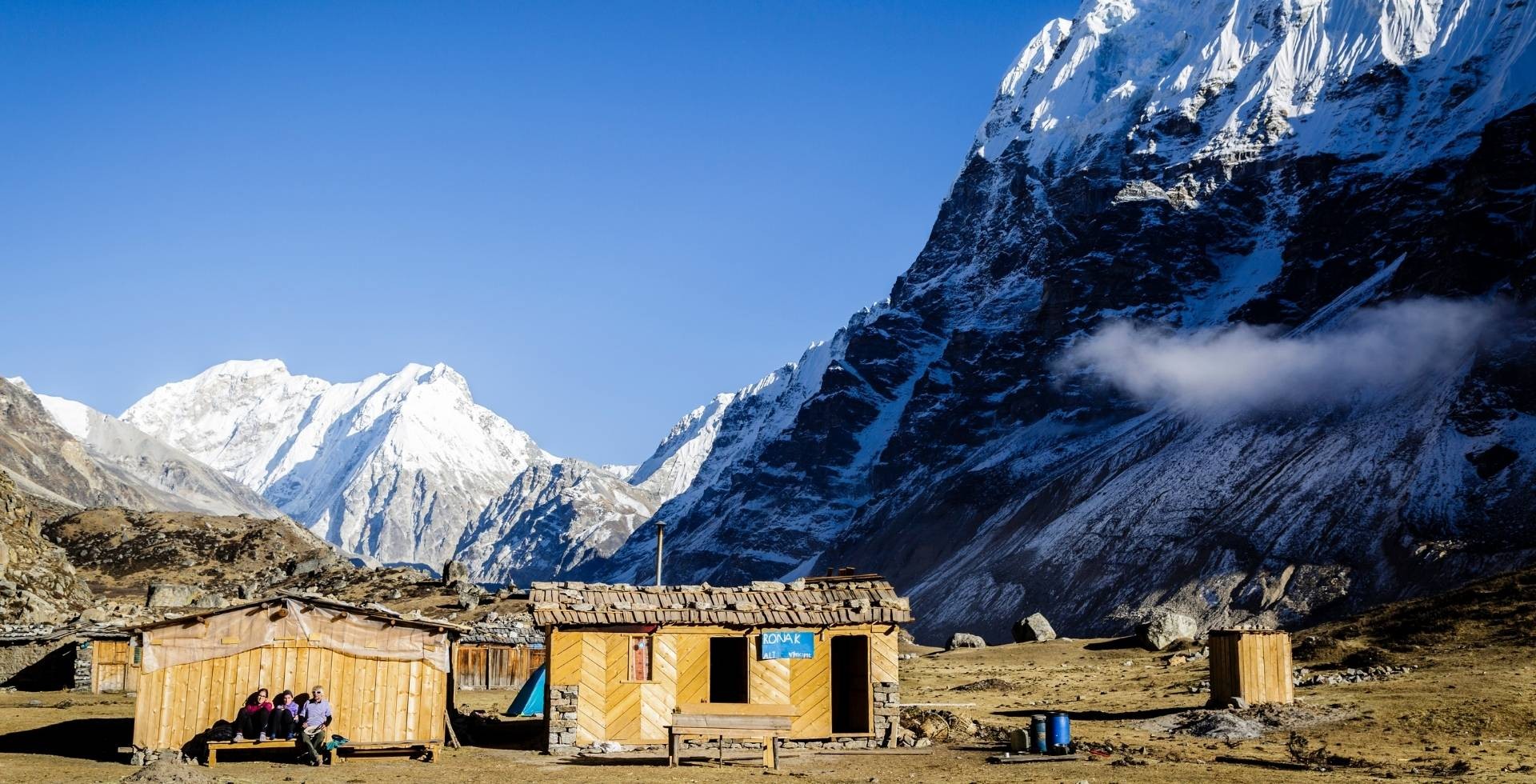
The Langtang Valley Trek accommodations are generally better than those on many other trekking routes in Nepal. It’s surprising to find modern brick houses (in Langtang and Kyanjin) compared to the general teahouses you get to see in other destinations.
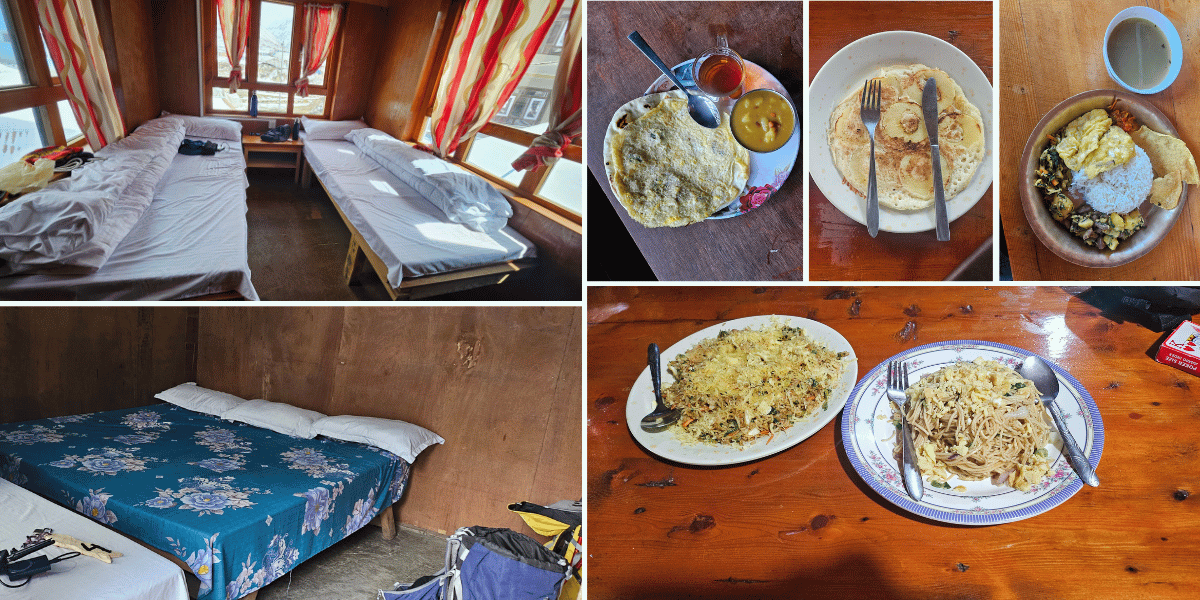
The first day stops at Lama Hotel (or earlier stops like Pairo, Bamboo, or Rimche) have fewer accommodations. And during poor weather, mobile network issues and electricity problems persist.
Beyond that, accommodations in Langtang Village and Kyanjin Gompa are quite good by mountain lodge standards.
Rooms here are basic: simple bedding (twin or triple sharing) and shared or attached bathrooms (depending on the lodge, even modern sitting toilets are available alongside squat-style), but still no luxury amenities (as they aren’t city hotels).
Hot showers are also available (via solar in most standard mountain lodges and geysers in others). But they charge an additional fee.
Food options in Langtang are also plenty:
- Breakfast typically includes Tibetan bread, chapati, porridge, eggs, and tea or coffee.
- Lunch and dinner are centered around Dal Bhat, though local Tibetan and western options like chowmein, thukpa, fried rice, spaghetti, and pizza are available in most lodges.
Meals cost a little more than at lower altitudes. But that’s all worth it considering how items are carried by porters and pack animals to ensure the items reach the high-altitude regions.
While snacks are also readily available, I still suggest carrying your favorite snacks (as not all products are available).

And yes… don’t forget to try Langtang’s special Sea Buckthorn juice. It is rich in Vitamin C, known for its antioxidant and anti-fatigue properties, and genuinely good for high-altitude regions.
Talking about drinking water, only opt for boiled water on the trail (mineral water bottles are also available but cost a little more). Carrying water purification tablets/drops as a backup would be a great idea since you may be filling up from tap sources at various points.
But it’s not a compulsion. You may simply pay a small cost for hot water at teahouses at different points rather than risking stomach issues.
Health Care and Facilities
There isn’t a major hospital along the Langtang trails. However, there’s one health post in Mundu Village called ‘Langtang Health Post’. This serves as the nearest medical facility for locals as well as trekkers in the upper Langtang region.
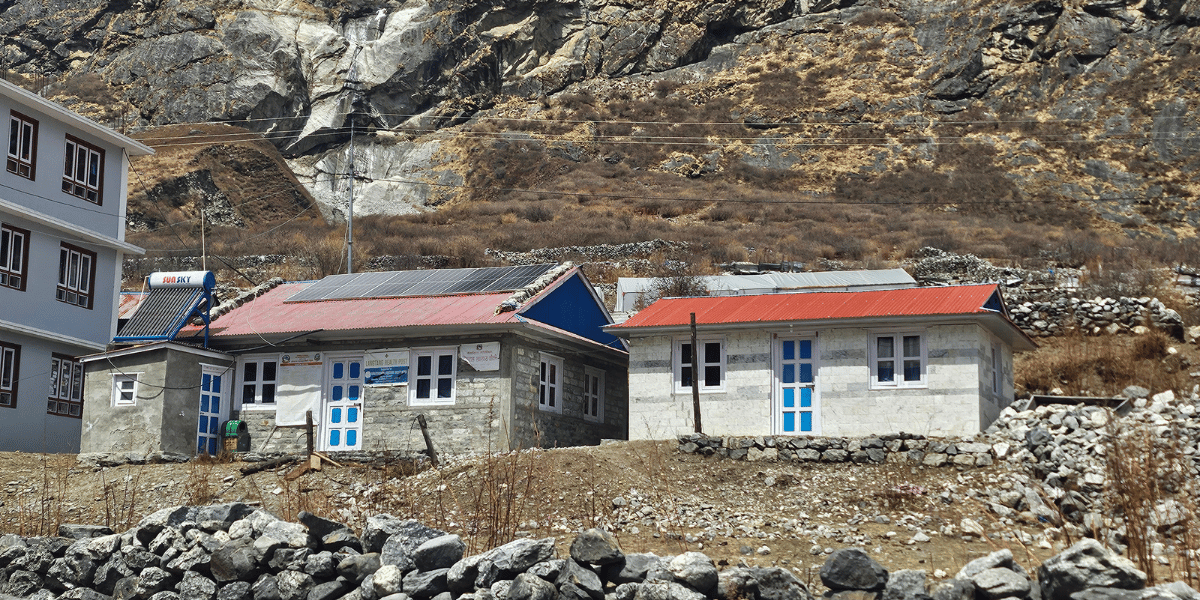
While just a health post isn’t enough for the local community, we can expect some good changes to appear soon. For now, the Langtang Health Post is able to handle minor injuries and mild altitude sickness cases.
For serious health emergencies, helicopter evacuation from Kyanjin Gompa or Langtang Village is typically the only realistic option. This is a remote trekking destination, and that is simply the reality of it.
So, I’m again saying: having travel insurance that covers helicopter evacuation is not optional; it is an absolute necessity!
And don’t forget to carry your own personal first aid kit. It should include band-aids, ibuprofen or paracetamol, anti-diarrheal medication, and other personal prescription medication. Do not rely solely on what your guide or lodge might have available.
Cultural Awareness and Responsible Trekking
The Langtang Valley is mainly home to the Tamang community, who are actually Tibetan Buddhists that practise the Nyingma tradition. In the upper regions of the valley, the cultural and religious atmosphere is deeply rooted in this tradition.
So, before heading for the Langtang Valley Trek, make sure that you’re prepared for the cultural nuances that may influence your monastery visits and even when interacting with locals.
Immerse Yourself in Tamang Culture
First and foremost, the Tamang people of the Langtang Valley have strong Tibetan ancestry. So, expect to find stone houses, prayer wheels, mani walls, and Tibetan monasteries that have been preserved in this remote valley for centuries.
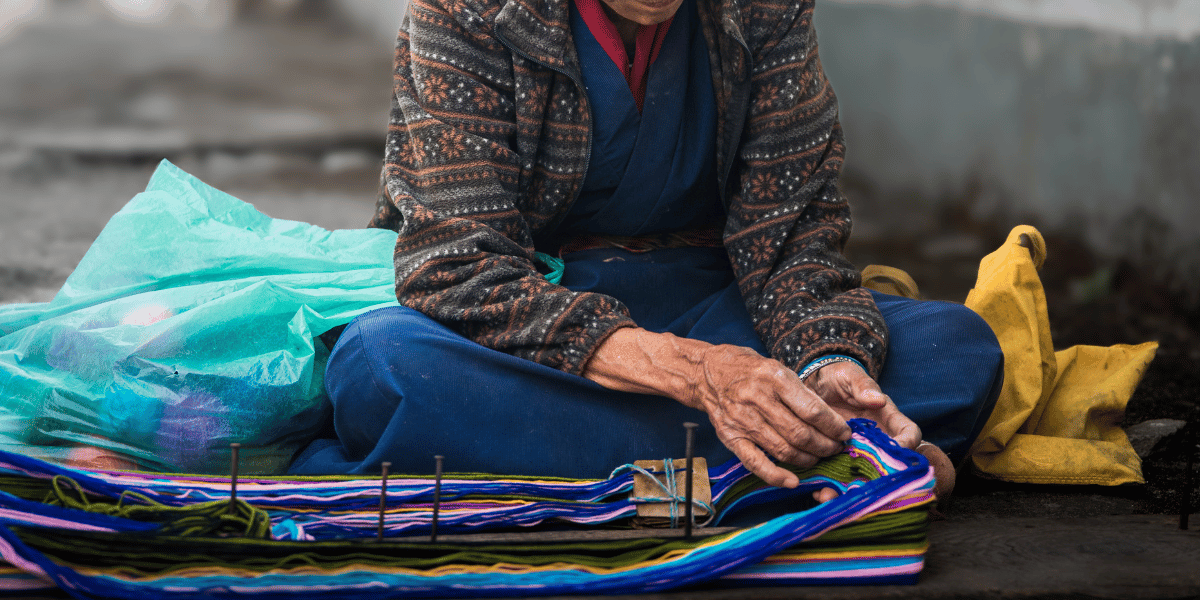
Be sure you pay a visit to the main monastery of Kyanjin Gompa and also one recently built in Langtang Village (after that terrible avalanche disaster). There are honestly plenty of such monasteries along the trail starting from Syaphru Bensi itself.
And if locals invite you into their teahouses for butter tea or sea buckthorn juice, don’t hesitate to enter. These moments with locals are some of the most memorable parts of the Langtang Valley Trek (speaking from my own experience).
Engage with locals (through your guide if you feel there's a language barrier), and listen to their stories (particularly the earthquake ones). That is what makes this Langtang Valley trek truly meaningful rather than just a physical achievement.
Cultural Etiquette: Dos and Don’ts
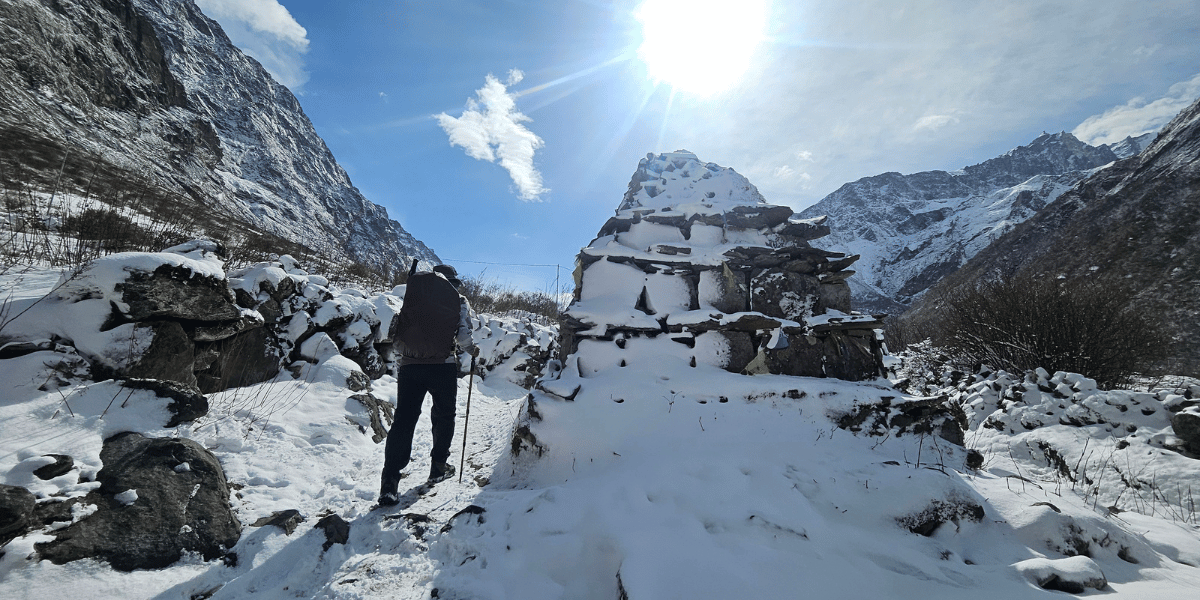
It's now time for me to share with you some of the cultural tips that should come in handy during your Langtang Valley Trek. Make sure you read this thoroughly so you'll be mentally prepared before arriving:
- Remove your shoes before entering any monastery or home when asked.
- Walk clockwise around stupas, and make sure you keep the chortens and mani walls to your right when going past them.
- Ask permission before photographing people, especially monks, elderly locals, and religious ceremonies.
- Do not touch religious objects or sacred items without permission. You’re allowed to spin the prayer wheels instead.
- Do not be loud or disruptive near monasteries or during prayer sessions.
- Avoid carrying a speaker; it doesn’t just disturb local life but also trekkers who prefer the sounds of nature. In fact, it can distract wildlife and reduce chances of spotting animals.
- While meat is available in some teahouses (transported and stored, no animals are killed here), be aware that upper Langtang communities traditionally observe non-violent practices, and this should be respected.
- Smile back at the locals and greet them with ‘Namaste’ or ‘Tashi Delek’.
- Do not aggressively bargain at the teahouses. The prices are reasonable considering how difficult it is to transport items up to here.
Follow Responsible and Sustainable Tourism Policy
The Langtang region is still recovering and rebuilding from the 2015 earthquake. This is something you’ll learn more about after you head to the Langtang Valley yourself. The people’s stories are genuinely going to touch you!
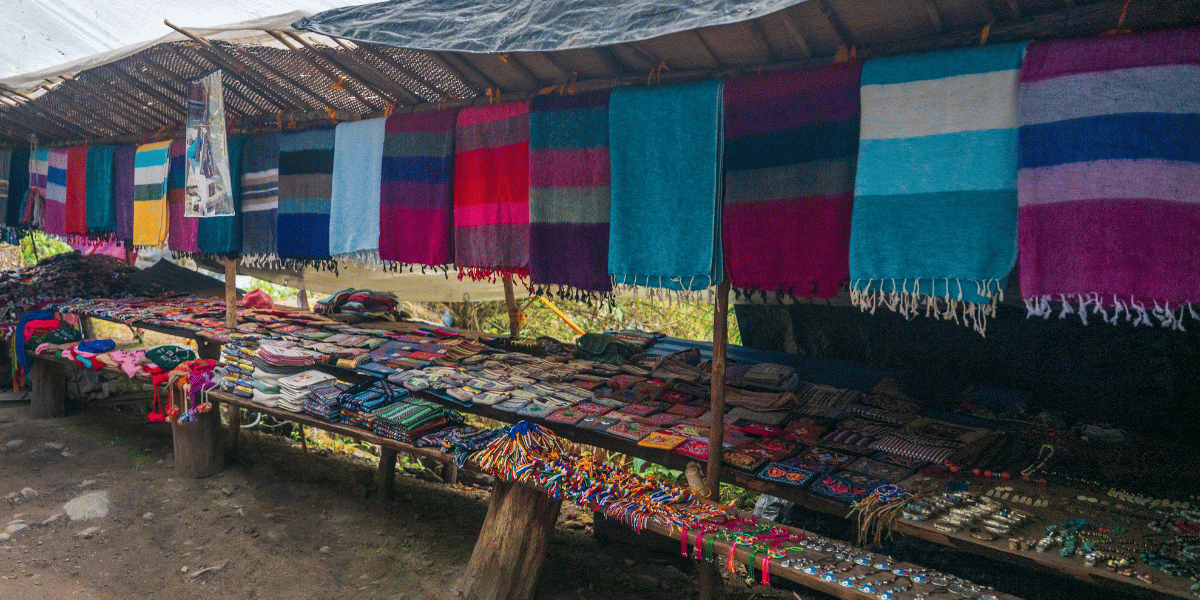
Every trekker, whether they be local or foreign, contributes significantly to the local economy. So, our team at Altitude Himalaya encourages all visitors to be mindful of the following responsible practices, just like we do:
- Stay in locally-owned teahouses and lodges, and eat where you’re staying.
- Buy from local shops rather than bringing everything from Kathmandu. Or even if you have, try to get some items from them, like crochets (gloves, bandana, etc.), drinks (like sea buckthorn juice, Tibetan tea, etc.), local beverages (Jhwaikhatte, raksi / local wine), etc.
- Do not litter on the trail or in villages. Carry a small bag for your own waste when no bins are available. Also, avoid the use of plastics as far as possible.
- Respect the natural environment within Langtang National Park. Do not pick plants (especially the beautiful rhododendrons in spring) or disturb wildlife by playing loud music.
Plan For Post-Trek Activities Beyond Langtang
If you’re getting the 30-day visa I recommended, you have plenty of time left after the Langtang Valley Trek to explore more of Nepal. And leaving this country right after one trek would honestly be a waste of the journey you have already made.
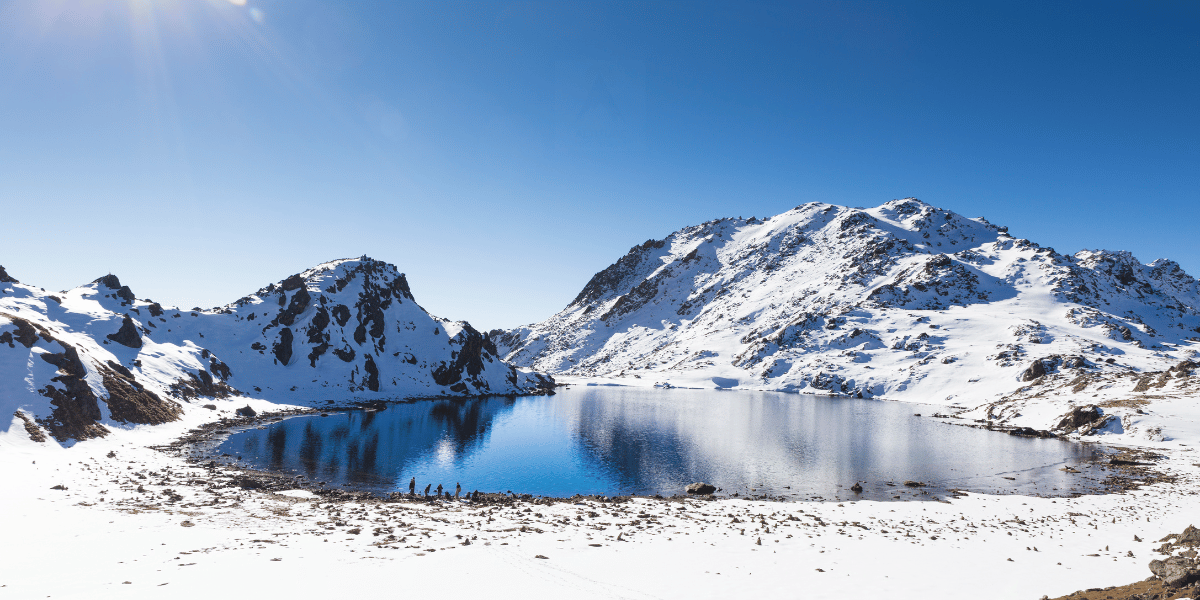
Within the Langtang region itself, you can go for:
- Gosaikunda Lake Trek, which connects naturally from the Langtang region for adds a sacred high-altitude lake experience.
- The longer Tamang Heritage trek, which starts from Gatlang and passes via Thuman, continues onwards to the Langtang Valley trail.
- Cross Ganja La Pass (5,180 m) and reach Helambu. From here, you can do the popular Helambu Circuit Trek.
- Add Yala Peak (which is becoming quite popular).
But if you want a full change of scene, here are some ideas:
- Pokhara, the tourism capital of Nepal, is just a few hours from Kathmandu and offers lakeside relaxation, adventure activities, and the stunning views of the Annapurna range without any trekking required.
- Or you may simply spend a few extra days exploring Kathmandu and the valley; properly, it is a worthwhile use of time. Visit places like Patan, Bhaktapur, or even ones in the Kavre District (Dhulikhel, Namobuddha, etc.)
- Since Langtang Valley Trek is a beginner trek perfect for warm-ups for bigger ones, you’re now ready for Manaslu Circuit, Everest Base Camp, or even Annapurna Circuit. So, if you have more time, just let us know and we’ll help you out.
At Altitude Himalaya, we can help you connect your Langtang trek with any of these options as part of a customized Nepal itinerary. Just reach out directly, and we will put something together!
Final Thoughts
The Langtang Valley Trek is honestly a sweet spot for beginners wanting to explore the breathtaking landscapes of the Himalayas and high altitude regions.
The mountains, the culture, the people, the food, and the entire trail itself all come together to give exactly what people understand when referring to ‘Nepal’.
But none of that happens if you just keep reading blogs. Now that I have provided you a detailed breakdown of how you should prepare for the Langtang Valley Trek, I’m sure your experience will be elevated more than ever!
Just remember: pick the right season considering the weather window, train your body physically and mentally, pack smart, and go with an open mind.
Once you are standing at the top of Kyanjin Ri or Tsergo Ri or both, watching the Langtang Lirung, Ganchenpo, Naya Kanga, and other mountains, I’ll know you’ve done the right preparation. So, be sure to tag Altitude Himalaya in your stories. I’ll be waiting!


 Bhishu Acharya