If you ask anyone who has visited Nepal to list their favourites from Nepal, they will surely mention the mountains and the people. And the best way to meet them both is by trekking, which is quite obvious when the topic is this magnificent himalayan country. In this context, let’s narrow it down to the topic of Langtang National Park.
Langtang Valley Trek has become growingly popular these days with hassle-free methods to obtain trekking permits, and if you are planning for it, then I hope you read the entire blog to learn deeply about the people, culture, their faith, and festivals. Because, while the mountains are already there, the people are going to magnify the beauty of this trek.
The People and the Communities of Langtang
Learning about the people and their culture of a place you are travelling to is also an essential part of preparation for the trip.
From my experience, if I had to describe the people of Langtang, I must say that they are some of the most diligent, harmonious and helpful people I have met so far. I did not meet one individual who did not greet or smile at me.
Talking about smiling, it is a social norm that defines what Nepal is to the visitors. And in the remote areas of Nepal, such as Langtang Valley, it symbolizes their welcoming nature towards the trekkers in the region.
But let’s probe deeper into the people of Nepal, their ethnicities, their origin, their family life and other components rooted in their community. Mostly inhabited by Tamangs (of Tibetan origin), you can be rest assured that they are going to be your hosts throughout the trek.
In Syabrubesi you will find people from different ethnic backgrounds such as Magar, Gurung, and Brahmins. But once you enter deeper into the trails, you are entering a different world of the Tamangs.
Ethnic Groups as per the Census of 2021
Please look at the table below to find the data regarding the caste/ethnic group of people who reside in Gosainkunda Gaunpalika, the municipality that the Langtang Valley Trek trail falls within.
As per the data from 2021, the total population of the region was 7,788.
|
Caste/Ethnic Group
|
Percentage from the overall population
|
|
Tamang
|
82%
|
|
Ghale
|
7%
|
|
Brahman - Hill
|
2.1%
|
|
Bishwokarma
|
2.1%
|
|
Newar
|
2%
|
|
Kshettri
|
1.2%
|
|
Sherpa
|
1%
|
|
Magar
|
0.9%
|
|
Gurung
|
0.7%
|
|
Others
|
0.9%
|
Dominance of Tibetan Tamangs
The main purpose behind our trek to Langtang Valley was to collect factual and timely information. This means we spent a lot of our evening in the teahouses chatting with our hosts and their family members.
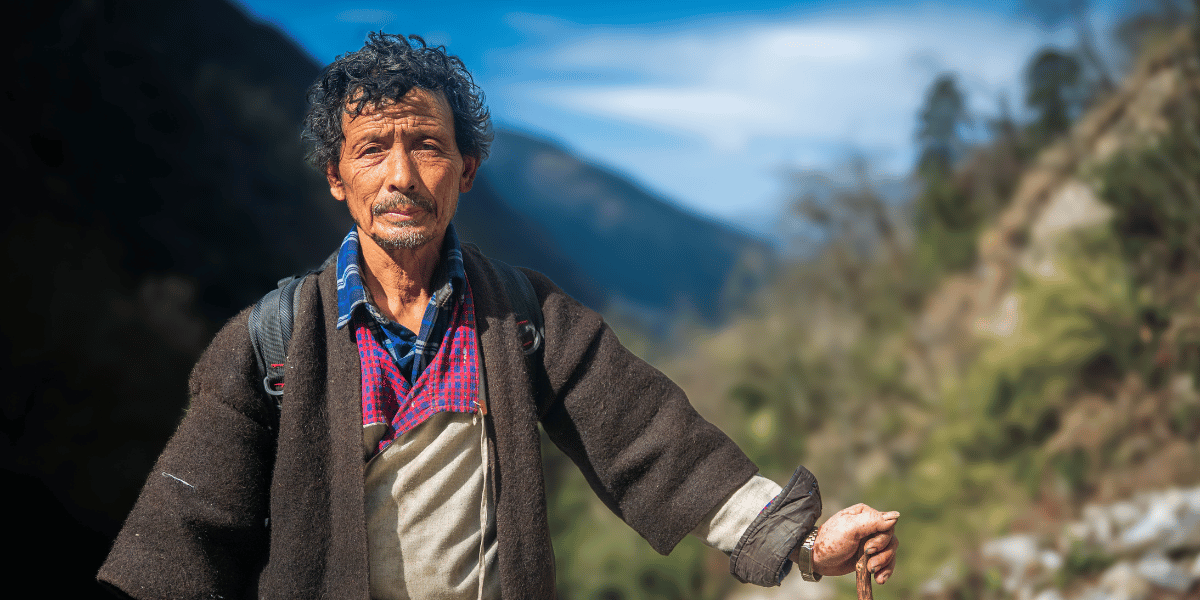
When I asked them about the ethnicities present in Langtang Village and Kyanjin Gompa, they almost immediately said that most of them were Tibetan Tamangs, and there were some Sherpas and Hyolmos. However, the Hyolmos reside closer to Helambu, their land of origin.
Coming back to the topic of Tibetan Tamang, what do they mean by Tibetan Tamangs? Unlike the indigenous Tamang people of Nepal who have been living here since the 3rd century, Tibetan Tamangs are quite different. However, note that both the Tamangs share the same Tibeto-Burman roots.
They live closer to the northern borders that Nepal shares with the Tibet Autonomous Region and have closer connection to Kyirong/Gyirong. Furthermore, they are strong practitioners of Tibetan Buddhism (more about this will be covered later).
The Misconception About The Sherpa Population
Many tourists visit Langtang expecting to find a large population of the Sherpa people, and this is one of the misconceptions that you can find widely on the internet. However, as per the locals and the 2021 census, the Sherpa population in this region is very minimal.
Unlike the eastern high-altitude regions like Solukhumbu, Langtang Valley is a Tamang territory through and through. While we are at it, let me also clear another misconception of Sherpa Gaun or Sherpagaon.
Located within the Langtang National Park, Sherpa Gaun is a growingly popular trail that people take on their way to Langtang Valley. But as we have seen how pronunciation changes with convenience, the town actually called Sher-Pho Gaun by the locals is now recognized widely as Sherpa Gaun.
During our conversation with our host at Langtang Village, he told us the meaning of Sherpho. According to the Langtangpa dialect used by the Tamangs of Langtang National Park, 'Sher–Pho' means 'the place where the sunlight falls first'.
Community and Social Structure
As you walk through the trail of Langtang Valley Trek, you will notice that most of the major stops are in the form of small settlements. Within these settlements are tightly knit communities where a patrilineal clan system exists.
Each clan is associated with a number of their spiritual divinities, represented by a stone present in their houses.
Family Life and Cross-Cousin Marriage
In a region where all the teahouses are run by families, it is only expected that the people of Langtang have strong family bonds. Before tourism reached this remote region below the Langtang Mountains, the families worked together in their fields for agriculture and animal husbandry.
These days almost everyone sends their children to Kathmandu or cities closer to the valley for better education opportunities. This practice, however, has been quite concerning for the elders of the families who are worried that the children might forget their mother tongue, the Langtangpa dialect.
In a community that is relatively small, kinship is preserved and honored among the Tamangs of Langtang Valley. Strong family bonds and kinship are how major family decisions are made and how marriages are arranged between the young ones.
Another notable thing is the endogamous culture practiced by the Tamangs. With the prevalence of cross-cousin marriage, the Tamang people don’t really look too far for brides. Most of them marry someone from the same village or surrounding area.
Role of Lamas in the Society
While choosing a Lama in Tibet is a very lengthy and particular process, things are quite different in Langtang. Despite both the communities sharing Tibetan Buddhism, Lamaism is practiced differently in this region.
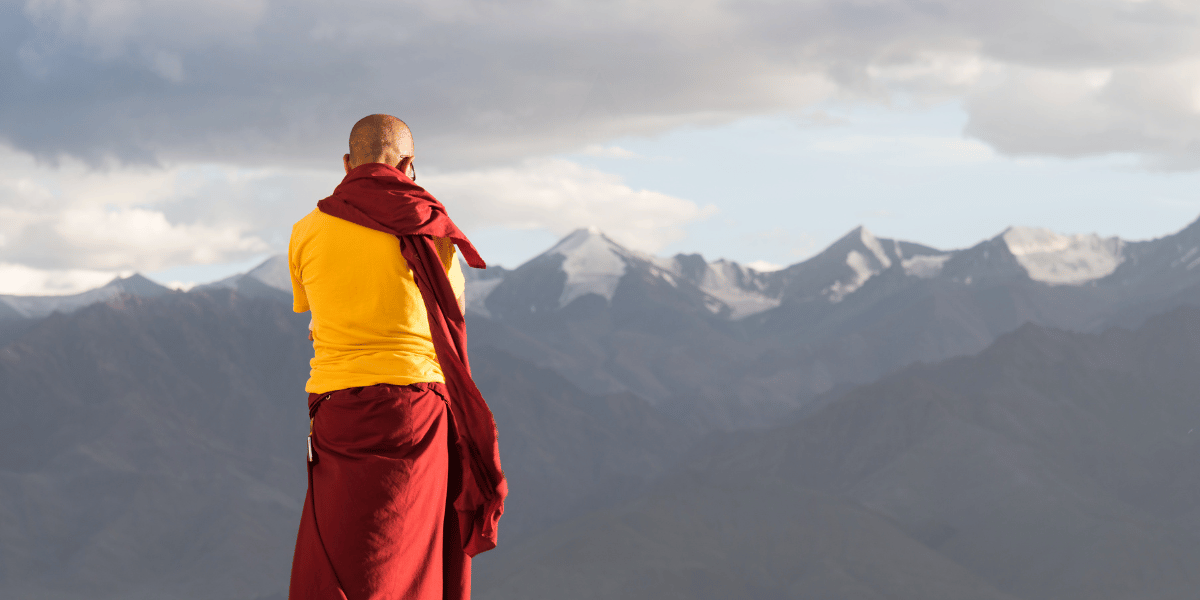
Although the identity of a Lama indicates an individual’s high-status in society, in Langtang, all the sons were trained to be Lamas in their homes. Today, instead of staying in the monasteries, the Lamas live in their houses, have their own fields, and carry on like a normal person unless they have to participate in religious rituals and performances.
During festivals, celebrations, or other religious ceremonies, the Lamas who solely practice religious vocations do the major work. Others participate by assisting with chanting, reading, and playing the musical instruments.
While this used to be the case back in the day, this system is not practiced widely these days, as the majority of the people are either involved in tourism or go abroad for work opportunities. Similarly, the children live in the cities of Nepal, excluding them from this practice.
The Rise of Community-Led Tourism
In the last 10 years, Langtang Valley has seen tourism soar, making it one of the greatest sources of income for the families living there. A study reported that more than 50% of the families relied on tourism as their main source of income.
The majority of the families in the region own businesses such as hotels, restaurants, guide and porter services, and trekking services. And if you ask them, you will realize that most of the employees in their businesses are family members.
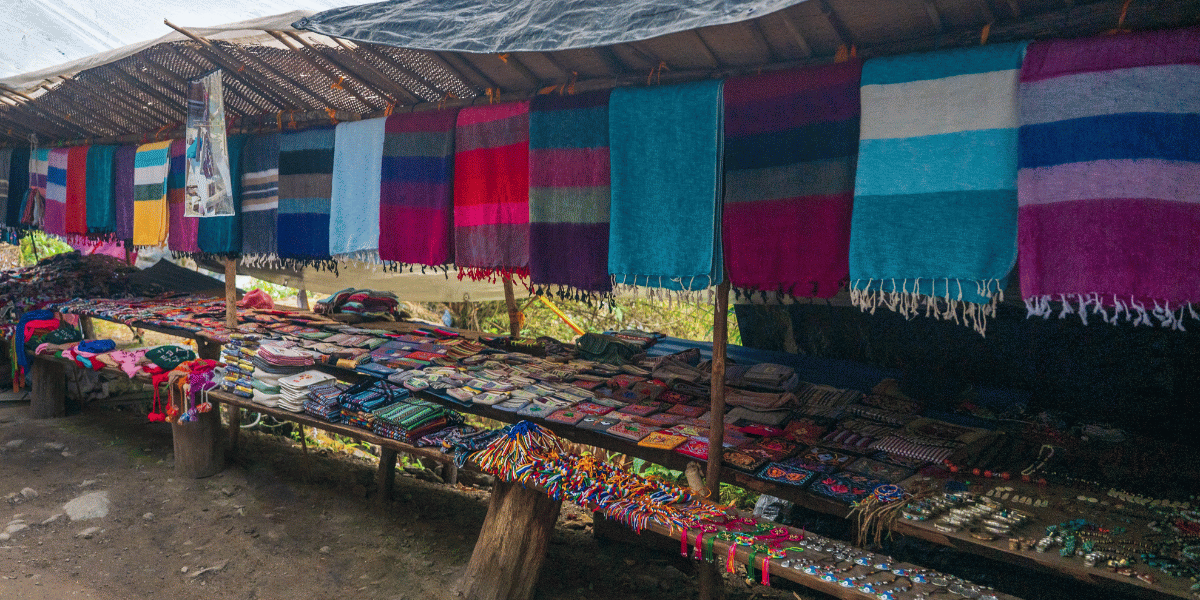
While trekking, you will come across numerous souvenir shops that sell woolen handknit items like gloves, caps, and socks. People also sell handmade jewelleries and singing bowls.
While the majority of the visitors go to Langtang for trekking experiences, one cannot deny that cultural exploration naturally becomes a huge part of the trek.
Culture of the Langtang Valley
If I had to describe Langtang’s Tamang culture with one word, I’d say ‘continuity’. It is incredible how the people have kept their traditions and rituals alive for centuries. Unaffected by urbanization, the culture of the Tamangs in Langtang is not presented like an artifact; it is practiced, and one can realise that it is alive as ever.
One’s lifestyle is a representation of one’s culture, and this is very true in the case of Langtang Valley. The moment you enter the trails, you will experience a shift in your environment. The houses will start looking different, and you will find prayer flags on the loneliest trails.
During the days of our Langtang Valley Trek, we tried to spend most of our time talking to the teahouse hosts, trying to learn more about their culture and their history.
Throughout those days, one piece of information was consistent among everyone, the people strongly insisted that they had Tibetan roots and that their culture was very different compared to other Nepali Tamangs.
We also learnt that their traditions and practices differed according to the region of Tibet they migrated from. For instance, the Sherpas have different festivals even though they are Buddhists because they migrated from the Kham region in Eastern Tibet. The Tamangs, on the other hand, made a point that their ancestors were from Kyirong/Gyirong of Tibet.
Now, let’s look into a couple of factors like architecture, daily living, herding and animal husbandry, and artisanal craftsmanship; elements that reflect their culture.
Architecture in Langtang Valley Region
The moment you leave Syabrubesi and enter deeper into the trails, the air will feel fresher and the sound of the river flowing next to you will only make the walk more peaceful. And as you start reaching the teahouses post Syabrubesi, you will notice that the houses look different.
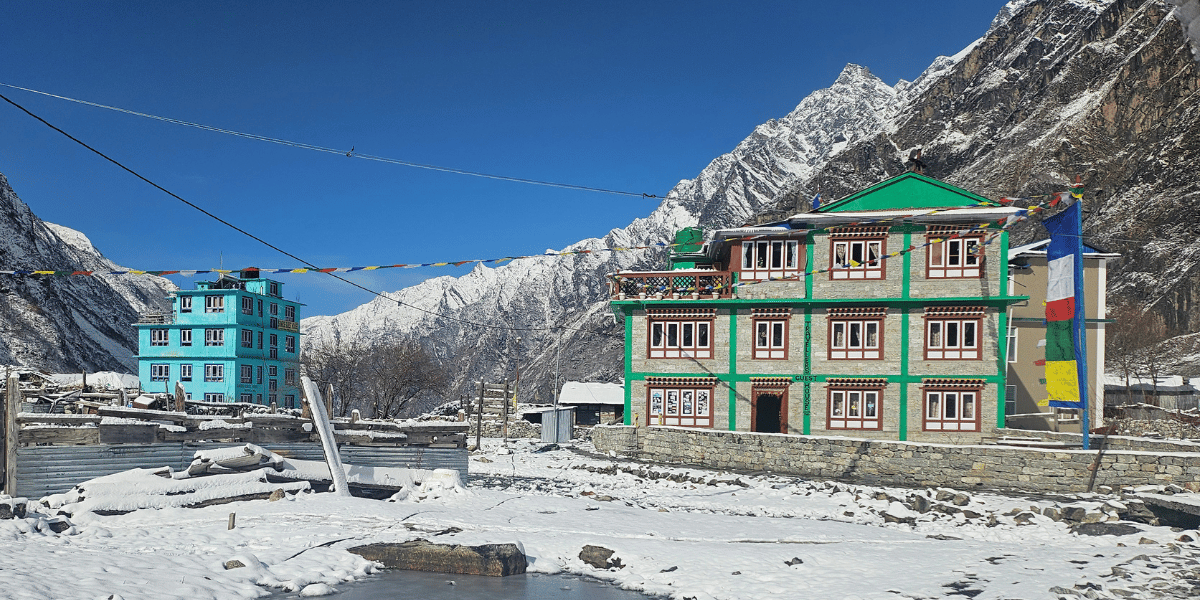
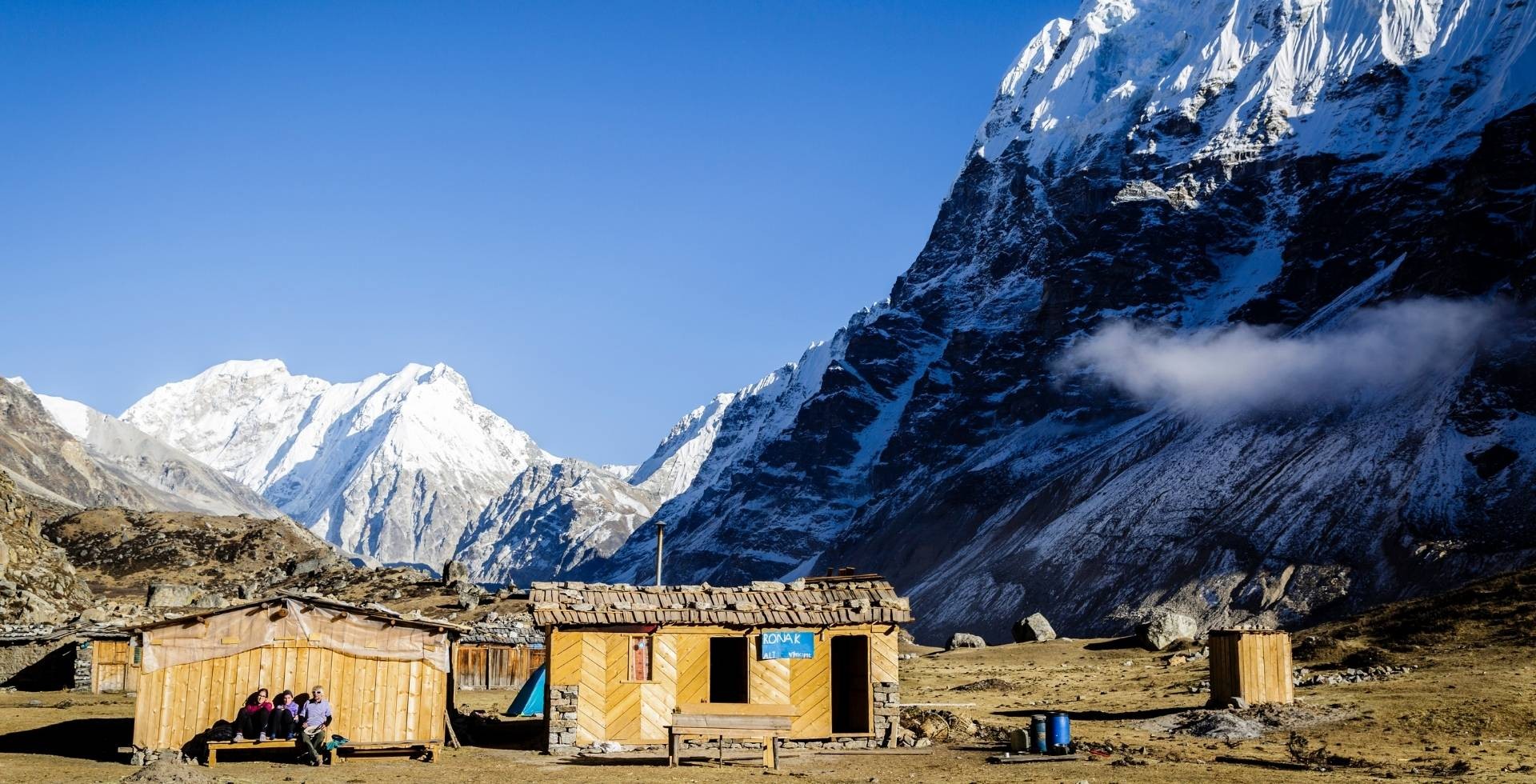
- Tamang houses will introduce you to a whole different aesthetic. They are marked by distinct stone walls, wooden windows, wooden stairs, and prayer flags that drape their terraces. Here, things are not built for convenience; they are built for survival, to fulfill one's basic needs at most.
Austere at first glance, spending your nights in these houses will give you the rawest experience of Himalayan minimalism. The rooms are not really lavish, and tiled bathrooms are not always common up there. That’s accommodation in Langtang Valley Trek for you!
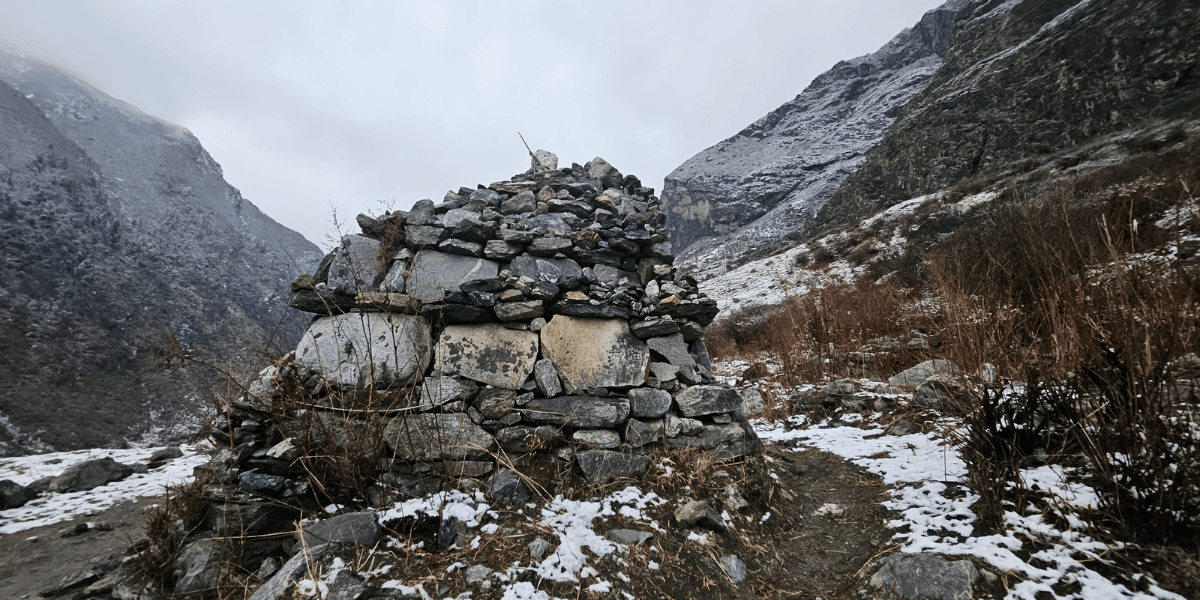
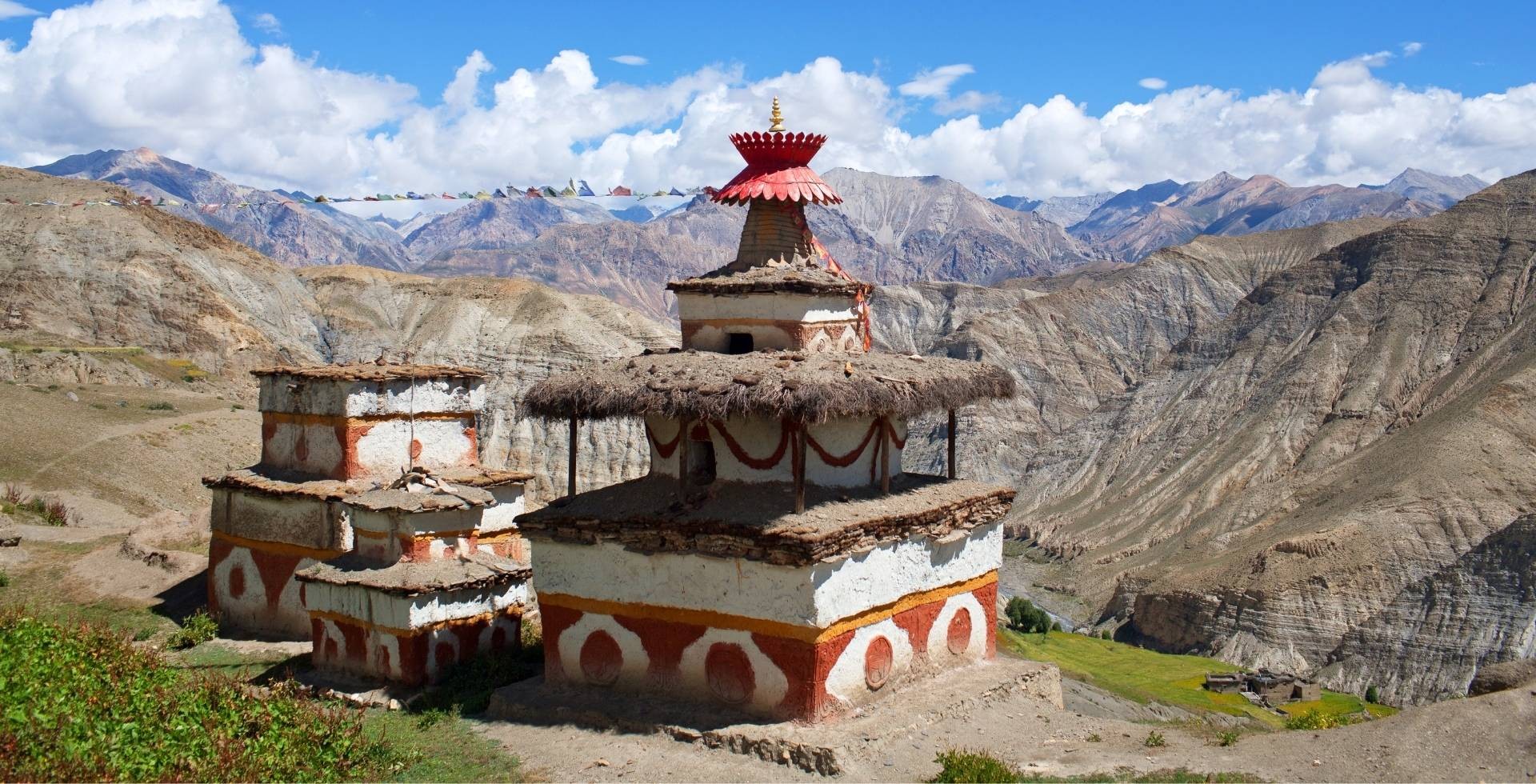
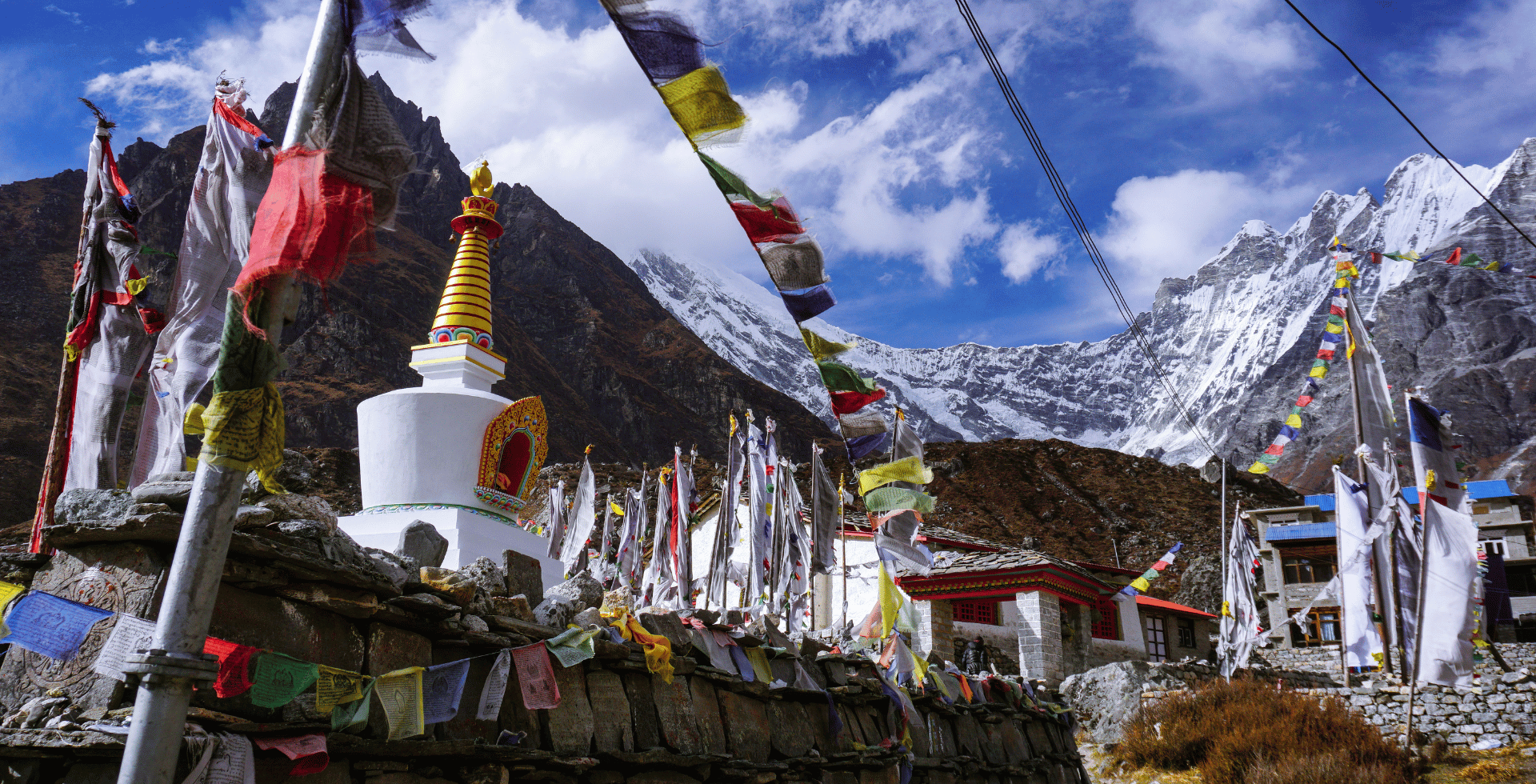
- If you start noticing a lot of Chortens and Mani Stones, then take that as an indication that you are approaching Langtang Village. These structures are an important part of architecture in Tibetan Buddhism, and both are built for different purposes.
Chortens represent the enlightened mind of Buddha, and these white structures contain religious relics, images, thangkas, and scriptures. They also denote a strong presence of Buddhism in the surrounding area.
The road to Langtang Village and onwards Kyanjin Gompa has wall-like structures standing right in the middle of the trail. These walls that will follow you for kilometers are made up of Mani Stones.
The Mani Stones have various significance. Sometimes they are placed as an act of good karma. They are also placed to wish travellers a safe journey as the prayers are carried on by the travellers as they walk past the mani stones.
Lastly, mani stones are also used to commemorate the dead ones. After the death of a family member, the family places a mani stone along with the other stones in memory of their loved ones. While walking next to mani stones, make sure to keep them on your right side, following the local customs.
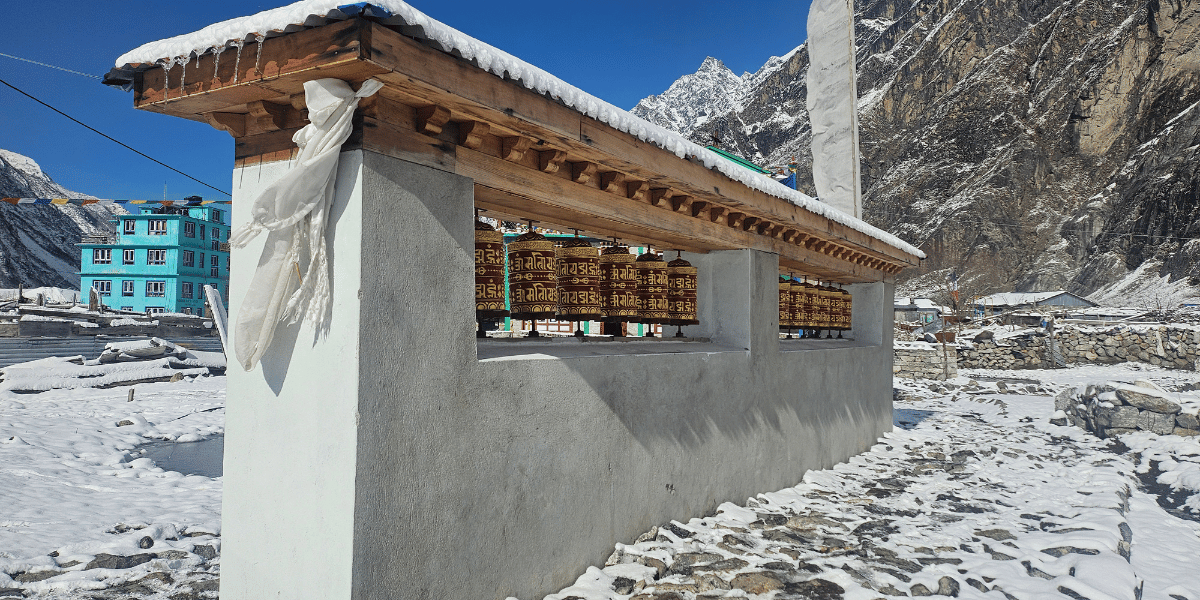
- Prayer wheels are an important component of their architecture and you find them on your way to Langtang Village. Also known as mani wheels, the prayer wheels are cylindrical wheels made mostly of copper and brass.
Similar to mani stones, the prayer wheels too have Buddhist mantras inscribed on them. For me, the most fascinating prayer wheels were the water prayer wheels that we came across right before we reached Kyanjin Gompa.
These wheels are placed right above the stream, and the flowing water turns the wheels around day and night. The water is then considered to be blessed by the prayers, with faith that it will also bless those the water reaches to.
You can also find wind prayer wheels, which, as the name suggests, are turned by the force of the wind. It is believed that the very same wind that touches the prayer wheel will be able to cleanse the bad karma of the people it passes through.
- Talking about monasteries, let’s look into Kyanjin Gompa, the main monastery of the region. Yes, the name of the monastery is the same as that of the village. Being the highest-altitude settlement in the Langtang National Park, the village and the monastery are said to have been founded in the 1600s.
A study has also mentioned that footprints of Guru Rinpoche can be found in the monastery. However, the monastery was destroyed after the 2015 earthquake, and what stands today is the reconstructed structure.
However, one cannot deny its importance in the region. People from Langtang Village and other settlements in the area all gather in the monastery during important festivals and prayers.
Most of what you will see in Langtang Village and Kyanjin Gompa are new structures built after the 2015 earthquake. However, the locals made the conscious choice to integrate traditional designs in safer buildings.
Everyday Living of Langtangpas
Langtang is where you must go if you want to learn what slow living truly is. Here the daily routines are simple. For those involved in the hospitality business, they start their day before the trekkers wake up, mainly to prepare food for the guests. And after they bid farewell, they spend their day doing regular errands while waiting for another set of guests.
And even if you don’t see the people performing prayers and rituals, you will be able to see it in the smallest of their actions. It is reflected in the short detour they take to walk past the mani stones from the left or the extra few minutes that are spared to walk the kora around the chortens.
One thing that you will notice is that there aren’t a lot of children up there. This is because the parents send their children to Kathmandu for education. Some stay in the school hostel until the end of the academic year and visit during their vacations if time and weather permit.
While the middle-aged people there are mostly involved in tourism, a notable percentage of the population have gone abroad for work opportunities. That is their second-largest source of income.
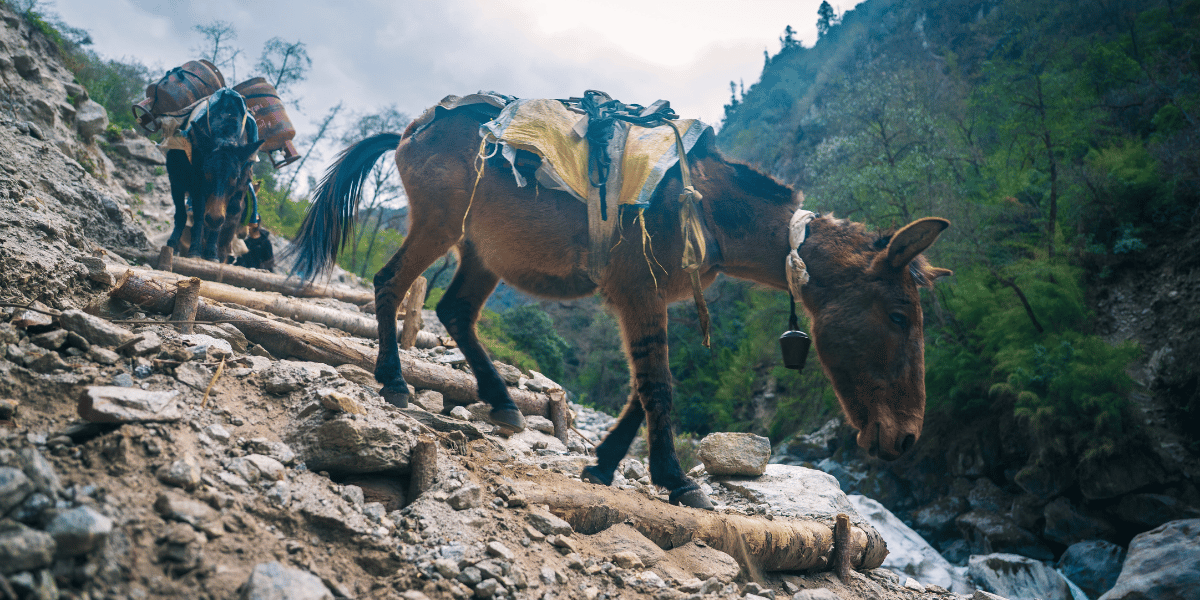
Throughout the trail you will find mules transporting goods like food products, gas cylinders, and so on. Similarly, as you get closer to Ghoda Tabela, you will find pastures where mules and horses graze. Using and lending mules for transportation is another business that the locals are involved in.
The elderly can be seen enjoying the warmth of the sun as they sip their tea. Families work together, be it at the teahouse or the fields. And during Gyalpo Lhosar, the Tibetan New Year, they have a family reunion where everyone meets up to celebrate.
Yak Herding and Agriculture
Before tourism uplifted the region’s economy, the lifestyle of the people was remarkably different. With nomadic roots, the people in the regions largely depended on animal husbandry and agriculture for living.
For those unaware, the green pasturelands of Langtang Valley were what drew the Tibetan Tamangs towards the land. Known for animal husbandry, the Tamangs are renowned for their reputation as yak herders.
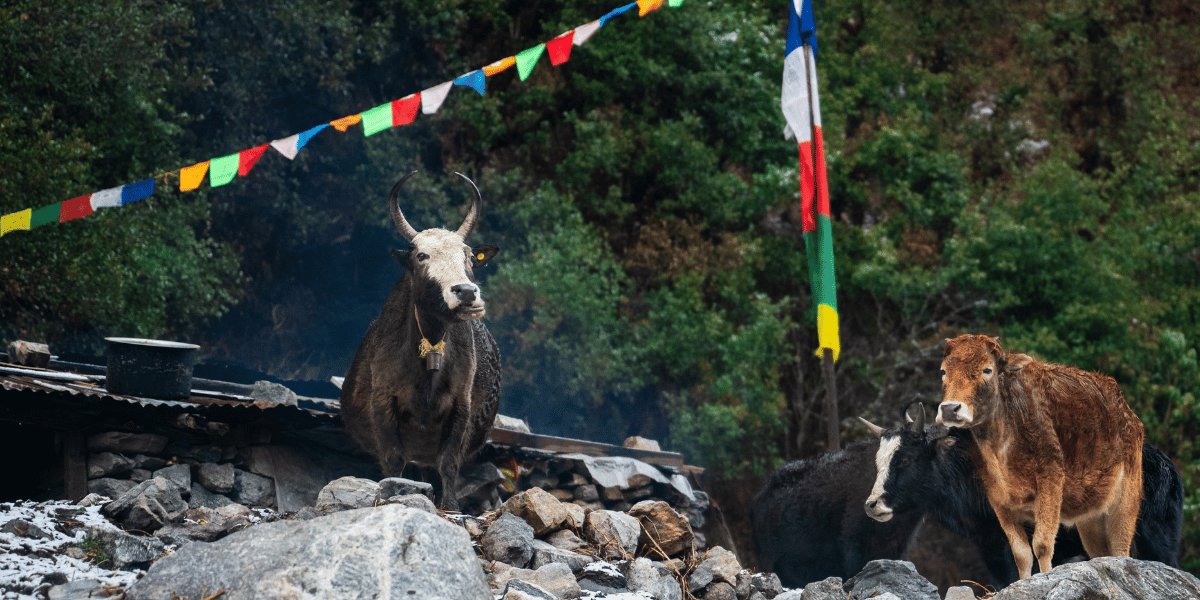
Their fields are home to yak, nak, sheep, goats, horses, mules, and jhopkes (male crossbreeds of yak and cow). And the pastoral production that they receive from the animals is critical to their daily living.
Most of the cattle you will see there are the crossbreeds between yaks and cows. They are known for being stronger than the breeds of their parents and also for giving more milk to the herders.
The killing of animals, whether for sacrifices or consumption, is completely frowned upon and not practiced after Syabrubesi at all. The families there live on a vegetarian diet. Every pastoral product (wool, milk, eggs, etc) is appreciated, as they are the staples.
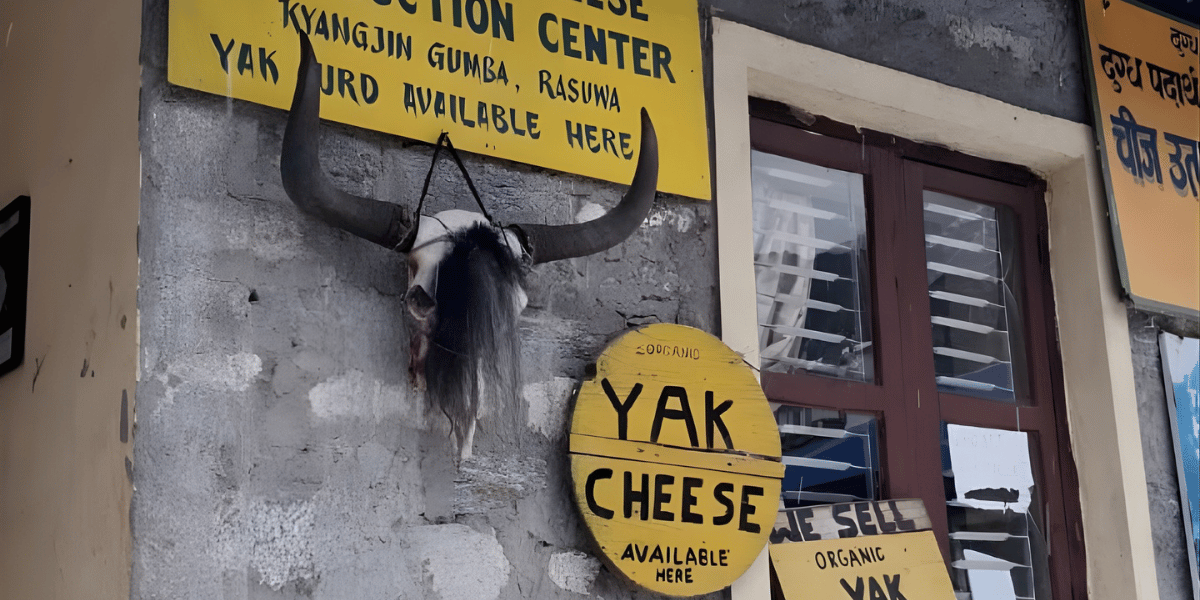
If you notice animal skulls hung on the entrances of the houses or walls, those skulls belong to animals who died natural or accidental deaths. We even came across a dead mule frozen in ice on our way to Kyanjin Gompa from Langtang Village.
Agriculture in Langtang is a great factor that boosts self-sufficiency among the local people. If you look around the teahouses, you will find that they have a small farm on the premises. After you reach Langtang Valley, you can see greenhouse-like structures.
Inside those makeshift gardening areas, people grow high altitude crops like potatoes, buckwheat, soybeans, barley, and millet. The milk from their cattle is used to produce organic cheese, and in recent years, yak cheese production has been a popular attraction in Langtang.
Artisanal Craftsmanship
Before we had even entered the trails properly, we saw an elderly woman weaving using a traditional wooden frame. As she seemed too busy, we decided not to bother her with our questions.
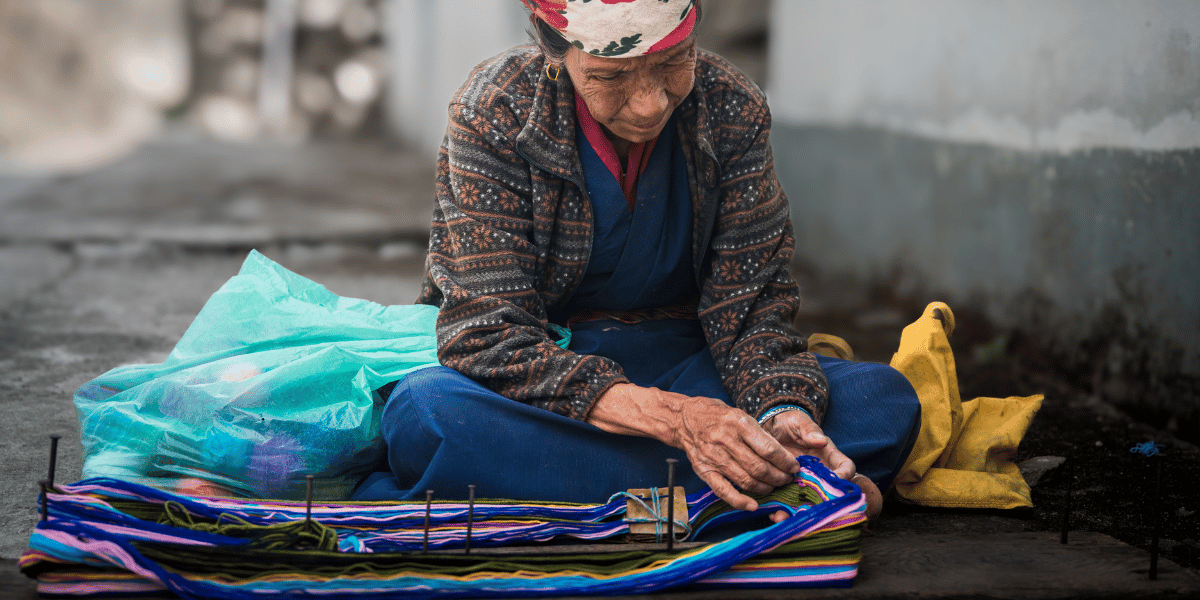
As we got higher, we found out what she was weaving for, as many of the locally handwoven goods were displayed outside teahouses for sale purposes. Using the wool they produce locally, the women of the Tamang community are adept at knitting woolen socks, caps, gloves, and even belts.
And then we have woodcarving, a form of craftsmanship that often goes unnoticed by trekkers in the area. If you look at the houses in bigger settlements, you will notice that they are decorated with intricately carved windows.
Deeply rooted to their Tibetan heritage, the Tamangs have kept the art of woodcarving for centuries. Similarly, the presence of perfectly carved inscribed mani stones also suggests that the Tamangs are well versed in hand carving stones.
Religion and Festivals
As I have implied before, if you take a closer look at the Tamangs, you will notice that even the simplest actions of theirs are tied to their faith. Firm followers of Tibetan Buddhism, you will notice that all the houses have a small altar.
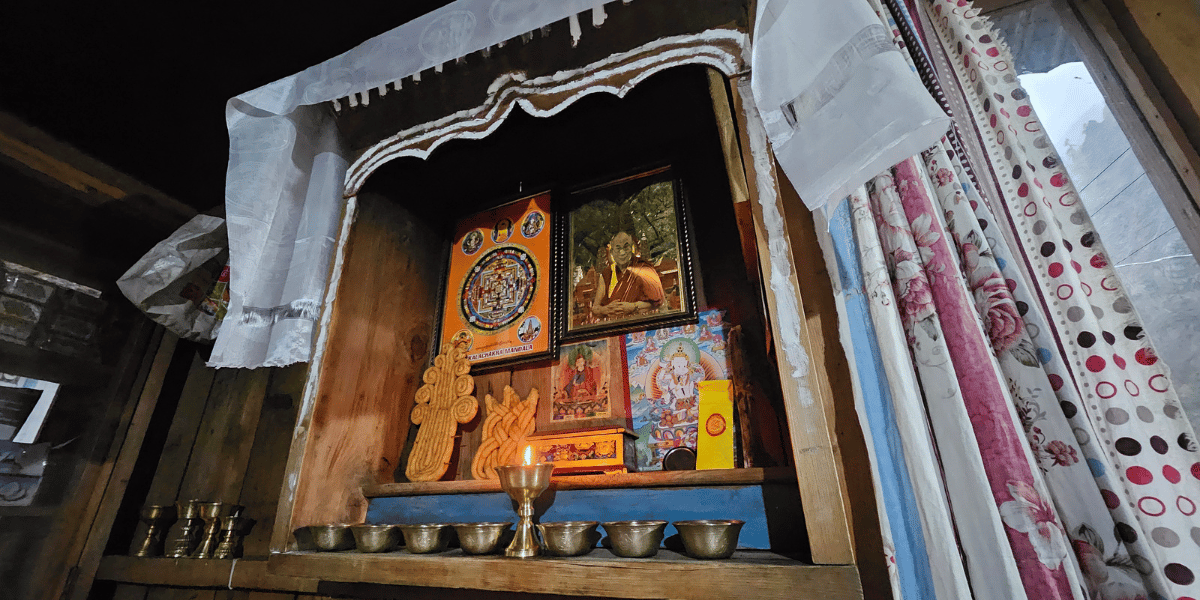
In most of the teahouses, we found the altar at the dining hall. Originally from Tibet, and after centuries of living in Langtang National Park, the Tibetan Tamangs have a unique culture. However, one thing remains unchanged, their respect for the Dalai Lama.
The altar can be distinguished immediately because it is certainly one of the most eye-catching parts in the minimalist Tamang homes of the Langtang region. It is an elaborately carved wooden cabinet lit with butter lamps with pictures of Buddhist deities and the Dalai Lama.
The altars also have 7 bowls used for offering. The bowls contain clean water and other offerings like maize and grains. And one thing is for sure, the juniper incense makes the surroundings smell pleasant throughout the day.
For a clearer understanding, I have broken down the information into two different sections:
Tibetan Buddhism
The founding of Langtang Valley has been attributed to Tibetan Buddhism, and known as the Hidden Valley (Beyul, in Tibetan), it is believed that Langtang Valley was blessed by Guru Rinpoche.
Additionally, it is also believed that the valley was made when an ox ran through it to escape from being sacrificed. Some sources say that the ox was the manifestation of Guru Rinpoche; others say that he went there in search of the ox and found it resting at Langtang Village.
The same event was the reason behind the valley being named Langtang. In the Tibetan language, ‘Lang’ means ‘ox’, and 'tang' means ‘to follow’; meaning to follow the ox. It does make sense since that valley was found when the villagers went in search of the ox. Hence the name Beyul of Langtang.
Over the past centuries many Tibetans moved to Langtang Valley, and they built a unique vibrant culture that is different from the ones found in Tibet or Nepal. As for the story of the ox, people in the region do not kill animals, as it is now considered a grave sin.
Being the corridor between Tibet and Nepal, it does make sense why a lot of their history and stories have Tibetan elements. Among the four sects of Tibetan Buddhism, the Tamangs of Langtang National Park follow the Nyingma School of Tibetan Buddhism.
The values and institutions of Tibetan Buddhism continue to influence their cultures. Most of the marriages happen within the society. The arrangements are often done when families and friends gather to celebrate festivals.
They believe that the deities reside in the mountains, protecting them from evil. The monastery at Kyanjin Gompa houses statues of Buddha and other deities, thangkas, and religious scriptures. It is said that the thangkas were brought from Tibet by the ancestors of the native people who live there today.
Presence of the Bon Religion?
While many articles online have mentioned that there is a small presence of the Bon religion in Langtang National Park, when we asked our hosts at different stops about it, they seemed to be unaware of it.
Now there is a huge possibility of a language barrier and they have a separate name for Bon, or maybe the Bon religion is centered more around the Himalayan regions of Western Nepal, like Bonpos in Dolpo.
However, there is a blend of Shamanism with Buddhism there. Reliance on spiritual doctors has been practiced for centuries in Tibet and Nepal. Many still see this as a viable option because health posts are often far and transportation is a feat in these regions.
Major Religious Sites from the Langtang Valley Trek
While there are small chortens and prayer flags throughout the trails, there are two notable religious sites in this region. Let me give you a brief introduction for these two monasteries.
Langtang Village Gompa
Not to be confused with Kyanjin Gompa, Langtang Village once had its own central monastery. But during the 2015 earthquake, the monastery, which was located at the edge of the village, got completely destroyed. If you visit Langtang Village today, you can witness the reconstruction taking place at the once demolished site.
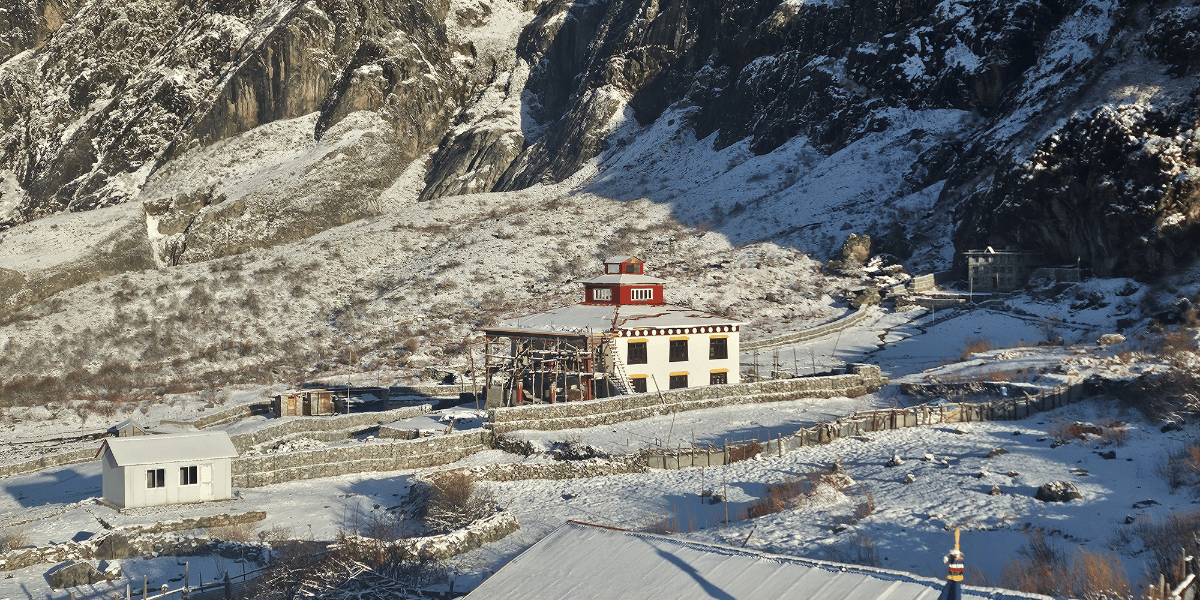
Said to have been built by the infamous figure in Tibetan Buddhism, Terton Mingur Dorje, from the 1600s, this temple was where all the villagers would go for daily rituals. Apart from daily pujas, the temple also served as the center for the village’s community pujas and monthly and tri-monthly rituals.
The monastery used to stand two stories tall and the second storey’s walls were decorated with ancient thangka murals. The major figures worshipped in the monastery were Guru Rinpoche and the founder of the temple himself, Terton Mingur Dorje.
Kyanjin Gompa
After the destruction of Langtang Village Gompa, the monastery at Kyanjin Gompa has become the major place of rituals and ceremonies in the region. It is believed that this monastery was built around the same time as Langtang Village Gompa.
While we did not have the time to explore the demolished site at Langtang Village Gompa, we were fortunate enough to spend time at Kyanjin Gompa. The structure looks simple from afar, but as you reach closer, you will notice how delicately the wooden windows and the door at the entrance have been carved.
Although the monastery was closed at the time, we were allowed to lounge in the courtyard of the monastery, which has been graced by the presence of prayer flags on tall poles.
As mentioned above, it is said that the footprint of Guru Rinpoche can be found in the monastery. While we could not verify that since the monastery was closed, I did notice spiritual scriptures, traditional musical instruments, and ritualistic relics inside the monastery when I peeked inside from a window.
Based on our conversation with the host at Gangchempo Hotel, we got to know a lot about how the monastery functions. The daily prayers are held in the morning, so the monastery is always open during morning hours.
However, the timings for evening hours are uncertain, as it was closed when we visited the monastery around 4:00 PM. But one thing is guaranteed; the peace you feel as the cold wind comes in touch with your skin and the player flags flutter. It makes you feel as though you have received the prayers written on the flags throughout the trail.
Another point that I have mentioned above about the Lamas remains consistent. There are no Lamas and monks residing in the monastery, and the caretaking responsibilities are divided among the families in the village.
Major Festivals of the Tamangs in Langtang
Visiting Langtang during the festivals can be the ideal time for you if you're a culture vulture who enjoys learning about the unadulterated customs of places you visit.
With the entire population practicing Tibetan Buddhism, the Tamangs share some festivals with the Tibetans, but they also have other festivals of their own. Let’s look at some of the major festivals of the himalayas celebrated in the Langtang region.
Gyalpo Lhosar, also known as Tibetan New Year
Celebrated to start the first month of the Tibetan lunar calendar, Gyalpo Losar is one of the biggest festivals of Langtang Valley. One more thing, during our time there, we asked the locals about “Sonam Lhosar” and they told us that Tamangs in Langtang actually celebrate Gyalpo Lhosar.
The festival lasts for about 2 weeks and is one of the best ways to experience the local culture and taste the local cuisine. The first day of the festival is mostly spent preparing for the second day, when the actual celebration starts.
On the second day, the families pray and visit the closest gompa. After the rituals are completed, they visit their family members’ houses and enjoy the grand feast and celebrations.
This festival falls around February or March every year, and is one of the most rejoiced festivals in the community. For two weeks, the Tamang people dance and sing to celebrate the new year.
Dhukpa Chheju
Dhukpa Chheju in Langtang is celebrated to honor Guru Rinpoche and the history of Langtang Valley. In this festival, you can witness high-status Lamas performing the rituals and the local people singing and dancing in unity.
In this festival, a yak, an integral part of their history and daily living, is sacrificed for the prosperity of the village. But in this sacrifice, there are no killings involved. But there are requirements that a yak should meet in order to get chosen.
The yak must be an albino yak, which is very rare to find. Once the yak has been chosen for the sacrifice and the rituals are completed, the people set the yak free in the valley. After it is set free, the yak is free to wander and graze anywhere he wants.
But there is another interesting display during this festival. The word 'Tamang' originated from the Tibetan dialect, and according to the language, 'Ta' means 'horse', and 'Mang' means 'a warrior or trader'. And it is a well known fact that Tibetans were skilled in archery.
Dhukpu Chheju is one of those festivals where you will witness their expertise. Apart from archery, they also play their traditional games. This festival is of great significance among the people, as it teaches the new generations of their age old traditions and practices and builds a sense of belongingness among the people.
This festival usually takes place in the summer around July.
Saga Dawa and Nyungne
Saga Dawa is one of the biggest festivals celebrated by the Tibetan Buddhists. It falls on the fourth month of the Tibetan lunar calendar and is believed to be the holiest month of the year.
The purpose of this festival is to celebrate Sakyamuni Buddha’s birth, enlightenment, and parinirvana. The main day of this festival falls on the full moon, the 15th day. During this festival, Tibetan Buddists start a fasting retreat called ‘Nyungne’.
Rather than a festival, Nyungne is a fasting ritual performed by Tibetan Buddhists. It is a purification ritual that lasts for 2 days and the participants of the retreat perform the 1000-armed Chenrezig Practice.
While others may practice Nyungne during other months as well, the fasting retreat is said to be more auspicious when performed during Saga Dawa.
Langshisha Mela
About 12 km away from Kyanjin Gompa is a place called Langshisa Kharka (above 4,100m). Sitting below Langshisha Ri, this place does not have any teahouses or settlements and can only be reached by foot.
It is said that the ox who escaped the sacrifice died on the pasture here (Kharka in Nepali). During this festival, the native Tamangs walk all the way to Langshisha Kharka, singing and dancing while on their way.
They set up their camps on the pasture while feasting and celebrating together. Our host at Kyanjin Gompa noted that it is a festival worth experiencing.
Other festivals of the region are Buddha Purnima, Chyamgi Puja, and the Tarna festival. Being a part of these celebrations is an excellent method to learn more about their devotions and see their rituals up close.
Tips to Make the Most out of The Cultural Experience
Here are some tips that you can follow to make the most and best out of the cultural experience during your Langtang Valley Trek:
- If your trek to Langtang Village or Kyanjin Gompa falls around any festivities, try to spend more time with the locals and explore the settlements. The villages come alive with celebrations and you must feel it to have it engraved in your memories.
- Talk to the locals! I cannot stress this more. The only way that you can really know a place, its people, and its culture is through a native person. You’ll get deeper and personal insights from them that can change your perspective on so many things.
- Learn Langtangpa for small phrases like Hello, Thank you, and Good morning. It won’t seem like much right now, but it will certainly make the locals’ day better.
- Kyanjin Gompa’s opening hours are uncertain during the afternoons. So if you really want to watch the prayers, then plan your visit in the morning hours.
- Eat what the locals eat. This is not only a part of your cultural experience, but the Tamangs in the mountains also know the right thing to eat in cold and high-altitude regions like Kyanjin Gompa.
- If you want to observe more deeply, then spend at least a day in the villages without any side hikes. You get to understand their daily routines and rituals.
We had the most delightful time in Langtang, and any of us would surely visit again if time permits. Close to the mountains, everything is slow but time itself. If you do go for the trek, on your back, you will find yourself wishing that you had spent a day more at one of the villages up there.
Staying Respectful to the People and their Deities
Philip James Bailey once said, “Respect is what we owe, and love is what we give.” Make this your guideline throughout the Langtang Valley Trek, and it will be one of the most pleasant times of your life.
In a land where the stones, the river, the trees, and the mountains are worshipped, you must be informed beforehand so that you do not offend the Tamangs there. Here are some tips that you can practice during your trek to show your respect to the people and their faith:
- Take off your shoes before you enter monasteries.
- Always walk in a clockwise direction around chortens and mani stones.
- Dress modestly while visiting monasteries.
- On our way to Kyanjin Gompa, we found a board that told visitors not to urinate at a specific area because it was said that the local deity resided on that spot. Be mindful of such signs and follow the instructions.
- While it might not always cross your mind, try using your right hand if you want to give something to the people.
- Do not litter anywhere on the trail. It is not only a holy place but also a national park where the area’s rich biodiversity has been preserved.
- Do not move mani stones and prayer flags from where they have been kept. Everything in the area has been done by the villagers for a purpose that we might not be aware of.
- Always walk on the left side of the mani stones, as it is a custom to move in a clockwise direction around sacred sites.
- Yaks are believed to be sacred in the region. So if you see them grazing, do not disturb them.
Coexist with nature and the people, and the villages and the mountains will welcome you with open arms.
Conclusion
Standing close to the mountains is an experience that is guaranteed. But that’s not all that you will be taking back with you. It will also be the warmth and hospitality of the people.
The feeling of a warm cup of Tibetan butter tea against your cold hands. The relief of seeing a prayer flag as you finally make it closer to a settlement on the trail. The kindest smile and the warm welcome that the people welcome you with.
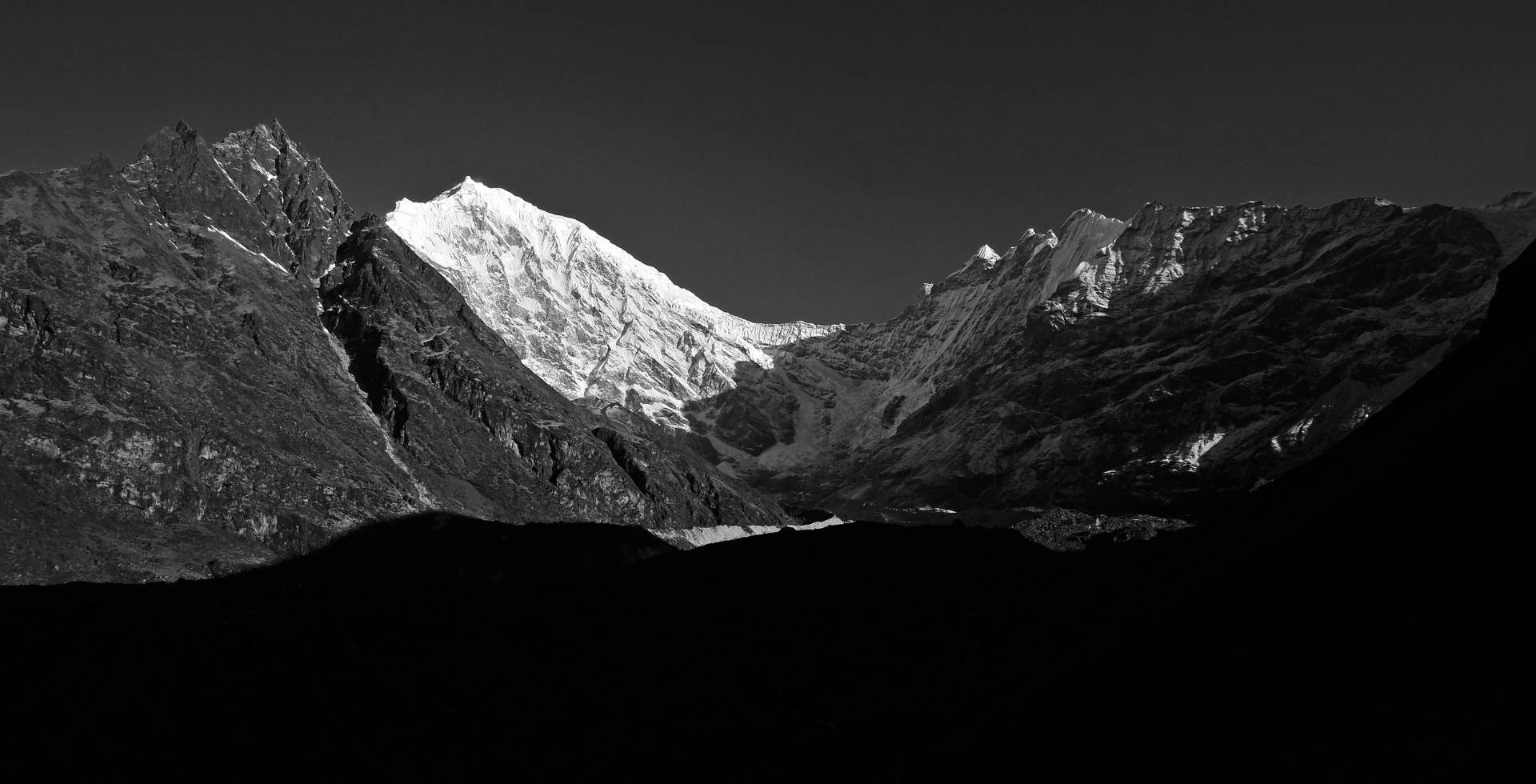
These are the things that will stay in your mind, right next to your memory of the majestic Langtang Lirung. The culture that you will come across is something that has been built and preserved by the people for centuries now.
The villages are all a symbol of the strength and resilience of the people who rebuilt them brick by brick after the devastating 2015 earthquake. As you walk along the trail, each memory gets woven into your soul the way the old ladies weave their woolen goods.
So if you have read this blog, then maybe it’s not just a coincidence. Maybe it is a calling from the valley itself, from the Gods residing in Lantang Lirung themselves.


 Suraksha Subba