The ideal duration of the Langtang Valley Trek is 6 to 7 days. This means that your body should be able to meet the extreme physical demands that the mountains ask for.
It would not have been much of an issue if you were trekking in a low-altitude region, but this is Langtang region that we are talking about.
Your trek starts from 1,467m at Syabrubesi or Syaphru Bensi and goes all the way up to 3,890m at Kyanjin Gompa, 4,700m at Upper Kyanjin Ri, and 4,985m at Tserko Ri. And with higher altitude, your body demands a notable change in your diet.
Another fact is that while trekking in Langtang National Park, as it is a remote area, you cannot expect them to prepare food according to your personal preferences. Once you enter the trails, everyone eats similar meals.
The only difference will be in deciding whether you want a vegetarian meal or a non–vegetarian meal. And as you go to higher-altitude regions, the choice disappears and you will have to stick to a vegetarian diet. This is because killing of animals beyond Syabrubesi is considered a sin according to the religious beliefs followed there.
So if you are planning for your Langtang Valley Trek, I urge you to read this blog till the end. The article covers all the important details related to the menu provided there, the demand of Daal Bhaat as you reach higher, recommended snacks for the trail, and so much more.
What Does Your Body Need During the Trek?
Trekking in high-altitude regions like Langtang Valley is not just about walking. It’s also having to adapt to the low oxygen levels simultaneously in the cold. This means that food is not just consumed for energy, but it is used to boost acclimatization and recovery.
Here are some of the things that you need to keep in mind before ordering food at teahouses during the trek:
- High-carbohydrate diet. If you want to sustain your energy throughout the day, then you need to eat meals that are rich in carbohydrates rather than protein in this case. This is because carbohydrates are easily digestible and give you the right type of energy for the trek.
I suggest that your diet should consist of more than 50% carbs. There is a simple science behind this to explain why carbs should be prioritized. As your body digests the food, the carbs get converted into glucose, which is then converted into energy.
So when your body needs energy while trekking, your body uses the glucose for immediate energy and stores the remaining glucose. But this does not mean that you should ignore protein completely.
- Protein helps with recovery of your muscle tissues. So what you can do instead is pair smaller amounts of protein with your high-carb diet.
- Other than that, I cannot stress enough how important hydration is throughout the trek. Due to rapid breathing and dry air involved in trekking, your body loses water faster in high-altitude regions. So make sure to drink at least 5 litres of water every day. And if you still feel dehydrated, then do not hesitate to take electrolytes.
Now that you know your nutrients, let’s move on to the main section of the blog, The Teahouse Menu, where you will learn about the meals that are served during the Langtang Valley Trek.
This section brings you the most factual information about the meals that you can expect in teahouses during your trek.
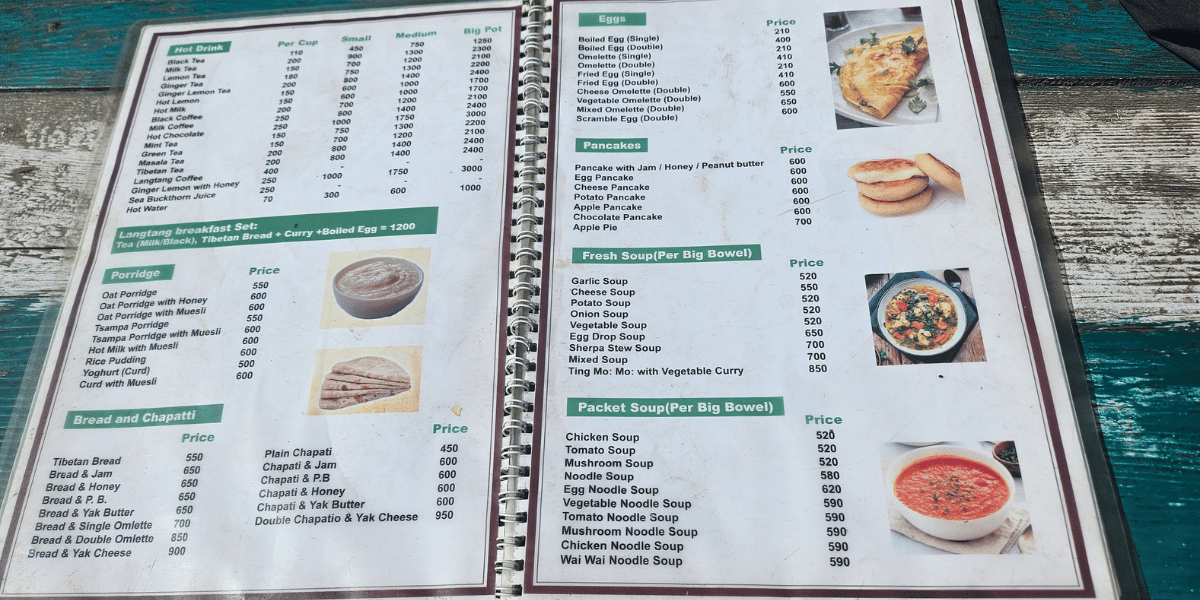
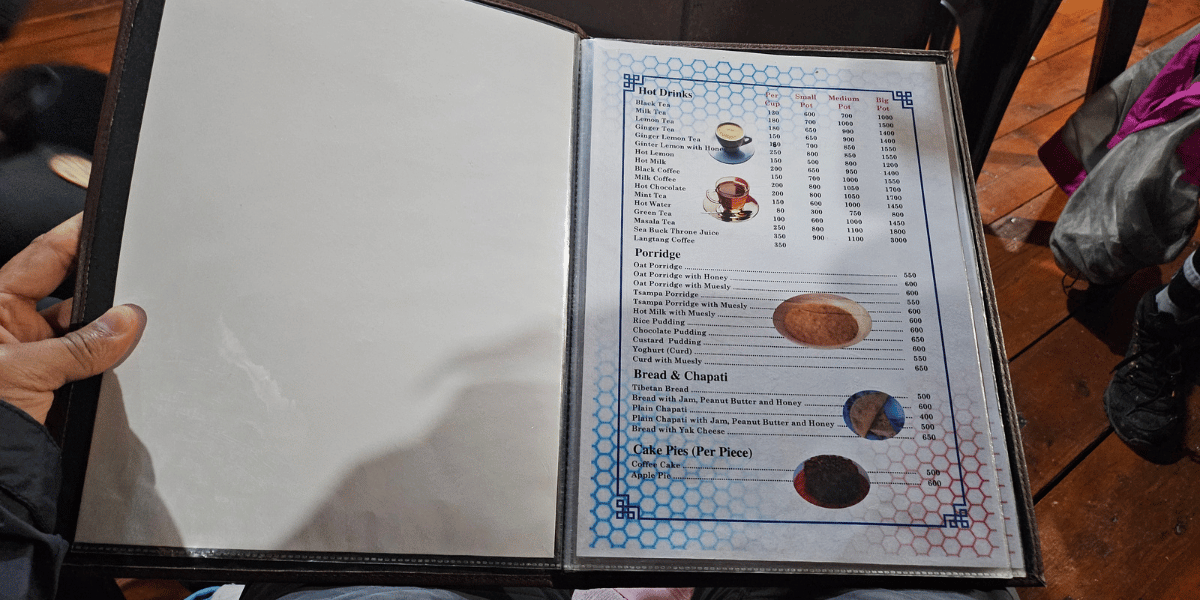
For a better reference, please take a closer look at the pictures of the menus of different teahouses that have been inserted in between.
Breakfast Menu
Breakfasts below the Langtang Range are as simple as they can be.
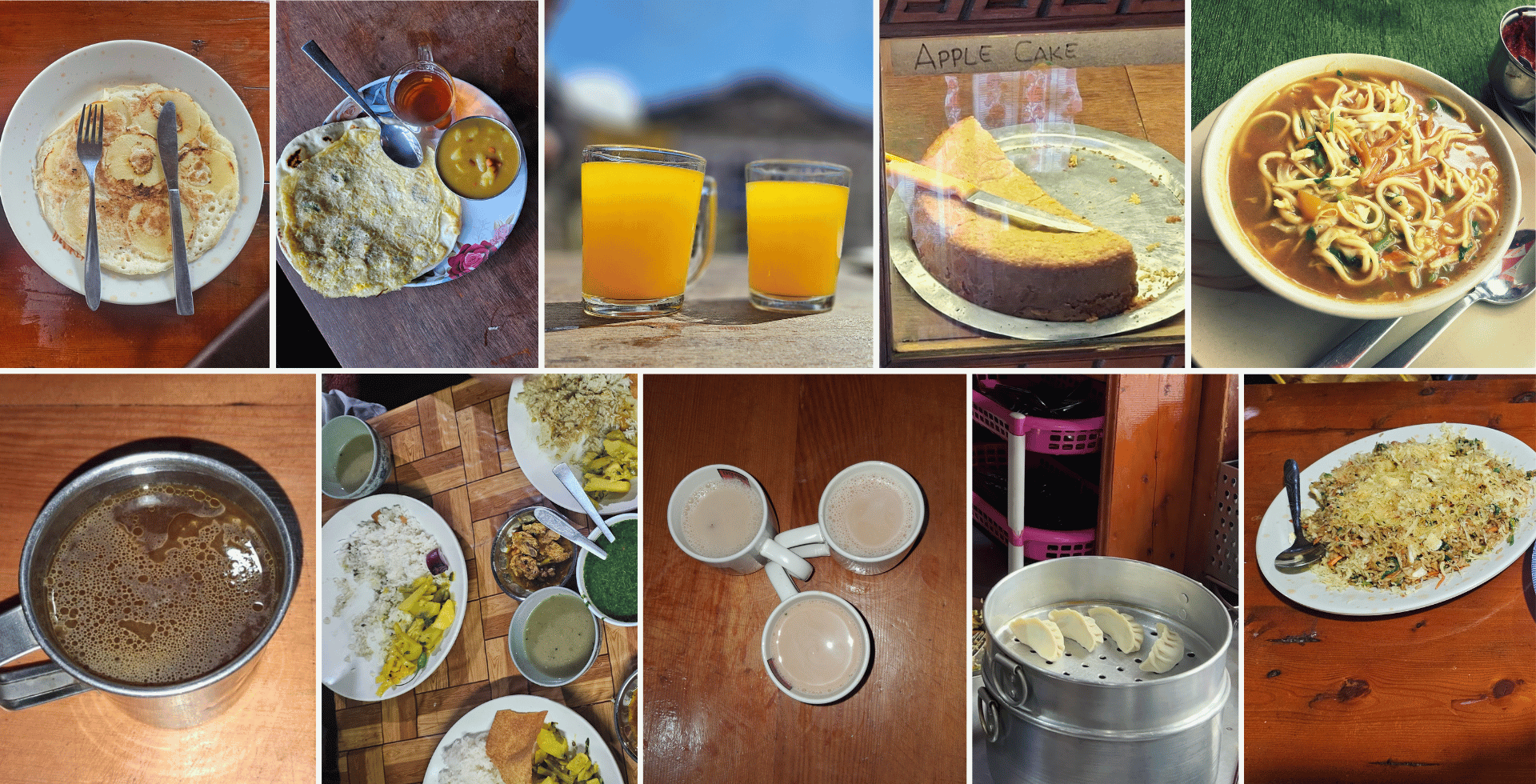
You can expect to see items like porridge, muesli, omelette, pancakes, and bread (Tibetan bread or chapati) with veggies. But here’s the thing, what you eat early in the morning sets the tone for the day.
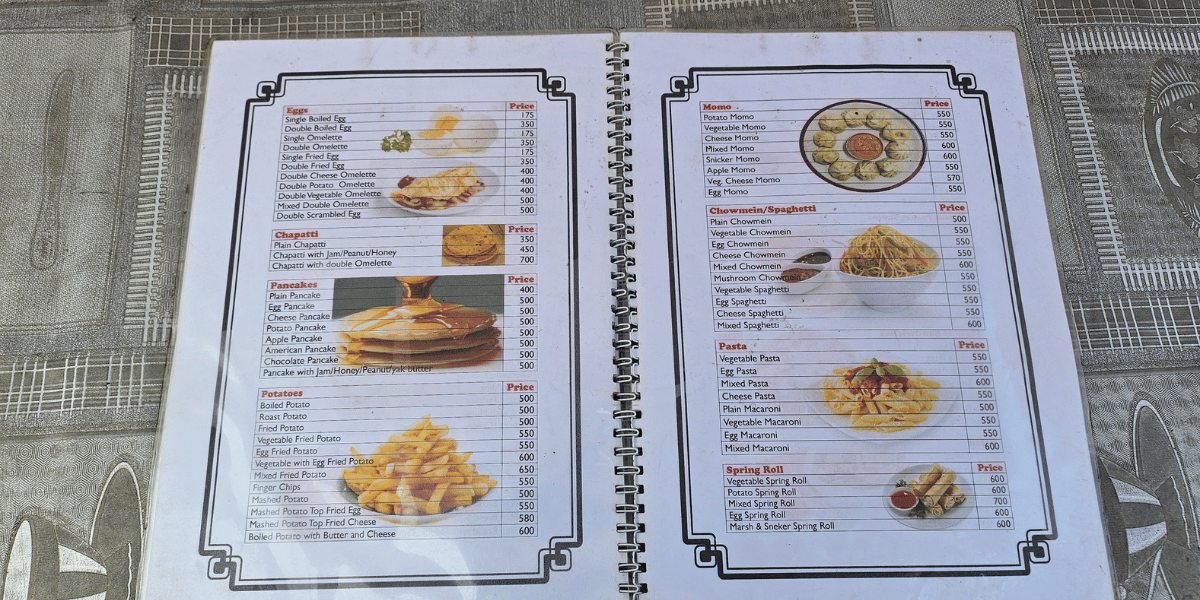
Since trekkers start their day early to reach their next destination, most teahouses serve breakfast between 6:00 AM to 7:30 AM.
Make sure to order your breakfast the night before so that you don’t face any delays the next morning, and trust me, your host at the teahouse will prepare the breakfast at the time you give them beforehand.
While you might not feel like eating early in the morning because of the altitude, you must remind yourself that you need to eat if you want to move forward. The porridge, muesli, and pancakes are quite similar to the ones you can make at home.
Tibetan bread, on the other hand, is a chewy bread made by frying flour dough, which can be paired with vegetable curry or jam (your choice). Rich in carbs, this dish is a staple food of the local families who live in the region.
Lunch and Dinner Menu
As you browse through the menu, you will find that the options for lunch and dinner are pretty much the same. But what you can expect is a wide range of options, ranging from local Nepalese daal bhat to dishes like pizza and pasta.
Some of the common Nepali food and Asian dishes that you can find are daal bhat, momo, chowmein, thukpa, and fried rice. On the Western side of the menu, don’t be surprised if you find dishes like pizza, pasta, and spaghetti.
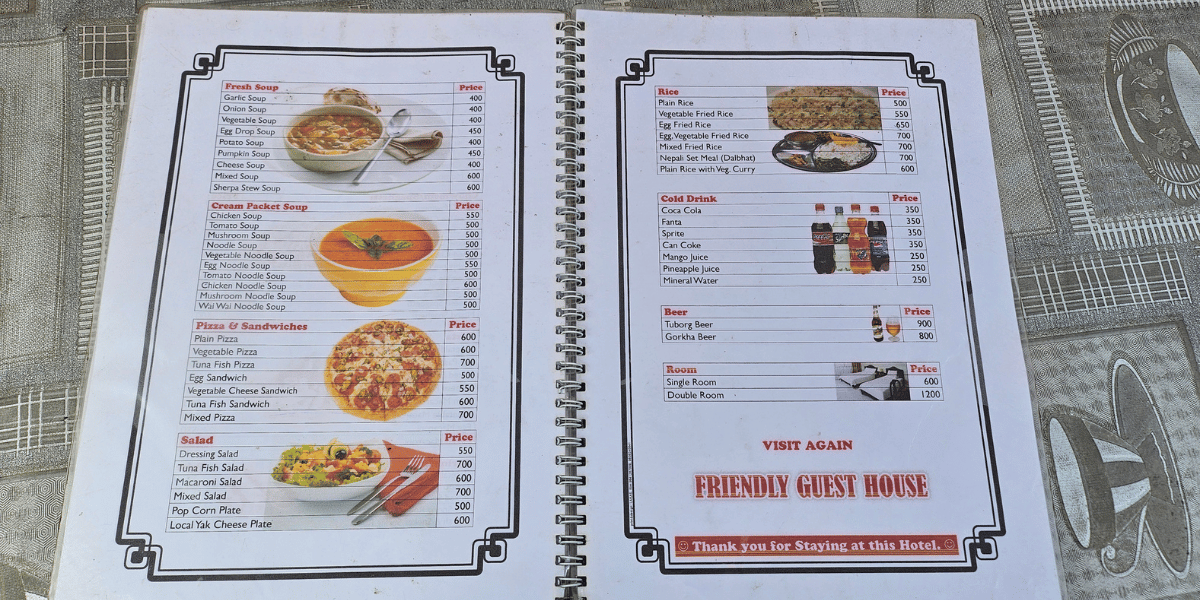
Since you’ll still have some distance left to cover after lunch, I would strongly recommend that you stick to daal bhat.
We will dive more into the cult following behind daal bhat later. Otherwise, you can opt for fried rice or thukpa. Once again, the key is to balance high-carbs with protein.
While both are calorie-rich diet options, I would not suggest dishes like pasta and pizza for lunch.
Firstly, they are more difficult to digest, and bloating is the last thing you would want to experience during the trek. If you really want to taste them, wait until dinner to give them a try.
Secondly, it requires a different kind of guts to order pasta and pizza at a place where you are not too sure about the taste of the final product. It’s great if it tastes good, but I would not be too confident about it in the remote hills and mountains of Nepal.
Soups and Drinks to Keep You Warm and Hydrated
Hydration and warmth. Make that your priority while choosing any form of liquid during the trek.
Soups
Even though you might not find the regular creamy chicken soup or your extra spicy tom yum soup on the menu, the Himalayas have their own range of savoury soups that you can choose from.
Some of the options that you can find in the menu are garlic soup, onion soup, potato soup, egg-drop soup, Sherpa stew soup, and mixed vegetable soup. Can you guess which one is loved by the trekkers? It’s garlic soup.
A part of Himalayan remedies, garlic is known for its various properties that are favourable for consumers in a high-altitude region.
Garlic supports better blood circulation through a compound known as allicin. This compound also relaxes the blood vessels and mitigates the chances of blood clots.
Additionally, garlic also increases the production of hydrogen sulphide in the red blood cells. This improves oxygen delivery within blood vessels as it thins the blood. Lastly, the majority of the people love the taste of garlic!
Drinks
As you can see in the menu above, you will find popular hot beverages like coffee, tea, and even herbal teas in the teahouses. While these are great to start your morning with, please remember that water is your best option when it comes to fluids.
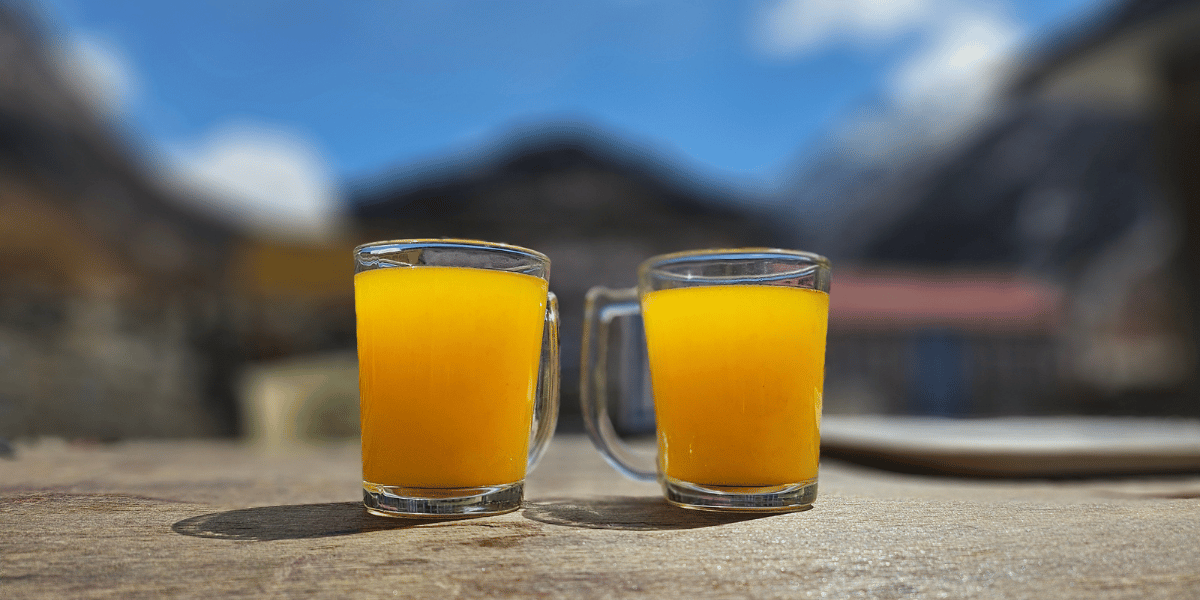
As you reach higher-altitude trails around Ghoda Tabela, you will come across boards hung outside teahouses with “Sea Buckthorn Juice” painted boldly and brightly. That is another Himalayan remedy, which, as suggested by its name, is made of sea buckthorn, a superfruit of the mountains.
The best quality of this juice is its ability to boost one’s immunity. Rich in vitamin C, A, K, and E, the locals drink this juice to combat altitude sickness. Furthermore, this juice also aids digestion and its anti-inflammatory properties hasten recovery.
Note: While the teahouses serve beer and locally brewed spirits, trekkers are advised to abstain from drinking them, as they can affect their sleep quality, acclimatization process, and slow down recovery of the muscle tissues. Always discuss with your guide before consuming alcohol.
Estimated Costs for Your Meals
While the menus above have clearly mentioned the prices of the dishes available on the menu, please look at the table below for an easier estimation.
|
Meals
|
Estimated Price Range
|
|
Breakfast
|
NRS 450 - NRS 850
|
|
Lunch
|
NRS 500 - NRS 1000
|
|
Dinner
|
NRS 500 - NRS 1000
|
|
Desserts
|
NRS 500 - NRS 850
|
|
Non-alcoholic warm beverages
|
NRS 110 - NRS 300
|
|
Alcoholic Drinks
|
NRS 350 - NRS 1200
|
Note: In the range mentioned above, the lower range denotes the prices on the menu of teahouses in the lower region (eg: Bamboo and Pairo), and the higher side suggests the prices of food at higher-altitude regions (eg: Langtang Village and Kyanjin Gompa).
A Deeper Dive into Daal Bhat
If you do not know what Daal Bhat is, then you have probably been wondering for a while just exactly what it is that I have been naming from the beginning.
So for those new to the dish “Daal Bhat”, I would like to introduce it to you with the popular saying we have in the Himalayas, “Daal Bhat Power, 24 Hour!”
Apart from being one of the national dishes of Nepal, it is also a well-known and beloved food in the trekker’s society.
No matter where people come from, after they enter the trails of Nepal, they crave for daal bhat. Some get tired of it and promise to never eat it after the trek ends!
So what exactly is daal bhat? Daal means lentil in Nepali, and Bhat means rice. But that’s not all the platter is about. Daal bhat is served with fresh seasonal vegetables, achaar (pickle), and papad (a crispy snack made with ground rice, beans, or lentil).
For non-vegetarians, yes, you can also ask for a non-vegetarian curry, although that might be rare in Langtang, as I have already mentioned that animal killing is considered to be a grave sin in the region. However, you can always ask them to prepare an omelette to pair with the meal.
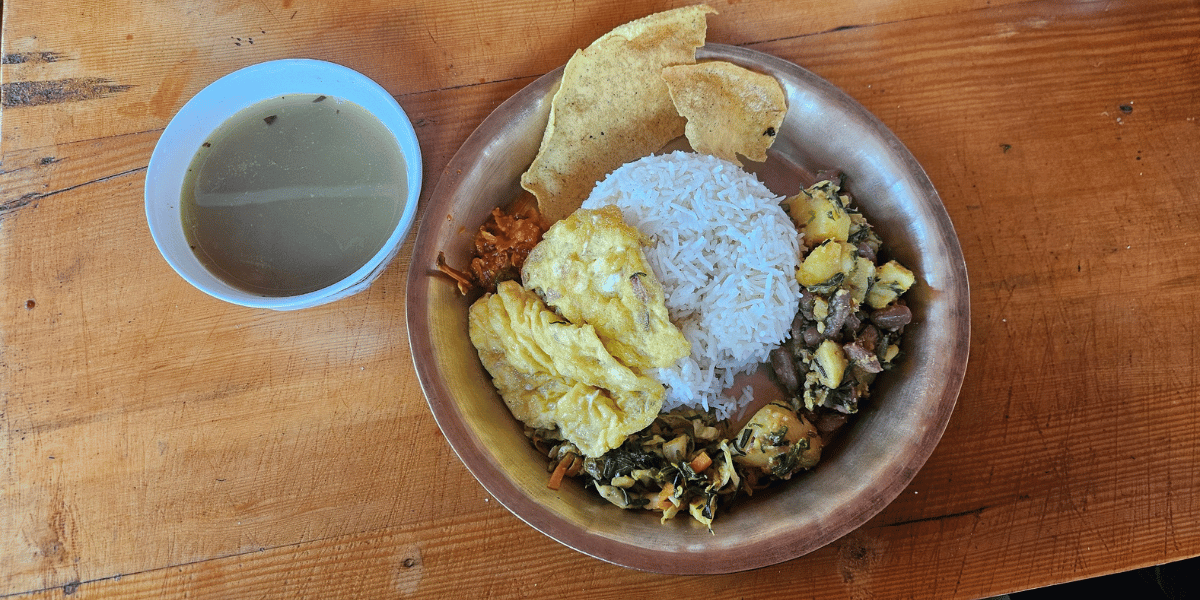
Why Daal Bhat?
A warm plate of rice, lentils, and vegetables made of earthy spices with a hint of spice from the chutney is how I would like you to imagine daal bhat.
Mostly spiced with cumin, dried red chillies, garlic and ginger, your average daal bhat is the perfect example of a balanced diet. And no matter which season you choose to visit Langtang in, this dish is going to be the most reliable source of energy for you.
All the elements that make up the plate of daal bhat are rich in different nutrients. If rice is rich in carbohydrates and boosts energy, then daal is where you get fiber and plant-based protein from.
The vegetables, which are seasonal, nourish your body with iron, calcium, protein, and different types of vitamins. And guess what? You get unlimited refills.
Before you assume that daal bhat is similar to an Indian rice platter, let me stop you right there. Unlike Nepali daal bhat set, the Indian platter has more ghee, butter, and spices.
Not your ideal meal for a trek! So know your food and nutrients before you set out to know the mountains of Nepal.
Note: Eating daal bhat during the trek is not only beneficial for your health but is also an important part of your cultural exchange and trekking experience. Teahouses have their own methods of preparing the dishes, and I hope you enjoy the food as much as we Nepalese people do!
Snacks for the Trail
We have now covered almost everything you need to know about the meals they prepare in the teahouses of Langtang. I hope pictures of the menu along with the prices have made it even easier to determine the budget you need for your meals throughout the trek.
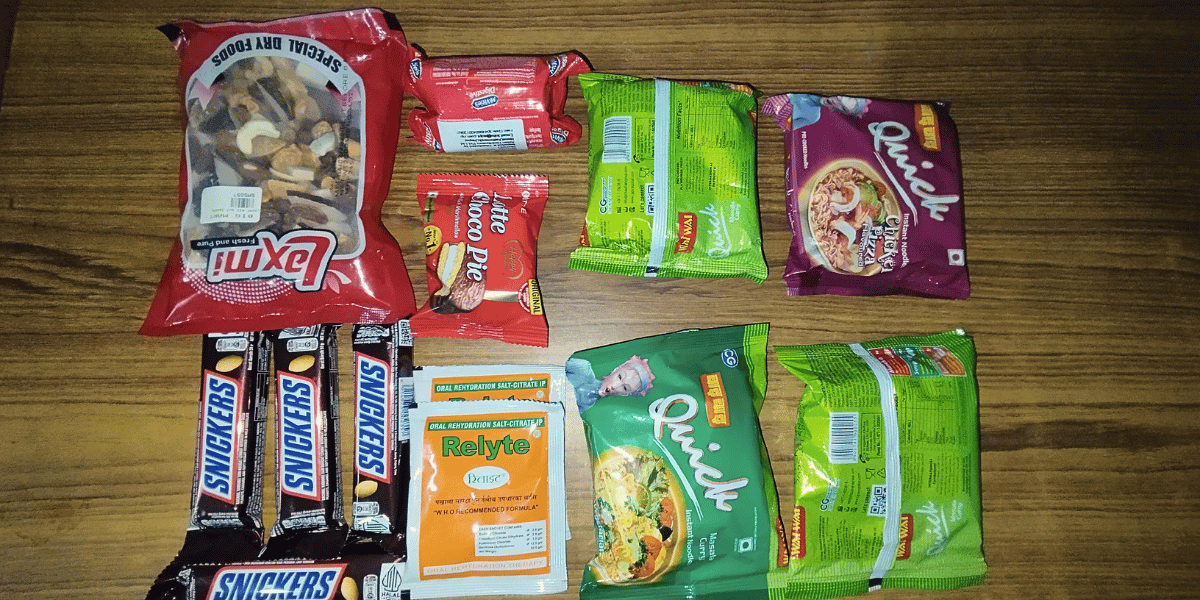
Now let me help you prepare for the snacks that you might want to carry by yourself. This is important because teahouses are not available throughout the trail, and in case you get too tired on the trail, you will need something to boost your energy.
Here are some of the snacks that you can prepare on your own as you prepare for the Langtang Valley trek:
- Trail Mix: Trail mix is basically a mixture of dry fruits, nuts, and treats. While mixing the ‘treats’, I would highly recommend that you consider dark chocolate. It enhances oxygen efficiency and sustains energy for a longer period of time.
- Granola/Trekking Bars: Granola bar is the trekking version of a sweet fix. Getting a sugar crash in the mountains is the last thing you want to experience. So to avoid its symptoms like unexpected fatigue and dizziness, replace your everyday chocolates with bars that are made up of oats, honey, seeds, dried fruits, and other nutritious delights.
- Salty Snacks: I have to admit that trekking comes with weird cravings. One moment your system will be asking for sugar, and the next moment it’ll demand for something salty. For salty snacks, you can carry pretzels, crackers, or even ready-to-eat noodles widely available in the stores of Nepal.
If you want more information related to packing, make sure to read our blog for a packing checklist that has been written specifically for the Langtang Valley Trek!
Note: These snacks are priced way higher on the trails, which actually reflects the transportation labor. While it is reasonable to pay extra once you reach there, if you want to avoid it, you can buy them in Kathmandu before you leave for the trek.
Appetite Changes in High-Altitude
As trekkers reach higher altitude regions, their bodies go through a physiological change which affects their appetite, and this typically starts as they get closer to reaching 3,000m. This physiological shift takes place due to a hormonal imbalance.
This is because the body releases a hormone known as 'leptin', which is responsible for signalling the brain to reduce appetite. It also makes one feel as if they are full. So if you still feel full after hours of walking, it’s the high-altitude talking, not your body.
Furthermore, high altitude also reduces a hormone known as ghrelin. In contrast to leptin, ghrelin is released by your stomach to signal hunger to the brain and increase appetite.
So instead of prioritizing the way you feel about hunger, I would suggest that you practice the method of eating by the clock. Set time to eat snacks along the way, and plan your lunch stops accordingly.
You can also carry something you find palatable. These could be your comfort food or your favorite snacks, basically something you would enjoy eating when you don’t feel hungry.
Stomach Troubles and Food Allergies
Apart from affecting your appetite, high-altitude also affects your digestion. The simple reason behind this is your body’s survival mechanism. In regions with low oxygen levels, your body will prioritize the functioning of your vital organs.
So the energy required to digest the food is instead directed to the functioning of your organs like the brain, heart, and lungs. As a result, the muscles in your stomach won’t contract as usual, delaying digestion and resulting in gastrointestinal troubles.
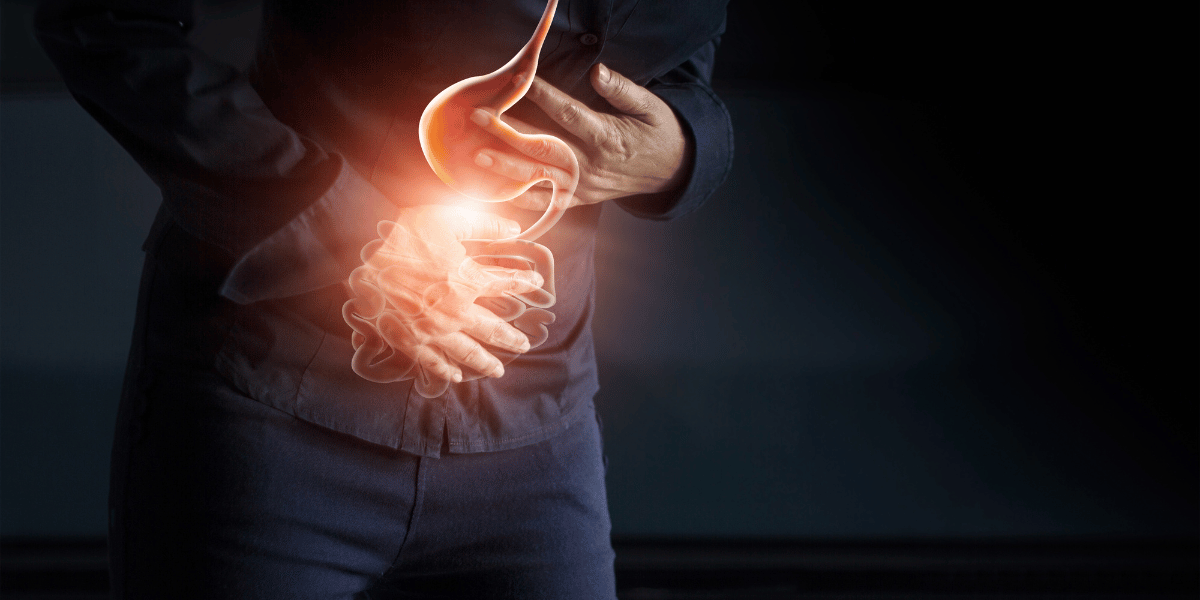
This also interferes with the production of digestive enzymes, taking longer for the food to break down into energy that can be absorbed by the body. It can be harder, especially if you have consumed increased levels of protein and fat.
So what can be done to avoid this? Eat Daal Bhat! The dish is not only rich in carbohydrates, but the meals are freshly prepared and well cooked, reducing the risks of food poisoning in the mountains.
You can also carry high-calorie snacks if you don’t want to eat a large meal at once. Lastly, if you have any food allergies, please let your guide know beforehand. They will pass on the information to the teahouse hosts who are responsible for preparing your meals.
Practical Tips Based on Personal Experience
If you have read our previous blogs, then you must have noticed that they always end with tips and suggestions. So let’s get started with the tips for your Langtang Valley Trek food guide:
- Order your breakfast before you head to bed. I know I have mentioned this before, but this is an important point that you cannot forget. This not only gives hosts enough time to prepare, but it also helps you start your day at the planned time.
- If you’re unsure about what you want to have for lunch, go for daal bhat. It is the safest and the healthiest option.
- Daal bhat comes with free refills. If you don’t feel full, don’t feel shy to ask for more.
- Don’t push your lunch later than 1:30 PM. Teahouse kitchens are slow, as most of the food is made fresh. Daylight can disappear faster up there, so try your best to have your lunch early.
- If you don’t want to pay extra for snacks and tissues on the trail, buy them before you leave Kathmandu. You might also find them cheaper in Syabrubesi before you enter the remote areas of Langtang National Park.
- While it takes time to prepare your meals, make sure to order hot water and beverages like tea and coffee as soon as you enter the teahouse. You can sip on them while you wait for your food to arrive.
- Make sure to fill your water bottles before you go to sleep and before you start your trek the next morning. The kitchen won’t be open late at night.
- The price of the meals increases as you go higher, so be prepared for that. Carry enough cash in hand.
- Carry electrolytes. You won’t realise how much mineral your body requires during the trek.
- Make sure to eat even if you don’t feel like eating.
- Try not to drink alcohol during the trek, as it affects sleep quality, recovery, and acclimatization. Wait until you return back to Syabrubesi or Kathmandu to celebrate the completion of your trek.
Food is one of the most important factors that determines how your trek goes. And always make sure that you have your permit and your TIMS Card in case of health emergencies!
Here, your meals are not just about eating; it’s about knowing what food is going to help you meet the tough physical demands of a trek. So make sure you eat the right meal at the right time!
Conclusion
With all that we have covered above, we have come to the end of your food guide for Langtang Valley Trek. The simplest of meals you will have throughout your trek is going to be a huge part of your experience. Eating the right food is a covert factor that ensures you finish your trek according to your itinerary.
Throughout the blog, there was one thing that I kept coming back to, and it was ‘Daal Bhat’. And this is not even about marketing, it’s about making a practical choice. If the people who live and work on the trail rely on this, trust me, it will get you through the trek!
The instructions are pretty simple: Eat hot. Eat early. Carry your snacks. Avoid alcohol. Lower your expectations; you won’t find a gourmet. And lastly, enjoy your time and warmth in the dining area.


 Suraksha Subba