If you've already started your Langtang trek preparation, know that permits are one of the first things you need to sort out. And honestly, it's simpler than it looks on paper!
For most treks in the Langtang region, you're looking at a national park entry permit and a TIMS card (which is optional).
But here's the thing: depending on which specific trail you're doing, you might also need a restricted area permit if your route passes through another protected area.
The Tamang Heritage Trail is a good example of this. Parts of it fall outside Langtang National Park and into areas that the Department of Immigration classifies as restricted. So, the permit requirements shift slightly for this one.
Confused? Well, after reading this detailed guide, I’m sure you’ll have a clear idea of what permits you need, how much they cost, and how to obtain them.
Since permits make up nearly 3-5% of your overall Langtang trek budget, it's better to plan for them early rather than scramble at the last minute.
Summary: Langtang National Park Permits and Costs
Let me quickly get into the complete overview of the permits across all major treks in the Langtang National Park, along with the respective fees:
|
Permits
|
Nepali Citizens
|
SAARC National
|
International Trekkers
|
Child Discount
|
Porter Fee
|
Helicopter Landing and Hovering
|
|
Langtang National Park Entry Permit
|
NPR 100
|
NPR 1500
|
NPR 3000
|
Free for children below 10 years
|
NPR 25
|
NPR 3000
|
|
TIMS (Trekkers Information Management System) Card
[OPTIONAL; we’ll provide if necessary]
|
-
|
Group: NPR 300
|
Group: NPR 1000
|
-
|
-
|
| |
|
|
Camping Fee (for those wishing to choose camps over teahouses)
|
NPR 100
|
NPR 1000
|
NPR 1500
|
-
|
-
|
The above are general Langtang National Park permit and fee details. Now, let me break down the permits based on the popular trekking routes:
|
Trek / Route
|
Mandatory Permits
|
Optional Permits
|
|
Langtang Valley Trek
|
Langtang National Park Entry Permit
|
TIMS Card, Porter Fee
|
|
Gosaikunda Lake Trek (starting from Dhunche)
|
|
Helambu Trek (starting from Tarkeghyang)
|
|
Panch Pokhari Trek
|
|
Ganja La Pass Trek
|
|
Tilman Pass Trek
|
|
Jugal Himal Base Camp Trek
|
|
Gosaikunda Lake Trek (starting from Sundarijal)
|
Langtang National Park Entry Permit, Shivapuri National Park Entry Permit
|
|
Helambu Circuit Trek (starting from Sundarijal)
|
|
Tamang Heritage Trail
|
Langtang National Park Entry Permit, Restricted Area Permit
|
|
Jugal Himal Base Camp Trek (involving Bhairabkunda)
|
Langtang National Park Entry Permit, Gaurisankhar Conservation Area Permit
|
|
Langtang Valley Helicopter Tour
|
Langtang National Park Entry Permit, Helicopter Landing Fee
|
-
|
Why Are Permits Required to Enter Langtang Region?
According to recent reports, more than 32,000 domestic and international tourists visited Langtang just between July and December 2025 alone! And honestly, these permits are not just a formality, and they serve a real purpose.
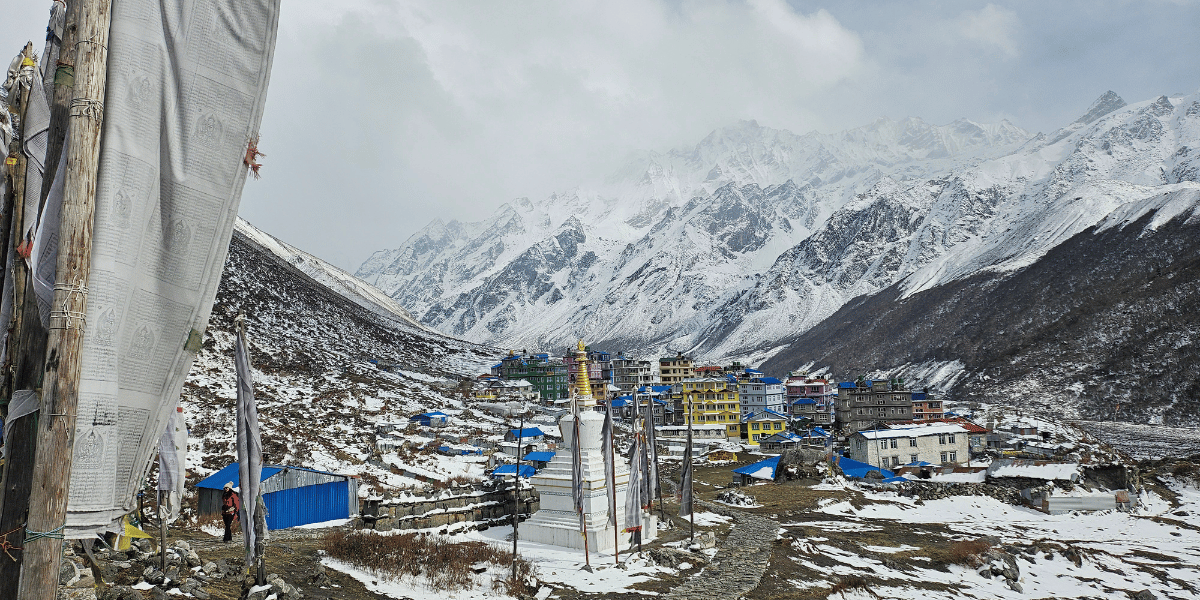
Allow me to explain why paying these small amounts of fees for permits can actually be truly beneficial:
- Conservation funding: Firstly, the collected fees head directly towards maintaining the trails, wildlife habitats, and the overall ecosystem of Langtang National Park, as well as the buffer zone. This means even your small contribution as a trekker is essentially what keeps this region accessible, clean, and worth visiting for years to come!
- Trekker’s safety management: Along with the collection of permit fees, even your names are written down. This record of who is entering the region helps rescue teams in case of emergencies, bad weather, or missing people incidents.
- Regulation of tourism: The popularity of Langtang Valley and Gosaikunda treks means issues can likely occur. While proper accommodations and facilities are slowly being established in those remote regions, serving an excessive number of visitors in one go still remains difficult. So, controlled entry ensures that the region does not get overwhelmed with trekkers at any given time (especially the best/peak times to visit Langtang), which helps protect both the environment and the quality of experience!
- Border security: For the areas of Rasuwa and Sindhupalchowk that are close to the Tibetan border Trail, border security prevails. So, to ensure no trespassing occurs on the Tibetan side, an additional layer of security is introduced in the form of ‘restricted areas’ (we’ll talk about this in detail below).
- Support for local communities: Among all the pros, the most important reason is that a portion of these collected fees goes towards infrastructure development, health posts improvement, and further local development within the Langtang region.
Our appeal to the government:
In March 2026, our content team completed the Langtang Valley Trek, and along the trail, we were requested to voice genuine concerns from locals and teahouse owners:
- The national park is recorded as "Lamtang" instead of "Langtang" in official government documents, which affects everything from promotion to recognition.
- The quality of security and services inside the park is not up to par (considering the amount of fees that’s being collected).
- Lama Hotel, which is one of the main overnight stops for multiple trekkers, currently has only six to seven teahouses, and many feel that more investment in accommodation here is long overdue.
- There were also calls for the promotion of more peaks in the region and more flexibility in how tourism is managed.
Well, these are not just minor complaints. They reflect how much the local community cares about Langtang and how much more the permit fees could be beneficial if channelled properly.
All Permits Required For Langtang Trekking [With Updated Cost]
Now, let me break down each permit one by one so that you know exactly what you are paying for and what exactly their purpose serves:
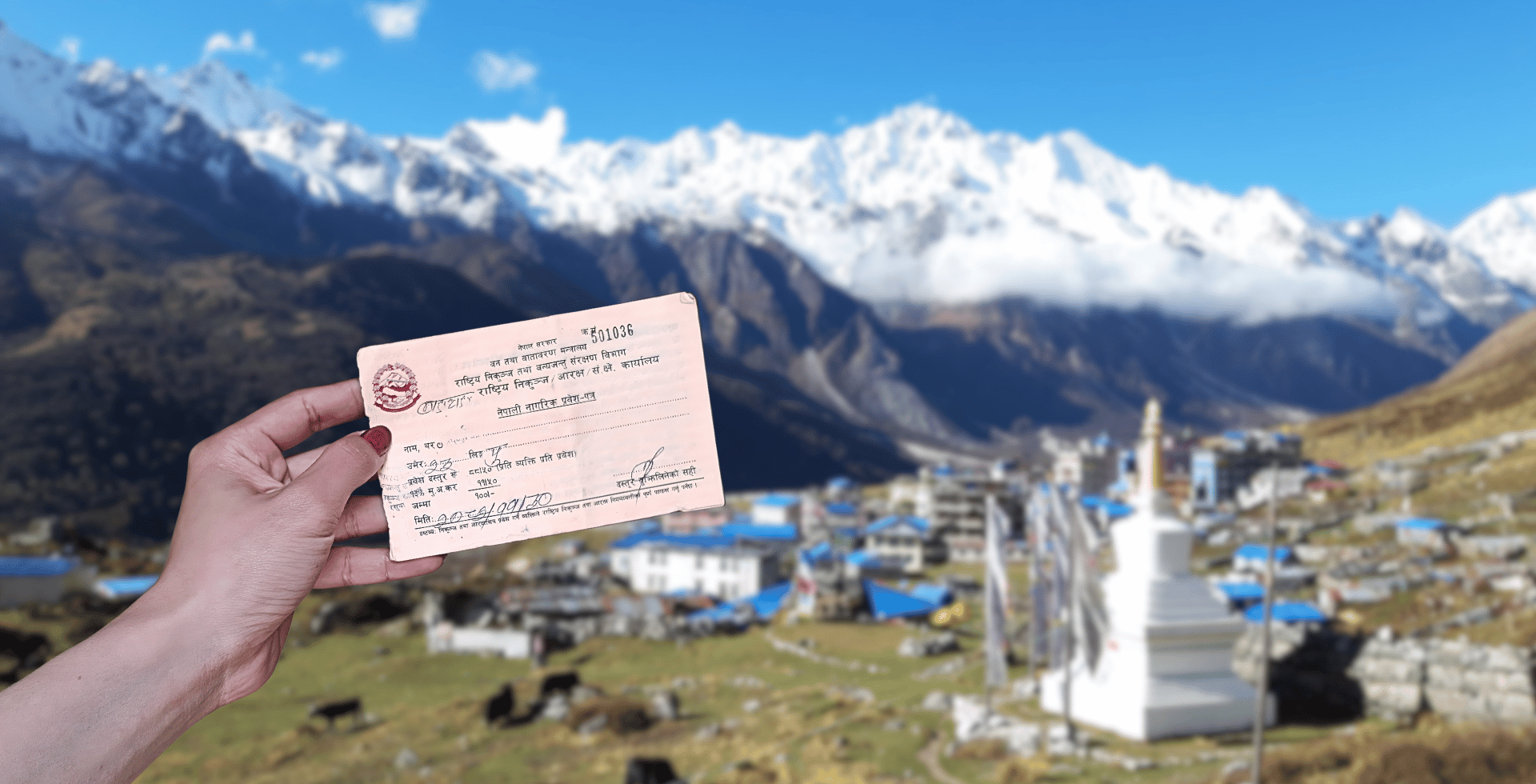
Langtang National Park Entry Permit
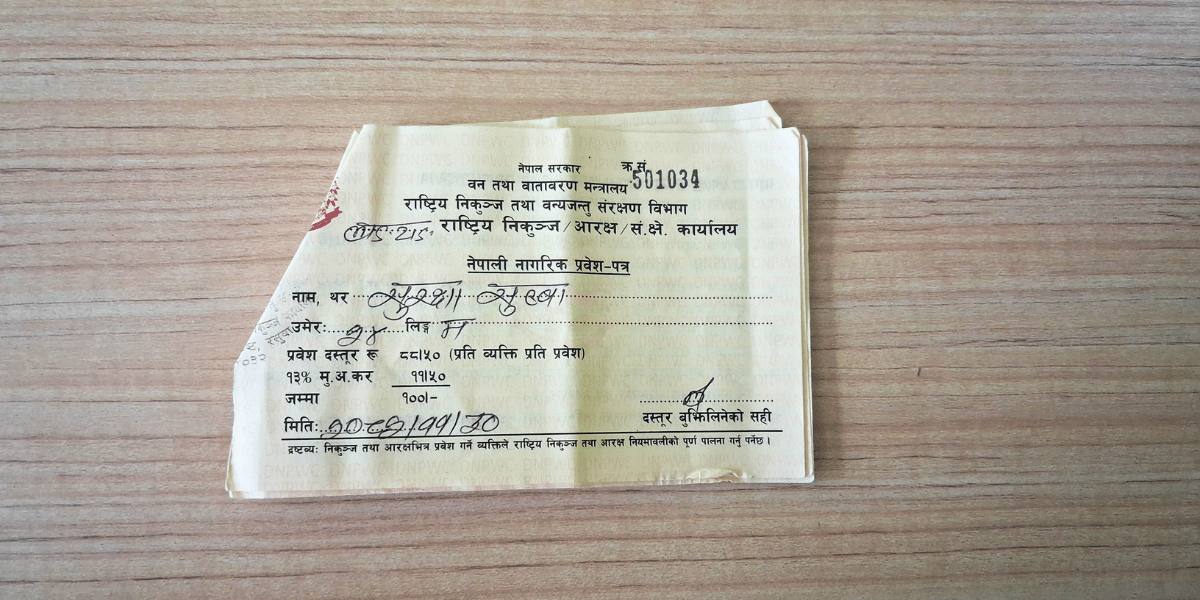
First of all, Langtang (not Lamtang) is Nepal's first Himalayan National Park that covers over 1,710 sq. km of the Nuwakot, Rasuwa, and Sindhupalchowk districts.
It is home to the endangered red panda, snow leopard, Himalayan black bear, and a wide variety of wildlife across tropical and alpine zones.
To enter this national park, it is required for everyone (both national and international tourists) to carry the entry permit throughout their trek. This applies whether you are doing the Langtang Valley, Gosaikunda Lake, Helambu Circuit, or any other route that passes through the park boundary.
Here’s the cost breakdown in Nepali Rupees:
- Nepali Citizens: NPR 100
- SAARC Nationals: NPR 1,500
- International Trekkers: NPR 3,000
- Children below 10 years: Free
- Porter entry fee: NPR 25
Since there are checkpoints along the trail, keep this permit in an accessible place. And if your guide is handling the documentation, just confirm that it's safe with them before you start each day!
TIMS Card (Not a Compulsion)
Let me be straight with you: the TIMS card has become increasingly less relevant, and this is not just in Langtang.
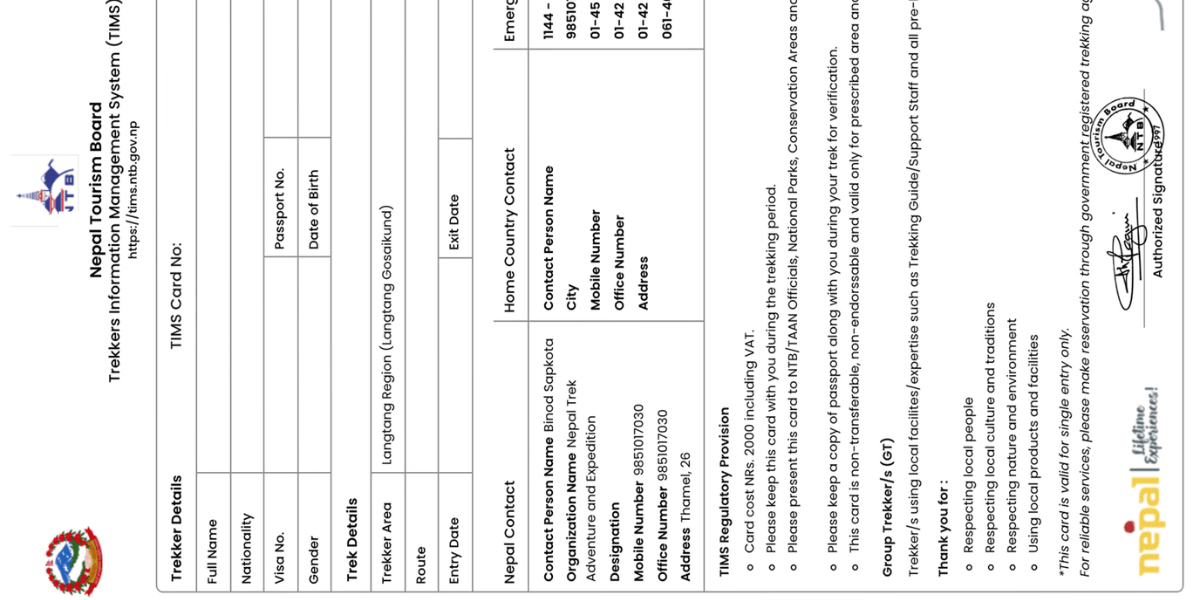
The Trekking Information Management System was introduced back in 2008 with a genuinely good idea behind it. The main aim of this system was to maintain a database of trekkers so that, in case of emergencies or natural disasters, authorities could track who was where and coordinate rescues more efficiently.
For the first few years, it did serve that purpose to some extent, with checkpoints set up along popular routes where trekkers would sign in. But a lack of communication between checkpoints and limited technology in remote areas meant the system gradually started losing its purpose.
Considering the lack of clarity, many national park and conservation area checkpoints have even stopped inspecting TIMS cards altogether!
In fact, there have been complaints from foreign trekkers online (alongside our team at Altitude Himalaya, who often get asked about TIMS). Reportedly, many claim that despite purchasing the TIMS card as instructed by the Nepal Tourism Board, they did not have to present it a single time!
So, many trekking agencies have stepped down from getting the TIMS card. Even we may not provide you with one (unless you specifically mention it!). And we suggest the same if you’re heading to Langtang independently.
Instead, rural municipalities have now come forward to slowly collect their own local trekking permit instead (I learnt this during my Manaslu Circuit Trek, where I had to get the Chumnubri Rural Municipality Permit, even though I am a Nepali citizen).
According to the Trekking Agencies Association of Nepal (TAAN), revenues collected from TIMS Cards go into the government coffers and are used for identifying new trekking routes, marketing, and emergency support for guides and porters.
But I’m sure TAAN acknowledges this system needs an overhaul. I’ve personally heard that discussions are ongoing about replacing it with a new tracking system or making licensed guides compulsory to ensure trekker safety in a more reliable way.
The bottom line is this: while TIMS is still technically in the system, the current government is working on a more effective replacement.
So for now, we’re treating it as optional, and in case it becomes a compulsion again, we will update it right here (so, bookmark this page right away!).
Here are the cost details of the TIMS Card:
- Group permit for SAARC Nationals: NPR 300
- Group permit for International Trekkers: NPR 1,000
Restricted Area Permit (Only for Tamang Heritage Trail)
While the Langtang National Park isn’t a restricted area, there are certain trails that fall outside the boundary. And those sections fall under what the Department of Immigration classifies as ‘restricted areas’. These are specifically:
- Gosaikunda Rural Municipality, Ward No. 1, Thuman: This covers certain parts of the Tamang Heritage Trail.
- Parts of Ward No. 2, Timure: Particularly the border areas close to Tibet.
Since entry into Tibet, China, from these points is relatively easy, the government maintains tighter control here.
Still, trekking destinations that touch the Tamang Heritage Trail (located in ward no. 1, Thuman) do not actively check the RAP at every point. But that does not mean you skip the protocol.
Carrying proper permits is always the right call, and at Altitude Himalaya, we make sure these permits are arranged for you well in advance. So, even if there are surprise checkers on the trail, you’ll be prepared for it!
So, if your trek includes certain sections within Thuman and Timure, you will need a Restricted Area Permit (RAP), and that will only be possible to obtain if you go through a registered trekking agency.
The cost isn’t very high actually. Since you will typically only be in this zone for two to three days during the Tamang Heritage Trail, a single week's permit at USD 20 is more than enough for most trekkers.
Porter Entry Fees
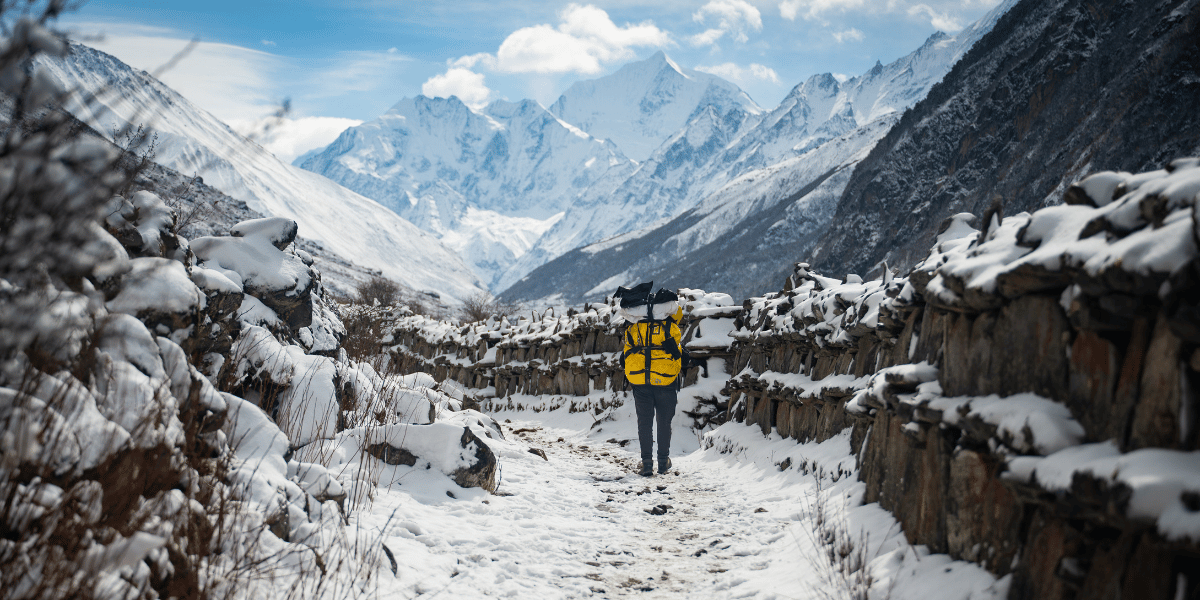
I’m not referring to the allowance porters receive, but even the national park charges a small amount as a fee for taking porters. It’s just NPR 25 (around USD 0.20) per porter.
Camping Fees
While accommodations in the Langtang region are plenty, there are still trekking destinations that lack teahouses. Some popular examples include the Jugal Himal Base Camp and Yala Peak trekking routes.
For them, an additional camping fee applies:
- Nepali Citizens: NPR 100 per night
- SAARC Nationals: NPR 1,000 per night
- International Trekkers: NPR 1,500 per night
For the Langtang Valley and other popular destinations, this fee often does not come into the picture at all. But if you're planning a fully organized camping expedition, be sure to keep this in mind.
Helicopter Landing and Hovering Fee
For those choosing the Langtang Valley helicopter tour or arranging a helicopter rescue or charter, a separate fee of NPR 3,000 applies. This is for landing and hovering within the national park.
Note that the amount needs to be paid separately to the national park authority and is separate from the helicopter charter cost itself.
Camera and Drone Permits
While personal cameras and smartphones are absolutely fine to take, you need additional permits for carrying a professional video camera (for documentary/filming purposes) or a drone. You must present them at the checkpoint beforehand.
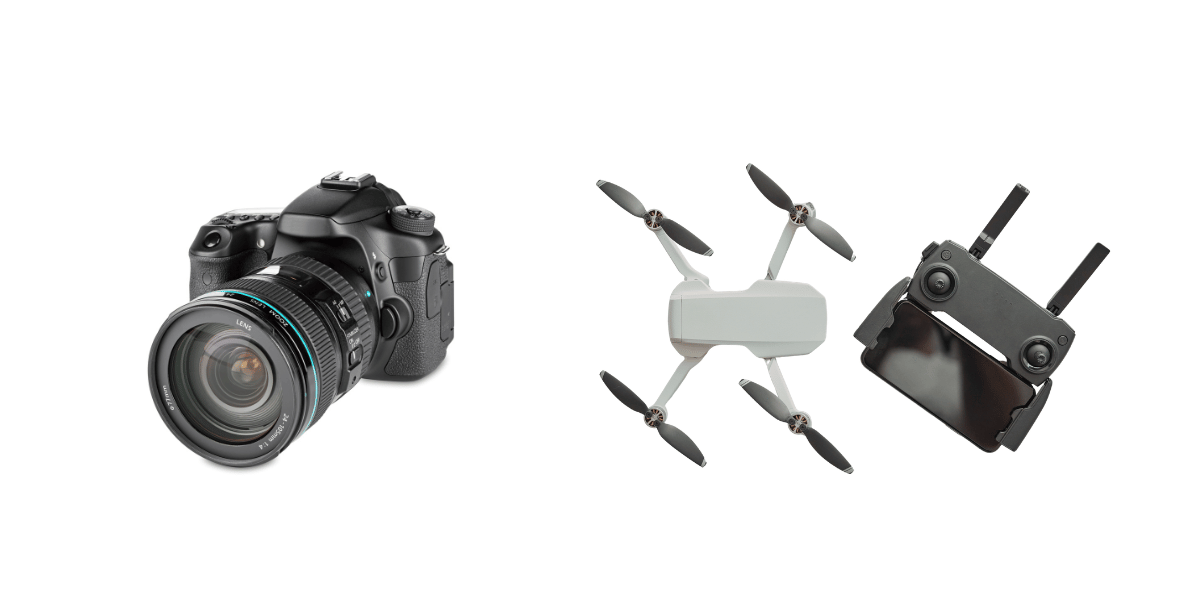
Don’t hide them from the authorities, or your gadgets might be confiscated by the Nepal Army!
But that doesn’t mean you can’t take them at all. For filming and documentaries, you’ll need special permissions from the Department of National Parks and Wildlife Conservation (DNPWC) and the Ministry of Communication and Information Technology (MoCIT).
For drones specifically,
- You need to obtain permission from the Civil Aviation Authority of Nepal (CAAN) before your trek.
- If your route includes restricted areas (such as parts of the Tamang Heritage Trail), the Department of Immigration is also involved in the approval process.
- On top of that, since you will be flying within a national park boundary, clearance from the Langtang National Park authority itself is also required.
It is not a simple, same-day process as the national park entry permits, so you need to plan well ahead if aerial footage is part of your plans.
Also, note that even loudspeakers are not allowed inside the national park, as they can disturb wildlife.
And during exit, you will be required to re-enter the checkpoints and confirm that you are not taking any natural materials from within the national park.
Other Protected Area Permits (For Specific Treks)
If your trek (like the Gosaikunda Lake or Helambu Circuit) begins from Sundarijal, you will have to enter the trekking region through Shivapuri Nagarjun National Park before reaching the Langtang National Park boundary.
In that case, a separate entry permit for Shivapuri National Park is required in addition to your Langtang National Park permit. The cost per person per entry goes something like this:
- For Nepalese: NPR 100
- For SAARC Nationals: NPR 600
- For Foreigners: NPR 1000
- For Children below 10 years: Free
Likewise, if you’re planning to combine the Jugal Himal Base Camp Trek with the Bhairabkunda route, you’ll require the Gaurisankhar Conservation Area Permit:
- For SAARC Nationals: NPR 1000
- For Foreigners: NPR 3000
This is because Bhairabkunda of Sindhupalchowk lies in the Gauraisankhar region.
But if you are only doing the standard Jugal Himal Base Camp route, the regular Langtang National Park permit is sufficient.
Where to Obtain the Langtang Trekking Permits?
Hope you’ve now understood everything about Langtang Trek permit costs as well as the documents and fees required for summiting the peaks/mountains in this region.
Honestly, getting your permits is not complicated at all. You can obtain them at the entry checkpoints along your route, get them in advance from the official offices in Kathmandu, or simply let your trekking agency handle everything before you even land in Nepal.
Each option works, but which one makes the most sense depends on your starting point and your Langtang itinerary. Let me break down all three:
At Entry Checkpoints
The most common way all trekkers get their permits these days is directly at the entry checkpoint itself.
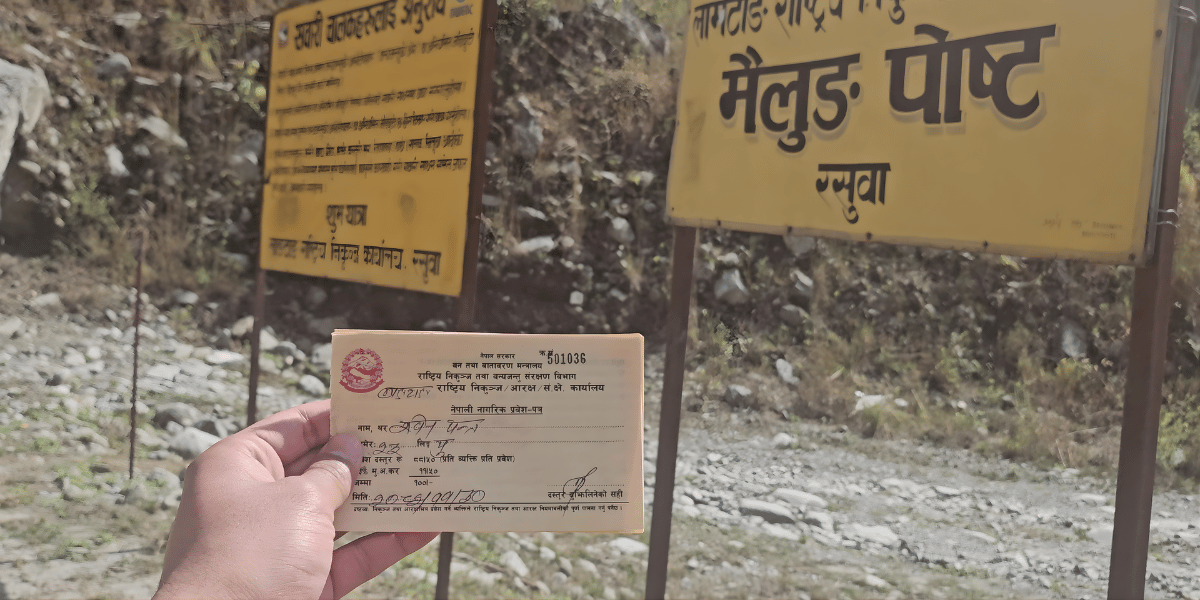
Here is where you can obtain the Langtang National Park Entrance permit:
- Langtang Valley, Gosaikunda, Tamang Heritage Trail, Ganja La Pass, Tilman Pass: Dhunche, Mailung, and Syaphru Besi
- Helambu Circuit Trek: Kutumsang
- Jugal Himal Base Camp and Panch Pokhari treks: Chimti and Bhotang are the checkpoints for this route.
- Gosaikunda or Helambu Circuit via Sundarijal: Shivapuri National Park permit at the Sundarijal gate and Langtang National Park permit in Kutumsang.
In all these checkpoints, the Nepal Army verifies your permits and also checks that you are not carrying prohibited items inside the park, such as drones without documentation or speakers.
And as mentioned earlier, on your way out, you re-enter the checkpoint to confirm you are not taking anything out of the national park.
At NTB and TAAN Office in Kathmandu
If your starting point is not Dhunche (where vehicles usually stop and the checkpoint is right there), it can get a little confusing to sort permits mid-route. In that case, it is a smart idea to get your permits in advance before leaving Kathmandu city.
To get your Langtang National Park entry permit and TIMS card yourself, you'll need to visit any of the following locations:
- Nepal Tourism Board (NTB) office, located at Bhrikutimandap, Kathmandu
- Trekking Agencies' Association of Nepal (TAAN) Secretariat in Maligaun or TAAN TIMS Counter in Saatghumti (both are located in Kathmandu)
Through Your Trekking Agency
If you are already trekking with a registered operator (like Altitude Himalaya), the entire permit process is handled for you! You do not need to visit any office, queue at any checkpoint, or carry around loose papers.
We (along with other reliable operators) arrange all your permits, keep them organized, and ensure everything is in order well before you hit the trail!
Honestly, you can close this tab right now and, instead, reach out to us directly and the permits are covered!
Documents Required for Langtang Trek Permits
Getting your Langtang permit is the least difficult part of the trek. Still, let me give you a general idea of how you can obtain the Langtang permits:
- Langtang National Park Entry Permit: Your name and ID are enough for Nepali citizens. For international trekkers, carrying your passport is a good idea since it is the standard identification document accepted at entry gates. You receive a general national park ticket that you must keep on you throughout the trek. If you have a guide, they will handle it for you.
- TIMS Card: If you still want to get this card (or in case it becomes a compulsion in the future), the process involves filling out an application form online, providing a passport-sized photo, a copy of your passport, your trekking itinerary and dates, travel insurance details, and emergency contact information. Since this needs to be done before your trek begins, make sure you arrive in Kathmandu at least 2-3 days prior.
- Restricted Area Permit: This is processed through your licensed trekking agency and cannot be obtained individually. Your guide's insurance coverage must be included in the application, which is why individual processing is not possible.
Peak Climb and Expedition Permits in Langtang
If you’re heading to the Langtang region to climb a peak or summit a 7-thousander, their permit structure changes completely.
Along with trekking permits, you also require mountaineering royalties (and this depends on the type of your adventure). Let me categorize them for a better understanding:
Trekking Peaks: Semi-Technical Summits
These peaks require some technical knowledge, but nothing beyond the basics for a well-prepared trekker. Depending on the season, you will need crampons, an ice axe, and sometimes rope teams.
Here are the most popular trekking peaks:
- Yala Peak (5,520 m): No special climbing permit required yet. You can do this short, non-technical peak climb with just the regular national park entry permit. However, your packing list should contain microspikes and crampons, and the peak is accessible to even beginners with decent fitness!
- Naya Khanga or Ghanja La Chuli (5,863 m): A special climbing permit is required along with the national park permit. It is more technical than Yala but still doable by motivated beginner climbers.
- Yubra Himal (6,048 m): Since it’s listed as an NMA Group A trekking peak, a full NMA climbing permit is needed in addition to the usual park permit. It is a step up in both altitude and technicality compared to Yala and Naya Kanga.
These peaks are genuinely your entry point into Himalayan mountaineering. So, you have to treat them seriously!
Expedition Peaks
For serious mountaineering in the Langtang region, the giants of Langtang and Jugal Himal are listed as expedition peaks. These require full expeditions with multiple high camps, base camps, and strong technical skills.
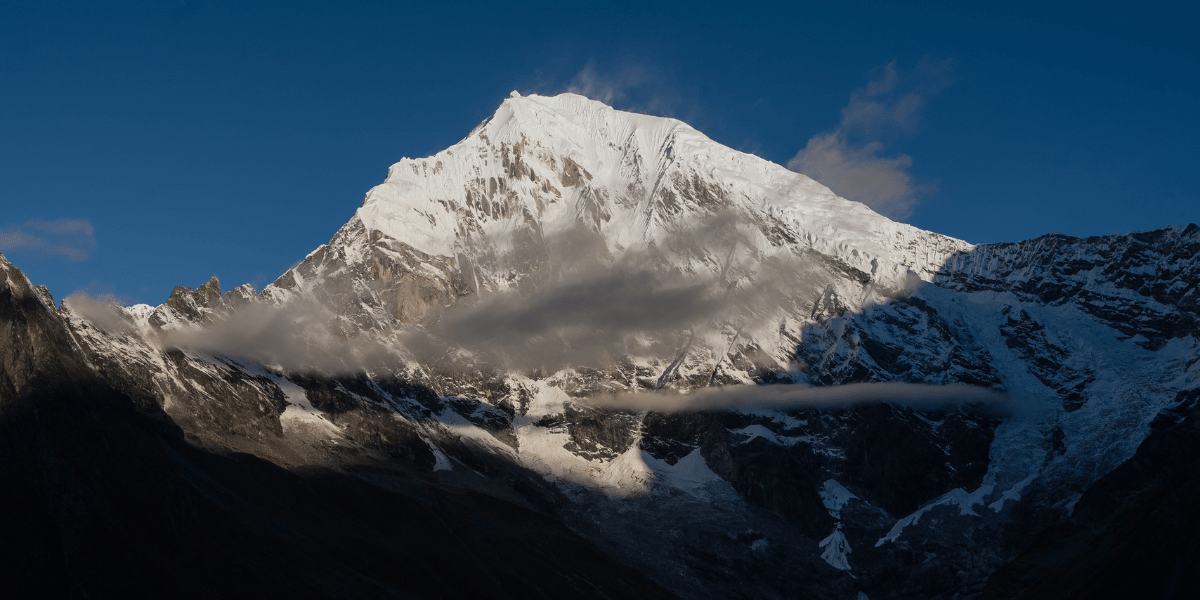
The key expedition peaks are Langtang Lirung (7,234 m) and Langtang Ri (7,205 m). Their expeditions typically take anywhere from 4 to 7 weeks, including the approach, acclimatization rotations, and contingency days.
And for expeditions, you’ll need to arrange plenty of documents:
- Government royalties
- National park permits
- A liaison officer covering the administrative costs
- Climbing fees from the Department of Tourism under the Ministry of Culture, Tourism, and Civil Aviation
- Travel insurance
- Full expedition logistics, including guides, Sherpa staff, food, equipment, and transport
- Garbage collection fee of USD 500 to USD 1,000
Here is a breakdown of climbing fees for all peaks and mountains in the Langtang region:
|
Peak Type
|
Peak Names
|
Permit Issuer
|
Climbing Fee (per person)
|
|
Expedition
|
Langtang Ri and Langtang Lirung
|
Department of Tourism (DoT)
|
Spring: USD 800
Autumn: USD 400
Winter/Summer: USD 200
|
|
NMA Group A
|
Yubra Himal
|
Nepal Mountaineering Association (NMA)
|
Spring: USD 350
Autumn: USD 175
Winter/Summer: USD 175
|
|
NMA Group B
|
Naya Kanga
|
|
Non-NMA Peaks (below 6,500m)
|
Bhemdang Ri, Peri
|
Department of Tourism (DoT)
|
|
Non-NMA Peaks (above 6,500m)
|
Kyunga Ri I, Kyunga Ri II, Ghenye Liru, Pem Thang Karpo Ri, Shalbachum, Kyunga Ri II, Pangri Goldumba
|
Department of Tourism (DoT)
|
Spring: USD 500
Autumn: USD 250
Winter/Summer: USD 200
|
|
Peaks below 6,000m
|
Yala Peak
|
-
|
Not required
|
Note: In addition to the climbing fees above, every peak in the Langtang region requires the Langtang National Park entry permit. The TIMS card is optional.
Langtang National Park Rules and Regulations For Tourists
Before you enter the Langtang National Park, it is important to know what is and is not allowed inside. These rules exist to protect the ecosystem you are walking through.
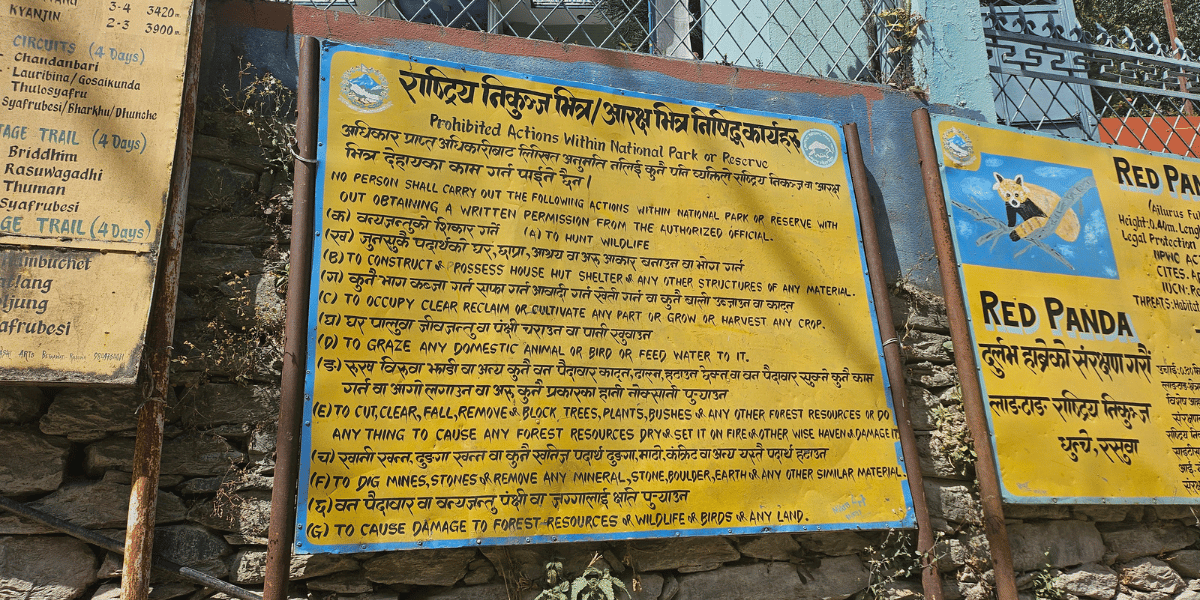
Now, here are actions that are strictly prohibited within the Langtang National Park that you must be aware of:
- Hunting or harming wildlife of any kind, including birds.
- Constructing or occupying any structure, including shelters, huts, or temporary camps, without permission.
- Occupying, clearing, reclaiming, or cultivating land, or growing or harvesting crops within park boundaries.
- Grazing domestic animals or feeding water to any domestic livestock inside the park.
- Cutting, clearing, felling, removing, or damaging any trees, plants, bushes, or forest resources. This includes setting fire to or causing any forest resource to dry out.
- Extracting minerals, stones, boulders, earth, or any similar natural material from within the park.
- Causing any damage to forest resources, wildlife, birds, or land in any form.
- Carrying drones, professional cameras, or speakers without the necessary documentation and prior permissions.
- Removing any items or natural materials from the park. This is verified at exit checkpoints, where you must re-enter and confirm you are leaving with only what you brought in.
Keep in mind that these regulations are not just rules on a noticeboard but rather actively enforced at checkpoints. And violations can result in fines or, in serious cases, legal consequences! So, please respect the park and everything in it.
Final Thoughts
Of course, sorting permits might feel like the less exciting part of your trek preparation. But once it's done, you can fully focus on what you have come for!
Trekking in Langtang is a genuine experience, honestly. You won’t just appreciate the beautiful mountains but also every stop you visit! Whether it be the Tibetan Tamang people in Langtang Valley or the Hyolmo communities of Helambu, this region is packed with immense cultural attractions beyond just the natural beauty!
Add Gosaikunda to the mix and you’ll reach one of Nepal's most sacred lakes. Extend towards the Tamang Heritage Trail, and you are walking through living culture, ancient monasteries, and terraced hillsides that have barely changed over centuries!
You see, at Altitude Himalaya, we offer Langtang Valley Trek packages designed to make the most of your time here, with all permits, accommodation, guides, meals during the trek, and transport handled for you.
Whether you're going for the classic valley route, combining it with Gosaikunda, or pushing towards Ganja La Pass to reach Helambu, we've got an itinerary ready for you!
Have you still got questions about permits or a specific Langtang route? Contact our team at Altitude Himalaya directly, and we'll sort it out for you!



 Bhishu Acharya