



 Highest Point


140 km north of Kathmandu lies Langtang Valley, which is one of Nepal’s most popular trekking destinations.
You get to walk through the bamboo, rhododendron, oak, and chir pine forests, cross multiple suspension/wooden bridges over Langtang Khola, and pass traditional Tamang villages.
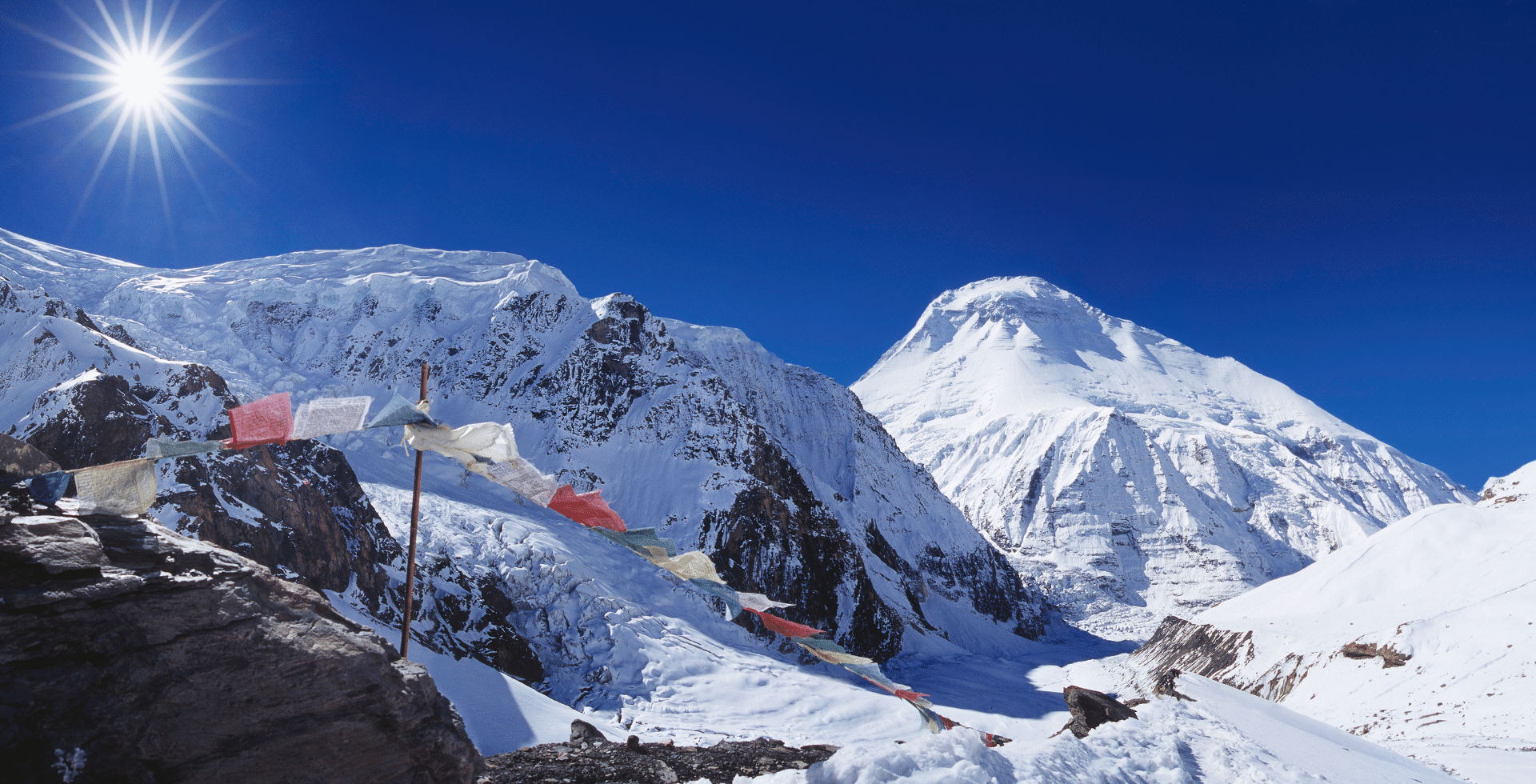
And if you’re at the right season, the bonus is the breathtaking Jugal and Langtang Himal ranges. The prominent ones are Ganchenpo or Ganchempo (6,378 m), Langtang Lirung (7,234 m), Luri Himal (6,924 m), Ghenye Liru (6,571 m), Kimshung aka Tsangbu Ri (6,781 m), Naya Khanga aka Ghanja La Chuli (5,863 m), and more!
This 10-day Langtang Valley Trek is of moderate difficulty within the Rasuwa District. Very close to the capital city, it can be completed easily even by beginners, as the altitude isn’t very high and moderate pacing is more than enough.
The real challenges only appear if you choose to take the optional high-altitude hikes to Kyanjin Ri and Tsergo Ri (Chergo Ri or Tserko Ri). These are two adventures that are a little demanding but, of course, very rewarding, as they offer the most incredible views in the Langtang region.
At Altitude Himalaya, we have curated a special itinerary that balances comfort, acclimatization, and adventure all in one package! This means you’ll enjoy every moment without feeling rushed or overwhelmed.
Along with one of our professional guides, we help you immerse well within the unique Langtang culture. Together, you'll enjoy the magical landscapes while getting to learn about the hospitable Tamanng community.
Remember that we are a trusted trekking agency. So, we strive to make your trekking adventure safe, sound, enriching, and, overall, unforgettable!
Your 10-day Langtang Valley Trek begins with a sightseeing tour in Kathmandu before heading on a scenic drive to Syaphru Bensi on Day 3. Only from the fourth day does the real adventure begin as you follow along the Langtang Khola, ascending through bamboo groves and forested trails.
You’ll stop by multiple Tamang villages like Dhomen, Lama Hotel (Changdam), Thangshyap, and Langtang before reaching Kyanjin Gompa (village named after the monastery).
As you spend two nights in Kyanjin, you get to visit multiple major landmarks here. Kyanjin Ri for sunset/sunrise is one you shouldn’t miss out on. And if you’re ready to take on a bigger challenge, a full-day hike to Tsergo Ri (or Tserko Ri) would be best for you!
If time allows, you can do both, visit the nearby Lirung Glacial Lake, or opt for a long hike to Langshisa Kharka. Each one carries a different challenge, and our team at Altitude Himalaya is ready to make it all worth it.
After exploring the major highlights of the valley, the journey returns along the same route, allowing you to experience the landscapes from a very different perspective. On your day of return in Kathmandu, we will celebrate your journey’s success with a farewell cultural dinner.
You see, Langtang Valley is a perfect place where you can enjoy nature, learn a new culture, and take on a moderate adventure. To learn more, scroll through this complete package and once you’re fully satisfied, book your Langtang Valley Trek with us!
Facts About Langtang Valley Trek
|
Protected Area |
Langtang National Park |
|
Major Caste |
Tamang |
|
Major Religion |
Tibetan Buddhism |
|
Rivers |
Langtang Khola that mixes into Bhote Koshi River |
|
Main Mountains and Peaks |
Ganchenpo, Langtang Lirung, Luri Himal, Ghenye Liru, Tsangbu Ri, Naya Khanga |
|
Highest Elevation |
4,985 m (Tsergo Ri) |
|
Permits |
Langtang National Park Entry Permit, TIMS Card |
|
Trek Route |
Syaphru Bensi > Lama Hotel > Langtang Village > Kyanjin Gompa > Kyanjin Ri > Kyanjin Gompa > Tsergo Ri > Lama Hotel > Syaphru Bensi |
Natural and Scenic Wonders of Langtang
This Langtang Valley Trek immerses you in breathtaking landscapes with snow-capped peaks all around you, the flowing Langtang Khola on the side, and getting past dense forests. You even get sweeping views of some of the tallest mountains from the viewpoints of Kyanjin Ri (Lower and Upper) and Tsergo Ri.
Let’s get into the insights of the natural and scenic wonders of the Langtang region below:
Panoramic Views of Langtang Range
Your Langtang Valley trek begins from Syaphru Bensi (aka Syabrubesi), and from the starting point itself, you’ll get glimpses of the snow-capped peaks. By the time you reach Lama Hotel and further to Langtang Village, the mountains appear even closer!
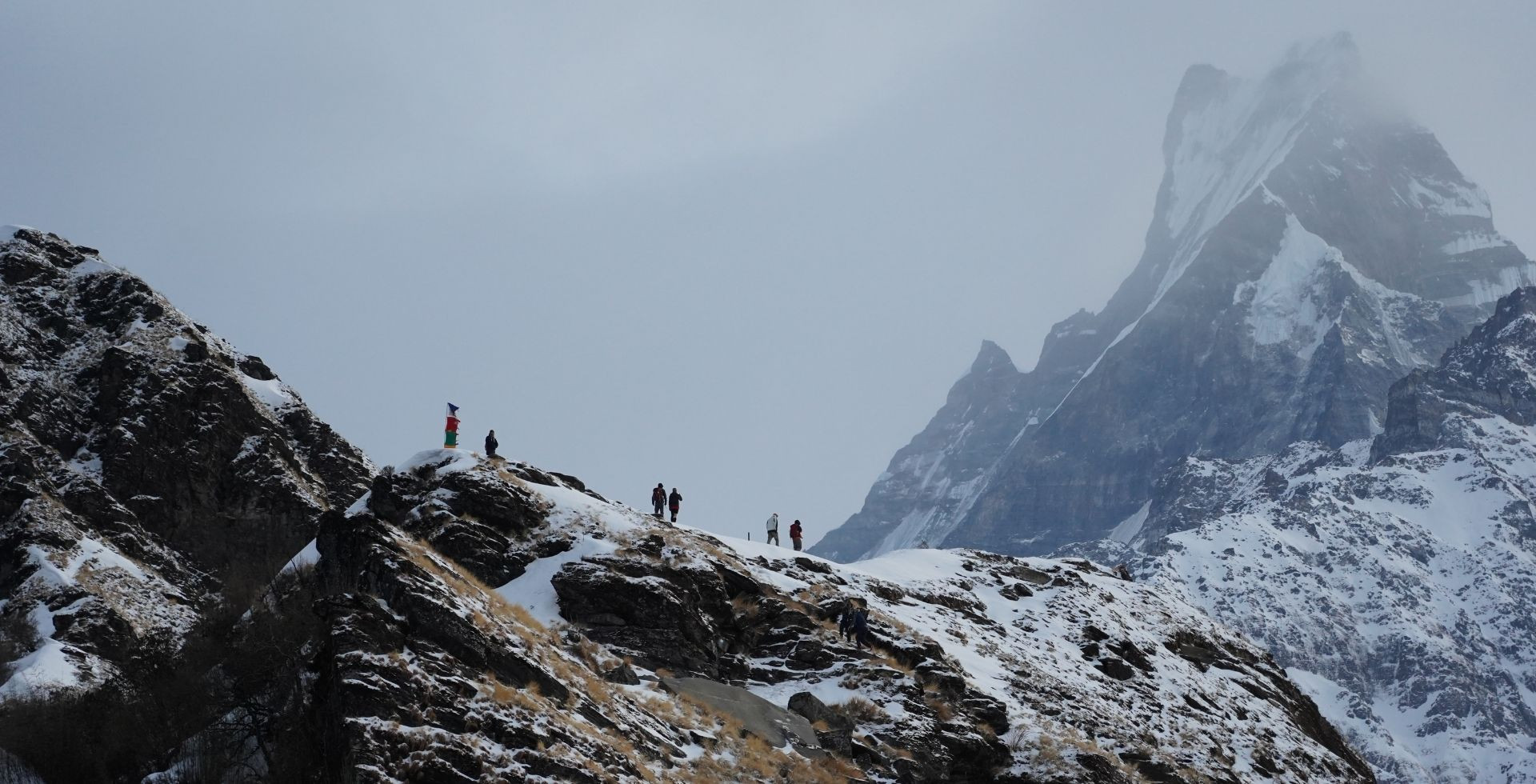
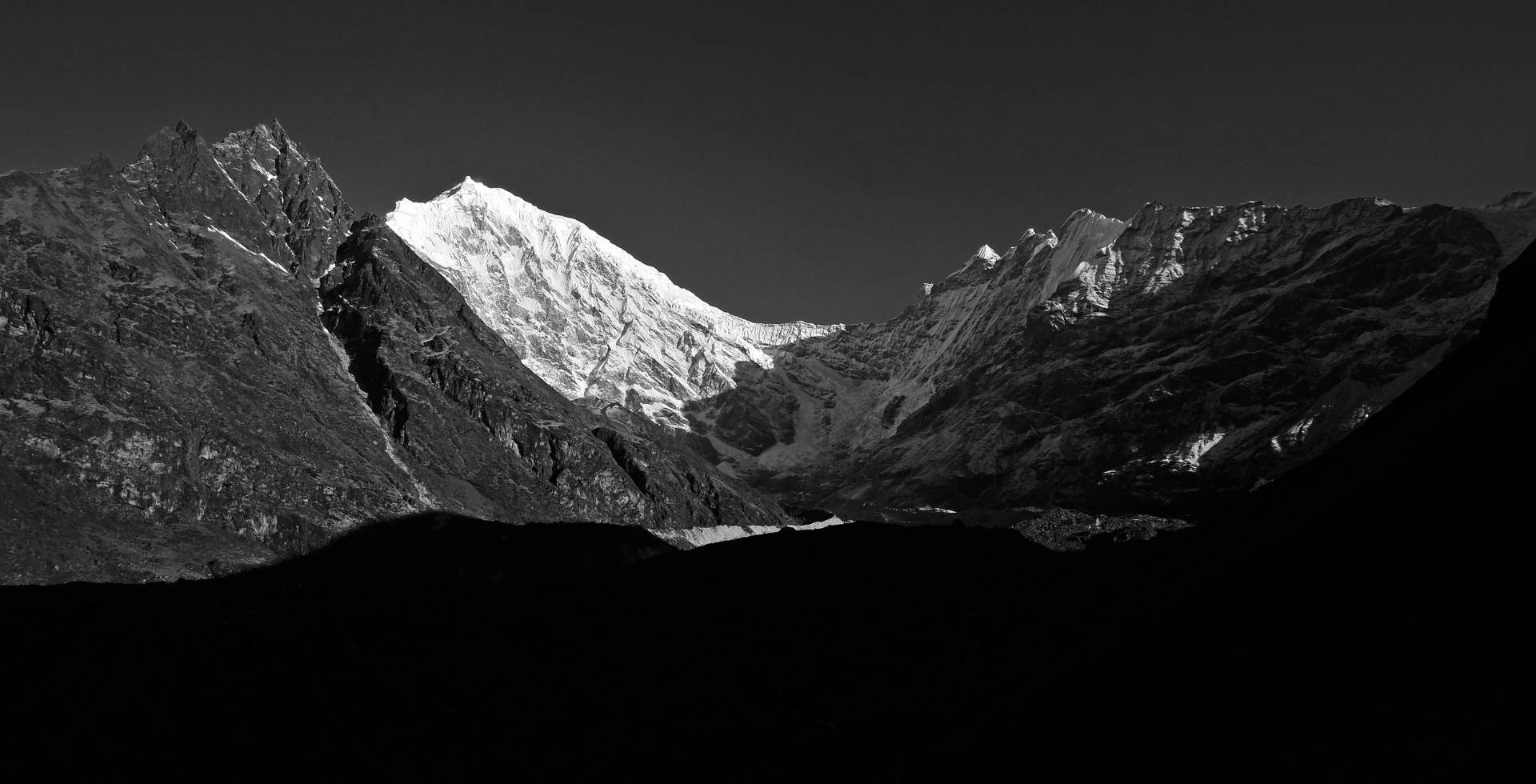
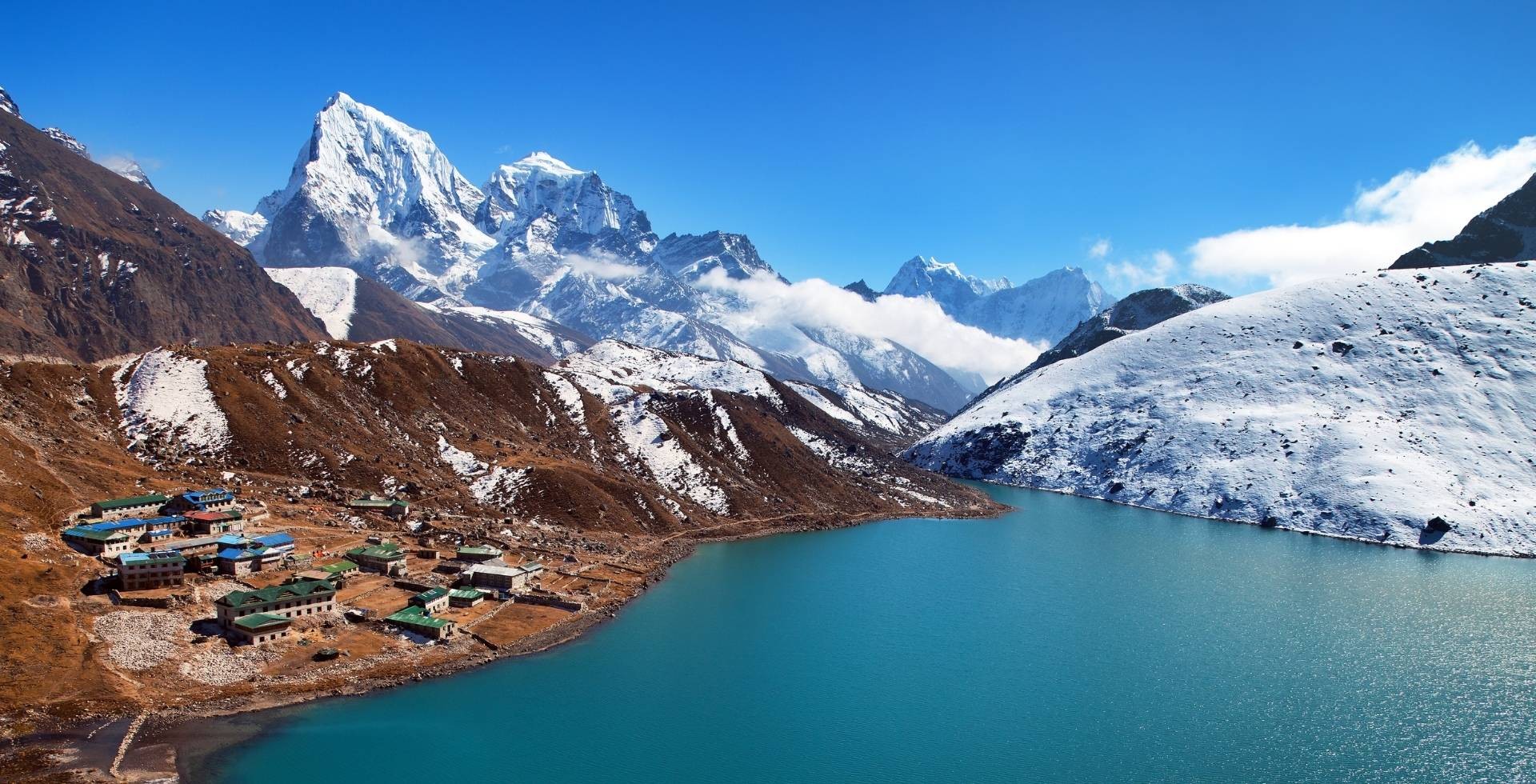
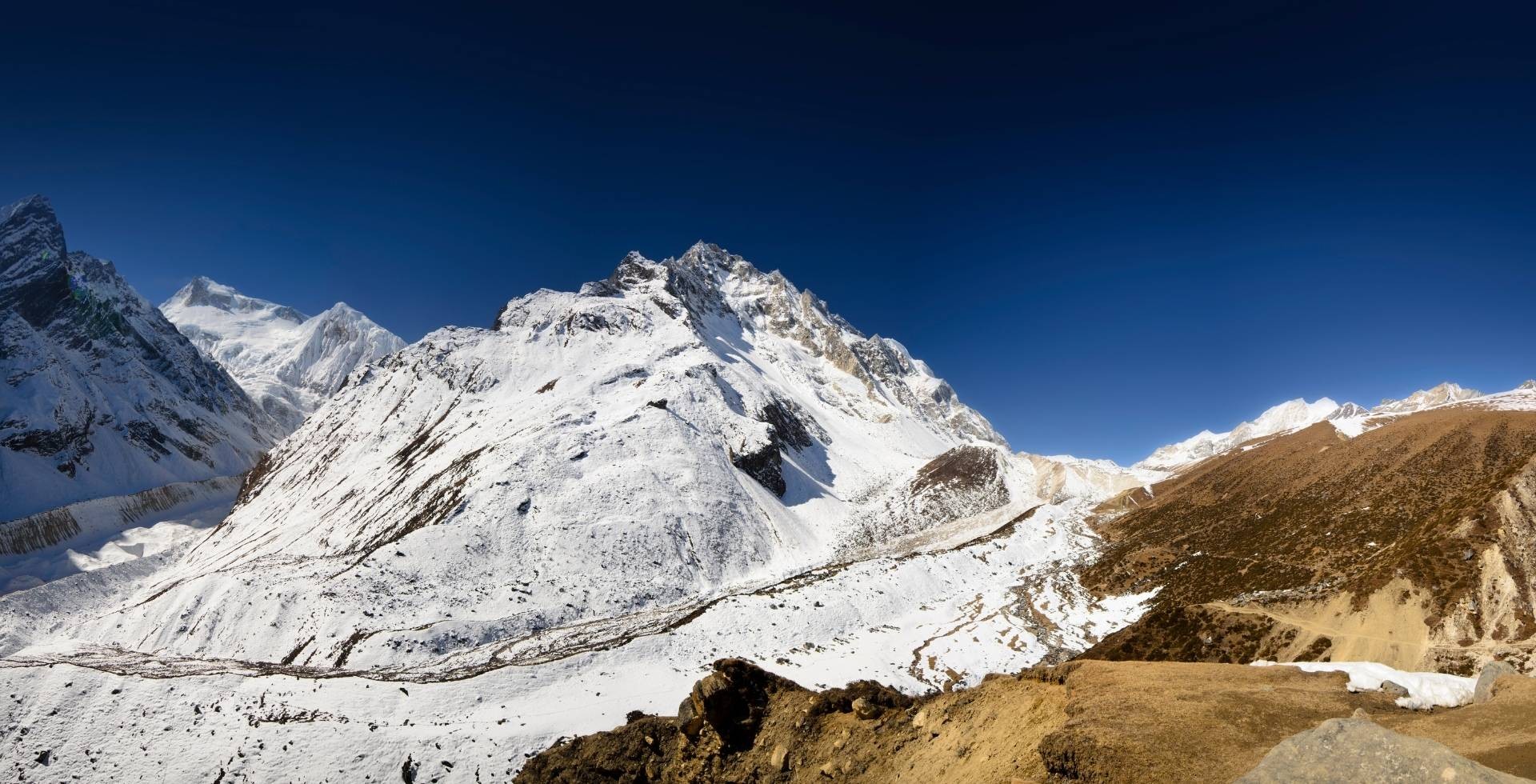
Upon arriving in Kyanjin Gompa, the valley opens up to the surreal views of Ganchenpo, Langtang Lirung, Luri Himal, Ghenye Liru, Tsangbu Ri, Naya Khanga, and other peaks.
Not to forget that the glaciers (Lirung Glacier being the most prominent), ridges, and a very different alpine landscape of this part of Nepal make your trek even more worthwhile!
We have optional hikes included. The first one is Kyanjin Ri, which offers unforgettable sunset/sunrise panoramas. There are two viewpoints: Lower Kyanjin Ri (4,400 m) and Upper Kyanjin Ri (4,700 m).
You may choose to go up to the lower viewpoint and still enjoy the mountain views, particularly that of the towering Langtang Lirung and the famous Lirung Glacier.
Both viewpoints also give you a clear view of Ghenye Liru, Kimshung/Tsangbu Ri, Yubra (6,048 m), Yansa Tsenji (6,567 m), Kanja La Chuli (5,652 m), Naya Khanga, Boden-Powell Scout Peak (5,857 m), Gochenpo (5,296 m), Ganchenpo, etc.
The next day is an ultimate vantage point hike to Tsergo Ri (4,985 m). It’s about a 5 to 6 hour climb from Kyanjin Gompa, offering you sweeping Himalayan vistas. This is the real challenge, and if weather conditions do not allow, you may have to skip it or only try attempting to reach the summit.
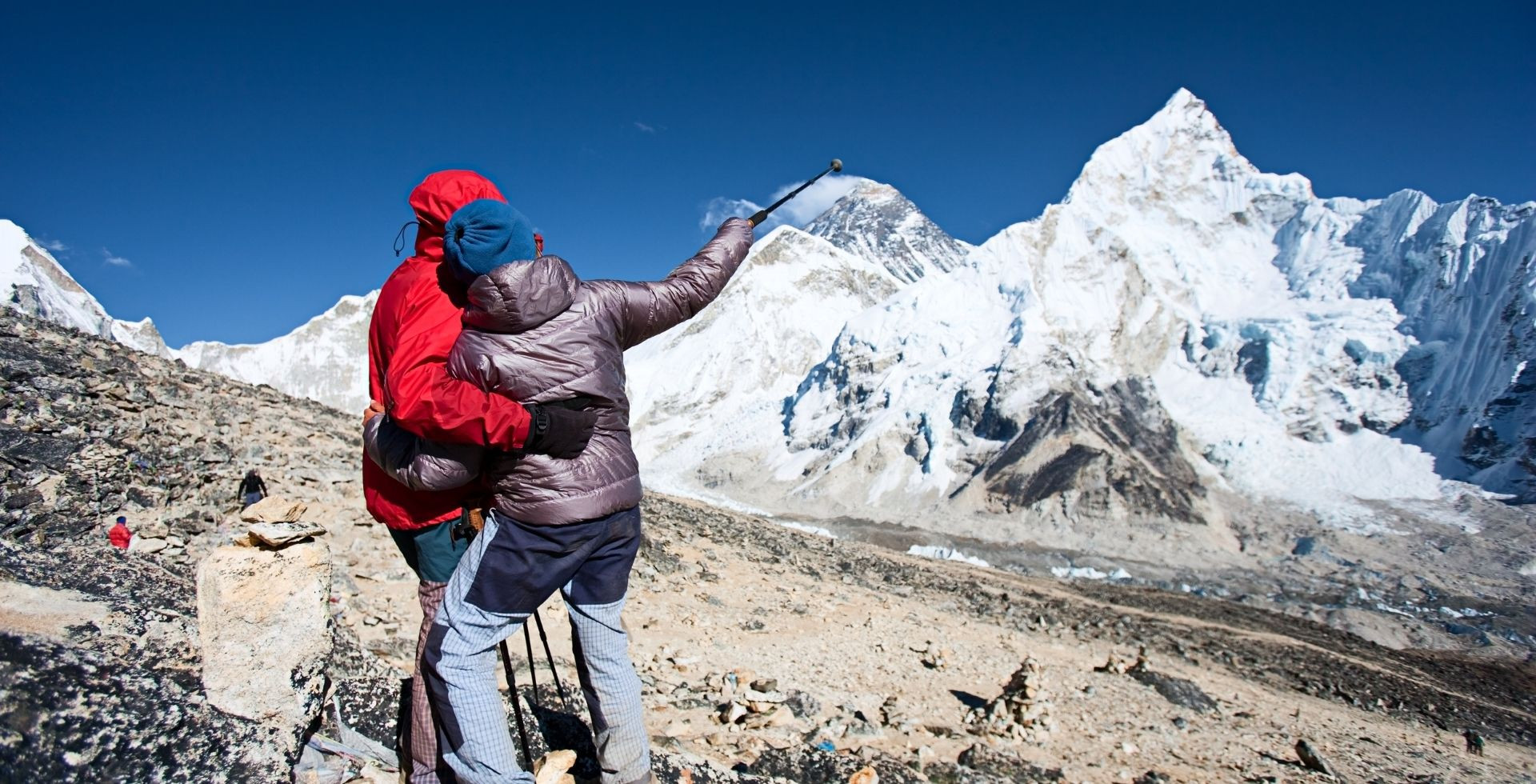
Reaching Tsergo Ri is where you get the greatest sense of achievement. You’ll be blessed with the earlier blocked views of Yala Peak, Yala Peak South (5,520 m), Bhemdang Ri (6,150 m), Bhemdang Karpo or Pem Thang Karpo Ri (6,865 m), Ramthang Karpo Ri (6,865 m), Langshisa Ri (6,412 m), and even Shishapangma (8,027 m)!
Forest Trails Alongside Langtang Khola
From the very start at Syabrubesi, the Langtang Valley trek follows the gentle flow of the Bhote Koshi River. And immediately as you join the Langtang Valley trail, you’re accompanied by the Langtang Khola, which stays close next to you to the top.
The main forests you’ll find here in Langtang National Park are oak, pine, maple, and rhododendron. During spring (March to May), you’ll be treated with red, pink, and white rhododendron blooms, while the monsoon (July to September) comes with greenery.
You’ll even cross several smaller rivulets (like Tanmarche Khola, Kyampu Khola, etc.) via suspension and wooden bridges, which are all tributaries of the main Langtang Khola. The soothing sounds of flowing water are exactly the kind of refreshment you’re seeking!
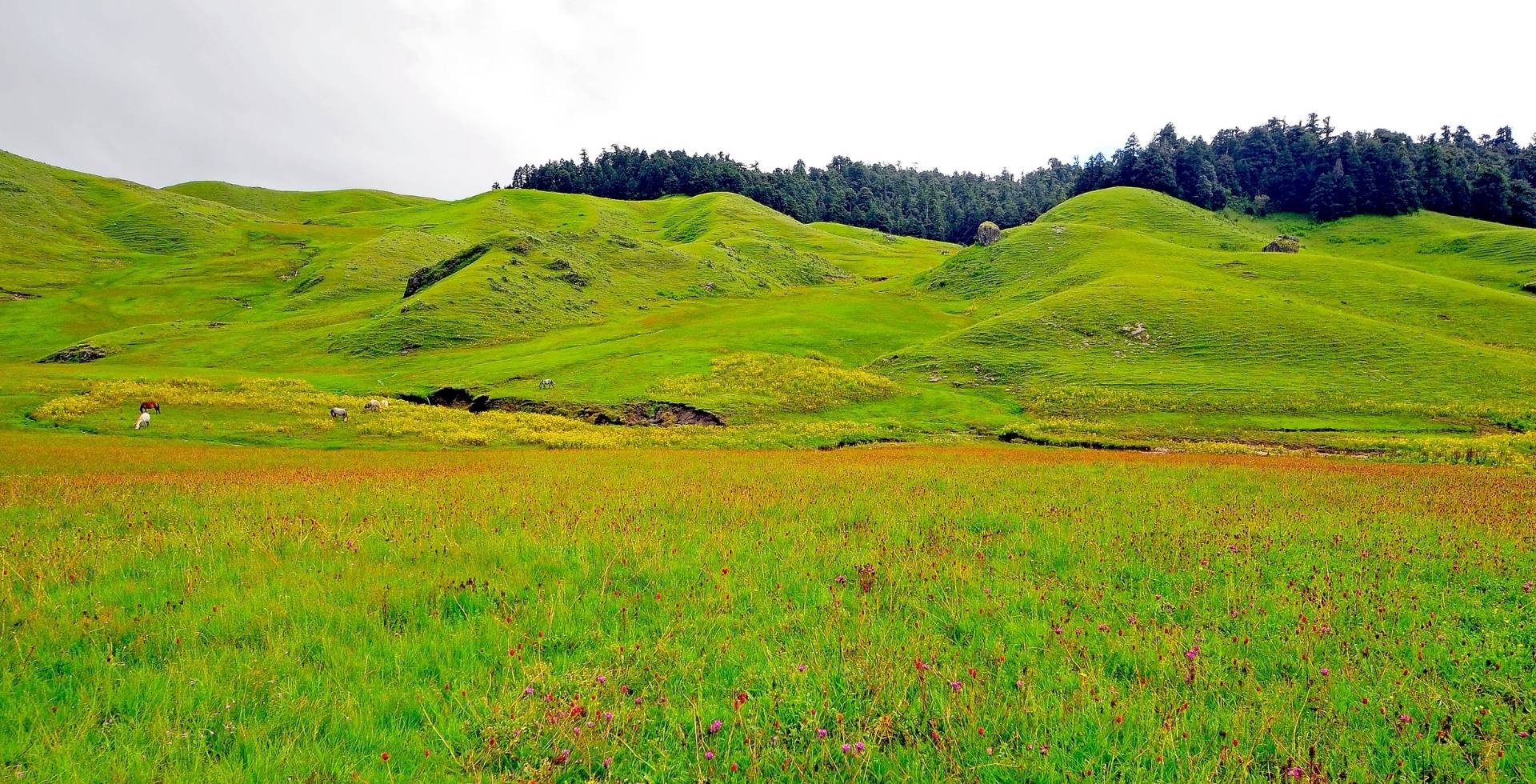
After reaching higher altitude regions of Langtang Village and Kyanjin Gompa, the forests transition to alpine meadows.
Possibility of Encountering Rare Wildlife
The Langtang National Park is home to elusive snow leopards, red pandas, and even Himalayan black bears! However, spotting these rare wildlife in their natural habitat is extremely rare.
These rare species are far from human eyes and don’t usually come close to the trails at all. So, you see, you have to be extremely lucky to actually spot them.
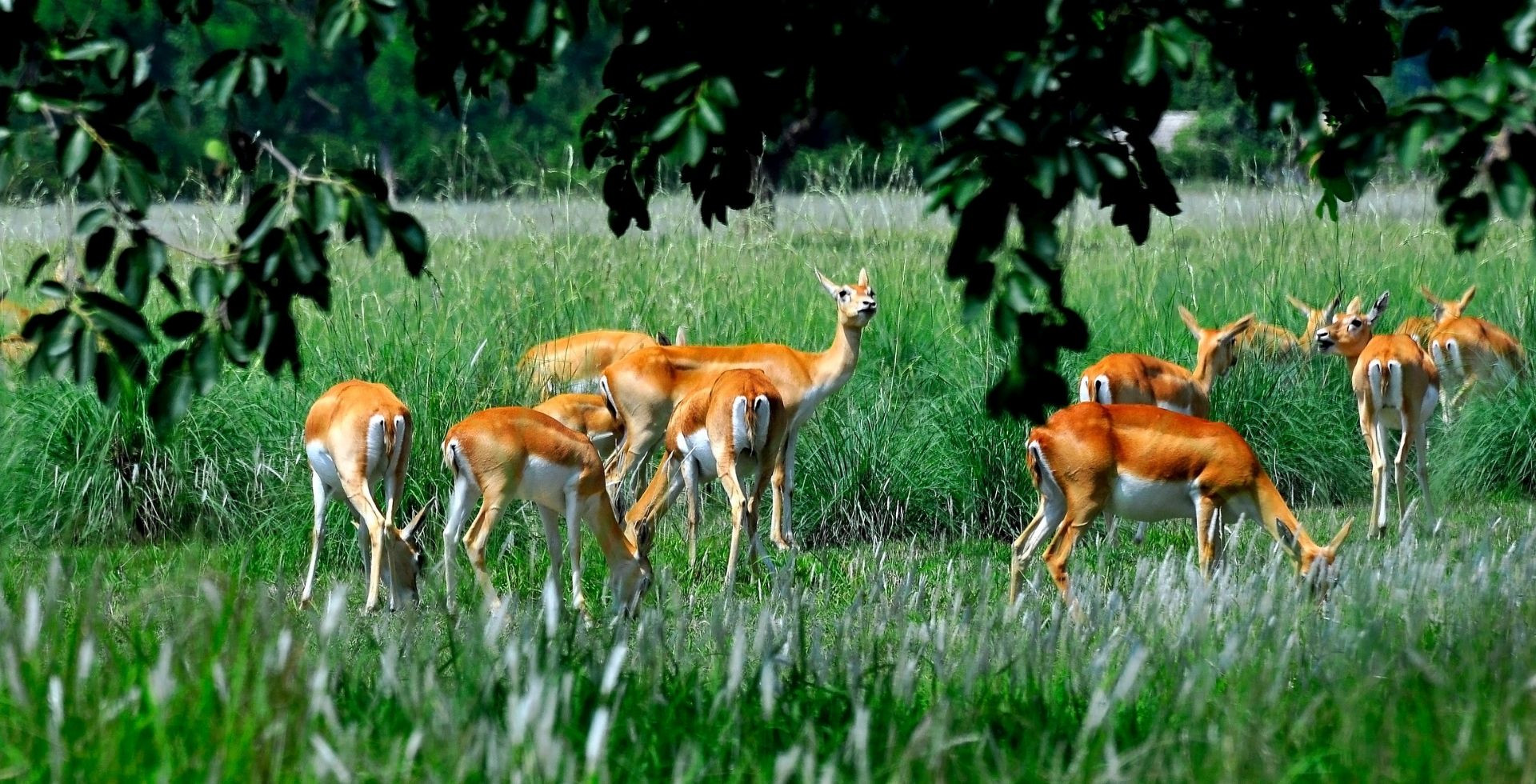
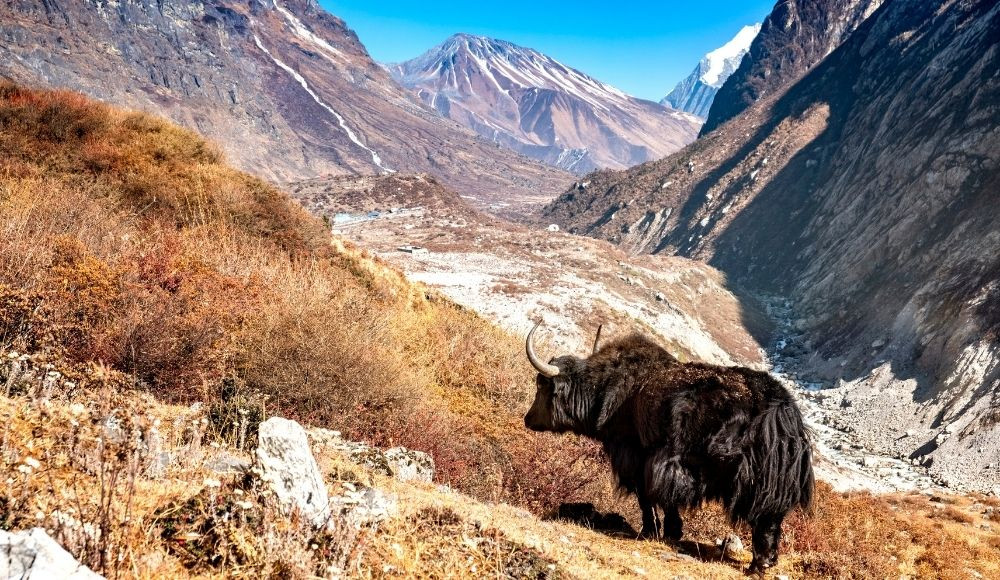
The most common encounters include those that occasionally cross the trekking paths. These include Gray Langur, Himalayan Tahr, Blue Sheep, Musk Deer, Goral, Himalayan Yak, etc.
In fact, the Langtang region is best for bird watching too. Even our content team and previous guests have spotted Himalayan Vulture, Grey-hooded Warbler, Fire-breasted Flowerpecker, Streaked Laughingthrush, Red-billed Chough, Yellow/Red-billed Chough, Common Raven, Oriental Magpie-Robin, Gray-breasted Tesia, etc., multiple times during our own adventures in Langtang!
For extreme naturalists, you can even spot various floral species along the Langtang Valley trails. The main ones are oak, pine, rhododendron, hemlock, and bamboo groves. But if you pay attention, you can even find rare blue poppies, different species of orchids, primulas, Edelweiss, and more of the hardy alpine flowers.
Oh, and don’t forget to try the popular Sea Buckthorn Juice that helps boost your energy and reduce fatigue (which is absolutely great for the high-altitude push to Kyanjin Gompa and beyond)!
Adventures and Challenges of The Trail
This Langtang Valley trek is a journey through diverse terrains and optional high-altitude adventures. You’ll walk along stone-paved trails, dense forests, and rugged alpine meadows.
The rocky uphill stretches to Kyanjin Ri (4,700 m) and Tsergo Ri (4,985 m) are even more adventurous and thus the major highlights of this trek! Let’s look into the adventure highlights and challenges in detail below:
Walk Through Diverse Terrains
With the Langtang Valley trek starting from Syaphru Bensi, the journey begins from stone-paved trails along the Bhote Koshi River (which later connects to the Trishuli River in Dhunche). Slowly, you’ll get into the dense oak, pine, and rhododendron forested region, as explained earlier.
As you reach Ghoda Tabela, the path turns into rugged alpine meadows and rocky stretches. The views change as the greenery disappears slowly.
High-Altitude Hikes to Kyanjin Ri and Tserko Ri (Optional)
For trekkers seeking an extra adventure, most of our itineraries combines additional hikes to Kyanjin Ri and Tsergo Ri, which are the major highlights of this Langtang Valley Trek!
But if you’re feeling too exhausted, you can prefer to skip them and spend more time at Kyanjin Gompa. Those opting for it should note that these are high-altitude climbs and are challenging (yet incredibly rewarding)!
Other optional hikes include a visit to the Lirung Glacial Lake aka Langtang/Kimshung Glacial Lake (3,960 m approx.), Numthang (3,940 m), and Langshisa Kharka (4,050 m). And for adventure lovers, even Yala Peak climbing is a great add-on if you’re willing to spend more time.
Our package has been curated in a way to include Kyanjin Ri in the evening, which is slightly unique compared to those who prefer morning hikes. The sunset panorama is wonderful, and this way, you get ample time for another adventure the next day.
But if you’d like to stick with a morning hike to Kyanjin Ri (skipping Tsergo Ri), that’s also definitely possible! In that case, it’s best to visit the Lirung Glacial Lake and the Organic Yak Cheese Production Centre.
It takes about 3 to 4 hours to reach the Kyanjin Ri summit. This section of Langtang Valley is a complete rocky uphill, but still manageable. The views of the mountains in the sunset look golden and wonderful.
Tomorrow would be the Tsergo Ri hike, which is a full-day adventure and requires about 5 to 6 hours to ascend and about 2.5 to 3 hours to descend. So, the climb usually starts in the early morning (at around 3 to 4 AM).
It’s more demanding compared to Kyanjin Ri, with higher altitude and steeper rocky sections. And the views from the top are even more breathtaking!
Cultural Immersion: Heritage and People of Langtang
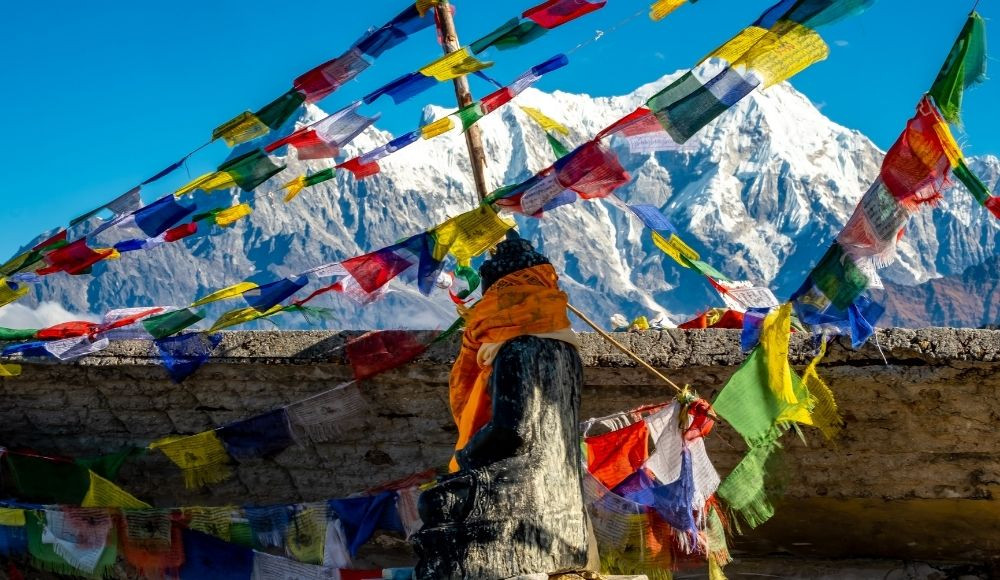
Without a doubt, Langtang Valley is the heart of Himalayan culture. Along this iconic trail, you’ll stop at villages that showcase centuries-old traditions as you meet the Tamang community, who are originally from Tibet, and the majority follow Tibetan Buddhism.
And if you book this package with us, we guarantee that you’ll get an insight into the everyday village life and living heritage. Allow us to explain.
Start With Kathmandu Sightseeing
Before moving on to trekking in the Langtang region, we have a special day focused on Kathmandu sightseeing. It includes these four out of seven UNESCO World Heritage sites:
- Kathmandu Durbar Square: This is a square that features former royal palaces. Along with that, you get glimpses of ancient temples and intricate wood carvings. The entire area is popularly known as Basantapur, and this is where festivals and ceremonies have taken place for centuries.
- Swayambhunath (Monkey Temple): Basically, it’s a hilltop in Kathmandu that offers panoramic views of the Kathmandu Valley. Besides the golden stupa worshipped by both Hindus and Buddhists, it also serves as a point from which the Langtang range is visible.
- Boudhanath Stupa: Considered one of the largest stupas in the world, Boudhanath is the center of Tibetan Buddhism. When visiting here, you’ll spin the surrounding prayer wheels as you do the kora walk and even get enough time to visit the nearby monasteries.
- Pashupatinath Temple: The most sacred place you’ll visit is this Hindu temple, which resides on the banks of the Bagmati River. It’s the perfect way to pray to Lord Shiva for your upcoming Langtang Valley trek. While tourists aren’t permitted to enter the main temple itself, you can still appreciate the pagoda-style architecture from a viewpoint that also gives you glimpses of cremation rituals and spiritual gatherings.
Cultural Stops Along the Langtang Trail
Stopping at every stop along the Langtang Valley trail offers you a deep understanding of the community and their day-to-day lives. These are the major stops we're referring to:
- Syaphru Bensi (1,467 m): This is the starting point of the trek, which is right along the scenic Trishuli River. It serves as the gateway to the Langtang Valley, where you’ll spend a night.
- Bamboo (1,984 m): Known for its dense bamboo forests, we’ll stop here for a refreshing break when heading to Lama Hotel. There is no overnight stay here.
- Lama Hotel (previously Changdam Village, 2,515 m): After the first part of hiking, you’ll stay here for one night while ascending and even another night during descent. It was named after the local Lama monk who had established the first hotel here.
- Ghoda Tabela (3,008 m): Translates to “Horse Stable,” and as per the name, this area has historically been a grazing ground for pack animals. This practice continues even today! Our itinerary includes a perfect stop for lunch here but does not provide overnight accommodations (although there are two good teahouses currently).
- Langtang Village (3,455 m): The main settlement in the Langtang region that has recently risen after the devastation caused by the 2015 earthquake. It’s a popular spot to spend overnight, so we have included this in our itinerary!
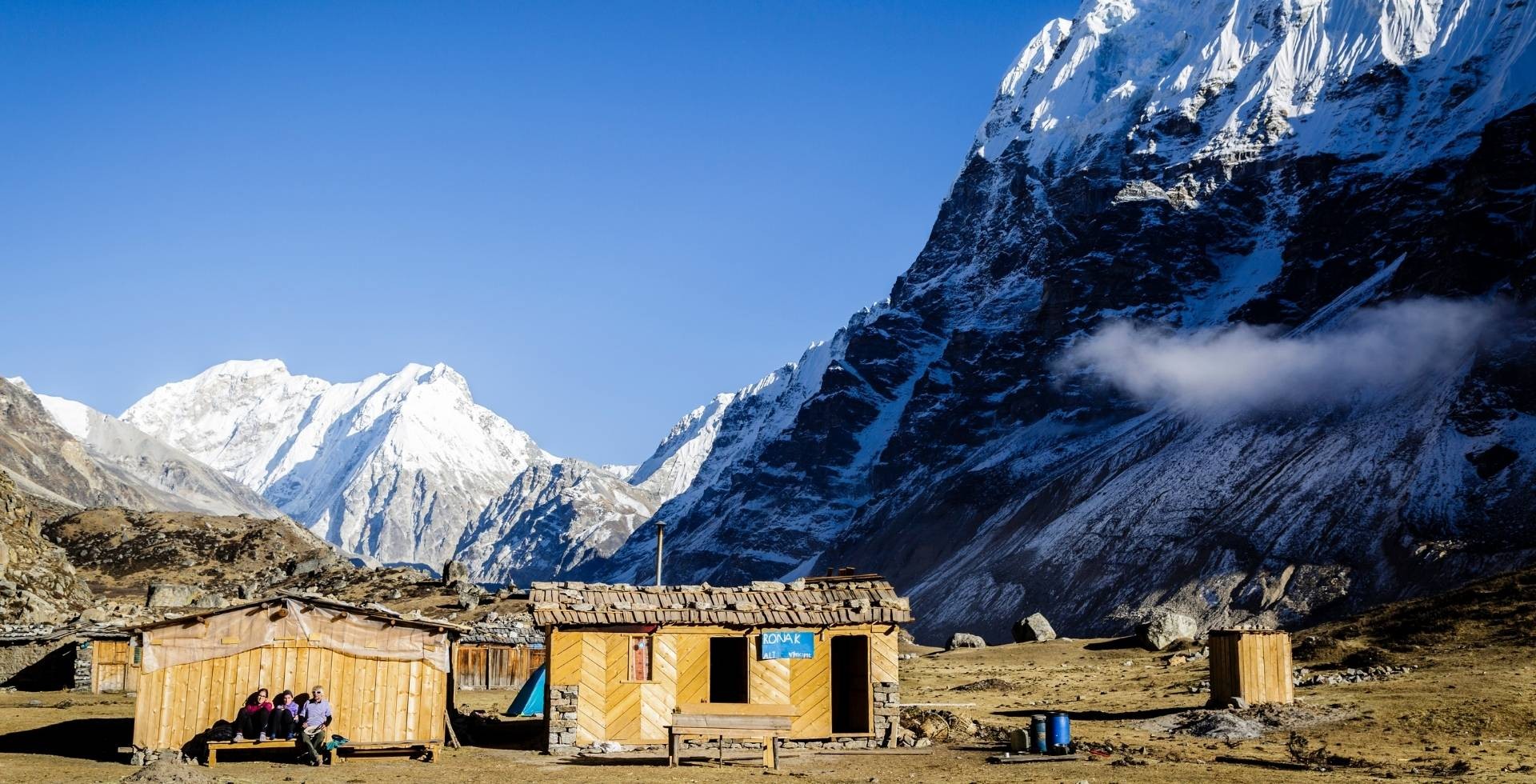
- Kyanjin Gompa or Kynajing Village (3,890 m): Our packages include a two-night stop here to allow proper exploration of the surrounding area. This gives you proper time to immerse yourself in the Tamang culture and even get to visit the main Kyanjin Gompa monastery (open mostly in the mornings), Kyanjing Cheese Production Center, Lirung Glacial Lake, and other monuments around. The most exciting part is that it serves as an acclimatization point for those optional hikes to Kyanjin Ri and Tsergo Ri.
- Other Popular Stops: Tiwari (1,553 m), Dhomen or Domen (1,565 m), Pairo or Old Hot Springs (1,722 m), Rimiche or Rimche (2,495 m), Gumnachok aka Riverside (2,770 m), Chhunama (2,800 m approx.), Thangshyap (3,140 m), Tsarting or Charting (3,250 m), Chamki or Chyamki (3,240 m), Langtang Gumba (3,400 m), Mundu (3,550 m), Sindhum (3,555 m), and Nespali (3,620 m) are other landmarks in the Langtang Valley trail that offer glimpses of local life and cultural experiences along the trail.
Meet the Tamang Communities that Follow Tibetan Buddhism
Throughout the different regions of Langtang Valley, you’ll be warmly welcomed by the Tamang community. They are the largest ethnic group of the Langtang region, who are originally of Tibetan origin and follow Tibetan Buddhism.
But they are certainly not the only ones here. There’s a tiny population of Sherpa people and the local Bhotiya community in this region.
Since most of them are Tibetan-influenced, you’ll find traditional altars in their homes and teahouses they own. These are crafted from carved woods that feature pictures of the Dalai Lama and portraits of other spiritual figures. The altars are also adorned with water bowls, butter lamps, artificial/natural flowers, and other traditional offerings.
If you’re travelling to the Langtang region at the right season, you might be lucky to witness the colorful festivals of Gyalpo Lhosar, Mani Rimdu, Dhukpu Cheju (archery festival), Buddha Jayanti, Dumje or Dumji, etc.
Hear the Stories From the 2015 Earthquake Disaster
The 2015 earthquake in Nepal was one of the deadliest natural disasters in recent times. And among different places, Langtang Valley became one of the most damaged regions.
This earthquake triggered a massive avalanche that swept through Langtang Village, burying nearly everything in its path! Reportedly, more than 300 people, including locals, guides, and foreign trekkers, had lost their lives. In fact, some of the bodies have never been recovered!
Langtang had become a place of mourning and remembrance. For years, it remained a tragedy and tourism was affected significantly.
However, the resilience of the Langtang people is so great that they have rebuilt homes, lodges, and trails today. The village is slowly reviving, with even new monasteries being built.
Don’t forget to pause at the memorial that’s right on the way to Langtang Village. It’s been built in honor of the soldiers who also passed away that day.
Really, the journey to Langtang Valley is more than just mountains. It’s about culture, resilience, and breathtaking landscapes that remind everyone why Nepal always remains one of the greatest places to visit on Earth!
 130 km
 1467 m