Let’s get started with the basic amenities that you can expect at the teahouses you will be staying on during your trek. The amenities have been divided into different categories to make it easier for you to grasp.
Your Room
The day you sign up for the Langtang Valley Trek is the day you give up on your memory foam mattress and your love for attached bathrooms.
Throughout the trek, you will be staying in some of the most basic rooms, but I assure you that the views from the bedroom windows are unbeatable!
Here are the things that you will find in your room:
Bed Settings (single, twin or triple sharing)
While single occupancy rooms are available on the trail, very few hotels offer them. Majority of the hotels give rooms on a double sharing or triple sharing basis.
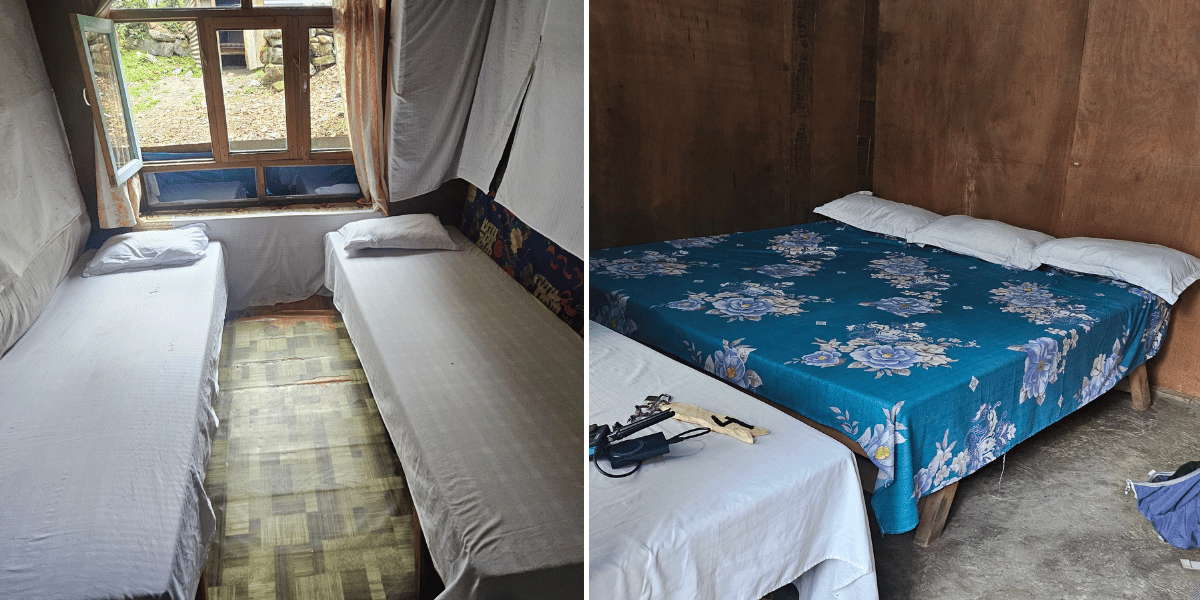
During peak trekking seasons, trekkers often face issues with room availability and in order to fit the guests in, the hosts may arrange shared accommodations, even if the tenants are strangers. I myself was opposed to sharing rooms, but desperate times call for desperate measures, and learning to compromise is a major part of the trek.
But in the Himalayas, sharing a room with a complete stranger trekker from a different part of the world is a part of the trekking culture. Before the sunrise, you will have a new friend with whom you can share your trekking stories.
Toilets and Bathrooms
If you cannot expect a private room, then I hope that you have also prepared yourself for shared toilets and bathrooms. While some teahouses provide attached bathrooms with the rooms, please do not expect that throughout the trek.
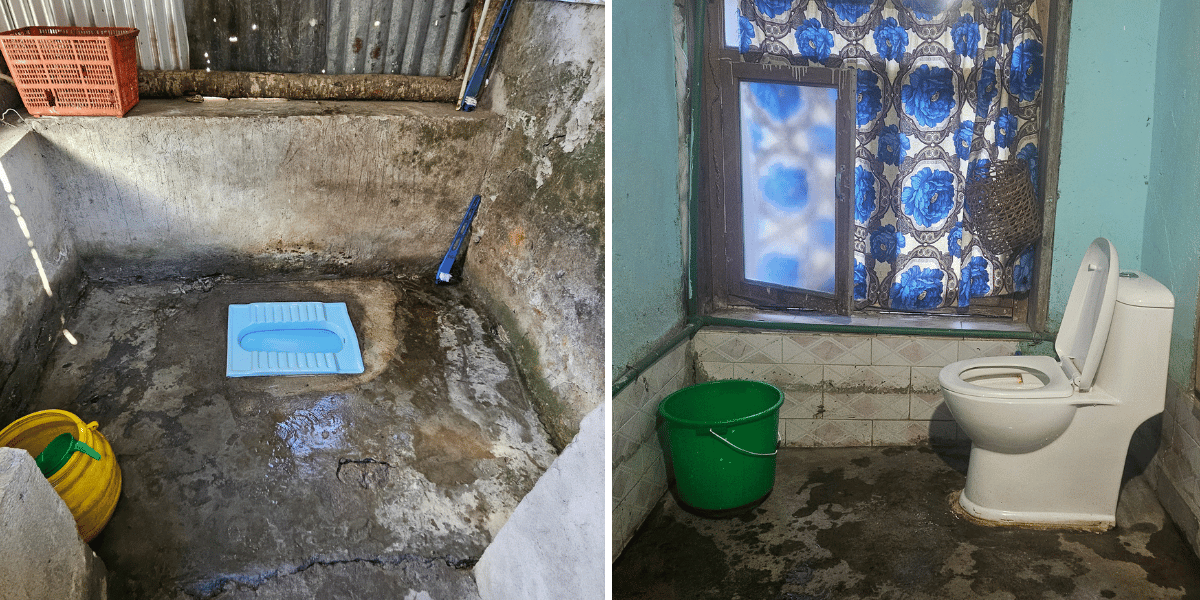
But rest assured, most of the toilets will be clean, and if it’s not, you can always request the host to clean it for you, something they will happily do. What you can expect is a toilet that is shared among people staying on the same floor.
Hooks and Small Tables
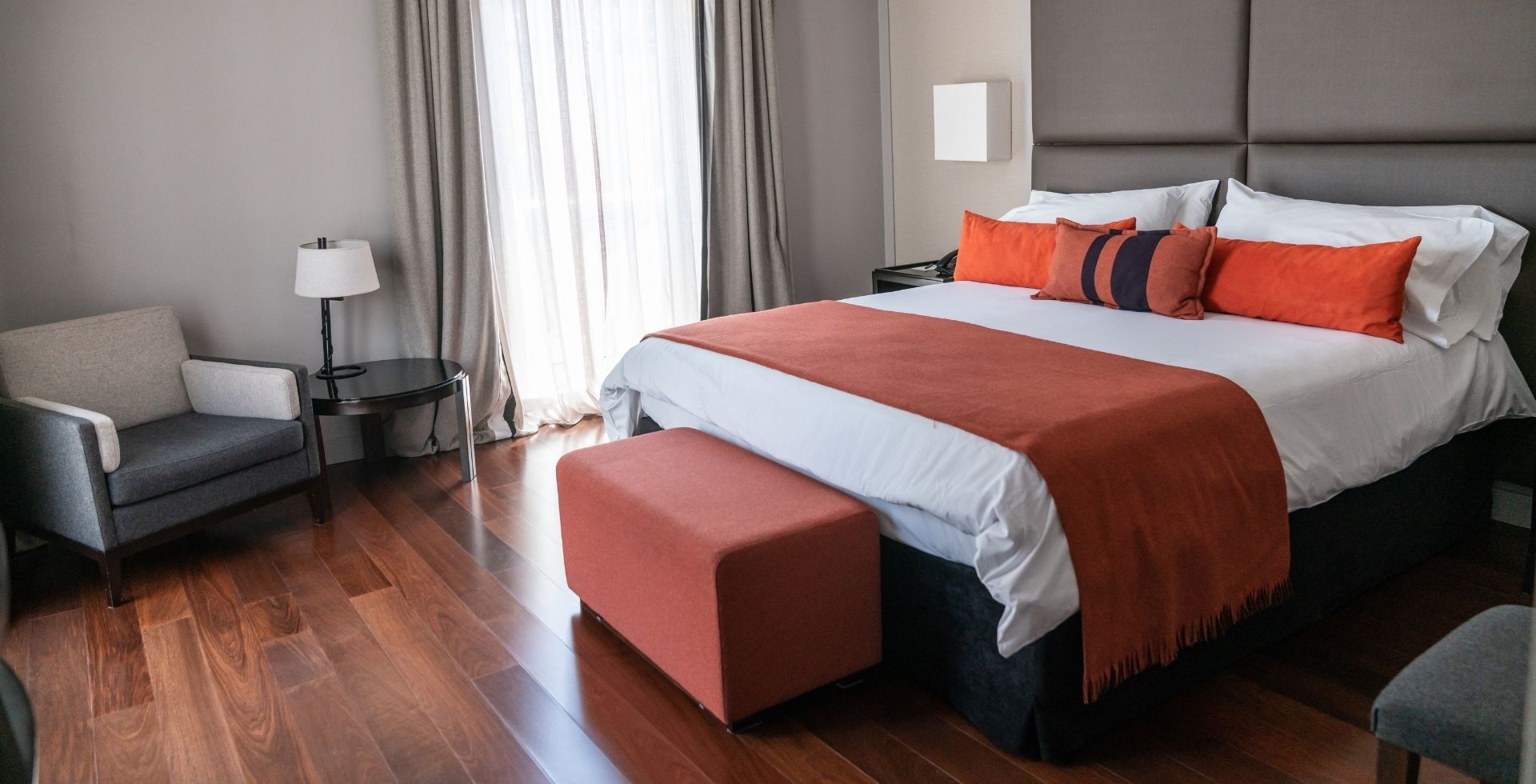
No, they don’t have wardrobes in the teahouses. If you do find one, consider yourself extremely lucky. Most of the rooms have wall hooks for you to hang your clothes on, and some places also provide a table for you to keep your trekking bag or other things on.
But that’s alright. Because you will constantly be on the move, and you will not have enough time to unpack your clothes, organize them in the wardrobe, and repack them the next day early in the morning.
You can hang your wet clothes on the hooks along with your outfit for the next day and keep other essentials on the table (if there is one). The rest of the things stay in the bag.
I’m certain that the image and the description gave you more than enough information for you to visualize how your accommodation is going to look during the trek.
Dining in Teahouses
If you look at the total breakdown of the bill, you will notice that food is priced much higher compared to the price of the room. But it is still better than dining at the teahouse you are staying in after a long day of trekking.
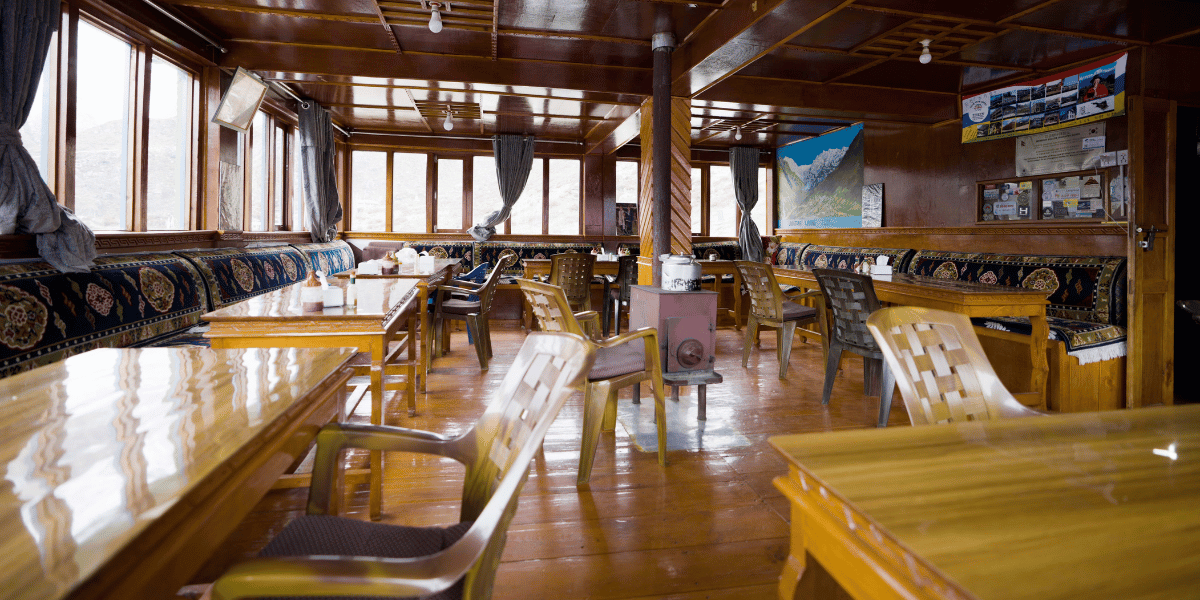
For context, meal prices go higher as you trek to higher altitudes, and it will all make sense to you once you witness the road conditions and logistics firsthand. Transportation is a huge challenge in the Langtang National Park, which is probably why it is a “trekking destination”.
Now let’s look into the services that you will find for dining, food and beverages:
Fireplace/Central Heating System
The sight that is going to catch your eyes the moment you enter the dining area is a bunch of people (friends or strangers) sitting around what looks like a chimney and stove at the same time.
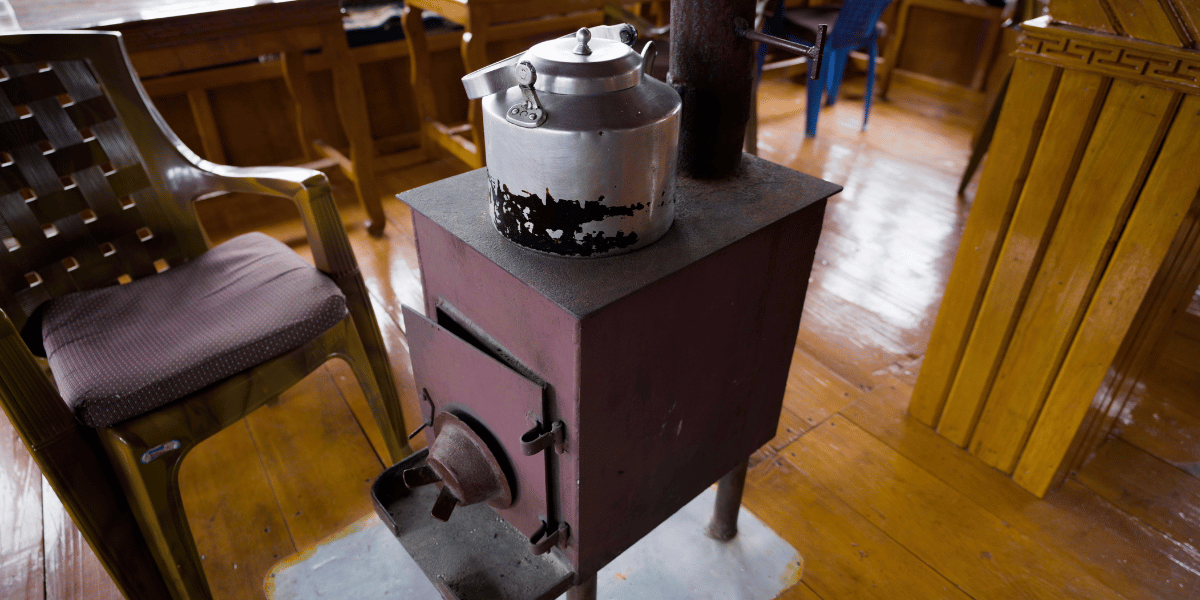
That fireplace is the central heating system found in almost every teahouse on the trails of the Langtang Valley Trek. Although small and positioned in the center of the room, the tiny fireplace can warm the entire dining hall. If your feet are cold, what could be better than sitting right next to it?
What I noticed throughout the trek was that there was always a kettle placed on top of the fireplace. People fill their glasses or bottles with hot water from the kettle as they carry on with their conversations.
Warm Food and Drinks
There is nothing better than seeing a warm meal placed in front of you after a long day of strenuous walking. And after extreme physical exhaustion, nothing tastes better than a plate of Dal Bhat, the popular trekking food in Nepal.
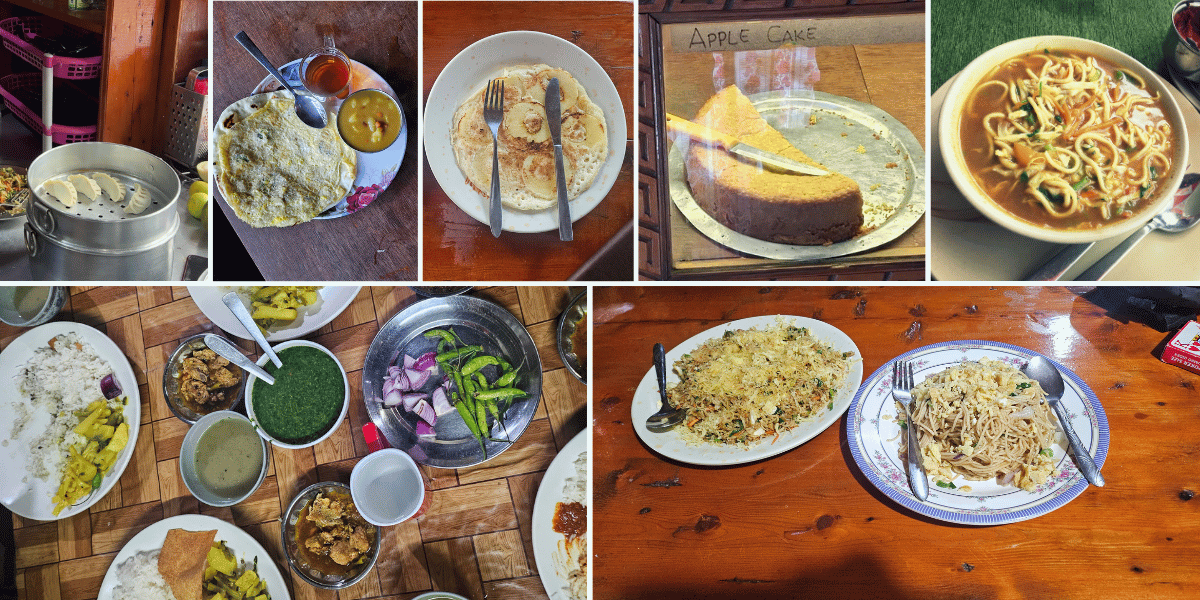
If you do not prefer Dal Bhat for lunch and dinner, then the teahouses have plenty of choices on their menu. While options are most likely to be momo, chowmein, and fried rice, some places also offer pizza and pasta (I personally did not try them; therefore, I will not be vouching for them).
For breakfast, you have a wide range of choices, freshly made pancakes, oats, or the local roti tarkari (traditional bread paired with a soupy mix of vegetables like potatoes and gram beans). Don’t forget, you can always ask them to add an omelette into the mix!
Water and Beverages
I have to admit that for cold water, our team filled water in our bottles directly from the tap. While we did not face any issues that would result from contamination, you can always carry water purification tablets.
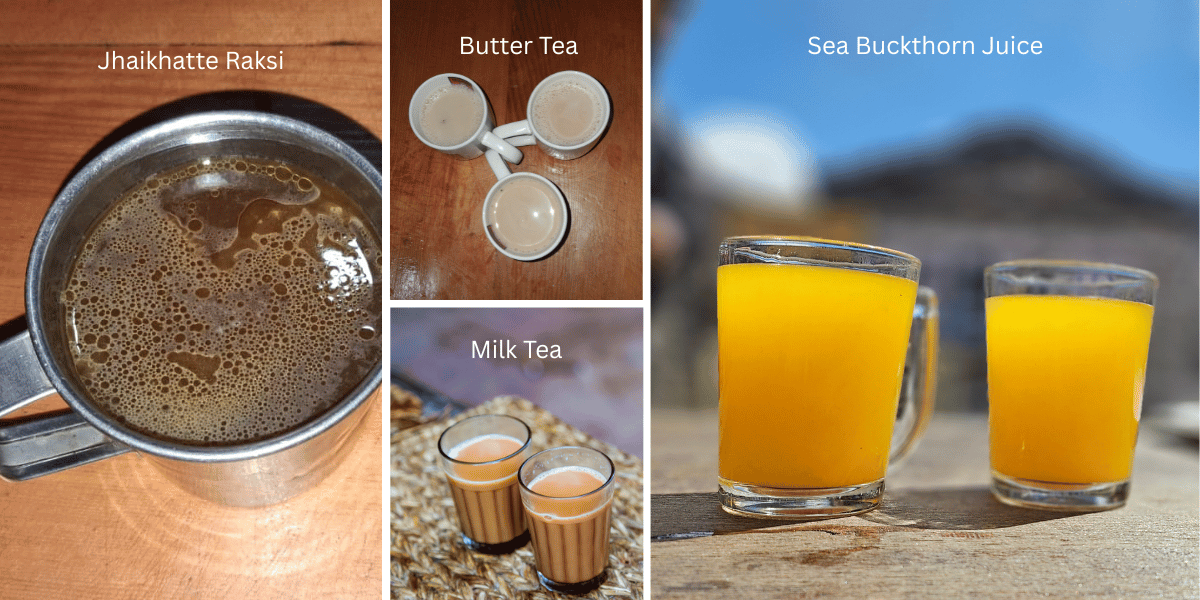
As for hot water, you will find thermoses lined in the dining area that guests can take water from. Please note that while some teahouses offer hot water for free, other teahouses might not do the same.
For non-alcoholic beverages, you can always find sodas like CocaCola as well as packaged or fresh juice. I strongly recommend that you try warm sea buckthorn juice, incredible to boost your immunity as you reach higher-altitude regions.
For alcohol, they have beer from local brands of Nepal, and their local alcohol that they brew at home, commonly known as Rakshi. However, please think twice before opting for alcoholic beverages as they might hinder your acclimatization.
Paid Add-On Services at Teahouses
Since the basic services have been mentioned above, let’s look into some of the services that you will have to pay extra charges for.
Hot Shower
The price you pay for a hot shower differs according to the teahouse, but one thing is for sure: it is not free. While your spirit to shower slowly starts dying as you reach higher-altitudes with colder temperatures, places like Bamboo and Lama Hotel are warmer and demand showers after a sweaty trek.
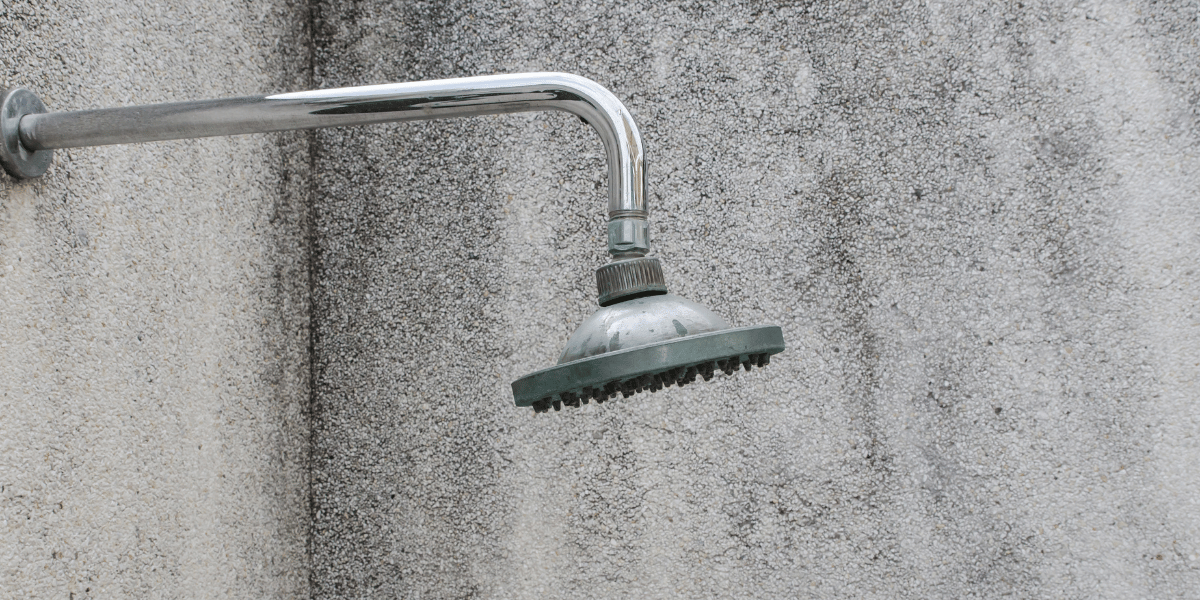
If you do not want to pay extra for a hot shower, you can always rely on wet wipes, as that is what you will be using either way once you reach Langtang Village and Kyanjin Gompa. But if you do want to take a shower, please inform your host at least half an hour early so that they can prepare the bath.
Charging and WiFi
The only time you are going to face issues with charging your electronic devices will be in Bamboo, which comes before Lama Hotel. For WiFi in Lama Hotel, you can buy a prepaid internet card there.
Apart from Lama Hotel, most of the places that provide free WiFi generally also let guests charge their devices for free. However, please make sure to ask your guide or the host about it, as the conditions differ according to teahouses.
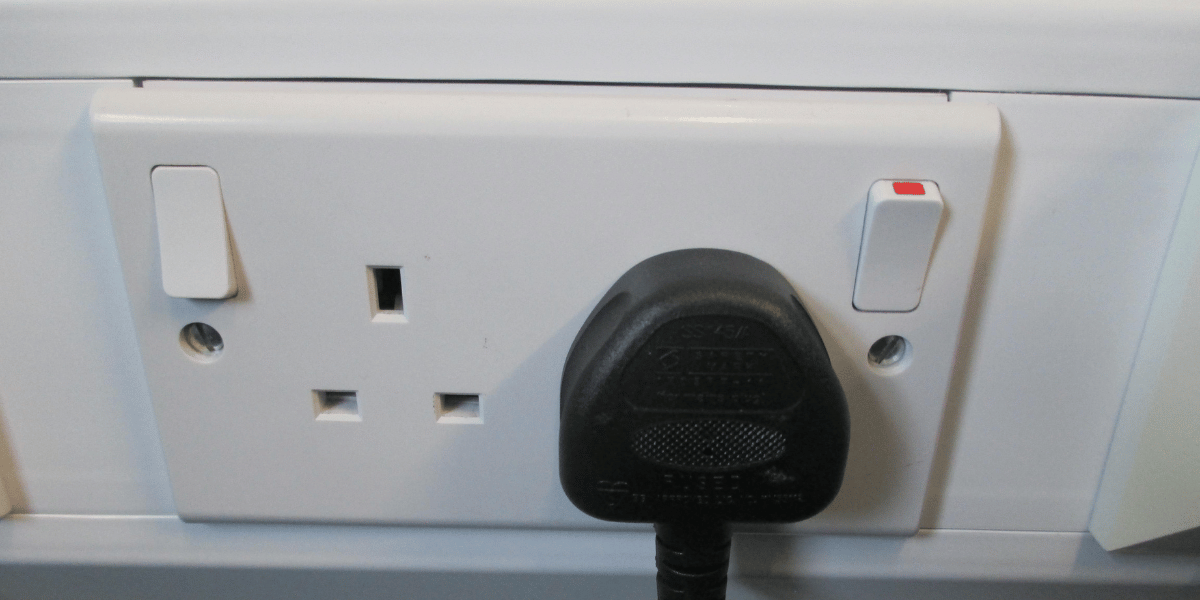
As there are small local hydropower projects in the surroundings, most of the places have access to electricity. But in places where electricity is not supplied by hydropower, the teahouses rely on solar energy, which explains the scarcity.
There you go! Now you have all the information regarding the amenities and services that you can find in the teahouses during your Langtang Valley Trek.
I know that it might not seem like much when you read it, but when you do get there, you will realize that even these services are more than enough.
As you have all the basic information regarding what you can expect, let’s get more detail oriented. In this section, we are going to go deeper into the locations (the major places where trekkers are recommended to stay). I have also mentioned a couple of teahouses that you can consider for your trek.
Syabrubesi or Syaphru Bensi
There are generally two types of trekking groups that you will meet during your Langtang Valley Trek: those who make it to Bamboo on their first day of the trek and stay at Syabrubesi for their last night, and those who stay at Syabrubesi for their first night and go straight to Lama Hotel for their second night.
Either way, you can tell that Syabrubesi is an important stop for this trek. Let me throw in a fun fact: since the road conditions are great in this town, most of the goods are sold without including the transportation costs. So if there is anything that you’ve missed, you can always grab it here before going ahead.
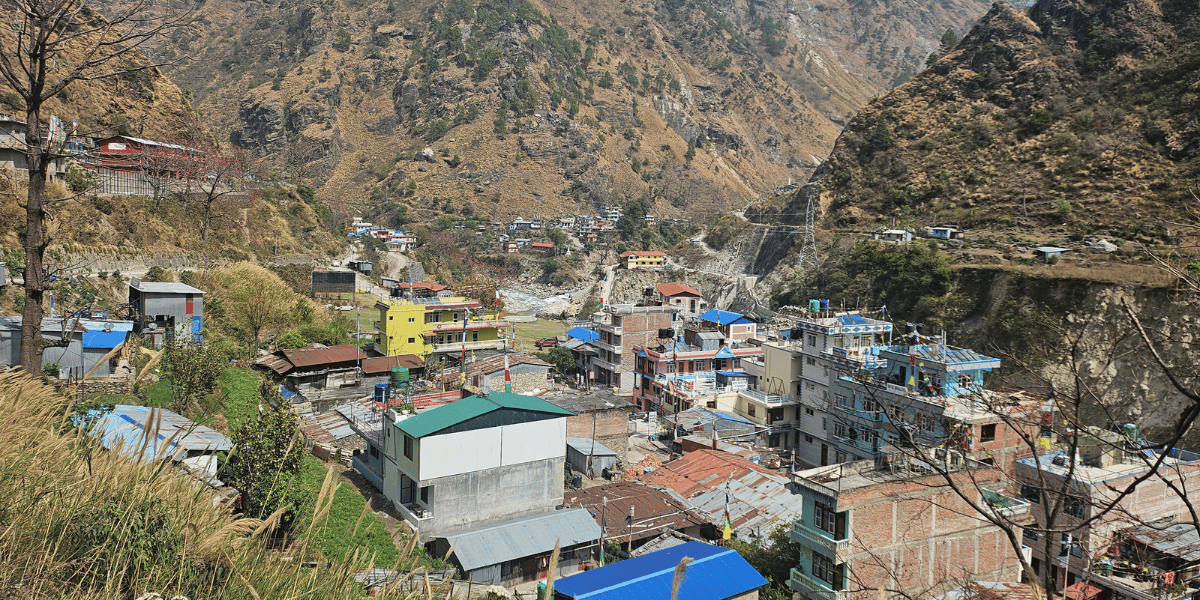
Coming back to the topic of accommodation. Syabrubesi offers the best services and facilities when it comes to accommodation. Here you can get private rooms, hot showers for free, and the cell network and the internet connection is actually reliable.
Additionally, this is also the place where the hotels have plenty of options for food. But that does not mean that there won’t be choices as you get higher. I saw someone have pizza for dinner at Lama Hotel, but I can’t tell you how it really tasted.
But given the services that one can find in Syabrubesi, it makes it an ideal stop for the first or the last night of the trek. If you reach Syabrubesi by afternoon on the first day of your trek, I would still recommend you make your way till Bamboo at least and save Syabrubesi’s version of luxury for the last night of your trek.
Teahouses at Syabrubesi:
- Buddha Guesthouse and Restaurant
- Royal Himalaya Hotel and Lodge
- Yak Hotel and Lodge
Domen, Dhomen or Doman
After you cross Syabrubesi, you will reach Domen, aka Dhomen (1,565m), also known as Doman. I kept getting confused with the name of the place, as it sounded like ‘Dobhan’ when I heard it from my colleagues.
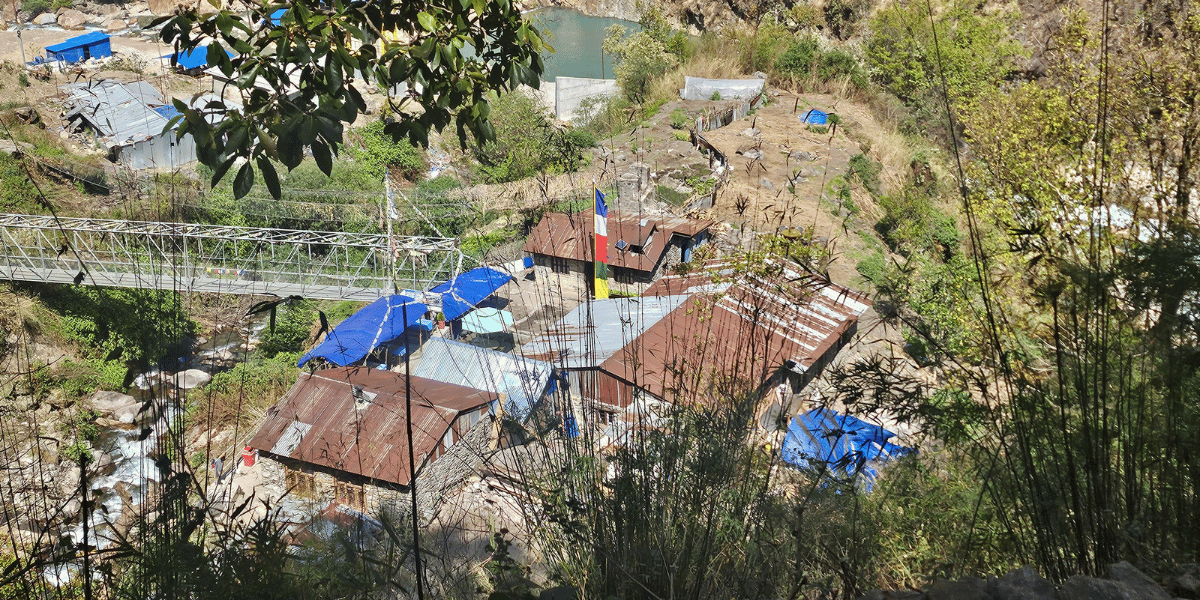
Domen is surrounded by forests and once you reach the end of Syabrubesi, you will get to this place. But many trekkers don’t stay here unless they are extremely tired or have other personal reasons. However, the place is beautiful, and you would not really mind staying a night here.
Teahouse at Domen:
- Domen Riverview Hotel
Based on our trek in 2026, there were two teahouses in Domen that are next to each other. I had a lovely time chatting with Anna, the daughter of one of the teahouse owners. Do give her a chocolate and enjoy her bubbly and energetic energy.
Pairo
Pairo (1,722m), back in the day, was known as Hotsprings, but when a landslide destroyed the hotsprings, it was renamed as Pairo. It’s quite ironic how they named the place Pairo because it literally translates to landslide in Nepali language.
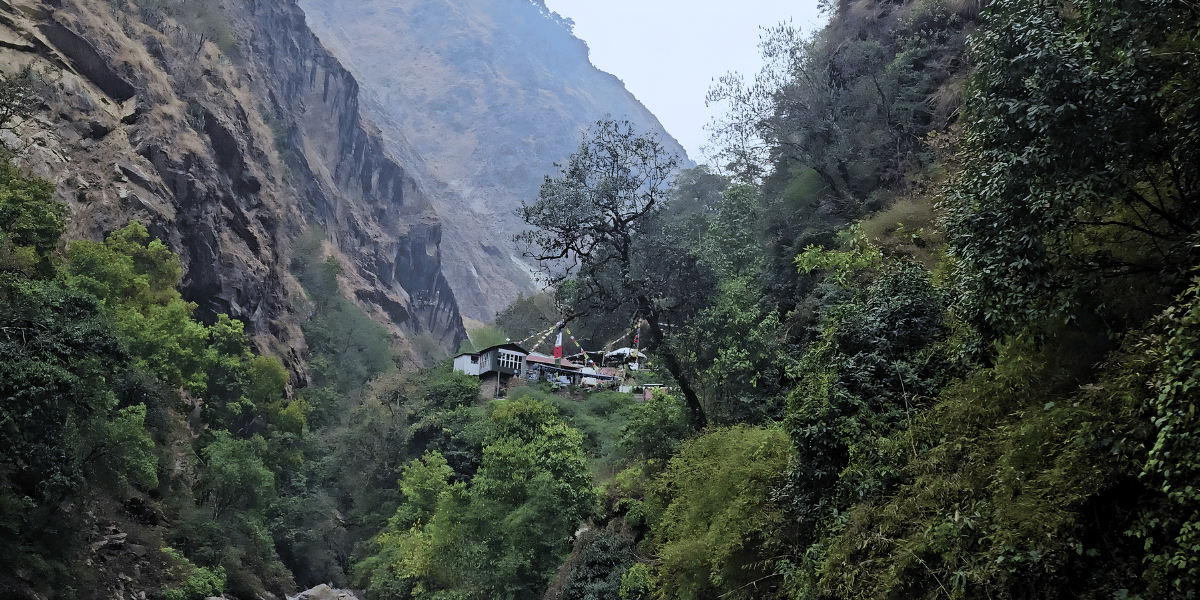
Just like Domen, many trekkers do not actually consider staying at Pairo either because it is quite close to Bamboo. We made a quick stop at Pairo during our trek to get a bottle of coke for some energy.
Teahouses at Pairo:
- Hotel Namaste Guesthouse
- Pairo Riverview Hotel
Bamboo
Bamboo (1,984m) is one of the most renowned stops for the Langtang Valley Trek. I guess its name gave away the reason it’s called Bamboo in the first place. The hotels here are surrounded by Himalayan bamboo, known as Nigalo in Nepal.
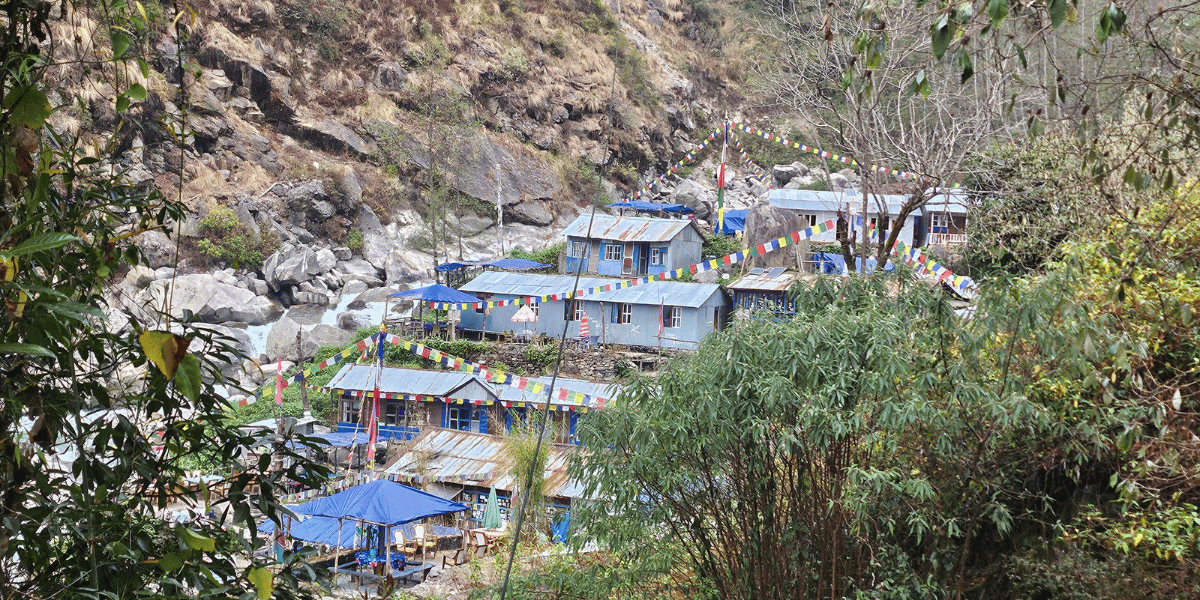
Being one of the major stops on the trail, you will be able to find plenty of options for teahouses in case you want to spend the night here. We spent our first night at Bamboo, and the distance we covered from Syabrubesi to Bamboo felt perfect for the first day of the trek.
Teahouses at Bamboo:
- Hotel Bamboo and Lodge
- Bamboo Tibet Hotel
- Bamboo Sherpa Hotel
If you want to hear my personal experience, our night at Bamboo was really peaceful. The team stayed at Bamboo Sherpa Hotel, which was built on the corridors of Langtang Khola/River, and the sound of the water passing through the stones certainly made it easier to sleep.
Electricity is also scarce in this region, so please refer to our packing list for Langtang Valley Trek to learn more about all the things that you will need for this trek.
Personally, I found Rimche similar to Bamboo, except that the wind was chillier up there and Bamboo had a better electricity supply and internet connection.
Rimche or Rimiche
Rimche (2,495m), also known as Rimiche, is about 1 to 2 hours away from Bamboo. Similar to Bamboo, Rimche is also a small settlement along the way where tourism is the major source of income for the locals.
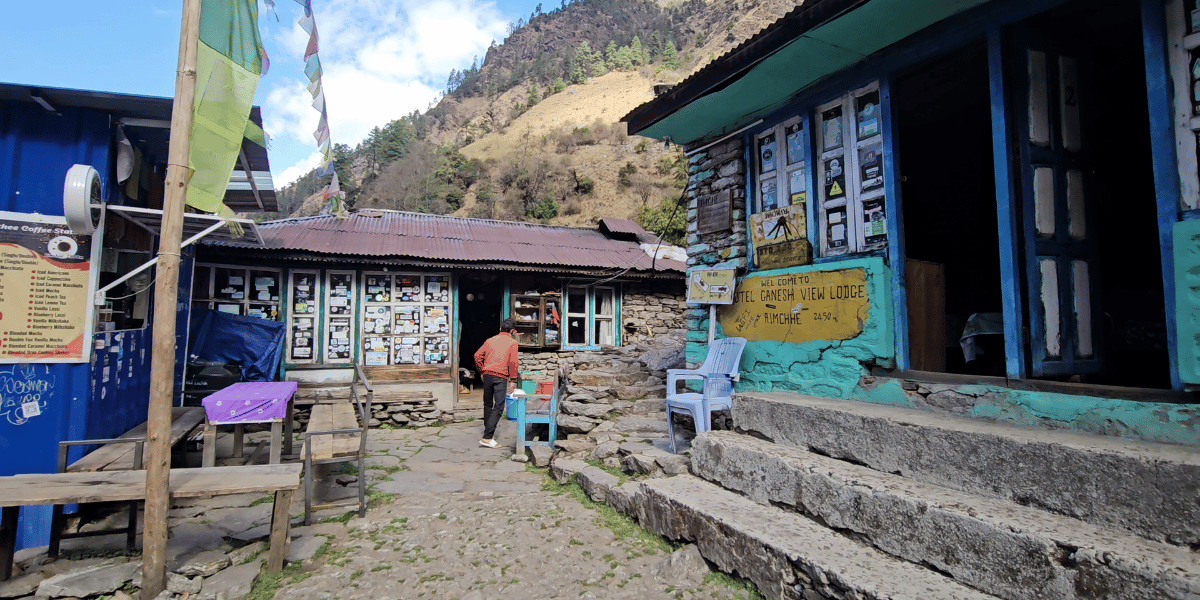
Trekkers mainly choose this place if they want to escape the crowd of tourists at Bamboo and Lama Hotel. But that does not imply that Rimche does not have guests at all; it’s just that there are fewer choices of teahouses. It is still a great choice for you to spend the night if you cannot make it to Bamboo or Rimche.
As you walk up from Bamboo, after a while you will notice a small concrete hut taken over by plants. Porters and trekkers often sit there to get some rest. Reaching that point is an indicator that you are getting closer to Rimche.
Teahouses at Rimche:
- Ganesh View Hotel and Espresso Station
- Moon Light Lodge
When we were trekking there in March 2026, as per the locals, Rimche was said to have better internet connectivity compared to Lama Hotel. But since we decided to spend the night at Lama Hotel, we still managed to have a great time playing cards and socializing with other trekkers.
Changdam Village, Popularly Known as Lama Hotel
Once you reach Lama Hotel (2,515m), you will notice that the vibes are pretty similar to Bamboo. The aesthetics too are quite similar, set amidst the forest of Himalayan Bamboos and the sound of Langtang Khola loud as ever.
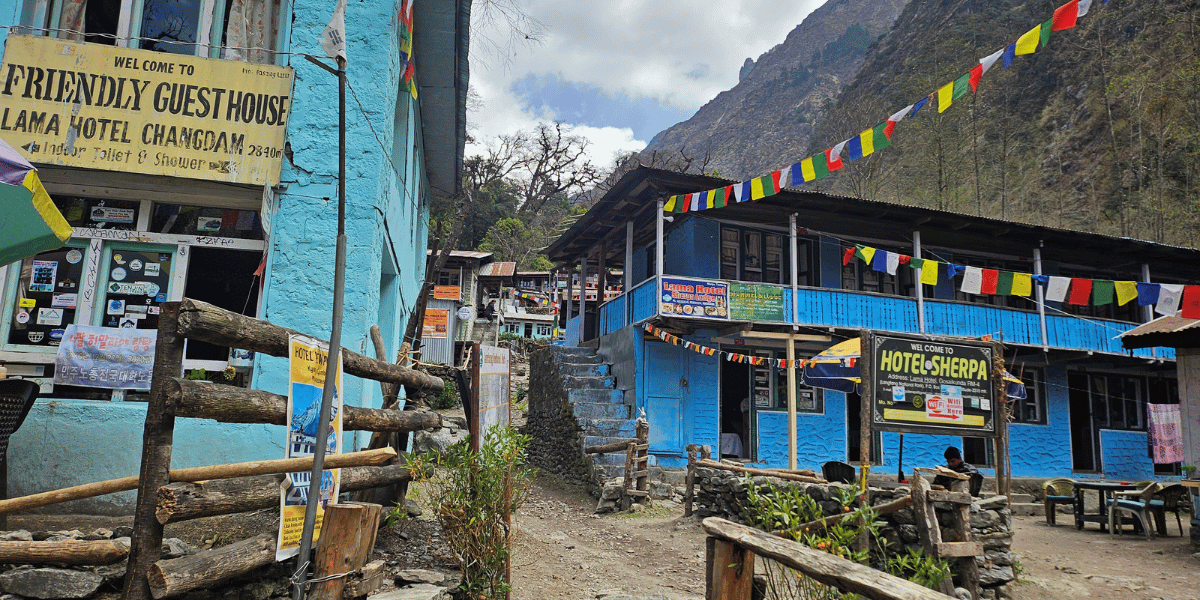
But when you compare it to Rimche, you will notice Lama Hotel has a thicker settlement, with more options for lodging and food. While some hotel boards have “Free WiFi” written on them, availability is determined by the weather conditions. However, you can buy the Prepaid Internet Card at your hotel.
Teahouses in Lama Hotel:
- Friendly Guest House
- Sherpa Hotel and Lodge - Lama Hotel
- Hotel Green Hill
- Tibet Guest House
- Lama Hotel
Riverside, originally known as Gumnachok
Just like Rimche, Riverside (2,770m) or Gumnachok is another small settlement that is higher above than Lama Hotel. It would take you 2.5 hours at most to reach Riverside from Lama Hotel.
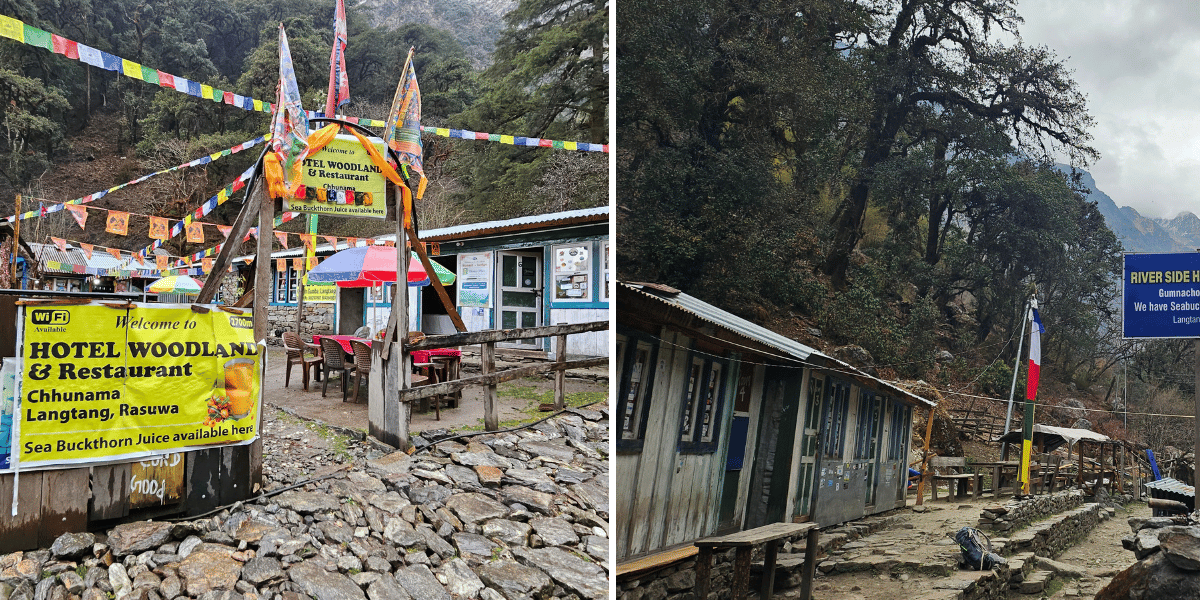
After a steep climb from Lama Hotel, as you reach closer to Riverside, you will eventually be out of the shades. Feel free to bask under the warm sunlight (if the weather permits) as you drink tea for some rest.
After walking for about 1.5 hours from Riverside, you will reach another place called Chunamma (approx. 2,800m). While it is not a major stop of the trail, you can still stop here for lunch or spend the night here if you are too tired to move ahead.
Teahouse in Riverside and Chunamma:
- Riverside Hotel (Riverside)
- Hotel Woodland (Chunamma)
We took shelter at Riverside Hotel when it started raining out of nowhere during the trek, and we decided to have our lunch there. As we resumed our trek after the rain stopped, the view above looked absolutely stunning, as we could see snowfall on the hillocks that surrounded us.
Like all the other places, accommodations in Riverside are basic, providing you just enough to make it through the night.
Ghoda Tabela
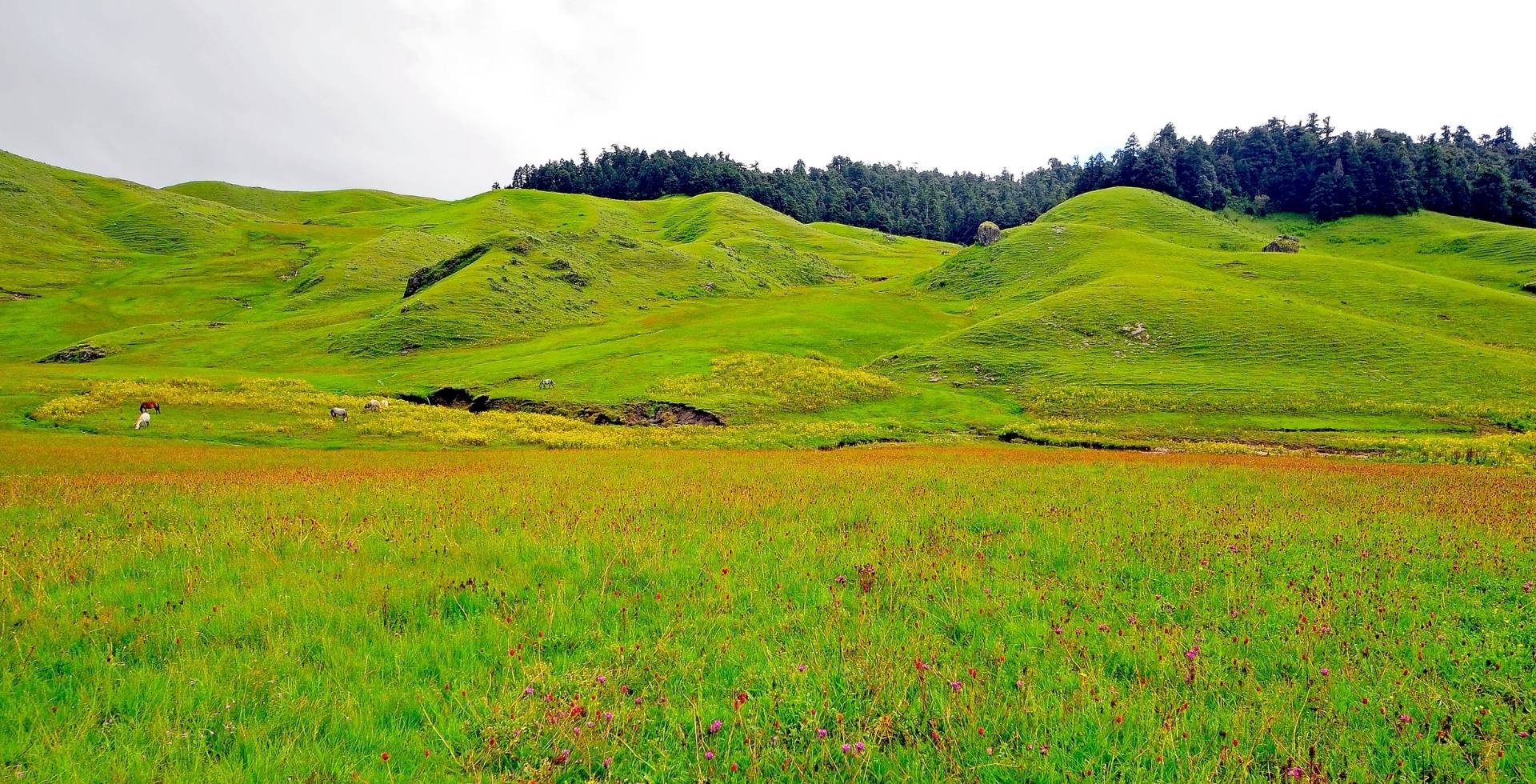
Ghoda Tabela (3,008m), in Nepali, is what you call a ‘Horse Stable’ and as you trek across this region, you will surely come across numerous stables. The land there is used as a pasture where horses and mules graze, and when you come across that scene, you might just notice how beautiful nature actually is.
For decades, the natives of Langtang have been using the land, and now it also serves as an important stop for trekkers moving along the trails of Langtang Valley. Apart from a couple of teahouses in the area, the location is also important because the Langtang National Park Office is located there.
Trekkers, Nepalese people or foreigners, all have to visit the office and show their Langtang trek permits. The officer notes down the information provided in the permit; those details will come in handy in case there is an accident on the road or rescue operations are needed.
Teahouses in Ghoda Table:
- Hotel Tibetan
- Lovely Guest House
Thangshyap
After you cross Ghoda Tabela, be prepared for an isolated trail for the next couple of hours. While you will see small tea shops along the way, the next settlement that you will find will be at Thangshyap (3,140m).
As we reached Thangshyap, the weather transitioned from light rain into snowfall. And after trekking for hours in the snow, nothing beats the joy of finding a cafe that serves espresso at an elevation higher than 3,000m.
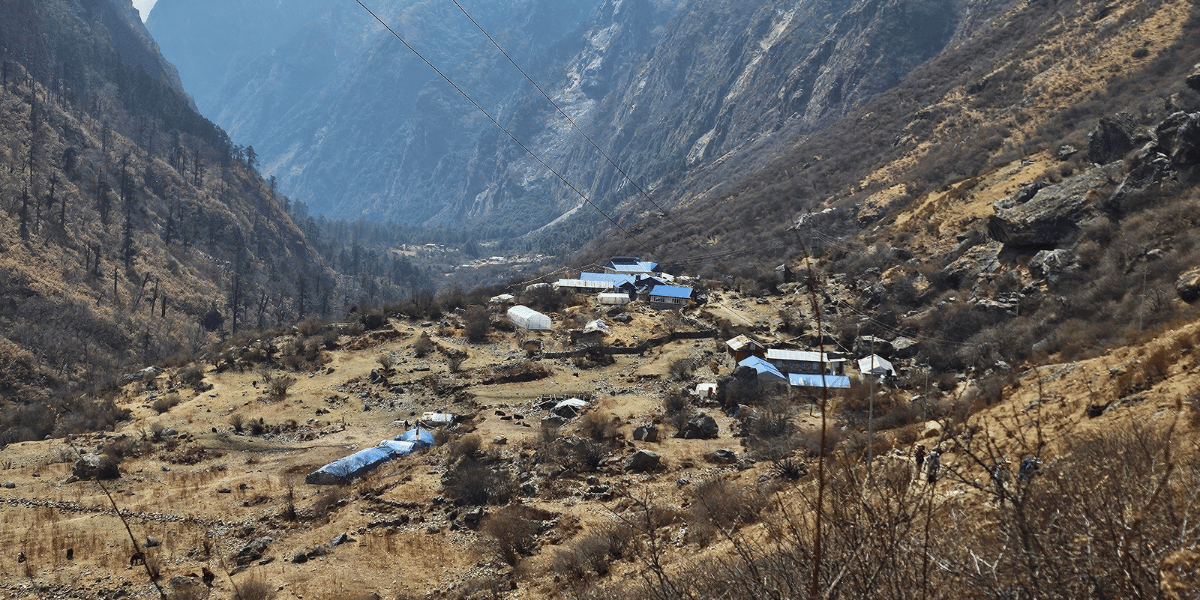
We looked around before entering the cafe and noticed that Thangshyap had a pretty decent number of teahouses, and few trekkers were staying there as they did not want to trek in the snow.
Teahouses at Thangshyap:
- Hotel Thangshyap Tibet Guest House
- Summit Sips Cafe and Bakery
- Buddha Guest House
As for us, we continued making our way till Langtang Village as two of our colleagues were walking ahead of us, and we had to stick to the itinerary as long as possible.
Langtang Village
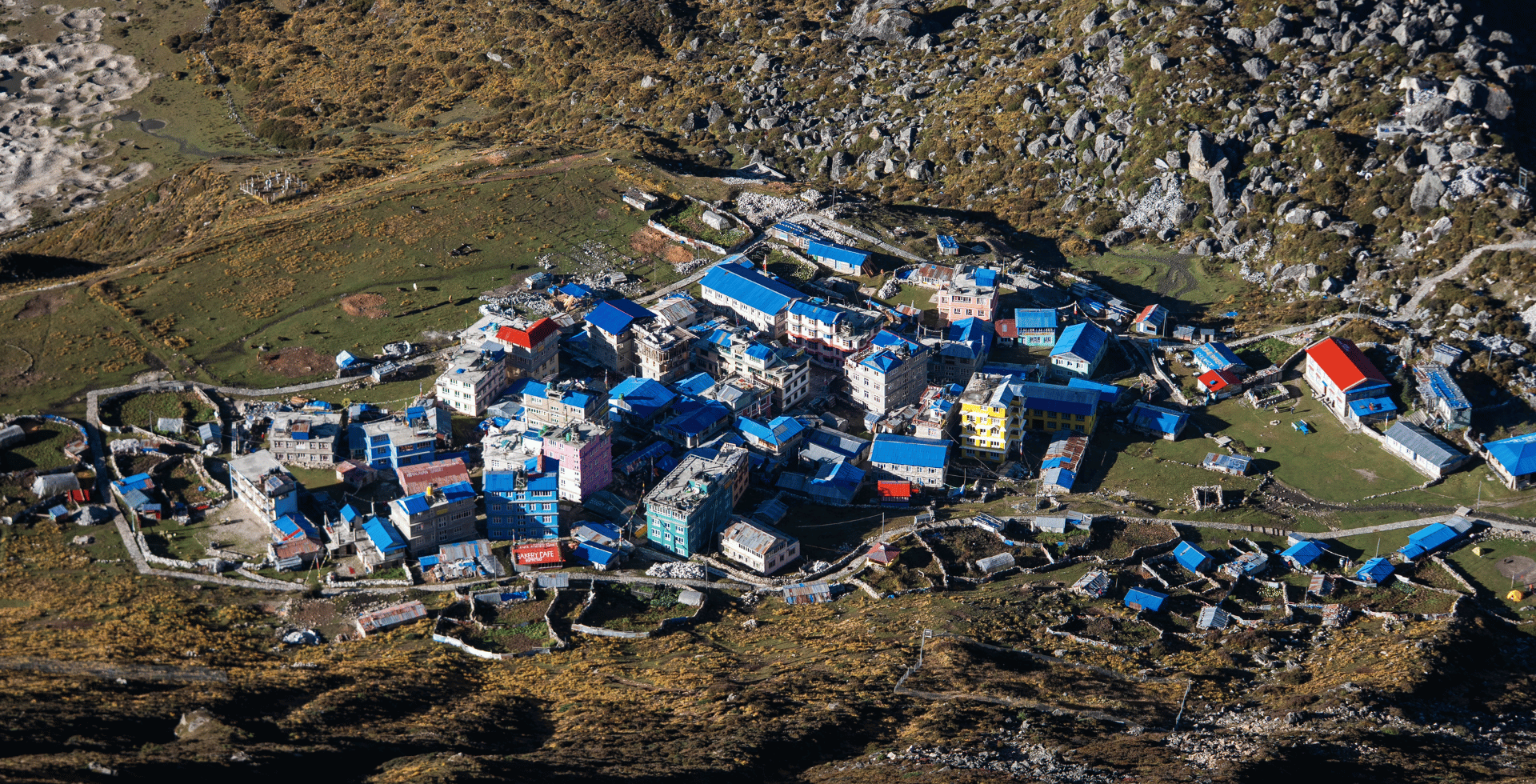
Before we continue, there is a misconception that the entire Langtang Village (3,455m) was destroyed by the 2015 earthquake in Nepal. While we were conversing with our host at the teahouse, he told us that it was the thicker settlement on the lower part of the village that got demolished.
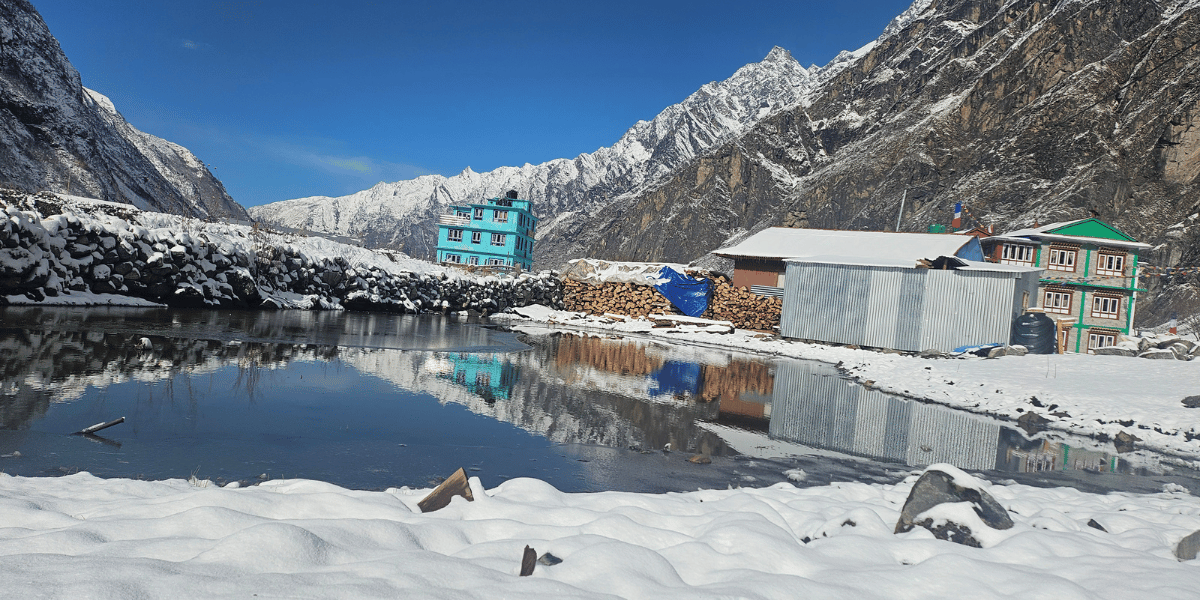
The lower part, before 2015, housed the most number of hotels. Today, all the hotels that you will find in Langtang Village are located on the upper side, the part which survived the earthquake.
However, when you talk to the people of Langtang about the earthquake, you can still hear the sorrow in their voices as they talk about all the loved ones they lost.
Moving on, Langtang Village is a beautiful settlement in the Langtang region. If your visit falls anytime between late November and early March, you will be able to witness the national park’s own version of winter wonderland.
Teahouses in Langtang Village:
- Blue Sky Guest House and Restaurant
- Mount Kailash Guest House
- Traveller’s Guest House
- Glacier Guest House
The list goes on, because the village has no shortage when it comes to restaurants and teahouses. While we only spent a night there, if you have more time, I would highly recommend that you visit the local bakeries and Tibetan shops in the village.
Unlike other teahouses on the Langtang Village Trekking trail, the teahouses in this area offer more services, more luxury. The teahouse where we stayed, although it had a lot of guests, provided rooms with attached bathrooms and an amazing window view.
Langtang Gumba, between Thangshyap and Langtang Village
Before you reach Langtang Village from Thangshyap, you will find a really thin settlement, like you will be able to count the number of lodges on the way. That place is known as Langtang Gumba (3,400m) or Gumba Village and is often overlooked by trekkers, as Langtang Village is just an hour away from there.
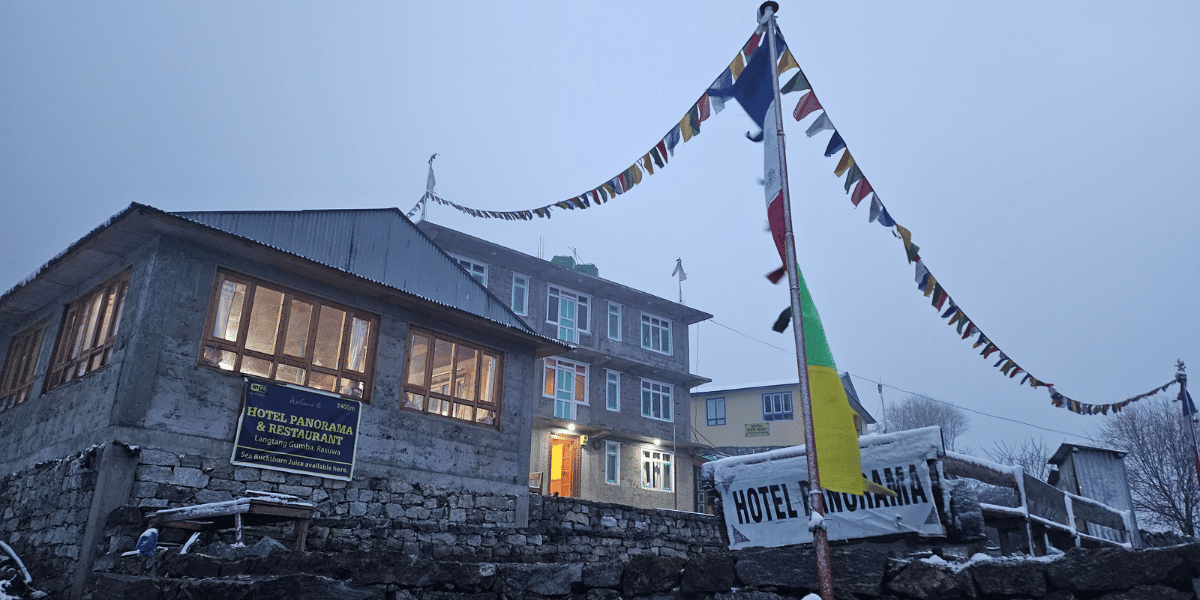
However, if you meet heavy snowfall on the way and do not wish to continue the trek until the snow stops, then this place can be ideal to have your meals and even spend the night at.
Teahouses in Langtang Gumba:
- Sunset Lodge
- Lovely Guest House and Lodge
Mundu Health Post, between Langtang Village and Kyanjin Gompa
On the way to Kyanjin Gompa, you will be trekking across a place known as Mundu (3,550m). Please note that it is the only health post in the region, locally referred to as Mundu Health Post.
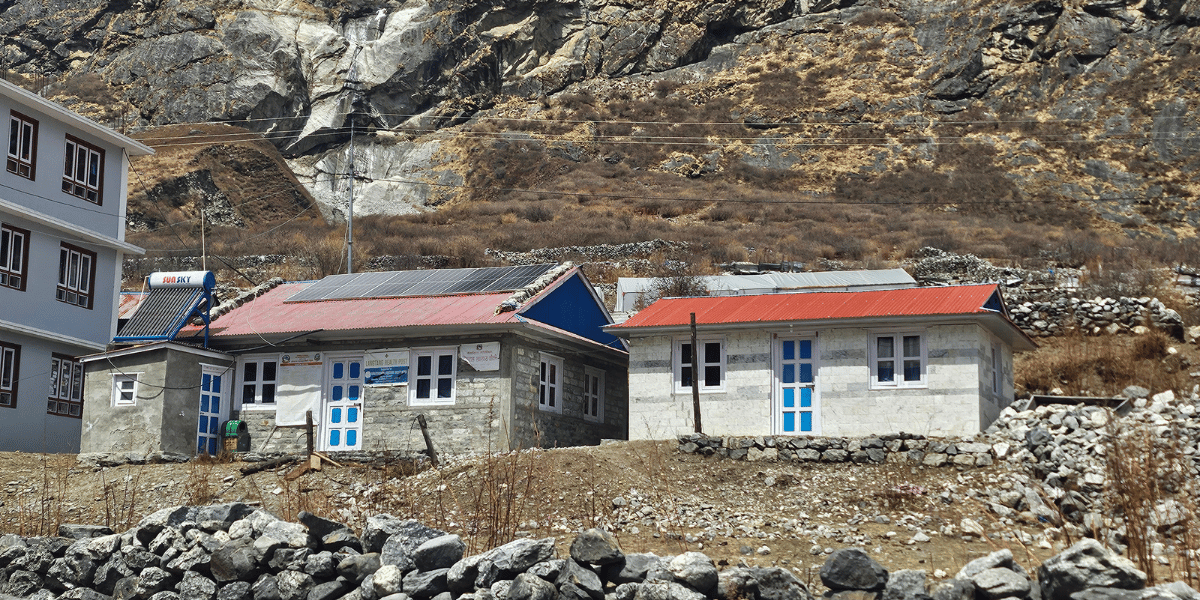
In case of health emergencies, you can expect basic health check-up at the health post, as well as guidance with altitude sickness.
Teahouses in Mundu:
- Himalayan Guest House
- Dragon Guest House
Kyanjin Gompa
Beyond Langtang Village lies another important and equally beautiful settlement known as Kyanjin Gompa (3,890m). It is about 3 to 4 hours away from Langtang Village and you will find plenty of teahouses and restaurants along the route.
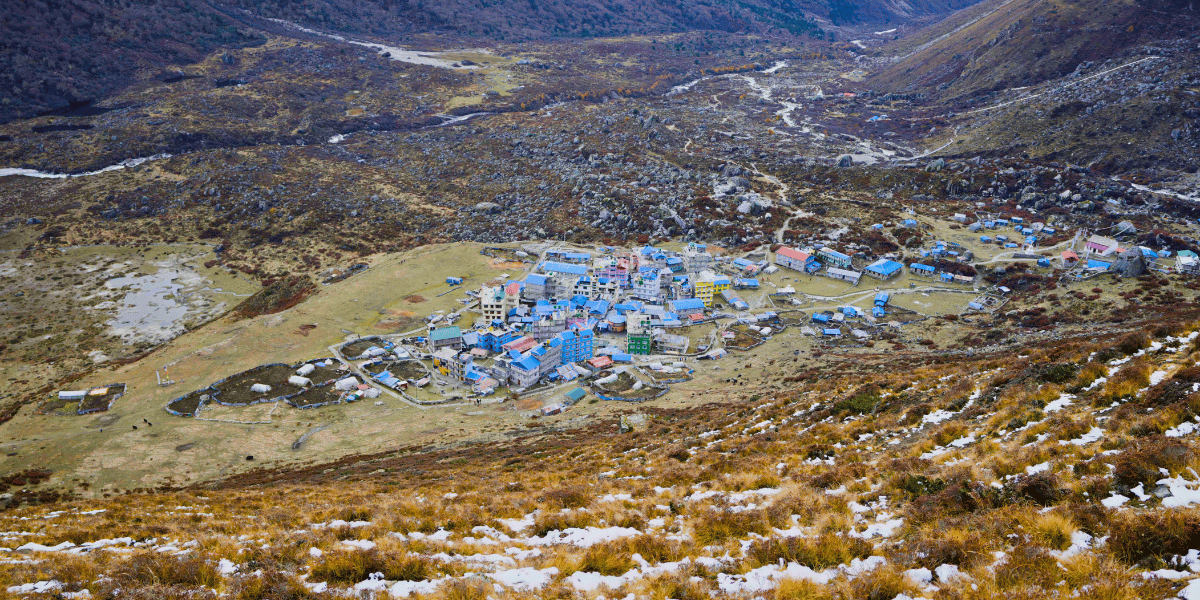
It might sound cliché when I tell this, but if I had to name a single place that had my heart throughout this trek, then it would be Kyanjin Gompa. It was freezing cold when we got there, but before we even reached the hotel, the host met us on the way and guided us all the way back to the teahouse.
Kyanjin Gompa is the final destination of the Langtang Valley Trek, and it has some of the best services and amenities when it comes to accommodation as well as food. And if you want to chill around the village, you can visit the bakeries in the area where they sell freshly baked cakes and pies.
And not to mention, the Kyanjing Cheese Production Center which was built with the support of the Government of Switzerland. The factory is famous for its variety of organic yak cheese.
Teahouses in Kyanjin Gompa:
- Ghangchenpo Guest House
- Namaste Guest House
- Summit Guest House
- Hotel Super View
Bakeries and Cafes in Kyanjin Gompa:
- Dorje Bakery Cafe and Coffee Center
- Himalayan Bakery and Cafe
Sindhum, a small stop on the way to Kyanjin Gompa
After you cross Mundu, you will reach Sindhum (3,555m). It is a small stop that you can find on the way.
Teahouse in Sindhum:
- Me Very Happy Guest House
- Sindhum Valley Home Stay
The teahouses mentioned under each of the major stops are not the only options for accommodation. Some of the teahouses are where we stayed during the trek, and the others are the prominent ones that were around. Once you reach there, you will surely find more options.
But I do hope that this information is sufficient for you to plan your trek. You can always look up the teahouses online and contact the host to book your stay in advance. In case of issues with booking, please feel free to reach out to Altitude Himalaya as we would be more than happy to help you!


 Suraksha Subba