No doubt Kathmandu is all about busy roads, heavy traffic, and crowded streets. Loud noises from vehicles and crowded streets around the temple and the Durbar Square areas will definitely make you exhausted.
But don’t worry, there is a perfect destination to escape the hustle and bustle of Kathmandu. Yes, you heard it right. The Garden of Dreams is a perfect gateway that will likely melt away all your exhaustion.
This was my first visit to the Garden of Dreams, and I was surprised by its natural beauty, peaceful environment, designs, and stunning architecture.
I can assure you that you will be mesmerized by the detailing of the garden complex. There is also a wall fountain with three flowing taps on the right side of the gate and a stylish flower vase right in front. These both add an extra touch to the entrance gate and feel very welcoming.
On the left, there is a ticket counter where you must buy a ticket to enter the garden. Even I did so, and as I entered the garden, its serene ambience made it a dream garden for me in every sense!
Moreover, you can experience history and timeless beauty in every corner of the garden with blooming flowers, shrubs, trees, crystal-clear ponds, playful squirrels, and the sounds of birds chirping.
In this blog, I am going to provide you with detailed information on Garden of Dreams, including its history, location, entry cost, and other significant details that you must know.
Quick Facts About the Garden of Dreams
|
Location
|
Tridevi Marg, Thamel, Kathmandu, Bagmati Province
|
|
Built Year
|
Early 1920s
|
|
Built By
|
Field Marshall Kaiser Shumsher Jung Bahadur Rana
|
|
Designed and Constructed By
|
Kishore Narsingh (an eminent Nepalese architect who previously designed Singha Durbar)
|
|
Architectural Style
|
Edwardian Style
|
|
Area
|
7,042 m2
|
|
Attraction Points
|
- Six Pavilions (three remaining today)
- Fountains
- Ponds
- Kaiser Cafe
- Neoclassical Architecture
- Open Air Theatre
|
|
Opening Days
|
Sunday-Saturday (Everyday)
|
|
Opening Hours
|
9:00 AM - 10:00 PM
|
|
Ticket Counter Access
|
9:00 AM - 9:00 PM
|
|
Entry Fees
|
- NPR 150 for Nepalese
- NPR 400 for Foreigners
|
|
Discounts
|
- Upto 50% for the elderly (60+ age), differently-abled, children between 5-11 years
- Free for children below 5 years
- 25% discount for groups of 10 or more individuals
|
|
Managing Authority
|
Garden of Dreams Development Board
|
|
Ministry
|
Ministry of Education and Sports
|
Historical Background: Garden of Dreams Origins
Garden of Dreams, also known as the Garden of Six Seasons or स्वप्न बगैंचा (Swapna Bagaicha), was built by Field Marshal Kaiser Shumsher Rana in the early 1920s.
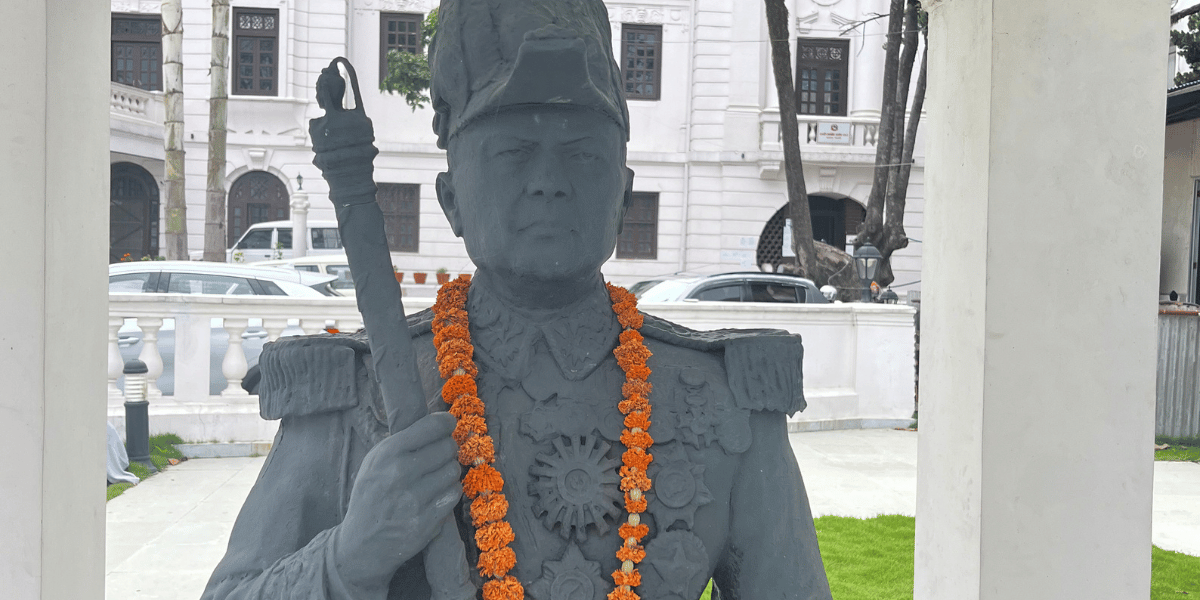
Kaiser Shumsher was a very talented young nobleman who enjoyed gardening and loved architecture, art, and collecting books.
While visiting several Edwardian Estates in England, he was truly inspired by what he saw and created the Garden of Dreams with his own vision. The garden was built to set a stunning example of the Edwardian style with a Nepali touch.
With its extravagant design and meticulous planning, the garden became one of the most sophisticated private gardens of its time.
Moreover, what’s interesting is that the garden was built using funds won by his father, Chandra Shamsher Jang Bahadur Rana (the then prime minister) in an epic game of cowrie shells.
Kaisher Shumsher built the garden as a peaceful, private retreat for his family and as a place to entertain his guests and foreign dignitaries.
During his travels, he had also visited some libraries in Britain, which inspired him to create his own private library, which is now called Kaisher’s library. It’s located right next to the Garden of Dreams inside the Kaiser Mahal (Keshar Mahal) palace.
Garden Built to Represent Six Seasons of Nepal
Although Kaiser Shumsher was inspired by the Edwardian style, he wanted to create something that reflected Nepal’s own identity. Keeping this in mind, he designed six beautiful pavilions within the garden.
Each of them was designed to represent the six seasons of Nepal: spring (Basanta), summer (Grishma), monsoon (Barkha), early autumn (Sarad), pre winter (Hemanta), and winter (Shishir).
Architecture and European Inspiration
Notably, this masterpiece was designed and constructed by neoclassical architect Kishore Narsingh. He was one of the two eminent Nepalese architects who had previously designed Singha Durbar for Maharaja Chandra Shumsher.
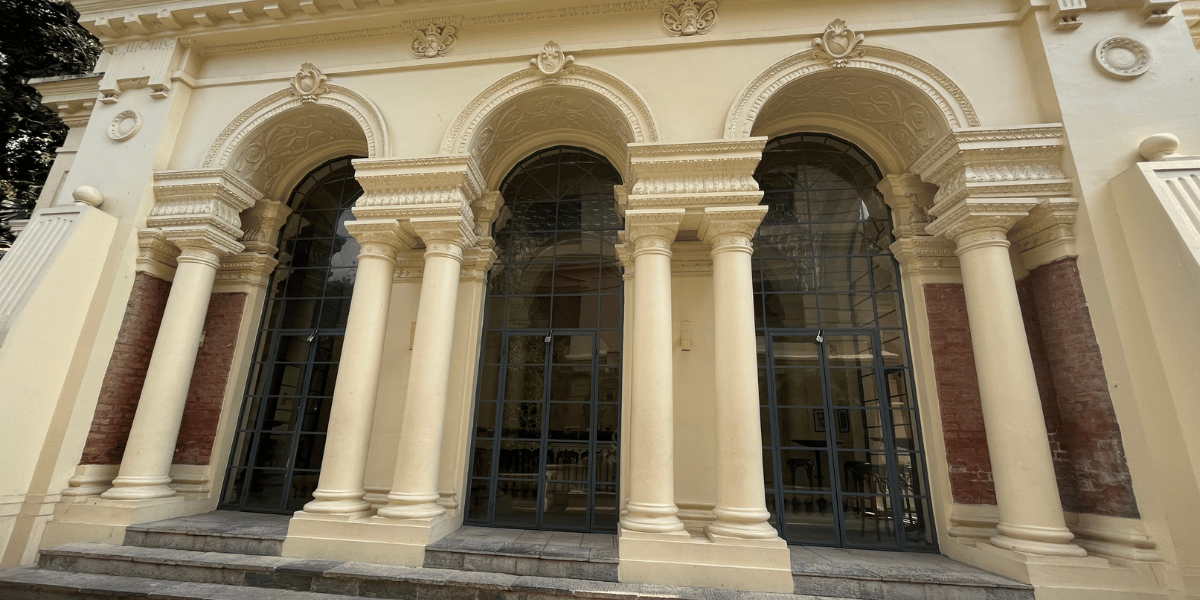
At the time, the Ranas were greatly influenced by European culture and style, and Kaiser Shumsher was one of them. After the demise of Kaiser Shumsher, both the Kaiser’s library and the Garden of Dreams were handed over to the Nepal Government.
Despite carrying a cultural as well as historical importance, the garden and the pavilions were neglected for a long period of time.
Due to a lack of proper maintenance and care from the government, pavilions and gardens were at the point of collapse. Several conservationists raised voices for the reconstruction and maintenance of the garden since the 1970s-1980s. However, the garden only received government attention during the Visit Nepal Year 1998 campaign.
Meanwhile, the Kaiser Library was opened to the public in 1969, preserving Kaiser Shumsher’s passion for literature and knowledge for future generations.
Restoration Story
Buildings, pavilions, pathways, including plants, trees, flowers, sculptures, and ponds, everything in the garden was damaged. The gardens were overgrown with weeds, and the rare and exotic plants, trees, and flowers cultivated during the time of Kaiser Shumsher had declined and disappeared for years.
As people became aware of the cultural and historical importance the garden carried, a major restoration project began. In 2000, the Austrian Government funded a million-dollar project in collaboration with Nepal’s Ministry of Education, with the project led by Eco-Himal.
Finally, after 6 years of work, the project was completed, and the garden was lovingly brought back to life by restoring its original beauty. And it was opened to the public on October 8, 2006.
Again, parts of the Garden of Dreams were damaged by the 2015 earthquake, and the restoration was completed in 2017.
Current Management and Heritage Status
Today, the Garden of Dreams is considered one of South Asia’s most unique and historic gardens, contributing a lot to enhancing the quality of life of both the citizens and tourists in central Kathmandu.
The Garden of Dreams has become a favourite destination among local youths, families, tourists and couples for relaxation, leisure, and outings. It draws hundreds of internal visitors and international tourists daily.
After my own visit to the Garden of Dreams, I came to know that on some public holidays, there can be more than a thousand visitors. And if you get there early (before the opening hour of 9:00 AM), they’ll open the doors for you!
Currently, the Garden of Dreams Development Board manages and looks after the Garden of Dreams. This development board is an autonomous body of the Government of Nepal under the Ministry of Education and Sports.
However, the board operates as a self-sustaining organization, generating its own income through ticket sales and visitor fees.
Now, moving towards the current status of the garden, I was a little sad to learn that only half of the original garden is in existence. What that means is only three of the original six pavilions are remaining. The other three pavilions were completely damaged during the years of neglect.
However, my sorrow turned to joy after hearing that the remaining three pavilions still preserve and carry the charm, history, and elegance of the Garden of Dreams.
Among the remaining three pavilions, just beside the main gate, the Grishma Pavilion invites visitors to enter the garden. Basanta Pavilion features a tea salon of Kaiser’s cafe, while the Barkha Pavilion features the cafe’s bar area.
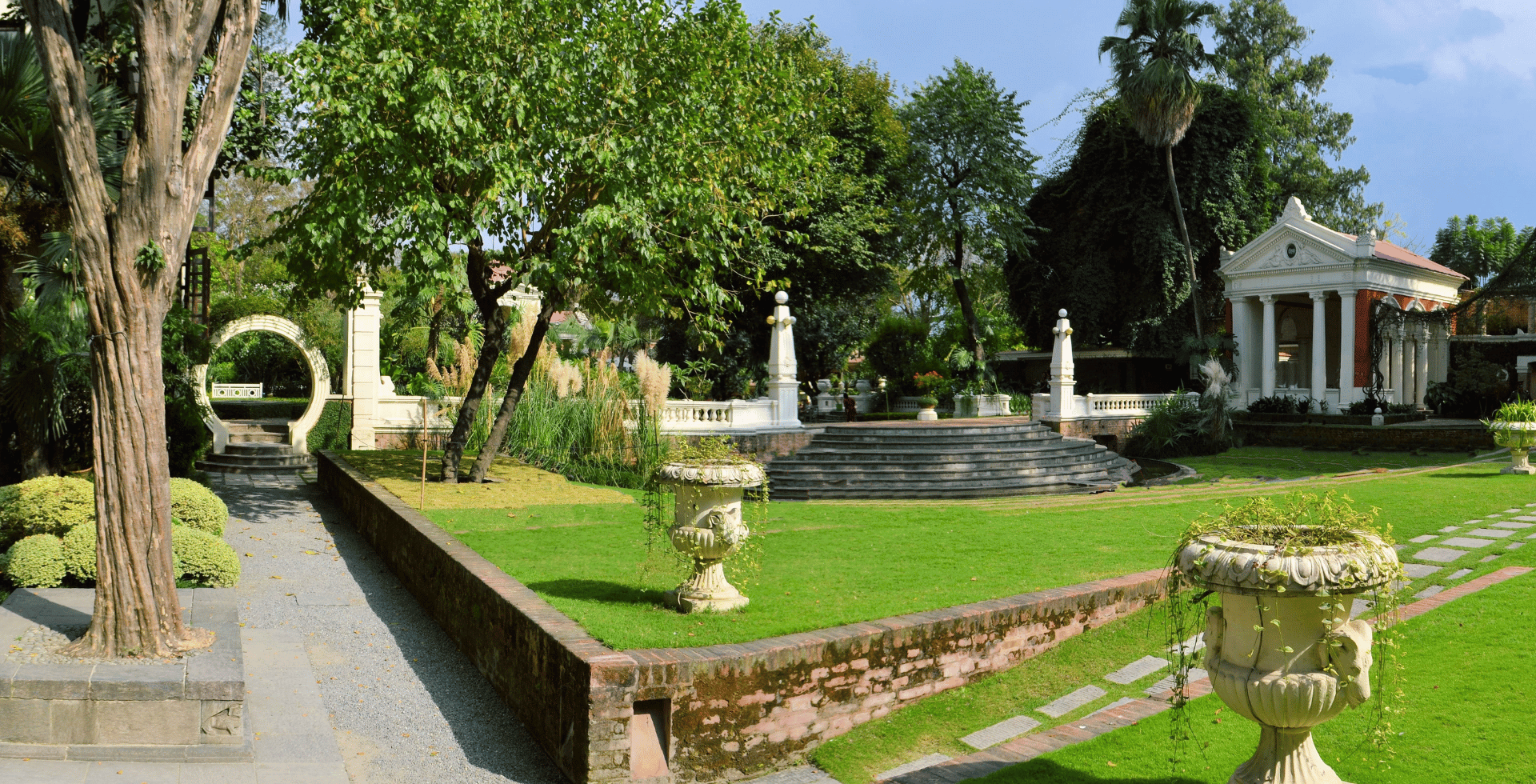
Besides, the garden continues to captivate visitors with its lovely pergolas, verandas, balustrades, fountains, open-air theatre, ponds, colourful flowers, lush greenery, and peaceful ambience.
Without a doubt, it is the most attractive, tranquil oasis, tourism landmark, and natural library where visitors can take advantage of the historical and architectural flavour.
Neo-Classical Architecture
The Garden of Dreams is a neo-classical garden with a perfect blend of European elegance and Nepalese artistic elements.
Although the garden was inspired by the Edwardian style, Kaiser Shumsher did not entirely copy the Western designs. He wanted to showcase the beauty of Nepal, so he instead blended the Edwardian style with Nepal’s cultural identity.
You will be amazed by how Kishore Narsingh has used his neo-classical design expertise through the garden’s symmetrical layout, pavilions, and decorative elements.
Six-season pavilions (three remaining today), pergolas, verandas, balustrades, fountains, ponds and pathways will make you feel a harmony between architecture and nature.
These remaining pavilions and the natural beauty of the garden stand as a reminder of Nepal’s connection with global architecture. As a result, the garden remains a treasured monument in Nepal even today!
Main Attraction Points of the Garden of Dreams
The Garden of Dreams offers you a different experience from the hustle and bustle of Kathmandu’s streets. There is a lot to do here and something for everyone. Couples, families, groups of friends, and tourists can all find something to do here.
Also, the Garden of Dreams is a beautiful place with calm ponds, pavilions, fountains and overall a peaceful atmosphere. Its main attractions are:
European-Inspired Design
The Garden of Dreams is clearly inspired by the Edwardian style, with the symmetrical layout, pavilions, pergolas, and decorative water fountains proving it.
The garden also has a strong Nepali character, traditional brickwork, skills of local artisans, and native plants.
Hence, it gives a unique and memorable experience of both European elegance and Nepali heritage to the visitors.
Three Surviving Pavilions
The three remaining pavilions, Bashanta, Grishma, and Barkha, still stand today and serve uniquely new purposes:
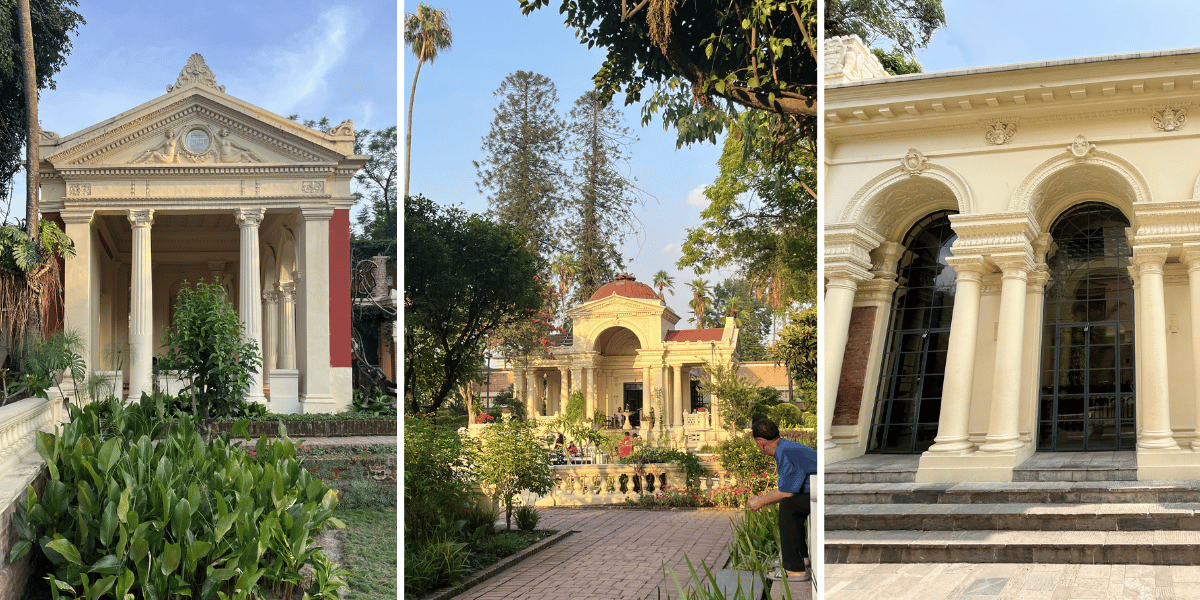
- There is Kaiser’s Cafe Tea Salon at the Basanta Pavilion.
- Grishma Pavilion stands beside the main gate.
- A bar of Kaiser’s cafe is at the Barkha Pavilion.
- You can also witness a statue of Laxmi, the Goddess of Wealth and Abundance, in front of Barkha Pavilion. Originally, it was conceived as Nike, the Greek goddess of victory, and was inspired by her famous marble image at the Louvre in Paris. The statue was later remolded and is now dedicated to Laxmi.
Beautiful Fountains
As you explore around, you will see two three-tiered diamond-shaped fountains in the garden, one in the Asare garden and another near the entrance.
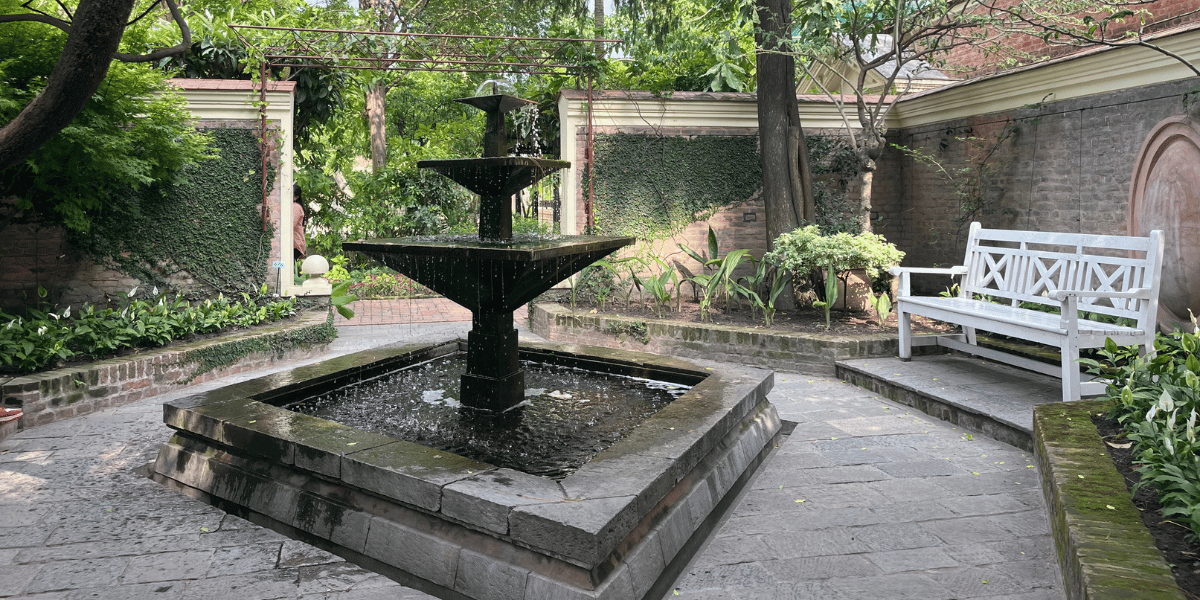
These fountains add extra beauty to the garden. You can hear the gentle sound of water, and they serve as photogenic spots too!
Tanquil Ponds
Another attraction of the garden you shouldn’t miss is the several ponds around.
The Crescent Pond, along with a scenic fountain pond, water lily pond, and circular reflection pond, will naturally draw you towards them!
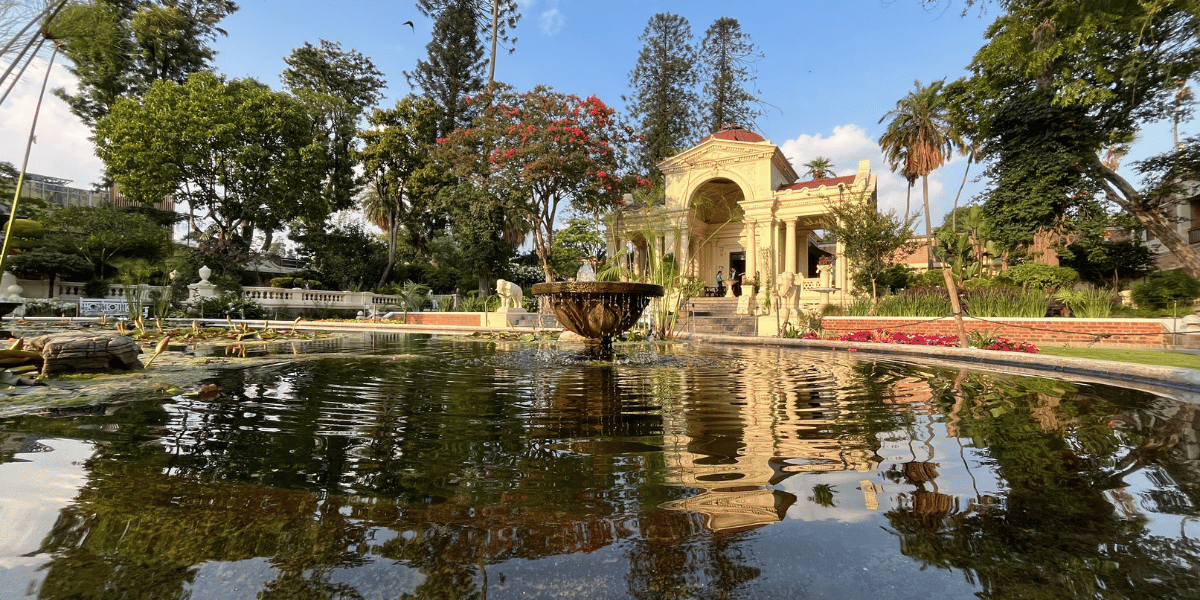
Crystal clear water with fish swimming and water lilies blooming will indeed make you happy. Particularly, the Crescent Pond is a wonderful place to sit, relax, and simply enjoy the moment.
Kaiser Cafe
Kaiser Cafe on the right side of the entrance is also a major attraction point. Likewise, it becomes a perfect place for you if you need a break from exploring.
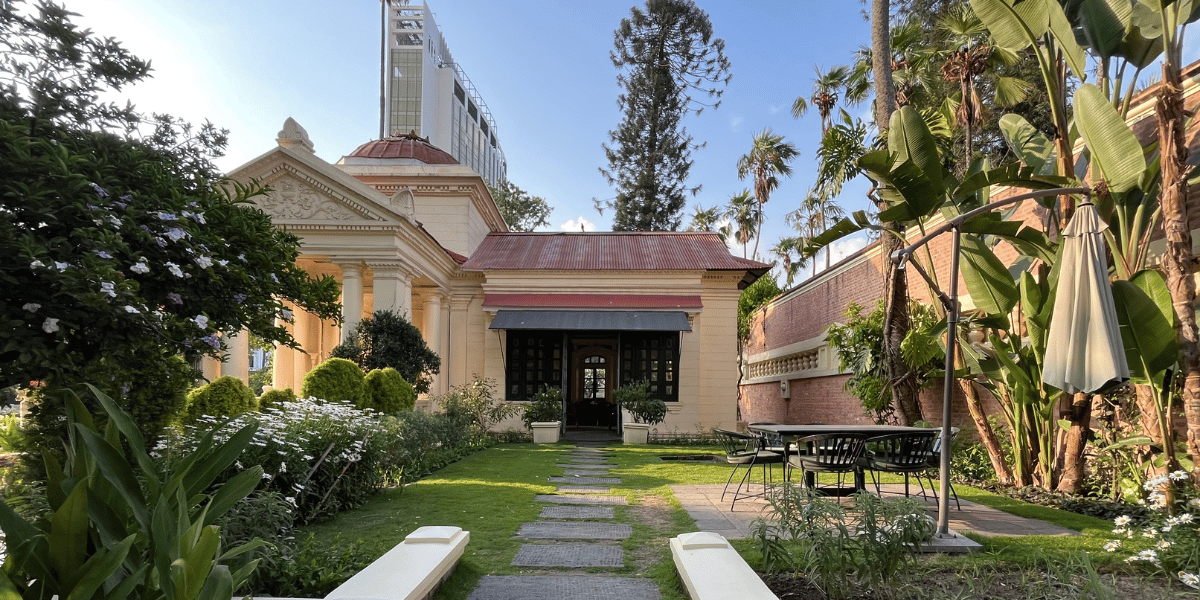
The cafe is located at the historic Bashanta Pavilion and is operated under the management of Basera Boutique Hotel.
You can enjoy several Italian dishes like Pasta, Spaghetti, and Indian dishes like Tandoori Aloo, Murgh Tikka, Dal Makhani, and Biryani.
Other items here include deserts, soft drinks, hard drinks, coffee, cocktails and mocktails, beer, etc., and Nepali dishes like Mo:Mo:, Mustang Aloo, Steam Rice, etc. are also available.
Open Air Theatre
The Open Air Theatre at the Garden of Dreams welcomes private and corporate functions, receptions, cultural programs, and classical concerts.
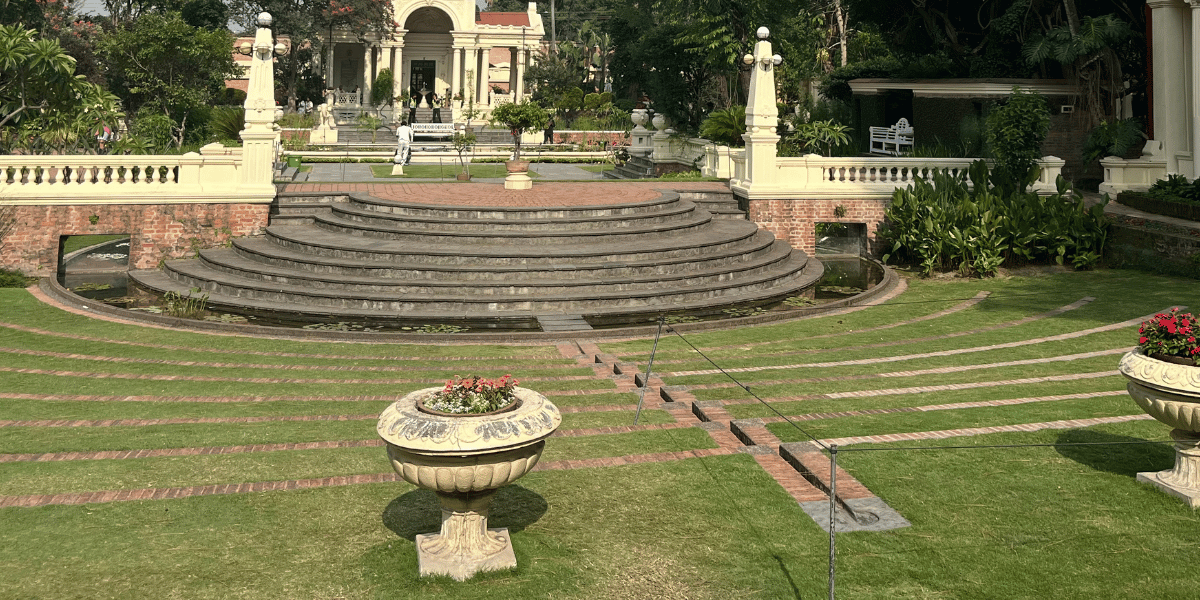
Designed in the style of ancient Greek and Roman amphitheatres, the elegant design blends beautifully with the surrounding landscape and makes a perfect location for photography!
Shivalinga and Water Cascade
Many of you might miss this spot, but it caught my attention!
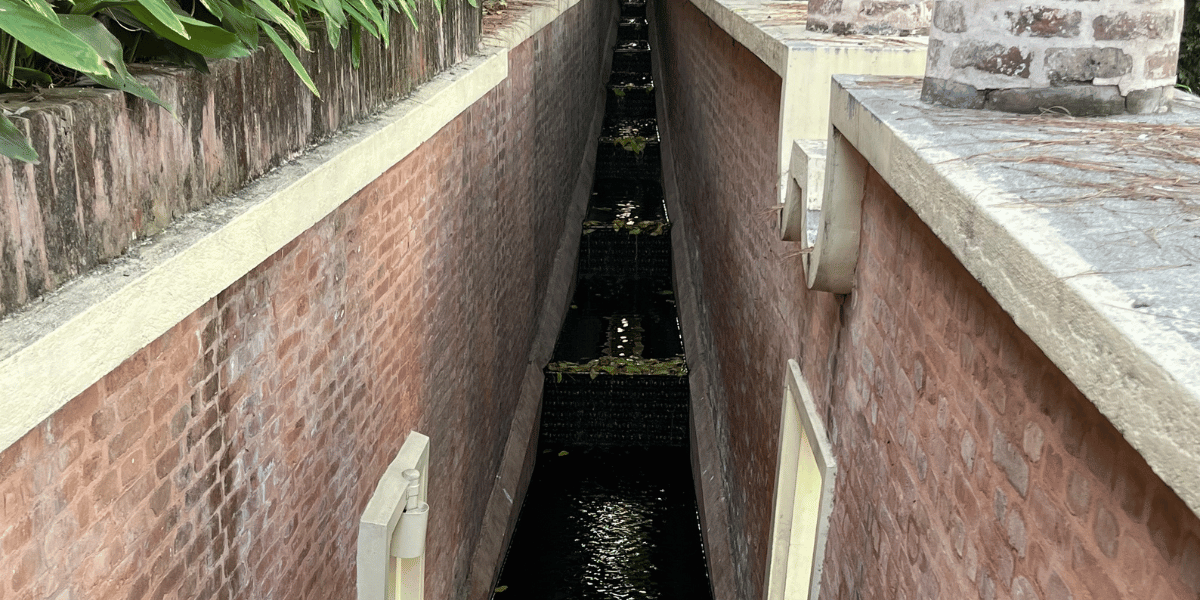
There is a water cascade and a shivalinga just beside the Grishma pavilion. You can hear the gentle sound of water flowing and the shivalinga in front.
This spot is also worth exploring, as you can see and feel a combination of natural beauty plus spiritual symbolism.
Flora and Fauna
If you love trees and flowers, then the Garden of Dreams is home to a wide variety of flora. You can enjoy different types of colourful flowers, shrubs, and trees that enhance the beauty of the garden throughout the year.
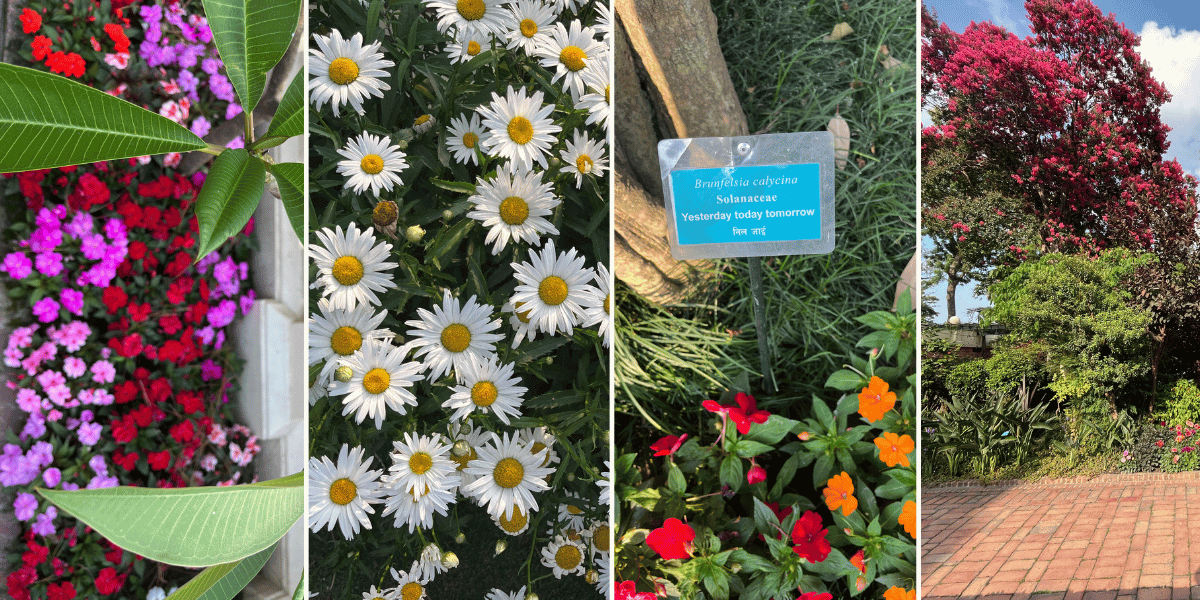
Here’s a list of flora found in the Garden of Dreams:
- Elegant magnolias
- Bird of Paradise (Sworga ki Chari Ful)
- Marantaceae
- Ground Orchid
- Water Lily
- Campaca (Champa Ful)
- Maple (Firfire)
- Maidenhair Tree
- Common Hydrangea (Hanshraaj)
- Flax Lily
- Yesterday Today Tomorrow (Nil Jaai)
- Mexican Sage Bush
- Fragrant-plantain-lily
- Berberidaceae (Jamaney Maantro)
- Capa (Chaanp)
- Paper Flower (Kagajey Ful)
- Calico Flower
Besides these, there are other vibrant orchids, paper plants, and many other unique and beautiful species.
Moving on to fauna, the Garden of Dreams is also home to several birds, insects, animals, and other organisms. The most common fauna here are:
- Birds: sparrows, crows, doves, pigeons, etc.
- Mammals: Squirrels and stray/local cats
- Insects: colourful butterflies, ants, tiny Grasshoppers, bees, ladybugs, dragonflies, different species of spiders, etc.
- Aquatic Life: Koi fish, Gold fish, Swordtail fish, etc.
Entry Fee and Opening Hours
The Garden of Dreams is open every day (Sunday-Saturday) from 9:00 AM to 10:00 PM. You can get last access till 9 PM. With plenty of time, you can explore its beauty at your own pace.
If you are an early bird, you can go for a peaceful morning experience. Else plan for a relaxing afternoon escape. You can also visit in the evening for the golden-hour light.
What suits you the best? Plan according to your schedule and interests!
I personally visited the garden on Wednesday afternoon and stayed till evening. It was really very quiet, and there were only a few visitors in the garden. This allowed me to fully enjoy the beauty of the garden. However, as the day was about to end, the number of visitors was significantly increasing.
Note: The garden remains closed on the day of Vijaya Dashami.
Moving on to entry fees, the ticket price of the Garden of Dreams is different for different visitor categories. Nepalese citizens should pay NPR 150, while foreigners are charged NPR 400.
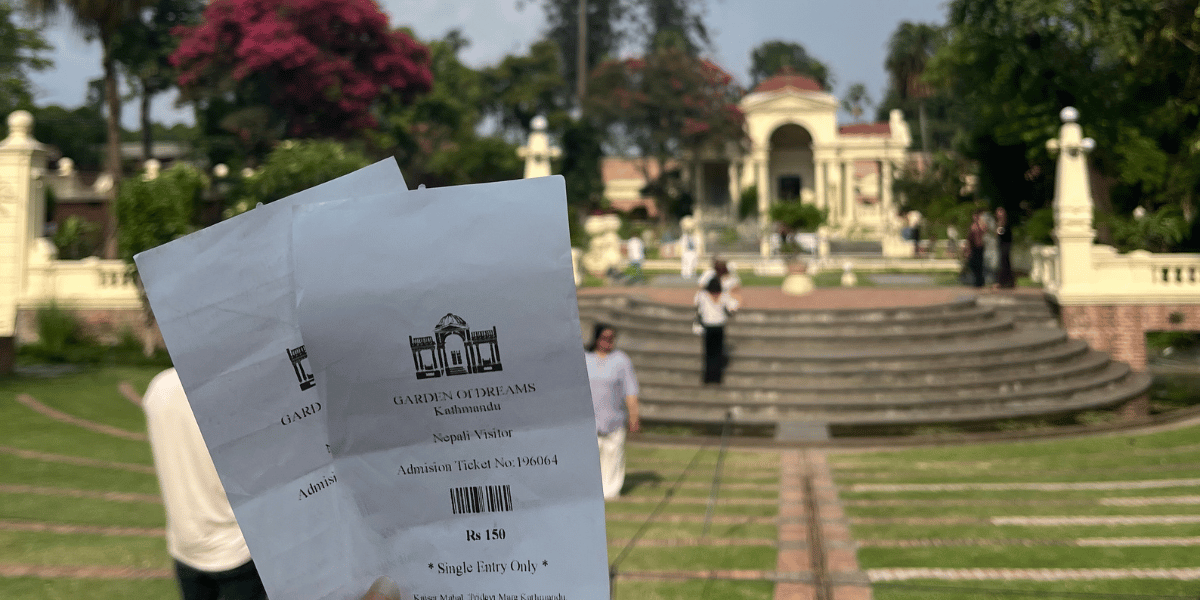
Children below five years of age can enjoy free entry. Likewise, children between the ages of 5-11, senior citizens (above 60), and differently abled visitors can receive a discount of 50% every day.
And if you are in a group of more than 10 people, you can receive a whooping 25% discount!
Garden of Dreams Membership Details
If you want a frequent visit to the Garden of Dreams, the development board also offers memberships for those who are interested.
In comparison to everyday tickets and entry fees, memberships will be far more beneficial for those who are planning to visit the Garden of Dreams more often to escape the hustle and bustle of Kathmandu.
There are a variety of membership schemes that the Garden of Dreams provides. Here are some benefits you can enjoy after having a membership:
- Free entry throughout the year by showing the membership card.
- Free parking on a first-come, first-served basis.
- Regular updates on events, activities, and other developments of the garden.
Annual Membership Fees
|
Membership Category
|
Annual Fee (Per Person)
|
|
Nepalese
|
NPR 3000
|
|
Foreigners
|
NPR 5000
|
|
Corporate Members
(For a group of 10 or more)
|
NPR 2500
|
How to Reach?
Garden of Dreams is located in Thamel (inside the Kaiser Mahal complex) and can be reached very easily, no matter where you're staying.
These are the three options that you may choose from:
- On Foot: If you are staying around Thamel itself, the garden is accessible just by walking. It is just about 3-4 minutes (300-500 meters) away from here.
- By Private Vehicle/Motorbike: Wherever you stay, you can still visit the Garden of Dreams. You can take your private vehicle or motorbike directly to the entrance gate. It will be a hassle-free journey. Vehicles are not allowed inside the garden, so you need to park in the designated parking lot on the Kaiser Library premises for free.
- By Public transportation: If you are travelling on a budget, public transportation will be the best option. You can take a local bus or microbus to Jamal or use a ride-sharing app (to book a motorcycle/taxi) to the entrance directly. From Jamal, you can reach here with a short walk, around 10-15 minutes.
Tips For Travellers After My Personal Visit
After personally visiting the masterpiece, the Garden of Dreams, I noticed several important things that you should keep in mind as a visitor.
Here are a few tips below. These will help make your visit a truly memorable experience.
Be Aware of Rules and Regulations
You can see a list of rules and regulations hanging on the wall near the reception. Do not forget to read them. I will still be sharing some to make it easy for you:
- A ticket means visiting once.
- Do not step in the planter beds and don't touch the flowers.
- Carry only light snacks, soft drinks, and a bottle of water.
- Do not play in the garden, and do not use it as a picnic spot.
- Playing cards are strictly prohibited.
- Videography is not permitted.
- You are not allowed to make loud noises by any means.
- If you have professional cameras or tripods, they are subject to prior approval from the management.
- Do not feed any animals inside the garden, including fish.
- Pets and other animals are not allowed.
Best Time To Visit
The best time to visit the Garden of Dreams is in the evening during spring (March to Mid-June) or autumn (Late-September to Mid-December). Basically, the same time is best to visit Kathmandu.
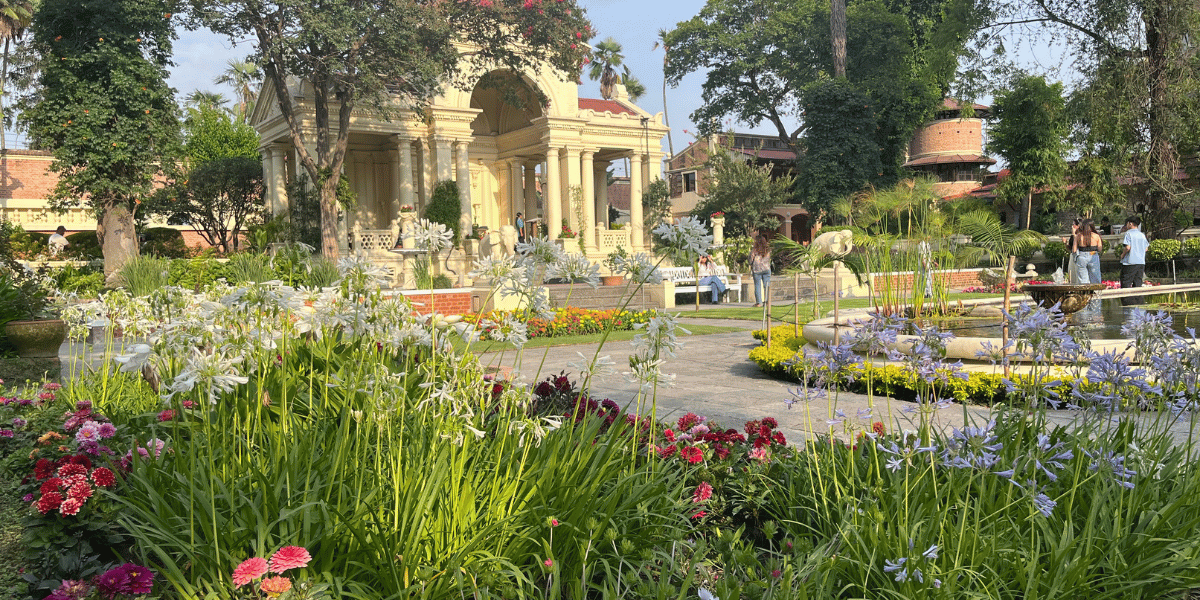
The sunset, pleasant weather, blooming flowers, fresh air, chirping birds, playful squirrels, and the warm golden lights add charm to the garden and create a magical atmosphere.
While the garden is beautiful year-round, these seasons offer the most comfortable experience.
If you wish to avoid the crowds, try to visit during weekdays because weekends are full of visitors.
Dashain and Tihar festivals fall during the autumn season. That means you’ll see a swing built inside the garden during Dashain, and Rangoli made during Tihar.
Best Photography Spots for Perfect Photos
Many blogs won’t mention these things, but I want to pass them here as helpful tips. There are some amazing spots where you can get aesthetic photos:
- Barkha Pavilion: The elegant design of the Barkha Pavilion will create a stunning background for your photo and add extra charm.
- In front of the Open Air Theatre: Here, you can get unique and artistic photos.
- Fountains: These are other spots to take wonderful photos. They’ll likely add a magical touch to your photos.
Beyond this, make sure to pack your essentials like sunglasses, a sunhat, an umbrella, and sunscreen. Don’t just walk; take your time to enjoy the beauty. See the historic pavilions and enjoy greenery.
And if you feel hungry, visit Kaiser’s cafe inside Basanta Pavilion and enjoy the food with a garden view.
Nearby Places to Visit
There are several amazing places near the Garden of Dreams. After you visit here, you can make a visit to other nearby attractions too. Here are a few of the best options:
Kaiser’s Library
Kaiser’s Library is another remarkable legacy of Kaiser Shumsher, so don’t miss it as it is nearby. The library is located just behind the garden.
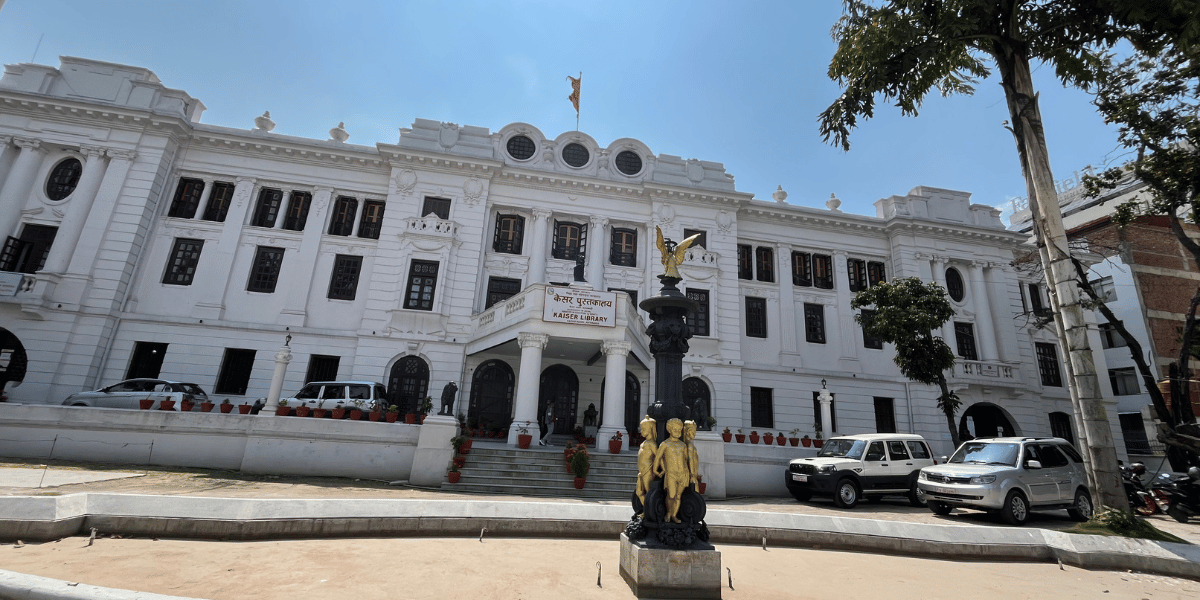
However, there is no direct entrance connecting these two. You need to exit the garden and walk for a minute towards the left.
You will definitely be amazed by the beauty of the library, but don’t shout with excitement, as there are hundreds of students reading there!
Thamel
Thamel is Kathmandu’s most popular tourist destination and a lively hub of activities. The narrow streets of Thamel are packed with restaurants, cafes, souvenir shops, trekking gear stores, travel agencies, and hotels.
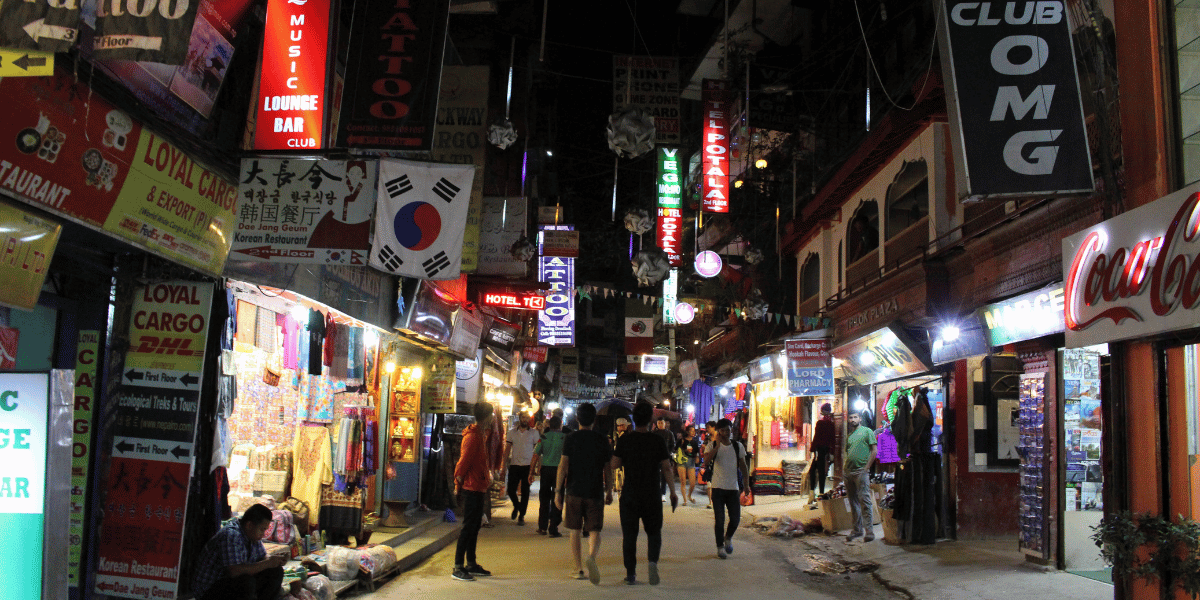
You can come here to experience nightlife, shop for handicrafts, or enjoy international as well as Nepali cuisine!
Narayanhiti Palace Museum
Narayanhiti Museum was once a Royal Palace of Nepal’s monarchy and later opened as a museum that showcases the history of Nepal’s royal family.
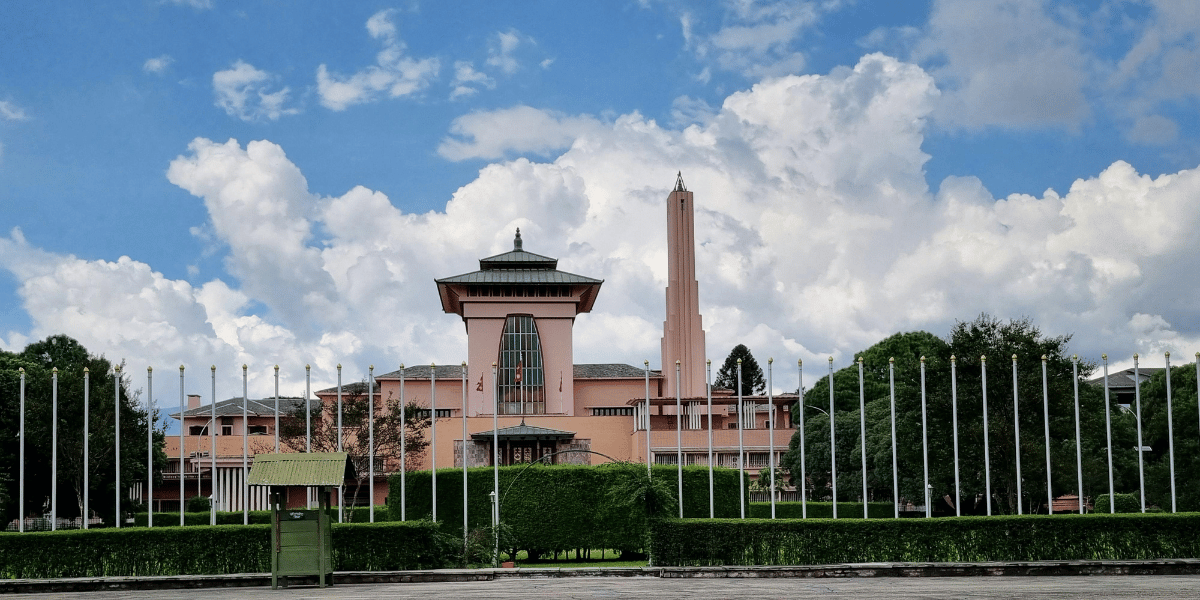
You can make a visit and explore the museum that consists of lavish reception halls, royal chambers, and several historical rooms.
Kathmandu Durbar Square
Kathmandu Durbar Square is just a short walk from the Garden of Dreams. It is also listed as a UNESCO World Heritage site.
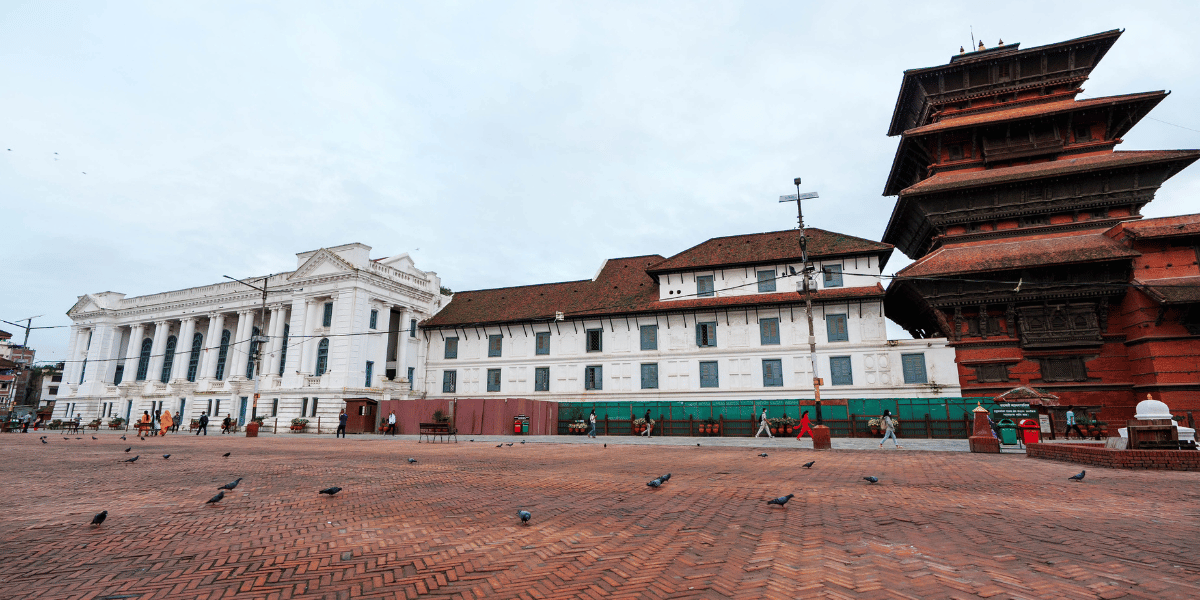
Kathmandu Durbar Square is home to majestic temples, shrines, and traditional Newari architecture. During your visit here, you can even head to explore the Hanuman Dhoka Palace Museum, Taleju Bhawani Temple, Kumari Ghar (where the living goddess, Kumari, resides), etc.
Final Thoughts
Well, my visit to the Garden of Dreams was truly incredible and memorable. The place carries historical, architectural, and natural beauty. You won’t feel like this is a trip to a garden; instead, it will make you feel like a tour to a historical and architectural site.
Therefore, if you are in Kathmandu, don’t hesitate to visit this hidden oasis and experience it for yourself. Explore the garden, walk through the pathways, sit beside the fountains, admire the pavilions, and click some photos.
Most importantly, enjoy the natural beauty and relax in the peaceful surroundings. Your visit will indeed be worthy!



 Altitude Himalaya