



Of all the things about Bhutan that captivated you, we are quite certain that one of them was a beautiful monastery perched on top of a cliff. So before we move on, we want to make this clear: you will find such beautiful sites throughout Bhutan.
The last Vajrayana Buddhist Country, Bhutan’s beauty and faith is unmatched. As you drive from one district to another, you will find that each drive gets more scenic than the previous one.
The ancient fortresses and monasteries are as enchanting as the mountain peaks that you can see from some of the mountain passes that you will cross during your drives in Bhutan. What makes it even better is that you will be surrounded by some of the happiest people, according to their Gross National Happiness report.
Please read the remaining section of this topic to learn more about the places that you will be visiting on your 6-day Best Bhutan Tour Package organized by Altitude Himalaya.
Tachogang Lhakhang, Former Seat of the Five Lamas
In 1433, a saint travelled all the way to Bhutan from Tibet. His name was Thangtong Gyalpo, and to this day his name is widely known as the Iron Bridge Maker in Bhutan. Tachogang Lhakhang is known as one of his living legacies that has continued to attract visitors from all over the world.
As you drive to Thimphu from Paro, you will stop at Tachogang Lhakhang, which is directly above the Paro River. Below the temple, you can see an iron bridge.
Although the bridge was rebuilt after the 1969's flood, the original bridge was built at the exact same spot by the Tibetan Saint. Some of the original iron chains were rescued and had been used in the reconstruction of the bridge.
Later, this site served as the seat of the Five Groups of Lamas who ruled over Bhutan before Ngawang Namgyal defeated them. The Tibetan saint was also known as Lam Chazampa, and to this day the temple is maintained by the Chazampa Order, which was established by Lam himself.
Tashichho Dzong, for the Government and the Monks
Tashichho Dzong has been serving as the official seat of the Royal Government of Bhutan since 1962 after Thimphu was declared as the capital city of Bhutan. The fortified monastery houses administrative offices of the King and some of the ministers.
Built on the banks of the Wang Chhu River, the structure is also important for another reason. It is the main office of the Central Monastic Body in Bhutan, who are the religious authorities of the Drukpa Kagyu Sect.
While the structure was originally built by Lama Gyalwa Lhanangpa in 1216 AD, the lower dzong was rebuilt by Bhutan’s unifier, Nagawang Namgyal. Later, the 13th Druk Desai expanded the area to ensure that both the monks and government officials could fit in the dzong.
When you visit the dzong, you can understand just exactly how grand Bhutanese architecture is and how much emphasis they place on craftsmanship and creativity. Enjoy your tranquil walk around the whitewashed walls that are protected with beautiful golden roofs.
Kuensel Phodrang’s Tallest Buddha Dordenma Statue
Guru Rinpoche once prophesied about the Buddha Dordenma Statue on the exact site, with his exact words being, “to bestow the blessings of peace and harmony in the world.” Today, standing 177 ft tall, the statue is one of the largest sitting Buddha statues in this world.
Buddha Dordenma is located inside Kuensel Phodrang Park, also known as the Buddha Point. The structure is about 2,600 m above sea level and the structure, which is as large as life, can be seen from the city of Thimphu.
Costing about $100 million for its completion, the competition date fell on the 60th birthday of the Great Fourth, King Jigme Singye. The iconic structure, which has about 125,000 smaller bronze Buddha statues within the main statue, is currently maintained by the Central Monastic Body of Bhutan.
Motithang Takin Preserve
The Fourth King of Bhutan made some of the major progressive reforms in his country, and the establishment of Motithang Takin Preserve in the early 1970s was one of them. While it used to be a small zoo before, the Great Fourth established the preserve, as he was against the idea of animals being held in captivity.
Today, the preserve is made up of dense pine forest which gives sanctuary to the wildlife and biodiversity of Bhutan. As its name suggests, you can guess which animal’s preservation the wildlife is dedicated to – Takin, Bhutan’s national animal. However, this does not mean that other animals are not given equal importance.
The Bhutanese authority attends to the health and wellbeing of all the animals inside the preserve, such as takin, sambar, and barking deer. There are numerous walking trails in the vicinity, which you can take to dwell in the beauty of wildlife and nature.
Enjoy your walk as you are blanketed with crisp fresh air, surrounded by the wildflowers and untouched natural beauty!
National Memorial Chorten
The Third King of Bhutan, King Jigme Dorje Wangchuk, was known as the Father of Modern Bhutan. The beloved King passed away in 1972, during his visit to Nairobi, Kenya. The entire country mourned the loss of their beloved king to an untimely death.
In his memory, the Queen Mother Ashi Phutsho Choegron initiated the construction of the National Memorial Chorten in the heart of Thimphu. Even today, visitors from all around Bhutan visit the Chorten to pay respect to the King.
The chorten, which is the central attraction, is not similar to other Buddhist chortens where bodies are contained. Instead, this chorten houses numerous Buddhist images, relics and structures as a representation of the Mind of the Buddha.
And close to the chorten, you can find a shrine with the portrait of the King. Surrounded by well-maintained gardens and smaller stupas, the chorten reminds the people about the King’s life, faith, and deeds.
National Textile Museum
The National Textile Museum was established in 2001 under the guidance of Queen Mother Gyalyum Sangay Choden Wangchuk. The museum’s main purpose was to conserve, preserve, document, and display Bhutan’s textile history.
Out of the 13 traditional arts, which we will look into next, Thangzo (weaving) is one of the most important forms of art and craft. The weaving techniques in Bhutan, which date back to the nomadic era, focused on creating items like clothing pieces and tents using yak wool.
While the purpose and methods of weaving have evolved with time, the museum stands as a time capsule where everything has been traced back to its origin with the intention of preserving it.
The museum has gone above and beyond when it comes to promoting the heritage textile of Bhutan. It hosts annual exhibitions and participates in various international textile exhibitions. So far, over 2000 heritage textiles have been preserved and stored in the museum’s collection.
If you are lucky, your visit will fall on the National Textile/Crafts Festival, which is hosted in the National Textile Museum every year. It gives opportunities for rural artisans to present their creations, creating a platform of representation on the national stage.
National Institute for Zorig Chusum
The National Institute for Zorig Chusum in Thimphu is dedicated to preserving and promoting traditional Bhutanese arts and crafts. It was established in 1971 by Princess Dechen Wangmo Wangchuck as per the order of the Third King.
The institute is the national learning center of the 13 traditional arts and crafts of Bhutan. The 13 types of arts and crafts, also known as Zorig Chusum, consist of Lhazo (painting), Jimzo (sculpting), Parzo (carving), Shingzo (carpentry), Lugzo (bronze casting), Garzo (blacksmithing), Troezo (gold and silversmithing), Tsharzo (bamboo and cane crafting), Dezo (papermaking), Tshemzo (tailoring and embroidery), Thagzo (weaving), Shagzo (woodturning), and Dozo (masonry).
The reason why the Zorig Chusum is preserved is because it has come to become an integral part of the people’s daily lives, religious practices, and Bhutan’s socio-economic development.
This prestigious learning center welcomes Bhutanese students as well as international students, giving them a recognized certificate after the completion of their respective courses.
Dochu La Pass and 108 Druk Wangyal Chorten
Above 3,100 m above sea level, Dochu La Pass is a mountain pass that falls on the highway connecting Thimphu and Punakha. On a clear day, this pass gives you the best view of Gangkar Puensum (7,570 m.), Bhutan’s tallest peak that no one has climbed to this date.
But that’s not all that the mountain pass has to offer. In the same site, you can find 108 Druk Wangyal Chortens. In December 2003, the Great Fourth led a military operation called Operation All Clear against Indian Separatist Militant Groups.
By January 2004, the operation was carried out successfully, and the chortens were commissioned by Queen Mother Ashi to honor the Bhutanese soldiers who lost their lives during the battle. Today, everyone in Bhutan respects and honors this site to remember the significantly important historical event which protected Bhutan’s sovereignty.
Punakha Dzong, the Palace of Bliss
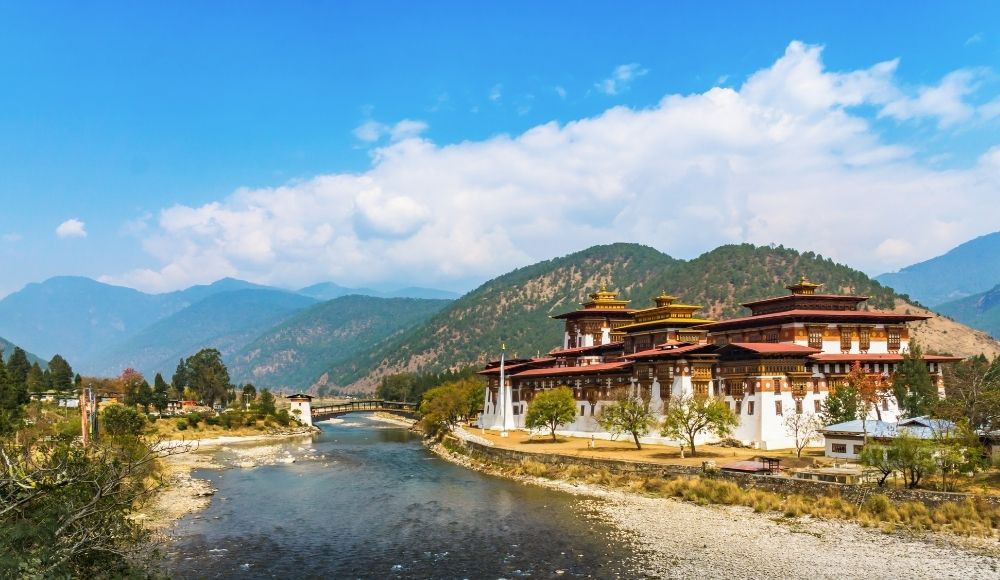
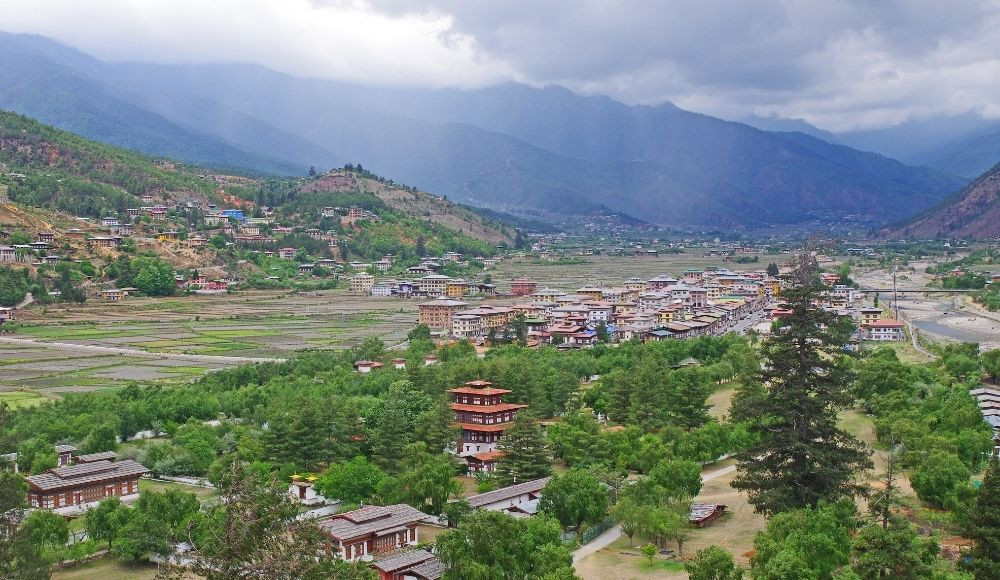
Although all of Bhutan is a blissful place, Punakha Dzong is particularly known as the Palace of Bliss. But once you reach the lush green valley of Punakha and see the beautiful palace at the confluence of Pho Chhu and Mo Chhu rivers, it will all add up.
Formerly the capital city of Bhutan, Punakha is still widely known as the Winter Capital of Bhutan. The dzong is used by the government bodies as the administrative center of Punakha.
It is also one of the most sacred sites in Bhutan, as its construction was already predicted by Guru Rimpoche. It is said that he hid some religious relics in this site as well. Today, the dzong houses the holy remains of Ngawang Namgyal and Pema Lingpa, the famous treasure finder.
Compared to other dzongs and temples, Punakha Dzong is located at a considerably lower altitude, above 1,200 m above sea level, making it one of the low-altitude regions of Bhutan. This explains why the dzong functions as the winter resort of the Central Monastic Body.
Simtokha Dzong
Located south of Thimphu on the way to Paro, you will find the historical Simtokha Dzong, which played a major role in Bhutan’s unification. It was built by Ngawang Namgyal in 1629 to defend himself and the city from invasion attempts by Tsang Desai and the Group of Five Lamas.
You can tell by the architecture of the fortress that it was used as a defensive structure back in the day. The main giveaway of this information is the large watchtower/utse in the center of the dzong’s area.
Given its landscape, the structure of Simtokha Dzong follows a rough shape of the mandala. Apart from serving ancillary functions, the utse also houses the main temple of the fortress, which has the statue of Sakyamuni Buddha inside.
To make it easier to access the temple, the courtyards are adjacent to the temple. It is the perfect place to bask under the sun while watching the monks carry out their daily tasks.
Rinpung Dzong with Zuri Dzong and Ta Dzong
Your visit to Rinpung Dzong is combined with a short hike to Zuri Dzong and Tadzong. Now let’s get into some details about all three dzongs that are located close to each other.
Rinpung Dzong, also known as Paro Dzong, is located on top of a gigantic limestone block which directly overlooks the Paro river, the inspiration for many native poets and writers of Bhutan.
Although the origin of the dzong dates back to times earlier than the 15th century, its present structure was a result of the reconstruction carried out by Ngawang Namgyal. It is one of the largest fortified monasteries of Bhutan.
Built for defence against invasion, the watchtower of the structure strengthened its defensive purposes. The watchtower is known as Ta Dzong. Since its construction, it has been used for different functions (ammunition store, food store, and even a prison). Today, the Ta Dzong is known as the National Museum of Bhutan.
Then just a 20 minutes hike away from Rinpung Dzong, we have the Zuri Dzong. Known as one of the oldest structures of Bhutan, you can easily tell that the architecture of the dzong is notably different from other dzongs that you have read about.
It is because that dzong was built around 1352 AD, with no intention of serving as a defense structure at all. Resembling Tibetan architecture, this dzong was constructed by Gyalwa Lanangpa, a Tibetan Lama.
Taktsang Monastery, Padmasambhava’s Haven
More commonly known as the Tiger’s Nest Monastery, Taktsang Monastery or Tasktsang Palphug, it is one of the most remarkable examples of traditional Bhutanese architecture.
Above 3,120 m above sea level, your hike to the monastery will start at an altitude of 2,600 m, near the parking area. But before you climb the almost vertical cliff, you must know the famed story behind the construction of the monastery.
It is said that Guru Rinpoche, also known as Padmasambhava or the Second Buddha, flew all the way to the monastery on the back of a pregnant tigress. As he was subduing the demons residing in the area, it is said that he was disguised as Dorje Drolo, the wrathful manifestation out of his Eight Manifestations.
After that he meditated in a cave there for 3 years, 3 months, 3 days, and 3 hours. That cave is known as Taktsang Senge Samdup. That cave is the nucleus of the monastery, a major site of pilgrimage for Buddhists all around the world.
As you hike up the cliff, you will be surrounded by some of the most beautiful views ever. With fresh breeze and the purest air all around you, the hike will not feel like a task at all. After you reach the top, enjoy the panoramic view of Paro and take your time to inspect the intricate murals within the Taktsang complex.
Kyichu Monastery by the Great Tubo Emperor
In the 7th century, the Great Tibetan King, King Songtsen Gampo, set out on a quest to build 108 temples in a single day. These geomantic temples were built with a single purpose; to subdue a demoness who was restricting the growth of Buddhism in that particular region.
Out of all the 108 temples he built, two of them fall within the territories of present-day Bhutan; Kyichu Lhakhang and Jambay Lhakhang. These two temples are known as some of the oldest historical records of Buddhism in Bhutan.
The Kyichu Lhakhang consists of two interconnected temples. The oldest structure is known as the Jowo Lhakhang, previously an altar made by the king. It is said that the statue of Jowo Sakyamuni dates back to the time of the Jowo statue in Jokhang Temple and that both the statues were made from similar materials.
The other temple in the vicinity of Kyichu Lhakhang is Guru Lhakhang, the last addition made there. Guru Lhakhang was built in 1971 and contains the statues of Guru Rinpoche and Kurukulla, a female Buddhist deity, also known as Red Tara.
Now that we’ve completed the introduction to all the places that you will be visiting in our 6-days Best Bhutan Tour Package, you can surely agree that this is going to be one of the most amazing trips where you get to interact with untouched nature and unique Bhutanese culture.
But that’s not all! As you can see with all the museums included in the itinerary, this trip is also filled with learning about the history and art of Bhutan. So if you are excited for a sacred refuge from fast moving urban living, then Bhutan is the ideal vacation destination for you.