The border shared between Nepal and Tibet Autonomous Region has made these two countries the best pair to visit together. Historical records show that the friendship between Nepal and Tibet dates back centuries, even before the time when Nepal was unified and Tibet was independent.
This suggests that the travel routes between Nepal and Tibet have existed for a long time. But after the disastrous Tibetan Uprising movement, Tibet was closed off for a while until the 80s.
Later, the region was opened by the Chinese government for tourism, and the roadway between Nepal and Tibet was opened again. Now every year, thousands of pilgrims and tourists travel to Tibet via Nepal.
Nepal, although small in size, is a country rich in natural resources, beauty, and hospitality. You will find the jovial people of Nepal greeting you with a sweet “Namaste” whenever you meet them. These people welcome you to their country and their homes so that you can witness Nepal’s beauty and homeliness while creating lasting memories together.
Tibet, on the other hand, is the Roof of the World, which has the history of being unreachable. The secret beauty and grandeur of the country, although closed for centuries, is now open for visitors to see. Once you enter Tibet, you will learn how their faith has been woven into their daily lives.
Modern and Ancient Ties between Nepal and Tibet
There are many things that Nepal and Tibet share in common. Being neighbors, it is surely expected that many things have been exchanged in the centuries that have passed by. The three major things that exemplify the relation between Nepal and Tibet are Buddhism, architecture, and Mt. Everest.
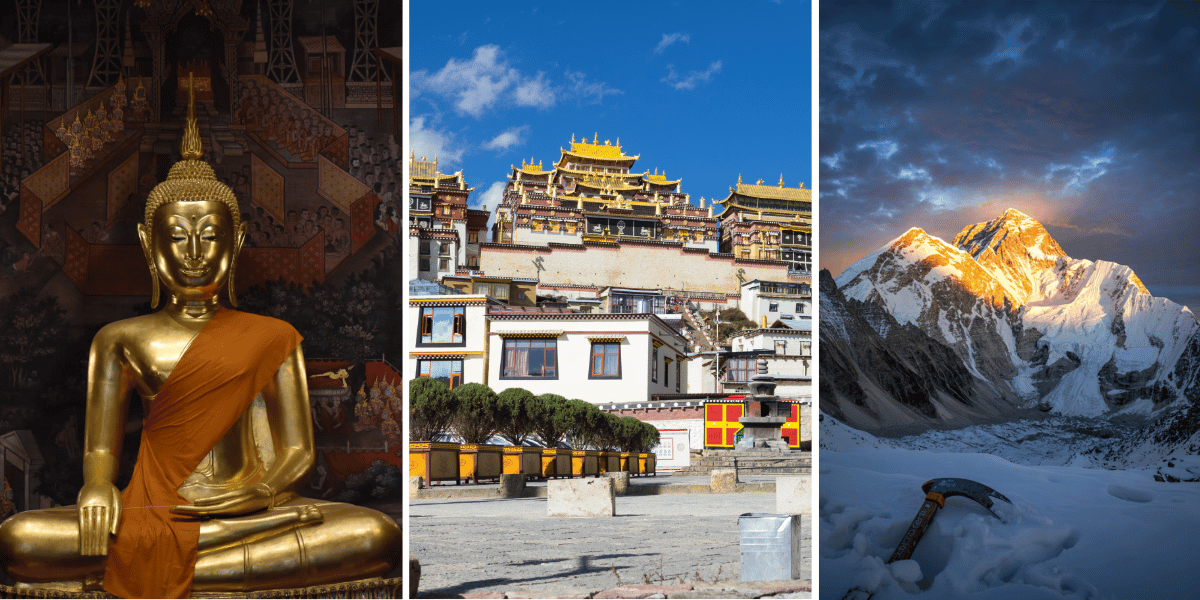
It is said that the Buddhist doctrines written in Sanskrit and Pali had already reached Tibet in the 4th century. But since no one was there to translate or read them, it had to wait till the 7th century to be translated. This was when Tibet was under the rule of King Songtsen Gampo, who sent his ministers to India to learn and write and eventually develop Tibetan alphabets.
The translations were followed by his marriage to Princess Bhrikuti of Nepal. Princess Bhrikuti and Princess Wencheng, two brides of the king, became the greatest influencers of the growth of Buddhism in Tibet, a country previously dominated by the Bon religion. After that scholars from Nepal and India were invited to Tibet to translate the scriptures and doctrines.
Looking at the historical sites of Tibet, it seems like faith and literature were not the only forms of art that were shared between Nepal and Tibet. Another form of art travelled all the way to Tibet, and that was Nepalese architecture.
One of the most notable Nepalese figures is the ancient architect Araniko, who led a team of Nepalese artisans to Tibet and then China. He introduced the stupa and pagoda structure in Tibet. Furthermore, Newari artisans from Nepal went to Tibet and their works are still displayed in the wooden carvings of the palaces and temples.
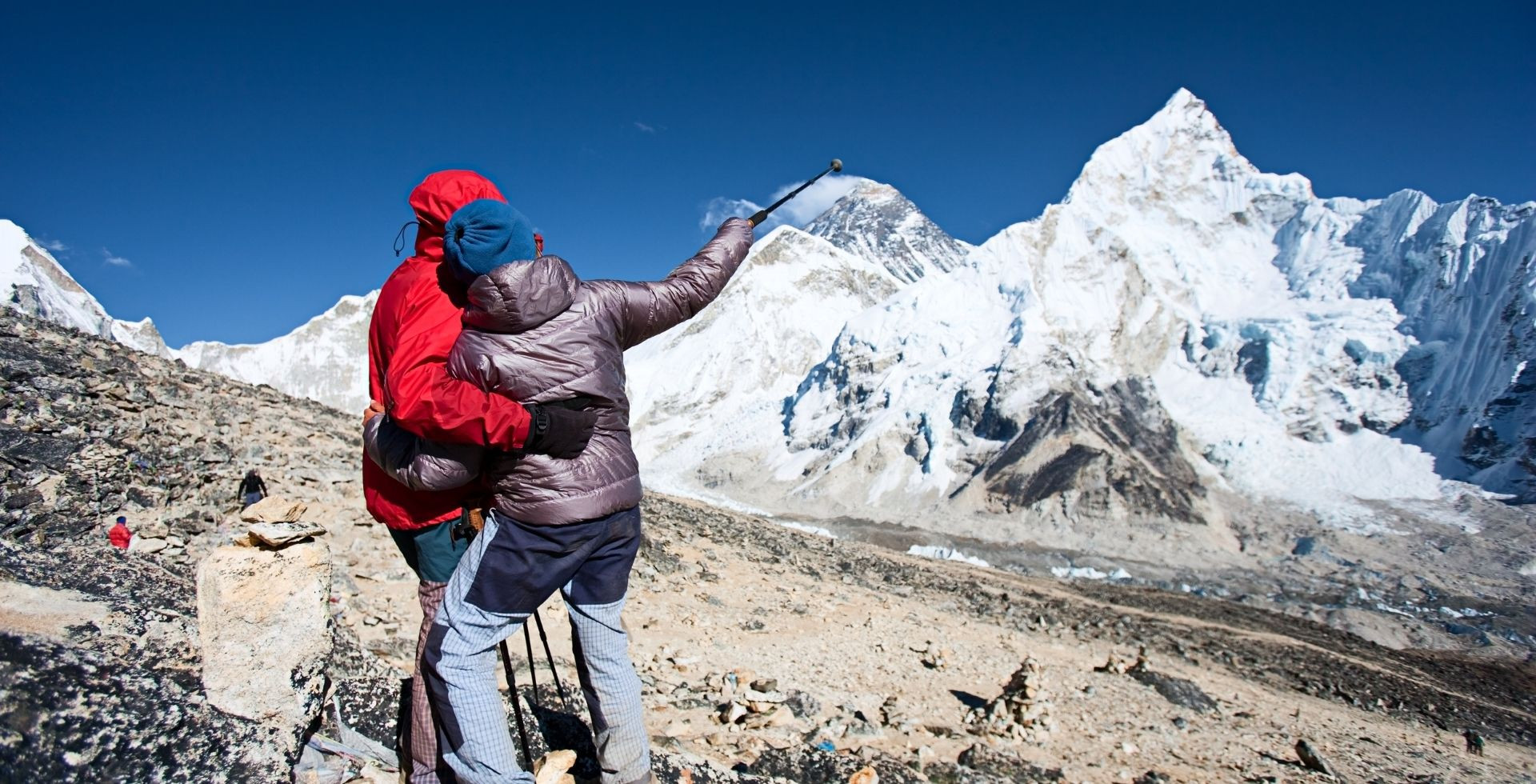
While Buddhism and architecture were a part of cultural exchange, the world’s tallest mountain, Mt. Everest, is a geographical wonder that falls between the majestic himalayan ranges that Nepal and Tibet share.
Both the countries offer their own route to the Everest Base Camp (EBC), and the differences in the routes are evidently distinct. While in Nepal, where you have the South EBC, the only way to reach there is by trekking that definitely lasts longer than a week, an ideal choice for the adrenaline junkies.
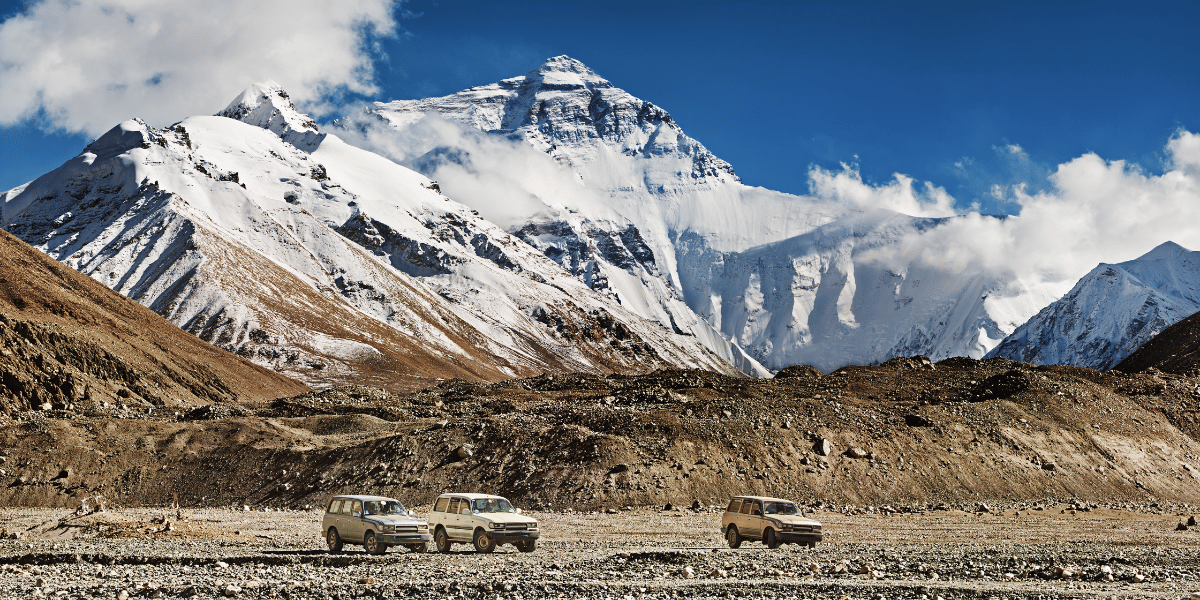
As for Tibet, the most you’ll have to do in order to reach North EBC, is to get in a car for a couple of hours and walk a really short distance to the main base camp from your drop off point. In that sense, the base of Mt. Everest is far more accessible from the Tibet side, as long as one has a Chinese visa and Tibet Travel Permit.
Now that brings us to the main point: visiting Tibet through Nepal. Given their close proximity and the infrastructures that have been provided to promote tourism, taking this route for your trip in Asia can be unexpectedly eye-opening and memorable.
Documents to Travel to Tibet and Nepal
But every vacation comes with a long list of paperwork, and here is some more information that is essential for you to know before you decide to take this trip.
Nepal Visa
Citizens with ordinary passports from these countries must obtain their visa prior to their arrival in Nepal: Afghanistan, Cameroon, Ethiopia, Ghana, Iraq, Liberia, Nigeria, Palestine, Somalia, Swaziland, Syria, and Zimbabwe.
The remaining countries are eligible for visas on arrival.
As for citizens with ordinary passports from these countries, they can obtain a free visa for 30 days: Bangladesh, Bhutan, Maldives, Pakistan, and Sri Lanka.
Indian nationals do not need a visa to visit Nepal.
Chinese Visa
According to China’s latest update on its Unilateral Visa-Free Policy, here is a list of countries whose citizens with ordinary passports do not need to apply for a Chinese visa if they wish to visit China for no less than 30 days for the purpose of business, tourism, or family visits:
Germany, France, Italy, Netherlands, Spain, Switzerland, Ireland, Hungary, Austria, Belgium, Luxembourg, New Zealand, Australia, Poland, Portugal, Greece, Cyprus, Slovenia, Slovakia, Norway, Finland, Denmark, Iceland, Andorra, Monaco, Liechtenstein, South Korea, Brunei, Bulgaria, Romania, Croatia, Montenegro, North Macedonia, Malta, Estonia, Latvia, Japan, Brazil, Argentina, Chile, Peru, Uruguay, Saudi Arabia, Oman, Kuwait, Bahrain and Sweden.
Additionally, China has also added a few more countries to the list of countries whose citizens with ordinary passports are eligible for visa-free transit for up to 240 hours (10 days):
Austria, Belgium, Czech Republic, Denmark, Estonia, Finland, Germany, France, Greece, Hungary, Italy, Latvia, Luxembourg, Lithuania, Iceland, Netherlands, Malta, Poland, Portugal, Slovenia, Slovakia, Spain, Switzerland, Sweden, Monaco, Russia, United Kingdom, Ireland, Cyprus, Bulgaria, Belgium, Romania, Ukraine, Croatia, Serbia, Bosnia and Herzegovina, Montenegro, North Macedonia, Albania, Belarus, Norway, United States, Canada, Brazil, Argentina, Canada, Chile, New Zealand, Australia, South Korea, Japan, Singapore, Brunei, United Arab Emirates, and Qatar.
However, citizens from countries like Bangladesh, India, Sri Lanka, Nepal, and Vietnam have to apply for a Chinese visa from the Chinese Embassy of their respective countries. These countries may have higher risks of visa rejection if they apply from abroad or may have to show extra papers regarding their proof of return to their homeland.
Tibet Travel Permit
A Chinese visa alone is not sufficient for you to enter the Tibet Autonomous Region. With its turbulent political history, the Chinese government claims that it is essential to monitor the movement of foreign, non-Chinese nationals within Tibet and China.
In addition, Tibet is also a high-altitude destination where many might experience severe altitude sickness if they aren’t prepared or if they rush their travel around places with different altitudes.
While weather related disasters are rare, rescue operations are always on standby, and in cases of emergencies, documenting their visits makes the process easier.
Lastly, the entire Tibet Autonomous Region is ecologically sensitive. Because the region has preserved the glaciers and mountains, it is important to monitor human activities in the region.
Therefore, if you are not a Tibetan or a mainland Chinese citizen, you will need the Tibet Travel Permit that is issued by the Tibet Travel Bureau in order to enter Tibet.
How to get a Tibet Travel Permit?
The Tibet Travel Permit is mandatory for everyone apart from Tibetans and mainland Chinese citizens. You can only apply for it through a licensed travel company in Tibet.
It is not possible for one to visit Tibet individually without joining a travel group led by a licensed guide.
Note: The permit is a separate document; it is not provided in your passport.
Benefits of Travelling from Nepal to Tibet
When you travel from Kathmandu to Lhasa, you will be taking the Sino-Nepal Friendship highway, entering Tibet through the Rasuwa border of Nepal. While there are other routes, the road conditions and the well established infrastructure present in the Rasua-Kyirong Border make it the best choice.
A Little Bit of History
The road to Lhasa from Kathmandu has been one of the major routes to travel to Tibet for centuries.
If you don’t believe this statement, you can visit the Pakba Lhakhang at Kyirong/Gyirong town. It is a small monastery which can be clearly distinguished because its features clearly resemble Nepalese architecture.
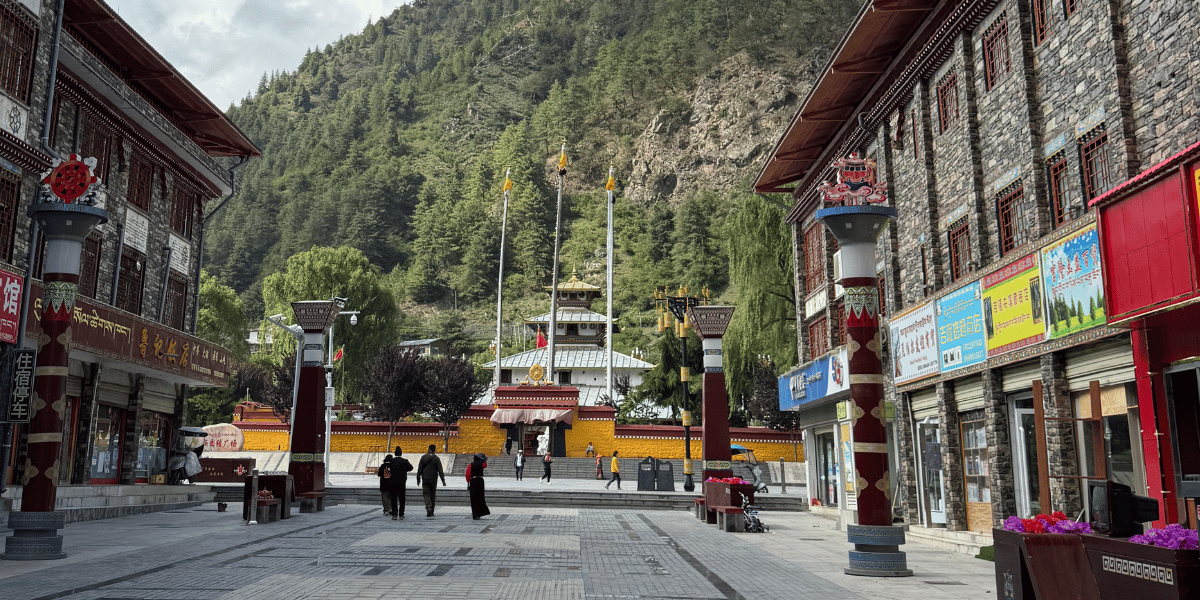
It was built in the 7th century by King Songtsen Gampo for his Nepalese bride, Princess Bhrikuti, to mark the road that she would take on her way to Tibet.
Stories also mention that Guru Rinpoche travelled to Tibet through Nepal, although the route he took has not been confirmed yet. Both Princess Bhrikuti and Guru Rinpoche played an integral part in taking Buddhism to Tibet, and this would not have been possible without this route.
Furthermore, this route has served as the trade route between Nepal and Tibet for over 2000 years. Back then Tibet, China, and Mongolia were independent countries, and the Silk Road made it possible for Nepalese to participate in trade with these countries.
Eventually, the road to Nepal from Tibet was named the Tea and Horse Route. Merchants brought salt, gold, and wool to Nepal via this border. This was how the economic and religious ties were fostered, making the relationship between Nepal, Tibet, and China one of the oldest bilateral relationships.
Culture and Nature on the Way to Lhasa
Now that the historical importance of this route has been covered, we cannot overlook the culture and natural beauty that can be seen on the way from Nepal to Tibet.
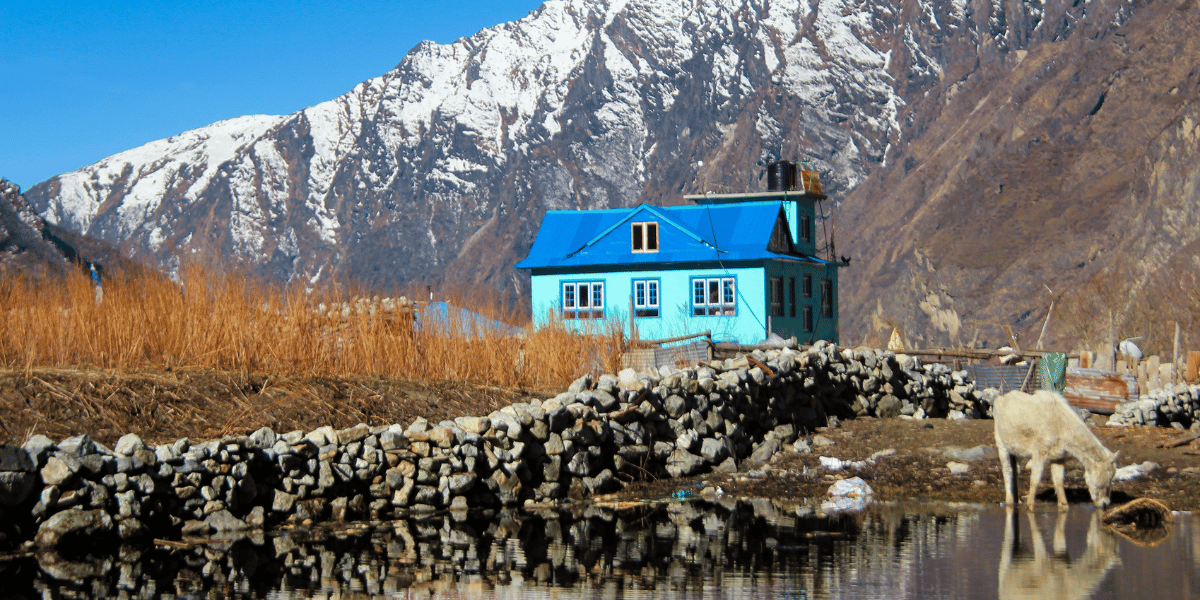
Once you reach Rasuwa, you will find that the area is inhabited by indigenous communities, consisting mainly of Tamang, Sherpa, and Gurung people. These communities have their own unique languages and cultures, different from what you see in the cities.
On your short visit, you can find small ways to immerse yourself in their lifestyle. This can be done by understanding their local traditions and supporting local artisans.
Not to mention, you might also notice the difference in food after you reach Rasuwa. If possible, do try the yak cheese made by the locals there.
The drive from Nepal to Tibet will offer you some of the most splendid scenes of the natural beauty in both Nepal and Tibet.
People often visit Tibet for this particular reason: To discern both sides of the mountain ranges that lie in the borders of Nepal and Tibet, the North EBC being the most famous site.
Blessed with natural beauty, Rasuwa district has a vast resource of alpine forests and wildlife. It is also a major destination for those on their way to Gosainkunda Lake and Langtang Valley.
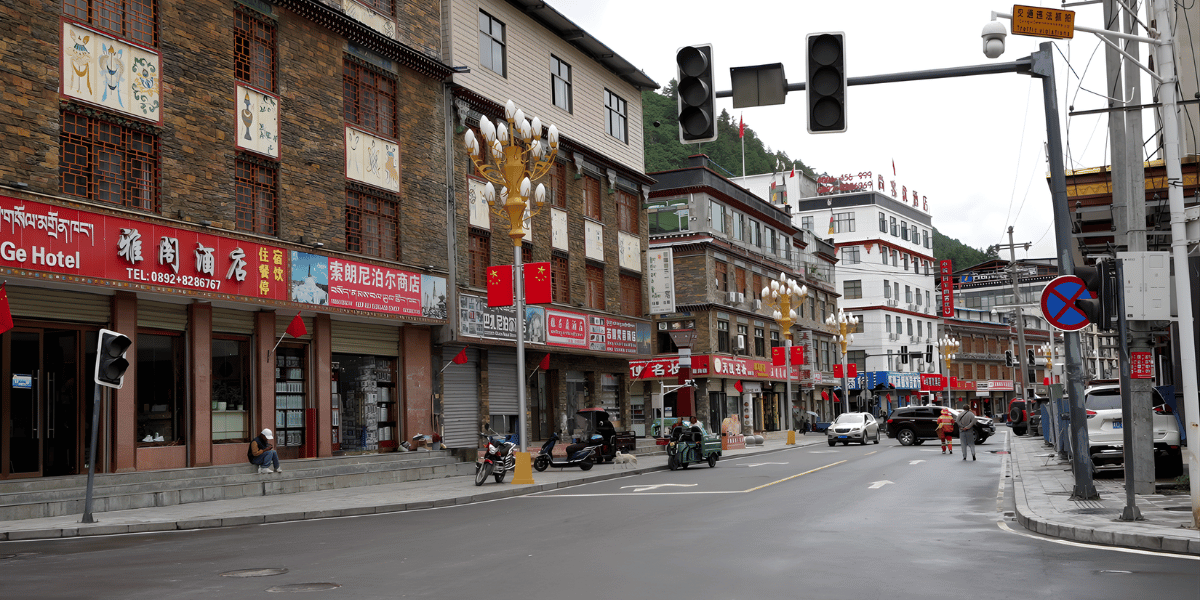
Across the border, the town of Kyirong is an equal competitor against Rasuwa when it comes to beauty and culture. Known as the Backyard Garden of Mt. Everest, the weather is warmer than Lhasa and a short walk around the town will never fail to leave you refreshed.
The vibrant culture that you will see along the way will help you understand more about the cultural exchange between the people who live near the borders. Don’t be surprised if you see similar dishes on your menu. Food and drinks like yak cheese, yak meat, and butter tea are staples in the regions of both countries that are close to the mountains.
Another major reason that people take this route is because of the time. It only takes about 6 hours to reach the Chinese border from Kathmandu.
For the visitors who do not wish to waste their time on layovers (when direct flights are unavailable), the Rasuwa-Kyirong Border can be the most time-friendly and convenient route to Tibet.
Routes from Nepal to Tibet
Although the majority of the people take the roadway from Kathmandu to Lhasa, we cannot neglect the convenience offered by flights from Nepal to Tibet.
In this section, both of the travel mediums have been explained. We leave it up to you to weigh the differences and make a sound decision based on your preferences.
Flight from Nepal to Tibet
The direct flight from Kathmandu to Lhasa takes about 1.5 hours. Currently, the only airline operating direct flights from Kathmandu (KTM) to Lhasa (LXA) is Himalaya Airlines. They have regular flights to Lhasa on Mondays and Fridays.
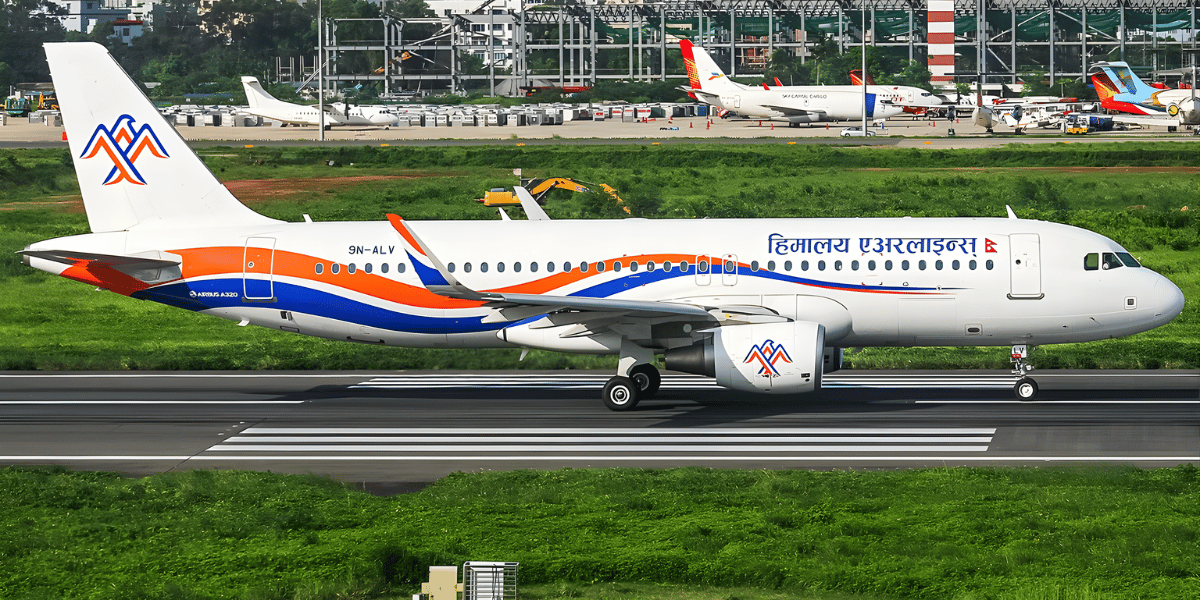
In peak tourist season, they operate direct flights on other selected days in a week as well.
Another flight from KTM to LXA is operated by Air China. However, the flight connects from Chengdu in China. This means that it could take you more than 5 hours to reach Lhasa.
Roadway from Nepal to Tibet
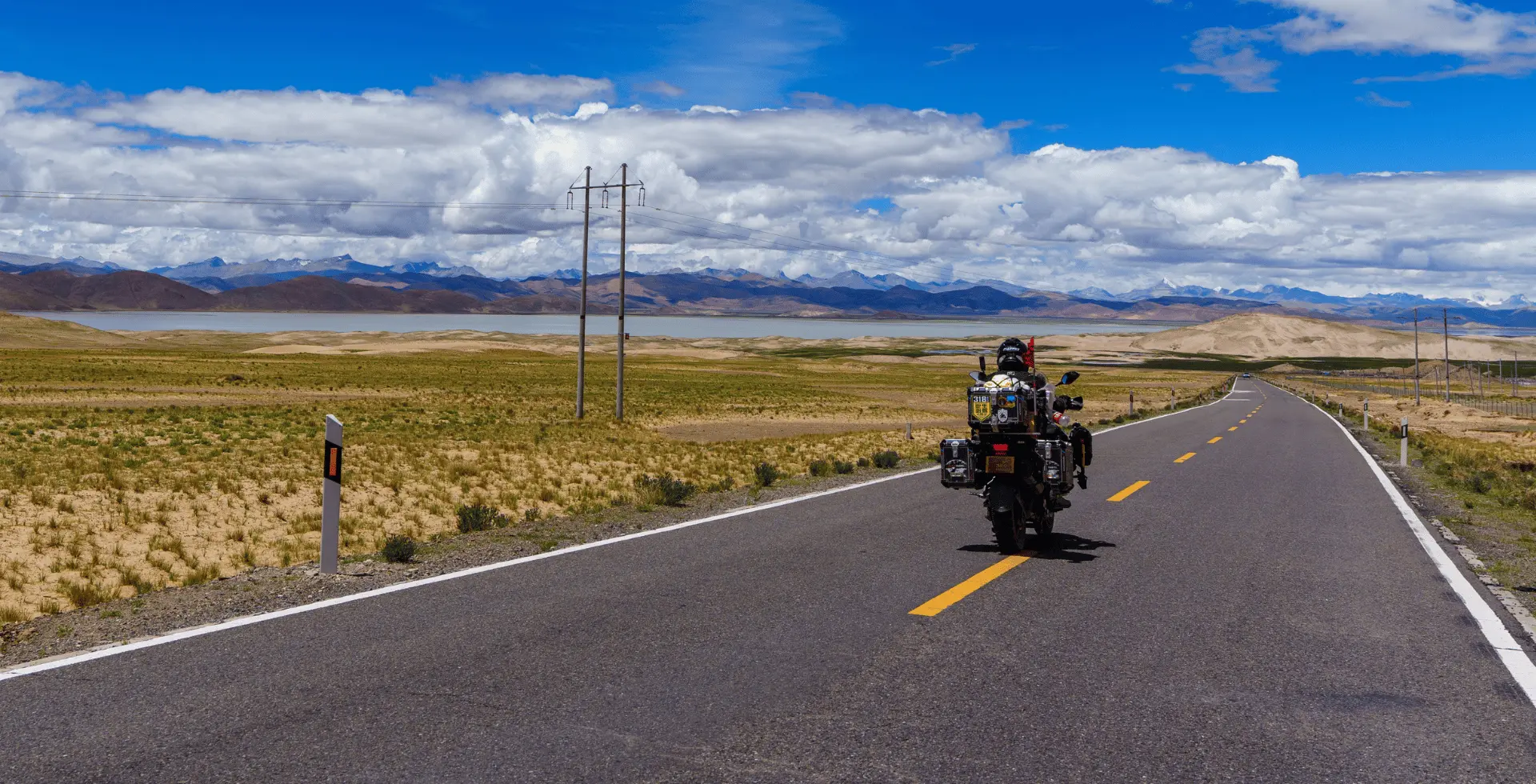
If you travel to Tibet via the Sino-Nepal Friendship Highway, it will take you about 7-8 hours. This can be one of the best ways to travel to Tibet, given you leave Kathmandu early in the morning. And that is how our itineraries to Tibet by road are made.
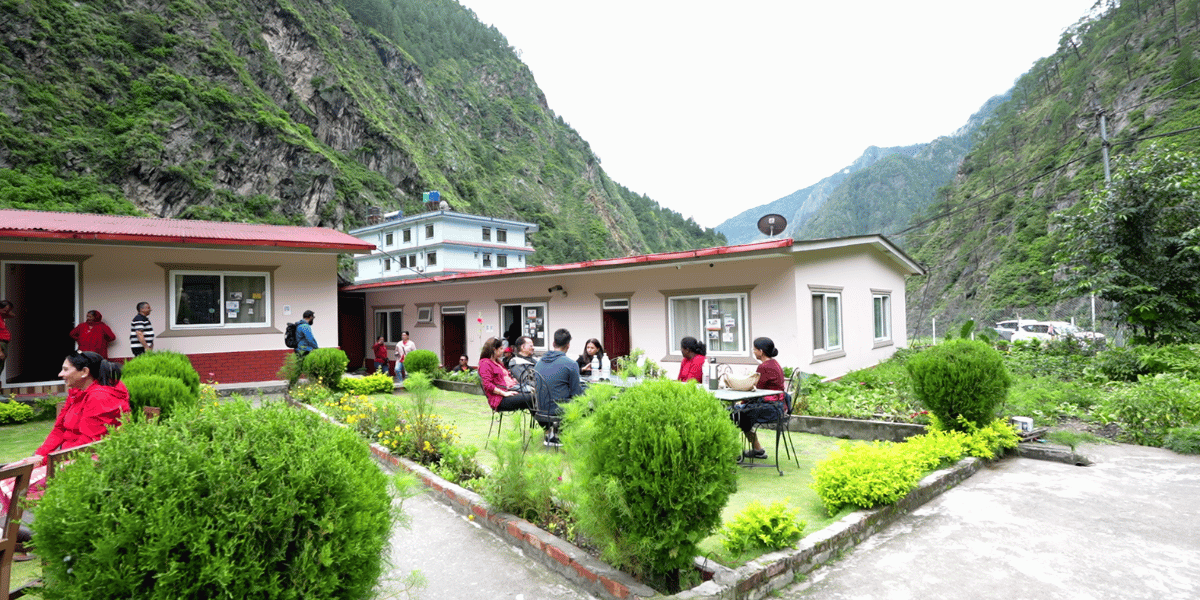
The drive will start from Kathmandu and will pass by Bidur, Dhunche, Syaprubesi, and Timure. After crossing these towns, you will reach the Nepal-China Border.
Once you complete the immigration formalities at the border, you will enter Tibet and reach Kyirong. Most of the groups going to Lhasa and Mount Kailash depart from here, making the town a tourist hub.
Apart from the saved time and astonishing views on the way, there is another advantage of going to Tibet by road. In Rasuwa, places like Dhunche and Syaprubesi are at an elevation higher than 2000 m above sea level.
As you drive to Rasuwa while making required stops on the way, your body will gradually acclimatize to the rising altitude. This will make it easier for you once you reach Lhasa, which is at an elevation of 3650 m above sea level.
Best Time to Visit Nepal and Tibet
The peak tourism seasons in Nepal and Tibet fall around the same time of the year, and that is one more reason why you should visit these two countries together.
May to November is known as the best time to visit both the countries. While the monsoon can be a little harsh in Nepal, rainfall in Tibet is generally lighter. Given below are the details regarding the seasons in Nepal and Tibet.
Nepal
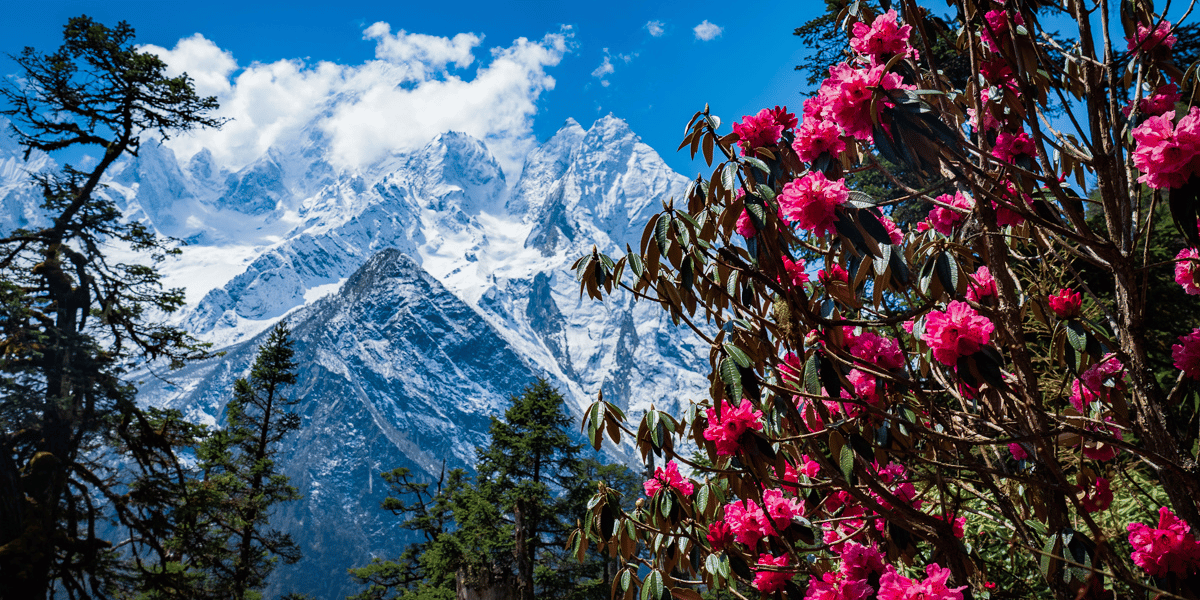
Provided below is a table that has simplified Nepal’s seasons along with the descriptions that you may refer to before planning your visit to Nepal.
|
Seasons
|
Description
|
|
Spring (March - May)
|
Spring in Nepal is the most ideal time for you to visit. The winter will just have ended when you land in Kathmandu and you will be greeted with clear skies and colorful flowers blooming almost everywhere in the country. It is also one of the best seasons to go trekking to the Himalayan ranges. Make sure to carry a light jacket if you feel cold.
|
|
Summer (June - Mid-July)
|
Summer can be a little humid in the valleys and the hills of Nepal, with the temperatures ranging between 27℃ to 30℃. However, it can be pretty hot in the lower belt, Terai. Wear clothes made from breathable fabrics to travel around comfortably.
|
|
Monsoon (July - August)
|
Nepal’s monsoon can be quite heavy, and you might find few regions to be humid, especially the Terai region. Rainfall in the hills is also frequent but then again, being surrounded with greenery will make you embrace the rain. However, when it comes to the Trans Himalayan Belt. rainfall is very minimal there, making it the perfect season for treks around places like Upper Mustang and Nar Phu Valley.
|
|
Autumn (September - October)
|
This is, no doubt, the best time to visit Nepal. Temperature throughout the country is pleasant, accompanied by cool breeze. It is also the season in which the biggest festivals of the country fall under. If you want to explore Nepal’s culture and nature at once, this is the perfect season. Autumn is as good as spring when it comes to trekking.
|
|
Winter (November - February)
|
No matter how harsh the winter gets in Nepal, there is one thing for sure, the Nepalese people enjoy it. The number of visitors is quite low compared to other seasons. While it is cold throughout the country, heavy snowfall starts gracing the mountains around late winter. Make sure to stay warm if you are in Nepal around these months.
|
Note: If you plan on trekking in Nepal, please note that the mountains are cold throughout the year. Make sure to pack your trekking gear accordingly.
Tibet
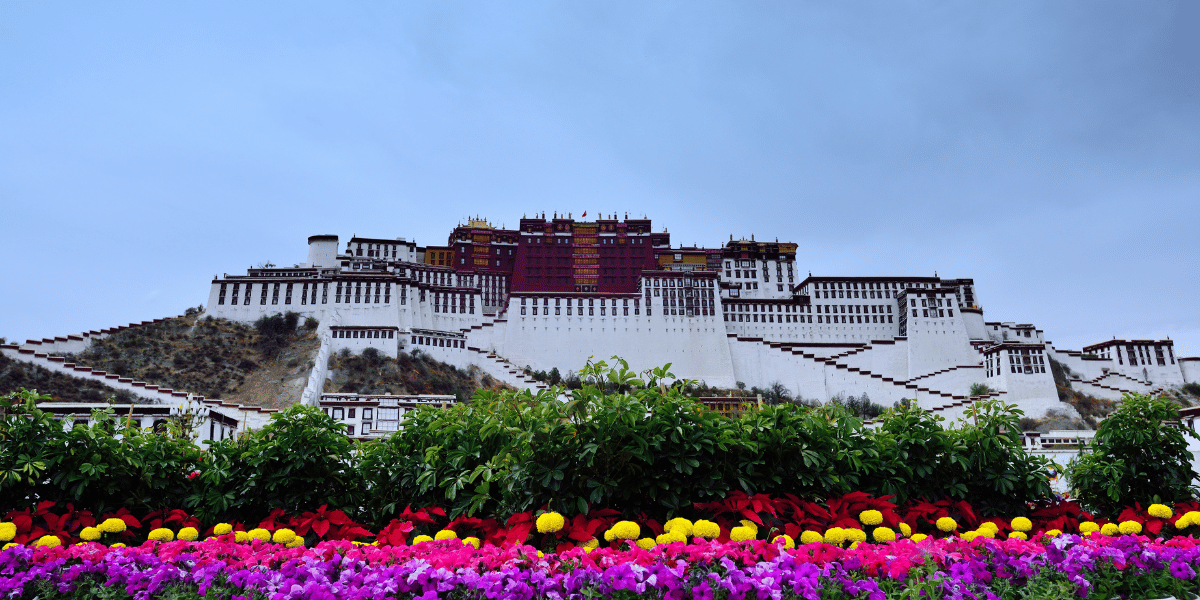
Before we begin this section, you need to know that each season affects different regions of Tibet. The table below is provided to give you a general idea about the weather in the major cities of Tibet like Lhasa and Shigatse.
|
Seasons
|
Description
|
|
Spring (March - May)
|
While the temperature in Tibet starts rising around March, the overall beauty of spring in Tibet can be seen around April. The tourist season picks up around this time as the sky is clear and the views of the mountain ranges are much better. The days are generally warm, around 25℃, but the nights can get chilly as usual. Don’t forget to enjoy the Saga Dawa Festival that falls in May.
|
|
Summer (June - July)
|
This is the busiest tourist season in Tibet. Many mainland Chinese citizens visit Tibet for a cool summer getaway. Since the average temperature in summer is still low, considering that Tibet is located at a high altitude, many foreigners visit Tibet at the same time. It is a beautiful season, the time when most of the monasteries organize the annual Cham Dance.
|
|
Monsoon (July - August)
|
Monsoon in Tibet starts around mid-July, but you don’t have to worry if you’re visiting the cities as the rainfall is pretty light. Even better, it rains lightly, mostly at nighttime. However, August is when the rain gets heavier (130mm average) and might affect plans for those in the southeastern region of Tibet.
|
|
Autumn (September - November)
|
Similar to Nepal, Autumn is one of the best seasons to visit Tibet. Around September, the rain decreases and the climate becomes quite pleasant. You will be surrounded by beautiful golden forests while driving to your sightseeing destinations. While the days are warm and dry, the temperature at nighttime can be freezing.
|
|
Winter (Late-November - February)
|
If you visit Tibet in the winter, you will come across very few visitors, as the temperature is freezing cold. However, it is the best choice for budget travellers as the ticket fees for some of the major sites are decreased. Winter can also be a great choice if you are into birdwatching; make sure to visit Lalu Wetland and Yamdrok Lake.
|
Note: It can get cold at nighttime even during the summers. So make sure to carry thermal innerwear and windproof jackets. Higher altitude also means greater sun exposure, so make sure to carry sunglasses and sunscreen.
Learn More: Best time to Visit Tibet
Nepal Tibet Travel Tips
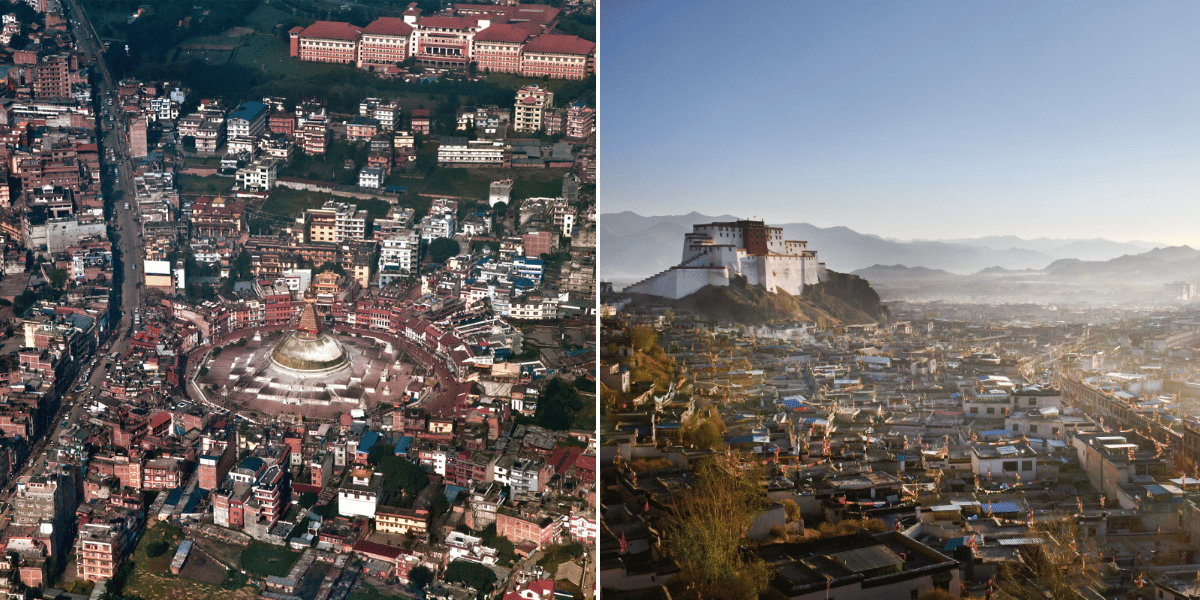
Here are some things that you need to know about before travelling to Tibet from Nepal:
- Brace for some bumpy ride while driving from Kathmandu to the Rasuwagadhi (Nepal-China) border if you are travelling to Tibet by road from Nepal. After the border crossing, the road is nicer.
- You will have to stay a night on Nepal's border; the stop will be made at Dhunche, Syaprubesi, or Timure. This is done because the immigration process is time consuming at the border.
- You need to wake up early on the day of the China border crossing from Nepal, because it can take some hours to complete the immigration process.
- Carry a jacket for the road, as the temperature gets colder as you reach high-altitude places.
- Acclimatization should not be taken lightly, so we suggest you go at a slow pace following the itinerary. By entering Tibet via the Rasuwa/Kyirong border, spending a night in Kyirong before resuming the journey can help you acclimatize for your remaining Tibet tour.
- Carbs over protein. Make sure that your food is rich in carbohydrates, as it helps you to stay warm and avoid indigestion during the trip. It will energize you for the short hikes that are a part of your sightseeing.
- If you feel motion sickness during the drive, don’t hesitate to inform the driver.
- Please respect the political sensitivity of the region and refrain from making any remarks about the Dalai Lama and the presence of Chinese troops in China. Such actions can result in unwanted probes by the authority. Do not carry the images of the Dalai Lama, even on your phone.
- Although travel insurance is not generally required for travelling to Tibet, we highly suggest you to get one which has coverage for high altitude travel.
Our Packages from Nepal to Tibet
At Altitude Himalaya, we have two main packages that are designed to take you around Nepal and Tibet.
- Nepal Tibet Tour: Lasting for 14 days, our Nepal Tibet Tour package takes you around the major sightseeing destinations of Nepal and Tibet. In Nepal, you will spend your days in the major tourism cities: Kathmandu and Pokhara. After reaching Tibet, you will visit the major cities of Lhasa and Shigatse. This package is the best option for you if you want to visit the most peaceful places with a strong presence of spirituality and natural beauty.
- Best Nepal Tibet Tour: This package is a slightly longer version of the package mentioned above. Lasting for 17 days, after finishing the major attractions in Nepal and Tibet, the special addition here is the visit to North EBC. If EBC is on your bucket list, this is the perfect chance for you to grab this opportunity.
We also have various exciting packages designed particularly for Tibet, and as always, we are open for customization of these packages based on your preferences.
If you can stretch your time, I would highly recommend you add Bhutan into the mix. It would be an even better opportunity to explore the Himalayas and learn more about the interconnected culture between Nepal, Tibet, and Bhutan.
Make Your Trip More Adventurous
If you wish to extend your stay in Nepal or Tibet, then our wanderlust family has more adventurous activities waiting for you:
- Fly across the sky of Pokhara and enjoy the view of the city, the hills, and the mountains. To learn more, visit Paragliding in Pokhara.
- Remember how mad honey took over the internet? Now you can join the indigenous communities of Nepal and go honey hunting with them. To learn more, visit Honey Hunting Nepal.
- While Namtso Lake and Yamdrok Lake are located near Lhasa, Lake Mansarovar is on the southwestern side of Tibet. Please visit Kailash Yatra to add any package of your choice to the existing package.
You can always reach out to us if you want to add any of these activities to your package.
Final Thoughts
To sum it up, Nepal and Tibet are two of the most underrated gems of Asia, and many regions in these countries often go unnoticed. Your travel experience should not be fast paced and inconvenient; it should give you enough time to explore your surroundings and reflect positively on your life.
At Altitude Himalaya, we have taken everything under consideration. We have made it safe for you to travel with our travel guides, who can be your best company in the remote areas of Nepal and Tibet.
John Muir in 1873 wrote in his letter, “The mountains are calling and I must go.” Today, the mountains are calling you; let us take you there.


 Suraksha Subba