Nepal is a country known for having one of the most public holidays. One such falls on Magh 1st (14th or 15th January), a day where people celebrate new beginnings, harvesting, and prosperity.
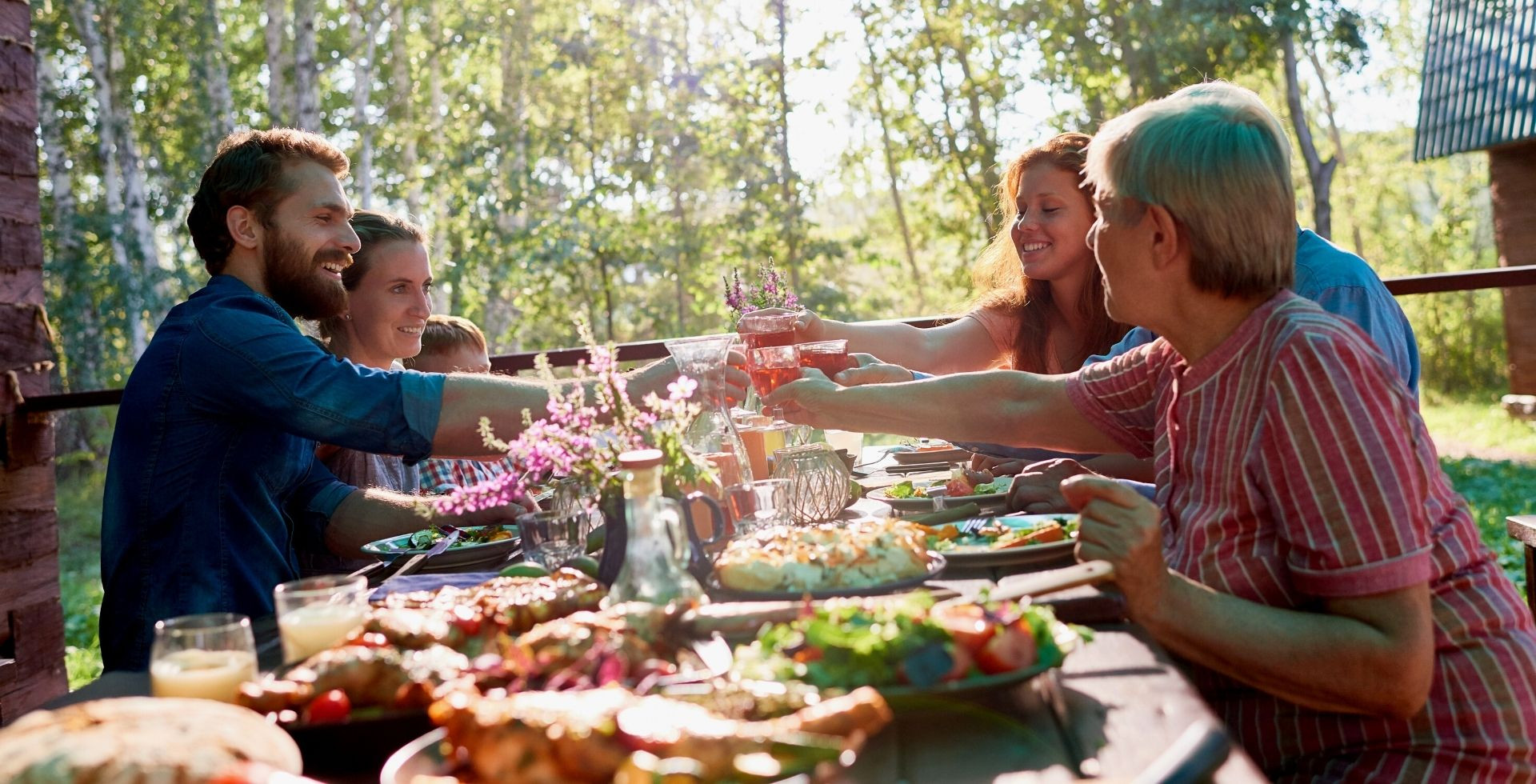
I’m referring to Maghe Sankranti, which is a vibrant and spiritual Hindu festival often observed with rituals, feasts, and social gatherings. It is celebrated with family and community by receiving blessings from elders, preparing unique traditional foods, and eating them together.
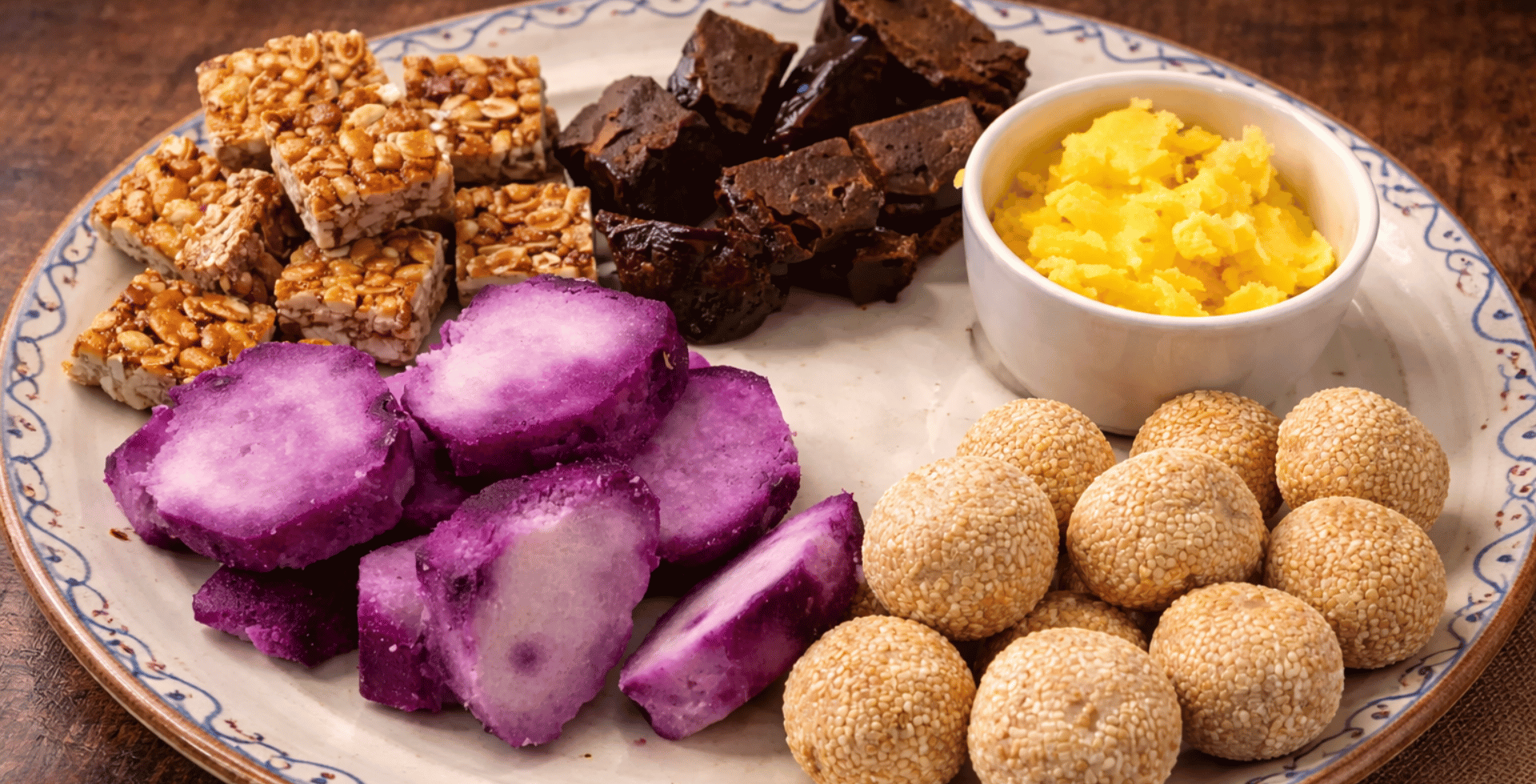
Sesame seeds, yams, sweet potatoes, taro, and a variety of food items are enjoyed in every household during Maghe Sankranti. Apart from that, you may head out to catch sight of numerous national and international devotees bathing in the sacred rivers.
And there’s even an interesting event not to miss. People in Taruka, a small village in Nuwakot, organise bullfighting every single year!
That’s not just about it. There are different myths and legends behind Maghe Sankranti, aka Maghi or Makar Sankranti, with each Nepali community celebrating the festival in their own way.
I’m going to cover everything in detail, so be sure to read this article until the very end.
What is Maghe Sankranti in Nepal?
When it comes to festivals in Nepal, there’s always some form of astrological, spiritual, and other beliefs associated with them. It’s the same with Maghe Sankranti.
The festival revolves around purification, renewal, and the transition of the sun, marking the end of the winter solstice period.
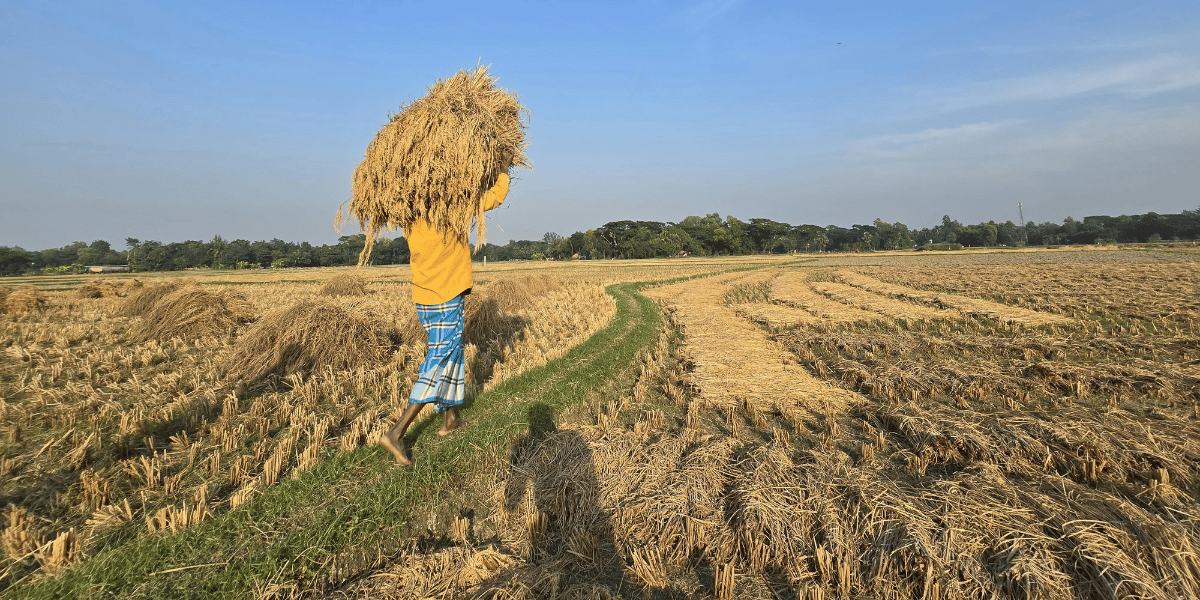
As for the agricultural meaning of Maghe Sankranti, it marks the end of the winter harvest season and the start of a new agricultural cycle. It’s a day when farmers harvest their crops with great celebration, expressing gratitude to nature.
People often get confused with the names “Makar Sankranti” and “Maghe Sankranti”. “Makar” is the Sanskrit term for ‘Capricorn’, signifying the sun’s transition to this zodiac sign. On the other hand, “Maghe” is simply the first month in the Bikram Sambat calendar, Magh.
In reality, both names refer to the same festival. It’s just that different Hindu communities celebrate in their own traditional way and have named it slightly differently.
Some communities, like the Tharu, call it “Maghi”, and they celebrate it as their New Year's Day! On the other hand, the Newar community calls the festival “Ghya Chaku Sahlu”, a day to consume ghee and molasses, apply oils to the body, and get blessings from the elders.
No matter how differently it’s celebrated, Maghe Sankranti is a festival that demonstrates a deep connection between people, togetherness, and their gratitude towards nature.
Different Myths and Legends Regarding the Maghe Sankranti
As mentioned earlier, different communities observe this Hindu festival, and they have their own religious reasons behind it. Let me now get into the myths and legends associated with this festival.
Shani and Surya: Reflection on Father-Son Relationship
According to Hindu scriptures, Saturn (Shani) is the son of Sun (Surya) and Shadow (Chhaya). Due to the son’s dark complexion, Surya didn't accept him as his child, resulting in their rigid and inflexible relationship.
Despite their strained bond, the day of Maghe Sankranti marks a strong connection between them. On this day, the sun enters Saturn’s orbit (Capricornus Constellation), which is religiously seen as an event of reunion between father and son.
It even signifies the rectification and unity of the family. As a result, the day of Maghe Sankranti is considered an auspicious day for starting good deeds.
Story of Bhishma Pitamah’s Death
Another story related to the festival is associated with the Mahabharata. It is said that Bhishma Pitamah, the son of Ganga and King Shantanu, had the boon to choose the time of his death (Ichha Mrityu).
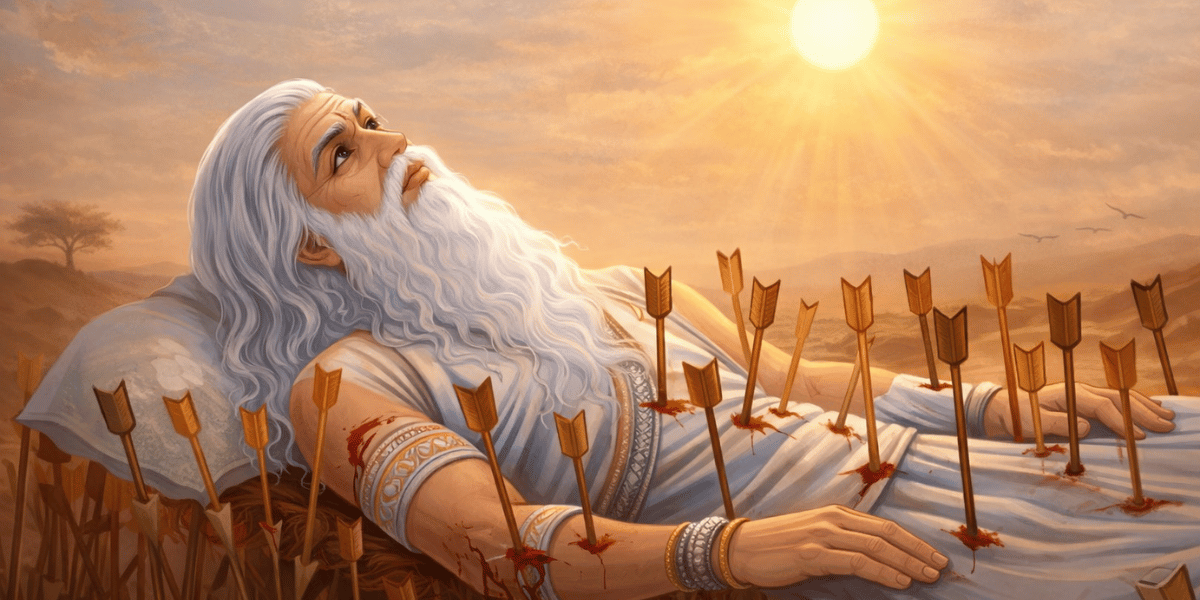
On the tenth day of the Mahabharat, when he had already fallen on the bed of Arjuna and Shikhandi’s arrows, he refused to take his last breath until he attained Mokshya, which would free him from the cycle of rebirth (attain mokshya). It was the first day of Uttarayan (the same day we celebrate Maghe Sankranti), 58 days after lying on a bed of arrows.
Story of Til Madhav Idol of Bhaktapur
Different stories are linked with the establishment of the Til Madhav Idol located in Bhaktapur Durbar Square:
- One story says that there lived a merchant who traded sesame seeds. One day, he noticed that his sesame seeds were multiplying no matter how much he sold them. Upon further investigation, he discovered a statue of Lord Narayan (Vishnu) under the pile of sesame seeds. Believing that it’s the lord’s magic responsible for the incident, he built the Til Mahadev Mandir exactly on that spot on Maghe Sankranti.
- Another story says a sesame merchant named Dharmadatta set up his shop near the shrine of Marigalesvara. As customers were purchasing the seeds, an avatar of Vishnu wearing yellow clothing and holding a conch, discus, and mace appeared from the pile of sesame seeds. Watching this unimaginable scene, the locals established this temple on Maghe Sankranti.
Based on such stories, there is a tradition of applying clarified butter, ghee, to the statue on the day of Maghe Sankranti. Following this belief, people in Bhaktapur use mustard oil on their bodies to stay warm during the winter season.
How Different Communities Celebrate Maghe Sankranti in Nepal
Now, allow me to explain how people of different communities celebrate Maghe Sankranti in their unique ways and traditions in Nepal.
Maghi Festival in the Tharu Community
The “Tharu people”, also known as “Tharus”, are the indigenous tribes from the inner villages of Terai. And like I mentioned above, they celebrate Maghe Sankranti as “Maghi”, which happens to be one of their major festivals.
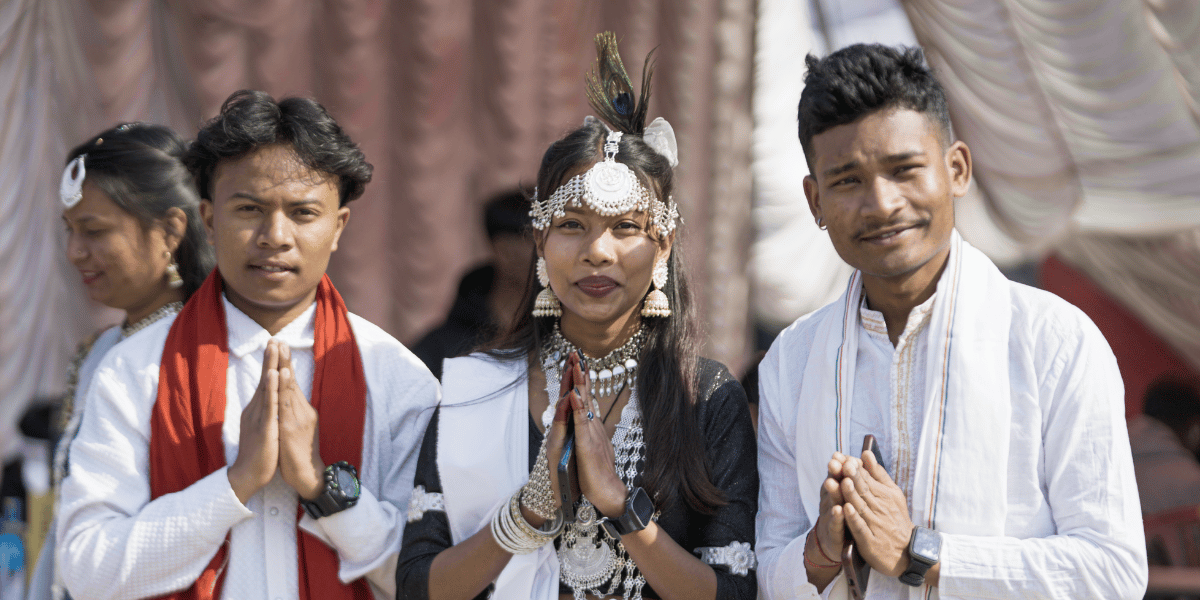
Maghi includes rituals, gatherings, eating traditional delicacies, attending local fairs, selecting new community members, and bathing in the holy rivers. It is even regarded as their New Year and harvesting festival.
Tharu women can be seen dressed in their traditional dress, Choila and Mahagi, and Tharu men in Mardani and Phad.
The number of days Tharus celebrate Maghe Sankrant varies from one region to another. Some communities celebrate the festival for 3 days, while others observe it for a week or even more!
Usually, Maghi preparation starts from the month of Poush itself, during masanta (the end of Poush). Some start the preparation a month before, some do it three to four days prior, and some just do it on the last day of Poush.
This ritual is called “Chita Marne” or “Jita Marne”, which marks the end of the Tharu Calendar. Think of it like New Year’s Eve, where animals (mainly pigs) are sacrificed as part of the traditional ritual.
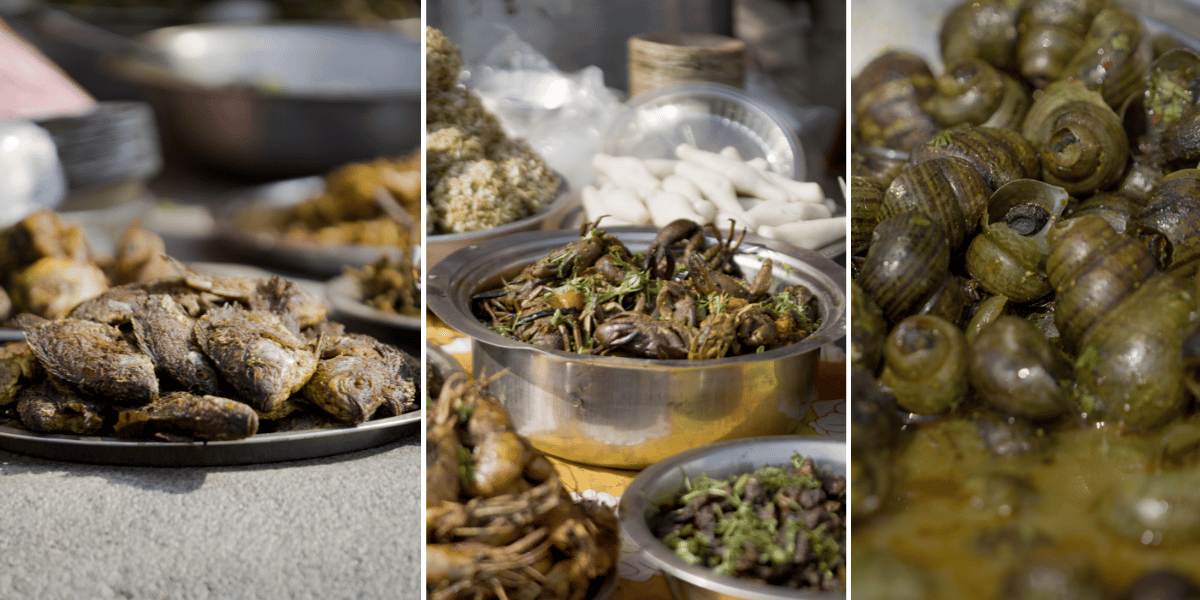
Even dishes such as Dhikri, Ghongi, Sikri, etc., are prepared for the upcoming main day. These are also some top Nepalese foods that you must try.
On the morning of the main day of Maghi, all family members take a holy bath in the nearby rivers for purifying both body and soul.
People enjoy the day to the fullest, playing musical instruments like madal, jhyali, and basiya (flute), along with performing various cultural dances such as Jhumra, Lathi (stick), and Maghauta.
Another ritual known as “Khojnibojni” is also practiced. It is also known as Maghi Dewani or Bhura Khel in other Tharu regions. This is an annual ritual of selecting guards, postmen, priests, house leaders, and other new leaders who will take over the community's responsibilities for the upcoming year.
Similarly, there’s another ritual known as “Nisrau Kaharna”, where married daughters are given a gift of rice, dal, and salt, called ‘nisrau’. It shows the values of emotional connection between the family members and society and thus has great cultural significance.
The festival is concluded with a collective feast known as “Nachnauri”, where people gather and enjoy food and reinforce family ties. The feast features clothing stalls and food stalls, and it’s mostly about entertainment.
Magar Celebration of Maghe Sankranti
As for the Magar community, the festival is known as the "Maghe Sankranti". Just like Tharus, they celebrate this day as the New Year. The entire family comes together on this day to celebrate the morning of the festival by preparing and enjoying delicacies such as Selroti, Chaku, and Sweet balls.
Even married daughters, accompanied by their husbands, visit their maternal home to seek blessings and join the festive atmosphere.
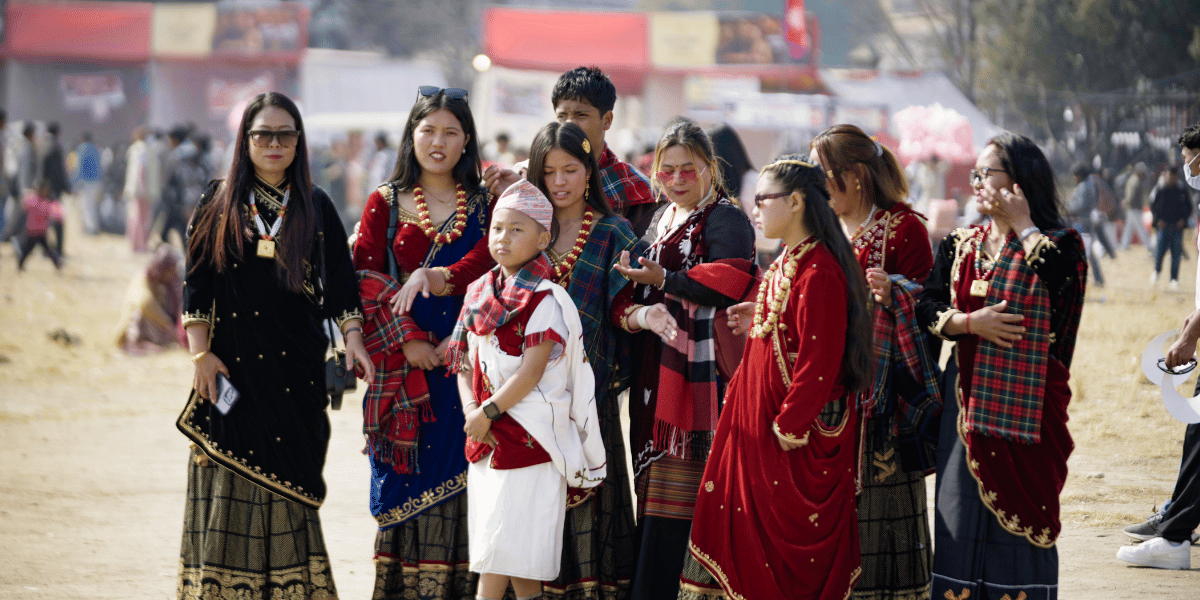
In recent times, Magar communities have started organising a big fair in Tudikhel, Kathmandu. This usually happens in the afternoon, when rallies and programs are organised.
Magar people gather, where women wear traditional attires like Phariya or Lunghi, Chaubandhi Cholo, and Patuka, and men wear Kachhad, Bhoto, Bhangra, and Daura Suruwal.
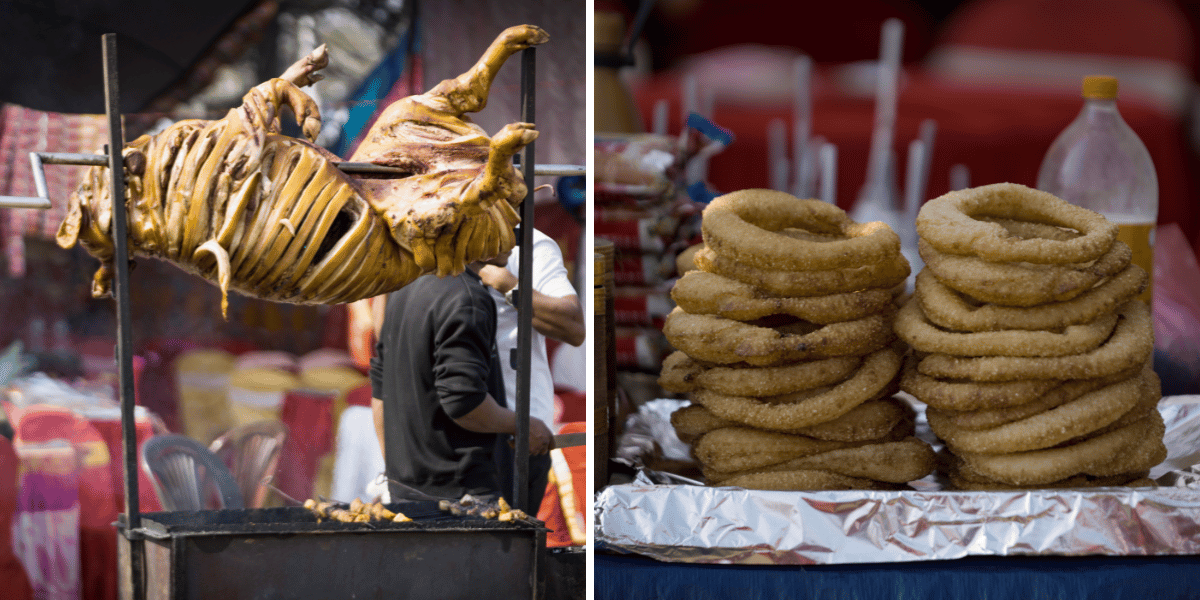
Varieties of foods are kept in the stalls, and different dance performances like Maruni and Sorathi are performed.
Maghe Sankranti as Ghya Chaky Sahlu in the Newar Community
While for the Tharu and Magar communities, Maghe Sankranti represents their New Year, the Newa community celebrates it a bit differently.
The festival is called “Ghya Chaku Sahlu”, meaning a day to eat the ghee and molasses, where:
- Ghya means Ghee, which symbolises warmth, nutrients, and strength
- Chaku is Molasses, which provides energy to the body
- Sahlu is the Newari name for Sankranti (meaning sun’s transition from one zodiac sign to another, and in this case, transitioning to Capricorn)
There is even a saying in the Newar community during the festival, "Poush ma pakya, Magh ma khyaka," which translates to "cooked on Poush, eaten on Magh".
There’s even a custom to apply mild-hot mustard oil mixed with black lentils on the heads of younger family members. This unique practice is done by the elder members as a way of giving blessings for strength and softness in life. The black lentils used in the mixture signify warmth, just like how the weather transitions to a warmer season starting from Magh.
Back when I was just a child, I used to go to my grandparents' house to put oil on my head. I still remember how my cousins and I would quarrel with our elders, as we didn’t like our hair getting so oily and sticky. In order to just comply with the customs, we had to accept at least a few drops of it.
More than just a tradition, I now realise that this oil-putting ritual is what has made everyone in my family stick together for all these years. Now, I really enjoy this festival to the fullest by gathering with cousins and enjoying delicious Newari cuisine.
You might like reading: Other major Newari festivals
How Brahmins and the Chhetris Celebrate Maghe Sankranti
The Brahmins and Chhetris celebrate Maghe Sakranti with religious activities and family gatherings.
Traditionally, they have been taking a holy dip in the sacred rivers. However, the practice is now less followed in modern cities. Still, they at least take a bath in the morning to cleanse sins and purify their souls.
They offer prayers to the sun god (Surya), along with Lord Vishnu and Goddess Lakshmi. Just like other communities, they also consume ‘Ghiu Chaku’ along with other ritual delicacies, usually in the morning.
How Other Communities Celebrate Maghe Sankranti
These days, Maghe Sankranti is celebrated by everyone across the country in their own way and traditions. Regardless of the festival having a Hindu origin, every community celebrates the festival with togetherness and harmony. Here are a few:
- The Kirat community celebrates Maghe Sankranti as “Yele Dhung”, which is the New Year according to their Yele Sambat calendar. It’s even believed that this calendar started after their first king, Yalamber, who had gained victory over Kathmandu Valley on the same day.
- Even Rajbanshi, Kumal, Gurung, and other communities observe this festival by organising large communal gatherings, cultural displays, and enjoying delicious foods with great enthusiasm.
- Also, the Buddhist community visits different monasteries or stupas, like Swayambhunath Stupa, and offers Ghya Chaku to the statues as part of their Maghe Sankranti rituals. They play the dhime drum, sing traditional songs, and dance as they proceed to the stupas.
Regardless of the ethnic groups, people all over Nepal donate food, warm clothes, and other necessities to those in need. It’s not just out of kindness, but many communities consider this an auspicious act.
Delicacies in Maghe Sankranti
One of the major charms of Maghe Sankranti is the warm and delicious foods. In fact, Ghya Chaku is what comes to my mind when someone refers to this festival.
Here are the most common foods enjoyed in Maghe Sankranti:
|
Food Items
|
Description
|
|
Yam (Tarul)
|
Healthy root vegetable
|
|
SakharKhand
|
Sweet Potato
|
|
Taro/Pidaaloo
|
Root of a taro plant
|
|
Ghya
|
Made from clarified butter
|
|
Chaku
|
A sweet mixed with jaggery, molasses, and nuts
|
|
Til ko Laddu/Sesame Laddu
|
A sweet ball made from sesame seeds, coconut, peanuts, ghee, and jaggery
|
|
Bhuja ko Laddu
|
A sweet ball made from puffed rice, mixed with jaggery and molasses
|
Besides these delicacies, different communities consume distinct food items that are eaten in different communities in their own unique way. I’m listing the most popular ones below:
|
Food Items
|
Description
|
Community
|
|
Selroti
|
Traditional ring-shaped sweet bread
|
Magar, Gurung, Brahmin, and Chettri
|
|
Khichadi
|
Rice and lentil porridge
|
Tharu, Brahmin, and Chettri
|
|
Sidra
|
Fried fish
|
Tharu, Newar
|
|
Dhikri
|
Steamed rice cake
|
Tharu
|
|
Ghongi
|
Freshwater snails
|
Tharu
|
|
Bagiya
|
Rice flour dumplings, sometimes filled with mashed or spiced lentils
|
Tharu
|
|
Chichar
|
Steamed sticky rice
|
Tharu
|
Are you a foodie? Here are five must-try Nepalese food items
Popular Activities in Maghe Sankranti
The celebration of Maghe Sankranti includes various gatherings, family feasts, functions, etc. Along with them, many places have their unique way of celebration on this auspicious day. You will be amazed when reading some of the interesting ones I’ve mentioned below.
Holy Dips in Sacred Rivers
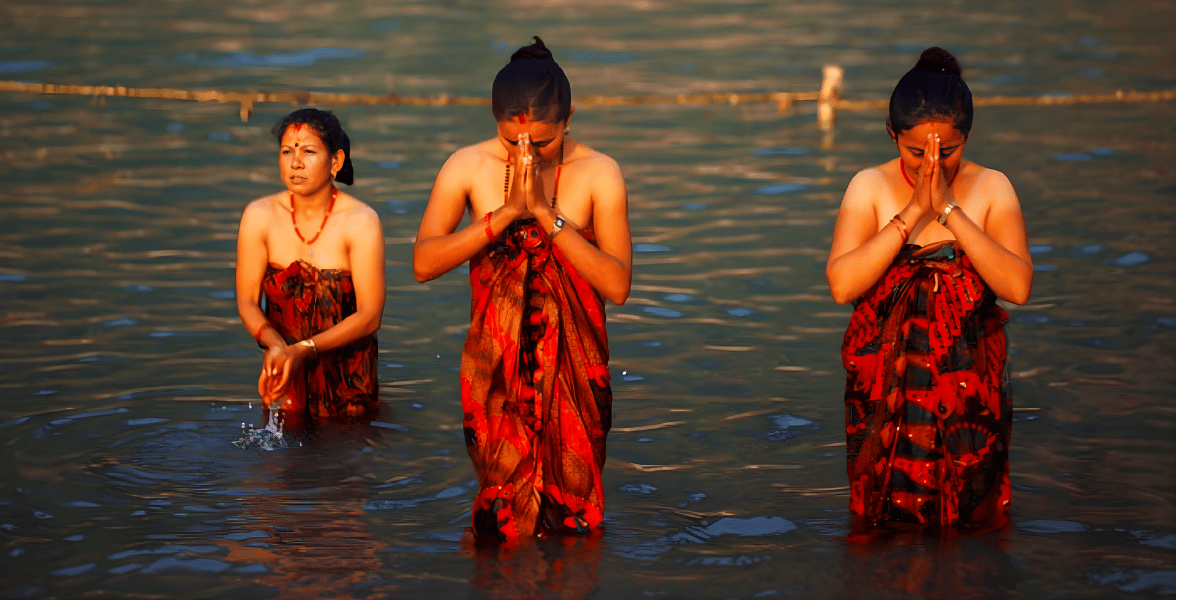
On the day of Maghe Sankranti, numerous communities bathe in the holy rivers of the country following proper rituals. Here, I have compiled a list of those major places where devotees participate in this auspicious ritual to wash away sins:
- Devghat: Located at the confluence of the Kali Gandaki and Trishuli rivers on the border of the Chitwan, Nawalparasi East, and Tanahun districts.
- Dolalghat: Situated at the confluence of the Indrawati and Sunkoshi rivers in Kavrepalanchok.
- Ridi: Along with holy dips at the confluence of Ridi Khola and Kaligandaki River, other significant fairs are held at the tri-junction of Gulmi, Palpa, and Syangja districts.
- Barahchhetra: A famous pilgrimage site where a large mela is organised alongside the devotees' holy bath in the junction of the Koka-Kaushiki river.
- Sankhamul: A sacred site (confluence of Bagmati and Mahohora rivers) for the devotees to perform the holy dip in Maghe Sankranti near Patan.
- Kankai River: A significant river in Jhapa district, where many devotees from Nepal and even India gather together for holy dips.
Annual Tradition of Bullfighting in Taruka Village
In almost all places that celebrate Maghe Sankrati, the festival is all about gathering, enjoying food, and spiritually cleansing oneself. However, in Taruka, a small village of Nuwakot, there’s a unique tradition like no other.
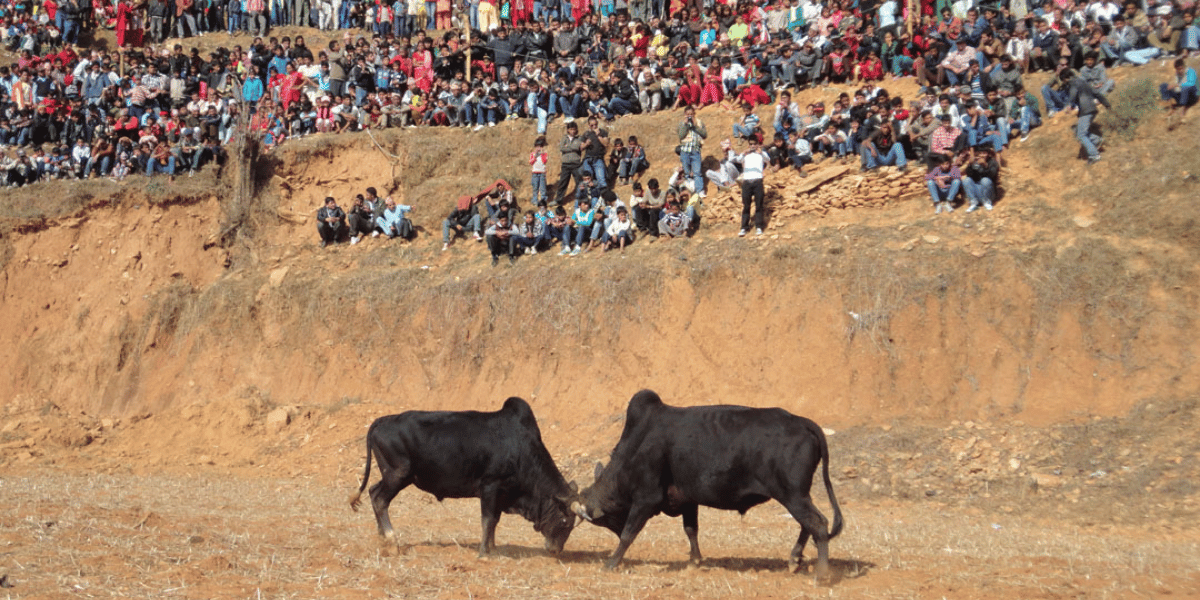
There’s an annual tradition of Bullfighting on the day of Maghe Sankranti that has caught everyone’s attention. And its story dates back to 1887 B.S., when Bajhangi King Jaya Prithvi Bahadur Singh (then prince) visited his maternal uncle when he was just 10 years old.
He saw an animal on the way and, out of curiosity, asked his uncle what it was. The uncle said it was a bull and claimed that, as much as it can be helpful in the fields, it can also fight. Hearing these words, the little prince wanted to see it happen!
The uncle kept his word and discussed the possibility of bullfighting with the village’s head chief, and they too agreed without a second thought.
Since its beginning, the gist of the festival was not to display the power of the animals in any way but to be a modest way to entertain and demonstrate the hospitality and devotion to the prince.
Initially, the local villagers brought their own bulls to compete, and surprisingly, it became a huge success. Eventually, the event became a tradition in Taurka and has now become a means of entertainment for the surrounding villagers. It has significantly boosted tourism, and even international tourists are willing to see this.
Even if you’re interested, don’t hesitate to contact us directly, and we shall create a customised tour package for you here at Altitude Himalaya!
Makar Mela : Once in Every 12 Years
In Panauti, the Newari community celebrates Maghe Sankranti in the same way as in Kathmandu, but there is one thing that makes the festival slightly different and unique.
A grand fair, Makar Mela, also known as Barha Barse Mela, takes place once every 12 years. Many devotees from all over the country gather in Panauti, not just to observe but even to participate in the fair with great enthusiasm.
This once-in-a-12-year festival attracts millions of Hindu pilgrims from all over Nepal, India, and other foreign countries. They worship Basuki Naga and Indreshwor Mahadev on this day. Many locals even consider this occasion to be a spiritually significant place for praying for the deceased and performing a ritual called Shraddha.
The main attraction on this auspicious day is that a huge number of devotees can be seen bathing at the junction of the Punyamati and Roshi (also known as Lilawati and Rudravati) rivers to wash away their sins in Triveni Ghat.
Mainly, the following five items are offered in the river, which are associated with the five essential elements of human life: rice (earth), flowers (space), vermillion powder (water), incense sticks (air), and a butter lamp (light).
Maghe Sankranti Celebration Outside Nepal
As I mentioned earlier, Maghe Sankranti is a Hindu festival, and different countries where Hindus reside also celebrate this festival. These include India, Pakistan, Sri Lanka, Thailand, Cambodia, etc. Each ethnic group celebrates Maghe Sankranti in their own unique way and with their respective traditions.
If you compare the celebration of Maghe Sankranti in Nepal with that in other countries, you can find many similarities as well as differences. Ritual baths, family gatherings, worship, and offerings are also practised similarly in these countries.
Here are some examples:
- In Pakistan, Maghe Sankranti is known as Tirmoori, which is a Sindhi festival.
- In Sri Lanka, the day is called Pongal, a four-day harvest festival.
- In North India, Punjabis and Sikhs celebrate the day as Maghi.
- A day before the festival, Punjabis celebrate another festival known as Lohri.
- Maghe Sankranti in Gujarat, India, is known as Uttarayan (aka International Kite Festival).
- Many Bengals also term Makar Sankranti as ‘Poush Sankranti’. And in West Bengal, India, Gangasagar Mela is held, which is the second largest after Kumbh Mela.
Tips for Tourists Attending the Maghe Sankranti Festival
Here are some major tips to help you explore different places and experience the vibrant festival of Maghe Sankranti in the best way possible in Nepal:
- Dress appropriately, covering your shoulders and knees. It is a sign of respect while visiting sacred places, as per the local customs and traditions.
- Engage with the locals, as they’ll help you explore more exclusive places.
- Experience unique events such as Bullfighting in Nuwakot, gatherings, and the holy bath of the devotees in the Koshi and Narayani Rivers.
- Join events and fairs of the New Year celebrations of the Tharu and Magar communities in Nawalparasi East, Nawalparasi West, Bara, and Dang districts, and other places such as Janakpur, Biratnagar, Nepalgunj, etc.
- Try traditional foods such as Sakhar Khand, Ghee, Chaku, Til ko laddu, and Selroti.
- Book accommodations early, especially near popular sites like Devghat, Ridi, Dolalghat, Kankai River, etc.
Start early if you’re attending river rituals to avoid crowds.
To Sum Up
Maghe Sankranti is a festival celebrated with the beliefs of astronomy, vibrant traditions, and community values that have been passed down through many generations.
Seasonal change, delicious food, and togetherness are the major things you get to experience during the festival. The scenic views of devotees taking a holy dip in sacred rivers, the experience of witnessing the Nepali version of bullfighting, and farmers harvesting their fields, etc., are moments that will allow you to experience a rich part of Hindu culture up close, which you won't forget!
I hope you liked the blog and gained some knowledge about Maghe Sankranti. We regularly share blogs related to various foods, culture and festivals, adventures, travel destinations in Nepal, the best time to visit, and many more. If you are interested in such topics, make sure to read them as well. Happy reading!



 Rijen Manandhar