What if I tell you there is a festival which isn’t about fireworks, lights, or any celebrations, but the opposite? Would you believe me?
I’m referring to the Maha Shivaratri festival in Nepal. A spiritual night of the year, which is all about overcoming darkness, where millions stay awake in devotion to worship the celestial being whose power is still believed to be felt to this day.
Maha Shivaratri is dedicated to Lord Shiva, aka Mahadev, who resides in the mighty Kailash and finds beauty in ashes, serenity in the cremation grounds, and the truth in stillness. The festival involves chanting mantras, hours of meditation, and devotion to the Almighty.
A spiritual marathon where the only goal is to be at peace and connect your energy with the universe on that one specific night. Allow me to explain the "Great Night of Shiva" in detail here on this blog dedicated to Mahadev.
“Om Namaha Shivaya” ॐ नमः शिवाय
What is Maha Shivaratri?
Maha Shivaratri happens to be one of the most prominent Nepali/Hindu festivals, where Lord Shiva, the supreme deity of destruction and transformation, is worshipped.
While the date of celebration changes every year, the festival typically falls during February or March.
It’s a sacred night that revolves around devotion, fasting, meditation, and reciting chants. Those who do are believed to receive blessings of strength, wisdom, and prosperity from Shiva.
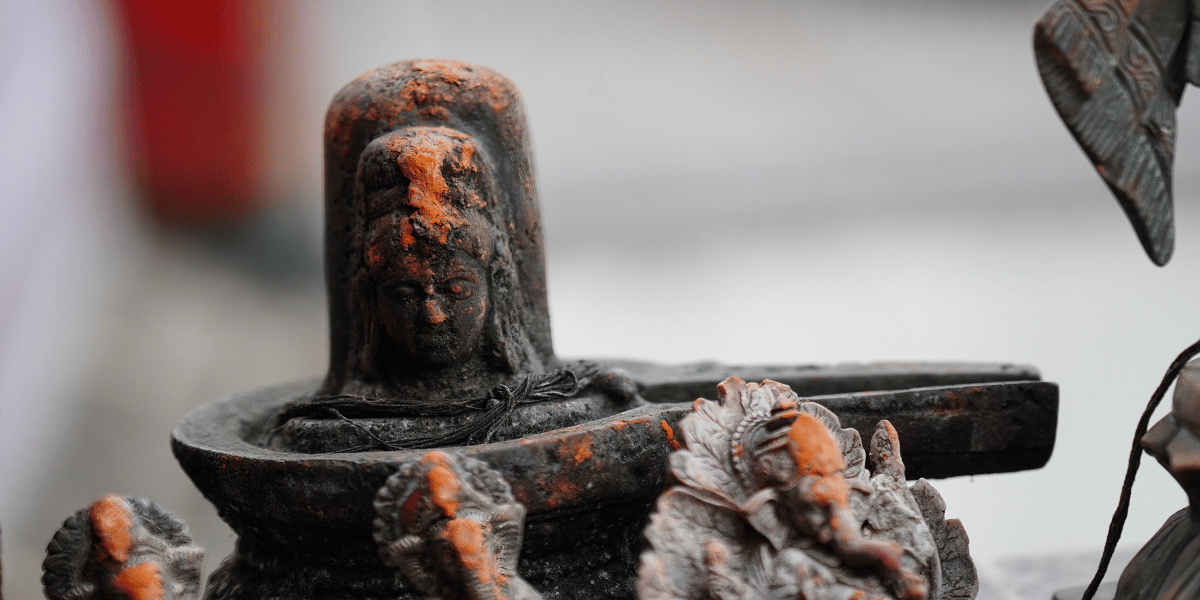
Particularly speaking, fasting during the auspicious night of Mahashivaratri is considered a way to purify your mind and body. This is why devotees worship, pray, and perform ritual practices to purify themselves spiritually and connect with the divine energy of Lord Shiva.
Many believe in removing negativity and bringing positivity and inner peace into their lives on this auspicious day. So, they visit temples to offer Bael Patra (Bilva leaf), milk, water, and other offerings to the Shiva Lingam, praying for happiness and well-being.
This festival teaches about devotion, patience, and righteousness. While the rituals and celebrations during the festival may differ from place to place, the essence of the festivals remains the same. The devotees also practise devotion every month on a specific day, and the day is known as “Shivaratri”.
Are Shivaratri and Maha Shivaratri the Same?
There’s a subtle difference between Shivaratri and Mahashivaratri. But many seem to be a little confused about the celebrations.
Yes, in both festivals, Lord Shiva is worshipped, but the main differences are:
|
Name
|
Shivaratri
|
Maha Shivaratri
|
|
Time
|
Celebrated once a month
|
Celebrated once a year
|
|
Lunar Calendar
|
14th day (Chaturdashi tithi) of every lunar month's dark fortnight (Krishna Paksha)
|
14th day of the dark fortnight in the Hindu month of Phalguna (Feb/Mar)
|
|
Significance
|
Monthly observance dedicated to Lord Shiva
|
Powerful night for spiritual growth
|
|
Rituals
|
Devotees fast, pray to Lord Shiva, and conduct a simple puja
|
Grand celebrations, including all-night vigils, Rudra Abhishek, intense meditation, and specific prayers for spiritual awakening
|
According to the lunar calendar, “The night of Shiva”, also known as “Shivaratri”, is observed on the 14th day (Chaturdashi tithi) of every lunar month's dark fortnight (Krishna Paksha). There are fewer celebrations because it’s mainly observed by core Shaivites, ones who have dedicated their lives to Shiva.
The night of Shivaratri is known as the darkest night of the month. This day, the devotees fast, pray to Lord Shiva, and conduct a simple puja as a monthly observance dedicated to Lord Shiva.
On the other hand, Maha Shivarati is observed once a year, which is acknowledged as a grand celebration. It falls on the 14th day of the dark fortnight in the Hindu month of Phalguna (Feb/Mar), and it is said to be a powerful night for spiritual growth.
The devotees participate in all-night vigils, Rudra Abhishek (the sacred ritual of worshipping the Shiva Lingam using items like water, milk, ghee, honey, curd, etc.), intense meditation, and specific prayers for spiritual awakening, all within a single day!
Mythological Stories Leading to Maha Shivaratri
There are many stories and beliefs that are affiliated with the festival. Some mythological stories are the divine marriage, Samundra Manthan, the Cosmic dance, etc. Let’s learn about them one by one.
Divine Marriage of Lord Shiva and Parvati
One of the most celebrated mythologies on the day of Maha Shivaratri is the marriage of Shiva and Parvati. The day revolves around the divine union of these deities.
It is believed that Parvati had gone through some rigorous penance to win Lord Shiva as her husband.
Among many legends, one mentions that after their marriage, Shiva incorporated Parvati into his body, being called Ardhanarishwara, a form of a half-male and half-female entity.
What Ardhanarishwara really indicates is that the masculine and feminine energies are inseparable. This is what balances the cosmos, and the union of Shiva and Shakti is what is believed to have been the main source of the universe's creation!
The Cosmic Dance: Tandav
If you already know about Shiva, you’re probably also aware of the Tandav Dance. In case you didn’t, it’s believed to be a cosmic dance that symbolizes the creation, preservation, and destruction of the universe.
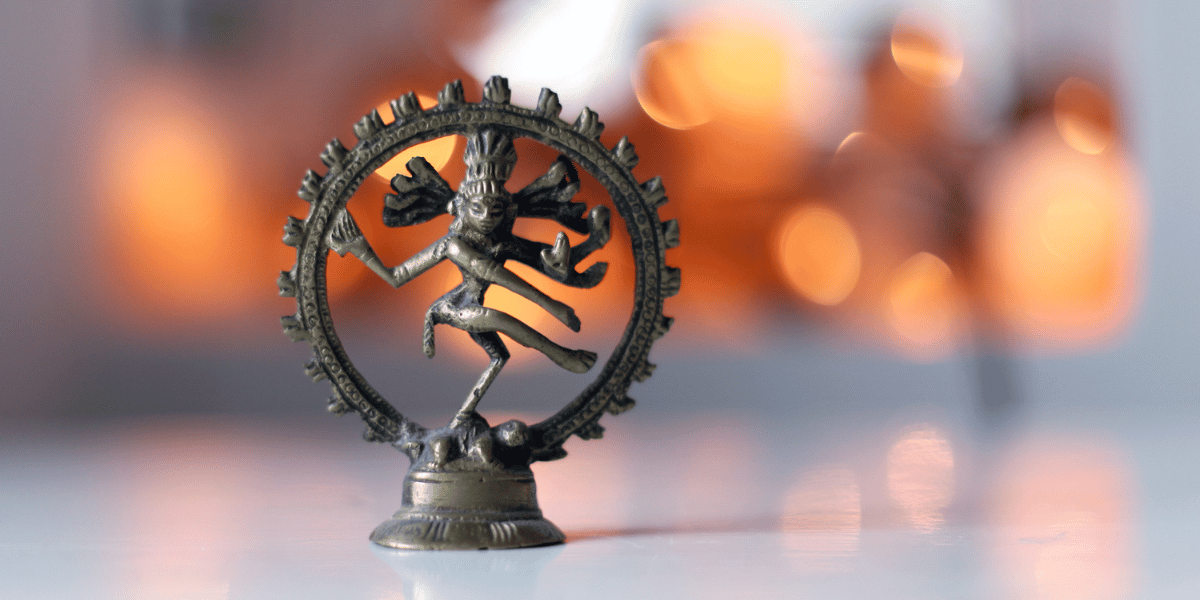
And Maha Shivaratri is heavily associated with Lord Shiva’s Tandav. Often called Nataraj (The Lord of the Dance), his unique steps are believed to be filled with divine energy that reflects the eternal nature of existence.
On the auspicious night of Maha Shivaratri, devotees from different parts of the world perform the Tandav dance to dedicate it to Lord Shiva. Even in Nepal, you get to observe this in different places, one of which is the sacred temple of Pashupatinath Temple.
The Story Behind the Unique Name of Lord Shiva
Lord Shiva has many names. Among them, one that I am personally fascinated by is Neelkantha. And the story behind this name is deeply symbolic. Let me share it with you.
Back in time, gods and demons churned the cosmic ocean of milk (an act called Samudra Manthan) in Kshirasagara to obtain Amrit, known as the nectar of immortality.
After churning for millennia, according to vedic text like the Bhagavata and Vishnu Purana, one of the first elements that emerged was the deadly poison called Halahala. This was so powerful that it threatened to destroy all of creation. Yes, even the gods and demons themselves, who were part of the churning.
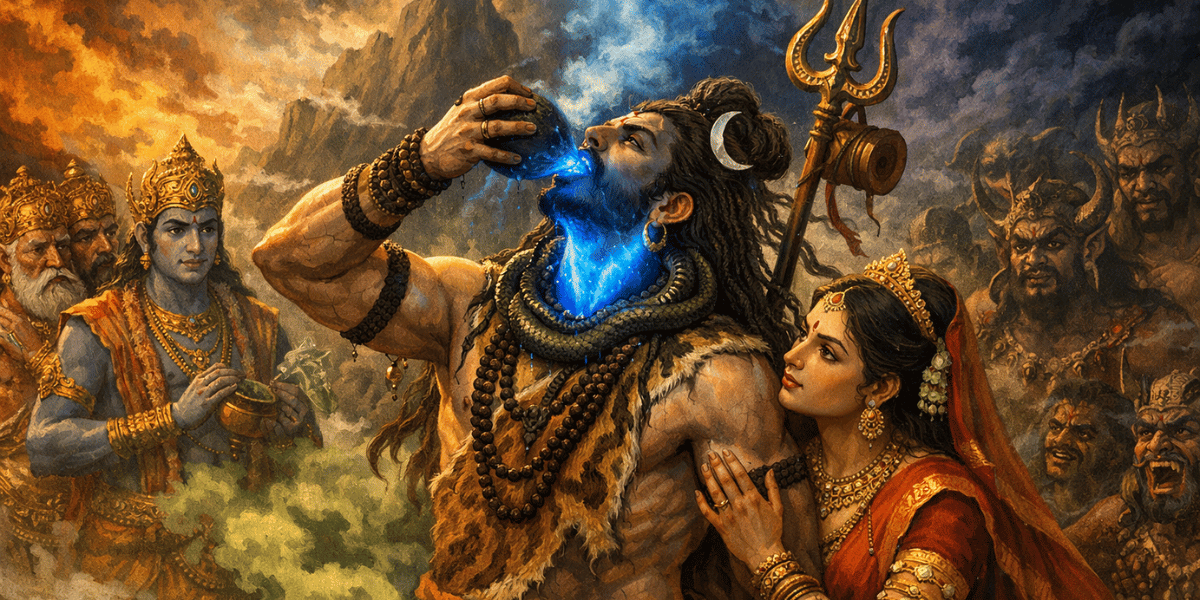
As everyone was losing hope, Lord Shiva came to the rescue! He selflessly consumed Halahala, saving the universe.
But as the deadly poison reached his throat, Goddess Parvati couldn’t see the discomfort. She had to grip her husband’s neck with both her hands to ensure the poison did not spread further.
The Halahala poison has since then remained in Shiva’s throat. And that blue colored appearance often depicted in his pictures is exactly what we are referring to. Devotees have given him the name of Neelkantha with love, which means “the blue-throated one.”
This selfless act of Lord Shiva is always remembered, especially on the day of Mahashivaratri. His sacrifice to save the universe can never be forgotten for sure!
The Descent of Ganga
While not the prime reason for Maha Shivaratri celebrations, there’s a legend surrounding the sacred River Ganga. The same river where thousands take holy dips, but many might not know that Lord Shiva was the one involved in bringing the Ganga to Earth.
The story begins with King Sagara, a ruler of the Suryavansha (Solar Dynasty), who had 60,000 sons. During his reign, King Sagara decided to perform the Ashwamedha Yagna, where a sacred horse was needed for the ritual.
Fearing the growing power of the king, Lord Indra stole his sacrificial horse and hid it. King Sagara sent his 60,000 sons to search for the horse, which they eventually found near Sage Kapila’s ashram.
Then came the misunderstanding. Mistaking the sage for the thief, they accused him and disrupted the sage, who was actually in deep penance. This enraged him, and his immense spiritual energy reduced King Sagara’s sons to ashes.
Their final rites could not be performed for generations despite King Sagara’s descendants attempting to free their lost souls but failing every time. Many years later, Bhagiratha was determined to liberate their souls.
For that, he performed severe penance and even sought advice from Sage Kapila himself. From him, Bhagiratha learned that the only possible way to grant them liberation was the sacred waters of the River Ganga.
But at that time, Ganga used to flow in the Indralok (heaven) and Brahmalok (where Lord Brahma lives). So, Bhagiratha had to meditate for several years to please Lord Brahma, from whom he was granted permission for Ganga to descend to Earth.
While Ganga agreed, she was also aware that her ferocious fall would be too powerful and could destroy the Earth. So, she warned Bhagiratha and asked him to seek help from Lord Shiva.
So, he undertook another penance to please Lord Shiva this time, and Mahadev agreed to bear that force. When Ganga descended, Shiva captured her waters in his matted locks and released her gently onto the Earth.
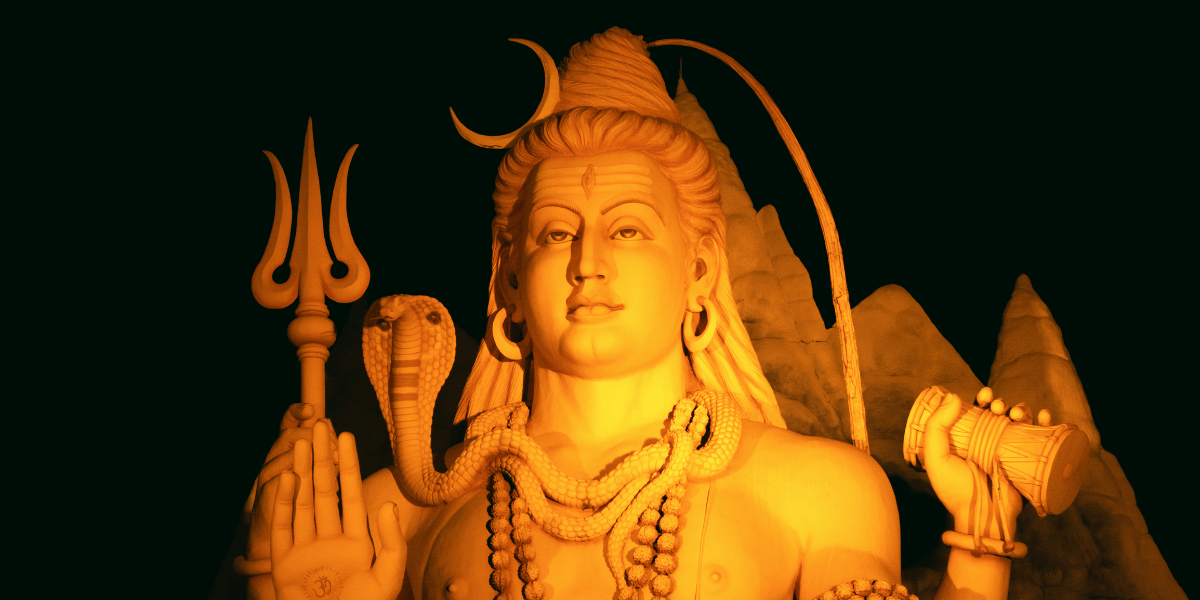
Finally, Bhagiratha could immerse his ancestors’ ashes in the sacred river, and that’s how all the 60,000 souls were granted moksha (liberation). Many still perform this ritual to this day in the River Ganga, ensuring that their deceased ones attain liberation.
Unintentional Worship of Lord Shiva: The Legend of Lubdhaka
Let’s move on to another legend that’s directly connected to Maha Shivaratri. There once lived a hunter named Lubdhaka. He earned his livelihood by hunting the innocent forest animals.
One day, as was his daily routine, he chased a deer in the forest. But he was encountered by a lion, and to save his own life, the hunter ran and climbed onto the nearest tree. Unknowingly, this happened to be a Bilva tree.
If you didn’t know, Bilva leaves are believed to symbolize the three eyes of Lord Shiva, along with the three aspects of creation (Brahma, Vishnu, and Shiva) and the three gunas (Sattva, Rajas, and Tamas).
The night grew darker, but the hunter couldn’t climb down due to fear. To keep his mind awake, he started plucking Bilva leaves and dropped them one by one, which accidentally fell upon a Shiva Lingam. Coincidentally, that very night happened to be Maha Shivaratri too!
This unintentional fasting, night-long vigil, and offering of Bilva leaves to the Shiva Lingam meant that he was worshipping Lord Shiva. Although unplanned, his actions pleased Shiva, who appeared in his vision and blessed him.
Compassion Over Violence: The Transformation of the Bhilla Hunter
There’s another similar legend that comes directly from the Shiva Puran. A hunter named Gurudruha was known for his cruel life and used to survive by hunting animals daily to feed his large family.
One night (on Maha Shivaratri), Gurudruha went into the forest to hunt but failed to find any prey. It was already dark, so he climbed a Bilva tree near a pond to see if animals would come to drink water.
His plan was to attack as soon as they approached the pond. Right beneath the tree was a Shiva Lingam, which he was completely unaware of!
In the night, three deer (two hinds followed by a stag) approached him. And every time he was about to attack them, they pleaded for their lives and promised to return after waving bye to their respective families.
Moved by their truthfulness, Gurudruha let them go fulfill their final wish. What interestingly happened was that each time he attempted to shoot, Bilva leaves and water accidentally fell onto the Shiva Lingam. So, unknowingly, he was actually completing the worship of Shiva.
At dawn, all the deer returned together. They were all ready to offer their lives to Gurudruha. But by this time, the hunter was deeply shaken and had already realized all his sins. So, he dropped his weapon and let them all go.
This pleased Lord Shiva, and he appeared in front of Gurudruha. It wasn’t just because of the unintentional worship but because of how the hunter had transformed himself. So, Shiva blessed him, freed him from his sins, and renamed him from Bhilla to Guha.
You see, this story teaches that Shiva values sincerity, truth, and inner transformation above everything else. Even unintentional devotion on Maha Shivaratri can bring immense spiritual power to you!
How is the Maha Shivaratri Celebrated?
Honestly speaking, different devotees from distinct parts of the world celebrate Maha Shivaratri in their own ways.
Among them, the simplest thing to do is to visit a Shiva temple and worship Lord Shiva’s idol. Yes, you don’t need to perform a huge celebration just to please him; he’s happy to receive whatever you have to offer.
Here are some of the most common ways people observe this sacred Hindu festival.
Holy Bathing
Among the different rituals performed with deep devotion, one primary thing to do is Abhishekam. This is where you bathe the Shiva Lingam with water, milk, honey, ghee, sugarcane juice, and other offerings.
Moreover, the ritual is believed to cleanse your inner self. As you wash the lingam, you’re symbolically washing away the negative energy and impurities that exist in your heart and mind.
Fasting
Along with holy bathing, most Shiva devotees express devotion to Lord Shiva by fasting. This is the most common thing that Hindus do, even when worshipping other deities.
Those who can stay on an empty stomach, while those who can’t, consume simple satvik foods and maintain purity. This is a spiritual practice to approach Lord Shiva with a purified mind and soul, and it reflects discipline, humility, and clarity.
Chanting Shiva Mantras
In the Maha Shivaratri festival, from temples to streets, every place resonates with chants of Lord Shiva. Among them, the most popular mantras include Om Namah Shivaya, Hara Hara Mahadev, Jay Bholenath, and Om Namo Bhagavate Rudraya.
Even if you’re someone who can’t fast or take holy baths on a cold winter day, simply repeating these rhythmic hymns of Lord Shiva is enough. It’s guaranteed to calm your mind and even help you organize your focus well.
In fact, many believe that these mantras carry transformative power, which can help purify your soul and uplift your consciousness.
Sandhya Arati
Sandhya Arati refers to the evening prayer, which is done with sacred rituals. During Maha Shivaratri, Sandhya Arati is performed grandly.
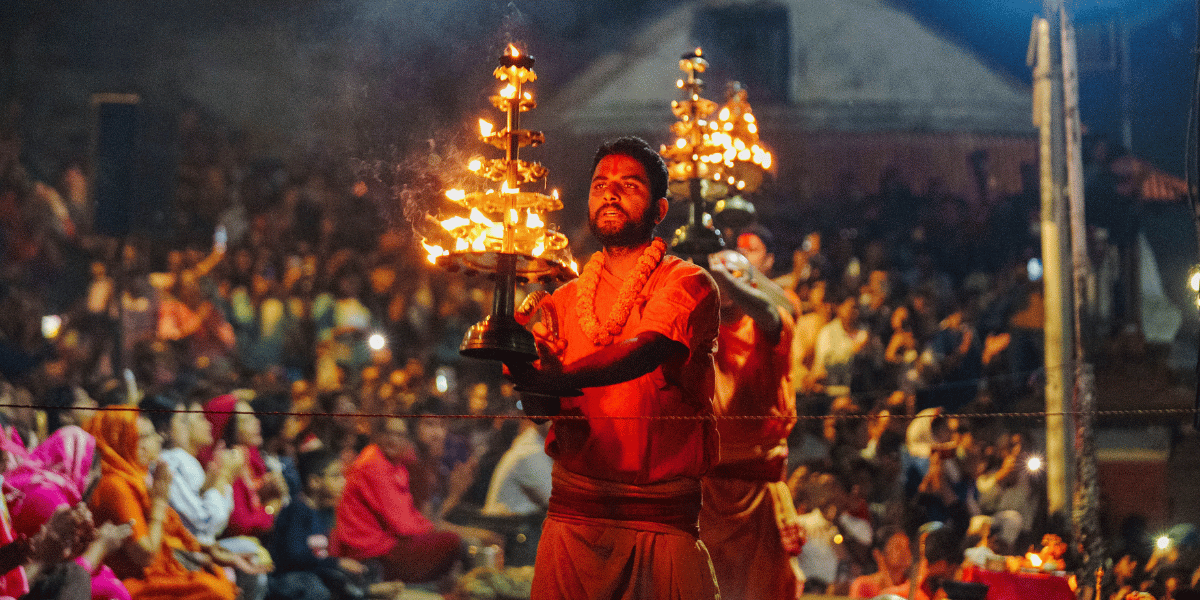
In many temples and holy rivers, a group of assigned priests conduct a special aarati after sunset using incense, butter lamps, flowers, and devotional songs.
The atmosphere becomes lively, and it’s one that I personally believe everyone should experience at least once in their lifetime. The glowing lamps, aromatic incense, crowd of devotees, and the magical ambience of the evening make me want to experience this festival every single year, too!
Consumption of Marijuana [Should You?]
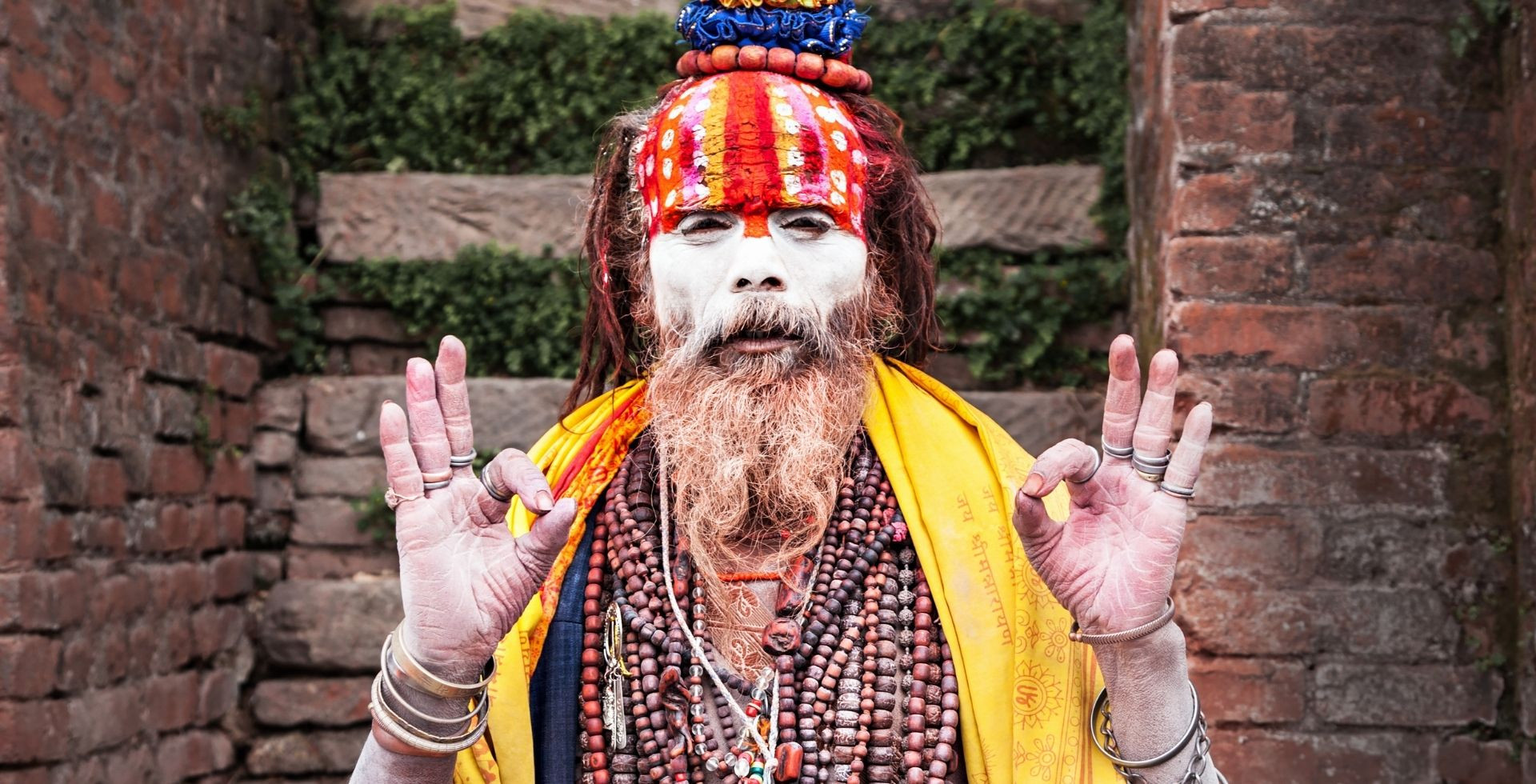
During the particular day of Maha Shivaratri, especially sadhus and Aghoris consume marijuana as part of their worship. Believing it to be favoured by Lord Shiva, on this day, in places like Nepal’s Pashupatinath Temple, people consume cannabis while praying and celebrating Shiva’s night.
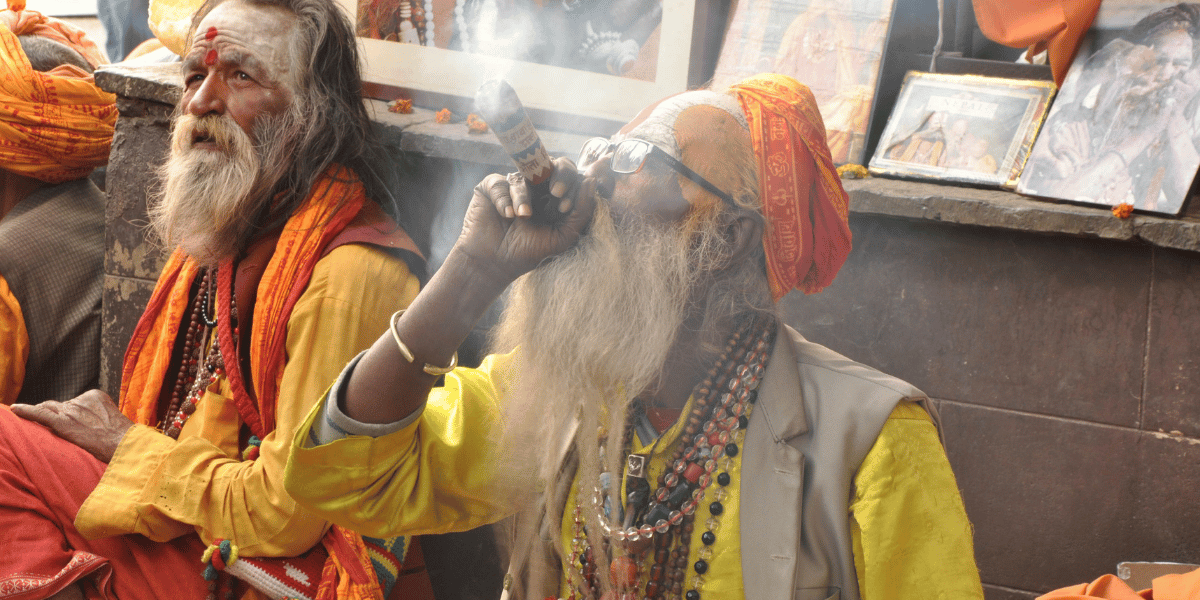
Even authorities tolerate these acts just for the sake of the occasion (but only in limited areas like temples).
But to be really honest with you, Shiva consuming marijuana has only been a belief, as none of the ancient Hindu texts explicitly mention that Lord Shiva was a smoker.
So, even if this tradition is culturally rooted, the use of marijuana is illegal in Nepal, and being caught with it can lead to serious legal troubles.
Consuming marijuana is not a necessary requirement for the day. In fact, it’s better off if you don’t use intoxicants in the name of Shiva.
Even if you’re really interested in trying, take note of the quantity. Materials such as weed, cannabis, and bhang are psychoactive and may trigger anxiety, dizziness, and nausea. They can even amplify underlying mental health conditions. So, be careful!
Children Blocking the Road
Around the city on this day, many children team up across small streets to block roads for vehicles and people passing by.
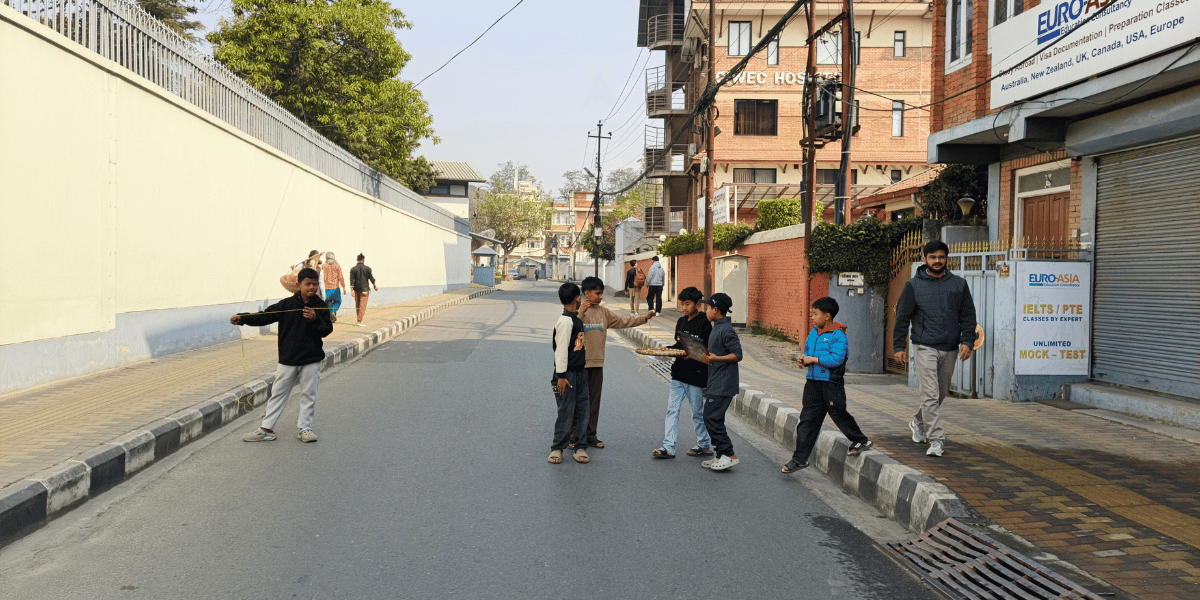
This isn’t religiously related to Lord Shiva, but something more of a tradition passed on among children of Kathmandu and nearby districts.
Even today, children participate in this informal tradition by stopping passers-by especially vehicles and collecting small donations. At the end of the day, they distribute the collected amount and enjoy buying sweets to celebrate Mahashivaratri on their own.
Even I used to do it, and writing this is giving me nostalgia.
Bonfire and Sugarcane Blasting Practice
Maha Shivaratri falls near the end of the winter season and hence marks a transition towards spring. During the evening of the festival, in many neighbourhoods, people gather and light bonfires.
This event has a symbolic representation. A triumph of light over darkness!
Locals believe that feeling the warmth of the bonfire on this night invites Lord Shiva’s protection over your health.
In some places in Nepal, people celebrate the bonfire by adding sugarcane to it. In fact, as part of the rituals, sugarcane juice is also offered to Lord Shiva during Rudra Abhishek.
The fire is locally referred to as “Dhwoni” or “Dhoni”, and the warm, lightly smoked sugarcane is considered an offering to Lord Shiva. Locals enjoy this tradition and consume the sugarcane as prasad.
From my personal experience, I had the chance to partake in this tradition when I visited Bandipur a few years back. The taste was different and, more importantly, I got to be a part of a very different Mahasivaratri tradition that I had never experienced before.
Particularly speaking, I was intrigued by how locals lightly burn sugarcane and then hit it strongly on the ground, making it explode. Surely an activity I suggest trying to all the Shiva devotees!
Nepal Army’s Day
Besides the religious participation, there is another important observance on the same day, which takes place only in Nepal. It’s for the soldiers of the country with a strong sense of unity and pride: the Nepal Army Day!
The main celebration takes place at the Tundikhel Army Pavilion, where armies of Nepal put on an impressive display of their skills and talents. So, if you’re wandering in Kathmandu on this day, you can take a peek here too!
Performances such as military parades, cannon and rifle firing, skydiving, along with other cultural programs and exhibitions, are carried out. And you won’t be alone, as hundreds of people also gather around Tundikhel to witness these performances on this day.
A Deeper Look Into Maha Shivaratri in Pashupatinath Temple
Just like many pilgrims visit Kailash Mansarovar in Tibet, millions of pilgrims visit the Pashupatinath Temple every year in Kathmandu for Shivaratri. As you enter the premises, the scent of the incense, vibrant flowers, and colourful oil lamps makes you feel mesmerised.
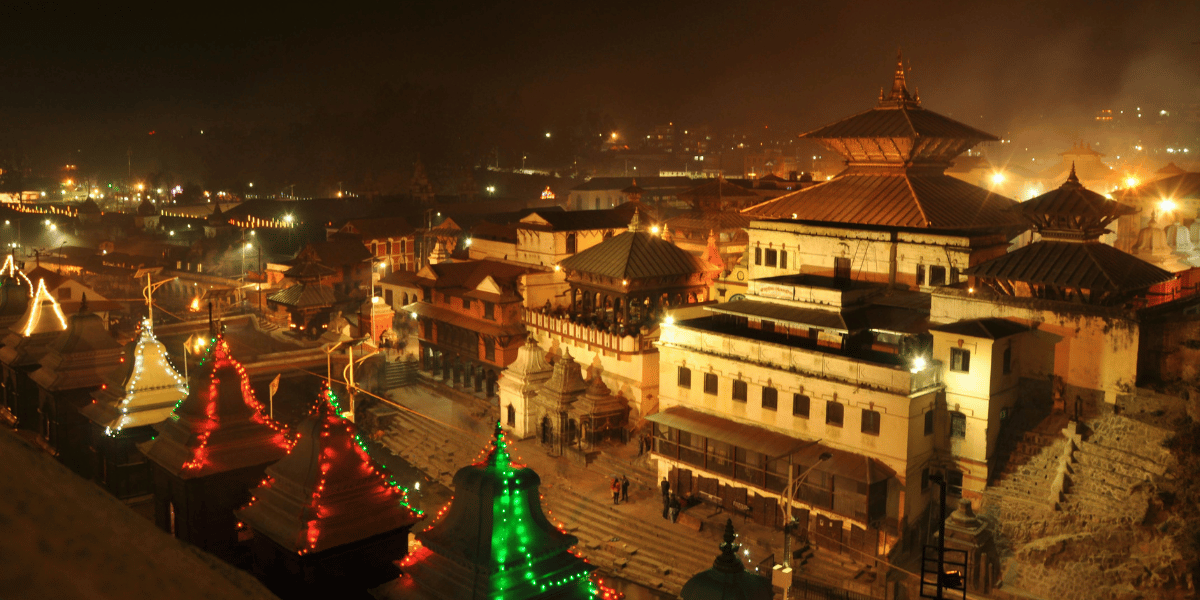
But you need to be wary that the Pashupatinath Temple is overcrowded at the time of the Maha Shivaratri. In almost every corner of the temple, you’ll find Hindu devotees from both Nepal and India. Some of them are waiting in a queue for hours, some from 1 AM in the morning, just to get inside the temple, while others are observing every ritual performed here and there.
Note that the temple is one of the UNESCO World Heritage sites, and you can see many foreigners, especially Indian tourists, also exploring the uniqueness that the sacred place offers.
The highlight has to be the sadhus and aghori babas (especially from India), who come here to relax in the premises of Pashupatinath Temple to celebrate the festival.
On the day of Maha Shivaratri, devotees from Kathmandu wake up early in the morning and take a bath before starting anything. They prepare the essentials for the rituals and visit the temple as early as possible (even starting from midnight). That’s because the queue to get inside the main Pashupatinath temple is so huge.
And the next day after the conclusion of the Mahashivaratri, an official farewell ceremony is organized by the Pashupatinath Area Development Committee (PADC) and the Guthi Sansthan, where Sadhus are thanked for attending this auspicious festival and even provided a travel allowance to return back.
Other Places to Visit During Maha Shivaratri Festival in Nepal
Apart from Pashupatinath in Kathmandu, Mahashivaratri is celebrated in many other places in the Shiva temples.
Most of the sacred sites are easily accessible by vehicle. But if you’re interested in trekking, you can reach even higher-altitude regions where these temples are located.
Here’s a list of a few:
- Kailashnath Mahadev Statue, Bhaktapur
- Pumdikot Shiva Statue, Pokhara
- Kumbeshwar Temple, Lalitpur
- Doleshwor Mahadev Temple, Bhaktapur
- Jaleshwar Mahadev Temple, Mahottari
- Santaneshwor Mahadev Temple, Lalitpur
- Halesi-Maratika Caves, Khotang
- Gupteshwor Mahadev Cave, Pokhara
- Bhaleshwor Mahadev, Chandragiri, Kathmandu
- Pindeshwor Temple, Sunsari
- Panch Pokhari Shiva Temple, Sindhupalchowk (Langtang NP, requires trekking)
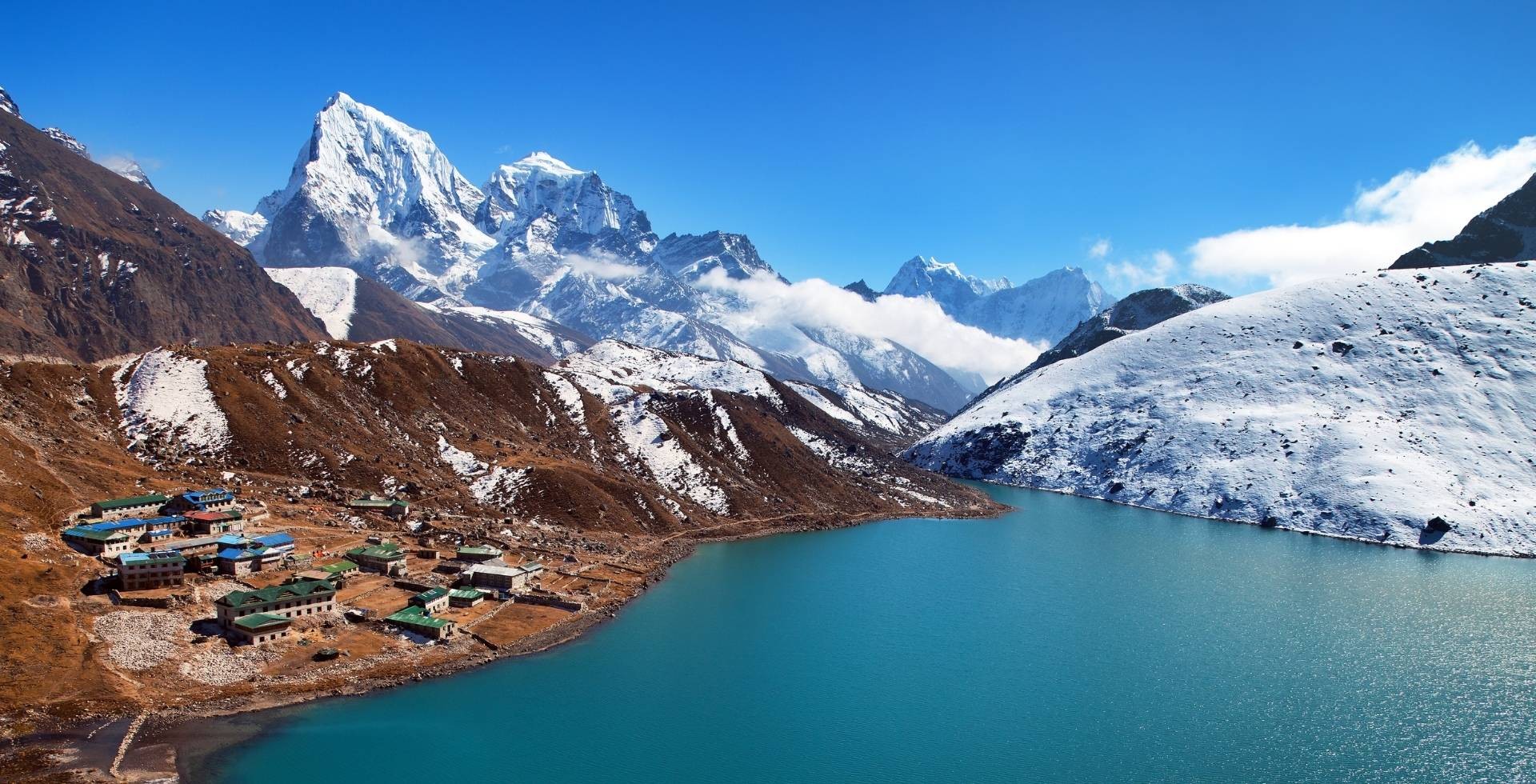
- Gosaikunda Shiva Temples, Rasuwa (Langtang NP, requires trekking)
- Badimalika Temple, Bajura (requires trekking)
Maha Shivaratri Festival Celebrations Outside Nepal
The significance and importance of Maha Shivaratri is not just limited to Nepal but extends across the globe. Even Nepali devotees living outside the country observe the festival through fasting, night-long vigils, meditation, and prayers dedicated to Lord Shiva.
And when it comes to Hindu festivals, just like Nepal, India also ranks high. So, it’s obvious that the majority of Indians show devotion to Maha Shivaratri.
Sacred places (such as Varanasi, Ujjain, Kedarnath, Puri, Haridwar, and more) witness grand observances too. In fact, in Tamil Nadu, devotion is expressed through the sacred dance known as Natyanjali, which is performed at prominent Shiva temples there.
Beyond India, Maha Shivaratri is observed in countries where Hindu communities live the most. Hindus in Pakistan also visit temples in cities like Karachi.
Moreover, Mauritius also has thousands of Shiva devotees living there who undertake a pilgrimage to Ganga Talao (Grand Bassin), which is a sacred crater lake that holds immense spiritual importance.
Similarly, Indo-Caribbean communities in Guyana and Trinidad and Tobago, along with those living in western countries, celebrate Maha Shivaratri in their own ways.
Maha Shivaratri as a Tourist in Nepal
There are many things to consider while celebrating this festival. To make your experience of Maha Shivaratri easier and smoother, I have listed some helpful tips that should help you on your visit.
Do’s
- Dress modestly.
- Be mindful of the temple rule.
- Listen to bhajan and kirtan, stories of Lord Shiva.
- Meditate and hymn.
- Visit the temple mostly during the evening.
- Donate potential necessities for the poor and needy.
Don’ts
- Avoid eating non-veg foods on this day.
- Avoid drinking alcohol or any other kind of addictive substance.
- Avoid conflicts.
- Don't click pictures in restricted areas.
Tips
- Be aware of the potential scams.
- Plan and arrive early.
- Devote your time to spiritual activities.
- Maintain distance from the Sadhus and Aghoris.
- Ask permission before clicking pictures.
Conclusion
Maha Shivaratri is indeed one of the most significant festivals in Nepal. Visiting here on this auspicious day means you don’t just get to immerse in the religious practices but also meet babajis and sadhus who follow their own sacred rituals.
To learn more about similar festivals and traditions, we have been writing related blogs on our site. So, do check them out!
And if you’re willing to visit Pashupatinath Temple or other Shiva Temples in Nepal, let our team at Altitude Himalaya take you out on your journey. We promise to enhance your experience by not just offering touring services but ones that actually give you an educational walk through of the landmarks in Nepal.
Jay Bholenath!




 Rijen Manandhar