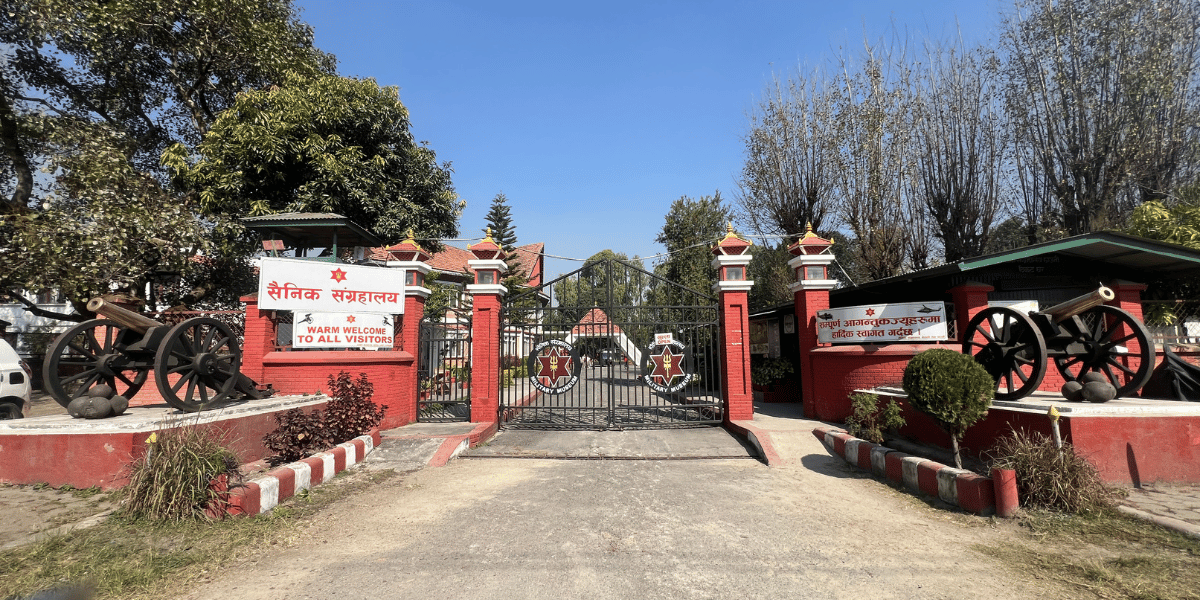
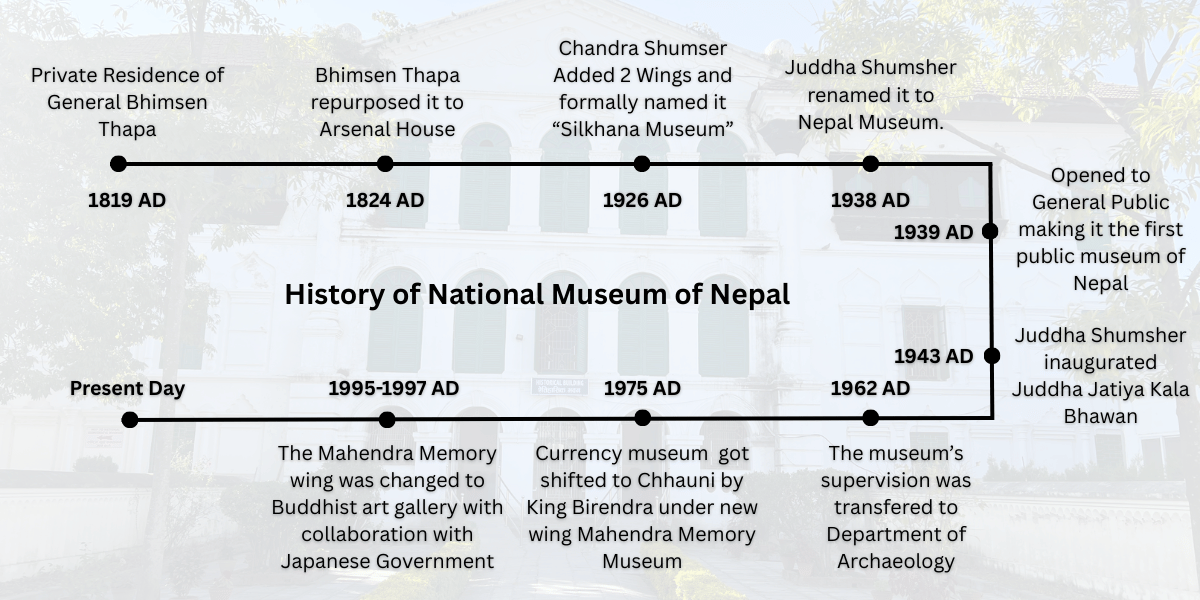
Before proceeding forward, let’s first get a quick glimpse of how the National Museum in Chhauni came into existence. And for that, we need to travel back to 1819 AD, when General Bhimsen Thapa was the prime minister of the country.
It Was a Private Residence!
At that time, the main natural building was built just for his own private residence. Later, in 1824, the man himself repurposed it into an arsenal house (Silkhana).
Locals called it Chhauni Silkhana, and the place stored arms and ammunition for state use.
Moving forward to 1846 AD, the Rana regime started, and in the initial phases, the site remained as a military storehouse. But gradually, it also started collecting items of historical significance.
Over time, more and more historical objects were kept rather than just functional arms. For that reason, the site was commonly referred to as the “Chhauni Museum”.
Two More Wings Added During the Rana Regime
In 1926, Chandra Shumsher expanded the place by adding two additional wings and formally named it “Silkhana Museum”. From here on, the building was for more than just storing weapons. It even started displaying Nepal’s historical items.
The transformation came slowly, and, in 1938, Juddha Shumsher renamed this institution as the “Nepal Museum”. Just a year later, in 1939, it was opened to the general public, making it Nepal’s first public museum. This finally made people able to engage with the country’s military, political, and cultural heritage.
On 18 April 1943, Juddha Shumsher inaugurated Juddha Jatiya Kala Bhawan in one of the dedicated wings. It stored stone, metal, and wood sculptures, and that building still stands to this very day!
Post-Rana Regime
After the Rana regime ended in 1951, the museum came under the supervision of the Ministry of Education until 1962.
The current administration of the museum, under the Department of Archaeology of the Ministry of Culture, Tourism and Civil Aviation, has been in place since 1962 onwards.
Let me go a little off-topic here. In the same year, 1962, King Mahendra introduced a currency museum in the Hanumandhoka Palace. This was later shifted to Chhauni by King Birendra after the Mahendra Memory Museum was inaugurated in the other wing in 1975.
But it was short-lived there. Between 1995 and 1997, with collaboration from the Japanese Government and under King Birendra’s patronage, the wing was transformed into the Buddhist Art Gallery, dedicated to showcasing the life of Buddha and the origins of Buddhism.
Once it was finalized in 1996, the currency museum was transferred to the Pulghar building.
Present Day Museum
Today, the National Museum at Chhauni stands as a layered historical site. What I mean by this is that it comprises three main buildings:
- The original Silkhana is now dedicated as the History Building
- Juddha Jatiya Kala Bhawan remains the same
- And the Buddhist Art Gallery (which was transformed from the currency museum that is currently still in Pulghar)
After personally visiting the National Museum, I can assure you that this spot is Nepal’s national treasure. Once you stop by yourself, you’ll know exactly what I’m talking about!
As mentioned above, the National Museum complex is organized into three main wings, all within a shared courtyard. So, just walking a short distance, you can explore each building and get insights into the history, artistic traditions, and religious heritage of Nepal!
Note that each wing focuses on a different aspect of Nepal’s heritage. Let me introduce you to these wings:
The Main Historical Building
Earlier, we learned that this main building was where military weapons and armaments were stored. But ever since Nepal signed the Treaty of Sugauli, these weapons lost their military relevance, and they have only been preserved as historical artefacts.

Today, the museum at Chhauni no longer remains an arsenal house (Silkhana) but has transformed into one that houses an impressive collection of natural history, dolls from different nations, arts, and various cultural depictions.
This building is the core of the National Museum, as it laid the foundation for the later development of the other two wings.
Once you enter, you’ll observe several dedicated galleries that present different aspects of Nepal’s heritage (as well as international).
Natural History Gallery
This is the section that presents a fascinating collection of animal specimens, including mammals, birds, and reptiles, preserved through taxidermy. It gives you a closer look at Nepal’s natural diversity while also introducing you to the ones in the wider natural world.
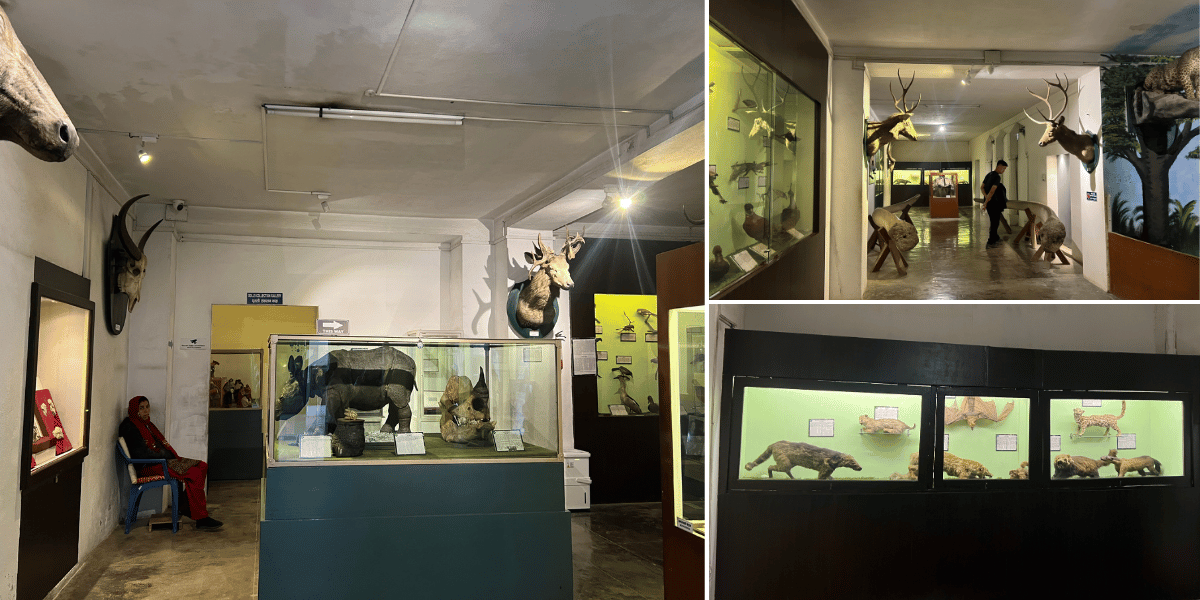
Some that caught my eye include the mandibular (jaw) bone of a bowhead whale, fossil specimens of different species (like Lycoptera), replicas of other faunas (like one of the baby rhinoceros brought from the United Kingdom), and many more for educational and exhibition purposes.
In the same Natural History section, you can even take a glimpse of lunar rock samples that I mentioned earlier. It’s definitely not to be missed out on if you’re someone who’s fascinated with scientific arts and exhibitions.
Dolls Collection Gallery
There’s also a dedicated doll gallery that offers a glimpse into different cultures from around the world. This section within the history building showcases traditional dolls and puppets.
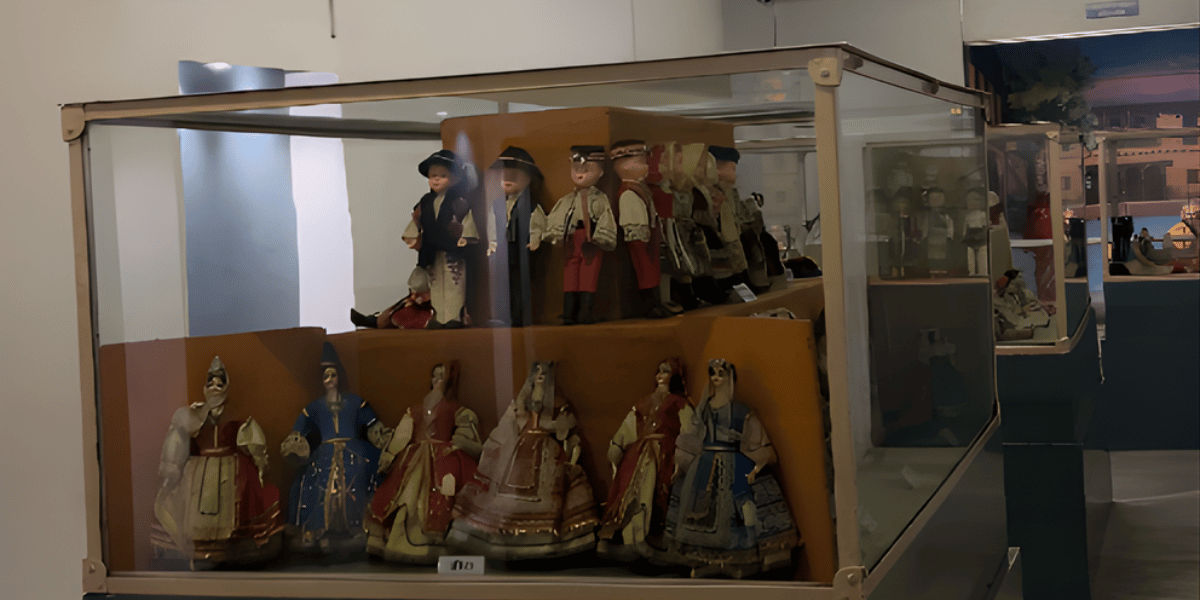
But don’t just take them as just random playing dolls. Each doll wears traditional attire of different countries, like China, Greece, Belgium, Italy, etc., and they carry beliefs and customs of different communities.
Surely, the gallery is engaging for visitors interested in social history. It shows how cultural exchanges were done in the past to strengthen international relationships and foster mutual understanding.
Ethnological Section
While the collection of dolls gave us insights into the traditional attire and culture of foreign countries, the ethnological section highlights the cultural diversity of Nepal.
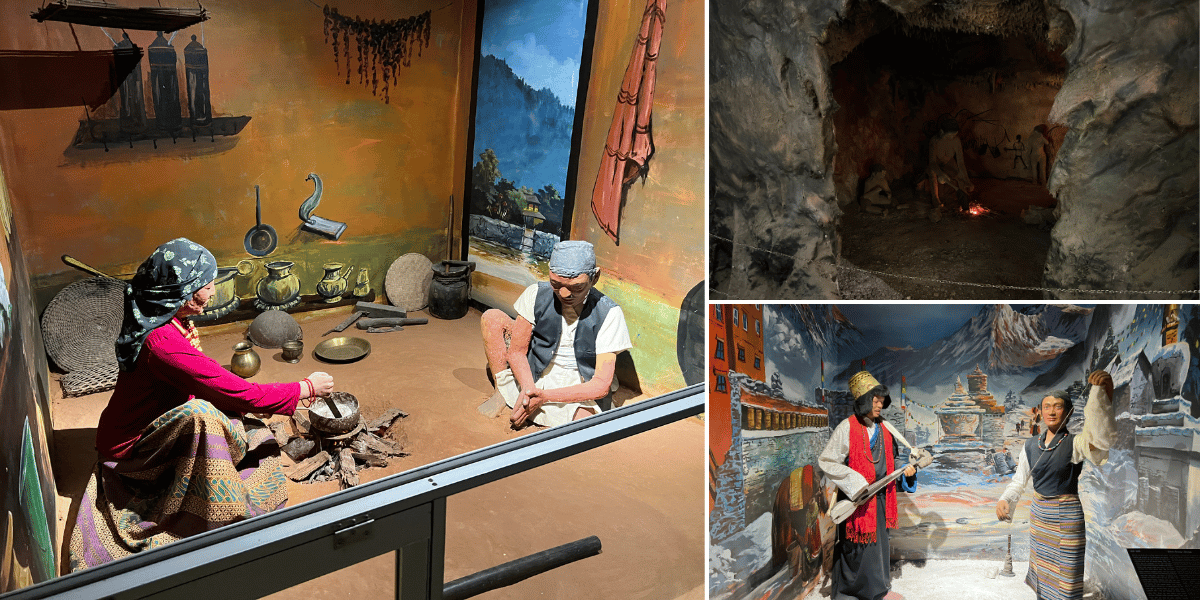
Let me tell you that Nepal is often referred to as a “shared garden of many flowers”. What this means is that different cultures and communities coexist in harmony within this single small nation. And this section shows us just that!
It showcases Nepal’s rich social fabric, where art, traditions, and ways of life vary from region to region. Each display here reflects how culture and tradition are shaped by geography and also provides an overview of different castes and ethnic groups living in the country, such as Brahmin, Chhetri, Gurung, Sherpa, etc.
You’ll find unique arts, artefacts, traditional objects, and visual representations that help you understand people living in the three regions (mountains, hills, and Terai).
Personally, I found this to be one of the most meaningful galleries within the National Museum. And that prehistoric human replica visualized how far we have all come!
The ‘Mustang’ Section
This is a unique section that presents the ancient history and heritage of the Mustang region, showcasing artefacts that reflect the survival and daily life of its early inhabitants.
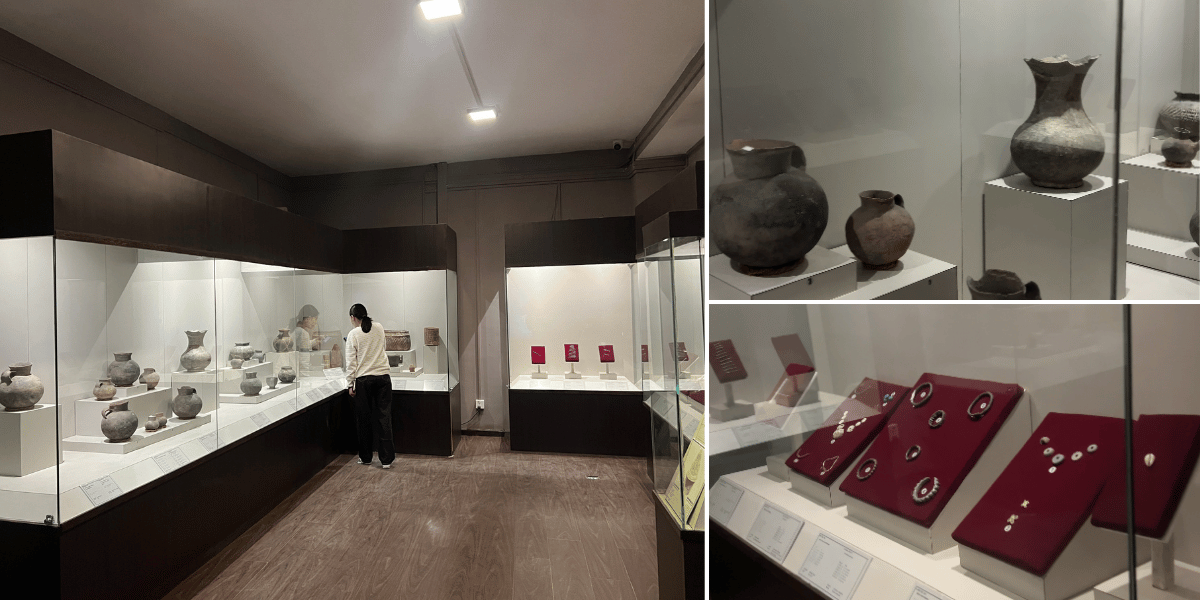
You’d be surprised to know that many of these objects date back centuries, even up to the 16th century. For someone who has never visited Mustang before, I got to learn so much from here itself!
If you’re unknown to Mustang, let me tell you that it’s a high-altitude, dry zone located behind the Annapurna mountains and Dhaulagiri ranges. It is well known for the sacred Muktinath Temple and also for having historical ties with Tibet.
Honestly, there’s more! And if you visit the National Museum, you also get to know about the hidden secrets, like archaeological research associated with the Chokhopani hydro project, ancient caves, cliff-side dwellings, lifestyle, history, etc., via text panels.
Some other distinctive exhibits in this section include clay horses collected from sacred fire rituals, a mummified human child discovered in Mebrak Cave (dated around 400 BC), a human skull estimated to be from 800 BC, etc.
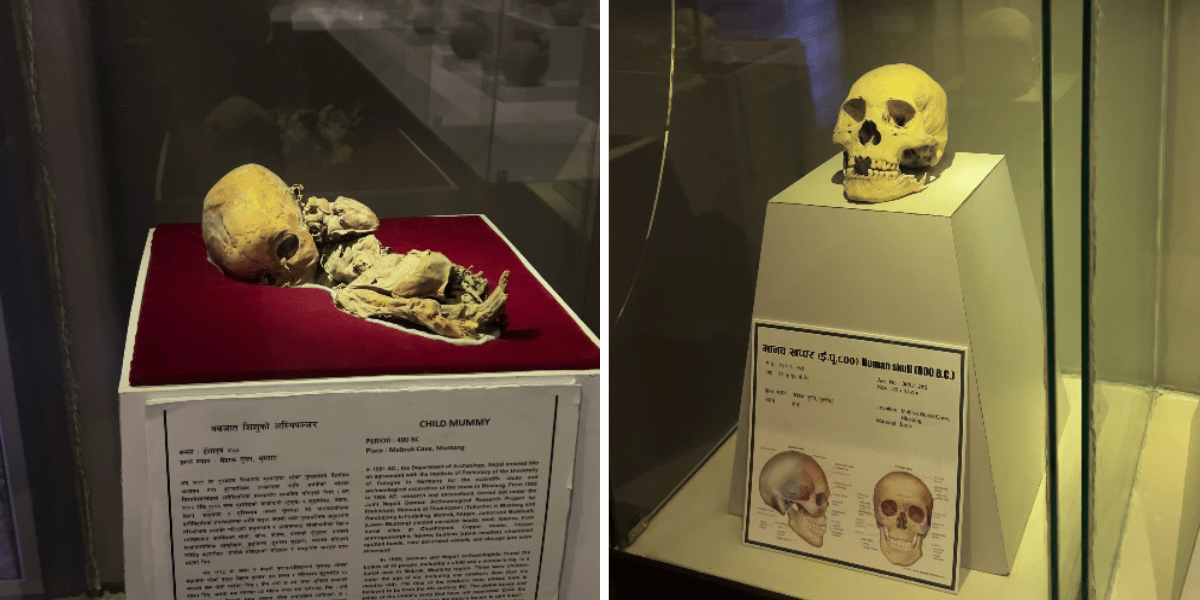
All these artefacts tell the story of Mustang’s ancient civilization, its people, and how culturally rich their environment is. I’m pretty sure after learning about Mustang here, you’d want to give the place a visit!
You might want to check out: Upper Mustang 4WD Jeep Tour
Arsenal Section aka War Gallery
You’re already aware by now that the National Museum was first an arsenal house. So, it's obvious to tell you that there’s a dedicated section that showcases weapons used by great warriors from the past.
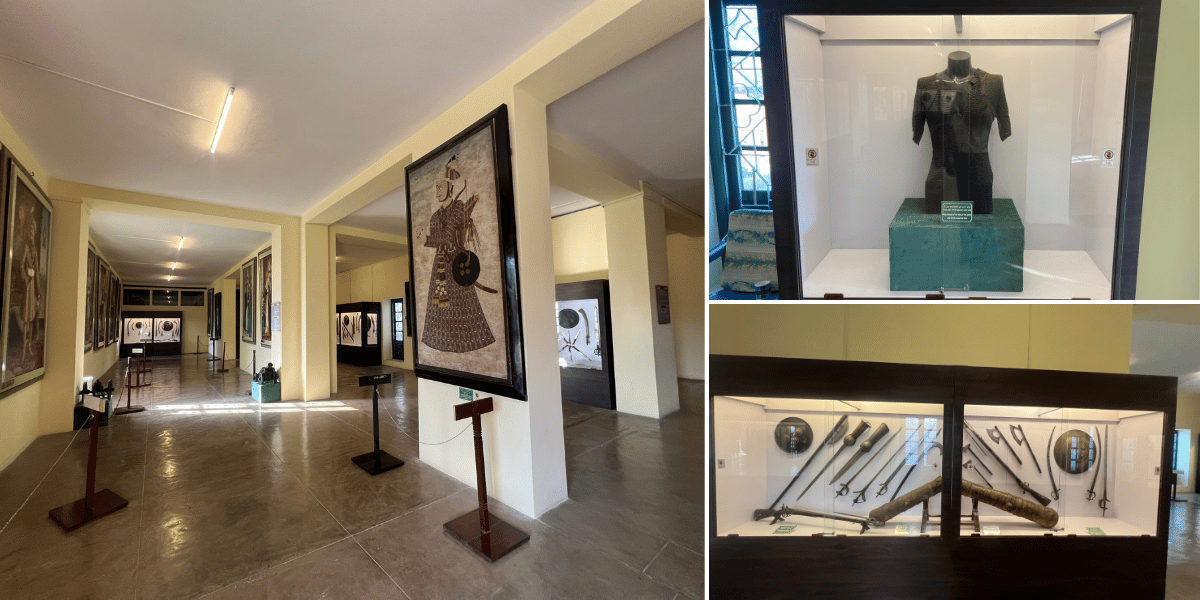
Expect to see the armour of Prithvi Narayan Shah, weapons of Kalu Pandey, serialized weaponry from ancient wars, those used by Malla kings, and so much more!
What I liked the most was how well they were organized based on dates, brave warriors, and weapon types. Yes, even Khukuris, ancient swords, and shields are here!
Other Historical Things You’ll Encounter
Just as you’re exploring the Historical Building, you’ll get attracted to some other fun stuff too.

The Laughing Mirror, which reflects inward and outward images, makes you want to stop and take pictures, while the Crystal Clock is a unique treasure that showcases how the Ranas were influenced by Western art and culture.
Also, at the end of this building, you’ll see the first radio transmitter of Nepal, which was used by Radio Nepal in 1951 AD.
Also, at the entrance, you’ll also find a store where you can buy different sculptures. These are replicas of what you can find inside the historical building.
Honestly, there’s more. But instead of listing every item here, why don’t you plan a visit to the museum yourself? Our team at Altitude Himalaya is ready to take you out on a day tour for a more lively experience.
In fact, we already offer a Kathmandu Valley Cultural Tour package, where we can include the National Museum just for you!
Buddhist Art Gallery
Buddhism is one of the most deeply rooted religions in Nepal and has influenced cultures across Asia and different parts of the world. To learn more about Buddhist culture, visiting the National Museum is exactly what you need to do.
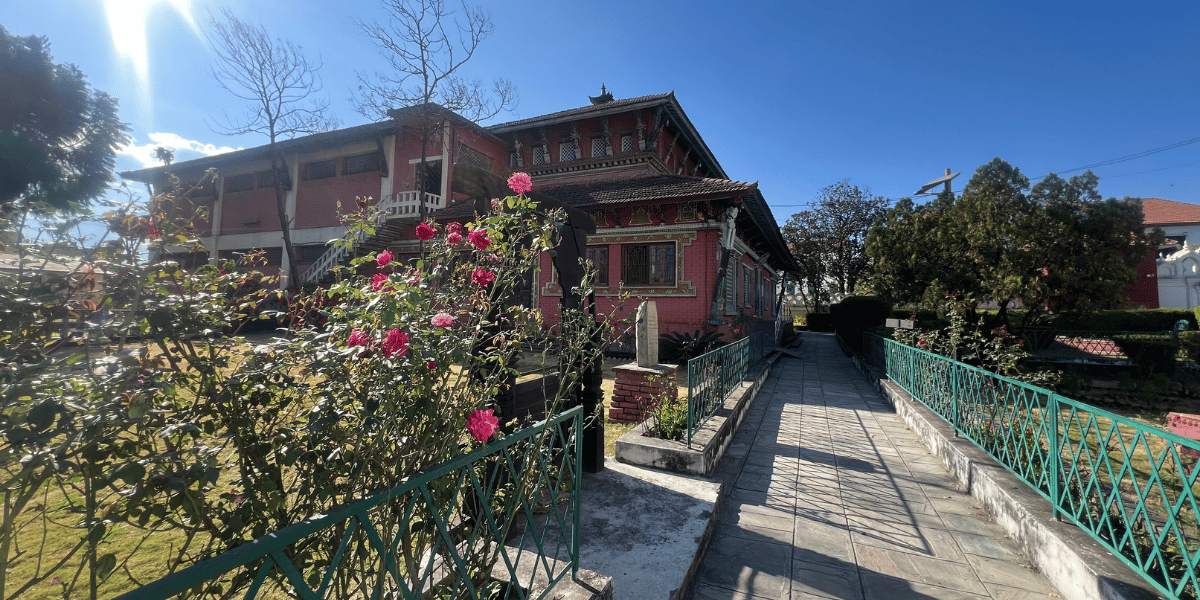
The Buddhist Art Gallery is situated in the northern part of the complex. Since it was built with the assistance of the Japanese Government, the designs are heavily inspired by the traditional architecture of Japan.
Upon my own visit, I got to learn about the evolution of Buddhism and its cultural connections with Hindus (mainly Newar traditions), too.
This gallery is further organized into four sections:
- Terai Section: Highlights the birthplace and early development of Buddhist practices
- Kathmandu Valley Section: Showcases Buddhist influence and palatial culture (even Newari elements can be found)
- Northern Himalayan Section: Shows the growth and artistic evolution of Buddhism in northern Nepal
- Mandala Section: Displays intricate mandalas and sacred art used in Buddhist rituals and teachings
Now, let me offer you an immersive experience of Nepal’s rich Buddhist artistic heritage by guiding you through each of these sections in the Buddhist Art Gallery.
You might want to check out: Nepal Buddhist Cultural Tour
The Terai Section
This is the section that focuses on the core history of Buddhism. From the life of Prince Siddhartha Gautama of Kapilvastu to how he became Gautam Buddha, everything’s here!
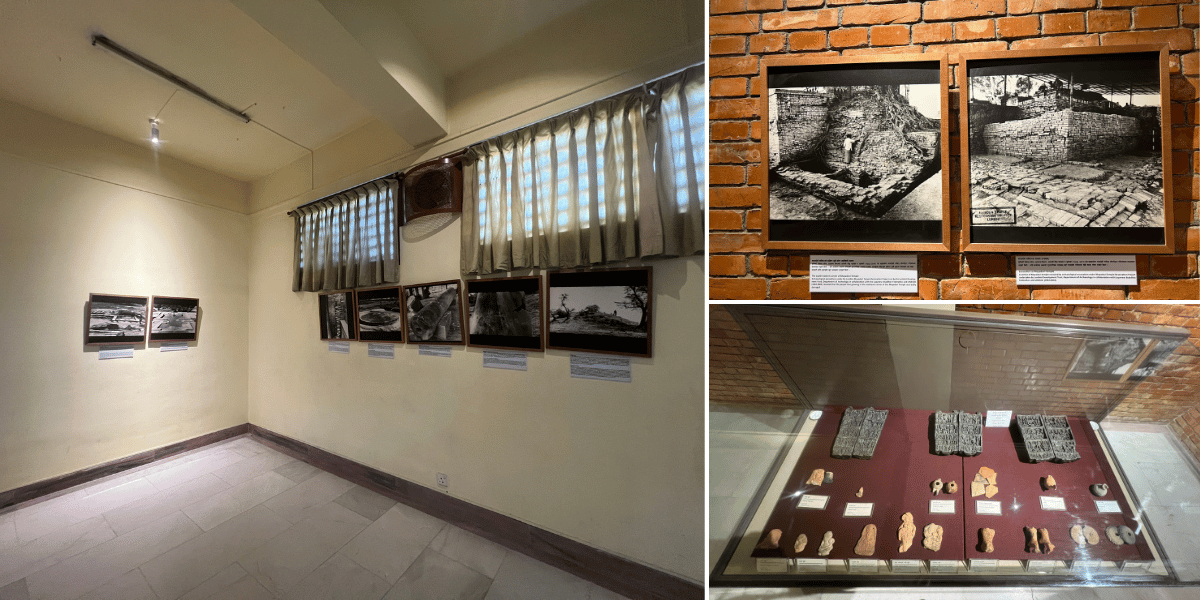
You get to learn the principles, teachings, and spiritual journey of Gautam Buddha all by just visiting this part of the National Museum.
Yes, you heard that right! If you’re short on time visiting Lumbini, you can instead come here to learn how Buddha attained enlightenment and shared his knowledge with the world.
This gallery showcases everything about that, and here’s what to expect:
- The history of key Buddhist sites
- Evolution of Buddhist architecture
- Range of ancient artefacts
- Ritual objects (such as mirrors, oil lamps, etc.)
- Notable paintings from different centuries (figures from Shrishtikarta Lokeshwor to Usnisavijaya are all hung on the walls)
The Kathmandu Valley Section
This section of the Buddhist Art Gallery showcases the valley’s rich Buddhist heritage, directly connected to the valley.
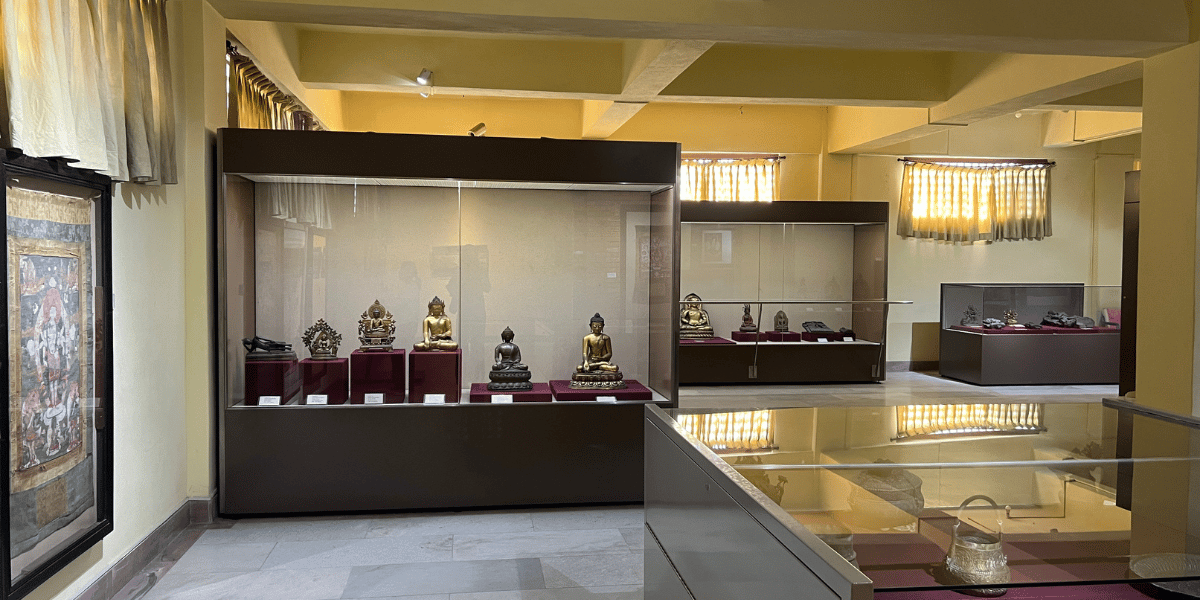
Navigating through here gives you the idea of how the values and teachings of Buddhism influenced people in Kathmandu. So, expect to find:
- Manuscripts and statues of Buddha crafted from stone, bronze, and other materials.
- Statues of Shreedhar Vishnu and Shiva, primarily dating from the 8th and 9th centuries.
- Artistic and spiritual heritages.
- Scripts related to Newari Buddhist practices and their daily life
One particular section that fascinated me was how amazingly the Swayambhunath Stupa’s replica was presented. I would have honestly loved to see Boudhanath Stupa and other prominent Buddhist monasteries of Nepal presented here.
The Northern Himalaya Section
Buddhism, founded by Siddhartha Gautam and originating from the Terai region, didn’t take long to spread north in the Himalayas.
But it didn’t just develop there. It flourished! And even today, the practices are prevalent and, in fact, taught in distinct, dedicated Buddhist institutions.
So, basically, the Northern Himalayan Section within the Buddha Art Gallery is dedicated to showcasing the preserved culture of Tibetan Buddhism and its connection to Nepalese heritage.
Let me guide you along on what to explore in this section:
- Learn about how closely related Tibetan and Nepalese Buddhism are.
- Observe the religious rituals, art, and ceremonial objects that reflect centuries of cultural exchange between Nepal and other nations.
- Take a deeper dive into the major Tibetan Buddhist schools, which are Nyingma, Sakya, Kagyu, and Gelug, along with their ritual practices too.
- Take a glimpse at the sacred objects, like Phurpa (ritual daggers), Dorje (vajra), prayer wheels, and other ceremonial items.
- Gain insight into how Buddhist rituals are performed in the northern Himalayan region.
The Mandala Section
Before deep diving into this section, let’s first understand what a mandala truly is. You’d be surprised to know that it’s a symbolic representation of the universe and is often used in religious rituals and spiritual practices.
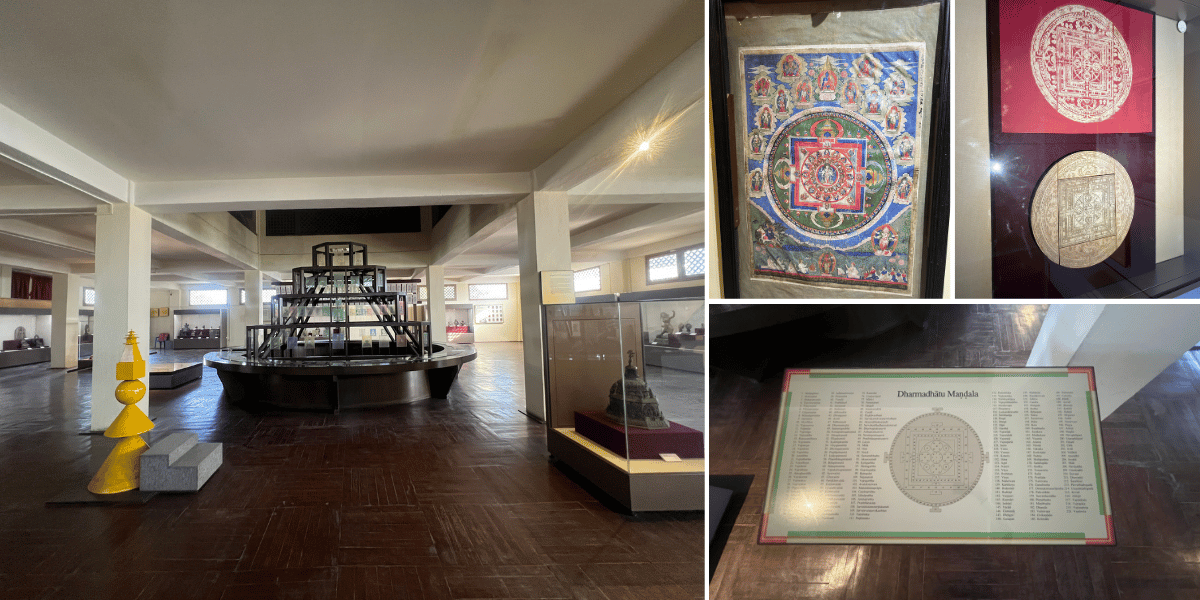
And this section within the Buddhist Gallery of the National Museum features everything you should know about it. This includes the history of how mandalas were created, as well as how monks and devoted practitioners use them to this day!
Moreover, you get to learn about Tantric Buddhism, where a mandala represents the world in a structured form. If you look closely within the mandalas, you’ll find Bodhisattvas placed in specific positions to symbolise different cosmic elements.
Just to let you know: the circle and square signify the universe, while the figures represent spiritual principles and forces. Trust me, you’ll get to know much more once you pay a visit yourself!
At the centre of this gallery is the Dharmadhatu Mandala, which is very renowned in the Kathmandu Valley. It features 220 deities, and they are depicted on the brass, copper, and stone plates (a part of the Vajravali tradition).
Moreover, the gallery includes mandalas from Hakha Bahal and Nah Bahal in Patan too. There are thangka paintings all around.
Upon my own visit, I learned that mandalas were even used by Nepalese kings during traditional ceremonies and royal inaugurations. This clearly reflects how culturally and spiritually significant mandalas are.
Juddha Jatiya Art Gallery
The second wing of the National Museum, built by Judhha Shumsher, is the Juddha Jatiya Art Gallery (aka Juddha Jatiya Kalashala).
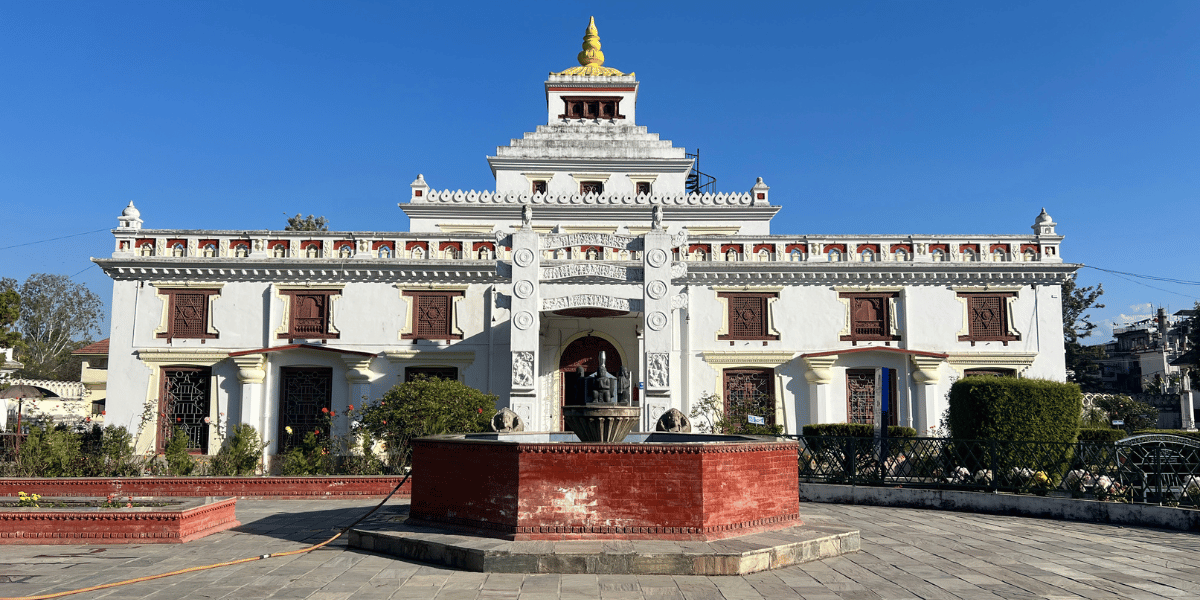
Honestly speaking, I was fascinated with its architecture itself. It showed the tribute to ancient Nepali craftsmanship and artistic excellence.
There are paintings, statues, and artefacts that narrate the stories of devotion, artistic achievement, and cultural pride in this gallery. Something art lovers like me will love and appreciate!
The collections preserved in this building are quite exclusive, as they offer a glimpse into Nepal’s artistic and historical heritage. And after my very own experience, I can tell that walking through the gallery feels like a journey back in time.
Now, let’s deep dive into the details of this building. It’s divided into multiple galleries, each showcasing different aspects of Nepal’s unique art and cultural history:
The Stone Art Gallery
Many of you might not know that the tradition of stone art flourished in Nepal from the Licchavi period itself and continued strongly through the Malla era.
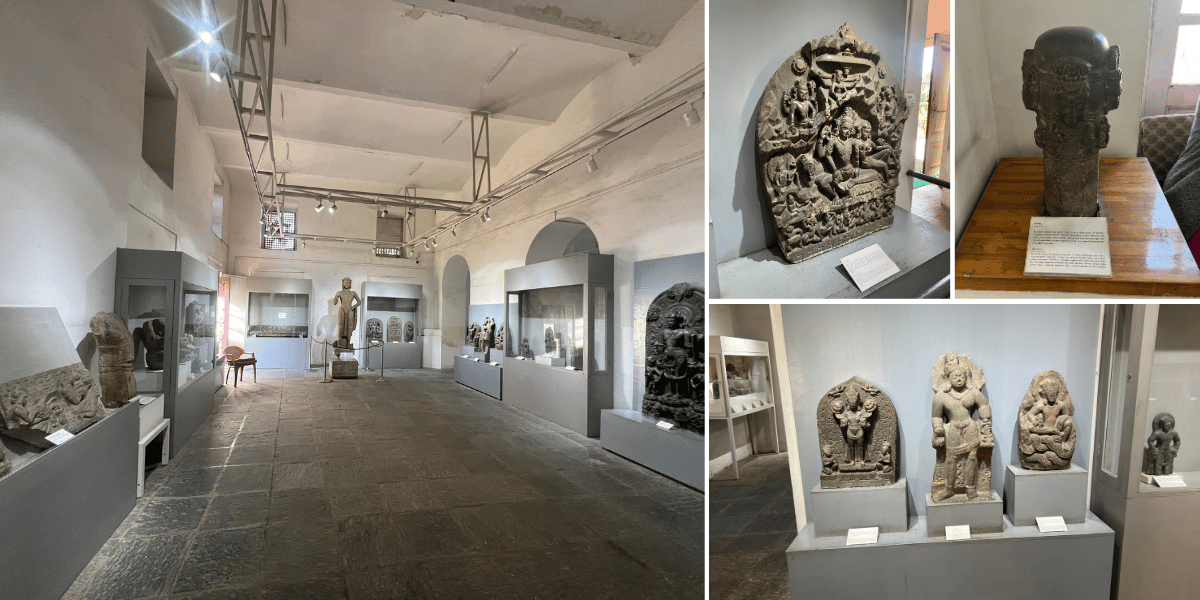
This was the era when massive stone statues, religious images, architectural elements, and decorative artworks were produced in Nepal.
The stone arts preserved in the National Museum reflect both spiritual devotion and refined craftsmanship.
Some of the finest examples you’ll encounter here are:
- Stone sculptures (there are many, but one particular is of King Jayavarman, which happens to be one of the earliest dated)
- Lichchhavi stone sculptures
- Hindu and Buddhist Tantric imagery
- Anthropomorphic images of gods and goddesses
- Malla-period stone arts, and more
The Terracotta Art Gallery
Another captivating section of the Juddha Jatiya Art Gallery is the Terracotta section, which features the often-overlooked art traditions of Nepal.
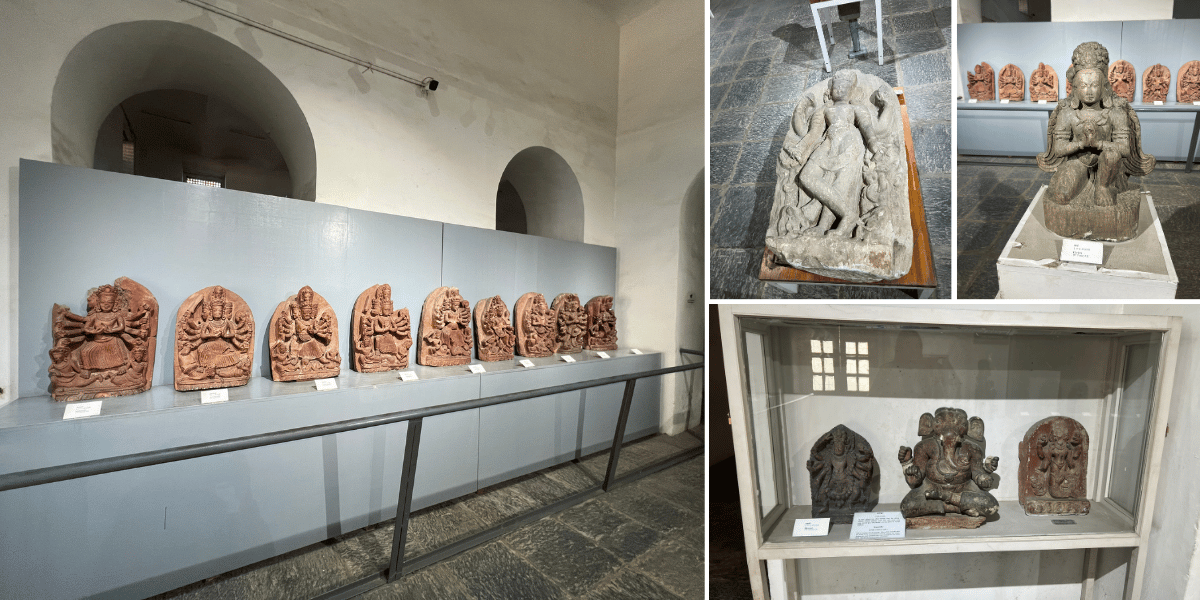
If you’re hearing this term for the first time, let me tell you that this underrated terracotta art has actually been practised in the country since early historic times (around the 3rd century BC).
The origin traces to the southwestern Nepal Terai region, where clay and mud were widely used by artisans. The reason is simple: they were easy to shape and ideal for creating detailed forms.
Thanks to the National Museum, we can now learn about these terracotta artworks that existed from the time of the Licchavi and medieval periods. During my own visit, these were the main items I encountered:
- Images of Navadurga, Brahmayani, Shailaputri, Vaishnavi, and other deities
- Terracotta masterpieces, majorly from the 17th and 18th centuries
- Images of Matsyavatar, Ganesh, and Baban Bhairav
What I learned from the exhibits is that despite the simplicity of materials, the artists were able to transform them into powerful religious and artistic expressions!
Collection of Bronze Artefacts
Moving on, the Juddha Jatiya Art Gallery also features major bronze artworks that have long been used in Nepal for making coins, ritual objects, musical instruments, sculptures, and more!

When visiting this section of the gallery, you get insights into:
- Bronze art collection, mainly from the 17th and 18th centuries
- Exquisite works related to bronze from the Malla period
- Statues of deities, such as Tara and Vasundhara
- Learn about bronze-casting traditions through texts
- Images of Samvara (Mahish, NaraSimha, and Visha)
- Bronze metal statues of the Malla kings and queens
Wooden Art Gallery
From ancient times, wood has been one of the most essential natural materials used in Nepal and definitely all around the globe. But besides daily use, Nepalese artists from the past have used it to show their artistic expression.
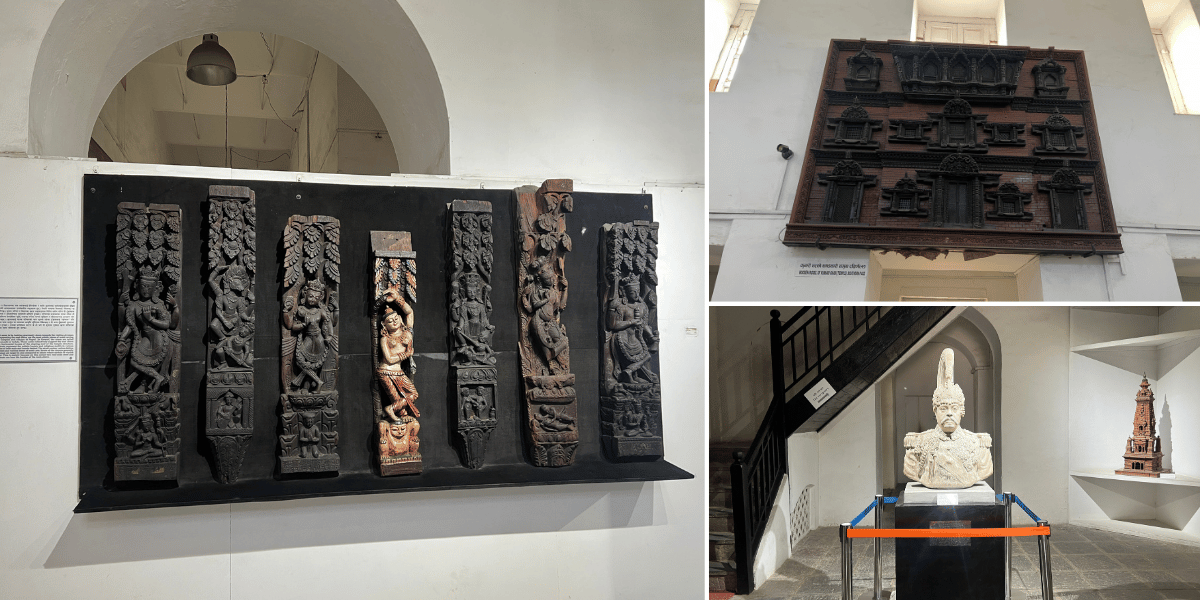
Wooden art in Nepal especially flourished during the medieval period. It was mainly used for carving statues, architectural elements, and decorative images.
The Wooden Art section within the Juddha Art Gallery showcases the following:
- A rich collection of both religious and secular wooden artworks
- Wide variety of rare wooden carvings and architectural elements, such as tympanums and struts
- Sculptural representations of Mahishasuramardini, Dipankar Buddha, Indra, and Indrayani
- Artworks from the 15th to the 18th centuries
- Wooden arts of both religious and secular themes
Well, we all know wood is highly vulnerable to decay. So, this is where I truly want to appreciate the efforts of the National Museum. These wooden arts haven’t just survived but are in their best condition!
The Paintings Gallery
Painting in Nepal originated very parallel to the stone art. We know this primarily because sketching and painting were essential before carving designs.
Historical evidence confirms that paintings were present in Nepal from the Lichchhavi period. The earliest were the manuscript paintings that date back to the 10th century AD.
Passing through the entrance of the dedicated paintings gallery in Juddha’s building, you can find:
- A faded wall painting, which is believed to be from Chandra Shumsher’s residence
- Majestic collection of story paintings, scroll paintings, and manuscript paintings
- Krishna Lila, a remarkable artwork from the 18th century based on the Markandeya Purana story
- Manuscripts ranging from the Lichchhavi period to later medieval works
- Collection of the Sahanama from Iran
- Farsi manuscript written by Firdausi, and more!



 Priyanka Rai