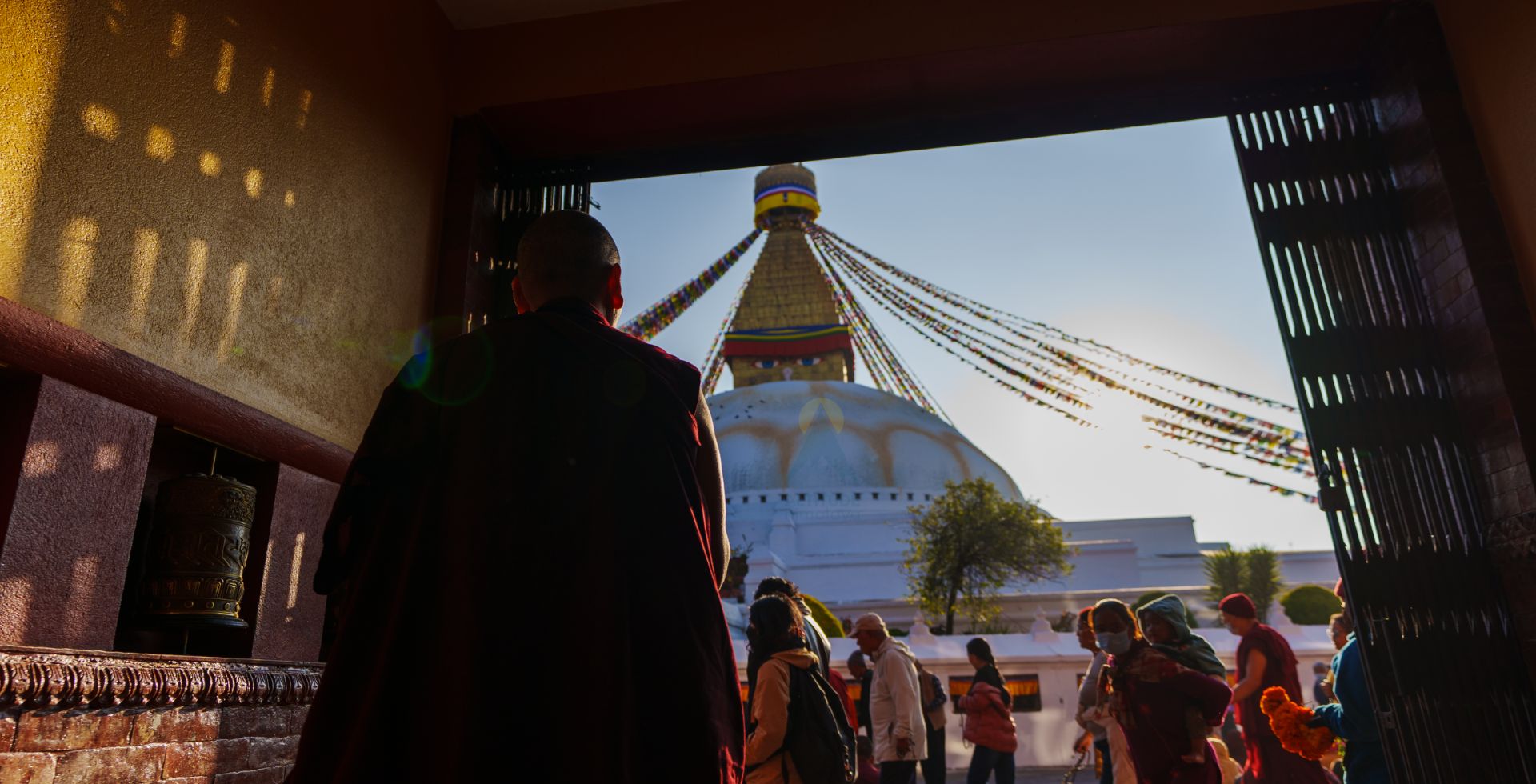
The first thing you notice when you step into one of the UNESCO World Heritage Sites, Boudhanath Stupa, is the huge white dome, the compassionate eyes of the Buddha, prayer wheels, and many devotees walking in an orderly fashion.
Boudhanath, the largest stupa in the Kathmandu Valley, is a center of Tibetan Buddhism, with around 50 monasteries of different schools and lineages in the area.
As you circle the dome clockwise, you will see more of Boudhanath Stupa. You will witness dozens of butter lamps lit, many temples, Buddhist schools, residences, and souvenir shops!
You also get a chance to observe the monks in red robes praying, meditating, studying, and performing rituals in different monasteries.
But before getting into the monasteries around Boudhanath, let’s learn more about the four traditions of Tibetan Buddhism first!
Understanding The Four Traditions of Tibetan Buddhism
The four traditions are generally recognized as: Nyingma, Kagyu, Sakya, and Gelug. These schools developed in different periods and have distinct lineages connected with many Indian and Tibetan masters.
Nyingma (The Ancient One/The Red Hats)
Among the four major traditions, this is the oldest, which was founded by Padmasambhava (Guru Rinpoche) in the 8th century.
It is said to be the first translation of Buddhist scriptures from Sanskrit to Tibetan during the Tibetan imperial period.
In the Nyingma tradition, the Buddhist teachings are divided into nine yanas, or vehicles, where:
- The first three are usual for schools of Buddhism
- The next three are typical for schools of Tantric Buddhism
- The last three are exclusive to the Nyingma tradition
One of the unique characteristics of Nyingma is the emphasis on great perfection, often called Dzogchen. It teaches that one should focus on recognizing their nature of mind, facing reality directly instead of hiding.
Another teaching Nyingma is associated with is the “treasure”, also called “terma”. It is believed that those hidden treasures were concealed by their masters.
Nyingma monasteries are strongly focused on meditation, traditional practices, rituals, and teachings on Guru Rinpoche along with other lineage masters. The tantric practices that they perform are based on the Old Tantras found in hidden treasures (that I mentioned above).
Moreover, this school of Tibetan Buddhism is known for preserving old practices and teachings from different periods of Tibetan Buddhism.
If you want to visit monasteries that follow Nyingma, then you can visit Shechen Tennyi Dargyeling or Guru Lakhang Monastery.
Kagyu (The Oral Lineage/The White Hats)
The Kagyu tradition is specifically known for its strong emphasis on meditation and the transmission of teachings to students.
The word “Kagyu” itself reflects an oral or transmitted lineage to maintain the continuity of Buddhist teachings and meditation practices.
The major teachings were passed down from Indian Buddhist masters and Tibetan masters. The five founding masters are:
- Tilopa (988-1069 C.E.): The first great Indian yogi of the lineage, who experienced the original transmission of the Mahamudra (the highest teachings of Buddhism) himself.
- Naropa (1016-1100 C.E.): Naropa is the student of Tilopa from India, who completed the enlightenment process and described the Six Yogas of Naropa.
- Marpa Lotsawa (1012-1097 C.E.): The Tibetan translator of the texts of Vajrayana and Mahamudra who received the teachings from Naropa.
- Milarepa (1052-1135 C.E.): Milarepa is the 11th-century mystic who was famous for his songs and leading a yogi life.
- Gampopa (1079-1153 C.E.): Gampopa, who is recognized as the founder of the Dagpo Kagyu (one of the two Kagyu lineages), is an important student of Milarepa.
The tantric rituals performed in the Kagyu traditions are obtained from Guhyasamaja Tantra and Cakrasamvara Tantra.
Mahamudra, or the Great Seal, is the best meditation system of Kagyu, related to understanding one’s mind and reality. It is said that Gampopa played a major role in bringing this teaching into the Kagyu religion.
That is why we can see the importance of meditation, retreats, and teachings in the monasteries following Kagyu traditions. If you want to observe it yourself, then you can visit Dilyak Yevam and Pullahari Monastery.
Sakya (The Grey Earth Tradition/The White Hats)
The Sakya tradition started in the later period of Buddhist transmission from Sanskrit to Tibetan.
The name Sakya refers to the grey or pale earth and is derived from the Sakya Monastery located in Tibet, which has grey landscapes, founded by Khon Konchok Gyalpo (1034-1102 C.E.) in 1073 C.E.
The tradition preserves Vajrayana meditation and tantric practices. Their main teaching system relies on “Lamdre” from the Hevajra Tantra, where “lam” means path and “dre” means result. So, it means the path and its result.
This tradition traces the Lamdre lineage to the Indian master Virupa and other Tibetan translators. The five Sakya masters of the Sakya school of Tibetan Buddhism who played a main role in developing the tradition are:
- Sachen Kunga Nyingpo (1092-1158 C.E.) is the son of Khon Konchok Gyalpo and the one who learned the “Parting of the Four Attachments” from Manjushri. He is also known for the Lamdre writings.
- Sonam Tsemo (1142-1182 C.E.) is the second among the five patriarchs of the Sakya school and is the student and son of Sachen Kunga Nyingpo. His main work includes the writing of Bodhisattava’s Way of Life (Bodhicharyavatara).
- Jetsun Drakpa Gyaltsen (1147-1216 C.E.), the other son of Sachen Kunga Nyingpo, the third patriarch, is known for his writings on Parting from the Four Attachments and Lamdre.
- Sakya Pandita Kunga Gyaltsen (1182-1251 C.E.) is a scholar of the Tibetan Buddhist tradition and the leader who guides and directs Buddhist followers.
- Chogyal Pakpa (1235-1280 C.E.) is the fifth patriarch and was the nephew of Sakya Pandita. He joined Sakya Pandita at the Mongol court and later became the actual political and spiritual ruler of Tibet under the patronage of Kublai Khan.
If you want to visit the Sakya schooling monasteries around Boudhanath, then you can visit Jhamchen Lhakhang and Tharlam Monastery.
Gelug (The Virtue Model/The Yellow Hats)
Gelug means ”Tradition of Virtue,” where "dge" is virtue and "lugs" is tradition; it is the largest and the newest tradition among the four Tibetan traditions. It was developed in the 14th to 15th centuries by Je Tsongkhapa (1357-1419 C.E.), a scholar known for his integrity.
Since the Dalai Lama is a member of the Gelug school, he is often mistaken for the spiritual leader of this tradition. However, that is incorrect!
Historically, the Dalai Lamas served as the temporal leaders of the Tibetan state, whereas the Ganden Tripa (the holder of the Ganden throne) is the actual spiritual head of the Gelug tradition.
The appointment of the Ganden Tripa is made based on the merit they have earned. The tenure of a spiritual head is for seven years.
Until now, there have been 104 Ganden Tripas who have been appointed. Currently, the 105th Ganden Tripa is Jetsun Lobsang Dorjee Palsangpo, who was appointed on November 2, 2024, after Jetsun Lobsang Tenzin Palsangpo.
The Gelug tradition focuses more on Buddhist philosophy, systematic study, discipline, and debates. Students of the Gelug school study philosophy and participate in formal debate as a part of their education.
Their teachings signify Madhyamaka (Middle Way) philosophy, which teaches choosing a balanced path in dilemmas, and the cultivation of Bodhicitta that develops the mind of enlightenment.
Tsongkhapa understood the existing Tibetan Buddhist traditions and combined monastic discipline, philosophical understanding, meditation, and tantric practice that made it one of the best teachings.
It led to the tradition being practiced by large educational monasteries and for Buddhist scholasticism!
In the Boudhanath area, Samtenling Monastery represents the Gelug tradition, and the widely known Kopan Monastery is also a Gelug institution.
A Quick Look into the Monasteries Around Boudhanath
Here is a summarized look into monasteries around the Boudhanath area that you can enter and also perform meditation or rituals.
|
Monastery name
|
Tradition/Lineage
|
Location
|
Main highlight
|
|
Guru Lhakang Monastery (Tamang Gompa)
|
Nyingma
|
On the northern side of the stupa
|
Traditional Tamang Buddhist monastery with great Boudhanath views.
|
|
Shechen Tennyi Dargyeling Monastery
|
Nyingma
|
Inside the quiet lane northwest of Boudhanath (about 3-5 minute walk from the stupa)
|
Beautiful murals, statues, woodwork, and Tibetan architecture.
|
|
Ka-Nying Shedrub Ling Monastery
|
Kagyu and Nyingma
|
Located in the Setogumba area, around a 10-minute walk from the stupa
|
Buddhist philosophy, meditation, teachings, and retreats.
|
|
Jhamchen Lhakhang Monastery (Maitreya Temple)
|
Sakya
|
At the western side of the main stupa
|
Large Maitreya Buddha statue and a notable center for Buddhist philosophy and study.
|
|
Tashi Samtenling Monastery
|
Gelug
|
Located northeast of Boudhanath Stupa
|
Quiet and traditional Tibetan Buddhist monastery with an authentic monastic life.
|
|
Tharlam Monastery
|
Sakya
|
Around a 10 to 15 minute walk from the stupa (almost a km away)
|
Connection with Sakya Lamdre teachings and significance in Tibetan Buddhism.
|
|
Sakya Tharig Monastery (Tse Chen She Dup Ling)
|
Sakya
|
Located along the Boudha Fulbari Marga, 10 minutes away from the stupa
|
Sakya teachings, meditation, and monastic practices.
|
|
Dilyak Dabzang or Dilyak Yevam Monastery
|
Kagyu
|
Somewhere between Tharlam Monastery and Sakya Tharig Monastery, near Boudha Fulbari Marga
|
Lineage and connection with the Jamgon Kongtrul lineage.
|
|
Thrangu Tashi Choling Monastery
|
Kagyu
|
On the way to Buddha Peace Park (aka Ghyoilisang Peace Park)
|
Associated with the renowned Thrangu Rinpoche, and known for Kagyu Buddhist teachings, meditation, and monastic practice.
|
|
Pullahari Monastery
|
Kagyu and Rime
|
In Jagdol, on the ridge near Kopan Monastery (requires a 20-minute drive)
|
Beautiful hilltop setting, temples, and peaceful retreat environment.
|
|
Kopan Monastery
|
Gelug
|
Located in Kapan, Budhanilkantha Municipality, north of Boudhanath (requires a 15-minute drive)
|
Famous for meditation, retreats, and Buddhist teachings.
|
Guru Lakhang Monastery
This monastery is also known as Tamang Gompa, which is easily accessible as it stands directly opposite the Boudhanath Stupa in the northern part.
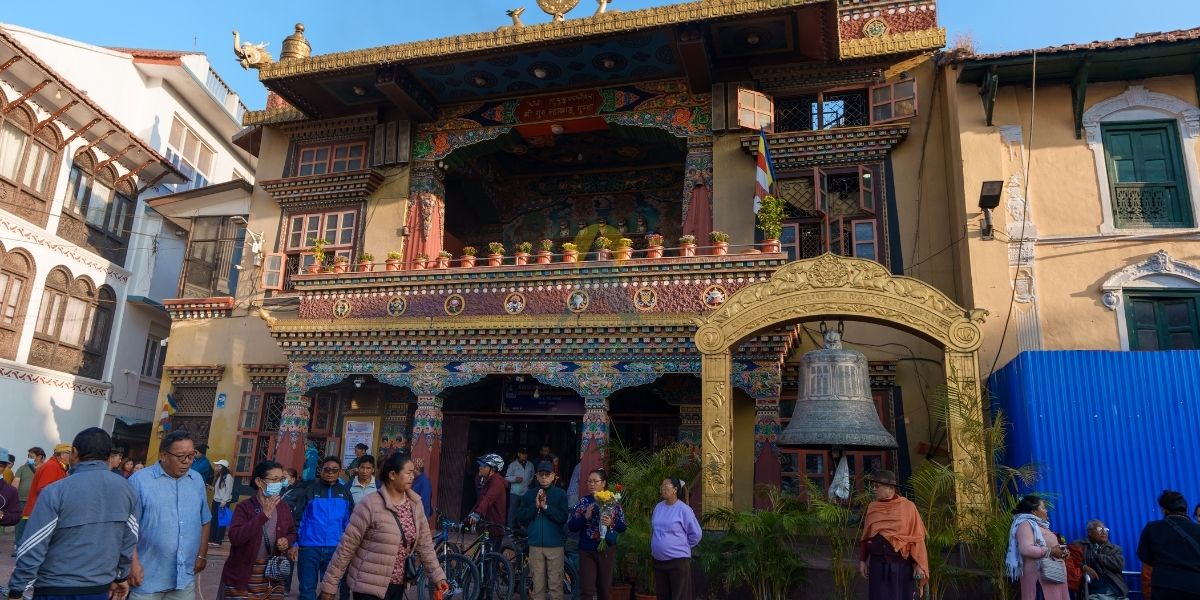
This monastery is associated with the Tamang Buddhist community and follows the Nyingma tradition. The religious atmosphere, statues, prayer spaces, and the view of the stupa from its roof are its major highlights.
The main ethnic communities that visit this monastery are pilgrims and practitioners from Himalayan communities like Tibetans, Sherpas, Gurungs, Yolmos, and other Nepali Buddhist communities.
You can see the statues of Amitabha Buddha, the Buddha of Infinite Light, with other Buddhist figures like Arya Avalokiteshvara (Chenrezig).
The murals, statues, religious objects, and colorful decorative elements in this monastery are related to traditional Tibetan Buddhism. At the top of the monastery, you can light the butter lamps whilst enjoying the view of the stupa!
Daily activities follow prayers, ritual practices, and religious responsibilities. You can hear monks chanting mantras and the sound of traditional instruments such as drums, bells, gongs, etc., if any ritual is being performed.
You can enter the monastery, but it is better to ask for permission before you enter anywhere. Many prayer halls could be restricted for entry during ceremonies or private ritual practices (so, be sure you’re with a guide when roaming around here).
If you get the chance to enter, then you can see beautiful Buddhist statues, religious artwork, traditional instruments, and some monks engaged in daily activities. Be sure to maintain silence when you enter!
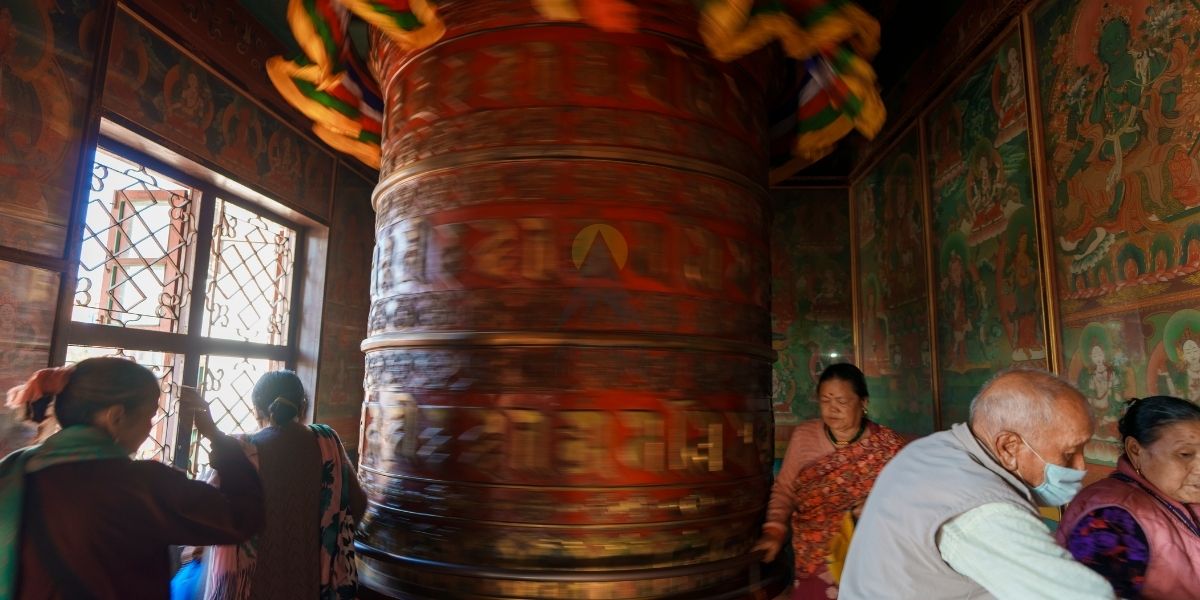
Outside, you can also see a prayer wheel house (Mani Lakhang) on the left side that is spun clockwise and a giant bell on the right side.
Jhamchen Lakhang Monastery
Another of the most recognizable monasteries in the Boudhanath area, which follows the Sakya tradition, is Jhamchen Lakhang Monastery. It was established in the 1980s under the counsel of Chogye Trichen Rinpoche.
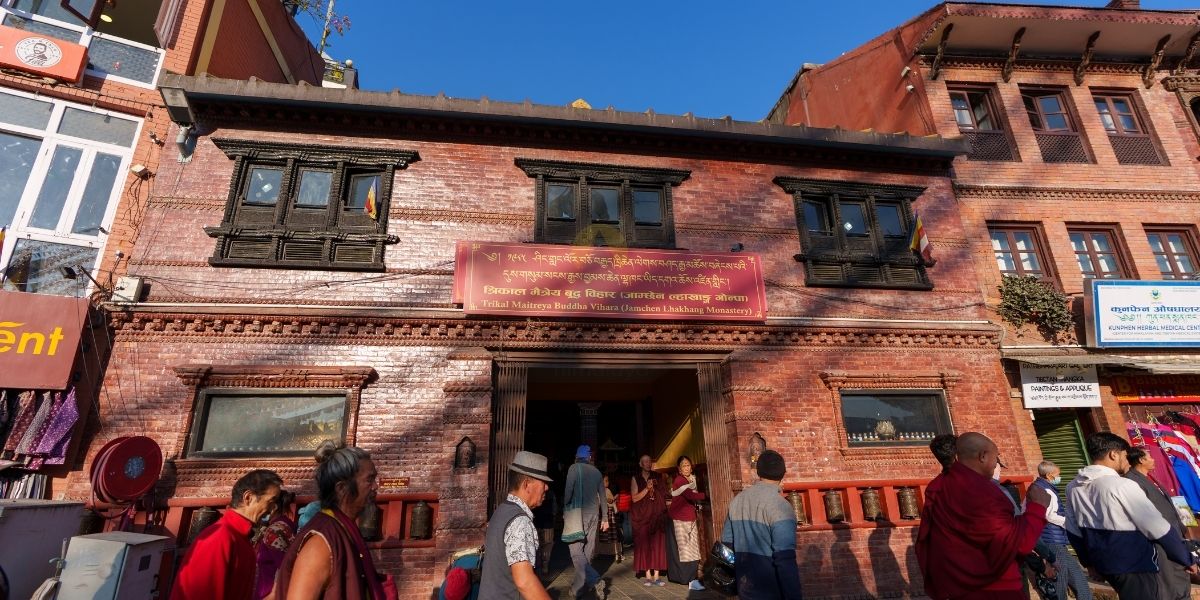
It can also be easily found while walking around the stupa. It lies on the western side of the stupa.
As mentioned above, it follows the Lamdre, “the Path and its result” teaching system. Mainly Tibetan monks and Himalayan Buddhists, along with Nepalese Buddhist communities, come to this monastery.
It is most famous for the large statue of Maitreya Buddha (Jampa in Tibet) that you can see right after you enter the monastery. As you can guess, Maitreya Buddha, or the future Buddha, is the main deity of this monastery.
The interiors of the prayer halls and ritual places are filled with colorful silk brocades and different statues and paintings of Buddhist practitioners. This religious interior defines the Tibetan Buddhist visuals with elaborate decorations along with ritual objects.
You will see prayer wheels when you walk towards the monastery and a big prayer wheel room, with the lamp-lighting house aside.
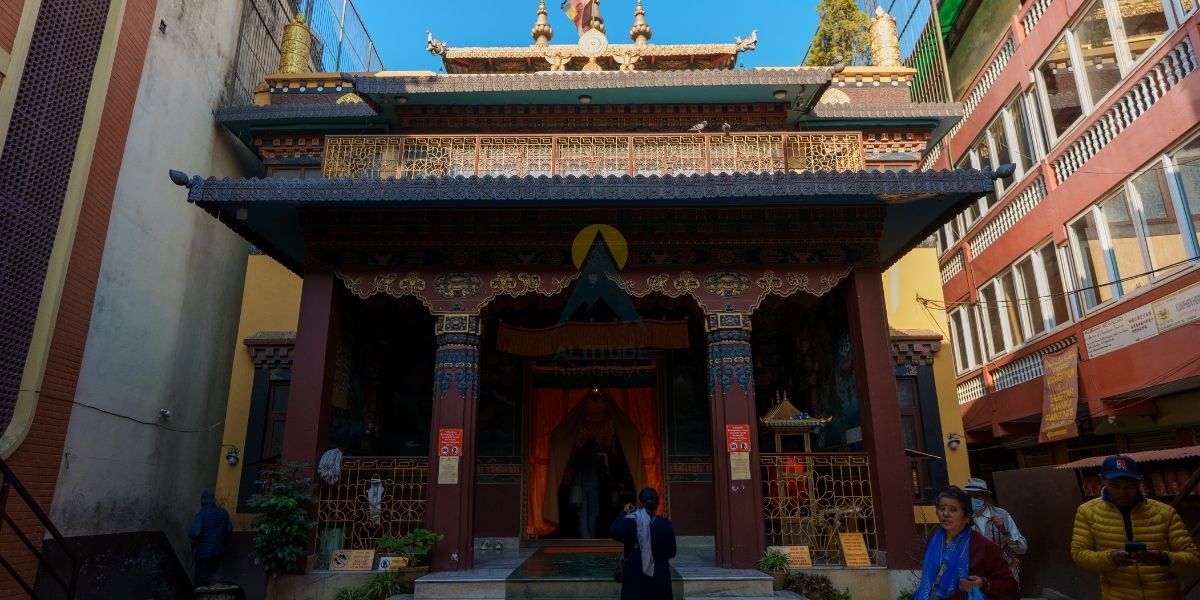
You can visit from 5:30 to 11:00 in the morning or 2:00 to 5:00 in the evening. You may be allowed to enter the monastery, as it is a public place, but that doesn’t mean you should enter without permission.
Tashi Samteling Monastery
Located in the northeast of Boudhanath Stupa, this is another important monastery in the area. It can be reached easily if you head deep into the alleys winding behind the stupa.
It has a strong association with Tibetan and Mongolian Buddhist practices. It represents the Gelug tradition, one of the influential traditions that is connected with Buddhist philosophy, debate, scholarship, and monastic discipline.
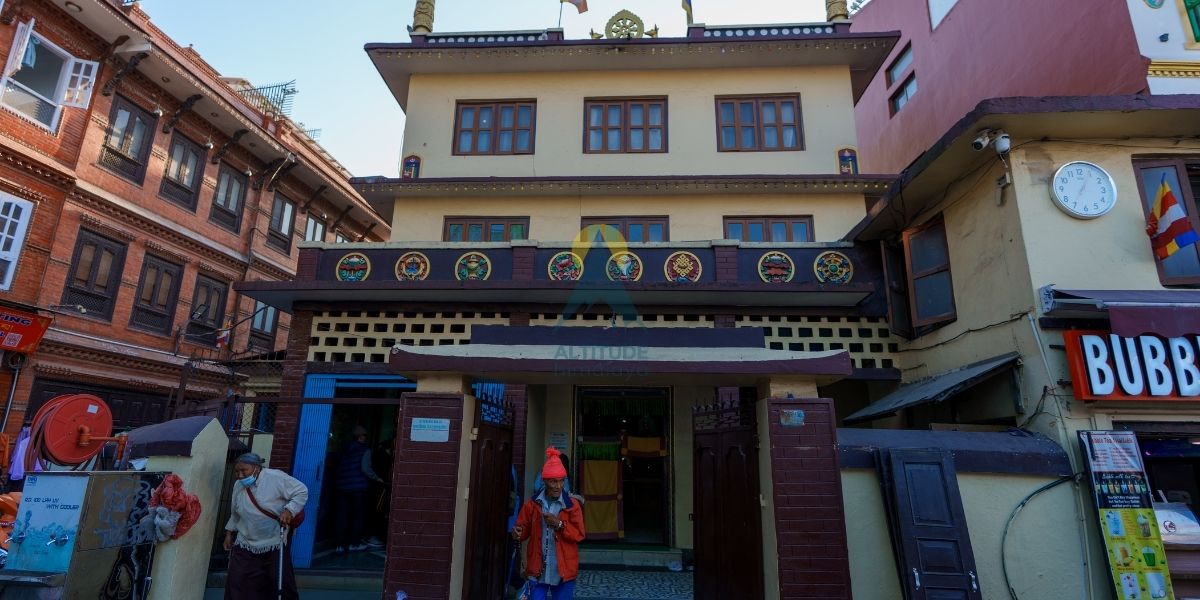
Samtenling especially attracts Nepali Himalayan communities that include Sherpa and Tamang. Tibetan monks also study here!
The major priorities are given to education. Young monks are to attend classes, study Buddhist texts, debate, and learn ritual practices. The monastery’s school is reported to guide young monks to gain public education from kindergarten to grade eight.
Its religious environment includes Buddha, tantric deities, and lineage teachers who follow Gelug traditions. You gain the experience of a functioning Tibetan Buddhist institution rather than an attractive architectural feature. You will see monastic architecture, prayer halls, young monks, etc., as you enter the monastery area.
Although monasteries don’t restrict people from visiting, Samtenling is primarily an educational and residential space, so you should be mindful when you enter. It is important to remember not to treat it merely as a museum!
Dilyak Yevam Monastery
Another important monastery around Boudhanath is Dilyak Yevam Monastery. Also known as Dilyak or Dilyak Dabzang, this monastery is located in the wider Boudhanath monastery neighborhood.
It belongs to the Kagyu tradition, which is known for focusing on meditation and knowledge transfer from teacher to student. The historical lineage leads to Indian masters: Tilopa and Naropa, along with Tibetan masters: Marpa and Milarepa.
The main associated communities include Tibetan and Himalayan Buddhist practitioners.
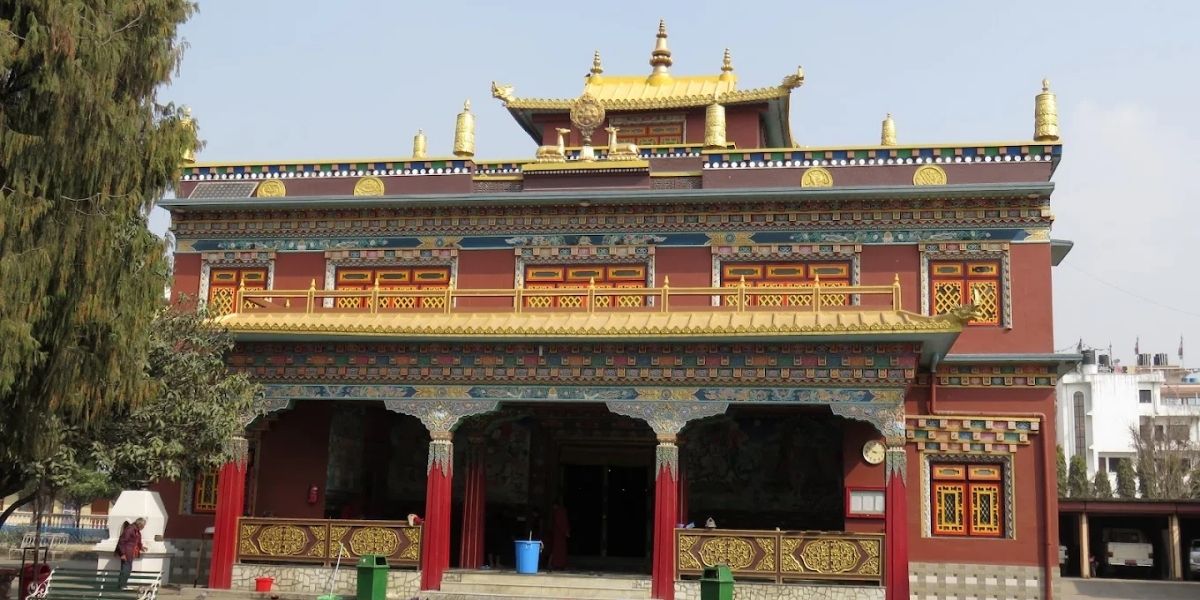
Their main deity is linked to the Thousand Buddhas, as it also contains Buddhist figures along with Kagyu lineage representatives.
The religious imagery in this monastery is really interesting! Many Buddha statues create different visuals from other monasteries.
As part of their daily routine, the monks perform rituals, read prayers, do meditation, and fulfill their common responsibilities.
Here, you will see rows of Buddhist images, shrine rooms, traditional Tibetan Buddhist artwork, ritual objects, prayer spaces, and monks.
You may get a chance to enter, but that doesn’t mean all the rooms will be open. Permission is very important for entry and especially for photography!
Shechen Tennyi Dargyeling Monastery
Among the most architecturally impressive monasteries in Boudhanath, Shechen Monastery is one of them.
After the destruction of the original Shechen Monastery of Tibet in the late 1950s, Dilgo Khyentse Rinpoche built the Shechen Tennyi Dargyeling Monastery here in Boudhanath in 1980 C.E.
The present head of Shechen Monastery is the 7th Shechen Rabjam Rinpoche, who is the grandson and the spiritual heir of Dilgo Khyentse Rinpoche.
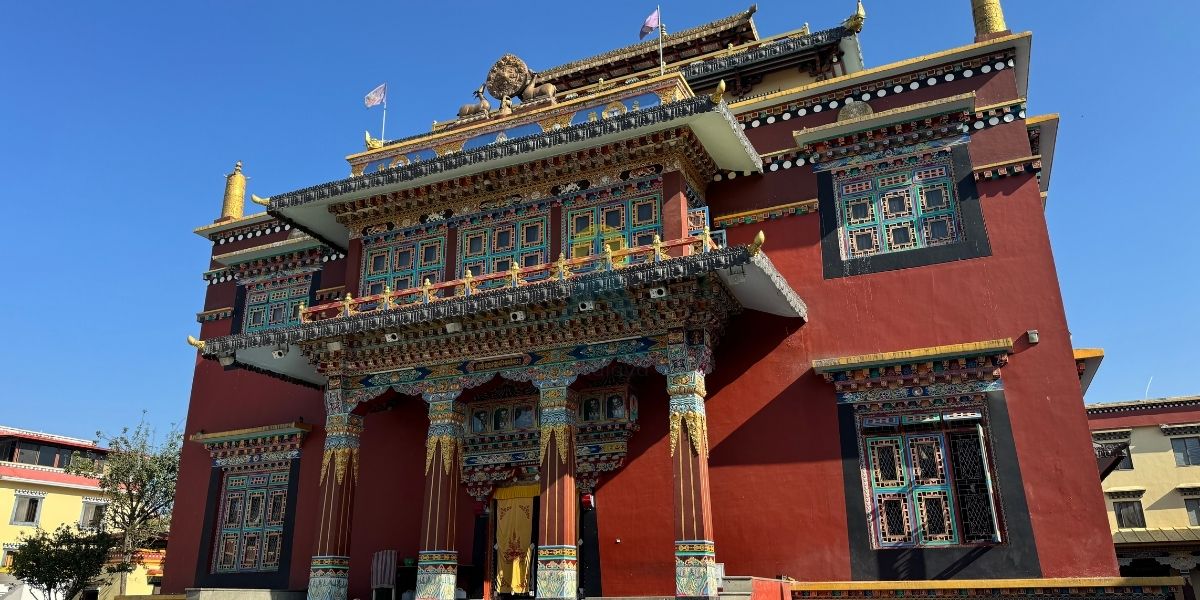
It is one of the significant Nyingma schools of Tibetan Buddhism in Nepal. It is just a short walk away from the stupa in the quiet lanes behind the major Boudhanath lanes.
There are many statues of Buddhas, Bodhisattvas, tantric deities, and lineage masters. You can also see three big prayer wheels in the room, aside from the garden, along with the eight chortens dedicated to paying respect to Buddha by expanding world peace, compassion, and protection from evils and disruptors of the order.
If you are interested in Tibetan Buddhist art and architecture, then you should not miss the opportunity to visit here while you’re in Boudha! It has more than 150 statues and one of the largest Tibetan libraries too.
The Shechen walls of the main temple, before the destruction in the 2015 earthquake, had many murals of the preachers and the history of Tibetan Buddhism.
About 450 monks from the Himalayan region study and live at the monastery while receiving education and learning music, dance, and painting too. Their daily lives are focused on Buddhist study, ritual practices, meditation, preservation of texts, and having a peaceful community life.
When you enter the Shechen Monastery territory, you will be stunned by the large grounds and the open space in the surroundings. As you move further, you will see the shrine hall, monastic courtyards, Mani Lakhang (Prayer wheel house), and the wider Shechen complex.
Other Monasteries Around Boudhanath
The above-mentioned were the major monasteries, but there are many other monasteries that are worth mentioning here. So, let me get into them next.
Tharlam Monastery
This is another important Sakya monastery, around 10 minutes away from Boudhanath Stupa.
It was established in 1981 A.D. by Dezhung Rinpoche after the destruction of the original monastery back in Kham, which was founded in 1436 A.D. by Ga Rabjampa Kunga Yeshe.
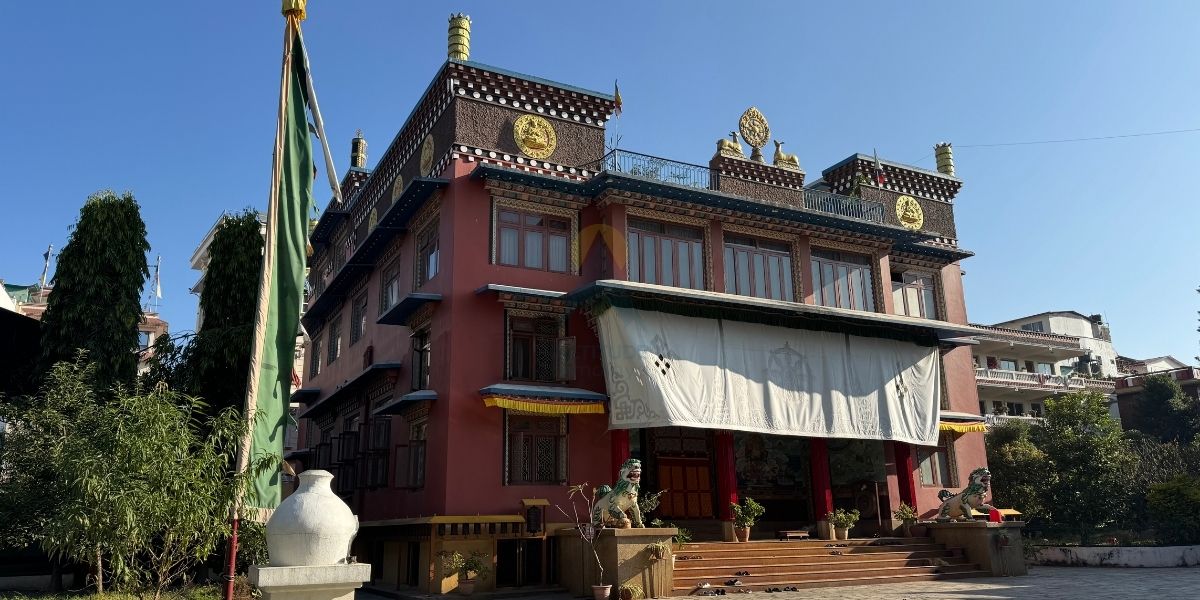
This was built as a Tibetan monastery during exile to preserve older lineages. It is an important venue for the Sakya tradition, including Lamdre transmissions.
Many Tibetan communities, Himalayan and Nepali Buddhist devotees, visit here along with other international pilgrims. The 1994 Sakya Monlam, a major Sakya religious event, was also hosted by Tharlam when the head of the monastery, Sakya Trizin, was at Tharlam to conduct mass teaching.
Ka-Nying Shedrub Ling Monastery
It is another significant monastery, which is also called Seto Gumba near Boudhanath, that can be reached within 5-10 minutes. It follows both Nyingma and Kagyu traditions.
The name Ka-Nying is also derived from two Tibetan Buddhist lineages: Ka for Kagyu and Nying for Nyingma. Many young monks study here, as it is one of the popular institutions around Boudha.
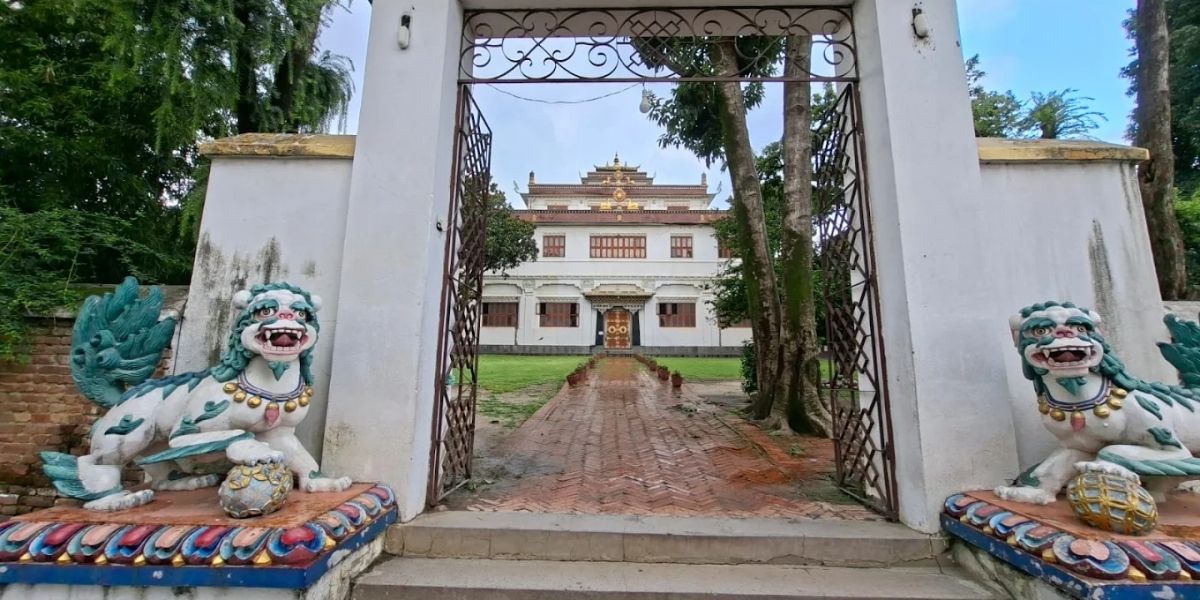
Tulku Urgyen Rinpoche, a Tibetan Buddhist master fulfilling the purpose of the 16th Karmapa (Rangjung Rigpe Dorje), completed the construction of this monastery in 1976 A.D.
The important figures inside the monastery include Guru Rinpoche (Padmasambhava), Vajradhara, the Buddha of the Dzogchen tradition, and Tseringma.
Mostly Tibetans, Sherpas, and other Himalayan and Nepali Buddhists visit this monastery. Ritual practice, meditation, Tibetan-language study, and others are done on a daily basis.
You are allowed to visit, but do ask for permission before entering sacred halls or religious areas.
Thrangu Tashi Choling Monastery
This is one of the major Karma Kagyu tradition-following monasteries in Boudhanath. It is very close to the Boudha Stupa and can be reached within a minute. Late Khenchen Thrangu Rinpoche is connected with this monastery.
The deities in the shrine hall are related to the Kagyu lineage, Vajradhara, Buddha Shakyamuni, Avalokiteshvara (Chenrezig), Tara, and other Vajrayana deities.
It has been serving as one of the important centers for monastic education and practice. The monks receive training in Dharma, and they also participate in many different monastic life responsibilities. Many Tibetan, Sherpa, Tamang, and other Buddhist communities visit here, including tourists.
Sakya Tharig Monastery
It is a Sakya tradition monastery that is just 2 minutes away from Boudhanath Stupa. This monastery is located in a quiet place and also has a statue of Buddha in front of the shrine hall in the courtyard.
Their teaching is mostly focused on Lamdre, the path and its fruit, and they practice Vajrayana that involves different deities: Hevajra, Vajrakilaya, Vajrapani, and Tara.
Their daily activities include morning and evening prayers, puja, meditation, Dharma study, and ritual practices. Although it is not as famous as other monasteries of Boudha, it is still worth visiting!
You are allowed to access the shrine halls, but it can be restricted during important rituals and ceremonies.
Pullahari Monastery
Located in Jagadol, Pullahari Monastery follows the Kagyu and Rime (secular) traditions. It is 5 km from Boudhanath and can be reached in about 30 minutes by vehicle.
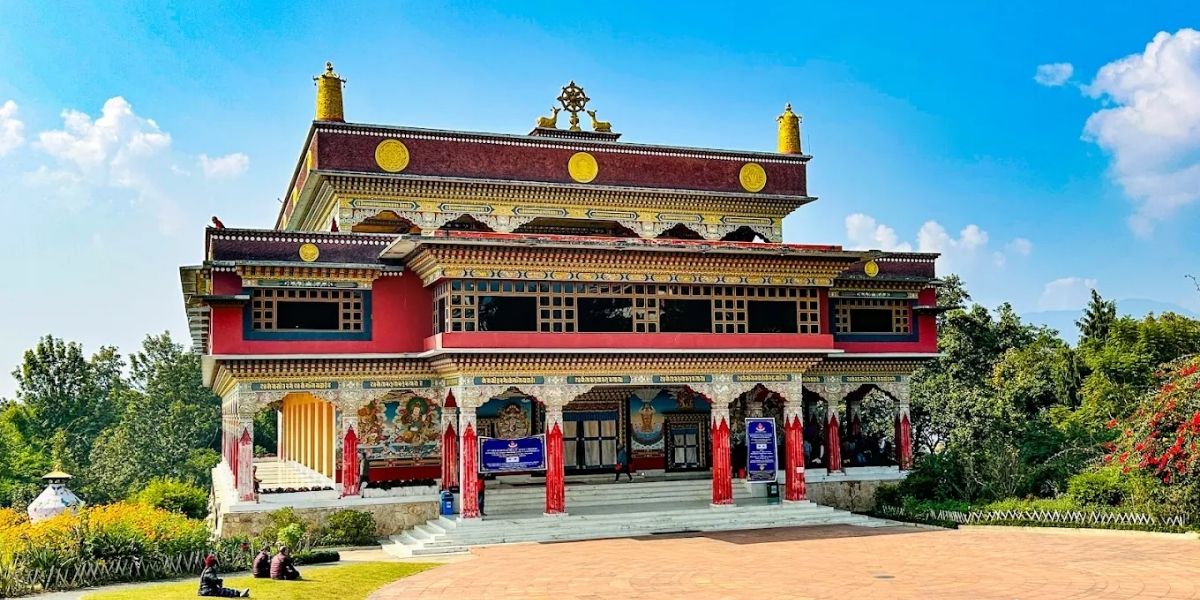
It was opened in March 1992 and is connected with the third Jamgon Kongtrul Rinpoche, as he declared this monastery as the lineage shrine hall and relocated the Rigpe Dorje Institute project from Sarnath, India.
Kopan Monastery
Kopan Monastery is one of the best-known monasteries in Nepal and is located in the northern hills of Kapan, Budhanilkantha. It takes 10-15 minutes to reach here by vehicle.
It was established in 1972 A.D. under Lama Yeshe and Lama Zopa Rinpoche as a study and meditation center. It follows Gelug traditions and aspires to preserve and transfer Tibetan Buddhism.
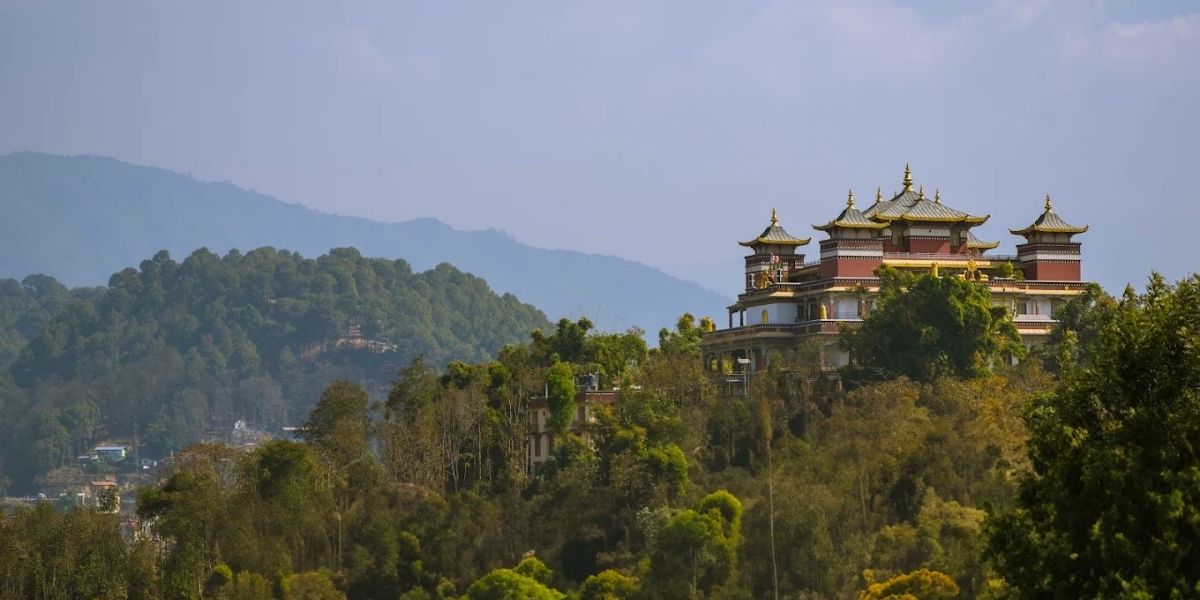
There are also meditation courses for international visitors. So, those of you who want to learn about Buddhism or participate in study and meditation can book an overnight stay or take a retreat course here!
However, we need to inform them in advance if you wish to enjoy your peaceful time here.
Our Kathmandu Buddhist Pilgrimage Tour as well as Nepal Buddhist Pilgrimage Tour both feature Kopan Monastery with a Boudhanath visit. So, if you’re interested in either of these packages, do contact us at least 2-3 months prior so we can make the necessary arrangements!
Monastic Life in Boudhanath
Many people confuse monasteries with temples, and it is a common mistake. Although religious practices are done, they are more like schools, temples, libraries, and retreat centres, where monks and nuns live and study.
If you spend a day checking how a monk/nun spends their day, you’ll find them starting their morning with prayers and ending their evening with prayers again! Other activities include chanting rituals, memorizing texts, Buddhist class, monastic debate, sharing a meal, cleaning, and maintenance. This routine may vary from one institution to another, but most activities are common.
Who Lives in the Monasteries?
When you learn about monasteries, you will also get connected with monks. The word monk might give you the misconception of a single person who lives in a secluded area, free from worldly affairs. But the truth is that monastic traditions are actually connected with community life!
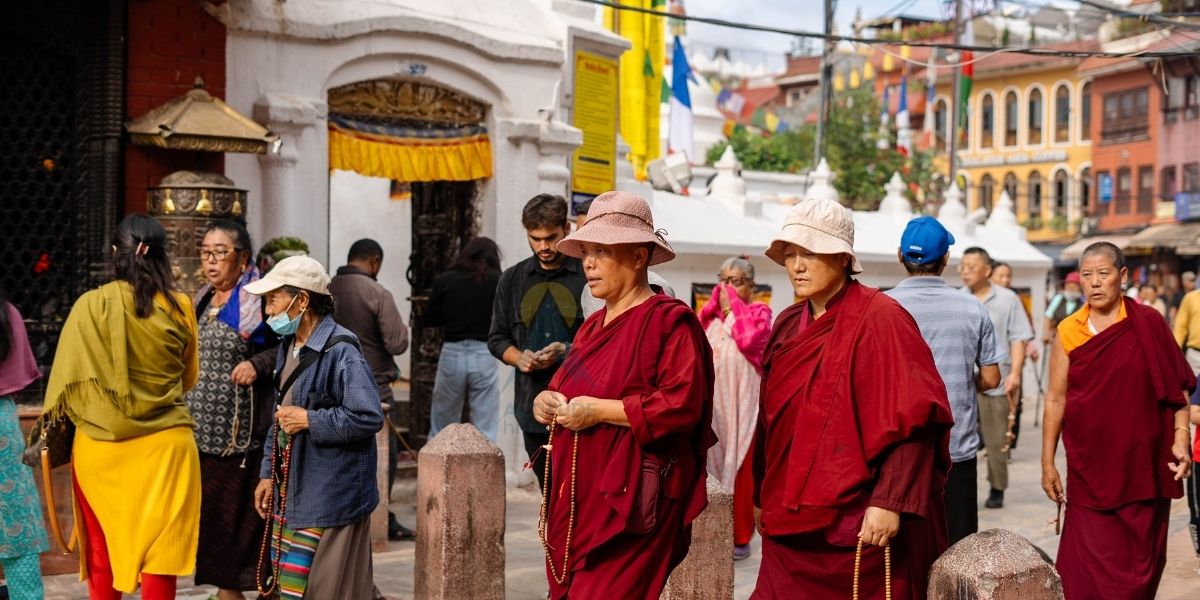
Many monks from various backgrounds can come together in monasteries, and the same happens in the monasteries in and around Boudhanath.
Residents who live in the monasteries are:
- Young beginner monks: They are the young boys who have entered monastic life to learn Buddhist teachings, prayers, meditation, and monastic discipline. They receive education regarding Buddhism and also general education. They usually start their monastic life as teenagers or, in some cases, even at a younger age (5-7).
- Senior monks and Lamas: These are experienced Buddhist practitioners who have spent most of their lives dedicating themselves to Buddhism. They have spent years in study and practice of Buddhism. Lamas give spiritual guidance, lead rituals and teach the younger monks.
- Khenpos: Khenpo is a title of highest academic attainment, equivalent to a PhD in Buddhism. In Gelug traditions it means abbot. They are very learned Buddhist scholars and teachers who have undergone higher studies in the monastic tradition for a total of 16 years. They teach different subjects like Buddhist philosophy, scriptures, meditation, and debate.
- Hermits: They are Buddhist practitioners who live a life of seclusion. They spend long hours in retreat in meditation and spiritual practice. They do not participate in the community life of a monastery like other monks.
- Nuns (Ani): They are women who have chosen the monastic life and dedicated their lives to Buddhist study, meditation, prayers, and religious practice. Some nunneries also provide formal Buddhist education and training, like in monasteries.
- International Students: Monasteries also welcome Buddhist students and practitioners from other countries besides Nepal. Those willing to learn Buddhist philosophy, meditation, Tibetan language, and traditional practices also reside in monasteries for a certain period.
Everyone is welcome in the monasteries, either to study or meditate. You can enjoy conversation with the monks of the monastery for a time, depending on the type of your visit!
Young Monks and Monastic Education
Education sits at the center of monastic life. It decides what a young monk does each day, and it also shapes where he ends up later.
Most enter the monastery at a young age, and from the first year they are surrounded by Buddhist philosophy, the Tibetan language, and sacred texts. But joining the community is only the beginning!
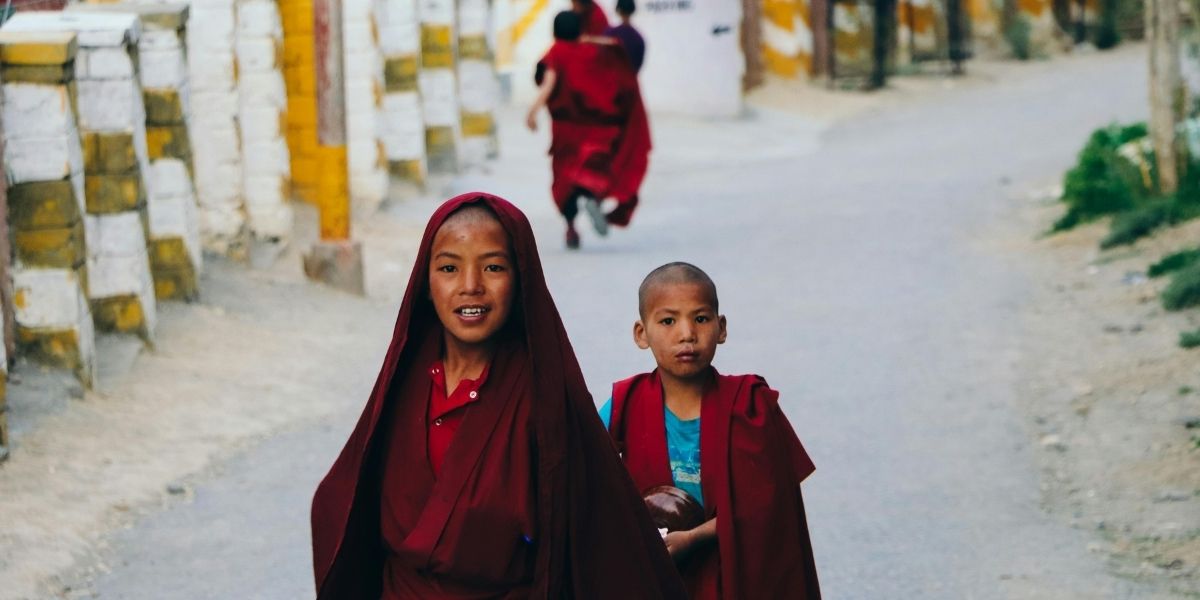
Over the years, they learn to balance serious scholarship, personal discipline, shared living, and deep spiritual practice.
So how does a young monk actually grow inside the monastery? Here is the structured learning system that holds daily life together:
- Childhood: A child enters monastic life with his family’s approval and support. At this stage, he mostly gets familiar with monastic rules, daily prayers, basic Buddhist teachings, and chanting, all while living alongside other monks.
- Beginner stage (novice): As a beginner, the child learns a bit more each year and falls into a fixed routine. He begins his day with morning prayers. After that there is memorizing Buddhist texts, learning Tibetan, meditation, general education, and basic philosophy. He also learns discipline, respectful behavior, and a few responsibilities along the way in the monastery.
- Intermediate study: As you gain more experience, the amount of study will increase. He could study Buddhist philosophy, scriptures, logic, ethics, meditation, and ritual practices. At this point, philosophical debate becomes part of his education as well.
- Advanced monastic education: Older monks who put study first move on to a monastic college (Shedra in Tibetan Buddhism). There, they receive advanced training in Buddhist philosophy and scholarship, taught by Khenpos and other senior teachers. Once they finish, larger responsibilities come their way.
- Mature monastic life: After completing his education and practice, a monk becomes a teacher, ritual specialist, scholar, or senior member of the monastery. From there, he could continue toward an advanced religious qualification, or dedicate his life to meditation, teaching, or serving the monastery and community.
Well, monastic education is a lifelong process. Young monks keep learning Buddhism, practicing meditation and rituals, and following monastic discipline, and all of it slowly makes them responsible members of the community.
The Role of Tibetan Refugee Communities
The history of Tibetan displacement and refugee communities cannot be separated from what Boudhanath is today. In the shaping of Boudhanath into one of the major centers of Tibetan Buddhist culture, the Tibetan refugee community has played a very important role!
After the flight of Tibetans to other countries after 1959, they set up monasteries, schools, businesses, handicraft centers, and community organizations wherever they settled. Although their country was taken over, they kept Tibetan religion, language, cultural identity, and tradition alive.
Tibetan refugee communities played some of the following major roles:
- Protecting Tibetan Buddhism: They helped establish monasteries in which Tibetan Buddhism is practiced and also supported monasteries in which Tibetan Buddhist teachings, rituals, meditation, and philosophical traditions are practiced. Shechen Monastery is a good example of a Tibetan Buddhist institution that preserves and teaches Tibetan Buddhist traditions through monastic education, rituals, and ceremonies.
- Keeping Tibetan culture alive: Some of the community living around the monasteries keep alive the traditions with their language, religious ceremonies, festivals, music, art, traditional dress, and cultural practices. Tibetan festivals are celebrated in the Tibetan communities around Boudhanath with Tibetan New Year, prayer gatherings, religious ceremonies, and traditional activities.
- Monastic Education: Many young monks are educated in Buddhist philosophy, scriptures, rituals, debate, and Tibetan cultural traditions in the monasteries and Buddhist institutions established by Tibetan communities. Kopan Monastery is one of the best monasteries that provide Buddhist education and training to the monks.
- Handicrafts and Traditional Arts: Tibetan artisans and businesses preserve and prevent traditional crafts from being lost. Many Tibetan artisans and businesses contribute to the preservation and continuation of traditional crafts such as thangka painting, carpet making, sculpture, and other Buddhist artworks. These are some great souvenirs when you’re shopping in Nepal!
- Economic contribution: There are many refugee-owned shops, restaurants, handicraft businesses, and tourism-related activities that contribute to Boudhanath’s local economy and generate employment opportunities. All those shops and restaurants around the stupa have contributed to Boudhanath’s commercial life.
Monks, Lamas and Rinpoche: What's the Difference?
You might think monks, lamas, and Rinpoche mean the same thing. But no, they’re not the same. They differ from each other and are not just three different levels of the same position.
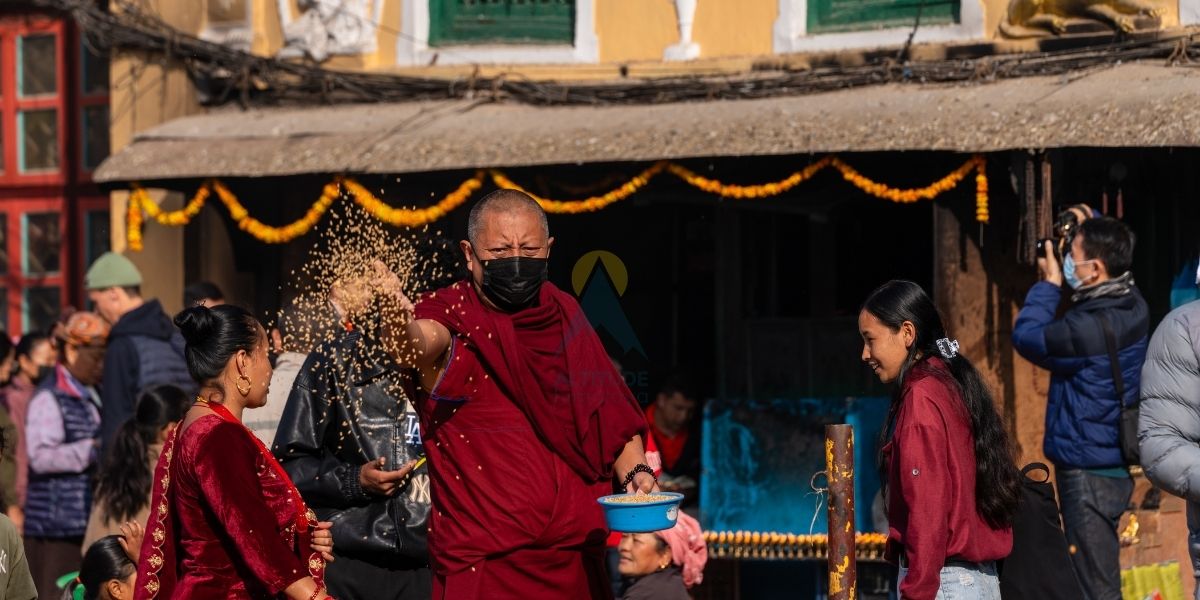
In Tibetan Buddhism, monk, lama, and Rinpoche are different parts of a person relating to their religious identity, titles, level of achievement, and training. Here is the thing:
- Monk (Gelong): This is the person who has entered Buddhist monastic life and has vowed to follow monasticism and maintains monastic discipline. All the monks dedicate their lives to Buddhist study, meditation, and prayers. Novice monks are also monks, but the responsibilities to fulfill might be different from those of a fully ordained monk (monastic). They are generally called trapa in Tibetan Buddhism, and fully ordained monks are called gelong. There are also female monks who go by “ani,” which means nun.
- Lama: It simply means "Guru" in Sanskrit and refers to a teacher. It is a term that is used for someone who has received Buddhist training and is qualified to guide others. But today, it is used to refer to someone who has completed a three-year retreat. To be a lama, you don’t necessarily have to be a monk. It can also be used as an honorific for monks. As a lama, your responsibility is to teach Buddhist philosophy, empower youths, lead rituals, or provide spiritual guidance.
- Rinpoche: Its literal meaning is precious one. This is the title that is given to high-ranking teachers, specifically for recognized tulku, or reincarnate teachers. It can also be used to define the highly regarded teachers who are not recognized as reincarnates.
We can find all three in the same monastery, where a young boy is a monk, a senior teacher is a lama, and the monastery might have a connection with a specific Rinpoche lineage.
How Monasteries Support the Wider Community?
The monasteries around Boudhanath support the wider community in many ways:
- Providing education: Many monasteries provide monastic education, support schooling, scholarships, and learning opportunities for children and young people. Students are allowed to study Buddhism as well as secular education.
- Social support: Whenever there is a need, they don’t hesitate to assist people by providing food, shelter, and financial assistance, especially during misfortune and tough times. They support elderly or vulnerable members of religious communities.
- Socialization and celebration: The spaces provided by the monastery also offer local people spaces to meet, celebrate festivals, and maintain social connections. Monasteries offer spiritual guidance, meditation programs, and charitable activities.
- Cultural Preservation: Monasteries provide monastic education and teach Buddhist traditions, language, art, music, and rituals. This also helps to preserve the cultural heritage of the Boudhanath area and to prevent extinction of Tibetan art and architecture.
Monasteries provide food, shelter, and clothing for monks. They also provide opportunities for local people to earn a living through jobs and services associated with religious activities and visitors.
Most of the monasteries around Boudhanath area are not just religious centers. They act as educational, cultural, social, and community-support institutions that help strengthen the broader community.
You can take Kopan Monastery, for example; it has supported monastic education while conducting meditation courses, retreats, and sponsorship programs.
Monastery Etiquette: What Visitors Should Know
While you visit, you may think you are entering a religious site, but don’t forget that when you are entering a monastery, you’re entering someone’s religious home. You need to be respectful about it!
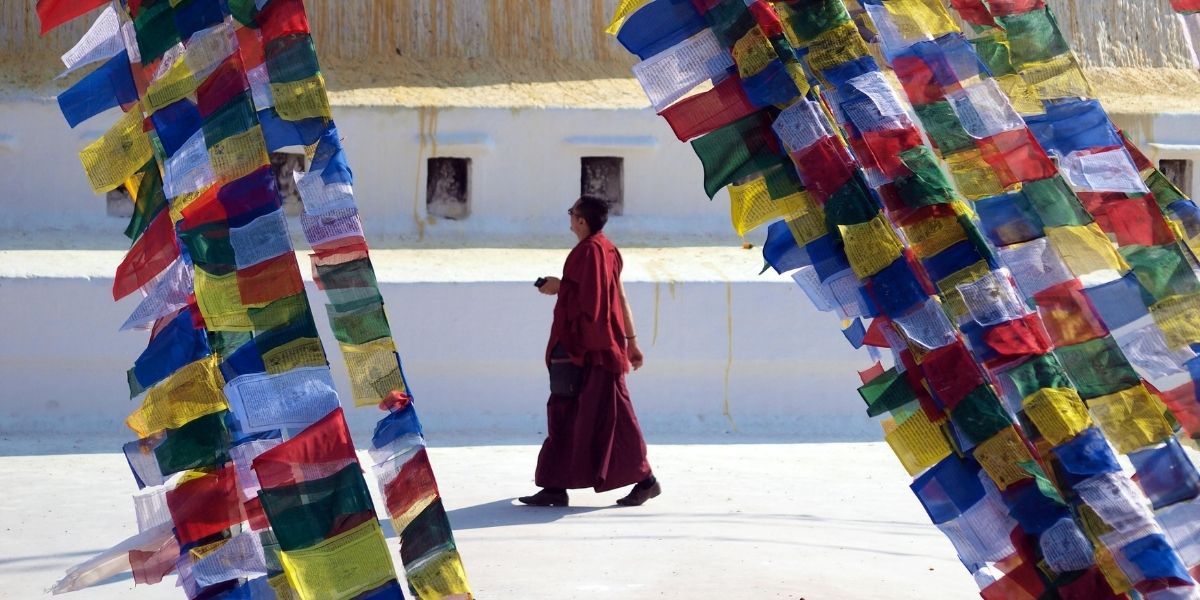
When you are in a place that you don’t own, then you have to remember certain etiquette. Here are the tips before entering any monastery in Boudhanath:
- Dress respectfully; it's better if the clothes are not revealing, and the shoulders and knees are covered, especially while entering prayer halls.
- Circumambulation is done clockwise. While you are inside the monastery or other religious room, you should go around in the clockwise direction.
- Ask for permission before taking photographs; not everything is meant to be captured. Be wary of the “No Photographs” sign.
- Remove your shoes before entering the prayer hall or shrine hall. While entering the prayer wheel house, you may not need to remove them, but do ask before you enter.
- Maintain silence inside the monastery. You can’t go out shouting or creating disruptions, as it is disrespectful to the local traditions and culture.
- If there are ceremonies or any private rituals being performed, then don’t interrupt them!
- Don’t touch statues or any sacred objects. You are allowed to see, but touching is prohibited.
- You can donate if you wish to, but it is not mandatory. Many monasteries appreciate donations, as they are used for educational, religious, and community work.
Best Time to Visit the Monasteries
Monasteries are religious sites that welcome any visitors who are filled with devotion and want some peace of mind.
However, a visit to a monastery is not like visiting a specific viewpoint. You can come in any season and at any time, but if you want to have a specific experience, then you need to choose your time to visit carefully!
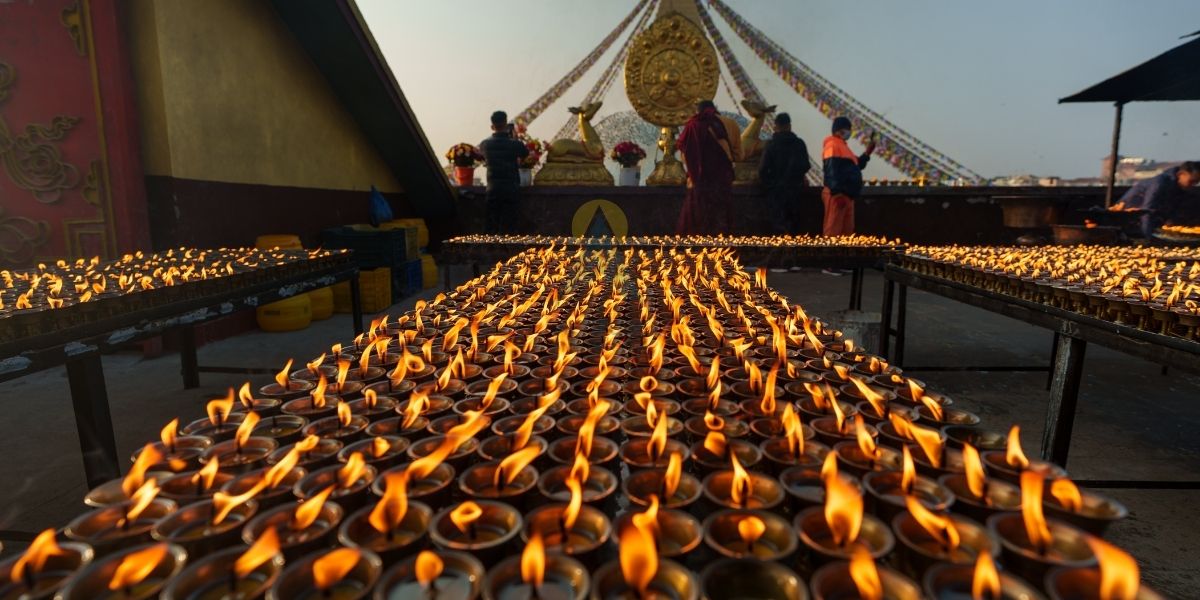
Early Morning
Morning is one of the best possible times to visit the monastery and observe the spiritual rhythm around Boudhanath.
As you visit the monasteries early between 5:00 and 7:00 A.M., you also get to observe morning religious practices done by the monks in the early morning. You can begin your day with prayers, meditation, chanting, and other religious activities.
In the early morning, there is rhythmic recitation of Buddhist prayers and the turning of prayer wheels with occasional ringing of bells.
Pilgrims start kora (clockwise circumambulation), and many monks are engaged in the morning prayers. The area is much calmer and cooler than during the middle of the day.
Evening
For peace and reflection, morning is best, and for atmosphere and visual beauty, evening takes the credit. It is the most atmospheric and photogenic time.
By late afternoon, Boudhanath takes on a different character than it does in the afternoon. The temperature becomes comfortable, and people return to the stupa after completing their daily activities. People gather and enjoy the view, sitting around the shops and cafes.
It’s even better if you arrive right around the time of sunset. The changing light falls across the stupas, monasteries, prayer flags, and surrounding buildings. The white dome appears golden or orange as the sun goes down, making it the best time for photographs!
As daylight disappears, the glow of the butter lamps illuminates the Boudhanath area. You will also hear Buddhist chanting, bells, prayers, and other ceremonial sounds from monasteries, since there are also evening prayers that are conducted.
Although you can’t participate in those rituals, you can observe them respectfully and understand the importance of the Buddhist community’s daily life.
It is especially best for those who find 5:00 A.M. visit difficult and also want a balance of spirituality and social atmosphere. You will be able to observe the transformation of Boudhanath from a peaceful religious center to a glowing, lively spiritual space after sunset.
Festival Periods
Monasteries in Boudhanath during the festive season are similar to the Jatras in Bhaktapur. You can visit during a Himalayan festival to experience the most energetic and culturally significant side of Boudhanath.
During festivals, the monasteries and the surrounding area of the stupa become more active. Many monks, pilgrims, and local communities come together during religious ceremonies, prayers, gatherings, processions, and cultural activities.
Boudhanath is most crowded during the Gyalpo Lhosar, Buddha Jayanti, and Sonam Lhosar. Let’s get into each of them:
- Gyalpo Lhosar is the Tibetan New Year that falls in February or March and is the most recommended time to visit Boudhanath monasteries. It is one of the best festive times to understand Tibetan Buddhist culture. Many monasteries hold special prayers and religious ceremonies and gather the communities to celebrate the beginning of the new year. You can see Cham dances (traditional Buddhist ritual dances where monks wear elaborate masks and costumes).
- Buddha Jayanti / Buddha Purnima, which falls around April or May, is another important Buddhist celebration, especially for devotees. During this festival, you can feel the spiritual atmosphere. Many lights and butter lamps are lit in the evening. The rituals that you see on this day might be different from ordinary morning or evening rituals.
- Sonam Lhosar, Tamang New Year, which is generally celebrated in January or February, is another important festival that is connected with the Buddhist and Tamang communities. It gives different vibes than that of Gyalpo Lhosar. You will get to experience Tamang cultural traditions around Boudhanath during celebrations and cultural gatherings.
All the suggested times are best for visiting the monasteries too. If you have enough time, then you can experience all of these in a single day from early morning to evening during a festival!
But if you visit early in the morning on an ordinary day and in the evening on a festival, then you can experience two completely different sides of Boudhanath.
Suggested Boudhanath Walking Route With Visits to Monasteries
Here are some walking routes that you can follow when in Boudha with visits to monasteries according to the time you can spare and things you want to experience.
Short Route
If you have about 2 hours to spare and want to get the best experience around Boudhanath, then here is the short route that will likely be the best short route:
Boudhanath Stupa > Jhamchen Lhakhang > Guru Lhakhang > Shechen > Boudhanath Stupa
You can start your journey with one clockwise circuit around the Boudhanath Stupa. When doing so, don’t leave for another site without completing at least one circumambulation. After completing a round, you can see Jamchen Lhakhang on your left side, where you can enjoy your time there.
Then, you can visit Guru Lhakhang, which is on the northern side of Boudhanath Stupa. And while you go towards Shechen, you can also visit Ama Bakery to enjoy a brief breakfast.
Afterwards, you can return to Boudhanath and go inside the stupa area to enjoy a closer view.
This short route introduces you to mostly Nyingma and Sakya Buddhism. But if you want to understand Gelug Buddhism and have spare time, then you can enter Samtenling Monastery on the eastern side of the Boudhanath Stupa.
Half Day
If you have about half a day (four to five hours), then you will have more time to understand the four traditions of Buddhism properly. This is the suggested route:
Boudhanath Stupa > Jhamchen Lhakhang > Guru Lhakhang > Shechen > Tharlam > Dilyak > Tashi Samtenling > Boudhanath Stupa
In this itinerary, you can experience all four traditions of Tibetan Buddhism and can compare them in one neighborhood. You will understand that Tibetan Buddhism is not just a single tradition.
Your half-day visit can easily be spent exploring these 6 monasteries and observing monastic life with a deeper understanding.
On the way from one gumba to another, you can find various places to enjoy Tibetan food and enter any one stall where you would like to eat!
Full Day
If you have a whole day to spare, then you can also extend your itinerary towards Kopan Monastery (but pre-booking is essential).
Your morning will be well spent visiting the monasteries around Boudhanath, and your afternoon in Kopan Monastery. Then, you can return to Boudhanath to enjoy the evening vibes.
The suggested route would be:
- Morning: Boudhanath Stupa > Jhamchen Lhakhang > Guru Lhakhang > Samtenling > Shechen > Dilyak or Tharlam
- Afternoon: Have lunch around Boudhanath and go to Kopan Monastery, which is less than 5 km from Boudhanath Stupa and takes about 20 minutes to reach by vehicle.
- Evening: You can return to Boudhanath and walk the kora around the stupa at dusk, enjoy the evening view from any of the rooftop restaurants, and feel the cool breeze!
Final Thoughts
The monasteries around Boudhanath Stupa are among the most interesting aspects when visiting Kathmandu.
The Boudhanath Stupa, itself, is the centerpiece of Tibetan Buddhism in Kathmandu, and the surrounding monasteries tell an even deeper story!
The nearest monastery of all, Jhamchen Lhakhang, introduces the Sakya tradition and its monumental Maitreya statue. Guru Lhakhang shows the Nyingma tradition that is closely connected to the Tamang Buddhist community.
Samtenling gives a peek into Gelug monastic education, and Dilyak is a representative of the Kagyu practices. Likewise, Shechen Monastery, which is found in the quiet lane of Boudhanath, shows the extraordinary artistic tradition of Tibetan Buddhism.
On the northern hills of Kapan (close to Boudha), you can visit Kopan Monastery to learn more about Buddhism. And if you get the chance to hike to Pullahari Monastery, it will offer you a deeper experience in Kagyu practice.
Your best monastery experience is surely not the place where you take many photographs. You will get your best and most memorable experience where you slow down and observe the area and artworks more respectfully while listening to the chants!


 Shubhana Lama