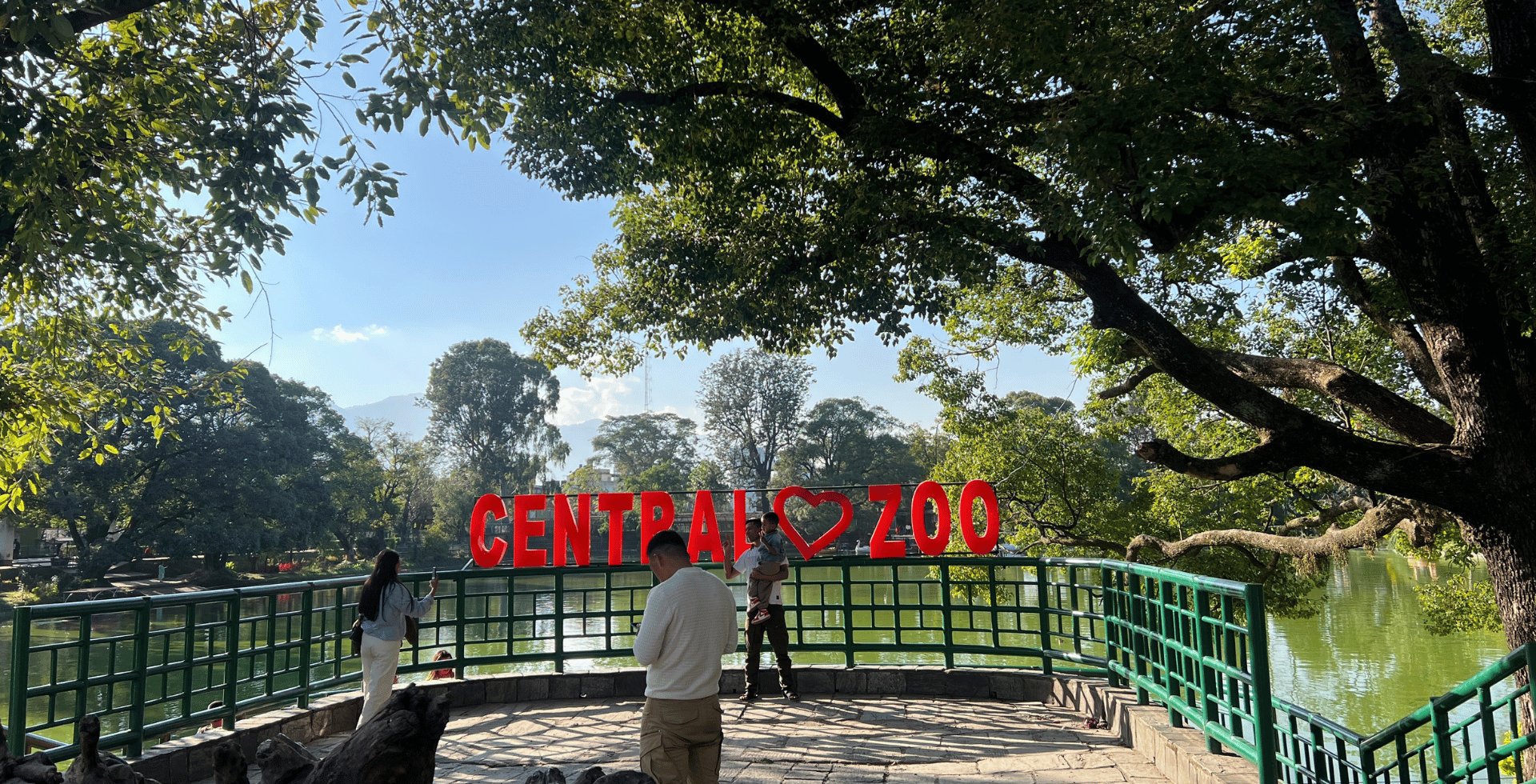
Did you know that there exists a zoo in the middle of the big human settlement of Kathmandu? It’s called Central Zoo, and its exact location is Jawalakhel, Lalitpur.
Unlike traditional zoos meant for entertainment, this one is an ex-situ conservation area built for animal rescue and research. It even boasts an impressive history with connections going back to the Rana Regime.
After my own visit to the Central Zoo, my perception has completely changed. I wasn’t just impressed by the incredible wildlife and opportunity of bird watching, but I even loved the aesthetic beauty of the ancient historical crafts.
Surely, it is a must-visit destination for wildlife lovers for educational and recreational purposes. And if you’re planning your visit to Central Zoo, get ready as I’ll be sharing all entire details here in this blog.
Central Zoo Quick Facts
|
Location
|
Jawalakhel, Lalitpur District, Bagmati Province
|
|
Area
|
6 hectares
|
|
Established date
|
1932 AD
|
|
Founder
|
Juddha Shumsher
|
|
Managed by
|
NTNC (National Trust for Nature Conservation)
|
|
Total Species
|
110
|
|
Total Animals
|
1160+
|
|
Opening Time
|
10 AM to 5 PM (summer), 10 AM to 4 PM (winter)
|
|
Permit & Entrance Fee
|
NPR 100 to NPR 2000 (varies by nationality and age)
|
Note: The data sources used in this article are from 2025. The number of animals in Central Zoo may change in the future, and we will update the article accordingly.
The Birth and Evolution of Central Zoo
Before everything else, let’s deep dive into the history of Central Zoo in Jawalakhel, Lalitpur. An animal sanctuary in the middle of the concrete jungle of Kathmandu Valley looks a bit unusual, doesn’t it?
Jawalakhel Central Zoo is the oldest zoo in Nepal, built by Juddha Shumsher in 1932 AD. However, the practice of collecting exotic animals and birds in the country started way back. To learn about the birth of the Central Zoo, we need to dig deep into its history.
To understand how and why it was established, we need to turn back time to the days of the Rana Regime.
Evolution of Jawalakhel Central Zoo
According to Prawash Gautam from Kathmandu Post, the royaly of Nepal used to keep wild animals as a display of their bravery and wealth.
King Rana Bahadur Shah owned a personal zoo outside his royal palace in Basantapur Durbar Square. Even Jung Bahadur Rana, the first Rana Prime Minister, owned one within his Thapathali Durbar.
Before the birth of the Central Zoo, keeping a collection of animals and birds was simply for private entertainment.
Like many, Rana Prime Minister Juddha Shumsher was also very fond of wildlife. Reportedly, his desire to build a zoological park developed after he visited England in 1908, along with different cities in India.
And when he received a pair of leopards as a gift, his desire turned into an idea. With some deer, rhinos, and tigers that were already brought from Terai, he thought of keeping them in one compound near the 17th-century pond in Jawalakhel.
The cages to house the exotic animals were built with brick walls and lime plaster, very similar to the classic architecture that British zoos had back in the day. In fact, Juddha Shumsher had specifically built an exotic cage for the king of the jungle.
Besides a lion, the Central Zoo at that time housed other exotic animals too, which included clouded leopard, red panda, palm civet, four-horned antelope, gharial crocodile, Himalayan ghoral, and more!
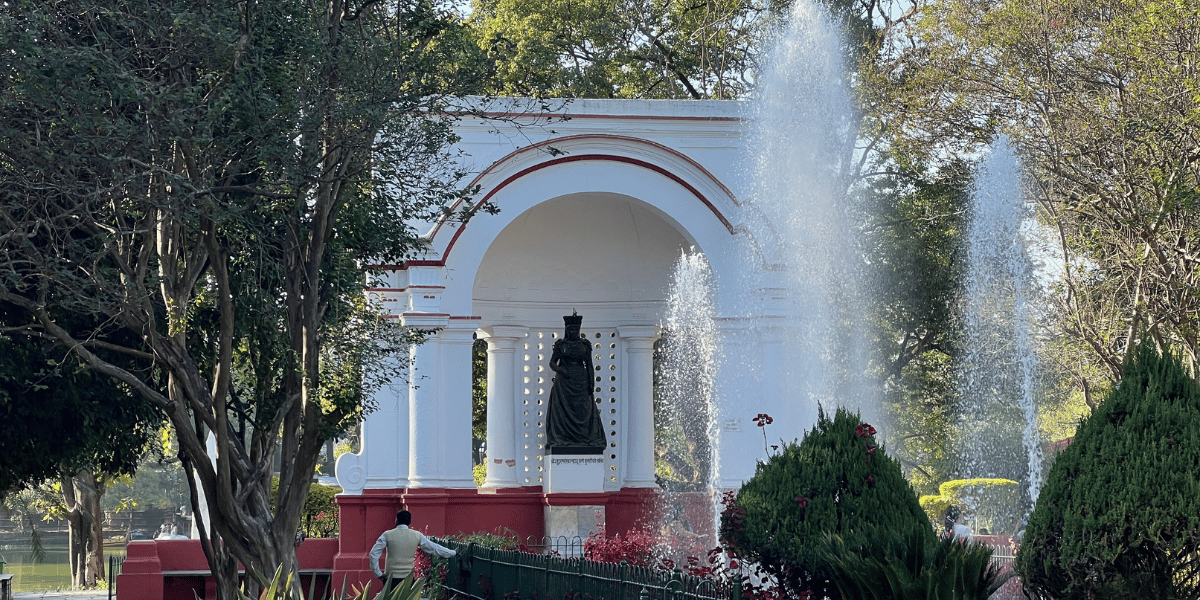
Juddha Shumsher didn’t just build the zoological garden as his private place for entertainment and recreation. But he also got the chance to show gratitude towards the two women he admired the most by building their statues within the premises.
One for his mother, Juhar Kumari Devi, whose statue still stands on the south-east near the Central Pond. And another for his sister-in-law, Karna Kumari Devi, whose statue stands right at the entrance, in recognition of the care she provided to Juddha and his mother after his father, Dev Shumsher’s death.
How the Zoo Became Public
It was pretty clear that Juddha Shumsher had primarily built the Jawalakhel Zoological Garden for his private entertainment. However, written records from the Rana regime suggest that he didn’t keep it all to himself and his family.
Ranas did provide limited access to the general public. For instance, the Newar community from Na: Tole, Pulchowk, and other regions were allowed to perform their Guthi functions during major festivals, like Basanta Panchami and Bhoto Jatra.
But certainly, it wasn’t as easy as how we visited the zoo today. It was only officially opened for the general public in 1956 after Nepal became a democratic country.
As time passed, the Jawalakhel Zoological Garden went through a lot of phases to become today’s Central Zoo. Up until the 1970s, the lion’s roar used to attract the valley residents here. However, the zoo’s condition remained in turmoil for decades under various government departments.
Present Day Central Zoo Under NTNC
It was only in December 1995 that King Mahendra Trust for Nature Conservation (KMTNC) took over its management, intending to improve infrastructure and foster animal care.
Previously, it was overseen by the royal family, with the then-Prince Gyanendra Shah serving as the chairman. But after the monarchy ended in 2008, KMTNC was ultimately renamed to the National Trust for Nature Conservation (NTNC). Since then, it has been serving as an autonomous and not-for-profit organization.
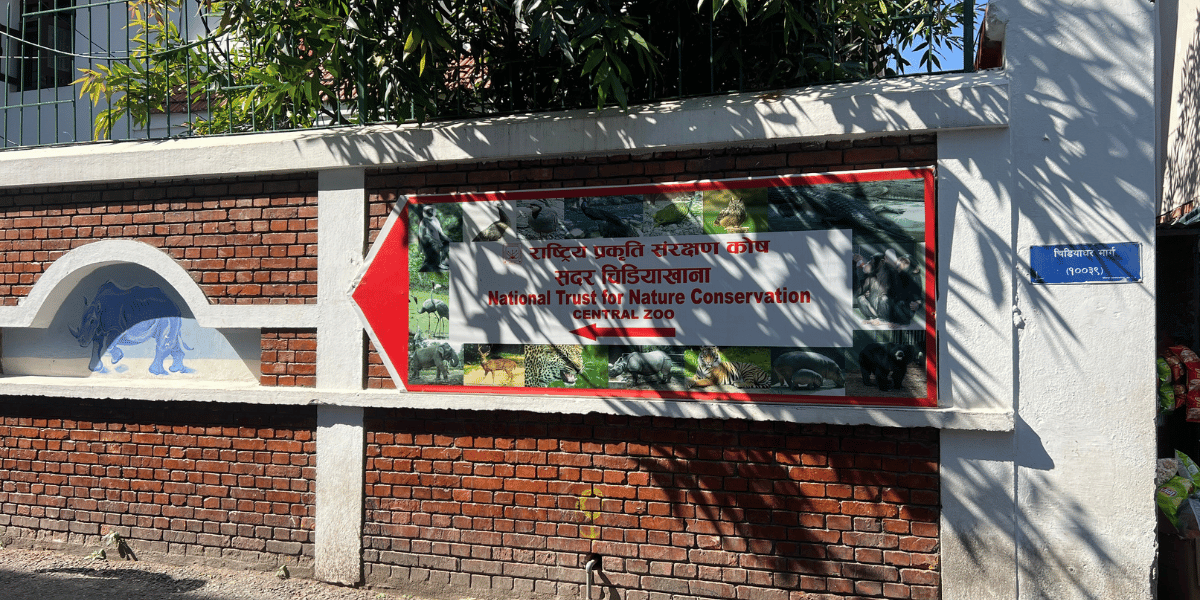
Under NTNC, the Central Zoo has come far with improved empowerment and sustainability. On today’s date, its objectives are based less on entertainment and more on the aspect of providing education and awareness of wildlife conservation.
When I visited the Central Zoo myself, I was intrigued to learn that NTNC now runs a membership-based program called FOZ (Friends of Zoo). I love how it helps encourage students to be engaged in hands-on conservation activities.
Central Zoo now records hundreds of visitors on a daily basis. It has been a children's hub to encounter rare species, which aren’t just kept there for pride. Instead, the present-day zoo has become more of a rehabilitation center that houses creatures once captured from the wild, rescued from traffickers, and sold by circuses!
Central Zoo Tickets and Price Details
Those interested in visiting The Central Zoo need to purchase entrance tickets. The prices vary based on nationality, but there are special discounts for children, students, and FOZ members!
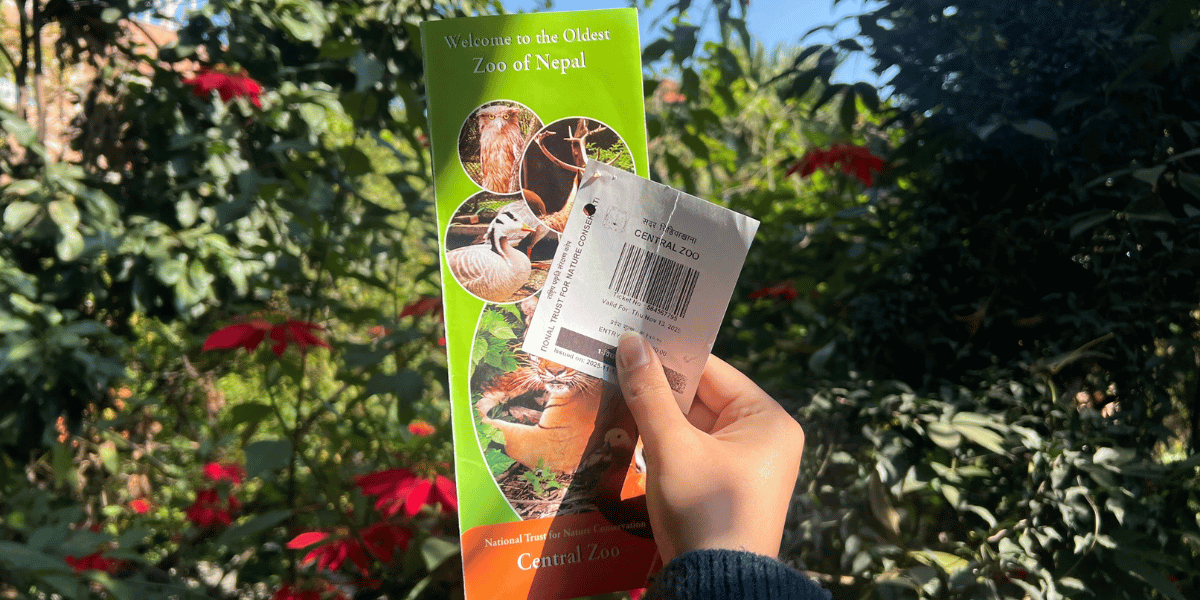
As I’m a student myself, I was privileged to get the discount. But one thing to note is that you need to carry your identity card for verification.
Tickets can be purchased both online (via NTNC’s official website) and offline (standing in a queue, which is a little time-consuming). And those of you visiting the Central Zoo with a travel agency like Altitude Himalaya, tickets shall be taken care of!
Also, note that the opening hours of the zoological park vary depending on the season:
- February to October: 10 AM to 5 PM (summer)
- November to January: 10 AM to 4 PM (winter)
Moreover, there are plenty of activities that you can try in the zoo premises, like boating, fishing, filming, etc. Each requires a separate ticket, and the prices vary accordingly.
Here are the tickets and price details:
Entrance Tickets
|
Ticket Type
|
Rates (NRs)
|
|
Nepali Nationals
|
|
Adult
|
NRs 250
|
|
Student
|
NRs 150
|
|
Children (4-12 years)
|
NRs 100
|
|
Senior Citizen (above 65 years)
|
NRs 100
|
|
SAARC Nationals
|
|
Adult
|
NRs 1000
|
|
Children (4-12 years)
|
NRs 500
|
|
Foreign Nationals
|
|
Adult
|
NRs 2000
|
|
Children(from 4-12 years)
|
NRs 1000
|
Other Activities
|
Filming (per day)
|
|
Video and Documentary Filming
|
NRs 25,000
|
|
Featuring filming
|
NRs 40,000
|
|
*An additional permit from the Ministry of Information and Communications (MOIC) is required.
|
|
Fishing (Mid-March to Mid-November)
|
|
Nepali and Foreign
|
NRs 1500
|
|
FOZ Members
|
NRs 1000
|
|
Boating
|
|
Private 2-seater / 4-seater / 6-seater (per round) for Non-FOZ members
|
NRs 255 / NPs 380 / NRs 440
|
|
Private 2-seater / 4-seater / 6-seater (per round) for FOZ members
|
NRs 205 / NPs 305 / NRs 350
|
|
Shared Motorboating (per adult)
|
NRs 65 for one round
|
|
NRs 120 for two rounds
|
|
Shared Motorboating (per child)
|
NRs 55 for one round
|
|
NRs 100 for two rounds
|
Note: The prices mentioned above may change overtime, please visit the official webiste of central zoo for latest information.
What Animals Are There Inside Central Zoo?
As of writing this article, the Central Zoo is home to 1160+ animals (about 110 total species). Here’s a breakdown:
|
Species
|
Total species
|
Total number
|
|
Mammals
|
38
|
287
|
|
Reptiles
|
10
|
96
|
|
Birds
|
50
|
745
|
|
Fish
|
12
|
36
|
|
Total
|
110
|
1164
|
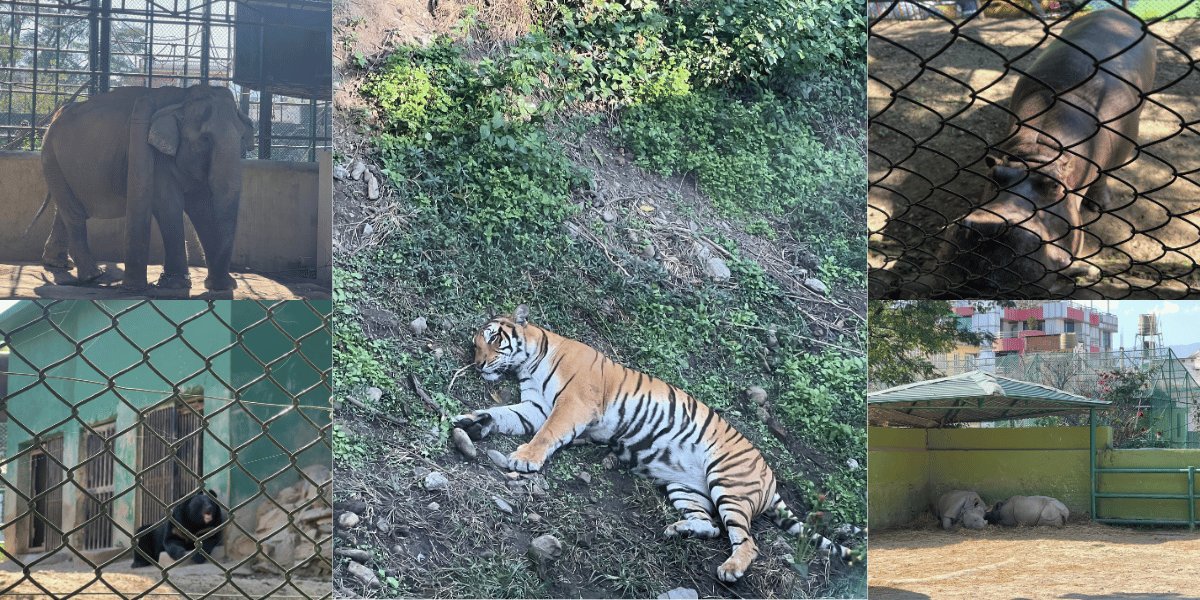
Reportedly, over one million people visit the Central Zoo to explore the wildlife here. During my own visit, I encountered 40+ animal species, among which was the Bengal Tiger, too!
Some were kept in isolation so we couldn’t get to see them, and some were even recently rescued, like Black Panther. But don’t expect to find all exotic species, as many are missing (like the Snow Leopard, which is found in the Himalayas).
Here are all the animals I encountered in Central Zoo:
Mammals
|
Name
|
Scientific Name
|
Geographical Distribution
|
Avg. weight
|
Food Intake
|
Life span
|
Conservation Status
|
|
Royal Bengal Tiger
|
Panthera tigris tigris
|
Nepal, India, Bhutan
|
200- 260 kg male, 100-160 kg female
|
Carnivores
|
20-25 years
|
Endangered
|
|
Four-
Horned antelope
|
Tetracerus quadricornis
|
India, Nepal
|
15-25 kg
|
Herbivores
|
8-10 years
|
Vulnerable
|
|
White Mice
|
Musculus
|
Eastern and central United States
|
11-30 gm
|
Omnivores
|
2 years
|
Least Concern
|
|
Sloth Bear
|
Melursus ursinus
|
India, Nepal, Sri-Lanka
|
54-141 kg
|
Omnivores
|
25-28 years
|
Endangered
|
|
Black Panther
|
Panthera pardus
|
Asia and Africa
|
17-90 kg
|
Carnivores
|
23 years
|
Vulnerable
|
|
Vervet Monkey
|
Chlorocebus aethiops
|
Southern and East Africa, Ethiopia, Somalia and South Sudan
|
3.4 - 8 kg
|
Omnivores
|
30 years
|
Least Concern
|
|
Wild Water Buffalo
|
Bubalus arnee
|
South and Southeast Asia
|
800-1200 kg
|
Herbivores
|
20-25 years
|
Endangered
|
|
Mona Monkey
|
Cercopithecus mona
|
Eastern Ghana, Togo, Benin, Nigeria and Southwest Africa
|
2-6 kg
|
Omnivores
|
30 years
|
Near Threatened
|
|
Chimpanzee
|
Pan troglodytes
|
Africa
|
40-60 kg
|
Omnivores
|
45 years
|
Endangered
|
|
Common Leopard
|
Panthera paradus
|
Nepal, India, Bangladesh, Bhutan, Sri Lanka, Pakistan, Vietnam
|
30-80 kg
|
Carnivores
|
15-20 years
|
Near threatened
|
|
Jungle Cat
|
Fella Chaus
|
Nepal, India, Sri-lanka, East Asia, and Egypt
|
4-6 kg
|
Carnivores
|
15 years
|
Least Concern
|
|
Clouded Leopard
|
Neofelis nebulosa
|
Southeast Asia
|
15-25 kg
|
Carnivores
|
17 years
|
Vulnerable
|
|
Snow Leopard
|
Panthera Unica
|
Afghanistan, Bhutan, China, Nepal, India, Russia, Tajikistan, Uzbekistan
|
55 kg male,
35 - 40 kg
female
|
Carnivores
|
10-12 years
|
Vulnerable
|
|
Golden Jackal
|
Canis aureus
|
North and East Africa, Southeastern Europe, and Southeast Asia
|
6-14 kg male, 7-110 kg female
|
Omnivores
|
10–15 years
|
Least Concern
|
|
Himalayan Palm Civet
|
Paguma larvata
|
Southeast Asia, including India, China and Nepal
|
3-6 kg
|
Omnivores
|
15-16 years
|
Least Concern
|
|
Spotted Deer
|
Axis axis
|
Nepal, India, Sri Lanka
|
45-85 kg
|
Herbivores
|
12-18 years
|
Least Concern
|
|
Asian Elephant
|
Elephas maximus
|
Southeast Asia
|
4000 kg male, 2700 kg female
|
Herbivores
|
70-80 years
|
Endangered
|
|
Guinea pig
|
Cavia aperea
|
South America
|
400- 600 gm
|
Herbivores
|
3-5 years
|
Least Concern
|
|
Five-striped palm
Squirrel
|
Funambulus pennantii
|
South Asia
|
147 gm
|
Omnivores
|
5 years
|
Least Concern
|
|
One-Horned rhinoceros
|
Rhinoceros unicornis
|
Northern India, Southern Nepal
|
2200 kg male, 1600 kg female
|
Herbivores
|
35-45 years
|
Endangered
|
|
Hippopotamus
|
Hippopotamus amphibius
|
Found in 38 sub-Saharan African countries
|
1600-4500 kg male, 1300-1500 kg female
|
Herbivores and Omnivores tendencies
|
40-50 years
|
Vulnerable
|
|
Siamang
|
Symphalangus
|
Malaysia, Indonesia
|
10-14 kg
|
omnivores
|
40 years
|
Endangered
|
|
Leopard Cat
|
Prionilurus bengalensis
|
Nepal, India, China, Southeast Asia, the Philippines and Korea
|
3-4 kg
|
Carnivores
|
12-15 years
|
Least Concern
|
|
Indian Crested Porcupine
|
Hystrix Indica
|
Southeast, Central Asia, and the Middle East
|
11-18 kg
|
Herbivores and chew bones for calcium requirements
|
12-15 years
|
Least Concern
|
|
Common Palm Civet
|
Paradoxurus hermaphroditus
|
Nepal, India, Bhutan, Pakistan, Indonesia, Malaysia, China
|
3-5 kg
|
Carnivores
|
|
Least Concern
|
|
Large Indian Civet
|
Viverra Zibetha
|
Himalayan eastward through Nepal, Bhutan, northeast India, Bangladesh
|
3.4-9.4 kg
|
Omnivores
|
15-20 years
|
Least Concern
|
|
Common Langur
|
Semnopithecus entellus
|
Nepal, Bhutan, India, China, Indonesia, Laos, Peninsula
|
11-18 kg
|
Herbivores
|
20 years
|
Least Concern
|
|
Rhesus Monkey
|
Macaca mulatta
|
India, Bangladesh, Pakistan, Nepal, Southern China, Burma, Thailand, Afghanistan, Vietnam
|
7.7 kg male, 5.43 kg female
|
Omnivores
|
30 years
|
Least Concern
|
|
Wild Boar
|
Sus scrofa cristatus
|
Western Europe and North Africa eastward through East, Central and South-east Asia, Southeastern at the Greta Sudan islands
|
75-100 kg male, 60-80 female
|
Omnivores
|
10-14 years
|
Least Concern
|
|
Blue Bull
|
Boselaphus tragocamelus
|
Nepal, Bhutan, India, Pakistan, Bangladesh and Myanmar
|
120-240 kg
|
Herbivores
|
20-30 years
|
Least Concern
|
|
Himalayan Black Bear
|
Ursus thibetanus
|
Nepal, Bhutan, Bangladesh, India, Afghanistan, Cambodia, China, Iran, Japan, Korea, Malaysia, Mongolia, Myanmar, Pakistan, Russia, Taiwan and Vietnam
|
125-200 kg
|
Omnivores
|
25-30 years
|
Vulnerable
|
Birds
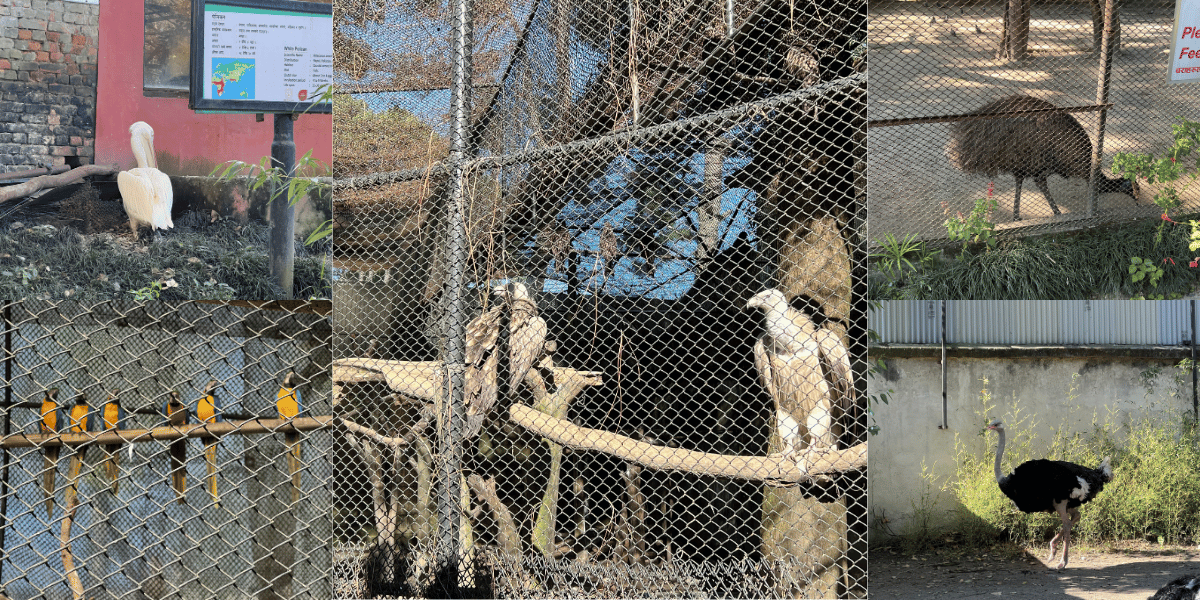
|
Name
|
Scientific Name
|
Geographical Distribution
|
Avg. weight
|
Food Intake
|
Life Span
|
Conservation Status
|
|
African Ostrich
|
Struthio camelus camelus
|
South Africa
|
63.5-145 kg
|
Herbivores and insectivores
|
30-40 years
|
Least Concern
|
|
Rose-ringed Parakeet
|
Psittacula Krameri
|
Central Africa and the Indian subcontinent
|
110-182 gm
|
Herbivores
|
20-30 years
|
Least Concern
|
|
Kalij Pheasant
|
Lophura leucomelanos
|
Southeast Asia
|
9-1300 gm male, 700-900 gm female
|
Omnivorous
|
8-12 years
|
Least concern
|
|
Barn Owl
|
Tyta alba
|
World wide
|
250-700 gm
|
Carnivores
|
60-65 years
|
Least Concern
|
|
Ring-necked Pheasant
|
Phasianus colchicus
|
East Asia, New Zealand, and Australia
|
1.2 kg
|
Omnivores
|
3 years
|
Least Concern
|
|
Golden Pheasant
|
Chrysolophus pictus
|
Western China, New Zealand
|
550-700 gm
|
Granivores
|
5-20 years
|
Least Concern
|
|
Lady Amherst Pheasant
|
Chrysolophus amherstiae
|
Western China
|
675-850 gm male,
624-800 gm female
|
Omnivores
|
9-10 years
|
Least Concern
|
|
Silver Pheasant
|
Lophura nycthemera
|
Southeast Asia and Eastern, Southern China
|
1.13-2 kg male,
1-1.3 kg female
|
Herbivores and insectivores
|
15-20 years
|
Least Concern
|
|
Plum-Headed Parakeet
|
Himalayapsitta cyanocephala
|
Indian Subcontinent
|
56- 85 gm
|
Herbivores and Granivorous
|
15-20 years
|
Least concern
|
|
Sarus Crane
|
Grus antigone
|
South Asia, Southeast Asia
|
5-12 kg
|
Omnivores
|
30-40 years
|
Vulnerable
|
|
Ruddy Shelduck
|
Tadorna ferruginea
|
Northwest Africa, Ethiopia, Southeast Europe, Central Asia to South East Asia
|
1.3 kg
|
Omnivores
|
8-9 years
|
Least Concern
|
|
Grey Lag Goose
|
Anser anser
|
Europe, Asia
|
2.16- 4.56 kg
|
Herbivores
|
15-20 years
|
Least Concern
|
|
EMU
|
Dromaius novaehollandiae
|
Australia
|
90-136 kg
|
Omnivores
|
15-20 years
|
Least Concern
|
|
Eurasian Eagle Owl
|
Bubo bubo
|
Across Europe, Asia and Northern Africa
|
1.6 - 3 kg male,
2-4 kg female
|
Omnivores
|
65 years
|
Least Concern
|
|
Budgerigar
|
Melopsittacus undulatus
|
Found all over the world
|
30-40 gm
|
Omnivores
|
7-9 years
|
Least Concern
|
|
Scaly-breasted Munia
|
Lonchura punctulata
|
India, Sri Lanka, Indonesia, and the Philippines
|
10-14 gm
|
Omnivorous (grass, seeds and insects)
|
6-8 years
|
Least Concern
|
|
White Pelican
|
Pelecanus onocrotalus
|
Nepal, Pakistan, Bangladesh, Maldives, India, Africa, and Europe
|
4.5-13.6 kg
|
Carnivores
|
25-30 years
|
Least Concern
|
|
Himalayan Griffon
|
Gyps himalayansis
|
Afghanistan, Bhutan, China, India, Nepal
|
9 kg
|
Carnivores
|
40-45 years
|
Least Concern
|
|
Black Kite
|
Milvus migrans
|
Asia, Europe, Africa, and parts of Australia
|
650-1100 gm
|
Carnivores
|
26 years
|
Least Concern
|
|
Black-headed Libis
|
Threskiornis melanocephalus
|
India, Nepal, Japan, Bangladesh, Sri Lanka, and Pakistan
|
2.2-3.3 kg
|
Omnivores
|
20 years
|
Least Concern
|
|
Salmon Crested Cockatoo
|
Cocatua moluccensis
|
Moluccan Islands, Indonesia
|
775-935 gm
|
Herbivores(especially coconut)
|
50-60 years
|
vulnerable
|
Reptiles
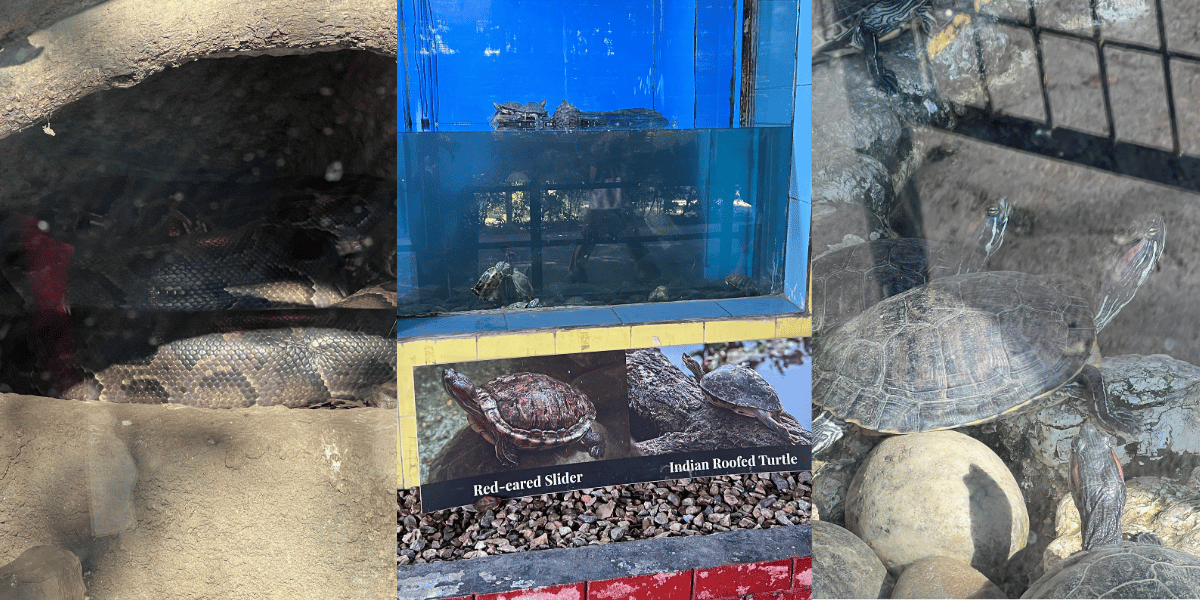
|
Name
|
Scientific name
|
Geographical Distribution
|
Avg. weight
|
Food Intake
|
Life Span
|
Conservation Status
|
|
Black Pond Turtle
|
Geoclemys hamiltonii
|
India, Nepal, Bangladesh
|
Male 5.2 kg, female
13.2 kg
|
Omnivores
|
15-
20 years
|
Endangered
|
|
Chinese Alligator
|
Alligator sinensis
|
Found in the Yangtze
and the King River basins in China
|
36 - 45 kg
|
Carnivores
|
50-
60 years
|
Critically Endangered
|
|
Tricarinate Hill Turtle
|
Melanochalys tricarinata
|
Nepal, India, Bangladesh
|
male(280 - 621.1)gm, female(240 - 511.1) gm
|
Omnivores(Aquatic insects )
|
40 years
|
Vulnerable
|
|
Red-eared slider turtle
|
Trachemys scripta elegans
|
Gulf of Mexico, Southeast United States
|
Male 2kg, female 3.2 kg
|
Omnivores
|
40-
50 years
|
Least Concern
|
|
Asian rock Python
|
Python molurus
|
Nepal, India, Bangladesh,Africa, Australia
|
85 - 136 kg
|
Carnivores
|
15 -
19 years
|
Threatened
|
Aquatic animals
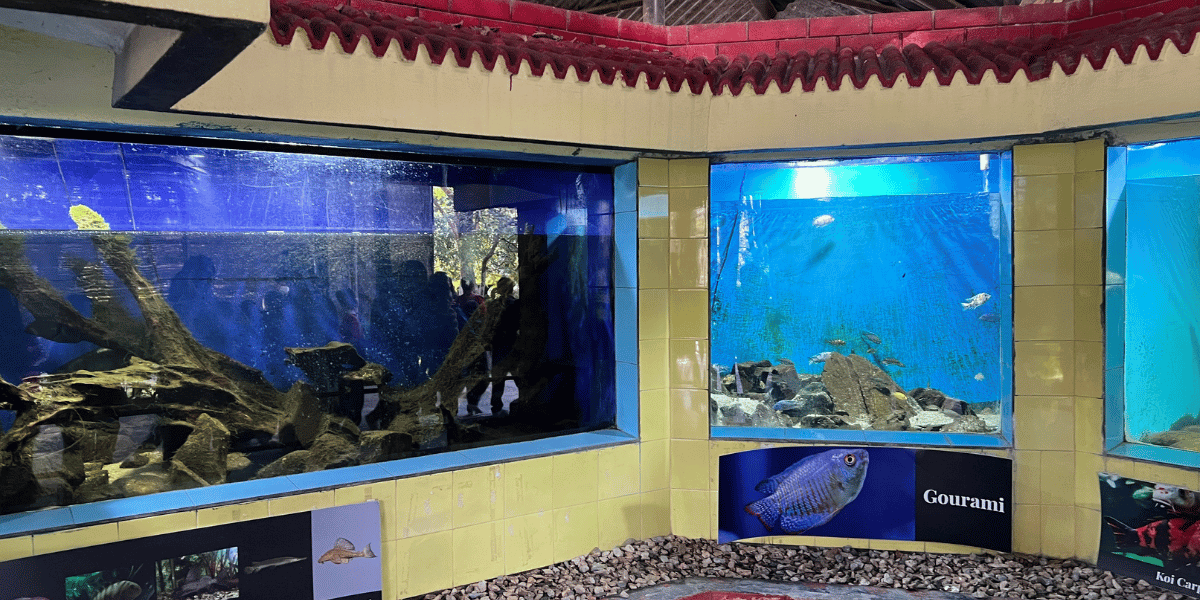
|
Name
|
Scientific Name
|
Geographical distribution
|
Avg. weight
|
Food Intake
|
Class
|
Life Span
|
Conservation Status
|
|
Sucker Mouth
|
Hypostomus plecostomus
|
North America and Asia
|
0.45-4.5 kg
|
Algae, organic debris
|
Actinopterygii
|
6 years
|
Endangered
|
|
Gourami
|
Osphronemidae
|
Southeast Asia
|
20kg
|
Omnivores
|
Actinopterygii
|
2-5 years
|
Least Concern
|
|
Alligator Gar
|
Atractosteus spatula
|
North America, Mexico
|
136.05711kg
|
Carnivores
|
Actinopterygii
|
50-70 years
|
Vulnerable
|
|
Tailbar Cichlid
|
Vieja hartwegi
|
Mexico, Guatemala, and the Atlantic slope of Central America
|
Less than 1 pound
|
Omnivores
|
Actinopterygii
|
8 years
|
Endangered
|
|
Amatitlan Cichlid
|
Vieja guttulata
|
Pacific slope of Guatemala
|
34-36 gm
|
Omnivores with herbivorous tendencies
|
Actinopterygii
|
15 years
|
Endangered
|
|
Featherfin squeaker
|
Synodontis eupterus
|
Central and West Africa
|
0.06-0.16 lb
|
Omnivores
|
Actinopterygii
|
8-10 years
|
Least Concern
|
|
Koi crap
|
Cyprinus rubrofuscus
|
East and Central Asia
|
16kg
|
Omnivores
|
Actinopterygii
|
25-50 years
|
Vulnerable
|
|
Yellow and Blue Auratus
|
Dendrobates auratus
|
Blue Auratus(Pacific side of Panama), Yellow Auratus (Colombia and Panama)
|
3-10 gm
|
Insectivores
|
Amphibia
|
4-7 years
|
Threatened
|
Are Zoos Good or Bad? [Based on My Experience]
Recently, I visited the Central Zoo in Nepal for an educational tour and had the privilege of observing the animals listed above.
I thoroughly enjoyed watching four Bengal tigers, and their roars made it totally worth the visit! Likewise, I got glimpses of one-horned rhinoceros, Asian Elephant, Burmese Python, and those exotic species only found in the national parks of Nepal.
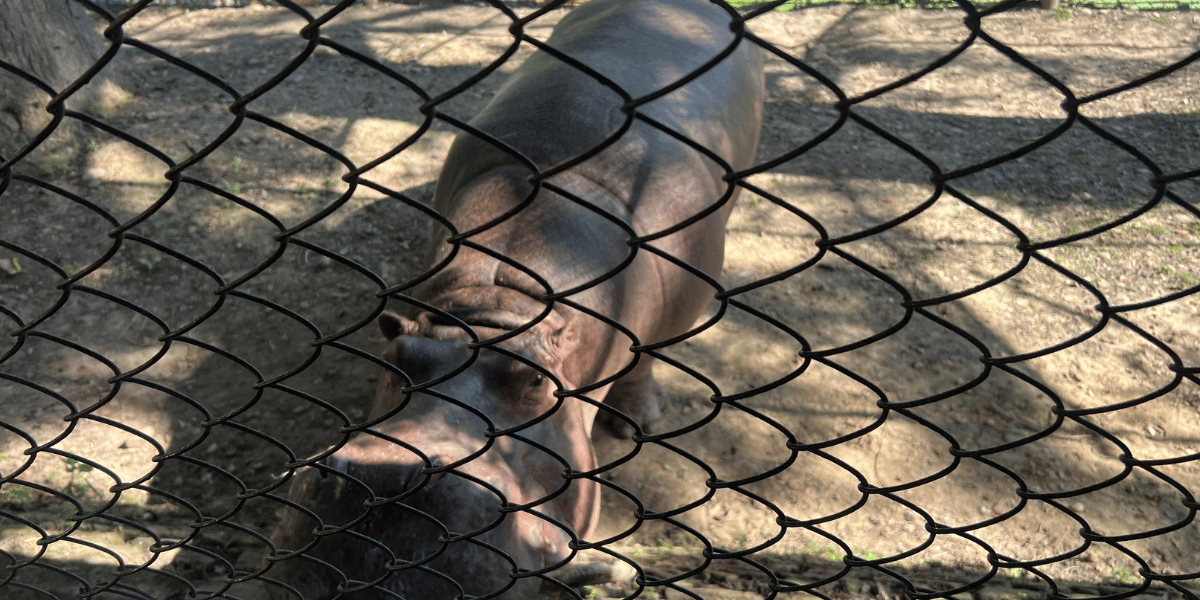
Then, my eye fell upon a crying hippopotamus. That was when my heart melted. I was totally disappointed with the management and didn’t think twice to question the dedicated zookeeper.
But his answer changed my heart. I got to learn about a different side of the zoo I hadn’t known about.
Dedicated Veterinary Team and Zookeepers
Firstly, the hippo was not in its best health; so, it was under regular observation and getting proper medical treatment. Turns out such incidents are just natural, just like it happens to humans.
Secondly, Central Zoo have a special unit for animal care, which includes a team of professional veterinarians and dedicated zookeepers for every cage. There’s an Animal Hospital that handles this operation.
Every rescued animal brought to the Central Zoo is first properly examined by the vet. They read their behaviour and prescribe the necessary diet for faster recovery.
Then, a professional zookeeper is assigned who is responsible for taking full care of that animal. So, although many of us might not notice these wonderful professionals, they are indeed monitoring everything from behind.
In fact, I was surprised to know that there exists a family whose three generations worked in the Central Zoo. This clearly shows how much they love the animals in the zoo. The relationship they have cultivated shows true kindness!
More Like an Animal Rehabilitation Centre
In the past, the Central Zoo kept animals just for entertainment purposes, but in present, its major objective is animal welfare. They work to enhance animals' health by recreating their natural habitats and food according to their diet.
What I learned from the officials is that they are working actively on rescuing animals who have been trafficked or those kept in circuses.
In fact, some of the animals had increased life expectancy after being kept in captivity (like the Sloth Bear and African Ostrich). But do note that the lifespan also depends on specific species and how well they adapt. If they’re healthy enough to survive in the wild, the zoo definitely releases them.
So, you might ask, “Why are so many animals still kept in cages?” Just like all of you, even I wanted the freedom of the wild animals. But things don’t seem to be as easy as we think.
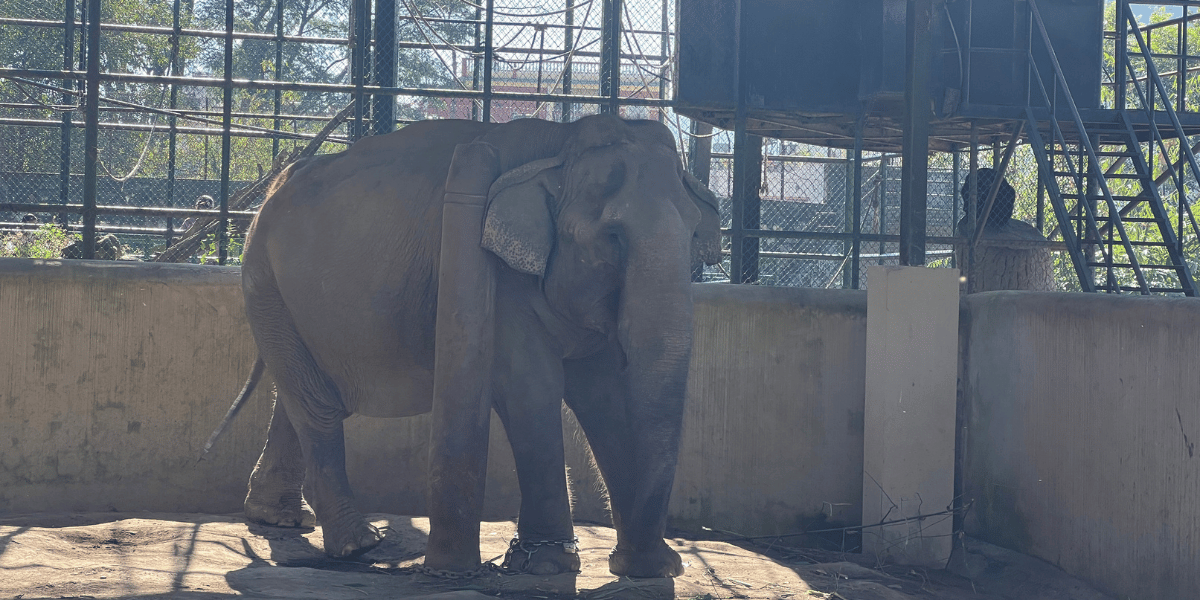
Many animals have been residing in the Central Zoo for years. And sending them back to the wild all of a sudden can pose a risk since they have long been away from their natural habitat. A good example is the Asian Elephant, which has been there for 75+ years.
Central Zoo already works as a rehabilitation centre for these vulnerable species. They’re being properly taken care of by NTNC, an organization that even oversees major conservation area projects in Nepal (like Annapurna Conservation Area Project, Manaslu Conservation Area Project, and more!).
‘Adopt an Animal’ Campaign
During my own visit, I came to know from one of the staff that the major source of income for NTNC is the entry fees. Of course, that’s not enough! And I’m pretty sure this is the main reason for the poor condition of the zoo that most visitors complain about.
To those of you willing to offer more to these wonderful animals, you can definitely make an additional donation after visiting Central Zoo. In fact, NTNC has even launched its ‘Adopt an Animal’ campaign, where you can choose a package to sponsor your favourite animals’ meals and caregiving. The prices vary depending on the animal you choose.
My Verdict
Many still consider the Central Zoo as a place to observe and get entertained by animals. However, things have changed. It has now become a recreational hub to explore and learn about these magnificent animals.
Personally, I loved the initiatives put forward by NTNC, but the small piece of land in Jawalakhel doesn’t really suit the animals. Those small cages holding big giants seem too restrictive!
The plans to transfer these animals to a semi-open zoo in Suryabinayak, Bhaktapur, sound exciting. However, due to government negligence, the project has long been delayed.
What I believe is that these exotic species really need a big home, one that truly replicates their natural habitat. This way, even if they are vulnerable, they can enjoy a life that still feels like home.
If I had one suggestion for NTNC, it would be focusing on building a bigger open-style zoo. A special zoological park that not just serves as a research and education centre, but one that’s best for animals’ well-being.
Other Attractions of Central Zoo
Besides focusing on animal health and welfare, the other objectives of Central Zoo are:
- Research on wild animals.
- Offer conservation programs through first-hand experience (especially students).
- A recreation center for the public, raising awareness about nature conservation.
And for that, NTNC is conducting engaging activities throughout the year. Especially for children, the zoo has become a round destination for acquiring knowledge and having recreational fun.
Here are some other attractions:
Become a Member of Friends of Zoo (FOZ)
FOZ is a membership-based program dedicated to providing conservation education activities, mainly among school students. But it’s not just limited to children; even adults (both national and international individuals) can be a part of it.
It’s seriously a great initiative for those interested to learn about wildlife conservation. The members get training related to solid waste management, bird identification, climate change, and more!
The most fascinating about it is the first-hand approach of animal feeding for zoo animals. Members can even opt for night guided tours, winter and summer camps, cleanup camps, and other educational activities.
Besides FOZ, there are other environmental clubs started by the NTNC, which include green force clubs, eco-clubs, and teachers’ forums.
I’m genuinely interested in joining the FOZ program, and if you are too, here’s the price checklist:
|
Membership Category
|
New Membership
|
Membership Renewal (annual)
|
|
Adult
|
NRs 600
|
NRs 300
|
|
Family (up to four members)
|
NRs 2000
|
NRs 700
|
|
School Student
|
NRs 300
|
NRs 300
|
Explore More Educational Corners
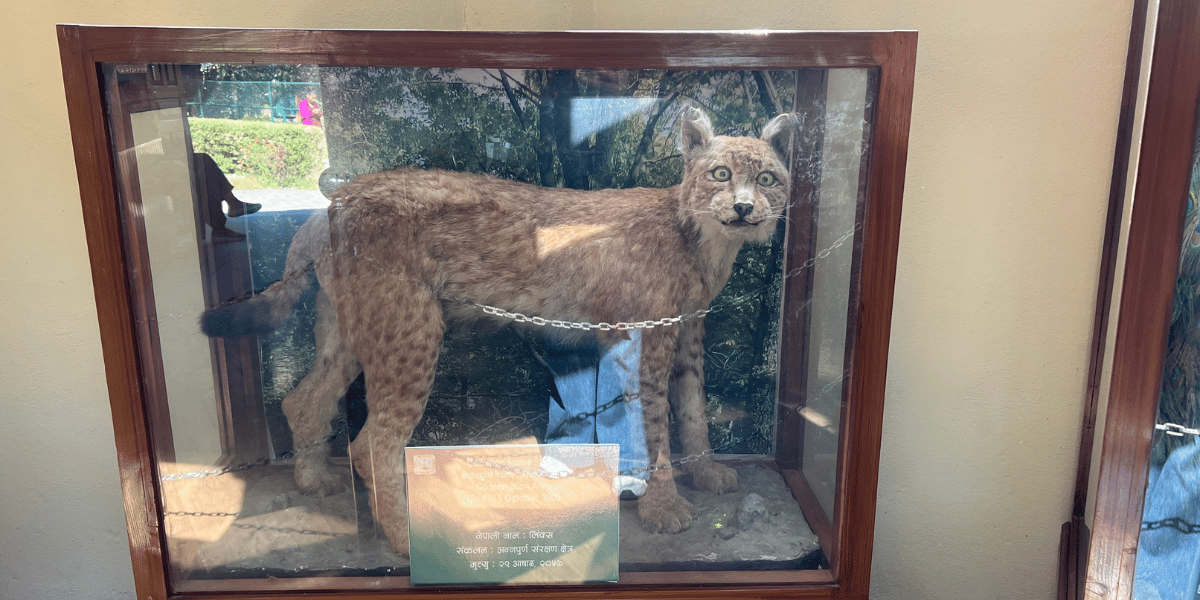
Central Zoo consists of different information centres for animal enthusiasts. Let me walk you through each educational centre inside the Central Zoo premises:
- Field Marshal Sir John Chapple Education Center: This is a fun learning hub, where you get insights into rare and exotic animals, their history and behaviour.
- Wildlife Display Center: This features the collection of animals from the past, now preserved through taxidermy.
Activities Beyond Animals
Central Zoo is not limited to conservation and education purposes, but also continues to offer recreational activities.
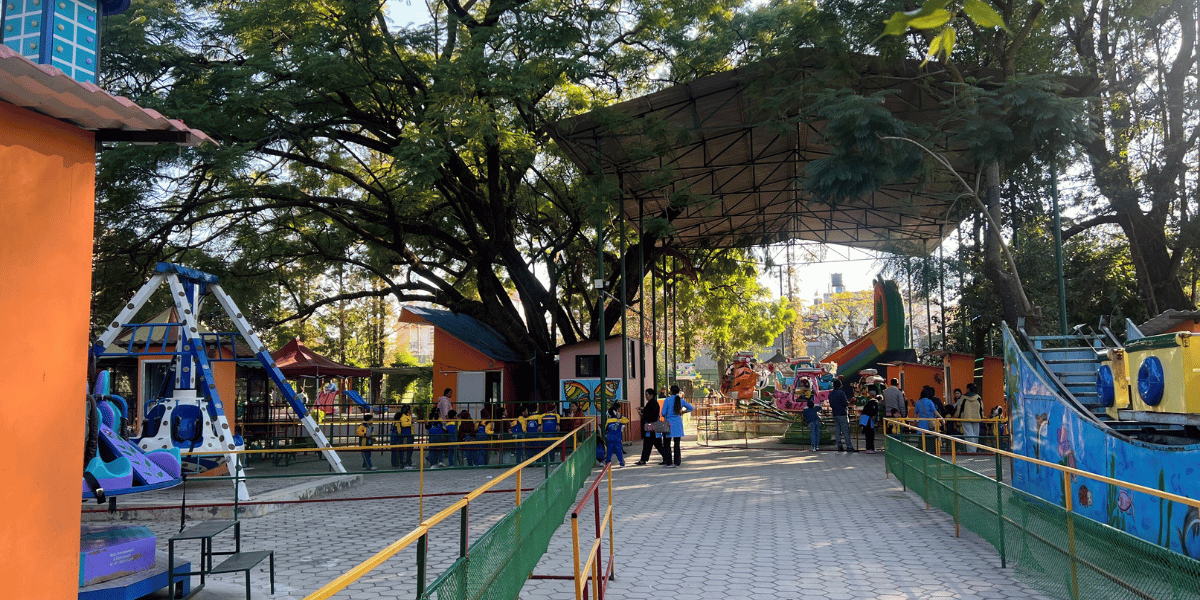
The 17th-century Central Pond offers visitors fun activities like fishing, motorboating, and paddle boating. In fact, you can organize a picnic with your loved ones near the pond and enjoy a wonderful time too.
Since Central Zoo is a go-to stop for children and even mothers bring their infants here, an infant feeding facility has also been introduced lately.
There’s even a dedicated children's park with tons of games. My favourite spot was the animal photo booth, where children could pretend to be an animal.
Moreover, the Central Zoo is full of greenery. So, even if you want a quiet escape, visiting here for a relaxing afternoon while listening to the chirping of birds would be a great idea for sure!
Visiting Central Zoo as a Tourist
Each corner of the Central Zoo Nepal remains clean and hygienic for the visitors. There are dedicated staff members who help you out during any sort of difficulties.
This zoological park is equipped with safe drinking water, sanitary facilities, wooden benches, an in-house restaurant, and even a safari (for the elderly and differently-abled).
But when visiting the Central Zoo, one must adhere to the rules and regulations, which are both for the safety of oneself and the animals. Let me walk you through the dos and don’ts to make things clearer:
|
Dos
|
Don’ts
|
|
Maintain cleanliness and discipline.
|
Feed animals and birds.
|
|
Stay behind the fence.
|
Take plastic bags inside.
|
|
Throw trash in the dustbins.
|
Litter in the central pond.
|
|
Stick with your children at all times.
|
Tease the animals and birds.
|
|
Use separate gates for entry and exit.
|
Smoke or drink alcohol inside the park.
|
|
Keep your voice low, ensuring you don’t disturb the animals.
|
Sit or climb on the fences and statues.
|
|
Report unusual behaviour to the zookeeper or other staff.
|
Get inside the cages.
|
Final Words: Why You Should Visit Central Zoo
For me, the Central Zoo of Nepal was far from just watching animals. I was totally impressed by the programs they run for environmental sustainability, animal welfare, and conservation education.
Despite tons of criticism, the way NTNC has maintained Central Zoo is truly remarkable. Still, many are unaware that it has been operating more like a rehabilitation centre for the rescued animals rather than just for entertainment.
While I agree that there are tons of improvements required, Central Zoo is surely a spot that deserves a chance. In fact, if you’re an animal lover yourself, I highly encourage you to be a part of different programs, particularly the ‘animal adoption’ campaign and FOZ membership.
My own Central Zoo trip went far from what I had imagined it to be. And I’m pretty sure you’d have a similar experience. So, definitely give this place a spot when you’re exploring Kathmandu.
Even better? Book our Kathmandu sightseeing tour package, and we can customize your trip with the Central Zoo included!




 Priyanka Rai